Hubbry Logo
Forward-looking infraredForward-looking infraredMain
Open search
Forward-looking infrared
Community hub
Forward-looking infrared
logo
8 pages, 0 posts
0 subscribers
Be the first to start a discussion here.
Forward-looking infrared
from Wikipedia
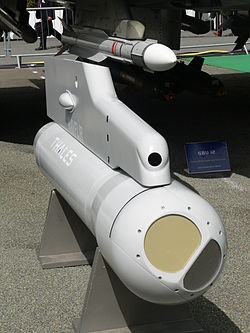
A Thales Damocles FLIR targeting pod

Forward-looking infrared (FLIR) cameras, typically used on military and civilian aircraft, use a thermographic camera that senses infrared radiation.[1]

The sensors installed in forward-looking infrared cameras, as well as those of other thermal imaging cameras, use detection of infrared radiation, typically emitted from a heat source (thermal radiation), to create an image assembled for video output.

They can be used to help pilots and drivers steer their vehicles at night and in fog, or to detect warm objects against a cooler background. The wavelength of infrared that thermal imaging cameras detect is 3 to 12 μm and differs significantly from that of night vision, which operates in the visible light and near-infrared ranges (0.4 to 1.0  μm).

Design

[edit]
FLIR imagery from a U.S. Navy helicopter: Alleged drug traffickers are being arrested by Colombian naval forces.

Infrared light falls into two basic ranges: long-wave and medium-wave. Long-wave infrared (LWIR) cameras, sometimes called "far-infrared", operate at 8 to 12 μm and can see heat sources, such as hot engine parts or human body heat, several kilometers away. Longer-distance viewing is made more difficult with LWIR because the infrared light is absorbed, scattered, and refracted by air and by water vapor.

Some long-wave cameras require their detector to be cryogenically cooled, typically for several minutes before use, although some moderately sensitive infrared cameras do not require this. Many thermal imagers, including some forward-looking infrared cameras (such as some LWIR enhanced vision systems (EVS)) are also uncooled.

Medium-wave (MWIR) cameras operate in the 3–5 μm range. These can see almost as well, since those frequencies are less affected by water-vapor absorption, but generally require a more expensive sensor array, along with cryogenic cooling.

Many camera systems use digital image processing to improve the image quality. Infrared imaging sensor arrays often have wildly inconsistent sensitivities from pixel to pixel, due to limitations in the manufacturing process. To remedy this, the response of each pixel is measured at the factory, and a transform, most often linear, maps the measured input signal to an output level.

Some companies offer advanced "fusion" technologies that blend a visible-spectrum image with an infrared-spectrum image to produce better results than a single-spectrum image alone.[2]

Properties

[edit]

Thermal imaging cameras such as the Raytheon AN/AAQ-26 are used in a variety of applications, including naval vessels, fixed-wing aircraft, helicopters, armored fighting vehicles, and military-grade smartphones.[3]

In warfare, they have three distinct advantages over other imaging technologies:

  1. The imager itself is nearly impossible to detect for the enemy, as it detects energy emitted from the target rather than sending out energy that is reflected from the target, as with radar or sonar.
  2. It sees radiation in the infrared spectrum, which is difficult to camouflage.
  3. These camera systems can see through smoke, fog, haze, and other atmospheric obscurants better than a visible light camera can.

Etymology

[edit]

The term "forward-looking" is used to distinguish fixed forward-looking thermal imaging systems from sideways-tracking infrared systems, also known as "push broom" imagers, and other thermal imaging systems such as gimbal-mounted imaging systems, handheld imaging systems, and the like. Pushbroom systems typically have been used on aircraft and satellites.

Sideways-tracking imagers normally involve a one-dimensional (1D) array of pixels, which uses the motion of the aircraft or satellite to move the view of the 1D array across the ground to build up a 2D image over time. Such systems cannot be used for real-time imaging and must look perpendicular to the direction of travel.

History

[edit]

In 1956, Texas Instruments began research on infrared technology that led to several line scanner contracts and, with the addition of a second scan mirror, the invention of the first forward-looking infrared camera occurred in 1963, with production beginning in 1966. In 1972, TI introduced the Common Module concept, which greatly reduced costs and allowed for the reuse of common components.

Uses

[edit]
A FLIR pod on a French Air Force helicopter
A FLIR system on a U.S. Air Force helicopter during search and rescue operation
  • Traffic video detection and monitoring[4]
  • Surveillance and/or capture of mammals
    • Detection of illegal immigrants hidden in lorries/trucks
    • Warning drivers about sudden road obstructions caused by deer
    • Location through smoke and/or haze
  • Search and rescue operations for missing persons especially in wooded areas or water
  • Target acquisition and tracking by military or civil aircraft
  • Drainage basin temperature monitoring[5] and monitoring wild game habitats
  • Detection of energy loss or consumption, or insulation defects
    • Mapping insulation levels (pipes, walls, joints etc.) in order to reduce HVAC energy consumption
    • Quality control for especially electrical installations (a picture can reveal if loads are higher than expected, or show bad and potentially failing joints)
    • Search for drug labs and/or indoor cannabis producers (especially at night)
  • Piloting of aircraft in low visibility (IMC) conditions
  • Pinpoint sources of ignition during firefighting operations
  • Monitoring active volcanoes
  • Detecting faulty or overheating electrical joints, connections, and components
  • Night driving
  • Identification or visual acquirement of hostile ground vehicles or personnel

Cost

[edit]

The cost of thermal imaging equipment in general has fallen dramatically after inexpensive portable and fixed infrared detectors and systems based on microelectromechanical technology were designed and manufactured for commercial, industrial, and military application.[6][7][8] Also, older camera designs used rotating mirrors to scan the image to a small sensor. More modern cameras no longer use this method; the simplification helps reduce cost. Uncooled technology available in many Enhanced Flight Vision System (EFVS or EVS) products have reduced the costs to fractions of the price of older cooled technology, with similar performance.[9] [10] EVS is rapidly becoming mainstream on many fixed wing and rotary wing operators from Cirrus and Cessna aircraft to large business jets.

Police actions

[edit]

In 2001, the United States Supreme Court decided in Kyllo v. United States that performing surveillance of private property (ostensibly to detect high emission grow lights used in clandestine cannabis farming) using thermal imaging cameras without a search warrant by law enforcement violates the Fourth Amendment's protection from unreasonable searches and seizures.[11]

In the 2004 R. v. Tessling judgment,[12] the Supreme Court of Canada determined that the use of airborne FLIR in surveillance by police was permitted without requiring a search warrant. The Court determined that the general nature of the data gathered by FLIR did not reveal personal information of the occupants and therefore was not in violation of Tessling's Section 8 rights afforded under the Charter of Rights and Freedoms (1982). Ian Binnie distinguished the Canadian law with respect to the Kyllo judgment, by agreeing with the Kyllo minority that public officials should not have to avert their senses or their equipment from detecting emissions in the public domain such as excessive heat, traces of smoke, suspicious odors, odorless gases, airborne particulates, or radioactive emissions, any of which could identify hazards to the community.

In June 2014, the Canadian National Aerial Surveillance Program DHC-8M-100 aircraft mounted with infrared sensors was instrumental in the search for Justin Bourque, a fugitive who had killed three Royal Canadian Mounted Police members in Moncton. The plane's crew used its advanced heat-sensing camera to discover Bourque's heat signature in the deep brushwoods at midnight.[13]

During 2015 Baltimore protests, the FBI conducted 10 aerial surveillance missions between April 29 and May 3, which included "infrared and day color, full-motion FLIR video evidence" collection, according to FBI spokesman Christopher Allen.[14] A FLIR Talon multi-sensor camera system equipped with an infrared laser pointer (which is invisible to casual observers) for illumination purposes was used to gather data at night.[15] The American Civil Liberties Union raised concerns over the fact that new surveillance technology is implemented without judicial guidance and public discussion.[16] According to Nathan Wessler, an ACLU attorney, "this is a dynamic we see again and again when it comes to advances in surveillance. By the time details leak out, programs are firmly entrenched, and it's all but impossible to roll them back – and very hard to put in place restrictions and oversight."[14]

See also

[edit]

References

[edit]
[edit]
Revisions and contributorsEdit on WikipediaRead on Wikipedia
from Grokipedia
Forward-looking infrared (FLIR) is a thermal imaging technology that detects mid- to long-wave emitted by objects warmer than their surroundings, converting it into visible for in , adverse weather, or obscured environments without relying on visible or active illumination. Developed primarily for applications, FLIR systems enable , vehicles, and ground platforms to perform , targeting, and navigation by revealing heat signatures that differentiate targets from backgrounds. Originating from research initiated by in the 1950s, the first operational FLIR systems emerged in the mid-1960s, leveraging advances in detectors like mercury-doped to produce real-time forward-view imagery for . These systems typically employ focal plane arrays of cooled or uncooled sensors—such as or microbolometers—to capture thermal contrasts, with modern iterations incorporating dual-band detection for enhanced resolution and sensitivity across atmospheric windows. Beyond defense, FLIR has proven instrumental in civilian sectors, including search-and-rescue operations where it locates heat-emitting survivors in smoke-filled or nighttime scenarios, and in for assessing fire spread through structures. Its defining advantage lies in passive operation, which maintains stealth compared to active systems like rangefinders, though performance can degrade in high-humidity conditions due to atmospheric absorption of wavelengths. Ongoing advancements focus on , efficiency, and integration with AI for automated threat detection, sustaining FLIR's role in persistent and urban operations.

Technical Fundamentals

Principles of Infrared Detection

Infrared detection operates on the principle that all matter with a temperature above absolute zero emits electromagnetic radiation in the infrared spectrum due to the thermal agitation of its atoms and molecules, as governed by blackbody radiation laws. This emission follows Planck's law, which quantifies the spectral radiance of a blackbody as a function of wavelength and temperature, with peak intensity shifting to shorter wavelengths at higher temperatures per Wien's displacement law (approximately 2898 μm·K for the peak in wavelength). The total radiated power scales with the fourth power of temperature according to the Stefan-Boltzmann law, enabling differentiation of objects based on their thermal signatures even in low-light conditions. Infrared sensors capture this radiation, typically in the mid-wave (3–5 μm) or long-wave (8–14 μm) atmospheric windows where absorption by water vapor and CO₂ is minimal, converting it into electrical signals for imaging. Thermal detectors, also known as uncooled detectors, absorb photons to generate , which induces a measurable change in the detector's physical properties, such as electrical resistance or voltage. Common implementations include microbolometers, where a suspended resistive element heats up, altering its resistance monitored via a readout circuit, and pyroelectric detectors that produce a charge from temperature-induced polarization changes in ferroelectric materials. These detectors do not require cryogenic cooling, operate at , and are cost-effective for applications like commercial FLIR systems, though they exhibit slower response times (milliseconds) and lower sensitivity compared to cooled alternatives, with noise equivalent temperature differences (NETD) typically around 20–100 mK. Their performance relies on the bolometric effect, where sensitivity is proportional to the of resistance and thermal isolation of the sensing element. Photon detectors, or quantum detectors, directly convert infrared photons into electron-hole pairs via the internal , requiring materials with bandgaps matched to the target , such as (InSb) for mid-wave infrared or (HgCdTe or MCT) for broader coverage. These detectors necessitate cooling to cryogenic temperatures (e.g., 77 K using or Joule-Thomson coolers) to suppress thermal generation of carriers, which would otherwise overwhelm the photon-induced signal and degrade detectivity (D*, often exceeding 10^10 cm·Hz^{1/2}/W for high-performance units). Response times are fast (nanoseconds), enabling high frame rates for dynamic imaging in forward-looking systems, but they are more complex and expensive due to cooling requirements and material challenges like nonuniformity and Auger recombination limitations. Quantum efficiency, the ratio of generated carriers to incident photons, can reach 70–90% in optimized devices.

Spectral Bands and Imaging Modes

Forward-looking infrared (FLIR) systems primarily operate within two atmospheric transmission windows in the infrared spectrum: the mid-wave infrared (MWIR) band spanning 3–5 μm and the long-wave infrared (LWIR) band spanning 8–12 μm. The MWIR band detects a combination of emitted and reflected radiation, providing enhanced resolution and detection range for high-temperature targets such as jet engine plumes, with performance advantages in clear weather due to shorter wavelengths enabling smaller apertures and reduced size, weight, power, and cost (SWaP-C). In contrast, the LWIR band excels at imaging room-temperature objects, where blackbody emission peaks around 10 μm, and offers superior penetration through battlefield obscurants like smoke and dust, though it suffers greater atmospheric attenuation over long distances. Dual-band and multi-spectral configurations integrate MWIR and LWIR detectors to leverage complementary strengths, such as MWIR's range for identification and LWIR's sensitivity to ambient thermal signatures, improving overall resilience against environmental interference and enabling applications like penetration. Detector materials tailored to these bands include (InSb) for MWIR and (MCT) or microbolometers for LWIR, with cryogenic cooling often required for MWIR to achieve noise-equivalent temperature differences below 20 mK.
Spectral BandWavelength Range (μm)Key AdvantagesTypical Detectors
MWIR3–5Longer range, higher resolution for hot targetsInSb, PbSe
LWIR8–12Obscurant penetration, ambient temperature detectionMCT, microbolometers
FLIR imaging modes encompass acquisition techniques that determine how infrared data is collected and processed within these bands, evolving from mechanical scanning in early systems to focal plane (FPA)-based in modern designs. Scanning modes, prevalent in first- and second-generation FLIR (e.g., serial or parallel scans using linear detector s), mechanically sweep the field of view to build images line-by-line, supporting multi-band operation but introducing mechanical complexity and vulnerability to vibration. Staring modes employ two-dimensional FPAs to capture the entire scene simultaneously without moving parts, enabling higher frame rates (up to 60 Hz) and integration with large s (e.g., 1280 × 720 pixels at 20 μm pitch in third-generation systems), though they demand advanced non-uniformity correction to mitigate . Advanced modes include multi-spectral and , where MWIR and LWIR data are fused or spectrally resolved into narrower bands (e.g., >50 bands at ~10 nm width) to enhance target via material-specific signatures, often using tunable detectors or pushbroom scanners for airborne platforms. These modes improve accuracy but increase data volume and processing demands, with hyperspectral systems limited by unless mitigated by optical modulation optimization. Presentation modes, such as polarity inversion (white-hot or black-hot), further adapt output for operator interpretation but derive from the core acquisition method.

Historical Development

Origins in Infrared Physics

Infrared radiation, the foundational phenomenon underlying forward-looking infrared systems, was discovered on February 11, 1800, by British astronomer during experiments on the heating effects of sunlight dispersed through a prism. Herschel measured temperatures across the using a and found that the highest readings occurred in the region beyond the red band, where no visible light was present, indicating the existence of invisible "calorific rays" with thermal properties. These rays, later termed for their position beyond the red end of the spectrum (wavelengths approximately 0.7 to 1000 micrometers), demonstrated that solar energy extends into non-visible electromagnetic wavelengths, challenging the then-prevailing view of light as solely visible. Herschel's findings initiated systematic study of as a form of emitted by objects above , governed by principles later formalized in theory. Empirical observations confirmed that all matter at temperatures above 0 K emits based on its surface temperature and emissivity, following equating absorptivity and emissivity at . This causal link between temperature and emission—rooted in atomic vibrations and molecular rotations—provided the physical basis for detecting heat signatures without visible , essential for later applications. Early efforts, building on Herschel's work, revealed 's absorption and emission spectra in gases and solids, revealing molecular structures invisible to visible . Initial detection relied on thermal sensors rather than photonic ones, as infrared's longer wavelengths interact primarily through heating rather than photoelectric effects at early technological levels. In the 1830s, Italian physicist Macedonio Melloni advanced thermopiles, arrays of bismuth-antimony thermocouples that convert infrared-induced temperature gradients into measurable voltages via the Seebeck effect, achieving sensitivities to detect radiation from a person across a room. By 1880, introduced the , a with a strip blackened to absorb , whose resistance change quantified radiant flux with unprecedented precision, enabling detection of celestial sources like the at distances of hundreds of kilometers. These detectors, operating by bulk heating rather than band-gap excitation, established the empirical framework for signal transduction, though their slow response times (milliseconds to seconds) limited early imaging to point measurements rather than real-time arrays.

Key Military Milestones

The development of forward-looking infrared (FLIR) systems accelerated in the mid-20th century amid military demands for night and adverse-weather . In 1964, (TI) developed the first practical FLIR system under U.S. contracts, building on earlier line-scanning infrared mappers like the AAS-18 deployed on RF-4C since 1961 for mapping infiltration routes in . Flight tests of this initial FLIR occurred in 1964–1965 using a modified DC-3 aircraft, demonstrating real-time thermal imaging capabilities for target detection. The first operational combat deployment of FLIR occurred in 1965 during the , when TI's system was integrated into AC-47 gunships at as part of Operation Shed Light, enabling detection of enemy truck convoys along the at night and through foliage. This marked a shift from passive image intensifiers to active thermal imaging, with the AC-47—nicknamed ""—using FLIR to guide minigun fire, achieving initial successes in interdicting supply lines despite limitations in resolution and cooling requirements. By the late 1960s, FLIR variants were adapted for forward air controllers and expanded to other platforms, contributing to over 100 AC-47 sorties focused on trail surveillance by 1969. A pivotal advancement came in 1970 with the proposal of the Common Module FLIR concept by U.S. Army researchers, which standardized detector arrays, , and electronics using (MCT) photoconductors in configurations of 60, 120, or 180 elements. TI secured development contracts in 1972, leading to first-generation (Gen 1) systems by the mid-1970s that reduced unit costs from hundreds of thousands to tens of thousands of dollars through modular reusability across applications like tank thermal sights and TOW missile trackers. Over 10,000 Common Module units were produced by the early , enabling mass fielding in systems such as the AN/TAS-4 night sight. Second-generation (Gen 2) FLIRs emerged in the , incorporating self-scanned focal plane arrays (FPAs) with time-delay integration scanning, which improved sensitivity, resolution, and range for ground and aerial platforms. These systems saw extensive combat validation during Operation Desert Storm in 1991, where Common Module-derived FLIRs on vehicles like the M1A2 Abrams tank and AH-64 Apache helicopters provided superior target acquisition in dust, smoke, and darkness, contributing to over 90% of engagements occurring at night. The U.S. Navy's deployment of LWIR MCT FPAs in the F-14D's (IRST) system that year further extended FLIR to air-to-air roles, detecting cruise missiles at ranges exceeding 20 nautical miles. Subsequent iterations, including uncooled arrays invented by in 1985, reduced logistical burdens and paved the way for third-generation multispectral systems by the 2000s.

Transition to Commercial Use

The transition of forward-looking infrared (FLIR) technology from to commercial applications accelerated in the late , as advancements in sensor manufacturing enabled more affordable systems derived from defense developments. FLIR Systems, Inc. was established in 1978 to commercialize high-performance, low-cost thermal imaging for airborne uses, initially adapting -grade technology for broader markets. Early efforts focused on vehicle-mounted systems for audits, marking an initial shift toward civilian industrial applications. By the 1980s, the first commercial thermal imagers entered the market, expanding FLIR's utility beyond defense into sectors such as , , and electrical inspections. This period saw key acquisitions that bolstered commercial capabilities; for instance, in , FLIR Systems acquired Hughes Company's industrial infrared group, integrating established production lines for non-military products. Further growth occurred in 1997 with the purchase of Infrared Systems AB, which had pioneered battery-operated portable scanners since the 1960s, facilitating portable commercial FLIR devices. Commercial adoption in aviation and public safety grew as costs declined, with uncooled detectors—patented by in 1994—enabling compact, room-temperature operable systems suitable for helicopters and . These developments democratized FLIR for surveillance, maritime navigation, and emergency response, distinct from the cooled, high-end military variants. By the , commercial FLIR systems were integral to non-defense operations, supported by regulatory approvals for airspace integration.

System Design and Components

Core Sensor Architectures

Core sensor architectures in forward-looking infrared (FLIR) systems center on infrared focal plane arrays (FPAs) that detect in the mid-wavelength (MWIR, 3-5 μm) or long-wavelength (LWIR, 8-12 μm) bands, with designs optimized for either high-sensitivity cooled operation or compact, cost-effective uncooled performance. Cooled architectures employ (quantum) detectors cooled to cryogenic temperatures, typically around 77 K using Stirling-cycle or pulse-tube cryocoolers, to suppress thermally generated and enable photon-limited detection. These systems achieve noise-equivalent temperature differences (NETD) as low as 10-20 , supporting long-range target identification in applications. Indium antimonide (InSb) detectors dominate MWIR cooled FPAs due to their high quantum efficiency and exceeding 10^6 V/W, operating via photovoltaic conversion where photons generate electron-hole pairs across a bandgap tuned to ~0.36 eV. (MCT or HgCdTe) serves versatile roles in both MWIR and LWIR, with adjustable bandgap (e.g., 0.23 eV for LWIR) allowing dual-band or multi-color imaging in third-generation FLIR systems, though it requires precise composition control to minimize defects like mercury vacancies. High-operating-temperature (HOT) variants of MCT reduce cooling power demands by operating above 100 K, extending cooler lifetimes beyond 10,000 hours. Modern cooled FPAs are arrays, replacing early 1970s-era scanning mechanisms with 2D hybrid structures bonding detector pixels to readout integrated circuits (ROICs) for simultaneous full-field imaging at frame rates up to 1000 Hz. Uncooled architectures, prevalent in commercial and short-range FLIR since the , use detectors that absorb to induce measurable rises without cryogenic elements, yielding NETD values of 20-50 mK at ambient conditions. Microbolometers form the core, comprising arrays of suspended membranes (typically 17-25 μm pitch) fabricated from (VOx) or (a-Si), where incident flux causes resistive changes detected via ROIC current biasing; VOx variants offer higher coefficients (~2-3% per K) but greater 1/f noise. These operate exclusively in LWIR due to blackbody-like absorption and integrate with compact thermoelectric stabilization for offset correction, enabling SWaP-optimized modules under 50 grams. Examples include FLIR models like the Boson series, which employ microbolometers for UAV and drone applications, providing compact focal plane arrays for surveillance and inspections. While less sensitive than cooled systems, uncooled FPAs support video rates of 30-60 Hz and have proliferated in pods like the FLIR series since 2015.

Optics, Cooling, and Signal Processing

FLIR systems employ specialized designed to transmit wavelengths, typically in the mid-wave (MWIR, 3-5 μm) or long-wave (LWIR, 8-12 μm) bands, where standard absorbs strongly. Materials such as provide high refractive indices (around 4) enabling compact, aspheric lenses with reduced aberrations, though they require anti-reflective coatings to mitigate high reflectance (up to 50% uncoated). Zinc (ZnSe) serves as an alternative for protective windows and elements in thermal imaging, offering transmission from 0.6 to 20 μm with low absorption, chemical inertness, and resilience to , increasingly replacing in cost-sensitive applications due to advances like single-step precision molding. Cooling mechanisms are essential for photon-based detectors like (InSb) in MWIR or (MCT or HgCdTe) in MWIR/LWIR, which operate optimally at cryogenic temperatures (e.g., 77 K) to suppress thermal generation noise and dark current, achieving noise-equivalent temperature differences (NETD) below 20 mK. Stirling cycle cryocoolers, including linear and rotary variants, provide this cooling via closed-cycle gas expansion, maintaining detectors 100-200 K below ambient while consuming 5-15 W and offering (MTBF) exceeding 10,000 hours in military-grade units. Uncooled alternatives avoid cryocoolers for simpler, lower-cost designs but sacrifice sensitivity, with NETD typically 50-100 mK, limiting range in forward-looking applications. Signal processing transforms analog photocurrents from focal plane arrays into usable imagery, incorporating analog-to-digital conversion at 14-16 bits for preservation. Non-uniformity correction (NUC) algorithms, such as two-point or scene-based NUC (SBNUC), compensate for pixel-to-pixel response variations and by estimating offsets and gains from shutter events or motion-induced statistics, reducing residual non-uniformity to below 0.1% of scene contrast. (AGC) and enhance contrast for human or machine interpretation, while defect pixel replacement and filtering pipelines address bad pixels (typically <0.1% yield loss) and temporal noise, enabling real-time processing at 30-60 Hz frame rates in embedded systems.

Performance Properties

Resolution, Sensitivity, and Detection Range

Resolution in forward-looking infrared (FLIR) systems refers to the spatial detail captured by the detector array, typically measured in pixels such as 640 × 512 or 1280 × 1024 for high-end military sensors, enabling distinction of fine features at distance. Higher pixel counts improve , governed by the formula θ ≈ λ / D where θ is the minimum resolvable angle, λ the wavelength (around 8-12 μm for long-wave ), and D the diameter, though practical limits arise from detector pixel pitch (e.g., 10-15 μm). In aviation FLIR, resolutions like 640 × 480 allow target identification under Johnson's criteria, where detection requires ~2 pixels across a target, recognition ~6, and identification ~12, though real-world performance degrades with atmospheric . Sensitivity, quantified by noise-equivalent temperature difference (NETD), measures the smallest detectable temperature contrast, with values under 30 mK (<0.03°C) common in cooled FLIR detectors for enhanced low-contrast detection in fog or haze. Lower NETD correlates with more gray shades and stability, as demonstrated in perimeter security tests where <20 mK systems maintain clarity in adverse weather, outperforming higher-NETD uncooled alternatives by reducing noise floor impacts on signal-to-noise ratio (SNR). Military FLIRs often achieve 27 mK or better via cryogenically cooled focal plane arrays, prioritizing detectivity (D*) over uncooled microbolometers' higher NETD (~50-100 mK), though the latter suffice for shorter-range applications due to lower power draw. Detection range in FLIR varies from kilometers for vehicle-sized targets (e.g., up to 60 km in specialized long-range systems under ideal conditions) to tens of kilometers for , fundamentally limited by the range equation incorporating atmospheric , target-to-background , and system modulation transfer function (MTF). Key factors include attenuating mid-wave/long-wave IR by 50-90% in , larger pitch reducing range proportionally, and FOV trade-offs where narrower fields extend but limit scan coverage. Empirical models like those from field tests show ranges halving in moderate due to , with FLIR performance validated via integration for precise slant-range estimation.

Limitations and Environmental Influences

Forward-looking infrared (FLIR) systems depend on thermal contrast for effective detection, rendering them ineffective when targets and backgrounds equilibrate in , such as during prolonged solar exposure or in uniform environments where differentials fall below the sensor's noise-equivalent difference (NETD), typically 20-50 millikelvin for cooled detectors. Lack of contrast can result in non-detection of objects like insulated vehicles or blending with ambient heat, independent of range or atmospheric conditions. Atmospheric absorption and impose fundamental range limits, with and exhibiting strong in mid-wave (MWIR, 3-5 μm) bands, reducing effective detection distances by up to 50% in humid conditions over several kilometers. further blurs imagery through fluctuations, degrading resolution in long-range applications like aerial . Precipitation and obscurants severely constrain performance; fog and rain scatter infrared photons via water droplets, with visibility dropping to under 100 meters in dense fog for MWIR systems, though long-wave infrared (LWIR, 8-12 μm) variants maintain longer ranges due to reduced scattering cross-sections. Snowfall similarly attenuates signals, though lighter accumulations permit partial penetration unlike visible light. Smoke from fires or pyrotechnics absorbs and scatters across both MWIR and LWIR, with particle size distributions determining wavelength-specific extinction coefficients that can halve detection ranges in battlefield scenarios. Solar loading influences target signatures by elevating surface temperatures, often eliminating contrasts for diurnal operations; for instance, sun-heated can mask vehicle exhaust plumes, while direct solar risks detector saturation or blooming artifacts in uncooled arrays. Ambient exacerbates this by enhancing absorption, with relative humidity above 80% correlating to 20-30% signal loss in LWIR over 1 km paths. Wind speeds exceeding 5 m/s introduce convective cooling or in thermal plumes, complicating identification of moving heat sources like personnel or engines. These factors collectively necessitate multi-spectral fusion or compensatory algorithms in advanced FLIR designs to mitigate environmental variability.

Primary Applications

Military and Defense Operations

Forward-looking infrared (FLIR) systems enable military forces to detect heat signatures from personnel, vehicles, and equipment in , , , and other obscurants where visible sensors fail, providing a critical advantage in , , and targeting. These passive sensors operate by capturing mid- or long-wave , converting thermal differences into visual images without emitting detectable signals, thus maintaining operational stealth. In aerial operations, FLIR pods integrated into and unmanned aerial vehicles (UAVs) facilitate precision strikes and intelligence gathering; for instance, during the 1991 , the F-117 Nighthawk stealth employed FLIR sensors to acquire targets at night, contributing to the coalition's dominance in low-visibility conditions. Similarly, the F-111F Aardvark used FLIR for ground strikes in Operation Desert Storm, capturing real-time thermal imagery to guide munitions against Iraqi positions. UAVs equipped with FLIR, such as those deployed in the , detected concealed troops and vehicles, relaying data for subsequent bombings by manned aircraft. On ground platforms, third-generation FLIR systems in armored vehicles and tanks, like those developed by for the U.S. Army, support fire control and by identifying threats beyond line-of-sight through environmental hazards. In missile applications, FLIR-derived infrared seekers enable heat-homing guidance for air-to-ground munitions, enhancing accuracy in contested environments. These capabilities were pivotal in conflicts like the , where U.S. forces leveraged FLIR-enabled night operations to achieve overwhelming tactical superiority, minimizing casualties while disrupting enemy movements.

Aviation and Maritime Navigation

Forward-looking infrared (FLIR) systems enhance navigation by providing thermal imaging for low-visibility conditions, enabling pilots to detect runways, , and obstacles at night or in adverse weather. In applications, the Low Altitude Navigation and Targeting Infrared for Night () system, developed in the 1980s, integrates FLIR pods on like the F-15 and F-16 for and forward-looking navigation during low-altitude flights. Commercial benefits from FLIR in enhanced vision systems, where infrared cameras monitor runways under fog or low light, as demonstrated in flight tests combining FLIR imagery with heads-up displays (HUDs) for precision approaches. Helicopter operations, particularly in search and rescue (SAR), rely on FLIR for detecting heat signatures of survivors over large areas, with studies evaluating systems like those on rotary-wing aircraft to optimize detection ranges and resolutions for nighttime missions. The U.S. Navy's integration of BRITE Star FLIR on H-1 helicopters provides forward-looking infrared and television imagery for improved during tasks. In and aircraft rescue, cameras identify hotspots on aircraft fuselages and locate personnel in smoke-obscured environments. In maritime navigation, FLIR systems detect vessels, , and personnel in during low-visibility conditions, aiding collision avoidance and man-overboard recovery. Patrol vessels and helicopters employ stabilized turrets like the SeaFLIR 240-EP, offering high-definition thermal imaging for border and distress signal detection. For SAR operations, airborne FLIR enhances maritime missions by identifying thermal contrasts of survivors against cold sea surfaces, as in recent contracts for systems delivered to European providers in November 2024. These applications extend to commercial shipping, where thermal cameras integrate with chartplotters for real-time hazard detection in harbors and open seas.

Law Enforcement and Public Safety

Forward-looking infrared (FLIR) systems equipped on police helicopters facilitate nighttime aerial by detecting heat signatures of suspects and vehicles, reducing search times from approximately 60 minutes to 10 minutes in challenging terrains like canyons. In , the Police Air Support Unit deploys 380-HDc sensors on Bell helicopters for real-time monitoring, enabling officers to locate hidden evidence such as discarded handguns and guide ground teams during pursuits. These passive infrared detectors identify thermal contrasts without emitting signals, supporting operations like suspect tracking in urban or wooded areas where visibility is limited. In border security, handheld FLIR cameras detect human heat signatures up to 2 miles away, allowing agents to monitor routes and provide GPS coordinates for interdictions without exposing personnel to risks in foot patrols. For instance, in , officers using FLIR have confiscated over 700 pounds of marijuana, including a single seizure of 189 pounds from detected smugglers. Such applications extend to narcotics detection in hidden grows or labs, where FLIR identifies heat from cultivation equipment. For public safety, FLIR thermal imaging cameras enable firefighters to penetrate dense smoke, locate fire hotspots, and identify victims via body heat, thereby accelerating rescues and reducing exposure to hazards. Models like the FLIR K65, compliant with NFPA 1801 standards, provide enhanced visibility in zero-light conditions and support tactical assessments during overhaul phases. In search-and-rescue operations, lightweight FLIR systems mounted on drones or handheld units detect human thermal signatures in total darkness or adverse weather, improving outcomes in wilderness or disaster scenarios by pinpointing individuals rapidly.

Civilian and Industrial Uses

Security Surveillance and Search-and-Rescue

Forward-looking infrared (FLIR) systems enhance surveillance by detecting thermal signatures of intruders, vehicles, or vessels in conditions obscuring visible light, such as , , or foliage. These passive sensors identify heat differentials without emitting detectable signals, enabling covert monitoring over extended ranges—up to several kilometers for high-end models—while minimizing false alarms through integration with AI for object classification. In perimeter applications, thermal cameras are deployed at sites, where they provide 24/7 detection independent of ambient lighting or weather, outperforming traditional by revealing concealed threats like body heat under . U.S. Customs and Border Protection employs FLIR-equipped helicopters and mobile units for border surveillance, leveraging forward-looking infrared to penetrate dense vegetation and track movements at night; a March 2024 operation in resulted in the apprehension of five unauthorized migrants and three smugglers using such thermal detection. Similarly, integrated FLIR thermal solutions in 2020 for comprehensive perimeter , combining pan-tilt-zoom cameras with to automate alerts and reduce response times. Airports, power plants, and military bases routinely adopt these systems for their reliability in or , where visible cameras degrade, though effectiveness depends on factors like noise equivalent temperature difference (NETD), with lower values (e.g., below 50 mK) yielding clearer imagery and higher detection accuracy. In search-and-rescue (SAR) operations, FLIR cameras locate heat-emitting targets like human bodies amid challenging environments, including wildfires, , or maritime incidents, where visibility is near zero. Firefighters utilize handheld imagers for rapid victim searches in smoke-filled structures or outdoor terrains, identifying survivors by their 37°C body temperature against cooler backgrounds, as in overhaul phases post-suppression or wildland fire perimeters. Airborne and drone-mounted FLIR systems extend coverage, with mid-wave variants penetrating canopies to map ground-level heat signatures, aiding in locating lost hikers or disaster victims over vast areas. For instance, U.S. agencies deploy helicopter-borne FLIR for nighttime maritime rescues, detecting individuals in water via thermal contrast, while specialized modes in devices like the FLIR K-series enhance contrast for human detection in SAR protocols. These applications have proven vital in reducing search times, though limitations arise in high-ambient-heat scenarios like midday sun, necessitating complementary visible or sensors.

Industrial Inspection and Automotive Integration

Forward-looking infrared (FLIR) systems are utilized in industrial inspection for , enabling the non-invasive detection of thermal anomalies such as hotspots in electrical panels, motors, and bearings that signal impending failures. By capturing differences, these systems identify issues like loose connections or insulation degradation before they cause , with studies showing reduces unplanned outages by up to 50% in facilities through early intervention. For example, FLIR cameras like the T640 series measure temperature variations with resolutions up to 640x480 pixels, allowing technicians to quantify heat buildup in real-time during energized inspections, which is infeasible with contact methods. In mechanical and process equipment, FLIR supports of pipelines, valves, and furnaces by revealing insulation failures or fluid leaks via convective heat patterns, with applications documented in sectors like oil and gas where it detects inefficiencies saving up to 20% in energy costs. HVAC systems benefit from FLIR scans identifying airflow imbalances or leaks, as thermal gradients highlight blocked ducts or overloads, enhancing without system shutdowns. Automotive integration of FLIR enhances advanced driver-assistance systems (ADAS) through thermal night vision, detecting heat signatures of pedestrians, cyclists, and animals up to 130 meters ahead—extending visibility four times beyond headlights in darkness, fog, or glare where visible-light sensors fail. Teledyne FLIR has integrated uncooled thermal sensors into over one million vehicles since the early 2000s, powering systems that alert drivers to obstacles via dashboard overlays or automatic braking cues, reducing nighttime collision risks by improving reaction times. Regulatory compliance drives adoption, as U.S. NHTSA mandates for automatic braking (PAEB) require detection in low-light conditions up to 50 km/h, where thermal cameras excel by operating independently of ambient illumination. Recent advancements include ASIL B-certified FLIR modules from partnerships like and , deployed in production vehicles since 2024 for fused sensor suites combining thermal data with for robust object classification, even in adverse weather. These systems achieve detection rates exceeding 90% for vulnerable road users at night, per peer-reviewed evaluations, outperforming alone in cluttered environments.

Privacy Concerns and Fourth Amendment Rulings

The use of forward-looking infrared (FLIR) technology by law enforcement to detect heat signatures emanating from private residences has raised significant concerns, as it enables the of intimate details about activities inside homes without physical entry, such as the presence of high-intensity grow lamps for indoor marijuana cultivation or other heat-generating operations. Critics argue that such undermines the reasonable expectation of privacy protected by the home, potentially allowing warrantless monitoring of lawful but private behaviors, like using saunas or medical devices that produce detectable heat patterns. These concerns intensified in the and early as FLIR devices became more accessible to police for narcotics investigations, prompting debates over whether external scans constitute an impermissible intrusion akin to peering through walls. In (2001), the U.S. addressed these issues in a 5-4 decision, ruling that the warrantless use of a thermal imager to scan the exterior of a private home violates the Fourth Amendment. The case involved federal agents in January 1992 using an Agema Thermovision 210 FLIR device from a public street to detect elevated heat levels from Danny Kyllo's residence in , suspecting marijuana cultivation; the scan revealed hotspots on the roof and wall over the garage, contributing to a that uncovered over 100 plants. Justice Scalia's majority opinion held that obtaining information about the home's interior via sense-enhancing technology—revealing details not visible to the —constitutes a "search" requiring and a warrant, particularly since the device was not in general public use at the time. The Court rejected the government's contention that only externally radiating heat was detected, emphasizing that such technology intrudes on the sanctity of the home by disclosing "intimate details" of its use. The Kyllo ruling established that FLIR scans targeting homes demand judicial oversight to prevent arbitrary invasions, but it left open questions about public spaces or vehicles, where privacy expectations are lower. Dissenters, led by Justice Stevens, argued the scan was analogous to observing smoke from a or beams through windows—non-intrusive external observations not requiring warrants. Post-Kyllo, lower courts have consistently required warrants for thermal imaging of residences, though aerial FLIR use in helicopters for broader operations (e.g., or pursuits) has faced scrutiny for potential incidental home scans, often balanced against exigent circumstances. Advances in FLIR resolution and portability have renewed debates on whether modern devices, increasingly available commercially, might erode the "general public use" threshold from Kyllo, potentially allowing warrantless scans if deemed commonplace, though no revisit has occurred as of 2025.

Debates on Efficacy Versus Intrusion

The efficacy of forward-looking infrared (FLIR) systems in has been demonstrated through their ability to detect heat signatures from hidden s, vehicles, or , particularly in low-visibility conditions such as nighttime pursuits or patrols. For instance, thermal imagers have proven effective in locating discarded narcotics or during undercover operations, with agencies reporting successful identifications of heat-emitting grow lamps used for indoor marijuana cultivation, which produce distinctive thermal anomalies not visible to the . A field assessment of FLIR-equipped vehicles found that implementation led to quicker apprehensions and recovery when supported by trained operators, though effectiveness varied by environmental factors like humidity. Proponents argue this non-contact detection enhances officer safety and operational efficiency without requiring physical entry, establishing for warrants in cases like detecting human presence behind walls or in foliage. Opposing views center on FLIR's potential for privacy intrusion, as it can reveal intimate details within private spaces, such as occupancy patterns or activities generating excess heat, thereby circumventing traditional expectations of seclusion in the home. In Kyllo v. United States (2001), the U.S. ruled 5-4 that warrantless thermal imaging of a residence constitutes a Fourth Amendment search, rejecting arguments that only "intimate" details warrant protection and emphasizing that advanced technology should not erode the boundary between public observation and private affairs. Critics, including advocates, contend that even aggregated heat data enables inference of daily routines or unlawful activities, fostering a state where public streets become vectors for scanning private interiors without consent. This concern persists despite FLIR's limitations in resolution, as algorithmic enhancements could amplify intrusive capabilities, prompting calls for mandatory warrants or operational logs to balance enforcement needs against overreach. Debates intensify over exigent circumstances, where efficacy in time-sensitive scenarios—like fugitive hunts or —clashes with procedural safeguards; some legal scholars propose tiered restrictions, such as requiring video of FLIR scans, to mitigate while preserving . Empirical data supports FLIR's role in reducing search times for behind barriers, yet post-Kyllo rulings in lower courts have upheld limited warrantless uses in spaces or vehicles, highlighting an unresolved tension between technological advancements and constitutional norms. Sources favoring unrestricted deployment often emphasize safety gains from empirical case outcomes, while privacy-focused critiques, drawn from analyses, underscore the risk of normalized mass scanning absent robust oversight.

Recent Advancements

AI and Edge Computing Integration

The integration of artificial intelligence (AI) with forward-looking infrared (FLIR) systems enables automated object detection, classification, and tracking by processing thermal signatures in real-time, surpassing traditional rule-based algorithms that rely on manual thresholding. AI models, such as convolutional neural networks trained on vast datasets of infrared imagery, enhance FLIR performance by distinguishing heat-emitting targets like vehicles or personnel from environmental noise, achieving detection accuracies exceeding 90% in controlled tests. This capability is particularly valuable in dynamic scenarios, where AI reduces false positives by contextual analysis, as demonstrated in FLIR's Prism AI ecosystem, which fuses thermal data with decision-support algorithms for edge-deployed applications. Edge computing complements AI integration by executing these algorithms directly on embedded processors within FLIR hardware, minimizing latency to milliseconds and eliminating reliance on transmission, which is critical for bandwidth-constrained environments like airborne or unmanned systems. For instance, Teledyne FLIR's + IQ development kit, released in September 2025, incorporates AI accelerators to enable on-device for thermal imaging, supporting real-time without external servers. Similarly, the EdgeIR thermal camera utilizes a Hailo-8 AI processor delivering 26 tera-operations per second (TOPS) for instantaneous data processing from sensors. This distributed architecture enhances system , as edge nodes handle computationally intensive tasks like super-resolution upscaling of low-resolution FLIR feeds, improving image fidelity for forward detection in low-visibility conditions. Such advancements drive broader adoption in FLIR-equipped platforms, where AI-edge fusion yields quantifiable gains: reduced operator workload by up to 70% through automated alerts and on thermal gradients. In defense contexts, this integration facilitates persistent with minimal human intervention, as seen in systems processing multi-camera feeds for target handoff in real-time. Market analyses project that AI-enhanced technologies, including FLIR variants, will contribute to sector growth from $8.61 billion in 2025 to $11.65 billion by 2030, propelled by edge-enabled efficiencies in processing and deployment. Challenges persist, however, including the need for robust datasets to mitigate AI biases in diverse thermal environments, underscoring ongoing refinements in model training.

Miniaturization for Drones and Unmanned Systems

Thermal sensors in UAVs, such as Teledyne FLIR models, detect long-wave infrared (LWIR) radiation emitted by objects as heat; all objects above absolute zero emit IR radiation proportional to their temperature. A lens focuses this invisible radiation onto a focal plane array sensor, such as a microbolometer like the FLIR Boson, which converts temperature variations into electrical signals. These signals are processed into digital thermal images, often color-coded with palettes like white-hot (hot areas appear white) or black-hot (hot areas appear black) to visualize heat signatures. Radiometric versions provide precise temperature measurements. In UAVs, these sensors are typically gimbal-stabilized to enable applications like surveillance, search and rescue, and inspections in darkness, fog, or smoke. Advancements in uncooled long-wave (LWIR) detectors, particularly microbolometers with 12 µm pitches, have driven the of FLIR systems for drones and unmanned aerial vehicles (UAVs), reducing size, weight, and power consumption (SWaP) to enable integration into platforms under 20 kg. These detectors eliminate the need for cryogenic cooling, which historically limited FLIR to larger manned systems, allowing thermal imaging payloads as small as 21 mm × 21 mm × 11 mm and weighing 7.5 grams, such as Teledyne FLIR's cores offering 640 × 512 resolution at up to 60 Hz frame rates. In unmanned systems, these compact FLIR units facilitate persistent surveillance and target acquisition in low-visibility conditions, with noise-equivalent temperature difference (NETD) values below 40 mK preserving sensitivity for detecting heat signatures at operational ranges. Teledyne FLIR's MicroCalibir LWIR cores, for example, deliver VGA (640 × 480) resolution in a 21 mm frontal form factor with USB or MIPI interfaces, supporting applications in Group 1 UAVs, loitering munitions, and nano-drones for intelligence, surveillance, and reconnaissance (ISR). Specific implementations include the SIRAS thermal payload for small UAVs, featuring 640 × 512 radiometric IR at 60 Hz with 20× digital zoom and image enhancement for fused thermal-visible output, enhancing detection in tactical scenarios without exceeding limits. The Black Hornet 4 personal reconnaissance system integrates a miniaturized thermal imager with electro-optical sensors in a 1.3 kg nano-UAV, achieving wind tolerance up to 25 knots and obstacle avoidance for short-range, man-portable operations. By 2025, radiometric modules pairing 640 × 512 sensors with 64-megapixel visible cameras via dual 60 Hz outputs have further advanced edge processing for unmanned platforms, enabling real-time in defense and industrial UAVs while prioritizing low power for extended . Such reductions in SWaP have transformed drone capabilities, allowing FLIR deployment on agile, low-cost systems that would otherwise rely on bulkier cooled alternatives, though challenges persist in maintaining resolution against atmospheric interference at extended ranges.

Economic Considerations

Development and Acquisition Costs

The development of forward-looking infrared (FLIR) systems, particularly for applications, has historically required substantial and investments due to the need for high-resolution sensors, cryogenic cooling, and integration with platforms like and vehicles. Early FLIR prototypes in the 1960s and 1970s, such as those tested during the , involved classified U.S. Department of Defense programs with limited public cost disclosures, but subsequent generations escalated expenditures for improved detection ranges and dual-band capabilities. For instance, the U.S. Army's Third Generation FLIR (3GEN FLIR) program, aimed at enhancing ground vehicle targeting sensors, has seen totaling hundreds of millions; a 2016 cost-plus-incentive-fee award to reached $146 million for , manufacturing, and development phases. Similarly, low-rate initial production for 3GEN FLIR B-Kit sensors were valued at $117.5 million in 2023 by RTX, encompassing final design refinements and testing to address non-uniformity in infrared focal plane arrays. These figures reflect the causal challenges of scaling (HgCdTe) detectors and software for real-time image processing, often yielding development budgets per program phase in the $20-50 million range for component-specific efforts like dewar cooler benches. Acquisition costs for FLIR systems vary markedly by application, platform integration, and end-user, with variants commanding premiums for ruggedization, export controls, and sustainment support. Integrated targeting pods, such as the LITENING Advanced Targeting system (a FLIR-equipped pod for precision strikes), carry unit costs around $1.4 million as of 2015, driven by electro-optical/ suites and designators. Vehicle-mounted or FLIR like the AN/ZSQ-2 Electro-Optical System incurs program-level procurements in the tens of millions; for example, a 2021 modification added $10 million for enhancements on MH-47 and MH-60 platforms, implying per-unit costs exceeding $500,000 when amortized across fleets. In contrast, commercial FLIR cameras for industrial or civilian use are far more affordable due to and simplified features: handheld imagers retail from $499 for entry-level 160x120 resolution models to $3,995 for professional monoculars with extended range. Long-range pan-tilt-zoom systems for security can be acquired under $10,000 per unit, reflecting economies from standardized components without -grade hardening. Overall, the North American FLIR market, valued at $1.9 billion in 2022, underscores how acquisitions dominate high-end spending while commercial volumes drive cost reductions through technological maturation. The global thermal imaging market, encompassing forward-looking infrared (FLIR) systems, was valued at approximately USD 5.78 billion in 2025, with projections estimating growth to USD 8.17 billion by 2030 at a (CAGR) of 7.16%, driven primarily by demand in defense, , and industrial applications. Alternative analyses place the 2025 market size at USD 7.21 billion, reflecting variances in segmentation but consistent upward trajectories fueled by advancements in uncooled detectors and integration with unmanned aerial vehicles (UAVs). Key growth drivers include escalating geopolitical tensions boosting military procurements, such as enhanced security and nighttime operations, alongside civilian expansions in for infrastructure and automotive night-vision systems. The camera subsegment, critical for FLIR deployments, is forecasted to expand from USD 9.94 billion in 2025 to USD 14.47 billion by 2030 at a CAGR of 7.8%, with defense accounting for over 40% of due to persistent investments in targeting pods and platforms. Regional trends highlight North America's dominance, holding about 35% in 2025 owing to U.S. Department of Defense contracts, while exhibits the fastest growth at a projected CAGR exceeding 8% through 2030, propelled by manufacturing hubs adopting FLIR for . Projections indicate sustained expansion beyond 2030, potentially reaching USD 11.65 billion by that year for broader infrared imaging, contingent on resolutions in constraints for specialized components like cryocoolers; however, market saturation in mature segments like FLIR could temper gains unless offset by emerging uses in climate monitoring and . Analysts note risks from economic downturns reducing non-essential industrial spending, though defense budgets—exceeding USD 2 trillion globally in 2024—provide a buffer, with FLIR-specific targeting systems alone projected to double from USD 3.5 billion in 2024 to USD 7.2 billion by 2035.

References

Add your contribution
Related Hubs
User Avatar
No comments yet.