Hubbry Logo
Two shotTwo shotMain
Open search
Two shot
Community hub
Two shot
logo
8 pages, 0 posts
0 subscribers
Be the first to start a discussion here.
Two shot
Two shot
from Wikipedia
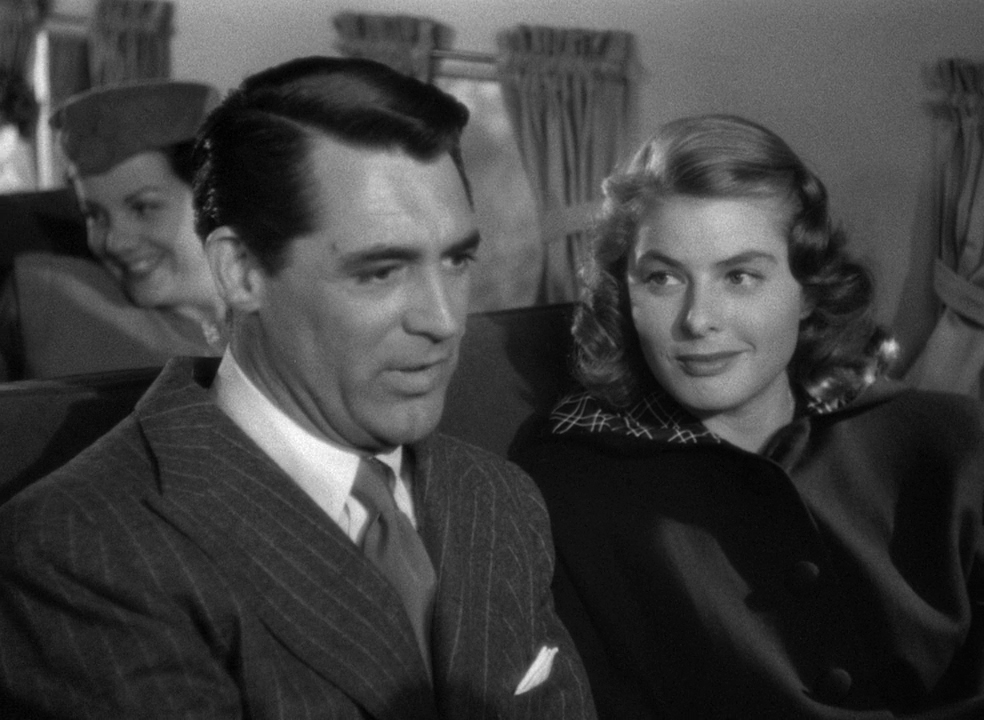
Cary Grant and Ingrid Bergman in a classic two shot from the 1946 Alfred Hitchcock film Notorious

A two shot (or, for short, two) is a type of shot in which the frame encompasses two people (the subjects).[1] The subjects do not have to be next to each other, and there are many common two shots which have one subject in the foreground and the other subject in the background.

Overview

[edit]

Classic two shots are shot with a medium lens, head to knees or closer (the term two shot is shorthand for "medium two shot"), and show the characters so that both of their faces can be clearly seen. Common variations include two people in profile, one person in profile and the other 3/4 or full towards camera, two people looking towards camera either side by side or with one behind the other, one person with their back to the other while the other looks at them, either profile, 3/4, or full face, or the mirror two shot.

An "American two shot" shows the two heads facing each other in profile to the camera.

In a "two shot west," two characters will begin a conversation face-to-face, then one character will turn 180° away from the other character while the other character keeps looking at them, and they will continue with the conversation. This enables both characters to appear together in a single shot directly facing the audience. It is rather unrealistic, and is primarily seen in American soap operas.[2]

In a "full two shot," the two characters are shown from head to toe. A "wide two shot" is a master shot showing two people using a wider lens, including an overview of their surroundings. A "close two shot" is a close-up with two people's heads in the frame, shot with a long lens. This framing is often used for shots of two people kissing or in moments of great dramatic tension.

In classic movies, long takes were often used in which several types of shots were used without cutting. For instance, if two people are talking facing the camera in a medium shot and the foreground character turns their back to the camera, the shot turns into an "over the shoulder" or "OTS" shot. If that character then walks towards the character in the background with both characters in profile, the shot turns into a full two shot. If the camera moves closer, the shot becomes a medium two shot again, and so on.

Similarly, a three shot has three people featured prominently in the composition of the frame.

In contrast, the term "one shot" has another meaning: it is used to describe a whole film, sequence or scene captured in one continuous take, usually footage without actual or noticeable cuts.

Shots that frame only one actor are called single shots (or short singles).

References

[edit]
Revisions and contributorsEdit on WikipediaRead on Wikipedia
from Grokipedia
A two-shot is a fundamental camera framing technique in film and television that captures two subjects within the same frame, emphasizing their interaction, relationship, or emotional dynamic without requiring multiple cuts. The subjects do not need to be positioned side by side and may appear at varying distances from the camera, such as one in the foreground and another in the background, allowing directors to convey intimacy, tension, or conflict efficiently. This shot can vary in scale, from close-ups that highlight facial expressions to wide shots that incorporate environmental context, making it a versatile tool for . It rose to prominence in the with soap operas as a cost-effective way to frame two actors in a single setup, and has evolved into a staple of cinematic , particularly in dialogue-heavy scenes where it establishes equality or contrast between characters. It serves multiple narrative purposes, including building romantic connections through , underscoring discord by having characters face away from each other, or illustrating emotional distance despite physical proximity—a variation known as the "two-shot west." Technically, it often transitions into over-the-shoulder shots for deeper conversation flow and can incorporate camera movements like pans or tilts to heighten drama. Notable examples demonstrate its impact across genres: in Pulp Fiction (1994), a low-angle two-shot of Jules and Vincent reinforces power dynamics during tense exchanges; Lost in Translation (2003) uses a medium two-shot to capture the subtle affection between Bob and Charlotte; and Moonlight (2016) employs one during a swimming scene to symbolize trust and vulnerability between Juan and Chiron. These applications highlight the two-shot's role in enhancing character development and audience engagement, remaining a preferred choice for directors seeking concise yet expressive visuals.

Definition and Characteristics

Framing and Composition

A two shot is typically executed as a that frames two subjects from the waist up, capturing their upper bodies and immediate surroundings to convey interaction or relationship without isolating either individual. This framing allows for the inclusion of facial expressions, gestures, and essential to the scene's emotional dynamics. Subjects are commonly positioned side-by-side or facing each other within the frame, emphasizing their proximity and shared space. Aspect ratio plays a key role in accommodating both subjects effectively; wider formats like 1.85:1 or 2.39:1 provide sufficient horizontal space to position them side-by-side without cropping limbs or contextual elements, maintaining visual balance and narrative clarity. In narrower ratios such as 1.33:1, the composition may require tighter vertical framing or diagonal arrangements to avoid distortion. Composition techniques in a two shot often apply the , dividing the frame into a 3x3 grid to position subjects along the lines or at intersections, which creates dynamic balance and guides the viewer's eye between the two figures. This method ensures neither subject dominates unless intentionally offset for dramatic effect, such as highlighting power imbalances. To maintain sharpness across both subjects, especially if they are at varying distances from the camera, cinematographers prioritize a deeper , achieved by selecting prime lenses like 35mm or 50mm and stopping down the (e.g., f/5.6 or higher). These focal lengths offer a natural perspective for medium framing, minimizing while providing enough to encompass the pair without excessive background intrusion.

Subject Positioning

In the two shot, subject positioning refers to the spatial arrangement of the two primary figures within the frame, which directly influences the portrayal of their relational dynamics. Common types include side-by-side positioning, where subjects are placed symmetrically adjacent to one another to emphasize equality or balance in their interaction; over-the-shoulder positioning, which frames one subject partially behind the other's shoulder to simulate conversational flow and perspective; and staggered positioning, where one subject is placed in the foreground and the other in the background to suggest depth or hierarchy in their relationship. The choice of positioning significantly affects viewer perception of the subjects' emotional and spatial relationships. For instance, facing positions can foster a sense of intimacy by drawing the into the shared and proximity of the characters, while back-to-back setups often generate tension by visually isolating the subjects and underscoring emotional distance or conflict. Symmetrical side-by-side arrangements promote perceptions of parity or , whereas staggered or lopsided placements can imply power imbalances, with the foreground figure appearing dominant. Blocking in a two shot requires careful to accommodate movements while preserving the frame's composition. Directors must limit performers' —such as restricting steps or gestures—to ensure both subjects remain visible and the relational spatial cues are maintained throughout the take, often necessitating rehearsals to align positions with the camera's fixed viewpoint. This constrained blocking enhances efficiency in scenes but demands precise marks to avoid unintended shifts that could disrupt the shot's balance. Eyeline matching within the two shot is essential for conveying natural interaction between subjects, directing their gazes toward each other to create continuity and believability in their exchange. By aligning the actors' eye directions precisely—typically at and toward the counterpart's position—filmmakers ensure the audience perceives authentic engagement, reinforcing the spatial relationships established by the positioning. This technique supports broader character dynamics by making interactions feel immersive and psychologically grounded.

Usage in Filmmaking

In Dialogue and Interaction Scenes

In dialogue and interaction scenes, the two shot plays a crucial role in capturing verbal exchanges by framing two characters simultaneously, allowing audiences to observe reactions, gestures, and subtle nonverbal cues from both subjects in real time. This composition, often executed as a medium two shot from the waist up, balances the figures with their immediate surroundings, facilitating a natural depiction of dynamics without isolating one participant. For instance, it enables viewers to perceive shifts in attention or emotional responses as the unfolds, enhancing the scene's immediacy and authenticity. Compared to alternating close-ups, the two shot offers significant advantages in maintaining spatial continuity, as it preserves the relative positions and movements of characters within the shared frame, thereby reinforcing the scene's geographic coherence and viewer orientation. This approach also reduces the need for frequent edit cuts, promoting a smoother flow and minimizing disruptions that could fragment the interaction's . In classical Hollywood , such techniques were refined to support seamless transitions during conversations, though modern applications often extend this efficiency to longer takes. The two shot integrates effectively with sound design, particularly in supporting overlapping dialogue, by keeping both speakers visible to align audio cues with visual reactions without requiring visual interruptions from cuts. This synergy allows sound editors to layer natural vocal interjections or ambient noises that enhance the scene's realism, as the static or subtly moving frame directs audience focus to the interplay of voices and expressions. Careful microphone placement during production ensures clarity in such setups, avoiding the need for extensive post-production ADR. However, common pitfalls in employing the two shot include overcrowding the frame, which can occur if background elements or character spacing are not meticulously controlled, leading to a cluttered composition that dilutes focus on key interactions. Additionally, an overly wide framing may result in a loss of emphasis on individual facial expressions, making subtle emotional nuances harder to discern and potentially weakening the scene's emotional impact. To mitigate these issues, cinematographers often prioritize precise blocking and lighting to isolate the subjects effectively.

In Establishing Character Dynamics

In two shots, balanced framing positions characters symmetrically within the frame to convey equality in their relationship, allowing viewers to perceive them as equals without verbal cues. This compositional choice fosters a sense of and mutual regard, as seen in scenes where subjects share the frame evenly, emphasizing collaborative dynamics over . Conversely, asymmetrical positioning, where one character dominates the frame's space or is placed higher or larger, signals power imbalances or shifting control, visually underscoring dominance or subordination in interpersonal interactions. Such can subtly reveal underlying tensions in character without relying on . Two shots frequently build tension or romance by isolating characters in , heightening or conflict. In romantic comedies, these shots underscore budding attractions through close proximity, capturing subtle gestures like lingering glances that amplify romantic potential. For tension, sustained framing of opposing characters can intensify confrontations, as their physical closeness mirrors psychological strain, drawing audiences into the relational stakes. Symbolically, two shots employ mirroring poses to depict or opposition between characters, enhancing thematic depth. When characters adopt identical postures or alignments, it signifies alignment or emotional , visually reinforcing unity in their arcs. In contrast, opposing poses—such as turned backs or divergent gazes—highlight discord or rivalry, using the frame to symbolize relational fractures. The pacing of two shots influences emotional investment by extending the duration of the frame, allowing viewers to absorb relational nuances before transitions. Sustained two shots, holding both characters in view during exchanges, build and immersion, as the unbroken composition encourages prolonged focus on their interplay and fosters deeper connection. This technique contrasts with rapid cuts, prioritizing relational development over action to heighten audience engagement with character motivations.

Historical Development

Origins in Early Cinema

Precursors to the two-shot, involving multi-subject medium-distance framings to depict interactions, emerged during the early 1900s as filmmakers transitioned from theatrical long shots to more varied compositions. Directors like introduced multi-subject framing in short films produced for Biograph Studios, using medium shots to depict group interactions and emotional exchanges without relying solely on wide establishing views. This approach drew heavily from theater staging, where early filmmakers adapted the proscenium arch composition—a fixed, rectangular frame mimicking the stage's boundary—to the cinema screen, allowing multiple actors to share the visual space as in a live performance. , a pioneer in narrative filmmaking, positioned the camera as a static observer in films like (1902), often framing multiple figures in theatrical-style scenes to convey action through gesture and posture. Griffith built on this tradition, refining shot scales in works such as (1915), where medium shots incorporated characters and environmental elements to enhance narrative depth. Technical constraints of early cameras further encouraged inclusive multi-figure compositions. With fixed-position setups lacking dollies or zooms, and wide-angle lenses designed for broad coverage on large-format , directors framed multiple subjects together to maintain spatial coherence and visibility in single takes, avoiding complex cuts that were not yet standard. By the and , these elements coalesced in key silent films, signaling a broader shift toward varied shot scales. Griffith's Intolerance (1916) featured multi-subject shots in interwoven s to parallel interpersonal tensions across historical vignettes, while Fritz Lang's (1927) used paired figures in urban settings to convey character relationships, contributing to the technique's role.

Evolution in Classical Hollywood

During and , the two-shot became a standardized component of the system in , often serving as an establishing frame that paired with shot-reverse-shot sequences to ensure spatial coherence and efficient narrative progression in dialogue-driven scenes. This integration allowed filmmakers to alternate between the broader two-shot and closer singles, maintaining the while emphasizing character interactions without jarring transitions. The transition to synchronized sound films in the late further entrenched the two-shot's role, as it facilitated the recording of between two subjects in a single take, with multiple-camera setups helping to align images with soundtracks and minimize disruptive cuts. This approach contributed to a measurable increase in median shot lengths—from 3.9 seconds in silent films to 6.0 seconds in early sound productions (1929–1933)—enabling more fluid conversational rhythms and reducing the reliance on rapid intercutting. Cinematographer advanced two-shot techniques through his pioneering deep-focus cinematography, which balanced lighting and sharpness across multiple planes to accommodate dual subjects effectively, as demonstrated in (1941). By using small apertures such as f/11 or f/16, high-speed Super-XX , and coated lenses, Toland achieved uniform illumination and focus for figures at distances ranging from 2–3 feet to 30–40 feet, allowing two-shots to convey both immediate interactions and environmental context with enhanced realism. In the 1940s, directors like Orson Welles innovated with more dynamic variations of two-shots, incorporating foreground-background layering and unconventional compositions to heighten dramatic tension while retaining continuity principles. Welles's work in Citizen Kane, often in collaboration with Toland, shifted toward deeper, more expressive two-shots, influencing a broader evolution toward visual complexity.

Notable Examples

Classic Films

In Casablanca (1942), the famous two-shot between Rick Blaine () and Ilsa Lund () at the airport exemplifies the emotional tension inherent in the two-shot technique during . This intimate framing captures their unresolved romance amid wartime sacrifice, with Rick's line, “We’ll always have . We didn’t have it, we’d lost it until you came to . We got it back last night,” underscoring the bittersweet pull of their past while Ilsa pleads, “What about us?” The close two-shot emphasizes their physical and emotional proximity, heightening the conflict as Rick urges her to prioritize her husband Victor's cause over their love: “Inside of us, we both know you belong with Victor. You’re part of his work... the problems of three little people don’t amount to a hill of beans in this crazy world.” The scene's narrative function lies in resolving personal desire through collective duty, a hallmark of the film's ideological framework. In (1949), two-shots during shadowy scenes amplify unease through stark framing and , reflecting the moral ambiguity of postwar . A key example occurs at the , where a two-shot of Holly Martins () and Harry Lime () positions them against the city's disorienting backdrop, with harsh shadows emphasizing the noir atmosphere of betrayal and hidden truths. This framing underscores Martins' disorientation as an outsider probing Lime's crimes. The narrative function serves to propel Martins from naive pulp writer to reluctant investigator, mirroring the city's fractured . The lighting obscures motivations and alliances. Alfred Hitchcock's (1954) employs two-shots to forge a direct link between the voyeuristic observer, L.B. "Jeff" Jefferies (), and his subjects across the courtyard, transforming passive watching into active narrative involvement. In scenes of discussion in Jeff's apartment, two-shots of Jeff and Lisa Fremont () build tension as they debate the suspected murder, with Lisa risking danger by entering killer Lars Thorwald's () apartment to retrieve evidence; Thorwald's reciprocal gaze across the divide implicates Jeff, shifting the dynamic from detached to mutual confrontation. This framing, with Jeff's apartment window acting as a cinematic , emphasizes his immobilized curiosity turning to peril, as "Thorwald... suddenly looking straight across the courtyard to see who it is that is receiving her message." The emotional tension builds Jeff's anxiety, linking observer and subject in a web of ethical complicity. Shot durations extend to 10-15 seconds in these two-shots to sustain , with transitions via point-of-view cuts that alternate between Jeff's and objective frames, blurring the line between reality and observed drama to critique voyeuristic spectatorship.

Modern Cinema and Television

In the digital era, advancements in camera technology and have enabled more dynamic and seamless two shots, allowing filmmakers to capture fluid interactions between characters without compromising performance. For instance, in David Fincher's (2010), cinematographer employed opposing two-camera setups during intense dialogue scenes, such as the opening bar confrontation between and Erica Albright, to facilitate rapid, overlapping exchanges while maintaining close framing of both subjects. This approach, enhanced by the RED One MX camera's capabilities, provided editorial flexibility and the illusion of continuous movement in through techniques like pan-and-scan, marking a shift from traditional single-take limitations. In television, particularly serialized dramas, two shots have become essential for depicting partner confrontations and evolving relationships, leveraging the medium's episodic structure to build tension over time. In (2008–2013), cinematographer frequently used wide two shots to underscore the fraught dynamics between Walter White and . These compositions, often held in steady wide angles, heighten emotional stakes during confrontations, allowing viewers to observe subtle shifts in power and loyalty across the series. A notable instance appears in Season 5's "," where a distant lakeside framing captures Walter's apparent camaraderie with partner masking impending betrayal, emphasizing isolation within their collaboration. Indie films have innovated with stylistic variations, employing intimate techniques to infuse two shots with raw intimacy and immediacy. In Barry Jenkins's Moonlight (2016), cinematographer utilized tight close-ups and subjective framing in the third act's diner reunion scene between adult and , drawing the audience into the characters' emotional space to convey vulnerability and unspoken connection after years apart. This approach, contrasting steadier shots in earlier chapters with more frantic styles, emphasizes their tentative reconnection. The prevalence of widescreen formats in modern cinema, such as 2.35:1 or 2.39:1, has further expanded the possibilities for two shots by accommodating broader environmental context while preserving relational closeness. These ratios enable filmmakers to frame subjects side-by-side with added horizontal space, as in medium close-ups where actors' faces fill the center without cropping, allowing subtle elements to inform dynamics without diluting focus— a flexibility unavailable in narrower academy ratios. This format's adoption since the has persisted into digital production, fostering more immersive interpersonal compositions in contemporary narratives.

Comparison to Other Shot Types

The two shot distinguishes itself from the or by framing two subjects simultaneously, thereby providing essential relational context that highlights their interaction, emotional exchange, or power dynamics, which isolated single shots cannot convey as they focus solely on one individual. For instance, while a intensifies a character's solitary or reaction, a two shot captures mutual responses, such as shared glances or tension, enriching the narrative depth of interpersonal moments. In contrast to medium or wide shots, the two shot prioritizes interpersonal details like and facial interplay between subjects without the expansive environmental breadth of wider framings, which often subordinate character relations to setting or action. A typically frames a single subject from the waist up for personal emphasis, whereas a two shot extends this to dual subjects for relational focus; wide shots, meanwhile, establish broader spatial context but dilute intimate character connections. Two shots integrate effectively into editing patterns, often serving as transitional frames between establishing wide shots and intensified close-ups or singles, minimizing cuts while maintaining conversational flow in sequences. This placement allows editors to alternate with over-the-shoulder singles for dynamic rhythm without losing relational continuity. Filmmakers select two shots over alternatives when scene objectives center on or subtle interactions, such as revealing character bonds or conflicts through simultaneous visibility, whereas single shots suit isolated and wide or medium shots better capture action-driven environmental scope or individual movement. In action scenes, two shots are chosen sparingly to emphasize character interplay amid chaos, but singles or wides predominate for broader momentum.

Technical Variations

The over-the-shoulder (OTS) variation adapts the two shot by positioning the camera directly behind and slightly above one subject's shoulder, framing their head and back in the foreground while centering the second subject as the primary focus in the midground. This setup simulates a subjective viewpoint, aligning the audience's perspective with the off-screen character to heighten immersion during conversational exchanges. Technically, the camera is placed close enough to capture the shoulder's curve without obstructing the view while maintaining eye-level alignment to preserve natural flow. In production, OTS shots require precise blocking to ensure the foreground subject's posture does not block the listener's reactions. This variation facilitates reverse-angle coverage in without full cuts, reducing setup time on set while sustaining tension in interpersonal dynamics. Tracking two shots extend the static two shot by incorporating camera movement to follow subjects in motion, such as during walking sequences, using dollies, cranes, or stabilizers like to keep both figures centered in the frame. The technique demands coordinated subject pacing—often rehearsed to match camera speed—and appropriate lens choices to accommodate lateral shifts without losing composition balance. This maintains visual parity between subjects, preventing one from dominating the frame as they traverse environments. Split-screen and digital composite methods simulate two shots for scenes where subjects are not physically adjacent, dividing the frame vertically or horizontally to display simultaneous actions, as in remote communications or parallel narratives. In traditional split-screen, identical camera setups and timing markers ensure synchronized movements, with masking to blend edges seamlessly; digital composites, using software like Nuke or After Effects, layer elements with chroma keying or for more flexible spatial illusions. These approaches overcome logistical constraints in production, such as separations, by filming elements separately and aligning them via grid references. Lighting two shots presents challenges in achieving uniform exposure across subjects while allowing for stylistic contrasts, particularly when keying each differently to evoke mood variations like tension or intimacy. Cross-backlighting addresses this by positioning two key sources—often soft LED panels at 45-degree angles—so one acts as key for its subject and for the other, minimizing shadows and spill with flags or diffusers. For mood differentiation, cinematographers may employ dual keys with varied intensities, calibrated via light meters to maintain balance without overexposing the frame. This requires pre-light tests to balance ratios, as ambient light can exacerbate inconsistencies in multi-subject setups.

References

Add your contribution
Related Hubs
User Avatar
No comments yet.