Hubbry Logo
UnderstoryUnderstoryMain
Open search
Understory
Community hub
Understory
logo
8 pages, 0 posts
0 subscribers
Be the first to start a discussion here.
Understory
Understory
from Wikipedia

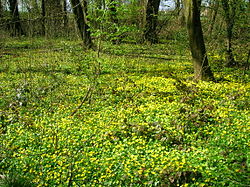
Lesser celandine (Ficaria verna) on forest floor in spring

In forestry and ecology, understory (American English), or understorey (Commonwealth English), also known as underbrush or undergrowth, includes plant life growing beneath the forest canopy without penetrating it to any great extent, but above the forest floor. Only a small percentage of light penetrates the canopy, so understory vegetation is generally shade-tolerant. The understory typically consists of trees stunted through lack of light, other small trees with low light requirements, saplings, shrubs, vines, and undergrowth. Small trees such as holly and dogwood are understory specialists.

In temperate deciduous forests, many understory plants start into growth earlier in the year than the canopy trees, to make use of the greater availability of light at that particular time of year. A gap in the canopy caused by the death of a tree stimulates the potential emergent trees into competitive growth as they grow upward to fill the gap. These trees tend to have straight trunks and few lower branches. At the same time, the bushes, undergrowth, and plant life on the forest floor become denser. The understory experiences greater humidity than the canopy, and the shaded ground does not vary in temperature as much as open ground. This causes a proliferation of ferns, mosses, and fungi and encourages nutrient recycling, which provides favorable habitats for many animals and plants.

Understory structure

[edit]
Tree base showing moss understory limit
Summer understory growing near the Angel Springs Trailhead of Myra-Bellevue Provincial Park

The understory is the underlying layer of vegetation in a forest or wooded area, especially the trees and shrubs growing between the forest canopy and the forest floor. Plants in the understory comprise an assortment of seedlings and saplings of canopy trees together with specialist understory shrubs and herbs. Young canopy trees often persist in the understory for decades as suppressed juveniles until an opening in the forest overstory permits their growth into the canopy. In contrast understory shrubs complete their life cycles in the shade of the forest canopy. Some smaller tree species, such as dogwood and holly, rarely grow tall and generally are understory trees.

The canopy of a tropical forest is typically about 10 m (33 ft) thick, and intercepts around 95% of the sunlight.[1] The understory therefore receives less intense light than plants in the canopy and such light as does penetrate is impoverished in wavelengths of light that are most effective for photosynthesis. Understory plants therefore must be shade tolerant—they must be able to photosynthesize adequately using such light as does reach their leaves. They often are able to use wavelengths that canopy plants cannot. In temperate deciduous forests towards the end of the leafless season, understory plants take advantage of the shelter of the still leafless canopy plants to "leaf out" before the canopy trees do. This is important because it provides the understory plants with a window in which to photosynthesize without the canopy shading them. This brief period (usually 1–2 weeks) is often a crucial period in which the plant can maintain a net positive carbon balance over the course of the year.

As a rule forest understories also experience higher humidity than exposed areas. The forest canopy reduces solar radiation, so the ground does not heat up or cool down as rapidly as open ground. Consequently, the understory dries out more slowly than more exposed areas do. The greater humidity encourages epiphytes such as ferns and mosses, and allows fungi and other decomposers to flourish. This drives nutrient cycling, and provides favorable microclimates for many animals and plants, such as the pygmy marmoset.[2]

See also

[edit]

References

[edit]
[edit]
Revisions and contributorsEdit on WikipediaRead on Wikipedia
from Grokipedia
The understory is the of in forests and woodlands that occupies the beneath the dominant canopy layer formed by the tallest trees, typically comprising shrubs, small trees, herbaceous , ferns, mosses, lichens, and vines adapted to low-light conditions. This layer plays a crucial role in ecosystems by supporting high levels of , where it can account for 14% to 40% of species in tropical forests and over 80% in temperate ones. Understory contributes to nutrient cycling through litter decomposition and , enhances soil stability by reducing erosion, and facilitates , with average around 6.5 tons per representing about 6% of total globally. It also provides essential habitat and food sources for , including birds, mammals, amphibians, and , while influencing regeneration by competing with or facilitating the growth of tree seedlings. The composition of the understory varies by forest type, , and disturbance history; for instance, in temperate forests, it often includes spring ephemerals like trilliums and violets that bloom before canopy closure, while tropical understories feature dense assemblages of soft-stemmed plants and lianas. Human activities, such as fire suppression and introduction (e.g., earthworms), can alter understory density and diversity, sometimes leading to reduced plant cover by 25% to 75% and hindering succession. Overall, the understory is vital for resilience, particularly under pressures, as it modulates microbial communities and across boreal, temperate, and subtropical regions.

Definition and Characteristics

Definition

The understory is the layer of in and woodlands situated beneath the canopy but above the , typically comprising shrubs, small trees with low light requirements, saplings, herbaceous , and ferns. This hosts a diverse array of plant species adapted to shaded conditions, including suppressed trees, vines, and groundcover that contribute to the overall structural complexity of the . In vertically stratified forest ecosystems, such as tropical rainforests, the understory occupies an intermediate position among the primary layers: the emergent layer, consisting of sporadically tall trees that protrude above the main canopy to access direct ; the canopy or overstory, formed by the crowns of mature dominant trees that capture most incoming light; the understory itself, which receives only partial shade and diffuse illumination; and the , a layer of decomposing , mosses, and . This layered organization influences resource distribution, with the understory acting as a transitional zone where light penetration typically ranges from 1-5% of full , supporting shade-tolerant species. The term "understory" emerged in and in 1902, derived from "under" (meaning beneath) and "story" (referring to a level or layer, as in building ), initially used to describe sub-canopy in managed woodlands and . This reflected early 20th-century efforts to classify structure for practices, distinguishing the subordinate growth from the primary canopy.

Physical and Biological Traits

Understory vegetation exhibits a characteristic range that reflects its position beneath the taller canopy layers, typically spanning from less than 1 meter for herbaceous and ferns to 5-10 meters for shrubs and subcanopy trees, with variations across types such as shorter statures in dense tropical rainforests and taller forms in temperate woodlands. This dwarfed growth is largely a result of intense light competition from , leading to compact, multi-stemmed forms that maximize resource capture in shaded environments. A defining biological trait of understory is their high , enabling survival in low-light conditions where photosynthetic rates are optimized for 1-5% of full intensity. Shade-tolerant possess low light compensation points, often around 10-20 μmol m⁻² s⁻¹, below which net equals respiration, allowing them to maintain positive carbon balance in dim understory light regimes that average 0.7-7% of above-canopy levels during peak growing seasons. These adaptations include thinner leaves with higher content and altered photosynthetic machinery to enhance efficiency under far-red enriched shade. The species composition of the understory is dominated by angiosperms, including shade-tolerant shrubs such as species and understory trees like (red maple), alongside ferns and other vascular plants, as well as non-vascular elements like mosses and lichens that thrive in the humid, shaded . In tropical and subtropical forests, this layer also features epiphytes, lianas, and hemiepiphytes, which climb or attach to supports to access occasional light gaps while exploiting the moist understory air. These growth forms—ranging from upright shrubs and herbaceous perennials to vining climbers—contribute to a diverse structural mosaic adapted to vertical stratification below the canopy. Understory density and coverage vary widely depending on canopy openness and disturbance history, ranging from sparse distributions (less than 10% cover) in intact, closed-canopy forests to dense thickets (over 50% cover) in light gaps or edge habitats, as quantified through ecological surveys using percent cover metrics. For instance, in northern hardwood forests, total understory cover often averages around 36%, with dominant species accounting for the majority of this in layered assemblages of , shrubs, and tree seedlings. Such variability influences light penetration to the and is routinely assessed via plot-based sampling to monitor structural integrity.

Ecological Importance

Role in Nutrient Cycling

Understory vegetation plays a pivotal role in nutrient cycling within forest ecosystems by producing litter that undergoes decomposition, thereby returning essential organic matter and nutrients to the soil. In many forests, understory plants contribute approximately 17-38% of total leaf litterfall, which facilitates the breakdown of organic material and the subsequent release of nutrients such as nitrogen (N) and phosphorus (P) into the soil profile. This litter input is particularly significant in shaded environments where understory species, adapted to low light, maintain dense growth and high turnover rates, enhancing soil fertility through microbial-mediated decomposition processes. Mycorrhizal associations with understory further amplify uptake efficiency, especially for immobile elements like and . These symbiotic fungi extend the absorptive surface area of and mobilize from organic sources, with ericoid mycorrhizae in heath-dominated understories exemplifying this mechanism by enabling species to access otherwise unavailable P and N pools through enzymatic degradation of . In -poor soils, such associations can increase P and N acquisition by up to several-fold compared to non-mycorrhizal , promoting overall retention and plant productivity. Understory vegetation also contributes to , primarily through belowground storage in fine , which represent a dynamic pool of carbon in forest soils. Fine from understory can account for 25-78% of total fine root production in some boreal systems, with their turnover contributing up to 30% of belowground carbon storage in certain types by adding recalcitrant organic inputs to the . This supports long-term carbon stabilization while linking to nutrient cycling, as root exudates and necromass release N and P concurrently. Seasonal dynamics in understory leaf turnover further influence the timing of release, particularly in forests where phenological cycles align with environmental cues. Autumn leaf fall from understory synchronizes with canopy , leading to pulsed inputs of labile and s into the during cooler, moist periods that favor and microbial activity. For instance, in temperate systems, this seasonal shedding enhances N and P availability in the following spring, mitigating nutrient limitations for early-growing understory and sustaining productivity year-round.

Habitat and Biodiversity Support

The understory layer in forests creates microhabitats through its structural complexity, including layered foliage, shrubs, and herbaceous that provide nesting sites and protective cover for various . For instance, dense understory vegetation offers ideal nesting locations for birds such as warblers, which prefer the shaded, shrubby conditions for building ground or low nests. Similarly, it serves as browsing and hiding cover for mammals like deer, enabling them to forage on leaves, twigs, and fruits while evading predators. This vertical and horizontal heterogeneity enhances habitat suitability, supporting that rely on these features for and . Additionally, the moist, shaded conditions of the understory provide critical breeding and habitats for amphibians, such as salamanders and frogs, which depend on leaf litter and decaying wood for moisture retention and prey. Understory plants also play a crucial role in supporting and herbivores by hosting specialized and providing floral resources. Flowering understory species supply and essential for , , and moths, which depend on these plants during periods when canopy flowers are scarce. In many ecosystems, understory vegetation contributes significantly to pollinator diets, with studies indicating that forest understory flowers are a primary food source for a substantial portion of wild and other pollinator communities. Herbivores, including and larger mammals, further benefit from the diverse foliage and fruits, fostering intricate food webs. Certain understory act as , disproportionately influencing ecosystem dynamics through their support for . For example, berry-producing shrubs like species (blueberries and huckleberries) provide critical food for birds, mammals, and , sustaining populations across trophic levels and integrating into broader food webs. These plants not only offer seasonal fruits but also attract pollinators, amplifying their ecological impact. The understory harbors a substantial portion of forest plant species diversity, often accounting for 80% or more of vascular plant species in temperate forests and serving as a refuge for rare and endemic plants. This layer's high richness stems from its adaptation to shaded, heterogeneous conditions, allowing specialized flora to thrive where canopy competition is intense. By maintaining this diversity, the understory bolsters overall forest resilience and supports associated fauna.

Formation and Influences

Environmental Factors

The understory layer of forests develops primarily under low- conditions, where diffuse penetrates the canopy, typically ranging from 1% to 10% of full depending on canopy density and seasonal variations. In dense forests, summer levels at the often fall between 0.7% and 7% of full , creating a shaded environment that favors shade-tolerant with adaptations for efficient light capture. Canopy gaps formed by tree falls or natural disturbances significantly increase light availability in localized areas, promoting the growth and regeneration of understory plants that might otherwise remain suppressed. Soil moisture and edaphic factors play a critical role in understory composition, with many species preferring moist soils rich in organic matter that retain water and nutrients. These conditions are often found in forest floors with high litter accumulation, supporting understory diversity by facilitating root access to resources. Soil pH, typically ranging from 4.5 to 6.5 in many temperate and coniferous forests, influences species distribution, as acidic conditions favor ericaceous shrubs and ferns while limiting calcifuge species. Variations in soil moisture, driven by texture and organic content, further shape understory density, with drier sites exhibiting sparser vegetation compared to mesic habitats. Climate factors, including temperature and precipitation, modulate understory development through canopy interactions that buffer extremes. The overstory canopy moderates understory temperatures, buffering against high and low extremes by cooling the understory when ambient temperatures are hot (by ~4°C on average for maximum temperatures) and warming it when cold, while also reducing diurnal temperature ranges, thereby protecting frost-sensitive species in temperate and boreal forests during cold snaps. Higher precipitation enhances understory productivity and density, particularly in wetter forests where moisture supports lush growth, whereas declining precipitation in drier regions leads to reduced cover and shifts toward drought-tolerant flora. Topographic features such as , aspect, and create microhabitats that alter drainage, exposure, and resource availability, profoundly affecting understory richness. North-facing slopes, with and moister conditions due to reduced solar exposure, often host richer understory communities compared to south-facing slopes, which experience greater and support more sparse, tolerant . gradients influence understory via changes in properties and redistribution, with higher elevations typically showing decreased diversity due to poorer drainage and temperatures, while slopes facilitate flow that enhances understory vigor in concave positions like gullies.

Biotic Interactions

Biotic interactions play a crucial role in shaping the establishment and persistence of understory vegetation through competitive, mutualistic, and antagonistic relationships with other organisms. Overstory trees often exert competitive pressure on understory plants via , where chemical compounds released from leaves, roots, or bark inhibit and growth of understory . For instance, eastern hemlock () produces allelochemicals that reduce understory plant growth and alter properties, limiting seedling recruitment in shaded forest floors. Similarly, invasive like garlic mustard () suppress native tree seedlings through root exudates that disrupt microbial communities essential for understory development. To mitigate such , understory and canopy frequently partition resources, particularly in root niches, allowing coexistence by accessing water and nutrients at different depths. In drought-prone environments, understory trees with shallower roots avoid with deeper-rooted canopy , thereby enhancing their during seasonal dry periods. This vertical partitioning is evident in tropical forests, where functional traits like root depth and mycorrhizal associations enable understory plants to exploit distinct resource gradients from overstory dominants. Mutualistic interactions further support understory persistence by facilitating reproduction and dispersal. Understory plants rely heavily on insects for pollination, forming symbiotic relationships where pollinators access nectar or pollen while transferring gametes between flowers. Bees and other hymenopterans, for example, pollinate a significant portion of understory flora, promoting genetic diversity and population stability in shaded habitats. Seed dispersal by birds complements this, as frugivorous species consume understory fruits and deposit seeds away from parent plants, reducing density-dependent mortality and enabling colonization of new microsites. In tropical understories, ant-plant mutualisms exemplify specialized symbiosis, where ants defend myrmecophytic plants against herbivores in exchange for nectar or domatia. Long-term associations, such as those between Myrmelachista ants and Tococa shrubs, enhance plant growth rates and leaf defenses, stabilizing understory communities in nutrient-poor soils. Herbivory and predation exert regulatory pressures on understory populations, influencing defenses and structure. by ungulates, such as deer, imposes selective pressure that favors spiny or thorny , which deter consumption and protect associated tree seedlings. In temperate forests, thorny species like wild rose (Rosa spp.) and hawthorn ( spp.) reduce browsing intensity on understory regeneration, allowing palatable species to establish beneath protective cover. This browsing maintains shrub diversity by preventing dominance of unpalatable , while chronic herbivory regulates population sizes through reduced recruitment and altered growth forms. Predation on herbivores, in turn, indirectly modulates understory dynamics by alleviating pressure on , as seen in systems where insect predators limit outbreaks on understory foliage. Pathogen dynamics, particularly fungal diseases, target understory and drive co-evolutionary adaptations. Rust fungi (Pucciniales) commonly infect understory and shrubs, causing leaf spots, , or systemic decline that affect and reproduction. In rainforests, canopy pathogens often spill over to understory juveniles, linking disease cycles between strata and amplifying vulnerability in humid microsites. Co-evolution between rusts and hosts has shaped host resistance, with developing hypersensitive responses or chemical deterrents that select for specialized fungal . This arms-race dynamic regulates understory populations, promoting diversity through cycles of and resistance in shaded environments.

Variations Across Ecosystems

Temperate and Boreal Forests

In temperate and boreal forests, the understory layer is shaped by cooler climates and pronounced seasonality, featuring a mix of shade-tolerant shrubs, herbs, and occasional that contribute to complexity beneath the dominant canopy of deciduous hardwoods or . Deciduous shrubs such as (dogwoods) and species are prominent in temperate understories, where they display synchronized leafing patterns with trees, emerging in spring and senescing in autumn to optimize light capture during brief periods of canopy openness. In boreal forests, coniferous understory species like Taxus canadensis (Canada yew) prevail, forming low, dense mats that persist year-round and provide structural continuity in shaded, moist environments. These plants generally exhibit high , enabling survival under low-light conditions typical of closed-canopy forests. Understory density varies markedly between forest types, reflecting differences in canopy closure and resource availability. In mixed temperate forests, such as northern hardwoods, the understory often achieves moderate to high cover, with herb layers reaching approximately 36% in some stands, dominated by ferns and forbs that fill gaps between . For instance, can contribute up to 25% cover in riparian communities, enhancing overall layer thickness. Conversely, in dense boreal spruce (Picea) stands, the understory remains sparse and scattered, with low vegetation cover due to heavy shading from the evergreen canopy and thick organic litter layers that limit establishment. Adaptations to seasonal challenges are key to understory persistence in these ecosystems, particularly cold hardiness that allows overwintering structures to endure freezing temperatures and . Many species employ phenological escape strategies, timing growth to exploit transient light windows before full canopy leaf-out; spring ephemerals like and Trillium undulatum complete their entire aboveground carbon assimilation in 3–4 weeks of early spring, relying solely on this pre-canopy period for and storage. These herbs senesce by late May as shade intensifies, conserving energy through belowground reserves adapted to periodic . Regionally, understory composition in eastern North American hardwood forests emphasizes diverse deciduous shrubs and ephemerals, such as hobblebush () alongside species, fostering layered habitats in mesic sites like those at Hubbard Brook. In European temperate woodlands, understories feature similar functional groups but with greater emphasis on calciphilous herbs and shrubs like , showing shifts toward increased cover in conserved stands over decades. Boreal zones incorporate fire-resilient species, such as ericaceous shrubs ( and Ledum spp.) and mosses, which resprout or regenerate from banks post-disturbance, maintaining understory resilience in fire-prone landscapes.

Tropical and Subtropical Forests

In tropical and subtropical forests, the understory exhibits exceptionally high , with up to 229 species per reported in the herbaceous layer of some African rainforests. This diversity is often dominated by monocot families such as (palms), (aroids), and (gingers), alongside climbing species from and other lianescent groups; for instance, genera like (Heliconiaceae) and Piper are prevalent in Neotropical understories, contributing to dense herbaceous and vine cover. In wet Neotropical sites, alone can comprise over 50% of understory , underscoring their ecological dominance in shaded, humid environments. The structural complexity of the tropical and subtropical understory is pronounced, forming multi-layered assemblages that include hemiepiphytes—plants like certain figs (Ficus spp.) that begin life as epiphytes before rooting into the ground—and gap-colonizing herbs and shrubs that exploit light from canopy disturbances. High abundance of lianas, which can account for up to 25% of woody stems in these forests, further enhances connectivity by linking understory plants to higher strata, facilitating seed dispersal and structural stability. This intricate layering supports a mosaic of microhabitats, from shaded forest floor herbs to climbing vines ascending toward light gaps, contrasting with simpler structures in other biomes. Adaptations to the consistently high humidity and frequent rainfall are evident in the prevalence of broad-leaved species featuring drip tips—elongated, pointed apices that accelerate runoff and reduce fungal growth. In nutrient-poor, highly weathered soils typical of these ecosystems, understory plants heavily rely on mycorrhizal associations, particularly arbuscular mycorrhizae, to enhance and uptake, enabling survival in environments where is low despite rapid . Regional variations highlight distinct understory compositions; Amazonian forests feature aroid- and palm-rich understories with high hemiepiphyte diversity, while Southeast Asian equivalents emphasize ginger and climbing bamboo allies amid dipterocarp canopies. In subtropical cloud forests, such as those in the Andes or Southeast Asian highlands, unique endemics like epiphytic orchids proliferate, with approximately 29,000 orchid species described worldwide as of 2025, many concentrated in these misty environments and contributing to exceptional local diversity.

Human Interactions and Conservation

Impacts from Human Activities

Human activities profoundly alter understory structure and function through direct modification and indirect environmental changes. , often involving selective and canopy removal, disrupts the shaded essential for understory persistence, leading to widespread dieback of shade-tolerant species and proliferation of light-demanding weedy invaders. In the southern Amazon, selective logging combined with fires has resulted in up to 50% reductions in understory seedling density and diversity, exacerbating vulnerability to secondary disturbances like understory fires that further diminish regeneration potential. Recurrent fires in logged areas can reduce the basal area of small, medium, and large understory plants by more than 50% compared to unburned forests, shifting community composition toward grass-dominated states and hindering recovery. Agricultural expansion and livestock grazing similarly degrade understory communities by converting forested lands to open pastures and exerting selective browsing pressure. In temperate ecosystems, cattle grazing suppresses shrub biomass and cover, often favoring palatable species while diminishing overall structural complexity. Overbrowsing by livestock reduces native shrub richness and diversity in the majority of documented instances, as seen in Mediterranean dehesas where cattle limit seedling recruitment and shrub establishment more severely than other herbivores. Such practices not only curtail understory habitat availability but also contribute to broader biodiversity losses by disrupting native plant assemblages. Climate change amplifies these impacts by altering light regimes, moisture availability, and temperature, prompting understory migration and compositional turnover. Projected warming and associated canopy shifts favor thermophilization, with warm-adapted increasing in dominance by 12% across landscapes by 2100, while cold- and light-preferring natives decline by up to 48%. Understory plant communities are expected to experience high turnover rates, averaging 62% at the plot level by 2100, driven primarily by climatic factors that outpace moisture and light influences. These shifts manifest as homogenization and reduced cover (down 8% regionally), particularly in subalpine forests where turnover could reach 67%. Urbanization fragments remaining forest patches, intensifying that penetrate 15–20 meters inward and promote invasive understory dominants like English (Hedera helix). In urban settings such as Seattle's parks, fragmentation creates light-rich edges where establishes dense mats, averaging 117% cover in invaded plots and suppressing native cover by over 50% (from 75% to 35% non-ivy vegetation). Human disturbances, including introductions and development, facilitate ivy's spread into interiors, forming "ivy deserts" that displace ground flora and weaken overstory trees in mid-Atlantic and forests. This invasion alters understory diversity and function, with edge habitats showing higher ivy abundance than intact woodlot interiors.

Conservation Strategies

Conservation strategies for understory ecosystems emphasize proactive measures to safeguard and rehabilitate these vital forest layers, particularly in response to threats like . The establishment of protected areas plays a central role, with reserves designed to maintain understory integrity by limiting human disturbances and preserving natural succession processes. For instance, World Heritage sites in tropical forests, such as the Central Amazon Conservation Complex spanning over 6 million hectares, protect contiguous forest structures that support diverse understory plant communities and associated wildlife. Similarly, the Tropical Rainforest Heritage of , covering 2.5 million hectares across three national parks, safeguards understory through strict zoning that prohibits logging and promotes ecological monitoring. These sites demonstrate how protected areas can serve as benchmarks for understory conservation by retaining canopy gaps and conditions essential for shade-tolerant species regeneration. Restoration techniques focus on mimicking natural disturbance regimes to revive understory health in degraded forests. Selective , which removes only targeted overstory trees while preserving understory , allows light penetration to stimulate growth without widespread disruption. Gap creation—intentionally forming small canopy openings of 0.5 to 1 —emulates or natural mortality events, fostering understory diversity by enabling seedling establishment of shade-intolerant pioneers alongside tolerant . Replanting shade-tolerant , such as those from the genera Piper or in tropical settings, further accelerates recovery when combined with these methods, ensuring long-term structural integrity. In selectively logged tropical forests, low-intensity thinning of pioneer understory stems has proven effective, reducing pioneer dominance by up to 86% and enhancing late-successional tree growth at a of approximately $80 per . Managing invasive species is crucial to prevent understory displacement by non-native plants, which can outcompete natives and alter nutrient cycles. Eradication programs often employ manual removal, where invasive shrubs and herbs are cut and uprooted to minimize regrowth, followed by repeated treatments over 2-3 years to achieve near-complete elimination. Biocontrol methods, such as introducing host-specific insects for targeted invasives like garlic mustard (), offer a sustainable alternative in larger areas, reducing chemical use while promoting native recovery. In temperate forests, such mechanical removal has led to successful native plant resurgence, with cover increasing by 2-3% annually when pre-existing native richness is high, underscoring the importance of site-specific assessments. The U.S. Forest Service supports these efforts through technical assistance and funding for invasive control in , emphasizing integrated approaches that monitor understory response post-intervention. Policy frameworks integrate understory protection into broader , ensuring sustainability through enforceable standards. The (FSC) requires managers to retain understory vegetation, snags, and woody debris to maintain ecological functions, with specific indicators mandating at least 10-30% basal area retention in harvest openings larger than 6 acres in regions like the . These standards prohibit practices that degrade understory, such as even-aged in uneven-aged forests, and promote monitoring of native plant communities to align with historical ecosystems. By incorporating understory retention into audits, FSC facilitates market incentives for sustainable practices, with approximately 161 million hectares certified globally as of 2024. Recent evaluations, including a 2024 study, confirm that FSC-certified forests support higher , including populations reliant on understory habitats, compared to non-certified areas.

References

Add your contribution
Related Hubs
User Avatar
No comments yet.