
_cropped.jpg/250px-Flowers_(2425723494)_cropped.jpg)


_cropped.jpg)
Community hub
Recent from talks
Contribute something
Nothing was collected or created yet.
Ficaria verna
View on Wikipedia
| Lesser celandine | |
|---|---|
_cropped.jpg)
| |
Scientific classification 
| |
| Kingdom: | Plantae |
| Clade: | Tracheophytes |
| Clade: | Angiosperms |
| Clade: | Eudicots |
| Order: | Ranunculales |
| Family: | Ranunculaceae |
| Genus: | Ficaria |
| Species: | F. verna
|
| Binomial name | |
| Ficaria verna | |
| Synonyms[1] | |
|
Synonyms
| |
Ficaria verna (formerly Ranunculus ficaria L.), commonly known as lesser celandine or pilewort,[3] is a low-growing, hairless perennial flowering plant in the buttercup family Ranunculaceae. It has fleshy dark green, heart-shaped leaves and distinctive flowers with bright yellow, glossy petals.[4][5] Native to Europe and Western Asia, it is now introduced in North America, where it is known by the common name fig buttercup and considered an invasive species.[6][7][8][9] The plant is poisonous if ingested raw and potentially fatal to grazing animals and livestock, such as horses, cattle, and sheep.[10] For these reasons, several US states have banned the plant or listed it as a noxious weed.[7][11] It prefers bare, damp ground and is considered by horticulturalists in the United Kingdom as a persistent garden weed;[12][13] nevertheless, many specialist plantsmen, nursery owners and discerning gardeners in the UK and Europe collect selected cultivars of the plant, including bronze-leaved and double-flowered ones. Emerging in late winter with flowers appearing late February through May in the UK, its appearance across the landscape is regarded by many as a harbinger of spring.[12]
Description
[edit]
Lesser celandine is a hairless perennial plant to about 25 cm (9.8 in) high, growing in clumps of 4-10 short stems, on which the leaves are spirally-arranged or all basal. The leaf stalks have sheathing bases, no stipules, a groove along their upper surface, and two hollows within. The leaves are cordate, 1–4 cm (0.39–1.57 in) across, dark-green above with a distinctive variegated or mottled pattern, and pale green below. Purple-leaved varieties are common. The margins of the leaves are sometimes entire (rounded) but more often angled or weakly lobed, with hydathodes at the tips. There are two types of roots: dense clusters of thick, pale-coloured elongated tubers surrounded by patches of short, fibrous roots. Some clumps give rise to long stolons to 10 cm (3.9 in) or more, allowing vegetative spread to produce extensive carpets of plants.[14]

It produces large actinomorphic (radially symmetrical) flowers with a diameter of up to 3–5 cm (1.2–2.0 in), on long stalks arising individually from the leaf axils or in loose cymes at the top of the stem. There are no bracts. The flowers have a whorl of 3 sepaloid tepals and 7 to 12 glossy[4] yellow petaloid tepals, which are sometimes tinged purple or grey on the back. Double flowered varieties also occur. The stamens and carpels are numerous, and the fruit is a single-seeded, shortly hairy achene with a very short style. In several subspecies, tubers are formed in the leaf axils after flowering.[15]: 118 It blooms between March and May in the UK.[16]
Distribution
[edit]Ficaria verna sensu lato is native to central Europe, north Africa and the Caucasus. It has been introduced into Iceland and North America.[17]
Life cycle
[edit]
Lesser celandine grows on land that is seasonally wet or flooded, especially in sandy soils, but is not found in permanently waterlogged sites.[18] In both shaded woodlands and open areas, Ficaria verna begins growth in the winter when temperatures are low and days are short.[19] The plants mostly propagate and spread vegetatively,[20] although some subspecies are capable of producing up to 73 seeds per flower.[12] Germination of seeds begins in the spring, and continues into summer.[12] Seedlings remain small for their first year, producing only one or two leaves until the second year.[12]
Growth and reproduction is poor in dry or acidic conditions, though the plants can handle drought well once dormant.[12] By emerging before the forest canopy leafs out, Ficaria verna is able to take advantage of the higher levels of sunlight reaching the forest floor during late winter and early spring.[21] By late spring, second year plants quickly age as daylight hours lengthen and temperatures rise.[12] By the end of May, foliage has died back and plants enter a six month dormancy phase.[20]
If disturbed, separation of the plant's numerous basal tubers is an efficient means of vegetative propagation.[19] The plants are easily spread if the prolific tubers are unearthed and scattered by digging activities of some animals and humans.[21][12] Erosion and flood events are particularly effective means of spread, as the plants are very successful at colonizing low-lying floodplains once deposited.[19][22]


Ficaria verna exists in both diploid (2n=16) and tetraploid (2n=32) forms which are very similar in appearance.[12] However, the tetraploid types prefer more shady locations and can develop up to 24 bulbils at the base of the stalk.[12][20] Subspecies F. verna ssp. verna, and F. verna ssp. ficariiformis are tetraploid and capable of colonizing new areas much faster because they produce bulbils in their leaf axils[23]: 126 [20] in addition to root tubers. Subspecies F. verna calthifolia and F. verna verna are diploid[10][24] and hybrids between subspecies often create sterile triploid forms.[10]
Ecology
[edit]Lesser celandine is pollinated by bees, small beetles, and flies, including Apis mellifera, Bibio johannis, Phora, and Meligethes. The larvae of Olindia schumacherana feed on the leaves.[25]
It associates with arbuscular mycorrhizal fungi.[25]
Fungal and oomycetous pathogens
[edit]
The leaves are parasitised by the chytrid fungus Synchytrium anomalum; the rust fungi Schroeteriaster alpinus, Uromyces ficariae, U. poae, and U. rumicis; the smut fungi Entyloma ficariae and Urocystis ficariae; the leaf spot fungi Septoria ficariae and Colletotrichum dematium; the grey mould Botrytis ficariarum; and the downy mildew Peronospora ficariae.[25][26]
The roots are parasitised by the fungi Botryotinia ficariarum (the anamorph of which is Botrytis ficariarum) and Dumontinia tuberosa.[26]
As an invasive species
[edit]
In many parts of the Eastern and Northwestern United States and Canada, lesser celandine is cited as an invasive species.[18] It poses a threat to native wildflowers, especially those ephemeral flowers with a spring-flowering lifecycle.[19] Since Ficaria verna emerges well before most native species, it has a developmental advantage which allows it to establish and dominate natural areas rapidly.[21] It is mainly a problem in forested floodplains, where it forms extensive mats, but can occur on upland sites as well.[21] Once established, native plants are displaced and ground is left barren and susceptible to erosion, from June to February, during the plant's six-month dormancy phase.[27]
In the United States, where lesser celandine is considered a plant pest to gardens, lawns, and natural areas, many governmental agencies have attempted to slow the spread of this species with limited success.[9] As of 2014, the species was reported to be invasive and established in 25 states.[28] USDA APHIS considers Ficaria verna to be a high-risk weed that could spread across 79% of the United States, anticipating possible impacts to threatened and endangered riparian species.[9] The U.S. National Park Service's Plant Conservation Alliance recommends avoiding planting lesser celandine, and instead planting native ephemeral wildflowers such as Asarum canadense, bloodroot, the native twinleaf (Jeffersonia diphylla), and various species of Trillium as alternatives.[21]
As a garden plant
[edit]Christopher Lloyd is one of several horticulturists who have recommended one of the double-flowered Flore Pleno Group for planting at the base of a hedge next to a lawn.[29] The Daily Telegraph has even given advice on how to plant them, provided by the Royal Horticultural Society.[30] Double-flowered plants were noted as long ago as 1625 when one was found by John Ray.[31] The RHS specialist quarterly publication The Plantsman published a lengthy, well-illustrated article on double-flowered lesser celandine cultivars by Belgian gardener and alpine plant specialist Wim Boens in December 2017.[32] "RHS Plant Finder" online lists around 220 named cultivars (many of these may well be very similar; nevertheless, this indicates the interest in the species among gardeners).
Recommended cultivars
[edit](Double-flowered and semi-double cultivars are unlikely to be invasive as they either cannot set seed or do not often do so. Semi-doubles may occasionally cross with single cultivars, which is probably how some of the most desirable cultivars originally arose.)
- Alba Group (cream to white flowers; foliage green or variously mottled with silver and occasional splashes of purple)
- Brambling (unremarkable yellow flowers; grown for its small triangular or horseshoe-shaped leaves beautifully mottled with silver-grey and purple-brown)
- Brazen Hussy (bright yellow flowers; glossy dark bronze foliage)
- Collarette (golden yellow double flowers with neat, button-like centres, green in the middle, and a gappy ring of outer petals; silvery-green leaves often with a central streak or splash of purple-black)
- Coppernob (bright orange, single flowers; glossy dark bronze foliage)
- Double Bronze (syns. Bowles's Double, Wisley Double) (semi-double rich yellow flowers with reddish-bronze reverse; green foliage streaked with silver)
- Double Mud (semi-double flowers, cream petals, muddy purple-brown on the reverse; green foliage mottled with silver)
- Flore Pleno Group (fully double yellow flowers, green or greenish purple on the reverse making a neat rounded centre; foliage pale green or dappled with silver)
- Green Petal (a curiosity with small double flowers resembling greenish-yellow roses; distinctive green foliage splashed silver, purple and bronze)
- Ken Aslet Double (syn. Ken Aslet) (sterile, fully double white, cream at centre, dark purplish reverse to the petals; plain green or slightly mottled foliage)
- Salmon's White (single flowers open cream, fading almost to white, purplish-blue on reverse; dark green foliage splashed silver and black)
-
 Alba Group
 -
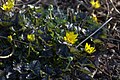 'Brambling'
 -
 'Brazen Hussy'
 -
 'Collarette'
 -
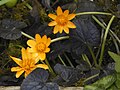 'Coppernob'
 -
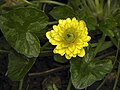 Flore Pleno Group
 -
 'Salmon's White'


Toxicity
[edit]All plants of the buttercup family (Ranunculaceae) contain a compound known as protoanemonin.[35] When the plant is wounded, the unstable glucoside ranunculin turns into the toxin protoanemonin.[36] Contact with damaged or crushed Ficaria leaves can cause itching, rashes or blistering on the skin or mucosa.[37] Ingesting the toxin can cause nausea, vomiting, dizziness, spasms, or paralysis.[36] In one case, a patient experienced acute hepatitis and jaundice when taking untreated lesser celandine extracts internally as an herbal remedy for hemorrhoids.[38]
Treatment
[edit]On drying of these plants, the protoanemonin toxin dimerizes to non-toxic anemonin, which is further hydrolyzed to non-toxic dicarboxylic acids.[39][40] Cooking of the plants also eliminates the toxicity of the plants and the plant has been incorporated in diets or herbal medicine after being dried, and ground for flour, or boiled and consumed as a vegetable.[18][40][41]

Historical herbal use
[edit]The plant is known as pilewort by some herbalists because it has historically been used to treat piles (hemorrhoids).[42][43] Lesser celandine is still recommended in several "current" herbal guides for treatment of hemorrhoids by applying an ointment of raw leaves as a cream or lanolin to the affected area.[18][43][44] Supposedly, the knobby tubers of the plant resemble piles, and according to the doctrine of signatures this resemblance suggests that pilewort could be used to cure piles.[45]
Nicholas Culpepper (1616 – 1654), is claimed to have treated his daughter for 'scrofula' (or Kings evil) with the plant.[16]
The German vernacular skorbutkraut ("scurvy herb") derives from the use of young leaves, which are high in vitamin C, to prevent scurvy.[18][46] However, use of lesser celandine to prevent scurvy could be considered a misnomer, tied to its similar appearance to common scurvygrass (Cochlearia officinalis), which shares similarly shaped leaves as well as sharing the german name skorbutkraut.[47] The German Hager's Manual of pharmacy practice of 1900 states Ranunculus ficaria [sic] and C. officinalis both share this name and use,[47] though there was little documentation of the toxicity of untreated Ficaria species at the time.
Most guides today point out that medicines should be made from the dried herb or by heat extraction as the untreated plants and extracts will contain protoanemonin, a mild toxin.[42][43] The plant has been widely used in Russia and is sold in most pharmacies as a dried herb.[48] The protoanemonin found in fresh leaves is an irritant and mildly toxic but is suggested to have antibacterial properties if used externally.[42] The process of heating or drying turns the Ranunculaceae toxin to anemonin which is non-toxic and may have antispasmodic and analgesic properties.[42]

Mesolithic Hunter gatherers in Europe consumed the roots of the plant as a source of carbohydrates boiled, fried or roasted.[49]
References in literature
[edit]The poet William Wordsworth was very fond of the flower, which inspired him to write three poems: "To the Small Celandine," "To the Same Flower," and "The Small Celandine." The third poem begins thus:
There is a Flower, the lesser Celandine,
That shrinks, like many more, from cold and rain;
And, the first moment that the sun may shine,
Bright as the sun himself, 'tis out again![50]

Upon Wordsworth's death it was proposed that a celandine be carved on his memorial plaque inside St Oswald's Church, Grasmere, but unfortunately the greater celandine Chelidonium majus was mistakenly used.[51]
Edward Thomas wrote a poem entitled "Celandine".[52] Encountering the flowers in a field, the narrator is reminded of a past love, now dead. He also remarked on banks of celandines in his early prose work "In Pursuit of Spring" (1913).[53]
C. S. Lewis mentions celandines in a key passage of The Lion, the Witch and the Wardrobe, when Aslan comes to Narnia and the whole wood passes "in a few hours or so from January to May". The children notice "wonderful things happening. Coming suddenly round a corner into a glade of silver birch trees Edmund saw the ground covered in all directions with little yellow flowers - celandines".[54]
D. H. Lawrence mentions celandines frequently in Sons and Lovers. They appear to be a favorite of the protagonist, Paul Morel:
...going down the hedgeside with the girl, he noticed the celandines, scalloped splashes of gold, on the side of the ditch.
'I like them,' he said, 'when their petals go flat back with the sunshine. They seem to be pressing themselves at the sun.'
And then the celandines ever after drew her with a little spell.[55]
Tove Jannson mentions it in her Summer Book collection of stories,
The first to come up was the scurvywort, only an inch high, but vital to seamen who live on ship's biscuit.
See also
[edit]References
[edit]- ^ a b "Ficaria verna". World Checklist of Selected Plant Families. Royal Botanic Gardens, Kew – via The Plant List. Note that this website has been superseded by World Flora Online
- ^ "Ficaria verna". Germplasm Resources Information Network. Agricultural Research Service, United States Department of Agriculture.
- ^ BSBI List 2007 (xls). Botanical Society of Britain and Ireland. Archived from the original (xls) on 2015-06-26. Retrieved 2014-10-17.
- ^ a b Functional optics of glossy buttercup flowers Archived 2022-06-30 at the Wayback Machine Journal of the Royal Society Interface 14:20160933
- ^ Buttercups focus light to heat their flowers and attract insects Archived 2019-04-04 at the Wayback Machine New Scientist 25 February 2017
- ^ "Weed of the Week - Lesser Celandine". University of Maryland Extension. Archived from the original on 2016-03-02. Retrieved 2016-02-12.
- ^ a b "Lesser celandine, Ficaria verna". Washington State Noxious Weed Control Board. Archived from the original on 24 March 2016. Retrieved 12 February 2016.
- ^ NRCS. "Ranunculus ficaria". PLANTS Database. United States Department of Agriculture (USDA). Retrieved 18 October 2015.
- ^ a b c "Weed Risk Assessment for Ficaria verna Huds (Ranunculaceae) – Fig buttercup" (PDF). Animal and Plant Health Inspection Service. United States Department of Agriculture. August 12, 2015. Archived (PDF) from the original on 16 February 2016. Retrieved 12 February 2016.
- ^ a b c Post, Angela R.; Krings, Alexander; Wall, Wade A.; Neal, Joseph C. (2009-01-01). "Introduced Lesser Celandine (Ranunculus Ficaria, Ranunculaceae) And Its Putative Subspecies In The United States: A Morphometric Analysis". Journal of the Botanical Research Institute of Texas. 3 (1): 193–209. JSTOR 41972152.
- ^ "6 NYCRR Part 575 Prohibited and Regulated Invasive Species Express Terms - NYS Dept. of Environmental Conservation". www.dec.ny.gov. Archived from the original on 2016-03-02. Revised pdf copy (updated 10 September 2014)
- ^ a b c d e f g h i j Bond, W; Davies, G; Turner, R (November 2007). "The biology and non-chemical control of Lesser Celandine (Ranunculus ficaria L.)" (PDF). Henry Doubleday Research Association. Ryton Organic Gardens. Archived from the original (PDF) on 2 February 2017. Retrieved 12 February 2016.
- ^ Don, Monty (2001-04-22). "Invasion of the soil snatchers". The Guardian. ISSN 0261-3077. Retrieved 2016-02-12.
- ^ Poland, John; Clement, Eric (2009). The Vegetative Key to the British Flora. Southampton: John Poland. ISBN 978-0-9560144-0-5.
- ^ Stace, C. A. (2010). New Flora of the British Isles (3rd ed.). Cambridge, U.K.: Cambridge University Press. ISBN 9780521707725.
- ^ a b Reader's Digest Field Guide to the Wild Flowers of Britain. Reader's Digest. 1981. p. 26. ISBN 9780276002175.
- ^ "Ranunculus ficaria L." Plants of the World Online. Royal Botanic Gardens, Kew. Archived from the original on 8 April 2023. Retrieved 21 March 2023.
- ^ a b c d e Axtell, Annie E.; DiTommaso, Antonio; Post, Angela R. (2010-04-01). "Lesser Celandine (Ranunculus ficaria): A Threat to Woodland Habitats in the Northern United States and Southern Canada". Invasive Plant Science and Management. 3 (2): 190–196. doi:10.1614/IPSM-D-09-00044.1. ISSN 1939-7291. S2CID 925729.[permanent dead link]
- ^ a b c d "Ranunculus ficaria L." Global Invasive Species Database (GISD). Retrieved 11 February 2016.
- ^ a b c d Sohrabi Kertabad, S.; Rashed Mohassel, M. H.; Nasiri Mahalati, M.; Gherekhloo, J. (2013). "Some biological aspects of the weed Lesser celandine (Ranunculus ficaria)". Planta Daninha. 31 (3): 577–585. doi:10.1590/S0100-83582013000300010. ISSN 0100-8358.
- ^ a b c d e Swearingen, J.; K. Reshetiloff; B. Slattery & S. Zwicker (2002). "Lesser Celandine". Plant Invaders of Mid-Atlantic Natural Areas. National Park Service and U.S. Fish & Wildlife Service, Washington, D.C. Archived from the original on 2013-04-13. Retrieved 2013-04-22.
- ^ "Lesser Celandine" (PDF). Invasive Plants in Pennsylvania. Pennsylvania Department of Conservation and Natural Resources. Archived from the original (PDF) on March 3, 2015. Retrieved 12 February 2016.
- ^ Stace, C. A. (2019). New Flora of the British Isles (Fourth ed.). Middlewood Green, Suffolk, U.K.: C & M Floristics. ISBN 978-1-5272-2630-2.
- ^ "Ficaria verna Huds". www.tropicos.org. Archived from the original on 2016-04-18. Retrieved 2016-02-12.
- ^ a b c Taylor, K., Markham, B. (1978). "Ranunculus Ficaria L. (Ficaria verna Huds.; F. Ranunculoides Moench)". Journal of Ecology. 66 (3). [Wiley, British Ecological Society]: 1011–1031. doi:10.2307/2259310. ISSN 0022-0477.
- ^ a b Ellis, W. N. (2024). "Ficaria verna". bladmineerders.nl. Archived from the original on 16 December 2024. Retrieved 20 December 2024.
- ^ "Alien Plant Invader: Lesser celandine". The City of Portland, Oregon. Retrieved 2016-02-13.
- ^ "Lesser celandine - US States Distribution". Early Detection & Distribution Mapping System. The University of Georgia - Center for Invasive Species and Ecosystem Health. 20 June 2014. Archived from the original on 25 September 2015. Retrieved 12 February 2016 – via EDDMapS.
- ^ Lloyd, Christopher. 1970,1985. The Well-Tempered Garden. London, Penguin Books. 81.
- ^ "Your garden this week: planting celandines and dividing perennials". www.telegraph.co.uk. The Telegraph. 25 March 2006. Archived from the original on 4 April 2019. Retrieved 4 April 2019.
- ^ "February Celandines (Ficaria verna)". www.thewildflowersociety.com. The Wild Flower Society. Archived from the original on 4 April 2019. Retrieved 4 April 2019.
- ^ a b Boens, Wim (December 2017). "Double -flowered celandines". The Plantsman. 16 (4). Royal Horticultural Society: 249–255. ISSN 1477-5298.
- ^ "Ficaria verna". www.johnjearrard.co.uk. John Jearrard. Archived from the original on 4 April 2019. Retrieved 4 April 2019.
- ^ Boens, Wim (April 2017). "Ficaria verna, a weedy menace? The double flowered lesser celandine" (PDF). International Rock Gardener. 88. Scottish Rock Garden Club: 2–21. ISSN 2053-7557. Archived (PDF) from the original on 12 July 2020. Retrieved 4 April 2019.
- ^ List, PH; Hörhammer, L, eds. (1979). Hagers Handbuch der pharmazeutischen Praxis (in German) (4th ed.). Springer Verlag. ISBN 3-540-07738-3.
- ^ a b Lewis, Robert Alan (1998-03-23). Lewis' Dictionary of Toxicology. CRC Press. ISBN 9781566702232.
- ^ Frosch, Peter J.; Menne, Torkil; Lepoittevin, Jean-Pierre (2006-06-07). Contact Dermatitis. Springer Science & Business Media. p. 779. ISBN 9783540313014.
- ^ Yilmaz, Bulent; Yilmaz, Barış; Aktaş, Bora; Unlu, Ozan; Roach, Emir Charles (2015-02-27). "Lesser Celandine (Pilewort) Induced Acute Toxic Liver Injury: The First Case Report Worldwide". World Journal of Hepatology. 7 (2): 285–288. doi:10.4254/wjh.v7.i2.285. ISSN 1948-5182. PMC 4342611. PMID 25729484.
- ^ Berger, Artur; Wachter, Helmut, eds. (1998). Hunnius Pharmazeutisches Wörterbuch (in German) (8th ed.). Walter de Gruyter Verlag. ISBN 3-11-015793-4.
- ^ a b Mithen, S., N. Finlay, W. Carruthers, S. Carter, and P. Ashmore. 2001. Plant use in the Mesolithic: Staosnaig, Isle of Colonsay, Scotland. J. Archaeol. Sci 28:223–234.
- ^ North, P. 1967. Poisonous Plants and Fungi in Colour. London Blandford. 121.
- ^ a b c d Chevallier, A. 1996. The Encyclopedia of Medicinal Plants. New York DK. 258.
- ^ a b c Chillemi, S. and M. Chillemi . 2007. The Complete Herbal Guide: A Natural Approach to Healing the Body. Morrisville, NC Lulu. 231.
- ^ De BaÏracli Levy, J. 1991. The Illustrated Herbal Handbook for Everyone. London Faber and Faber. 51.
- ^ "THE DOCTRINE OF SIGNATURES". www.botgard.ucla.edu. Archived from the original on 2016-02-14. Retrieved 2016-02-13.
- ^ "Lesser celandine". Nature's Calendar. Archived from the original on 2016-02-16. Retrieved 2016-02-13.
- ^ a b Hager, Hermann (1900-01-01). Hager's Handbuch der pharmaceutischen Praxis für Apotheker, Ärzte, Drogisten und Medicinalbeamte. ... (in German). J. Springer.
- ^ Grieve, Maud (1971-06-01). A Modern Herbal: The Medicinal, Culinary, Cosmetic and Economic Properties, Cultivation and Folk-lore of Herbs, Grasses, Fungi, Shrubs, & Trees with All Their Modern Scientific Uses. Dover Publications. ISBN 9780486227986.
- ^ Bishop, Rosie R. (2021-03-15). "Hunter-gatherer carbohydrate consumption: plant roots and rhizomes as staple foods in Mesolithic Europe". World Archaeology. 53 (2): 175–199. doi:10.1080/00438243.2021.2002715. ISSN 0043-8243. S2CID 247170423.
- ^ . Poems (Wordsworth, 1815) – via Wikisource.
- ^ Miranda Seymour (2002). A Brief History of Thyme and Other Herbs. page 18
- ^ Ed. Mohit K. Ray (Editor) The Atlantic Companion to Literature in English, p. 530, at Google Books
- ^ Oates, Matthew (28 March 2013). "Our pursuit of spring continues, 100 years after Edward Thomas's". The Guardian. Retrieved 31 October 2017.
- ^ C. S. Lewis (1950). The Lion, the Witch and the Wardrobe. End of chapter 11, beginning of chapter 12
- ^ D. H. Lawrence (1913). Sons and Lovers. Chapter 6: Death in the family
External links
[edit]

- Species Profile - Fig Buttercup (Ranunculus ficaria), National Invasive Species Information Center, United States National Agricultural Library. Lists general information and resources for Fig Buttercup.
- Traditional and Modern Use of Lesser Celandine
Ficaria verna
View on GrokipediaTaxonomy
Classification
Ficaria verna belongs to the kingdom Plantae, phylum Tracheophyta, class Magnoliopsida, order Ranunculales, family Ranunculaceae, genus Ficaria, and species F. verna.[18] The species was historically classified as Ranunculus ficaria within the large genus Ranunculus but was reclassified into the separate genus Ficaria in 2010 following molecular phylogenetic studies using nuclear and plastid DNA markers (nrITS, matK, trnK, psbJ–petA), combined with morphological evidence, which demonstrated that Ficaria forms a distinct clade not closely related to core Ranunculus species.[19][20] Ficaria verna displays variation in ploidy levels, with diploid individuals (2n=16) characteristic of subsp. ficaria and tetraploid individuals (2n=32) typical of subsp. verna and subsp. bulbifera; triploids (2n=24) occasionally occur where these forms hybridize.[21][22] The genus name Ficaria derives from the Latin ficus (fig), referring to the fig-like tubers of the plant, while the specific epithet verna comes from the Latin word for "spring," reflecting its early-season flowering.[23]Subspecies and variation
Ficaria verna displays intraspecific variation primarily through differences in ploidy, morphology, and reproductive biology across its subspecies. Note that nomenclature for subspecies varies slightly across sources, often aligning with ploidy and bulbil production. The diploid subspecies, F. verna subsp. ficaria (2n=16), lacks bulbils in the leaf axils and is characterized by sexual reproduction, with a distribution centered in western Europe.[22] In contrast, the tetraploid F. verna subsp. bulbifera (2n=32) produces bulbils in the leaf axils, facilitating vegetative propagation, and exhibits a broader range across Europe. The tetraploid F. verna subsp. verna (2n=32) also typically produces bulbils and shares similar vegetative traits.[22][21] Other tetraploid subspecies, such as F. verna subsp. ficariiformis and F. verna subsp. chrysocephalus, share similar bulbil-forming traits and polyploid cytotypes.[22] Genetic studies reveal distinct reproductive strategies tied to ploidy levels, with diploids engaging in sexual reproduction via seed production, while tetraploids predominantly employ apomixis, an asexual seed formation process that promotes clonal propagation and genetic uniformity.[24] This apomictic mode in tetraploids enhances adaptability to varied environments, including higher altitudes, through improved cold acclimation both phenotypically and epigenetically.[24] Triploid intermediates (2n=24), arising from interploidy crosses, are typically sterile and rare, often lacking bulbils.[22] Potential hybrids occur where diploid and tetraploid subspecies overlap, particularly in central Europe, leading to intermediate forms with mixed morphological and ecological traits.[21] Recent 2025 research on reciprocal crosses between diploid F. calthifolia (closely allied to F. verna subsp. ficaria) and tetraploid F. verna subsp. verna demonstrates asymmetric reproductive isolation, where the direction of the cross influences seed siring success and progeny fitness, with pollen from tetraploids more effective on diploid mothers.[25] These findings highlight hybridization as a driver of variation, though strong post-zygotic barriers limit hybrid persistence.[25]Description
Morphological features
Ficaria verna is a glabrous perennial herb that grows 5–30 cm tall from a cluster of tuberous roots, forming fleshy, upright or sprawling stems that are typically 1–5 internodes long.[3][26] The plant exhibits a rosette growth habit, with shoots emerging in late winter and developing into a low, mounded form.[27][3] Basal leaves are long-petioled, heart- or kidney-shaped (cordate to reniform), 3–6 cm long, glossy dark green, and often prominently lobed.[3][26] Stem leaves are smaller, sessile or short-petioled, and clasping the stem.[22][3] Underground tubers are white, fig- or club-shaped, and serve as the primary perennating structures.[3][28] The flowers of F. verna display nyctinastic movement, closing their petals at night or during rain to protect pollen from moisture and herbivory, a mechanism confirmed by recent experimental studies on pollen viability preservation.[29] Subspecies variations may influence associated bulbil production, but core vegetative morphology remains consistent across forms.[30]Flowering and fruiting
The flowers of Ficaria verna measure 2–3 cm in diameter and consist of 3 (sometimes 4) pale green sepals and 7–12 glossy yellow petals.[31][27] These surround numerous stamens (5–72) and a central cluster of numerous carpels (5–72).[27] In its native European range, flowering occurs from February to May, coinciding with early spring conditions.[23] Recent studies have shown that the nightly closure of these petals protects pollen viability by preventing rain-induced flushing from the anthers.[29] Following pollination, primarily by bees and flies, the flowers develop into achene-like fruits arranged in a globular cluster.[32] In fertile forms such as subspecies ficaria, each flower can produce up to 73 viable seeds, though apomictic populations often exhibit low seed fertility and rely more on vegetative propagation.[33]Distribution and habitat
Native range
Ficaria verna is native to a wide area encompassing much of Europe, from the British Isles and Scandinavia in the northwest to the Caucasus region in the southeast, as well as North Africa from Morocco eastward to Turkey, and parts of western Asia including Georgia, Israel, and surrounding areas.[22][34] This distribution spans temperate to Mediterranean climates, where the plant has long been established as part of the natural flora.[35] Within its native range, F. verna favors damp, shaded environments such as woodlands, meadows, and riverbanks, often colonizing bare or disturbed ground with sandy or loamy soils that retain moisture.[36][37] It demonstrates adaptability to light levels, thriving in partial shade under forest canopies or shrubbery but also tolerating full sun in open meadows and floodplain areas.[22][31] The species extends to higher elevations in mountainous habitats, reaching up to approximately 2,000 m in regions like the Alps, where it persists in suitable moist sites.[36] In deciduous forests, F. verna characteristically behaves as a spring ephemeral, emerging and flowering early in the season to exploit the brief period of increased light before tree leaves fully expand.[8][38]Introduced range
_Ficaria verna has been introduced to several regions outside its native range, primarily through human-mediated pathways. In North America, the species was first documented in the eastern United States in the late 1860s, likely as an ornamental plant, and has since naturalized across the continent. As of 2025, it is established in at least 31 states, predominantly in the Northeast, Midwest, Mid-Atlantic, and Pacific Northwest regions, as well as parts of eastern Canada.[39] Introductions to Iceland occurred earlier, with the plant now considered naturalized there, though populations remain limited. The species has also established in Australia and New Zealand, where it was recorded as naturalized by the late 20th century.[22][40] The primary pathways of introduction for F. verna involve the ornamental plant trade, where it was valued for its early-spring yellow flowers and heart-shaped leaves in gardens and landscapes. Accidental dispersal has also occurred through contaminated soil, bulbils, and tubers attached to nursery stock or horticultural materials, facilitating its spread beyond initial planting sites. In North America, flood events in riparian zones have further aided downstream dispersal of vegetative propagules.[41][42] As of 2025, F. verna is classified as a noxious or restricted weed in several U.S. states, including Connecticut, Massachusetts, Minnesota, Oregon, and Washington, where its sale, distribution, and cultivation are restricted or prohibited to curb further spread. For example, it was added to Michigan's invasive species watch list in July 2024 due to emerging populations in floodplain forests.[22][43][44] Recent observations indicate ongoing expansion within its introduced range. In Indiana, F. verna has been increasingly reported forming dense mats in floodplains and urban parks, crowding out native spring ephemerals as noted in surveys through 2025. Similarly, in Ann Arbor, Michigan, the plant has established significant infestations in wooded areas and along streams, prompting local conservation efforts to monitor and remove populations before they become widespread.[45][46]Life cycle and reproduction
Seasonal cycle
Ficaria verna exhibits a perennial life cycle characteristic of a spring ephemeral, emerging from underground tubers in late winter, typically January to February in its native Eurasian range, to capitalize on early-season resources before summer competition intensifies.[13] This timing allows the plant to complete its above-ground phase rapidly, with leaves and stems appearing shortly after emergence to photosynthesize under low canopy cover.[47] Flowering commences in March and continues through May, producing bright yellow blooms that attract early pollinators, followed by seed maturation from April to June in fertile forms.[34] By June to July, the foliage senesces and the above-ground biomass dies back, entering a dormant phase sustained by tubers and bulbils underground until the following winter.[47] Senescence is prompted by rising temperatures exceeding 20°C and shading from developing tree canopies.[47] The plant's spring ephemeral strategy relies on energy reserves stored in tubers from the previous season, enabling swift growth, flowering, and reproduction before the forest understory becomes shaded.[8] Environmental triggers for emergence and active growth include a preceding chilling period at 4–6°C for several weeks, followed by warming air temperatures of 15–20°C and transitions in photoperiod and light availability from winter to spring conditions.[47] Diploid forms (2n=16) typically emphasize seed-based reproduction with higher achene viability (up to 63%), potentially leading to a more condensed active cycle, whereas tetraploid forms (2n=32) produce bulbils for vegetative spread with low seed fertility (about 2%), supporting prolonged clonal persistence through the season.[47]Reproductive mechanisms
Ficaria verna employs both vegetative and sexual reproductive strategies, with vegetative propagation serving as the dominant mode for rapid clonal expansion, particularly in introduced ranges. Underground tubers, typically club-shaped and measuring 5-50 mm in length, form along the fibrous roots and detach easily to establish new plants, enabling persistence and spread in disturbed soils.[22] In subspecies such as bulbifera and ficariiformis, aerial bulbils develop in the leaf axils after flowering, with an average of 24.1 bulbils per plant observed and germination rates of 60-80%, though maximum production can reach 140 bulbils per plant.[22] These bulbils contribute to prolific asexual reproduction, allowing the species to form dense mats quickly without reliance on pollinators or seed viability.[48] Sexual reproduction in F. verna varies by ploidy level and is generally less prominent than vegetative means. Diploid populations (2n=16) are strictly self-incompatible, requiring cross-pollination for seed set.[25] Seed production remains low overall, ranging from 0 to 73 viable achenes per plant in diploids (about 63% viability), with tetraploids yielding far fewer viable seeds (around 2%).[22] Flowers typically produce a ring of achenes that develop into a head, but fruiting is sporadic and limited by environmental factors.[49] Dispersal mechanisms support both reproductive modes, promoting local and regional spread. Seeds, equipped with elaiosomes, are primarily dispersed short distances by ants (myrmecochory), while ballistic ejection is minimal and unconfirmed for this species.[22] Vegetative structures like tubers and bulbils are moved longer distances via water flow during floods, soil disturbance from human activities, or adherence to animal fur.[22] These passive vectors enhance invasiveness by facilitating establishment in new habitats without dependence on active seed production.Ecology
Biological interactions
Ficaria verna is primarily pollinated by a variety of small insects, including bees (such as honeybees and bumblebees), beetles, and flies from orders like Diptera and Hymenoptera.[26][29][50] These pollinators are attracted to the bright yellow, buttercup-like flowers, which produce accessible pollen and nectar at the base of the petals, facilitating cross-pollination in its native European woodlands.[50] The flowers exhibit nyctinastic behavior, opening in sunlight to expose reproductive structures and closing at night or during rain to shield pollen from moisture damage, thereby preserving viability and enhancing reproductive success.[51][52] A 2025 study confirmed that this closure mechanism effectively prevents rain-induced pollen flushing, reducing the risk of infertility in humid spring conditions.[53] The plant forms symbiotic associations with arbuscular mycorrhizal fungi (AMF), particularly species in the Glomeromycotina phylum, which colonize its roots to enhance nutrient acquisition.[54][55] These vesicular-arbuscular mycorrhizae, including genera like Glomus, improve uptake of phosphorus and other essential nutrients from nutrient-poor early spring soils, supporting the plant's rapid growth as a spring ephemeral before canopy closure limits light availability.[50][56] Such associations are typical in forest understory herbs like F. verna, contributing to its competitive edge in resource-scarce environments.[57] Herbivory on F. verna is generally low due to the presence of toxic compounds like protoanemonin in its fresh tissues, which deter most mammalian grazers and can cause gastrointestinal distress or more severe effects if ingested in quantity.[58][22] This toxicity renders it unpalatable to livestock and wildlife, including deer, which largely avoid it in favor of less defended natives.[59] Occasional light grazing by rabbits or deer may occur without significant population impacts, as the plant's chemical defenses minimize damage during its brief above-ground phase.[58] In terms of interspecific competition, F. verna often outcompetes native spring ephemerals, such as Claytonia virginica (spring beauty), through its earlier emergence in late winter or early spring, allowing it to capture light and space before canopy development suppresses understory growth.[60][27] This temporal advantage enables dense mat formation that shades and displaces slower-emerging natives. Additionally, evidence suggests allelopathic effects, where root exudates or decomposing tissues inhibit germination and growth of co-occurring species like Impatiens capensis, further reducing competition from woodland herbs.[61][27][62]Pathogens and diseases
Ficaria verna is susceptible to infections by the oomycete Peronospora ficariae, which causes downy mildew characterized by chlorotic discoloration and yellowing on the upper leaf surfaces, along with dense greyish sporulation on the lower surfaces.[63] Infected plants often exhibit elongated petioles, curled leaf margins, and stunted growth, with symptoms tending to be more pronounced in dense populations where humidity is higher. Other notable pathogens include the rust fungus Uromyces ficariae, which forms orange to brown telia on leaves, leading to spotting and reduced photosynthesis.[64] The smut Urocystis ficariae produces small, blackish sori on leaves, resulting in chlorotic spots and occasional distortion.[65] Leaf spot diseases, such as those caused by Septoria ficariae, manifest as tan to brown necrotic lesions on foliage.[26] A 2025 in vitro study examined isolates of P. ficariae from infected F. verna and found that their extracts induced significant proinflammatory responses, including elevated cytokine production in human respiratory epithelial and immune cell models, highlighting potential allergenic risks from environmental exposure to the pathogen.[66] These diseases generally do not severely affect wild populations of F. verna, as the plant's rapid vegetative reproduction allows recovery, though they may contribute to localized declines under stress conditions.[58]Invasiveness
Ficaria verna, commonly known as lesser celandine or fig buttercup, forms dense monocultures in wetlands and woodlands, where its early spring growth creates thick mats that shade out and deplete resources for native plants.[67] This aggressive expansion particularly displaces spring ephemerals such as trillium (Trillium spp.) and hepatica (Hepatica nobilis), preventing their emergence and reproduction through competition for light and soil nutrients.[68] In floodplain forests and riparian zones, these monocultures reduce biodiversity by outcompeting slower-growing natives before they can establish.[69] The plant's vegetative reproduction via tubers and bulbils enables rapid spread, often outpacing native species in suitable habitats and forming expansive infestations that cover large areas within a few seasons.[48] A 2025 study highlighted the compounded negative effects of F. verna's belowground competition on native ephemerals like Erythronium spp., exacerbated by the absence of leaf litter, which further inhibits native growth and reproduction while favoring the invader's establishment.[70] These dynamics amplify ecosystem disruption, as the invader's dense root systems and early canopy closure limit native seedling survival. Control efforts in U.S. parks and riversides incur economic costs through labor-intensive manual removal and herbicide applications, with persistent management required due to the plant's regenerative structures.[71] Effective strategies include digging out entire plants, including tubers, before dormancy in late spring to prevent regrowth, and foliar applications of glyphosate at 1-2% concentration during active growth in early spring.[67][6] Biological control options remain limited, with no approved agents available, though ongoing research explores potential microbial or fungal pathogens.[58] As of 2025, F. verna poses emerging threats in the mid-Atlantic U.S., where updated assessments note its increasing prevalence in woodland understories, and in Great Lakes regions like Michigan, where it has been added to invasive watch lists for floodplain habitats.[72][43] These developments underscore the need for vigilant monitoring and early intervention to mitigate further spread in vulnerable aquatic-adjacent ecosystems.[73]Cultivation
Ornamental use
Ficaria verna is cultivated as an ornamental plant primarily for its bright yellow flowers that bloom in early spring, providing a welcome burst of color in gardens after winter. It is particularly valued in rock gardens and borders, where its low-growing habit and glossy heart-shaped leaves create an attractive ground cover.[1][74] However, due to its invasive potential, cultivation and sale are restricted or prohibited in several US states, including Washington and Minnesota, as of 2025.[10] This perennial thrives in moist, humus-rich soils and prefers partial shade, though it tolerates full sun if soil moisture is maintained. It performs best in average to wet conditions, mimicking its natural woodland edge habitats, and requires well-drained but consistently damp sites to prevent drying out during active growth.[1][75] Planting typically involves tubers set in autumn, allowing the plant to establish roots before winter and emerge in late winter or early spring. Once established, it naturalizes readily through bulbils and tubers, spreading to form dense mats, but this vigorous growth can lead to it escaping garden boundaries if not managed. To mitigate potential invasiveness, gardeners often contain it in pots or raised beds with edging.[76][1][74] Historically, Ficaria verna was noted in European gardens from the 16th century, appearing in herbals such as that of Otto Brunfels, reflecting early interest in its ornamental and medicinal qualities. It was introduced to the United States in the late 19th century, around the 1860s, as a garden ornamental, gaining popularity for its early blooms before becoming widely naturalized.[77][13]Cultivars and propagation
Several cultivars of Ficaria verna have been selected for ornamental gardening, prized for their distinctive foliage and floral variations that enhance spring displays while often exhibiting reduced invasiveness compared to the wild type. Notable examples include 'Brazen Hussy', which features glossy, heart-shaped leaves in deep blackish-bronze tones contrasting with bright yellow flowers, making it a striking groundcover.[78] Another popular selection is 'Flore Pleno', characterized by its double, lemon-yellow flowers with a lime-green center, providing a fuller, more prolonged bloom without the production of bulbils.[79] 'Coppernob' offers coppery-bronze foliage paired with bright orange single flowers, adding warmth to shaded borders.[80] These cultivars are typically less aggressive spreaders due to limited seed viability and absence of vegetative bulbils.[80] Propagation of F. verna primarily relies on vegetative methods to maintain cultivar traits, as sexual reproduction is often unreliable. The most common technique involves division of the tuberous roots in autumn, after the plants have entered dormancy, allowing separated tubers to be replanted immediately for establishment the following spring.[1] For the subspecies F. verna subsp. bulbifera, propagation can also utilize bulbils formed in the leaf axils, which are collected and sown in moist soil during late summer or early autumn to mimic natural dispersal.[22] Seed propagation is rarely employed, as many populations reproduce via apomixis—producing seeds asexually without fertilization—resulting in low germination rates and genetic uniformity.[22] Challenges in propagation arise particularly with double-flowered cultivars like 'Flore Pleno', where floral modifications often lead to sterility, preventing seed set and necessitating exclusive reliance on tuber division or bulbils if present.[80]Toxicity
Toxic compounds
Ficaria verna contains several toxic compounds, primarily protoanemonin, which arises from the enzymatic hydrolysis of the glycoside ranunculin upon damage to plant tissues.[81] This unstable α,β-unsaturated lactone is highly reactive and responsible for the plant's irritant properties, including skin blistering upon contact.[82] Protoanemonin readily dimerizes to form anemonin, a more stable compound that retains vesicant and antimicrobial activity but is less acutely irritating. The plant also harbors flavonoids, such as luteolin and its glycosides, which contribute to its overall chemical profile but are not primary toxins.[83] Concentrations of protoanemonin and related toxins are highest in fresh aerial parts, particularly stems and flowers, where they can constitute up to 67% and 25% of total content, respectively, with levels increasing during the spring growth phase.[84] Protoanemonin is present in all plant parts, including tubers and bulbils, rendering the plant notably toxic in raw form.[84] Toxicity diminishes significantly in processed material, as the unstable protoanemonin degrades under heat or drying conditions, rendering dried or cooked parts of low risk.[32] A 2025 pharmacological review of Ficaria verna extracts noted potential anti-inflammatory properties in controlled preparations, attributed to stabilized flavonoid components rather than the vesicant protoanemonin derivatives.[85]Effects and treatment
Ingestion of Ficaria verna can cause gastrointestinal symptoms in humans, including nausea, vomiting, diarrhea, and abdominal pain, due to its irritant properties.[2] In livestock such as horses and sheep, effects are more severe, potentially leading to oral ulcers, hypersalivation, colic, weakness, and even death if large quantities are consumed.[39][86] Grazing animals and children are particularly vulnerable, though the risk is low when the plant is cooked, as heat destroys the toxic compounds.[86][87] Dermal contact with the plant's sap, containing protoanemonin, may result in irritant dermatitis characterized by blisters, redness, itching, and burning sensations on the skin.[88][89] Treatment for human ingestion involves supportive care, such as administration of activated charcoal if ingestion was recent, along with intravenous fluids and antiemetic medications to manage symptoms; severe cases may require hospitalization for monitoring.[90] For dermal exposure, immediate washing with soap and water is recommended to remove the irritant and prevent blistering.[91] In animals, veterinary intervention focuses on removing access to the plant, providing supportive therapy including fluid replacement and pain relief, and monitoring for complications; prognosis is generally good with prompt care.[92] Human poisonings from Ficaria verna are rare and mostly historical, with one documented case of acute liver injury following medicinal use of the plant.[93]Traditional uses
Medicinal applications
Ficaria verna, commonly known as lesser celandine or pilewort, has been traditionally employed in herbal medicine primarily for its astringent properties, particularly in treating hemorrhoids. The roots, often prepared as ointments or poultices, were applied externally to alleviate symptoms of piles, with the plant's knobby tubers resembling the condition in shape—a basis for its folk name pilewort. To mitigate the plant's inherent toxicity from protoanemonin, roots were typically dried before use, as drying converts the irritant compound into the less harmful anemonin.[94][95] In 18th-century Europe, boiled leaves of F. verna served as a source of vitamin C to combat scurvy, especially among sailors on long voyages where fresh produce was scarce; the young leaves' high ascorbic acid content made them a valuable preventive measure when cooked to neutralize toxins.[37][96] Other historical applications included remedies for respiratory ailments, such as decoctions of leaves and roots to soothe throat and ear issues, and external uses for wounds, where poultices from the bruised herb aided in treating abscesses and bleeding injuries. The fresh juice was also applied topically to corns and warts, leveraging its caustic properties to soften and remove them, though always with caution due to potential skin irritation.[94][97] Archaeological evidence from Mesolithic sites indicates that F. verna roots were utilized as a food source, providing carbohydrates when cooked or dried, with remains found in hunter-gatherer contexts across Europe; this early exploitation highlights its role in prehistoric subsistence.[98] Recent studies have explored the pharmacological potential of F. verna extracts, revealing anti-inflammatory effects attributed to flavonoids like luteolin, which inhibit pro-inflammatory cytokines, and antimicrobial activity against bacteria such as Staphylococcus aureus in methanol extracts. A 2022 review of Ranunculus species, including F. verna, confirmed its trophic and anti-inflammatory benefits for conditions like hemorrhoids and skin disorders. Despite these findings, the plant is not recommended for raw consumption due to its toxicity, and modern use should adhere to processed preparations under professional guidance.[99][100][83]Historical context
Archaeological evidence reveals that the tubers of Ficaria verna were exploited by Mesolithic hunter-gatherers in Europe as a carbohydrate-rich food source, requiring processing to render them safe for consumption. At the Northton site on the Isle of Harris in Scotland, dated to ca. 6569–6088 cal BC, excavations yielded abundant charred remains of root tubers and bulbils, indicating systematic harvesting and likely cooking to detoxify the plant's protoanemonin content. This discovery highlights the plant's role in prehistoric subsistence strategies, providing a high-energy resource during early spring when other foods were scarce. Similar finds from other Mesolithic and Neolithic sites across Northern, Central, and Western Europe further demonstrate its importance in pre-agrarian diets.[98][101][28] The genus name Ficaria originates from the Latin ficus (fig), alluding to the shape of its subterranean tubers, a resemblance noted in historical botanical descriptions. In European folklore, the plant symbolized the arrival of spring and was occasionally gathered as a cooked famine food in rural communities during periods of hardship, with tubers boiled or roasted to neutralize toxins. Archaeological records show that such uses peaked in the Mesolithic and Neolithic periods but declined sharply thereafter, coinciding with the rise of agriculture and the introduction of cultivated staples like potatoes in the post-medieval era, which offered more reliable yields. By the 19th century, reliance on wild tubers like those of F. verna had largely waned in favor of domesticated crops, though sporadic folk practices persisted into the early 20th century in isolated areas.[1][28]Cultural references
In literature
Ficaria verna, commonly known as lesser celandine, has inspired numerous literary references, particularly in English Romantic and modernist works, where it symbolizes the arrival of spring, renewal, and the ephemerality of beauty. William Wordsworth, a prominent Romantic poet, celebrated the flower in several poems, including "To the Same Flower" (1802), in which he praises its early February bloom as a source of unexpected joy and a harbinger of pleasures to come, likening it to a "shining youth" that defies the lingering winter cold. In this piece, Wordsworth personifies the celandine as a resilient companion that lifts the spirit amid seasonal transition, reflecting his broader fascination with nature's modest wonders over more ostentatious displays like daffodils.[102] The flower's presence in rural landscapes also features in early 20th-century poetry, as seen in Edward Thomas's "Celandine" (1916), where it evokes a transformative solace in the English countryside. Thomas describes the sun illuminating the celandines, turning them into a "flame" that revives memories of loss into something vital and enduring, embedding the plant within themes of grief and quiet resurrection amid pastoral settings.[103] This portrayal underscores the lesser celandine's role as a subtle emblem of hope in Thomas's war-era reflections on the natural world. Similarly, D.H. Lawrence employs it symbolically in his novel Sons and Lovers (1913), where protagonist Paul Morel observes the "scalloped splashes of gold" along hedges, using the flower's brief, vibrant display to represent fleeting emotional intensities and the transient beauty of youth and relationships.[104] In children's fantasy literature, C.S. Lewis alludes to spring flowers akin to lesser celandine in The Lion, the Witch and the Wardrobe (1950), depicting them as golden stars emerging from melting snow during Narnia's thaw, symbolizing rebirth and the triumph of life over eternal winter. This imagery draws on the plant's real-world habit of carpeting woodlands with early yellow blooms, enhancing the narrative's theme of seasonal renewal under Aslan's influence.[105] Contemporary environmental literature increasingly highlights F. verna's invasive spread in North America, portraying it as a cautionary tale of ecological disruption rather than poetic inspiration. For instance, updated guides from 2025 emphasize its aggressive displacement of native spring ephemerals in woodlands, urging awareness of its ornamental origins turning problematic in non-native habitats.[72] This shift reflects broader modern narratives on biodiversity loss, where the once-beloved flower now embodies the unintended consequences of introduced species.References
- https://species.wikimedia.org/wiki/Ficaria_verna