Hubbry Logo
Ford Global C-car PlatformFord Global C-car PlatformMain
Open search
Ford Global C-car Platform
Community hub
Ford Global C-car Platform
logo
8 pages, 0 posts
0 subscribers
Be the first to start a discussion here.
Ford Global C-car Platform
from Wikipedia
Volvo P1/Mazda BK/Ford C1 platform
Overview
Manufacturer
Production2003–2023
Body and chassis
ClassCompact platform
RelatedFord EUCD platform
Chronology
PredecessorFord C170 platform
SuccessorFord C2 platform
Volvo CMA

The Volvo P1/Mazda BK/Ford Global C-car Platform is Ford's global compact car automobile platform. It replaces the Ford C170 platform and Mazda B platform (BJ). The C1 platform debuted with the European Ford Focus C-Max compact MPV in early 2004. The platform is designed for either front- or all-wheel drive.

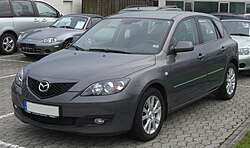
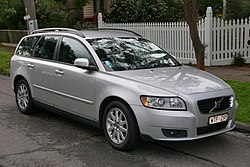
First called the C1 platform, it was designed in Ford's European development center in Cologne, Germany, as the "C Technologies Program". It was said to be one of the largest platform programs in history at that time. The Ford Focus, Volvo S40 and V50, and Mazda3 (BK and BL) share about 60% of their parts and components. Thirty engineers each from Ford, Mazda, and Volvo worked in Cologne for two years to combine the compact-car engineering for all three automakers under the direction of Ford Director of C Technologies Derrick Kuzak, Ford of Europe vice president of product development.[1]

The platform has been stretched creating the EUCD for use in future Volvo vehicles.[citation needed]

Among all of the cars, the floorpan is different, but the front and rear subframes, suspension, steering, braking, safety, and some[2] electrical components are shared.[citation needed]

Vehicles using this first iteration of the platform include:

Second generation

[edit]

The C1 platform has been replaced by the global C platform (or C-car)[3] and combines three previous platforms as part of Ford's "One Ford" efficiency drive.[4]

Ford global C platform vehicles:

Vehicles partially based on global C platform:

References

[edit]
Revisions and contributorsEdit on WikipediaRead on Wikipedia
from Grokipedia
The Ford Global C-car Platform, also known as the C1 platform, is a modular unibody automobile architecture developed by for compact vehicles, co-engineered with and as a successor to the Ford C170 platform and Mazda's B platform. Introduced in Europe in early 2004 with the second-generation and first-generation C-Max models, it features a front-engine, transverse with or optional all-wheel drive, front suspension, and multi-link rear suspension, enabling flexible applications across sedans, hatchbacks, wagons, MPVs, crossovers, and utilities. This platform underpinned a diverse lineup of vehicles sold in nearly 90 countries, supporting Ford's "One Ford" strategy for global standardization, cost efficiency, and quality improvements through shared components and manufacturing. Key Ford and Lincoln models built on the C1 include the second- and third-generation Focus (various body styles and markets, including the 2011-2019 North American versions), third-generation Escape (2013-2019), C-Max and Grand C-Max MPVs (2010-2019), Transit Connect van (second generation, 2014-2023), and crossover (2015-2019, later rebadged as Corsair). utilized a variant for the second-generation S40 sedan, V50 wagon, C30 hatchback, and C70 convertible (2004-2012), while employed a derivative for select models like the second-generation in certain regions. The platform also supported specialized variants, such as the China-market Ford Escort sedan (2014-2018) and the Focus Electric with a 107 kW synchronous motor offering approximately 100 miles of range on the European cycle. Powertrain options emphasized efficiency and versatility, including naturally aspirated and turbocharged engines like the 1.0L EcoBoost inline-3, 1.5L and 2.0L EcoBoost inline-4s, and 2.0L Ti-VCT inline-4, paired with diesel variants in ; transmissions ranged from five- and six-speed manuals to six- and eight-speed automatics, with one-speed units for electrics. Hybrid and systems were integrated in models like the C-Max Energi and Focus Electric, with the C-Max Energi providing 20 miles (EPA) of electric-only range. By 2013, Ford aimed to produce up to 10 unique models on the platform, including , diesel, hybrid, and electric powertrains across multiple body styles, though production emphasized front-wheel-drive configurations for most global markets. The C1 platform was gradually phased out starting in the late 2010s, with the North American Focus ending production in 2019, the Escape and MKC transitioning to the successor C2 platform in 2020, and the global Focus production ending in in November 2025, marking the end of its use in Ford's lineup after over two decades of service.

Overview

Description and Purpose

The Ford Global C-car Platform is a modular architecture designed primarily for compact cars, enabling the production of diverse body styles such as hatchbacks, sedans, wagons, multi-purpose vehicles (MPVs), and compact sport utility vehicles (SUVs). This platform focuses on the market, where vehicles typically feature a of around 2,650 mm and overall lengths ranging from 4,300 to 4,600 mm, providing a balance of interior space, efficiency, and maneuverability suitable for urban and family use. Introduced in as part of Ford's C Technologies Program, the platform was positioned as a key element of the "One Ford" globalization plan launched in , with the strategic purpose of supporting the development and manufacturing of up to 10 distinct models on a unified architecture for sale in more than 90 countries worldwide, thereby streamlining operations and reducing development costs through high parts commonality—up to 80% across variants—compared to the multiple regional platforms it replaced. Key flexibility features include a stretchable to better accommodate MPV configurations requiring additional passenger or cargo space, as well as optional all-wheel-drive (AWD) capability integrated with intelligent control to improve traction and cornering dynamics without compromising the platform's core efficiency.

Predecessor and Successor

The Ford Global C-car Platform, also known as the C1 platform and co-developed with (P1) and (BK), succeeded the Ford C170 platform, which was in production from 1998 to 2011. The C170 underpinned vehicles such as the first-generation and the first-generation , but it featured less modularity compared to later designs, with notable regional variations in implementation, such as delayed adoption in until 2005 due to differing market requirements. The transition from the C170 to the Global C-car platform was driven by the need for greater global scalability, prompting Ford to pursue a more unified architecture as part of its "One Ford" initiative launched in to streamline development, reduce costs, and enhance efficiency across markets. This shift emphasized greater commonality in components and production, addressing the C170's challenges with fragmented regional engineering that hindered worldwide . The successor to the Global C-car Platform is the , introduced in 2018 with the fourth-generation in and expanded to additional models from 2019 onward. The C2 incorporates enhancements for compatibility, including support for hybrid and powertrains, along with lighter materials to improve fuel efficiency and performance. The Global C-car was gradually phased out, with production concluding in by 2018 following the end of Focus assembly there, though it persisted in other regions, with the final produced in on November 14, 2025.

Development

Origins and Collaborations

The Ford Global C-car Platform, also known as the C1 platform, was initially developed starting around 2001 in Ford's European Technical Center in Cologne-Merkenich, , as part of the "C Technologies" program in collaboration with and . This joint effort involved 30 engineers from each company to create a shared architecture for compact vehicles, with up to 60% common components while allowing brand-specific tuning— contributed chassis dynamics expertise, and influenced safety features drawing from the prior P1 platform. Its global standardization and expansion were accelerated under CEO Alan Mulally's "One Ford" initiative, launched in 2006 to streamline operations and foster product commonality amid financial pressures, including a $14.6 billion loss in 2008. By mid-2008, Ford had intensified plans for this compact-car architecture, internally codenamed "Global C," to replace regional platforms with a unified design for cost efficiency. This contributed to Mulally's platform rationalization, reducing Ford's global vehicle architectures from approximately 15 to 9 by the mid-2010s to support about 99% of production volume. Although Ford divested its stake in in 2010 and in in 2015, the platform retained early collaborative influences. A key aspect of the design was its flexibility to accommodate hybrid and electric powertrains, with consistent engine-mount points enabling integration and compliance with emissions standards like the European Union's 5 and 6. This allowed variants like the Focus Electric and C-MAX Hybrid to launch in 2011 alongside gasoline models, supporting Ford's shift toward .

Design and Engineering Milestones

Development of the Ford Global C-car Platform progressed through several key phases, starting with intensive prototype testing in that emphasized ride and handling performance. Engineers focused on integrating electric power-assisted steering (EPAS) for improved responsiveness and , alongside fully independent suspension systems at both ends to enhance and occupant comfort. These early prototypes were tested extensively on various global road conditions to ensure the platform's versatility across markets. By 2010, the platform architecture was finalized, enabling the first public unveiling at the 2010 via the third-generation concept. This reveal highlighted the platform's modular design, which allowed for shared components across sedans, hatchbacks, and multi-purpose vehicles while maintaining distinct model identities. The concept demonstrated advanced aerodynamic shaping and connectivity features that would define the production models. Production commenced in 2011 with the launch of the third-generation Ford Focus, incorporating EcoBoost turbocharged engines for better power and efficiency alongside six-speed manual and automatic transmissions. This integration marked a significant engineering achievement, optimizing the platform for global emissions standards and performance targets. The Focus achieved a five-star overall rating in Euro NCAP crash tests right from its initial design validation, reflecting the platform's emphasis on structural integrity and active safety systems like electronic stability control. Mid-cycle refinements further advanced the platform's capabilities. The 2014 facelift for European models introduced active grille shutters that dynamically adjust to reduce drag and improve , contributing to enhanced fuel economy without compromising cooling. These developments built on influences from prior collaborations, including Mazda's expertise in for refined handling.

Models

Ford Focus (Third Generation)

The third generation Ford Focus debuted in early 2011 as a global built on the Ford Global C-car platform, designated internally as the C346, and was offered in multiple body styles including the 3-door and 5-door , 4-door sedan, and variants to cater to diverse market preferences worldwide. This generation marked a significant step in Ford's one-world strategy, with the model unveiled at the 2010 as a 2012 , emphasizing shared for efficiency and performance across regions. Production of the third generation Focus ran from 2011 to 2018 in and 2011 to 2019 in on a global scale, with assembly at facilities including , for North American markets until cessation in 2018, and in at plants like , , also ending in 2018 prior to the introduction of the fourth generation on the C2 platform. Distinctive features unique to this iteration included Ford's Kinetic Design styling, characterized by dynamic, fluid lines inspired by motion, and an electronic that applied braking to the inside front wheel during corners to enhance stability and cornering agility without mechanical differentials. Performance and alternative powertrain variants expanded the model's appeal, with the Focus ST hot hatch equipped with a turbocharged 2.0-liter EcoBoost inline-four engine producing 250 horsepower and paired with a six-speed for spirited driving. Complementing this was the Focus Electric, an all-electric variant introduced in 2012 and produced through 2018, featuring a 107-kilowatt (equivalent to 143 horsepower); early models (2012-2016) were powered by a 23-kilowatt-hour liquid-cooled pack with an EPA-estimated range of 76 miles, while 2017-2018 models used a 33-kilowatt-hour battery offering 115 miles of range. The Focus shared its core platform architecture with the second-generation , allowing for modular adaptations in packaging and suspension tuning. The third generation Focus enjoyed robust market reception, surpassing one million units sold in alone and contributing to the model's status as leader, while earning recognition as a finalist in the competition with 256 points from the jury.

Ford C-Max (Second Generation)

The second-generation Ford C-Max, internally designated as the C344, was launched in in 2010 as a compact multi-purpose built on the Global C-car Platform. It was introduced in as the 2013 model year, marking Ford's first dedicated hybrid MPV in that market. Available in a standard 5-seat configuration and a longer 7-seat Grand C-Max variant (primarily for ), the model emphasized family-oriented versatility with features like configurable rear seating. The platform's enabled a longer for the Grand C-Max, enhancing passenger and cargo space without altering the core . Production of the second-generation C-Max ran from 2010 to 2019 in and from 2013 to 2018 in , with assembly at Ford's facilities in , , and , respectively. A key unique aspect was the flexible , including sliding second-row seats that allowed for adjustable legroom and easy access to the third row in the Grand C-Max, promoting practicality for urban driving. The model also introduced innovative hybrid powertrains in starting with the 2013 model year, featuring a 2.0-liter Atkinson-cycle inline-four engine paired with an 88-kW for a combined output of 188 horsepower and an electronic . The C-Max Hybrid and plug-in Energi variants achieved EPA-rated fuel economy of up to 40 combined, appealing to efficiency-conscious buyers. Targeted at urban families seeking a blend of space, fuel savings, and modern features, the C-Max filled a niche for compact MPVs with . However, North American sales remained low, peaking at 35,210 units in 2013 before declining sharply to under 20,000 annually by 2017, resulting in total U.S. sales of approximately 112,000 units over its run and leading to discontinuation after 2018 due to shifting market preferences toward SUVs.

Ford Kuga/Escape (Second Generation)

The second-generation , introduced in for the 2013 model year under the internal designation DM2, served as the regional counterpart to the North American , also debuting as a 2013 model. This was engineered on the Ford Global C-car Platform to deliver a balance of urban practicality and light off-road capability, with as standard and optional all-wheel drive (AWD) for markets requiring enhanced traction in varied conditions. Global production of the Kuga and Escape spanned from 2013 to 2019, with assembly at multiple facilities including Ford's plants in , and , , to meet international demand. Key distinguishing features included a raised offering approximately 200 mm (7.8 inches) of ground clearance, which improved for minor obstacles while maintaining car-like handling. Powertrains emphasized efficiency through EcoBoost turbocharged gasoline engines, such as the 1.6-liter (178 hp) and 2.0-liter (240 hp) options, integrated with a six-speed ; the AWD variants employed an intelligent system that varied distribution—typically 100:0 front-to-rear under normal conditions but capable of sending up to 50% to the rear for optimal grip during acceleration or slippery scenarios. Trim options culminated in the level, which added luxury elements like seating, a panoramic sunroof, and premium audio for upscale appeal. The Kuga and Escape achieved strong market success, with global sales surpassing 2 million units over the production period, driven by their versatile design and fuel-efficient powertrains that appealed to families and urban drivers alike. This performance was pivotal in Ford's pivot toward SUVs, helping the company capture a larger share of the booming crossover segment. The models were honored with the 2013 North American Truck/Utility Vehicle of the Year award from the and NACTOY jurors, praised for their innovative engineering and value. Shared underpinnings with the third-generation enabled cost-effective platform sharing and modular componentry across Ford's lineup.

Other Derivative Models

The second-generation Volvo S40 sedan, V50 wagon, C30 hatchback, and C70 convertible (2004-2012) were built on a variant of the Global C-car platform during Ford's ownership of . The Volvo V40, produced from 2012 to 2019 under the internal code P13, was a premium also developed on the Global C-car platform with adaptations for enhanced ride quality, including modified electric power steering and revised suspension settings. Featuring a distinctive with sleek lines and a focus on innovations like detection, it offered engine options such as 's 1.6-liter Drive-E turbocharged units for efficient performance across European and other markets. This collaboration highlighted the platform's adaptability for luxury-oriented variants while maintaining core structural elements shared with Ford models. Mazda's second-generation (2009-2013 in select regions) employed a of the Global C-car platform co-developed with Ford. The second-generation /Mazda5 (known as Mazda5 in export markets from 2010 to 2015, code CW) was built on the Global C-car platform, sharing suspension components and structural underpinnings with Ford and compact models, supporting its role as a compact with sliding doors and seating for up to seven, while emphasizing Mazda's technology for engines. The second-generation Ford Transit Connect van (2014-2023) was built on the Global C-car platform, providing a compact and passenger van option with and versatile configurations for commercial and family use. In , the Ford Escort sedan (2014-2018) was a dedicated model on the platform, offering a subcompact sedan tailored for local preferences with and diesel engines. The first-generation Lincoln MKC compact luxury crossover (2015-2019) was based on the Global C-car platform shared with the , featuring a widened track and lowered roofline for refined handling and premium features; it was later rebadged as the Corsair on the successor C2 platform starting in 2020. The Global C-car platform's modular design thus enabled diverse partner and regional derivatives, demonstrating its versatility across hatchbacks, MPVs, vans, sedans, and crossover utilities.

Technical Specifications

Platform Architecture

The Ford Global C-car Platform, also known as the C1 platform, employs a unibody construction utilizing welded high-strength steel, comprising approximately 55-60% of the body structure to enhance rigidity and safety. is incorporated in key areas such as the A- and B-pillars to provide ultra-high-strength reinforcement, contributing to improved crash performance while maintaining lightweight properties. The suspension system features MacPherson struts at the front for precise handling and a multi-link independent setup at the rear for enhanced ride comfort and stability. Dimensional flexibility is a core aspect of the platform's design, with a base of 2,648 mm for models like the third-generation , extendable to 2,785 mm for variants such as the second-generation C-Max to accommodate different vehicle lengths and passenger space requirements. Track widths range from 1,544 mm to 1,559 mm at the front and 1,534 mm to 1,549 mm at the rear, optimizing stability across configurations. This scalability supports a 60/40 front-to-rear , promoting balanced handling and responsive dynamics in front-wheel-drive applications. Modularity is achieved through shared front and rear subframes, enabling the adaptation of over 20 body styles from sedans to crossovers while minimizing development costs and parts commonality. Aerodynamic efficiency is prioritized with a drag coefficient of 0.295 for the Focus, aided by active grille shutters that adjust airflow to reduce drag and improve fuel economy. The platform also integrates all-wheel-drive systems for select derivatives, enhancing traction without compromising the core structural layout.

Powertrain and Drivetrain Options

The Ford Global C-car Platform supported a diverse array of engines, emphasizing efficiency and performance through turbocharging and technologies. The 1.0-liter EcoBoost inline-three-cylinder engine, introduced in models like the third-generation Focus, delivered outputs ranging from 100 to 125 horsepower, paired with direct injection for improved fuel economy. Complementing this were naturally aspirated 1.6-liter Ti-VCT inline-four engines producing 105 to 130 horsepower, offering reliable daily driving without . Larger turbocharged options included the 1.5-liter and 1.6-liter EcoBoost inline-fours, available in variants from 150 to 182 horsepower, which provided stronger acceleration for performance-oriented trims across the platform's vehicles. Diesel powertrains, particularly prevalent in European markets, utilized the 1.5-liter and 2.0-liter EcoBlue inline-four engines, with power outputs spanning 95 to 180 horsepower. These engines featured advanced common-rail injection and for lower emissions, achieving CO2 figures as low as 99 to 150 grams per kilometer under WLTP testing protocols introduced after 2017. The 1.5-liter variant focused on urban efficiency, while the 2.0-liter offered higher torque for highway use in SUVs like the second-generation Kuga. Electrified options expanded the platform's versatility, including the Focus Electric with a 107-kilowatt (143-horsepower) and a 23- or 33.5-kilowatt-hour , providing an EPA-estimated range of 76 to 115 miles. The second-generation C-Max Hybrid combined a 2.0-liter Atkinson-cycle inline-four engine with electric motors for a total system output of 188 horsepower, enabling an EPA-rated 20 miles of in the plug-in Energi variant before switching to hybrid mode. These systems integrated and seamless power blending for enhanced efficiency. Transmission choices included five- and six-speed manual gearboxes for direct control, alongside six-speed and PowerShift dual-clutch transmissions for smoother shifts in automated applications. All-wheel drive was available on select SUV derivatives like the Kuga and Escape, employing a unit to distribute up to 50 percent of to the rear wheels on demand, improving traction without compromising front-wheel-drive efficiency. Suspension tuning across these configurations optimized power delivery for responsive handling.

Production and Impact

Manufacturing Sites

The Ford Global C-car Platform, also known as the C1 platform, was assembled at several key manufacturing facilities worldwide to support its role as a unified architecture for compact vehicles across regions. In , the Assembly Plant in , served as the primary site for producing the third-generation and second-generation from 2011 to 2018, enabling flexible assembly of multiple powertrains including , hybrid, and electric variants on a single line. The in produced the third-generation Ford Escape from 2013 to 2019 and the from 2015 to 2019, utilizing the platform's modular design for crossover and luxury variants. In Europe, the Saarlouis Body and Assembly Plant in handled production of the third-generation and second-generation starting in late 2010, with the facility adapted for high-volume output of and wagon variants tailored to regional demands. Meanwhile, the Body and Assembly Plant in focused on the second-generation compact SUV from 2012 onward and the second-generation Transit Connect van from 2014 to around 2023, incorporating the platform's modular design for efficient crossover and van production. The Kocaeli Plant in also assembled the second-generation Transit Connect during this period. For the Asia-Pacific market, the Ford Thailand Manufacturing facility in , , began assembling the third-generation in 2012, supporting exports and local sales with adaptations for right-hand-drive configurations and regional powertrains. This global distribution of assembly sites exemplified Ford's "One Ford" strategy, which promoted standardized components and processes to enable cross-regional manufacturing efficiency. Production capacities at these sites were scaled to meet anticipated demand, with the Assembly Plant reaching a peak output of approximately 200,000 units annually during the platform's North American run, contributing to the overall global target of supporting up to 2 million vehicles per year across all C-car derivatives. The plant similarly operated at high volumes, producing hundreds of thousands of units yearly for European markets, while Rayong's facility added flexible capacity for Asia-Pacific needs, peaking at around 275,000 vehicles annually across models. Significant changes occurred post-2018 as Ford restructured its lineup in response to shifting market preferences toward SUVs and crossovers, as well as cost pressures including tariffs on imported components. North American production of C-car vehicles at ended in 2018, with the facility repurposed for Ranger pickup and assembly to align with rising demand for trucks and utilities. In , assembly transitioned to the successor C2 platform at , phasing out C1-based models like the Focus and Kuga by around 2019, while shifted to newer generations until full conversion. Production on the C-car platform concluded around 2023-2024 with the end of second-generation Transit Connect manufacturing globally. By 2025, all original C-car production sites had been fully converted to newer platforms or models, though legacy parts support continues for existing vehicles.

Market Reception and Legacy

The Ford Global C-car Platform garnered praise for its contributions to vehicle dynamics, particularly in the third-generation , which was lauded for its sharp handling and engaging driving experience by automotive reviewers. Publications such as Evans Halshaw highlighted its "brilliant handling" and build quality, while Car Discount noted its "sporty handling and smooth, quiet ride," contributing to the model's success in global markets. The lineup, including third-generation variants, accumulated numerous awards for performance and safety, including multiple accolades and dynamics honors from organizations like Vehicle Dynamics International. However, the platform faced substantial criticism over the PowerShift (DPS6), which plagued 2012-2016 models, resulting in 18 recalls for issues like shuddering, slipping, and unexpected neutral shifts, as documented in investigations by the . These problems led to a major settlement covering owners of affected vehicles in the United States. Sales of C-car platform vehicles bolstered Ford's position in the compact segment during the platform's peak years from 2011 to 2015, with models like the Focus driving consistent volume in key regions. In , Ford's overall passenger car market share rose to 8.0% in 2015, reflecting strong demand for offerings amid the platform's global rollout. Globally, sales helped Ford maintain competitive footing, though exact segment share figures varied by market. Post-2018, demand waned as the boom and transition accelerated, prompting Ford to phase out sedan variants like the Focus in and redirect resources to utility vehicles, resulting in declining compact sales volumes. The platform's legacy endures through its facilitation of Ford's early hybridization efforts, exemplified by the second-generation C-Max Hybrid, which debuted in 2012 and achieved over 40,000 U.S. sales for its plug-in variant alone through 2017, helping establish Ford as a leader in affordable electrified compacts. It directly influenced the C2 platform, introduced in 2018 as its successor, by advancing shared architecture principles for greater flexibility across sedans, crossovers, and electrified models like the Escape and Bronco Sport. As part of the broader ONE Ford strategy, the platform supported cost efficiencies via global parts commonality, aiding Ford's shift from losses to profitability—$2.7 billion net income in 2009—through streamlined development and during the 2009-2015 recovery period.

References

Add your contribution
Related Hubs
User Avatar
No comments yet.