Hubbry Logo
Millettia laurentiiMillettia laurentiiMain
Open search
Millettia laurentii
Community hub
Millettia laurentii
logo
8 pages, 0 posts
0 subscribers
Be the first to start a discussion here.
Millettia laurentii
Millettia laurentii
from Wikipedia

Millettia laurentii
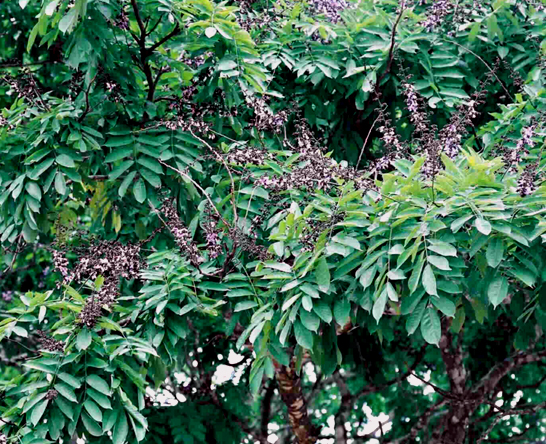
Tree in flower
Tangentially-sawn wood
Scientific classification Edit this classification
Kingdom: Plantae
Clade: Tracheophytes
Clade: Angiosperms
Clade: Eudicots
Clade: Rosids
Order: Fabales
Family: Fabaceae
Subfamily: Faboideae
Genus: Millettia
Species:
M. laurentii
Binomial name
Millettia laurentii
Wenge
 
About these coordinates     Color coordinates
Hex triplet#645452
sRGBB (r, g, b)(100, 84, 82)
HSV (h, s, v)(7°, 18%, 39%)
CIELChuv (L, C, h)(37, 10, 20°)
Source[1]
B: Normalized to [0–255] (byte)
Quartersawn surface

Millettia laurentii is a legume tree from Africa and is native to the Republic of Congo, the Democratic Republic of Congo, Cameroon, Gabon and Equatorial Guinea. The species is listed as "endangered" in the IUCN Red List, principally due to the destruction of its habitat and over-exploitation for timber.[1] Wenge, a dark coloured wood, is the product of Millettia laurentii. Other names sometimes used for wenge include faux ebony, dikela, mibotu, bokonge, and awong. The wood's distinctive colour is standardised as a "wenge" colour in many systems.

Wood

[edit]

Wenge (/ˈwɛŋɡ/ WENG-gay) is a tropical timber, very dark in colour with a distinctive figure and pattern. The wood is heavy and hard, suitable for flooring and staircases.

Several musical instrument makers employ wenge in their products. Mosrite used it for bodies of their Brass Rail models. Ibanez and Cort use it for the five-piece necks of some of their electric basses. Warwick electric basses use FSC sourced wenge for fingerboards and necks as of 2013. It is also used by Yamaha as the centre ply of their Absolute Hybrid Maple drums.[2]

The wood is popular in segmented woodturning because of its dimensional stability and colour contrast when mixed with lighter woods such as maple. This makes it especially sought after in the manufacture of high-end wood canes and chess boards.

The wood is sometimes used in the making of archery bows, particularly as a laminate in the production of flatbows. It can also be used in the making of rails or pin blocks on hammered dulcimers.

The wood may also be used for kendamas. Though a ken could be made entirely out of wenge, it's generally used to substitute a portion of the big/small cups[3] while the rest of the ken is made out of a softer, less dense wood. This concentration of weight in the big and/or small cup facilitates balance tricks such as lunars.

Health hazards

[edit]

The dust produced when cutting or sanding wenge can cause dermatitis similar to the effects of poison ivy and is an irritant to the eyes. The dust also can cause respiratory problems and drowsiness.[citation needed] Splinters are septic, similar to those of greenheart (the wood of Chlorocardium rodiei).

See also

[edit]

References

[edit]

Further reading

[edit]
Revisions and contributorsEdit on WikipediaRead on Wikipedia
from Grokipedia
, commonly known as wenge, is a large evergreen tree in the family, native to the rainforests of , including , , , the , the , and the . The species typically reaches heights of 15–30 meters with a straight bole up to 1 meter in diameter, featuring compound leaves and panicles of flowers. Its heartwood yields a dark brown to black timber prized for its durability, coarse texture, and interlocked grain, which resists splitting but can pose machining challenges. The wood, marketed as wenge, is extensively used in high-end furniture, , , veneer, and musical instruments due to its strength, stability, and distinctive striping that darkens upon exposure. Beyond timber, the bark has traditional applications as a fish poison, , and in remedies for ailments like and , while the tree supports local ecosystems by providing nectar for bees and host for edible caterpillars. However, M. laurentii is classified as endangered by the owing to from and , coupled with unsustainable harvesting that has reduced populations by over 50% in recent generations. This status underscores the tension between its commercial value and ecological vulnerability in periodically inundated or forest habitats.

Botanical Description

Physical Characteristics

Millettia laurentii is a medium to large typically reaching heights of 20–30 meters, though exceptional individuals can attain 50 meters, with a cylindrical bole that is often slightly bent and branchless for up to 20 meters. The trunk diameter measures up to 1.2 meters, supported by small buttresses or a fluted base, and the develops spreading, drooping branches that form a wide, globose crown. Leaves are alternate and imparipinnately , featuring 6–7 (rarely up to 9) pairs of leaflets that are oblong to obovate, glabrous, 6–15 cm long by 3–9 cm wide, and abruptly acuminate at the apex; the petiole is 4–7 cm long with a rachis of 10–18 cm. Inflorescences consist of terminal panicles or axillary racemes up to 40 cm long, bearing purplish-blue flowers about 10 mm long with hairy corollas and slender, curved, glabrous styles. The fruits are flattened, glabrous, oblanceolate to linear pods measuring 15–28 cm long by 3–5 cm wide with stiff walls and fine striations, each containing 1–2 seeds. Bark is reddish-brown, rough, scaly, and flakes off in small circular patches, revealing brighter red depressions beneath. Freshly exposed heartwood is yellow, darkening upon air exposure to dark brown or black-brown with distinctive fine black streaks, sharply demarcated from the pale yellow sapwood 2–5 cm wide.

Habitat and Distribution

Millettia laurentii is native to the tropical rainforests of , with its range encompassing , the , , , the , and the . The species is restricted to a relatively limited area within this region, primarily from the eastern portions of , , and westward to the and the western countries.) It inhabits lowland and rainforests, often on well-drained sites, but also occurs in forests subject to periodic inundation, riverine forests, and transitional tree savannas. The tree prefers well-drained soils across a range of textures, including sandy, loamy, and clay types, and is typically associated with mixed stands in equatorial primary forests. Outside its native range, M. laurentii is not widely cultivated, with harvesting primarily from natural or managed wild populations rather than plantations, though its tolerance for tropical conditions suggests potential for ornamental or silvicultural use in suitable climates.

Taxonomy

Classification and Etymology

Millettia laurentii belongs to the family Fabaceae, subfamily Faboideae, tribe Millettieae, and genus Millettia, within the order Fabales. This placement reflects its morphological traits, including compound leaves and legume fruits typical of the legume family, as well as phylogenetic analyses positioning it among tropical woody legumes. The species was first formally described in 1902 by Belgian botanist Émile Auguste Joseph De Wildeman, based on specimens from , establishing it as distinct within the due to its dark heartwood and growth habit. Its taxonomic status remains accepted, with no significant controversies; molecular phylogenies, including genome skimming of commercial African timbers, affirm its alignment with the African through shared markers and nuclear sequences. The genus name Millettia derives from Charles Millett, a 19th-century British botanist who contributed to plant collections in . The specific epithet laurentii honors Paul Laurent, a and explorer active in the Congo region during the late 19th and early 20th centuries, whose collections aided early botanical surveys. No accepted synonyms are widely recognized, though some regional variants have been tentatively linked to Millettia buchananii in older floras without subsequent validation.

Ecology

Reproduction and Growth

Millettia laurentii exhibits slow radial growth characteristic of many canopy trees in Central African rainforests, with increments estimated at low annual rates that contribute to extended timelines for attaining large bole sizes up to 120 . The species functions as a pioneer in , capable of establishing in disturbed or cultivated lands, yet field observations indicate limited juvenile recruitment under intact forest conditions. Reproductive maturity occurs relatively early, with fruiting observed at minimum s of 10 or less, though prolific and effective correlates with larger s exceeding 30 and dominant canopy positions that enhance light access and visitation. Flowering displays marked seasonality, synchronized with foliar cycles involving biannual leaf fall and flush, typically during dry periods and the onset of short rains in regions like the Democratic Republic of Congo. In some Central African locales, flowering aligns with rainy season leaf emergence, producing conspicuous inflorescences of purplish-blue flowers that attract bees as primary pollinators. Seed production occurs via indehiscent or semi-dehiscent pods containing one to several flattened , with dispersal effected mainly by from elevated positions or limited wind carry of lightweight propagules. rates improve following mechanical or thermal , such as brief immersion in near-boiling water followed by soaking, to overcome seed coat impermeability; unscarified seeds exhibit erratic and delayed emergence over 30-50 days or longer. Natural regeneration faces constraints from inherently low seed viability, sparse viable seed production in logged stands, and intensified disturbance, as evidenced by 2024 inventories in the northern Lefini Reserve documenting deficient densities of M. laurentii juveniles amid overexploited first-growth species. These factors, compounded by selective that removes reproductive adults, hinder population renewal in the .

Interactions with Wildlife

Millettia laurentii engages in symbiotic through root nodules associated with rhizobial , a characteristic trait of its family affiliation that improves nutrient availability in understories. This mutualism supports associated plant communities by increasing nitrogen levels, though specific quantification in M. laurentii stands remains understudied. Flowers secrete nectar that draws honeybees (Apis mellifera), facilitating during the species' brief flowering period in the . Leaves serve as host tissue for larvae of various lepidopteran species, evidencing herbivory that may influence foliar chemistry and plant defense responses. Bark and pod tissues contain bioactive compounds, including alkaloids and potentially rotenone-like piscicides, which deter and predation, functioning as ecological defenses in riparian and environments. Observations of frugivory or by birds or mammals are scarce, with pods primarily dehiscent and gravity-dispersed. While not a , M. laurentii bolsters canopy complexity in forests, aiding habitat heterogeneity for arboreal fauna.

Wood Properties and Uses

Physical and Mechanical Properties

The heartwood of Millettia laurentii, commonly known as wenge, exhibits a of 870 kg/m³ at 12% content, classifying it as a heavy wood. Its Janka hardness measures 1,930 lbf (8,600 N), surpassing that of many tropical hardwoods such as (1,070 lbf) and (800-900 lbf), though lower than species like ipe (3,684 lbf). The wood features straight to interlocked with a coarse texture, which often results in tear-out during operations like planing or molding, necessitating specialized cutting angles or tools to mitigate surface irregularities. Durability testing indicates excellent resistance to decay fungi and , as well as dry-wood borers, attributed to natural extractives in the heartwood; however, resistance to marine borers is moderate, with the sapwood remaining susceptible to powder-post beetles. Shrinkage during drying is pronounced, with radial contraction at 4.8%, tangential at 8.3%, and volumetric at 13.3%, yielding a tangential-to-radial ratio of 1.7 that can lead to warping if not kiln-dried under controlled conditions. Color stability is limited, as exposure to light may cause bleaching or fading without protective treatments. The presence of natural oils and high complicate gluing, often requiring surface sanding or wiping to achieve adequate , while finishing demands pore fillers due to large vessels and uneven sanding response.

Commercial Applications

Millettia laurentii, commonly known as wenge, is commercially prized for its dark brown heartwood featuring prominent black streaks, which impart a striking aesthetic suitable for high-end furniture, , veneers, and paneling. The wood's use in these applications has been established since the mid-20th century, with primary exports originating from the , including and the of Congo. In addition to interior joinery, wenge is utilized in musical instruments such as guitar necks and in turnery for decorative objects like boxes and accents. Its high density and impact resistance enable substitution for in sporting goods, while durability supports outdoor applications like decking when treated to enhance weather resistance. mandates export licenses for wenge to regulate . Recent innovations have expanded non-timber commercial potential by wenge carpentry sawdust into natural dyes, which impart , , and UV-protective properties to wool yarns in an ecological dyeing process. This approach leverages wood processing byproducts to create value-added textile finishes, demonstrating potential for sustainable market diversification.

Traditional and Medicinal Uses

In practiced by indigenous communities in the of Congo and , decoctions prepared from the bark of Millettia laurentii are used to treat , liver complaints, , skin diseases, , fever, and . These preparations reflect ethnobotanical knowledge transmitted across generations, often involving boiling the inner bark to extract bioactive compounds for . Other reported applications include remedies for sores, , , , and , with leaves occasionally employed for and in Congolese practices, while roots serve as vermifuges or components in poisons among certain groups. Such uses highlight the 's role in local pharmacopeias, where bark and leaf harvesting offers sustainable, non-timber alternatives to destructive for , preserving integrity for continued cultural and medicinal access. Pharmacological investigations into Millettia species, including M. laurentii, have isolated isoflavonoids, , and isoflavan-quinones from bark and heartwood, demonstrating preliminary antioxidant, , and activities that may correlate with traditional claims for fever, conditions, and infections. However, clinical trials validating efficacy for specific ailments like or are scarce, with most evidence limited to genus-level screening rather than species-specific human studies, underscoring the need for rigorous empirical evaluation beyond anecdotal ethnobotanical reports.

Conservation

Millettia laurentii is classified as Endangered (EN) on the IUCN Red List, with assessments indicating a population reduction exceeding 50% over the past three generations, estimated at 75–100 years based on the species' generation length as a long-lived timber tree. This decline is quantified through field inventories showing contraction in extent of occurrence and area of occupancy since baseline surveys in the 1990s across its Central African range. Population densities remain sparse, with national forest assessments recording an average of 0.16 mature stems per in moist s of exporting countries like and . Regeneration metrics from plot inventories reveal limited of juveniles into mature cohorts, with densities of smaller size classes often insufficient to offset adult losses in monitored stands. The species is not listed under Appendices, though regional management includes annual export quotas in producer nations such as , where permits are regulated by forestry authorities to cap harvest volumes. Ongoing monitoring highlights persistent downward trends without evidence of recovery in core habitats.

Threats and Exploitation

Selective logging targeting mature Millettia laurentii trees for wenge timber constitutes the principal driver of , as the ' slow growth renders it vulnerable to overexploitation in its native range across the , including , the Democratic Republic of Congo (DRC), and . This practice removes reproductive adults, disrupting natural regeneration cycles, with rising utilization pressures reported in and neighboring countries where commercial demand exceeds sustainable harvest rates. Illegal logging amplifies these pressures, particularly in the DRC where weak and facilitate unregulated extraction, often linked to broader and conflict dynamics that undermine legal concessions covering over 50 million hectares in the region. In , habitat degradation from human activities compounds logging impacts, contributing to fragmentation alongside agricultural conversion and mining operations that isolate remnant populations. Regulated exports, such as Cameroon's quota systems for high-value logs, generate revenue streams—timber representing a key economic pillar in Basin countries—offering incentives for community involvement in managed harvesting over clandestine operations. However, proposals for log export bans, as pursued in parts of the Basin since around 2000 to promote local processing, risk shifting activity underground without commensurate industrial capacity, potentially eroding formal benefits and exacerbating illicit trade in the absence of alternative livelihoods. Economic assessments indicate such restrictions can constrain development in timber-reliant communities, where forests underpin livelihoods but contribute minimally to GDP (around 0.2% regionally in recent years) due to raw export dominance rather than value addition. Climate variability plays a secondary role, with primary causal factors rooted in anthropogenic extraction and land-use pressures rather than environmental shifts alone.

Sustainability Efforts

Recent research emphasizes vegetative techniques to enhance regeneration of Millettia laurentii, addressing its low natural seeding success and slow growth rates of approximately 0.45 cm per year. A October 2024 study on stem cuttings reported successful rooting under controlled conditions, proposing this method for mass production in and enrichment planting to counter deficits in wild recruitment. Seed benefits from to break , as dormancy persists even after drying, enabling higher for trials. In of Congo experiments, 48% of stem cuttings planted at rainy season onset sprouted, indicating potential for scalable planting in degraded habitats. Valorization of processing waste supports by deriving economic value without further harvesting pressure. A 2023 analysis detailed extraction of natural dyes from , yielding flavonoid-based colorants for yarns with antimicrobial, , and UV-protective finishes via biomordants, reducing reliance on virgin timber for non-structural uses. Follow-up 2024 protocols integrated metal salts and biomordants for eco-friendly , achieving deep shades while minimizing environmental effluents compared to synthetic alternatives. Agroforestry systems incorporate M. laurentii as a pioneer species for soil stabilization and live fencing, with flowers providing nectar for bees, potentially integrating timber production with apiculture and medicinal bark harvest to diversify income and lessen pure-stand logging incentives. Certification schemes like FSC endorse regulated sourcing from managed concessions, prioritizing selective harvesting over blanket prohibitions to sustain yields while addressing local economic needs in central African ranges. These approaches prioritize empirical regeneration data over restrictive zoning, though scaled implementation remains limited by governance challenges in producer countries.

Health and Safety

Toxicity and Health Effects

Inhalation of wenge wood dust (from Millettia laurentii) has been associated with effects, including drowsiness, as well as abdominal cramps, irritation, eye irritation, and in exposed woodworkers. Respiratory issues such as , , and have also been reported, potentially due to sensitization from prolonged dust exposure, though these effects correlate with occupational handling rather than establishing direct causation in all cases. Gastrointestinal disorders and irritation further appear in toxicity compilations derived from incidents. Splinters from wenge wood frequently cause persistent and septic reactions, akin to those observed with certain other tropical hardwoods, leading to delayed and secondary infections. These outcomes stem from the wood's irritant properties and sharp fibers, with empirical reports from artisans noting higher infection rates compared to non-toxic species, though individual immune responses vary. Severe allergic reactions remain rare, with most documented cases involving moderate and respiratory rather than systemic or , distinguishing wenge from woods with confirmed fatal outcomes. Woodworker accounts highlight response variability, where low-level exposures in traditional contexts—such as limited medicinal applications for ailments like —do not consistently provoke symptoms, implying dose-dependent thresholds rather than inherent . No verified fatalities or /oil-mediated poisoning specific to wenge have been substantiated beyond irritant correlations.

Precautions for Handling

When machining Millettia laurentii (wenge) wood, workers should employ including respirators to limit of airborne , gloves to prevent skin contact and penetration, and to guard against particulate irritation. Dust extraction systems or wet methods during sanding and cutting are recommended to minimize airborne particles, aligning with general practices for hardwoods. Unfinished wenge wood poses a high of splintering, necessitating careful handling with gloved hands to avoid large, potentially infectious splinters; any embedded splinters should be removed promptly and treated with antiseptics to prevent complications. Prolonged bare-skin contact should be avoided due to the wood's irritant properties. Sealed or finished wenge products are generally safe for typical end-use applications, provided surfaces remain intact, though they are unsuitable for direct contact. No specific regulatory standards exist for wenge beyond OSHA's general wood dust permissible exposure limits of 15 mg/m³ for total dust and 5 mg/m³ for respirable fraction over an 8-hour time-weighted average, with risks effectively managed through standard and ventilation.

References

Add your contribution
Related Hubs
User Avatar
No comments yet.