


Community hub
Recent from talks
Contribute something
Nothing was collected or created yet.
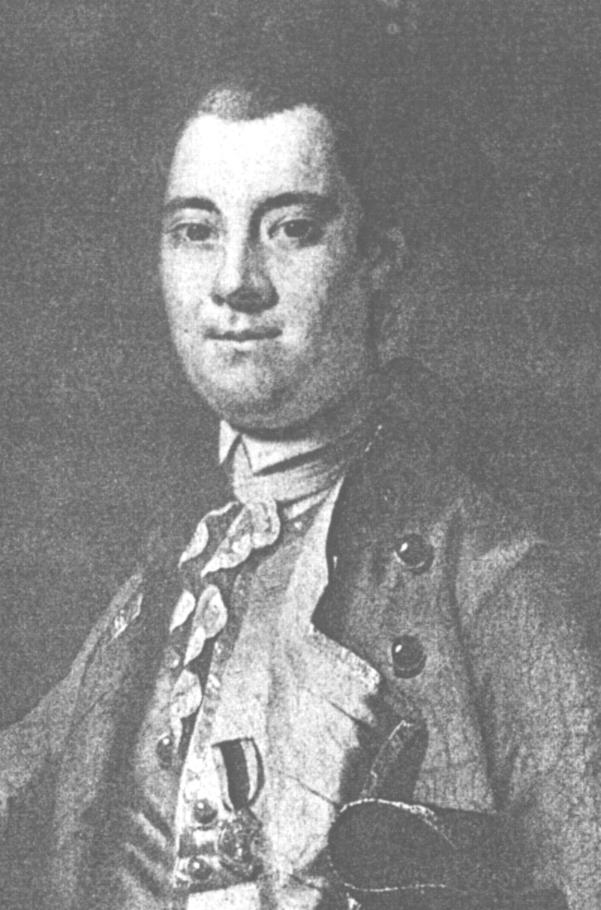
William Tryon
View on Wikipedia | This article includes a list of general references, but it lacks sufficient corresponding inline citations. (August 2020) |
Lieutenant-General William Tryon (8 June 1729 – 27 January 1788) was a British Army officer and colonial administrator who served as governor of North Carolina from 1764 to 1771 and the governor of New York from 1771 to 1777. He also served during the Seven Years' War, the Regulator Movement, and the American War of Independence.
Key Information


.png)

Early life and career
[edit]
Tryon was born on 8 June 1729 at the Tryon family's seat at Norbury Park, Surrey, the son of Charles Tryon and Lady Mary Shirley. His maternal grandfather was Robert Shirley, 1st Earl Ferrers. In 1751, Tryon enlisted in the British Army as a lieutenant in the 1st Regiment of Foot Guards and was promoted to the rank of captain later that year. In 1758, Tryon was promoted to lieutenant-colonel.[1][2]
Seven Years' War
[edit]During the Seven Years' War, Tryon and his regiment were involved in the British raid on Cherbourg. They landed at Cherbourg and destroyed all military facilities. In September, they reembarked for St Malo, where the operation went smoothly until the withdrawal, when they came under intense fire from the French at the Battle of Saint Cast. Tryon was wounded in the thigh and head.
Governor of North Carolina
[edit]On 26 April 1764, through family connections, Tryon obtained the position of acting lieutenant governor of the Province of North Carolina. He arrived in North Carolina with his family, including a young daughter,[3] and architect John Hawks,[4] in early October to find that the previous governor, Arthur Dobbs, had not left. He said that he would not be leaving until May. Tryon found himself with no income (although he was Lieutenant Governor).[3] In 1765, a house called Russelborough on the Cape Fear River near Brunswick Town was renovated to serve as Tryon's residence while he acted as Lieutenant Governor.[3]
Tryon assumed his position as acting governor when Dobbs died on 28 March 1765. On 10 July, the King appointed him to the office of governor. After assuming the office of governor, Tryon worked to expand the Church of England in North Carolina.[4] There were only five Anglican clergy members in North Carolina at that time.[4] Tryon pushed for the completion of abandoned construction projects of Anglican churches in Brunswick Town, Wilmington, Edenton, and New Bern.[4] Tryon appointed members of the clergy for these churches and encouraged the construction of new churches, especially in rural areas.[4]
There was strong opposition in North Carolina to the Stamp Act of 1765. When the Stamp Act Congress was held, the colonial assembly was not in session, hence delegates could not be selected to attend. Tryon refused to allow meetings of the Assembly from 18 May 1765 to 3 November 1766 to prevent the Assembly from passing a resolution in opposition to the Stamp Act.[5] Tryon said that he was personally opposed to the Stamp Act and that he offered to pay the taxes on all stamped paper on which he was entitled to fees. Tryon requested troops to enforce the act, but instead he was informed on 25 June 1766 that the act was repealed.[5]
Tryon also composed plans for an elaborate governor's mansion, which would also function as a central location for government business; he worked with Hawks during 1764 and 1765 to draw up plans for an elaborate home.[4] In December 1766, the North Carolina legislature authorized £5,000 for the building of Tryon's mansion.[4] Tryon told the legislature that the sum was not substantial enough for the plans he and Hawks had created; building it "in the plainest manner" would cost no less than £10,000 without including the outbuildings he envisioned.[4] Hawks agreed to supervise the construction for three years and went to Philadelphia at Tryon's behest to hire workers; Tryon said native North Carolina workers would not know how to construct such a building.[4]
Tryon was eventually able to convince the legislature to increase taxes to help pay for the project.[4] The unpopularity of the new taxes spawned the derogatory nickname 'Tryon Palace'. In 1770, Tryon moved into the completed mansion.[4] The house was "a monument of opulence and elegance extraordinary in the American colonies."[4] Although he accomplished some notable improvements in the colony, such as the creation of a postal service in 1769, Tryon is most noted for suppressing the Regulator Movement in western North Carolina during the period from 1768 to 1771. The uprising was caused partly by taxation imposed to pay for Tryon Palace at New Bern (which Tryon made the provincial capital)[5] and partly by tax abuse and fraud by western officials.[4]
Matters came to a head in May 1771, when colonial militia defeated 2,000 Regulators in the Battle of Alamance.[4] Following the battle, Tryon ordered the execution of seven alleged Regulators, convicted by Judge Richard Henderson.[4] Most of the men were accused of violating the Riot Act, a crime temporarily made a capital offense by the General Assembly. The executed men included James Few, Benjamin Merrill, Enoch Pugh, Robert Matear, "Captain" Robert Messer, Bryant Austin Sr, and one other. Six other convicted Regulators—Forrester Mercer, James Stewart, James Emmerson, Herman Cox, William Brown, and James Copeland—were pardoned by King George III and released by Tryon.
The Regulator uprising is viewed by some historians as a precursor to the American Revolution. Tryon then raised taxes again to pay for the militia's campaign against the Regulators.[4] Tryon's governorship ended, and he left North Carolina on 30 June 1771. Tryon Palace was reconstructed in the 1950s using the original architectural plans drawn by John Hawks. Many years later, in an op-ed for the Rocky Mount Telegram explaining why he wanted to limit veto power for the North Carolina governor, North Carolina State Senator Roy Cooper wrote, "Governor Tryon was hated as he ruled in opulent splendor from his palace."[6]
Governor of New York
[edit]On 8 July 1771, Tryon arrived in the Province of New York and became its governor. In 1771 and 1772 he was successful in having the assembly appropriate funds for the quartering of British troops and also on 18 March 1772 the establishment of a militia. Funds were also appropriated for the rebuilding of New York City's defenses. In 1772, opposition in New York was strong against the Tea Act. In December, the Sons of Liberty "persuaded" the tea agents to resign. Tryon proposed to land the tea and store it at Fort George.
The Sons of Liberty were opposed and Alexander McDougall said, "prevent the landing, and kill [the] governor and all the council". When news of the Boston Tea Party arrived on 22 December, Tryon gave up trying to land the tea. He told London the tea could be brought ashore "only under the protection of the point of the bayonet, and muzzle of cannon, and even then I do not see how consumption could be effected". In 1774, the New Yorkers dumped their own consignment of tea into the harbor. On 29 December 1773 the governor's mansion and all its contents were destroyed by fire. The New York Assembly appropriated five thousand pounds for his losses.
American Revolutionary War
[edit]
On 7 April 1774, Tryon departed for a trip to England, and Cadwallader Colden was the acting governor of New York in his absence. Tryon arrived back in New York on 25 June 1775 after the American Revolutionary War had begun. Isaac Sears returned in July from the Continental Congress with orders to put Tryon under arrest, but George Washington had ordered Philip Schuyler, the commander in New York, to leave Tryon alone. On 19 October 1775, he was compelled to seek refuge on the British sloop-of-war Halifax in New York Harbor.[5] He then set up an offshore headquarters nearby on board the merchant ship Duchess of Gordon. In 1776, he dissolved the assembly and called for new elections in February. The new assembly was for independence, so Tryon dissolved it.[7]
During the spring and summer of 1776, Tryon and New York City mayor David Mathews conspired in a miserably bungled plot to kidnap General Washington and to assassinate his chief officers. Washington's bodyguard Thomas Hickey was involved in the plot. Hickey had been in prison for passing counterfeit money, and he bragged to his cellmate Isaac Ketcham about the kidnapping plot. Ketcham revealed it to authorities in an effort to gain his own freedom. Hickey was court-martialled and hanged for mutiny on 28 June 1776. In June, Admiral Howe arrived in New York City with the British army. Howe placed New York under martial law with James Robertson as the military commander. Tryon retained his nominal title as governor, but with little power.
In early 1777, Tryon was given the rank of major-general of the provincials. In April, he was ordered to invade Connecticut and march on the city of Danbury to destroy an arsenal there. Tryon established his headquarters at the house of a Loyalist named Joseph Dibble, at the south end of the village and near the public stores. Generals Agnew and Erskine made their headquarters in a house near the bridge, at the upper end of the main street. All the other houses in the village were quartered with British troops for the night. Tryon engaged and defeated Patriot forces under the command of General David Wooster and Benedict Arnold at the Battle of Ridgefield when attempting to return to an invasion fleet anchored in Westport. In May 1778, he was given the rank of major-general in the British army, but in America only, and also the colonelcy of the 70th Regiment of Foot. He became the commander of all British forces on Long Island.
Tryon had long advocated engaging in raids on Patriot towns, but General Henry Clinton turned down his proposals. In July 1779, he commanded a series of raids on the Connecticut coast, attacking New Haven, Fairfield, and Norwalk, burning and plundering most of Fairfield and Norwalk.[8] His raids were intended to draw Patriot forces away from the defense of the Hudson valley. In spite of pressure from Governor Jonathan Trumbull, George Washington did not move his troops. Patriot newspapers condemned him for making war on "women and children", and Clinton was also indignant about Tryon disobeying his orders. Tryon found approval of his conduct from Lord George Germain, but Clinton refused to give him any further significant commands. In September 1780, Tryon returned to his home in London. He directed the affairs of the 70th Regiment, who were still in America, and he gave directions in 1783 for the regiment to be brought back to England for disbandment. In 1782, he was promoted to the rank of lieutenant-general. In 1784, he was made the colonel of the 29th Regiment of Foot, which was stationed in Canada.[8]
Death
[edit]Tryon died at his home in London on 27 January 1788 and was buried at St Mary's Church, Twickenham, Middlesex, England.
Personal life
[edit]Tryon had a daughter by Mary Stanton, whom he never married. In 1757, he married Margaret Wake, a London heiress with a dowry of 30,000 pounds (equivalent to £5,082,113 in 2023[9]).[5] Her father, William, had been the East India Company's Governor in Bombay from 1742–50, and had died on a ship off the Cape of Good Hope on the voyage home. Margaret was later the namesake of Wake County, North Carolina, where Raleigh is located.
Legacy
[edit].jpg)
According to American historian Scott M. Smith, Tryon "achieved a reputation as a fair, honest and capable administrator. His signature accomplishment in this vein was the improvement of the colony’s postal service, a crucial link between the important commercial centers in South Carolina and Virginia." After assuming the office of North Carolina governor in 1765, Tryon stated "I shall ever think it equally my duty to preserve the People in their constitutional liberty; as to maintain inviolate the Just and necessary Rights of the Crown", a statement which Smith noted "would haunt Tryon for the rest of his life."[10][2]
During the Revolutionary War, Tryon's raids in Connecticut were denounced by Patriot leaders, and president of the Continental Congress Henry Laurens wrote in 1779 that Tryon's memory ought to be "held in everlasting contempt." In 1930, business magnate John D. Rockefeller donated land in New York City to the municipal authorities, which created Fort Tryon Park. Later that year, local historian Reginald Pelham Bolton argued the park should have its name changed to "Forest Hill Park" because "the Tryon name was distasteful for patriotic and historical reasons."[10]
Honors
[edit]The Cherokees gave Tryon the name of "Wolf" for his dealings in setting a boundary for them in the western part of the colony.[2]
- Tryon County, New York and Tryon County, North Carolina were both named for him (though later renamed).
- The town of Tryon, North Carolina
- Tryon Palace in New Bern, North Carolina
- Tryon, Prince Edward Island
- Tryon Amateur Radio Club,[11] named for the Tryon County in NY, this club is located in Johnstown, NY, now Fulton County.
- His name is still preserved at Fort Tryon Park in Manhattan in New York City, which was held by the British throughout most of the American Revolution.
- Tryon's name remained for many years on Tryon Row, a street which ran between Centre Street and Park Row in lower Manhattan. Tryon Row was the location of the New York Free School No. 1, at the corner of Chatham Street, which was one of the city's first public schools, in the early 19th century. The street's path is now occupied by the sidewalk and gardens south of the Manhattan Municipal Building.[12]
- Tryon Avenue in the Norwood section of the Bronx
- Tryon Hills is a prominent neighborhood in Charlotte, North Carolina; Tryon Street is a major thoroughfare in that city
- Tryon Road in Raleigh, North Carolina (in Wake County, named after Tryon's wife Margaret Wake)
- Tryon Street in Burlington, North Carolina
- Tryon Street in Hillsborough, North Carolina
- Tryon Street in Albany, New York
- Tryon Street in South Glastonbury, Connecticut that travels along the banks of the Connecticut River. The adjacent Tryon Farms was featured in Glastonbury's yearly 2007 calendar. Sarah Jane Tryon-Betts is the land owner, as is her uncle; Charles Tryon. Many homes on Tryon Street date back to this period, and in fact accommodate the furniture of this era, some of which (such as the Cherry Highboy) were produced by the cabinetmaker Isaac Tryon, circa 1772.
- Tryon Avenue in Norwalk, Connecticut, located parallel to East Avenue, the primary road traveled by Tryon’s forces as they burned the center of Norwalk.
- David Mathews, the former Mayor of New York City under the British and during Tryon's period of power in New York, named a son William Tryon Mathews after him.
References
[edit]- ^ Wegner, Ansley Herring (2005). "William Tryon". NCPedia. Retrieved 5 August 2019.
- ^ a b c Lewis, J. D. "William Tryon Royal Governor of North Carolina Province 1765 to 1771". Carolana. Retrieved 26 January 2017.
- ^ a b c Bishir, Catherine (2005). North Carolina Architecture. UNC Press. pp. 34–35. ISBN 9780807856246.
- ^ a b c d e f g h i j k l m n o p Bishir, Catherine (2005). North Carolina Architecture. UNC Press. pp. 55–58. ISBN 9780807856246.
- ^ a b c d e One or more of the preceding sentences incorporates text from a publication now in the public domain: Chisholm, Hugh, ed. (1911). "Tryon, William". Encyclopædia Britannica. Vol. 27 (11th ed.). Cambridge University Press. p. 340.
- ^ Boyle, John (9 March 2021). "Answer Man: Can Gov. Cooper veto redistricting moves?". Asheville Citizen-Times. Retrieved 9 March 2021.
- ^ Meltzer, Brad, and Josh Mensch. 2019. The first conspiracy: the secret plot to kill George Washington, p.75-76
- ^ a b Chisholm 1911.
- ^ UK Retail Price Index inflation figures are based on data from Clark, Gregory (2017). "The Annual RPI and Average Earnings for Britain, 1209 to Present (New Series)". MeasuringWorth. Retrieved 7 May 2024.
- ^ a b Smith, Scott M. (17 May 2021). "William Tryon And The Park That Still Bears His Name". Journal of the American Revolution. Retrieved 9 December 2022.
- ^ "Tryon Amateur Radio Club - K2JJI".
- ^ "Free School No. 1, Tryon Row and Chatham street (erected in 1806, torn down in 1839, on improvement of Centre street)." Quoted from the cover Ward Schools, c. 1840, in the N.Y.P.L. Digital Library, Image ID: 809640.

Further reading
[edit]- Haywood, Marshal D. Governor William Tryon and his Administration in the Province of North Carolina. Raleigh, 1903.
- Lewis, J.D. "William Tryon". The American Revolution in North Carolina.
- Nelson, Paul, William Tryon and the Course of Empire,
- Pictorial Field Book of the Revolution. Vol. I. By Benson J. Lossings 1850
External links
[edit]
- "Archival material relating to William Tryon". UK National Archives.
- Tryon Palace
- William Tryon at Historical Marker Database
- William Tryon at the North Carolina History Project
- Works by or about William Tryon at the Internet Archive
Council presidents who served in the absence of governors are listed in parentheses. |


| International | |
|---|---|
| National | |
| People | |
| Other | |

William Tryon
View on GrokipediaWilliam Tryon (8 June 1729 – 27 January 1788) was a British Army officer and colonial administrator who served as governor of North Carolina from 1765 to 1771 and of New York from 1771 to 1780.[1][2] Born in Surrey, England, to a well-connected family, Tryon pursued a military career beginning in 1751 as a lieutenant in the First Regiment of Foot Guards, rising to major general during the American Revolutionary War.[2] His governance was marked by firm enforcement of British authority amid growing colonial discontent, including the suppression of the Regulator uprising in North Carolina and leadership of Loyalist raids in the Hudson Valley and Connecticut during the Revolution.[3][1] Tryon's early administration in North Carolina involved navigating crises such as the Stamp Act riots in 1765, after which he oversaw the construction of Tryon Palace as the colonial capitol in New Bern.[3] The Regulator movement, a backcountry protest against corrupt officials and taxation, escalated into armed conflict; Tryon mobilized a militia force of about 1,500 men and decisively defeated roughly 2,000 Regulators at the Battle of Alamance on 16 May 1771, resulting in the execution of six rebel leaders and pardons for others under a subsequent amnesty.[2][3] This victory solidified royal control but earned him the epithet "the Wolf" among opponents for his resolute tactics.[3] In New York, Tryon continued as governor amid escalating tensions, assuming command of Loyalist forces after the British capture of the city in 1776 and holding the local rank of general.[1] He directed several punitive expeditions against patriot supplies and settlements, including the 1777 raid on Danbury, Connecticut—where his troops destroyed Continental Army stores—and clashes at Ridgefield, as well as attacks on Peekskill in 1777 and the Connecticut coast in 1779, which involved burning civilian structures to disrupt rebel support.[1] Health issues prompted his return to England in 1780, where he was promoted to lieutenant general before his death.[2][1]
Early Life and Military Beginnings
Birth and Family Background
William Tryon was born on 8 June 1729 at the family seat of Norbury Park in Surrey, England, to Charles Tryon and Mary Shirley.[4][5][6] His father, Charles Tryon of Bulwick, Northamptonshire, was a landowner who served as sheriff of the county in 1738, roles that underscored the family's position within the British gentry and its adherence to established legal and social hierarchies.[4][7] The Tryons traced their lineage to Protestant refugees from the Spanish Netherlands who fled persecution in the Low Countries, settled in England, and rose to landed status through commerce and estate management.[4] Tryon's mother, Mary Shirley, connected the family to broader aristocratic networks; her lineage included ties to baronetcies and East India Company figures, exposing the household to imperial trade interests and the values of expansion and order that characterized mid-18th-century British elite society.[8] Little is documented of Tryon's siblings, though estate records and later bequests indicate at least one sister, Elizabeth, whose marriage into the Saunders family reflected typical gentry alliances reinforcing property and kinship ties.[6] Upbringing in this environment, amid rural estates and administrative duties, instilled early appreciation for discipline, proprietary rights, and the hierarchical structures of British society that would influence Tryon's later public service.[9]Education and Initial Military Commission
William Tryon received limited formal education in his youth, with contemporary accounts indicating no substantial schooling beyond basic preparation suited to his family's gentry status in Surrey, England.[3] This reflected the era's norms for younger sons of the landed class, where practical patronage often superseded academic rigor, enabling entry into military or administrative roles through familial influence rather than institutional credentials.[10] On October 12, 1751, Tryon entered the British Army by purchasing a commission as a lieutenant in the elite 1st Regiment of Foot Guards (later the Grenadier Guards), a prestigious infantry unit stationed primarily in Britain.[11] [12] This acquisition, funded by his family's wealth, underscored the purchase system prevalent in the mid-18th-century British officer corps, which prioritized financial means and social connections over battlefield merit for initial advancement.[10] He was promoted to captain shortly thereafter, gaining foundational experience in regimental discipline, drill, and administrative duties during peacetime postings in England and potentially Ireland, where the Guards occasionally maintained garrisons to enforce order and suppress unrest.[13] These early years honed Tryon's grasp of command hierarchies and logistical routines, essential for later operational roles, without exposure to major combat prior to the outbreak of hostilities in 1756.[4]Service Prior to the Seven Years' War
Tryon entered the British Army on October 12, 1751, securing a commission as lieutenant in the elite 1st Regiment of Foot Guards through the standard purchase system, which his family's resources enabled.[11][10] This regiment, part of the Household Troops, focused on safeguarding royal residences such as St. James's Palace and Windsor Castle, underscoring the peacetime emphasis on ceremonial precision and internal security within a stable domestic context.[13] His swift promotion to captain later in 1751 reflected the era's reliance on financial investment over battlefield merit for junior advancements, though the Guards' rigorous drill regimens instilled disciplined infantry tactics reformed after the 1745 Jacobite rising to prioritize professional coercion and unit cohesion.[13][4] From 1751 to 1756, Tryon's duties centered on routine garrison activities, including guard rotations, weapons maintenance, and collective maneuvers that fostered logistical oversight and morale maintenance among enlisted ranks—skills honed in an environment of hierarchical order absent the factional disruptions that would later characterize colonial service.[14] The 1st Foot Guards exemplified Enlightenment-influenced military professionalism, drawing on continental models like those of Maurice de Saxe to emphasize linear formations and rapid response over ad hoc levies, preparing officers for sustained campaigns through repetitive enforcement of command authority.[15] This pre-war phase, marked by no major deployments, contrasted sharply with the improvisational demands of irregular warfare abroad, reinforcing Tryon's grounding in the regular army's emphasis on unquestioned obedience and resource allocation.[4]Seven Years' War Service
Campaigns in Europe
Tryon, serving as lieutenant colonel of the 1st Regiment of Foot Guards by December 1758, participated in British amphibious operations along the French coast earlier that year, including the Raid on Cherbourg in June, where approximately 10,000 British troops under General Bligh landed, demolished fortifications, spiked over 500 cannons, and destroyed naval stores before re-embarking without significant opposition.[16] These actions sought to disrupt French naval capabilities and draw resources away from continental fronts, aligning with Britain's broader strategy of peripheral attacks to support Prussian allies against French-led coalitions. A subsequent landing at St. Malo in September involved burning over 100 French vessels but culminated in a contested evacuation at St. Cast, where British forces repelled French assaults amid challenging terrain and artillery fire.[9] Following these raids, detachments from the 1st Foot Guards reinforced the Allied army in Germany under Prince Ferdinand of Brunswick, who commanded a multinational force of roughly 50,000-60,000 troops by 1759, including British contingents subsidized by Parliament to defend Electoral Hanover from French incursions.[17] Ferdinand's strategy focused on mobile defense, leveraging interior lines to intercept French advances eastward, as seen in maneuvers around the Weser River that contained Marshal Contades' army of over 60,000 after initial setbacks like the French capture of Hanover in 1757. British infantry, including Guards elements, contributed to screening and entrenchment efforts, with emphasis on disciplined volleys and bayonet charges to counter French cavalry dominance in open terrain.[17] Campaign logistics strained Allied operations, as supply lines stretching from British ports through the Low Countries to German heartlands relied on vulnerable wagon trains and local forage, often disrupted by French raids and harsh winters; for instance, Ferdinand's forces expended thousands of tons of grain and fodder annually, with deficiencies forcing reliance on Prussian subsidies and leading to attrition rates exceeding 10% from disease and desertion in 1758-59.[18] These challenges underscored causal vulnerabilities in sustaining expeditionary warfare across fragmented principalities, where French alliances with the Reichsarmee complicated unified command and resource allocation.Battle of Minden and Injuries
The Battle of Minden, fought on 1 August 1759 during the Seven Years' War, saw allied British, Hanoverian, Hessian, and other German forces totaling around 41,000 men under Prince Ferdinand of Brunswick engage and defeat a comparable French army led by Marshal Contades near the town of Minden in Westphalia. The engagement's pivotal tactical moment involved six British and two Hanoverian infantry regiments advancing in tight linear formation across fog-shrouded fields, their regimental bands playing tunes such as "Britons, Strike Home" to steady nerves amid the advance; French observers, mistaking the measured pace for an impending cavalry charge, prematurely unleashed grapeshot from their artillery, inflicting initial casualties on the allies but failing to halt the momentum.[19] Despite disorganized countercharges by French cavalry—numbering over 10,000 sabers—the British infantry's superior fire discipline, delivering rapid volleys at close range (often under 50 yards), shattered the assaults, compelling the French horse to recoil in disorder and exposing their infantry flanks to envelopment; this cascade of events routed the French, who suffered approximately 7,000–11,000 casualties against allied losses of about 2,700, mostly among the exposed advancing foot.[20] The victory stemmed from empirical advantages in training and cohesion under linear tactics, where mutual support and volley fire proved decisive against less coordinated mounted threats, though the era's rigid formations amplified vulnerability to enfilade and melee once lines broke.[19] William Tryon, serving as a British officer during the campaign in Germany that year, participated in the battle's support operations, contributing to the allied success that underscored the demands of officer leadership in sustaining unit integrity amid chaos.[14] In the ensuing melee phases, where dragoons reinforced faltering infantry flanks against cavalry breakthroughs, Tryon sustained a saber wound to the head—a prevalent injury in such hand-to-hand clashes, as swords targeted unprotected upper bodies to incapacitate commanders and disrupt command. Recovery from such trauma typically entailed months of convalescence, with empirical accounts from the period documenting high risks of infection, cranial swelling, and lingering debility absent antiseptics or surgical precision, compelling officers to endure prolonged immobilization while regiments rotated duties. Tryon's endurance through this ordeal exemplified the personal fortitude required in 18th-century warfare, where causal factors like edged-weapon penetration and post-battle sepsis exacted a steeper toll on elites exposed at the fore than on rank-and-file shielded by numbers.[19] The experience hastened his promotion to captain shortly thereafter, reflecting recognition of valor amid the battle's grueling realities.Promotions and Recognition
Tryon's demonstrated leadership and endurance during the Seven Years' War, including participation in the 1758 raids on the French coast and wounds sustained at the Battle of St. Cast on September 11, 1758, contributed to his promotion to lieutenant colonel that year, as evidenced by British Army commission records.[4][11] By the war's conclusion with the Treaty of Paris on February 10, 1763, Tryon held the substantive rank of lieutenant colonel, with regimental reports citing his battlefield efficacy in amphibious operations and regimental command under fire as key factors in imperial reward mechanisms that favored merit over mere seniority.[13][4] This advancement aligned with the British system, where promotions often rewarded officers who minimized casualties and maintained unit cohesion amid defeats like St. Cast, where British forces suffered over 700 killed or wounded. Subsequently placed on half-pay status—a standard postwar arrangement granting half salary as pension while freeing officers for non-combat roles—Tryon retained military eligibility for higher command without active regimental duties, enabling his transition to colonial governance without forfeiting accrued benefits. Although marital ties to influential figures like Lord Hillsborough via his 1757 marriage to Margaret Wake aided civil prospects, primary documentation attributes his military elevations to service records rather than patronage alone, underscoring causal links between combat performance and rank progression in mid-18th-century British forces.[4][11]Governorship of North Carolina
Appointment and Early Administration
William Tryon was appointed lieutenant governor of North Carolina in 1764, succeeding Arthur Dobbs, who had requested retirement.[2] The appointment likely stemmed from Tryon's connections through his wife's family and support from figures like Wills Hill, Earl of Hillsborough.[2] He arrived in the colony on October 27, 1764, accompanied by his wife, Margaret Wake Tryon.[21] Following Dobbs's death on March 28, 1765, Tryon assumed the role of acting governor and was later confirmed as full governor.[22] His early administration prioritized fiscal stabilization amid post-Seven Years' War debts owed to Britain, enforcing collection of quit rents and other arrears to bolster colonial revenues.[23] These measures asserted parliamentary sovereignty, requiring payment despite local resistance to imperial taxation.[3] Tryon initiated administrative reviews to address inefficiencies and potential misconduct among officials, uncovering irregularities in frontier land management and revenue handling.[1] This pragmatic approach aimed to streamline governance and ensure accountability, though it highlighted entrenched issues in decentralized colonial operations.[24] He also advocated for New Bern as the provincial capital to centralize authority and facilitate oversight.[25]Infrastructure Projects and Fiscal Policies
Upon assuming the governorship of North Carolina in 1765, William Tryon prioritized the establishment of a permanent capitol in New Bern to centralize administrative functions and project symbols of orderly governance. In December 1766, the colonial assembly appropriated £5,000 in proclamation money for land acquisition and initial construction of what became known as Tryon Palace, a Georgian-style complex including a governor's residence, legislative chambers, and offices.[4] Construction commenced on January 9, 1767, under English architect John Hawks, who imported materials like marble and bricks from England to execute the design.[26] Cost overruns quickly exceeded the initial funding, prompting Tryon to secure additional revenues through a poll tax levied on all taxable males aged 16 to 60, equivalent to about one shilling per person annually, alongside import duties on wine and liquor.[13] These measures funded the project's completion in April 1770, at a total cost approaching £15,000, with the palace serving as the colony's executive and legislative hub until Tryon's departure in 1771.[27] The tax structure, regressive in nature, imposed a heavier relative burden on small farmers and backcountry settlers lacking liquid assets, fostering perceptions of inequity despite Tryon's intent to enhance colonial infrastructure for efficient rule.[4] Beyond the palace, Tryon's fiscal policies extended to supporting rudimentary public works, including maintenance of ferries and basic road networks to facilitate trade and reduce regional isolation. Excise duties and occasional assembly allocations were directed toward port improvements at New Bern, aiming to boost export revenues from naval stores and tobacco, which rose modestly during his tenure from pre-1765 levels of around £20,000 annually to higher figures by 1770 amid expanded settlement.[3] However, these efforts relied on ad hoc taxation without comprehensive reform, yielding administrative gains like streamlined customs collection but amplifying fiscal strains on agrarian populations distant from coastal benefits.[4]The Regulator Movement: Causes and Escalation
The Regulator Movement emerged in North Carolina's Piedmont backcountry between 1766 and 1771, driven by grievances over local government corruption amid rapid frontier settlement. Farmers and smallholders, facing economic pressures from poor infrastructure and distant administration, accused county officials—particularly sheriffs and clerks—of extorting excessive fees for tax collection, land deeds, and court services, often pocketing funds rather than remitting them to the colonial treasury.[28][29] These practices stemmed from a system where local elites dominated appointments, courts, and tax enforcement, fostering collusion that inflated costs and evaded accountability, as evidenced by irregularities in sheriff accounts exceeding legitimate claims by hundreds of pounds.[30] While empirical records confirm instances of malfeasance, such as sheriffs like Edmund Fanning failing to produce vouchers for collections, the movement's proponents overlooked how decentralized governance in underdeveloped regions inherently amplified opportunities for abuse without excusing orderly redress through established channels.[31] Escalation began with petitions in 1766, as Orange County residents formed ad hoc associations demanding audits and reforms, but frustrations mounted when officials resisted transparency. By 1768, these groups evolved into self-styled "Regulators," binding members via oaths to boycott courts, refuse payments to suspected corrupt figures, and enforce compliance through intimidation—actions that bypassed legal processes and resembled vigilantism by prioritizing collective enforcement over individual property rights and due process.[32] The Hillsborough confrontation on July 26, 1768, exemplified this shift: approximately 100 Regulators disrupted Orange County Superior Court proceedings, physically assaulting figures like Fanning—tarring, feathering proxies, and destroying records—while demanding immediate fee refunds and official resignations, thereby halting judicial functions and signaling rejection of royal authority.[31] Such tactics, though rooted in verifiable fiscal irregularities, eroded the rule of law by substituting mob consensus for impartial adjudication, posing risks to broader colonial stability in a province already strained by debt from infrastructure projects.[28] Governor William Tryon initially responded with measured inquiries, acknowledging assembly reports of "extortions and oppressions" in his 1768 address and commissioning investigations into sheriff misconduct to address legitimate complaints without endorsing disorder.[33] However, as Regulator associations proliferated—numbering thousands across counties like Anson and Rowan, with armed patrols seizing goods and threatening violence—Tryon prioritized causal preservation of ordered governance, viewing the groups' extralegal oaths and court obstructions as direct threats to property enforcement and public security, incompatible with constitutional remedies.[30] This stance reflected a realist assessment: while corruption warranted reform, unchecked vigilantism invited anarchy, as seen in Regulators' refusals to recognize court jurisdiction, which undermined the very mechanisms needed for grievance resolution.[34]Battle of Alamance and Suppression of Rebellion
On May 16, 1771, Governor William Tryon positioned his force of approximately 1,100 militiamen, equipped with artillery including swivel guns and cannons, across Alamance Creek in Orange County, North Carolina, confronting an estimated 2,000 Regulators who had assembled to block his advance.[35][36][37] Negotiations via flag of truce failed when the Regulators rejected terms for dispersal, leading to an exchange of fire initiated by the insurgents; the engagement lasted about two hours, with Tryon's disciplined lines delivering volleys that overwhelmed the disorganized and poorly armed opposition.[35][36] Tryon's troops secured victory as the Regulators broke and fled, their cohesion shattered by superior tactics and firepower despite numerical advantage.[35][38] Casualties reflected the asymmetry: Tryon reported 9 militiamen killed and 61 wounded, while Regulator losses were higher but imprecise due to bodies being removed from the field, with estimates ranging from 9 killed and dozens wounded to potentially 20 killed and over 100 injured; at least 15-30 were captured.[36][38][39] The battle's brevity and Tryon's restraint in pursuit underscored strategic necessity against armed defiance, preventing prolonged guerrilla conflict while minimizing escalation beyond the immediate threat.[35] In the aftermath, Tryon advanced to Hillsborough for swift trials of captured leaders, resulting in the execution by hanging of six Regulators on June 19, 1771, for treason and rebellion, including figures like captains who had led attacks on officials.[40][38] The governor issued a proclamation on May 17 offering pardons to others who surrendered arms and swore oaths of allegiance to the Crown and promises of peace, with over 6,000 backcountry settlers complying within weeks, thereby restoring judicial processes and quelling the anarchy of courthouse seizures and tax resistance.[36][28][38] This suppression ended the immediate Regulator violence, reestablishing royal authority through proportionate force against an insurgency that had rejected legal recourse.[36][40]Departure and Evaluation of Tenure
Tryon tendered his resignation as governor of North Carolina in April 1771 upon receiving news of his appointment to the governorship of New York, departing the colony on June 30, 1771, after overseeing the suppression of the Regulator Movement.[28] [41] His exit left a province with restored administrative order following the Battle of Alamance on May 16, 1771, where royal militia defeated an estimated 2,000 Regulators, resulting in nine Regulator deaths and the capture of hundreds, including six leaders later executed for treason.[29] [28] The tenure's outcomes demonstrated the causal efficacy of decisive military intervention in quelling localized anarchy, as Tryon's campaign enforced oaths of allegiance from over 6,800 former Regulators and sympathizers, reinstating legal processes and curbing extralegal resistance that had disrupted courts and tax collection since 1766.[35] This stabilization mitigated corruption by channeling grievances through official channels rather than vigilante actions, with post-Alamance compliance reducing incidents of official harassment and debt evasion that had fueled fiscal shortfalls.[42] Centralized authority under Tryon facilitated infrastructure legacies, including expanded road networks and public buildings funded by enforced revenues, which supported long-term colonial development despite initial resistance.[3] Criticisms of the administration's tax enforcement and punitive measures, often framed in historiographies as disproportionate oppression, underemphasize the Regulators' fiscal non-compliance—such as widespread refusal to pay sheriffs' fees and quit rents essential for governance—and the movement's escalation to armed obstruction of justice.[1] While the suppression polarized the backcountry, prompting emigration of disaffected Regulators to frontier regions like the Yadkin Valley and beyond, empirical stabilization ensued, with no recurrence of large-scale rebellion until revolutionary tensions a decade later.[29] This legacy of enforced order underscored the trade-offs of royal governance in prioritizing systemic functionality over localized dissent.[28]Governorship of New York
Assumption of Office and Colonial Challenges
William Tryon arrived in New York Harbor aboard the sloop Sukey on July 8, 1771, succeeding John Murray, Earl of Dunmore, as royal governor and captain-general of the province.[4] He immediately assumed office amid a colony marked by entrenched urban-rural divides, with New York City's merchant elite often at odds with upstate tenant farmers and frontier settlers over land tenure and economic burdens.[10] Tryon's early tenure focused on stabilizing royal authority through administrative reforms, including his opening address to the provincial assembly on November 5, 1771, where he advocated for militia enhancements to address internal security gaps and allocated crown lands for the expansion of New York Hospital to bolster public health infrastructure.[15] Colonial challenges quickly emerged, particularly resistance from the assembly to imperial fiscal impositions such as provisions for quartering British troops, an ongoing grievance rooted in the 1765 Quartering Act that New York legislators had defied since 1766 by withholding full funding.[43] Tryon navigated these tensions procedurally, proroguing the assembly when it balked at royal directives, while confronting land disputes exacerbated by speculative grants; he continued predecessors' practices of issuing large patents to affluent proprietors, which fueled conflicts with squatters and rival claimants, notably in the Vermont region's overlapping New York-New Hampshire titles where Ethan Allen's Green Mountain Boys resisted enforcement of New York surveys.[44] [4] These frictions highlighted broader rural discontent with absentee landlords and quit-rents, though Tryon sought resolution through commissions rather than outright suppression at this stage.[45] To promote economic stability and frontier defense, Tryon endorsed policies facilitating trade via harbor access and internal improvements, while prioritizing fortifications against potential incursions; he collaborated with Sir William Johnson, the crown's northern superintendent of Indian affairs, to maintain Iroquois Confederacy alliances critical for securing the western borders, including the 1771 mapping of Six Nations territories under his auspices and Johnson's advocacy for establishing Tryon County in 1772 to organize settlement and deter encroachments.[46] [16] Early signs of patriot agitation surfaced in assembly debates and public remonstrances against parliamentary acts like the 1773 Tea Act, which Tryon enforced judiciously without aggressive taxation pushes, reflecting his pragmatic enforcement of procedural royal prerogatives amid rising colonial autonomy claims.[1] [16] These initial efforts underscored Tryon's military background in pursuing administrative order, though they presaged deeper pre-war fissures without averting escalating imperial-colonial strains.[47]Efforts to Maintain Royal Authority
Tryon appointed loyalists to key administrative and judicial positions to enforce British trade and navigation laws, countering resistance from colonial elites who favored local control over commerce. For instance, he named loyalist David Mathews as registrar of the Court of Vice Admiralty, which adjudicated violations of the Navigation Acts and customs duties, thereby strengthening crown oversight of maritime trade.[10] To prevent the New York Assembly from passing legislation that encroached on royal prerogatives and promoted colonial autonomy, Tryon repeatedly prorogued and dissolved sessions when they aligned with patriot sentiments. In 1775, following elections that returned pro-independence majorities, he dissolved the assembly in an effort to halt momentum toward defiance of parliamentary authority, though subsequent elections yielded similar results, compelling further prorogations.[13][48] In response to protests against the Tea Act of 1773, Tryon adopted a restrained approach, negotiating with the Sons of Liberty to block tea shipments from landing in New York harbor, which averted immediate violence while implicitly affirming Parliament's right to regulate colonial trade. Recognizing the impracticality of direct enforcement amid widespread opposition, he avoided aggressive implementation of the act, prioritizing stability to preserve royal governance without provoking broader unrest.[49][16]Interactions with Revolutionary Sentiment
Upon returning to New York on June 25, 1775, after recuperative leave in England, Governor William Tryon confronted escalated revolutionary agitation in the wake of the April engagements at Lexington and Concord.[50] He responded by repeatedly proroguing the General Assembly, including a postponement from September 6 to October 4, 1775, to inhibit legislative acquiescence to the Continental Congress and its committees, which harbored radical elements seeking to undermine royal governance.[51] In his correspondence with Secretary of State for the Colonies Lord Dartmouth, Tryon detailed the seditious activities of patriot groups while recommending restraint, such as convening principal inhabitants—including Provincial Congress delegates—at City Hall to de-escalate tensions and encouraging the populace to return seized arms and await prospective British overtures for reconciliation rather than pursuing violent extremism.[52] Patriot committees of safety and associated mobs amplified their influence through coercive tactics, including ransacking Tryon's residence in search of arms and broader threats that prompted one-third of the city's residents to flee amid the disorder.[52] These intimidations peaked in October 1775, forcing Tryon to conduct official business from the safety of the HMS Duchess of Gordon anchored in the harbor, as patriot forces plotted his potential arrest or worse to neutralize royal administration.[52] [53] Despite such personal vulnerabilities, Tryon adhered steadfastly to principles of constitutional monarchy, rejecting the radicals' push toward extralegal democratic assemblies that bypassed established parliamentary supremacy. The surge in rebellious sentiment arose less from irremediable colonial tyranny—given prior parliamentary concessions like the repeal of the Stamp Act—and more from orchestrated propaganda and overreach by local agitators, who leveraged extralegal enforcement to suppress moderate and loyalist voices in a colony otherwise marked by political division rather than unanimous grievance.[52] Tryon's diplomatic maneuvers, including provisioning royal ships through neutral channels to avert further provocations, underscored an effort to contain these excesses without precipitating outright civil rupture, though patriot intransigence ultimately propelled the transition toward open hostilities.[52] [10]Military Role in the American Revolutionary War
Loyalist Command and Provincial Forces
In 1777, William Tryon was commissioned by General William Howe as Major General of the Provincial Forces, a role limited to the duration of the war and focused on commanding loyalist units rather than regular British troops.[10][13] This appointment positioned him to organize and lead Tory militias and provincial regiments recruited primarily from British-held areas, emphasizing disciplined recruits capable of supporting counterinsurgency efforts.[16] Following the British capture of New York City on September 15, 1776, Tryon established his command base there, leveraging the city's Loyalist population for recruitment drives conducted in taverns and public spaces.[10] He authorized incentives including cash bounties and land grants, which reportedly induced thousands of patriot soldiers to defect and enlist in provincial units under subordinate leaders such as Oliver DeLancey and Robert Rogers.[10] These efforts expanded the provincial forces to several thousand by mid-1777, with Tryon overseeing the formation of brigades intended for irregular warfare and local defense.[13] Tryon's command coordinated closely with Howe's regular army for operations aimed at disrupting rebel supply lines and maintaining control over contested regions, while prioritizing the protection of loyalist properties threatened by state-level confiscation laws enacted from 1777 onward.[10][16] Instructions to provincial troops included sparing marked Tory homes and estates during advances, reflecting a strategic emphasis on bolstering Loyalist allegiance by countering rebel attainders that targeted absentees and sympathizers.[10] This approach sought to mitigate the economic disincentives to Tory enlistment amid widespread fears of property seizure.[13]Danbury Raid and Ridgefield Engagement
In April 1777, Major General William Tryon commanded a British expedition of approximately 2,000 troops, including regulars from the 5th, 22nd, 38th, and 71st Regiments of Foot, Hessian elements, and Loyalist provincials, to destroy Continental Army supplies cached at Danbury, Connecticut, a key depot holding provisions critical to George Washington's forces in the Hudson Highlands.[54][55] The force departed New York Harbor on April 25, landing unopposed at Compo Beach near Westport before marching inland roughly 25 miles to Danbury, evading initial patriot detection due to the element of surprise and dispersed rebel intelligence.[56][57] Upon reaching Danbury on April 26, Tryon's troops systematically destroyed an estimated 4,000 to 5,000 barrels of foodstuffs, 1,600 tents, 5,000 pairs of shoes, and other military stores, while torching associated warehouses and select patriot-owned structures but sparing Loyalist properties to minimize alienation of potential supporters.[58][57] This destruction empirically severed a logistical lifeline for Washington's army, denying materiel that could have sustained rebel operations and consolidation in the region, as verified by British after-action inventories contrasting pre-raid stockpiles with post-raid remnants.[55] Patriot militia under Brigadier General David Wooster and Benedict Arnold mobilized in response, but arrived too late to prevent the core objective's fulfillment, highlighting the raid's tactical precision in prioritizing supply denial over territorial hold.[56] During the withdrawal on April 27, Tryon's column faced ambushes from approximately 700 patriot militiamen and Continentals at Ridgefield, where Arnold's forces established barricades along the Ridge Road, leading to sustained skirmishing that tested the British rearguard under Colonel John Agnew and Brigadier General Alexander Leslie.[56][59] Tryon personally directed counterattacks, deploying disciplined volleys and bayonet charges to repel the assaults, resulting in the patriots' dispersal despite their numerical local advantages in irregulars; Wooster was mortally wounded in a related rear-guard clash near Ridgefield, underscoring the British formation's cohesion against fragmented militia tactics.[57][55] British casualties totaled 26 killed, 117 wounded, and 29 missing across the operation, reflecting low attrition relative to the force's size and the achieved disruption of rebel logistics, which compelled Washington to reroute supplies and delayed offensive preparations.[55] Patriot losses exceeded 100 killed and wounded, per contemporary returns, yet failed to halt the expedition's return to coastal embarkation points by April 28.[58] The engagements affirmed the efficacy of rapid, objective-focused raids in maintaining Crown defensive posture, as the destruction precluded rebel resource accumulation without committing to prolonged occupation amid superior Continental numbers in the theater.[54][60]Later Campaigns and Strategic Contributions
In 1778, Tryon assumed the role of colonel of the 70th Regiment of Foot while continuing to press for aggressive tactics against Patriot strongholds, advocating a hard-line approach to subdue colonial resistance through targeted destruction rather than conciliation, in debates with superiors including General Sir Henry Clinton.[1][61] His influence contributed to Clinton's eventual approval of coastal incursions, though Tryon's direct field command diminished as his health faltered. The pivotal operation under Tryon's leadership occurred in July 1779, when he directed approximately 2,600–2,700 British regulars and Loyalist provincials aboard 48 ships in raids along the Connecticut coast, commencing on July 5 at New Haven and extending to Fairfield and Norwalk.[1][62] These expeditions systematically burned homes, mills, and shipping facilities—destroying over 500 buildings in Fairfield and Norwalk alone—to eliminate Patriot privateer bases, disrupt supply lines, and punish communities for militia resistance, thereby denying rebels economic and logistical resources critical to sustaining the Continental Army.[63] While inflicting significant material losses estimated in the tens of thousands of pounds sterling, the raids failed to draw George Washington into decisive battle as hoped by Clinton, yet compelled Patriot forces to allocate troops and fortifications to coastal defense, diverting attention from southern campaigns.[10] Tryon's strategic counsel to Clinton emphasized relentless pressure on rebel hinterlands to erode morale and Loyalist recruitment potential, aligning with broader efforts to retain New York as a British bastion and contest full Patriot dominion in the northern theater through 1780.[50] These actions tied down Continental and militia units—requiring responses from commanders like Israel Putnam—prolonging imperial leverage and forestalling unchallenged rebel advances until the Yorktown surrender in October 1781, even as Tryon's gout and overall frailty curtailed his active participation after mid-1780, prompting his return to Britain.[16][1] By sustaining Loyalist irregular warfare and provincial corps, Tryon's late-war initiatives preserved British claims to sovereignty in key regions, compelling resource commitments that indirectly delayed the formal recognition of American independence in the 1783 Treaty of Paris.Later Career and Death
Post-Revolutionary Positions
In 1780, William Tryon's role as governor of New York concluded with the appointment of James Robertson as the final royal governor, marking a nominal end to his civil authority amid the ongoing war and Britain's strategic shifts.[4] Suffering from severe gout, he departed New York for England in September of that year, transitioning from active colonial administration to limited military oversight from London.[13] [4] Upon return, Tryon received modest recognitions for his service, including appointment as colonel of the 29th Regiment of Foot and promotion to lieutenant general on the retired list, reflecting a pragmatic British reassessment that curtailed his prospects for higher command or rewards despite his prior efforts in suppressing rebellion.[4] He directed administrative matters for the 70th Regiment of Foot, which remained in America, but avoided frontline duties due to health constraints, emphasizing a wind-down of his career toward retirement.[13] Tryon leveraged his intimate knowledge of colonial affairs to support Loyalist compensation claims through the British commissions established post-war, providing certificates and attestations for individuals like Crean Brush whose loyalties he had witnessed firsthand during his governorship.[64] This involvement stemmed from his direct experience with provincial forces and refugee networks, yet he steered clear of broader émigré political intrigues, prioritizing military pension entitlements over partisan advocacy among exiled Loyalists.[4]Return to Britain and Final Years
In September 1780, Tryon returned to England due to deteriorating health, including chronic gout that precluded further active commands in America.[16] He settled in London, where he managed administrative duties for British regiments involved in the ongoing conflict, including oversight of units still deployed overseas.[1] Despite his repatriation amid the war's fiscal strains on imperial resources, Tryon maintained a low-profile existence focused on personal recovery and limited military correspondence rather than seeking prominent civil or political appointments.[21] Tryon's health woes persisted, rooted in long-standing ailments exacerbated by years of colonial service and campaigning, which confined him to domestic affairs and barred field operations.[11] In recognition of his prior service, he received promotions within the British Army: to lieutenant-general in December 1782 and to colonel of the 29th Regiment of Foot on 16 August 1783.[16][11] These honors sustained his military standing from London without demanding physical exertion, reflecting a pattern of remote patronage amid Britain's postwar military restructuring.[1] His final years thus emphasized administrative continuity over public engagement, as gout and related infirmities increasingly curtailed daily activities.[16]Death and Immediate Aftermath
![Monument to William Tryon at St. Mary's Church, Twickenham](./assets/St_Mary's_Church%252C_Twickenham%252C_Lt_General_William_Tryon_ William Tryon died on January 27, 1788, at his residence on Upper Grosvenor Street in London.[4] He was buried on February 4, 1788, in the churchyard of St. Mary's Church, Twickenham, Middlesex.[4] [65] His obituary in the Gentleman's Magazine for February 1788 recorded his passing and highlighted his career in military service and colonial administration without evident partisan commentary.[4] Tryon's will, executed on November 21, 1787, directed bequests to his wife Margaret and daughter Margaret, along with provisions for other relatives, servants, and friends such as Robert Palmer; it also instructed the settlement of his debts and estate affairs.[6] Probate proceedings followed routinely, with no documented major scandals, unresolved claims, or disputes disrupting the distribution of his assets.[6]Personal Life and Character
Marriage and Family
William Tryon married Margaret Wake on 26 December 1757 in London; she was the daughter of William Wake, who had served as Governor of Bombay from 1742 to 1750, and brought a dowry of £30,000 to the marriage.[2][66] The couple had two children: a son born in Wilmington, North Carolina, who died in infancy, and a daughter also named Margaret, who never married and died in England at age thirty.[2][6] Tryon's family relocated with him to North Carolina in 1765, supporting the maintenance of the gubernatorial household at Tryon Palace in New Bern, where Margaret Tryon played an active role in social and ceremonial functions.[67] The stability of their marriage aligned with prevailing norms of the era, characterized by low divorce rates and an emphasis on familial duty that paralleled military and administrative hierarchies.[2]Personal Traits and Administrative Style
Contemporary observers characterized William Tryon as energetic and urbane, traits that underpinned his approach to colonial governance.[10] A British Army officer by training, Tryon demonstrated physical vigor in leading military expeditions, such as his 1768 backcountry campaign against the Regulators, where he commanded over 2,000 militiamen across challenging terrain.[68] His urbane demeanor was noted by figures like Reverend Peters, who praised Tryon as "humane and polite," accessible to the aggrieved without fees, patiently hearing complaints and providing redress where possible.[10] Tryon's administrative style balanced firmness with pragmatic negotiation, prioritizing effective rule over unyielding absolutism. In resolving crises, he employed decisive action when negotiations faltered but extended mercy post-conflict, as evidenced by his proclamation offering pardons to Regulators who swore loyalty to the Crown following the 1771 Battle of Alamance, sparing most of the roughly 170 prisoners in exchange for oaths.[69] [13] This approach countered perceptions of him as a mere despot, reflecting a data-informed assessment of threats and incentives for reconciliation rather than blanket severity.[42] Beyond administration, Tryon pursued personal interests in architecture and military theory, indicative of a mind oriented toward practical improvement and strategic foresight. He personally oversaw the design of Tryon's Palace in New Bern, commissioning British architect John Hawks in 1767 to construct a grand residence symbolizing imperial authority, complete with expansive grounds and Palladian influences.[13] His military background, including self-funded commissions from cornet to lieutenant colonel by 1758, suggests engagement with contemporary theories of warfare and logistics, which informed his later command of provincial forces.[4] Tryon showed little concern for currying popular favor, focusing instead on imperial duties amid opposition, as seen in his unyielding enforcement of tax collection despite Regulator backlash.[70]Legacy and Historical Assessment
Evaluations of Governance and Military Actions
Tryon's governance in North Carolina is assessed by historians as instrumental in reasserting legal authority amid the Regulator Movement's escalation into armed defiance. The Regulators, initially petitioning against perceived corruption and uneven taxation, resorted to illegal violence, including the September 24-25, 1770, Hillsborough riot where approximately 150 participants beat judges, lawyers, and clerks, disrupting courts and threatening public order. Governor Tryon responded with a proclamation demanding dispersal and mobilized about 1,900 militia troops, culminating in the Battle of Alamance on May 16, 1771, where his forces defeated an estimated 2,000 Regulator fighters, suffering 27 killed and 127 wounded while inflicting disproportionate casualties and capturing leaders.[71] This outcome enabled reprisals, including the execution of six Regulators on June 19, 1771, and fines totaling £15,000, which quelled the insurgency and restored administrative functionality without broader anarchy.[71] Scholarly evaluations frame the suppression not as antagonism toward proto-revolutionary ideals but as a pragmatic enforcement against mob rule, given the movement's localized grievances over sheriff fees and land speculation rather than imperial policy, and the fact that many Regulators subsequently rejected independence, aligning with loyalist or neutral stances.[72] Tryon's actions facilitated subsequent reforms, such as the 1773 judicial acts addressing court abuses, underscoring a causal link between decisive intervention and stabilized governance rather than perpetuating disorder.[71] In New York, Tryon's administration from 1771 to 1780 bolstered defenses by organizing loyalist provincial corps, such as the Associated Loyalists, and distributing thousands of allegiance oaths to counter rebel committees, thereby sustaining British administrative hold over the colony's urban core and Hudson Valley frontiers amid partisan skirmishes.[73] These efforts, coordinated with regular forces under generals like Howe and Clinton, fortified key positions like New York City, preventing wholesale collapse until evacuation in 1783. Assessments of Tryon's military leadership emphasize the tactical efficacy of his raids in degrading Continental Army sustainment. The April 25-27, 1777, Danbury expedition destroyed a major supply depot holding 1,500 tents, 2,000 barrels of pork, and vast quantities of clothing and forage, valued at over £40,000, compelling Washington to divert resources and exposing logistical vulnerabilities.[57] Similarly, the July 5-11, 1779, Connecticut incursion razed stores, mills, and ships across Fairfield, Norwalk, and New Haven, eliminating irreplaceable materiel and imposing economic attrition on rebel hinterlands, despite retaliatory recruitment spikes that proved temporary.[74] These operations, rooted in a strategy of targeted devastation, empirically eroded rebel operational capacity by disrupting supply chains, as evidenced by contemporaneous Continental reports of shortages.[57] Contemporary historiography, exemplified by Paul David Nelson's 1990 biography, affirms Tryon's enforcements as emblematic of loyalist realism—prioritizing causal deterrence of rebellion through order restoration over hagiographic portrayals of insurgent grievances—with limited revisionist challenges affirming the necessity of his interventions against violence-prone disorder.[70] This consensus privileges empirical outcomes, such as quelled tumults and logistical disruptions, over narratives romanticizing irregular resistance.[70]Criticisms and Defenses in Historical Context
Criticisms of Tryon's suppression of the Regulator Movement, culminating in the Battle of Alamance on May 16, 1771, often portray the engagement as a tyrannical massacre of aggrieved frontiersmen protesting local corruption and taxation abuses, with Regulator sympathizers emphasizing the socioeconomic grievances of small farmers against elite officials.[75] Patriot-leaning accounts, such as those from later revolutionary narratives, amplified these views by framing the Regulators as proto-rebels against overreach, citing Tryon's use of artillery and militia forces numbering around 1,100 against an estimated 2,000-6,000 disorganized Regulators, resulting in reported Regulator casualties of up to 300 killed or wounded per Tryon's dispatches, though contemporary estimates vary from 9 to dozens dead.[35] [76] However, these criticisms overlook causal provocations, including the Regulators' prior riots, courthouse attacks, and tarring-and-feathering of officials, which constituted armed challenges to judicial authority and property rights, prompting Tryon's proclamation for dispersal and oath of allegiance, which most Regulators ultimately accepted post-battle.[28] [29] Defenses rooted in Loyalist records and empirical outcomes highlight Tryon's adherence to constitutional governance amid existential threats to civil order, positioning Alamance not as unprovoked aggression but as a restrained response to an insurrection that refused negotiation—Regulators rejected Tryon's flag of truce and initiated firing after shouting "Battle!" despite opportunities for peaceful submission.[35] Militia losses of 9 killed and 61 wounded, relative to the Regulators' higher toll, reflect tactical discipline rather than excess, as Tryon refrained from total annihilation, instead granting pardons to over 6,000 who swore loyalty and executing only six convicted leaders after trials, thereby restoring stability without broader reprisals.[36] [39] Contemporary colonial opinion largely favored Tryon's actions initially, viewing the Regulators as lawless rabble whose defeat preserved property and legal processes against mob rule, countering later revisionist sympathies that privilege insurgent narratives over the crown's duty to enforce statutes amid economic disputes exacerbated by Regulator violence.[76] During the American Revolution, as New York governor from 1771 to 1780, Tryon faced accusations of intransigence and brutality for organizing Loyalist raids, such as the 1777 Danbury expedition destroying Patriot supplies and the 1779 Connecticut incursion burning Fairfield and Norwalk to deny rebel resources, actions decried in Patriot sources as scorched-earth terror against civilians.[1] [77] He advocated employing Native American allies against insurgents, arguing for unleashing "savages" to counter asymmetric threats, which drew ire for perceived savagery but aligned with strategic realism in quelling what he saw as extremist rejection of parliamentary authority.[16] Loyalist defenses, including Tryon's own correspondence, substantiate these as proportionate measures to uphold constitutional allegiance amid Patriot seizures of Loyalist properties and extralegal committees, with raids targeting military assets rather than indiscriminate destruction, though empirical records show civilian hardships that fueled rebel propaganda.[53] Tryon's restraint is evident in his avoidance of broader provincial devastation, prioritizing supply disruption over total war, a calculus that contrasted with Patriot escalations like the execution of Loyalists and contrasted biased academic portrayals that downplay rebel provocations in favor of independence mythology.[13]Enduring Namesakes and Influence
The reconstructed Tryon Palace in New Bern, North Carolina, stands as a primary architectural legacy of Tryon's governorship, originally constructed between 1767 and 1770 as the colonial capitol and governor's residence before its destruction by fire on December 2, 1798.[67] A local campaign initiated in the 1920s culminated in its faithful rebuilding from 1952 to 1959 using period-appropriate materials and designs based on surviving records and archaeological evidence, reopening as a public historic site managed by the Tryon Palace Foundation.[78] This reconstruction preserves the site's role in colonial administration without endorsing Tryon's policies, serving today as an educational museum focused on 18th-century North Carolina history.[79] Geographic namesakes persist despite post-Revolutionary efforts to excise Loyalist associations. Tryon County, established November 28, 1768, from Mecklenburg County and named explicitly for the governor, encompassed western frontier lands until its abolition by the North Carolina General Assembly on December 20, 1779—while Tryon commanded British forces—subdividing it into Lincoln and Rutherford Counties to reflect revolutionary sentiment.[80] The town of Tryon, North Carolina, founded in the 1870s along the South Carolina border, derives its name from the former county, retaining it amid regional development tied to railroads and tourism rather than direct commemoration of Tryon himself.[81] In New York, Fort Tryon Park in Manhattan perpetuates the name of a British outpost established after the November 16, 1776, victory at Fort Washington, which troops renamed for Tryon during his tenure as provincial governor; the 67-acre public park, acquired by the city in 1917, maintains the designation amid urban preservation.[10] Tryon Street in Charlotte, North Carolina, follows a pre-colonial trade path and bears his name as a central urban artery, though its retention owes more to entrenched local nomenclature than active veneration.[82] Tryon's administrative approach—characterized by military precision in suppressing the Regulator uprising in 1771 and enforcing revenue measures—offered a template for resolute colonial oversight, as noted in assessments of his correspondence urging calibrated imperial control to avert unrest.[61] Yet direct ideological successors remain scarce, with his Loyalist alignment post-1775 contributing to the rarity of formal honors like statues or monuments, as revolutionary victors prioritized expunging such figures from public memory.[83] These material traces thus endure as neutral historical artifacts, their persistence attributable to geographic inertia rather than sustained admiration for his governance.References
- https://en.wikisource.org/wiki/Dictionary_of_National_Biography%2C_1885-1900/Tryon%2C_William