Hubbry Logo
search
logo
2238336

Windshield

logo
Community Hub0 Subscribers
Read side by side
from Wikipedia

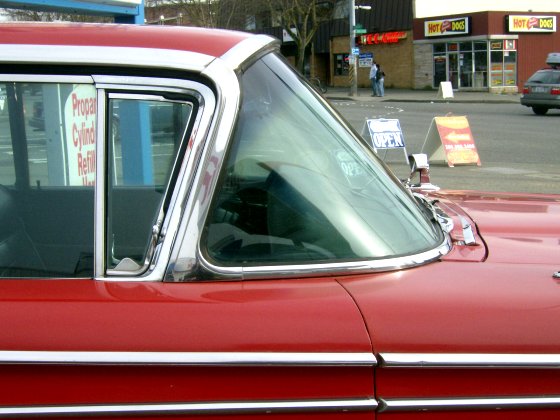
Panoramic (wrap-around) windshield on a 1959 Edsel Corsair

The windshield (American English and Canadian English) or windscreen (Commonwealth English) of an aircraft, car, bus, motorbike, truck, train, boat or streetcar is the front window, which provides visibility while protecting occupants from the elements. Modern windshields are generally made of laminated safety glass, a type of treated glass, which consists of, typically, two curved sheets of glass with a plastic layer laminated between them for safety, and bonded into the window frame.

Motorcycle windshields are often made of high-impact polycarbonate or acrylic plastic.

Usage

[edit]
Split and raked windshield on a 1952 DeSoto. Note the panes of glass are flat.

Windshields protect the vehicle's occupants from wind and flying debris such as dust, insects, and rocks, and provide an aerodynamically formed window towards the front. UV coating may be applied to screen out harmful ultraviolet radiation. However, this is usually unnecessary since most auto windshields are made from laminated safety glass. The majority of UV-B is absorbed by the glass itself, and any remaining UV-B together with most of the UV-A is absorbed by the PVB bonding layer.[1]

On motorbikes their main function is to shield the rider from wind, though not as completely as in a car, whereas on sports and racing motorcycles the main function is reducing drag when the rider assumes the optimal aerodynamic configuration with their body in unison with the machine and does not shield the rider from wind when sitting upright.

Safety

[edit]
The laminated glass in Vice President Richard Nixon's vehicle was nearly breached by a hostile crowd in Caracas in 1958
Automobile windshield displaying "spiderweb" cracking typical of laminated safety glass

Early windshields were made of ordinary window glass, but that could lead to serious injuries in the event of a crash. A series of crashes led up to the development of stronger windshields. The most notable example of this is the Pane vs. Ford case of 1917 that decided against Pane in that he was only injured through reckless driving.[citation needed] They were replaced with windshields made of toughened glass and were fitted in the frame using a rubber or neoprene seal. The hardened glass shattered into many mostly harmless fragments when the windshield broke. These windshields, however, could shatter from a simple stone chip. "Triplex" glass laminating, however, had been available for windshields in France from 1911 and in Britain from 1912; it was adopted as an accessory by some high-end American auto manufacturers beginning in 1913, and from 1919 to 1929 Henry Ford ordered the use of laminated glass on all of his vehicles.[2]

Modern, glued-in windshields contribute to the vehicle's rigidity, but the main force for innovation has historically been the need to prevent injury from sharp glass fragments. Almost all nations now require windshields to stay in one piece even if broken, except if pierced by a strong force.

The urethane sealant is protected from UV in sunlight by a band of dark dots called a frit around the edge of the windshield.[3] The darkened edge transitions to the clear windshield with smaller dots to minimize thermal stress in manufacturing. The same band of darkened dots is often expanded around the rearview mirror to act as a sunshade.[4]

On a rainy day, water refraction on aircraft windshields can mislead pilots into believing that they are flying at a higher altitude than they actually are due to the horizon appearing lower than it is. This can result in undershooting the runway and become a safety hazard.[5]

Other aspects

[edit]

In many places, laws restrict the use of heavily tinted glass in vehicle windshields; generally, laws specify the maximum level of tint permitted. Some vehicles have noticeably more tint in the uppermost part of the windshield to block sunglare.

In aircraft windshields, an electric current is applied through a conducting layer of tin(IV) oxide to generate heat to prevent icing. A similar system for automobile windshields, introduced on Ford vehicles as "Quickclear" in Europe ("InstaClear" in North America) in the 1980s and through the early 1990s, used this conductive metallic coating applied to the inboard side of the outer layer of glass. Other glass manufacturers utilize a grid of micro-thin wires to conduct the heat especially on the later European Ford Transit vans. These systems are more typically utilized by European auto manufacturers such as Jaguar and Porsche.

The use of thermal glass prevents some navigation systems from functioning correctly, as the embedded metal blocks the satellite signal. The RF signal tends to flow along the metal wires or layer so very little radiation can pass. This can be resolved by using an external antenna. Mobile telephones can also have problems; thermal glass typically allows only 0.001 (1‰, or one per mille) of the signal to pass, whereas a concrete wall with rebars allows up to 0.100 (10%, or 100‰) of the signal to pass.

Terminology

[edit]
Singled aero screen on Bentley Blower No.1

The term windshield is used generally throughout the US and Canada. The term windscreen is the usual term in the British Isles and Australasia for all vehicles. In the US windscreen refers to the mesh or foam placed over a microphone to minimize wind noise, while a windshield refers to the front window of a car. In the UK, the terms are reversed, although generally, the foam screen is referred to as a microphone shield, and not a windshield.

Sports or racing cars would sometimes have aero screens, which were small semi-circular or rectangular windshields. These were often mounted in pairs behind a foldable flat windshield.[6] Aero screens are usually less than 20 cm (8 inches) in height. They are known as aero screens because they only deflect the wind.[citation needed][dubiousdiscuss] The twin aeroscreen setup (often called Brooklands) was popular among older sports and modern cars in vintage style.

A wiperless windshield is a windshield that uses a mechanism other than wipers to remove snow and rain from the windshield. The concept car Acura TL features a wiperless windshield using a series of jet nozzles in the cowl to blow pressurized air onto the windshield. Also several glass manufacturers have experimented with nano type coatings designed to repel external contaminants with varying degrees of success but to date none of these have made it to commercial applications.

In the context of cargo ships, a windshield may refer to a bow windshield, a structure fitted on the bow to decrease drag and improve fuel efficiency.[7]

Certification

[edit]

Certification of a windshield is necessary to ensure safety. Different counties have made different set of rule that all windshield manufacturers need to comply under Motor Vehicle Acts. Some of the most known certifications include US DOT, EU ECE, Chinese CCC, South African SABS and Indian BIS standards. These certification ensures safety, reliability and quality of a product as per respective legal requirements.

Repair of stone-chip and crack damage

[edit]

According to the US National Windshield Repair Association, many types of stone damage can be successfully repaired. Whether the windshield can be repaired always depends upon four factors: the size, type, depth and location of the damage.[8]

Size and depth

[edit]

Repair of cracks up to 6.1 cm (2.4 inches) is within permissible limits; automobile glass with more severe damage needs to be replaced. However, this is dependent on local laws. If a crack extends to the edge of the panel then this would compromise the structural integrity of the windshield. Aircraft windshields are designed in such a way that even if a crack were to extend all the way across the panel, the structural integrity is maintained via multiple failsafe methods in both frame and the glass plies. A sacrificial outer layer that cracks rather than devitrifies is the first failsafe.

Type

[edit]

Circular bullseyes, linear cracks, crack chips, dings, pits and star-shaped breaks can be repaired without removing the glass, eliminating the risk of leaking or bonding problems sometimes associated with replacement.

Location

[edit]

Some damages are very difficult to repair, or cannot be repaired:

  • on inside of the windshield
  • deep damage on both layers of glass due to solar absorption or oxidation.
  • damage over rain sensor or internal radio antenna
  • complex multiple cracks
  • very long cracks (i.e. over 45–60 cm or 18–24 inches long)
  • contaminated cracks
  • edge cracks

In cracked windshield repair, air is removed from the damaged area on the windshield with a specified vacuum injection pump. Then using the injection pump, the clear adhesive resin is injected to replace the air in the windshield crack. The resin is then cured with an ultraviolet light. When done properly, the damaged area’s strength is restored, as is 90–95% of the clarity.

Replacement

[edit]

Windshields that cannot be repaired have to be replaced. Replacement of a windshield typically takes less than an hour. To ensure the vehicle is safe to drive, time values called the Safe Drive Away Time have been established. Windshields which have been replaced must cure or bond sufficiently until they are able to withstand the forces of a crash. Knowing the minimum time needed to cure the glass bonding adhesives is therefore important. This safe drive away time (SDAT) or minimum drive away time (MDAT) refers to the time required until a windshield installation or glass replacement is considered safe to drive again.[9] Criteria are specified in U.S. Federal Motor Vehicle Safety Standards 212/208 (see FMVSS) to ensure the reliability of adhesive systems. Typically the SDAT is verified with crash tests as well as with high-speed laboratory test methods.

Consumers may be unaware that the MDAT or SDAT time is focused on safety and not necessarily on the quality, durability, or warranty of the installation. Care must be taken not to drive the vehicle prior to the SDAT/MDAT.

Airbags deploy at speeds up to 320 km/h (200 mph; 89 m/s) and in some cases exert tremendous force on the windshield. Occupants can impact the airbag just 50 ms after initial deployment.[10] Depending on vehicle design, airbag deployment and/or occupant impact into the airbag may increase forces on the windshield, dramatically in some cases. Forces of occupants on the airbags - and hence the potential forces on the windshield - are lower for belted occupants.[11] As consequence, adhesive suppliers usually inform their customers about the level of security achieved:

1) Example: Security exceeding FMVSS 212/208 belted

2) Example: Security exceeding FMVSS 212/208 unbelted[12]

With the advent of quick-cure adhesives, mobile windshield replacements have become more prevalent. Often the temperature and humidity cannot be controlled for mobile installations. For most common glass adhesives the ideal environment is 21 °C (70 °F) and 50% humidity. Variations from the ideal curing environment can increase the time needed for a sufficiently safe bond to form. Because of the variables and difficulties involved in mobile windshield replacement, many vehicle manufacturers do not recommend this method of installations.

Disposal

[edit]

Waste disposal of laminated glass is no longer permitted in a landfill in most European countries as the End of Life Vehicles Directive (ELV) is implemented. A study[13] by Surrey University and Pilkington Glass proposes that waste laminated glass be placed into a separating device such as a rolling mill where the glass is fragmented and the larger cullet is mechanically detached from the inner film. The application of heat then melts the laminating plastic, usually, polyvinyl butyral "PVB" enabling both the glass and the interior film to be recycled. The PVB recycling process is a simple procedure of melting and reshaping it. One possible method of recycling of simple automotive laminated windshields could involve heating the windshield to above the melting point of the PVB interlayer and then separating the glass plies. This depends chiefly on the differential melting points of PVB and glass and is not suitable for other interlayer materials such as silicone based materials.

See also

[edit]

References

[edit]

Further reading

[edit]
[edit]
Revisions and contributorsEdit on WikipediaRead on Wikipedia
from Grokipedia
A windshield, also known as a windscreen in some regions, is a transparent front window of a motor vehicle, such as a car, truck, or bus, designed primarily to shield occupants from wind, rain, debris, and insects while maintaining clear forward visibility.[1][2] Modern windshields are constructed from laminated safety glass, consisting of two curved sheets of glass bonded with a thin interlayer of polyvinyl butyral (PVB) plastic, which prevents shattering upon impact and enhances durability.[3] This material composition, derived from silica sand, soda ash, dolomite, limestone, and recycled glass cullet, undergoes high-temperature processing to form a strong, flexible barrier.[4][5] Beyond basic protection, windshields serve multiple critical functions in vehicle safety and performance. They contribute to the structural integrity of the vehicle's frame, particularly during rollovers or collisions, by absorbing energy and preventing roof collapse.[6] Additionally, they facilitate proper airbag deployment by providing a surface for inflation support and block approximately 96% (up to 98%) of harmful ultraviolet (UV) rays to protect passengers from sun exposure.[6][7] Advanced windshields may incorporate features like acoustic layers for noise reduction, heating elements to prevent fogging or icing, and heads-up display (HUD) projections for navigation data.[8] The evolution of windshields reflects advancements in automotive engineering and safety standards. Early versions, introduced around 1905, used flat plate glass that would shatter into dangerous sharp fragments, but the invention of laminated glass by French scientist Édouard Bénédictus in 1912 revolutionized the design by minimizing injury risks.[9] By the mid-20th century, curved windshields became standard for improved aerodynamics and visibility, and today, regulations from bodies like the U.S. National Highway Traffic Safety Administration (NHTSA) mandate their use of impact-resistant materials to meet federal motor vehicle safety standards.[10]

Definition and Terminology

Definition

A windshield is the transparent frontal glazing of a motor vehicle, positioned ahead of the driver and passenger compartment to provide clear visibility of the road ahead.[11][12] It serves primarily to shield occupants from wind, road debris, precipitation, and ultraviolet (UV) radiation, thereby enhancing safety and comfort during operation.[13][14] Modern windshields are engineered to block approximately 96% of UV-A rays, reducing exposure to harmful solar radiation.[14] The basic structure of a windshield consists of multiple layers of glass bonded with an interlayer material, such as polyvinyl butyral (PVB), which holds the assembly together even if cracked, and is mounted within a framing system for secure installation.[15][16] This laminated design contrasts with tempered glass used in other vehicle windows, prioritizing penetration resistance over shattering into small pieces.[17] The framing, often integrated into the vehicle's body structure, ensures proper alignment and support.[18] Introduced in automobiles around 1904, windshields evolved from simple, flat plates of glass to curved, multi-layered constructions that better accommodate vehicle design and performance needs.[19] Beyond protection and visibility, they contribute to the vehicle's aerodynamics by minimizing air resistance and to overall structural rigidity by enhancing cabin stiffness during impacts.[20][21]

Regional Terminology

In North American English, the front protective glass of a motor vehicle is commonly referred to as a "windshield," a term that emphasizes its role as a shield against wind.[22] In contrast, British English and Australian English predominantly use "windscreen," highlighting the screening function of the barrier.[23][24] This divergence reflects broader linguistic differences in automotive vocabulary between these English-speaking regions, where "windscreen" also applies to related components like wiper blades.[25] Historically, the term evolved in the early 20th century alongside the advent of motorized vehicles, with "wind-shield" appearing as a hyphenated compound in patents and descriptions from around 1902 to 1904.[22][26] This usage denoted early protective screens for carriages and automobiles, transitioning to the modern solid form as glass technology advanced.[23] In specialized industries, terminology varies to suit contextual needs. Aviation employs "canopy" for the transparent enclosure over a cockpit, often hinged or jettisonable to provide overhead and side visibility while protecting occupants from wind and elements.[27] In marine contexts, the equivalent front-facing glass in a vessel's wheelhouse or pilothouse is typically called the "forward window," facilitating navigation and monitoring from the bridge.[28] Legal and regulatory documents standardize these terms within their jurisdictions. In the United States, Federal Motor Vehicle Safety Standard (FMVSS) No. 205 refers to the component as a "windshield" when specifying glazing materials for motor vehicles, including requirements for retention and light transmittance.[11] Conversely, European Union regulations under ECE Regulation No. 43 use "windscreen" to denote the front glazing, mandating minimum light transmittance levels such as 70 percent for vehicles exceeding 40 km/h design speed.[29][30] These distinct terminologies ensure clarity in compliance and safety enforcement across regions.[31]

History

Invention and Early Use

The earliest windshields emerged in the late 1890s and early 1900s as optional accessories for automobiles, which were initially designed as open carriages without any glass protection, leaving occupants exposed to weather and road hazards. The first notable patent for a windshield was filed by Gilbert A. Pond in 1904, describing a protective screen for carriages that could be adapted to motor vehicles. Subsequent patents followed, including those by Georges Huillier and Philip De Anguera Jr. in 1907, which specified designs tailored for automobiles to shield drivers from wind and debris. These innovations addressed the growing need for protection as cars gained speed and popularity, with early models like the Oldsmobile Curved Dash offering windshields as optional equipment starting in 1904. Prior to the dominance of glass windshields around 1911, simpler materials such as celluloid sheets or mica were used for wind protection on motorcycles and bicycles. Celluloid, an early synthetic plastic, was cemented between glass layers in experimental designs or employed as standalone shields to deflect wind and dust without the fragility of glass. Mica, a thin, flexible mineral sheet, appeared in side curtains and basic screens on early motorized bicycles and motorcycles, providing lightweight visibility while minimizing shattering risks during impacts. These materials offered rudimentary safeguards but were limited by durability issues, paving the way for more robust glass implementations. The primary drivers for windshield adoption were the practical challenges of open-top vehicles, including exposure to dust, wind, and flying debris from unpaved roads, which impaired visibility and comfort for drivers and passengers. Early windshields consisted of flat-plate glass, often divided horizontally into two panes for easier replacement, but this material was highly prone to shattering into long, sharp fragments upon impact, leading to severe lacerations and ejections in accidents. Injuries from such failures prompted gradual standardization; by 1915, Oldsmobile became one of the first manufacturers to make windshields standard equipment. Although specific legal mandates for windshields varied by region, the push for safer designs accelerated with early 20th-century regulations emphasizing occupant protection, culminating in broader adoption by the 1920s.

Evolution of Materials

The evolution of windshield materials began in the early 20th century with the limitations of plain annealed glass, which shattered into sharp shards upon impact, posing significant risks to drivers and passengers. The concept of laminated safety glass was invented in 1912 by French chemist and artist Édouard Bénédictus, who accidentally discovered that a glass flask coated with a dried layer of cellulose nitrate (collodion) did not shatter dangerously when dropped. He developed Triplex glass by sandwiching two layers of glass with a celluloid interlayer, patenting the process and licensing it initially to the Triplex Safety Glass Company in England. This innovation dramatically reduced the risk of ejection and injury during collisions by holding fragments together, though early production faced technical challenges. In the 1920s and 1930s, commercial production advanced, with Libbey-Owens-Ford beginning to produce laminated safety glass for automotive use in 1928 using a cellulose nitrate or acetate interlayer. Henry Ford adopted this technology as standard equipment in all Ford vehicles starting in 1927, marking the first widespread use in automobiles and setting a new safety benchmark. By 1928, Libbey-Owens-Ford had refined production, enabling curved windshields that improved aerodynamics and visibility while maintaining structural integrity. Following World War II, the automotive industry standardized laminated glass with polyvinyl butyral (PVB) interlayers, which replaced earlier cellulose materials due to superior clarity, adhesion, and UV resistance. Developed in the late 1930s by companies like DuPont and Monsanto, PVB became commercially viable for civilian vehicles only after wartime restrictions lifted, with full adoption in windshields by the 1950s. This interlayer, typically 0.76 mm thick by the 1960s, enhanced penetration resistance and optical quality, allowing for larger, more curved designs without compromising safety. Concurrently, tempered glass—chemically or thermally treated to create compressive stress on the surface—emerged as the standard for side and rear windows from the 1940s onward, as it crumbled into small, blunt granules upon breakage, complementing the shatter-resistant nature of laminated windshields. From the 1980s to the 2000s, material innovations focused on comfort and functionality, including acoustic PVB interlayers that incorporated viscoelastic damping layers to attenuate road and wind noise. These advanced interlayers, introduced in premium vehicles like the 1986 Mercedes-Benz models, reduced cabin noise by up to 3-6 dB in mid-to-high frequencies, improving driver focus and passenger experience. PVB formulations also evolved to include inherent UV-blocking properties, absorbing over 99% of harmful UVA and UVB rays to protect occupants and prevent interior fading, a feature standardized across most windshields by the 1990s. In the 2020s, the integration of smart glass technologies has represented the latest frontier in automotive glazing, enabling dynamic control over tinting and opacity, with emerging applications for windshields. Research Frontiers' Suspended Particle Device (SPD) technology, which uses electrochromic particles in a polymer matrix to switch between clear and opaque states via electrical voltage, has been commercialized, including in vehicle roofs such as the 2024 Cadillac Celestiq and Ferrari Purosangue SUV. This technology blocks up to 99% of light for glare reduction or privacy while maintaining visibility, signaling a shift toward multifunctional, adaptive glass that may extend to windshields in future models.

Materials and Construction

Types of Glass

Windshields primarily utilize laminated glass, which consists of two plies of glass bonded together with a polyvinyl butyral (PVB) interlayer.[10] This construction prevents the glass from shattering upon impact by holding fragments in place through the adhesive properties of the PVB, which also absorbs significant energy from collisions, reducing penetration risks and injury potential.[32] The PVB layer, typically 0.76 mm thick, enhances overall safety by maintaining structural integrity even after cracking. When damaged, laminated glass typically develops spiderweb cracks but does not fully shatter or collapse, contrasting with tempered glass used in side and rear windows which disintegrates into small granules.[33][3] Tempered glass, produced by heat-treating soda-lime glass to create surface compression for increased strength—making it 4 to 5 times stronger than annealed glass—is commonly used for side and rear vehicle windows but not as the primary material for windshields.[10] Upon breaking, tempered glass disintegrates into small, dull granules rather than sharp shards, minimizing laceration hazards; however, this fragmentation behavior poses risks for windshields, where retaining the glass pane is essential for occupant protection and structural support during impacts.[34] Additionally, tempered glass can introduce optical distortions unsuitable for the high-clarity demands of forward visibility.[34] The base material for both laminated and tempered automotive glass is soda-lime-silica glass, comprising approximately 70-75% silica (SiO₂) from sand, 13-15% sodium oxide (Na₂O) from soda ash, and 8-10% calcium oxide (CaO) from limestone, with minor additives like iron oxide (0.1-0.5%) for tinting and UV absorption to improve visibility and thermal comfort.[35][36] These compositions ensure durability under thermal stress and environmental exposure while maintaining transparency.[36] Advanced variants of laminated glass address specific performance needs. Acoustic laminated glass incorporates a specialized PVB interlayer with viscoelastic damping properties, reducing external noise transmission by 2-3 dB overall and up to 6 dB in high-frequency ranges, enhancing cabin comfort without compromising safety.[37] Heads-up display (HUD)-compatible windshields feature a wedged PVB interlayer and reflective coatings on one glass ply, optimizing image projection clarity by minimizing double reflections and ensuring uniform brightness across viewing angles.[38] Other interlayers, such as ionoplast (e.g., SentryGlas) for greater rigidity and impact resistance or ethylene-vinyl acetate (EVA) for flexible bonding, are used in specialized windshields to meet enhanced structural or environmental requirements.[39]

Manufacturing Techniques

The production of windshields begins with the creation of flat glass sheets using the float glass process, where molten glass at approximately 1,100°C is poured onto a bath of molten tin, forming a uniform ribbon that cools to 600°C as it exits the bath, resulting in distortion-free sheets ideal for automotive applications.[40] These flat sheets are then cut to precise dimensions and heated in bending furnaces to 600-700°C, allowing them to conform to the curved shape required for vehicle integration while maintaining optical clarity.[41] For lamination, two layers of bent glass are assembled with a polyvinyl butyral (PVB) interlayer, which is applied in a clean environment to ensure adhesion; the assembly is then placed in an autoclave where it is heated to 140-150°C under 10-15 bar of pressure for bonding, removing air pockets and creating a monolithic structure resistant to shattering.[42] This process, typically lasting several hours, ensures the PVB fully integrates with the glass surfaces, enhancing safety through interlayer retention of fragments upon impact.[43] Quality control in windshield manufacturing emphasizes optical performance, with techniques such as laser interferometry used to detect surface waviness and distortions, ensuring minimal visual aberrations for drivers. These inspections, often conducted post-lamination, involve phase-shifting interferometry to measure wavefront deviations in transmitted light, verifying compliance with standards for minimal refractive errors.[44] Automation has transformed windshield production since the 2010s, with robotic assembly lines handling cutting, bending, and lamination tasks to improve precision and efficiency; for instance, Saint-Gobain employs collaborative robots for glass handling and polishing in high-volume facilities.[45]

Design and Usage

Automotive Applications

In automotive applications, windshields are engineered with curved shapes to optimize aerodynamics, typically featuring a rake angle between 20° and 45° from vertical to minimize drag and improve fuel efficiency by facilitating smoother airflow over the vehicle's roof.[46][47] This curvature also enhances structural rigidity, integrating the windshield as a load-bearing component bonded to the vehicle's frame via urethane adhesives. Standard windshield sizes in sedans range from approximately 1.5 to 2 square meters, varying by model to balance visibility and design constraints, with dimensions often around 1.5 meters wide by 0.8 meters tall for mid-size vehicles.[48] Key features include seamless integration with windshield wiper systems, where electric motors drive oscillating arms and blades across the glass surface to clear rain, snow, or debris, often incorporating rain-sensing technology for automatic activation.[49] Defrosters employ thin-film heating wires, typically made of tungsten or metallic alloys embedded within the laminated glass layers, to rapidly melt ice or evaporate fog by generating controlled heat upon electrical activation, consuming less energy than traditional blower systems.[50] Tinting regulations in the United States mandate a minimum visible light transmission of 70% for the windshield to ensure driver visibility, with any applied film restricted to the upper portion above the AS-1 line.[51] Windshields serve critical usage roles in automobiles, providing primary protection against wind and airborne debris while deflecting impacts from stones or insects to prevent penetration into the cabin. In crash scenarios, the laminated structure absorbs significant energy—contributing to the vehicle's overall torsional stiffness—by flexing without shattering, thereby distributing forces and supporting roof integrity during rollovers.[52] Modern integrations have positioned windshields as hosts for advanced driver-assistance systems (ADAS), with forward-facing cameras mounted behind the glass becoming standard since the early 2010s to enable features like lane departure warnings and adaptive cruise control without external protrusions. By 2025, updates focus on LiDAR compatibility, with in-cabin solid-state sensors now integrable behind specially engineered windshields that minimize optical distortion for 4D imaging, as demonstrated in prototypes at CES 2025 for enhanced autonomous driving perception.[53][54]

Applications in Other Vehicles

In aviation, windshields are engineered as bird-strike resistant laminated glass systems to protect pilots from high-speed collisions with birds, adhering to Federal Aviation Administration (FAA) standards under 14 CFR Part 25, which mandate that transport-category aircraft windshields withstand a 4-pound bird impact at design cruise speed up to 8,000 feet without penetration into the cockpit.[55] These laminates typically consist of multiple plies of glass and polyvinyl butyral (PVB) interlayers, with total thicknesses ranging from 0.5 to 1 inch to balance weight, optical clarity, and impact absorption, as demonstrated in FAA developmental testing where configurations with 0.04- to 0.12-inch PVB layers prevented shattering under simulated strikes.[56] In fighter jets, canopy designs integrate similar principles but prioritize aerodynamic efficiency and ejection compatibility; for instance, the F-35 Lightning II's canopy uses polycarbonate with specialized coatings to resist a 4-pound bird strike at 480 knots on the reinforced windscreen area, ensuring structural integrity during high-maneuverability operations.[57] Marine applications demand windshields with saltwater corrosion-resistant coatings to endure prolonged exposure to harsh oceanic environments, where standard glass would degrade rapidly due to chloride-induced pitting and etching. These coatings, often hydrophobic nanolayers or epoxy-based barriers applied to bridge enclosures, repel salt spray and maintain visibility, as seen in marine-grade glass solutions that comply with International Maritime Organization (IMO) durability requirements for vessel superstructures.[58] Heated windshields further address ice prevention in cold-water operations, incorporating wire-free resistive films or embedded heating elements to melt frost and prevent condensation; for example, THERMOVIT Marine glazing uses low-voltage electrical heating to keep surfaces above 0°C, optimizing performance on cargo ships in polar routes as validated in 2024 engineering assessments of thermal efficiency.[59] Rail vehicles, including high-speed trains like Japan's Shinkansen introduced in the 1960s, feature larger curved windshields to provide panoramic visibility for operators while minimizing aerodynamic drag at speeds exceeding 200 mph. These designs, evolved from early bullet train prototypes, use multi-layered laminated glass curved to match the train's nose contour for reduced air resistance. Impact testing for debris, such as gravel or ballast stones, is rigorous under standards like EN 12600 and AAR specifications, simulating high-velocity projectiles to ensure no penetration; recent studies on rail windshields confirm that optimized laminates absorb impacts from 100-gram gravel at 300 km/h without compromising cabin integrity.[60] Heavy vehicles, such as construction machinery and trucks, employ similar impact-tested windshields to shield operators from flying debris like rocks or tools, often using polycarbonate alternatives that pass FMVSS 205 ball-drop and dart-impact tests, demonstrating up to 200 times the impact resistance of standard glass.[61] Motorcycle windshields are typically small, removable acrylic shields mounted on fairings to deflect wind and reduce rider fatigue on long highway rides. Constructed from lightweight acrylic for optical clarity and shatter resistance, these shields attach via quick-release brackets, allowing easy removal for urban or off-road use. Aerodynamically, they reduce the vehicle's drag coefficient by redirecting airflow over the rider's upper body, as evidenced in wind-tunnel evaluations of touring models where shields improved fuel efficiency and top speed stability at 70-80 mph.[62]

Safety Features

Impact Resistance and Lamination

Windshields are constructed using laminated glass, consisting of two or more sheets of glass bonded with a polyvinyl butyral (PVB) interlayer, which plays a crucial role in mitigating injuries during impacts. Upon breakage, the PVB layer adheres to the glass fragments, holding them in place and preventing them from scattering as dangerous shards that could cause lacerations or penetration injuries to occupants. This design reduces the risk of ejection through the windshield in crashes, as the interlayer maintains the overall structure even after cracking. The viscoelastic nature of PVB further enhances safety by allowing the interlayer to deform under stress, absorbing and dissipating kinetic energy from impacts through internal friction and elongation, thereby minimizing force transfer to vehicle occupants.[63][64][65] Laminated windshields demonstrate greater penetration resistance compared to monolithic or tempered glass alone, as the interlayer distributes impact forces and prevents complete breach. This performance is rigorously tested under Federal Motor Vehicle Safety Standard (FMVSS) No. 205, which references ANSI/SAE Z26.1 procedures, including an impact test using a 227-gram steel ball dropped from a height equivalent to 6.7 m/s onto the glazing surface; the material must resist penetration and limit fragmentation to ensure occupant protection from road debris. These tests confirm the windshield's ability to withstand typical collision scenarios without compromising cabin integrity.[17][11] Unlike tempered glass, which fractures into small, blunt cubes to facilitate safe egress from side and rear windows, laminated glass is specifically favored for front windshields because it remains largely intact post-impact, preserving visibility and providing continued structural support to the vehicle's roof and frame during rollovers or ejections. This distinction arose from early innovations in the 1930s, when Libbey-Owens-Ford introduced commercial laminated safety glass in 1928 and secured widespread automotive adoption, including by Ford Motor Company, transforming windshields from brittle plates into reliable safety barriers.[33][66][67] Advancements since the late 1990s have further improved impact resistance through ionoplast interlayers like SentryGlas®, introduced in 1998, which offer 5 to 10 times the stiffness and tear resistance of traditional PVB, enabling the windshield to retain visibility and load-bearing capacity after extensive cracking or damage across a large portion of its surface. These "run-flat" capable designs enhance overall vehicle safety by delaying total failure, allowing drivers to maintain control in severe accidents.[68][69]

Regulatory Standards

In the United States, Federal Motor Vehicle Safety Standard (FMVSS) No. 205 governs glazing materials for motor vehicles and replacement equipment, aiming to minimize injuries from impacts on glazing surfaces while ensuring adequate transparency for driver visibility.[17] This standard incorporates performance requirements from ANSI/SAE Z26.1, including tests for mechanical strength, optical properties, and durability, applicable to laminated and tempered glass used in windshields.[11] All compliant glazing must bear a Department of Transportation (DOT) marking, which includes the manufacturer's code and confirms adherence to FMVSS 205 certification requirements.[70] In the European Union and internationally, United Nations Economic Commission for Europe (UNECE) Regulation No. 43 (ECE R43) establishes uniform provisions for the approval of safety glazing materials and their installation on vehicles, covering aspects such as impact resistance, light transmission, and secondary UV transmittance to protect occupants.[29] Proposed 2024 amendments under the 02 series would introduce updated test methods for headform impacts and optional provisions for advanced glazing systems, ensuring compatibility with vehicle restraint systems.[71] Complementing ECE R43, International Organization for Standardization (ISO) 3537 specifies mechanical test methods for safety glazing materials in road vehicles, focusing on properties like fracture behavior and optical distortions to maintain safe visibility.[72] Key testing protocols under these standards evaluate abrasion resistance using the Taber Abraser method, where windshields must exhibit no more than a 4% increase in haze after 1,000 cycles to simulate long-term surface wear from environmental factors.[11] Additionally, luminous transmittance requirements mandate at least 70% light transmission for forward-facing glazing, including windshields, to ensure unobstructed driver vision under various lighting conditions.[11] These standards collectively ensure that laminated and tempered glass types, such as those used in windshields, comply with global safety benchmarks for durability and performance in road vehicles.

Repair of Damage

Assessing Damage

Common Causes of Damage

Windshield damage primarily results from road debris (rocks, gravel, construction materials) kicked up by vehicles, causing chips or cracks. Temperature fluctuations cause thermal stress, expanding small chips into larger cracks, especially in hot climates or during rapid changes. Other factors include hail, extreme heat, poor road conditions (potholes increasing vibration and debris), and highway driving.

Prevalence and Regional Variations

Auto glass claims vary regionally. According to National Insurance Crime Bureau (NICB) data from 2015-2019, Arizona led with about 10% of U.S. claims despite smaller population, attributed to extreme heat, dry conditions, and debris. Florida ranked second, with potential fraud contributions. Texas, California, and New York followed. Southern and southwestern states generally see higher rates due to heat (expanding cracks), hail, and road hazards, compared to milder, wetter regions like the Pacific Northwest (Washington state) with fewer thermal extremes and better-maintained roads reducing debris impacts. Industry surveys indicate ~14% of U.S. windshields have long cracks, often edge cracks from near-frame impacts.[73][74] Assessing damage to a windshield begins with identifying the type and extent of the impact, which determines whether repair is feasible or if replacement is required. Common damage types include the bullseye, characterized by a circular cone-shaped chip with a central impact point; the star break, featuring short radiating legs from the impact site; and the combination break, which merges elements of both, such as a star pattern within a bullseye. These classifications help technicians evaluate the structural integrity and optical clarity post-impact.[75] Depth classification is crucial, distinguishing surface-level damage from full penetration. Surface damage, such as a pit or chip, affects only the outer glass layer without reaching the plastic interlayer, allowing for potential resin filling to restore strength. Pitting, a form of surface damage, results from the gradual accumulation over years of driving of thousands of microscopic pits and chips from repeated high-speed impacts and abrasion by road debris, including small rocks, sand, grit, and dust kicked up by other vehicles, particularly during extensive highway driving. This can become severe after 10 or more years of use; in such cases, polishing or resin filling may not fully restore clarity, necessitating replacement to ensure optimal vision and safety.[75][76][77][78] Replacement for severe pitting is often covered by comprehensive auto insurance policies with little or no deductible.[79] Moreover, polishing a windshield to address pitting or minor surface scratches carries significant risks. Over-polishing or uneven polishing can unevenly remove glass material, creating dips, ripples, or micro-scratches that introduce optical distortions. These can manifest as increased glare, halos around lights, wavy or refracted views, or other visual artifacts particularly noticeable in direct sunlight or at night with streetlights, traffic lights, or oncoming headlights. Experts and manufacturers generally advise against polishing front windshields due to these refraction risks and potential safety impacts on visibility; if polishing is considered for very light surface haze in limited areas, it must be performed uniformly across a broad surface, avoiding concentration in one spot, to minimize distortion. Replacement is typically recommended for moderate to severe pitting.[80][81][82] In contrast, full penetration extends through both glass layers to the interlayer, compromising the windshield's lamination and rendering it irreparable due to risks of delamination and water intrusion. Technicians classify depth by probing the damage site to check for interlayer exposure.[75][83] Size limits for repairability are outlined in industry standards, with the Repair of Laminated Automotive Glass Standard (ROLAGS) specifying thresholds based on damage type. Bullseye and half-moon chips are repairable if no larger than 1 inch (25 mm) in diameter, combination breaks up to 2 inches (50 mm) excluding radiating legs, star breaks up to 3 inches (75 mm), and linear cracks up to 14 inches (350 mm) in length, provided they do not exceed these dimensions or intersect multiple edges. These limits, aligned with Auto Glass Safety Council (AGSC) guidelines as of 2022 and applicable in 2025 practices, prioritize safety by preventing further propagation.[75][84] Location factors significantly influence assessment, as damage near the windshield's edges or in critical zones can lead to spreading or impaired functionality. Proximity to the edge within 2 inches (50 mm) increases the risk of crack extension along the bonded area, often necessitating replacement; edge cracks intersecting more than one edge are typically non-repairable. Additionally, damage in sensor areas, such as those for heads-up displays (HUD) or advanced driver-assistance systems (ADAS) cameras, must be avoided for repair if it could distort readings or fall within the driver's primary viewing area (DPVA), defined as 12 inches (300 mm) wide, centered on the driver's position, extending from the top to the bottom of the wiper sweep, where finished pits cannot exceed 3/16 inch (5 mm). Repairs in the DPVA require at least 4 inches (100 mm) separation from prior damage sites.[75][85][86] Tools for precise assessment include pit gauges, such as spring-loaded scribes with integrated depth measurement, to quantify chip diameter and penetration depth up to 3/8 inch (9 mm). Ultraviolet (UV) lights are used to detect subsurface cracks by illuminating hidden fractures or moisture ingress that may not be visible under normal light, aiding in early identification of full-penetration risks. These instruments ensure evaluations align with standards like ROLAGS, guiding decisions toward repair techniques where applicable.[75][87][83]

Repair Methods

Common DIY temporary fixes, such as applying clear nail polish or superglue to small chips or cracks, are sometimes suggested online to fill micro-fractures, reduce visibility, and slow spreading until professional repair is possible. Clear nail polish can seep into tiny cracks, dry clear, and provide a short-term seal against moisture and debris. However, it does not form a strong bond with laminated automotive glass, tends to shrink, yellow, or crack under temperature fluctuations, UV exposure, or wiper use, and fails to restore structural integrity. Professional sources and experts consistently describe these household methods as ineffective long-term solutions that may complicate subsequent professional repairs. They are not substitutes for proper resin injection techniques. Professional repairs remain the recommended approach for damage like bullseye chips (circular cone-shaped impacts with radiating lines) or short cracks, using UV-cured resin injection to achieve high success rates and maintain safety standards. Windshield repair methods primarily focus on addressing minor damage such as chips and short cracks through the injection of specialized resins that restore structural integrity and optical clarity. These techniques aim to prevent further propagation of damage while maintaining the laminated glass's safety features. The most common approach involves removing air from the break via vacuum or displacement and filling it with a resin that matches the refractive index of the glass.[88] Resin injection utilizes clear acrylic or methacrylate-based resins, such as those composed of 1-vinyl-2-pyrrolidone and isobornyl acrylate, injected under controlled pressure of 20-50 psi to fill surface flaws volumetrically. The process begins with cleaning the damage site, followed by application of the resin using a syringe or injector, where a piston applies pressure for several minutes to ensure penetration, often after creating a slight vacuum to extract debris and air. Curing occurs via ultraviolet light exposure for 5-10 minutes, hardening the resin to bond with the glass layers and restore approximately 50-90% of the original strength for small damages under 1 inch.[89][88][74] For deeper chips, such as bullseye or star breaks exceeding 1/8 inch in depth, a drilling and filling technique is employed to access and remove loose debris before sealing. Technicians use a diamond-tipped drill bit at low speed to create a small access point, typically 3-5 seconds to avoid overheating, then inject resin to fill the void and cure it as in standard injection. This method achieves high success rates, around 90%, for damages under 3 inches by preventing stress concentration points.[88][90] For small star cracks not obstructing vision or located in the driver's primary viewing area, resin repair is a viable option, particularly for those without insurance coverage seeking to avoid potential premium increases. Out-of-pocket professional repairs typically cost $60 to $100, offering a cost-effective alternative to full replacement while adhering to safety standards like those from the Auto Glass Safety Council. However, if the crack is visible in the driver's view or compromises inspection compliance, full replacement is recommended for safety. In vehicles with ADAS sensors, repairs must not interfere with sensor functionality, and any potential impact may necessitate OEM replacement to ensure proper calibration.[91][92] Professional repairs, conducted by certified technicians adhering to standards like the Repair of Laminated Auto Glass (ROLAGS), incorporate vacuum-assisted injection tools for precise air removal and resin placement, ensuring optical distortion remains below 5% light scatter. In contrast, DIY kits lack these calibrated tools and training, often resulting in incomplete fills, visible residues, or weakened bonds due to improper pressure control and heat exposure risks, such as from direct sunlight before curing. Professionals also avoid repairs near high-stress areas to prevent failure.[88][93] Repairs are limited to damages not penetrating both glass layers, with cracks exceeding 12-14 inches generally unsuitable due to incomplete filling and reduced strength recovery below 50%. Stress cracks, multiple intersecting breaks longer than 3 inches from one point, or damage in the driver's primary viewing area greater than 1 inch cannot be effectively repaired, as they compromise visibility and structural performance.[88][89][94]

Replacement

Replacement Process

Full replacement is recommended for cracks that are visible in the driver's view or affect safety compliance, such as those obstructing vision or failing vehicle inspection standards, particularly for small star cracks that have spread or pose risks despite initial repair considerations.[95] The windshield replacement process begins with the careful removal of the damaged glass to prevent harm to the vehicle's frame or surrounding components. Technicians typically start by protecting interior surfaces and removing exterior trim, wiper blades, and moldings to access the adhesive bond. The urethane adhesive securing the windshield is then cut using specialized tools such as piano wire, oscillating knives, or cold knives, which allow for precise separation without scratching the pinch weld area or damaging the vehicle's paint and structure.[96][97] Once the old windshield is lifted away, the pinch weld—the metal frame around the opening—is thoroughly cleaned of residual urethane using scrapers or rotary tools, followed by priming to prepare the surface for new adhesion. A bead of polyurethane-based sealant, often a one-component urethane adhesive, is applied evenly around the pinch weld to ensure a continuous 360-degree bond that provides structural integrity and weatherproofing. The new windshield is then positioned and pressed firmly into place, with technicians verifying proper alignment using alignment pins or lasers to avoid gaps or distortions.[96][97][98] After installation, the adhesive must cure sufficiently before the vehicle can be driven safely, with modern fast-cure formulations enabling a Safe Drive-Away Time (SDAT) of approximately one hour under standard conditions (e.g., 23°C and 50% relative humidity), as certified by industry testing for compliance with Federal Motor Vehicle Safety Standard (FMVSS) 212.[99][100][101] Advances in 2025 adhesive technology, including accelerated moisture-curing urethanes, have reduced this time from traditional 24-hour full cures while maintaining bond strength up to 3 MPa.[102][103] For vehicles equipped with Advanced Driver Assistance Systems (ADAS), recalibration of windshield-mounted cameras and sensors is essential post-replacement to restore accuracy, as even minor positional shifts can offset alignments. This involves static or dynamic procedures using diagnostic tools to adjust camera angles, ensuring deviations remain below 1 degree to prevent errors in features like lane-keeping assist or automatic emergency braking.[104][105][106] Professional replacements adhere to standards recommending either Original Equipment Manufacturer (OEM) glass, which matches factory specifications for fit and optical clarity, or certified aftermarket glass that complies with Department of Transportation (DOT) requirements for safety and durability. For recent vehicles equipped with ADAS sensors, using OEM windshields is particularly emphasized to ensure proper calibration and performance of these systems, as they provide precise measurements, optical clarity, and structural benchmarks that minimize distortion and maintain alignment essential for accurate sensor functioning.[107][108][109][110] Calibration processes follow guidelines from bodies like the Auto Glass Safety Council (AGSC), emphasizing verified equipment and technician certification to ensure post-replacement performance.[107][108][109] Windshield replacements necessitated by sudden accidental damage, such as impacts from road debris leading to chips or cracks, are often covered by comprehensive auto insurance policies, frequently with little or no deductible depending on the policy terms and state regulations.[111][112] However, damage due to gradual deterioration or wear and tear, such as severe pitting after 10 or more years of use or extensive highway driving, or cracks showing signs of age such as dirt accumulation or oxidation, is typically not covered, as these are considered pre-existing conditions or excluded under most comprehensive policies.[113]

Quality Assurance

Quality assurance in windshield replacement involves rigorous post-installation verification to ensure structural integrity, safety, and performance. Key testing protocols include water leak checks, where a high-pressure hose is used to simulate rain and detect any gaps in the adhesive seal around the windshield edges. Optical clarity scans assess for distortions or haze that could impair visibility, often using specialized lighting or digital imaging to confirm the glass meets visibility standards. Bond strength pull tests measure the adhesive's adhesion, with calibrated force gauges applied to sample bonds; industry acceptance criteria typically require a minimum break strength of 400 psi to verify the urethane can withstand crash forces.[114][115][116][114][117] A critical aspect of quality assurance is adherence to Safe Drive Away Time (SDAT), the minimum period a vehicle must remain stationary post-replacement to allow adhesive curing for structural integrity. Industry guidelines recommend a minimum SDAT of 60 minutes for fast-cure urethanes under standard conditions (5–35°C), as specified by adhesive manufacturers like Sika and the Auto Glass Safety Council (AGSC), ensuring the bond supports airbag deployment and roof crush resistance. The AGSC's Automotive Glass Replacement Safety Standard (AGRSS) mandates that certified technicians follow these times, briefing customers on factors like temperature and humidity that can extend curing needs.[118][119][119] Warranty coverage forms another pillar of post-replacement assurance, typically offering lifetime protection against material defects such as manufacturing flaws in the glass or adhesive failure leading to leaks. Workmanship warranties last 1–3 years, covering installation errors like misalignment or improper sealing, with many providers including certification for Advanced Driver Assistance Systems (ADAS) recalibration to verify sensor functionality after replacement. Reputable auto glass networks, such as those compliant with AGSC standards, emphasize these terms to build trust and ensure long-term reliability.[120][121][122] Common post-replacement issues include air bubbles trapped in the laminate, which can reduce clarity, and delamination where layers separate, often appearing as hazy edges or pockets due to improper adhesive application or environmental exposure. These defects are increasingly detected using 2025 AI-powered inspection tools, which employ computer vision to analyze images for anomalies like bubbles or separation with high accuracy, enabling faster quality checks and reducing safety risks in auto glass services.[123][124][125][126]

Disposal and Recycling

Disposal Challenges

The laminated structure of windshields, consisting of two layers of glass bonded with a polyvinyl butyral (PVB) interlayer, poses significant challenges to disposal due to the difficulty in separating these components without specialized equipment. The strong adhesion of PVB to glass resists mechanical breakdown, often resulting in incomplete separation that contaminates recyclable materials and increases processing costs.[36][127] This issue contributes to low recycling rates for automotive flat glass, estimated at around 20% in Europe, far below the potential for cullet recovery.[128] Environmentally, disposing of unbroken or fragmented windshields in landfills leads to space occupation by non-degradable glass shards, which, while inert and non-leaching of toxins, exacerbate landfill pressures amid global waste reduction goals. The PVB layer raises additional concerns, as improper disposal can release plastic residues and chemicals that may contaminate soil and water systems over time.[36][129] Regulatory frameworks intensify these disposal pressures, particularly through the European Union's End-of-Life Vehicles (ELV) Directive (2000/53/EC), which sets targets of 85% reuse and recovery and 80% reuse and recycling by average weight per vehicle. A proposed revision as of 2025 includes recycled plastic content targets of at least 20% in new vehicles (with 15% from ELVs), phased to higher levels (e.g., rising to 25%), to promote circularity; as of June 2025, the EU Council adopted a position for a three-stage approach starting at 15% six years after entry into force.[130][131][132] These updates aim to minimize landfill use but challenge the automotive sector to improve windshield handling without viable separation methods. Collection logistics further complicate disposal, as auto repair shops typically aggregate windshields for bulk transport to processors, but in rural areas, high transportation costs—often $20–$100 per ton for commercial waste—deter efficient recovery and lead to localized landfilling. This is particularly acute during windshield replacements, which generate substantial end-of-life glass volume annually.[133][134]

Recycling Processes

Recycling processes for windshields focus on recovering the primary materials—glass and polyvinyl butyral (PVB) interlayer—from end-of-life laminated units to minimize waste and support circular economy principles. Mechanical separation is a widely adopted method that involves grinding the windshield into a fine powder, followed by sieving to isolate the PVB film from glass particles, achieving recovery rates exceeding 95% for both components.[127] The separated glass is then crushed into aggregate suitable for use in construction, road base, or as cullet in new glass production, while the PVB can be cleaned and repurposed for lower-grade applications or further processed.[127] This approach avoids chemical additives, reducing environmental impact compared to disposal methods that landfill mixed waste.[135] Thermal methods, such as pyrolysis, offer an alternative for reclaiming PVB by heating the laminated glass to temperatures around 500°C, where the polymer decomposes into recoverable residues suitable for new interlayers.[136] At this temperature, pyrolysis achieves near-complete breakdown of PVB without PVC contaminants, enabling the production of clean monomers or oligomers for repolymerization.[136] For instance, a 2023 international patent outlines a solvent-based recovery system integrated with thermal stabilization to process recycled PVB from shattered laminated glass, enhancing its suitability for reuse in safety applications.[137] These techniques address challenges in separating adhered layers by leveraging heat to break bonds, though they require energy input and emission controls. Closed-loop systems integrate recycled glass cullet directly into float glass production, substituting virgin raw materials and reducing overall energy consumption by approximately 20% due to the lower melting point of cullet compared to batch materials.[138] In such systems, up to 60% cullet incorporation is feasible in modern furnaces for float glass production, though typically lower for automotive applications to maintain quality, lowering CO₂ emissions and raw material extraction needs while maintaining glass quality for automotive applications.[139] For instance, AGC Glass Europe aims to increase cullet use to 50% by 2030.[140] Industry initiatives are advancing these processes, with U.S.-based facilities like those operated by Vitro Architectural Glass incorporating recycled cullet into production to reduce waste and raw material use.[141] These efforts, including collaborations with automotive recyclers, have enabled the handling of significant volumes annually, diverting laminated glass from landfills and promoting scalable reuse.[142]

References

User Avatar
No comments yet.