Hubbry Logo
Pygmy slow lorisPygmy slow lorisMain
Open search
Pygmy slow loris
Community hub
Pygmy slow loris
logo
8 pages, 0 posts
0 subscribers
Be the first to start a discussion here.
Pygmy slow loris
Pygmy slow loris
from Wikipedia

Pygmy slow loris
CITES Appendix I[2]
Scientific classification Edit this classification
Kingdom: Animalia
Phylum: Chordata
Class: Mammalia
Order: Primates
Family: Lorisidae
Subfamily: Lorinae
Genus: Xanthonycticebus
Nekaris & Nijman, 2022[3]
Species:
X. pygmaeus
Binomial name
Xanthonycticebus pygmaeus
(Bonhote, 1907)
Pygmy slow loris range
Synonyms[2]
  • Nycticebus pygmaeus Bonhote, 1907
  • Nycticebus intermedius Dao Van Tien, 1960

The pygmy slow loris (Xanthonycticebus pygmaeus) is a species of slow loris found east of the Mekong River in Vietnam, Laos, eastern Cambodia, and China. It occurs in a variety of forest habitats, including tropical dry forests, semi-evergreen, and evergreen forests. It was originally classified within Nycticebus until it was transferred to the genus Xanthonycticebus in 2022.[3] Two species are recognised, the northern pygmy loris X. intermedius from northern Vietnam, Laos and China and the southern pygmy loris X. pygmaeus from southern Vietnam, Laos and Cambodia.[4] The animal is nocturnal and arboreal, crawling along branches using slow movements in search of prey. Unlike other primates, it does not leap. It lives together in small groups usually with one or two offspring. An adult can grow to around 19 to 23 cm (7.5 to 9.1 in) long and has a very short tail. It weighs about 450 g (1.0 lb). Its diet consists of fruits, insects, small fauna, tree sap, and floral nectar. The animal has a toxic bite, which it gets by licking a toxic secretion from glands on the inside of its elbows. The teeth in its lower jaw form a comb-like structure called a toothcomb that is used for scraping resin from tree bark.

The pygmy slow loris mates once every 12–18 months and has one or two offspring after an average gestation period of six months. For the first few days, the young loris clings to the belly of its mother. The offspring will be nursed for an average of 4.5 months, but weaning can sometimes take up to 8 months. The female reaches sexual maturity at about 9 months, while the male reaches maturity by about 18–20 months. The pygmy slow loris is seasonally fertile during the months of July and October. Chemical signals play a role in the reproductive behavior of female pygmy slow lorises. Urine scent markings have a strong characteristic odor and are used to communicate information about social relationships.

The habitat of the pygmy slow loris in Vietnam was greatly reduced due to extensive burning, clearing, and defoliating of forests during the Vietnam War. Extensive hunting for traditional medicines is currently putting severe pressure on Cambodian populations. The pygmy slow loris is seriously threatened by hunting, trade, and habitat destruction; consequently, it is listed in Appendix I of the Convention on International Trade in Endangered Species of Wild Fauna and Flora (CITES), and in 2020 the International Union for Conservation of Nature (IUCN) classified it as endangered.

History, taxonomy, and phylogeny

[edit]
The pygmy slow loris as illustrated in Bonhote's 1907 description of the species

The pygmy slow loris was first described scientifically by J. Lewis Bonhote in 1907. The description was based on a male specimen sent to him by J. Vassal, a French physician who had collected the specimen from Nha Trang, Vietnam (then called Annam, a French Protectorate) in 1905.[5] In 1939, Reginald Innes Pocock combined all slow lorises into a single species, Nycticebus coucang.[6]

In an influential 1953 publication, primatologist William Charles Osman Hill also consolidated all the slow lorises in one species, Nycticebus coucang, and considered other forms distinct at the subspecies level. Osman Hill thus listed Nycticebus coucang pygmaeus,[7] while acknowledging that "it may be deemed necessary to accede this form specific rank."[8] In 1960, Dao Van Tien reported a species from Hòa Bình Province, Vietnam, that he called N. intermedius,[9] but it turned out that his specimens were merely adults of the pygmy slow loris, which had originally been described on the basis of a juvenile.[10][11] After studying slow lorises from Indochina, primatologist Colin Groves proposed that the pygmy slow loris was morphologically unique enough to be considered a distinct species.[12][13] The validity of this opinion was later corroborated by studies of chromosomal structure,[14] genetic distance determined by protein variation at polymorphic loci,[15] and mitochondrial DNA restriction enzyme analysis.[16][17] Nekaris and Nijman (2022) combined morphological, behavioural, karyotypical and genetic data and suggested that pygmy lorises are best placed in their own genus, Xanthonycticebus.[18]

The phylogenetic relationships within the genus Nycticebus have been studied with modern molecular techniques, using DNA sequences derived from the mitochondrial DNA markers D-loop and cytochrome b from 22 slow loris individuals. In this analysis, most of the recognized lineages of Nycticebus, including the pygmy slow loris, were shown to be genetically distinct, and the species was shown to have diverged earlier than the other slow loris species,[19] beginning perhaps 2.7 million years ago.[20] Analysis of nucleotide sequence diversity from individuals taken from the boundary areas between southern China and Vietnam (a region of sympatry between the pygmy slow loris and the Bengal slow loris) show that the pygmy slow loris is not subject to the same introgressive hybridization as the Bengal slow loris (N. bengalensis). The authors of the study suggest that the low polymorphism of pygmy slow lorises may be due to a founder effect, and that the individuals they used in the study originate from an ancestor that lived in middle or southern Vietnam between 1860 and 7350 years ago.[21]

Anatomy and physiology

[edit]
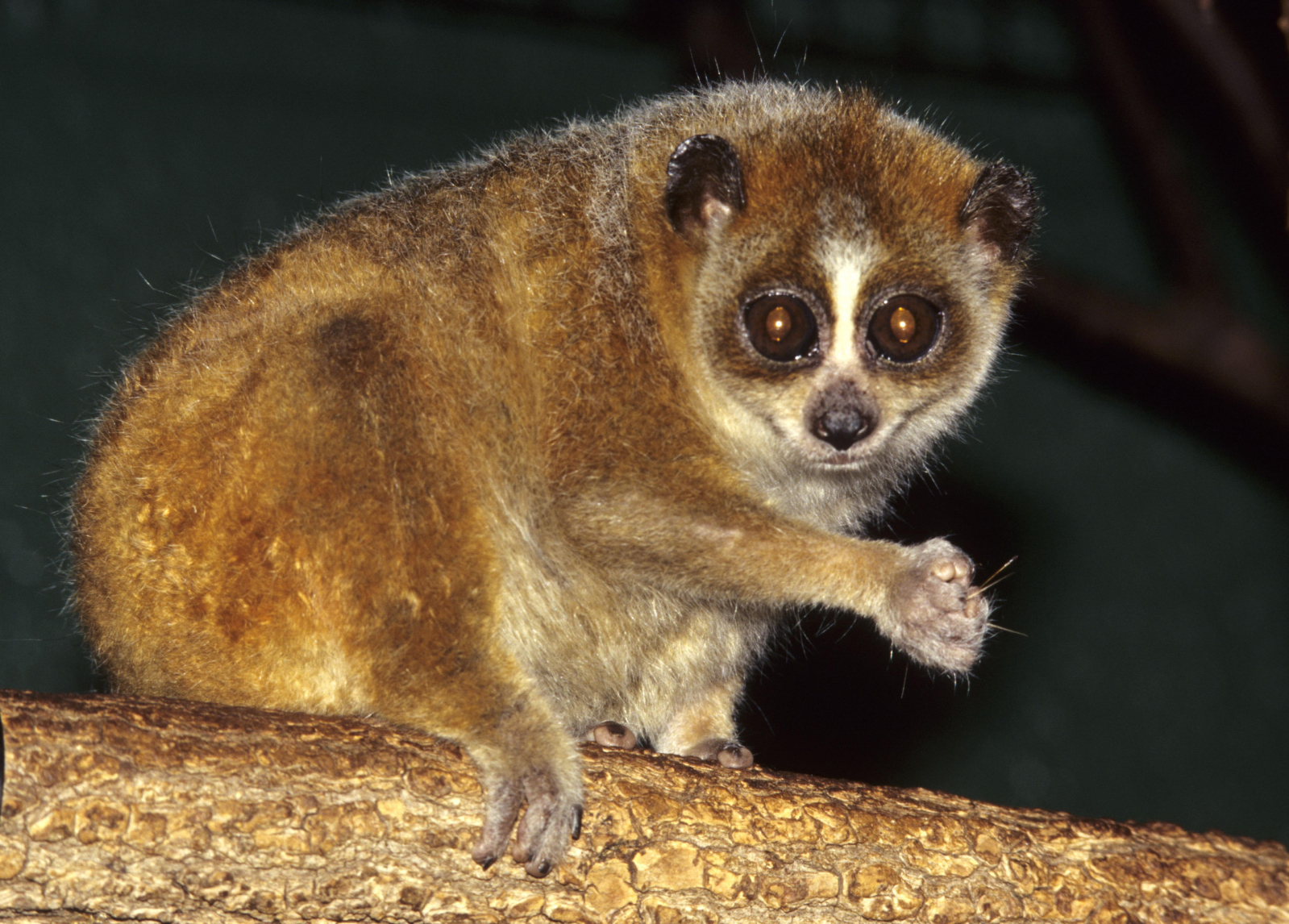
Typical facial features include the overall rufous color, brown rings encircling large eyes, a white stripe from the nose to the forehead, and silvery gray hair at the sides of the head.

The pygmy slow loris has a head and body length (measured from the top of the head to the base of the tail) of 195–230 mm (7.7–9.1 in); there is no significant difference in size between the sexes.[22] The length of the skull is less than 55 mm (2.2 in).[23] The tail is short, averaging 1.8 cm (0.71 in) in length.[24] The bodyweight ranges between 360 and 580 grams (13 and 20 oz),[25] with an average mass of 420 grams (15 oz) for males and 428 grams (15.1 oz) for females. There are, however, large seasonal variations in bodyweight, and individuals up to 700 grams (25 oz) have been recorded. The animal tends to have significantly higher bodyweights during the winter months, about 50 percent higher than the lowest values in the summer. The weight gains, achieved largely by increasing food intake, are triggered by changes in the length of the day and night. This seasonal change in bodyweight occurs in both sexes, in both pregnant and non-pregnant females—an adaptation thought to help ensure survival during winter when food resources become scarce.[26] The species has distinctive teeth morphology: its third molar is triangular in outline and only slightly smaller than the first molar; its second molar is the largest.[27] The incisors and canines on its lower jaw are procumbent (tilt forward) and together form a toothcomb that is used in grooming and feeding.[28]

Palatal (left) and lateral (right) views of a pygmy slow loris skull

Like other strepsirrhine primates, the pygmy slow loris has tapeta lucida in its eyes to assist with night vision.[29] In adults, the rings circling the eyes are seal brown; they are darker in young individuals. There is a white stripe extending from the nose to the forehead, and the sides of the head and upper lip are silvery gray, while the rest of the face and top of the head is rufous.[23] It has small black ears, typically about 23 mm (0.91 in) long,[22] which do not have fur on the tips.[30] On the dorsal side of the animal, a rufous to brownish-black stripe runs from the nape to the middle of the lower back. The upper parts, including the shoulders and upper back, are russet to reddish-buff to brownish, and are sometimes "frosted" with silvery gray white hairs.[23] The presence or absence of a dorsal stripe and silvery hair tips appear to be a seasonal variation and have led some to postulate the existence of an additional species, N. intermedius,[31][32] although DNA analysis has since confirmed this to be an adult version of the pygmy slow loris.[33] The pygmy slow loris has buffy flanks, paler than the back. The upper sides of the arms are ochraceous, and have silvery hairs mingled with the darker ones. The buff legs are also tipped with silvery white hairs. The underparts are plumbeous (lead-colored) at the base, with ochraceous apical portions. The hands and feet are silvery white,[34] with yellowish-white nails.[30] Foot length is relatively consistent, averaging about 45 mm (1.8 in).[35]

The pygmy slow loris has a diploid chromosome number of 2n=50. Although the banding patterns on the chromosomes of all slow lorises are similar, this species may be distinguished from the Bengal slow loris (N. bengalensis) by distinct differences in the number and location of nucleolus organizer regions.[14]

Behavior

[edit]

The pygmy slow loris is nocturnal, although it is least active on cold, moonlit nights and is generally active on dark nights, regardless of temperature.[36] In the wild, it is normally encountered alone, or in small groups of two to four individuals.[37] Males use scent marking to defend territories and mark their boundaries. Females prefer to mate with males whose scent is familiar.[38] Males will also countermark—mark over or adjacent to another individual's mark deposited earlier—to advertise competitive ability to females.[39] Females actively prefer countermarking males to males whose odors have been countermarked.[40]

The pygmy slow loris produces an apocrine secretion on scent glands near their elbow (brachial glands). This clear liquid, when mixed with its saliva, creates a volatile, noxious toxin. When startled, the slow loris licks its brachial glands and applies the secretion to its heads.[41] The oily secretion contains a complex mixture of volatile and semi-volatile components; one chemical analysis indicated over 200 components were present.[42] One of the components is a member of the secretoglobin family of proteins,[43] and similar to an allergenic protein found in cat dander.[44] The similarity between the brachial gland secretions and domestic cat allergens may account for anaphylaxis in susceptible individuals.[45]

Vocalizations of the pygmy slow loris include a short whistle, mother-infant contact calls,[46] and a whistling sound produced during estrus.[47]

Reproduction

[edit]

The female is mildly aggressive to her suitors during estrus, and will often lunge at males, usually after a long period of being approached and followed. Vocalizations during mating include a whistling sound, most commonly by the female, usually during June and August, coinciding with female estrus. Other vocalizations recorded during estrus include chittering and growling. The testosterone levels of the males are seasonal, with peaks coinciding with female estrogen peaks.[48]

The pygmy slow loris can conceive by 18 months and give birth to its first offspring by two years of age. Studbook records show that the youngest male to sire offspring was around 18 months of age, and the youngest female conceived at 16 months.[49] Gestation length is 184–200 days, and the lactation period lasts 123–146 days.[50] Offspring are weaned at about 24 weeks of age.[51] The pygmy slow loris is monoestrous, experiencing a single four- to five-day period of reproductive activity between late July and early October in captivity,[52] with births occurring from early February to mid-March.[53] As a result, opportunities for mating are rare, and females rely heavily on scent to assess mate quality. Females show a strong preference for familiar-smelling males over novel-smelling males.[54] Research on the process of sexual selection in primates suggests that the exclusive presence of one male's scent in the area is a reliable cue that he is capable of defending the area and/or preventing rival males from marking.[55] Pygmy slow lorises usually have a litter size of one or two; separate studies have reported frequencies of twinning as either 50% or 100% of births.[56] Data collected from a seven-year captive breeding program indicates that they have a skewed birth sex ratio of 1 female to 1.68 males.[21] Because they must divide time equally between offspring, mothers of twins spend less time engaging in social grooming and play with their young,[57] which may lead to a lower infant survival rate.[21] Mothers will "park" their young at one week of age while foraging, and the young begin following their mothers at about two weeks.[58] The life span of the pygmy slow loris is about 20 years.[59]

Diet

[edit]
Insect prey can be captured while hanging upside-down from a branch.

The pygmy slow loris is omnivorous, feeding on termites, ants, other insects, and fruit. Insects are captured with one or both hands while standing or hanging upside-down from a branch. Insect prey is typically consumed at heights less than 10 m (33 ft).[60] A Vietnamese study concluded that the diet of the pygmy slow loris consists largely of tree exudates (gum) (63%) and animal prey (33%), with other food types making up the remainder.[61] A study on recently reintroduced individuals found similar results—40% insects, 30% gum, and 30% other exudates.[62] The pygmy slow loris will gouge trees to feed on the released exudates.[63] Although tree gum is not as nutrient-rich as its preferred diet, it is available year-round. The pygmy slow loris is a specialized gummivore,[63] a trait that helps it overcome difficulties in finding food during times of shortage. Unable to leap from tree to tree, the pygmy slow loris has a restricted range from which it may obtain food sources. Having generalist dietary preferences allows them to overcome difficult environmental conditions; gum allows them to live at a low energy level with a reduced metabolism.[64] Trees from which exudates are eaten are from the following families: Sapindaceae (Sapindus), Euphorbiaceae (Vernicia), Fabaceae (Saraca), Anacardiaceae (Spondias), and Burseraceae.[25] Feeding on gum takes place over a time period ranging from one to twenty minutes and involves intense licking, sometimes accompanied by audible scratching and bark-breaking sounds. Feeding on exudates usually occurs at heights over 8 m (26 ft).[65] The seasonal color variation that occur in the dorsal stripe of Vietnamese individuals may be related to the need to engage in exudate feeding.[66]

The diet of the pygmy slow loris is seasonal. In north Vietnam, for example, the winter is characterized by low rainfalls and temperatures as low as 5 °C in the north of its range, when there is little growth of vegetation in forests, few insects, and limited food resources.[67] The pygmy slow loris will also consume insects that have been exposed by its bamboo-gouging activities. It will use its toothcomb to clean an area of lichens and fungi prior to gouging.[68] The animals conserve energy in the colder winter months by reducing movement, often to the point of complete inactivity.[69]

Habitat and distribution

[edit]

The pygmy slow loris is nocturnal and arboreal, and is most commonly found in semi-evergreen, secondary,[70][71][72] and mixed deciduous forests.[73] It is distributed east of the Mekong River in Vietnam, eastern Cambodia, Laos, and Yunnan province in southern China.[74][2] In China it has been recorded only from Pingbian, Hekou, Jinping, and Lüchun counties of Yunnan.[72] In Vietnam, the pygmy slow loris was widespread throughout the country,[75] but concern is increasing with conservation and rehabilitation efforts in Cat Tien National Park. In Laos, populations have been recorded in Phou Khaokhoay, Nam Kading, Nam Theun, Nakai–Nam Theun, Khammouane Limestone, Dakchung Plateau, and Bolaven Northeast.[72] Its encounter rate, determined from two field studies from Laos and Vietnam combined, was 0.05–0.08 lorises/km.[76] In Cambodia, this value ranged from 0 in Mondulkiri Protected Forest to 0.10 in Phnom Prich Wildlife Sanctuary.[77]

Conservation

[edit]

The pygmy slow loris has declined in numbers as a result of extensive habitat degradation throughout its range, including north-eastern Cambodia, the Yunnan Province of China, and Vietnam. In Yunnan province, nearly all primary evergreen forests have vanished and secondary forests have been heavily degraded;[78][79] as of 2005, forest cover has been reduced by 42% since the mid-1990s.[59] The use of defoliants, such as Agent Orange, during the Vietnam War and the ongoing clearing of forests in Vietnam have resulted in a considerable loss of habitat.[80] As of 2003, the forest cover had been reduced to 30% of its original area, with only 10% of the remaining forest consisting of the closed-canopy forests preferred by the pygmy slow loris.[59]

The pygmy slow loris is captured for use in traditional medicine throughout its range.

Due to a combination of unstable political situations in its range, and its nocturnal, arboreal lifestyle, population data for the pygmy slow loris are scarce. The population in China has been estimated at less than 500 individuals.[59] In the 1980s, one estimate placed the population at roughly 72,000 individuals,[81] while another estimate from the same period placed the number around 600–700 individuals.[82] This enormous discrepancy underlines the difficulty to calculate population size without detailed field studies.[59] In Laos, the wildlife status report of 1999 describes the species as "little known" and "common",[83] based on availability of potential habitat. In 2020 the IUCN classified the pygmy slow loris as endangered,[1] as did the Vietnam Red Data Book the same year. The European Union (EU) (2005) describes the population status in Laos as "apparently widespread, but not common anywhere".[59]

In addition to habitat destruction, the pygmy slow loris is seriously threatened by hunting and trade.[84][82] Within its geographic range and neighbor countries, the trade in the pygmy slow loris has recently increased due to economic changes and human population growth,[85] and the trend is expected to continue.[72] Decreased sightings in the field and at animal markets indicate that wild populations are being depleted since the low reproduction rate of the pygmy slow loris cannot keep pace with these large-scale off-takes.[86][87] Accordingly, conservationists and field biologists fear local extinctions in the near future.[82] Between 1998 and 2006, 70% of pygmy slow lorises seized by authorities died before reaching a sheltering zoo, resulting in replacement demand and additional captures from the wild.[88]

Within the whole Indochinese region, populations of the pygmy slow loris have drastically decreased as a result of military activities, defoliant spraying, logging, and massive off-takes,[89] especially in Vietnam. It has been extirpated in the northern part of this country due to the belief that it is a crop pest.[73] The demand of the pet and the medicinal markets is further aggravating the situation, which is reflected by its abundance in many local markets.[90][82] This demand has recently increased due to human population growth and improved economic conditions within the region. According to CITES, this activity is considered unsustainable.[87]

The population in southern China has been reduced to a few hundred individuals, and by another report, may be locally extinct. The decreasing number of pygmy slow lorises for sale corroborates reports of rapid declines in Vietnamese populations. By 2007, field sightings were becoming scarce, and there were reports that it had disappeared from large parts of its range,[87] particularly in areas with intense logging and agriculture.[91] In Cambodia, widespread declines have been associated with increases in hunting pressure during 2001 and 2002. In one field survey, three areas with high encounter rates in early 2008 were resurveyed in late 2008 and 2009, but no individuals were encountered. This change was thought to be due to both high hunting pressures and gold mine development.[73]

Both the Bengal slow loris and pygmy slow loris are found in more than 20 protected areas, although their populations are either low or insufficiently recorded.[92][93] The pygmy slow loris is protected in most of its range states: in Cambodia, China, and Vietnam. This makes hunting and capture illegal, and in China and Vietnam, possession and storage are also illegal.[94] Under Vietnamese law it has had the highest level of wildlife protection since 1992,[86] all exploitation and use of the pygmy slow loris is illegal.[95] However, enforcement is poor while minor penalties have little deterring effect.[86] In terms of international protection, the species was elevated to Appendix I of CITES in 2007.[2] In addition, since October 2001, the European Union prohibits imports for all wild specimens of pygmy slow loris from Laos and Cambodia for conservation reasons.[95]

The species has been recorded in at least 6 national parks and 12 nature reserves.[75] In China, Daweishan, Fenshuiling, and Huanglianshan Reserve maintained approximately 80% of that country's population of the species in 2007.[96] However, the species is still vulnerable to hunting, even in protected areas.[97] In Laos, the species has been recorded in seven National Biodiversity Conservation Areas.[83]

In Vietnam, confiscated pygmy lorises are usually taken to the Endangered Primate Rescue Centre in Cúc Phương National Park, to be reintroduced into the wild.[96] Non-experts may find it difficult to distinguish between the pygmy slow loris and the Sunda slow loris, as both have similarly reddish fur, which is variable in colors.[98] In international shipments, pygmy lorises may be even mixed up with pottos or lemurs.[96]

Trade

[edit]
Pygmy slow lorises obtained from animal markets suffer from stress, neglect, malnutrition, and infection. As a consequence, they seldom live long.

The pygmy slow loris is traded mainly for its purported medicinal properties, for the pet trade, or, to a lesser extent, as food for local consumption.[83][31] According to a 2003 report, the animals were sold for 30,000–50,000 Vietnamese đồng (US$1.50–2.50 or €1.10–1.80).[99] Other reports have found them to cost US$2–10.[87] In Cambodia, the species is used in Traditional Khmer Medicine. Surveys conducted at Cambodian markets showed that the species was the third most common mammal for sale, offered at prices ranging from US$0.85–6.25 (€0.65–4.70).[87] In Vietnam, the pygmy slow loris is used for food, medicine, and often as a pet[87] and is among the most frequently sold species. Formerly, hundreds of pygmy lorises were traded monthly in major markets,[91] but recently numbers seem to have decreased, due to shortages in supply.[86] In southern Vietnam, lorises are among the most popular wildlife dishes in wildlife meat restaurants.[100]

Exporting countries reported a total of 111 pygmy slow lorises traded internationally between 1977 and 2004, whereas importing countries reported 131 animals. In Laos, large numbers of native lorises are exported to Vietnam.[83] In Japan, pet shops occasionally offer pygmy slow lorises for US$2,000–3,800 (€1,500–2,800).[95]

There are also parts and derivatives of pygmy lorises in trade, such as the skin and the hair. All parts of the animal are used in traditional Khmer medicine.[87] In Vietnam, medicine such as bone glue of monkey, is mainly produced by local people, but a smaller portion is also destined for restaurants or sold to visitors.[95][99] The species is especially used for the assumed medicinal value of its hair.[95] Traders have reported that they have difficulty keeping pace with demand—one trader claimed to have sold nearly 1,200 pygmy slow lorises during 2001–2002.[101] In Cambodia, the deeply rooted tradition of using the Bengal and pygmy slow loris in traditional medicine is widespread,[102] and the pygmy slow loris is the most commonly requested animal in traditional medicine shops in Cambodia's capital, Phnom Penh.[103]

Illegal trade routes are known to exist from Cambodia, to Laos, Thailand, and Vietnam, with much of this trade destined for China.[90] Surveys from 1998 and 1999 show that 80 to 90 animals were imported from Vietnam though Hekou Port into Yunnan province, making it the most commonly recorded animal in the surveys.[95] China is the primary destination of most Vietnamese slow lorises, although they are also smuggled to other countries,[98] including Taiwan. In one noted incident, 102 animals were confiscated during transit to Ho Chi Minh City in August 1993; of these, only four survived.[104] Pygmy lorises may cost up to US$400 on the Taiwanese pet market. In the USA, occasionally, pygmy lorises smuggled from Vietnam have been confiscated. The Endangered Primate Rescue Centre reports that the pygmy slow loris is the most often rescued species,[95] which reflects their abundance in trade. In Europe, illegal purchases have been reported from Germany, the Netherlands, Poland, and Moscow.[95][90]

In captivity

[edit]

The first documented pygmy slow loris in North America was kept at Hawaii's Honolulu Zoo in 1968. In 1986, about 37 pygmy lorises were exported from Vietnam and Laos to Sweden. A year later, several pairs caught from the wild were transferred to zoos in Cincinnati, San Diego, and the Duke Lemur Center.[105] In 1994, the Association of Zoos and Aquariums established a Species Survival Plan for the species, following a proposal by the Global Captive Action Plan for Primates to create a breeding program to maintain its genetic diversity.[106] As of 2008, the captive population in North America had grown to 74 individuals, with most of them born at the San Diego Zoo;[107] as of 2013, the species is the most common lorisid primate kept in North American zoos.[108] About 175 pygmy lorises live in breeding facilities worldwide.[109]

References

[edit]
Revisions and contributorsEdit on WikipediaRead on Wikipedia
from Grokipedia

The pygmy slow loris (Nycticebus pygmaeus) is a diminutive nocturnal strepsirrhine primate in the family Lorisidae, endemic to the subtropical and tropical forests of southeastern China, Vietnam, Laos, and eastern Cambodia.
Measuring 15–25 cm in head-body length and weighing 255–450 g, it features dense fur, proportionally large eyes for enhanced night vision, a short tail, and a specialized dental structure including a tooth comb for extracting tree exudates.
As the only known venomous primate, it delivers toxins via a bite after mixing oral gland secretions with brachial gland exudates from its elbows, primarily for defense against predators and conspecifics rather than prey capture.
Its diet emphasizes obligate exudativory, comprising 50–70% gums, saps, and nectar obtained by gouging bark, supplemented by insects, small vertebrates, and fruits; it exhibits solitary arboreal habits, slow quadrupedal locomotion, and seasonal breeding with gestation around six months yielding typically one or two offspring.
Critically threatened by habitat fragmentation from deforestation, intensive hunting for traditional medicines, and illegal trade as exotic pets, the species has experienced ongoing population declines, warranting its endangered status on the IUCN Red List.

Taxonomy and evolutionary history

Discovery and classification

The pygmy slow loris was first scientifically described in 1907 by British zoologist John James Lewis Bonhote, who named it Nycticebus pygmaeus based on specimens from . In 1939, synonymized N. pygmaeus under the greater slow loris (Nycticebus coucang), treating it as a due to perceived morphological similarities. Subsequent taxonomic revisions in the early , driven by morphological and genetic evidence, reinstated N. pygmaeus as a distinct , highlighting differences in body size, cranial features, and dentition. In 2022, primatologists Rachel A. Munds, Anna G. Nekaris, and colleagues proposed elevating the pygmy lorises to their own , Xanthonycticebus, supported by morphometric analyses showing unique traits such as hairless ears and a more protruding , alongside genetic divergence from other slow lorises exceeding typical intergeneric thresholds. This reclassification distinguishes pygmy lorises (X. pygmaeus) from congeners in Nycticebus based on phylogenetic reconstructions from mitochondrial and nuclear DNA sequences. Regional variations within pygmy lorises have prompted further scrutiny, with genetic studies identifying distinct northern and southern lineages; a 2023 analysis resurrected Xanthonycticebus intermedius for intermediate forms, resolving prior debates on validity through Bayesian phylogenetic modeling and population genomics. IUCN assessments through 2020 affirmed the endangered status of Nycticebus pygmaeus (pre-genus update), incorporating field data on distribution and threats to validate species-level delineation without recognizing formal at that time.

Phylogenetic relationships

The pygmy slow loris (Xanthonycticebus pygmaeus), formerly classified under Nycticebus, belongs to the family within the strepsirrhine primates, forming a sister genus to Nycticebus (encompassing other species such as N. bengalensis, N. javanicus, and N. borneanus). Molecular phylogenetic analyses, including complete mitochondrial genomes and nuclear loci, position X. pygmaeus as the basal to the Nycticebus , refuting earlier assumptions of for the combined group based on limited morphological or partial genetic data. This separation reflects an ancient estimated at 9.9–11.3 million years ago, calibrated using constraints from lorisid ancestors in the . Recent genetic studies (2022–2023) utilizing , sequences, and whole-genome data confirm X. pygmaeus diverged prior to the radiation of larger Nycticebus species, with genetic distances of approximately 10% in supporting genus-level distinction. These findings highlight among Southeast Asian lorisids, driven by and ecological specialization in nocturnal, arboreal niches, as evidenced by branch lengths in Bayesian phylogenies indicating in X. pygmaeus lineages. Earlier mitochondrial-only analyses had suggested closer affinities to N. bengalensis, but multi-locus approaches clarify its position as sister to the entire Nycticebus . This phylogenetic framework underscores the deep evolutionary isolation of pygmy lorises, contributing to their distinct traits amid broader strepsirrhine diversification, where split from Galagidae around 35–40 million years ago. Ongoing genomic surveys continue to refine these relationships, emphasizing the need for expanded sampling to resolve potential cryptic diversity within Xanthonycticebus.

Physical description

Morphology and size


The pygmy slow loris (Nycticebus pygmaeus) is the smallest species within the Nycticebus, characterized by a head-body length of 19–25 cm and body mass ranging from 120 to 500 g, with an average around 400 g. It lacks an external tail, contributing to its compact, teddy-bear-like appearance. Its dense, woolly fur varies from light brown to deep reddish-brown dorsally, providing in forested environments, while the ventral side is paler. The face features a distinctive white stripe running from the forehead between the large, round eyes to the , with individual variations in light and dark patterning around the eyes. Small, rounded ears are largely concealed by surrounding fur. The head is rounded with prominent eyes adapted for nocturnal vision, and the limbs are short and stout, ending in grasping hands and feet featuring a reduced relative to other digits, suited for arboreal clinging. Specialized dentition includes forward-projecting lower incisors forming a comb. Sexual dimorphism is minimal, though studies indicate females may achieve slightly larger adult sizes in some metrics due to extended growth periods, contrasting with male-biased patterns in body weight observed in captive populations. Compared to congeners like the (N. coucang), which measures 27–38 cm, the pygmy species exhibits proportional scaling optimized for its smaller frame in similar arboreal niches.

Physiological adaptations including venom

The pygmy slow loris exhibits a approximately 40% lower than that typical for placental mammals of comparable size, facilitating in environments with variable food availability. This low metabolic rate is linked to genetic factors, including adaptations in the PITRM1 gene, which contributes to reduced energy expenditure and supports prolonged periods of during seasonal scarcities. Such physiological efficiency aligns with the species' slow locomotion and arboreal lifestyle, minimizing caloric demands while maintaining viability on a diet of exudates and . Muscular adaptations in the limbs emphasize endurance over speed, with a predominance of slow-twitch (red) muscle fibers that enable sustained exceeding body weight for extended durations. These fibers, slower to contract but energy-efficient, support deliberate climbing and suspension from branches without leaping, as evidenced by the absence of fast-twitch dominance seen in more agile . and myology facilitates hand-over-foot progression and hanging postures, optimizing brachiation-like movements in dense foliage. Olfactory capabilities are highly developed, with a (wet nose) and specialized nasal airflow patterns that enhance detection of scents from markings and glandular secretions for territory delineation and mate signaling. Tactile sensitivity is augmented by grooming claws on digits II and III, which aid in fur maintenance and substrate exploration, providing mechanoreceptive feedback during nocturnal navigation. The pygmy slow loris possesses a unique apparatus among , involving brachial glands on the upper arms that secrete an oily mixed with salivary enzymes to form a toxic oral . This two-step system delivers proteins such as kallikreins and other bioactive compounds via bites, inducing pain, swelling, and primarily for defense against predators rather than prey subjugation. Biochemical analyses confirm the 's role in deterring threats, with effects including in sensitive individuals, though its composition shows species-specific variations within lorisids, differing in potency and protein profiles from larger slow loris congeners.

Behavior and ecology

Activity patterns and locomotion

The pygmy slow loris (Nycticebus pygmaeus) exhibits strictly nocturnal activity patterns, commencing and movement shortly after and persisting through the night until dawn, with daytime spent in coiled resting postures or states to minimize energy expenditure. This temporal niche aligns with its low , approximately 40-50% below that expected for a of its size (300-500 g), enabling prolonged inactivity during daylight hours when predation risk from diurnal raptors increases. Circadian rhythms incorporate -like phases during rest, where body temperature can drop by several degrees Celsius and metabolic processes slow, facilitating amid variable tropical ambient temperatures (often 20-30°C nightly fluctuations); captive observations confirm multiday bouts under caloric restriction, suggesting latent capacity for such states in wild individuals facing seasonal food scarcity. Activity intensity modulates with extrinsic cues, including reduced locomotion under full moonlight (lunar phobia) and cooler nights, which correlate with up to 30% variance in hourly movement rates per field data from Vietnamese populations. Locomotion emphasizes deliberate, slow quadrupedal progression at paces constrained by anatomical and physiological limits, favoring orthograde postures on vertical supports over rapid traversal; individuals traverse arboreal substrates via bridging—extending limbs to gap discontinuous vines or branches—and suspension hangs, allocating over 60% of travel time to such modes in fine-branch (≤2 cm diameter) microhabitats. Vertical clinging predominates during pauses, with hindlimbs anchoring to trunks while forelimbs probe ahead, minimizing falls in cluttered canopy layers; this repertoire, documented in 2022-2025 captive analyses of over 200 observation hours, replicates wild kinematic patterns, underscoring metabolic trade-offs that prioritize stealth over speed for against nocturnal predators.

Diet and foraging strategies

The pygmy slow loris (Nycticebus pygmaeus) maintains an omnivorous diet primarily composed of plant exudates such as gums and saps, supplemented by arthropods and occasional other items. In observations from reintroduced individuals in Cuc Phuong National Park, , feeding bouts (n=27) consisted of approximately 40% and 60% plant exudates, with no consumption recorded despite its availability. Arthropods targeted include moths, , and beetles (Coleoptera), captured via manual grasping, while exudates are licked or scraped from tree bark using a specialized tooth comb formed by forward-projecting lower incisors. Field studies in Seima Protection Forest, (2008–2009), involving radio-tracked individuals, further characterize the diet as obligately exudativorous, with comprising the largest share of 168 observed feeding bouts (76 bouts), followed by fruits (33 bouts) and arthropods (27 bouts); additional minor items included flower parts (21 bouts), fungi (3), and one reptile. Fecal analyses from these lorises revealed plant material, small arthropods (including and Coleoptera), reptile scales, bones, and hairs, confirming occasional predation. sources include gums from species such as axillaris and flowering nectar from Saraca dives, often revisited across nights. Foraging employs deliberate, slow locomotion to minimize detection, with insects typically pursued at heights below 10 m and exudates harvested from trunks or branches above 8 m. consumption involves extended handling times, such as over 20 minutes for a single , allowing thorough mastication. This omnivory serves as an adaptive response to resource variability, enabling reliance on stable exudate supplies during shortages of mobile prey like . Dietary intake exhibits seasonal modulation tied to plant , with preferences shifting from blossoming Saraca dives in spring to Spondias axillaris gums from September onward, compensating for fluctuating insect and nectar availability. Such flexibility underscores physiological adaptations to periodic , including efficient of exudates via an enlarged caecum.

Reproduction and parental care

The pygmy slow loris (Nycticebus pygmaeus) exhibits seasonal breeding, with females entering estrus primarily between July and October, leading to births approximately 188 days later, typically from January to April in captive settings and potentially February to May in northern wild populations such as those in and southern . lasts an average of 188 days, ranging from 184 to 200 days across studies of captive individuals, during which females produce litters of one offspring on average, though twins occur occasionally. The mating system remains incompletely resolved in wild populations, with evidence suggesting similar to other slow lorises, where males maintain overlapping territories with multiple females but females may mate with several partners. Females provide exclusive , with no observed paternal involvement in offspring rearing. Newborns, weighing around 30-50 grams, are carried continuously in the mother's mouth for the first 4-6 weeks, transitioning to occasional parking on branches thereafter while the mother forages; this oral transport persists intermittently up to 4-6 months as infants develop clinging abilities. occurs between 4 and 8 months of age, though full independence is achieved around 6-9 months, coinciding with the mother's return to estrus approximately 169 days postpartum. is attained by females at about 9-18 months and males at 18-20 months, enabling first by 1.5-2 years in favorable conditions. This species' low fecundity—one litter every 12-18 months maximum—stems from prolonged gestation, extended , and seasonal fertility constraints, rendering populations vulnerable to perturbations like habitat loss or capture stress, which captive studies indicate can disrupt estrous cycles and reduce breeding success.

Social structure and interactions

Pygmy slow lorises exhibit a primarily solitary in the wild, with adult females defending individual territories and adult males maintaining larger home ranges that overlap those of multiple females, facilitating polygynous mating opportunities without sustained group living. Occasional aggregations may occur at concentrated food resources, though direct observations remain limited due to their nocturnal habits and cryptic behavior. Individuals communicate primarily through vocalizations, including high-pitched whistles for contact and spacing, often paired with postural displays, and olfactory signals via marking to delineate ranges or attract mates. In overlapping ranges, territorial disputes can arise, with potential risks of by unrelated males, as documented in closely related species where home range intrusions lead to such behaviors. Captive studies from 2021 to 2023 reveal greater social flexibility than wild observations suggest, with same-sex and mixed-sex pairings showing affiliative interactions such as allogrooming and play, alongside reduced fecal levels and stereotypic behaviors indicative of lower stress. Females in all-female groups preferred proximity, nested communally nightly, and spent less time inactive compared to solitary housing, while male pairs developed extensive bonding without elevated aggression or stress over extended periods. These findings challenge the strict solitary , pointing to context-dependent sociability influenced by resource availability and enclosure design, with grooming serving as the dominant affiliative behavior across pairings.

Range and habitat

Geographic distribution

The pygmy slow loris (Nycticebus pygmaeus) inhabits areas east of the River across , , eastern , and southeastern Province in southern . Its distribution is confined to Indochina, with no verified records outside this region. Populations exhibit fragmentation, notably in , where 20th-century conflicts such as the caused extensive via aerial bombing, mechanical clearing, and herbicide application, contracting the species' extent there. Surveys utilizing camera traps, including those conducted in , have documented sparse occurrences, such as single individuals within areas exceeding 10 km². Population densities in intact forests are typically low, estimated at less than 1 individual per km² based on field assessments. The elevational range spans from 50 m to 1,500 m above .

Habitat preferences and environmental role

The pygmy slow loris (Nycticebus pygmaeus) prefers microhabitats with dense canopy connectivity at heights of 3–12 m, favoring arboreal environments in thick, complex structures that facilitate slow, deliberate locomotion and . It occupies primary and secondary tropical rainforests, semi-evergreen and mixed forests, thickets interspersed with hardwoods, and scrubby forest edges, consistently avoiding open or sparsely vegetated areas lacking continuous cover. This species shows tolerance for disturbed edge habitats and , where canopy remnants persist, but densities decline markedly in plantations due to reduced structural complexity and prey availability compared to diverse native stands. Higher encounter rates in surveys correlate with intact health metrics, such as greater canopy density and layering, positioning the pygmy slow loris as an indicator of resilience. Ecologically, its frugivory contributes to by ingesting and excreting viable seeds from consumed fruits, supporting regeneration in tropical understories. As an opportunistic targeting ants, beetles, and other arthropods, it regulates pest populations that could otherwise proliferate in humid forest canopies. No documented evidence indicates invasive tendencies beyond its native range, with habitat specificity limiting broad colonization potential.

Conservation status

The pygmy slow loris (Nycticebus pygmaeus) is classified as Endangered on the , with the assessment based primarily on criterion A2cd indicating a suspected reduction exceeding 50% over the past three generations (approximately 24 years, given a generation length of 8 years). This decline is inferred from observed decreases in encounter rates during field surveys, rates of habitat conversion, and levels of exploitation, corroborated by line- data from multiple sites rather than extrapolation alone. No comprehensive global population estimate exists due to the species' nocturnal, arboreal habits, fragmented range, and historical data gaps, though local densities from systematic surveys range from 0.05 to 1.2 individuals per km² in suitable habitats. The status has remained Endangered since its uplisting from Vulnerable around , with ongoing trends projected to sustain similar reduction rates absent interventions. Regional assessments reveal localized extirpations, particularly in where remnant populations are estimated below 500 mature individuals based on provincial surveys. In , recent monitoring in protected areas has confirmed persistent low-density subpopulations, with detections via camera traps and walks indicating relative stability in select forests amid broader declines. Population viability analyses underscore fragmentation risks, with small, isolated groups vulnerable to events despite some protected refugia.

Primary threats

The pygmy slow loris faces severe pressure from illegal , primarily for the pet market and , with snapshot surveys indicating an annual turnover of several thousand across the genus, including significant numbers of pygmy individuals visible in illegal internet sales and pet shops. Capture involves snaring or shooting, leading to high mortality during handling and transport due to stress, injury, and deprivation of exudates essential to their diet, though precise rates for this species remain undocumented. Despite listing under Appendix I since 2007, which bans international commercial trade, enforcement gaps in source countries such as , , , and permit continued illegal export via routes to markets in , , and elsewhere. Habitat loss and fragmentation from agricultural expansion, including conversion to rice paddies, cashew plantations, cornfields, and other cash crops, have degraded large portions of the species' range in Indochina since the 1990s, resulting in localized population declines and isolation of remnants. Selective logging exacerbates this by altering forest structure and increasing vulnerability to incidental mortality, while slash-and-burn practices and associated fires cause direct harm through burns or displacement. Consumption as bushmeat occurs sporadically but represents a minor threat compared to trade and land conversion.

Conservation initiatives and outcomes

The pygmy slow loris (Nycticebus pygmaeus) receives protection under Appendix I of the Convention on International Trade in Endangered Species (), which prohibits commercial international trade and has been in effect since the species' uplisting in 2007, though regional bans such as the European Union's import prohibition from and predated this in 2001. These measures have curtailed legal trade channels, but illegal black-market activities for pets, , and photo props continue to undermine enforcement, with confiscations reported in and Cambodia into the 2020s. In , the species inhabits core reserves like the Nakai-Nam Theun National Biodiversity Conservation Area, established in 1993 as a high-priority protected zone spanning over 3,700 km², where anti-poaching patrols and habitat monitoring have stabilized local subpopulations amid broader pressures. Ex-situ breeding programs in zoos contribute to genetic management and population supplementation, with facilities like those affiliated with the European Association of Zoos and Aquaria (EAZA) reporting improved through enriched housing and pairing strategies; for instance, achieved breeding in captive-born individuals after implementing behavioral modifications in 2020. Community education initiatives, often tied to rescue centers in , aim to reduce local demand by addressing misconceptions about the species' medicinal value, yet compliance remains inconsistent, as surveys in indicate persistent cultural beliefs driving despite awareness campaigns. Reintroduction efforts, primarily in southern 's Cat Tien National Park by organizations like the Endangered Asian Species Trust (EAST) and Endangered Primate Rescue Center, have yielded mixed results, with post-release monitoring from 2008–2012 documenting 38% mortality among 13 tracked individuals due to predation and , 7% returns to for reasons, and limited evidence of long-term wild integration for survivors. These outcomes highlight challenges in pre-release conditioning, as reintroduced lorises often exhibit restricted ranging patterns and high vulnerability in fragmented , prompting critiques that resources are disproportionately allocated to trade regulation over restoration, though targeted in has indirectly supported increased sightings in recovering patches. Overall, while policy and captive interventions provide foundational support, verifiable population recovery remains elusive without addressing enforcement gaps and ecological barriers.

Captivity and research

Captive husbandry and breeding

Captive populations of the pygmy slow loris (Nycticebus pygmaeus) are managed primarily through the European Endangered Species Programme (EEP) in and the Association of Zoos and Aquariums (AZA) in , with European surveys indicating participation from around 16 institutions holding dozens of individuals as of 2014. These programs emphasize naturalistic husbandry protocols, including diets replicating wild intake of gums, insects, and nectar, which a 2014 European zoo survey found increased consumption and palatability compared to traditional high-fruit regimens. Such dietary shifts address common issues like dental disease and linked to excessive fruits and feeding in captivity. Enriched enclosures promoting natural behaviors, including social housing for females, have demonstrated welfare benefits, with a 2023 study reporting significant reductions in stereotypic behaviors and fecal levels post-introduction to group settings. Veterinary protocols include regular monitoring for , dental , and venom-related injuries, as adult interactions necessitate caution due to the species' brachial gland exudate , which can cause necrotic wounds. Breeding outcomes remain challenging, with sexual maturity reached by 1.5 years but infrequent success in ; however, maintenance of natural lighting cycles preserves , supporting up to age 14. Individuals achieve exceeding 20 years in , surpassing typical wild estimates of 10-15 years, aided by controlled environments and interventions. Improved enrichment correlates with enhanced reproductive potential through better welfare, though global ex situ numbers remain low.

Key research findings and applications

Studies from 2021 to 2023 have demonstrated that group housing of female pygmy slow lorises (Xanthonycticebus pygmaeus) reduces physiological stress indicators, with fecal metabolite levels decreasing significantly over time in socially housed individuals compared to solitary ones. These findings, based on observations of eight captive females transferred to enriched group enclosures, also showed reduced stereotypic behaviors such as pacing and increased affiliative interactions, including huddling and grooming, suggesting improved welfare and potential benefits for rehabilitation prior to reintroduction. Similar patterns emerged in male pairs housed in enriched environments, where physiological stress markers lowered, supporting pair formation as a strategy to mitigate isolation effects in . Genetic analyses published in 2022 and 2023 have refined the of pygmy slow lorises, proposing the Xanthonycticebus to distinguish them from larger slow lorises based on mitochondrial and nuclear DNA divergences exceeding 5-7%, and resurrecting X. intermedius as a distinct species from museum specimens. These phylogenetic insights reveal previously unrecognized across Southeast Asian populations, informing programs to avoid by prioritizing outbreeding between divergent lineages, thereby enhancing genetic health and viability for conservation translocations. Biochemical characterization of venom, including from pygmy species, has identified complex mixtures of proteins like kallikrein-related peptides that induce prolonged and swelling in bite victims, with applications in modeling mammalian pain pathways and evolution. Research on venom composition from captive samples across genera highlights its ecological role in defense and , offering replicable insights for drug development by elucidating bradykinin-potentiating mechanisms, though pygmy-specific venom remain underexplored. Dietary studies emphasize replicating wild patterns in to mitigate health declines, with high-fruit diets linked to increased dental and renal issues in pygmy slow lorises, whereas gum exudates, , and low-fruit regimens promote gut passage rates akin to free-ranging individuals and reduce risks. These findings support enrichment models that simulate natural gum-gouging and predation, improving captive and providing behavioral assays for assessing quality in wild population viability analyses. Non-invasive techniques, such as target-trained saliva collection and fecal surveys, have advanced welfare monitoring and density estimates, with Cambodian line-transect data yielding 0.4-0.5 individuals per km² in intact forests, aiding precise despite persistent gaps in long-term data for movement ecology. Overall, these replicable findings underscore the value of integrated physiological and genetic research for evidence-based conservation, prioritizing social and dietary interventions to bolster reintroduction success amid ongoing .

References

Add your contribution
Related Hubs
User Avatar
No comments yet.