


Community hub
Recent from talks
Contribute something
Nothing was collected or created yet.
Sapindus
View on Wikipedia
| Sapindus | |
|---|---|

| |
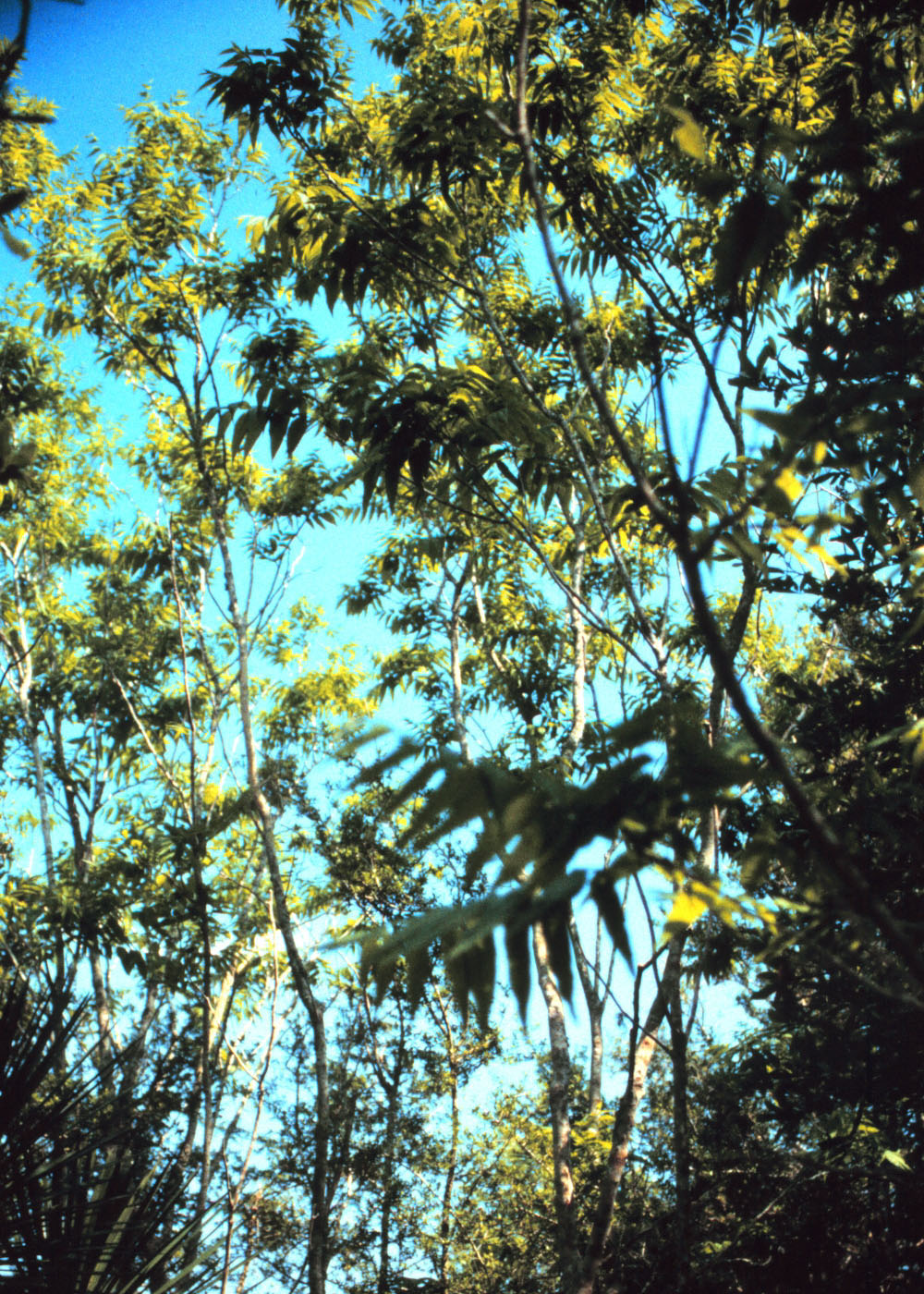
| Sapindus marginatus shrubs | |
Scientific classification 
| |
| Kingdom: | Plantae |
| Clade: | Tracheophytes |
| Clade: | Angiosperms |
| Clade: | Eudicots |
| Clade: | Rosids |
| Order: | Sapindales |
| Family: | Sapindaceae |
| Tribe: | Sapindeae |
| Genus: | Sapindus L. |
| Type species | |
| Sapindus saponaria L.[1]
| |
| Species | |
|
See text | |
| Synonyms | |
|
Dittelasma Hook.f.[2] | |
Sapindus is a genus of about thirteen species of shrubs and small trees in the lychee family, Sapindaceae and tribe Sapindeae. It is native to warm temperate to tropical regions of the world. The genus includes both deciduous and evergreen species. Members of the genus are commonly known as soapberries[3] or soapnuts because the pulp of the fruit is used to make soap and shampoo The generic name is derived from the Latin words sapo, meaning "soap", and indicus, meaning "of India".[4]
The leaves are alternate, 15–40 cm (5.9–15.7 in) long, pinnate (except in S. oahuensis, which has simple leaves), with 14–30 leaflets, the terminal leaflet often absent. The flowers form in large panicles, each flower small, creamy white. The fruit is a small leathery-skinned drupe 1–2 cm (0.4–0.8 in) in diameter, yellow ripening blackish, containing one seed. Fossils date back to the Cretaceous.[5][6]
Uses
[edit]

The drupes (soapnuts) contain saponins, which have surfactant properties, being used for washing by ancient Asian and American peoples.[7][8] A number of other uses for Sapindus have also been reported such as making arrows from the wood and decorative objects from the seeds.[9]
Folk medicine
[edit]Leaf and fruit extracts of Sapindus have historically been used in folk remedies to treat various conditions.[10]
Insecticide
[edit]Sapindus species are used as food plants by the larvae of some Lepidoptera (moths and butterflies) species including Endoclita malabaricus. Kernel extracts of soapnut disrupt the activity of enzymes of larvae and pupae and inhibit the growth of the mosquito Aedes aegypti, an important vector of viral diseases.[11]
Dyeing process
[edit]Soapnut is used as a scouring agent for preparation of coloring fibers such as the yarn of Tussar silk and cotton.[12]
Species
[edit]

The number of species is disputed between different authors, particularly in North America where between one and three species are accepted. As of February 2024[update], Plants of the World Online includes:[13]
- Sapindus chrysotrichus Gagnep. (southern Vietnam)
- Sapindus delavayi (Franch.) Radlk. (China, India)
- Sapindus drummondii Hook. & Arn. (US: Arizona to SE. Colorado and Louisiana)
- Sapindus emarginatus Vahl (Southern Asia)
- Sapindus lippoldii I.M.Turner (Cuba)
- Sapindus mukorossi Gaertn. – Indian Soapberry (India and the Himalayas east to Indochina and Japan)
- Sapindus oahuensis Hillebr. ex Radlk. – Lonomea (Kauaʻi and Oʻahu, Hawaii)
- Sapindus rarak DC. (Southeast Asia)
- Sapindus saponaria L. – 4 subspecies, previously considered as 2:
- "S. s. var. drummondii" (Hook. & Arn.) L.D.Benson – Western Soapberry (southwestern US, Mexico) is S. drummondii
- S. s. var. saponaria – Wingleaf Soapberry (southeastern US, Caribbean, island of Hawaiʻi, Central, South America);
Sapindus marginatus Willd. – Florida Soapberry – included here.
- Sapindus sonlaensis H.M.Tam, N.K.Khoi, N.T.Cuong & T.B.Tran (Sơn La, NW Vietnam)
- Sapindus tomentosus Kurz – China
- Sapindus trifoliatus L. – South India Soapnut or Three-leaf Soapberry: Southern India, Pakistan (synonym S. laurifolius Vahl = "Ritha")
- Sapindus vitiensis A.Gray (American Samoa, Samoa, Fiji)[3][14][15]
Formerly placed here
[edit]- Lepisanthes fruticosa (Roxb.) Leenh. (as S. fruticosus Roxb.)
- Lepisanthes senegalensis (Juss. ex Poir.) Leenh. (as S. senegalensis Juss. ex Poir.)
- Lepisanthes tetraphylla (Vahl) Radlk. (as S. tetraphylla Vahl)
- Talisia cerasina (Benth.) Radlk. (as S. cerasinus Benth.)
- Talisia esculenta (A.St.-Hil.) Radlk. (as S. esculenta A.St.-Hil.)[15]
References
[edit]- ^ "Sapindus L." TROPICOS. Missouri Botanical Garden. Retrieved 2010-01-13.
- ^ "Genus: Sapindus L." Germplasm Resources Information Network. United States Department of Agriculture. 2007-10-05. Retrieved 2010-01-13.
- ^ a b "Sapindus". Integrated Taxonomic Information System. Retrieved 2010-11-01.
- ^ Quattrocchi, Umberto (2000). CRC World Dictionary of Plant Names: Common Names, Scientific Names, Eponyms, Synonyms, and Etymology. Vol. IV R-Z. Taylor & Francis US. p. 2381. ISBN 978-0-8493-2678-3.
- ^ "Langley, north (Cretaceous of the United States)". PBDB.org.
- ^ Bell, W. A. (1957). "Flora of the Upper Cretaceous Nanaimo Group of Vancouver Island, British Columbia". Geological Survey of Canada Memoir. 293.
- ^ Austin, Daniel F. (2004). Florida Ethnobotany. CRC Press. pp. 601–603. ISBN 978-0-8493-2332-4.
- ^ Rodríguez-Hernández, Diego; Barbosa, Luiz C.A.; Demuner, Antonio J.; De Almeida, Raquel M.; Fujiwara, Ricardo T.; Ferreira, Sebastião R. (November 2016). "Highly potent anti-leishmanial derivatives of hederagenin, a triperpenoid from Sapindus saponaria L.". European Journal of Medicinal Chemistry. 124: 153–159. doi:10.1016/j.ejmech.2016.08.030. PMID 27569196.
- ^ "Soapberry (Sapindus) in Arizona" (PDF). Phytoneuron. November 2020.
- ^ Upadhyay A, Singh DK (2012). "Pharmacological effects of Sapindus mukorossi". Revista do Instituto de Medicina Tropical de São Paulo. 54 (5): 273–280. doi:10.1590/s0036-46652012000500007. PMID 22983291.
- ^ "Soapnut, a mosquito repellent". Down To Earth. Archived from the original on 2012-10-12. Retrieved 2011-03-28.
- ^ Deshmukh, Anjali; Bansal, Lekhika (2014). "Sapindus emarginatus Vahl as a natural scouring agent in dyeing of cotton with Carissa carandas leaf extract" (PDF). BioLife. 2 (2): 599–604. Archived from the original (PDF) on 2017-08-11.
- ^ Plants of the World Online: Sapindus Tourn. ex L. (retrieved 24 February 2024)
- ^ "Sapindus vitiensis". Germplasm Resources Information Network. Agricultural Research Service, United States Department of Agriculture. Retrieved 2009-03-23.
- ^ a b "GRIN Species Records of Sapindus". Germplasm Resources Information Network. United States Department of Agriculture. 2007-04-30. Retrieved 2010-11-01.
External links
[edit] Media related to Sapindus at Wikimedia Commons
 Data related to Sapindus at Wikispecies
- Flora of India: Sapindus
- Flora of Pakistan: Sapindus
- Flora of China: Sapindus species list


Sapindus
View on GrokipediaDescription
Morphology
Sapindus species are typically shrubs or small trees growing 3–20 m tall, with a rounded crown, and they exhibit deciduous or evergreen habits depending on the species and environmental conditions. The bark is often gray to brown and furrowed, while young branches may be pubescent or glabrous.[9][10] Leaves are alternate and pinnately compound, measuring 15–50 cm in length, with 4–20 opposite or subopposite leaflets that are ovate to lanceolate, 5–15 cm long, and feature entire or serrate margins; the leaflets are glabrous or pubescent, and the rachis may be winged in certain species. Inflorescences consist of terminal or axillary panicles, 10–40 cm long, that bear numerous small, unisexual or bisexual flowers; these flowers are actinomorphic or slightly zygomorphic, with 4–5 imbricate sepals, 4–5 clawed petals often equipped with basal scales, 8 stamens, and a 2–3-lobed ovary.[9][10] The fruit is a drupe, 1–3 cm in diameter, that is globose to obovoid and typically 1–3-lobed, ripening from yellow or green to orange or brown, with a fleshy, saponin-rich pericarp that splits into schizocarps. Each mature locule contains a single hard, globose seed, approximately 1–2 cm in diameter, with a black or brown, smooth osseous testa and a linear hilum.[9][10] Morphological variations across species include the presence of winged petioles and rachises, sometimes broader than the rachis itself, in American taxa such as S. saponaria, where leaflets number 6–15 and fruits reach 2–2.5 cm. In contrast, S. tomentosus features densely tomentose young branches, leaves, and inflorescences, with leaflets 4–8 per leaf and a more pubescent overall indumentum.[11][12][9]Fossil record
The fossil record of Sapindus extends to the Paleocene, with reliable occurrences dating from the early Paleogene in North America. Fossils formerly assigned to Sapindus from the Upper Cretaceous, such as leaf impressions similar to Sapindopsis morrisoni Heer (leaflets 10–15 cm long and 2–3 cm wide, subcoriaceous, entire-margined, and lanceolate in shape), are now considered part of extinct form genera rather than the modern genus. Notable Paleocene sites include those in the Rocky Mountain region.[13] Fruits resembling those of modern Sapindus species have been reported from early Paleogene deposits in North America.[14] During the Eocene epoch, the genus diversified, with numerous fossil species documented across Laurasian continents, reflecting adaptation to warm, humid subtropical to tropical climates. In North America, Middle Eocene floras from the Claiborne Group (e.g., Congaree clay member and McBean Formation in Georgia) and the Green River Formation in Wyoming yield species such as Sapindus georgiana Berry (leaflets 4–5.5 cm long, 0.5–0.9 cm wide, lanceolate and falcate), S. eocenicus, S. affinis, S. angustifolius, S. crossinervis, S. falcifolius, S. marginatus, S. saponaria, and S. stellatifolius, primarily preserved as leaf impressions.[15] These Eocene records indicate a northward migration of Sapindus lineages during peak greenhouse conditions, followed by a southward retreat in later Tertiary stages due to global cooling.[15] The paleontological evidence supports an origin of Sapindus in Laurasia during the early Paleogene, with subsequent divergence into Old World and New World lineages, as inferred from the distribution of Paleogene fossils across northern continents.[15] This evolutionary pattern underscores the genus's resilience and role in ancient boreotropical floras, with fossil leaves showing morphological similarities to extant species, such as compound pinnate structures adapted for warm environments.[15]Taxonomy
Etymology
The genus name Sapindus was coined by the Swedish botanist Carl Linnaeus in his seminal work Species Plantarum published in 1753, where it was established as a distinct genus within the plant kingdom.[16] The name derives from the Latin words sapo, meaning "soap," and Indus or indicus, referring to India, thus translating to "soap of India" or "Indian soap."[17] This etymological choice reflects the observed properties of the fruit pericarp in certain Asian species, which produces a lathering foam when mixed with water due to its high saponin content.[18] Linnaeus's naming was informed by earlier botanical observations, including those by Joseph Pitton de Tournefort in 1700, who noted the soap-like qualities of the fruits from Indian specimens, likely referring to Sapindus mukorossi (commonly known as the Indian soapberry).[16] In India, these fruits have long been utilized traditionally for cleaning purposes, such as washing clothes and hair, a practice documented in regional ethnobotanical records that predates European classification systems.[19] This historical context underscores the genus's association with natural surfactants, distinguishing it from other tropical trees. Common names for Sapindus species worldwide emphasize this soap-like attribute, including "soapberry," "soapnut," and "washnut" in English-speaking regions.[20] In India, S. mukorossi is regionally known as "ritha" or "reetha," reflecting its vernacular use in Ayurvedic and household applications.[21] In the Americas, species such as S. saponaria are called "jaboncillo" (Spanish for "little soap") or "soapberry," highlighting similar cultural recognition of their foaming properties across continents.[22]Phylogenetic position
The genus Sapindus is placed within the order Sapindales, family Sapindaceae, subfamily Sapindoideae, and tribe Sapindeae.[23] The type species is Sapindus saponaria L., designated in 1753.[24] A synonym for the genus is Dittelasma Hook.f.[24] Molecular phylogenetic studies utilizing targeted enrichment of nuclear loci, such as the Angiosperms353 probe set, have clarified the position of Sapindus within Sapindaceae. These analyses, sampling over 85% of the family's genera, resolve Sapindus as part of a well-supported clade in tribe Sapindeae (Clade 10), sister to a group including Atalaya, Deinbollia, Eriocoelum, Lepisanthes, Pseudima, Thouinidium, Toulicia, Tristira, and Zollingeria.[23] This placement aligns with earlier plastid-based phylogenies using markers like matK and rbcL, which also position Sapindus in Sapindoideae alongside related tribes such as Paullinieae (e.g., Paullinia) but distinct from Dodonaeoideae (e.g., Dodonaea).[25] Recent fossil-calibrated phylogenomic analyses estimate the crown age of Sapindaceae at approximately 88 Ma (95% HPD: 83–94 Ma) during the Late Cretaceous, with the crown age of Sapindoideae at approximately 67 Ma (95% HPD: 61–72 Ma) in the Paleocene.[26] The divergence leading to the Sapindeae lineage, including Sapindus, from clades like Paullinieae is inferred around the Middle Eocene (~44 Ma), associated with the biotic interchange between South America and other continents via Antarctica.[23] Infrageneric classification recognizes at least one section, Sapindus sect. Sapindus, which includes 12 species with a broad distribution across the Americas, Asia, Melanesia, and Polynesia; phylogenetic support for further subdivisions remains limited in current molecular frameworks.[27]Distribution and habitat
Native distribution
Sapindus species are primarily native to tropical and subtropical regions across the Old World, New World, and Pacific islands, with diverse distributions reflecting their adaptation to varied climates within these areas.[24] In the Old World, the genus is widespread in tropical and subtropical Asia, extending from the Himalayas through Southeast Asia, encompassing countries such as India, China, Nepal, Bhutan, Myanmar, Thailand, Cambodia, Vietnam, and Indonesia.[19] Specific species like Sapindus mukorossi are found in northern India and Nepal, often in the lower Himalayan foothills.[19] Other notable distributions include Sapindus rarak across the Indian Subcontinent to Yunnan in China and western Malesia, Sapindus trifoliatus from the Indian Subcontinent to Myanmar, Sapindus delavayi in China, and Sapindus chrysotrichus in southern Vietnam.[28][29] These ranges highlight the genus's presence in monsoon-influenced and seasonal climates of the region.[10] In the New World, Sapindus occurs natively in Central and South America, from Mexico southward to Argentina, with extensions into southern North America. Sapindus saponaria is distributed from southern United States, including Florida and Texas, through Mexico, Central America, and into Brazil.[30][31] Closely related, Sapindus drummondii (often treated as a variety of S. saponaria) is native to southwestern North America, ranging from southeastern Colorado and southwestern Missouri southward to Arizona, Texas, Louisiana, and northern Mexico.[6] This distribution underscores the species' prevalence in neotropical and near-tropical zones.[32] Several endemic species occupy Pacific islands, contributing to the genus's insular diversity. Sapindus oahuensis is restricted to the Hawaiian Islands, specifically northwestern Kauaʻi and the Waiʻanae and Koʻolau Mountains on Oʻahu.[33] Sapindus vitiensis is native to southwestern Pacific islands, including Fiji, Samoa, and American Samoa.[34] These endemics represent isolated evolutionary branches within the genus.[35] Habitat preferences for Sapindus species generally include evergreen forests, riverbanks, and dry deciduous woodlands, spanning elevations from sea level to 2000 meters.[24] For instance, S. mukorossi thrives in open rocky areas at 600–1300 meters in Nepal, while S. oahuensis occupies mesic to dry forests at 60–610 meters in Hawaii, and S. drummondii extends up to 1829 meters in arid southwestern habitats.[19][33][6] These environments often feature seasonal moisture variations, supporting the trees' deciduous or semi-deciduous growth forms.[36]Introduced ranges
Sapindus species have been introduced to various regions outside their native ranges primarily for ornamental purposes, agroforestry, soapberry production, and medicinal uses. Sapindus saponaria, native to tropical and subtropical America, has been widely planted in tropical Africa, including countries such as Angola, Cameroon, Cape Verde, Comoros, the Democratic Republic of the Congo, Guinea, Guinea-Bissau, Mali, Tanzania, and Uganda, where it serves as a source of saponin-rich fruits for soap production and other applications.[30] In Asia, it has been introduced to regions like Assam, Bangladesh, India, Laos, Myanmar, the Philippines, and Vietnam, often escaping cultivation to become naturalized in suitable habitats.[30] Similarly, Sapindus mukorossi, native to southern China, the Himalayas, and parts of South Asia including India and Nepal, has been extensively introduced to other areas of South and East Asia, including Japan, Korea, Pakistan, Taiwan, and Thailand, for harvesting soapnuts and in agroforestry systems.[37] In the Pacific, S. saponaria is indigenous to Hawaii, occurring in middle-elevation mesic forests, though populations have declined due to habitat changes.[38] In Australia, S. mukorossi is cultivated in subtropical areas for its economic value in soap production and as an ornamental tree, adapting well to local conditions but remaining largely confined to plantings.[39] Introductions to Mediterranean Europe, such as in Spain, Portugal, Italy, and Greece, are limited but include plantings of S. saponaria for ornamental use and potential expansion under changing climates, though establishment remains sporadic.[36] In the United States, S. mukorossi was introduced from Asia in the early 20th century and is cultivated commercially in California and Florida for soapberry harvesting and medicinal extracts, contrasting with the native distribution of American Sapindus species.[40] The impacts of these introductions are generally low, with naturalization occurring in select areas like Hawaii and parts of India due to the genus's specific requirements for warm, well-drained soils and moderate moisture, limiting widespread invasiveness.[41] Sapindus species contribute positively to reforestation efforts in dry tropical zones, where they are used in mixed plantings to restore degraded lands, enhance biodiversity, and provide economic benefits through fruit production, as seen in agroforestry initiatives in introduced African and Asian regions.[42] Historical spread to the Americas from Asia during the 19th and early 20th centuries focused on medicinal applications of saponins, facilitating commercial cultivation without significant ecological disruption.[5]Ecology
Pollination and reproduction
Sapindus species exhibit varied sex expression in their flowering, with most being dioecious or polygamo-dioecious, featuring separate male and female flowers on individual plants, while some, such as S. mukorossi, are monoecious with unisexual flowers on the same tree.[6][43] Flowers are small, typically white to yellowish, and arranged in large terminal or axillary panicles, blooming primarily during summer months from March to August depending on region and species.[6] In some species, flowers initially develop as bisexual before differentiating into unisexual forms.[43] Pollination in Sapindus is primarily entomophilous, with insects such as bees and butterflies serving as key pollinators attracted to the nectar-rich flowers; wind may assist in open habitats, though it is secondary.[44][45] Following successful pollination, fruit development proceeds rapidly, with fleshy drupes maturing in 4-6 months from flowering, typically ripening in late summer to fall (September-October in temperate regions).[6][46] These drupes, often yellow to orange and containing one to three seeds, are primarily dispersed by birds and mammals, though water aids in riparian species; the presence of saponins in the pericarp deters many potential herbivores, promoting dispersal while reducing predation.[6] Sapindus seeds are orthodox, tolerating desiccation and low-temperature storage with viability maintained for several years at average rates of 77% soundness.[6][47] Germination typically occurs in 4-8 weeks under optimal conditions following scarification to overcome the hard seed coat and, in some cases, cold stratification, though untreated seeds may take longer (up to 80 days).[6][48] Some species also reproduce vegetatively through clonal suckers or rhizomes, enhancing local persistence.[6] Reproductive strategies in Sapindus emphasize high fecundity, with mature trees producing substantial fruit yields—up to 45 kg per individual—yet offset by low seedling survival rates in shaded understories due to shade intolerance.[49] This combination supports genetic diversity through outcrossing in dioecious species while allowing asexual propagation in disturbed sites.[6]Ecological interactions
Sapindus species play roles in food webs as host plants for various insects, particularly serving as food sources for Lepidoptera larvae. For instance, the western soapberry (S. saponaria var. drummondii) is the primary larval host for the soapberry hairstreak butterfly (Phaeostrymon alcestis), a Lycaenidae species that has adapted to tolerate the plant's saponin toxins. Leaves of S. saponaria also support leaf-mining arthropods, including lepidopteran larvae such as those of the soapberry leafminer, which contribute to trophic interactions in recovering ecosystems.[50] Despite the toxicity of saponins in fruits and seeds, certain birds consume them, aiding seed dispersal while potentially facing mild physiological effects from the compounds.[51][52] Symbiotic associations in Sapindus are primarily with mycorrhizal fungi, which enhance nutrient uptake in nutrient-poor soils. Arbuscular mycorrhizal fungi form mutualistic relationships with roots of S. mukorossi, improving phosphorus acquisition and overall plant physiology, especially when combined with beneficial microbes like Trichoderma viride.[53] In their native habitats, Sapindus trees contribute to environmental stability through root systems that help stabilize slopes and prevent erosion in forested areas. Saponins released from leaves and roots exhibit allelopathic effects, inhibiting germination and growth of understory weeds; for example, aqueous extracts of S. saponaria leaves reduce seedling vigor in species like morningglory (Ipomoea spp.).[54][55] These compounds target weed root elongation and biomass accumulation, promoting dominance of Sapindus in mixed plant communities.[56] Sapindus populations face significant threats from deforestation, particularly in Asia, where habitat conversion for agriculture and urbanization has led to persistent loss of genetic diversity and wild germplasm.[36] Additionally, kernel extracts from species like S. emarginatus show potential for ecological mosquito control, disrupting larval development in Aedes aegypti by inhibiting esterases and other enzymes essential for growth, offering a low-toxicity alternative to synthetic insecticides in native ranges.[57][58] Conservation efforts highlight vulnerabilities in certain species; S. oahuensis, endemic to Hawaii's Kauai and Oahu islands, is assessed as vulnerable due to ongoing habitat loss from development, invasive species, and altered fire regimes in its mesic to dry forest habitats.[59] This status underscores the need for targeted protection to prevent further decline across the genus.Cultivation
Propagation methods
Sapindus species are primarily propagated from seeds, which require pretreatment to overcome dormancy caused by the hard seed coat and potential inhibitors. Seeds should be extracted from fresh, mature fruits and cleaned of pulp to prevent fungal issues. Soaking in water, either hot (100°C for 10 seconds) or cold (12-36 hours), softens the coat and leaches out germination inhibitors, including saponins, thereby enhancing water uptake and germination speed.[60][61] Mechanical scarification, such as filing or clipping the seed coat without damaging the embryo, further improves viability; for instance, in Sapindus mukorossi, scarified seeds achieve germination rates of 60-72%, compared to 48% for untreated controls, with emergence occurring in 34-90 days depending on the method.[60][62] Fresh seeds are recommended for sowing, as viability declines after 1-2 years of storage, even under cool, dry conditions.[63] Sown in a well-draining medium like perlite and potting mix, seeds germinate at rates approaching 100% with optimal scarification and moisture control, typically within 1 week for treated embryos.[62] Vegetative propagation is less common but useful for maintaining desirable traits in ornamentals or accelerating production. Semi-hardwood cuttings from young branches of S. mukorossi, taken in late summer (e.g., August), root best when treated with indole-3-butyric acid (IBA) at concentrations of 10,000 ppm, yielding higher rooting percentages and longer primary roots than untreated cuttings.[64] These cuttings, however, often fail to develop a robust taproot, reducing long-term stability compared to seed-grown plants.[65] Air layering serves as an alternative for ornamental cultivars, promoting root formation on intact branches while still attached to the parent tree, though specific protocols for Sapindus remain limited and generally follow standard woody plant techniques with wounding and auxin application.[49] Propagation faces challenges, including slow juvenile growth, with trees from seed taking 8-10 years to reach fruiting maturity under optimal conditions.[66] Additionally, Sapindus species exhibit intolerance to waterlogging, which can lead to root rot in poorly drained sites, necessitating careful site selection to avoid prolonged soil saturation.[67] Suitable soils for propagation are well-drained sandy loams or light loamy types, which support root establishment without water retention issues; heavy clays should be amended for better drainage.[68] The genus thrives in tropical and subtropical climates with temperatures ranging from 15-35°C (59-95°F), preferring full sun and moderate humidity, but it is frost-sensitive and cannot tolerate prolonged exposure below 0°C.[69][66] In commercial settings, tissue culture enables mass propagation of elite S. mukorossi clones for consistent saponin yield or ornamental value. Protocols involve excising shoot tips or nodal segments from seedlings, culturing on Murashige-Skoog medium supplemented with benzylaminopurine (BAP) and gibberellic acid (GA3) for multiple shoot induction, followed by rooting in half-strength medium with 2.0 mg/L IBA, achieving up to 40% rooting success and high genetic fidelity in regenerants.[65][70] This method bypasses seed dormancy and supports large-scale production for agroforestry or horticulture.[71]Horticultural uses
Sapindus species are valued in horticulture for their ornamental qualities, featuring attractive pinnate foliage, clusters of small white flowers, and persistent, glossy fruits that add visual interest through much of the year. S. saponaria, for instance, is commonly planted in Florida landscapes as a shade tree or accent due to its evergreen habit, dense rounded crown, and showy golden berries, thriving in USDA zones 10A-11 with minimal care once established.[72] Similarly, S. saponaria var. drummondii (western soapberry) serves as an ornamental in dry, southwestern U.S. sites, where its long, compound leaves and yellow fruits enhance winter aesthetics in parks and yards.[49] In agroforestry, Sapindus trees function as pioneer species for land restoration and provide ecological services in challenging environments. S. mukorossi is planted in northern India for afforestation on eroded hill slopes below 900 meters, aiding soil stabilization in regions with 1,750 mm annual rainfall and deep, well-drained soils.[63] Across tropical and subtropical areas, species like S. saponaria are used in windbreaks due to their tolerance of salt-laden winds, drought, and nutrient-poor soils, making them suitable for dry, exposed sites in woodland gardens or buffer plantings.[73][51] These trees exhibit strong urban tolerance, adapting to full sun, poor soils, and periodic drought after establishment, with low maintenance needs and resistance to pests and diseases.[72][74] However, the persistent fruits can create litter through seasonal drop, potentially staining surfaces and requiring cleanup in landscaped areas. Additionally, the saponin-containing seeds and fruits pose toxicity risks to pets, causing gastrointestinal upset if ingested, so planting away from high-traffic pet zones is recommended.[49][72]Traditional and commercial uses
Saponin-based applications
The saponins in Sapindus, primarily concentrated in the pericarp of the fruits, serve as natural surfactants that produce lather when agitated in water, enabling various cleaning applications. These triterpenoid glycosides constitute 10-15% of the dry weight in species like Sapindus mukorossi, making the fruits a viable source for detergent production.[75] Extraction of saponins typically involves deseeding the ripe fruits to isolate the pericarp, followed by drying and powdering the material, with saponin content ranging from 5-30% by weight depending on the species and processing conditions. Water-based reflux or microwave-assisted extraction methods are commonly employed to yield a concentrated surfactant solution suitable for commercial use.[76][77] In soap and shampoo production, Sapindus mukorossi is particularly preferred due to its mild, hypoallergenic properties and stable foam formation, outperforming synthetic surfactants in gentleness on skin and hair while effectively removing oils and residues. The powdered pericarp or extracted saponins are incorporated into formulations for natural shampoos and soaps, providing a lathering effect without harsh chemicals.[78] For household uses, Sapindus saponins are utilized in laundry and dishwashing detergents as a biodegradable alternative to chemical soaps, effectively cleaning fabrics and utensils while decomposing naturally without environmental persistence. These applications leverage the surfactants' ability to emulsify dirt and grease in hard water conditions.[79] Industrially, saponins from Sapindus find application in textile washing, such as degumming Tussar silk to remove sericin without damaging fibers, and in pesticide formulations where they act as natural emulsifiers to enhance dispersion.[80] Key advantages of Sapindus saponins include their antibacterial properties, which inhibit growth of pathogens like Staphylococcus aureus during cleaning, and their eco-friendly profile as renewable, non-toxic alternatives to petroleum-based surfactants. However, their inherent bitter taste restricts applications beyond non-food uses.[81][76][81]Medicinal and other uses
Species of the genus Sapindus have been employed in traditional medicine systems, particularly Ayurveda and folk practices in Asia, for treating a variety of ailments. The bark of S. emarginatus is used in decoctions to address skin conditions such as eczema and psoriasis, as well as headaches and epilepsy.[82][83] These applications are attributed in part to the anti-inflammatory properties of triterpenoid saponins present in the plant.[84] Fruit pericarps are also utilized for managing asthma, migraines, and psychiatric disorders like hysteria.[85] Extracts from Sapindus fruits exhibit insecticidal properties, particularly as larvicides against mosquito species. Aqueous extracts of S. emarginatus fruits demonstrate strong larvicidal activity against Aedes aegypti, the vector for dengue, with moderate effects on pupae.[86] Seed kernel extracts show pupicidal efficacy against A. aegypti, Anopheles stephensi, and Culex quinquefasciatus.[87] Additionally, S. mukorossi seed oil and fruit extracts are traditionally applied to treat head lice infestations due to their gentle insecticidal action.[88][3] The wood of Sapindus species is valued for its hardness and durability in crafting tool handles, arrows, and posts.[89][90] Seeds, with their polished black appearance, are commonly strung into beads for jewelry, rosaries, and decorative items.[51] Leaves serve as limited fodder for livestock, though their saponin content restricts extensive use to avoid toxicity.[91] Despite these uses, Sapindus contains saponins that impart toxicity upon ingestion, leading to symptoms such as vomiting, nausea, and gastroenteritis.[92] Oral consumption is contraindicated during pregnancy, as it may induce abortion.[92]Species
Accepted species
The genus Sapindus comprises approximately 20 accepted species of shrubs and trees, following recent taxonomic revisions such as that by Franck et al. (2024), though estimates vary from 13 to 20 in different treatments.[24] These species are primarily distributed in tropical and subtropical regions of Asia, the Americas, and the Pacific, often in dry or seasonally dry forests. Recent taxonomic revisions, such as that by Franck et al. (2024), have clarified relationships within sections of the genus, confirming the status of several species while describing three new ones.[27] Key species include Sapindus mukorossi Gaertn., known as the Asian soapnut tree, a deciduous tree reaching 10–20 m in height native to the foothills of the Himalayas from northern India to southern China, characterized by large, compound leaves and fruits used traditionally for saponin content.[37] Sapindus saponaria L., the wingleaf soapberry, is a semi-evergreen tree up to 10 m tall widespread in tropical and subtropical Americas from Mexico to northern Argentina and the Caribbean, distinguished by its winged leaf rachises and variable fruit morphology; it includes four subspecies (var. saponaria, var. drummondii, var. hirsutus, and var. rigidus).[30] Sapindus drummondii Hook. & Arn., often treated as a variety of S. saponaria but accepted as distinct in some revisions, is a drought-tolerant tree or shrub native to arid regions of the southwestern United States (Arizona to Texas) and northern Mexico, with pubescent twigs and smaller leaflets.[32] Other notable species are Sapindus emarginatus Vahl, a medium-sized tree endemic to dry forests in India, Sri Lanka, and the Andaman Islands, featuring emarginate leaflet apices and used in traditional medicine.[93] Sapindus oahuensis H.Mann is a shrubby species endemic to the Hawaiian Islands, particularly Oahu, adapted to coastal and lowland habitats with small, leathery leaves. Sapindus rarak DC., found in seasonally dry forests from the Indian subcontinent to Indonesia and southern China, produces small, globose fruits and is distinguished by its tomentose inflorescences.[28] The remaining accepted species include:- Sapindus balicus Radlk., a tree native to Malesian islands, with simple to compound leaves in coastal habitats.
- Sapindus chrysotrichus Gagnep., restricted to southern China and Vietnam, featuring golden-tomentose young branches.
- Sapindus delavayi (Franch.) Radlk., a shrub or small tree in southwestern China, known for its serrulate leaflets.
- Sapindus lippoldii Leenh., endemic to Vietnam, with distinctive three-foliolate leaves in montane forests.
- Sapindus marginatus Willd., native to northern South America, characterized by marginally serrate leaflets.[94]
- Sapindus sonlaensis C.T. Nguyen, a recently described species from northern Vietnam, adapted to limestone karsts.
- Sapindus tomentosus Kurz, found in Myanmar and Thailand, with densely tomentose foliage.
- Sapindus trifoliatus L., a tree in southern Asia from India to Myanmar, with trifoliolate leaves and dry deciduous habit.[29]
- Sapindus vitiensis A.C.Sm., a Pacific species native to Fiji, growing in lowland rainforests as a small tree.
- Sapindus marikuru A.R.Franck, a newly described species (2024) endemic to Rapa Nui ([Easter Island](/page/Easter Island)), Chile, occurring in open disturbed areas at 100–150 m.[27]
- Sapindus motu-koita A.R.Franck, newly described (2024) from Papua New Guinea, in eucalyptus forests, mangrove swamps, and monsoon scrub at 0–80 m.[27]
- Sapindus standleyi A.R.Franck, newly described (2024) from Mexico (e.g., Oaxaca) and Central America, in tropical habitats.[27]
Formerly placed here
In historical taxonomic treatments of the Sapindaceae family, several species were placed in the genus Sapindus during the early 19th century due to superficial similarities in fruit morphology, such as drupaceous structure and saponin content. These lumping practices were common before detailed morphological analyses, leading to an inflated circumscription of Sapindus. By the mid-20th century, revisions based on comprehensive herbarium studies and morphological characters, particularly inflorescence arrangement, leaflet venation, and seed features, prompted the transfer of numerous taxa to more appropriate genera within the family.[95] A key revision in 1969 by Leenhouts reclassified multiple species from Sapindus to Lepisanthes Blume, recognizing differences in panicle structure, petal presence, and fruit segmentation that better aligned them with the latter genus. Representative examples include:- Sapindus tetraphylla Vahl, now Lepisanthes tetraphylla (Vahl) Leenh., distinguished by its tetramerous flowers and multi-lobed fruits.[95]
- Sapindus rubiginosa Roxb., transferred to Lepisanthes rubiginosa (Roxb.) Leenh., based on its rusty-pubescent inflorescences and unwinged seeds.[95]
- Sapindus fruticosa Roxb., reclassified as Lepisanthes fruticosa (Roxb.) Leenh., due to its shrubby habit and simple leaflets lacking arils.[95]
- Sapindus bifoliolatus Hiern, moved to Lepisanthes senegalensis (Poir.) Leenh. as a synonym, reflecting shared bifoliolate leaves and chromosome characteristics.[95][96]