Hubbry Logo
XenobotXenobotMain
Open search
Xenobot
Community hub
Xenobot
logo
8 pages, 0 posts
0 subscribers
Be the first to start a discussion here.
Contribute something
Xenobot
Xenobot
from Wikipedia
Xenobot
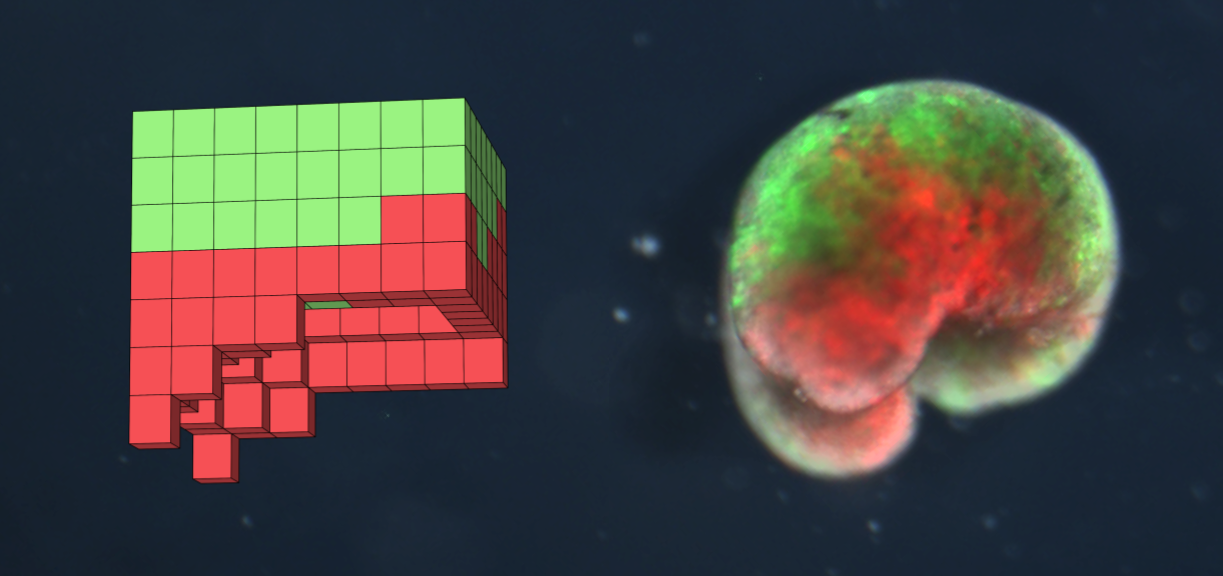
A xenobot design discovered in simulation (left) and the deployed organism (right) built from frog skin (green) and heart muscle (red)
IndustryRobotics, Synthetic biology
ApplicationMedicine, environmental remediation
DimensionsMicroscale
Fuel sourceNutrients
Self-propelledYes
ComponentsFrog cells
InventorSam Kriegman, Douglas Blackiston, Michael Levin, Josh Bongard
Invented2020

Xenobots, named after the clawed frog (Xenopus laevis),[1] are synthetic lifeforms that are designed by computers to perform some desired function and built by combining together different biological tissues.[1][2][3][4][5][6] There is debate among scientists whether xenobots are robots, organisms, or something else entirely.

Existing xenobots

[edit]

The first xenobots were built by Douglas Blackiston according to blueprints generated by an AI program, which was developed by Sam Kriegman.[3]

Xenobots built to date have been less than 1 millimeter (0.04 inches) wide and composed of just two things: skin cells and heart muscle cells, both of which are derived from stem cells harvested from early (blastula stage) frog embryos.[7] The skin cells provide rigid support and the heart cells act as small motors, contracting and expanding in volume to propel the xenobot forward. The shape of a xenobot's body, and its distribution of skin and heart cells, are automatically designed in simulation to perform a specific task, using a process of trial and error (an evolutionary algorithm). Xenobots have been designed to walk, swim, push pellets, carry payloads, and work together in a swarm to aggregate debris scattered along the surface of their dish into neat piles. They can survive for weeks without food and heal themselves after lacerations.[2]

Other kinds of motors and sensors have been incorporated into xenobots. Instead of heart muscle, xenobots can grow patches of cilia and use them as small oars for swimming.[8] However, cilia-driven xenobot locomotion is currently less controllable than cardiac-driven xenobot locomotion.[9] An RNA molecule can also be introduced to xenobots to give them molecular memory: if exposed to specific kind of light during behavior, they will glow a prespecified color when viewed under a fluorescence microscope.[9]

Xenobots can also self-replicate. Xenobots can gather loose cells in their environment, forming them into new xenobots with the same capability.[10][11][12]

Potential applications

[edit]

Currently, xenobots are primarily used as a scientific tool to understand how cells cooperate to build complex bodies during morphogenesis.[1] However, the behavior and biocompatibility of current xenobots suggest several potential applications to which they may be put in the future.

Xenobots are composed solely of frog cells, making them biodegradable and environmentally friendly robots. Unlike traditional technologies, xenobots do not generate pollution or require external energy inputs during their life-cycle. They move using energy from fat and protein naturally stored in their tissue, which lasts about a week, at which point they simply turn into dead skin cells.[2] Additionally, since swarms of xenobots tend to work together to push microscopic pellets in their dish into central piles,[2] it has been speculated that future xenobots might be able to find and aggregate tiny bits of ocean-polluting microplastics into a large ball of plastic that a traditional boat or drone could gather and bring to a recycling center.

In future clinical applications, such as targeted drug delivery, xenobots could be made from a human patient’s own cells, which would virtually eliminate the immune response challenges inherent in other kinds of micro-robotic delivery systems. Such xenobots could potentially be used to scrape plaque from arteries, and with additional cell types and bioengineering, locate and treat disease.

[edit]

See also

[edit]

References

[edit]
[edit]
Revisions and contributorsEdit on WikipediaRead on Wikipedia
from Grokipedia
Xenobots are synthetic multicellular assemblies engineered from the pluripotent stem cells of the (Xenopus laevis), designed as the world's first programmable living robots capable of autonomous movement, self-healing, and task-specific behaviors. Developed through a scalable pipeline combining simulations with biological fabrication, Xenobots are sculpted from embryonic blastula cells and cardiac cells using microsurgery to form novel morphologies that do not resemble natural organs or organisms. These millimeter-scale biobots, typically comprising around 3,000 cells, exhibit collective behaviors such as locomotion via cilia or muscle contractions, debris aggregation, and object transport in aqueous environments, with lifespans extending days to weeks without external nutrients. Their design process employs evolutionary algorithms to predict and optimize functions before physical assembly, enabling precise control over emergent properties like speed and directionality. A landmark advancement occurred in 2021 when researchers demonstrated kinematic in Xenobots, a non-genetic process where parent bots—often in C- or Pac-Man-shaped configurations—use motion to compress loose dissociated stem cells into piles of approximately 50–200 cells, which then self-assemble into functional offspring over several days. This replication, distinct from cellular division or growth-based methods, can propagate for up to four generations in AI-optimized designs, with offspring sizes increasing by 149% compared to wild-type spheroids, though it eventually halts due to cell depletion or environmental constraints. Xenobots also demonstrate inherent self-repair, regenerating damaged structures through natural biological processes preserved from their cellular origins. Recent transcriptomic analyses as of 2025 have uncovered significant shifts in basal Xenobots derived from ectodermal explants, with 537 uniquely upregulated transcripts associated with ancient evolutionary genes for multicellularity, locomotion (e.g., cilia and motor proteins), stress response, , and sensory . These changes enable heightened adaptability, including behavioral responses to external stimuli such as 300 Hz acoustic vibrations, which alter motion patterns in ways not observed in age-matched embryos, highlighting the plasticity of cells freed from embryonic constraints. Such insights underscore Xenobots' potential as platforms for studying , bioengineering, and , blurring distinctions between machines and organisms while raising ethical considerations about novel lifeforms.

Definition and Biological Basis

Core Definition and Characteristics

Xenobots are programmable biological machines assembled from living cells, embodying a hybrid class of entities that integrate synthetic principles with inherent biological processes, distinguishing them from both conventional robots made of non-living materials and naturally evolved organisms. These reconfigurable are engineered to exhibit targeted behaviors, such as locomotion and self-repair, while maintaining cellular autonomy without electronic components or external power sources. Named after Xenopus laevis, the from which their constituent cells are derived, xenobots typically measure 0.5 to 1 mm in diameter and adopt shapes such as spherical or Pac-Man-like configurations to facilitate movement. Locomotion is achieved through spontaneous contractions of cardiomyocytes, enabling coordinated propulsion through aqueous environments. Derived from frog embryonic stem cells, these machines leverage natural cellular to form functional aggregates. In nutrient-free aqueous settings, xenobots demonstrate a lifespan of approximately 10 days, during which they can heal minor damage and display emergent collective behaviors, underscoring their status as biodegradable, self-sustaining entities unlike hybrid bio-robots that rely on mechanical or synthetic integrations for functionality. This fully biological architecture allows xenobots to perform tasks beyond the native capabilities of their source cells, highlighting their potential as a platform for exploring novel forms of programmable life. Subsequent designs have explored variants using only epidermal cells that develop cilia for propulsion.

Cellular Composition and Origins

Xenobots are constructed from living cells sourced exclusively from embryos of the , Xenopus laevis, leveraging the organism's pluripotent stem cells without any . These stem cells, harvested at the early blastula stage (stage 9), differentiate into two primary cell types: cardiomyocytes derived from cardiac progenitors and epidermal cells from presumptive . Cardiomyocytes exhibit spontaneous contractions that drive through collective oscillations at approximately 2 Hz, while epidermal cells provide structural support. The biological origins of these cells trace to the dissection of X. laevis embryos, where pluripotent cells are dissociated from the animal pole of the blastula and cardiac tissue is excised from presumptive heart at stages 23 to 24, typically within the first few days post-fertilization under standard laboratory conditions (18–23°C). These cells retain their native behaviors post-harvesting, including the phase-modulated contractions of cardiomyocytes that enable synchronized beating and the innate tendencies of epidermal cells, which form cohesive tissues . This approach exploits the cells' developmental competence, allowing them to heal and adapt without external intervention. Xenopus laevis has been a cornerstone in since the mid-20th century, valued for its rapid external development, transparent embryos, and genetic tractability, which facilitate studies of and . The species' cells demonstrate remarkable plasticity, enabling reconfiguration into non-native forms while preserving core functions, a property essential for xenobot viability. Initially, xenobots rely entirely on these unmodified, wild-type cellular properties for operation, bypassing the need for genomic edits to achieve novel behaviors.

History and Development

Initial Creation and Discovery

Xenobots were first reported in January 2020 by an interdisciplinary team of researchers led by Michael Levin at and Josh Bongard at the . The collaboration combined expertise in , , and to explore the potential of living materials for novel functionalities. This work marked the initial discovery of xenobots as reconfigurable, cell-based entities distinct from traditional organisms or machines. The foundational experiments involved harvesting pluripotent stem cells from the embryos of the , Xenopus laevis. These cells were dissociated and allowed to self-assemble into multicellular spheroids approximately 0.5 to 1 millimeter in diameter, with outer layers developing cilia that enabled spontaneous, coordinated movement across Petri dishes containing nutrient-rich water. In some designs, cardiac cells were incorporated via microsurgery to enhance contractility and directed locomotion, allowing the xenobots to perform tasks such as navigating environments or transporting small payloads, behaviors that closely matched computational simulations. These early xenobots demonstrated self-healing properties, regenerating after partial damage, and survived for up to 10 days . The breakthrough was detailed in a seminal paper published in Proceedings of the in January 2020, which introduced xenobots as a new class of programmable living machines fabricated through an AI-driven pipeline. The publication emphasized their potential as biocompatible alternatives to synthetic robots, capable of exhibiting engineered behaviors without relying on genetic modification. The project was supported by funding from the under grant HR0011-18-2-0022, the Allen Discovery Center at , and the (grants CBET-0939511 and EFMA-1830870). Levin's affiliation with the Wyss Institute for Biologically Inspired Engineering at Harvard further facilitated the interdisciplinary integration of biological and engineering approaches. Early motivations centered on investigating cellular agency and beyond conventional embryonic development, aiming to harness these properties for applications in and environmental sensing.

Key Milestones and Advancements

In November 2021, researchers achieved a significant breakthrough by designing xenobots using that featured specialized "pouches" capable of kinematic , where parent xenobots gathered and compressed loose embryonic cells from the environment to form offspring structures. This process represented a novel, non-DNA-based form of replication, relying on physical environmental rather than genetic mechanisms to assemble viable progeny, with wild-type designs producing smaller offspring across generations while AI-optimized designs yielded progeny 149% larger than wild-type spheroids and functional for up to four generations. In March 2021, advancements focused on improving xenobot longevity and developing task-specific morphologies, building on AI-driven designs to enable more robust performance in simulated environments. For instance, enhanced versions demonstrated rapid self-healing capabilities, such as closing deep incisions within 15 minutes, and exhibited extended operational lifespans of over 90 days with nutrient-rich media compared to earlier iterations without external nutrients, allowing for prolonged collective tasks. Scalability tests revealed that multi-xenobot collectives could exhibit emergent swarm behaviors, such as coordinated aggregation of particles, highlighting their potential for group-level functionality. By 2025, transcriptomics studies on basal xenobots—unmodified cellular aggregates—uncovered substantial changes influenced by morphology and emergent life history, providing insights into novel regulatory mechanisms for these living machines. These findings were integrated into educational curricula, notably in courses at institutions like the , where xenobots served as case studies for exploring biohybrid systems.

Design and Fabrication Process

Materials and Assembly Techniques

Xenobots are constructed from pluripotent stem cells harvested from the early embryos of the , Xenopus laevis. These cells are obtained by excising the animal cap tissue from Nieuwkoop and Faber stage 9 embryos using fine surgical , with cells pooled from multiple embryos to form aggregates of approximately 3,000 cells. The harvested tissue is then dissociated mechanically by agitation in a calcium- and magnesium-free medium, such as a solution containing 50.3 mM NaCl adjusted to pH 7.3, to separate the cells without enzymatic treatment. Following dissociation, the cells are pooled from multiple embryos (typically 30 or more) and transferred to a low-adhesion welled dish containing 0.75× Marc's Modified Ringer's (MMR) solution at 7.8. Over a 24-hour at 14°C, the cells self-assemble into spherical aggregates through natural adhesion mechanisms, forming multicellular structures approximately 500–600 μm in without the need for external scaffolds or manual placement into molds. For motile Xenobots, aggregates of ectodermal cells are combined with cardiac cells dissected from stage 23-24 embryos, allowing differentiation into ciliated epithelial cells externally and cardiomyocytes internally, enabling coordinated behaviors. Fabrication varies by ; replication-focused versions use only ectodermal aggregates, while recent studies employ basal ectodermal explants for transcriptomic analysis. To achieve custom morphologies beyond simple spheres, such as C-shaped or Pac-Man-like forms, the aggregates are reshaped after an initial 24–48 hours of using microsurgical tools and a microcautery device equipped with 13-μm wire electrodes. This process involves precise excision and compression under controlled pressure (e.g., 2.62 mg/mm² for 3 hours), followed by a 1-hour period in 0.75× MMR to allow cell reorganization via molecules like cadherins. Primary protocols emphasize biological over engineered templates. Post-assembly, xenobots are cultured in 0.75× MMR supplemented with gentamicin (approximately 25 ng/μL) to prevent , maintained at 14°C to mimic the embryonic environment and promote , with medium changes per week. This acellular medium supports viability for up to 10 days in standard conditions, extendable beyond 90 days in nutrient-enriched variants like 50% Ringer's, 49% Leibovitz L-15, and 1% . No exogenous scaffolds are required, as the cells rely on intrinsic and contractile forces for structural .

Role of AI in Design Optimization

The design of xenobots relies on frameworks that employ evolutionary algorithms to explore vast design spaces, simulating millions of possible morphologies on supercomputers such as the Deep Green cluster at the . These algorithms iteratively evolve cell arrangements by evaluating fitness based on target behaviors, drawing inspiration from to refine configurations without human bias in the initial exploration phase. Optimization focuses on specific functional goals, such as enhancing speed or , achieved by varying the placement and type of cells, including for cilia-driven movement and cardiac cells for contraction. Custom kinematic simulators model these interactions, approximating cilia beat patterns and to predict how morphological changes influence collective behaviors like swarming or debris aggregation. For instance, in a 2021 study, AI-directed transformed the basic xenobot into a C-shaped (semi-toroid) form, which proved significantly more effective at kinematic by corralling loose stem cells into offspring structures. Despite these advances, AI-driven simulations face limitations in fully capturing biological variability, as wet-lab outcomes often deviate from predictions due to factors like uneven or environmental noise in culture dishes. This gap necessitates iterative validation, where promising virtual designs are fabricated and tested, refining the computational models over successive generations of research.

Properties and Behaviors

Locomotion and Functional Capabilities

Xenobots primarily achieve locomotion through cilia-generated propulsion, where multiciliated cells on their surface beat in a coordinated manner to produce directed fluid flow, enabling forward swimming in aqueous environments. This mechanism allows them to reach average speeds exceeding 100 μm/s, equivalent to several body lengths per minute depending on their size, with velocities remaining stable over their typical 10-day lifespan. AI-optimized morphologies enhance this propulsion efficiency by tailoring body shapes for maximal displacement. In terms of functional behaviors, xenobots demonstrate the ability to aggregate loose , such as 5-μm silicone-coated particles, into organized piles through passive sweeping during movement; in controlled arenas, small groups of xenobots can clear and consolidate such particles within 12 hours. They also navigate complex environments, including mazes and narrow capillaries up to 580 μm in diameter, by leveraging their morphology to avoid obstacles and follow paths without explicit programming. Collective decision-making emerges in swarms, where multiple xenobots coordinate to perform tasks like gathering more effectively than individuals, forming temporary bonds or orbits to optimize group displacement. Xenobots lack a , relying instead on the inherent responsiveness of their constituent cells to environmental cues for sensory integration; these cells detect and react to chemical gradients and mechanical stimuli through native biological pathways. A 2025 study showed that Xenobots exhibit behavioral plasticity by altering their motion patterns, such as increased peak velocity, in response to 300 Hz acoustic vibrations—responses not observed in age-matched embryos—highlighting their adaptability to external stimuli. Their derives solely from ATP produced via cellular of endogenous platelets, requiring no external power and sustaining autonomous operation for up to 10 days in simple media or over 90 days with supplementation. On a collective scale, exhibit dynamics akin to superorganisms, where groups integrate individual movements to accomplish enhanced functions, such as simulated wounds; for instance, they can initiate repair of severe lacerations half their body thickness within 5-15 minutes through coordinated cellular migration and tissue remodeling, with full resolution occurring within 48 hours. This emergent underscores their potential as modular units in swarm-based operations, driven by intercellular communication without centralized control.

Reproduction and Self-Replication Mechanisms

Xenobots exhibit a form of replication termed kinematic , discovered in , wherein parent xenobots actively gather loose embryonic stem cells from their environment and compress them into functional clusters that develop into viable offspring. This process relies on the physical movement and compression of cells rather than genetic replication, distinguishing it from traditional biological reproduction mechanisms such as or fusion. The replication begins with parent xenobots, typically spheroids of approximately 3,000 cells derived from Xenopus laevis frog embryos, navigating a containing dissociated stem cells. These parents use their motile cilia to sweep and pile the loose cells into compact aggregates of at least 50 cells, forming structures that function as incubating pouches. Over 4 to 5 days, these piles undergo spontaneous through and physical scaffolding, maturing into ciliated offspring xenobots that exhibit similar morphology and . Under optimal conditions, wild-type xenobots achieve an approximately 80% success rate for producing one generation of offspring, with AI-optimized designs demonstrating higher efficiency. This non-genetic mechanism depends entirely on emergent cellular behaviors, including molecules that stabilize the aggregates and ciliary that enables cell collection, without any DNA modification or inheritance of genetic material. xenobots inherit functional traits through this physical templating, allowing them to replicate further if additional cells are available, though viability degrades after 3 to 4 generations due to cellular exhaustion and structural breakdown. Recent transcriptomic analyses in 2025 have revealed that during , xenobot cells upregulate genes associated with adhesion (such as neurotrimin and GJB2) and motility (including stereocilin and ductin), facilitating enhanced cell-cell communication and collective assembly essential for forming new aggregates. These primarily rely on cilia for their initial motility, enabling them to continue the replication cycle.

Potential Applications

Biomedical and Therapeutic Uses

Xenobots, constructed from dissociated frog (Xenopus laevis) embryonic cells, hold promise as biocompatible agents for within the body. Their cilia-driven locomotion enables autonomous navigation through biological fluids, such as or tissue interstices, allowing them to transport therapeutic payloads to specific sites like tumors without external control. This approach leverages the organisms' natural biodegradability, ensuring they degrade into non-toxic cellular components after completing their task, thereby minimizing long-term risks. Using patient-derived cells in future iterations could further enhance compatibility by reducing immune rejection. In microsurgery, xenobots could perform precise interventions, such as scraping atherosclerotic plaque from walls or facilitating cellular repair in damaged tissues. Their millimeter-scale size and coordinated movement make them suitable for navigating vascular or neural environments, where traditional tools are limited. For instance, simulations and lab observations demonstrate their ability to aggregate and manipulate particles, suggesting efficacy in clearing blockages or delivering localized treatments. Xenobots also contribute to by modeling processes; they spontaneously repair lacerations and reorganize to fill tissue gaps, providing insights into cellular aggregation for therapeutic tissue repair. This self-healing capability arises from inherent bioelectric signaling in the cells, which could inform strategies for regenerating complex structures like nerves or organs. Key advantages include their , as they are composed entirely of living cells that integrate seamlessly with host tissues, and their autonomous functionality, enabling operation in dynamic bodily environments without power sources. Upon degradation, they break down into harmless byproducts, avoiding the need for retrieval. Their brief lifespan—typically 7 to 10 days—ensures controlled, temporary deployment. As of 2025, xenobots remain in preclinical stages, with applications tested solely on cell models and simulated environments; no animal studies or human trials have been reported. Ongoing research as of 2025, including transcriptomic studies, continues to explore cellular plasticity for medical , but clinical requires further validation of and efficacy.

Environmental and Research Applications

Xenobots have demonstrated potential in through their ability to aggregate small particles in controlled laboratory settings, where swarms of these millimeter-scale organisms can collectively push debris, such as particles, into designated areas within a dish, mimicking behaviors. This capability stems from their cilia-driven locomotion and emergent group coordination, allowing them to perform tasks like sweeping up scattered materials more efficiently than earlier designs. Researchers propose extending this to aggregate in water bodies, leveraging the xenobots' biodegradable nature to avoid secondary pollution while navigating aqueous environments. Engineered variants of xenobots could incorporate cell modifications for neutralization, such as integrating enzymes or receptors to bind and degrade contaminants. In lab experiments, these living machines have shown resilience in harsh conditions, suggesting viability for processing environmental s without external power sources. Such applications prioritize non-invasive cleanup, as xenobots naturally degrade after their short lifespan of about one week. As research tools, xenobots serve as platforms for modeling embryogenesis by isolating cells from organismal constraints, revealing transcriptomic shifts that highlight how morphology influences gene expression during early development. A 2025 study on basal xenobots—unsculpted forms from Xenopus laevis ectoderm—identified 537 uniquely upregulated transcripts compared to intact embryos, underscoring their utility in dissecting developmental plasticity and ancestral gene reactivation akin to evolutionary processes. This enables testing of synthetic biology hypotheses, such as how liberated cells form novel multicellular architectures, providing insights into morphogenesis without relying on traditional animal models. In laboratory utilities, xenobots can be augmented with programmable components like chemical receptors to function as sensors for detecting specific substances in petri dishes, responding to stimuli through integrated cellular signaling. These modifications allow real-time monitoring of chemical gradients, enhancing experimental precision in controlled setups. For field potential, xenobots are envisioned for deployment in controlled aquatic environments to collect waste, capitalizing on their ability to traverse fluids and aggregate particulates demonstrated . Related advancements in human-cell-derived biobots, such as anthrobots reported in 2023, have shown neural tissue repair capabilities, suggesting broader potential for the underlying technology in regenerative applications while Xenobots remain frog-based. These developments build on prior swarm demonstrations, emphasizing scalable, eco-friendly interventions in contaminated ecosystems.

Ethical and Regulatory Considerations

Biosafety and Ecological Risks

Xenobots are fabricated and manipulated in laboratory settings adhering to 1 (BSL-1) containment protocols, which include restricted access, , and decontamination procedures to mitigate any potential biohazards from handling amphibian-derived cells. Their inherently short lifespan—typically spanning several days to a few weeks in nutrient-limited aqueous environments—further constrains escape risks by preventing long-term viability outside controlled conditions. A primary ecological concern involves the possibility of unintended replication within wild populations should xenobots be accidentally released, as their mechanisms rely on loose embryonic cells similar to those in laevis habitats. However, this risk remains minimal due to their dependence on precise conditions, including specific cell densities and media compositions, which are absent in natural ecosystems. Post-experiment sterilization via chemical or thermal methods ensures complete inactivation and disposal. As of , no dedicated FDA or EPA guidelines exist specifically for xenobots, with oversight falling under general frameworks coordinated by these agencies alongside the USDA; this regulatory gap has prompted calls for international standards to harmonize safety evaluations for synthetic biological entities. Xenobots exhibit frog-specific cellular dependencies that preclude survival or proliferation in diverse environmental contexts beyond contrived lab scenarios, indicating low invasiveness potential.

Philosophical and Societal Implications

Xenobots, constructed from living cells yet engineered through computational design, challenge traditional binary classifications of by embodying a "third state" between biological s and artificial machines. This hybrid nature blurs the boundaries of , as xenobots demonstrate behaviors such as and using cells derived from post-mortem embryonic tissue, suggesting that processes can persist and evolve independently of the original . Philosophers argue that this reconfiguration prompts a reevaluation of what constitutes "aliveness," moving beyond or mechanism toward a continuum where engineered multicellular aggregates exhibit emergent properties akin to primitive forms. The agency and potential of xenobots further complicate these debates, particularly through the lens of basal theory proposed by biologist Michael Levin, which posits that even non-neural cells possess inherent problem-solving capabilities and without requiring a centralized . In xenobots, this manifests as coordinated locomotion and environmental driven by cellular interactions, raising questions about whether such entities exhibit rudimentary agency or . Critics contend that while current xenobots lack phenomenal , their ability to pursue goals like in replication hints at scalable cognitive architectures that could redefine intelligence in . Societally, xenobots evoke concerns over dual-use technologies, where their self-replicating potential could be harnessed for beneficial applications or repurposed as bioweapons capable of targeted environmental disruption. Equity issues arise in access to bioengineering tools, as advancements in xenobot design may exacerbate global disparities, with wealthier nations or entities dominating innovations and leaving developing regions vulnerable to unintended ecological or health impacts. These risks underscore the need for inclusive to ensure equitable distribution of benefits from such technologies. Ethical frameworks for xenobots increasingly invoke the , advocating restraint in deployment until long-term societal effects are understood, as highlighted in 2025 bioethics discussions emphasizing proactive for biohybrid systems. A 2024 perspective on biohybrid robotics research clarifies ethical challenges, such as and , and discusses the need for frameworks including and protocols. This approach integrates moral considerations like non-maleficence with calls for interdisciplinary oversight to balance innovation against existential threats. Culturally, xenobots have influenced narratives by materializing concepts of programmable life, shifting public perception toward viewing as a collaborative extension of rather than mere replication, though this also amplifies fears of "playing " in popular discourse.

Current Research and Future Directions

Recent Scientific Developments

In 2025, researchers conducted a comprehensive transcriptomic analysis of basal Xenobots—unsulpted aggregates of laevis embryonic cells—revealing significant shifts in compared to intact embryos. The study identified 537 transcripts uniquely upregulated in these Xenobots, enriched in functional categories such as locomotion (including cilia and motor proteins), multicellular organization, stress and immune responses, metabolism, and sensory perception of mechanical and acoustic stimuli. This analysis highlighted novel control mechanisms for , where cells freed from organismal constraints exhibit heightened inter-individual variability in , suggesting adaptive exploration of new morphological embodiments. Phylostratigraphic profiling further showed an enrichment of ancient evolutionary transcripts, indicating that Xenobot formation taps into conserved metazoan developmental pathways. Functional validation demonstrated that these Xenobots respond to acoustic vibrations at 300 Hz by modulating their motion, a absent in control embryos. Advancements in AI integration have enhanced the study of Xenobot behaviors, particularly in swarm contexts. Building on computational models, recent approaches enable real-time prediction and control of collective dynamics in biomimetic systems like Xenobots, using techniques such as (e.g., proximal policy optimization and soft actor-critic algorithms) to optimize locomotion and sensory responses. These methods facilitate the simulation and forecasting of swarm behaviors, such as alignment and cohesion, by processing environmental feedback for adaptive . In Xenobot-specific applications, AI-driven strategies support the design of configurations that promote emergent group interactions, improving predictive accuracy for behaviors in fluid environments. Experiments with alternative cellular compositions have extended the platform to human-derived cells. Researchers developed Anthrobots from adult human tracheal cells, which self-assemble into multicellular structures capable of autonomous movement and repair without genetic modification. These human-cell-based entities, analogous to frog-derived Xenobots, demonstrate motility via cilia and promote tissue regeneration by encouraging neural growth in damaged monolayers, surviving 45 to 60 days in culture. Such efforts represent initial steps toward enhanced in therapeutic applications. Efforts to improve Xenobot longevity have focused on nutritional strategies, with engineered variants achieving survival beyond two weeks through exposure to nutrient-rich media that sustains cellular . This approach leverages yolk platelets and supplemented environments to delay , as evidenced by upregulated genes like tenomodulin associated with anti-aging processes. Ongoing collaborative projects at the Wyss Institute and Tufts University's Levin Lab continue to refine Xenobot "embryos"—sculpted cell aggregates—for , aiming to harness their regenerative properties for scalable development and scaffolds. These initiatives emphasize interdisciplinary integration of bioengineering and computational design to advance synthetic living machines.

Challenges and Prospective Innovations

One major technical challenge in Xenobot development is the variability in replication yields, which limits reliable production and longevity. In experiments with wild-type Xenobots, replication typically succeeds for only 1 to 2 generations across trials, with success rates around 80-100% for the first generation but declining sharply thereafter due to diminishing offspring size and exhaustion of cellular feedstock. AI-optimized designs, such as semitoroid shapes, improve yields to an average of 3 generations with standard deviation of 0.8, yet inter-trial variability persists due to factors like cell concentration (optimal at 25–150 cells/mm²), , and risks, which can halt replication entirely. Scaling Xenobots to larger sizes without loss of function presents another hurdle, as increased physical dimensions demand enhanced bioelectric signaling for coordinated multicellular behavior; current millimeter-scale constructs rely on short-range communication, and larger forms risk disrupted and structural integrity, as seen in related biohybrid systems where signal propagation fails over extended distances. Biological hurdles further constrain Xenobot applicability, primarily their dependence on Xenopus laevis frog embryonic stem cells, which restricts universality to amphibian-derived systems and complicates adaptation to other species. This frog-specific composition enables unique self-assembly and kinematic replication but poses challenges for broader implementation, as frog cells exhibit limited plasticity outside their native developmental context, hindering translation to mammalian or human models without extensive reprogramming. Additionally, potential immune responses in non-aquatic environments limit deployment; Xenobots thrive in aqueous media like Petri dishes with saline solutions but trigger rejection if introduced into terrestrial or mammalian hosts using foreign frog cells, necessitating custom designs from autologous patient cells to mitigate immunogenicity while preserving motility and function. Prospective innovations position Xenobots as versatile platforms for , where their biodegradability and self-healing properties could enable or tissue repair without the rejection issues of synthetic nanorobots; for instance, patient-derived versions might navigate vasculature to aggregate or clear arterial plaque. In space exploration, Xenobots hold promise for microgravity assembly tasks, such as constructing structures from cellular in orbit, leveraging their autonomous locomotion to operate where traditional falter due to weightlessness-induced inefficiencies. Addressing these limitations requires standardized design protocols to ensure reproducible morphologies and behaviors, including shared computational pipelines for AI-driven optimization and consistent metrics for evaluating replication across labs. Interdisciplinary is essential for ethics-integrated development, combining bioengineering, , and to embed safety constraints from , such as programmable degradation to prevent unintended . Looking ahead, 2025 advances in reveal enhanced cellular plasticity for novel embodiments in Xenobots.

References

Add your contribution
Related Hubs
Contribute something
User Avatar
No comments yet.