


Community hub
Recent from talks
Contribute something
Nothing was collected or created yet.
Cota tinctoria
View on Wikipedia
| Cota tinctoria | |
|---|---|

| |
Scientific classification 
| |
| Kingdom: | Plantae |
| Clade: | Tracheophytes |
| Clade: | Angiosperms |
| Clade: | Eudicots |
| Clade: | Asterids |
| Order: | Asterales |
| Family: | Asteraceae |
| Genus: | Cota |
| Species: | C. tinctoria
|
| Binomial name | |
| Cota tinctoria | |
| Synonyms | |
|
Synonymy
| |
.jpg)
Cota tinctoria, the golden marguerite, yellow chamomile, or oxeye chamomile, is a species of perennial flowering plant in the sunflower family. Other common names include dyer's chamomile, Boston daisy, and Paris daisy. In horticulture this plant is still widely referred to by its synonym Anthemis tinctoria.[2]
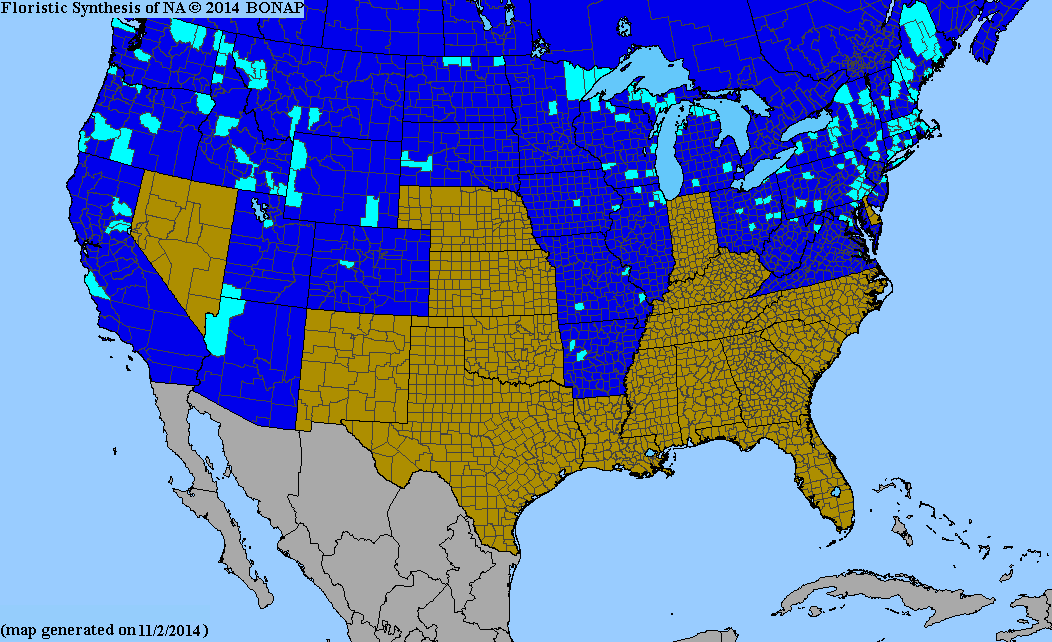
It is a short-lived plant often treated as biennial, native to Europe, the Mediterranean and Western Asia and naturalized in scattered locations in North America.[3][4] It has aromatic, bright green, feathery foliage. The serrate leaves are bi-pinnatifid (= finely divided) and downy beneath. It grows to a height of 60 cm (24 in).[5]
It has yellow daisy-like terminal flower heads on long thin angular stems, blooming in profusion during the summer.[5]
It has no culinary or commercial uses and only limited medicinal uses. However, it produces excellent yellow, buff and golden-orange dyes, used in the past for fabrics.[6]
Cota tinctoria is grown in gardens for its bright attractive flowers and fine lacy foliage; there is a white-flowering form. Under the synonym Anthemis tinctoria, the cultivar 'E.C. Buxton' has gained the Royal Horticultural Society's Award of Garden Merit.[7] The popular seed-raised cultivar 'Kelwayi' has 5 cm wide, yellow flowers on 65 cm plants.[8]
The species hybridizes with Tripleurospermum inodorum to form the hybrid × Tripleurocota sulfurea.[9]
Subspecies
[edit]- Cota tinctoria subsp. australis (R.Fern.) Oberpr. & Greuter
- Cota tinctoria subsp. euxina (Boiss.) Oberpr. & Greuter
- Cota tinctoria subsp. fussii (Griseb. & Schenk) Oberpr. & Greuter
- Cota tinctoria subsp. gaudium-solis (Velen.) Oberpr. & Greuter
- Cota tinctoria subsp. parnassica (Boiss. & Heldr.) Oberpr. & Greuter
- Cota tinctoria subsp. sancti-johannis (Stoj. & al.) Oberpr. & Greuter
- Cota tinctoria subsp. virescens (Bornm.) Oberpr. & Greuter
References
[edit]
- ^ Florae Siculae Synopsis 2: 866. 1844 [1845].
- ^ RHS A–Z encyclopedia of garden plants. United Kingdom: Dorling Kindersley. 2008. p. 1136. ISBN 978-1405332965.
- ^ Altervista Flora Italiana, Camomilla dei tintori, Färberkamille, Cota tinctoria (L.) J. Gay includes many photos plus European distribution map
- ^ Biota of North America Program 2014 county distribution map
- ^ a b Flora of North America, Golden marguerite, yellow chamomile, Cota tinctoria (Linnaeus) J. Gay ex Gussone, Fl. Sicul. Syn. 2: 867. 1845.
- ^ Euro+Med PlantBase - the information resource for Euro-Mediterranean plant diversity
- ^ "RHS Plantfinder - Anthemis tinctoria 'E.C. Buxton'". Royal Horticultural Society. Retrieved 12 January 2018.
- ^ "Anthemis tinctoria 'Kelwayi'". Gardenia.net. Retrieved 12 July 2021.
- ^ "× Tripleurocota sulfurea (P.Fourn.) Starm." Plants of the World Online. Royal Botanic Gardens, Kew. Retrieved 2023-12-05.
 | This Asteroideae article is a stub. You can help Wikipedia by expanding it. |
 | This Medicinal plants-related article is a stub. You can help Wikipedia by expanding it. |
Cota tinctoria
View on GrokipediaTaxonomy
Classification
Cota tinctoria is classified within the kingdom Plantae, phylum Tracheophyta, class Magnoliopsida, order Asterales, family Asteraceae, tribe Anthemideae, genus Cota, and species C. tinctoria.[4] The accepted binomial name is Cota tinctoria (L.) J. Gay, based on the basionym Anthemis tinctoria L. published in 1753; the combination into Cota was made by J. Gay ex Gussone in 1845.[4][6] Within the Asteraceae family, C. tinctoria belongs to the tribe Anthemideae, which is characterized by composite flower heads consisting of disc and ray florets, often with aromatic foliage and pappus structures reduced or absent.[4] Phylogenetically, the genus Cota was segregated from Anthemis based on morphological differences such as receptacle structure and cypsela features, supported by molecular evidence from nuclear ribosomal DNA (nrDNA) and chloroplast DNA (cpDNA) markers that confirm its monophyly separate from core Anthemis clades.[7]Nomenclature and etymology
Cota tinctoria is the accepted scientific name for this species, established by Jacques Gay in 1845 when he transferred it from the genus Anthemis based on distinct fruit morphology, particularly the ribbed achenes.[6] The basionym is Anthemis tinctoria L., originally described by Carl Linnaeus in Species Plantarum in 1753.[8] The genus name Cota derives from a pre-Linnaean generic epithet used by Linnaeus in Anthemis cota, though its precise etymological origin remains uncertain.[9] The specific epithet tinctoria comes from the Latin tinctorius, meaning "of or pertaining to dyeing," reflecting the plant's historical use in producing yellow dyes from its flowers.[2] Common names for Cota tinctoria include golden marguerite, dyer's chamomile, yellow chamomile, and oxeye chamomile, with the latter sometimes causing confusion with other species in the Asteraceae family; in older literature, it is frequently referenced under its synonym Anthemis tinctoria.[10] Notable synonyms include Anthemis tinctoria L. (the basionym, retained in many horticultural contexts due to outdated generic placement), Chamaemelum tinctorium (L.) Schreb. (an early reclassification emphasizing chamomile-like traits), and Anacyclus tinctorius (L.) Samp. (reflecting further taxonomic shifts based on morphological similarities within the tribe Anthemideae). These synonymies arose from historical debates over generic boundaries in the Asteraceae, resolved in favor of Cota through phylogenetic and morphological studies emphasizing achene structure.[4]Subspecies and varieties
Cota tinctoria is characterized by infraspecific variation, with several accepted subspecies distinguished primarily by geographic distribution and subtle morphological traits such as habit, pubescence, and reproductive structures, as revised in the Euro+Med treatment by Oberprieler and Greuter (2003). These taxa are recognized based on detailed morphological analyses, with some supported by post-2000 taxonomic studies emphasizing achene and pollen micromorphology. The species also includes minor varieties, often local adaptations or hybrid derivatives, noted in regional floras. The accepted subspecies include the following:- Cota tinctoria subsp. tinctoria: The nominotypical subspecies, widespread from central and eastern Europe to Siberia and Iran, typically annual or biennial with bi-pinnatifid leaves and yellow ray florets measuring 6–12 mm.[11]
- Cota tinctoria subsp. australis (R.Fern.) Oberpr. & Greuter: Restricted to southern Europe, sharing the annual or biennial habit of the typical subspecies but with slightly denser pubescence on stems and leaves in some populations.[12]
- Cota tinctoria subsp. euxina (Boiss.) Oberpr. & Greuter: Associated with the Black Sea region in southeastern Europe and western Asia, distinguished by more pronounced arachnose indumentum on phyllaries and a preference for coastal habitats.[4]
- Cota tinctoria subsp. fussii (Griseb. & Schenk) Oberpr. & Greuter: Occurring in the Balkans and adjacent areas, characterized by intermediate leaf dissection and achenes with prominent ribs, as observed in micromorphological studies.[4]
- Cota tinctoria subsp. parnassica (Boiss. & Heldr.) Oberpr. & Greuter: Native to southeastern Europe and the Aegean Islands, with narrower leaves and smaller flower heads (10–15 mm diameter) adapted to montane environments.[13]
- Cota tinctoria subsp. sancti-johannis (Stoj., Stef. & Turrill) Oberpr. & Greuter: Endemic to southwestern Bulgaria (Rila Mountains), perennial habit with more robust stems and increased pubescence compared to annual forms.[14]
- Cota tinctoria subsp. virescens (Bornm.) Oberpr. & Greuter: Confined to southern Turkey, perennial with greener, less woolly foliage and elongated peduncles supporting larger inflorescences.[15]