Hubbry Logo
Yellow curryYellow curryMain
Open search
Yellow curry
Community hub
Yellow curry
logo
8 pages, 0 posts
0 subscribers
Be the first to start a discussion here.
Yellow curry
Yellow curry
from Wikipedia
Yellow curry
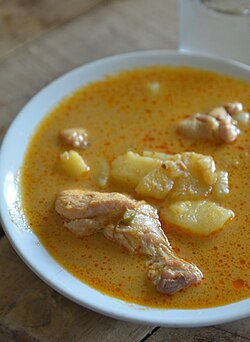
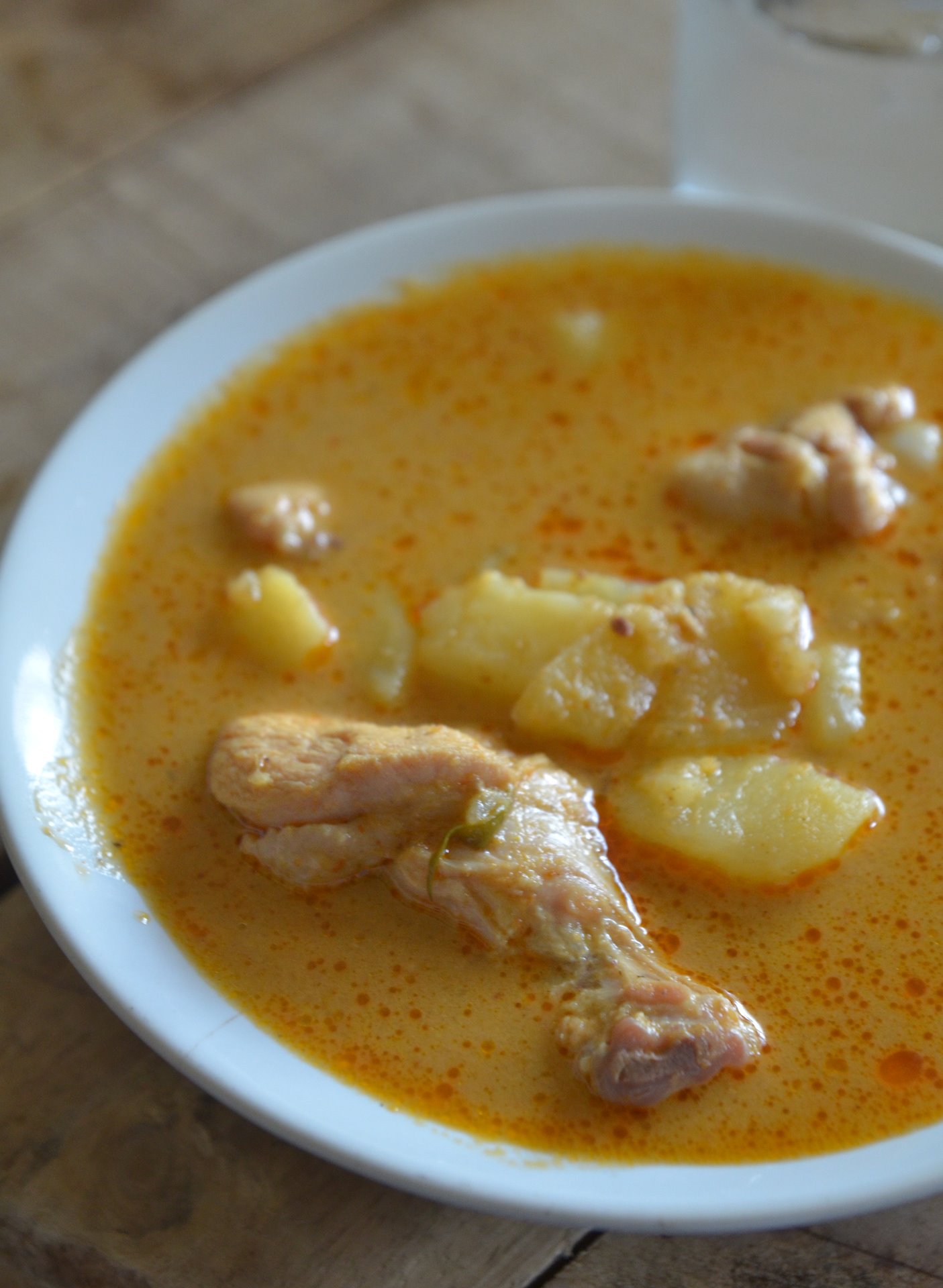
Yellow curry with chicken and potatoes
Alternative namesKaeng Lueang
TypeThai curry
Place of originSouthern Thailand
Main ingredients
  •   Media: Yellow curry

Yellow curry, known in Thai as kaeng kari (Thai: แกงกะหรี่, lit.'curry curry', pronounced [kɛ̄ːŋ kā.rìː]) is a Thai dish made from cumin, coriander, turmeric, fenugreek, garlic, salt, bay leaf, lemongrass, cayenne pepper, ginger, makrut lime, mace and cinnamon. It is generally milder than other Thai curries, being that it contains less chilli.

Thai cuisine

[edit]

It is one of three major kinds of Thai curry that are commonly found in Thai restaurants in the West.[1] There are other curry types in Thai cuisine, several of which are yellow. Pre-packaged curry powder of Indian origin is sometimes also referred to as yellow curry in Western countries but is a different blend of spices from Thai yellow curry. Thai yellow curry, outside Thailand, usually refers to the dish kaeng kari.[2]

Thai yellow curry is most typically served with chicken or beef and a starchy vegetable, most often potatoes, but it can be made with duck, tofu, shrimp, fish, or vegetables and is eaten with steamed rice[3] or round rice noodles known as khanom chin.[citation needed]

See also

[edit]

References

[edit]
Revisions and contributorsEdit on WikipediaRead on Wikipedia
from Grokipedia
Yellow curry, known in Thai as kaeng kari, is a staple dish in characterized by its vibrant yellow hue and mild, earthy flavor profile derived primarily from . This coconut milk-based curry balances savory, slightly sweet, and aromatic notes, distinguishing it from spicier counterparts like red or green curries, and is commonly prepared with proteins such as , , or alongside vegetables like potatoes, onions, and carrots. The foundational element of yellow curry is its curry paste, or nam prik gaeng kari, which incorporates turmeric root for color and earthiness, along with cumin seeds, coriander seeds, lemongrass, garlic, shallots, galangal, shrimp paste, and dried or fresh chilies for subtle heat. Unlike more herbaceous green curries or fiery red varieties, yellow curry paste emphasizes Indian-inspired spices like cumin and coriander, resulting in a sweeter, less pungent taste that pairs well with rice or noodles. Preparation typically involves frying the paste in coconut cream to release aromas, then simmering it with coconut milk, protein, and vegetables until tender, often seasoned with fish sauce, palm sugar, and lime for balance. Yellow curry's origins trace back to Thailand's historical spice trade interactions with dating to the , where and other masala-like elements were adapted into local pastes by the 13th century, evolving from traditional nam prik condiments into full curries. This dish reflects southern Thailand's culinary influences, where is abundant, and gained global prominence through Thailand's 2002 Global Thai Program, which standardized and promoted authentic recipes worldwide to boost cultural and economic outreach. In Thai culture, yellow curry is among the traditional dishes enjoyed during festivals like Songkran, which celebrate community and heritage.

Overview

Definition and characteristics

Yellow curry, known in Thai as kaeng kari, is a traditional dish distinguished by its mild, earthy flavor profile and striking yellow hue primarily derived from in the curry paste. This curry reflects historical Indian influences through its spice blend, setting it apart from more indigenous Thai varieties. In terms of sensory attributes, yellow curry offers a gentle spiciness that is notably milder than red or curries, with savory undertones balanced by subtle sweetness from and , with aromatic notes from spices such as and , and a creamy texture achieved through the incorporation of . The earthy notes from dominate, creating an aromatic yet approachable taste that appeals broadly, including to children in Thai households. Typically prepared as a simmered , yellow curry features proteins like or alongside such as potatoes and onions, and is commonly served with steamed to complement its richness. Nutritionally, yellow curry provides high levels of antioxidants from turmeric's content, which supports anti-inflammatory effects, while the combination of and proteins contributes to balanced macronutrients including healthy fats and complete proteins.

Etymology and naming

In Thai, yellow curry is known as kaeng kari (แกงกะหรี่), a compound term where kaeng (or gaeng in alternative ) denotes a liquid-based or soup-like dish, often involving simmered ingredients with seasonings, while kari is a directly borrowed from the English "." The native Thai kaeng has roots in pre-colonial culinary terminology, as evidenced in the first documented Thai from 1873, which defined it as a watery preparation incorporating elements like , salt, and chili to create flavorful broths. The component kari traces its origins to the broader Indo-European linguistic diffusion of the word "curry," stemming from the Tamil kari, which referred to a spiced , , or fried preparation served with in . This term was adapted by traders as caril during their 16th-century explorations in and , where they encountered and exported spiced dishes, eventually influencing English via colonial encounters and spreading to through maritime trade routes. Indian traders as early as the introduced spice blends that aligned with local kaeng preparations, leading to the hybrid kaeng kari to specifically denote curries using imported or Indian-inspired spice mixes like and . In English-speaking contexts, the dish is termed "yellow curry" to highlight its characteristic golden hue derived from , a key ingredient that visually distinguishes it from the chili-dominant (kaeng phet) and herb-forward (kaeng khiao wan). This naming convention emerged in the 20th century as gained popularity abroad, often appearing as "Thai yellow curry" or adaptations like "yellow chicken curry" on Western menus to evoke its mild, aromatic profile while simplifying the exotic kaeng kari for non-Thai audiences.

History

Origins and influences

The origins of yellow curry can be traced to the ancient in the , dating back to around 1500 BCE, when spices such as and were integral to early spiced stews and flavorings in the Indus Valley Civilization. These elements formed the foundation of what would later evolve into curry-like dishes, with providing the characteristic yellow hue and earthy savoriness, while added depth to aromatic blends used in everyday cooking and rituals. Indian spice influences, including and , were introduced to through maritime trade routes during the Ayutthaya period (14th to 18th centuries), primarily via Indian merchants, and later Portuguese traders in the who facilitated further exchanges of spices and cooking techniques. This period saw the blending of imported Indian spices with local Thai ingredients like lemongrass, laying groundwork for milder variants adapted to regional palates. Key influences on yellow curry include the adaptation of Indian spice blends, which emphasized dry-roasted spices such as , , and , integrated with Thai herbs but without the heavy incorporation of fresh chilies—unlike more indigenous Thai curries—resulting in its relatively mild flavor profile. The absence of intense heat stemmed from the later introduction of chilies by traders, allowing yellow curry to retain a subtler, spice-forward character. Early records of yellow curry, known as gaeng kari in Thai, appear in royal cuisine texts from the during the Ratthanakosin period, reflecting Bangkok's emergence as a multicultural trade hub that connected with global spice networks. These mentions highlight its refinement in palace kitchens under kings like , where imported and local elements were harmonized to suit elite tastes. The dish further developed in the with the incorporation of commercially available from British , which standardized the spice blend including , , and .

Evolution in Thai cuisine

Yellow curry, influenced initially by Indian culinary traditions, evolved significantly in during the 19th and 20th centuries through localization processes that integrated local ingredients and techniques. , a staple in the region's cuisine, was incorporated to create a creamy base, tempering the spice profile and enhancing the dish's richness, which differentiated it from drier Indian variants. Potatoes, introduced to in the late 19th century via trade routes from British-controlled and Yunnan Province in , became a common addition, providing substance and absorbing the curry's flavors effectively. This adaptation reflected broader European influences on Southeast Asian agriculture and trade, making yellow curry a hearty, accessible dish in urban households. In the Rattanakosin Kingdom (1782–present), yellow curry featured prominently in Siamese court dishes, where royal kitchens refined curry pastes under the influence of palace culinary experts and foreign trade imports. These preparations emphasized balanced aromatics like , , and , often served with proteins to suit aristocratic palates. By the early , as Bangkok's urban markets expanded, the dish transitioned to status, becoming widely available to commoners through vendors who simplified royal recipes for everyday consumption. This democratization highlighted yellow curry's role in bridging elite and popular Thai food culture. Post-World War II accelerated changes in yellow curry preparation, with the rise of commercialized curry pastes standardizing flavors and enabling . Brands like Mae Ploy, founded in 1921 in , expanded in the mid-20th century to offer jarred pastes that preserved traditional blends while facilitating home cooking amid and . Though perceived as less traditional compared to red or green curries due to its milder profile and foreign borrowings, yellow curry saw a revival during Thailand's tourism surge, marketed as an approachable "exotic" option for Western visitors seeking less intense flavors. This period's gastro-diplomacy efforts, building on international exposure, elevated its status in Thai restaurants and hotels, ensuring its enduring place in modern cuisine.

Ingredients

Curry paste composition

The yellow curry paste, known as prik gaeng kari in Thai, forms the flavorful foundation of the dish and is distinguished by its blend of dry spices and fresh aromatics that impart a mild, earthy warmth. Core dry spices include , which provides the signature golden color and subtle earthiness; seeds for a citrusy, nutty depth; seeds for warm, nutty notes; and dried red chilies, typically mild varieties like guajillo or spur chiles, to add gentle heat without overwhelming spiciness. White peppercorns are also commonly included for subtle heat. Fresh aromatics contribute brightness and complexity to the paste, including and shallots for savory pungency; lemongrass for citrusy freshness; for a sharp, peppery bite; and makrut lime zest for aromatic citrus notes. Coriander roots appear in some traditional recipes to enhance herbal undertones. These ingredients are ground into a cohesive paste, often using a or , with or salt incorporated to provide and aid preservation; dominates the color and flavor profile. Some formulations include for additional notes. The resulting paste offers a balanced savory-earthiness, with less herbal intensity than green curry paste—due to the absence of fresh green chilies and —and a more powder-like, spice-forward character compared to the bolder, fresher paste.

Primary dish components

Yellow curry, known as gaeng kari in Thai, typically incorporates proteins such as , which is the most common choice in the dish gaeng kari gai, where boneless chicken thighs or breasts are cut into bite-sized pieces for even cooking and absorption of the sauce. , often from stew-friendly cuts like , is another frequent protein, providing a richer texture that pairs well with the curry's mild spices. , particularly firm or fried varieties, serves as a vegetarian alternative, offering a neutral base that absorbs the curry flavors without overpowering . Seafood is less typical in yellow curry due to its origins as a Thai Muslim-influenced dish, which traditionally favors or over or pork for cultural reasons. The primary vegetables in yellow curry contribute texture, mild sweetness, and balance to the creamy sauce, with potatoes—preferably waxy varieties like Yukon Gold—being a staple for their ability to hold shape during simmering. Carrots and onions are commonly added, sliced into wedges or chunks to provide subtle sweetness and bulk, while occasional inclusions like bell peppers or enhance crunch and earthiness without dominating the mild profile. Liquids and binders form the lush foundation of the dish, with full-fat essential for its creamy consistency and natural sweetness that tempers the spices. Chicken or stock may be added to adjust thickness, ensuring the sauce coats the ingredients evenly. provides saltiness, while palm or balances the flavors with a touch of sweetness, typically added to taste during preparation. A standard recipe for yellow curry yields about 4 servings, using 2 to 4 tablespoons of yellow curry paste per 400 ml can of as the base, scaled according to desired intensity.

Preparation

Making the curry paste

To prepare yellow curry paste from scratch, begin by sourcing high-quality ingredients, focusing on fresh aromatics and properly stored dried spices. Fresh items such as lemongrass, , , shallots, and should be obtained from markets specializing in Southeast Asian produce; slice lemongrass thinly (using only the tender bottom 4-5 inches), chop and into small pieces, and peel and shallots for optimal texture. Dried spices like seeds, seeds, white peppercorns, , cloves, , , and must be whole and recently purchased to ensure potency; mild dried chilies (such as guajillo or spur chilies) should be stemmed, seeded, and soaked in hot water for 10-15 minutes to rehydrate before use. The grinding process traditionally employs a for authenticity and fine texture, though a can serve as a modern alternative for larger batches. Start by toasting the dried spices in a dry skillet over medium-low heat for 2-4 minutes until fragrant, stirring frequently to release aromas without burning, then cool and grind them into a fine powder using a spice grinder. Next, pound the rehydrated chilies with a pinch of salt in the mortar until pulverized (3-5 minutes), followed by gradually adding the fresh aromatics—lemongrass first, then , , , shallots, and coriander roots—pounding each addition thoroughly (about 2-3 minutes per item) to form a coarse paste before incorporating the ground spices and fermented last. This sequential method, which takes 20-30 minutes total, prevents overcrowding and ensures even integration, resulting in a vibrant, aromatic paste. For storage, transfer the fresh paste to an airtight container with pressed directly on the surface to minimize oxidation; it remains usable for up to 1 week in the or 3 months in the freezer, where it can be portioned into ice cube trays or flattened bags for easy retrieval. While commercial yellow curry pastes offer convenience as a shortcut, they often lack the nuanced freshness and customizable intensity of homemade versions due to preservatives and standardized blending. Common pitfalls in preparation include over-toasting the dried spices, which can impart a burnt bitterness, and excessive grinding of fresh , leading to an overpowering earthy flavor that dominates the paste's balance. To avoid these, monitor toasting closely for subtle fragrance changes and adjust turmeric quantity (typically 1-2 teaspoons per batch) based on taste testing during pounding, ensuring the paste's signature mild warmth shines through without excess. Using inadequate tools, such as a small mortar, can also result in uneven texture, so opt for a heavy-duty vessel with at least 3-cup capacity.

Assembling and cooking the dish

To assemble and cook a traditional Thai yellow curry, begin by the prepared curry paste in oil or over medium heat for 2-3 minutes until fragrant and the aromas are released, which activates the spices without burning them. This step, often done in a or large pot, helps separate the oils from the paste and forms the flavorful base of the dish. Next, incorporate the remaining coconut milk or cream along with proteins such as thighs, added first to simmer for 5-10 minutes until partially cooked, ensuring even flavor absorption. Stir in seasonings like , , and or lime juice early in this stage to balance salty, sweet, and tangy elements, then add water or stock if needed for consistency. After the proteins have simmered, introduce vegetables such as potatoes, carrots, onions, and , continuing to simmer on low heat for 15-20 minutes until the vegetables are tender but retain their texture. This gradual addition prevents overcooking denser items like potatoes while allowing the curry to develop a creamy, cohesive . Once the curry has simmered, taste and adjust the seasoning by adding more fish sauce for saltiness, palm sugar for sweetness, or lime juice for acidity to achieve the ideal harmony of flavors characteristic of Thai curries. Remove from heat to avoid further cooking, which preserves the vibrancy of the ingredients. For serving, ladle the hot curry over steamed jasmine rice or alongside egg noodles, garnishing with chopped cilantro, fried shallots, or fresh Thai basil leaves to add crunch and freshness. This presentation highlights the dish's golden hue and aromatic profile, making it suitable for family meals or communal dining.

Variations and adaptations

Regional Thai variations

In , yellow curry, referred to as kaeng kari, represents the archetypal urban preparation, characterized by a rich base, tender pieces, potatoes, and onions, with many households and restaurants relying on commercially produced pastes for convenience and consistency. This version emphasizes a balanced, mildly spiced profile influenced by Indian curry traditions, simmered to integrate the aromatic paste's turmeric-driven hue and subtle sweetness from the . Northern Thailand's take on yellow curry tends toward a milder intensity, amplifying in the paste for a sharper, aromatic bite while reducing to yield a lighter , often centering or shoulder as the key protein and traditionally served with sticky to complement the dish's textures. Dishes like , a , exemplify this regional adaptation, featuring egg noodles in a coconut-based with and spices, reflecting Burmese influences and served with condiments like pickled greens. In , yellow curry evolves into a bolder, spicier called gaeng leuang or gaeng som, deriving its vibrant color and earthy notes from fresh root pounded into the paste, paired with such as or and incorporating indigenous like wing beans for crunch and freshness. This water-based preparation omits heavy , focusing instead on a sour-spicy equilibrium from lime juice and chilies, boiled briefly to preserve the seafood's delicacy and the greens' vibrancy, reflecting the region's coastal abundance and preference for intense heat. The Isaan region in Northeast imparts an earthier dimension to yellow curry through the addition of fermented elements like pla ra (fermented fish sauce) for depth, frequently using as the robust protein in a drier, broth-like consistency that shuns thick cream in favor of fresh herbs and . This yields a herbaceous, tangy result suited to the area's landlocked, agrarian lifestyle and paired simply with for everyday meals.

International adaptations

In Western countries such as the and the , yellow curry has been adapted to milder spice levels to suit broader palates, often reducing the heat from chilies while retaining the turmeric-driven golden hue and earthy flavors. Some recipes substitute for traditional to create a tangier, dairy-based , appealing to preferences for creamier textures without the tropical richness. Vegan variations commonly feature chickpeas as the primary protein, simmered with in for a hearty, plant-based dish that maintains the curry's aromatic profile. In , a yellow-colored known as "kare raisu" evolved from British naval influences during the in the late , becoming a roux-thickened, sweeter adaptation served as a thick over with potatoes, carrots, and onions. This version emphasizes mild, caramelized sweetness from ingredients like apples, diverging from the liquid, spice-forward Thai original while sharing turmeric's yellow coloring. In and , Indian-Thai fusion adaptations of yellow curry incorporate for added tanginess, blending it with and to heighten sour notes and create a more complex spice profile reminiscent of massaman curry's depth. These versions often feature or , reflecting multicultural influences in the region's . Since the 2010s, modern trends have popularized quick-cooking methods for yellow curry, such as recipes that pressure-cook chicken, vegetables, and curry paste in under 30 minutes for busy households. Health-conscious adaptations include low-carb options pairing the curry with cauliflower rice instead of , reducing net carbohydrates while preserving the dish's bold flavors.

Cultural and culinary significance

Role in Thai cuisine

Yellow curry, known as kaeng kari in Thai, holds a prominent place in traditional Thai meals as a foreign-inspired dish reflecting the country's multicultural heritage through historical spice trade routes from India. Introduced via South Asian traders around 2,000 years ago, its turmeric-based profile distinguishes it from more indigenous Thai curries, yet it integrates seamlessly into communal family spreads where multiple curries, rice, and side dishes are shared to embody hospitality and balance. In everyday Thai dining, yellow curry is often prepared as a home-cooked dish that complements other curries served alongside proteins and vegetables. Symbolically, yellow curry represents Thailand's layered cultural influences, with its vibrant hue from evoking prosperity and good fortune, traits associated with royalty in Thai tradition. This regal connotation makes it suitable for special occasions, where its mild flavor promotes harmony and accessibility among diverse palates. In such contexts, the dish underscores Thailand's adaptive culinary history, blending external spices with local practices to honor multicultural roots without overpowering the meal's collective harmony. Within Thai cuisine's foundational principle of flavor equilibrium—hot, sour, salty, and sweet—yellow curry leans toward a savory, earthy profile tempered by , offering a milder alternative that complements bolder dishes in a multi-curry spread. Its accessibility stems from readily available ingredients like and basic proteins, making it a staple in home cooking for its straightforward preparation and versatility with everyday staples such as potatoes or chicken, thus fitting seamlessly into daily routines across urban and rural households. Thai cuisine in rural areas relies on affordable staples like and local vegetables to provide nourishing meals in agrarian communities, reflecting economic realities where households allocate significant portions of income to food. In urban settings like , street vendors offer standardized curries to locals and tourists, contributing to Thailand's vibrant informal food economy with accessible, flavorful options.

Global popularity and modern uses

Yellow curry has gained significant traction worldwide since the late , coinciding with increased Thai immigration to the United States and following the era. Thai immigrants, often arriving on student visas or through , began opening restaurants that introduced dishes like yellow curry to Western palates, leveraging the familiarity of curry concepts from Indian and British influences. By the 2000s, government-led gastrodiplomacy efforts, such as Thailand's Global Thai Program launched in 2002, standardized and promoted yellow curry as one of the core "tri-color" curries (alongside red and green), accelerating its adoption in fusion restaurants and home cooking globally. As of 2025, yellow curry pastes represent a substantial portion of the market, with products achieving approximately 20% in amid rising demand for Asian flavors. The global paste market reached USD 1.24 billion in 2024, driven by imports from , which account for a significant share of U.S. curry paste shipments, and the growth of plant-based versions catering to vegan and health-conscious consumers. In June 2025, companies like Honest Bowl debuted fairtrade, vegan yellow curry products at the Summer Fancy Food Show, emphasizing sustainable sourcing and further boosting global appeal. In contemporary , yellow curry has inspired innovative applications beyond traditional stews, such as toppings for pizzas featuring its turmeric-infused paired with proteins, or in cocktails like turmeric-laced drinks that highlight its earthy notes. Its turmeric content is increasingly promoted for anti-inflammatory properties, supported by curcumin's effects that may alleviate symptoms and reduce . Despite its popularity, yellow curry faces challenges including debates over authenticity in diaspora communities, where adaptations often spark discussions on preserving traditional flavors versus local innovations. Additionally, sustainability concerns arise from imported , a key ingredient, due to opaque supply chains involving smallholder farmers, potential labor issues, and environmental strains like in production regions.

References

Add your contribution
Related Hubs
User Avatar
No comments yet.