Hubbry Logo
Ɛ̃finiƐ̃finiMain
Open search
Ɛ̃fini
Community hub
Ɛ̃fini
logo
8 pages, 0 posts
0 subscribers
Be the first to start a discussion here.
Ɛ̃fini
Ɛ̃fini
from Wikipedia

ɛ̃fini (アンフィニ (Anfini)) was a luxury vehicle division of Japanese automaker Mazda that operated between 1991 and 1997 in Japan only. Its inception as a brand emerged in the late 1980s when Mazda diversified its sales channels in the Japanese market with the launch of three new marques. The company created Autozam, Eunos, and ɛ̃fini, in addition to the Mazda and Ford brands already marketed there. This selective marketing experiment ended in the mid-1990s due to economic conditions, largely attributed to the collapse of the Japanese asset price bubble in 1991. As a brand, ɛ̃fini encompassed most, if not all dealers formerly under the "Mazda Auto Store" dealership network established in 1959 when the Mazda R360 was introduced. Pronounced like the French word infini, the name is written with a tilde over the lowercase Greek ε (as in ɛ̃), and can therefore be assumed to be IPA, the pronunciation symbols taught in Japan, and sometimes used in product naming.

Key Information

The three sedans offered started with the letters "MS", which represented the Greek phrase "Megáles Sképseis" (μεγάλες σκέψεις) which translated into English means "great thoughts" according to the Japanese Wikipedia translated article.

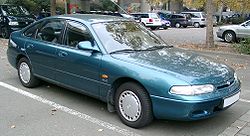
The ɛ̃fini marque was a luxury-oriented brand, as opposed to the more mainstream, fun to drive Eunos brand, traditional Mazda, and entry level Autozam. The vehicles sold did not comply with Japanese government exterior and engine displacement regulations which classed all vehicles sold as ɛ̃fini as exclusive luxury products. The length of the MS-6 was the same as the MS-8 at 4,695 mm (184.8 in). Both shared the V6 2.0 L, while the MS-6 offered the convenience of a hatchback bodystyle, and the MS-8 offered space efficiency of bench seats for both front and rear passengers and the open-air feeling of a hardtop sedan bodystyle.

The ɛ̃fini name and logo are not to be confused with several, late 1980's limited-edition versions of the second generation (FC) RX-7s. These were called "Infini", and received infinity ("∞") badging.

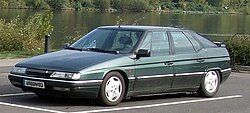
From 1991 until 1997, when the ɛ̃fini dealership was integrated into Mazda locations, Citroën products were sold to Japanese buyers, as well as Mazda's Eunos locations. Currently, there are a few Japanese Mazda dealerships that still maintain the sales channels, but sell Mazda-branded products.[1]

Models

[edit]

References

[edit]
[edit]
Revisions and contributorsEdit on WikipediaRead on Wikipedia
from Grokipedia
ɛ̃fini (pronounced an-fee-nee) was a luxury and channel established by the Japanese automaker in , which also sold models, targeting upper-middle-class buyers in the domestic market during Japan's economic boom. It was one of several specialized channels Mazda created in the early , alongside Autozam and Eunos. The name derives from the French word infini, signifying "," and reflected Mazda's aspiration for expansive, premium automotive offerings through a dedicated network formed by Mazda Auto and its affiliates. The brand operated exclusively in Japan until 1997, when it was discontinued amid the country's financial following the asset price bubble burst and external pressures from Mazda's stakeholder Ford. ɛ̃fini's lineup featured rebadged and uniquely styled variants of Mazda models, emphasizing upscale trims, advanced features, and performance-oriented designs to compete in the entry-level luxury segment, akin to historical strategies by like in the 1950s. Key models included the ɛ̃fini RX-7, a rebadged version of Mazda's iconic third-generation sports car known for its rotary engine and handling prowess; the MS-6 hatchback, a fastback derivative of the Cronos sedan with a high-performance V6 engine and spacious interior; the MS-8 sedan, built on Mazda's GE platform with options like four-wheel steering, a dash-mounted shifter, and solar-powered ventilation; and the MS-9, a larger luxury sedan. Additional offerings encompassed a rebadged MPV minivan, broadening the brand's appeal across sedans, hatchbacks, and family vehicles. ɛ̃fini vehicles were distinguished by their "Megalo Spirit" philosophy—evoking grand aspirations—through innovative styling, such as integrated rear spoilers on the MS-6 and rare configurations on the MS-8, which anticipated modern luxury designs like the . Today, these models are prized by enthusiasts for their rarity and as artifacts of Mazda's ambitious but short-lived foray into branded luxury, with engines typically ranging from 2.0L to 3.0L DOHC V6s (or a rotary in the RX-7) paired to four-speed automatics.

History

Launch and purpose

In the late 1980s, amid Japan's booming economic bubble, Mazda pursued aggressive expansion in its domestic market by diversifying into multiple specialized sales channels to capture niche customer segments and elevate its overall market share from around 5% to higher levels. This strategy resulted in four distinct networks: the core Mazda brand for mainstream vehicles, Eunos for sporty models, Autozam for compact and utility cars, and ɛ̃fini as the upscale luxury arm. The diversification aimed to mirror the segmentation success of competitors while leveraging Mazda's engineering strengths in a period of heightened consumer spending on premium automobiles. Mazda officially launched the ɛ̃fini brand in November 1991 by rebranding its nationwide Mazda Auto dealership network into dedicated ɛ̃fini outlets, creating a separate sales infrastructure for premium offerings. The brand name derives from the French term infini, meaning "infinity," evoking boundless luxury, innovation, and sophistication; it features a stylized Greek epsilon (ε) and tilde (̃) to convey a modern, exotic flair distinct from Mazda's conventional imaging. This rebranding transformed approximately 300 Mazda Auto locations into ɛ̃fini showrooms, enabling targeted marketing to affluent buyers seeking elevated driving experiences. Positioned as Mazda's luxury division, ɛ̃fini targeted upscale consumers with rebadged and of existing Mazda models, incorporating superior materials, advanced features, and refined styling to to those desiring prestige without venturing into fully designs. The sought to rival established luxury entrants like Toyota's , launched in 1989, and Nissan's , introduced in 1990, by offering accessible yet aspirational vehicles in Japan's competitive premium segment. Unlike the sport-focused Eunos channel, ɛ̃fini emphasized personal luxury and comfort. At launch, ɛ̃fini announced an initial lineup centered on luxury sedans and coupes, with the first models debuting in late 1991 to quickly establish the brand's presence in dealerships and generate early buzz among premium buyers. This rollout aligned with Mazda's broader goal of segmenting the market to drive incremental during the bubble's peak.

Brand consolidation and discontinuation

The burst of Japan's asset bubble in 1991–1992 triggered a severe economic recession, exacerbating Mazda's financial woes as the company grappled with massive debts exceeding ¥69.5 billion (approximately $600 million) and cumulative net losses surpassing ¥126.4 billion ($1 billion) over seven consecutive years of decline. This crisis, compounded by slumping domestic demand and a strong yen, strained Mazda's expansive multi-channel strategy launched in 1991, which included the ɛ̃fini network as a premium outlet. ɛ̃fini experienced modest peak sales of around 50,000–60,000 units annually in the early 1990s but faltered amid brand overlap with other Mazda channels and limited recognition beyond Japan, contributing to overall subdued performance across the sub-brands. In 1995, Mazda's total domestic sales totaled just 365,737 units distributed across its four channels, underscoring the inefficiency and low volume plaguing specialized networks like ɛ̃fini during the recession. In response to the mounting pressures, Mazda undertook a major restructuring in 1996–1997, heavily influenced by Ford Motor Company, which increased its stake in Mazda to 33.4% and dispatched executives to streamline operations. This led to the consolidation of sales channels, beginning with the merger of the Eunos network into ɛ̃fini in 1996 to eliminate redundancies, followed by the integration of ɛ̃fini dealerships into standard Mazda locations by December 1997. The official discontinuation of the ɛ̃fini brand was announced in 1996 as part of this effort to reduce costs and focus resources on the core Mazda marque. The consolidation resulted in all ɛ̃fini models being rebadged under the name, allowing continued production for select such as the RX-7 until , while final ɛ̃fini-branded concluded by the end of 1997. This streamlining helped stabilize its finances, though the sub-brand experiment highlighted the risks of fragmented in a contracting market.

Models

ɛ̃fini RX-7

The ɛ̃fini RX-7 represented the third-generation iteration of 's iconic RX-7 , marketed exclusively in through the ɛ̃fini network from to 1997 as part of 's luxury . Built on the FD , it succeeded the FC-generation RX-7 and emphasized high-performance with a focus on rotary power and agile handling. The model was positioned to appeal to enthusiasts seeking a blend of sporting dynamics and premium refinement, aligning with ɛ̃fini's upscale image. Design-wise, the ɛ̃fini RX-7 featured a sleek, aerodynamic body with pop-up headlights, a long-hood/short-tail profile, and a meticulously balanced 50:50 to optimize cornering precision. It employed a rear-wheel-drive layout paired with a viscous limited-slip differential for enhanced traction, and double-wishbone suspension for superior roadholding. Available variants included the base Type S for everyday usability, the lightweight Type R (chassis code FD3S) optimized for track performance, and the top-tier Type RZ, which added subtle luxury touches while maintaining sporty credentials. These elements contributed to its reputation as a benchmark for Japanese sports cars of the era. At its core was the innovative 1.3-liter 13B-REW twin-sequential turbocharged rotary engine, a two-rotor Wankel design that delivered 255 horsepower in the Type R variant, with peak power at 6,500 rpm and a redline of 8,000 rpm. The sequential turbo system utilized a smaller primary turbo for low-end response, spooling immediately from idle, while the larger secondary turbo engaged at approximately 4,500 rpm to provide explosive high-rpm thrust, enabling seamless power delivery without significant lag. This setup, combined with a five-speed manual transmission as standard, propelled the car from 0-60 mph in about 5 seconds and onto a top speed of 158 mph, showcasing rotary efficiency and responsiveness. ɛ̃fini-specific enhancements distinguished the RX-7 from standard Mazda offerings, incorporating luxury interior options such as supple leather seats, wood accents, and a premium Bose audio system in higher trims like the Type X, targeting affluent buyers who desired sophistication alongside performance. These features elevated the cabin's comfort without compromising the driver's focus, reinforcing the model's dual role as a grand tourer and track weapon. Approximately 80,000 units were produced during the ɛ̃fini era, underscoring its popularity in the Japanese market before the brand's consolidation in 1997.

ɛ̃fini MS-8

The ɛ̃fini MS-8 was a mid-size luxury sedan manufactured by Mazda's ɛ̃fini brand exclusively for the Japanese market from March 1992 to 1997. Built on the Mazda GE platform shared with the contemporary Mazda 626 (known as Cronos in Japan), it was not a mere rebadge but featured exclusive styling and enhancements to position it as an upmarket alternative, emphasizing refined comfort for executive buyers. The MS-8 adopted a four-door sedan body with frameless , a thin B-pillar for structural rigidity, and an aerodynamic roofline that contributed to its sleek profile. Measuring 4,695 (184.8 in) in , 1,750 (68.9 in) in width, and 1,340 (52.8 in) in height, it was slightly wider but shorter overall than the standard 626, with a wheelbase of 2,610 (102.8 in) providing ample interior space. Its exterior design included almond-shaped headlights, an organic grille, and elongated taillights spanning the rear, differentiating it visually while maintaining the GE platform's front-wheel-drive architecture. Powertrain options consisted of two DOHC V6 engines: the 2.0-liter KF-ZE producing 160 hp and the 2.5-liter KL-ZE delivering 200 hp. Both were paired exclusively with a four-speed automatic transmission, prioritizing smooth operation over sportiness, and front-wheel drive was standard, with optional four-wheel steering available on higher trims for enhanced handling. The suspension system was tuned for superior ride comfort, incorporating advanced dampers to isolate road imperfections. As an entry-level luxury vehicle, the MS-8 came equipped with standard leather upholstery, genuine wood trim accents, automatic climate control, and a dashboard-mounted gear shifter to maximize cabin openness. Additional features included a panoramic Super Glass sunroof extending over the rear seats, solar-powered ventilation fans, and an optional seven-speaker Bose Acoustic Wave Guide audio system. Safety elements such as anti-lock brakes (ABS) and dual airbags became standard by the 1994 model year. Variants were limited to base (Type G) and premium (Grandeur or Type X) trims, with the latter adding options like a limited-slip differential and integrated cellular phone. Positioned against rivals like the Toyota Crown, it focused on serene highway cruising and passenger comfort rather than dynamic performance. Production occurred at Mazda's Hiroshima plant, with total output remaining modest due to the model's niche appeal within Japan's competitive luxury segment, underscoring ɛ̃fini's brief experiment in premium branding. The MS-8's sales emphasized its role as a comfortable daily driver for professionals, contributing to the lineup's emphasis on innovative interior ergonomics, such as split front bench seating with integrated cupholders.

ɛ̃fini MS-6

The ɛ̃fini MS-6 was a five-door liftback hatchback produced from November 1991 to 1994 as an early model in Mazda's ɛ̃fini luxury brand lineup, aimed at providing accessible performance and style through dedicated dealership channels. Derived from the Mazda Cronos (GE platform) sedan, it incorporated fastback rear styling inspired by the MX-6 coupe for enhanced sporty aesthetics, while maintaining the underlying structure for shared components and manufacturing efficiency. With a body length of 4,695 mm (184.8 in), width of 1,770 mm (69.7 in), and height of approximately 1,390 mm (54.7 in), the MS-6 offered a versatile five-door configuration that balanced practicality with a wider track for improved stability compared to narrower base Cronos variants. It featured front-wheel drive and was powered by a 2.5 L KL-DE DOHC V6 engine producing 164 hp (122 kW) at 5,800 rpm and 217 N⋅m (160 lb⋅ft) of torque at 4,500 rpm, paired with either a five-speed manual or four-speed automatic transmission. The interior emphasized luxury for its class with a spacious cabin accommodating five passengers, available in velour or optional leather upholstery, along with standard power accessories such as windows, locks, and mirrors. Suspension was tuned for sharper handling, featuring independent double-wishbone setups front and rear with disc brakes on all wheels, targeting young professionals seeking a blend of performance and daily usability. The "MS" designation stood for "Megalo Spirit," reflecting Mazda's aspiration for grand, spirited driving experiences. Its brief production run, spanning just over three years, resulted from evolving market preferences toward sedans and the brand's strategic shifts, limiting overall availability as one of ɛ̃fini's initial offerings focused on refined yet dynamic motoring.

ɛ̃fini MPV

The ɛ̃fini MPV was a luxury-oriented minivan sold exclusively in the Japanese market from 1991 to 1997, based on the first-generation Mazda MPV (LV platform) that debuted in 1988. It served as a rebadged variant under Mazda's ɛ̃fini marque, which targeted affluent buyers seeking upscale family transportation, and was produced at Mazda's facilities in Japan. The model was introduced prior to the full ɛ̃fini brand launch in October 1990 but adopted the branding from the 1991 model year onward, aligning with Mazda's strategy to segment its sales channels for premium vehicles. Designed as an eight-passenger vehicle with a boxy, van-like exterior emphasizing practicality and comfort, the ɛ̃fini MPV featured conventional hinged side doors rather than sliding ones, along with a single wheelbase of 2,805 mm (110.4 in) and overall dimensions of approximately 4,465 mm (175.8 in) in length, 1,825 mm (71.9 in) in width, and 1,745 mm (68.7 in) in height. A facelift in 1996 refreshed the styling with updated front and rear fascias, improved aerodynamics, and minor interior enhancements for a more refined appearance. It offered rear-wheel drive (RWD) as standard, with optional selectable four-wheel drive (4WD) for better traction, and seated up to eight with configurable second- and third-row benches that folded for cargo space. As part of the ɛ̃fini lineup, it included luxury adaptations such as premium cloth or leather-trimmed seating with captain's chairs in the second row, higher-grade carpeting, woodgrain accents, and optional features like a navigation system and enhanced audio. Variants included the base Type A, upscale Type G (equivalent to GL trim), and sportier GT models with additional equipment like alloy wheels and fog lights. Power came from a 3.0-liter SOHC V6 engine (JE20A), producing 155 PS (114 kW; 153 hp) at 5,000 rpm and 230 Nm (170 lb-ft) of torque at 4,000 rpm, paired initially with a three-speed automatic transmission in early models, upgraded to a four-speed automatic in the 1996 facelift for smoother performance and better fuel efficiency. Diesel options, such as a 2.5-liter turbocharged inline-four (WL), were available in lower trims but less common in luxury-oriented configurations. The ɛ̃fini MPV boasted a towing capacity of up to 3,500 lbs (1,588 kg) when equipped with the appropriate package, making it suitable for family outings or light hauling. Production totals for the first-generation MPV exceeded 100,000 units globally across all markets, though ɛ̃fini-branded sales in Japan remained modest, reflecting the niche positioning of the marque before its discontinuation in 1997 amid Mazda's brand consolidation.

ɛ̃fini MS-9

The ɛ̃fini MS-9 served as the flagship luxury sedan for the ɛ̃fini brand, representing an upmarket rebadging of the second-generation Mazda 929 introduced in late 1991. Built on the HD platform with rear-wheel drive, it targeted executive buyers seeking a refined full-size sedan in the Japanese market. The model was produced from 1991 to 1997 under the ɛ̃fini name before transitioning to the Mazda Sentia badge through 1999, aligning with the brand's focus on premium positioning during Mazda's diversification efforts. Measuring 194.9 inches in length, the MS-9 adopted a full-size sedan body with conservative luxury styling characterized by a sleek, low-profile inspired by European designs like the E34. Some variants featured a pillarless configuration with frameless doors and a coupe-like roofline, enhancing its elegant appearance while maintaining a wraparound backlight and two-tone taillights for visual distinction. The wider and longer wheelbase compared to its predecessor contributed to improved interior space and ride comfort, though it pushed the model into a higher Japanese vehicle tax category. Power came primarily from a 3.0-liter JE-ZE producing 200 horsepower, paired with a four-speed ; a 2.5-liter V6 variant offered 160 horsepower for entry-level models, while versions of the related 929 occasionally featured a 4.0-liter V8 in select markets, though the V6 remained standard for ɛ̃fini. Rear-wheel drive was standard, with advanced engineering including variable-length intake manifolds for smoother performance. Optional all-wheel drive was available in certain configurations, providing enhanced traction for executive use. The MS-9 emphasized premium features to compete with rivals like the and , including a double-wishbone for precise handling, extensive for a quiet cabin, full , and a digital dashboard with ergonomic controls. Additional luxuries encompassed frameless windows, optional four-wheel steering, traction control in higher trims, dual airbags, ABS, and a solar-powered roof panel for interior ventilation. Variants included standard models and the upmarket Type S, which added enhanced safety systems like traction control for superior executive refinement. Sales of the MS-9 were modest as a top-end offering aimed at corporate buyers, with initial enthusiasm in Japan and export markets yielding around 43,000 units in 1991–1992 before declining sharply to approximately 9,560 by 1994 amid economic pressures and brand challenges. Overall production under the ɛ̃fini badge totaled roughly 20,000 units, reflecting its niche appeal in the luxury segment.

References

Add your contribution
Related Hubs
User Avatar
No comments yet.