


Community hub
Recent from talks
Contribute something
Nothing was collected or created yet.
Alewife (fish)
View on Wikipedia
| Alewife | |
|---|---|

| |
Scientific classification 
| |
| Kingdom: | Animalia |
| Phylum: | Chordata |
| Class: | Actinopterygii |
| Order: | Clupeiformes |
| Family: | Alosidae |
| Genus: | Alosa |
| Subgenus: | Pomolobus |
| Species: | A. pseudoharengus
|
| Binomial name | |
| Alosa pseudoharengus | |
| Synonyms[3] | |
| |


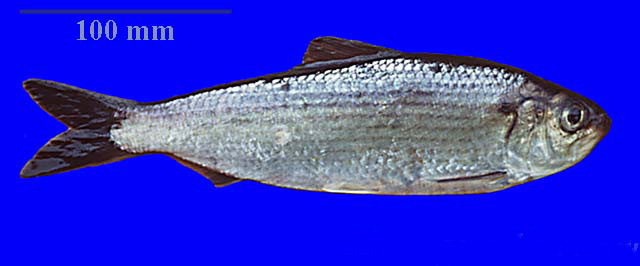
The alewife (Alosa pseudoharengus; pl.: alewives[4]) is an anadromous species of herring found in North America. It is one of the "typical" North American shads, attributed to the subgenus Pomolobus of the genus Alosa.[5] As an adult it is a marine species found in the northern West Atlantic Ocean, moving into estuaries before swimming upstream to breed in freshwater habitats, but some populations live entirely in fresh water. It is best known for its invasion of the Great Lakes by using the Welland Canal to bypass Niagara Falls. Here, its population surged, peaking between the 1950s and 1980s to the detriment of many native species of fish. In an effort to control it biologically, Pacific salmon were introduced, only partially successfully. As a marine fish, the alewife is a US National Marine Fisheries Service "Species of Concern".
Description
[edit]Alewife reach a maximum standard length (SL) of about 40 centimetres (16 in), but have a typical SL of about 30 centimetres (12 in).[2] The front of the body is deep and larger than other fish found in the same waters.
Alewife have bronze-colored heads and a grey-blue[6] to greyish green[7] dorsum. A humeral spot is often present.[7] The tongue does not bear teeth.[8] The peritoneum is light-colored with spots[6] to dusky-appearing,[7] an internal feature that distinguishes alewife from blueback herring (Alosa aestivalis), which have a dark peritoneum.[6] The otolith is shaped like a letter "L", unlike its hooked shape in A. aestivalis.[9] Additionally, the eye is larger than that of A. aestivalis;[8] the width of the eye often exceeds the length of the snout in A. pseudoharengus.[7]
Etymology and folklore
[edit]Its common name is said to come from comparison with a corpulent female tavernkeeper ("ale-wife"),[10] or, alternatively, from the word aloofe,[11][12] possibly of Native American origin,[13] that was used to describe this fish in the seventeenth and eighteenth centuries.
In southwestern Nova Scotia, alewife are referred to as kiacks (or kyacks).[14] In Atlantic Canada it is known as the gaspereau, from the Acadian French word gasparot, first mentioned by Nicolas Denys. William Francis Ganong, New Brunswick biologist and historian, wrote:
Gaspereau, or Gasparot. Name of a common salt-water fish of Acadia (also called alewife), first used, so far as I can find, by Denys in 1672. Nowhere can I find any clue to its origin. It seems not to be Indian.[15]
Acadians named three rivers after the fish, the Gaspereau River in Nova Scotia, as well as the Gaspereau River near Grand Lake and Gaspereau River near Northumberland Strait that are both in New Brunswick.
Both anadromous and landlocked forms occur. The landlocked form is also called a sawbelly or mooneye (although this latter name is more commonly applied to Hiodon spp.) Adult alewife are caught during their spring spawning migration upstream by being scooped out of shallow, constricted areas using large dip nets. They are the preferred bait for the spring lobster fishery in Maine,[16] and are eaten by humans, usually smoked.[citation needed]
In the North American Great Lakes
[edit] | This section needs additional citations for verification. (October 2023) |
Alewife are known for their invasion of the Great Lakes by using the Welland Canal to bypass Niagara Falls. Although the United States Department of Agriculture suggests they may be native to Lake Ontario,[17] alewife colonized the other Great Lakes and became abundant mostly in Lake Huron and Lake Michigan. It appears that they had spread from Lake Erie to other Great Lakes by the Detroit River and Lake St. Clair.[17] They reached their peak abundance from the 1950s through the 1980s. Alewife grew in number unchecked because the lakes lacked a top predator (lake trout were essentially wiped out around the same time by overfishing and the invasion of the sea lamprey)[18]
For a time, alewife, which often exhibit seasonal die-offs, washed up in windrows on the shorelines of the Great Lakes. Various species of Pacific salmon (first coho, and later the Chinook salmon) were introduced as predators. Though marginally successful, this led to the development of a salmon/alewife fishery popular with many sport anglers.[citation needed]
In spite of such biological control methods, alewife remain implicated in the decline of many native Great Lakes species. It is also a common predator of numerous native and non-native zooplankton taxa (e.g. Bythotrephes longimanus,[19] Leptodiaptomus ashlandi,[citation needed] Limnocalanus spp.,[20] Leptodiaptomus minutus,[citation needed] Leptodiaptomus sicilis,[citation needed] and Leptodora kindtii[21]). Wells (1970) found that increases in population of alewife in the Great Lakes between 1954 and 1966 were associated with population declines in certain larger species of zooplankton, while an alewife die-off in 1967 was temporally related to population rebound in most of those species.[21]
Conservation
[edit] | This section needs additional citations for verification. (September 2022) |
Alewife populations have seen big declines throughout much of their range. Several threats have most likely contributed to their decline, including loss of habitat due to decreased access to spawning areas from the construction of dams and other impediments to migration, habitat degradation, fishing, and increased predation due to recovering striped bass populations.
In response to the declining population trend for alewives, the states of Massachusetts, Rhode Island, Connecticut, Virginia, and North Carolina have instituted moratoria on taking and possession.
In eastern Massachusetts, Alewife Brook flows through Arlington, Cambridge, and Somerville to the Mystic River. The brook gives its name to the Alewife Brook Parkway and the Alewife Brook Reservation. The Red Line (MBTA) of Boston's T ends at the Alewife station, so the name of this fish adorns the front of every northbound Red Line train. An extensive habitat restoration and education project, combined with a fish ladder with monitoring cameras, is yielding increasing numbers of alewife back in the improving Mystic River watershed.[22]
The alewife is a US National Marine Fisheries Service Species of Concern,[23] about which the National Oceanic and Atmospheric Administration, National Marine Fisheries Service, has some concerns regarding status and threats, but for which insufficient information is available to indicate a need to list the species under the US Endangered Species Act.
References
[edit]- ^ NatureServe (2013). "Alosa pseudoharengus". IUCN Red List of Threatened Species. 2013 e.T201948A18235694. doi:10.2305/IUCN.UK.2013-1.RLTS.T201948A18235694.en. Retrieved 3 October 2022.
- ^ a b Froese, Rainer; Pauly, Daniel (eds.). "Alosa pseudoharengus". FishBase. February 2023 version.
- ^ "Alosa pseudoharengus (Wilson, 1811)". Global Biodiversity Information Facility. Retrieved 21 February 2023.
- ^ "alewife". Merriam-Webster.com Dictionary. Merriam-Webster.
- ^ Faria, R.; Weiss, S.; Alexandrino, P. (July 2006). "A molecular phylogenetic perspective on the evolutionary history of Alosa spp. (Clupeidae)". Molecular Phylogenetics and Evolution. 40 (1): 298–304. Bibcode:2006MolPE..40..298F. doi:10.1016/j.ympev.2006.02.008. PMID 16581269.
- ^ a b c "Alewife". Virginia Department of Wildlife Resources. 2023. Retrieved 11 January 2023.
- ^ a b c d "Alewife (Alosa pseudoharengus) - Native". Connecticut Department of Energy & Environmental Protection. 2023 [Adapted from A Pictorial Guide to Freshwater Fishes of Connecticut (R.P. Jacobs & E.B. O'Donnell, 2009)]. Retrieved 11 January 2023.
- ^ a b Fuller, P.; Maynard, E.; Raikow, D.; Larson, J.; Fusaro, A.; Neilson, M.; Bartos, A. (5 July 2022) [Peer reviewed 4 August 2021]. "Alosa pseudoharengus (Wilson, 1811)". Nonindigenous Aquatic Species Database. Gainesville, FL: U.S. Geological Survey. Retrieved 11 January 2023.
- ^ Dennis, Claire (2002). Schulz, Kimberly (ed.). "Alosa aestivalis". Animal Diversity Web. Retrieved 21 February 2023.
- ^ Oxford English Dictionary, Second Edition
- ^ Winthorp (1678). "The Description, Culture, and Use of Maiz". Philosophical Transactions of the Royal Society of London. 12 (142): 1065–1069. Retrieved 10 January 2023 – via Biodiversity Heritage Library.
- ^ Winthorp (1739). "The Culture of Maize". In Baddam (ed.). Memoirs of the Royal Society; Being a New Abridgment of the Philosophical Transactions. Vol. 2. London. pp. 129–133. hdl:2027/nyp.33433009958483. Retrieved 10 January 2023 – via HathiTrust.
- ^ Bartlett, John Russell (1848). "Alewife". Dictionary of Americanisms: A Glossary of Words and Phrases Usually Regarded as Peculiar to the United States. New York: Bartlett and Welford. p. 6. ISBN 978-1-4047-0500-5. Retrieved 10 January 2023 – via Google Books.
{{cite encyclopedia}}: ISBN / Date incompatibility (help) - ^ "Nova Scotia Fisheries: Alewife". Archived from the original on August 24, 2007.
- ^ Ganong, W. F. (1910). "The Identity of the Animals and Plants Mentioned by the Early Voyagers to Eastern Canada and Newfoundland". Transactions of the Royal Society of Canada. III. Royal Society of Canada: 218. OL 7061668M. Retrieved June 27, 2013.
- ^ Maine Dept of Marine Resources. "Maine River Herring Fact Sheet". Archived from the original on 2011-09-07.
- ^ a b "Alewife". National Invasive Species Information Center. United States Department of Agriculture. Retrieved October 27, 2023.
- ^ "Sanctuaries for lake trout in the Great Lakes | U.S. Geological Survey".
- ^ Storch, Adam J.; Schulz, Kimberly L.; Cáceres, Carla E.; Smyntek, Peter M.; Dettmers, John M.; Teece, Mark A. (2007). "Consumption of two exotic zooplankton by alewife (Alosa pseudoharengus) and rainbow smelt (Osmerus mordax) in three Laurentian Great Lakes". Canadian Journal of Fisheries and Aquatic Sciences. 64 (10): 1314–1328. Bibcode:2007CJFAS..64.1314S. doi:10.1139/f07-096.
- ^ Riha, Milan; Walsh, Maureen G.; Connerton, Michael J.; Holden, Jeremy; Weidel, Brian C.; Sullivan, Patrick J.; Holda, Toby J.; Rudstam, Lars G. (2017). "Vertical distribution of alewife in the Lake Ontario offshore: Implications for resource use". Journal of Great Lakes Research. 43 (5): 823–837. Bibcode:2017JGLR...43..823R. doi:10.1016/j.jglr.2017.07.007.
- ^ a b Wells, LaRue (1970). "Effects of Alewife Predation on Zooplankton in Lake Michigan". Limnology and Oceanography. 15 (4): 556–565. doi:10.4319/lo.1970.15.4.0556.
- ^ Mystic River Herring Monitoring Project[dead link], mysticriver.org. Accessed September 4, 2022.
- ^ Fisheries, NOAA (2021-08-18). "Endangered Species Conservation | NOAA Fisheries". NOAA. Retrieved 2021-09-18.
Further reading
[edit]External links
[edit]
- Species Profile- Alewife (Alosa pseudoharengus), National Invasive Species Information Center, United States National Agricultural Library. Lists general information and resources for Alewife.
- Fish Win: Maine About-Face Lets Alewives Return to Canada Border River
- . New International Encyclopedia. 1905.
- . Collier's New Encyclopedia. 1921.
Alewife (fish)
View on GrokipediaTaxonomy and Nomenclature
Classification
The alewife (Alosa pseudoharengus) belongs to the domain Eukaryota and kingdom Animalia, as a multicellular, heterotrophic organism capable of locomotion.[7] It is placed in phylum Chordata, characterized by the presence of a notochord, dorsal nerve cord, pharyngeal slits, and post-anal tail at some life stage, and subphylum Vertebrata due to its vertebral column.[7] [8] Within class Actinopterygii, the alewife is a ray-finned fish distinguished by lepidotrichia in its fins and ossified internal skeleton.[7] [5] It falls under order Clupeiformes, which includes herring-like fishes with cycloid scales, abdominal pelvic fins, and typically a single dorsal fin.[7] [5] The family Clupeidae encompasses small- to medium-sized, pelagic clupeoids often forming large schools, with the alewife sharing traits like a compressed body and terminal mouth.[9] [5] Genus Alosa comprises anadromous shads and herrings native to temperate regions, with A. pseudoharengus described by Wilson in 1811 as a species exhibiting silvery sides, dusky back, and a distinct shoulder spot.[10] [5] No subspecies are formally recognized, though a non-anadromous, landlocked form exists in some inland populations.[1]Etymology
The common name "alewife" for the fish Alosa pseudoharengus emerged in the 1630s among North American colonists, borrowed from the English term for a woman who brewed and sold ale, due to a folkloric resemblance between the fish's deep-bodied, protruding abdomen and the stereotyped stout or pregnant figure of such women.[11][12] This transfer of nomenclature reflects early colonial observations of the species' morphology during spawning runs, when the fish's belly appears swollen. Alternative origins have been proposed, such as derivation from the Narragansett term "aloof" for a similar fish, but the resemblance-based explanation predominates in historical linguistic accounts.[13] The scientific binomial Alosa pseudoharengus, coined by Alexander Wilson in 1811, derives from Greek roots meaning "false herring" (pseudo- + harengus), underscoring its close relation to true herring within the Clupeidae family.[11]Morphology and Physiology
Physical Characteristics
The alewife (Alosa pseudoharengus) possesses a strongly laterally compressed body that is approximately three and one-third times longer than it is deep, exhibiting a herring-like form adapted for schooling in pelagic environments.[8] The dorsal surface displays a grayish-green to bluish hue, transitioning to silvery sides and a white ventral area, with longitudinal darker stripes often visible along the flanks.[1] [14] A distinctive dusky to black spot is present immediately behind the upper margin of the operculum or at eye level.[15] [16] Adults typically reach a standard length of up to 38-40 cm, though common lengths are around 30 cm, with inland populations often smaller at less than 25 cm.[1] [17] The head features large eyes and a mouth where the lower jaw protrudes beyond the upper, with the jaw rising steeply; minute teeth are present at the front of both jaws in younger individuals but tend to disappear with age.[17] [15] The dorsal fin is single and positioned midway along the back, while the caudal fin is deeply forked.[14] The anal fin is short and broad, typically bearing 15-19 rays (most commonly 17-18), and the pelvic fins are small with 10 rays each; pectoral fins are low-set with 14-16 rays.[8] [14] Scales are cycloid and relatively large, covering the body, with the ventral midline forming a sharp, saw-toothed keel composed of scutes extending from throat to anus.[17] [18] This keel provides structural reinforcement suited to the species' migratory and schooling behaviors.[16]Adaptations
The alewife (Alosa pseudoharengus) possesses osmoregulatory adaptations enabling transitions between saline marine habitats and freshwater spawning grounds during its anadromous migrations. Comparative genomic analyses indicate parallel evolutionary shifts in gene expression related to ion transport and gill function, with landlocked populations exhibiting heightened tolerance to hyposmotic stress in freshwater but diminished capacity for hyperosmotic regulation in seawater.[19][20] These physiological trade-offs reflect selection pressures favoring residency in isolated freshwater systems, where anadromous ancestors' marine-adapted traits become maladaptive.[21] Landlocked alewives show vulnerabilities in cold tolerance, with sustained temperatures at or below 1°C disrupting membrane lipid fluidity and impairing osmoregulatory processes, often resulting in mass mortality during winter.[1] This contrasts with anadromous populations, which avoid prolonged freshwater exposure in winter, highlighting homeoviscous adaptations—adjustments in membrane phospholipid composition—that are insufficient in non-migratory forms under extreme low temperatures.[22] Behaviorally, alewives synchronize spawning migrations with spring warming, responding to temperature thresholds around 10–15°C to ascend rivers, a cue-driven strategy that optimizes larval survival amid fluctuating environmental conditions.[23][24] Post-spawning adults exhibit rapid downstream emigration, often within days, supported by lipid reserves accumulated during oceanic phases to fuel energy-intensive travel and recovery.[25][26] Spawning involves broadcast release of adhesive eggs over gravel or vegetated substrates in shallow, low-velocity waters, enhancing oxygenation and dispersal while minimizing desiccation risks, though exposing larvae to predation.[27]Life History
Reproduction and Spawning
Alewives (Alosa pseudoharengus) exhibit an anadromous life history, with adults migrating from marine or estuarine waters into freshwater rivers, streams, ponds, and lake margins to spawn.[1] [8] These migrations typically commence in early spring, triggered by rising water temperatures between 10°C and 15°C, with spawning activity peaking from March to June depending on latitude and local conditions; for instance, in Atlantic coastal systems, runs begin as water warms to a minimum of 10°C and intensify at 13–16°C.[8] [1] Alewives are iteroparous, potentially reproducing up to five times over a lifespan of about 10 years, though annual spawning success varies with environmental factors and individual condition.[28] Sexual maturity is attained by anadromous individuals at ages 3–5 years, later than in landlocked populations which mature at 2–3 years and smaller sizes.[1] [8] Spawning occurs in shallow, nearshore freshwater habitats with gravel, sand, or rocky substrates, often in bays, harbors, lower river reaches, or open lake shores above the thermocline where waters remain warmer.[1] The process is broadcast spawning, characterized as polygynandrous, with females releasing eggs randomly into the water column while surrounded by multiple males (up to 25) that simultaneously release milt; activity is primarily nocturnal and may last 2–4 days per site, though the overall spawning period extends about one month until temperatures exceed 22–28°C.[29] [1] Fecundity varies with female size and population, ranging from 10,000 to 360,000 eggs per female (typically toward the lower end in smaller individuals), with examples including 15,000–135,000 eggs in Hudson River tributaries and 60,000–100,000 in coastal Massachusetts stocks.[1] [30] [31] Eggs are non-adhesive and demersal, sinking to settle on substrates without parental care.[8] Egg incubation duration is temperature-dependent, ranging from 15 days at 7.2°C to 3.7 days at 21.1°C, with an optimum around 17.8°C.[8] [1] Upon hatching, larvae measure approximately 3.8 mm on average, reach 5.1 mm by yolk-sac absorption, and become pelagic and positively phototropic, initiating exogenous feeding within two days post-hatch at 20°C.[8] [1] Some populations display indeterminate fecundity, allowing multiple egg batches per season, which supports protracted spawning runs.[32] Post-spawning, adults typically return to marine waters, though recent observations indicate potential oscillations with repeated freshwater entries for additional spawning events.[26]Migration Patterns
Alewives (Alosa pseudoharengus) are anadromous, spending the majority of their adult lives in marine and estuarine environments before undertaking annual spawning migrations into freshwater rivers and lakes along the Atlantic coast of North America. These migrations typically commence in early spring, with timing varying by latitude: adults enter coastal rivers from March to April in southern regions and May to June in northern areas such as the Gulf of Maine.[2][33] Migration is primarily triggered by rising water temperatures, with fish entering freshwater systems when coastal waters reach approximately 10°C and spawning occurring between 12°C and 15°C.[34] Streamflow, lunar phase, and tidal currents also influence the pace and timing of upstream movement, often resulting in a 10–14-day cyclical pattern in migration intensity.[23][35] During the spawning run, adults ascend rivers—often navigating strong currents and rapids in short bursts—to reach suitable habitats such as slow-moving pools, coves, oxbows, or impounded waters for egg deposition.[36] Spawning peaks nocturnally in these low-velocity areas, with a notable delay of 13–48 days between peak adult ingress and the height of spawning activity, allowing for upstream dispersal and conditioning.[37][38] Females release adhesive eggs over gravel or vegetation substrates, with males fertilizing them externally; iteroparity enables most adults to survive and emigrate post-spawning.[25] Diel patterns dominate, with light intensity dictating crepuscular or nocturnal activity to minimize predation.[35] Following spawning, adults rapidly exit freshwater, migrating seaward along thermal gradients into deeper, warming offshore waters, a process averaging 28 days in some systems like Minas Basin.[25] Juveniles, hatching from eggs in 3–7 days, remain in freshwater nursery habitats through summer before seaward outmigration in fall, triggered by cooling temperatures and flows.[39] In landlocked populations, such as those in the Great Lakes, anadromous patterns are absent; instead, adults exhibit lake-wide dispersal, occupying warmer epilimnetic waters above the thermocline in spring and shifting shoreward nocturnally for foraging, without seasonal riverine spawning runs.[1][40] Phenological shifts in migration timing have been observed in coastal stocks, potentially linked to climate-driven warming, with earlier entries in recent decades.[41]Growth and Lifespan
Alewives (Alosa pseudoharengus) demonstrate rapid early growth, with the first year accounting for the largest increment in length at approximately 55.7% of total growth, followed by diminishing annual additions of 24.5% in year two, 11.2% in year three, and 8.6% in year four.[42] Back-calculated lengths at formation of the first annulus (age 1) average around 70 mm, increasing to 103 mm by age 2 in some populations.[43] Age-0 juveniles in freshwater habitats grow from 3.8 to 12.5 cm, after which post-larval growth accelerates in estuarine and marine environments, with length at age-0 often reaching 125–140 mm by late summer in temperate systems.[14] Growth trajectories vary between anadromous and landlocked forms, with invasive Great Lakes populations showing potentially truncated sizes due to colder thermal regimes and limited marine foraging, though specific rates remain population-dependent and influenced by zooplankton density, temperature, and hatching date.[44] Lifespan in the wild typically ranges from 6 to 8 years, with a maximum recorded longevity of 8 years.[45] [46] Sexual maturity is attained between ages 3 and 5, with males generally maturing at 2–3 years and females at 3–4 years, after which most individuals have spawned at least once by age 5; northern populations exhibit slightly delayed maturity compared to southern ones.[47] [48] Age structure in spawning runs often peaks at ages 3–5, with stable maximum ages observed in most monitored rivers, though some exhibit trends toward younger mean ages due to fishing pressure or environmental shifts.[5]Native Ecology and Distribution
Geographic Range
The alewife (Alosa pseudoharengus) is natively distributed along the Atlantic coast of North America, ranging from Red Bay in Labrador, Canada, southward to South Carolina in the United States.[49] This coastal range encompasses marine, estuarine, and freshwater habitats in rivers and streams that drain into the western North Atlantic Ocean. Anadromous populations migrate from oceanic waters into these riverine systems for spawning, with historical records confirming presence from Newfoundland and Nova Scotia through New England to the mid-Atlantic and southern states.[8] Northern limits extend to the Gulf of St. Lawrence and Labrador, where cooler waters support juvenile rearing before oceanic dispersal, while southern extents reach the Neuse River in North Carolina and adjacent coastal areas of South Carolina, beyond which populations diminish due to warmer temperatures unsuitable for sustained reproduction.[5] Landlocked populations occur natively in some inland lakes and ponds within this coastal drainage basin, such as those in Maine and New Brunswick, representing isolated evolutionary lineages adapted to freshwater residency.[8] Genetic studies indicate subtle regional variations across this range, with northern stocks showing adaptations to shorter growing seasons compared to southern counterparts.[40]Habitat and Diet
The alewife (Alosa pseudoharengus) inhabits coastal marine and estuarine waters along the Atlantic seaboard from Labrador, Canada, to South Carolina, United States, as an anadromous species that migrates into freshwater systems for reproduction.[1] Adults primarily reside in pelagic-neritic zones of the ocean and brackish estuaries, tolerating a wide salinity range as euryhaline fish, and move into rivers, streams, and lakes during spring spawning runs, favoring warm waters exceeding 15°C and substrates such as rocky shores, bays, or lower river reaches.[8][1] Juveniles rear in these freshwater habitats for several months to a year post-spawning before descending to marine environments, while landlocked populations in certain lakes exhibit similar migratory patterns within entirely freshwater systems.[8] Optimal temperatures range from 16–21°C, with avoidance of extremes below 3°C or above 27.8°C.[8] Alewives are predominantly planktivorous, employing particulate, filtering, and gulping feeding modes to consume zooplankton, with selective preference for larger prey items such as calanoid copepods and cladocerans.[1][8] Larvae initiate feeding on cyclopoid copepodites, transitioning to broader zooplankton assemblages, while juveniles incorporate diatoms, ostracods, and small copepods; adults supplement with benthic invertebrates like amphipods, mysids, and shrimp, as well as occasional small fish, insects, and eggs.[8][1] This diet supports their role in coastal food webs, though opportunistic piscivory increases with prey availability in certain habitats.[1] Feeding occurs year-round in marine phases, including in low-light conditions via lateral line detection.[8]Trophic Interactions
Alewives (Alosa pseudoharengus) function as mid-trophic level planktivores in their native Atlantic coastal ecosystems, primarily consuming zooplankton such as copepods and cladocerans, with selective feeding favoring larger prey items within those groups.[1] [8] They also ingest smaller proportions of insects, shrimp-like crustaceans, fish eggs, and larval fishes, contributing to top-down pressure on lower trophic levels.[50] This diet supports their role in energy transfer from primary producers via zooplankton to higher predators, though their feeding efficiency can deplete larger zooplankton taxa during dense schooling events.[51] As prey, alewives serve as a key forage species for numerous native predators along the Atlantic coast, including piscivorous fishes such as Atlantic salmon (Salmo salar), striped bass (Morone saxatilis), and bluefish (Pomatomus saltatrix), which target schooling adults during coastal migrations.[52] Avian predators, notably seabirds like herring gulls (Larus argentatus) and double-crested cormorants (Phalacrocorax auritus), exploit alewife runs in estuarine and riverine habitats, often concentrating predation during spawning aggregations.[18] Marine mammals, including seals, occasionally consume alewives offshore, reinforcing their position in the pelagic food web.[53] These interactions underscore alewives' ecological linkage between zooplankton communities and apex consumers, with historical data indicating sustained predator-prey dynamics prior to twentieth-century fishery pressures.[54]Invasive Populations
Introduction History
The alewife (Alosa pseudoharengus), an anadromous clupeid native to coastal rivers and estuaries along the Atlantic seaboard from Newfoundland to South Carolina, first appeared in the Laurentian Great Lakes in Lake Ontario, with the earliest documented record dating to 1873.[40] Whether this initial presence resulted from deliberate stocking, accidental transport via shipping vessels, or natural migration remains debated, though some historical analyses suggest it may have been native to Lake Ontario prior to significant human alteration of the watershed.[8] The species' upstream dispersal was facilitated by the Welland Canal, completed in 1829 and expanded thereafter, which circumvented Niagara Falls and connected Lake Ontario to Lake Erie, enabling non-native Atlantic species to bypass the barrier.[55] Subsequent spread occurred rapidly across the basin: alewives were reported in Lake Erie in 1931, Lake Huron in 1933, Lake Michigan in 1949 (with establishment by 1950), and Lake Superior in 1954.[1] This progression aligned with increased commercial shipping traffic and canal improvements, which likely transported larval or juvenile alewives in ballast water or hull foulings, though direct evidence of intentional introductions as forage for sport fish exists in some regional accounts.[52] By the 1960s, alewives had colonized all five lakes, forming massive populations that peaked in biomass during the mid-20th century, a surge attributed partly to the collapse of native predators like lake trout (Salvelinus namaycush) due to overfishing and sea lamprey (Petromyzon marinus) predation in the early 1900s, reducing competitive pressures.[55][8] Early 20th-century fisheries surveys, such as those by the U.S. Bureau of Fisheries, noted sporadic alewife captures in Lake Ontario tributaries before 1873 but lacked confirmation of breeding populations, supporting the view of post-European settlement invasion rather than pre-colonial persistence.[56] Genetic studies have since indicated low diversity in Great Lakes alewife stocks compared to Atlantic populations, consistent with a bottleneck from limited founding individuals via canal-mediated dispersal.[40]Establishment in the Great Lakes
The alewife (Alosa pseudoharengus) gained access to the Great Lakes primarily through human-modified waterways, including the Erie Canal for entry into Lake Ontario and the Welland Canal, which circumvented Niagara Falls, for dispersal to the upper lakes.[1] Initial records indicate presence in Lake Ontario by 1873, though debates persist over whether this reflects native occurrence or early introduction.[1] Confirmed sightings in the upper Great Lakes followed: Lake Erie in 1931 near Nanticoke, Ontario; Lake Huron in 1933; Lake Michigan in 1949 near South Manitou Island; and Lake Superior in 1954.[1][14] Post-detection, alewife populations proliferated, establishing self-sustaining stocks across all five lakes by the mid-20th century, with explosive growth in the upper lakes during the late 1950s and 1960s.[1] In Lake Michigan, for example, the species dispersed lake-wide after its 1949 record, achieving dominance in the forage fish community and exceeding ecosystem carrying capacity by the 1960s, as evidenced by massive strandings and estimated biomass surges to hundreds of thousands of metric tons.[57][58] Similar booms occurred in Lakes Huron and Ontario, where alewives comprised a substantial portion of total fish biomass amid reduced competition.[58] Key enablers of this establishment included the collapse of native predators like lake trout (Salvelinus namaycush), decimated by sea lamprey (Petromyzon marinus) invasions and commercial overexploitation starting in the late 19th century, which diminished top-down control on alewife juveniles.[1] Warmer lake temperatures in the 1950s further promoted offshore survival and reproduction, allowing adaptation to landlocked, non-anadromous life histories.[1] High densities eventually triggered density-dependent die-offs from thermal stress and severe winters, yet populations persisted at elevated levels until later interventions like Pacific salmon (Oncorhynchus spp.) stockings in the 1960s.[1][58]Ecological Impacts
Positive Effects
Alewives (Alosa pseudoharengus) in the Great Lakes function as a key forage species for introduced Pacific salmonids, particularly Chinook salmon (Oncorhynchus tshawytscha), comprising the majority of their diet in mid-water habitats.[59] This predator-prey dynamic has supported enhanced growth rates and body condition in salmon populations, contributing to sustained stocking programs and predator biomass stability.[60][61] The establishment of alewife populations facilitated a strategic management approach involving salmon stocking to regulate their abundance, transforming ecological challenges into economic opportunities through a recreational fishery valued at approximately $7 billion annually across the Great Lakes basin as of 2012 assessments.[62] By the 1980s, targeted reductions in alewife biomass—from peaks exceeding 100 kg/ha in Lake Michigan during the 1960s—via salmon predation had stabilized ecosystems while bolstering angling yields, with Chinook salmon harvests reaching over 1 million fish per year in some periods.[62] As planktivores, alewives exert top-down control on zooplankton communities, potentially increasing water clarity by reducing turbidity from algal and particulate matter in invaded waters.[8] Their occupation of lower trophic levels also diminishes bioaccumulation of persistent contaminants, such as mercury, in higher predators like walleye (Sander vitreus), thereby mitigating risks to fish quality for human consumption.[63]Negative Effects
Alewives exert negative ecological effects primarily through predation on the eggs, larvae, and juveniles of native fish species in the Great Lakes, significantly reducing recruitment success for species such as lake trout (Salvelinus namaycush) and burbot (Lota lota). This predation pressure has been identified as the dominant mechanism limiting native fish populations, with alewives consuming pelagic larvae during vulnerable early life stages, leading to recruitment failures observed since their establishment in the mid-20th century.[58][64] For instance, in Lake Ontario, alewife predation on lake trout fry has been quantified as a key factor preventing natural reproduction, exacerbating declines already compounded by sea lamprey (Petromyzon marinus) attacks and historical overfishing.[64] In addition to direct predation, alewives compete intensely with native planktivores for zooplankton resources, selectively consuming larger-bodied zooplankton and thereby altering the lower trophic levels of the food web. This size-selective foraging reduces the availability of prey for native species like coregonids (e.g., lake herring and whitefish), which rely on similar pelagic resources, contributing to suppressed growth and survival in those populations.[15][65] In Lake Michigan, such competition has been linked to broader shifts in fish community structure, where alewife dominance indirectly hampers the recovery of deepwater native predators.[66] Periodic mass die-offs of alewives, often triggered by cold winter conditions or density-dependent stress, have caused substantial environmental nuisances, including beach fouling with decomposing carcasses and clogging of municipal water intakes as documented since the 1890s in affected areas like Lake Ontario. These events not only degrade water quality through eutrophication-like effects from nutrient release but also amplify negative perceptions of alewife abundance, prompting management concerns despite their role as forage for introduced salmonids.[8][67] Overall, these impacts have scored alewives among the highest for environmental harm in Great Lakes invasive assessments, underscoring their role in disrupting pre-invasion biodiversity and native community stability.[68]Debates and Controversies
The nativity of alewife (Alosa pseudoharengus) to Lake Ontario, the first Laurentian Great Lake it colonized in abundance around 1873, remains debated among researchers. Some ichthyologists argue it was likely introduced via the Erie Canal or early shipping, while others contend it may have been historically present but only proliferated after overfishing and habitat degradation reduced native predators like lake trout (Salvelinus namaycush) and Atlantic salmon (Salmo salar) in the mid-19th century, allowing unchecked population growth.[1][8] This distinction influences assessments of its status as an invasive species, with implications for restoration priorities; if partially native, efforts might emphasize predator recovery over eradication, though empirical evidence from fossil records and early surveys leans toward post-colonial introduction facilitated by anthropogenic changes.[69] Ecological debates center on alewife's dual role as a disruptive predator and potential forage base in the Great Lakes food web. Critics highlight its predation on larval stages of native fishes, including bloater (Coregonus hoyi), yellow perch (Perca flavescens), and lake trout, which suppressed recruitment and contributed to collapses of coregonine populations in Lakes Michigan and Huron during the mid-20th century; alewife also compete for zooplankton and introduce thiaminase, an enzyme causing thiamine deficiency syndromes (e.g., early mortality syndrome) in piscivorous predators like salmonids, exacerbating die-offs observed in the 1960s.[70][71] Proponents of a more nuanced view, drawing from its native Atlantic range dynamics, describe alewife as a "Jekyll and Hyde" species: while disruptive in novel ecosystems lacking coevolved controls, suppressed populations post-1980s (via salmonid predation) have allowed partial recovery of some native zooplankton and prey fish, suggesting it fills a vacant niche left by extinct or depleted herring-like species without long-term dominance if predators are balanced.[72][73] However, modeling indicates persistent negative net effects on biodiversity, with alewife biomass historically exceeding 50% of pelagic fish in affected lakes, underscoring predation over foraging benefits.[60] Management controversies arise from reliance on non-native Pacific salmon (Oncorhynchus spp.), stocked since the 1960s at rates exceeding 5 million chinook salmon (O. tshawytscha) annually across the Great Lakes, to suppress alewife densities below 20-30 fish per hectare—levels that historically triggered native fish declines.[62] This strategy, initiated after sea lamprey (Petromyzon marinus) control, generated a multimillion-dollar sport fishery but now faces scrutiny as alewife populations have plummeted (e.g., Lake Michigan densities fell from peaks of 100+ g/m² in the 1960s to under 5 g/m² by 2000), prompting debates over reducing stocking to foster native piscivores like lake trout or maintaining it for economic value despite risks of overpredation on coregonines and ecosystem destabilization.[74] Agencies like the Great Lakes Fishery Commission advocate adaptive reductions, citing data from acoustic surveys showing alewife suppression enabling walleye (Sander vitreus) increases, yet angler opposition and modeling uncertainties—such as potential alewife rebounds without salmon—sustain contention, with some viewing continued stocking as perpetuating an artificial, invasion-dependent system rather than restoring pre-alewife conditions.[55][62]Human Uses and Management
Historical and Commercial Fisheries
Alewives have supported commercial fisheries along the Atlantic coast of North America since colonial times, primarily in New England where they were harvested for food, fertilizer, and bait using methods such as weirs, dip nets, seines, drift nets, and set nets.[75] In early settlements, colonists like Thomas Morton noted that fertilizing one acre of corn with alewives yielded crops equivalent to three acres without, highlighting their role in agriculture amid scarce resources.[76] Harvest regulations emerged early, with towns enacting limits by 1700 and Massachusetts passing laws in 1735 to ensure fish passage over dams, reflecting concerns over depletion even then.[77] U.S. commercial landings of alewives peaked at over 34,500 metric tons in 1958, driven by demand for human consumption, bait, and industrial uses like pet food and fertilizer.[78] In New England, particularly Maine, alewife fisheries represented the largest anadromous harvest, with annual catches exceeding 3.4 million pounds at their height, often processed for lobster bait or rendered into oil.[79] These fisheries contributed to local economies but faced pressures from habitat alterations, including dams that blocked spawning runs, leading to localized collapses by the mid-20th century.[80] Landings have since declined sharply, with coastwide commercial and bycatch harvests dropping to under 100,000 pounds by 2022, prompting moratoriums and strict management under the Atlantic States Marine Fisheries Commission to rebuild stocks depleted by overfishing, bycatch in other fisheries, and environmental changes.[81] In the Great Lakes, where alewives were introduced via the Welland Canal in the 19th-20th centuries, commercial exploitation has been minimal compared to the Atlantic, with focus instead on their role as forage for sport fish rather than targeted harvest.[82] Recent efforts emphasize sustainability, reducing directed fishing to protect marine-derived nutrient inputs to coastal ecosystems.[83]Role in Sport Fisheries
Alewives (Alosa pseudoharengus) play a supporting role in sport fisheries primarily as a forage base for predatory game species and as live or cut bait, rather than as a direct target for recreational angling due to their small size (typically 10–15 cm) and preference for pelagic schooling in open waters. In the Great Lakes, where alewives became abundant following their introduction in the 1950s, fisheries managers stocked non-native Pacific salmon (Oncorhynchus spp.) and rainbow trout (Oncorhynchus mykiss) to exploit alewife biomass as prey, thereby controlling alewife densities while fostering economically significant recreational fisheries valued at approximately $7 billion annually across the basin as of 2012 assessments.[62] This predator-prey dynamic has sustained high catch rates for anglers targeting these introduced salmonids, with alewife availability directly influencing sport fish growth, condition, and harvest success.[8] In their native Atlantic coastal range, alewives contribute to sport fisheries indirectly by serving as prey for species like striped bass (Morone saxatilis) and bluefish (Pomatomus saltatrix), and through limited recreational harvest for bait. River herring (including alewives) are caught in modest quantities using dip nets, cast nets, or hook-and-line rigs during spawning runs in estuaries and rivers, supporting bait needs for targeting larger predators; for instance, Maine regulations allow up to 25 alewives per person per day for personal use from Sunday to Thursday mornings in approved waters as of recent updates.[84] [85] However, direct possession or harvest is restricted or prohibited in several states, such as Virginia and North Carolina, to address population declines from overfishing, habitat loss, and bycatch in commercial operations, reflecting regulatory efforts to balance recreational access with conservation.[86] [87] These constraints underscore alewives' secondary status in sport contexts, where their ecological value as prey outweighs targeted angling appeal.[1]Control Measures
In the Great Lakes, the primary control measure for invasive alewife populations has involved stocking predatory Pacific salmon species, particularly Chinook salmon (Oncorhynchus tshawytscha), to suppress alewife abundance through predation.[62] This strategy emerged in the 1960s following successful sea lamprey control, which enabled salmon introductions; by the 1980s, annual Chinook salmon stockings reached approximately 3 million yearlings across the lakes, correlating with alewife biomass reductions of up to 90% in some areas like Lake Michigan.[62] Bioeconomic models indicate that such stocking can economically justify alewife suppression by enhancing sport fisheries value while mitigating alewife's negative ecosystem impacts, though over-stocking risks destabilizing predator-prey dynamics.[88] Commercial harvesting has been employed sporadically for population reduction, though it is limited in scope for invasive contexts. In the Great Lakes, targeted alewife fisheries were phased out by 1991 to prioritize salmonid sport fishing, which indirectly controls alewife via predation rather than direct exploitation.[55] Aggressive netting during vulnerable periods, such as spawning aggregations, has been proposed as a physical control method, but implementation remains constrained by logistical challenges and variable efficacy.[51] Preventive measures focus on blocking further range expansion and illegal introductions. Construction of barriers in tributaries can impede spawning migrations and limit alewife access to new habitats, as demonstrated in efforts to contain populations in systems like Lake Champlain.[51] Regulations prohibiting live transport by anglers have been enacted in regions like Vermont to curb human-mediated spread, emphasizing prevention over eradication given alewife's resilience to predation alone.[89] Native predators, such as walleye (Sander vitreus), have been stocked experimentally, but studies show insufficient impact on alewife control, underscoring reliance on non-native salmonids.[67] Winter die-offs triggered by cold temperatures provide episodic natural suppression, particularly in Lake Michigan where biomass crashes exceeded 80% in severe winters like 1980–1981, though these are unpredictable and not actively managed.[90] Overall, alewife control efficacy depends on integrated predator stocking and harvest, with ongoing monitoring needed to balance ecosystem restoration against economic trade-offs.[58]Conservation and Status
Population Trends
In native Atlantic coastal ranges, alewife populations have declined substantially over the past several decades, primarily due to overexploitation through commercial fishing and habitat loss from riverine obstructions like dams that block spawning migrations.[2] Anadromous stocks, which migrate from marine to freshwater for spawning, have shown variable but generally downward trajectories, with some rivers experiencing reduced run sizes by factors of 50-90% since the mid-20th century, though landlocked populations persist in certain inland waters.[91] Despite these reductions, the species maintains a broad distribution and is classified as Least Concern by the IUCN, reflecting resilience in less-impacted areas.[17] In the introduced Great Lakes basin, alewife populations followed a pronounced boom-bust pattern following unintentional establishment via the Welland Canal. Initial detections occurred in Lake Erie by 1931, Lake Huron by 1933, and Lake Michigan by 1949, with rapid proliferation in the 1950s facilitated by warmer conditions and reduced native predators.[40] Abundance peaked in the 1960s, when alewives comprised over 90% of the open-water fish biomass in Lakes Michigan, Huron, and Ontario, exceeding lake carrying capacities and causing mass die-offs from thiamine deficiency and cold snaps.[1] Subsequent crashes in the 1970s-1980s, with declines exceeding 80% in some lakes, resulted from intensified predation by stocked Pacific salmon and recovering native lake trout, alongside ongoing stressors like exotic species competition and climate variability.[62] [92] Contemporary Great Lakes surveys indicate persistently low densities, with bottom-trawl catch-per-unit-effort data from Lakes Michigan and Huron showing alewife numbers at historic minima since the early 2000s, often below 10% of 1960s peaks.[93] Lake Ontario acoustic and trawl assessments similarly report subdued populations, influenced by ongoing salmonid predation and shifts in prey fish dynamics, though occasional recruitment pulses occur.[94] These trends underscore alewife's role as a fluctuating forage base, with no evidence of recovery to pre-crash levels absent management interventions.[61] NOAA Fisheries' 2019 status review of distinct population segments confirmed no basis for Endangered Species Act listing, citing adaptive capacity despite localized vulnerabilities.[4]Threats
The primary threats to alewife (Alosa pseudoharengus) populations stem from anthropogenic factors disrupting their anadromous life cycle, including barriers to spawning migration, degraded water quality, and incidental fishing mortality, though overall extinction risk remains low due to regulatory interventions and some population recoveries.[5][95] Dams and culverts rank as a medium-severity threat (score of 2.9 on a 1-5 scale in rangewide assessments), blocking access to historical freshwater spawning and nursery habitats; for instance, in Maine, fewer than 5% of lakes and 20% of rivers remain accessible, while in Connecticut and the Merrimack River basins, only 6.7-7.9% of stream habitat is reachable without passage aids.[5][96] These obstructions cause direct mortality (62-82% at some hydroelectric facilities) and delay migrations, increasing vulnerability to predation.[5] Water quality degradation from pollution, including nutrient enrichment, hypoxia, eutrophication, and siltation, constitutes another medium threat (score of 2.8), particularly in urbanized areas where egg and larval survival declines when impervious cover exceeds 10% of the watershed, as observed in Hudson River tributaries.[5] Historical industrial pollution and ongoing urbanization exacerbate these issues, though improvements under the Clean Water Act have mitigated some effects in recent decades.[95][96] Habitat alterations such as dredging for port development and water withdrawals further compound fragmentation, with low-to-medium severity scores (1.5-2.0).[5] Fishing pressure, once a dominant factor with peak commercial landings of 30.5 million pounds annually from 1887-1938, now primarily involves incidental bycatch in other fisheries, rated medium risk (score of 2.5).[5] Estimates indicate 36.5-531.7 metric tons caught annually in New England and 10.9-295.0 metric tons in the Mid-Atlantic from 2005-2015, managed through caps like the 76.7 metric ton limit in the Gulf of Maine herring fishery.[5] Directed harvests have been curtailed by moratoria (e.g., Massachusetts since 2005) and Atlantic States Marine Fisheries Commission plans, reducing exploitation to approximately 0.05 coastwide.[96][95] Emerging threats include climate change (medium severity, score of 2.6), which alters thermal cues for spawning, reduces marine survival through ocean warming, and may contract southern range limits while shifting distributions northward; diadromous species like alewives exhibit high vulnerability to these changes.[5][96] Predation by species such as striped bass (consuming up to 400,000 individuals annually in localized rivers like the Connecticut) and invasive catfish ranks low (score of 1.8), as it is opportunistic and not a primary driver rangewide.[5] Despite these pressures, a 2019 National Marine Fisheries Service review found listing under the Endangered Species Act unwarranted, citing 75% low extinction risk rangewide and improving regulatory mechanisms.[95]Restoration Efforts
Restoration efforts for alewife (Alosa pseudoharengus) have primarily focused on removing migratory barriers such as dams, installing fish passage structures, and enhancing spawning habitats to reconnect rivers with coastal waters, addressing historical declines from industrialization and overharvest.[97] In Maine, a key region for alewife runs, projects have emphasized dam removals and collaborative partnerships; for instance, the Penobscot River Restoration Initiative, initiated in 2009 by the Penobscot Nation and partners, removed the Veazie Dam in 2013 and Great Works Dam in 2012, opening over 1,000 miles of habitat and resulting in increased alewife returns exceeding 10 million fish by 2023.[98] On the U.S.-Canada border, the St. Croix River watershed has seen targeted fish passage improvements, including the 2015 removal of the Milltown Dam, which prompted a surge of hundreds of thousands of alewives upstream and supported potential for the largest run in North America through ongoing collaborations funded by NOAA and provincial investments totaling $20,000 for additional passage rebuilding as of 2024.[99] In the Kennebec River system, the Maine Department of Marine Resources' Diadromous Fish Restoration Project, ongoing since the early 2000s, has installed fish lifts and removed barriers to restore historic abundances, with alewife stocking and monitoring aiding recovery in tributaries.[100] Further south, efforts include barrier removals like the Westecunk Creek project on Long Island, completed by the U.S. Fish and Wildlife Service to benefit alewife migration, and habitat enhancements in systems such as the Sebasticook River, where three dams were removed and fish passages added by 2023 to link China Lake spawning grounds.[101][102] These initiatives, often supported by federal agencies like the U.S. Fish and Wildlife Service, have incorporated telemetry assessments and genetic monitoring to evaluate effectiveness, though challenges persist from incomplete passage success in some areas.[103][104]References
- https://en.wiktionary.org/wiki/alewife