Hubbry Logo
AlipinAlipinMain
Open search
Alipin
Community hub
Alipin
logo
8 pages, 0 posts
0 subscribers
Be the first to start a discussion here.
Alipin
Alipin
from Wikipedia

The alipin refers to the lowest social class among the various cultures of the Philippines before the arrival of the Spanish in the 16th and 17th centuries. In the Visayan languages, the equivalent social classes were known as the ulipon (Cebuano and Hiligaynon) and uripon (Waray).

Overview

[edit]

The most common translation of the word is "servant" or "slave", as opposed to the higher classes of the timawa/maharlika and the tumao/maginoo. This translation, however, is inaccurate. The concept of the alipin relied on a complex system of obligation and repayment through labor in ancient Philippine society, rather than on the actual purchase of a person as in Western and Islamic slavery. Indeed, members of the alipin class who owned their own houses were more accurately equivalent to medieval European serfs and commoners.[1]: 146–147 

Etymology

[edit]

Alipin comes from the transitive form of the archaic Visayan root word udip ("to live"). It derived from the word meaning "to let live" in the senses of letting a war captive live or paying or ransoming someone for a debt that exceeds the value of their life.[2]

Alipin were also known as kiapangdilihan in the Sultanate of Sulu (an Islamized Visayan polity).[3] They were distinguished from the Arab and European-inspired chattel slaves (known as banyaga, bisaya, ipun, or ammas). The kiapangdilihan were commoners who were temporarily enslaved to pay off debt or as punishment for a crime. Like the alipin in other groups, they were slaves only in terms of their temporary service requirement to their master, but retained most of the rights of the freemen, including protection from physical harm and the fact that they could not be sold. The banyaga, on the other hand, were outsiders captured from slave raids (mostly from Spanish-controlled Philippine territories, as well as neighboring settlements in Malaysia, Indonesia and Brunei). The statuses of the banyaga were permanent. They were treated as possessions with no legal rights, and could be sold or killed at will.[4]

Subclasses

[edit]
An illustration from Historia de las Islas e Indios de Bisayas (1668) by Francisco Ignacio Alcina depicting a tattooed uluhan with a paddle, labeled "esclavo" ("slave")

As a social class, alipin had several subclasses based on the nature of their obligations and their dependence on their masters:[5]

  • Uluhan (literally "at the head"),[6] a hereditary class of ulipon unique to the Visayans and first mentioned in the Boxer Codex (as "horo-han"). Instead of serving obligations through labor, the uluhan instead served their masters as warriors (usually as paddlers for warships).[2][7][8] Unlike the timawa warrior class, they were not considered nobility, though higher-status uluhan were virtually indistinguishable from lower-class timawa.[9] Like the timawa, they may also sometimes be obligated to do communal work and paid a vassalage fee known as dagupan.[2][8]
  • Aliping namamahay (literally "servant who is housed") refers to alipin that had their own houses, which was usually built on the property of their masters. They were also known as tuhay, mamahay, or tumaranpoc (Spanish spelling: tumaranpoque) in Visayan, literally means "house dweller" or "villager." They were not at all slaves, as they were often only obligated to pay a percentage of their earnings or harvests (known as handog in Tagalog and buhis in Visayan, 'tribute' and 'tax' respectively) to their masters and no more, thus making them more similar to the medieval European serfs and commoners. They may sometimes be called upon by their masters for harvesting, sowing fields, building new structures, or for aid in emergencies, though these were usually not part of their obligations. They could also freely buy their way out of debt and could marry without the consent of their masters. In the Visayas, some tuhay might also serve their masters in war, like the uluhan.[2][10][11]
  • Alipin sa gigilid (literally "servant in the corners [of the master's house]") refers to unmarried alipin without a house and whose existence was completely dependent on the graces of their masters. They were also known as tomataban, alalay, hayohay, or ayuey in Visayan (meaning "servant", "assistant", or "follower"). They could only marry with the consent of their master (rarely given for female alipin sa gigilid). Once married, an alipin sa gigilid became an aliping namamahay, as the master was not obligated to feed and house the family of the latter. Their obligations (i.e. services) could also be transferred or sold to another master.[10][11] Most of the people belonging to this class were the unmarried children of aliping namamahay, or were unransomed captives taken from wars or raids (bihag).[12]

At lower ranks than the above were the alipin of alipin. The alipin sa gigilid of an aliping namamahay was called bulisik ("vile"), while an alipin sa gigilid of an alipin sa gigilid was known by the even more derogatory bulislis (literally meaning "lifted skirt", a term implying that these persons were so vulnerable that it seems like their genitals are exposed). At an even more lower social rank than the latter two were alipin who were acquired through war or who came from other communities. They were often treated as non-persons until they became fully integrated into the local culture.[10]

Differences from the western concept of slavery

[edit]

While the alipin does, indeed, serve another person, historians note that translating the term as "slave" in the western sense of the word may not be fully justifiable. Documented observations from the 17th century indicate that there may be significant differences between the Western concept of "slave" and the Pre-Hispanic Filipino concept of "alipin".[2] Some academics prefer to use the more accurate terms "debtors", "serfs", "bondsmen", or "dependents" instead.[13]

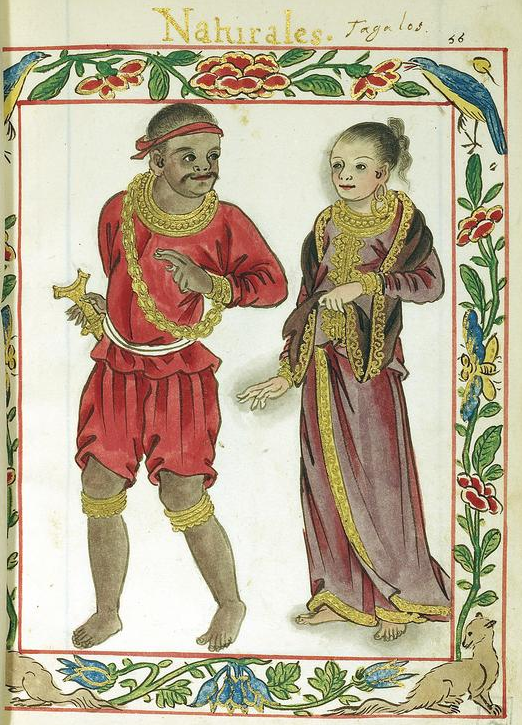
A plate in the Boxer Codex possibly depicting alipin in the Prehispanic Philippines

The lowest class of alipin originating from prisoners-of-war were traded like market goods initially. But unlike Western slaves, subsequent transfer of the alipin to a new master was priced at the value of the [remaining] bond. It was the labor obligation of the alipin being sold, not the person. Most alipin usually acquired their status either voluntarily (usually because of material or honor debt, or as a form of assistance to impoverished relatives), by inheriting the status of their parents, as a form of legal punishment for crime, or by being spared from execution after being captured in wars or raids. Alipin who acquired their status by debt were known as tinubos (literally "redeemed" or "ransomed"), and their creditors might sell their services for profit at the price of the debt incurred.[2]

The actual degree of obligations of the alipin could vary considerably. It was dependent on the monetary equivalent of the obligation owed and was usually limited in duration. An alipin could earn their freedom or gain higher status by marriage, being set free by their masters (known as matitimawa or tinimawa among Visayans), buying it with their earnings, fulfillment of the obligations, or by extraordinary accomplishments and bravery in battle.[2][10]

The inheritance of the alipin status was subject to a complex system of rules dependent on the offspring's condition known as the saya. For example, the first child of a male freeman and a female alipin would be free, but their second child would be an alipin like the mother; and so on with the rest of the children. If the number of children was not even, the last child would be a partial alipin. The master of an aliping namamahay might also sometimes take one child of the latter as an alipin sa gigilid in the case of the latter's death. They might become sibin or ginogatan ("favorites") of their masters and be set free upon the master's death.[2]

An alipin who inherits the debts of their parents was known as a gintubo (literally "grown up with").[12] Children of parents who are both alipin were known as ginlubos, while the children of ginlubos were known as lubos nga ulipon.[2]

Partial alipin retain their alipin ancestors' obligations according to their degree of relation. The partial alipin child of a timawa and an alipin, for example, will inherit half of their alipin parent's obligations, while the grandchild of an alipin will only owe a quarter. Half alipin whose services were scheduled alternately by months are referred to as bulan ("moon" or "month") or pikas ("half"). Quarter alipin were referred to as tilor or sagipat ("quarter"). They could also freely buy their way out of service if they can afford it. Part or all of the alipin duties of the parents are often taken over by their children.[2][12]

See also

[edit]

References

[edit]

Further reading

[edit]
Revisions and contributorsEdit on WikipediaRead on Wikipedia
from Grokipedia
Alipin, equivalent to ulipon or oripun in Visayan societies, denoted the dependent or bond-labor class at the base of the social hierarchy in pre-colonial lowland Philippine polities, particularly among Tagalogs and Visayans, where individuals served higher-status freemen or nobles through obligatory labor stemming from debt, inheritance, war capture, or penal sanction. This status bound alipin to render services in agriculture, domestic tasks, or warfare tribute to patrons such as timawa (freemen) or datu (chiefs), yet differed fundamentally from chattel slavery by emphasizing debt repayment over commodified ownership, allowing retention of familial ties and potential paths to emancipation. The alipin subclassified into namamahay (householders), who dwelled independently, cultivated personal plots, and enjoyed partial property rights while paying tribute, and sa gigilid (household dependents), who integrated fully into their master's residence with diminished autonomy and no separate holdings. Emancipation occurred via tinimawa, a redemption through fulfilled obligations, accumulation of resources, or manumission, underscoring the system's provisional nature tied to economic reciprocity rather than perpetual caste rigidity. Accounts derive principally from sixteenth-century Spanish ethnographies, which, while documenting native customs, imposed interpretive lenses that occasionally equated alipin with European servility, potentially overstating subjugation; modern analyses, grounded in linguistic and anthropological reconstruction, highlight the relational, obligation-based causality inherent to Austronesian economies. This institution underpinned communal production and chiefly authority, reflecting adaptive hierarchies in archipelago resource distribution absent centralized states.

Origins and Etymology

Linguistic Roots

The term alipin, referring to dependents or serfs in pre-colonial Tagalog society, derives from Proto-Philippine *qadipen, a reconstructed form denoting "slave" and limited primarily to Northern before its adoption into Tagalog via an intermediate Proto-Northern *alipən. This etymon exhibits phonetic irregularities, such as a from **u to **a, consistent with patterns in Philippine subgroup innovations within the Malayo-Polynesian branch of Austronesian languages. Cognates in other Philippine languages, such as Cebuano ulipon or oripon (a doublet of alipin), indicate shared inheritance from this proto-form, reflecting divergent sound correspondences like the retention of initial **q- (realized as glottal stops or zeros) and medial shifts in vowels and consonants across dialects. These variations underscore the term's deep roots in the linguistic diversification of Austronesian speech communities in the Philippines, predating Spanish contact in the 16th century, though no broader Proto-Malayo-Polynesian antecedent for servitude semantics has been securely reconstructed beyond Philippine-specific forms. The word's semantic stability—linking linguistic form to social roles involving obligation and hierarchy—aligns with archaeolinguistic evidence of stratified societies in the region by around 1000 BCE.

Historical Emergence in Pre-Colonial Society

The alipin system originated in the kinship-based communities of pre-colonial , particularly among Tagalog and Visayan groups, where it functioned as a mechanism for economic dependency tied to agricultural labor needs in settled villages. As populations grew and wet-rice cultivation intensified , individuals entered alipin status primarily through indebtedness, inheriting obligations from parents or accepting subordination to secure protection and sustenance amid economic hardship. This arrangement predated Spanish contact, as evidenced by consistent accounts from early observers documenting obligatory creditor-debtor relationships rather than imported institutions. Entry into alipin status occurred via multiple pathways rooted in social and economic contingencies, including voluntary indenture for debts up to ten taels of gold, commutation of death sentences through labor service, or birth as gintubo—children inheriting fractional status from a parent (e.g., half-alipin if one parent was free). Unlike war captives, who formed a minority, most alipin arose from internal barangay dynamics, where creditors could range from nobles (maginoo) to fellow dependents, blurring lines between classes. Inheritance perpetuated the system, with alipin retaining birthrights to till barangay land, underscoring its basis in communal resource allocation rather than absolute ownership transfer. Distinctions from chattel slavery were pronounced, as alipin subordination was negotiable and tied to redeemable debts, allowing upward mobility through repayment, , or purchase of , in contrast to permanent, heritable enslavement. Spanish chroniclers, such as in 1589, often mistranslated alipin as slaves due to cultural unfamiliarity, but the system's serf-like qualities—evident in land rights and familial autonomy for higher subclasses—reflected indigenous adaptations to scarcity and reciprocity, not commodified labor. This debt-peonage model supported stability, with alipin comprising the majority in some communities by the sixteenth century.

Social Role and Acquisition

Position in the Barangay Hierarchy

In the pre-colonial , a kinship-based socio-political unit typically consisting of 30 to 100 households led by a , the alipin occupied the lowest of the social hierarchy, subordinate to the and . The exercised authority over governance, , warfare, and resource allocation, deriving power from personal wealth, kin ties, and , while functioned as freemen or vassals, contributing , skilled labor, and seasonal without full dependency. Alipin, by contrast, were legally classified as dependents or bondsmen, compelled to provide agricultural, domestic, or rowing labor to or masters in exchange for food, shelter, and protection, with their status often originating from , capture in raids, or inheritance. This bottom position integrated alipin into the barangay's economic core, as they performed the bulk of field work and household tasks essential for subsistence and surplus production, yet lacked the timawa's freedom to shift allegiances or the datu's judicial privileges. Subdivisions within the class modulated their relative standing: aliping namamahay held semi-autonomous status with rights to maintain separate households, cultivate assigned fields (paying half the crop or about four cavans of rice annually as tribute), and bequeath property, positioning them above alipin sa gigilid but still below freemen. Alipin sa gigilid, residing in their master's home as full-time attendants, endured greater dependency, including potential sale as individuals and exclusion from communal land statutes, though both subclasses retained safeguards like limits on debt seizures (e.g., no more than one child per offense) and opportunities for manumission via repayment. Unlike chattel slavery observed by Spanish chroniclers, alipin dependency emphasized communal ties and over absolute ownership, with namamahay inheriting birthrights to till land barring severe penalties like commuted death sentences, underscoring their role as embedded laborers rather than alienable property. Social mobility existed marginally, as exemplary service or debt clearance could elevate namamahay toward status, though the hierarchy's rigidity preserved dominance through tribute flows and kin-based enforcement. In Visayan variants, the equivalent oripun mirrored this low placement, with guhay (full dependents) analogous to sagigilid in subservience.

Pathways to Alipin Status

Individuals entered alipin status through several established pathways in pre-colonial Tagalog society, as documented in 16th-century accounts. These included inheritance by birth, , capture during warfare or raids, and enslavement as punishment for offenses, with distinctions between the more independent aliping namamahay and the dependent aliping sa gigilid subclasses influencing acquisition dynamics. Birth to alipin parents conferred inherited status, termed gintubo, whereby children assumed the servitude or debt obligations of their lineage, perpetuating the class across generations. This was the for alipin sa gigilid recruitment, including natural children born to masters and their alipin women, who remained under the master's control without independent household rights. Alipin namamahay status could arise from such births but often transitioned upon , granting limited property-holding within the . Debt bondage formed a core mechanism, where individuals unable to repay loans—often for needs or fines—became alipin to creditors, with the transferable and inheritable. Those in might voluntarily seek alipin status under relatives for protection, blurring lines between obligation and choice, though creditors sometimes exploited ambiguities to enforce chattel-like conditions. This pathway frequently elevated alipin sa gigilid to namamahay if debts stabilized or upon forming a . Capture in war or raids supplied alipin sa gigilid as chattel, with defeated enemies sold or retained for labor, reflecting intertribal conflicts' role in expanding dependent labor pools. Judicial punishment offered another route: death sentences for serious crimes could be commuted to enslavement, either of the offender or their children, substituting servitude for execution. Purchased slaves, acquired through markets or direct transactions, supplemented these, potentially from famine-induced self-sales or parental offerings of offspring, though primary sources emphasize debt and conflict over voluntary commodification.

Subclasses and Variations

Aliping Namamahay

Aliping namamahay represented the more autonomous subclass of alipin (dependents or bondsmen) within pre-colonial Tagalog society, distinguished by their residence in independent households rather than within their master's abode. These individuals typically entered this status through debt servitude, , or capture in intertribal conflicts, binding them and their descendants to a specific lord unless redeemed. Franciscan friar , drawing from observations in the late , detailed that aliping namamahay cultivated fields allocated by their master—often a or noble—and surrendered half of the harvest as obligation, retaining the remainder for family support and potential savings toward purchase of . They were also compelled to render personal attendance during their master's campaigns or domestic needs, yet maintained the capacity to marry freely, raise families, and accrue modest property such as a and tools, fostering limited economic agency absent in stricter forms of bondage. This arrangement contrasted sharply with aliping sagigilid, as namamahay avoided cohabitation with the master's kin, evaded division among heirs upon the master's death, and held pathways to full freeman status () via negotiated redemption payments, often equivalent to the value of their debt plus interest accrued over generations. Plasencia's account, compiled around 1589 from inquiries among Tagalog informants, underscores their semi-independent role in the economy, where they contributed to agricultural output while retaining incentives for productivity and loyalty. Though not chattel slaves in the European sense—lacking absolute by the master—aliping namamahay endured hereditary obligations that perpetuated status across lineages, redeemable only through wealth accumulation or exceptional service, reflecting a system of reciprocal duties rooted in communal survival rather than commodified labor.

Aliping Sagigilid

The aliping sagigilid, alternatively termed aliping sa guiguilir, formed the subordinate tier within the alipin class of pre-colonial Tagalog society, distinguished by their integration into the master's household and cultivable lands as fully dependent laborers. These individuals served in domestic capacities or fieldwork without independent domicile, rendering them liable to sale or transfer as property, in contrast to aliping namamahay who retained personal residences and immunity from . Fray Juan de Plasencia, in his 1589 enumeration of Tagalog customs derived from consultations with district elders, characterized the sagigilid as those who "serve their master in his house and on his cultivated lands, and may be sold," with provisions for shares granted at the master's discretion to foster productivity. Acquisition occurred primarily via wartime or rearing within the master's agrarian operations, though house-born sagigilid were infrequently alienated to invested . Plasencia highlighted the peril of conflating subclasses, affirming that sagigilid possessed neither proprietary claims nor hereditary safeguards akin to namamahay, whose offspring inherited status without enslavement risk. Limited mobility existed through self-purchase, requiring gold payments of at least five taels—escalating to ten or beyond based on the master's valuation—to secure . The descriptor "sa guiguilir," connoting marginal or sidelined positioning, underscored their perpetual adjacency to figures, a dynamic corroborated across early ethnographic records despite interpretive variances from colonial-era documentation.

Regional Differences (Visayan Oripun)

In Visayan societies of the sixteenth century, the dependent class equivalent to the Tagalog alipin was known as oripun (or variants like ulipon or uripon), comprising individuals bound by obligation to provide labor and services to the upper classes of tumao (nobles) and timawa (freemen warriors). This class formed the economic base of the barangay, supporting elites through agricultural work, domestic service, and tribute, much like their Tagalog counterparts, but with regionally distinct terminologies and structural nuances rooted in local customs and accounts from Spanish chroniclers. A primary difference lay in the subclassification of oripun, which exhibited greater granularity than the Tagalog binary of namamahay (semi-independent household dwellers) and sagigilid (fully attached dependents). Visayan sources describe multiple tiers reflecting varying degrees of personal autonomy, property ownership, and service demands, with chroniclers like Pedro Chirino and Francisco Colin noting up to a dozen subclasses in certain areas. These included the bihag (war captives, often the most servile with limited rights), hipus or purchased dependents, guol (those living entirely with masters without separate property), and higher-status categories like tumataba or tumataban, who maintained their own homes and fields but owed only periodic labor, sometimes as little as five days per year. Such gradations allowed for finer social distinctions, influenced by factors like mode of acquisition—whether by birth, , sale, or capture—and potential for redemption through payment or merit. Pathways into oripun status mirrored Tagalog practices, including inheritance from an oripun parent (typically the mother in matrilineal kinship), failure to repay debts, enslavement as punishment for offenses, or capture in intertribal raids, which were more frequent in the maritime-oriented . However, the system's flexibility was evident in oripun rights to marry freely (subject to master's approval), own limited personal effects, and accumulate wealth for , distinctions emphasized in accounts to counter Spanish perceptions of chattel slavery. Regional variations existed even within the ; for instance, Aklanon and Capiznon accounts list twelve subclasses ranging from fully dependent to near-free commoners, while Cebuano descriptions focused on economic dependencies tied to communal alliances. These differences highlight how local ethnolinguistic groups adapted the dependent labor system to their agro-maritime economies, prioritizing obligation over absolute subjugation.

Obligations and Conditions

Labor and Service Duties

Alipin obligations encompassed both payments and direct labor services to their masters, primarily or other superiors in the hierarchy, with duties scaled according to subclass and rooted in , , or . Aliping namamahay, who maintained their own households, fulfilled service through annual of approximately half their agricultural produce, such as threshed or equivalent , while retaining rights to cultivate personal plots within the lands. They were also subject to summons for episodic labor, including group agricultural tasks like planting, harvesting, or clearing fields on the master's property, as well as auxiliary roles such as rowing boats, portering , or accompanying the master on journeys. In contrast, aliping sagigilid bore more continuous and personal servitude, residing within or attached to the master's and providing full-time domestic and field labor without independent . Their duties typically involved , such as cooking, cleaning, and childcare, alongside intensive farm work on the master's cultivated lands, where they lacked the to withhold service or negotiate terms as namamahay might. These alipin could be transferred or sold as dependents, with their labor obligations inheritable by children unless manumitted, reflecting a system where service intensity correlated with dependency level rather than absolute . Across both subclasses, labor demands extended to communal needs under the datu's direction, such as collective irrigation maintenance or defense preparations, though primary allegiance remained to the individual master; failure to comply risked escalation of or status demotion. Historical accounts from early Spanish observers, like Fray in 1589, emphasize that these duties were obligatory yet reciprocal, with masters providing protection and subsistence in exchange, distinguishing the arrangement from perpetual chattel labor by allowing potential redemption through payment or favor. Empirical reconstructions, drawing on indigenous oral traditions corroborated by ethnohistorical , indicate agricultural service predominated in agrarian s, comprising up to seasonal group mobilizations of dozens for , while domestic roles filled daily gaps in elite households.

Living Arrangements and Dependencies

Alipin were categorized into two primary subclasses based on their degree of and residential status: aliping namamahay and aliping sagigilid. The namamahay, or householders, resided in their own separate dwellings, often constructed on the of their master, allowing them to maintain independent family units. This arrangement afforded them partial self-sufficiency, including the ability to cultivate personal plots and retain ownership of movable such as , though their remained tied to the master's estate and could not be fully alienated. In contrast, aliping sagigilid, or hearth slaves, lived directly within the master's , sharing the innermost living spaces and consuming food from the master's provisions, which underscored their heightened dependency and lack of personal residence. This typically applied to unmarried individuals, as elevated a sagigilid to namamahay status, relieving the master of obligations to house or feed the new family. Unlike namamahay, sagigilid possessed no proprietary rights and could be transferred or sold by their master, rendering their living conditions more precarious and akin to chattel dependency. Dependencies for both subclasses involved tribute and labor obligations, but these varied by status. Namamahay owed their master half of their yields or a fixed annual , such as four cavanes of palay (unhusked ) in certain regions like Pila and , alongside intermittent services like field work during planting and harvest seasons, boat rowing, or construction assistance. Sagigilid performed ongoing domestic duties within the and temporary field labor, with potential allowances from harvest shares to accumulate resources for self-purchase, though their master's control over their person limited accumulation. These arrangements reflected a spectrum of servitude where residential correlated with reduced , yet all alipin remained bound by hereditary or contractual ties enforceable through community customs.

Rights, Mobility, and Manumission

Alipin in pre-colonial Philippine society retained specific legal protections embedded in the 's customary laws, which emphasized communal obligations over absolute of persons. These protections varied by subclass but generally precluded arbitrary mistreatment or disposal, as alipin were viewed as members of the social unit rather than alienable . For instance, alipin namamahay maintained to cultivate a designated portion of barangay land as a , which could not be revoked except in cases of grave offenses punishable by a commuted death sentence, ensuring their economic viability and preventing total dispossession. This land access allowed them to sustain families independently while fulfilling service duties, underscoring a system of reciprocal dependencies rather than unilateral exploitation. Alipin sa gigilid, though more closely bound to their master's household and lacking independent land rights, were still entitled to basic provisions of , , and labor opportunities from their , reflecting the barangay's expectation of mutual support. Excessive abuse or killing of an alipin triggered communal penalties, often involving payments calibrated to the individual's value—typically equivalent to taels or labor equivalents—enforceable through the datu's to maintain . Children born to alipin namamahay inherited similar status and protections, avoiding perpetual degradation, while even sa gigilid offspring could ascend through service or , preserving pathways within the . These safeguards were adjudicated via datu-led councils drawing on customs, where alipin could indirectly seek recourse for violations, as the system's stability relied on preventing elite overreach that might incite or communal breakdown. Unlike chattel systems, such protections rooted in kinship-like ties and economic utility limited masters' autonomy, with alipin valued at fixed rates (e.g., three to five taels of for namamahay) that discouraged wasteful destruction. This framework, documented in sixteenth-century accounts analyzed by historians, highlights causal incentives for restraint: unchecked abuse risked depleting the labor pool essential for prosperity.

Paths to Freedom and Social Mobility

Alipin could achieve primarily through repayment of the or that bound them to service, as their status was often tied to indebtedness rather than perpetual . This process involved accumulating resources—such as , agricultural , or labor equivalents—to settle the principal amount, which for an alipin namamahay was valued at around five taels of (approximately 1.25 grams per tael in pre-colonial weights) plus accumulated interest from three to five years of service. For alipin sa gigilid, whose value could reach six to ten taels due to their closer dependency and potential for sale, redemption required compensating the master for the full hearth-bound investment. Manumission by the master provided another avenue, often as a reward for exceptional loyalty, prolonged service, or familial ties, transforming the alipin into a (freeman) with full communal rights. Historical accounts indicate this was not uncommon, particularly for namamahay who retained land-use rights and could negotiate terms more effectively than gigilid dependents. Marriage offered indirect mobility, as alipin women wedding freemen or nobles elevated their children's status to that of the higher parent, while male alipin marrying into freeman families could leverage spousal resources for eventual redemption. Upon gaining freedom, former alipin exhibited by accumulating property, participating in , or rendering to barangay leaders, potentially ascending to or even status through demonstrated prowess or wealth. This fluidity stemmed from the non-hereditary nature of alipin bonds, which emphasized contractual obligations over racial or permanence, allowing skilled individuals—such as artisans or warriors—to transition classes based on merit and economic output rather than birth alone. from sixteenth-century records shows that while gigilid faced steeper barriers due to , namamahay's household facilitated faster upward movement, with some redeeming status within a generation.

Comparisons to Global Systems

Distinctions from Western Chattel Slavery

The alipin system in pre-colonial Philippines was characterized by a degree of social integration and potential for mobility absent in Western chattel slavery, where individuals were treated as inheritable personal property devoid of familial or communal ties. Alipin, particularly the namamahay subtype, often retained households separate from their masters, allowing them to cultivate personal plots, engage in trade, and accumulate wealth for self-redemption, whereas chattel slaves in systems like the transatlantic trade were legally commodities subject to sale, division in inheritance, or relocation without regard for family units. This autonomy stemmed from alipin status frequently arising from temporary debt obligations or wartime capture rather than perpetual racial subjugation, enabling many to transition to freeman status (timawa or maharlika) through labor repayment or purchase, a pathway rare in chattel regimes where emancipation was exceptional and legally barred heritability of freedom. In contrast to the racialized, plantation-oriented labor of Western chattel slavery—which emphasized mass production of cash crops like sugar and cotton under maximal coercion—alipin duties were predominantly domestic or agricultural services tied to a specific lord's household or lands, with sagigilid more bound to the master's estate but still not fully commodified as movable goods. Historical accounts from 16th-century observers, such as those compiled in early Spanish ethnographies, indicate alipin could participate in community rituals and hold limited property, reflecting a dependent class within an extended kinship framework rather than total alienation. Chattel slavery, by comparison, systematically stripped individuals of cultural identity through forced separations, linguistic suppression, and branding, fostering generational dehumanization justified by pseudoscientific racial hierarchies. Heritability further underscored these differences: children of alipin namamahay born to a free father inherited free status, and even sagigilid offspring could gain partial freedoms through maternal lines or , limiting perpetual enslavement to specific circumstances like unresolved , unlike the matrilineal perpetuity of chattel where slave status passed irrevocably regardless of paternal freedom. This fluidity aligned alipin more closely with debt peonage or , where bondage was contractual and redeemable, rather than the absolute ownership model of Western systems that viewed human beings as capital investments for export-driven economies. Early colonial records, while biased toward equating all dependents with European notions of to justify tribute exemptions, reveal through cross-verification that alipin lacked the market-driven trafficking scale of the Atlantic trade, with enslavement confined to intra-archipelagic conflicts rather than industrialized capture and shipping.

Parallels with Debt Bondage and Serfdom

The alipin system in pre-colonial exhibited significant parallels with , as many individuals entered this status through unpaid obligations or legal judgments, binding them to service until redemption. Historical analyses indicate that alipin, particularly aliping namamahay, often originated from or debts incurred during famines, raids, or social disputes, with their labor serving as repayment to creditors who could transfer or sell these obligations. This mirrors classical , where servitude was contractual and potentially finite, though hereditary transmission occurred if debts persisted across generations, limiting mobility without external intervention. In Visayan societies, debt bondage underpinned elite tribute collection, as immobility enforced labor duties, akin to how indebtedness perpetuated subordination in other Southeast Asian contexts without implying absolute ownership. Unlike chattel systems, alipin retained partial agency, accumulating resources through personal plots or to buy , a feature shared with debt peonage where redemption prices were negotiated based on service rendered. Parallels with European serfdom are evident in the alipin namamahay's semi-autonomous arrangements, where they resided in separate households, cultivated assigned land, and divided harvests equally with their lord, resembling the manorial obligations of serfs who owed labor but held . This structure bound alipin to a specific master or without full , allowing limited property ownership and family integrity, much like serfs' ties to the glebe and protections against arbitrary . Aliping sagigilid, however, approximated closer dependency, residing within the master's and providing on-call service, paralleling household serfs or villeins with fewer tenurial but still exempt from total alienation. Both systems emphasized reciprocal duties over unilateral exploitation: alipin contributed to communal defense and rituals in exchange for sustenance and , akin to serfs' feudal levies and boon work balanced by customary manorial courts. Judicial enslavement via fines or crimes further aligned alipin origins with serfdom's penal labor impositions, though redemption paths via kinship or wealth accumulation offered upward mobility absent in more rigid European variants post-14th century. These affinities underscore the alipin as a form of indentured dependency rather than perpetual bondage, shaped by agrarian economies where labor ties ensured social stability.

Controversies and Assessments

Debates on Severity and Coercion

Historians debate the extent to which the alipin system constituted severe akin to chattel slavery or a more negotiable form of and social dependency. William Henry Scott, drawing on 16th-century Spanish chroniclers such as Miguel de Loarca and , characterizes alipin status as a of servitude where varied by origin and type, often arising from pangayaw raids, usurious (e.g., 100% on loans), or , yet allowing for , voluntary entry for protection, and . Alipin namamahay, who lived independently and retained property rights while paying intermittent (e.g., half their crops), exhibited lower levels, functioning akin to serfs with labor obligations limited to specific days, such as three days weekly for household alipin hayohay. In contrast, alipin sa gigilid faced greater dependency, residing in masters' households, performing personal services, and being more transferable, though Franciscan noted in 1589 that namamahay could not be sold like gigilid, underscoring a fluid rather than absolute coercive hierarchy. Critics of portraying alipin as uniformly mild highlight empirical evidence of harsh coercion, including celebratory accounts of slave raids by datu warriors and instances of human sacrifice upon a master's death, as recorded by Pedro Chirino and Francisco Ignacio Alcina in the early 17th century. Debt bondage often trapped individuals through exploitative lending practices, with children of sa gigilid inheriting dependent status, perpetuating cycles of limited agency despite nominal rights like skill-based labor (e.g., weaving or goldsmithing). However, Scott counters that such severity was not systemic, as alipin retained legal protections, could own dependents themselves, and frequently transitioned to freeman timawa status via payments (e.g., 30-60 pesos in gold or goods) or marriage, distinguishing it from perpetual, race-based enslavement in the Americas. These debates reflect broader tensions in Philippine historiography, where some scholars, influenced by nationalist revisions, emphasize the system's "gentleness" to reclaim pre-colonial agency against Spanish narratives of barbarism, yet primary sources like Plasencia's customs report reveal a pragmatic realism: enforced through warfare and , tempered by ties and redemption opportunities that prevented total . Empirical data from ethnohistorical analyses indicate that while alipin comprised up to 25-33% of the population in some , their integration as messengers, traders, or even epic heroes in oral traditions suggests was causal but not absolute, yielding to reciprocal obligations rather than unilateral domination.

Empirical Evidence of Harsh Realities

Alipin sa gigilid, the more dependent subclass, were required to reside in their master's household and provide full-time domestic and agricultural labor, lacking or equivalent to free persons. Primary accounts indicate they ate from the master's provisions and could be sold outright or transferred via or , treating them as transferable assets. Fray Juan de Plasencia's 1589 documentation notes these slaves "serve their master in his house and on his cultivated lands, and may be sold," with industrious ones potentially receiving a share of harvests but remaining under perpetual obligation unless ransomed. Hereditary enslavement compounded these conditions, as children born to alipin sa gigilid within the master's home automatically inherited the status, often deepening familial debt cycles without independent means of accumulation. Acquisition via intertribal raids or war captives supplied many into this category, with non-resistant debtors sometimes forcibly enslaved by datus, as chronicled in Francisco Ignacio Alcina's observations of Visayan practices. further details how unpaid fines or debts up to 10 taels of gold could reduce individuals to sa gigilid status, serving until redemption or death. Masters exercised broad discretion over , enabling potential abuses such as excessive labor demands, though killing an alipin incurred payments comparable to those for freemen. The Boxer manuscript highlights tyrannical overreach, where masters compelled even married alipin—nominally namamahay—back into gigilid-like service, deliberately obscuring categories to extract more work. Early friars, including , raised moral concerns over child servitude stemming from parental s, evidencing systemic despite legal limits on debt amounts. In Tagalog society, alipin namamahay faced intermittent tribute burdens, such as half their crop yields or fixed rice payments (e.g., 4 cavans annually in areas like ), which could escalate into full dependency if debts mounted or masters died without heirs. Such obligations, while less totalizing than sa gigilid conditions, still tethered individuals to lords without franchise rights to relocate or litigate freely, fostering immobility and vulnerability to exploitation.

Transition and Legacy

Impact of Spanish Colonization

The Spanish conquest, beginning with Miguel López de Legazpi's arrival in 1565, integrated the pre-colonial alipin system into the encomienda framework, whereby conquerors were granted rights to collect tribute and extract labor from assigned native communities, including alipin dependents. This adaptation channeled indigenous servitude toward colonial economic needs, such as agriculture and construction, often intensifying demands on alipin households who previously owed limited seasonal labor to local datus. Encomiendas were also allocated to cooperative native elites, like Pampanga's Don Juan Macapagal who received a 500-ducat grant, thereby preserving hierarchical labor extraction under Spanish oversight. Early colonial accounts from the late , including those by Miguel de Loarca in 1582 and in 1589, document the persistence of alipin distinctions—namamahay with partial autonomy and sa gigilid more akin to household dependents—but note Spanish misinterpretations equating them to chattel slaves, which blurred legal boundaries and facilitated greater exploitation by creditors and encomenderos. Royal policies nominally prohibited the enslavement of Christianized Indians, yet alipin acquisition continued through , , and warfare, with Spanish settlers leveraging native to obtain dependents until the early . Jesuit chronicler Pedro Chirino's 1604 observations highlight how Christian disrupted traditional roles, occasionally enabling social mobility via or , though economic pressures from tribute systems increasingly tied alipin to agricultural servitude over warrior duties. Spanish encouragement of expeditions against non-Christian groups expanded through captive raids, contributing to the trans-Pacific trade that shipped thousands of to until its abolition in 1679. Systems like and bandala imposed additional forced labor and goods requisitions, supplementing alipin obligations and sparking revolts, such as the 1660 Pampanga uprising led by Don Francisco Maniago against excessive exactions. By the late 17th century, as encomiendas waned due to royal centralization and demographic recovery, many alipin transitioned into the status of tributarios—free yet obligated payers—subject to y servicio, a 40-day annual unpaid labor corvée, marking a shift from personal bondage to communal exploitation while indigenous debt-based servitude lingered in rural areas.

Persistence in Post-Colonial Narratives

The concept of alipin persists in post-colonial Philippine cultural narratives primarily through metaphorical extensions that evoke themes of inescapable dependency, , and , rather than literal recreations of pre-colonial bondage. The idiomatic expression "alipin ng palad" (slave of fate), rooted in the historical alipin system's connotations of and subordination, recurs in , , and to depict characters resigned to hardship or predestined , as evidenced in the 1959 film Alipin ng Palad, directed by National Artist Gerardo de Leon, which portrays protagonists trapped by poverty and circumstance amid post-war rural struggles. This trope, originating from earlier 1930s cinema but revived post-independence, underscores a causal continuity in Filipino storytelling where individual agency is constrained by external forces akin to debt or kinship ties in pre-colonial barangay structures. In and academic after , alipin features in reconstructions of indigenous social orders to analyze persistent patterns of and inequality, countering idealized narratives of pre-colonial while noting distinctions from colonial enslavement. For instance, analyses of alipin namamahay (semi-autonomous dependents) and sagigilid (full dependents) highlight how debt-based servitude fostered clientelist relations—mirroring modern (debt of gratitude)—that elites exploited for labor and loyalty, as detailed in studies of 16th-century Tagalog and Visayan systems influencing post-colonial power dynamics. Such interpretations, drawn from primary Spanish accounts re-examined in the late , emphasize empirical evidence of alipin as obligatory subordination rather than racial chattel , informing debates on why hierarchical reciprocity endures in Philippine and despite formal . Contemporary cultural references, including and popular discourse as of 2025, invoke alipin to critique or reflect on modern phenomena like remittances sustaining familial obligations or urban underclass vulnerabilities, framing them as echoes of historical bondage without hereditary permanence. This symbolic persistence avoids glorification, grounded in causal realism: pre-colonial mechanisms of via and , unaltered by in core dynamics, continue to shape narratives of resilience amid , as seen in intergenerational studies linking to acceptance of unequal exchanges.

References

Add your contribution
Related Hubs
User Avatar
No comments yet.