Hubbry Logo
MaharlikaMaharlikaMain
Open search
Maharlika
Community hub
Maharlika
logo
8 pages, 0 posts
0 subscribers
Be the first to start a discussion here.
Maharlika
Maharlika
from Wikipedia

The maharlika (Baybayin pre-virama: ᜋᜑᜎᜒᜃ meaning freeman or freedman) were the feudal warrior class in ancient Tagalog society in Luzon, the Philippines. They belonged to the lower nobility class similar to the timawa of the Visayan people. In modern Filipino, however, the word has come to refer to aristocrats or to royal nobility,[1] which was actually restricted to the hereditary maginoo class.[2]

Overview

[edit]
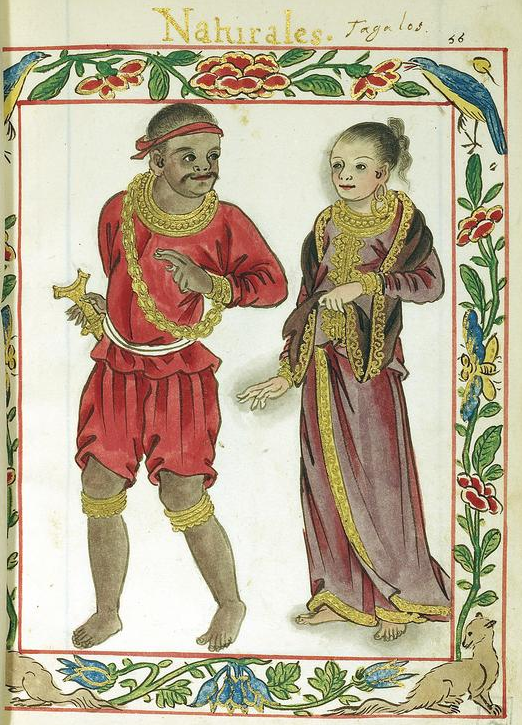
Tagalog people from the Boxer Codex.

The maharlika were a martial class of freemen.[3] Like the timawa, they were free vassals of their datu who were exempt from taxes and tribute but were required to provide military service. In times of war, the maharlika were obligated to provide and prepare weapons at their own expense and answer the summons of the datu, wherever and whenever that might be, in exchange for a share in the war spoils (ganima). They accompanied their ruler in battles as comrades-at-arms and were always given a share. 1/5 of the spoils goes to the Ginoo and the 4/5 will be shared among the Maharlikans who participated, who in turn will subdivide their shares to their own warriors. The maharlika may also occasionally be obligated to work on the lands of the datu and assist in projects and other events in the community.[2]

Unlike the timawa, however, the maharlika were more militarily-oriented than the timawa nobility of the Visayas.[4] While the maharlika could change allegiances by marriage or by emigration like the timawa, they were required to host a feast in honor of their current datu and paid a sum ranging from six to eighteen pieces of gold before they could be freed from their obligations. In contrast, the timawa were free to change allegiances at any time,[2] as exemplified by the action of Rajah Humabon upon the arrival of Ferdinand Magellan.[citation needed]

The earliest appearance of the term is manlica mentioned in the Boxer Codex with the meaning of "freeman".[5] The only other contemporary account of the maharlika class was by the Franciscan friar Juan de Plasencia in the 16th century. He distinguished them from the hereditary nobility class of the Tagalogs (the maginoo class, which included the datu). The historian William Henry Scott believes that the class originated from high-status warriors who married into the maginoo blood or were perhaps remnants of the nobility class of a conquered line. Similar high-status warriors in other Philippine societies like that of the Bagobo, Higaonon Sugbohanon and the Bukidnon did not inherit their positions, but were acquired through martial prowess.[4][6]

After the Spanish conquest, the Spanish translated the name maharlika as Hidalgos (or libres).[7]

Etymology

[edit]

The term maharlika is a loanword from Sanskrit maharddhika (महर्द्धिक), a title meaning "man of wealth, knowledge, or ability". Contrary to modern definitions, it did not refer to the ruling class, but rather to a warrior class (which were minor nobility) of the Tagalog people, directly equivalent to Visayan timawa. Like timawa, the term also has connotations of "freeman" or "freed slave" in both Filipino and Malay languages.[7][8]

In some Indo-Malayan languages, as well as the languages of the Muslim areas of the Philippines, the cognates mardika, merdeka, merdeheka, and maradika mean "freedom" or "freemen" (as opposed to servitude).[9] The Malay term mandulika, also meant "governor".[5]

The Merdicas (also spelled Mardicas or Mardikas), whose name comes from the same etymon, were also the Catholic native inhabitants of the islands of Ambon, Ternate, and Tidore of the Moluccas in modern-day Indonesia, converted during the Portuguese and Spanish occupation of the islands by Jesuit missionaries. Most were enslaved or expelled to Batavia (modern Jakarta) and Java when the Dutch Empire conquered Ambon in 1605. The remaining Catholic natives in Ternate and Tidore were resettled by the Spanish in the communities of Ternate and Tanza, Cavite, Manila in 1663 when the Spanish evacuated the islands under threat of invasion by the Dutch-allied Muslim sultanates.[9]

The name of the Mardijker people of Batavia also comes from the same etymon, and referred to freed slaves and servants under Dutch rule who were composed largely of Portuguese-speaking Catholic Goans, Moluccan Merdicas, and Filipinos (the Papangers) captured by Moro raiders.[10][11]

Modern usage

[edit]

Usage as propaganda during the Marcos regime

[edit]

During the "New Society Movement" (Kilusang Bagong Lipunan) era in the Philippines, President Ferdinand Marcos used the word maharlika to promote an authoritarian view of Filipino nationalism under martial law, claiming that it referred to the ancient Filipino nobility and included the kings and princes of ancient Philippine society. Marcos was influential in making "maharlika" a trendy name for streets, edifices, banquet halls, villages and cultural organizations. Marcos himself utilized the word to christen a highway, a broadcasting corporation, and the reception area of Malacañang Palace.[2]

Marcos's use of the word started during World War II. Marcos claimed that he had commanded a group of guerrillas known as the Maharlika Unit. Marcos also used Maharlika as his personal nom de guerre, depicting himself as the most bemedalled anti-Japanese Filipino guerrilla soldier during World War II. In the years before the martial law period in the Philippines, Marcos commissioned a film entitled Maharlika to be based on his "war exploits".[2][12] However, critic Ernie M. Hizon of the Manila Standard noted that the film does not actually depict any of the details from Marcos' alleged exploits during World War II, but is instead a "run-of-the-mill Hollywood war film populated by third-class actors."[13]

A later variant of the hoax linked with Marcos historical distortionism falsely claimed that the whole Philippine archipelago had once been a single "Maharlika Kingdom," and that Marcos' alleged personal wealth came about because the so-called royal family of this kingdom had hired Marcos as their lawyer in the days after World War II, paying him "192 thousand tons of gold" for his legal services.[14][15]

Usage as a new name for the Philippines

[edit]

Senator Eddie Ilarde was the first to propose to rename the Philippines into "Maharlika" in 1978, citing the need to honor the country's ancient heritage before the Spanish and Americans occupied the country. Ferdinand Marcos was in favor of changing the name of the Philippines into "Maharlika", thinking it meant "nobility", as a symbol of nationalism. In 2019, President Rodrigo Duterte reiterated the idea, thinking that it means "more of a concept of serenity and peace".[16]

[edit]

The modern use of maharlika persists in original Philippine music (OPM), notably in the lyrics of "Ako ay Pilipino", a song commissioned by Ferdinand Marcos' First Lady, Imelda Marcos.[citation needed]

The word maharlika is used by the semi-professional basketball league Maharlika Pilipinas Basketball League, and the football club Maharlika Manila F.C. of the Philippines Football League.[citation needed]

See also

[edit]

References

[edit]
[edit]
Revisions and contributorsEdit on WikipediaRead on Wikipedia
from Grokipedia
Maharlika designated the freemen or warrior nobility in pre-colonial Tagalog society of in the , comprising individuals of birthright status who owed military service to the ruling datus (chiefs) and held privileges above common dependents or slaves known as . This class formed part of a stratified where maharlika, often likened to feudal knights or hidalgos, maintained independence from bondage while contributing to defense and governance under chiefly authority, distinguishing them from lower strata bound by debt or captivity. The term derives from Sanskrit maharddhika, connoting a person of wealth, ability, or noble standing, and cognates appear in Austronesian languages as markers of liberty, such as Indonesian merdeka (freedom), reflecting pre-colonial influences from Indianized trade networks in Southeast Asia. In practice, maharlika fulfilled roles as retainers in warfare, landholders, and intermediaries, embodying a martial ethos that sustained barangay (village-state) polities amid inter-polity conflicts and external threats. Post-colonial appropriations have distorted the term, notably by Ferdinand Marcos Sr., who invoked mahariika to fabricate narratives of ancient sovereignty—claiming the Philippines as a "Maharlika" kingdom with vast gold reserves—efforts later critiqued as historical revisionism unsupported by primary evidence from Spanish chronicles or indigenous records. Such claims, propagated through regime-era propaganda, conflated the class designation with mythic national origins, influencing modern cultural revivalism despite scholarly consensus on its limited, society-specific scope. In contemporary usage, echoes persist in institutions like the 2023 Maharlika Investment Corporation, a Philippine , symbolizing aspirational heritage amid debates over efficacy.

Etymology and Linguistic Origins

Derivation from Sanskrit and Austronesian Influences

The term maharlika in pre-colonial Tagalog society derives from the maharddhika (महर्द्धिक), denoting a person endowed with abundance, specifically in , , or martial ability. This entered Tagalog through indirect cultural transmission via maritime trade routes connecting the to Southeast Asian polities, where terms were adopted into local vocabularies during the early centuries CE. Phonetic adaptations in Tagalog reflect typical patterns in Austronesian languages, including the deaspiration of intervocalic dh to h or null, assimilation of the rd cluster into a liquid sound rl, and simplification of complex consonant sequences, as seen in parallel borrowings like mukha from mukha ("face") or budhi from ("intellect"). In the broader Austronesian linguistic family, maharlika parallels terms such as Malay and Indonesian merdeka ("" or ""), which share the same progenitor and underscore a regional pattern of semantic adaptation toward notions of or elevated status. This convergence arose from shared exposure to Indianized kingdoms like and , which facilitated the diffusion of Sanskrit-derived vocabulary into Austronesian substrates across the archipelago and between the 1st and 15th centuries. Unlike purely indigenous Austronesian roots tied to or —such as Proto-Austronesian datu for leadership—maharlika exemplifies hybrid derivation, blending foreign prestige semantics with local social hierarchies to denote freemen unbound by debt or servitude. Evidence for this etymology draws from and historical records of Indian cultural exports, including inscriptions and vocabularies that document over 100 loans in Tagalog alone, concentrated in domains of , warfare, and status. While direct attestations of maharddhika in Philippine contexts predate Spanish arrival, its integration highlights Austronesian phonological resilience, preserving core morphemes like maha- ("great") amid and syllable reduction absent in . This synthesis not only enriched Tagalog's lexicon but also aligned with pre-colonial emphases on personal prowess over hereditary nobility, distinguishing maharlika from higher maginoo strata.

Semantic Evolution in Tagalog Context

In pre-colonial Tagalog society, maharlika denoted a class of freemen or warriors who were not bound by debt or servitude, possessing the right to own property and bear arms independently, though they were obligated to serve the datu in wartime without compensation. This semantic usage aligned with the term's Austronesian linguistic roots, cognate to Malay merdeka (independence or freedom), reflecting a status of personal liberty distinct from the hereditary nobility of the maginoo class. Historical accounts, such as those drawn from early Spanish chronicles and Tagalog customary law, portray maharlika as equivalent to the Visayan timawa, emphasizing martial duties over aristocratic privilege. During the colonial and early postcolonial periods, the term retained its association with freemen in linguistic records, but semantic drift began in the 20th century amid nationalist movements. By the mid-1900s, influenced by reinterpretations in popular history and political rhetoric—particularly under President , who invoked maharlika to symbolize elite warrior heritage—the word shifted toward connoting or royalty. Historians like have critiqued this evolution as a misconception, arguing it conflates maharlika with the true noble maginoo, driven by ideological needs rather than philological evidence from primary sources like the . In contemporary Tagalog usage, maharlika often implies aristocratic status in cultural and political discourse, as seen in references to "Maharlika" as a symbol of pre-colonial sovereignty, despite lacking attestation in indigenous texts for royal connotations. This shift highlights how extralinguistic factors, including 20th-century revivalism, have layered modern prestige onto an originally egalitarian term, diverging from its Tagalog barangay context of obligated yet free service. Primary evidence from ethnohistorical studies underscores that the original semantics prioritized autonomy over hierarchy, with nobility reserved for bloodlines tied to communal leadership.

Pre-Colonial Historical Role

Position in Tagalog Barangay Class System

In pre-colonial Tagalog society, the —a kinship-based community of 50 to 100 families led by a from the class—featured a tripartite class structure. The uppermost tier, the or , encompassed ruling datus and their kin, who held hereditary authority over land allocation, justice, and warfare decisions. Below them lay the second estate of freemen, comprising and , who possessed personal freedoms including rights and inheritance but owed fealty to the datu. The lowest stratum consisted of , or dependents divided into namamahay (household servants with some ) and sa gigilid (fully bound laborers), who lacked full franchise and performed obligatory toil. Maharlika occupied a distinct position within the freemen class as the subclass, distinguished by their birthright status and primary military obligations rather than . Unlike the broader freemen, who engaged in agriculture and trade with lighter ties to the , maharlika served as armed retainers, accompanying the on expeditions at their own expense—rowing boats, fighting as comrades-at-arms, and sharing in war spoils—without the degradations imposed on . This role earned them respect and exemptions from certain taxes, though they retained economic dependencies such as seasonal communal labor in fields or potential rent payments (e.g., four cavans of annually in some locales like ). Their freedoms included owning land (subject to datu oversight), choosing occupations, and marrying freely, but allegiance shifts required formal rituals: a public feast and payment of 6 to 18 pesos in gold to the departing , underscoring feudal bonds absent among more mobile Visayan equivalents. Historical accounts portray maharlika not as idle aristocrats but as a pragmatic , possibly descended from diluted lines or integrated conquered groups, whose status eroded under Spanish rule into tenant-like inquilinos. Primary evidence derives from Fray Juan de Plasencia's 1589 Relación de las costumbres de los indios de las Islas Filipinas, the sole detailed contemporary reference, likening them to Spanish hidalgos while noting their labor contributions, corroborated by later chroniclers like .

Functions and Obligations of Maharlika Warriors

The Maharlika constituted the martial freeman class in pre-colonial Tagalog society, functioning primarily as armed retainers tasked with territorial defense and enforcement of the datu's authority within the . Their core role involved participating in warfare, including defensive stands against rival barangays and offensive raids to secure resources or captives, thereby upholding the community's security and expanding influence. In times of conflict, Maharlika were obligated to rally to the datu's call without compensation, supplying and maintaining their own weaponry—such as swords, spears, and shields—and accompanying him into battle wherever required, a rooted in feudal rather than coerced servitude. This exempted them from the (buwis) and forced labor imposed on lower classes like the , positioning them as privileged vassals who traded fiscal burdens for combat readiness. Beyond warfare, their obligations extended to maintaining internal order, such as quelling disputes or deterring incursions during peacetime, which reinforced the datu's and the barangay's cohesion. Accounts from early Spanish observers, including Franciscan friar Juan de Plasencia's 1589 documentation, emphasize that Maharlika enjoyed personal freedoms, including property ownership and choice in , but post-marital mobility between barangays incurred fines in to prevent erosion of local allegiances. While some interpretations suggest occasional communal agricultural labor akin to other freemen, their distinct training and exemption from routine underscored a specialized to prowess over economic toil.

Primary Historical Sources and Evidence

The primary historical evidence for the maharlika class derives from early Spanish colonial ethnographies compiled in the late , shortly after the conquest of in 1571, as pre-colonial Tagalog society lacked a of written and relied on oral transmission. These accounts, based on direct observations, interrogations of indigenous informants, and interactions with local leaders, consistently depict the maharlika as a stratum of freemen or warriors within the structure, distinct from the ruling (nobles) and (dependents or slaves). No archaeological artifacts or indigenous inscriptions, such as the 10th-century , explicitly reference the term or class, limiting evidence to these European records interpreted through translators. Miguel de Loarca's Relacion de las Islas Filipinas (1582), written by an encomendero in Arevalo, Visayas, but drawing on Tagalog contexts, identifies the "maharlica" among Tagalogs as freemen vassals (timaguas in Visayan terms) who owed military service to the datu without paying tribute or performing communal labor, positioning them below nobles but above debt-bound dependents. Loarca notes their role in warfare and raids, emphasizing their exemption from the buhis (tribute) imposed on lower classes, and distinguishes them from slaves (alipin or oripun), whom they could own or command in battle. This portrayal aligns with the barangay's martial economy, where maharlika provided armed retinues for datu-led expeditions. Juan de Plasencia's Relacion de las Costumbres de los Indios de las Islas Filipinas (1589), composed by a Franciscan friar who founded missions in Tagalog regions like Tayabas and Laguna, further substantiates the maharlika as a warrior estate (hidalgos or second nobility) free from taxation and obligated primarily to bear arms for the chief. Plasencia outlines four social estates—principales (ruling nobles), hidalgos (maharlika warriors), pecheros (tributary commoners), and esclavos (slaves)—noting that maharlika could accumulate property, marry freely, and lead dependent laborers, but served as the datu's primary military force in inter-barangay conflicts or against external threats like Moro raiders. His account, derived from missionary inquiries in the 1580s, highlights their privileges in inheritance and avoidance of forced labor, contrasting with the alipin's hereditary bondage. Antonio de Morga's Sucesos de las Islas Filipinas (1609), by a high-ranking Audiencia official with legal training, provides corroborative detail on Tagalog social hierarchy, though using broader categories of rulers, freemen (timauas and equivalents), and slaves; he implies the maharlika's function within the freeman class as exempt vassals engaged in governance and defense, owning lands worked by dependents and participating in communal decisions via councils. Morga's observations, from his Manila tenure (1595–1603), underscore the class's role in maintaining barangay autonomy through martial prowess, with freemen like maharlika forming the bulk of the population and resisting early Spanish impositions. These sources, while filtered through colonial lenses and potential informant biases favoring higher status, show internal consistency across authors from different orders (secular, Franciscan) and regions, suggesting reliability for basic class delineations despite interpretive variances in terminology.

Debates on Historical Accuracy and Misconceptions

Claims of Nobility vs. Freeman Status

In pre-colonial Tagalog society, the Maharlika class consisted of freemen who functioned as warriors within the barangay system, holding a status below the hereditary nobility known as maginoo or datu and above the dependent classes (alipin). These individuals were exempt from paying tribute to the datu but were bound by obligations to provide military service and could not freely dissociate from their leader's service without consequence, distinguishing them from more autonomous freemen like the timawa. Historical accounts from 16th-century Spanish observers, such as Fray Martín de Rada and the Boxer Codex, describe Maharlika engaging in manual labors like rowing boats or harvesting crops for their superiors, roles incompatible with the privileges typically afforded to nobles who avoided such duties. Claims elevating Maharlika to full status gained prominence in 20th-century Filipino nationalist narratives, often portraying them as an elite warrior- symbolizing inherent pre-colonial sovereignty and pride. This interpretation was notably advanced during the regime of President , who invoked Maharlika to evoke a mythologized noble heritage, including self-identification with a supposed Maharlika guerrilla unit during . Such assertions, however, stem from selective or erroneous readings of primary sources rather than direct evidence of hereditary noble rank; for instance, linguistic analysis traces "Maharlika" to Austronesian roots implying "freed" or "free person," akin to freed slaves (ma--lika, from hari meaning free in related languages), rather than innate . Historians like Rolando Borrinaga have critiqued claims as stemming from mistranslations of early Spanish texts, where Maharlika are consistently grouped with freemen rather than rulers, emphasizing their role as warriors dependent on datu patronage for spoils and protection. This freeman designation aligns with empirical evidence from structures, where true derived authority from bloodlines and governance, not merely martial prowess; Maharlika lacked independent land rights or exemption from all labor, underscoring their intermediate, non-aristocratic position. The persistence of myths reflects ideological motivations to forge a unified , but primary ethnohistorical data prioritizes the freeman reality over romanticized elevation.

Rejection of Maharlika as Pre-Colonial National Name

The term Maharlika has been erroneously promoted by some nationalists as the pre-colonial name for the , but this claim lacks support from historical records and linguistic evidence. Primary sources, including early Spanish accounts of indigenous societies and surviving Tagalog texts, make no reference to Maharlika as a designation for the land or any unified polity encompassing the islands. Instead, pre-colonial polities operated as independent barangays, rajanates, and sultanates—such as Tondo, , and —each with localized names and no overarching national identifier. Linguistically, Maharlika derives from maharddhika via Austronesian influences, connoting "freeman" or "one possessing property," and specifically denoted a in Tagalog society: freemen who owned land but were obligated to provide military service to higher nobles without pay, distinguishing them from the ruling (nobles) and (dependents or slaves). This class-based usage appears in 16th-century accounts like those of Spanish chronicler , who described similar freeman warriors but did not apply the term to territorial nomenclature. Claims equating Maharlika with a sovereign kingdom or empire, often tied to unsubstantiated narratives like the "Tallano" royal lineage, have been debunked as modern fabrications without archaeological or documentary corroboration. Rejection of Maharlika as a national name intensified during legislative proposals, such as Senate Bill No. 347 filed by on April 18, 1978, which aimed to symbolize pre-colonial heritage but failed amid scholarly criticism for historical inaccuracy and regional bias toward Tagalog-centric terminology. Similar revivals, including Marcos's advocacy in the 1970s—wherein he misinterpreted Maharlika as synonymous with innate nobility—and Duterte's 2019 suggestion, encountered opposition from historians emphasizing the archipelago's ethnolinguistic diversity, with over 170 languages and no evidence of a singular pre-Hispanic toponym. Proponents' appeals to cultural revival overlook causal realities: the absence of centralized governance or shared nomenclature pre-1521 precluded any "national" name, rendering Maharlika an anachronistic imposition rather than a recovered authentic identifier.

Associated Myths like the Tallano Royal Family

The Tallano myth posits that a pre-colonial dynasty known as the Tallano or Tagean Tallano ruled a vast kingdom called Maharlika, encompassing the Philippine archipelago and surrounding territories, with immense gold reserves deposited in global banks as collateral for national sovereignty. Proponents claim this lineage traces back to ancient rulers like King Luisong Tagean Tallano, father to figures such as Lapu-Lapu and , and assert that the family's wealth, including 617,500 metric tons of gold, was entrusted to entities like the Marcos regime or the Vatican during colonial and wartime periods, only to be misappropriated. These narratives often intertwine Maharlika—not historically a kingdom but a Tagalog term for freemen or warriors—with fabricated imperial sovereignty to imply a unified, gold-backed pre-Hispanic predating Spanish arrival in 1521. Historians and fact-checkers have consistently debunked these claims as a modern fabrication lacking primary sources, with no archaeological, documentary, or epigraphic evidence from pre-colonial records—such as the Laguna Copperplate Inscription (dated 900 CE) or early Spanish accounts—supporting a Tallano dynasty or Maharlika as a geopolitical entity. The myth emerged in the late 20th century, amplified through self-published documents and social media, often tied to scams promising access to hidden treasures or political narratives justifying wealth redistribution, as seen in its spread during the 2022 Philippine elections across partisan lines despite refutations. Philippine institutions like the Bangko Sentral ng Pilipinas have confirmed no records of Tallano gold deposits, and global gold reserves data from the World Gold Council (2020) contradict the scale of alleged holdings. This hoax exploits genuine cultural pride in pre-colonial heritage but distorts and ; Maharlika denoted a of non-noble freemen obligated to in systems, not royalty or a national title, as evidenced by 16th-century accounts from chroniclers like . Associations with figures like , who allegedly received gold from the Tallanos, serve revisionist apologetics for ill-gotten wealth but ignore court rulings, such as the 2003 Sandiganbayan decision affirming Marcos assets as plunder without mythical origins. The persistence of such myths highlights vulnerabilities to in contexts of , yet rigorous scholarship underscores their incompatibility with verifiable Austronesian history.

Nationalist Revival Under Ferdinand Marcos

Alleged Maharlika Guerrilla Unit in World War II

Ferdinand Marcos claimed to have organized and led a guerrilla unit named Ang Mga Maharlika ("The Noble Ones" or "The Freemans" in Tagalog) following his release from Japanese captivity after the Bataan Death March in April 1942. According to Marcos, the unit was formally established in December 1942, though it allegedly conducted operations against Japanese forces in northern Luzon for several months prior, growing to a strength of approximately 8,200 fighters by 1944. He asserted that Maharlika engaged in sabotage, intelligence gathering, and combat missions, contributing significantly to the Allied liberation efforts, and that he personally commanded operations from a base in the Sierra Madre mountains. Post-liberation in 1945, Marcos submitted applications to the U.S. Army for official recognition of the Maharlika unit and his leadership role, including requests for backpay, roster validation for unit members, and confirmation of medals such as the Distinguished Service Cross and , which he attributed to Maharlika exploits. U.S. military investigators, reviewing records from the Counter Intelligence Corps and Philippine Regional Section, repeatedly denied these petitions, concluding after multiple probes—including one in 1948 and another in the early 1950s—that the Maharlika unit was a "fictitious creation" with no verifiable existence as an organized guerrilla force. Declassified Army documents labeled Marcos's submissions as "distorted, exaggerated, fraudulent, contradictory, and absurd," noting inconsistencies such as overlapping memberships with recognized units like the 1st Infantry Regiment and lack of contemporaneous reports from U.S. or Filipino guerrilla networks. While Marcos received limited individual recognition from the Philippine government in 1963—under his own administration—for some wartime service, the U.S. never validated the Maharlika unit or his command claims, with only 111 isolated member affidavits partially acknowledged amid broader rejections. Independent analyses, drawing on U.S. archival evidence, have characterized the unit's narrative as part of Marcos's fabricated war record, potentially inflated for political advantage in his rise to prominence. Some accounts suggest Marcos engaged in informal resistance or black-market activities during the occupation but lacked evidence of leading a large-scale, named guerrilla outfit like Maharlika. These discreditation findings, primarily from declassified U.S. military files, contrast with Marcos family assertions of heroism, highlighting discrepancies unaddressed by primary contemporaneous sources.

Promotion as Symbol of Filipino Nobility and Independence

During Ferdinand Marcos' presidency, particularly under the martial law regime established on September 21, 1972, Maharlika was actively promoted as an archetype of indigenous Filipino nobility, representing a pre-colonial warrior class characterized by valor, autonomy, and leadership untainted by foreign subjugation. This portrayal framed the Maharlika as the freemen elite who defended barangay sovereignty, evoking a narrative of inherent national dignity to counter colonial legacies of Spanish encomienda systems and American tutelage. Marcos' administration integrated this symbolism into the "New Society" (Bagong Lipunan) ideology, which emphasized cultural revivalism as a means to unify the populace and justify authoritarian reforms, with state media and educational materials disseminating idealized depictions of Maharlika as noble guardians of ancestral independence. The regime's propaganda apparatus, including the Ministry of Information, popularized "Maharlika culture" as a constructed drawing from purported ancient traditions, positioning it as a rejection of imposed colonial identities in favor of a self-reliant, hierarchical native order where Maharlika embodied both martial prowess and moral . Official reinforced this by associating Marcos himself with Maharlika virtues, such as through biographical accounts linking his wartime exploits to pre-colonial heroism, thereby projecting the nation's path to true as a reclamation of this noble heritage rather than mere political in 1946. Portraits in during the era depicted the in attire symbolizing ancient regality, further embedding Maharlika as a visual and rhetorical emblem of enduring Filipino sovereignty and elite pedigree. This symbolic elevation served broader nationalist objectives, portraying Maharlika not merely as a historical but as a timeless ideal for modern to aspire toward, fostering a sense of through cultural and pride in non-Abrahamic, indigenous roots. Proponents within the administration argued that invoking Maharlika countered the "colonial mentality" perpetuated by the name "," derived from King in 1543, by reviving a term allegedly connoting inherent and from external . Such promotion aligned with legislative pushes in the late 1970s to reframe national symbols, though it relied on selective interpretations of sparse pre-colonial records like the of 900 CE, prioritizing inspirational mythology over philological precision.

Factual Discreditation and Controversies

U.S. investigations in the late rejected Marcos's applications for recognition of the Ang Mga Maharlika as a legitimate guerrilla unit, concluding that the group was a "fictitious creation" and that "no such unit ever existed" as an organized resistance force during the . Marcos had claimed leadership of a force numbering up to 8,200 men operating across , but investigators deemed these assertions "distorted, exaggerated, fraudulent, contradictory and absurd," noting inconsistencies such as fabricated rosters and unsubstantiated operations. Only 111 members' claims received partial validation shortly after the war, but Marcos's personal role and the unit's broader activities were not corroborated by intelligence records or eyewitness accounts from recognized guerrilla groups. Declassified U.S. files released in the further exposed Marcos's efforts to insert his name into existing rosters for backpay and benefits, labeling the maneuvers as "criminal" misrepresentations motivated by personal gain. A report by investigator Mary E. explicitly stated that Marcos's description of Maharlika's exploits was "not true" and a "complete fabrication," with no evidence of the unit's alleged engagements or command structure. Philippine historical bodies, including the National Historical Commission, have since aligned with these findings, disputing Marcos's wartime heroism as part of a broader pattern of medal fabrication—over 30 awards claimed, most deemed invalid by U.S. and Philippine scrutiny. The promotion of Maharlika as a of pre-colonial Filipino under Marcos's amplified these discrepancies, as the term's historical application to freemen warriors was retrofitted to glorify fabricated modern exploits without addressing evidentiary gaps. Critics, including U.S. military analysts, highlighted how Marcos leveraged the unverified narrative during his 1962 senatorial campaign and to bolster nationalist credentials, despite repeated disavowals from Allied records. This has led to ongoing debates about the term's invocation in state , with declassified documents underscoring the absence of causal links between claimed actions and actual resistance outcomes.

Proposals for Renaming the Philippines

Initial Legislative Efforts in the 1970s

In 1978, during the regime under President , Batasang Pambansa Assemblyman introduced Parliamentary Bill No. 195, proposing to rename the Republic of the to the Republic of Maharlika. The legislation aimed to replace the colonial-era name derived from Spanish King Philip II with "Maharlika," a term Ilarde described as emblematic of pre-colonial Filipino heritage, denoting a noble class or warrior freemen in ancient Tagalog society. Ilarde justified the change as a means to foster national pride and decolonize the country's identity, arguing that "Maharlika" predated Western influence and represented inherent and valor. The bill aligned with Marcos' broader nationalist campaigns, which promoted "Maharlika" as a symbol of indigenous , though it lacked widespread legislative support and failed to advance beyond introduction. No further bills specifically targeting the name change were recorded in the 1970s, marking this as the decade's primary formal effort amid the era's controlled .

Revival Under Rodrigo Duterte in 2019

In February 2019, President Rodrigo Duterte publicly endorsed renaming the Philippines to Maharlika, reviving a proposal originally floated by Ferdinand Marcos during his dictatorship. Speaking on February 11, Duterte stated that Marcos had been correct in advocating the change, framing it as a step toward shedding colonial legacies from Spanish and American rule. He described Maharlika as a Malay term connoting "serenity and peace," though this interpretation diverges from historical linguistic analyses associating the word with pre-colonial freemen or a warrior class rather than tranquility. The proposal emerged amid Duterte's broader nationalist rhetoric, including criticisms of Western influence and emphasis on indigenous identity, but lacked formal legislative backing at the time. clarified that any name change would necessitate congressional approval via a new law, followed by a national , underscoring the procedural hurdles. Duterte's spokesman, , emphasized that no concrete plans existed, positioning the remarks as exploratory rather than policy directives. By early March 2019, Duterte reiterated interest in renaming the country to escape its colonial but omitted Maharlika, suggesting alternatives without specifics. The initiative drew mixed reactions, with critics like senatorial candidate labeling it "silly" and impractical amid pressing economic concerns. No bills advanced in during 2019, and the proposal faded without tangible progress, reflecting its status as rhetorical rather than enacted reform.

Rationales, Achievements, and Criticisms of the Proposal

Proponents of renaming the to Maharlika argued that the current name perpetuates colonial legacies from Spanish rule, as it derives from King , and advocated for a shift toward indigenous terminology to foster national pride and . In 2019, President endorsed the idea, describing Maharlika—a term rooted in pre-colonial Tagalog referring to a noble or freeman class—as evoking "serenity and peace," drawing from its Malay linguistic origins to symbolize a break from foreign-imposed identities. Earlier efforts, such as Senator Eddie Ilarde's 1978 parliamentary bill, framed the change as signifying a "nobly created" republic, aiming to instill cultural self-assertion and reduce among . The proposal yielded no substantive achievements in terms of legal enactment or official adoption. Duterte's 2019 revival prompted discussions but did not advance to , with Malacañang clarifying that any renaming would necessitate congressional approval followed by a public , a process that stalled without formal bills materializing. By March 2019, Duterte reportedly abandoned "Maharlika" specifically while still favoring a name change, reflecting internal hesitancy or lack of momentum. The 1978 initiative similarly lapsed without passage during the Marcos era, leaving the effort symbolic at best in stimulating nationalist discourse rather than effecting policy. Critics highlighted the proposal's historical inaccuracies and potential for revisionism, noting that Maharlika denoted a specific Tagalog social stratum rather than a unified pre-colonial national identity, and its promotion risked glossing over diverse indigenous histories. The term's association with Ferdinand Marcos's propaganda—through his self-styled "Maharlika" guerrilla unit and regime branding—rendered it politically fraught, evoking authoritarianism rather than genuine decolonization for many observers. Linguistic debates further undermined it, with some scholars disputing translations like "serenity" and citing archaic or vulgar connotations, such as links to phallic symbolism in Austronesian etymology, which fueled perceptions of superficiality. Public and academic pushback emphasized practical irrelevance, arguing that altering a globally recognized name would incur diplomatic, economic, and administrative costs without addressing core issues like governance or inequality, while alienating those attached to the existing nomenclature.

Contemporary Political and Economic Usage

Maharlika Investment Corporation (2023)

The Maharlika Investment Corporation (MIC) was established under Republic Act No. 11954, signed into law by President Ferdinand Marcos Jr. on July 18, 2023, creating the ' first known as the Maharlika Investment Fund (MIF). The fund's mandate includes managing investments to generate sustainable financial returns for national development, focusing on high-impact sectors such as , , , and strategic industries, while prohibiting investments in , markets, or real estate. Initial seed capital totaled approximately PHP 125 billion, sourced from government financial institutions including PHP 50 billion in dividends from the , PHP 50 billion from , and PHP 25 billion from the , with no direct taxpayer funds required. By the end of 2024, the MIC reported PHP 76.8 billion in cash equivalents and a first-year profit of PHP 2.68 billion, reflecting conservative management of its assets. The MIC operates as an independent with a appointed in October 2023, led by CEO Rafael Consing Jr., and emphasizes professional governance modeled after successful sovereign wealth funds like those in and . Its investment framework prioritizes co-investments and partnerships, such as a planned PHP 19.7 billion stake in the National Grid Corporation of the Philippines and collaborations with foreign entities for and digital projects. Proponents argue that the fund addresses the ' lack of mechanisms to optimize windfall revenues from state assets, potentially catalyzing without relying on foreign debt. Despite these objectives, the MIF faced significant criticism during its legislative process and implementation, with detractors highlighting risks of mismanagement and akin to Malaysia's 1MDB , citing insufficient safeguards against political interference and limited initial transparency requirements. Concerns also arose over the exclusion of major pension funds like GSIS and SSS from mandatory contributions—reversing an earlier proposal—and the CEO's reported high compensation package, which sparked public debate on fiscal prudence. Legal challenges were filed questioning the law's constitutionality, particularly regarding the use of public funds without explicit congressional appropriations, though the fund has proceeded with operations under regulatory oversight from the . As of mid-2025, the MIC projected PHP 35-37 billion in new investments, aiming to demonstrate viability amid ongoing scrutiny.

Ongoing Nationalist and Decolonization Debates

In contemporary Philippine discourse, the term Maharlika continues to feature in nationalist arguments for cultural , particularly as a proposed alternative name for the country to replace the Spanish-derived "," which honors King Philip II. Proponents, drawing on its pre-colonial Tagalog roots denoting a class of freemen or warriors who owned property and owed no service except voluntary , view its adoption as a means to reclaim indigenous identity and sever ties to over three centuries of colonial nomenclature imposed since 1565. This perspective posits that renaming would foster psychological liberation from , aligning with broader efforts in and heritage preservation, though no legislative bills advancing such a change have been filed since President Rodrigo Duterte's informal 2019 suggestion. Critics, including historians from the National Historical Commission of the Philippines (NHCP), contend that elevating Maharlika risks perpetuating ahistorical myths, as primary sources like the 16th-century Boxer Codex describe it narrowly as a Tagalog social stratum rather than a pan-archipelagic symbol of unified sovereignty or nobility. The term's Sanskrit-influenced etymology—"maha" (great or noble) combined with "likha" (created)—has been invoked to argue for its nobility, yet evidence indicates maharlikas were not feudal elites but property-owning freemen distinct from higher datu classes, with some interpretations linking it to freed dependents bound by loyalty. Ferdinand Marcos Sr.'s fabrication of a "Maharlika kingdom" and personal guerrilla exploits, debunked by NHCP examinations of wartime records showing no such unit or empire, has tainted its nationalist appeal, framing revival efforts as dynastic revisionism rather than genuine decolonization. The 2023 establishment of the Maharlika Investment Corporation (MIC) under President Ferdinand Marcos Jr. has amplified these tensions, with supporters hailing it as a embodying pre-colonial resilience and economic independence, while opponents decry it as echoing Marcos-era propaganda amid ongoing challenges to its constitutionality as of February 2025. Cultural productions, such as Deo Palma's 2025 Maharlika: In Search of Identity, reinterpret the term as "Great Creation" to advocate spiritual and collective , urging Filipinos to transcend colonial identities through rediscovery of indigenous cosmologies, though such works lack peer-reviewed validation and prioritize narrative over empirical . These debates underscore a divide: authentic via evidence-based reclamation of diverse ethnolinguistic heritages versus selective invocation of Maharlika, which risks ethnocentric Tagalog-centrism in a multi-ethnic .

Representations in Culture and Media

Literature, Film, and Folklore

In Philippine , representations of the maharlika are sparse and primarily historical rather than mythological, deriving from pre-colonial Tagalog social structures documented in 16th-century Spanish accounts. The maharlika denoted a class of freemen and warriors who owned property, bore arms, and were exempt from tribute payments to the (chief), distinguishing them from commoners ( or ) while ranking below hereditary nobles (). This class is not central to major oral epics like the Visayan or Bicolano , which emphasize supernatural heroes and animistic elements from non-Tagalog regions; instead, maharlika motifs appear indirectly in warrior archetypes symbolizing martial prowess and loyalty in Luzon-based oral traditions, though no canonical folktales exclusively feature them as protagonists. Modern reinterpretations, such as the "Maharlika Warrior" in folklore-inspired media, blend historical roles with fictional heroism to evoke pre-colonial resistance, but these lack attestation in primary ethnographic records like the Boxer Codex (c. 1590), which describes the class without narrative embellishment. Literary depictions of maharlika emphasize nationalist revival over ancient narratives, often serving 20th-century ideological purposes. In Ferdinand Marcos' era, the term symbolized indigenous sovereignty, as in propaganda texts portraying maharlika as freemen ancestors unbound by colonial yokes, though scholarly analyses trace it to a specific Tagalog warrior stratum rather than a pan-Filipino nobility. Post-independence works, such as historical novels or essays on decolonization, invoke maharlika to critique foreign naming (e.g., "Philippines" after a Spanish king), but primary literature predating Spanish contact yields no surviving maharlika-centric stories, with the concept confined to socio-political glosses in colonial chronicles. Recent publications like Deo Palma's Maharlika: In Search of Identity (2025) explore spiritual legacies tied to the class, framing it as a metaphor for cultural liberation amid ongoing debates over historical authenticity. In film, maharlika representations peak in propagandistic war dramas glorifying martial heritage. The 1970 production Maharlika, directed by Jerry Hopper and starring Dovie Beams alongside Filipino actors like Vic Silayan, fictionalizes Ferdinand Marcos as a maharlika-style guerrilla leader combating Japanese occupiers during World War II, drawing on Marcos' self-reported exploits that included leading the "Maharlika unit"—claims later scrutinized for exaggeration, as only 11 of his 33 medals were verified by U.S. records. Filmed in the Philippines amid Marcos' presidency, it was shelved until 1987 release following a scandal involving Beams' tapes alleging an affair with Marcos, leading to a ban by Imelda Marcos; critics note its role in Martial Law-era myth-making, aligning maharlika with authoritarian nationalism rather than historical fidelity. Later works, including shorts at the 2024 Pan African Film Festival, adapt maharlika warrior folklore into Southeast Asian-inspired tales of resistance, prioritizing visual symbolism over documented events to appeal to global audiences.

Modern Symbolic Appropriations

In contemporary Filipino , "Maharlika" symbolizes an empowered, decolonized through alternate histories of triumph over foreign domination. The 2022 graphic novel , created by Rexy Dorado and illustrated by , envisions a as a global 100 years after repelling Spanish colonization, incorporating elements and themes of cultural resistance and technological sovereignty. This work reinterprets the term as a marker of indigenous strength, diverging from historical records where maharlika denoted freemen or freed dependents obligated to rather than elite nobility. Independent film shorts have similarly appropriated "Maharlika" to evoke mythical female agency tied to pre-colonial heritage. The 2024 entry Maharlika, screened at the Pan African Film Festival, features a titular Filipina character drawing superhuman abilities from , framing the term as a conduit for ancestral power and resilience in a modern narrative. platforms and design collectives further deploy "Maharlika" to assert diasporic Filipino pride. Established in 2022, serves as a hub for Filipino-British creators, producing and visual works that reclaim the term for explorations of identity, heritage, and cultural hybridity. In fashion and jewelry, brands like Marharlika craft pieces inspired by pre-colonial motifs, positioning the name as a of noble lineage and freedom to counter colonial legacies, despite scholarly consensus on its non-aristocratic origins. These appropriations persist amid debates over terminological accuracy, often prioritizing inspirational nationalism over etymological precision derived from roots meaning "freeman."

References

Add your contribution
Related Hubs
User Avatar
No comments yet.