Hubbry Logo
search
logo
Arum
Arum
current hub
1897131

Arum

logo
Community Hub0 Subscribers
Read side by side
from Wikipedia

Arum
Arum palaestinum
Scientific classification Edit this classification
Kingdom: Plantae
Clade: Tracheophytes
Clade: Angiosperms
Clade: Monocots
Order: Alismatales
Family: Araceae
Subfamily: Aroideae
Tribe: Areae
Genus: Arum
L.
Range of the genus Arum
Synonyms[1]
  • Aron Adans.
  • Gymnomesium Schott

Arum is a genus of flowering plants in the family Araceae. They are native to Europe, northern Africa, and western and central Asia, with the highest species diversity in the Mediterranean region. [1][2][page needed] Frequently called arum lilies, they are not closely related to the true lilies Lilium. Plants in the closely related genus Zantedeschia are also called 'arum lilies'.

A type of Arum plant in a park in Paris

They are rhizomatous, herbaceous perennial plants growing to 20–60 cm tall, with sagittate (arrowhead-shaped) leaves 10–55 cm long. The flowers are produced in a spadix, surrounded by a 10–40 cm long, distinctively coloured spathe, which may be white, yellow, brown, or purple. Some species are scented, others not. The fruit is a cluster of bright orange or red berries.

All parts of the plants, including the berries, are poisonous as they contain needle-shaped crystals of calcium oxalate.[3] In spite of this, the plant has a history of culinary use among Arab peasants in Palestine who leached the toxins from the plant before the leaves were consumed.[4][5][6]

The genus name is the Latinized form of the Greek name for these plants, aron.

Inflorescence and pollination

[edit]
Historical model of the inner part of the inflorescence, the spadix with the flowers and ring of small hairs. Botanical Museum Greifswald.

The flowers are borne on a poker-shaped inflorescence called a spadix, which is partially enclosed in a spathe or leaf-like hood of varying colour. The flowers are hidden from sight, clustered at the base of the spadix with a ring of female flowers at the bottom and a ring of male flowers above them.

Above the male flowers is a ring of hairs forming an insect trap. The insects are trapped beneath the ring of hairs and are dusted with pollen by the male flowers before escaping and carrying the pollen to the spadices of other plants, where they pollinate the female flowers. Once the plant is pollinated, the small hairs wither away and the trapped insects are released.

After the inflorescence opens, the spadix heats up well above ambient temperature, due to a phenomenon called thermogenesis. This is caused by the rapid consumption of starch in cyanide insensitive respiration, which is biochemically different from the respiration normally found in plants. The heat is used to vaporize[clarification needed] odour components, which in species with short "flower-stalks" cause a faecal smell. This in turn attracts the small flies and gnats that are to be trapped within the inflorescence. As the time required for successful pollination to occur can be several days, many of the small insects nevertheless die within the flower due to their short lifespan. Therefore, dead insects are frequently found within the inflorescence, when opened, sometimes leading the finder to believe it is a carnivorous plant – but that is not the case. No digestive enzymes or similar components are present; and in fact, once pollinated, the entire inflorescence starts withering except the central part, from which the berries later emerge.[7]

Pollination-wise, the species of Arum can be split into two (or three) distinct groups. The "cryptic" species have the inflorescence on a relatively short stalk, and the odour released during the thermogenesis is recognizable to the human nose as distinctively faecal. These species are visited by insects with some relation to dung, such as owl-midges (Psychodidae) or fungus-gnats (Sciara). In northern Europe, only the cryptic-flowered species are found.

The other main group are called "flag" species, due to the inflorescence being on a long stalk. These species also exhibit thermogenesis, but if an odour is released it is not recognizable to the human nose, and it is debated if pollinators are attracted by a non-recognizable smell, the thermogenesis itself or visual attraction.

Finally the closely related A. idaeum and A. creticum does not seem to fit any of the two groups. A. creticum appears to be of the "flag" group but, as the only species, emits a pleasing lemony smell. The apparently "cryptic" A. idaeum does not emit a recognizable smell.[7]

Species

[edit]
Arums in a forest at Vidova gora mountain, island of Brač, Croatia

As of February 2025, Plants of the World Online accepts the following 27 species and one hybrid:[1]

Formerly placed here:

Distribution and habitat

[edit]

Distribution maps for all species were published in a 2010 paper.[8]

Taxonomy

[edit]

Most literature on the genus Arum deals specifically with either A. maculatum or A. italicum. Among remaining species, A. dioscoridis is the most frequently mentioned.[9]

Boyce published an overview of taxonomic classifications of Arum in 1989.[10]

The ancestor of the genus is thought to have had dung/urine scented flowers for attracting flies and beetles, but over time several clades have moved to different pollinator attraction strategies. In an example of convergent evolution, A. gratum, A. palaestinum and A. sintenisii produce a fruity scent, to attract Drosophila species and others. Apparent scentlessness has evolved in Subsection Tenuifila, A. cylindraceum, A. hygrophilum, A. euxinum and A. lucanum. Subsection Cretica has evolved a sweet scent to attract bees and other insects.[11]

Uses

[edit]

Despite the presence of irritant raphides, which act together with unverified proteinaceous toxins,[13] most parts of all species have been used as food, and continue to be used today. Use is uncommon because of the duration required to reduce aroid raphides to safe levels.[14][15]

[edit]

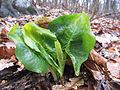
Leaves

[edit]

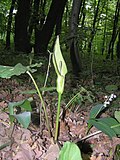
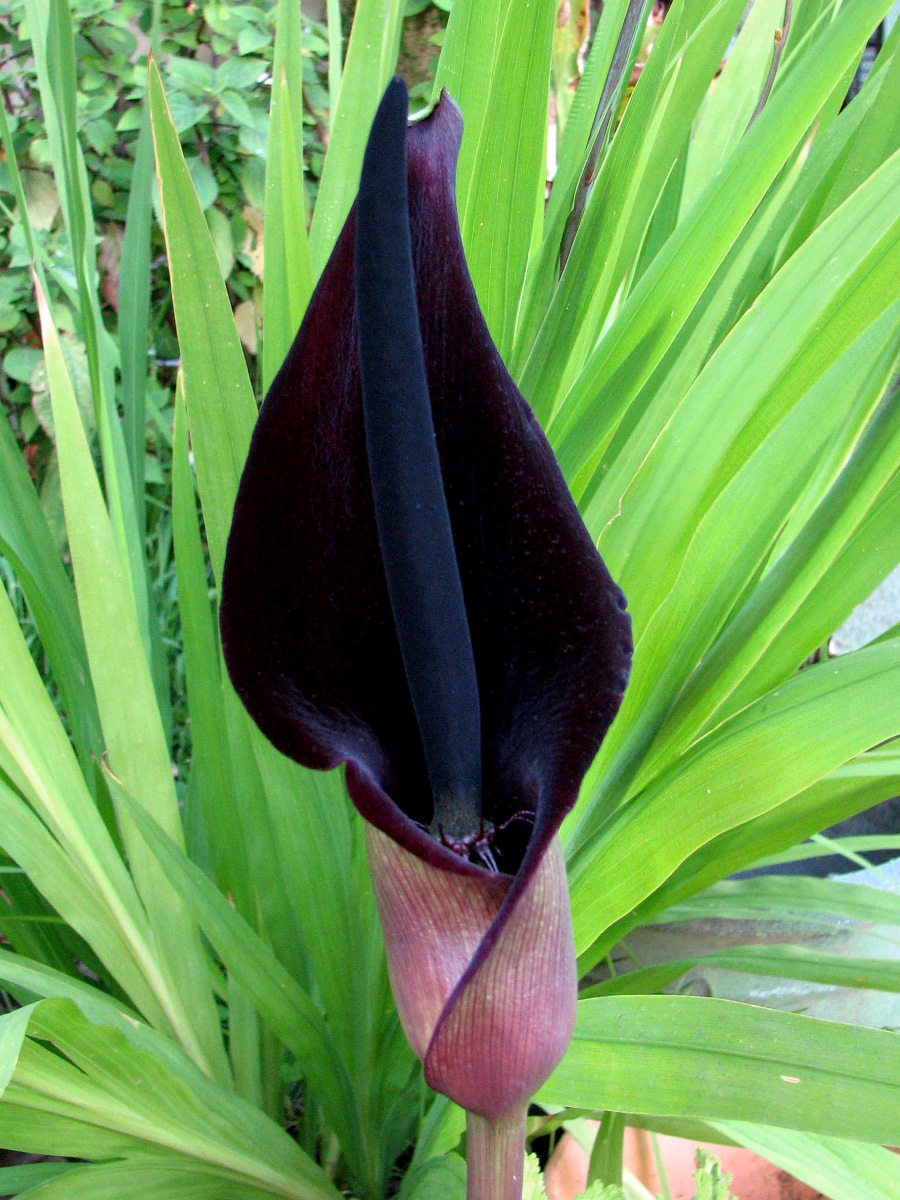
Flower

[edit]

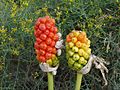
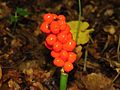
Fruit

[edit]

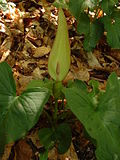
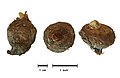
Corm

[edit]

See also

[edit]

References

[edit]

Bibliography

[edit]
Revisions and contributorsEdit on WikipediaRead on Wikipedia
from Grokipedia
Arum is a genus of approximately 25 tuberous perennial herbaceous plants in the family Araceae, characterized by basal leaves and inflorescences consisting of a spadix enclosed in a spathe.[1][2] Native primarily to temperate regions of Europe, northern Africa, and western to central Asia, species in this genus typically grow in woodlands, meadows, and rocky slopes, often in partial shade with moist, well-drained soils.[3] The name Arum derives from the Greek word for "poisonous," reflecting the toxicity of many species due to calcium oxalate crystals in their tissues, which can cause irritation if ingested.[4] Morphologically, Arum plants are monoecious, with unisexual flowers arranged on a fleshy spadix that is often thermogenic, producing heat to attract pollinating insects, and surrounded by a colorful spathe that may be green, white, or purple.[2] Leaves are typically hastate or sagittate, emerging in spring from underground tubers, and the plants enter dormancy in summer after fruiting; berries develop in clusters, ranging from red to orange, and serve as a dispersal mechanism for seeds.[1] In taxonomy, Arum belongs to the order Alismatales within the monocotyledons, with the genus first described by Carl Linnaeus in 1753.[5][3] Notable species include Arum maculatum (commonly known as lords-and-ladies or cuckoopint), widespread in Europe and valued for its ornamental foliage but hazardous due to its irritant properties, and Arum italicum (Italian arum), popular in horticulture for its variegated leaves and introduced in parts of North America where it can become invasive.[6] Historically, certain Arum species have been used in traditional medicine and as food sources in Eurasia after detoxification processes to remove toxins, though modern cultivation focuses on their aesthetic appeal in gardens.[6] The genus contributes to biodiversity in its native habitats and exemplifies the diverse pollination strategies within the Araceae family.[1]

Description

Vegetative characteristics

Arum species are herbaceous perennial plants that typically grow from underground storage organs, such as corms, tubers, or rhizomes, which enable dormancy and nutrient storage during unfavorable seasons. These plants generally reach heights of 20–60 cm, forming clumps in suitable habitats. The overall habit is terrestrial and geophytic, with the storage organs often discoid or vertically elongated in shape, varying by species; for instance, the ancestral form is considered discoid tubers, while some lineages have evolved rhizomatous structures.[7][8] The leaves of Arum are basal and arise directly from the storage organ, exhibiting sagittate or hastate shapes that are characteristic of the genus. Blade lengths range from 10–55 cm, with petioles typically 10–30 cm long and sheathing at the base to form a pseudostem-like structure. Leaf surfaces are often glossy and dark green, frequently adorned with pale markings, such as spots, veins, or variegations; for example, Arum maculatum displays dark-spotted leaves, while Arum italicum features prominent silver-gray venation. Venation patterns are pinnate to reticulate, with veins generally pale, enhancing the contrast against the green background.[2][7][4] Vegetative stems are minimal, consisting primarily of short, erect scapes that support the inflorescence and arise from the same underground organ as the leaves, remaining leafless below the bract. Across species, variations include differences in leaf emergence timing—autumn in Mediterranean climates for species like Arum italicum, or spring in more temperate regions for Arum maculatum—and subtle shifts in venation prominence or marking intensity, reflecting adaptations to local light and soil conditions. These traits contribute to the genus's diversity, with over 25 species showing such morphological gradations.[7][9]

Inflorescence and flowers

The inflorescence of Arum species is a defining feature of the genus, consisting of a central spadix—a fleshy, unbranched spike bearing numerous tiny, sessile unisexual flowers—enclosed and subtended by a single large spathe, a modified bract that functions as a protective sheath. The spathe is typically hooded or boat-shaped, with a well-defined tube and limb; it measures 5–30 cm in length and displays varied coloration such as white, green, or purple, which aids in visual attraction while the structure opens to reveal the spadix during anthesis.[10][11] The spadix itself is organized into distinct vertical zones, reflecting the protogynous monoecious nature of the flowers: the basal zone contains the pistillate (female) flowers, characterized by unilocular, multiovulate ovaries with orthotropous ovules and papillate stigmas; this is succeeded by the staminate (male) zone with sessile synandria bearing 2–4 anthers that dehisce via longitudinal slits or subapical pores; and the apical portion features a sterile appendage, often cylindrical to clavate and smooth, which may be stipe-like or sessile. The flowers lack a true perianth, though rudimentary tepals may be interpreted in some species; they are densely packed and unisexual, ensuring sequential maturation to promote cross-pollination.[12][11] A notable physiological trait of the spadix, particularly in the sterile appendage, is thermogenesis, where cyanide-insensitive mitochondrial respiration generates heat to volatilize chemical attractants; temperatures can reach 25–35 °C (typically 10–20 °C above ambient) during the initial phases of anthesis, facilitating odor dispersal. Flowering generally occurs in spring across most species, with the spathe unfolding at the onset and wilting shortly after to expose the developing spadix.[13][14][10]

Fruits

Following successful pollination, the infructescence of Arum develops as a dense cluster of berries borne on the persistent spadix.[15] The berries, initially green, ripen to a bright orange or red hue, forming an oblong-cylindrical spike typically 1–2 inches (2.5–5 cm) tall and less than 1 inch (2.5 cm) wide, with individual berries measuring about 5–8 mm in length.[16][17] Each berry contains 1–3 seeds embedded in viscous pulp.[18] Berry maturation occurs in late summer to fall, coinciding with the withering of leaves and the softening and decay of the spathe, which exposes the colorful cluster to attract dispersers.[16] The seeds are hard-coated and endospermous, providing nourishment for germination, while the fruits retain calcium oxalate crystals that render them toxic to humans and many herbivores, potentially deterring non-target consumers.[19][15] These glossy, clustered berries serve as a key adaptation for dispersal, drawing birds such as thrushes and robins, which consume the fruits and excrete the viable seeds, along with occasional ant-mediated myrmecochory in some species.[16][15] The bright coloration and grouping enhance visibility and appeal to avian and mammalian dispersers, facilitating the plant's propagation across habitats.[15]

Taxonomy

Etymology and history

The genus name Arum derives from the Latin arum, a Latinization of the ancient Greek áron (ἄρον), an early term for plants with acrid, burning properties, such as Arum maculatum, which was recognized in classical antiquity for its sap's irritant effects.[2][20] Plants in the genus have been documented since antiquity, with Theophrastus (c. 371–287 BCE) and Pedanius Dioscorides (c. 40–90 CE) describing species like Arum maculatum for their medicinal uses, including as emetics and treatments for ailments, though often with warnings about toxicity.[21][22] In European folklore, Arum maculatum earned the common name "cuckoopint" due to the phallic shape of its spadix, evoking associations with fertility and the cuckoo bird's mating habits, alongside other vernacular names like "lords and ladies" alluding to sexual dimorphism in the inflorescence.[23] The genus was formally established in botanical nomenclature by Carl Linnaeus in his 1753 work Species Plantarum, where he included several species under Arum, marking the first binomial classification for the group.[24] Early post-Linnaean taxonomy saw significant confusion, as hundreds of Araceae species were initially placed in Arum, including those now segregated into genera like Arisarum (e.g., Arum tenuifolium L., later Arisarum vulgare Targ. Tozz.).[25][26] Through the 19th and 20th centuries, the genus's circumscription remained broad, encompassing diverse tuberous and rhizomatous aroids based primarily on morphological traits like inflorescence structure.[26] This changed in the 2000s with the application of molecular data, which revealed phylogenetic relationships and led to a narrower definition of Arum, excluding several misplaced taxa and refining its boundaries within the Araceae family.[26] The genus includes 26 accepted species.[3]

Classification and species

The genus Arum belongs to the subfamily Aroideae and tribe Areae within the family Araceae.[3][27] Close relatives in the tribe include genera such as Dracunculus, Biarum, and Eminium, sharing morphological traits like tuberous habits and spadix inflorescences.[1] As of November 2025, Plants of the World Online recognizes 26 accepted species in the genus Arum, with no major taxonomic splits or additions reported since 2020.[3] These taxa are primarily tuberous perennials distinguished by variations in spathe morphology, inflorescence odor, and leaf patterning. Infrageneric classification remains informal, often divided into morphology-based sections such as "Arum-like" (with upright spathes and diffuse odors) and "Dracunculus-like" (with elongated, tail-like appendices and stronger carrion scents).[28] DNA-based phylogenies, derived from multi-locus sequence data including chloroplast regions (e.g., rps16, ndhA, psbD-trnT) and nuclear markers, reveal five major clades and challenge traditional subgeneric divisions like Gymnomesium (monospecific with A. pictum).[29] These studies indicate a Mediterranean radiation originating in the European-Aegean region during the Miocene, with subsequent dispersals to Anatolia, the Arabian plate, and North Africa over the past 10 million years.[29] The type species is Arum maculatum L., designated in 1753 by Carl Linnaeus in Species Plantarum.[3] Common synonyms and misapplications include Arum dracunculus L., which is often confused with Dracunculus vulgaris (formerly classified under Arum) due to similar dragon-like inflorescences, though the latter belongs to a distinct genus.[30]

Distribution and habitat

Geographic range

The genus Arum is native to Europe, ranging from the United Kingdom and Ireland in the west to the Caucasus in the east, northern Africa from Morocco to Libya, and western to central Asia from Turkey to western China. This distribution spans temperate, subtropical, and Mediterranean biomes, with the genus encompassing approximately 26 accepted species.[3] The highest species diversity occurs in the Mediterranean Basin, where more than 10 species are recorded in countries such as Greece and Italy, reflecting the region's role as a hotspot for endemism and speciation. Disjunct populations exist in Macaronesia, including the Azores, Balearic Islands, and Canary Islands, primarily represented by A. italicum. Notable endemics include A. cyrenaicum in Libya, highlighting localized adaptations in North African refugia.[3][31] Phylogenetic analyses indicate that Arum originated in the European-Aegean region during the early Miocene, with major diversification in the Mediterranean Basin driven by Miocene tectonic events and Pleistocene climate oscillations. Post-glacial migrations occurred from refugia in the Balkans and Anatolia, enabling northward and eastward expansions into central Europe and Asia following the Last Glacial Maximum.[31] Several Arum species, such as A. italicum and A. palaestinum, have been introduced to North America (including states like California, Oregon, and New York) and Australia as ornamental plants, where they are cultivated in gardens but have naturalized in some temperate regions.[32][33]

Preferred habitats

Arum species primarily occupy woodland understories, shady slopes, and riverbanks across temperate to subtropical regions, where they thrive in partially shaded environments that provide protection from direct sunlight. These habitats often feature moist conditions that support the geophytic growth habit of the genus, with many species exhibiting summer dormancy to endure seasonal dry periods.[7] The genus demonstrates a clear preference for calcareous or neutral soils, typically nutrient-rich with a neutral to slightly alkaline pH, which facilitates nutrient uptake in their native ranges. Humus-rich, loose substrates such as sandy loams enriched with leaf litter are particularly favored, promoting robust tuber development and vegetative growth. While Arum plants are drought-tolerant through tuber storage of water and nutrients during dormancy, they remain sensitive to waterlogging, which can lead to root rot in poorly drained conditions; thus, moist but well-aerated soils are optimal for sustained health.[34][7][35] In terms of climate tolerance, Arum species are well-adapted to Mediterranean maquis shrublands and deciduous forests, where mild winters and moderate summer rainfall align with their phenological cycles. Some taxa extend into montane habitats, such as rocky slopes in the Oro-Mediterranean zone, reaching elevations up to approximately 1,200 m, as exemplified by Arum rupicola in eastern Mediterranean and western Asian regions. These higher-altitude preferences involve tragacanth shrub vegetation on igneous or limestone-derived substrates, highlighting the genus's versatility within elevational gradients.[36][37] Ecologically, Arum plants frequently associate with oak (Quercus) and beech (Fagus) woodlands, contributing to the understory diversity in mixed deciduous forests and oak-hornbeam communities. They also appear in riparian forests along watercourses, where higher moisture levels support their growth. Additionally, certain species exhibit ruderal tendencies, colonizing disturbed areas such as old walls, waste grounds, and edges of human-modified landscapes, where they exploit nutrient inputs from debris while tolerating partial shade and variable moisture.[34][7][38]

Ecology

Pollination mechanisms

The genus Arum exhibits a highly specialized pollination system characterized by protogynous inflorescences, where the female phase precedes the male phase to promote cross-pollination. During the female stage, the receptive stigmas are exposed, and pollinators are lured into the basal floral chamber of the spathe, where they contact the stigmas and deposit pollen from previously visited plants. The insects are temporarily trapped by downward-pointing hairs on the spathe walls and a viscous fluid secreted by the female flowers, preventing escape for approximately 24 hours until the transition to the male phase, when pollen is released and the trap relaxes, allowing the pollinators to exit covered in fresh pollen. This mechanism ensures efficient pollen transfer while minimizing self-pollination.[39] Pollination in Arum relies on olfactory and thermal deception to attract specific insects, primarily psychodid flies (Psychoda spp.), which are deceived into believing the inflorescence is a suitable brood site such as rotting flesh or dung. The spadix emits strong putrid odors composed of volatile compounds like indole, p-cresol, and 2-heptanone, mimicking fecal or urinary scents to draw in these saprophagous insects. Thermogenesis in the spadix appendix, raising temperatures by 5–20°C above ambient, enhances the volatilization of these amines, including compounds like dimethyl disulfide in some related systems, increasing the scent plume's range and intensity during peak attraction periods, often in the morning or evening. This heat also warms the trapped insects, potentially accelerating their development as if in a decomposing substrate.[39][40] Species of Arum display two primary pollination syndromes adapted to different ecological contexts: the "cryptic" syndrome, common in forest understory species like A. maculatum, features a short peduncle positioning the dark, inconspicuous spathe amid foliage, paired with intense putrid odors to attract flies seeking hidden decay sites; in contrast, the "flag" syndrome, seen in open-habitat species like A. dioscoridis, involves a long peduncle elevating a brighter spathe above the leaves, often with slightly sweeter or less pungent scents to signal from greater distances. These syndromes correlate with pollinator behavior and habitat visibility, optimizing attraction without offering rewards. Trapping efficiency is high, with most species showing strong self-incompatibility that rejects self-pollen, ensuring reliance on cross-pollination.[39][41]

Reproduction and dispersal

Sexual reproduction in the genus Arum involves the production of seeds within fleshy berries following successful pollination and fertilization. Seeds exhibit high viability, retaining the ability to germinate even after prolonged dormancy periods of up to one year in species like A. maculatum.[42] This dormancy is physiological, allowing seeds to persist in the soil seed bank until favorable conditions arise. In temperate species, germination is contingent on cold stratification, typically requiring exposure to low temperatures around 6°C for several months to break dormancy and promote embryo growth; without this, germination rates remain negligible even under otherwise optimal moist, warm conditions.[42] Seed dispersal is predominantly zoochorous, facilitated by animals that consume the vibrant red or orange berries, which serve as an attractant due to their fleshy, nutrient-rich nature. Birds, particularly thrushes such as Turdus merula and Erithacus rubecula, play a primary role by ingesting the berries and depositing viable seeds through their droppings, often at distances that promote gene flow across habitats. Mammals, including small rodents and larger herbivores in some regions, also contribute to endozoochory by eating fruits and dispersing seeds via scat. Additionally, in species like A. italicum, ants participate in myrmecochory, carrying seeds short distances (typically under 20 m) after being attracted to lipid-rich elaiosomes attached to the seeds, which they remove and consume while leaving the intact seed to germinate nearby. Surface water can occasionally aid hydrochory in riparian populations.[43][44][45] Asexual reproduction provides an alternative strategy for propagation and persistence, particularly in stable or disturbed environments. The primary method involves the division of underground corms, which naturally fragment during growth or can be manually separated to produce genetically identical clones; this clonal spread often results in dense patches, enhancing local population resilience. Cormlets or offsets develop from the parent corm, enabling rapid colonization of suitable sites without reliance on seed production. This vegetative mode is especially prevalent in shaded, woodland habitats where competition limits seedling establishment.[4][46] The life cycle of Arum species is characteristically geophytic, with polycarpic perennials emerging from persistent corms that store nutrients through winter. Above-ground foliage and inflorescences appear in spring or autumn depending on the species and climate, completing a reproductive cycle before senescing and dying back annually to the dormant corm, which survives adverse conditions. This perennial habit allows multiple flowering events over the plant's lifespan, typically spanning several years, though reproductive output varies with plant size and environmental factors.[47]

Uses

Traditional and medicinal applications

Arum species have been utilized in traditional culinary practices, particularly during times of scarcity. The tubers of plants like Arum maculatum are processed through roasting or leaching to eliminate toxic calcium oxalates, rendering them edible as a famine food across Europe.[6] This preparation method allows the extraction of starch, which serves as a substitute for arrowroot in thickening soups and stews. Such uses highlight the plant's role in survival diets, though raw consumption remains hazardous due to its natural toxins.[48] In medicinal traditions, Arum has been applied externally since ancient times. Greek physician Dioscorides recommended preparations of Arum for treating wounds and as an antidote against snakebites, often in the form of poultices to soothe sores and prevent infections.[49] In Roman herbalism, similar crushed plant applications were used for skin afflictions and inflammations.[22] Modern herbalism continues these practices with diluted extracts of Arum maculatum for rheumatism and joint pain, though clinical efficacy remains unproven and preparation inconsistencies pose risks.[50][51] Regional variations in Arum applications reflect local ethnobotanical knowledge. In Turkey, Arum dioscoridis fruits are employed for treating hemorrhoids, while leaves of related species like Arum maculatum are boiled for sore throat relief, emphasizing the need for precise detoxification to avoid adverse effects.[52][53] These uses underscore the plant's dual potential as both a resource and a hazard, requiring careful processing in all traditional contexts.[21]

Cultivation and ornamental value

Arum species are typically propagated by dividing the corms or tubers in autumn after the foliage dies back, allowing the offsets to be replanted immediately in prepared soil. Seed propagation is also possible but requires cold stratification, where seeds are stored in moist conditions at around 4°C for 8–12 weeks to break dormancy before sowing in spring. These plants are generally hardy in USDA zones 6–9, tolerating frost but requiring protection in colder areas.[54][55][56] In garden settings, Arum serves as shade-loving perennials ideal for woodland borders or understory plantings, where they provide textural contrast with their arrow-shaped leaves emerging in late autumn. Popular species such as Arum italicum are valued for their variegated, veined foliage that offers striking winter interest, remaining evergreen or semi-evergreen through mild seasons and brightening dormant landscapes.[55][57][58] Cultivation requires well-drained, humus-rich soil in partial shade to mimic their native woodland preferences, with consistent moisture during the growing period but avoidance of waterlogging. Pests are minimal, though slugs may occasionally damage emerging foliage in damp conditions; overall, the plants show resistance to common garden threats like deer. In mild climates, such as those in USDA zones 8–9, Arum italicum exhibits invasive potential through bulbils and self-sown seeds, spreading readily in disturbed areas and requiring containment in gardens.[55][58][59] Ornamental hybrids and cultivars enhance aesthetic appeal, with selections like Arum italicum 'Marmoratum' prized for intensified white marbling on leaves. These are commercially available across Europe for naturalizing in shaded borders, where they form low clumps up to 30 cm tall without aggressive expansion when managed.[60][46]

Toxicity and precautions

All parts of Arum species are poisonous due to the presence of needle-like calcium oxalate crystals known as raphides, which penetrate tissues upon ingestion or contact, causing mechanical irritation and inflammation.[61][62] These raphides primarily affect the oral cavity, leading to intense burning pain, excessive salivation, swelling of the mouth and throat, and potential airway obstruction in severe cases.[61][63] The raw tubers and berries are particularly hazardous, as they contain higher concentrations of these crystals, while contact with the sap can induce dermatitis characterized by skin irritation and redness.[61][64] Additional symptoms may include nausea, vomiting, and difficulty swallowing, though systemic effects are typically limited unless large quantities are consumed.[61][65] Precautions are essential when handling or consuming Arum plants, as the toxicity can be mitigated through proper processing methods such as thorough cooking or drying, which break down the calcium oxalate crystals and render the plant safer for traditional uses.[66][67] For instance, boiling tubers for at least 15 minutes has been shown to neutralize the irritants effectively.[67] Veterinary risks are significant for pets and livestock, with dogs and cats experiencing similar oral irritation, drooling, and respiratory distress upon ingestion, necessitating immediate veterinary intervention to prevent complications like edema or aspiration.[68][69] While severe human poisonings can lead to life-threatening swelling, no fatalities have been documented with prompt medical care, such as administration of analgesics, antihistamines, or supportive measures to reduce inflammation.[62][63] Recent studies in the 2020s have highlighted variations in oxalate levels across Arum species, with A. maculatum exhibiting notably higher concentrations of calcium oxalate crystals compared to others like A. palaestinum, influencing the relative toxicity and processing requirements.[66][70] These findings underscore the importance of species-specific awareness in botanical and ethnobotanical contexts.[71]

References

User Avatar
No comments yet.