Hubbry Logo
BarawaBarawaMain
Open search
Barawa
Community hub
Barawa
logo
8 pages, 0 posts
0 subscribers
Be the first to start a discussion here.
Barawa
Barawa
from Wikipedia

Barawa (Somali: بَراوِّ Barāwe, Maay: Barawy, Swahili: بَرَأَاوٖ Baraawe, Arabic: ﺑﺮﺍﻭة Barāwa, Italian: Brava), also known as Barawe and Brava, is the capital of the South West State of Somalia.[1] It functions as a port town in the southwestern Lower Shebelle region of Somalia. Facing the Indian Ocean, Barawa serves as the main port of South West State.[2][3]

Key Information

History

[edit]

Origin

[edit]

The town of Barawa was founded by Aw-Ali from the Tunni, a member of Rahanweyn. Before Aw-Ali founded Barawa, he had observed a large area between Goobwayn and Baraawe. Aw-Ali was looking for a place that best suited his family needs. One fact Aw-Ali could not resist was the freshness of the ocean breeze and immediately asked the collaboration of his people. Oral history relates that before Aw-Ali moved into the city of Baraawe, most of the Tunni population and their livestock resided in an area not far from Baraawe and its vicinity. Most historians have identified that Aw-Ali himself to be from a Tunni clan.[4][5]

After Aw-Ali set the groundwork to his new residence, more Tunni moved in to the area, most of them migrated from inland and ocean shores. Oral history recognizes that this group to be the first inhabitants to live in the city of Brava.[6][7]

Medieval

[edit]

Tunni Sultanate

[edit]

The Tunni, composed of five sub-clans (Da'farad, Dakhtira, Goygali, Hajuwa, and Waridi), were the latest to drive the Jiddu into the interior, where they established their own Sultanate called Tunni Sultanate. The Tunni made a treaty with the Jiddu so that Tunni settled on the west bank of the Shabelle and the Jiddu settled on the east bank. Both also agreed to resist foreign penetration, to allow only Seddah Saamood (the three foot-prints, which are the Tuni, the Jiddu, and the wild beasts).[8] However, they did accept the first Muslim migrants, the Hatimi from Yemen and the Amawi from Syria, around the 10th century, for both religious and commercial reasons. Barawa founded by a Tunni saint called Aw-Al became the new capital for the Tunni Sultanate. The town prospered and became one of the major Islamic centers in the Horn, the Barawaani Ulama, attracting students from all over the region. Muslim scholars of that time, such as Ibn Sa'id, wrote about Barawa as "an Islamic island on the Somali coast." Al-Idrisi also described the construction of the coral houses and noted that Barawa was full of both domestic and foreign commodities.[9]

Barawa was renowned for its domestic craftsmen and their weaving of alindi/ kioy cloth, and the kufi baraawa . Alongside sandals, weapons and utensils many things are still handmade in the town. Clay horned stones are common in Buur Heybe. With unique carving and for goods such as the mihmil (Qu'ran rest)) and Attir or wedding bed. Precious metals were honed into fine jewellery and metal lined bridges which would connect multi-storied houses above. Women and the elderly would not need to go into the crowded streets to get across the town. Coral was collected and then torched to add as a lime component.[10]

Ajuran Sultanate

[edit]

Barawa and its surrounding area fell under the Ajuran Empire that governed much of southern Somalia and eastern Ethiopia. The domain extended from Hafun in the north, to Qelafo in the west, to Kismayo in the south.[11][12]

Barawa was at its golden age during Ajuran period.[13] According to Ibn Sa'id in the thirteenth century described Barawa as one of the three most important cities on the East African coast along with Mogadishu and Merca all serving as the commercial and Islamic centers for the Indian Ocean.[14] In 1430, Barawa was one of only 18 western ports mentioned by name in an imperial decree that was issued by the Xuande Emperor, it was named as Pu-la-wa, (不喇哇).[15] From his experiences during the Ming treasure voyages in the early 15th century, the Chinese mariner Fei Xin characterized the people of Barawa as pure and honest.[16]

In 1506, the Battle of Barawa began after the Portuguese Empire decided to invade and capture the wealthy Somali harbour city. The commander of the Portuguese army was Tristão da Cunha: he set wanted to conquer the Ajuran territory, where the battle of Barawa was fought. After a long period of engagement, the Portuguese soldiers burned the city and looted it. However, fierce resistance by the local population and soldiers resulted in the Portuguese failing to permanently occupy the city. Refugees who had fled to the interior eventually returned and rebuilt Barawa, Tristão da Cunha was wounded in this battle. After the battle, the city of Barawa quickly recovered from the attack.[17][18]

Early Modern Period

[edit]

In the early modern period, Barawa was ruled by the Geledi Sultanate. It was considered the chief port for the kingdom. The city was roughly 4/5th Somali and 1/5th Bravanese with the majority of Somali inhabitants being Tunni.[19]

Geledi Sultan Ahmed Yusuf's brother Abobokur received a regular tax from the townspeople on behalf of the Sultan this was noted in 1876 in a British Parliamentary account

The Somali tribe of Ruhwaina. The Chief of this and other tribes behind Brava, Marka and Mogdisho is Ahmed Yusuf, who resides at Galhed, one day's march or less from the latter town. Two days further inland is Dafert, a large town governed by Aweka Haji, his brother. These are the principal towns of the Ruhwaina. At four, five, and six hours respectively from Marka lie the towns of Golveen (Golweyn), Bulo Mareerta, and Addormo, governed by Abobokur Yusuf, another brother who though nominally under the orders of the first-named chief, levies black-mail on his own account, and negotiates with the governors of Marka and Brava direct. He resides with about 2,000 soldiers principally slaves at Bulo Mareta; the towns of Gulveen which he often vists and Addormo being occupied by somalis growing produce, cattle &c. and doing a large trade with Marka.[20] The brother of Sultan Ahmed, Abobokur Yusuf managed the lands opposite the Banadir ports of Brava & Marka and also received a tribute from Brava. This Abobokur Yusuf was accustomed to send messengers to Brava for tribute, and he drew thence about 2,000 dollars per annum.[20]

Eventually, in 1908, Barawa came under the Italian protectorate and was then incorporated into Italian Somaliland in 1910 after the death of the last Sultan Osman Ahmed.But the Italians faced stiff resistance from many parts of the Banadir coast. The inland regions and the trade of the Somali merchants would remain unchallenged in their independence for years to come.[21]

Sheikh Uways al-Barawi organized an Ikhwaan and led the Banadir revolt, which was defeated in the 1908. Sheikh Uways migrated to Biyole to re-organize his Ikhwaan, but was killed in 1909 by Mohammed Abdullah Hassan due to religious disputes. His successor, Khalif Sheikh faraj, was also killed in 1925. However, the Uwaysiyya order, named after the martyr Sheikh Uways, emerged throughout southern Somalia and East Africa, establishing the Jama'a in the riverine region of southern Somalia and neighboring regions. These served as centres of charity and learning.[5]

Modern

[edit]

In addition to Sheikh Uways, Baraawe has produced numerous well-respected Ulama, including Sheikh Uways al-Barawi, Sheikh Nureini Ahmed Sabir, Sheikh Haji Sadiq, Sheikh Qassim al-Baraawi, Sheikh Mu'alim Nuuri, Sharif Qulatayn and a female poet-saint, Dada Masiti.[22]

The city was the stronghold of the Hizbiya Digil-Mirifle (HDM) party, which was founded in 1947; it later became the Hizb al-Dastuur Mustaqil al-Somali where the first Election has taken place in Mogadisho, Hisbia (Xisbiya) and has been elected as the leader of (HDMS) Jeilani Sheikh Bin Sheikh (Somali Independent Constitutional Party, HDMS).[23]

Barawa sharply declined after upgraded colonial infrastructure was added in Merca and Mogadishu. After independence the town was largely ignored by the Somali government. Following refugee resettlement programmes the town suffered as the new arrivals were unable to quickly adopt the culture of the city. Heritage was lost following the civil war which Siad Barre and Morgan’s militias looting the town. In 1997 it was incorporated into South West State of Somalia and rebuild would have ensued but the emergence of Al-Shabaab stalled this.[24]

In 2009, Al-Shabaab militants seized control of Barawa.[25] In September of that year, a United States military raid in the area killed Saleh Ali Saleh Nabhan, a suspected Al-Qaeda operative.[25]

In October 2013, United States Navy SEAL Team Six launched an unsuccessful raid against a beachside house in Barawa, targeting Mukhtar Abu Zubeyr, the leader of Al-Shabaab.[26] Following the raid, al-Shabaab began a crackdown of the town.[27]

Following the launch of Operation Indian Ocean, the Somali Armed Forces assisted by AMISOM troops re-seized control of Barawa from Al-Shabaab in October 2014.[28][29] On 11 October, during a trip to Barawa, President Hassan banned the charcoal trade in the city.[30]

Demographics

[edit]

Barawa has a population of around 260,800 inhabitants.[31] The broader Barawa District has a total population of 350,800 residents.[32]

The town's majority inhabitants are the Tunni clan, a sub-group of Digil, with a minority of residents are Garre , Sheekhaal, Bravanese.[33] In addition to the standard Bravanese language (Chimini), which is a dialect of Swahili, the Tunni speak Tunni language (a dialect of Somali) and the remaining people speak the standard Somali language.[34]

[edit]
Gallery
Charcoal in the port
Exporting Charcoal by Indian boat
small boats carrying Charcoal to the ship
Pakistani in barava on their coal trade boat
volvo boat loading coal to the big boat,
Barawa beach
Small fish boats
Charcoal in the port waiting export
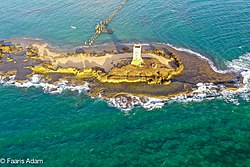
An ancient lighthouse in Baraawe

References

[edit]

Bibliography

[edit]
[edit]
Revisions and contributorsEdit on WikipediaRead on Wikipedia
from Grokipedia

Barawa, also known as Baraawe or Brava, is a historic port city serving as the official capital of the , situated on the coast in the approximately 220 kilometers southwest of .
Established as a coastal settlement by the second millennium, Barawa emerged as a vital hub in networks, facilitating exchanges of , gum, and with regions including , , and the African interior, supported by archaeological evidence of early iron-age pottery and historical texts from Yemeni sources dating to the .
Governed traditionally as an oligarchic republic by councils of elders, it developed a distinct culture marked by the Chimiini dialect of , unique architecture, and prominence as a center of Sufi scholarship, exemplified by figures like Uways al-Barawi in the 19th century.
The city faced invasions, including sacking by the in 1506, and in modern times became a stronghold for al-Shabaab militants who utilized its port for arms imports until its liberation by forces and AMISOM in 2014.
Recent initiatives, such as a $500 million agreement with a Kuwaiti firm to modernize the port, aim to enhance maritime and economic connectivity for the .

Geography

Location and Physical Features

Barawa is situated on the southeastern coast of in the region of the South West State, at coordinates approximately 1°07′N 44°02′E. The town directly faces the , positioning it as a key coastal settlement approximately 200 kilometers southwest of the capital, . The physical landscape of Barawa features a low-lying with an average elevation of 19 meters above , characteristic of the flat terrain prevalent along Somalia's southern shoreline. This includes sandy beaches and a natural harbor that supports operations, enabling access to maritime trade routes across the . Nearby elevations rise modestly, with hills such as Buur Barowe reaching around 160 meters, but the immediate environs remain predominantly level and semi-arid. The region's geology aligns with broader southern Somali formations of sedimentary plains, fostering a environment suited to both and limited agriculture in the vicinity.

Climate and Environment

Baraawe has a hot semi-arid climate classified as BSh under the Köppen system, featuring high year-round temperatures and low, erratic rainfall. Average annual precipitation totals 271 mm, primarily during the Gu season (April–June) and Deyr season (October–November), with the wettest months of April and May each recording about 49 mm. Daily temperatures show little variation, ranging from lows of 24.2°C in January to highs of 31.6°C in March and April; annual averages hover around 28–30°C. Relative humidity remains elevated at 70–76%, while sunshine duration averages 8–11 hours daily, and winds are strongest in the dry season, reaching 28 km/h in January. The local environment centers on its Indian Ocean coastline, encompassing sandy beaches, a sheltered harbor, and fragmented stands that contribute to Somalia's total mangrove coverage of approximately 48 km². These , dominated by species like Avicennia marina, Bruguiera gymnorrhiza, and Ceriops tagal, support marine by providing habitats for , birds, and other organisms while mitigating . Environmental pressures include loss—down 1.65 km² nationwide from 1996 to 2020—driven by degradation and human activities, alongside broader Somali challenges like , , and exacerbated by recurrent droughts and floods. Baraawe district retains negligible natural forest (<1 ha in 2020), reflecting arid conditions and historical pressures. Initiatives such as a 25-year water master plan aim to enhance management and sustainability in this water-stressed area.

History

Early Origins and Settlement

The earliest settlement of Barawa traces to the clan, a Somali group belonging to the larger (Digil-Mirifle) cluster known for agro-pastoralism and coastal adaptation. Oral traditions preserved among Barawa's inhabitants attribute the founding of the town to a figure named Aw Ali (or Aw-Al), a leader or saint who migrated from inland regions near the River area, specifically from locales like and Qaraw, in search of a defensible coastal site with access to maritime trade and freshwater resources. These accounts describe the as arriving after displacing or coexisting with earlier groups such as the Jiddu, establishing Barawa as their primary base around the 9th to 10th centuries CE, though precise dating relies on unverified genealogical reckonings rather than stratified excavations. Archaeological evidence specific to Barawa's pre-Islamic phase remains sparse, with no comprehensive digs documenting initial structures or artifacts, unlike better-studied sites to the south; available data from broader Somali coastal surveys indicate early wattle-and-daub dwellings and subsistence patterns involving fishing, millet cultivation, and livestock herding, consistent with practices. Linguistic analysis of Chimini (the Afro-Asiatic language spoken by Barawani descendants of early settlers) reveals Bantu substrate influences from pre-Somali coastal populations, suggesting that settlement overlaid or assimilated remnants of earlier Cushitic or proto- fishing communities active along the Benadir coast since at least the CE. By the , Arab geographers such as al-Mas'udi referenced Barawa (as Bara or similar variants) as an active port handling exports of , , and slaves, implying rapid integration into networks post-settlement. The Tunni's dominance in early Barawa fostered a theocratic , with clan elders and religious figures overseeing settlement expansion; sub-clans like the Da'farad and Goygali reportedly organized communal defenses and constructions as spread via Yemeni and Hadrami traders around the , marking the transition from pagan or animist roots to formalized Islamic urbanism. This era's growth was driven by the town's strategic position on coral reefs providing natural harbors, enabling control over caravan routes from the interior Shabelle Valley, though environmental factors like seasonal monsoons and arid hinterlands constrained population density to a few thousand inhabitants initially. Limited epigraphic finds, such as early tombstones echoing Mogadishu's Islamic inscriptions, corroborate the shift but offer no direct pre-1000 CE material culture from Barawa itself.

Medieval Era

During the medieval period, Barawa emerged as a prominent Somali port city and hub of Islamic scholarship, primarily under the influence of local clan-based sultanates that facilitated trade along the routes. Founded by the clan, a Somali group among the early converts to in the region, the city became the capital of the Tunni Sultanate, which spanned southwestern south of the Shabelle River from roughly the 9th to 13th centuries. This sultanate, led by Tunni rulers including a foundational figure named Aw Ali, emphasized religious education and attracted scholars from the , fostering Barawa's growth as a center for Quranic studies and . By the 13th century, Barawa transitioned under the , a powerful Muslim polity that controlled much of southern and parts of eastern through , systems, and naval prowess. The Ajuran integrated Barawa into their commercial network, exporting goods like , , and textiles while importing ceramics and spices, which bolstered the city's prosperity until the early 16th century. In 1501, Ajuran forces successfully repelled a Portuguese expedition under attempting to seize the port, demonstrating the sultanate's defensive capabilities against European incursions. Archaeological evidence from the period, including mosques and artifacts, indicates Barawa's role in sustaining Swahili-style urbanism adapted to Somali pastoral-agricultural economies.

Tunni Sultanate

The Tunni Sultanate emerged as a local polity in southern , centered on Barawa, established by the clan following their displacement of the Jiddu clan into the interior. Composed of five sub-clans—Da'farad, Dakhtira, Goygali, Hajuwa, and Waridi—the Tunni formalized control through a with the Jiddu, allowing settlement on the western side of the region while reserving the coast for themselves. Oral traditions attribute the founding of Barawa itself to a Tunni named Aw Ali (or Aw-Al), who relocated from the interior and established the port as the sultanate's capital, transforming it from a forested settlement into a structured urban center. Under Tunni rule, Barawa developed as a prominent hub for and Islamic scholarship, leveraging its coastal position to facilitate commerce in goods such as , hides, and gums while fostering ties with and networks. The sultanate's relied on elders and religious figures, with the city serving as a key Islamic learning center in the , evidenced by its role in Sufi traditions and Arabic-Chimiini scholarship. This prosperity positioned Barawa as a cosmopolitan enclave, distinct from inland Somali , though reliant on alliances with neighboring groups for military stability. The Sultanate's duration aligns with medieval Somali polities, predating or overlapping with broader regional powers like the , against whose remnants Tunni and Jiddu forces reportedly clashed in oral accounts. By the , external pressures including incursions along the coast contributed to shifts in power dynamics, eventually integrating Barawa into larger entities such as the Ajuran domain before later transitions to the Geledi Sultanate. Historical records remain sparse, drawing heavily from oral traditions and traveler accounts, which underscore the sultanate's role in early Somali coastal but lack precise chronologies due to the oral nature of documentation.

Ajuran Sultanate

The , a Somali polity that flourished from the 13th to the late 17th centuries, incorporated Barawa into its domain as part of its control over southern Somalia's coastal regions during the . This integration facilitated Barawa's role as a strategic port in the sultanate's maritime trade network, which connected the to commerce routes and supported the export of local products like and . A defining event underscoring Ajuran authority in Barawa occurred in April 1507, when sultanate forces decisively repelled a naval assault led by during the Battle of Barawa. The , seeking to disrupt Ajuran dominance in regional , sacked parts of the city but withdrew after encountering stiff resistance from local defenses and the sultanate's organized military response, highlighting Barawa's fortified status and the empire's naval capabilities. This victory preserved Ajuran influence over the port until the sultanate's gradual decline amid internal fragmentation and external pressures in the .

Early Modern Developments

In 1506, Portuguese forces under sacked Barawa, reducing much of the town to ashes in an effort to dominate routes and curb Muslim coastal powers. The port briefly became a Portuguese foothold, though local resistance persisted; by 1529, Barawa's leaders pledged nominal allegiance to to avoid further devastation, but effective control remained limited as city-states, including Barawa, coordinated opposition. Ottoman naval expeditions in the late , such as Mir Ali Beg's campaigns around 1585–1589, indirectly aided liberation by seizing Portuguese holdings along the East African coast, including alliances with Somali ports like Barawa that had delivered captives to Ottoman forces.) These events shifted power dynamics, allowing Barawa to reassert autonomy while fostering ties with Ottoman-aligned networks in and the Hadramaut. Governance evolved into an oligarchic system led by a council of elders (known as Toddoba Tol by later periods), documented from the onward, comprising representatives from dominant clans—typically five from the and two from Hatimi or Barawi groups—without a single hereditary ruler. This structure emphasized consensus among merchant elites and clan heads, enabling flexible diplomacy amid external pressures. Migrations of Hadrami in the 16th and 17th centuries, including bin Muhammad's settlement in 1681, integrated Arab scholarly and trading families, enhancing Barawa's Islamic and commercial acumen through intermarriage and land grants. The late 16th-century arrival of Oromo pastoralists inland spurred economic growth, as expanded livestock herds increased supplies from hunting, positioning Barawa as a key exporter alongside aromatic woods, gum, , and hides to , the , and Indian ports like . Barawani merchants financed regional ventures, such as outfitting Pate Island's forces with ivory-laden ships in the early , while avoiding Omani dominance; a temporary submission to Omani suzerains occurred in 1744 for protection against inland threats. By the 1770s, Barawa hosted the deposed sultan of Pate, , underscoring its role as a refuge and trade nexus in a fragmenting network. This era solidified Barawa's cosmopolitan identity, blending Somali , , and Arab elements, though clan tensions occasionally disrupted stability.

Colonial Period and Independence

In 1889, the Sultan of Zanzibar ceded the Benadir ports, including Barawa, to following diplomatic pressure and treaties establishing Italian influence along the Somali coast. Italian presence initially involved a granted in 1893, marking the onset of formal colonial administration in the region. By 1908, Barawa was incorporated into as part of the expanding colony. Local resistance emerged prominently under Sheikh Uways bin Muhammad al-Barawi, a Barawa-born Islamic scholar who revitalized the Sufi order through the Uwaysiyya branch and mobilized followers against Italian encroachment. Al-Barawi's Banadir revolt, drawing on pan-Islamic sentiments, challenged colonial authority in the early 1900s but was defeated by Italian forces in 1908; al-Barawi himself was killed in 1909 near Biyoley. His successor, Khalif Faraj, continued sporadic opposition until his death in 1925, influencing later political groups like the Somali Youth Club. Under Italian rule, Barawa's economy stagnated as colonial investments prioritized port infrastructure in and Merka, diminishing its historical role as a trade hub. Following Italy's defeat in World War II, southern Somalia, including Barawa, came under United Nations trusteeship administered by Italy from 1950 to 1960, aimed at preparing the territory for self-governance. On July 1, 1960, Italian Somaliland achieved independence and immediately united with the former British Somaliland to form the Somali Republic, with Barawa integrated as part of the new nation's Lower Shebelle region. This unification occurred without distinct separatist movements in Barawa, aligning the city with broader Somali nationalist aspirations led by groups such as the Somali Youth League.

Civil War and Contemporary Challenges

The outbreak of the in January 1991, following the collapse of Siad Barre's regime, plunged Barawa into clan-based violence involving local , Digil-Mirifle, and other factions, leading to widespread destruction of the city's historic structures and displacement of thousands of residents. Control shifted among warlords until the (ICU) seized the area in mid-2006 amid the broader Islamist push against transitional authorities. Al-Shabaab, splintering from the ICU after Ethiopian intervention, consolidated power in Barawa by 2008, using the port as a hub for arms, , and foreign fighter transit, while imposing strict enforcement that restricted local commerce and movement. Somali National Army (SNA) forces, supported by the African Union Mission in Somalia (AMISOM), captured Barawa on October 5, 2014, during , dislodging Al-Shabaab after heavy fighting and marking a significant territorial gain against the group's southern strongholds. The offensive involved coordinated airstrikes and ground assaults, with AMISOM troops securing key positions including the port, though Al-Shabaab retreated to rural areas rather than fully withdrawing. This shifted nominal control to the South West State administration under the , enabling limited governance and aid inflows, but the group's guerrilla tactics persisted, including ambushes and attacks on supply lines. Post-2014, Barawa has faced recurrent Al-Shabaab incursions, with notable assaults on Transition Mission in Somalia (ATMIS) forward operating bases in 2023, highlighting vulnerabilities in static defenses and clan recruitment pressures that bolster the insurgents. By 2025, Al-Shabaab's broader resurgence, including offensives reversing government gains in southern , has intensified threats around Barawa, complicating SNA and ATMIS operations amid funding shortfalls and troop drawdowns. Clan rivalries exacerbate insecurity, as local militias occasionally align with or against federal forces, while U.S. airstrikes targeting Al-Shabaab leaders in the vicinity underscore ongoing external involvement without eradicating the threat. Contemporary challenges include economic stagnation, with the port's potential for fishing and trade undermined by risks, , and decay from decades of conflict, resulting in high unemployment and reliance on remittances and . Internally displaced persons camps near Barawa, verified in 2023, house thousands fleeing violence, straining resources amid recurrent droughts and food insecurity affecting over 40% of the local population. Weak and further hinder reconstruction, perpetuating a cycle where insecurity deters investment and fosters illicit economies like trade, despite federal efforts to integrate local clans into security frameworks.

Demographics

Population Statistics

The population of Baraawe District was estimated at 74,072 in the 2014 Population Estimation Survey, a joint effort by the and the Somali government using sampling across urban and rural areas to address data gaps from decades without a national . This marked an increase from the 57,652 residents recorded in a 2005 UNDP assessment, reflecting limited growth amid persistent insecurity, Al-Shabaab influence, and displacement in region. The district covers roughly 3,300 km², resulting in a density of approximately 22 persons per km² based on the 2014 figure, underscoring its predominantly rural character outside the coastal town. Somalia's lack of a comprehensive since 1975—exacerbated by , fragmented governance, and militant control—renders such estimates provisional, derived from probabilistic models incorporating household surveys, vital events, and displacement tracking rather than direct counts. For context, region's population was estimated at 1.2 million in 2014, rising to about 1.35 million by UN OCHA projections in 2021, driven by natural increase (around 2% annually) offset by outflows from conflict zones like Baraawe. Urban-specific data for Baraawe town from the PES urban round indicate it as a key settlement, but exact town-level breakdowns remain unpublished in primary reports, with the district total serving as the primary metric. Recent national extrapolations place Somalia's population at 18-19 million in 2025, implying potential proportional growth in peripheral districts like Baraawe, though unverified by localized surveys.

Ethnic and Clan Composition

The population of Barawa is predominantly Bravanese (also known as Barawani or Reer Baraawe), a coastal minority ethnic group in distinct from the major Somali clan families due to their unique linguistic and cultural traits shaped by historical . This group maintains a hybrid identity incorporating Somali pastoralist elements with Swahili-influenced urban traditions, though they are numerically small compared to inland Somali clans. Clannically, the Bravanese are primarily affiliated with the subclan of the Digil branch within the broader (Digil-Mirifle) confederation, an agro-pastoral Somali group that has long dominated Barawa's hinterland and urban core. The Tunni are subdivided into urban ("town") residents in Barawa proper, who historically controlled trade and governance, and rural ("country") members engaged in farming along the Shabelle River valley. This clan structure underscores Barawa's role as a Tunni stronghold, with the group comprising the majority of the city's estimated several thousand inhabitants as of recent assessments. Smaller minorities include descendants of Arab traders (particularly Hadhrami Yemenis) integrated through intermarriage, as well as Bantu-origin groups from historical slave imports, though these do not form dominant clans. Clan affiliations remain central to , influencing access to resources and conflict dynamics, with Tunni loyalty tested during Somalia's when some aligned with Islamist groups for protection. Despite external pressures, the -Bravanese core persists as the defining ethnic-clan fabric of Barawa.

Languages and Religion

The Bravanese people of Barawa speak Chimwiini, also known as Chimiini or Bravanese, an Eastern Bantu language historically spoken exclusively in the city and closely related to dialects of the East African coast. This language exhibits phonological and syntactic features distinct from standard , including contact-induced changes from and Somali due to centuries of and migration. Chimwiini is highly endangered, with its primary use now confined to older speakers and refugee communities, as younger generations increasingly adopt Somali amid and conflict displacement. Somali, a Cushitic language and the official tongue of , is widely spoken across Barawa's diverse population, serving as a in administration, commerce, and inter-clan interactions. is employed in religious contexts, such as Quranic recitation and scholarly texts. The overwhelming majority of Barawa's residents, including the Bravanese, practice Sunni Islam in the Shafi'i school of jurisprudence, aligning with the dominant rite across Somalia. Religious observance is conservative, with daily prayers, fasting during Ramadan, and adherence to Sharia influencing social norms and dispute resolution. Historical ties to Sufism, particularly the Qadiriyya order, have shaped local practices, as evidenced by the 19th-century revival efforts of Sheikh Uways al-Barawi, a native of Barawa who propagated Qadiriyya teachings against colonial incursions. These Sufi elements include veneration of saints and communal dhikr rituals, though Salafi-influenced groups like Al-Shabaab have targeted such traditions as unorthodox since the 2000s. No significant non-Muslim populations are documented in the city.

Economy

Historical Trade and Commerce

Barawa, known historically as Brava, developed as a significant in the network by the , when it was documented by the geographer Al-Idrisi as a hub for along the Somali coast. During the medieval period (12th–15th centuries), the city facilitated exchanges of local exports such as ivory, aromatic woods, , , and hides for imports including textiles like white and black cloth from , particularly Surat. Trading partners encompassed (), the (), and occasionally Ming , with routes involving direct maritime voyages and transshipments via Aden; archaeological evidence, including 15th–16th-century shards, underscores these connections to East Asian trade. In the early , Barawa's trade persisted despite disruptions, including the 1506 sacking by forces seeking to control routes. By the 17th–18th centuries, merchants from Pate exchanged Indian cloth for in 1729, while the city's oligarchic governance by elders and later influences from the Pate Sultanate supported commerce in captives, camels, and ostrich products. Local abbaans—traditional Somali trade protectors—ensured safe passage for foreign diasporas from Arabia, , and , integrating Barawa into broader networks from the 1st to 19th centuries. By the , Barawa served as a major outlet for and hides sourced from the hinterland by clans, alongside agricultural exports like , , and orchella , traded with , the Kenyan coast, and Arabia via Arab and Bajuni vessels due to limited local . Waungwana elites, including Barawi, Hatimi, and Sharifs, acted as brokers leveraging kinship ties, reflecting the port's enduring role in regional commerce until colonial encroachments. This trade sustained a of 4,000–5,000 by the late , with approximately 2,000 -Somali residents.

Modern Economic Activities and Constraints

Fishing constitutes the predominant economic activity in Baraawe, centered on small-scale artisanal operations targeting coastal species such as , , and , though the sector remains underdeveloped due to limited and export capabilities. Local fishermen employ traditional methods with minimal , contributing to household sustenance and informal , yet annual catches are constrained by inadequate cold storage and vessel durability against rough seas. Agriculture in the surrounding region supports subsidiary activities, including rain-fed cultivation of , , and , alongside rearing, but yields are low owing to erratic rainfall and soil degradation. The Baraawe facilitates modest maritime trade, primarily in and basic imports, but its capacity has historically been insufficient for larger vessels, limiting commercial throughput. In 2025, the Southwest State of signed a 25-year, $500 million agreement with Kuwait's Arabi Holding Group to upgrade the port, encompassing expansions, a , factories, hotels, and marine resource exploitation, aimed at enhancing regional connectivity and job creation. This initiative, discussed in policy forums as of May 2025, seeks to position the port as a gateway for Southwest State exports, potentially integrating with broader Somali efforts. Key constraints include chronic insecurity from al-Shabaab's influence, which imposes on businesses and disrupts supply chains through blockades and , deterring formal and inflating operational costs. Infrastructure deficits, such as unreliable power, poor road links, and absent modern fish landing sites, exacerbate vulnerabilities to shocks like droughts and floods, while a lack of skilled labor and regulatory frameworks hampers . These factors perpetuate an informal economy reliant on remittances, with rates exceeding 70% in southern , underscoring the need for stabilized governance to realize and fisheries potentials.

Culture and Society

Bravanese Cultural Identity

The Bravanese, also known as Barawani or Reer Brava, constitute an ethnic minority group primarily inhabiting the coastal city of Brava (Baraawe) in southern Somalia, with a distinct cultural identity shaped by centuries of Indian Ocean trade, urban settlement, and admixture of Arab, Persian, and Bantu influences rather than the pastoral clan structures dominant among inland Somali groups. This identity emphasizes a shared urban heritage tied to the city's role as a Swahili-style trading port from around 1000 CE, fostering a sense of collective belonging to Brava as a geographic and cultural homeland, often expressed through endonyms like "Wantu wa Miini" in their vernacular. Unlike the patrilineal Somali clan system, Bravanese social cohesion historically revolved around neighborhood-based lineages (reer) within the city walls, reflecting an oligarchic republican tradition adapted from Swahili city-states. Central to Bravanese cultural identity is the Chimwiini language (also Chimbalazi or Chimiini), a Bantu language classified as a northern dialect of heavily influenced by and Somali lexicon, spoken almost exclusively by the group and serving as a key ethnic marker that distinguishes them from Somali-speaking majorities. This linguistic heritage underscores their coastal orientation, with Chimwiini adapted for writing in a modified to record poetry and religious texts, preserving oral traditions amid low literacy rates in . Religious poetry, particularly Sufi devotional works in the tradition, forms a cornerstone of cultural expression, exemplified by female poets like Dada Masiti (c. 1810s–1919), whose verses in Chimwiini blend Islamic mysticism with local metaphors of coral and ocean life, transmitted orally and memorized across generations. Bravanese traditions further reflect syncretic influences from Omani-Yemeni commerce and brief Italian colonial rule (1889–1941), manifesting in Islamic norms governing family life, such as endogamous marriages within reer groups and communal rituals, while maintaining distinctions from Benadiri subgroups like the Reer Hamar through Brava-specific customs like specialized fishing techniques and coral-stone architecture. Despite pressures from and civil conflict since 1991, which have dispersed communities to and , cultural identity persists through diaspora associations emphasizing Chimwiini preservation and anti-assimilationist narratives rooted in historical . This resilience highlights causal factors like geographic isolation and trade-derived pluralism, enabling a hybrid identity that prioritizes civic loyalty over ethnic purity claims prevalent in broader Somali discourse.

Architecture, Literature, and Traditions

Baraawe's architecture embodies Swahili coastal influences, with structures built primarily from coral stone quarried locally and bound with lime mortar, resulting in durable two-story houses featuring lime-plastered walls, decorative niches, and hand-carved wooden doors in traditional Swahili motifs. The city's historic core includes narrow alleyways lined with adjoining buildings, remnants of protective walls with three beach-facing gates documented in 16th-century accounts, and mosques rebuilt atop older foundations, such as the Jaama Mosque—the oldest in Baraawe—with inscriptions dating to the 14th–15th centuries CE (9th century AH). Other prominent mosques include the Sarmaadi, Abu Bakr Siddiq (with rope-pattern moldings on its mihrab), and Abd-er-Rahman, often incorporating salvaged elements like earthenware tiles and Chinese porcelain in reconstructions. Bravanese literature is dominated by vernacular religious poetry in the Chimiini dialect—a Bantu language with roots augmented by Somali and loanwords—used for didactic purposes in Islamic from the late 19th century onward. Ste:nzi, or "strings of beads," comprise metered verses praising scholars () and expounding , Sufi , and moral guidance, often composed by local ulama like Uways al-Barawi (d. 1909) and transmitted orally or in manuscripts to resist colonial-era disruptions. A seminal figure is Dada Masiti (c. 1810s–1919), a female poet and scholar whose works, drawing from her life experiences, emphasized (remembrance of ) and , influencing Bravanese women and earning her comparisons to early Islamic mystics. Cultural traditions in Baraawe center on Islamic scholarship and communal recitation of , fostering a legacy of networks that linked the city to broader East African intellectual circles since its founding as an Islamic hub around the 9th–10th centuries CE. Social customs emphasize endogamous alliances among clans and integrated groups like Hadrami , maintaining oligarchic elder councils for and reinforcing cosmopolitan harmony through shared religious practices rather than rigid hierarchies. These traditions, preserved amid historical trade and invasions, prioritize oral transmission of knowledge, with serving both devotional and pedagogical roles in daily life and rites, distinct from mainland Somali norms.

Social Structure and Family Life

The of Barawa is predominantly organized around the , a sub-group of the Digil within the broader family, which emphasizes patrilineal descent and agnatic traced through male ancestors across multiple generations. membership confers , access to resources, territorial rights, and mutual obligations such as blood compensation (diya), mediated by elders in groups ranging from sub-clans to larger families. The are divided into five primary sub-clans—Da'farad, Hajuwe, Dakhtira, Goigal, and Werile—with urban residents in Barawa often affiliated through the Gibil'ad lineage, distinguishing them from rural agro-pastoralists in the hinterlands. Family life adheres to patrilineal , where affiliation passes exclusively through the father's line, integrating women into their husband's upon while maintaining ties to their natal for support or disputes. Extended networks form the core unit, with households typically comprising multiple generations under male authority, prioritizing elder mediation in conflicts and communal resource sharing among members. In Barawa's urban context, this structure blends with a of intermingled groups, including Hatimi and Barawi elites, fostering matrimonial alliances that integrate diverse ancestries—such as Arab or Persian—into local lineages without altering patrilineal primacy. Daily social organization reflects Barawa's historical role as a Swahili-influenced trading hub, where agro-pastoralists coexist with merchant subclasses in an oligarchic system led by a of elders representing major lineages, balancing interests through consensus rather than strict hierarchy. Traditions emphasize Sufi practices and communal in Chimwiini, reinforcing bonds, though the 's non-nomadic has historically positioned them as lower-status relative to pastoralist in Somali society, limiting inter-clan alliances outside the region.

Governance and Politics

Administrative Structure

Baraawe functions as the administrative headquarters of Barawa District, one of seven districts in the region, which comprises part of the South West State—a federal within Somalia's decentralized governance framework established under the 2012 Provisional Constitution. The district commissioner leads local administration, overseeing coordination with state and federal authorities on matters such as security, public services, and infrastructure, while district councils handle community-level decision-making where operational. The South West State Ministry of Interior, Local Governments and Rural Development supervises district operations, including council formations and commissioner appointments, as demonstrated by state officials' engagements in Baraawe for governance initiatives. Although Baraawe is the official state capital, administration occurs primarily from due to persistent insecurity, limiting centralized control and relying on hybrid local-state mechanisms. Somalia's federal structure devolves authority to federal member states like South West for regional oversight, but district-level implementation in Baraawe remains fragmented, with influence from clan dynamics and external security partners affecting administrative efficacy. Efforts to formalize local councils aim to enhance representation, yet Al-Shabaab's residual presence constrains full state authority.

Political Dynamics and Clan Influence

In Baraawe, political decision-making and power allocation are fundamentally shaped by clan affiliations, mirroring Somalia's national reliance on clan networks for governance, security, and dispute resolution under customary xeer law. Local authority rests with clan elders and sub-clan leaders who negotiate alliances, control militias, and mediate access to ports, fisheries, and land, often overriding formal district councils established by the South West State administration. The Benadiri ethnic group, encompassing the Reer Baraawe (also known as Bravanese), holds disproportionate urban influence as a coastal minority clan, leveraging historical trade roles to secure positions in local commerce and administration despite marginalization in the broader 4.5 clan power-sharing formula that favors major clans like Hawiye and Rahanweyn. Inter-clan dynamics frequently erupt into conflict, as seen in the June 2023 gun battles between rival militias in Baraawe, which killed at least 12 people and displaced residents amid disputes over territorial control and revenue from checkpoints. Such clashes highlight tensions between indigenous Benadiri subgroups and incoming agro-pastoral clans like the Biido confederacy, which dominate rural hinterlands and challenge urban elites through armed leverage. Federal and regional efforts to integrate clan militias into state , including crackdowns on unauthorized checkpoints in , have yielded mixed results, with clans retaining veto power over policies due to their role in providing parallel and against insurgent threats. Clan equity remains a flashpoint in South West State politics, where Benadiri representation in parliamentary seats and executive roles lags behind dominant Rahanweyn sub-clans, perpetuating grievances over resource distribution and exacerbating fragmentation in local assemblies. Despite occasional marital and business ties that afford some Reer Baraawe protective alliances with majority clans, systemic exclusion from national-level bargaining limits their bargaining power, compelling reliance on localized patronage networks for stability. This clan-centric approach, while enabling resilience in stateless contexts, impedes centralized governance and fuels recurring cycles of negotiation and confrontation.

Security and Conflicts

Al-Shabaab Presence and Insurgency

Al-Shabaab seized control of Barawe during its territorial expansion in Somalia's , establishing the port as a critical hub for logistics, including arms imports and the movement of foreign fighters, by the early 2010s. The group administered the town under its strict interpretation of law, enforcing taxes on local commerce and using its coastal location to evade international naval patrols. On October 5, 2014, Somali National Army troops, backed by the African Union Mission in Somalia (AMISOM), dislodged Al-Shabaab from Barawe in a coordinated offensive, marking the end of the group's hold on its last major coastal stronghold. This operation disrupted Al-Shabaab's maritime supply lines and forced a shift to inland guerrilla tactics, though the militants withdrew rather than engaging in prolonged urban fighting to preserve forces. Post-liberation, the Somali government has retained nominal control of Barawe's urban center, with stationed to protect key infrastructure like the . However, Al-Shabaab maintains a persistent insurgent footprint in the surrounding region, dominating rural territories and operating multiple checkpoints on supply routes between and Barawe, such as those in Qoryooley district, where the group imposes extortions on travelers and traders. The insurgency manifests through , including ambushes on military convoys and targeted assassinations of local officials, sustaining low-level violence that hampers economic recovery and civilian mobility. In response, Somali forces, supported by international partners, have integrated Barawe into broader campaigns; for instance, Operation Silent Storm launched in June 2025 aimed to clear Al-Shabaab elements from enclaves near the town. Despite these efforts, Al-Shabaab's adaptive tactics and clan-based recruitment have prevented full pacification, with the group exploiting governance vacuums to rebuild influence as of late 2025.

Clan Conflicts and Humanitarian Impacts

Clan conflicts in Baraawe, located in Somalia's region, primarily arise from competition over political control, revenue from checkpoints, and local resources amid weak and the presence of al-Shabaab militants. These disputes often pit urban Bravanese communities against pastoralist clans such as the Biyamal (Dir) and involve broader tensions between Hawiye sub-clans and groups aligned with state forces. Al-Shabaab frequently exploits these rifts to recruit or maintain territorial dominance, suppressing inter-clan violence when it suits their but allowing flare-ups that weaken federal . A significant escalation occurred on June 12, 2023, when fighting broke out between Rahanweyn-affiliated police (loyal to the Southwest State) and Hawiye-linked units over city control, triggered by the killing of a member at a checkpoint. The clashes, which continued into the following day, resulted in more than 10 deaths and multiple injuries among combatants and civilians, marking the third such clan-based incident in that year. Similar violence renewed on May 12, 2025, with at least three confirmed deaths and additional injuries from clan militias clashing in the port town. These conflicts have inflicted severe humanitarian consequences, including restricted civilian movement and displacement. In the 2023 incident, al-Shabaab's control of surrounding roads prevented residents from fleeing, trapping thousands and leading to the closure of schools and businesses, which exacerbated food insecurity and limited access to basic services. Broader inter-clan clashes in have displaced internally displaced persons (IDPs) and hindered returns, while ongoing insecurity complicates delivery, with violence blocking access to affected areas and increasing risks for aid workers. Casualties from such fighting contribute to a cycle of retaliation, further straining limited medical resources in a region already vulnerable to and outbreaks.

Counter-Terrorism Efforts and Outcomes

The (SNA), supported by the Mission in (AMISOM), conducted starting August 30, 2014, targeting Al-Shabaab positions along 's coastline, including the port city of Baraawe. On October 5, 2014, joint SNA-AMISOM forces captured Baraawe, Al-Shabaab's last major coastal stronghold, which had served as a logistics hub for arms smuggling and foreign fighter transit. The operation involved coordinated ground advances and airstrikes, displacing hundreds of militants and enabling administration in the urban center. United States special operations forces attempted a raid on a senior Al-Shabaab figure in Baraawe on October 5, 2013, highlighting the site's prior role in hosting high-value targets, though the mission was aborted to avoid civilian casualties. Follow-up efforts included SNA and Ugandan People's Defence Force (UPDF) advances in late 2015, securing a 79-kilometer stretch from Subley to Baraawe and disrupting militant supply lines to the port. U.S. Command has provided ongoing support through , for SNA Danab commandos, and occasional airstrikes in the Lower Shabelle region, though specific Baraawe-targeted strikes post-2014 remain limited. Despite these gains, outcomes have been mixed, with Al-Shabaab retaining de facto control over rural outskirts and launching asymmetric attacks, such as repelled assaults on Baraawe airport. The group's resilience stems from exploiting clan rivalries, infiltrating local militias, and conducting hit-and-run tactics, preventing full stabilization; by 2023, Lower Shabelle remained highly militarized with persistent insurgent activity. AMISOM's transition to the African Union Transition Mission in Somalia (ATMIS) by 2024 introduced coordination challenges, contributing to stalled consolidation of territorial gains amid broader Somali offensive limitations. Humanitarian access improved temporarily post-2014 but reverted due to ongoing ambushes and improvised explosive devices, underscoring the difficulty in translating military captures into enduring governance.

References

Add your contribution
Related Hubs
User Avatar
No comments yet.