Hubbry Logo
BesalBesalMain
Open search
Besal
Community hub
Besal
logo
7 pages, 0 posts
0 subscribers
Be the first to start a discussion here.
Besal
Besal
from Wikipedia

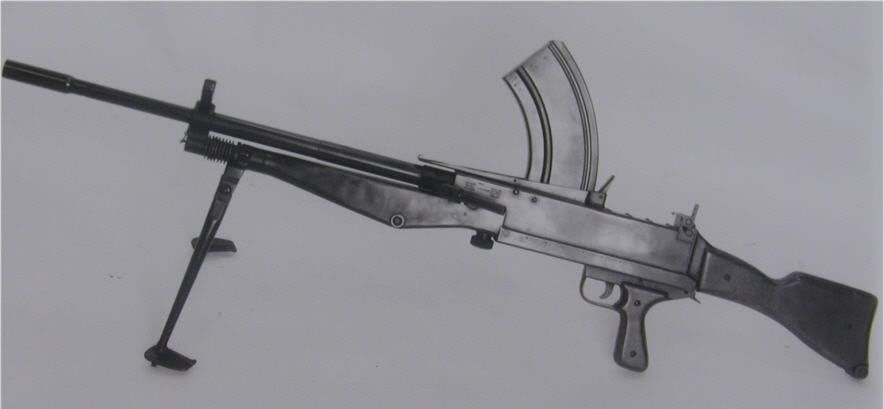
The Besal, properly named "Gun, Light, Machine, Faulkner, .303-inch", was a light machine gun of British origin. The weapon was intended as an alternative to the Bren gun as it was lighter, simpler, cheaper and easier to manufacture and therefore was not dependent on the Royal Small Arms Factory, Enfield which was within range of German bombers. As the threat to the supply of Brens receded, it was eventually deemed unnecessary and never went into mass production.[1]

Key Information

The design was by Harry Faulkner of the Birmingham Small Arms Company, which also manufactured the larger Besa machine gun which like the Bren was a product of the pre-war Czech arms manufacturer. That weapon's name was a nickname for Birmingham Small Arms (BSA) and the Besal was to be a lighter version; a Besa-light. This was however not an official designation.

References

[edit]
[edit]
Revisions and contributorsEdit on WikipediaRead on Wikipedia
from Grokipedia
The Besal, officially designated the "Gun, Light, Machine, Faulkner, .303-inch", was an experimental developed by the British firm Birmingham Small Arms (BSA) during as a simplified, low-cost alternative to the Bren gun, intended for rapid production in small workshops if standard manufacturing was disrupted. Designed primarily by BSA engineer Henry Faulkner in 1940–1941 amid fears of a German invasion, the Besal utilized a gas-operated, long-stroke piston mechanism derived from the Bren, chambered for the .303 British cartridge, and fed from standard 30-round Bren magazines. Its construction emphasized simplicity, employing sheet metal stampings spot-welded and pinned together, with a non-adjustable gas regulator, fixed bipod, and basic wooden furniture; early prototypes featured a skeletonized metal buttstock, while later versions added a full wooden stock. The weapon measured approximately 1,185 mm in length, weighed about 9.8 kg (22 lb), and had a cyclic rate of around 600 rounds per minute, with the barrel and other components interchangeable with the Bren to facilitate production. Initiated by a 1940 requirement from the British Small Arms Committee, the first prototype was completed by late 1941 and underwent trials starting in March 1942, where it proved reliable and effective despite its spartan design. Renamed in January 1943 to honor its designer, the project was ultimately canceled in June 1943 after only about 20 examples were built, as improved Bren production and shifting wartime priorities—following the Battle of Britain and U.S. entry into the war—eliminated the need for an emergency substitute. The name "Besal" is believed to derive from internal BSA slang for "Besa Light," referencing the related Besa machine gun.

Development

Origins and context

During the Second World War, the British Army relied heavily on the Bren light machine gun as its primary squad automatic weapon, providing essential suppressive fire for infantry sections. The Bren itself was developed in the 1930s as a licensed adaptation of the Czechoslovak ZB vz. 26 design, originally produced by the Brno-based firm Československá Zbrojovka, with modifications to chamber the .303 British cartridge and incorporate a top-mounted magazine for improved handling. Initial production occurred at the Royal Small Arms Factory in Enfield, but early wartime losses, including during the Dunkirk evacuation in 1940, exacerbated shortages of these weapons amid expanding military demands. By mid-1940, strategic vulnerabilities in Britain's arms manufacturing became acute, with fears of German invasion or aerial bombing targeting centralized facilities like Enfield, potentially crippling Bren output during a critical period of home defense preparations from 1940 to 1942. To mitigate this, the Ordnance Board issued a directive in June 1940 calling for a simplified that could be produced rapidly using basic tooling in dispersed small workshops, bypassing the need for specialized machinery and skilled labor. This approach aimed to decentralize production and ensure continuity even if major factories were disrupted, reflecting broader wartime efforts to bolster armaments resilience against Axis threats. In response, the (BSA) was tasked with developing a Bren-compatible alternative, leading to the Besal project under the direction of engineer Henry Faulkner, who began work in late 1940 despite initial uncertainties in funding. The strategic objectives centered on enabling by unskilled workers in garage-like settings, with an initial target of 10,000 units to rapidly equip territorial and units, prioritizing quantity and simplicity over precision finishing to meet urgent defensive needs.

Design and prototyping

The design and prototyping of the Besal light machine gun were driven by a philosophy aimed at extreme simplification to enable production in small workshops and garages, using minimal specialized tooling in anticipation of disrupted manufacturing during a German invasion. This approach involved replacing machined components with stamped pressings joined by spot welds and pins, drastically reducing complexity and cost compared to the Bren gun's precision-engineered parts. Notably, the adjustable gas regulator of the Bren was omitted in favor of a fixed gas port to simplify the gas system, while the bipod was redesigned as a non-adjustable folding unit attached to the for basic stability without added intricacy. Development was led by BSA engineer Henry Faulkner following a 1941 contract from the British , with the first completed by late 1941 using surplus Bren barrels and bolt carrier groups to accelerate the process. Testing commenced in March 1942, focusing on reliability and ease of assembly; early Mk I retained a conventional side-mounted but evolved through iterations to incorporate a push-pull sliding mechanism in the , adapted from the BESA for fewer moving parts. By August 1942, a further simplified version addressed production scalability, shifting to roughly finished barrels and universal magazine adapters compatible with both Bren and Motley pan magazines, while the overall design achieved a length of approximately 1,190 mm (46.9 inches) and a weight of 11 kg (24 lb). The prototypes successfully demonstrated the Besal's core innovations, including top-fed magazine compatibility with the Bren's 30-round curved boxes for logistical simplicity and a gas-operated long-stroke piston action derived from the Bren with minimal modifications to proven components. Trials confirmed the weapon's effectiveness and reliability under basic conditions, with a cyclic rate of around 600 rounds per minute, though no significant jamming or mechanical failures were noted in evaluations. Approved for emergency in late 1942 and officially designated the "Gun, Light, Machine, Faulkner, .303-inch" in to honor its designer, the project was ultimately shelved by mid-1943 when Bren output stabilized via Canadian facilities, obviating the need for the stopgap design.

Design features

Mechanism and operation

The Besal light machine gun employs a gas-operated mechanism with a long-stroke , derived directly from the Bren gun's design to ensure reliability in simplified form. Gas is tapped from a fixed port in the barrel and directed beneath it into a pressed cylinder, where it impinges on the head attached to the bolt carrier group. This drives the carrier rearward in a long stroke, unlocking the bolt via a vertically acting locking bar at its rear, extracting and ejecting the spent cartridge case, and compressing the recoil spring while cocking the striker. The spring then propels the carrier forward, stripping a fresh round from the top-mounted magazine, chambering it, and locking the bolt, after which the open-bolt configuration allows immediate firing upon trigger pull for enhanced cooling and safety against cook-offs. The cycle of operation is primarily fully , with most production prototypes lacking provision for semi-automatic fire, though some later versions included a selector switch for potential semi-automatic mode, enabling a cyclic rate of approximately 600 rounds per minute under optimal conditions. To initiate firing, the operator cocks the weapon by sliding the forward to engage the bolt and then rearward to retract it, holding it open until the trigger is pulled. A hinged dust cover over the ejection port serves as an additional interlock, securing beneath the catch when no magazine is inserted to prevent unintended operation. The design prioritizes rapid cycling for , though its fixed gas port lacks adjustability for varying or . Key differences from the Bren include the omission of an adjustable gas regulator, replaced by a simpler fixed-port system in a pressed cylinder to reduce machining needs, and coarser tolerances throughout the stamped and welded construction for emergency production. These simplifications minimized skilled labor requirements but resulted in a bulkier bolt carrier and potentially less precise gas management compared to the Bren's refined piston assembly. The Besal maintains compatibility with the Bren's 30-round curved box magazines for logistical ease.

Components and materials

The Besal light machine gun featured a receiver constructed primarily from stamped sheet steel pressings, joined by spot welds and pins to facilitate low-skill, decentralized manufacturing and reduce costs compared to the machined components of the Bren gun. This design emphasized thick stampings without lightening cuts, prioritizing durability and ease of production over weight reduction. The barrel measured approximately 25 inches (635 mm) in length, chambered for the cartridge, and incorporated a fixed gas port without an adjustable regulator to simplify construction. Early prototypes utilized surplus Bren gun barrels to address material shortages, while later versions featured a proprietary design with a clamped front sight and gas block, a tubular , and an optional carrying handle for barrel removal. Materials focused on inexpensive steel, avoiding costly alloys to enable in small workshops. The and furniture adopted a simplified wooden configuration similar to the Bren but with reduced complexity, including a hollow metal buttstock clad in wooden panels and a basic . Initial designs experimented with a hybrid solid wood and wire-frame for material savings, later revised to a solid wooden buttstock with a handguard over the gas assembly. The weapon featured a folding, non-adjustable bipod for stability during firing, with an optional barrel carrying handle for portability. Sights consisted of basic iron types, with a rear pivoting between 300- and 500-yard settings for simplicity, while the front sight integrated into the gas block. Controls were streamlined, featuring a sliding for cocking the bolt and a release on the backstrap, with the trigger group designed for minimal components to support rapid assembly. Unloaded, the Besal weighed approximately 11 kg (24 lb), with an overall length of about 47 inches (119 cm), reflecting the trade-offs in heavier construction for cost efficiency over the lighter Bren . Throughout, materials like pressed and plain wood were selected to prioritize affordability and wartime expediency.

Production and deployment

Manufacturing efforts

The Besal was conceived for production in small, decentralized workshops equipped with basic machinery like lathes and presses, enabling rapid manufacture without dependence on large-scale facilities susceptible to air raids. This design philosophy emphasized simplicity, utilizing stampings, spot welds, and minimal to facilitate output in diverse locations across Britain. Birmingham Small Arms (BSA) received a War Office contract in 1941 to develop the weapon, with the first prototype completed and delivered for testing in March 1942. By 1942–1943, BSA had produced an estimated 20 prototypes across various patterns, incorporating refinements such as a solid wood buttstock and added carrying handle. Initial plans envisioned scaling to large-scale production through multiple contractors, leveraging existing Bren gun barrels and magazines to accelerate assembly, though no specific order volume was finalized before abandonment. Despite its simplified construction, manufacturing faced hurdles including delays in developing specialized tooling and dies for the stamped components, which were not interchangeable with existing Bren production equipment. Material shortages, particularly for barrels, further complicated efforts, as the design's reliance on repurposed Bren spares proved insufficient for broader output. These issues, combined with the Besal's lower finish standards, ironically demanded new production infrastructure despite the intent for ease of fabrication. The project was ultimately cancelled in June 1943 after Bren production stabilized and expanded significantly, with facilities in the UK, , , and achieving rates up to 10,000 units per month at John Inglis alone. Total Besal output was limited to approximately 20 .

Military evaluation and service

The underwent initial military evaluation by the in 1942, with the first demonstrated to the Small Arms Committee in March of that year, yielding encouraging results. A revised was submitted in August 1942, followed by extensive testing during the winter at the Pendine ranges, where the weapon encountered few operational issues. Further trials continued into 1943, leading to its official designation as the "Gun, Light, Machine, Faulkner, .303-inch " in January 1943. Evaluations focused on the Besal's potential as a simplified alternative to the Bren gun, emphasizing its ease of production and maintenance amid wartime shortages, though it lacked features like an adjustable gas regulator and semi-automatic capability. Despite performing adequately in reliability tests, the weapon was not deemed superior in overall accuracy or sustained fire compared to the established Bren. By mid-1943, as Bren production stabilized across multiple facilities—including in the UK, , , and —the need for the Besal diminished. The Besal saw no combat deployment during and was never issued to frontline units or the in significant numbers. Its adoption was formally rescinded on June 10, 1943, with only a limited number of prototypes produced—estimated at around 20 units across various patterns—preventing any widespread service. Post-war, the Besal generated limited interest, serving primarily as a conceptual influence on emergency weapon designs but failing to achieve broader adoption due to the Bren's continued dominance.

Legacy and preservation

Post-war assessment

The Besal light machine gun exemplified the British "simplified weapon" philosophy during , prioritizing rapid, decentralized production using stamped components and to mitigate risks from potential bombing of precision manufacturing facilities. This approach allowed for assembly in small workshops with basic tools, demonstrating the feasibility of low-cost, high-volume production under wartime constraints. However, the design's shortcuts compromised , such as an awkward cocking mechanism involving a sliding and lever. Viewed retrospectively as a "last resort" contingency measure following the , the Besal was ultimately deemed unnecessary by 1943 as Bren gun production stabilized and the immediate threat of invasion diminished, leading to its shelving without entering service. The Besal's historical impact lay in proving the viability of stamped-metal construction for automatic weapons, similar to contemporary simplified designs like the . In comparison to the Bren, the Besal retained core operational features but sacrificed refinement for expediency. Modern assessments by firearms historians praise its ingenuity as a of , while analyses critique it as redundant given the Bren's proven reliability and ample supply.

Surviving examples and collections

Due to the limited production of approximately 20 prototypes during , surviving examples of the number fewer than a dozen, with most originating from early experimental batches produced by Birmingham Small Arms (BSA). The (IWM) in maintains two significant specimens in its collections: the Besal Mk 1 (catalogue number FIR 8123), measuring 120 cm in length with a 61 cm barrel in .303 calibre, and the Besal Mk 2 (FIR 8124), similarly dimensioned at 120 cm overall with a 65 cm barrel. Another key example resides at the Royal Armouries in , an experimental .303-inch centrefire automatic dated circa 1942 (object PR.1254, serial number 7), featuring a folding bipod, Bren-compatible 30-round magazine, and , though it lacks the wooden grip for the anti-aircraft handle and is held in study collection status. A hand-built prototype, noted for its smooth welds, deep blued finish, and complete functional components including a barrel with carrying handle, was examined through access provided by Armament Services (ARES), highlighting the weapon's preservation in private or specialized holdings. Many of these survivors are incomplete, demilitarized, or partially restored to prevent operational use, reflecting their status as experimental artifacts rather than service weapons. These rare pieces are infrequently displayed to the public, primarily appearing in targeted exhibits on British experimental from , such as those organized by historical arms research groups.
Add your contribution
Related Hubs
User Avatar
No comments yet.