Hubbry Logo
BosasoBosasoMain
Open search
Bosaso
Community hub
Bosaso
logo
8 pages, 0 posts
0 subscribers
Be the first to start a discussion here.
Bosaso
Bosaso
from Wikipedia

Bosaso (Somali: Boosaaso, Arabic: بوصاصو), historically known as Bender Qassim is a city in the northeastern Bari province (gobol) of Somalia. It is the seat of the Bosaso District. Located on the southern coast of the Gulf of Aden, the municipality serves as the region's commercial capital and is a major seaport within the regional state of Puntland.[2]

Key Information

The city has a diverse economy centred on education, government, banking, tourism, aviation, food, clothes, logistics, steel, energy, health care, hospitality, retail and technology. The area's many colleges and universities make it a regional hub of higher education, including law, medicine, engineering, business and entrepreneurship.[2]

History

[edit]

The Periplus of the Erythraean Sea indicates that Ancient Greek merchants sailed to Bosaso, providing notes about the strategic and geographical location of the current Bosaso area, which was known as Mosylon in ancient times.

About 3+12 hours' walk from Bet Qasim, we came to Bander Kasin (also called by the Arabs: the native name is Bosaso), which was built about sixty years ago. The Kaptallah was considered as first settlers. [3][failed verification]

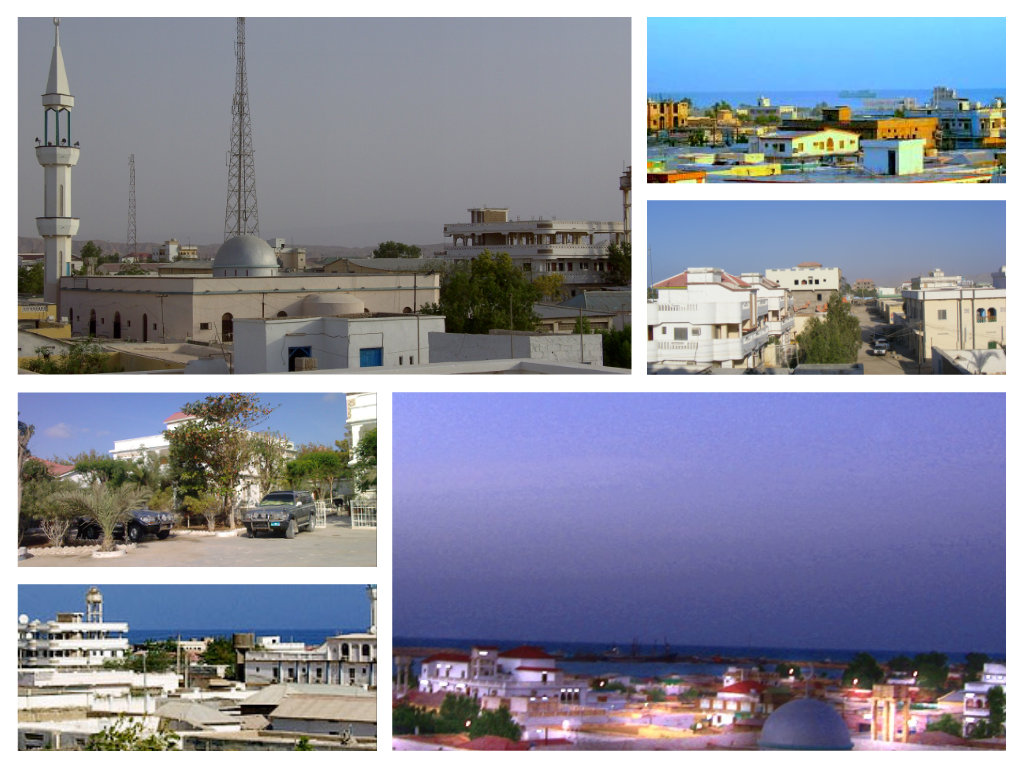
Overview of Bosaso

For centuries the city was among the areas ruled by Dishiishe clan. [4] later forming a part of Italian Somaliland.[5] The town would eventually be administered through the official Bari region in the post-independence period.

Bosaso's population is estimated at 700,000 residents. It is the third largest city in Somalia after Mogadishu and Hargeisa.[6] While Bosaso is a melting pot, with residents hailing from all the major clans of Somalia, most of its population is from the Harti confederation of Darod sub-clans.[6]

Bosaso was previously known as Bandar Qasim, a name derived from a local trader of the same name who is said to have first settled in the area during the 14th century. It is believed that Qasim's favourite camel was called Boosaas, from which derived the current name of the town. The town was thus first called Bandar Qassim after its founder ("Qasim's town"), then later dubbed Bosaso after its founder's trusted camel. Historically, Bosaso has been a Harti stronghold, and evolved as a coastal town.[7]

Near Bosaso, at the end of the Baalade valley, lies a 2-to-3-kilometre-long (1.2-to-1.9-mile) earthwork.[8][9] Local tradition recounts that the massive embankment marks the grave of a community matriarch. It is the largest such structure in the wider Horn region.[9][6][10][11][12][13]

Geography

[edit]

Location and habitat

[edit]

Bosaso is situated in northeastern Somalia, on the Gulf of Aden coast. Nearby settlements include to the east Rehiss (3.5 km or 2.5 miles), to the northeast Marero (14 km or 8.5 miles), to the west Baalade (3.5 km or 2 miles), to the southwest Laas Geel (16.5 km or 10 miles), to the south Lasgoriga (20.5 km or 13 miles), and to the southeast El Dhurre (36 km or 22.5 miles).[14] The largest cities in the country most proximate to Bosaso are Erigavo (212 km or 132 miles), Burao (442 km or 275 miles), and Berbera (465 km or 289 miles). Shimbiris, the highest peak in Somalia, is located some 220 km (140 miles) to the southwest in the Cal Madow mountain range.[15]

In June 2014, the Puntland government launched a new tree-planting campaign in the state, with the regional Ministry of Environment, Wildlife and Tourism slated to plant 25,000 trees by the end of the year. Bosaso is among the seven cities and towns earmarked for the reforestation initiative, which also include Garowe, Qardho, Dhahar, Buuhoodle, Baran and Galkayo. The campaign is part of a broader partnership between the Puntland authorities and EU to set up various environmental protection measures in the region, with the aim of promoting reforestation and afforestation.[16]

COLLECTIE TROPENMUSEUM Bedding van de rivier Balada in de omgeving van Bender Gasem TMnr 60027146 (Eng; Baalade Valley near Bendergazim) photographed by Georges Revoil c. 1881

Climate

[edit]

Bosaso has a hot desert climate (Köppen climate classification BWh). It has a mean annual relative humidity of around 60%. The average daily mean temperature year-round is 30 °C (86 °F), with an average annual high of 35 °C (95 °F) and an average annual low of 25 °C (77 °F). Average low temperatures are coolest during the winter months of December to February, when thermometer readings typically level out at 20 °C (68 °F). The weather slowly heats up in the spring, as the April rainy season begins. Average high temperatures later peak during the summer months of June to August, when they consistently exceed 40 °C (104 °F). Come September, cooler weather starts to set in again. Rainfall reaches a high over this period, with an average precipitation of 7 mm (0.28 inches) in November. Total rainfall year-round is around 19 mm (0.75 inches).[17]

Climate data for Bosaso
Month Jan Feb Mar Apr May Jun Jul Aug Sep Oct Nov Dec Year
Record high °C (°F) 38.5
(101.3)
37.0
(98.6)
38.5
(101.3)
42.1
(107.8)
45.0
(113.0)
45.0
(113.0)
45.2
(113.4)
45.3
(113.5)
44.7
(112.5)
45.0
(113.0)
36.0
(96.8)
36.0
(96.8)
45.3
(113.5)
Mean daily maximum °C (°F) 29.0
(84.2)
30.0
(86.0)
31.0
(87.8)
34.0
(93.2)
37.0
(98.6)
41.0
(105.8)
41.0
(105.8)
40.0
(104.0)
39.0
(102.2)
33.0
(91.4)
30.0
(86.0)
29.0
(84.2)
35.0
(95.0)
Daily mean °C (°F) 25.0
(77.0)
25.0
(77.0)
26.7
(80.1)
28.8
(83.8)
31.1
(88.0)
35.6
(96.1)
36.1
(97.0)
35.6
(96.1)
33.3
(91.9)
27.8
(82.0)
25.6
(78.1)
25.6
(78.1)
30.0
(86.0)
Mean daily minimum °C (°F) 20.6
(69.1)
20.6
(69.1)
21.6
(70.9)
24.4
(75.9)
26.1
(79.0)
30.6
(87.1)
31.7
(89.1)
30.0
(86.0)
28.3
(82.9)
22.2
(72.0)
21.1
(70.0)
20.0
(68.0)
25.0
(77.0)
Record low °C (°F) 12.5
(54.5)
14.0
(57.2)
15.0
(59.0)
16.8
(62.2)
19.0
(66.2)
21.3
(70.3)
23.0
(73.4)
24.5
(76.1)
21.3
(70.3)
14.0
(57.2)
11.5
(52.7)
11.5
(52.7)
11.5
(52.7)
Average rainfall mm (inches) 0
(0)
0
(0)
1
(0.0)
3
(0.1)
3
(0.1)
0
(0)
0
(0)
0
(0)
0
(0)
2
(0.1)
7
(0.3)
3
(0.1)
19
(0.7)
Average relative humidity (%) 66 68 64 64 62 48 40 48 56 70 74 71 61
Percentage possible sunshine 80 80 87 80 80 80 80 80 80 80 80 80 81
Source 1: Arab Meteorology Book[17]
Source 2: Deutscher Wetterdienst (extremes),[18] Food and Agriculture Organization: Somalia Water and Land Management (percent sunshine)[19]

Demographics

[edit]
A residential area in Bosaso

Reliable census and survey data on Bosaso are limited, but estimates from United Nations agencies and humanitarian assessments can be used to trace population changes in both the Bosaso District (administrative area) and the city of Bosaso (urban core).

The Bosaso District has experienced significant growth. According to a 2005 breakdown by UNDP/UN OCHA, Bosaso’s total population was 164,906—divided into 107,181 urban and 57,725 non-urban residents.[20] The UNDP estimate thus indicates the urban share was roughly 65% of district population at that time. Later, the Population Estimation Survey of Somalia conducted by UNFPA and the Somali National Bureau of Statistics estimated Bosaso District’s population in 2013–2014 at 469,566.[21] Subsequent projections and compiled estimates placed the district’s population at about 615,000 by 2019.[22] During the 2021–2022 drought crisis, the International Organization for Migration projected an influx of 52,471 internally displaced or drought-affected people entering Bosaso District.[23]

The city of Bosaso has also seen considerable growth. In 2005, of the total 164,906 district residents, 107,181 were recorded as urban (i.e. residing in Bosaso town), giving an early estimate for the city core population.[24] A 2009 UN-Habitat urban planning document estimated the city’s population at about 250,000, including approximately 45,000 internally displaced persons; these figures are referred to in the UNDP Bosaso City Strategy (2024).[25] By 2015, secondary statistical compilations listed the urban population at approximately 235,000.[1] Humanitarian assessments during the 2020s recorded a large displaced population. In April 2024, a UNHCR/CCCM site verification confirmed 116,740 internally displaced persons living in 22 sites across Bosaso.[26] Some academic literature describes Bosaso as “one of the most populous towns in Puntland State, with a population of over 700,000 people.”[27]

In short that the district’s urban core had about 107,181 residents in 2005, that district population growth later took it to the 400–600 thousand range by the 2010s, and that estimates for the city’s population (excluding or including IDPs) range between ~235,000 and ~250,000 in the 2010s, though some unverified claims assert 700,000 or more.

Furthermore, Bosaso is a major port for boats carrying emigrants from within the country as well as adjacent territories across the Gulf of Aden to settle (sometimes illegally) in the Persian Gulf states.[28]

While Bosaso today is a melting pot, with residents hailing from many different parts of Somalia, most of the city's population is from Dishiishe, Majeerteen, Warsangeli and other Harti groups of Darod. The city is also home to newly arrived IDPs.[29][30][31]

Municipality

[edit]
The Bosaso horizon

Bosaso city affairs are managed by the Bosaso Municipality, its leadership is appointed by members of the area's 29 District Councilors. The municipal authority is currently led by Mayor Abdisalam Bashiir Abdisalam[32] who succeeded Yasin Mire Mohamud[33] who himself succeeded Hassan Abdallah Hassan in office.[34]

Each of the city's various districts also has its own municipal sub-authorities, complete with a mayor and civil servants.[2]

Economy

[edit]

Bosaso is a city that is experiencing rapid growth. Prior to the Somali civil war, it had a population of under 50,000 inhabitants. Since the conflict, Somalis belonging to the Harti Darod sub-clans began migrating back to their ancestral areas of Puntland.[35] As a consequence of these migrations, Bosaso's population and the local housing industry have grown tremendously.

An Amal Bank branch in Bosaso

In December 2011, a new commercial market opened in Bosaso's northern Dayaha ("Star") neighborhood, near the port. Approximately one-half kilometre (550 yd) in size, it was designed to ensure easy vehicle access. The market is the result of careful planning between Puntland government officials and civil society representatives.[36] In September 2013, Puntland Minister of Fisheries Mohamed Farah Adan also announced that the Ministry in conjunction with the FAO would open a new fish market in the city, complete with modern refrigerators.[37]

Bosaso is home to Golis Telecom Somalia, the largest telecommunications operator in northeastern Somalia. Founded in 2002 with the objective of supplying the country with GSM mobile services, fixed line and internet services, it has an extensive network that covers all of the nation's major cities and more than 40 districts in both Puntland and Somaliland.[38] According to The Economist, Golis offers one of the cheapest international calling rates on the planet, at US$0.2 less than anywhere else in the world.[39] In addition, Netco has its headquarters in the city. Other telecommunication firms serving the region include Telcom and NationLink.

In September 2013, Puntland Deputy Minister of Environment Burhan Elmi Hirsi also announced a plan by the Puntland government to establish a gas manufacturing plant in Bosaso. The new project is part of a broader campaign by the Puntland environmental authorities to avert deforestation and promote alternative sources of fuel.[40]

Cement making machines on the outskirts of Bosaso

The Hafun Fishing Company was established in 1992 in Bosaso.[41][42] It was named after the northeastern port town of Hafun, where HFC also has an office. The firm exports a wide range of fish products, which it mainly sends to partners in the Middle East. The company is exploring additional global markets for its fish goods. It also maintains commercial interests in Puntland's housing market, which are represented by the firm's growing local real estate sales and development division.[41]

Additionally, the Bosaso Tannery is based in the city. A ten-year-old manufacturing, distributing, wholesale and import/export company, it processes wet salted, dry salted, wet blue, limed, pickled, and air/frame dried sheep and goat hides and skin.[43] Principle wet blue exports are to Turkey, Pakistan, India and China.[43] Raw camel hides and sheep and goat skin are also exported to the United Arab Emirates.[44]

Commercial banks serving Bosaso include Amal Bank and Salaam Bank. Salaam Bank provides personal banking and corporate banking services. Its Islamic banking services and facilities include Mudarabah, Murabaha, Musharakah and Istisnaa. Additionally, the bank offers electronic banking, SMS banking, mobile banking and internet debit.[45] In August 2011, the bank also launched an independent (Kaaftoon) service partnering with Golis Telecom Somalia.[46]

Transportation

[edit]
The Bender Qassim International Airport in 2007, prior to renovations

Bosaso is traversed by a 750-kilometre (470 mi) north–south highway. It connects major cities in the northern part of the country, such as Galkayo and Garowe, with towns in the south.[47] In June 2012, the Puntland Highway Authority (PHA) launched an upgrade and repair project on the large thoroughfare between Bosaso and Garowe.[48] The transportation body also began rehabilitation work in October 2012 on the central artery linking the city with Qardho.[49] Additionally, plans are in the works to construct new roads connecting littoral towns in the region to the main highway.[48] In June 2014, Puntland President Abdiweli Mohamed Ali along with Bosaso Mayor Hassan Abdallah Hassan and other state officials also inaugurated a new 5.9-kilometre (3.7 mi) paved road in the city. The construction project leads to the Bosaso seaport, and was completed in conjunction with UNHABITAT. According to Ali, his administration plans to invest at least 23 million Euros in contributions from international partners in similar road infrastructure development initiatives.[50]

The city has a major seaport, the Port of Bosaso. It was constructed during the mid-1980s by the Siad Barre administration for annual livestock shipments to the Middle East. In January 2012, a renovation project was launched, with KMC contracted to upgrade the Bosaso Port's harbor. The initiative's first phase saw the clean-up of unwanted materials from the dockyard and was completed within the month. The second phase involves the reconstruction of the port's adjoining seabed, with the objective of accommodating larger ships.[51]

Besides its busy seaport, Bosaso has a major airport, the Bender Qassim International Airport. In 2008, the Puntland government signed a multimillion-dollar deal with Dubai's Lootah Group, a regional industrial group operating in the Middle East and Africa. According to the agreement, the first phase of the investment is worth Dhs170m ($46.28m) and will see a set of new companies established to operate, manage and build Bosaso's free trade zone and sea and airport facilities. The Bosaso Airport Company is slated to develop the airport complex to meet international standards, including a new 3.4-kilometre (2.1 mi) runway, main and auxiliary buildings, taxi and apron areas, and security perimeters.[52] In December 2014, the foundation stone for a new runway was also laid at the airport. The China Civil Engineering Construction Corporation is now slated to upgrade the airport's existing gravel runway, pave it with asphalt, and convert it from 1.8 to 2.65 km (1.12 to 1.65 miles) in accordance with the code 4C operations clause.[53]

Education

[edit]
Entrance to East Africa University's Bosaso campus

Bosaso has a number of academic institutions. According to the Puntland Ministry of Education, there are 74 primary schools in the Bosaso District. Among these are the Iftin School, Alfurqan, Umul-Qura and Garisa.[54] Secondary schools in the area include Hamdan, Shafi'i, Ughaz Yasin, Najah, Bosaso and Haji Yasin.[55]

Tertiary education is provided by Bosaso College (BC),[56] as well as the Puntland Nursing Institute (PNI). East Africa University (EAU) also has a Bosaso branch, one of its seven campuses in Puntland.[57] Additionally, the Sam Greathouse School of Modern Technology (SG-SMT) has been working with the local government to construct a large scale dial-up network linking Bosaso to other northern Somali cities, including Berbera and Las Anod.[citation needed]

Panorama

[edit]
Bosaso panorama at dusk
Bosaso cityscape

Tourist attractions

[edit]

Biyo Kulule is a hot spring located southeast of the city, 7 kilometres (4.3 mi) outside the city.

Mareero located (25 kilometres (16 mi) eastern direction of Bosaso, it is known for its white sand beach.

Ga'a, Laag, Karin, Yalho are considered as places to visit.

Media

[edit]

Bosaso is home to a number of private media outlets. Radio Daljir, Puntland's largest radio station, has its main headquarters in the city. The broadcaster's network of seven FM transmitters reaches most of Puntland as well as part of the neighboring Galmudug region to the south. Also centered in Bosaso with its studios in Garowe is the Somali Broadcasting Corporation (SBC), Puntland's oldest and second largest private radio station. Additionally, Horseed Radio, Al Xigma, and One Nation Radio have headquarters in the city.[58] In May 2013, Radio Garowe likewise launched a new FM station in Bosaso.[59]

The city also has its own private television channels and studios, the Eastern Television Network (ETN TV) and SBC TV.[58]

Districts

[edit]

Bosaso is subdivided into 16 administrative villages[citation needed].

Sister cities

[edit]

On 12 August 2016 Mayor Yasin Mire Mohamud of Bosaso and Mayor Betsy Hodges of Minneapolis jointly signed the memorandum of understanding that formalizes the Sister City relationship, the agreement was previously approved by Minneapolis council later embraced by Bosaso local council.

Country City
United States Minneapolis[60]

See also

[edit]

References

[edit]

Sources

[edit]
[edit]
Revisions and contributorsEdit on WikipediaRead on Wikipedia
from Grokipedia
Bosaso, historically known as Bender Qasim, is a port city in the Bari region of northeastern Somalia, situated on the Gulf of Aden. It functions as the de facto commercial capital of the autonomous Puntland State, which declared self-governance in 1998 amid the Somali Civil War to avert clan conflicts prevalent in southern Somalia. The city has undergone explosive urbanization since the 1990s, driven by refugee inflows and returnees, elevating its status as a key economic node in the Horn of Africa. Bosaso's economy revolves around its deep-water , which facilitates exports of , , and hides, generating substantial revenue that sustains local markets and ancillary sectors like transportation and . With an estimated of around 700,000, it ranks as Somalia's third-largest urban center after and , hosting a diverse populace including expatriates and drawing on its strategic maritime position for regional commerce. The city's growth has been marked by infrastructure strains and security vulnerabilities, including sporadic attacks by groups like ISIL-Somalia, underscoring ongoing challenges to stability despite its economic dynamism.

History

Pre-Colonial and Medieval Trade Hub

The site of modern Bosaso, historically known as Bender Qassim (meaning "Qassim's Port"), featured natural harbors along the that were noted by Greek merchants as early as the first century CE for their suitability in regional . Settlement commenced in the , when a Yemeni trader named Qassim established a there, leveraging the location for maritime commerce between the and the . The name Boosaaso itself derives from Qassim's favored , reflecting the and mercantile integration in early Somali coastal societies. In the medieval period, Bosaso functioned as a modest trade hub within the broader Somali maritime network, exporting commodities such as , , hides, and to and Arabian markets via vessels, while importing textiles, metals, and grains. This exchange contributed to the economic vitality of the region's clans, including the , who dominated local seafaring and overland caravan routes connecting interior Somali territories to coastal outlets. Archaeological evidence from analogous northern Somali ports, like those near , indicates similar patterns of Islamic-influenced trade communities emerging around the 13th–15th centuries, though specific medieval artifacts from Bosaso remain limited. Pre-colonial growth accelerated from the under the , which controlled Bosaso and enforced maritime tolls on spice and livestock shipments to southern Arabia, fostering fortified warehouses and shipbuilding facilities. By the early , the port had expanded through initiatives like the Kaptallah seafaring company's investments, solidifying its role in trans-Gulf trade networks amid competition from ports like . This era preceded Italian boundary delineations in 1884, which placed the area just east of colonial borders, preserving indigenous commercial autonomy until formal establishment.

Colonial Period and Italian Influence

In 1884, Britain and Italy agreed to delineate spheres of influence along the Somali coast, positioning the boundary between British Somaliland and Italian Somalia just west of Bender Cassim, thereby placing the port within the Italian zone. The surrounding region fell under the Majeerteen Sultanate, led by Sultan Uthman, who formalized a protectorate treaty with Italy on 7 April 1889, granting the Italians commercial privileges and establishing the foundation for Italian Somaliland while initially retaining local governance. Follow-up agreements in 1901 and 1909 progressively eroded sultanate autonomy, with Italy securing enhanced administrative oversight amid regional pressures from the Dervish movement and internal dynamics. By 1906, Bender Cassim hosted seven forts, highlighting its defensive and strategic significance as a harbor linking trade routes to . Under Fascist Italy's expansionist policies in the , Sultan Uthman launched a in 1925 against intensifying Italian encroachments, prompting the Campaign of the Sultanates. Italian forces, augmented by indigenous zaptié units, systematically dismantled sultanate resistance through fortified assaults and blockades, achieving full subjugation of the territories, including Bender Cassim, by late 1927. From 1927 to 1941, Bender Cassim operated primarily as a modest commercial port under direct Italian colonial administration, supporting limited exports of gums, hides, and livestock while serving naval interests. Infrastructural investments, such as basic roads and administrative outposts, were implemented, but paled in comparison to southern initiatives like banana plantations and 's expansion, reflecting Italy's prioritization of fertile interriverine zones over arid northern pastoral areas. Integrated into in 1936, the port saw temporary military reinforcements, yet Italian settlement remained negligible due to environmental challenges and local nomadic economies. disruptions culminated in British occupation of northern in 1941, curtailing formal Italian control.

Post-Independence Development

Following Somalia's independence in 1960 and the establishment of the Somali Ports Authority in 1962, Bosaso's port facilities remained modest, serving primarily local trade links with ports in such as and . The city functioned as a secondary outlet for regional commerce, overshadowed by larger ports like , which handled the majority of livestock exports that constituted approximately 75% of Somalia's foreign exchange earnings in the early . Under the regime after the 1969 coup, targeted infrastructure investments accelerated in the northeast during the 1970s and , including the construction of a major highway connecting Bosaso to central and the rehabilitation of existing routes. In 1984, the government initiated development of the port specifically to facilitate livestock re-exports to , aiming to diversify export pathways amid political tensions. By the late , a new port facility was constructed, incorporating duty-free operations to bolster economic activity and appease local opposition in the northeast while undermining rivals in the northwest. These efforts positioned Bosaso as an emerging alternative trade hub, emphasizing shipments as a key revenue source amid national , though the city's overall growth remained constrained by the central government's socialist policies and limited broader investment prior to the .

Somali Civil War and Recovery

During the , which intensified after the collapse of President Siad Barre's regime on January 27, 1991, Bosaso avoided the widespread destruction and factional warfare that devastated southern , primarily due to the relative cohesion among the subclans of the clan family, including the Majerteen, , and Warsengeli, who dominate the region. Local elders and traditional leaders quickly established administrations to maintain order, preventing the city from descending into the clan-based militias and power struggles seen elsewhere. While minor incidents occurred, such as a brief by troops in Bosaso in the early following leadership changes in regional security forces, the city remained an open hub for trade and livestock exports, with its port continuing operations amid the national anarchy. This stability positioned Bosaso as a refuge for displaced persons from conflict zones and a conduit for commerce linking to Gulf states. Recovery efforts accelerated following the declaration of Puntland autonomy on August 1, 1998, in Garowe, which encompassed and provided a framework for governance and in northeastern . The city's role as an economic engine strengthened through investments and remittances, fueling infrastructure rehabilitation, including expansions at the and , which handled increasing volumes of exports like livestock to and the UAE. Trading activities and property investments surged post-1991, transforming Bosaso from a modest into a bustling commercial center with rapid driven by inflows of people fleeing southern violence. Local initiatives, supported by international aid in some instances, focused on rehabilitation, with communities driving modernization efforts such as market expansions and private arrangements to sustain . Despite these advances, recovery faced setbacks from intermittent clan tensions and external pressures, including a 2002 clash between rival factions that briefly disrupted control of Bosaso before pro-administration forces regained it. By the early , however, the city's resilience manifested in sustained growth, with its port emerging as a vital lifeline for 's economy, underscoring the effectiveness of bottom-up, clan-mediated stabilization over centralized interventions. This period laid the foundation for Bosaso's post-war prosperity, highlighting how localized governance mitigated the civil war's long-term impacts in contrast to more fragmented regions.

Establishment of Puntland and Post-1998 Growth

In August 1998, clan elders from the Harti Darod sub-clans convened in Garowe to declare the formation of the Puntland State of Somalia, establishing it as an autonomous regional administration aimed at fostering stability, democratic governance, and eventual integration into a federal Somali system. This initiative, driven by a desire to avert the clan-based warfare plaguing southern Somalia, adopted a charter emphasizing rule of law, human rights, and economic development. Abdullahi Yusuf Ahmed, a former Somali military officer, was elected as the first president, with the new entity's political capital in Garowe but economic activities centering on Bosaso. Residents of Bosaso contributed significantly to the declaration process, leveraging the city's port infrastructure to support logistical and financial aspects of the state-building effort. Post-1998, Bosaso benefited from Puntland's relative stability, positioning itself as the region's commercial hub with expanded through its , which handled imports of foodstuffs, construction materials, and consumer goods alongside exports of , , and . Trading volumes and property investments accelerated, fueled by diaspora remittances and local , transforming Bosaso into a bustling center for small businesses and markets. The 's role as one of Puntland's primary economic assets facilitated connectivity via the Bosaso-Galkacyo road, enabling with inland areas and beyond. This growth spurred infrastructure improvements, including enhancements to the and , alongside population influx from rural areas and returnees, though exact figures remain estimates due to limited data. Small-scale enterprises proliferated, contributing to GDP through sectors like retail, , and services, with Bosaso's economy diversifying beyond traditional . However, periodic disruptions from disputes and the rise of Islamist insurgencies, such as Al-Shabaab incursions in the , tempered sustained expansion, highlighting vulnerabilities in the absence of robust central security.

Geography and Environment

Location and Topography

Bosaso is situated on the southern coast of the Gulf of Aden in the Bari region of northeastern Somalia, serving as the principal urban center of Puntland state. Its geographic coordinates are approximately 11.28° N latitude and 49.18° E longitude. The city occupies a strategic position along the Horn of Africa, facilitating maritime trade routes connecting the Indian Ocean to the Red Sea. The terrain in Bosaso consists primarily of a low-lying at an elevation of roughly 12 meters (39 feet) above , characterized by sandy beaches and alluvial deposits along the shoreline. Immediately inland, the landscape ascends abruptly via an into the semi-arid of the Golis Mountains, which reach average crest elevations of 1,800 to 2,100 meters and feature dissected plateaus and steep valleys. This topographic transition from flat littoral zones to rugged highlands influences local drainage patterns, with seasonal wadis channeling sporadic rainfall toward the coast. The surrounding area's relief supports a mix of arid scrub vegetation on the plains and more diverse woodlands at higher elevations in the mountains.

Climate Patterns

Bosaso exhibits a hot (BWh) under the Köppen-Geiger classification, characterized by extreme heat, minimal , and high throughout the year. Average annual temperatures hover around 28.4°C (83.1°F), with diurnal ranges influenced by coastal proximity to the . The hot season spans May to September, featuring prolonged sweltering conditions with average highs exceeding 35.5°C (96°F) and peaking at 37°C (99°F) in , alongside lows around 30°C (86°F). In contrast, the cooler season from mid-November to mid-February brings milder highs below 30.5°C (87°F), with January recording averages of 29.4°C (85°F) high and 21.7°C (71°F) low, though absolute minima rarely drop below 20°C. Year-round winds, peaking at 26 km/h (16 mph) in July, contribute to a consistently dry feel despite occasional coastal spikes reaching muggy levels for up to 28 days in . Precipitation is exceedingly low, averaging 50–72 mm annually, underscoring the regime despite Somalia's broader bimodal rainfall pattern of Gu (April–June) and Deyr (October–December) seasons. The scant rains, often sporadic and unreliable, peak modestly in (around 8 mm) or November (up to 17 mm), with many months registering near-zero accumulation and fewer than 1–2 rainy days. This aridity persists due to the region's from surrounding highlands and dominant high-pressure systems, limiting vegetation and exacerbating .

Environmental Challenges

Bosaso faces severe exacerbated by its arid climate, recurrent droughts, and rapid , leading to reliance on shallow wells, seasonal reservoirs, and subsurface that provide only temporary supply. Cyclical droughts, such as those intensified by failed rainy seasons in , have prompted local reports of shortages, with residents in Bosaso seeking aid for access amid broader humanitarian strains. further compounds this through into coastal aquifers from projected and increased evaporation, degrading quality. Coastal erosion poses an imminent threat to Bosaso's shoreline, driven by wave action, urban constructions encroaching on the sea line, and climate-induced projected at 12 cm by 2030 and 20 cm by 2050 relative to 2000 levels. This endangers port infrastructure, IDP settlements, and ecosystems like mangroves, with port expansions requiring that heightens risks to adjacent communities. Pollution remains a persistent issue, including historical of —such as industrial, hospital, and radioactive materials from European firms—initiated in 1989 and surging after the , resulting in water contamination, , and health crises affecting up to 290,000 people. Current challenges involve inadequate , with 157,500 kg generated weekly, much of it openly dumped or burned near settlements, alongside fish waste from landing sites and potential marine pollutants from shipping. Urban expansion and further contribute to air dust, noise, and in Bosaso's sparse biological environment of acacia-commiphora scrub and migratory bird habitats. These challenges are amplified by broader climate shifts, including temperature rises of 0.7°C by 2030, over 40 additional extreme hot days by 2050, flash floods, and deforestation-linked , straining resilience in this port-dependent city.

Government and Politics

Municipal Administration

Bosaso's municipal administration operates as a Grade A under Puntland's framework, functioning as the primary body responsible for , infrastructure maintenance, public services, revenue collection, and land management within the city. The administration is led by a elected by the , with the council comprising 33 members directly elected by residents in local polls, marking a shift from prior indirect or nomination-based systems following Puntland's inaugural direct elections in May 2023 across 30 including Bosaso. The district council oversees legislative functions such as budget approval and policy-making, often through participatory processes like community consultations embedded in the District Development Framework, while permanent committees handle specialized areas including , , , revenue mobilization, , monitoring, gender equity, and budget review. Executive operations are supported by departments for social affairs, , administration and finance, revenue, planning, and justice, sanitation, and audit, with an internal auditor reporting directly to the to ensure fiscal oversight. As of 2020, the municipality employed approximately 240 staff members, with women comprising 28% of the workforce, primarily in lower-grade positions. The current mayor, Dr. Abdirahman Abdullahi Ali, an opposition Mideeye party member and former parliamentarian, was elected by the council on July 9, 2025, succeeding Eng. Abdifatah Mohamed Osman Shanle amid ongoing efforts to enhance local governance amid security and economic pressures. The , alongside a deputy, directs daily administration, coordinates with state ministries on issues like disaster management and , and enforces revenue generation through mechanisms such as property taxes, port fees, and checkpoints, which contribute significantly to the district's operations despite challenges in enforcement and capacity.

Integration with Puntland Governance

Bosaso's municipal administration was established shortly after the formation of in August 1998, with the city serving as the region's commercial hub while Garowe functioned as the administrative capital. The initial district councils in Bosaso and Garowe were set up in the early years of to decentralize basic service delivery, though they operated under the oversight of the state's Ministry of Interior. This structure integrated local into 's semi-autonomous framework, emphasizing clan-inclusive representation while aligning with state-level policies on , revenue, and development. Fiscal integration has evolved through revenue-sharing mechanisms and initiatives. Bosaso's district council generates income from local taxes on businesses, , , and transport, supplemented by transfers from the state government, which accounted for a portion of municipal as of the early . In 2022, Bosaso achieved "" status in Somalia's fiscal program, enabling greater local control over revenues while maintaining accountability to Puntland's central budgeting processes. This milestone, shared with Garowe, reflected improved tax administration and land management systems, though early efforts in the 2000s relied on ad-hoc procedures lacking formal integration with state protocols. Puntland exercises supervisory authority over Bosaso's local elections and leadership, as evidenced by the state's rejection of certain district council outcomes deemed illegitimate. For instance, in October 2023, the Puntland government denounced local council chair elections in Bosaso, asserting non-compliance with regional electoral standards. Municipal leaders, including the , coordinate with state , such as during directives in June 2025 for local businesses to contribute to Puntland's anti-ISIS operations, underscoring the city's role in state-wide defense funding. Development frameworks, like the 2014-2018 District Development Framework, further embed Bosaso's planning under the Ministry of Interior, incorporating community consultations across 16 villages under municipal jurisdiction. Challenges to seamless integration include tensions over , particularly amid 's 2024 withdrawal from federal recognition, which reinforced state-level control without altering Bosaso's operational alignment. Port expansion agreements, such as the December 2022 deal between and the government for Bosaso's facilities, highlight centralized state decision-making on pivotal to the city's . Overall, this model balances local revenue with 's strategic oversight, fostering stability in a clan-influenced context.

Clan-Based Political Dynamics

In Bosaso, political authority is profoundly shaped by clan structures, with the —particularly its Majerteen sub-clan—exerting dominant influence due to historical settlement patterns and control over trade networks following the 1991 . The city's role as a commercial hub attracted returning traders, including Majerteen, who leveraged homelands for security and economic re-territorialization, consolidating their sway over port operations and livestock exports, which averaged 100,000 , 20,000 camels, and 1.5 million annually from 2005 to 2015. Other sub-clans, such as Dishiishe and Salebaan, maintain presence, but Majerteen dominance stems from their numerical majority and historical governance ties, including pre-colonial sultanates that centralized authority under sub-clan recognition of a supreme ruler. Governance in Bosaso integrates traditional mechanisms with Puntland's formal institutions, where sub-clan elders select parliamentary and municipal representatives, often prioritizing clan consensus over platforms. This process, evident in the local elections, saw clan-based political associations like HORSEED, HORCAD, WADAJIR, and UDAD compete vigorously in Bosaso, with the city hosting 136 polling stations across region and drawing campaigns focused on clan loyalties amid a relatively secure environment. However, reflected clan-driven distrust, at 56% in Bosaso compared to 72% in Garowe, while pre-election mobilizations formed loose clan-affiliated militias to challenge incumbents. Traditional elders' role has weakened due to political divisions and limited state support, yet clans remain pivotal for and conflict mediation in municipal decisions. Clan dynamics extend to economic and administrative spheres, where networks based on —reported by half of Bosaso's and service businesses as primary for staffing—inform political patronage and informal power-sharing in the municipal council. This hybrid system fosters stability in trade but perpetuates tensions, as seen in sub-clan petitions against government extensions in (2012) and occasional instability from rivalries, including those exploited by groups like affiliates drawing from local sub-clans such as Dashishle. Efforts to decentralize, supported by UNDP frameworks for local councils, aim to formalize boundaries but remain constrained by clan vetoes on equitable representation.

Demographics

Population Estimates and Growth

Bosaso's population has experienced rapid expansion since the early 1990s, driven primarily by from conflict-affected regions in southern , economic opportunities tied to activities, and natural increase. In 1991, following the of 's , the city's was estimated at 15,000 to 25,000 residents. By 2009, this had grown to approximately 250,000, including an additional 45,000 internally displaced persons (IDPs). The 2014 estimate reached 394,831 host community members plus 49,000 IDPs, reflecting sustained inflows amid ongoing instability elsewhere in the country. Recent assessments place Bosaso's total , including IDPs, at around 743,000 as of 2023, according to UN-Habitat baseline derived from field surveys and GIS analysis. Alternative 2022 figures vary, with UNDP estimating 620,000 overall and the Displacement and Durable Solutions Cluster reporting 436,596 excluding IDPs, while UN-Habitat's building-count method yielded 306,330; these discrepancies stem from methodological differences, such as inclusion of transient IDP populations estimated at 119,711 to 126,544 across 22 sites in 2023. A 2015 revenue plan similarly pegged the figure at 700,000 to 800,000, underscoring consistent high-end estimates from administrative sources. Annual growth rates have averaged above 3% in recent years, with a 2024 projection of 3.05% expected to taper to 2.66% by 2035 under medium scenarios, fueled by an estimated 30,000 annual migrants from 2019 to 2024 alongside natural increase. This trajectory projects a of 771,000 by 2024, rising to 1,000,000 by 2030 and 1,200,000 by 2035 in medium-growth models, though low- and high-growth variants range from 1,096,000 to 1,350,000 by the latter date. Such expansion has intensified to 437 people per in core areas, straining resources and highlighting the need for planned extensions to accommodate up to 150,000 additional residents in peripheral zones by 2035.
YearEstimate (Total Population)Source/Notes
199115,000–25,000Pre-migration baseline
2014~444,000 (incl. IDPs)UNFPA host + IDPs
2015700,000–800,000Local revenue plan
2023743,000UN-Habitat baseline
2030 (proj.)1,000,000Medium growth
2035 (proj.)1,200,000Medium growth

Ethnic and Clan Composition

Bosaso's population is ethnically homogeneous, consisting almost entirely of Somalis, reflecting the broader demographic patterns in northeastern where non-Somali minorities such as Bantu or constitute negligible proportions in urban centers like this port city. affiliations, which structure Somali social, political, and economic life, dominate local identity, with the —a major branch of the family—forming the core demographic base. This dominance stems from historical settlement patterns, as Bosaso was originally established and populated primarily by Ahmed Harti sub-clans during its development as a trading hub. Within the Harti grouping, the Majerteen sub-clan holds particular prominence in Bosaso, alongside other Harti elements like the Warsengeli and , who trace their pastoralist and mercantile roots to the region's coastal and inland territories. These clans have maintained influence through control of trade networks and local governance, reinforced by Puntland's state formation in the late , which aligned with Harti territorial claims. As a commercial , Bosaso attracts migrants from other Somali clan families, including non-Harti Darod branches like the and representatives from or Dir groups, fostering a degree of inter-clan mixing; however, Harti clans retain majority status and mediate resource access, such as port operations and land allocation. This diversity, amplified by post-1991 displacements and remittances from diaspora communities, does not dilute the Harti core but introduces tensions over representation in municipal councils and security militias. Occupational minorities, such as the or Midgan (traditional artisans and service providers integrated into Somali clan systems but often marginalized), exist in small numbers, performing roles in craftsmanship or labor that align with patronage networks rather than forming distinct ethnic enclaves. No reliable data quantifies exact ratios due to the absence of formal demographic surveys in since the , but qualitative assessments from regional analyses consistently affirm Harti preponderance, with estimates suggesting they comprise over 70% of residents based on settlement histories and political control patterns. dynamics in Bosaso thus prioritize diya-paying groups (noble Somali clans) over lower-status lineages, influencing everything from marriage alliances to .

Religious and Cultural Profile

The population of Bosaso is overwhelmingly Sunni Muslim, exceeding 99 percent, in line with Somalia's national religious composition. Residents primarily adhere to the Shafi'i school of jurisprudence, which has historically dominated Somali Islamic practice since at least the 13th century. Islam integrates deeply into personal conduct, family law, and community dispute resolution, with daily prayers, Friday congregational services at mosques, and observance of Ramadan shaping social rhythms; mosques also function as hubs for education and social cohesion. Non-Muslim minorities, if present, remain negligible and undocumented in reliable demographic data for the city. Culturally, Bosaso embodies core Somali traditions rooted in pastoralist heritage, patrilineal kinship, and oral artistry, adapted to its role as a coastal trading hub. The system forms the bedrock of , with loyalty to networks dictating alliances, resource sharing, and conflict mediation; in Bosaso, sub-clans of the —particularly Axmed Harti—predominate, tracing settlement patterns back to the city's founding as a demographic center for these groups. Customs emphasize hospitality, elder respect, and gender-segregated social interactions, reinforced by Islamic norms, while practices like nomadic livestock herding persist among peripheral communities despite urbanization. Expressive culture highlights poetic in Somali vernacular, including epic forms like gabay for praise or , often performed at weddings, clan gatherings, or Islamic festivals such as . Folk dances and communal feasts mark life events, blending pre-Islamic Cushitic elements with Sunni rituals, though female genital mutilation—a holdover traditional practice—has faced legal bans in since 2005 amid awareness campaigns targeting its incompatibility with Islamic teachings. Trade with ports has introduced hybrid influences, such as loanwords and modest , but clan arithmetic continues to underpin local power dynamics over purely ideological or religious affiliations.

Economy

Port-Driven Trade and Commerce

The Port of Bosaso, also known as Bender Qasim, serves as the primary gateway for in northeastern , facilitating the import of essential goods and the export of natural resources to regional markets. constitutes the dominant export commodity, with shipments of sheep, goats, cattle, and camels directed primarily to Gulf states including , the , , and . For instance, on January 21, 2025, approximately 20,000 head of were exported from the port to these destinations in a single operation. , including dry fish and fresh products, also features prominently in exports, particularly to the UAE, supporting local communities and contributing to Puntland's trade balance. Imports through the port historically provided cost-effective access to consumer goods, foodstuffs, and construction materials, making Bosaso a key entry point for commodities destined for southern until the modernization of in shifted some volumes southward. The UAE emerges as a principal trading partner, supplying imports such as onions and other while receiving and in return, underscoring reciprocal ties that bolster local . Port revenues underpin ancillary sectors like and services, generating for dockworkers, traders, and herders, though informal fees and clan-influenced operations can introduce inefficiencies. Ongoing infrastructure upgrades, including a $366 million expansion led by DP World, aim to enhance capacity for container handling and deepen berths, with completion targeted to support increased transshipment to Yemen and broader Indian Ocean trade. These developments, backed by UAE investments, are projected to amplify economic multipliers by attracting more vessels and reducing reliance on overland routes prone to insecurity, though realization depends on sustained regional stability. Historically, the port's prominence in livestock trade since the early 1990s has driven urban growth, positioning Bosaso as Puntland's commercial nerve center despite competition from ports like Berbera.

Primary Sectors: Fishing and Livestock

Bosaso's primary economic sectors of fishing and livestock underpin much of the local economy, with livestock exports dominating due to the region's pastoralist traditions and proximity to Gulf markets. Livestock trade, centered on sheep, goats, camels, and cattle sourced from inland areas, accounts for a significant portion of Puntland's foreign exchange earnings, often comprising over 80% of Somalia's total exports in stable years. In Bosaso, the port facilitates annual shipments that have historically peaked at 3 to 3.5 million heads from northern Somali ports including Bosaso, though volumes fluctuate with regional droughts, disease outbreaks, and import bans in destination countries like Saudi Arabia. Recent data illustrate this activity: in January 2025, approximately 20,000 livestock heads were exported from Bosaso Port to Saudi Arabia, the UAE, and Oman; in May 2025, 80,000 goats followed to similar markets; and in December 2024, 22,000 camels and goats were shipped to Gulf states. Fishing, while secondary to , holds untapped potential along Bosaso's coastline, supported by artisanal fleets and a few processing firms. Local operations focus on species like for extraction, with Nagfish serving as the primary landing site where activity peaks daily from 3 a.m. to 9 a.m. Companies such as the Fishing Company and Yustan operate from Bosaso, the latter maintaining a modern processing plant emphasizing sustainable practices and exports. However, the sector faces constraints including inadequate cold-chain , from illegal foreign vessels, and piracy's lingering effects on fisher employment, limiting national contributions to just 3% of Somalia's GDP and 2% of exports. Efforts to bolster include projects for sustainable industry development in Bosaso and new regulations for safety and introduced by Somali authorities. In , ranks as the third major economic activity after , with community reliance on it for income amid .

Informal Economy and Remittances

The in Bosaso dominates local commerce, with unregistered firms accounting for approximately two-thirds of all businesses, outnumbering formal enterprises by a ratio of about 2:1 according to a 2019 World Bank survey conducted in Bosaso and . This sector primarily encompasses small-scale retail, street vending, unregulated transport services, and casual labor tied to port activities, employing a large influx of low-skilled migrants drawn by opportunities. Such activities operate without formal registration due to barriers like weak regulatory enforcement, high compliance costs, and preference for flexibility in a context of political instability, though they contribute substantially to daily livelihoods and urban growth. Remittances from the diaspora, concentrated in cities like and , form a critical pillar supporting Bosaso's , providing essential income for consumption and startup capital for micro-enterprises such as kiosks and money transfer points. In , including Bosaso, remittances reportedly cover up to 76% of incomes, with transfers typically ranging from $50 to $500, enabling recipients to sustain informal trading and services amid limited formal job opportunities. These inflows, often channeled through informal networks due to the scarcity of formal banking, totaled around $1.4 billion annually for as a whole in recent estimates, representing 14.85% of national GDP in 2023 and buffering against shocks like or conflict by fueling petty commerce and vendor networks. Without such transfers, urban informal sectors in Bosaso would face heightened vulnerability, as evidenced by their role as a lifeline for both urban and rural-linked s in .

Infrastructure

Transportation Networks

Bosaso's transportation networks primarily consist of road connections and air links, supporting the city's role as a regional hub in . The primary traversing Bosaso forms part of a 750-kilometer north-south route linking it to major northern cities including Garowe and , facilitating trade and passenger movement despite ongoing maintenance needs. Recent repairs on the Garowe-Bosaso segment underscore efforts to enhance connectivity, with construction ongoing for related stretches like the 90-kilometer Ceel Daahir . Bosaso International Airport (BSA) serves as the key facility, handling domestic and limited international flights. It features non-stop services to six destinations across two countries, including domestic routes to and , and international links to via airlines such as , , and Freedom Airline Express. The airport's operations support regional travel, with at least three domestic flights scheduled daily, though infrastructure upgrades are required to accommodate growing demand. Public transportation in Bosaso relies on private operators, with no government-owned systems in place; minibuses, trucks, and shared vehicles predominate for intra-city and inter-district travel. Inner city have seen upgrades, including network expansions and house relocations to improve access, as part of broader urban strategies to alleviate congestion and support economic activity. Challenges persist due to historical conflict impacts, limiting overall road quality and vehicle density compared to national averages.

Port Facilities

The Port of Bosaso serves as the primary maritime gateway for Bosaso and the surrounding region, facilitating trade primarily through livestock exports to the , alongside general , bulk goods, and imports. It features a natural harbor protected by a 420-meter northern mole and a 200-meter southern breakwater, enabling operations in the despite regional security challenges. The port's draft has been deepened to 12 meters through , allowing access for larger vessels, though it traditionally accommodates only one ship at a berth simultaneously with a pre-upgrade draft of 9 meters. Under a 30-year concession agreement signed in 2017, the port is managed by P&O Ports, a subsidiary of , while ownership remains with the Somali Ports Authority. Key infrastructure upgrades initiated by include a 455-meter quay extension, a 5.5-hectare open storage yard, and implementation of modern IT systems for tracking and operations. Handling equipment supports diverse types, with specialized facilities for and loading, reflecting the port's role as a hub for exports to markets in the and . The port's annual handling capacity is estimated at approximately 250,000 twenty-foot equivalent units (TEUs), though actual throughput emphasizes non-containerized and humanitarian priority shipments without reported congestion. Expansion efforts, announced in late 2022 and slated to commence in early 2023 with a 12-month timeline, aim to enhance container capabilities through construction of a new 150-meter quay, repairs to the existing 215-meter quay, a 3,000-square-meter container yard, a 4,000-square-meter container stripping yard, and an upgraded gate area for better . These developments, in partnership with the government, are projected to enable direct calls from regional feeder vessels, such as those from , thereby increasing integration with trade networks and diversifying beyond livestock dominance. Earlier rehabilitations, including debris clearance in the 2000s and facility modernization in 2012, have laid the groundwork for these enhancements amid post-civil war recovery.

Urban and Energy Infrastructure

Bosaso's urban infrastructure features targeted road upgrades through UN-Habitat projects designed to divert heavy port-related traffic from central districts, alleviating congestion in the city's core. The Bosaso City Strategy, developed with UNDP support, prioritizes enhancements in roads, , power distribution, and to support population growth and economic activity. Local authorities coordinate , , and initiatives, though overall water infrastructure remains underdeveloped amid rapid . Recent development efforts include Saameynta program interventions commencing road and infrastructure works, alongside IOM-supported solar-powered boreholes and facilities that have expanded access to potable and services. These projects also incorporate 88 solar streetlights to improve nighttime safety and urban mobility. Nationally, access stands at 41%, with ongoing local responses addressing and waste challenges in Bosaso. Energy infrastructure in Bosaso depends on decentralized mini-grids operated by private entities, as lacks a unified national grid, with diesel generators historically providing the bulk of alongside emerging solar capacity. The Bosaso Electricity Company (BECO) integrates solar generation into its supply, reducing reliance on imported diesel that consumes approximately 121,000 liters daily across the country. A 3.5 MW plant, financed by the , was inaugurated in late 2023 to serve as a primary source, supplemented by earlier initiatives like the PSAWEN 7 MW facility launched in 2020. In May 2025, the Somali Federal Government announced plans for additional energy projects in Bosaso to bolster reliability amid inadequate existing distribution networks.

Security

Historical Instability Factors

The collapse of the Somali central government in January 1991, following the ouster of President , triggered widespread clan-based warfare and state fragmentation, profoundly affecting Bosaso as displaced populations fled southward conflicts, quadrupling the city's population in under a decade and straining urban resources. This influx exacerbated sub-clan rivalries among groups, including Majerteen and Warsengeli, over land allocation and economic opportunities in the burgeoning port hub. The redirection of national trade to Bosaso—after closures of and ports from 1991 to 1993—temporarily boosted its role but under oversight, fostering ad hoc governance and vulnerability to factional takeovers. Post-1991 war-induced in Bosaso amplified disputes, as incoming displaced groups negotiated claims amid weak , often resorting to shaped by affiliations and profit motives. re-territorialization privileged subclans like Majerteen in trade networks, marginalizing others and perpetuating exclusionary dynamics that undermined social cohesion. These tensions manifested in localized skirmishes over urban expansion and port control, contributing to chronic insecurity despite Puntland's formation in 1998, which aimed to stabilize the northeast but inherited fragmented loyalties. The emergence of maritime piracy from the early onward, rooted in the state vacuum and initial responses to illegal foreign fishing, further destabilized Bosaso's coastal economy, with pirate networks operating from bases hijacking vessels in the and channeling funds into local arms proliferation. By 2008, escalating attacks raised shipping rates by up to 10-fold and disrupted trade routes critical to Bosaso, intertwining criminal economies with militias and eroding formal governance. This illicit influx perpetuated a cycle of dependency on informal security arrangements, hindering institutional development in the city.

Islamist Threats and Counteroperations

The primary Islamist threat to Bosaso emanates from the in Somalia (ISSP), an affiliate that has established footholds in Puntland's rugged Golis Mountains, overlooking the city and enabling surveillance and potential infiltration into urban areas. ISSP, which splintered from al-Shabaab in 2015, engages in , small-scale ambushes, and attacks on businesses and outposts to fund operations and assert control, posing risks to Bosaso's and diaspora communities vulnerable to recruitment. While ISSP has conducted fewer high-profile attacks compared to al-Shabaab in southern , its proximity to Bosaso—Somalia's key northern port—amplifies concerns over vehicle-borne improvised explosive devices (VBIEDs) or assassinations targeting officials and economic infrastructure. Al-Shabaab, though primarily entrenched in central and southern , has sporadically extended operations into , including Bosaso, through suicide bombings and targeted killings aimed at undermining local governance and rivaling ISSP for influence. Historical incursions, such as attempted bombings and clashes with forces, highlight al-Shabaab's interest in disrupting Bosaso's stability to access routes and recruit from disaffected clans. However, al-Shabaab's presence remains limited in the north due to aggressive local countermeasures, shifting the dominant threat dynamic toward ISSP's localized . Puntland's counterterrorism efforts, led by the Puntland Daraawiish brigade and coordinated through the Puntland Counter-Terrorism Operations unit, have focused on clearing ISSP from mountain redoubts near Bosaso via sustained offensives, including a major push starting in November 2024 that neutralized dozens of fighters and disrupted supply lines by February 2025. These operations, bolstered by Emirati training and equipment since 2017, emphasize ground assaults on caves and training camps, reducing ISSP's capacity for urban incursions. U.S. support has been pivotal, with precision airstrikes in February 2025 eliminating a senior ISSP attack planner and other militants in Puntland strongholds, followed by a July 2025 ground raid capturing a key leader in northern , enhancing Puntland's control over areas threatening Bosaso. Despite successes, challenges persist, including inter-clan tensions that can divert resources and allow jihadist regrouping.

Clan Conflicts and Local Responses

Bosaso, as the principal city of Puntland's Bari region, is predominantly inhabited by the Majerteen subclan of the confederation within the clan family, which has contributed to relative intra-urban stability compared to southern by minimizing large-scale inter-clan warfare. However, sporadic clan conflicts persist, often triggered by resource scarcity such as wells, lands, or commercial disputes in peri-urban areas. For instance, on August 12, 2025, clan militias from rival subgroups clashed in Kala-baydh village near Bosaso over control of a contested well, resulting in several fatalities and heightened tensions in the region. Such incidents reflect broader patterns where intra-clan rivalries, exacerbated by and population pressures, lead to armed skirmishes involving small militias armed with light weapons, though these rarely escalate to disrupt the city's core port or trade functions. Local responses to these conflicts emphasize hybrid mechanisms blending customary Somali law with state institutions. Clan elders, drawing on Harti traditional authority, frequently mediate resolutions through assemblies that enforce diya payments—compensatory blood money—to avert cycles of revenge killings, a practice rooted in pre-colonial that remains effective for intra-Harti disputes. The Puntland administration supplements this with security interventions by the Puntland Maritime Police Force and Daraawishto militia, which deploy to secure disputed sites and perpetrators, as seen in rapid responses to the 2025 Kala-baydh clash where local forces contained spillover into Bosaso proper. Urban initiatives in Bosaso further institutionalize , including a proposed hybrid land dispute court under the city's strategic framework that integrates formal with elder councils to adjudicate claims, aiming to reduce violence over commercial properties and informal settlements. These efforts have mitigated escalation in most cases, with elders' interventions resolving over 80% of localized feuds without state escalation, per regional peace mapping studies, though challenges persist from external actors like al-Shabaab exploiting fissures for recruitment. Despite these mechanisms, enforcement relies heavily on cohesion, and unresolved grievances can recur during electoral cycles when political intensifies sub-clan competitions.

Society

Education System

Primary education in Bosaso aligns with Puntland's framework, encompassing four years of compulsory schooling delivered mainly in Somali, with English as a second language from grade two onward. Secondary education builds on this base, though enrollment drops sharply, with national progression rates to secondary at approximately 17% as of 2020 data reflecting broader Somali trends. The system faces chronic underfunding and infrastructure deficits, leading to overcrowded classrooms and limited access to textbooks and sanitation facilities. Higher education in Bosaso thrives relative to rural , anchored by private institutions such as East Africa University, founded in 1999 and offering degrees in fields like business, health sciences, and engineering. Red Sea University, established in 2008, operates seven faculties covering 23 departments, including , , and , serving students from across the . Other providers include the University of Health Sciences, focused on medical training, and Gollis University's Bosaso campus, emphasizing health, computing, and commerce programs. These universities, often nonprofit and community-driven, fill gaps left by national instability but rely heavily on tuition and remittances amid limited government support. Persistent challenges undermine system efficacy, including dropout rates nearing 10% among school-aged children due to , recurrent droughts, clan displacements, and conflict disruptions specific to Bosaso's internally displaced populations. Gender inequities are acute, with girls facing barriers like early , female genital mutilation, and preferences prioritizing male , resulting in lower female transition to secondary and tertiary levels. Teacher shortages, particularly qualified instructors, compound quality issues, while Puntland's plans aim to address inequities through targeted funding, though implementation lags.

Media Landscape

The media landscape in Bosaso centers on radio and television outlets, with platforms gaining traction amid limited print media, mirroring Puntland's broader ecosystem where no newspapers are currently published. Private broadcasters operate alongside state-affiliated ones, often focusing on , , and commercial interests in this port city. The Somali Broadcasting Corporation (SBC), founded in June 2001, maintains its primary FM radio and television station in Bosaso, pioneering in and reaching over 3,000 square kilometers from its main hub there. SBC delivers programming in Somali, covering news, entertainment, and community issues, with substations extending coverage to adjacent areas. Bosaso , an independent digital outlet, disseminates factual reporting on local social affairs, economy, and events, serving the community's information needs. Puntland state media, including Radio Puntland, provide regional coverage that includes Bosaso but are headquartered in Garowe, emphasizing government perspectives on security and development. Digital expansion has enabled diaspora-influenced sites to report on Bosaso, though content often reflects or affiliations prevalent in the city's mercantile environment. Journalists in Bosaso encounter routine threats to press freedom, including arbitrary arrests and intimidation by authorities, as evidenced by the February 2021 detention of freelance reporter Ahmed Botan for online coverage. Political ownership of outlets and attempts exacerbate , particularly on sensitive topics like disputes or corruption. In the first half of 2025, recorded 41 media freedom violations tied to journalistic work, with incidents underscoring ongoing risks from state and non-state actors. Despite these constraints, independent reporting persists, supported by groups like the Media Association of advocating for safer conditions.

Cultural Heritage and Attractions

Bosaso's cultural heritage reflects its position as a historic trading port in the , with influences from Somali pastoralist traditions, Islamic practices, and maritime commerce dating back centuries. The city's architecture and daily life incorporate elements of Arab, Persian, and Indian trade legacies, evident in its mosques and markets. Local clans, primarily sub-clans, maintain oral histories and customs tied to nomadic heritage, though has shifted much of the toward sedentary lifestyles. Key religious sites include the Bender Qassim Mosque, a central showcasing traditional Somali-Islamic design with minarets and intricate stonework, serving as a focal point for communal prayers and festivals. Other mosques in the area host Sufi-influenced rituals, underscoring the predominant with Shafi'i jurisprudence in the region. These structures, often built from coral stone and wood, represent adaptations to the coastal environment and historical building techniques. The vibrant central markets, such as those in the Old Town quarter, function as cultural hubs where traders sell spices, textiles, and livestock, preserving bargaining customs and clan-mediated commerce. These bazaars echo pre-colonial trade routes linking the interior to the , with goods including and resins from nearby hinterlands. Exploration of the Old Town reveals narrow alleys lined with coral-built homes, offering glimpses into 20th-century urban development under Italian colonial influence before . Natural attractions draw limited visitors despite security challenges, including Mareero Beach, a sandy stretch along the ideal for coastal views and seafood, and nearby sites like Bacaad and Gaaca for picnics and marine observation. The area's pristine shorelines highlight Bosaso's ecological appeal, with opportunities to see migratory birds and coral reefs, though tourism infrastructure remains underdeveloped. A proposed Maritime Heritage Museum aims to document Puntland's seafaring history, including dhow construction and piracy-era artifacts, though its operational status is unconfirmed as of recent reports.

References

  1. https://en.wikivoyage.org/wiki/Bosaso
Add your contribution
Related Hubs
User Avatar
No comments yet.