


Community hub
Recent from talks
Contribute something
Nothing was collected or created yet.
Botrytis cinerea
View on Wikipedia
| Botrytis cinerea | |
|---|---|

| |
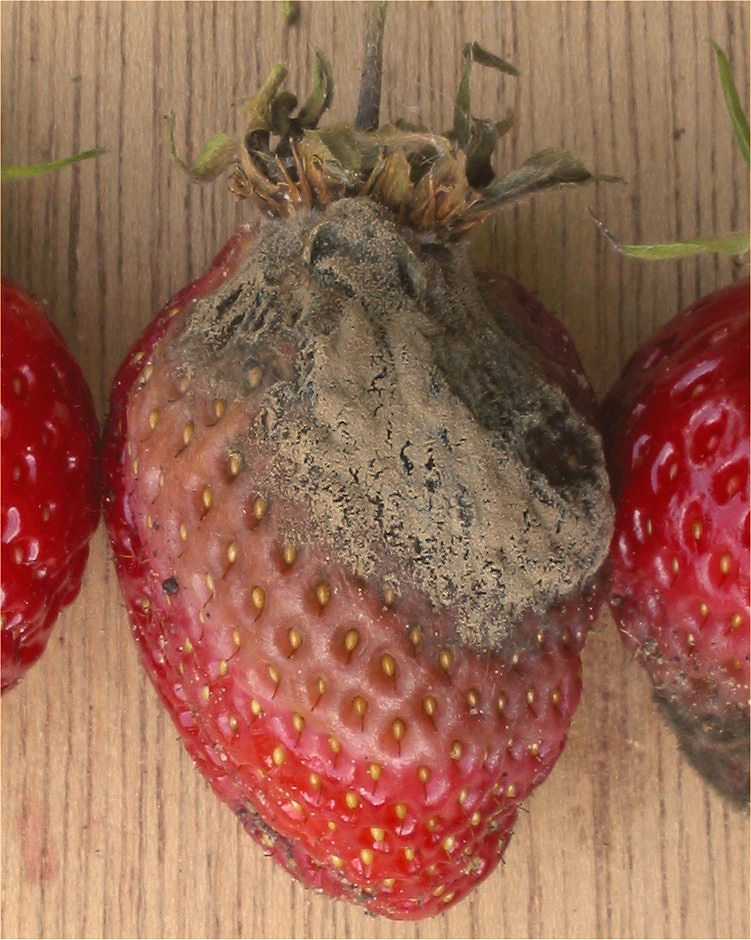
| Botrytis cinerea infection on strawberry | |
Scientific classification 
| |
| Kingdom: | Fungi |
| Division: | Ascomycota |
| Class: | Leotiomycetes |
| Order: | Helotiales |
| Family: | Sclerotiniaceae |
| Genus: | Botrytis |
| Species: | B. cinerea
|
| Binomial name | |
| Botrytis cinerea Pers. (1794)
| |
Botrytis cinerea is a necrotrophic fungus that affects many plant species, including wine grapes. In viticulture, it is commonly known as "botrytis bunch rot"; in horticulture, it is usually called "grey mould" or "gray mold".
The fungus gives rise to two different kinds of infections on grapes. The first, grey rot, is the result of consistently wet or humid conditions, and typically results in the loss of the affected bunches. The second, noble rot, occurs when drier conditions follow wetter, and can result in distinctive sweet dessert wines, such as Sauternes, the Aszú of Tokaji, or Grasă de Cotnari.[1] The species name Botrytis cinerea is derived from the Latin for "grapes like ashes"; the "grapes" refers to the bunching of the fungal spores on their conidiophores, while "ashes" refers to the greyish colour of the spores en masse.[citation needed] The fungus is usually referred to by its anamorph (asexual form) name, because the sexual phase is rarely observed. The teleomorph (sexual form) is an ascomycete, Botryotinia fuckeliana, also known as Botryotinia cinerea (see taxonomy box).
Etymology
[edit]Botrytis is derived from the Ancient Greek botrys (βότρυς) meaning "grapes",[2] combined with the Neo-Latin suffix -itis for disease. Botryotinia fuckeliana was named by mycologist Heinrich Anton de Bary in honor of another mycologist, Karl Wilhelm Gottlieb Leopold Fuckel. Synonyms for the sexual stage are:
- Botrytis fuckeliana N.F. Buchw., (1949)
- Botrytis gemella (Bonord.) Sacc., (1881)
- Botrytis grisea (Schwein.) Fr., (1832)
- Botrytis vulgaris (Pers.) Fr., (1832)
- Haplaria grisea Link, (1809)
- fuckeliana de Bary
- Phymatotrichum gemellum Bonord., (1851)
- Polyactis vulgaris Pers., (1809)
- Sclerotinia fuckeliana (de Bary) Fuckel, (1870)
Hosts and symptoms
[edit]Hosts
[edit]The disease, gray mold, affects more than 200 dicotyledonous plant species and a few monocotyledonous plants found in temperate and subtropical regions, and potentially over a thousand species.[3][4] Serious economic losses can be a result of this disease to both field and greenhouse grown crops. The causal agent, Botrytis cinerea can infect mature or senescent tissues, plants prior to harvest, or seedlings. There is a wide variety of hosts infected by this pathogen including protein crops, fiber crops, oil crops, and horticultural crops. Horticultural crops include vegetables (examples are chickpeas, lettuce, broccoli, and beans) and small fruit crops (examples are grape, strawberry, raspberry, and blackberry[5]), these are most severely affected and devastated by gray mold.[3] Plant organs affected include fruits, flowers, leaves, storage organs, and shoots.
Symptoms and signs
[edit]Symptoms vary across plant organs and tissues. B. cinerea is a soft rot that will have a collapsed and water soaked appearance on soft fruit and leaves. Brown lesions may develop slowly on undeveloped fruit.[6] Twigs infected with gray mold will die back. Blossoms will cause fruit drop and injury, such as ridging on developing and mature fruit.[7] Symptoms are visible at wound sites where the fungus begins to rot the plant. Gray masses with a velvety appearance are conidia on the plant tissues are a sign of plant pathogen.[7] These conidia are asexual spores that will continue to infect the plant and surrounding hosts throughout the growing season making this a polycyclic disease.
Plants can produce localized lesions when a pathogen attacks. An oxidative burst causes hypersensitive cell death called a hypersensitive response (HR).[8] This soft rot can trigger HR to assist in colonization. Botrytis cinerea, as a necrotrophic pathogen, exploits the dead tissue for its pathogenicity or its ability to cause disease. Susceptible plants cannot use the HR to protect against B. cinerea.
Biology
[edit]

Botrytis cinerea is characterized by abundant hyaline conidia (asexual spores) borne on grey, branching tree-like conidiophores. The fungus also produces highly resistant sclerotia as survival structures in older cultures. It overwinters as sclerotia or intact mycelia, both of which germinate in spring to produce conidiophores. The conidia, dispersed by wind and by rain-water, cause new infections. B. cinerea performs an asexual cycle over the summer season.[citation needed]
Gliocladium roseum is a fungal parasite of B. cinerea.[9]
The hypothetical protein BcKMO was shown to positively regulate growth and development. It showed a great similarity to the kynurenine 3-monooxygenase encoding gene in eukaryotes.[citation needed]
Overexpression of the gene atrB produces altered versions of the transcription factor mrr1, which in turn confer a multiple fungicide resistance phenotype known as MDR1.[5] An even higher overexpression yields mrr1 composed partly of Δ497V/L, yielding MDR1h phenotypes with even more anilinopyrimidine- and phenylpyrrole- resistance.[5]
Environment
[edit]Gray mold favors moist, humid, and warm environmental conditions between 65–75 °F (18–24 °C).[10] Temperature, relative humidity, and wetness duration produce a conducive environment that is favorable for inoculation of mycelium or conidia.[11] Controlled environments, such as crop production greenhouses, provide the moisture and high temperatures that favor the spreading and development of the pathogen B. cinerea.
Standing water on plant leaf surfaces provides a place for spores to germinate.[12] Humid conditions can result from improper irrigation practice, plants placed too close together, or the structure of the greenhouse not allowing for efficient ventilation and air flow. Ventilation at night significantly reduces the incidence of gray mold.[13]
Melanized sclerotium allows B. cinerea to survive for years in the soil. Sclerotia and the asexual conidia spores contribute to the widespread infection of the pathogen.[14]
A low pH is preferred by the gray mold to perform well. B. cinerea can acidify its environment by secreting organic acids, like oxalic acid.[14] By acidifying its surroundings, cell wall degrading enzymes (CWDEs) are enhanced, plant-protection enzymes are inhibited, stomatal closure is deregulated, and pH signaling is mediated to facilitate its pathogenesis.[14]
Viticulture
[edit]
In the Botrytis infection known as noble rot, the fungus removes water from the grapes, leaving behind a higher percent of solids, such as sugars, fruit acids and minerals. This results in a more intense, concentrated final product. The wine is often said to have an aroma of honeysuckle and a bitter finish on the palate.
A distinct fermentation process initially caused by nature, the combination of geology, climate and specific weather led to the particular balance of beneficial fungus while leaving enough of the grape intact for harvesting. The Chateau d'Yquem is the only Premier Cru Supérieur Sauternes, largely due to the vineyard's susceptibility to noble rot.
Botrytis complicates the fermentation process during winemaking. Botrytis produces an anti-fungal compound that kills yeast and often results in the fermentation stopping before the wine has accumulated sufficient levels of alcohol.[15]
Botrytis bunch rot is another condition of grapes caused by B. cinerea that causes great losses for the wine industry. It is always present on the fruitset, however, it requires a wound to start a bunch rot infection. Wounds can come from insects, wind, accidental damage, etc. To control botrytis bunch rot there are a number of fungicides available on the market. Generally, these should be applied at bloom, bunch closure and veraison (the most important being the bloom application). Some winemakers are known to use the German method of fermentation and prefer having a 5% bunch rot rate in their grapes and will usually hold the grapes on the vine a week longer than normal.
Horticulture
[edit]Botrytis cinerea affects many other plants.
Strawberries
[edit]It is economically important on soft fruits such as strawberries and bulb crops.[16] Unlike wine grapes, the affected strawberries are not edible and are discarded. To minimize infection in strawberry fields, good ventilation around the berries is important to prevent moisture being trapped among leaves and berries. A number of bacteria have been proven to act as natural antagonists to B. cinerea in controlled studies.[16]
Other plants
[edit].jpg)
In greenhouse horticulture, Botrytis cinerea is well known as a cause of considerable damage in tomatoes.
The infection also affects rhubarb, snowdrops, white meadowfoam, western hemlock,[17] Douglas-fir,[18] cannabis,[19][20] and Lactuca sativa.[21] UV-C treatment against B. cinerea was investigated by Vàsquez et al., 2017. They find it increases phenylalanine ammonia-lyase activity and production of phenolics. This in turn decreases L. sativa's susceptibility.[21] Potassium bicarbonate-based fungicide may be used.[citation needed]
Human disease
[edit]Botrytis cinerea mold on grapes may cause "winegrower's lung", a rare form of hypersensitivity pneumonitis (a respiratory allergic reaction in predisposed individuals).
Mycoviruses of Botrytis cinerea
[edit]
As well as being an infective agent, Botrytis cinerea also hosts several mycoviruses itself. A range of phenotypic alterations due to the mycoviral infection have been observed from symptomless to mild impact, or more severe phenotypic changes including reduction in pathogenicity, growth/suppression of mycelia, sporulation and sclerotia production, formation of abnormal colony sectors (Wu et al., 2010[22]) and virulence.
Management
[edit]Botrytis cinerea can be managed through cultural, chemical, and biological practices.[23]
There are no resistant species to the gray mold rot. Gray mold can be culturally controlled by monitoring the amount and timing of fertilizer applications to reduce the amount of fruit rot. Excessive application of nitrogen will increase the incidence of disease while not improving yields.[6]
Not planting cultivars that have an upright or dense growth habit can reduce disease as these limit airflow and are favorable for the pathogen. Spacing of plants so they are not touching will increase airflow allowing the area to dry out and reduce the spread of disease. Pruning or purposeful removal of diseased, dead, or overgrown limbs on a regular schedule can also help to improve air movement.[7]
Sanitation by removing dead or dying plant tissue in the fall will decrease inoculum levels as there is no debris for the sclerotium or mycelia to overwinter. Removing debris in the spring will remove inoculum from the site. Disposal of berries during harvest that have signs and symptoms of gray mold will reduce inoculum for the following year.
Biochar, a form of charcoal, can be applied as a soil amendment to strawberry plants to reduce the severity of the fungal disease by stimulating defense pathways within the plant.[24]
Gray mold can be chemically controlled with well-timed fungicide applications starting during the first bloom. Timing can reduce the chance of resistance and will save on costs.[6]
Biological controls or microbial antagonists[citation needed] used for disease suppression, have been successfully used in Europe and Brazil in the form of fungi-like Trichoderma harzianum Rifai and Clonostachys rosea f. rosea Bainier (syn. Gliocladium roseum).[24] Trichoderma species especially, have been shown to control gray mold.
Multiple fungicide resistance is a problem in many production areas.[5]
See also
[edit]References
[edit]- ^ Richards, Helen (22 December 2014). "What is... Botrytis". JFT Wines. Retrieved 24 September 2020.
- ^ βότρυς. Liddell, Henry George; Scott, Robert; A Greek–English Lexicon at the Perseus Project
- ^ a b Williamson, Brian; Tudzynski, Bettina; Tudzynski, Paul; Van Kan, Jan a. L. (2007-09-01). "Botrytis cinerea: the cause of grey mould disease". Molecular Plant Pathology. 8 (5): 561–580. Bibcode:2007MolPP...8..561W. doi:10.1111/j.1364-3703.2007.00417.x. ISSN 1364-3703. PMID 20507522.
- ^ Fillinger, Sabine; Elad, Yigal, eds. (2016). Botrytis – the Fungus, the Pathogen and its Management in Agricultural Systems. Springer International Publishing. ISBN 978-3-319-23370-3.
- ^ a b c d
- • Sare, Abdoul Razack; Jijakli, M. Haissam; Massart, Sebastien (2021). "Microbial ecology to support integrative efficacy improvement of biocontrol agents for postharvest diseases management". Postharvest Biology and Technology. 179 111572. Elsevier. doi:10.1016/j.postharvbio.2021.111572. ISSN 0925-5214. S2CID 236245543.
- • Hu, Mengjun; Chen, Shuning (2021). "Non-Target Site Mechanisms of Fungicide Resistance in Crop Pathogens: A Review". Microorganisms. 9 (3). MDPI: 502. doi:10.3390/microorganisms9030502. ISSN 2076-2607. PMC 7997439. PMID 33673517.
- • Cosseboom, Scott D.; Schnabel, Guido; Hu, Mengjun (2020). "Competitive ability of multi-fungicide resistant Botrytis cinerea in a blackberry planting over three years". Pesticide Biochemistry and Physiology. 163. Elsevier: 1–7. Bibcode:2020PBioP.163....1C. doi:10.1016/j.pestbp.2019.11.008. ISSN 0048-3575. PMID 31973844. S2CID 209578874.
- ^ a b c "Botrytis Fruit Rot / Gray Mold on Strawberry | NC State Extension Publications". content.ces.ncsu.edu. Archived from the original on 2024-02-23. Retrieved 2017-12-11.
- ^ a b c "UC IPM: UC Management Guidelines for Botrytis Diseases And Disorders on Citrus". ipm.ucanr.edu. Retrieved 2017-12-11.
- ^ Govrin, Eri M.; Levine, Alex (2000-06-01). "The hypersensitive response facilitates plant infection by the necrotrophic pathogen Botrytis cinerea". Current Biology. 10 (13): 751–757. Bibcode:2000CBio...10..751G. doi:10.1016/S0960-9822(00)00560-1. ISSN 0960-9822. PMID 10898976. S2CID 17294773.
- ^ Yu H, Sutton JC (1997). "Morphological development and interactions of Gliocladium roseum and Botrytis cinerea in raspberry" (PDF). Canadian Journal of Plant Pathology. 19 (3): 237–246. Bibcode:1997CaJPP..19..237Y. doi:10.1080/07060669709500518.[permanent dead link]
- ^ Roberts, Pamela. "Disease Management: Gray Mold on Tomato and Ghost Spot on Pepper" (PDF). IPM Floridia. Retrieved 11 December 2017.
- ^ Ciliberti, Nicola; Fermaud, Marc; Roudet, Jean; Rossi, Vittorio (August 2015). "Environmental Conditions Affect Botrytis cinerea Infection of Mature Grape Berries More Than the Strain or Transposon Genotype". Phytopathology. 105 (8): 1090–1096. Bibcode:2015PhPat.105.1090C. doi:10.1094/PHYTO-10-14-0264-R. hdl:10807/69950. ISSN 0031-949X. PMID 26218433.
- ^ Physiological Aspects of Resistance to Botrytis cinerea. Elad, Y. and Evensen, K.. Publication 3 April 1995[1]
- ^ Morgan, Walter M. (1984-06-01). "The effect of night temperature and glasshouse ventilation on the incidence of Botrytis cinerea in a late-planted tomato crop". Crop Protection. 3 (2): 243–251. Bibcode:1984CrPro...3..243M. doi:10.1016/0261-2194(84)90058-9. ISSN 0261-2194.
- ^ a b c Amselem, Joelle; Cuomo, Christina A.; Kan, Jan A. L. van; Viaud, Muriel; Benito, Ernesto P.; Couloux, Arnaud; Coutinho, Pedro M.; Vries, Ronald P. de; Dyer, Paul S. (2011-08-18). "Genomic Analysis of the Necrotrophic Fungal Pathogens Sclerotinia sclerotiorum and Botrytis cinerea". PLOS Genetics. 7 (8) e1002230. doi:10.1371/journal.pgen.1002230. hdl:10871/25762. ISSN 1553-7404. PMC 3158057. PMID 21876677.
- ^ van Kan, Jan A. L. (May 2006). "Licensed to kill: the lifestyle of a necrotrophic plant pathogen". Trends in Plant Science. 11 (5): 247–253. doi:10.1016/j.tplants.2006.03.005. ISSN 1360-1385. PMID 16616579.
- ^ a b Donmez, M. F.; Esitken, A.; Yildiz, H.; Ercisli, S. Biocontrol of Botrytis Cinerea on Strawberry Fruit by Plant Growth Promoting Bacteria, The Journal of Animal & Plant Sciences, 21(4), 2011: pp. 758-763, ISSN 1018-7081.
- ^ Van Eerden, E. (1974, August). Growing season production of western conifers. In Proc. North American Containerized Forest Tree Seedling Symp., Denver, Colorado (pp. 93-103)
- ^ Brix, Holger, and H. Barker. "Rooting studies of western hemlock cuttings." (1975).
- ^ Lata, Hemant; ElSohly, Mahmoud A.; Chandra, Suman, eds. (2017-05-23). Cannabis Sativa L. - Botany and Biotechnology. Cham, Switzerland: Springer International. p. 275. ISBN 978-3-319-54563-9.
Cannabis is highly susceptible to diseases caused by fungal growth. Densely packed buds and flowering tops hold high content of moisture that allows for infestation by molds such as Botrytis cinerea, Sclerotinia sclerotiorum, Fusarium species etc.
- ^ McPartland, JM; Clarke, RC; Watson, DP (2000). Hemp Diseases and Pests: Management and Biological Control: An Advanced Treatise. Wallingford, United Kingdom: CABI. p. 95.
B. cinera often colonizes senescent leaves and flowers, and from these footholds it invades the rest of the plant.
- ^ a b Urban, L.; Chabane Sari, D.; Orsal, B.; Lopes, M.; Miranda, R.; Aarrouf, J. (2018). "UV-C light and pulsed light as alternatives to chemical and biological elicitors for stimulating plant natural defenses against fungal diseases". Scientia Horticulturae. 235. Elsevier: 452–459. Bibcode:2018ScHor.235..452U. doi:10.1016/j.scienta.2018.02.057. ISSN 0304-4238. S2CID 90436989.
- ^ Wu M. D.; Zhang L.; Li G.; Jiang D.; Ghabrial S. A. (2010). "Genome characterization of a debilitation-associated mitovirus infecting the phytopathogenic fungus Botrytis cinerea". Virology. 406 (1): 117–126. doi:10.1016/j.virol.2010.07.010. PMID 20674953.
- ^ McLoughlin, Austein G.; Wytinck, Nick; Walker, Philip L.; Girard, Ian J.; Rashid, Khalid Y.; Kievit, Teresa de; Fernando, W. G. Dilantha; Whyard, Steve; Belmonte, Mark F. (9 May 2018). "Identification and application of exogenous dsRNA confers plant protection against Sclerotinia sclerotiorum and Botrytis cinerea". Sci Rep. 8 (1): 7320. Bibcode:2018NatSR...8.7320M. doi:10.1038/s41598-018-25434-4. PMC 5943259. PMID 29743510.
- ^ a b Harel, Yael Meller; Elad, Yigal; Rav-David, Dalia; Borenstein, Menachem; Shulchani, Ran; Lew, Beni; Graber, Ellen R. (2012). "Biochar mediates systemic response of strawberry to foliar fungal pathogens". Plant and Soil. 357 (1–2): 245–257. Bibcode:2012PlSoi.357..245M. doi:10.1007/s11104-012-1129-3. JSTOR 24370313. S2CID 16186999.
External links
[edit]
- Genome information for Botrytis cinerea
- Genome analysis of Botrytis cinerea
- Choquer M, Fournier E, Kunz C, et al. (December 2007). "Botrytis cinerea virulence factors: new insights into a necrotrophic and polyphageous pathogen". FEMS Microbiol. Lett. 277 (1): 1–10. doi:10.1111/j.1574-6968.2007.00930.x. PMID 17986079.
- TheWineDoctor.com
- Büttner P, Koch F, Voigt K, et al. (May 1994). "Variations in ploidy among isolates of Botrytis cinerea: implications for genetic and molecular analyses". Curr. Genet. 25 (5): 445–50. doi:10.1007/BF00351784. PMID 8082191. S2CID 10886741.
- Vallejo, I.; Santos, M.; Cantoral, J. M.; Collado, I. G.; Rebordinos, L. (2004). "Chromosomal polymorphism in Botvytis cinerea strains". Hereditas. 124: 31–38. doi:10.1111/j.1601-5223.1996.00031.x.
- Staats M, van Baarlen P, van Kan JA (February 2005). "Molecular phylogeny of the plant pathogenic genus Botrytis and the evolution of host specificity". Mol. Biol. Evol. 22 (2): 333–46. doi:10.1093/molbev/msi020. PMID 15496556.
| Biology and horticulture | |
|---|---|
| Environmental variation | |
| Vineyard planting | |
| Vineyard management | |
| Harvest | |
| Pests and diseases | |
| Approaches and issues | |
| See also | |

| International | |
|---|---|
| National | |
| Other | |

Botrytis cinerea
View on GrokipediaTaxonomy and Nomenclature
Etymology
The genus name Botrytis derives from the Ancient Greek word botrys (βότρυς), meaning "cluster of grapes" or "bunch," which alludes to the grape-like clustering of the fungus's conidia.[3] This nomenclature reflects the morphological resemblance observed in early mycological studies. The specific epithet cinerea originates from the Latin cinereus, denoting "ash-gray" or "ash-colored," a description of the distinctive grayish spore masses produced by the pathogen.[4] The name Botrytis cinerea was first proposed by the Dutch mycologist Christiaan Hendrik Persoon in 1794, in his publication Neues Magazin für die Botanik, where he described the fungus based on observations of its spore clusters. It received a formal description by the Swedish botanist Elias Magnus Fries in 1832, in volume 3 of Systema Mycologicum, solidifying its place in fungal taxonomy.[5] Early 19th-century mycologists, including Otto Fuckel, contributed to understanding the fungus's life cycle by linking the anamorph B. cinerea to its teleomorph stage, initially named Peziza fuckeliana by Heinrich Anton de Bary in 1866 and later reclassified as Sclerotinia fuckeliana by Fuckel in 1870.[6]Taxonomy and Classification
Botrytis cinerea belongs to the kingdom Fungi, phylum Ascomycota, class Leotiomycetes, order Helotiales, family Sclerotiniaceae, and genus Botrytis.[7][8] This positioning reflects its placement among ascomycete fungi characterized by apothecial fruiting bodies in the teleomorphic state.[9] The fungus exhibits a pleomorphic life cycle, with Botrytis cinerea as the anamorph (asexual stage) producing conidia, and Botryotinia fuckeliana as the teleomorph (sexual stage) forming apothecia from sclerotia.[8][10] The teleomorph was established with the basionym Peziza fuckeliana de Bary (1866), later transferred to Botryotinia by Whetzel in 1945.[11] The type specimen for B. cinerea was described by Persoon in 1797, based on material from rotten fruits of Cucurbita and stems of Brassica oleracea.[12] Synonyms include Botryotinia fuckeliana and forms such as Botrytis cinerea f. coffeae Henderson (1939).[5][13] Following the 2011 International Code of Nomenclature for algae, fungi, and plants adoption of the "one fungus, one name" principle, the anamorph-teleomorph connection was unified under the name Botrytis cinerea as the accepted holomorph nomenclature.[14][15] This decision was endorsed by the Botrytis research community in 2013, prioritizing the widely used anamorph name due to its type species status and extensive literature. Historical variants like Botrytis cinerea f. botrytis have been subsumed under this unified classification.[8] The current accepted nomenclature is maintained by databases such as Index Fungorum.[12]Morphology and Biology
Morphology
Botrytis cinerea exhibits a typical fungal morphology characterized by septate hyphae that are cylindrical, branched, and measure approximately 3–5 μm in width, appearing hyaline but may appear light brown to olive in older cultures.[16] These hyphae form an extensive mycelium that can appear white initially and turn gray to brown as sporulation occurs, contributing to the characteristic fuzzy appearance of infected tissues.[17] The asexual reproductive structures include erect, branched conidiophores that are slender, straight, and measure 0.5 to 1 mm in length and 10 to 15 μm wide at the base, narrowing toward the apex with enlarged apical cells.[17] These conidiophores are hyaline to grayish and produce conidia in dense clusters or chains, often up to 30 conidia long, facilitated by disjunctors.[18] Conidia of B. cinerea are unicellular, hyaline to slightly brownish, ovoid to ellipsoidal, smooth-walled, and typically measure 10 to 12 μm in length by 8 to 10 μm in width, though sizes can vary slightly with substrate.[16] These spores form abundant grayish powdery masses on host surfaces, aiding in the visual identification of gray mold.[17] For survival, B. cinerea produces sclerotia, which are hard, black, irregular resting structures ranging from 1 to 5 mm in diameter, initially white and turning dark due to melanin accumulation in the outer cortex.[16][19] The teleomorph stage, Botryotinia fuckeliana, features cup-shaped apothecia that are brownish and pedicellate, measuring 3 to 10 mm (up to 25 mm) in height, containing cylindrical asci with eight oblong to elliptical, hyaline ascospores per ascus, sized 6 to 9 μm long by 5 to 6 μm wide.[16][6]Life Cycle and Reproduction
Botrytis cinerea primarily reproduces asexually through the production and dispersal of conidia, which serve as the main inoculum for infection. Conidia germinate under moist conditions, producing germ tubes that typically measure 20-50 μm in length before forming appressoria for host penetration.[20] These germ tubes enable direct penetration of intact host tissues via hyphal growth or entry through wounds, initiating colonization as a necrotroph that kills host cells to obtain nutrients.[21] Following tissue necrosis, the fungus produces new conidiophores on dead material, releasing conidia that are dispersed by wind or rain splash to perpetuate the cycle.[1] Sexual reproduction in B. cinerea is rare and heterothallic, occurring when compatible mating types fuse during sclerotial development under cool, moist conditions. Sclerotia germinate to form apothecia, stalked fruiting bodies that release ascospores as secondary inoculum.[1] These ascospores can initiate new infections, though they play a minor role compared to asexual conidia due to the infrequency of sexual events.[22] The fungus overwinters mainly as sclerotia in soil or plant debris, providing long-term survival with viability maintained for up to 360 days or more under favorable conditions.[1] This resting structure ensures persistence across seasons. B. cinerea exhibits a polycyclic life history, capable of completing multiple infection cycles within a single growing season in environments supporting repeated spore production and dispersal.[23]Genetics and Molecular Aspects
Genome Structure
The genome of Botrytis cinerea is approximately 39–45 Mb in size, distributed across 18 chromosomes, with the reference strain B05.10 initially assembled at 39 Mb in 2011 using Sanger sequencing combined with transcriptomic data from multiple growth conditions.[24] This assembly identified 11,701 protein-coding genes, representing about 40% of the genome, with an average GC content of 42% and repetitive elements comprising roughly 7%, including low levels of transposable elements in the reference strain.[24] A gapless, chromosome-level assembly of B05.10 was later achieved in 2017 using a combination of PacBio long-read sequencing, optical mapping, and genetic linkage analysis, expanding the total size to 42.6 Mb while confirming the 18-chromosome structure and refining gene annotations to 11,701 complete models. Sequencing efforts have since expanded to multiple isolates, revealing significant strain-to-strain variability that underscores B. cinerea's adaptability as a generalist pathogen. Strains are broadly classified into two groups based on transposable element content: group I (vacuma), characterized by few or no active transposons and inability to produce the phytotoxin botrydial, and group II (transposa), which harbor high transposon activity (up to 20% of the genome in some cases) and typically produce botrydial, contributing to differences in virulence and evolutionary dynamics. Pan-genome analyses of diverse isolates, including resequencing of over 80 strains, have identified a core genome of about 9,000 genes shared across populations, with accessory genes (up to 20% variability) often involving expansions in effector families, secondary metabolite clusters, and transposon-associated regions that drive host adaptation and fungicide resistance. These studies highlight how dispensable genomic regions, including accessory chromosomes (e.g., chromosomes 17–19 varying in size and content among strains), enable rapid evolution without disrupting core functions. Recent sequencing milestones include high-quality assemblies of isolates from agricultural settings, such as four strains from strawberries and blueberries in North Carolina released in 2025, with genome sizes ranging from 41.9 to 44.9 Mb and completeness exceeding 98%, providing resources for tracking regional population structure and resistance traits.[25] These assemblies, generated via hybrid short- and long-read approaches, further expand the pan-genome by revealing isolate-specific effector gene duplications and transposon insertions, emphasizing B. cinerea's genomic plasticity as a model for necrotrophic pathogens.[26]Pathogenicity Mechanisms
Botrytis cinerea employs a necrotrophic lifestyle, actively killing host plant cells to acquire nutrients, primarily through the secretion of cell wall-degrading enzymes (CWDEs) and phytotoxins. Key CWDEs include polygalacturonases, which break down pectin in plant cell walls, and cutinases, which degrade the waxy cuticle to facilitate penetration. These enzymes enable tissue colonization and nutrient release, with proteomic analyses identifying over 100 such secreted proteins during infection. Phytotoxins like botrydial, a sesquiterpene, and botcinins, polyketide-derived compounds, further contribute by inducing cell death and suppressing plant defenses; botrydial biosynthesis is governed by a dedicated gene cluster, while botcinins exhibit redundancy in virulence enhancement across strains.00245-X)[27][28][29][30] The fungus secretes approximately 150-200 effector proteins that manipulate host immunity, with BcSpl1, a cerato-platanin family member, exemplifying this strategy by eliciting a hypersensitive response while suppressing basal defenses to promote virulence. These effectors are often clustered with genes for secondary metabolites, such as those producing botrydial and botcinins, integrating toxin delivery with immune evasion. Signal transduction pathways, particularly mitogen-activated protein kinase (MAPK) cascades, regulate these processes; the BcSak1 MAPK pathway responds to stress signals, coordinating conidial germination, hyphal growth, and infection structure formation essential for pathogenesis. Recent research highlights four molecular strategies for saponin tolerance—efflux pumping, glycosylation, membrane reinforcement, and antioxidant activation—enabling B. cinerea to counter host antimicrobial compounds during invasion.[31][32]00245-X)[33][34][35] B. cinerea manipulates host physiology by inducing reactive oxygen species (ROS) accumulation and programmed cell death (PCD), exploiting these responses to expand necrotic lesions. Phytotoxins and effectors trigger ROS bursts that overwhelm plant antioxidants, leading to PCD and nutrient accessibility, while fungal antioxidants mitigate excessive ROS to protect invading hyphae. Additionally, RNAi-based interactions allow bidirectional gene regulation; host-derived small RNAs can silence fungal genes like those in the TOR pathway, reducing virulence, though B. cinerea counters this via its own sRNA effectors that target plant immunity genes. These mechanisms, encoded within the ~40 Mb genome, underscore the fungus's adaptability as a broad-spectrum pathogen.00245-X)[1][36][37]Hosts and Symptoms
Host Range
Botrytis cinerea is renowned for its polyphagous nature, capable of infecting a vast array of plant species, with records indicating susceptibility in over 1,600 hosts spanning multiple taxonomic groups.[26] This broad host range encompasses 447 genera of eudicots (primarily dicotyledons), 128 genera of monocots, 20 genera of gymnosperms, 15 genera of pteridophytes, 6 genera of basal angiosperms, and even 1 genus of bryophytes.[26] The pathogen predominantly targets dicotyledonous plants, reflecting its evolutionary adaptation to a wide variety of dicot tissues, while infections in monocots are less common but documented.[1] Among economically significant hosts, Vitis vinifera (grapes), Fragaria × ananassa (strawberries), and Solanum lycopersicum (tomatoes) stand out as major crops affected by gray mold, leading to substantial agricultural losses in viticulture, berry production, and vegetable cultivation.[26][1] Other notable economic and ornamental hosts include roses (Rosa spp.), cannabis (Cannabis sativa), and limited monocots such as onions (Allium cepa), where the fungus exploits wounded or senescing tissues for entry.[26] Non-agricultural hosts play a critical role as reservoirs for B. cinerea, including various weeds and ornamental plants that sustain populations between crop seasons and facilitate dissemination.[26] These wild and decorative species, often dicotyledonous, harbor the pathogen without immediate economic impact but contribute to inoculum buildup in agroecosystems. Host specificity in B. cinerea is not strict, but aggressiveness varies by strain and host type; for instance, strains isolated from tomatoes exhibit higher virulence on tomato tissues compared to those from lettuce, while environmental strains show broader but variable aggressiveness across hosts like soft fruits.[38][39] This strain-dependent adaptation underscores the pathogen's flexibility, enabling efficient infection on diverse substrates such as soft, decaying fruits.[39]Disease Symptoms and Signs
Initial symptoms of Botrytis cinerea infection typically manifest as water-soaked lesions on leaves, stems, and flowers, which rapidly progress to browning and soft rot within hours to days under humid conditions.[40] These lesions often appear as irregular tan to gray spots that enlarge quickly, leading to tissue collapse and wilting.[41] In advanced stages, the infection produces characteristic gray, fuzzy masses of mycelium and conidia, commonly known as gray mold, which become prominent on infected surfaces during high humidity.[40] Sclerotia, small black resting structures, may form on decayed tissues in later stages, aiding pathogen survival.[41] Organ-specific effects include blossom blight, where flowers develop white or light-colored flecks that expand into rotted petals; fruit rot characterized by a velvety gray coating and internal decay; stem cankers featuring girdling lesions that cause wilting above the infection site; and, in hosts such as cannabis (Cannabis sativa), bud rot in dense inflorescences during late flowering. In cannabis, the infection frequently begins internally within the compact bud structure, resulting in rapid deterioration of bracts, leaves, and floral tissues, with symptoms including sudden yellowing or death of associated leaves, gray fuzzy mold visible inside or on the bud, dark gray to brown internal rot, dusty conidial spores, mushy texture, and a musty odor. These signs progress quickly under high humidity (>70% RH) and moderate temperatures (17–24 °C), often in weeks 6–8 of flowering. Bud rot can be distinguished from natural senescence (normal fade), which involves gradual and uniform yellowing or browning of fan leaves (typically lower or older ones first) without mold, rot, odor, or mushy texture. Diagnosis of bud rot may involve gently splitting suspicious buds to reveal internal mycelium, decay, or sporulation.[42][43] For instance, on grapes, these effects contribute to bunch rot with similar gray sporulation.[41] Diagnostic confirmation involves microscopic examination revealing branched, erect conidiophores bearing chains of oval, hyaline conidia, often using 8-10x magnification or humid chambers to induce sporulation.[40] PCR-based methods, such as real-time quantitative PCR, enable sensitive detection of B. cinerea DNA in infected tissues, even during latent phases.[44] The latency period, during which symptoms appear post-infection, typically ranges from 5 to 8 days under optimal conditions of high humidity and moderate temperatures.[41]Environmental Influences
Favorable Conditions for Infection
Botrytis cinerea thrives under specific abiotic conditions that facilitate conidial germination, mycelial growth, and host penetration. Optimal temperatures for infection range from 15 to 25°C, supporting high rates of conidial germination (up to 75-80% incidence after 36 hours of wetness) and mycelial development (>90% incidence at 100% relative humidity).[45] Fungal activity diminishes below 0°C, where germination halts, and above 30°C, where infection incidence drops to 20-35% even with prolonged wetness.[45] High relative humidity exceeding 90-93% or the presence of free water on host surfaces is critical, with conidia requiring 12-24 hours of continuous wetness to germinate and initiate penetration.[45][10] No infection occurs below 65% relative humidity, as dry conditions prevent spore activation.[45] Microenvironmental factors further enhance infection risk. Poor air circulation, often exacerbated by dense plant canopies, maintains elevated humidity levels around susceptible tissues, promoting spore deposition and development.[41] Physical wounds or naturally senescing tissues provide essential entry points, increasing infection incidence by 1.5 to 5 times under moderate humidity (80% relative humidity) or short wetness durations (6-12 hours).[45][41] Seasonally, B. cinerea epidemics are most common during cool, wet periods in spring and fall, when prolonged humidity and moderate temperatures align with host vulnerability.[41] Host physiology interacts with these conditions, showing heightened susceptibility during flowering and fruit ripening stages, as accumulating sugars and softening tissues facilitate pathogen establishment.[41] Climate change is altering these dynamics, with warming temperatures and shifting precipitation patterns potentially expanding the pathogen's range poleward and into previously less favorable warmer regions, increasing disease pressure in new areas.[41]Survival and Dissemination
Botrytis cinerea persists through adverse environmental conditions primarily via specialized survival structures, including sclerotia and mycelium. Sclerotia, compact masses of hardened mycelium, form in soil, plant debris, or mummified fruits and provide resilience against desiccation, extreme temperatures, and microbial antagonists due to their melanized rind and protective β-glucan matrix. These structures can remain viable for up to one year in soil or plant residues, with some persisting through multiple seasons under favorable microhabitats. Mycelium survives saprophytically within infected plant tissues, colonizing dead organic matter and serving as a secondary inoculum source.[1][41][46] Overwintering occurs through mycelial colonization of plant structures such as buds and vascular tissues, particularly in perennial hosts like grapevines, where latent infections in dormant buds enable resurgence in spring. Overwintering debris, including necrotic leaves and rachises, harbors mycelium that produces conidia throughout the subsequent growing season. Seed transmission is rare, as the fungus infrequently colonizes viable seeds, limiting this as a primary overwintering route.[41][47][6] Dissemination of B. cinerea relies on conidia as the principal propagules, dispersed primarily by wind over long ranges and by rain splash for short distances. Wind carries lightweight conidia from sporulating lesions, enabling travel of several kilometers under favorable airflow, while rain splash propels them up to 1 meter horizontally within crop canopies. Insect vectors contribute occasionally to local spread, though this is not a dominant mechanism.[1][48][49] Long-distance dissemination occurs through human-mediated pathways, such as the trade of contaminated propagation materials like cuttings, grafts, or seeds, and the transport of infected produce. Infested soil or debris adhering to equipment and vehicles further facilitates inter-field and international movement of the pathogen.[6][50][51] Recent research has demonstrated the robustness of B. cinerea isolates in storage, underscoring their potential for long-term survival. A 2025 study evaluated 125 isolates stored for 2 to 6 years using methods including silica gel at −18°C and glycerol, finding viability rates of 64–78% after 6 years with silica gel, and over 90% of viable isolates retaining full pathogenicity on tomato fruits. These findings highlight the pathogen's durability even under artificial preservation, relevant to laboratory and field contexts.[52]Impacts in Agriculture
Viticulture and Noble Rot
Botrytis cinerea plays a dual role in viticulture, acting as a destructive pathogen causing bunch rot while also enabling the beneficial noble rot process essential for premium sweet wines. In its pathogenic form, the fungus induces gray mold, leading to significant yield losses in grape production, particularly during wet vintages where infections can reduce harvests by 10-50% or more through berry rot and premature drop.[53] Globally, the economic toll of B. cinerea on viticulture is estimated at $10-100 billion annually, stemming from direct crop reductions and quality degradation that affects wine value.[54] Under specific environmental conditions, B. cinerea infection transforms into noble rot (pourriture noble), a controlled process that enhances grape quality for sweet wine production. This occurs in regions like Sauternes in France and Tokaji in Hungary, where alternating periods of humidity and dry, sunny weather allow the fungus to penetrate berry skins without causing destructive decay, resulting in water evaporation that concentrates sugars and flavors.[55] The mechanism involves fungal metabolism that dehydrates berries over 10-20 days, elevating sugar levels to 300-500 g/L while preserving aromatic compounds.[56] Certain grape varieties exhibit heightened susceptibility to B. cinerea, influencing both disease risk and noble rot potential. Thin-skinned white cultivars such as Riesling are particularly prone due to their tight clusters and delicate skins, which facilitate fungal entry and spread under humid conditions.[57] In botrytized wine production, management practices like selective pruning to thin clusters and promote airflow, combined with controlled misting to maintain humidity, help induce and sustain noble rot while minimizing unwanted bunch rot.[58] The historical significance of noble rot traces back to the 16th century, when Tokaji producers in Hungary first documented the intentional use of botrytized grapes (aszú) for sweet wines, a practice born from delayed harvests during regional conflicts.[59] This innovation spread to Sauternes in the 18th century, establishing noble rot as a cornerstone of elite sweet winemaking. During the process, B. cinerea induces key chemical changes, including a marked increase in glycerol (up to 7-10 g/L) for enhanced mouthfeel and a decrease in total acidity (to ~8 g/L) through tartaric acid degradation, balancing the elevated sugars.[55][60] Recent climate variability poses challenges to noble rot incidence, as shifting patterns of rainfall and temperature disrupt the precise humid-dry cycles required for beneficial infection. Warmer, drier conditions in traditional regions like Tokaji and Sauternes reduce opportunities for noble rot development, potentially lowering yields of botrytized grapes and threatening the production of these iconic wines.[61]Horticulture and Specific Crops
Botrytis cinerea poses significant challenges in horticulture, particularly affecting a range of non-grape crops through gray mold infections that lead to rot and blight. In strawberries, the pathogen causes fruit gray mold and crown rot, resulting in yield losses that can exceed 50% in unmanaged fields, while post-harvest decay remains a major issue during storage and transport due to latent infections that develop under cool, humid conditions.[62][63] In tomatoes and peppers, B. cinerea induces stem lesions and cankers, often originating from pruning wounds or leaf infections, which are prevalent in greenhouse settings where high humidity fosters epidemics; these lesions can girdle stems, leading to plant wilt and death, alongside fruit rot that softens tissues.[64][10] Greenhouse production amplifies these risks due to enclosed environments that promote spore dispersal and infection.[65] Among other horticultural crops, roses suffer from flower blight, where B. cinerea causes petal spotting and browning that progresses to full blossom decay, especially in cut-flower production; a 2024 review highlights the pathogen's reliance on high humidity and wounding for infection in this crop.[41] In cannabis, bud rot caused by B. cinerea emerges as a destructive issue in greenhouse cultivation. The disease typically presents with sudden onset in late flowering, featuring rapid yellowing or death of leaves on dense buds within 1-2 days, gray or white fuzzy mold on or inside the buds, internal dark gray or brown rot with dusty spores, mushy texture, and musty odor. Infection frequently begins inside the bud and spreads rapidly under high humidity (>60% RH) and moderate temperatures (17–24°C), resulting in substantial reductions in yield and quality.[66][67] Bud rot can be distinguished from natural senescence (normal late-flowering fade), which involves gradual yellowing and browning of fan leaves—often beginning with lower or older ones first—uniformly across the plant, without mold, rot, musty odor, or mushy texture, and with buds remaining firm as the plant reallocates nutrients for ripening. Differentiation involves examining suspicious buds by gently splitting them open; the presence of mold or rot internally confirms bud rot, whereas the absence of fungal signs supports normal senescence.[67][68] Soft fruits like blueberries are also impacted, with post-harvest gray mold causing fruit rot; recent genomic analyses of isolates from Pacific Northwest blueberry fields reveal genetic diversity that influences pathogenicity in these small-fruit hosts.[69][70] The economic toll of B. cinerea in horticulture is substantial, with global losses estimated between $10 billion and $100 billion annually across affected produce, including a heavy emphasis on post-harvest decay in ornamentals like roses and vegetables such as tomatoes.[1] These losses are exacerbated in high-density plantings common to greenhouse and intensive horticultural systems, where reduced airflow and increased microclimate humidity elevate disease incidence compared to spaced-out cultivations.[48][71]Human Health Implications
Infections in Humans
Botrytis cinerea primarily affects plants but can rarely cause opportunistic infections in humans through inhalation of spores or exposure via wounds, leading to pulmonary or cutaneous manifestations. These infections are uncommon and typically occur in immunocompromised individuals, such as those with HIV, organ transplants, or underlying conditions like diabetes, though cases in apparently healthy persons have been documented. Inhalation is the primary route for respiratory involvement, while wound exposure may result in localized cutaneous infections, though such reports are scarce. Pulmonary infections present as pneumonia, cavitary nodules, or plastic bronchitis, with symptoms including persistent cough and atelectasis. For instance, a 2019 case involved a 62-year-old immunocompetent man with a cavitary lung nodule identified incidentally, confirmed as Botrytis elliptica (a close relative) via culture and genetic sequencing from resected tissue. Similarly, a 2020 pediatric case reported plastic bronchitis and pneumonia in a 5-year-old boy, diagnosed through bronchoalveolar lavage fluid analysis using next-generation sequencing, revealing B. cinerea. Allergic reactions, such as hypersensitivity pneumonitis (known as wine grower's lung or berry sorter's lung), arise from repeated spore inhalation and manifest as respiratory distress with fever and dyspnea. Diagnosis relies on clinical presentation, imaging (e.g., CT scans showing nodules or atelectasis), and microbiological confirmation, including fungal culture from biopsies or lavage exhibiting characteristic gray mold growth, often supplemented by molecular methods like multilocus sequence analysis. Invasive mycoses are rare, with only a handful of confirmed cases reported in the literature since the 1990s, predominantly pulmonary. Treatment involves antifungal agents such as azoles (e.g., fluconazole) for systemic infections, alongside supportive measures like surgical resection for localized lesions; in the 2019 adult case, wedge resection alone sufficed without recurrence, while the pediatric case resolved with fluconazole and bronchoscopic cast removal. Outcomes are generally favorable with prompt intervention, though delayed diagnosis in vulnerable patients can lead to complications. Occupational exposure heightens risk, particularly among grape handlers, wine workers, and greenhouse employees sorting moldy produce, where high spore concentrations during harvest or processing trigger sensitization and hypersensitivity reactions. Sensitization to B. cinerea is a concern in horticultural settings, underscoring the need for protective measures like masks in endemic areas.Associated Mycoviruses
Mycoviruses infecting Botrytis cinerea primarily consist of double-stranded RNA (dsRNA) or positive-sense single-stranded RNA (+ssRNA) viruses, with notable examples including Botrytis cinerea hypovirus 1 (BcHV1), a +ssRNA virus with a genome of approximately 10 kb, and botycimaviruses, which belong to a proposed new family featuring bisegmented +ssRNA genomes of 2–3 kb per segment.[72][73] Other common types include dsRNA viruses like Botrytis cinerea RNA virus 1 (BcRV1), with an 8.9 kb genome encoding two overlapping open reading frames.[74] These viruses often exist as latent infections in field populations, with over 90 mycoviruses documented across diverse isolates.[73] Infection by hypovirulence-associated mycoviruses such as BcHV1 and BcRV1 typically impairs fungal fitness, inducing hypovirulence that significantly reduces mycelial growth, sporulation, and lesion development on host plants; for instance, BcRV1-infected strains exhibit attenuated pathogenicity on fruits, with smaller lesion diameters compared to virus-free controls.[72][74] Reductions in sporulation and lesion size can reach 30–70% in affected strains, depending on viral accumulation levels and host isolate compatibility, though some mycoviruses cause asymptomatic infections without altering virulence.[75] These effects stem from disruptions in fungal metabolic pathways, including interference with infection cushion formation essential for plant penetration.[72] Transmission of B. cinerea mycoviruses occurs mainly intracellularly via hyphal anastomosis between vegetatively compatible strains, enabling horizontal spread within fungal populations; vertical transmission through conidia or ascospores is possible but less efficient and rare for extracellular release.[72][74] Hyphal fusion barriers, such as vegetative incompatibility, can limit dissemination, though certain viruses overcome these to some extent.[76] The association of mycoviruses with B. cinerea was first reported in the late 1990s with dsRNA elements, but hypovirulence-linked viruses gained attention from 2003 onward, with BcHV1 formally identified in 2018 from symptomatic field isolates.[77][72] Recent research (2023–2025) has characterized extensive mycoviral diversity in field populations and identified novel hypovirulence candidates through metatranscriptomics.[78][76] Owing to their hypovirulence effects, B. cinerea mycoviruses offer biocontrol potential by vectoring viruses into virulent wild strains via anastomosis, thereby reducing fungal aggressiveness and disease severity in crops without relying on chemical fungicides.[72][74] Strategies involve protoplast fusion or compatible donor strains to facilitate spread, with ongoing studies evaluating stability in agricultural settings.[79]Management Strategies
Cultural and Biological Controls
Cultural practices play a crucial role in preventing Botrytis cinerea infections by minimizing environmental conditions favorable to the pathogen, such as high humidity and poor airflow. Pruning and canopy management, including shoot thinning and leaf removal in the fruit zone, improve air circulation and reduce canopy density, thereby decreasing moisture retention on plant surfaces.[80][81] Removal of plant debris and sclerotia at the end of the season eliminates overwintering inoculum sources, while avoiding overhead irrigation prevents leaf wetting that promotes spore germination.[82][83] Timing harvests to occur during dry periods further reduces post-harvest humidity exposure, limiting disease spread in crops like grapes and strawberries.[80] Biological control agents offer sustainable alternatives by introducing natural antagonists that compete with or inhibit B. cinerea growth. Trichoderma harzianum strains, such as T-39, antagonize the pathogen through nutrient competition, production of antifungal compounds, and induction of plant defenses, achieving up to 50% reduction in tomato gray mold incidence in field trials.[84] Bacillus subtilis and related species, like B. velezensis, produce lipopeptides such as surfactin and fengycin that disrupt fungal membranes, with preharvest applications in vineyards showing 25-37% average efficacy against bunch rot over multiple seasons.[84][85] Mycoviruses, including those inducing hypovirulence in B. cinerea strains, represent an emerging biological approach, where infected fungal isolates exhibit reduced virulence and can potentially spread the virus within pathogen populations to suppress epidemics.[74] Breeding and selection of resistant plant varieties enhance long-term management by incorporating traits that deter infection. Grape cultivars like 'Beta' (Vitis riparia × Vitis labrusca) demonstrate high resistance to gray mold due to robust berry skins and antifungal berry compounds, while Baco Blanc shows notable tolerance linked to unique grape chemistry.[86][87] Varieties such as Cabernet Sauvignon and certain clones with thicker skins or elevated phenolic content provide partial resistance, reducing susceptibility in viticulture without eliminating the need for complementary practices.[88] Integrated approaches combine multiple non-chemical methods for broader efficacy, particularly in controlled environments. UV-C irradiation in greenhouses inactivates B. cinerea conidia on surfaces, with doses followed by a dark period enhancing fungal killing by up to several logs in strawberry trials.[89] Plant-derived essential oils, such as thymol from thyme or eugenol from cloves, inhibit spore germination and mycelial growth when applied pre- or post-harvest, maintaining fruit quality in grapes and apples.[90] Recent 2025 epidemiology studies on cannabis bud rot emphasize rigorous sanitation, including debris removal and humidity control below 70%, to curb rapid inflorescence decay under moderate temperatures (17-24°C).[66][42] Monitoring airborne conidia levels enables proactive decision-making to predict outbreaks. Volumetric spore traps, such as Hirst-type or microtiter immunospore devices, quantify B. cinerea propagules in the air, correlating spore counts with environmental factors like humidity to forecast infection risks in vineyards and greenhouses.[91][92] Selective media in these traps facilitate specific isolation and enumeration, supporting timely cultural interventions.[93]Chemical Fungicides and Resistance
Chemical fungicides, often referred to as botryticides, play a central role in managing Botrytis cinerea infections in agriculture, targeting the pathogen's growth and spore production through various modes of action. Common single-site botryticides include iprodione, a dicarboximide that inhibits lipid biosynthesis, fenhexamid, a hydroxyanilide that blocks ergosterol synthesis, and boscalid, a succinate dehydrogenase inhibitor (SDHI) from the FRAC Group 7 that disrupts fungal respiration. Multi-site protectants like chlorothalonil, which interfere with multiple metabolic processes, provide broad-spectrum control with lower resistance risk. These fungicides are typically applied preventively, such as pre-flowering sprays in crops like grapes and strawberries, to establish protective residues before infection occurs. Rotation among different fungicide classes is essential to delay resistance development, with guidelines recommending no more than two consecutive applications of the same mode of action. Efficacy trials indicate that many of these compounds achieve 70-90% disease control under optimal conditions, as summarized in environmental horticulture experiments evaluating preventive applications.[94][95][96][97][82][98][99] Fungicide resistance in B. cinerea has emerged as a major challenge, driven by mechanisms such as target-site mutations, efflux pumps, and overexpression of detoxification enzymes. For SDHIs like boscalid, point mutations in succinate dehydrogenase genes (e.g., SdhB, SdhC, SdhD) alter the binding site, conferring high-level resistance; similar mutations affect other classes, including anilinopyrimidines and QoI fungicides. Efflux-mediated multidrug resistance (MDR), involving ATP-binding cassette transporters, enables strains to expel multiple unrelated fungicides, contributing to cross-resistance across FRAC groups. Multiple resistant strains, exhibiting reduced sensitivity to three or more fungicide classes, are widespread, with reports from over 50 countries including the United States, China, Germany, France, Greece, and others, complicating control in strawberry, tomato, and grape production. Sensitivity monitoring programs in strawberries and tomatoes reveal increasing resistance frequencies, often exceeding 80% for certain classes like benzimidazoles and QoIs in field populations.[100][101][102][103][104][105][71][106] Recent developments include the introduction of new SDHI molecules like fluopyram, which offers enhanced activity against some resistant strains due to its unique pyridinylethylbenzamide structure, though baseline sensitivity studies show emerging mutations reducing its efficacy. Innovative approaches such as RNA interference (RNAi) sprays target fungal genes like Dicer-like proteins (BcDCL1/2) or trehalose-related genes for silencing, demonstrating up to 70% reduction in disease severity in greenhouse trials on strawberries and tomatoes, as reviewed in 2024 studies. Ongoing sensitivity monitoring in key crops like strawberries and tomatoes informs rotation strategies, emphasizing integration with multi-site fungicides to maintain effective control.[107][100][108][109][110] Regulatory measures have restricted certain fungicides to curb environmental and health risks, such as the European Union's 2021 ban on mancozeb, a multi-site protectant previously used against B. cinerea, due to its reproductive toxicity and endocrine-disrupting properties. This has prompted shifts toward integrated pest management (IPM) mandates in the EU and elsewhere, requiring rotation and reduced reliance on high-risk chemicals to sustain long-term efficacy.[111][112]References
- https://en.wiktionary.org/wiki/botrytis