Hubbry Logo
CallitrisCallitrisMain
Open search
Callitris
Community hub
Callitris
logo
8 pages, 0 posts
0 subscribers
Be the first to start a discussion here.
Contribute something
Callitris
Callitris
from Wikipedia

Callitris
Callitris preissii
Scientific classification Edit this classification
Kingdom: Plantae
Clade: Tracheophytes
Clade: Gymnospermae
Division: Pinophyta
Class: Pinopsida
Order: Cupressales
Family: Cupressaceae
Subfamily: Callitroideae
Genus: Callitris
Vent.
Type species
Callitris rhomboidea
Species

See text

Synonyms[1]
  • Callitropsis Compton non Oersted
  • Cyparissia Hoffmanns.
  • Frenela Mirb.
  • Leichhardtia T. Steph. ex Gordon
  • Nothocallitris A. V. Bobrov & Melikyan
  • Neocallitropsis Florin[2]
  • Octoclinis F. Muell.

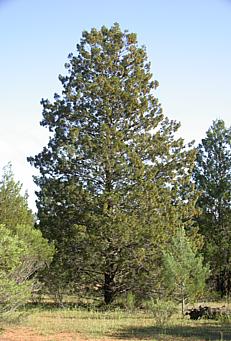
Callitris is a genus of coniferous trees in the Cupressaceae (cypress family). There are 16 recognized species in the genus, of which 13 are native to Australia and the other three (C. neocaledonica, C. sulcata and C. pancheri) native to New Caledonia.[1] Traditionally, the most widely used common name is cypress-pine,[3] a name shared by some species of the closely related genus Actinostrobus.[4] Alongside Eucalyptus, Callitris is one of the dominant tree genera in Australia.[5]

Description

[edit]

They are small to medium-sized trees or large shrubs, reaching 5–25 m (16–82 ft) tall (to 40 m (130 ft) in C. macleayana). The leaves are evergreen and scale-like, but young seedlings have needle-like leaves; in C. macleayana, needle-like leaves are found mixed with scale leaves throughout the tree's life. The scales are arranged in six rows along the twigs, in alternating whorls of three (often in whorls of four in C. macleayana).

The male cones are small, 3–6 mm (0.12–0.24 in) long, and are located at the tips of the twigs. The female cones start out similarly inconspicuous, maturing in 18–20 months to 1–3 cm (0.39–1.18 in) long and wide, globular to ovoid (acute in C. macleayana), with six overlapping, thick, woody scales, arranged in two whorls of three (often 8 scales in C. macleayana). The cones remain closed on the trees for many years, opening only after being scorched by a bushfire; this then releases the seeds to grow on the newly cleared burnt ground.

Taxonomy

[edit]

The genus is divided into two sections, with the atypical C. macleayana in sect. Octoclinis, and all the other species in sect. Callitris. Some botanists treat C. macleayana in a separate genus, as Octoclinis macleayana. C. macleayana is also distinct in occurring in rainforest on the east coast of Australia; the other species all grow on dry sites.

The closest relative of Callitris is Actinostrobus from southwest Western Australia, which differs in its cones having several basal whorls of small sterile scales. A 2010 study of Actinostrobus and Callitris places the three species of Actinostrobus within an expanded Callitris based on analysis of 42 morphological and anatomical characters.[6]

In 2010, early Oligocene fossilised foliage and cones of Callitris were unearthed near the Lea River in Tasmania. The fossils were given the name Callitris leaensis and represent the oldest known representative of the genus.[7]

Species

[edit]
Callitris verrucosa cones
Callitris glaucophylla (white cypress), Lightning Ridge, NSW
Stull et al. 2021[8][9]
Callitris s.l.
Neocallitropsis

Callitris neocaledonica Dümmer

Callitris sulcata (Parlatore) Schlechter (Sapin de Comboui)

N. pancheri (Carrière) de Laubenfels

Octoclinis macleayana Sheph. ex von Mueller (Stringybark pine)

Actinostrobus

A. acuminatus Parlatore (Dwarf cypress)

A. arenarius Gardner (Sandplain cypress)

A. pyramidalis Miquel (Swan river cypress)

Callitris roei (Endlicher) Bentham & Hooker ex von Mueller (Roe's cypress pine)

Callitris drummondii (Parlatore) Bentham & Hooker ex von Mueller (Drummond's/small cypress pine)

Callitris baileyi White (Bailey´s cypress pine)

Callitris columellaris von Mueller (White/Northern/Murray River cypress pine)

Callitris s.s.

C. monticola Garden (Steelhead dwarf cypress)

C. canescens (Parlatore) Blake (Morrison´s cypress pine)

C. oblonga Richard (Tasmanian cypress/South Esk/pygmy pine)

C. muelleri (Parlatore) Bentham & Hooker ex von Mueller (Illawarra cypress pine)

C. endlicheri (Parlatore) Bailey (Black cypress pine)

C. preissii Miquel (Rottnest Island pine, Southern/slender cypress pine)

C. verrucosa (Cunningham ex Endlicher) Brown ex de Mirbel (Mallee cypress pine)

C. intratropica Baker & H.G.Sm.

C. rhomboidea Brown ex Richard (Port Jackson/Oyster Bay/Illawarra Mountain pine)

C. glaucophylla J.Thomps. & Johnson

C. gracilis Baker

C. tuberculata (de Mirbel) Brown ex Endlicher

The genus includes the following species:[1]

Doubtful names

[edit]

The following names are of doubtful validity:[10]

  • Callitris arenosa Sweet, nom. inval., nom. nud., type not cited, identity uncertain.
  • Callitris columellaris f. glauca F.M.Bailey, described from Qld, type not located, identity uncertain (Hill, 1998).
  • Callitris conglobata Heynh., nom. inval., nom. nud, described from New Holland, type not located, identity uncertain.
  • Callitris elegans Heynh. (or Sieber ex Heynh.[11]), nom. inval., nom. nud, described from "New Holland", type not located, identity uncertain.
  • Callitris intermedia' R.T.Baker & H.G.Sm., nom. inval., identity uncertain (Hill, 1998).
  • Callitris montana Heynh., nom. inval., nom. nud, described from New Holland, type not located, identity uncertain.
  • Callitris pyramidalis Sweet, nom. inval., nom. nud, syn. Frenela pyramidalis (Sweet) Parl., nom. inval., nom. nud, type not cited, identity uncertain.
  • Callitris macrocarpa Vent., nom. inval. nom. nud, syn Cupressus macrocarpa (Vent.) A.Cunn., nom. inval., identity uncertain.

Human use

[edit]

The wood of cypress-pines is light, soft and aromatic. It can be easily split and resists decay; cypress-pine is also termite resistant. It is used to make furniture, indoor and outdoor paneling, and fence posts. Cypress-pines are occasionally planted as ornamental trees, but their use is restricted by the high risks imposed by their very high flammability in bushfires.

Previously a plantation of C. intratropica was established outside of Darwin for use in house construction.[12] After Cyclone Tracey it was realised that the timber did not resist strong winds and the plantation was abandoned. The trees are now used for the production of a blue essential oil, rich in guaiol and chamazulene (the blue compound). A number of therapeutic effects are attributed to the essential oil, including antimicrobial and anti-inflammatory effects.

References

[edit]
[edit]
Revisions and contributorsEdit on WikipediaRead on Wikipedia
from Grokipedia
Callitris is a genus of approximately 16 to 21 species of evergreen coniferous trees and shrubs in the cypress family (Cupressaceae), commonly known as cypress-pines due to their resemblance to true cypresses. These plants are primarily native to Australia, where they occur across all states, and New Caledonia, with some species naturalized in regions like Florida, USA; they typically grow in arid to semi-arid environments, tolerating low rainfall (300–2100 mm annually) and harsh conditions, including frost resistance. Morphologically, species of Callitris are monoecious (except the dioecious C. pancheri), reaching heights up to 50 m in some cases, with erect or spreading branches bearing leaves in whorls of three (adult) or four (juvenile), the adult leaves being small, scale-like, and . Their cones are woody and persistent, measuring 10–30 mm, with serotinous types that release seeds post-fire, aiding regeneration in fire-prone ecosystems; male strobili are solitary or clustered, while female cones contain 1–8 ovules per scale, producing winged seeds. Ecologically, Callitris species play a key role in Australian dry forests and woodlands, occupying approximately 20,000 km² across , with the majority (about 14,000 km²) in as of 2018, and exhibit adaptations like high resistance (up to -18.8 MPa in C. tuberculata) for surviving . They are fire-sensitive but recover via seed release from cones, analogous to junipers in other regions. Notably, the genus has economic and cultural significance: the durable, decay-resistant timber from species like C. columellaris was harvested at around 186,000 m³ annually as of 2016 for uses including fence posts, , and tools, while Indigenous Australian communities have traditionally used them for , medicines, and artifacts. The type species is Callitris rhomboidea, described by Ventenat in 1808, with a number of 2n=22 in studied species.

Description

Morphology

Callitris species are coniferous trees or shrubs belonging to the family, characterized by a conical to pyramidal crown in younger plants that becomes more rounded or irregular with age. They typically reach heights of 5 to 25 meters, though exceptional individuals of Callitris macleayana can grow up to 40 meters tall. The plants exhibit dimorphic foliage, with juvenile leaves being needle-like and spreading, while adult leaves are scale-like and closely appressed to the branches. The juvenile leaves occur in whorls of three to four, measuring up to 1 cm long, and are triangular with decurrent bases; these may persist on lower branches or seedlings. In contrast, adult leaves are , scale-like, 1 to 3 mm long, imbricate, and rhombic to lanceolate in shape, arranged in whorls of three with a small free triangular tip. Branching is dense and pyramidal in youth, transitioning to a more open structure with age, featuring erect or spreading branchlets that appear jointed due to the decurrent leaf bases. The bark is fibrous, reddish-brown, and peels in thin strips or irregular patches, providing a rough, furrowed texture on mature trunks. The wood of Callitris is pale yellow to light brown, often with darker longitudinal streaks, and is noted for its straight grain and fine texture. It has a ranging from 450 to 700 kg/m³, contributing to its and , though resin canals are absent in the wood . The wood is highly resinous, imparting an aromatic, camphor-like odor and a slightly greasy feel. Female cones are woody and globular to ovoid, measuring 1 to 3 cm in diameter, with six to eight fertile scales arranged in a single whorl. These cones are serotinous in many species, remaining closed until triggered by to release seeds.

Reproduction

Most Callitris species are monoecious, producing separate male and female cones on the same tree (except the dioecious C. pancheri). Male cones are small, typically 3–6 mm long, ovoid to cylindrical, and clustered at the ends of branchlets, where they produce spherical, non-saccate grains via 2–6 microsporangia per scale. Female cones are larger, globose to ovoid, and measure 10–40 mm in diameter when mature; they develop solitarily or in small clusters on short lateral branches, featuring two whorls of three fertile scales (rarely more), each bearing 1–8 ovules on the adaxial surface. Pollination in Callitris is anemophilous, occurring primarily via wind during spring, when female cones become receptive and exude pollination drops to capture airborne pollen. Fertilization is delayed, with pollen tubes growing slowly over one to two years post-pollination, leading to embryo development; cones then mature over 2–3 years total, remaining closed and woody until dispersal cues trigger opening. Seed dispersal relies on serotinous cones that retain 2–4 winged seeds per scale for several years, opening in response to intense heat that separates the scales from the central and releases the lightweight, oblong seeds (3–5 mm long) for wind or gravity dispersal. This serotiny enhances post-disturbance recruitment but varies across species and regions, with strong serotiny in fire-prone southern Australian taxa and weaker or absent serotiny in northern or arid populations. For instance, Callitris columellaris displays partial non-serotinous behavior in milder climates, allowing some cones to open without heat and release seeds soon after maturation. Seedlings emerge with needle-like juvenile leaves arranged in whorls of 3–4, which persist for 1–5 years during the early growth phase before transitioning to the mature scale-like foliage that characterizes adult trees.

Distribution and Habitat

Geographic Range

The genus Callitris is native to and , where it forms a significant component of arid and semi-arid woodlands. Approximately 16 to 21 are currently recognized, with the majority endemic to and three endemic to . In , the primary range spans the eastern, southern, and western regions, encompassing a diverse array of dry inland environments. Within Australia, Callitris species are widespread across , , Victoria, , , and , often dominating open woodlands on sandy or rocky substrates. evidence from the Early confirms its historical presence in . Patterns of are pronounced in southwest , where species diversity peaks, including Callitris preissii restricted to coastal dunes and islands in that region. Historical range dynamics reflect post-glacial expansion across the Australian continent following the Pleistocene, enabling recolonization of arid zones after fragmentation during glacial maxima. Outside , the three New Caledonian endemics exhibit restricted distributions in ultramafic and maquis habitats, exemplified by Callitris neocaledonica on serpentine-derived soils in the southern province. Some have become naturalized beyond the native ranges, including C. columellaris in , USA.

Environmental Preferences

thrive in a range of climates from Mediterranean to arid, with annual rainfall typically between 200 and 800 mm in most Australian populations, though some extend to higher rainfall up to 2,000 mm in subtropical areas like Queensland's Atherton Tablelands. They exhibit strong , enabling survival in semi-arid inland regions with as little as 200 mm of , and are resilient to high temperatures exceeding 40°C. tolerance varies by but generally extends to -7°C to -10°C, allowing growth in cooler temperate zones. These prefer well-drained, sandy or rocky substrates, often on undulating uplands or flatlands, and show a marked affinity for nutrient-poor soils. ranges from acidic to neutral, typically 5.0 to 7.5, with optimal growth in slightly acidic conditions around 5.5 to 6.5. In , species such as Callitris neocaledonica are adapted to shallow, infertile ultramafic soils, which are high in metals and low in essential nutrients. They exhibit poor resistance to waterlogging, restricting occurrence to sites with good drainage, though exceptions like Callitris oblonga tolerate occasional riverine conditions. Vegetation associations feature Callitris as co-dominant in open woodlands or mallee communities, frequently alongside Eucalyptus, Casuarina, or Acacia species, with a sparse understorey of shrubs and herbs. Pure stands form on exposed sandy or rocky sites in semi-arid zones, particularly where fire protection allows establishment. Altitudinally, they range from sea level to 1,500 meters, with higher elevations up to 1,200 meters common in eastern Australia's Great Dividing Range. Regarding disturbance, Callitris tolerates fire regimes with intervals of 6 to 20 years in many habitats, as frequent burns kill adults but enable seedling regeneration from serotinous cones if intervals allow maturity.

Taxonomy

Classification History

The genus Callitris was established by Étienne Pierre Ventenat in 1808 in Décades de la Nature, based on the type species Callitris rhomboidea R. Br. ex Rich., a collected from eastern . The name derives from the Greek kallos (beauty) and treis (three), alluding to the aesthetic of the leaves arranged in whorls of three. In the 19th century, taxonomic revisions reflected early confusion with related conifers. Charles-François Brisseau de Mirbel proposed the synonymous genus Frenela in 1825, distinguishing it from other Cupressaceae based on cone and foliage characters, though it was later subsumed under Callitris. Robert Brown validated the species C. rhomboidea in 1826, providing a detailed description that solidified the genus's distinction within the southern conifers. These efforts highlighted Callitris's unique Australian affinity, separate from northern hemisphere cypresses. 20th-century classifications incorporated morphological and geographical data, leading to the recognition of two infrageneric sections: sect. for most species and sect. (formerly a separate genus by in 1857) for C. macleayana, based on differences in scale number and structure as outlined in early systematic treatments. In the and early , preliminary morphological analyses suggested close relationships with genera like Actinostrobus, but definitive changes came later. Phylogenetic studies using molecular data, such as nuclear and sequences, confirmed Callitris's placement within the subfamily Callitroideae and supported the inclusion of Actinostrobus species as C. acuminata, C. arenaria, and C. pyramidalis in 2010, rendering the genus paraphyletic otherwise. The Australian Plant Census in 2009 provided an updated tally aligning with emerging molecular insights, emphasizing the genus's diversification in arid environments. Fossil evidence underscores Callitris's ancient lineage, with early (ca. 33–28 million years ago) foliage and ovulate cones from the Lea River site in representing the earliest confirmed records, indicating persistence through Australia's cooling and . These fossils exhibit whorled leaves and cone morphologies akin to modern species, supporting a Gondwanan origin within . Current , as per the World Checklist of Vascular Plants (updated 2023), recognizes 20 accepted species, primarily endemic to and , reflecting integrations from phylogenetic revisions.

Recognized Species

The genus Callitris encompasses 20 accepted , comprising 17 endemic to and three endemic to , distinguished primarily by differences in cone structure, foliage persistence, and growth form. These species exhibit adaptations such as tuberculate or warty cones and variable leaf scales, reflecting their diverse arid to montane habitats. No new species have been recognized since 2010, consistent with 2023 taxonomic checklists. The Australian species occupy a range of semi-arid to temperate environments, often forming open woodlands. Callitris acuminata (Moore cypress-pine), a low spreading to 1 m tall, is native to southwestern , growing on sandplains and coastal dunes with small cones 1.5–2 cm in diameter. Callitris arenaria (sandplain cypress-pine), a or small to 5 m high, occurs in kwongan heathlands of southwestern , with erect branches and cones 2 cm across. Callitris baileyi (Bailey's cypress-pine), reaching up to 20 m, is native to subtropical and northern , with cones 3–4 cm in diameter and scale leaves 3–5 mm long; it is assessed as vulnerable due to . Callitris canescens (scrubby cypress-pine), a to 4 m tall, grows in sandy soils of and , featuring hoary branchlets and small cones 1.5–2 cm across. Callitris columellaris (white cypress-pine), 15–20 m high, is widespread in northern and eastern , with appressed scale leaves 2–4 mm and globose cones 2–3 cm in diameter. Callitris drummondii (small cypress-pine), up to 5 m, occurs in southwestern on lateritic soils, with juvenile needle leaves persisting and cones 2 cm wide; it holds near threatened status from limited range. Callitris endlicheri (black cypress-pine), 10–15 m tall, is found in eastern from to Victoria, characterized by darker green foliage and cones 2.5 cm in diameter. Callitris gracilis (slender cypress-pine), a to 20 m, inhabits mallee woodlands and open scrub in southeastern , Victoria, and on soils, with slender branchlets and cones 2–3 cm. Callitris macleayana (stringybark ), attaining 20–30 m with fibrous bark up to 1.5 m diameter at base, grows in coastal and , notable for retaining juvenile needle-like leaves into maturity and large cones 4–5 cm. Callitris monticola (mountain cypress-pine), to 20 m, inhabits rocky slopes in southeastern and , with smooth bark and cones 2–3 cm featuring columellar projections. Callitris muelleri (Mueller's cypress-pine), a slender to 10 m, is restricted to inland , with thin branchlets and small, smooth cones 1.5 cm across. Callitris oblonga (dwarf cypress-pine), 3–6 m high, occurs in southeastern including , distinguished by oblong cones rarely 8-merous and scale leaves 2 mm long. Callitris preissii (Pope's cypress or Rottnest Island ), up to 10 m, is native to southern , with seed cones bearing prominent tubercles and leaves 3 mm in length. Callitris pyramidalis (swan river cypress-pine), a or small to 6 m, is confined to sandplains and low-lying swampy areas in southwestern , with a pyramidal and cones 1.5 cm wide. Callitris rhomboidea (Port Jackson ), reaching 20 m, grows along eastern from to , with rhomboid cone scales and foliage glaucous when young. Callitris roei (Roe's cypress-pine), to 10 m, is confined to southwestern , featuring waxy branchlets and cones 2 cm with dorsal tubercles; it is near threatened owing to historical clearing. Callitris verrucosa (warty cypress-pine), 5–10 m tall, inhabits mallee regions of , Victoria, and , identifiable by warty, verrucose cones 2.5 cm in diameter. The three New Caledonian species are restricted to ultramafic and montane terrains. Callitris neocaledonica, growing to 20 m, is found in montane rainforests of southern , with erect branching and cones 3 cm featuring thick scales. Callitris pancheri, up to 15 m with fibrous bark, occurs in ultramafic maquis shrublands and is dioecious; it is endangered from and impacts. Callitris sulcata inhabits ultramafic soils in southern , forming trees to 10 m with furrowed bark and juvenile foliage persisting longer than in congeners; it is endangered due to habitat loss. Four species (C. baileyi, C. drummondii, C. pancheri, and C. roei) are of conservation concern, primarily vulnerable or near threatened, though most others are least concern.

Synonyms and Doubtful Names

The genus Callitris has accumulated numerous synonyms over time, reflecting early taxonomic confusion and subsequent revisions. Major generic synonyms include Actinostrobus Miq., which encompassed three species now sunk into Callitris: A. acuminatus Parl. as C. acuminata (R.T.Baker & H.G.Sm.) K.D.Hill, A. arenarius C.A.Gardner as C. arenaria (C.A.Gardner) J.E.Piggin & J.J.Bruhl, and A. pyramidalis Miq. as C. pyramidalis (Miq.) J.E.Piggin & J.J.Bruhl. Frenela Mirb. is an early legitimate synonym, often applied to species like F. columellaris Parl. (now C. columellaris F.Muell.) and F. moorei Parl. (also C. columellaris). Other generic synonyms are Cyparissia Hoffmanns., Octoclinis F.Muell., and illegitimate names such as Leichhardtia T.W.Sheph. (nom. inval., nom. nud.) and Leichhardtia Gordon (nom. illeg.). At the species level, the Australian Plant Census recognizes over 20 resolved synonyms reduced through taxonomic consolidation, emphasizing nomenclatural stability. For instance, C. calcarata (A.Cunn. ex Mirb.) R.Br. ex R.T.Baker & H.G.Sm. is now synonymous with C. endlicheri (Parl.) F.M.Bailey, and C. glaucophylla Joy Thomps. & L.A.S.Johnson with C. columellaris. Additional examples include C. canescens (Parl.) K.D.Hill as C. morrisonii R.T.Baker and C. robusta (A.Cunn. ex Benth.) F.M.Bailey var. microcarpa (A.Cunn. ex Benth.) F.M.Bailey as C. columellaris. These reductions, documented in the Australian Plant Census (updated as of 2022), stem from morphological and distributional overlaps. Doubtful names persist due to uncertain type material or unresolved identities. C. tuberculata R.Br. ex R.T.Baker & H.G.Sm. is considered doubtful and excluded, with its type not cited and identity uncertain, possibly representing an unverified or extinct described from mallee regions. C. hugelii (Carrière) Franco is a legitimate misapplication with doubtful placement, often confused with C. glaucophylla in historical records. Other invalid or nude names include C. arenosa Sweet (nom. inval., nom. nud., uncertain application) and C. calcarata F.Muell. (nom. inval., nom. nud.). Historical red-linked taxa like C. montana appear in early records but lack verifiable specimens or placements, rendering them unresolved. Etymological notes on key synonyms highlight structural features; Octoclinis derives from Greek "okto" (eight) and "kline" (bed or rank), referring to the eight-ranked cone scales in O. macleayana F.Muell. (now C. macleayana (F.Muell.) F.Muell.), which is retained as a section within Callitris. Ongoing nomenclatural debates involve the C. columellaris complex, where genetic studies post-2020, including chloroplast inheritance analyses, suggest potential cryptic diversity but have not yet prompted formal splitting, with most taxa currently synonymized under C. columellaris.

Ecology

Adaptations to Environment

Callitris species exhibit a suite of physiological and structural adaptations that enable survival in fire-prone, arid, and nutrient-poor environments typical of their Australian habitats. One key fire adaptation is the presence of serotinous cones, which remain closed on the tree until exposed to the heat of a fire, thereby releasing seeds post-fire to capitalize on reduced competition and nutrient availability from ash. This trait facilitates recruitment in open, disturbed landscapes following intense burns. Additionally, while many Callitris species lack thick bark compared to co-occurring eucalypts, their fibrous bark provides some insulation to the cambium during low-intensity fires, allowing adult survival in milder events. Drought tolerance is achieved through morphological and physiological features that minimize loss and access subsurface moisture. Scale-like leaves, arranged in tight whorls, present a reduced surface area for compared to broader-leaved , contributing to conservative use and low canopy rates. Stomata are sunken within crypts on the underside, creating micro-humid environments that permit prolonged stomatal opening during atmospheric without excessive loss. Some , notably C. verrucosa, develop deep taproots extending several meters into the , enabling access to in sandy or rocky substrates during prolonged dry periods. These adaptations support survival in regions with erratic rainfall, often below 500 mm annually. Nutrient efficiency is enhanced by arbuscular mycorrhizal associations, which extend the system's reach in phosphorus-deficient soils common to Callitris habitats, improving uptake of this limiting and allowing growth in oligotrophic sands. Coupled with this is a slow growth rate, typically 0.2–0.5 m per year, which conserves resources in low-fertility environments by prioritizing over rapid biomass accumulation; individuals can live over 200 years. Temperature resilience includes strong shade intolerance, promoting dominance in open-canopy woodlands where penetration is high, and varying degrees of frost hardiness, with some species tolerating temperatures to -10°C through cellular adjustments that prevent ice damage. Fossils from the in indicate the early presence of Callitris lineages, with fire-related traits such as serotiny likely evolving in the coincident with the expansion of modern fire-prone biomes.

Biological Interactions

Callitris species form arbuscular mycorrhizal associations with soil fungi that facilitate exchange, particularly uptake from -poor sandy , thereby enhancing establishment and survival in arid environments. These symbiotic relationships provide the fungi with carbohydrates from the plant roots in return, promoting mutual benefits in oligotrophic ecosystems. Herbivory on Callitris is primarily exerted by native mammals such as , which selectively browse seedlings and can eliminate in overgrazed areas, and by and that target young . To deter these herbivores, Callitris employs chemical defenses including resinous exudates rich in diterpenoids and , which exhibit and repellent properties against pests. Excessive by has been linked to recruitment deficits in semi-arid woodlands, underscoring the trophic pressure on Callitris populations. In competitive interactions, Callitris exerts influence on understory vegetation through litter accumulation, with studies investigating potential allelopathic inhibition of grass germination and growth, though evidence suggests limited direct chemical suppression and more pronounced effects from physical shading and resource competition. Dense Callitris regeneration competes intensely with co-occurring Eucalyptus species for light and water, leading to canopy stratification where Eucalyptus dominates upper layers and Callitris occupies mid-strata, reducing understory grass cover in pure stands via below-ground resource depletion. This dynamic contributes to self-thinning in Callitris cohorts and increased vulnerability of canopy trees to stress. Pollination in Callitris is predominantly anemophilous, with facilitating transfer over distances up to 30 km in some species, though fragmentation in coastal populations can disrupt this process in isolated stands. Seed dispersal is primarily wind-mediated, with winged seeds of species like Callitris verrucosa traveling up to 40 m routinely and occasionally 8 km under strong conditions, though non-serotinous cones in certain taxa may enable limited secondary dispersal by ants in suitable habitats. Callitris is susceptible to pathogenic fungi. Fire can exacerbate pathogen spread by altering and facilitating spore dispersal in post-burn environments.

Human Relations

Uses

The wood of Callitris species, particularly C. columellaris and C. glaucophylla, is valued for its durability and natural resistance to and decay, making it suitable for applications such as posts, , and furniture. Historically, this timber has been harvested since the late in for building purposes, including in colonial contexts. Leaves of Callitris intratropica are distilled to produce callitris , a blue-tinged with yields typically ranging from 1% to 2% by weight of fresh foliage. This is employed in perfumery for its woody, fruity aroma and in antiseptics due to its antibacterial properties. Australian Aboriginal communities have traditionally utilized Callitris resin as an adhesive for tools, the wood for crafting spears, boomerangs, and ceremonial items, and the bark for constructing shelters and roofing. Several Callitris species are planted ornamentally or for revegetation, serving as windbreaks and aids in on sandy or arid soils, though their slow growth rate restricts widespread horticultural use. Seeds from Callitris cones provide feed for birds, while the high content in the wood suggests potential applications in production through extraction of compounds.

The conservation status of Callitris species varies across their range, with most of the 16 recognized species assessed as Least Concern by the IUCN Red List due to their relatively wide distributions and resilience in semi-arid environments. However, several face elevated risks, including four species classified as Near Threatened: Callitris baileyi due to ongoing habitat fragmentation from agricultural expansion, Callitris drummondii from limited area of occupancy, Callitris neocaledonica from mining activities in ultramafic soils, and Callitris roei from coastal development pressures. One species, Callitris pancheri, is listed as Endangered, primarily owing to severe population declines in its restricted New Caledonian habitat. Additionally, Callitris sulcata is also Endangered, with global populations estimated at fewer than 2,500 mature individuals confined to three river valleys. Subspecies such as Callitris oblonga subsp. corangensis are nationally recognized as Critically Endangered in Australia under regional biodiversity laws. Major threats to Callitris species include habitat loss from , agricultural conversion, and , which have fragmented populations particularly in and . Invasive species, such as weeds and grazing animals, exacerbate degradation by altering stability and competing for resources, while changed regimes—often too frequent or intense—prevent regeneration since many species rely on canopy-stored seeds that require specific fire cues. poses an emerging risk by drying habitats through increased frequency and temperature extremes, potentially leading to range contractions; In , endemics like C. sulcata are further threatened by nickel and associated erosion. Recent assessments highlight rising risks from soil pathogens, including , which causes and has been detected in Callitris habitats, with 2023 studies noting increased susceptibility in stressed populations. Many Callitris benefit from protection in national and provincial parks. In , Callitris endlicheri occurs within Gibraltar Range and other reserves in , safeguarding it from clearing, while broader Callitris forests are represented in semi-arid protected areas like those managed by the New South Wales National Parks and Wildlife Service. New Caledonian endemics, including C. pancheri and C. sulcata, are found in provincial parks such as Rivière Bleue and the Southern Province reserves, which restrict mining and logging. These areas cover a significant portion of remaining ultramafic habitats critical for the . Conservation efforts focus on ex situ and measures to bolster populations. The Australian Seed Bank Partnership has prioritized Callitris species for long-term seed storage, collecting and banking viable seeds from threatened taxa like C. oblonga to support restoration and preservation. Restoration planting initiatives, particularly post-mining rehabilitation in and , have reintroduced C. baileyi and related species to degraded sites, with success rates improved by fire management protocols. In , the Franklinia Foundation's program targets conifer recovery through habitat protection and propagation of endemics like C. neocaledonica. Ongoing genetic studies using markers have identified potential undescribed in C. sulcata, informing targeted protections. Despite these advances, gaps persist, including limited demographic data for New Caledonian populations, where monitoring is hampered by remote terrains and political instability.

References

Add your contribution
Related Hubs
Contribute something
User Avatar
No comments yet.