Hubbry Logo
Reginald PoleReginald PoleMain
Open search
Reginald Pole
Community hub
Reginald Pole
logo
8 pages, 0 posts
0 subscribers
Be the first to start a discussion here.
Reginald Pole
Reginald Pole
from Wikipedia

Reginald Pole (12 March 1500 – 17 November 1558) was an English cardinal and the last Catholic Archbishop of Canterbury, holding the office from 1556 to 1558 during the Marian Restoration of Catholicism.

Key Information

Early life

[edit]

Pole was born at Stourton Castle, Staffordshire, on 12 March 1500,[1] the third son of Sir Richard Pole and Margaret Pole, 8th Countess of Salisbury. He was named after the now beatified Reginald of Orleans, O.P. His maternal grandparents were George Plantagenet, 1st Duke of Clarence,[2] and Isabel Neville, Duchess of Clarence; thus he was a great-nephew of kings Edward IV and Richard III and a great-grandson of Richard Neville, 16th Earl of Warwick.

Accounts vary as to where Pole received his early education: either Sheen Priory, Christchurch or Canterbury.[3][4] Shortly thereafter, he matriculated at Magdalen College, Oxford, in 1512. At Oxford he was taught by William Latimer, his principal tutor,[4] and Thomas Linacre, who taught him at some point between 1518 and 1520. In 1512, Henry VIII had paid him a pension of £12, renewed the following year; intended to go towards his education.[4] Pole graduated with a BA degree on 27 June 1515. In February 1518, King Henry granted him the deanery of Wimborne Minster, Dorset. He went on to be Prebendary of Salisbury, and Dean of Exeter in 1527.[5] On 19 March 1518 he was appointed prebend of Ruscombe Southbury, Salisbury,[6] only to exchange that on 10 April 1519 for Yetminster secunda.[6][4] He was also a canon in York, and had several other livings, albeit not yet ordained a priest. Assisted by Bishop Edward Foxe, he represented Henry VIII in Paris in 1529, probing general opinion among theologians of the Sorbonne on the annulment of Henry's marriage with Catherine of Aragon.[7]

In 1521, with a £100 stipend from King Henry VIII, Pole went to the University of Padua. It was here that he met leading Renaissance figures, including Pietro Bembo, Gianmatteo Giberti (formerly Pope Leo X's datary and chief minister), Jacopo Sadoleto, Gianpietro Carafa (the future Pope Paul IV), Rodolfo Pio, Otto Truchsess, Stanislaus Hosius, Cristoforo Madruzzo, Giovanni Morone, Pier Paolo Vergerio the younger, Peter Martyr Vermigli and Vettor Soranzo. The last three were eventually to be condemned as heretics by the Catholic Church. As a widely known Protestant theologian, Vermigli contributed significantly to the Reformation in Pole's native England.

Pole's studies in Padua were partly financed by his election as a fellow of Corpus Christi College, Oxford. More than half of the cost was met by Henry VIII himself,[8] on 14 February 1523. This allowed him to study abroad for three years.

While in Padua, Reginald's brother, Henry Pole, 1st Baron Montagu, presented to him the living of South Harting, Sussex on 10 April 1526.[clarification needed][citation needed] Three months later, Pole returned home, arriving from France escorted by Thomas Lupset. He was appointed prebend of Knaresborough in York Minster on 22 April 1527. On 25 July 1527, Pole was presented a canonry in Exeter Cathedral, to be declared Dean just four days later.[4] Pole was sent to Paris in October 1529, but returned home in the summer of 1530. For some of his time in England he lived in John Colet's former house at Sheen.[4]

Pole and Henry VIII

[edit]

Pole had most probably arrived back in England in 1527, but whatever political influence he had acquired was not documented until November 1528.[4] By the following October, his being sent to Paris had been expressly to liberate from the university doctors an agreeable opinion on Henry VIII’s annulment.[4] It is possible that Pole started learning Hebrew from Robert Wakefield after he returned home from France, which would suggest that Henry might have wanted to deploy Pole in the annulment project.[4] Henry offered him the Archbishopric of York or the Diocese of Winchester if he would support the annulment of his marriage to Catherine of Aragon. It is likely that in May or June 1531 Pole furnished Henry with an analysis of the political difficulties with regard to a divorce, particularly the dangers this would bring to the succession.[4] Pole withheld his support and went into self-imposed exile in France and Italy in 1532, where he continued his studies in Padua and Paris. After his return, he held the benefice of vicar of Piddletown, Dorset, between 20 December 1532 and sometime around January 1536.[9]

In May 1536, Reginald Pole finally and decisively broke with the King. Five years earlier, he had warned of the dangers of the Boleyn marriage; he had returned to Padua in 1532 and received a last English benefice that December. Eustace Chapuys, the imperial ambassador to England, had suggested to Emperor Charles V that Pole marry Henry's daughter Mary and combine their dynastic claims; Chapuys also communicated with Reginald through his brother Geoffrey. At this time Pole was not definitively in Holy Orders.

The final break between Pole and Henry followed upon Thomas Cromwell, Cuthbert Tunstall, Thomas Starkey and others addressing questions to Pole on behalf of Henry. He answered by sending the King a copy of his published treatise Pro ecclesiasticae unitatis defensione, which, besides being a theological reply to the questions, was a strong denunciation of the King's policies, refuting Henry's position on marrying his brother Arthur's widow and denying the royal supremacy. Pole also urged the princes of Europe to depose Henry immediately. Henry wrote to Pole's mother, the Countess of Salisbury, who in turn sent her son a letter reproving him for his "folly".[10]

Cardinal Pole

[edit]
Pole with Paul III in a 1539 portrait by Perino del Vaga

On 22 December 1536, Pole, already a deacon, was created a cardinal[11][12] over Pole's own objections.[13] He was the fourth of the five English cardinals of the first half of the sixteenth century.[14][note 1] He also became papal legate to England in February 1536/1537. Pope Paul III put him in charge of organising assistance for the Pilgrimage of Grace (and related movements), an effort to organise a march on London to demand Henry replace his ‘reformist’ advisers with more traditional, Catholic minds; neither Francis I of France nor the Emperor supported this effort, and the English government tried to have Pole assassinated. In 1539, Pole was sent to the Emperor to organise an embargo against England – the sort of countermeasure he had himself warned Henry was possible.[7]

The King, with Pole himself out of his reach, took revenge on Pole's family for engaging in treason by word against the King. This later became known as the Exeter Conspiracy. The leading members were arrested, and all their properties seized. This destroyed the Pole family.[15] Sir Geoffrey Pole was arrested in August 1538; he had been corresponding with Reginald. The investigation of Henry Courtenay, 1st Marquess of Exeter (Henry VIII's first cousin and the Countess of Salisbury's first cousin once removed) had turned up his name. Sir Geoffrey appealed to Thomas Cromwell, who had him arrested and interrogated. Under interrogation, Sir Geoffrey admitted that Henry Pole, 1st Baron Montagu, and Exeter had both been parties to his correspondence with Reginald. Montagu, Exeter, and Lady Salisbury were arrested in November 1538, together with Henry Pole and other family members, on charges of treason. This was despite Cromwell having previously written that they had "little offended save that he [Reginald Pole] is of their kin". They were committed to the Tower of London and, apart from Geoffrey Pole, they were all eventually executed.

In January 1539, Sir Geoffrey was pardoned. Montagu and Exeter were tried and executed for treason. Reginald Pole was attainted in absentia. In May 1539, Montagu, Exeter, Lady Salisbury, and others were also attainted, as her father had been; this meant that they lost their lands – mostly in the South of England, conveniently located (alleged the crown) to assist any invasion – and titles. Those still alive in the Tower were also sentenced to death, and so could be executed at the King's will. As part of the evidence given in support of the Bill of Attainder, Cromwell produced a tunic bearing the Five Wounds of Christ, purported to show Lady Salisbury's support of traditional Catholicism. This, supposedly, came to light six months after her house and effects had already been searched when she was arrested. It is likely to have been planted there.

Margaret Pole was held in the Tower of London for two and a half years under severe conditions; she, her grandson (Montagu's son), and Exeter's son were held together on orders of the King. In 1540, Cromwell himself fell from favour and was himself attainted and executed. Margaret was finally executed in 1541, protesting her innocence until the last – a highly publicised case considered a grave miscarriage of justice both at the time and later. Her execution was gruesome, botched by an inexperienced executioner, who delivered nearly a dozen blows before she was finally killed. Pole is known to have said that he would "never fear to call himself the son of a martyr". Some 350 years later, in 1886, Margaret was beatified by Pope Leo XIII.[16] Aside from the hostile treatise Pro ecclesiasticae unitatis defensione, another contribution fuelling King Henry's brutality towards the Pole family might have been that Pole's mother, Margaret, was one of the last surviving members of the House of Plantagenet. Under some circumstances, that line of descent could have made Reginald – until he definitely entered the clergy – a possible contender for the throne itself.

In 1542 Reginald Pole was appointed as one of the three papal legates to preside over the Council of Trent. In the 1549–1550 papal conclave which followed the death of Pope Paul III in 1549, Pole, at one point, had 26 out of the 28 votes he needed to become pope himself.[7] His personal belief in justification by faith alone over works had caused him problems at Trent and accusations of heretical crypto-Lutheranism at the conclave. Thomas Hoby, visiting Rome so as to be present in the city during the conclave, recorded that Pole failed to be elected "by the Cardinall of Ferrara his meanes the voice of manie cardinalls of the French partie, persuading them that Cardinall Pole was both Imperiall and also a verie Lutheran".[17]

Later years

[edit]
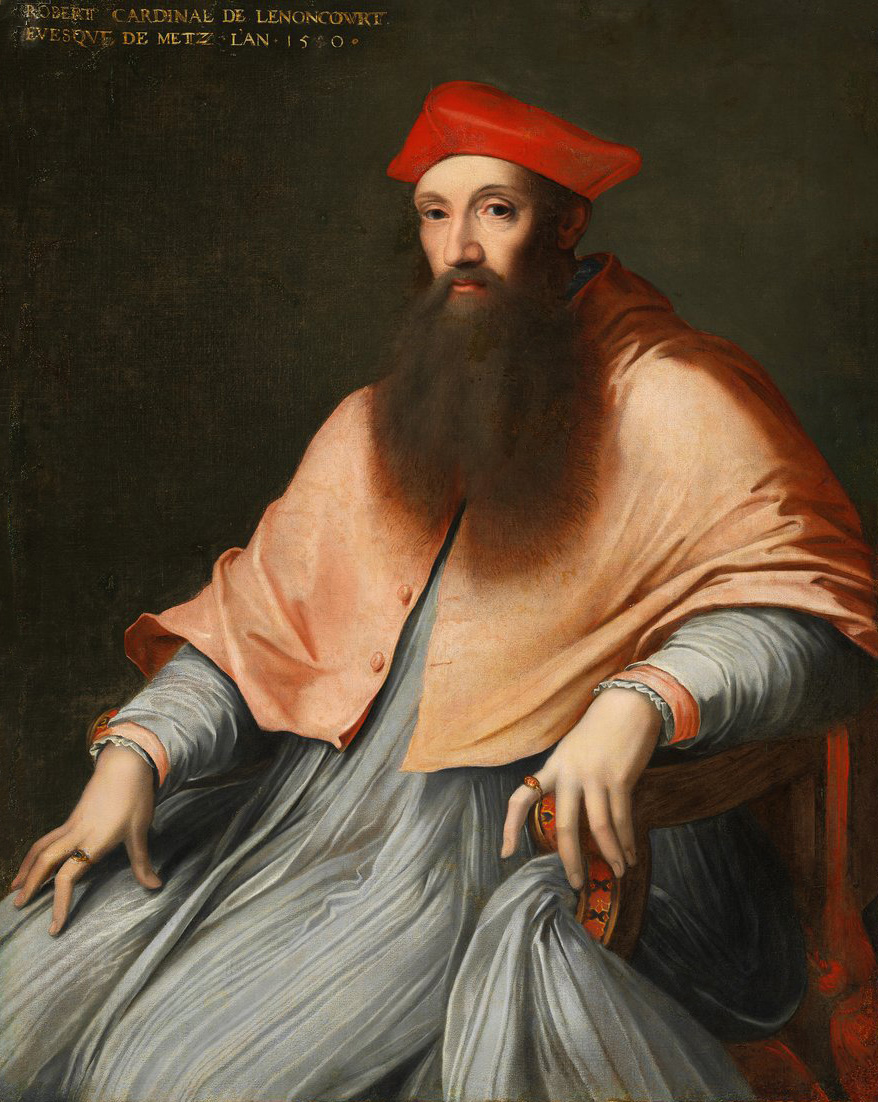
Pole as a cardinal
Pole's tomb at Canterbury Cathedral

The death of Edward VI on 6 July 1553 and the accession of Mary I to the throne of England hastened Pole's return from exile, as a papal legate to England (which he remained until 1557) with a view to receiving the kingdom back into the Catholic fold. However, Queen Mary I and Emperor Charles V delayed his arrival in the country until 20 November 1554, due to concerns that Pole might oppose Mary's forthcoming marriage to Charles's son, Philip of Spain.[18] It was only after the marriage was safely out of the way, that the English parliament finally set about repealing his attainder on November 22, 1554. Pole opened his papal commission and presented his legatine credentials before Philip & Mary and the assembled members of Parliament at the Palace of Whitehall on November 27, 1554, delivering a notable oration before them.[19] Among the dignitaries in attendance was Stephen Gardiner, Bishop of Winchester and Lord Chancellor of England, the most prominent Catholic minister in England, who would steer the restoration of Catholicism through parliament in January 1555.

As papal legate, Pole negotiated a papal dispensation allowing the new owners of confiscated former monastic lands to retain these. In return for this concession, Parliament then enabled the Revival of the Heresy Acts in January 1555.[20] This revived former measures against heresy: the letters patent of 1382 of Richard II, the Suppression of Heresy Act 1400 (2 Hen. 4. c. 15) of Henry IV, and the Suppression of Heresy Act 1414 (2 Hen. 5. Stat. 1. c. 7) of Henry V. All of these had been repealed under Henry VIII and Edward VI.[21] On 13 November 1555, Thomas Cranmer was officially deprived of the See of Canterbury.[22] The Pope promoted Pole to the rank of cardinal-priest and made him administrator of the See of Canterbury on 11 December 1555.[23]

Pole was finally ordained a priest on 20 March 1556 and consecrated a bishop two days later, becoming archbishop of Canterbury.[7][24] an office he would hold until his death. In 1555 and 1555/1556 respectively he also became chancellor of both Oxford and Cambridge universities.[25] As well as his religious duties, he was in effect the Queen's chief minister and adviser. Many former enemies, including Cranmer, signed recantations affirming their religious belief in transubstantiation and papal supremacy.[26] Despite this, which should have absolved them under Mary's own Revival of the Heresy Acts, the Queen could not forget their responsibility for the annulment of her mother's marriage.[27]

In 1555, Queen Mary began permitting the burning of Protestants for heresy, and some 220 men and 60 women were executed before her death in 1558. In the view of some historians, these Marian persecutions contributed to the ultimate victory of the English Reformation,[28] though Pole's involvement in these heresy trials is disputed.[29] Pole was in failing health during the worst period of persecution, and there is some evidence that he favoured a more lenient approach: "Three condemned heretics from Bonner's diocese were pardoned on an appeal to him; he merely enjoined a penance and gave them absolution."[11] As the reign wore on, an increasing number of people turned against Mary and her government,[30] and some people who had been indifferent to the English Reformation began turning against Catholicism.[31][32] Writings such as John Foxe's 1568 Book of Martyrs, which emphasised the sufferings of the reformers under Mary, helped shape popular opinion against Catholicism in England for generations.[30][32]

Despite being a lifelong devout Catholic, Pole had a long-running dispute with Pope Paul IV, dating from before the latter's election as Pope. Elected in 1555, Paul IV had a distaste for Catholic humanism and men like Pole who pushed a softer version of Catholicism to win over Protestants, as well as being fiercely anti-Spanish and against Mary's marriage to Philip II of Spain and heavily against Pole's support for it. Because of this disagreement Paul first cancelled Pole's legatine authority, and then sought to recall Pole to Rome to face investigation for heresy in his early writings. Mary refused to send Pole to Rome, yet accepted his suspension from office.[33] In the will of Sir Robert Acton dated 24 September 1558 he is named as one of the Executors, despite the fact that Sir Robert expressed himself in terms consistent with his dying in the Protestant faith.[34]

Pole died in London, during an influenza epidemic, on 17 November 1558, at about 7:00 pm, nearly 12 hours after Queen Mary's death.[35] He was buried on the north side of the Corona at Canterbury Cathedral.

Author

[edit]

Pole was the author of De Concilio, of a treatise on the authority of the pope and of a set of measures introduced by him to restore Catholic practice in England. He was also the author of many important letters, full of interest for the history of the time, edited by Angelo Maria Quirini.[36]

Pole is known for his strong condemnation of Machiavelli's book The Prince, which he read in Italy, and on which he commented: "I found this type of book to be written by an enemy of the human race. It explains every means whereby religion, justice and any inclination toward virtue could be destroyed".[37]

[edit]

Cardinal Pole is an 1863 novel by William Harrison Ainsworth. Cardinal Pole is a major character in the historical novels The Time Before You Die by Lucy Beckett, The Courier's Tale by Peter Walker and The Trusted Servant by Alison Macleod,[38] and features in Hilary Mantel's novel The Mirror & the Light, the third and last of her novels on the life of Thomas Cromwell.

In Season 3 of Showtime's series The Tudors, Cardinal Pole is portrayed by Canadian actor Mark Hildreth. In the mini-series The Virgin Queen he is played by Michael Feast; he is last seen leading Mary's servants out of Greenwich Palace as Elizabeth I arrives as queen.

Reginald Pole is a major character in Queen of Martyrs: The Story of Mary I by Samantha Wilcoxson.

Reginald Pole, along with his brothers, sister, and mother, are the central family in Philippa Gregory's historical novel The King's Curse.

Cardinal Reginald Pole is a major supporting character in Rosamund Gravelle's play Three Queens,[39][40] with the role first played by Les Kenny-Green.

See also

[edit]

Notes

[edit]

References

[edit]

Sources

[edit]

Attribution

[edit]
[edit]
Revisions and contributorsEdit on WikipediaRead on Wikipedia
from Grokipedia

Reginald Pole (1500–1558) was an English cardinal of the and the last Catholic , holding the see from 1556 until his death two years later. Born into a prominent Yorkist family with Plantagenet descent, Pole received early patronage from , including funding for studies at , , and , but refused to endorse the king's divorce from or the subsequent assertion of royal supremacy over the Church. His outspoken opposition, articulated in theological works like Pro ecclesiasticae unitatis defensione, led to permanent in 1532, the attainder and execution of his mother , and other relatives, and a papal bounty on his head placed by Henry.
In , Pole engaged in scholarly pursuits, humanistic circles, and ecclesiastical reform efforts, serving as a and participating in initiatives to counter , including brief involvement in the Council of Trent's early sessions. Upon the accession of the Catholic Mary I in 1553, he returned as to receive England's formal reconciliation with , absolving the realm of and directing the restoration of monastic properties, traditional , and clerical discipline. His legateship emphasized doctrinal orthodoxy and institutional revival over punitive measures, though it coincided with renewed heresy trials and executions under the revived statutes against Protestant dissenters. Pole's archiepiscopacy represented the zenith of ambitions in , but his death from illness on the same day as Mary I, 17 November 1558, preceded Elizabeth I's Protestant settlement, rendering his reforms ephemeral.

Early Life and Education

Birth and Family Background

Reginald Pole was born in March 1500 at Stourton Castle in , England, with the precise date traditionally recorded as 12 March. He was the third surviving son of Sir Richard Pole (died 1505), a of the whose family held Welsh origins and connections to the Tudor dynasty as cousins of King Henry VII through maternal lines. His mother, Margaret Plantagenet (1473–1541), held the title of 8th Countess of in her own right and was the daughter of George Plantagenet, 1st (1449–1478)—brother to Kings Edward IV and Richard III—making her the niece of those monarchs and a direct descendant of King Edward III through the . This maternal lineage positioned the Pole family as one of the last prominent branches of the Plantagenet dynasty, with Margaret as the sole surviving child of Clarence and thus heiress to significant Yorkist claims, though attainted after her father's execution for in 1478. Sir Richard's death from natural causes in December 1505 left Margaret to manage the family's estates and secure royal patronage for her children under , initially fostering their education and prospects at court. Pole's siblings included his elder brother (c. 1492–1539), who inherited noble titles and roles; a younger brother, (c. 1501–after 1561); and a sister, Ursula Pole (c. 1505–1570), who married , linking the family further to aristocratic networks. This background of blended Tudor and Yorkist heritage shaped Pole's early life amid the fragile dynamics of post-Wars of the Roses .

Oxford Studies and Early Career

Pole matriculated at , in 1512, where he received instruction from scholars including William Latimer, his principal tutor, and the humanist Thomas Linacre. His education emphasized classical and theological subjects, reflecting the humanist currents emerging in early Tudor . On 27 June 1515, at the age of 15, Pole graduated with a degree, demonstrating precocious academic ability supported by royal patronage. Following this, King , recognizing Pole's noble Plantagenet lineage and potential, granted him ecclesiastical preferments despite his youth and lay status. In February 1518, Pole was appointed dean of in Dorset, a position that provided income and status but required minimal administrative duties at the time. This early career step positioned him within the English church hierarchy, fostering connections that would later influence his theological development, though it also tied him to royal favor amid growing tensions over church authority.

Humanist Influences in Italy

In 1521, at the age of 21, Reginald Pole traveled to , funded by his cousin King Henry VIII, to pursue advanced studies at the , a leading center for humanist scholarship emphasizing classical languages and philosophy. There, he focused on Greek and Aristotelian texts under the guidance of Niccolò Leonico Tomeo, a Cretan-born whose Latin translations of works advanced the philological recovery of pre-Christian knowledge, integrating it with Christian intellectual traditions. This environment exposed Pole to the Renaissance humanist method of , or direct engagement with original sources, which he applied to deepen scriptural and patristic studies rather than adopting secularizing tendencies evident in some northern humanists. Pole's Italian period, spanning roughly 1521 to 1527 and centered in with excursions to and , immersed him in a network of Catholic-oriented humanists who prioritized reform within the Church. He formed connections with figures such as Christophe de Longueil, a Flemish scholar who died in 1522 and willed his personal library to Pole, providing access to rare classical and theological manuscripts that shaped his bibliographic habits. Interactions with Italian reformists like Jacopo Sadoleto, bishop of and advocate for evangelical humanism, further reinforced Pole's commitment to blending erudition with piety, evident in his later emphasis on moral renewal over institutional upheaval. These influences manifested in Pole's evolving approach to , where humanist tools—such as critical editions of Aristotle's libri naturales studied via Leonico—served to orthodox defenses against emerging Protestant critiques, rather than erode them. By 1526, during a Roman visit, Pole's reputation as a promising ecclesiastic grew among curial humanists, yet his Italian formation remained anchored in a pre-Tridentine Catholicism wary of radical , distinguishing it from the more disruptive strains of Erasmian thought he had encountered earlier in . This synthesis informed his lifelong intellectual posture, prioritizing unity and scriptural fidelity amid doctrinal controversies.

Opposition to Henry VIII

Refusal to Endorse the Royal Divorce

In early 1531, King , seeking theological justification for annulling his marriage to amid the ongoing "King's Great Matter," consulted his cousin Reginald Pole, a promising scholar recently returned from studies in . Henry urged Pole to compose a arguing that the pope lacked authority over the king's matrimonial affairs, emphasizing royal supremacy to bypass papal dispensation. Pole, however, demurred, privately warning Henry in a personal audience that pursuing the without papal consent endangered the king's and risked fracturing ecclesiastical unity, as the marriage's validity hinged on the 1503 dispensation granted by . By mid-1531, Pole's reservations deepened into outright refusal. Commissioned to produce scholarly arguments favoring the divorce—similar to those solicited from universities like the Sorbonne, where Pole had assisted English envoys in 1529—he instead delivered an analysis critiquing Henry's position. Pole contended that conceding papal overreach in one instance would undermine the Church's indivisible authority, potentially inviting broader and , and insisted the king humble himself before to preserve doctrinal integrity. Henry's initial response appeared conciliatory, nearly swaying him to reconsider, but advisors like countered Pole's influence, solidifying the royal push forward. Pole's steadfast opposition, rooted in fidelity to and , severed his favor at court. By January 1532, with allowances curtailed and pressure mounting, he departed for voluntary in Antwerp and later , forgoing further involvement. This refusal not only alienated Henry but foreshadowed the Act of Supremacy in 1534, as Pole's principled stand highlighted the irreconcilable tension between Tudor absolutism and traditional .

Publication of "Pro ecclesiasticae unitatis defensione"

Pro ecclesiasticae unitatis defensione, also known as De unitate ecclesiae, was Reginald Pole's principal treatise opposing Henry VIII's assertion of royal supremacy over the English Church. Composed primarily during 1535–1536 in and , the work consists of four books addressed directly to the king, framing the as a rupture in Christ's mystical body caused by Henry's repudiation of papal authority and his marriage to . Pole argued from Scripture, patristic sources, and conciliar decrees that ecclesiastical unity demanded obedience to the Roman pontiff as successor to St. Peter, portraying Henry's actions as tyrannical ambition akin to Lucifer's fall, driven by personal desires rather than doctrinal necessity. Pole completed the manuscript in May 1536 and dispatched it to Henry on 27 May from , intending it as a fraternal correction to avert further division, accompanied by a personal letter urging . The text's tone, while deferential in form, was uncompromising in substance, rejecting lay princely over spiritual matters and warning that submission to Henry's claims would forfeit . Henry's response, conveyed via ambassadors, dismissed the arguments as seditious, exacerbating tensions that led to attainders against Pole's kin. Though conceived for private circulation, the treatise appeared in print as Reginaldi Poli Cardinalis Britanni ad Henricum Octavum Britanniae Regem pro ecclesiasticae unitatis defensione libri quatuor in in 1538, printed without Pole's . This unauthorized edition, likely facilitated by papal circles supportive of Pole's stance, prompted him to oversee corrected versions thereafter, ensuring wider dissemination across Catholic to bolster resistance to Protestant innovations. The publication amplified Pole's and influenced continental critiques of the Henrician , solidifying his reputation as a defender of .

Familial Persecutions and Personal Exile

In January 1532, Reginald Pole departed England with Henry VIII's permission to resume his theological studies at the , but escalating tensions over the king's divorce from prevented his return, marking the onset of his prolonged . Pole's explicit opposition intensified in 1536 with the publication and private dispatch to Henry of his treatise Pro ecclesiasticae unitatis defensione on May 27, condemning the divorce and the schism from as a of unity. When summoned back to England later that year, Pole refused, aligning himself irrevocably with and relocating to by November 1536, where he received support amid growing isolation from his homeland. Henry VIII's retaliation targeted Pole's family, whom he implicated in treasonous sympathies due to Reginald's intransigence and their Plantagenet lineage, which posed a perceived threat to the Tudor dynasty. In November 1538, Pole's mother, , and several siblings—including brothers , and —were arrested and imprisoned in the on charges of high treason linked to alleged conspiracies. was executed by beheading on January 9, 1539, at , convicted primarily on testimony extracted under from Geoffrey, who implicated correspondence with the exiled Reginald. Margaret Pole endured over two years of captivity before her execution on May 27, 1541, at age 67; the event was notoriously botched, with an inexperienced axe-man requiring multiple strikes, reflecting the haste and irregularity of the proceedings ordered by Henry without formal trial. , spared execution after his coerced confessions, remained imprisoned until Henry's death in 1547, while younger brother Pole faced but avoided immediate death. These persecutions decimated the Pole lineage, stripping surviving members of titles and estates, as Henry sought to eradicate potential rivals and punish Reginald's defiance by proxy. During his 22-year exile, Pole resided primarily in —initially , then and —sustained by papal pensions and diplomatic roles against the English , though he evaded assassination plots reportedly commissioned by English agents. He declined overtures for , including a 1537 safe conduct from Henry that he ignored, prioritizing fidelity to over familial safety or personal return. This period solidified Pole's role as a symbol of Catholic resistance, though it left him estranged from until Mary I's accession facilitated his legate appointment in 1554.

Rise in the Catholic Church

Appointment as Cardinal

In the aftermath of his Pro ecclesiasticae unitatis defensione, published in 1536 to defend against Henry VIII's claims, Reginald Pole attracted the attention of , who sought capable scholars for Church reform amid growing calls for a general council. Pole, residing in after leaving , was summoned to to contribute to preparations for doctrinal and disciplinary renewal. On 22 December 1536, elevated Pole to the cardinalate in a consistory, appointing him cardinal of . At the time, Pole held only the rank of , a circumstance that underscored the pope's urgency to integrate his humanist learning and loyalty into the Curia's efforts against Protestant innovations and the . Pole accepted the promotion reluctantly, aware that his new status would provoke and endanger his relatives in , as evidenced by subsequent executions of family members including his brother Lord Montagu in 1538. This appointment not only secured Pole's role in reform commissions but also foreshadowed his diplomatic assignments to rally European monarchs against Henry's break with Rome.

Diplomatic Missions and Council of Trent Involvement

Following his elevation to the cardinalate by on December 20, 1536, Reginald Pole was entrusted with papal diplomatic efforts aimed at countering King Henry VIII's schism from . In early 1537, Pole received legatine authority to support the Pilgrimage of Grace rebellion in , but logistical challenges and the uprising's suppression prevented his direct intervention; instead, he coordinated from the Continent to rally Catholic princes against Henry's regime. Between 1537 and 1539, he undertook missions to the courts of Charles V in and King Francis I in , seeking to forge a Catholic alliance that would isolate England economically and militarily, though these efforts yielded limited success due to the monarchs' competing interests and reluctance to escalate conflict. Departing on December 27, 1538, Pole navigated perilous travels, evading English assassins, and conducted negotiations in Toledo and Cambray, emphasizing the theological imperative of restoring papal obedience while advocating restrained measures short of outright war. In 1542, appointed Pole as one of three legates—alongside Giovanni del Monte and Cardinal Ludovico Maddalena D'Aragona—to preside over the convocation of the , intended to address Protestant challenges through doctrinal clarification and internal reform. Delays postponed the council's opening until December 13, 1545, during which Pole, residing primarily in , contributed to preparatory discussions on ecclesiastical renewal, reflecting his Erasmian-influenced emphasis on moral purification over punitive decrees. At the council's formal commencement, Pole delivered a legatine address on January 7, 1546, urging delegates to begin with collective and for clerical abuses, arguing that spiritual contrition must precede debates on justification and sacraments to ensure the council's efficacy and divine guidance. His moderated stance, favoring with reformist elements within Catholicism, contrasted with more rigid positions but aligned with Paul III's reformist agenda; however, Pole's active participation waned after the initial sessions as he focused on Italian diocesan duties and avoided deeper entanglement in the council's protracted doctrinal sessions, which continued intermittently until 1563.

Associations with Reformist Circles

Pole established close ties with Catholic reformist networks in Italy after his elevation to the cardinalate on December 20, 1536, by , who sought to leverage his theological acumen amid the Protestant threat. Residing primarily in from 1541, he cultivated the Ecclesia Viterbiensis, an informal circle of clergy, scholars, and lay intellectuals advocating spiritual renewal through humanistic scholarship, interior piety, and selective engagement with evangelical doctrines like justification, while upholding core Catholic tenets such as and sacramental grace. This group, which included figures like Marcantonio Flaminio and Giovanni Morone, emphasized scriptural study and moral reform over institutional rigidity, influencing early debates but later drawing suspicion for perceived leniency toward heterodoxy. A pivotal association was Pole's longstanding friendship with Cardinal Gasparo , formed during shared studies at the in the mid-1520s alongside humanists like and Jacopo Sadoleto. Contarini, elevated to the cardinalate in May 1535, collaborated with Pole on reconciling Catholic tradition with reformist critiques, notably during the 1541 Colloquy of , where Contarini co-authored a consensus formula on justification that echoed some Lutheran emphases on faith but subordinated them to works and merit—efforts Pole supported through correspondence, including a letter from Contarini to Pole on November 11, 1538, voicing optimism for doctrinal unity. Their partnership exemplified the spirituali tendency, a loose Italian reformist faction sympathetic to Erasmian and internal Church purification, which Pole helped lead after Contarini's death on August 24, 1542. Pole's Viterbo circle extended to poet and artist Buonarroti, both drawn to evangelical spirituality; Colonna hosted discussions on and grace in the late 1530s and 1540s, while Michelangelo's correspondence with Pole reflected shared concerns over without rejecting papal obedience. These ties positioned Pole as a bridge between conservative and moderate reform, though his reluctance to endorse aggressive inquisitorial measures—evident in his defense of Viterbo associates during heresy probes—highlighted tensions with more zealous Tridentine factions. His reformist leanings, rooted in empirical scriptural rather than scholastic abstraction, informed his later advocacy for clerical residency and preaching standards upon returning to in 1554.

Theological Writings and Intellectual Legacy

Key Treatises on Church Unity and Justification

Pole's De concilio, drafted in the mid-1530s amid discussions of church reform under , posits that a freely convoked general represents the optimal mechanism for addressing clerical abuses and doctrinal errors while preserving the Church's hierarchical unity under . The treatise critiques both Protestant and internal corruption as dual threats to catholicity, arguing that collegial deliberation among bishops, guided by the , could enact punitive and restorative measures—such as stricter enforcement of , curbing , and clarifying sacraments—without precipitating further . Pole draws on conciliar precedents like Constance and but subordinates them to Roman authority, rejecting any notion of council supremacy to avert the divisiveness observed in Hussite and early Lutheran assemblies. Complementing his reformist , Pole's Tractatus de justificatione, likely composed during his legatine tenure at the (1542–1543) and published posthumously in Louvain in 1569, delineates justification as an intrinsic renewal of the through infused sanctifying grace, operative via the sacraments and synergistic with human cooperation. In this work, found among his manuscripts in the custody of Henry Pyning, dean of Windsor, Pole refutes by insisting that faith, while initial and formative, requires charity-formed works as integral to meritorious justification before ; works performed apart from grace merit condemnation, but those empowered by it constitute true righteousness. This aligns with emerging Tridentine formulations, as evidenced in Pole's memorandum to the council fathers, where he urged scriptural fidelity over polemical rejection of reformers' texts, yet upheld grace's primacy in transforming the impious into the just. These treatises underscore Pole's intellectual legacy as a bridge between Erasmian critique of abuses and staunch defense of doctrinal integrity, influencing later emphases on internal renewal for unity's sake; however, their moderated tone—eschewing outright condemnation of all reformist insights—drew suspicion from more rigorist theologians who perceived concessions to .

Engagement with Erasmian Humanism and Spirituali

Pole's intellectual development was shaped by , particularly the Erasmian emphasis on returning ad fontes to scriptural and patristic sources for Church renewal without . During his studies at the from 1523 to 1526, he immersed himself in humanistic scholarship under figures like Marco Musuro and Giovanni Calfurnio, fostering a preference for rhetorical elegance and biblical over scholastic dialectics. Erasmus himself corresponded with Pole in 1525, praising his potential as a defender of amid "deplorable times" and introducing him to reform-minded scholars like John à Lasco, which reinforced Pole's irenic approach to doctrinal disputes. This humanistic formation influenced Pole's early writings, such as his 1536 Pro ecclesiasticae unitatis defensione, where he employed Erasmian-style appeals to conscience and unity against royal supremacy. Pole's engagement deepened through his association with the Spirituali, an Italian reform circle advocating internal Catholic renewal via personal piety, scriptural meditation, and a nuanced view of justification blending and works, while rejecting Protestant separation. He formed a close friendship with Gasparo , a Venetian patrician and fellow humanist, during his Italian sojourns in the 1520s, sharing discussions on grace and ecclesial reform that anticipated conciliar debates. , later a cardinal, credited Pole's influence in his own shift toward evangelical emphases, and both collaborated on preparations for the 1536-1537 papal reform commission under Paul III. Pole's circle extended to figures like Jacopo Sadoleto and Giovanni Morone, emphasizing anti-scholastic spirituality rooted in Pauline theology and early , distinct from Lutheran by insisting on sacramental unity. From 1541 to 1553, as papal governor of , Pole hosted a prominent Spirituali that attracted reformers including , Marcantonio Flaminio, and Pietro Carnesecchi, focusing on biblical , mystical contemplation, and critiques of clerical abuses. These gatherings promoted a "bookish" piety drawing from pre-Reformation devotions like Thomas à Kempis, prioritizing inner conversion over ritualism, though Pole steadfastly upheld papal authority. The Viterbo group's , however, drew suspicion from rigorists like Gian Pietro Carafa (later Paul IV), who viewed it as accommodating ; Carafa's 1557 imprisonment of Pole on vague charges of doctrinal laxity reflected tensions between humanistic and Tridentine orthodoxy. At the (1545-1547), Pole's humanistic leanings manifested in advocacy for scriptural primacy in justification debates, aligning with Spirituali efforts for consensus with Protestants, though he departed early in 1546 amid frustrations over dogmatic rigidity. His engagements ultimately bridged Erasmian and Catholic renewal, influencing later figures but earning posthumous critique from both , who deemed him insufficiently radical, and Catholic hardliners, who suspected crypto-Nicodemism.

Critiques of Protestant Innovations

Reginald Pole critiqued Protestant doctrines for prioritizing individual interpretation over ecclesiastical authority, arguing that innovations like sola scriptura undermined the church's role as the divinely instituted interpreter of revelation. In his Pro ecclesiasticae unitatis defensione (1536), Pole contended that reliance on scripture alone, without the guiding tradition and magisterium, rendered accurate exegesis impossible through human reason, fostering endless division and error as evidenced by the proliferation of sects following Luther's reforms. He emphasized that the church, as the "mother" of believers, preserved the deposit of faith through councils and papal oversight, a structure Protestants rejected at the peril of schism, as seen in the fragmentation of evangelical movements by the 1530s. Pole also opposed the Protestant formulation of justification by alone (sola fide), viewing it as a distortion that severed the integral link between , works, and sacramental grace upheld in patristic and scholastic theology. While acknowledging the centrality of interior —a point of sympathy with some spirituali influences—he rejected the exclusion of human cooperation and merit, insisting that such a view neglected the transformative efficacy of sacraments like and , which Protestants diminished or abolished. His interventions at the (1545–1547), where he advocated self-examination alongside doctrinal firmness, highlighted Protestant errors in isolating justification from the church's communal life, potentially leading to as observed in radical Anabaptist excesses by 1525. These critiques extended to the denial of papal primacy, which Pole defended as essential to unity, portraying Protestant rejection of the pope as a return to pre-Constantinian chaos rather than renewal; he cited historical precedents like the Arian crisis, where papal authority preserved orthodoxy against heresy. Though Pole's approach was irenic compared to polemicists like Johann Eck, his writings consistently framed Protestant innovations as causal agents of spiritual fragmentation, prioritizing causal fidelity to apostolic succession over subjective reform.

Service under Mary I

Return as Papal Legate

Following the death of and the accession of his half-sister Mary I on 6 July 1553, promptly appointed Reginald Pole as papal legate to England, tasking him with restoring the kingdom's ties to the after two decades of schism under and Edward VI. This appointment came amid Mary's efforts to reverse Protestant reforms, with Pole's familial connections to — as first cousin to Henry VIII—positioning him as a symbolic bridge for . Pole received the extraordinary authority of a legate a latere, granting him papal powers to absolve the nation, restore ecclesiastical properties, and reorganize the English Church without immediate reference to . However, Pole exercised caution, advising delay until Mary's regime stabilized following challenges like the attempted Protestant coup by and the subsequent in January-February 1554, which aimed to prevent her marriage to and entrench . These events underscored the fragility of the Catholic restoration, prompting Pole to withhold his departure from until the threats subsided. In 1554, after Mary's forces crushed the rebellion and secured her rule, Pole embarked from the , crossing the under escort. He landed at Dover on 20 November 1554, marking the end of his 22-year imposed after refusing to support Henry VIII's annulment and supremacy claims. Greeted with formal honors, Pole proceeded to , where Mary I received him at Palace around 27 , affirming his role in the realm's spiritual realignment. His arrival, unaccompanied by foreign troops to avoid perceptions of invasion, emphasized a to papal obedience rather than coercion.

Efforts at National Reconciliation with Rome

In March 1554, Pope Julius III appointed Reginald Pole as papal legate a latere to England, tasking him with receiving the kingdom's formal submission to the Holy See and absolving it from the schism initiated under Henry VIII. This mission aligned with Mary I's efforts to reverse the Protestant Reformation's ecclesiastical changes, following her accession in 1553 and marriage to Philip II of Spain on July 25, 1554, which facilitated assurances of safe conduct for Pole after years of exile. Pole departed from Brussels on November 11, 1554, and landed at Dover on November 20, where he was greeted by his nephew, Lord Montague, before proceeding to London amid public demonstrations of loyalty. Upon arrival, Pole emphasized themes of mercy and unity in restoring Catholic orthodoxy, urging forgiveness for past errors rather than immediate retribution. On November 30, 1554—St. Andrew's Day—both Houses of Parliament presented a supplicatory petition to Mary I and Philip II, requesting intercession with Pole to grant absolution; Pole then formally pronounced the realm's reconciliation with Rome in a special session attended by the monarchs, lords spiritual and temporal, and commons. This act nullified the schism, with Pole invoking his legatine authority to absolve the nation, clergy, and laity, followed by the singing of the Te Deum in the royal chapel. Parliament's legislative efforts complemented Pole's role, enacting statutes in the same session to repeal the Act of Supremacy of 1534 and other anti-papal measures, thereby reinstating the pope's spiritual jurisdiction over England. Pole, though not yet ordained a priest, conducted these proceedings with papal bulls in hand, focusing on ecclesiastical restoration by confirming benefices and authorizing priests to administer sacraments under restored Catholic rites. His approach prioritized national healing, as evidenced by instructions to avoid alienating converts through harsh inquisitorial methods initially, though this moderated over time amid resistance from Protestant holdouts. By early 1555, Pole had begun ordaining clergy and reorganizing the church hierarchy, solidifying the reconciliation's implementation despite underlying factional tensions.

Tenure as Archbishop of Canterbury

Reginald Pole was ordained a on 20 March 1556 and consecrated as two days later, succeeding following the latter's execution for on 21 March. As the last Catholic to hold the office, Pole's brief tenure from March 1556 to November 1558 centered on reversing Edwardian Protestant reforms and reinstating traditional Catholic doctrine and discipline across England's church structure. He collaborated closely with Queen Mary I to reconstitute parish worship, revive Catholic education in universities like and by purging Protestant influences, and reestablish monastic orders dissolved under , though progress was constrained by parliamentary resistance to full restitution of church lands seized during the . Pole convened and presided over provincial synods, building on his earlier legatine assembly at Westminster in late 1555, to enact decrees standardizing , sacraments, and clerical standards, including mandates for the restoration of altars, images, and the in Latin. These efforts aimed at doctrinal uniformity, emphasizing justification by faith cooperating with works and , in line with Tridentine principles emerging from the , though Pole's implementation prioritized spiritual renewal over coercive enforcement. By mid-1556, statutes from these synods required bishops to enforce auricular confession, , and , with Pole personally overseeing visitations to cathedrals and dioceses to ensure compliance. Challenges arose in 1557 when , distrustful of Pole's perceived leniency toward former schismatics and associations with reformist humanists, revoked his legatine powers and dispatched rival legates to ; Queen Mary refused to permit Pole's departure or the new envoys' entry, allowing him to retain substantive influence as despite formal suspension from broader papal authority. This episode highlighted tensions between Pole's conciliatory approach—favoring and reconciliation over property seizures—and Paul IV's stricter policies, resulting in incomplete reversal of lay acquisitions of monastic estates, which undermined fiscal recovery for the church. Pole's health declined amid these frustrations and an outbreak, leading to his death on 17 November 1558 at , approximately twelve hours after Mary I's passing at , marking the abrupt end of 's Catholic restoration under their joint stewardship. He was buried in the corona (north side) of on 15 December 1558.

Controversies and Historical Assessments

Alleged Role in Marian Persecutions

As and later , Reginald Pole played a central role in the restoration of Catholic orthodoxy under Mary I, including the revival of medieval laws that facilitated the execution of approximately 280 Protestants between February 1555 and Mary's death in November 1558. Pole viewed the suppression of as a divine imperative, urging Mary to wield the "sword of justice" against heretics to preserve ecclesiastical unity, consistent with his broader writings on the perils of . However, direct evidence of Pole personally authorizing individual burnings is limited; executions were primarily prosecuted by bishops like of under revived statutes from Henry VIII's reign, with Pole's legatine authority providing overarching papal sanction rather than micromanagement. Pole's approach emphasized reconciliation and doctrinal over punitive excess, prioritizing the reintegration of into the Catholic fold through education, , and parliamentary acts like the 1554 repeal of VI's Protestant legislation. Contemporary records indicate he intervened to mitigate severity on occasion, such as overruling Bonner to spare condemned individuals from execution at least once, reflecting a for penitence where possible amid his deteriorating during the persecutions' peak from 1555 to 1557. This leniency contrasted with more zealous clerics, and Pole's legatine powers focused on administrative —such as university visitations to purge Protestant influences—rather than escalating burnings, which he saw as a regrettable necessity rather than a primary tool for reconversion. Historians debate the extent of Pole's culpability, with some revisionist scholars portraying him as a moderate reformer whose "lukewarm" enforcement stemmed from pragmatic awareness of public resistance to coercion, evidenced by his avoidance of aggressive propaganda against the executions' backlash. Protestant polemicists, including John Foxe in his Acts and Monuments, alleged deeper complicity by linking Pole to the regime's policy, though Foxe's narratives often amplified anti-Catholic sentiment without primary documentation tying Pole to specific warrants beyond his general endorsement of heresy trials. Empirical analysis of trial records shows executions clustered in London and southeast England under local diocesan jurisdiction, with Pole's influence more indirect as he delegated to subordinates while bedridden in later years, underscoring that while he did not oppose the policy in principle, his personal agency was constrained by illness and strategic focus on long-term Catholic revival.

Contemporary Protestant and Catholic Views

Contemporary Protestant scholarship and commentary frequently portray Reginald Pole as a central figure in the repressive policies of Mary I's reign, associating him with the execution of approximately 280 Protestants between 1555 and 1558 for , an event known as the Marian persecutions. This view frames Pole's tenure as and as an ill-fated attempt to forcibly restore Catholicism, which ultimately galvanized Protestant resistance and contributed to the long-term success of the by evoking sympathy for the victims. Anglican institutions, such as the Library's 2022 "Reformation Cardinal" exhibition, acknowledge Pole's scholarly and reform efforts—like convening a legatine in 1555–1556 to address clerical abuses—but balance this with historical critiques labeling him a "cruel agent" of Mary, reflecting ongoing wariness of his uncompromising orthodoxy. In contrast, modern Catholic assessments emphasize Pole's principled opposition to Henry VIII's schism, his authorship of De unitate ecclesiastica (1536) defending papal supremacy, and his contributions to Church renewal, positioning him as a proto-Counter-Reformation thinker who sympathized with certain humanistic reforms while rejecting Protestant innovations. Catholic sources highlight his near-election as pope in 1549–1550 and his role in regenerating Catholic education and monastic life during the Marian restoration, viewing him as a virtuous exile whose death on November 17, 1558—the same day as Mary's—symbolized martyrdom for unity with Rome. While acknowledging debates over his moderation at the Council of Trent (where he advocated dialogue on justification before papal critics accused him of crypto-Lutheranism), these perspectives praise his fidelity, as evidenced by contemporary tributes from figures like Pietro Bembo, who called him "the most virtuous and learned" young man in Italy. Historians sympathetic to Catholic historiography, such as those examining his legatine instructions from Popes Julius III and Paul IV, note Pole's preference for preaching over coercion, including instances where he intervened to spare condemned heretics, complicating simplistic narratives of zealotry.

Modern Historiographical Debates

Historians have increasingly questioned traditional portrayals of Pole as a near-saintly figure of unwavering , emphasizing instead his personal flaws and strategic shortcomings. Thomas F. Mayer, in his 2000 , depicts Pole as intellectually profound and spiritually committed yet marred by indecisiveness and emotional instability, arguing that he actively evaded the full exercise of power thrust upon him, functioning more as a prophetic than a decisive leader. This contrasts with earlier Catholic hagiographies that idealized Pole's exile and resistance to as uncompromised martyrdom, a view Mayer challenges by highlighting Pole's pragmatic maneuvers, such as tentative negotiations with English authorities during his early Roman years. A central debate concerns Pole's effectiveness as papal legate during Mary I's reign (1554–1558), where he wielded extensive powers for reconciliation but prioritized doctrinal restoration over aggressive enforcement against heresy. Scholars like Mayer contend that Pole's reluctance to deploy resources, such as the Jesuits, against Protestant networks stemmed not from profound incompetence but from a deliberate focus on spiritual renewal, though this approach failed to secure lasting Catholic dominance in England. Critics, including some analyses of his legatine correspondence, argue this reflected deeper hesitancy, as Pole deferred key decisions to Rome or Mary, undermining his authority and contributing to the regime's collapse upon Elizabeth I's accession in 1558. Conversely, defenders note his successful absolution of Parliament on November 30, 1554, and initiation of monastic revivals, attributing shortcomings to external constraints like imperial interference from Philip II rather than personal failings. Pole's legacy in historiography remains contested, with modern assessments dividing on whether his writings and participation (1545–1563) marked him as a forward-thinking reformer or an ineffectual conservative. Mayer reassesses Pole's limited direct involvement in Trent's doctrinal outputs, portraying him as influential in spirituali circles but sidelined by curial politics, a view echoed in debates over his self-justificatory that reveal tensions between personal faith and institutional loyalty. Some scholars, building on archival studies, argue Pole's emphasis on inner over coercive uniformity prefigured post-Tridentine Catholicism's tensions, yet his inability to translate ideas into policy—evident in England's rapid Protestant resurgence—highlights systemic Catholic reform weaknesses. These interpretations underscore a broader shift: from viewing Pole as Henry's nemesis or Mary's ideal collaborator to a tragic figure whose principled anti-schism stance masked pragmatic limitations, informed by newly edited correspondences revealing his internal conflicts.

Death and Long-Term Impact

Final Days and Succession

Pole's health had deteriorated since late summer 1558, amid ongoing strains with , who in April 1557 revoked his legatine powers and demanded his return to for trial on charges—a summons Pole declined, prioritizing his responsibilities in amid the realm's reconciliation with . These tensions stemmed from Paul IV's opposition to Pole's earlier associations with Catholic humanists and perceived Spanish influences under Philip II, though Pole maintained his doctrinal orthodoxy. Contracting a severe illness, possibly influenza during an epidemic, Pole died at on November 17, 1558, around 7:00 p.m., roughly twelve hours after Queen Mary I's death earlier that day at . His passing marked the end of the Catholic restoration's leadership in , as the dual vacancies in the and primatial see facilitated Elizabeth I's immediate accession and subsequent religious reversals. He was buried on December 15, 1558, on the north side of the Corona in , near the site of Thomas Becket's former shrine. With the archbishopric vacant and Paul IV refusing to fill episcopal sees amid political discord, Elizabeth's Protestant-leaning regime proceeded unilaterally; , a former to and dean of , was elected by Canterbury's dean and chapter in early August 1559, receiving royal on September 9 and consecration later that month, thereby initiating the Elizabethan ecclesiastical settlement. Parker's tenure until 1575 emphasized moderate Protestant reforms, contrasting sharply with Pole's Catholic restorations and underscoring the fragility of Mary's reign.

Influence on Counter-Reformation Thought

Reginald Pole's theological outlook, shaped by and associations with reform-minded circles like the spirituali in , emphasized internal spiritual renewal and clerical moral reform as prerequisites for addressing the Protestant challenge, influencing early debates on church restoration. While sympathizing with certain Protestant emphases, such as aspects of justification by faith, Pole rejected and advocated repentance and unity, as articulated in his 1536 treatise Pro ecclesiasticae unitatis defensione, which defended ecclesiastical authority against Henry VIII's break with Rome by invoking biblical calls to personal contrition (Ezekiel 18:30). This approach, blending Erasmian with Catholic fidelity, positioned him as a bridge between pre-Tridentine reformers and the council's eventual doctrines, though his conciliatory stance waned in favor of stricter orthodoxy post-1540s. As one of three papal legates at the Council of Trent's opening in December 1545, Pole delivered an address on January 7, 1546, urging participants to prioritize self-examination, , and internal reform before doctrinal disputes, thereby framing the council's agenda around spiritual purification rather than mere refutation of . He departed after the tenth session in 1547 due to health and ideological tensions but anticipated key Tridentine reforms, such as mandatory priestly residence and seminaries, which he later enacted through the 1555–1556 London Provincial Synod as . Pole's Viterbo gatherings further disseminated these ideas among Italian reformers, fostering a theological milieu that integrated humanistic scriptural study with Catholic sacramentalism. Pole's De summo pontifice, composed during the 1549–1550 papal conclave, advanced a vision of as spiritual and humble—elevated in degree but not essence from episcopal authority, and theoretically revocable by a general council—challenging monarchical excesses and contributing to reflections on curial reform and papal humility. Though not elected pope, these ideas echoed in later Tridentine emphases on episcopal governance and influenced figures like in implementing pastoral renewal. His prioritization of educational and moral clerical training over coercive measures, evident in English synodal decrees, underscored a thoughtful, if ultimately limited, strand of intellectualism focused on causal roots of heresy in institutional failings rather than solely punitive responses.

Evaluations of Pole's Principled Resistance to Schism

Pole's refusal to acquiesce to Henry VIII's assertions of royal supremacy over the English Church, culminating in his 1536 treatise Pro ecclesiasticae unitatis defensione, has been evaluated by historians as a rare instance of intellectual and moral fortitude amid familial peril and political pressure. Commissioned by Pope Paul III to explore possibilities for reconciliation with Henry, Pole instead produced a four-book defense of papal primacy, framing the schism as a profound spiritual rupture that imperiled the king's salvation and the nation's unity under Christ. This work rejected Henry's theological justifications for divorce and supremacy, emphasizing obedience to divine order over temporal authority, and was circulated widely in manuscript form before print. The treatise's uncompromising tone—likening Henry's actions to Lucifer's rebellion—directly precipitated parliamentary attainders against Pole in 1539 and the executions of at least eleven relatives, including his brother Lord Montagu on December 9, 1538, and mother Margaret Pole on May 27, 1541, underscoring the personal cost of his stance. Catholic reformers of the era, such as Gasparo , praised Pole's position as exemplary fidelity to doctrinal truth, viewing his exile from 1532 onward not as evasion but as prophetic witness against erastianism—the subordination of church to state. Pole's correspondence and legations to France and in 1536–1537 further embodied this resistance, as he urged European princes to withhold recognition of the and promoted as the path to restoration, eschewing armed intervention despite papal calls for crusade. Historians like Dermot Fenlon have assessed this approach as principled in its prioritization of internal reform over coercion, aligning with emerging ideals that saw as a moral aberration requiring collective repentance rather than mere political reversal. Pole's consistent rejection of high ecclesiastical offices under Henry, despite offers like the Archbishopric of in 1532, reinforces evaluations of his opposition as conscience-driven rather than opportunistic, distinguishing him from courtiers who pragmatically accommodated the regime. Modern scholarship, particularly Thomas F. Mayer's biography, lauds Pole's resistance as underappreciated prophetic leadership, arguing that no figure endured greater proportionate losses—exile, familial annihilation, and thwarted career—while adhering so steadfastly to first-order principles of ecclesial unity, rendering his sacrifices "less deserving" of such retribution than those of more militant opponents. Mayer contrasts Pole's theological depth with the era's confessional polemics, portraying his writings as a sustained critique of schismatic that anticipated Tridentine emphases on hierarchical obedience. While some analyses note the treatise's limited immediate diplomatic impact—failing to sway Francis I or Charles V decisively—its enduring value lies in articulating a non-violent, scripturally grounded bulwark against caesaro-papism, influencing later Catholic . Critics within Protestant historiographical traditions have occasionally dismissed it as rigid , yet even they acknowledge its sincerity, as evidenced by Henry's own fury, which prompted bounties on Pole's head and rebuttals like Cranmer's 1539 tract. Overall, evaluations affirm Pole's stance as a benchmark of principled ecclesial , prioritizing eternal truths over temporal security in an age of coerced conformity.

References

Add your contribution
Related Hubs
User Avatar
No comments yet.