Hubbry Logo
Carl HahnCarl HahnMain
Open search
Carl Hahn
Community hub
Carl Hahn
logo
8 pages, 0 posts
0 subscribers
Be the first to start a discussion here.
Carl Hahn
Carl Hahn
from Wikipedia

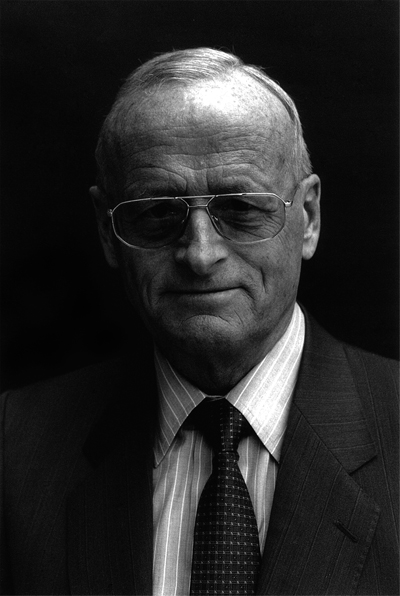
Carl Horst Hahn (1 July 1926 – 14 January 2023) was a German businessman and head of the Volkswagen Group from 1982 to 1993. He served as the chairman of the board of management of the parent company, Volkswagen AG (formerly Volkswagenwerk AG). During his tenure, the group's car production increased from two million units in 1982 to 3.5 million a decade later.

Key Information

Life and career

[edit]

Early life and education

[edit]

Hahn was born in Chemnitz,[1] and grew up near the town. His father had been a senior manager of the German car and motorcycle company DKW and was a co-founder of the Auto Union in 1932,[2] which later evolved into the Audi car brand. Hahn studied business administration at the University of Cologne and the University of Zurich, economics and politics in the UK and France. In 1952, Hahn received his doctorate in Economics at the University of Berne in Switzerland.[3] He went to Perugia for a year to study art history, intending to volunteer at Fiat.[4]

Early career

[edit]

Before joining Volkswagen, he worked as an economist at the OECD in Paris in the European Productivity Agency.[4] In 1954 Hahn joined VW as an assistant of chairman Heinrich Nordhoff, and in 1955 became head of sales promotion in VW's export department.[5]

Volkswagen of America, 1959–1965

[edit]

In 1959, Nordhoff made him president of the company's U.S. subsidiary, Volkswagen of America.[5] Under Hahn's leadership, Volkswagen of America began a national advertising campaign to attract more attention to its quirky Beetle sedan and Microbus wagon.[5] Hahn soon hired the Doyle Dane Bernbach ad agency.[6] Its print and television ads for the Volkswagen brand respected the customer's intelligence, gave detailed information about Volkswagen's products, and made fun of the unorthodox qualities of the cars. The ads became cultural icons as much as the cars did. As the Beetle served a market segment that American car builders did not cover, Volkswagen enjoyed exceptional sales in the U.S. in the 1960s and early 1970s.[5] Hahn became a beloved figure in the United States before his return to Germany in 1965, having been affectionately nicknamed "Mr. Volkswagen" by VW enthusiasts. Hahn became a member of the board of VW in 1964.[4]

Chairman of Volkswagen AG, 1982–1993

[edit]

In 1973, Hahn left VW and returned to Hannover, Germany, to lead the German tire company Continental AG.[7] Subsequently, in 1982, with the image of Starverkäufer (star seller), he returned to VW to become chairman of the company.[5] Under his leadership, Volkswagen entered a cooperation agreement with the Spanish car brand SEAT in 1982, bought a majority interest in 1986, and by 1990 owned the entire company.[8] In 1985, Hahn was able to push VW's earnings up 140 per cent to $225 million based on sales of more than $21 billion, and he was credited with pushing VW beyond the one-car strategy left over from the era of air-cooled Beetles and the early success of the Volkswagen Golf Mk1 in the 1970s.[7] The second-generation edition, introduced in Europe in 1983 and in North America in 1984, was one of the best-selling cars of the 1980s worldwide. Two out of every three Volkswagen vehicles sold in 1985 were Golfs,[7] and 97,128-second-generation Golfs were produced at Volkswagen's Volkswagen Westmoreland Assembly Plant in Pennsylvania that year.[9]

Despite Hahn's earlier success in leading Volkswagen of America, VW sales in the United States dropped during his tenure as VW chairman, from 171,281 units in 1982 to 75,873 in 1992, largely due to intense competition from American and Japanese carmakers. Soon after Hahn became chairman of VW, he tested an American Volkswagen Rabbit built at the Westmoreland plant, which had opened in 1978, and he was deeply disappointed in how the Rabbit had been changed. The car had been re-engineered to drive like an American family sedan, with softer suspension and shock absorbers. "When I drove the American Rabbit, it felt like a Chevrolet", he complained. "If you want a Chevrolet, you should go to General Motors."[9] Hahn fired Volkswagen of America president James McLernon, a former Chevrolet engineer who had been tapped by VW to get the Westmoreland plant up and running. Hahn brought in new management and kept the Westmoreland factory open to produce the second-generation Golf as a hedge against currency fluctuation between the German mark (DM) and the U.S. dollar, but inefficient production and soft sales in North America caused VW to close the plant in 1988.[7]

In 1984, Hahn initiated engagement in the Chinese market, sooner than European competitors.[5] After the fall of the Iron Curtain in 1991 Volkswagen entered a joint venture with the Czech company Škoda Auto.[10] Hahn's acquisitions made Volkswagen a global force, and affirmed its place as Europe's largest automaker.[5] Hahn could not keep manufacturing and development costs under control in the early 1990s,[7] and he was replaced as Volkswagen CEO by Ferdinand Piëch in 1993.[7] Hahn was a member of the advisory board of VW until 1997.[4] He helped cleaning up VW's business practices, dealing with a case of foreign exchange fraud, but its $300 million cost to Volkswagen ate into the very profits Hahn had helped the company make.[7]

Personal life

[edit]

While stationed in the U.S., Hahn married Marisa Lea Traina; their four children were all born in the U.S. His wife died in 2013.[4] Hahn died on 14 January 2023, aged 96.[5]

Legacy

[edit]

Former Volkswagen of America president Bill Young, in an interview with journalist David Kiley, explained Hahn's record as chairman of VW: "Dr. Hahn had a lot on his plate in the 1980s, and VW was an organization that he was not suited or equipped to turn upside down the way Piech did."[7]: 255 

References

[edit]

Further reading

[edit]
Revisions and contributorsEdit on WikipediaRead on Wikipedia
from Grokipedia
Carl Horst Hahn (1 July 1926 – 14 January 2023) was a German automotive executive renowned for his leadership at AG, where he spearheaded the company's transformation into a global powerhouse during his tenure as chairman and CEO from 1982 to 1992. Born in , , into an industrial family with ties to early automobile , Hahn studied in , , and , as well as in , earning a Ph.D. in from the in 1952. Hahn's career began with roles at and the before joining in 1954, where he quickly rose to lead of America from 1959 to 1964, driving the iconic Beetle's massive success in the U.S. market through innovative marketing campaigns like "," which helped it achieve over 21.5 million units produced from 1945 to 2003, making it one of the best-selling models ever. He joined 's executive board in 1964, overseeing sales, before serving as CEO of from 1973 to 1982. Upon returning to Volkswagen as CEO, Hahn oversaw key expansions, including the acquisition of in and Škoda in , joint ventures in starting in 1985 with Shanghai Automotive Industry Corp., and factories in post-unification and . Under Hahn's guidance, solidified its position as Europe's leading carmaker, introduced successful models like the generations, and elevated brands such as , while forging partnerships with in 1987 and Ford in 1990. His visionary approach to internationalization, particularly in —where now dominates the combustion engine market—earned him recognition as a pioneer in the global auto industry, including induction into the European Automotive Hall of Fame in 2006. Hahn retired in 1993, later authoring his autobiography My Years with in 2005 and founding the Carl H. Hahn Family Foundation in 2006 to support education and culture; he passed away at his home in , , at age 96.

Early life and education

Family background and childhood

Carl Horst Hahn was born on July 1, 1926, in Chemnitz, Saxony, Germany, into a Catholic industrial family deeply connected to the burgeoning automobile sector. His father, Carl Hahn Sr., was an Austrian engineer and key figure in the early automotive industry, while his mother was Maria Kusel. Carl Hahn Sr. played a pivotal role in transforming into the world's largest motorcycle manufacturer by the 1920s through innovative production and sales strategies. In 1932, he co-founded AG in by merging DKW with the brands , , and Wanderer, establishing a major force in German automotive manufacturing. As a practicing Roman Catholic, Hahn Sr. joined the in 1933 to protect the family business from government interference. This venture positioned the family at the heart of industrial innovation in during the . Hahn spent his formative years in , residing in the family home known as Villa Hahn, where the socio-economic dynamics of pre-World War II Germany—marked by industrial growth amid economic instability—influenced his surroundings. Through close proximity to his father's enterprises, he gained early exposure to engineering principles and business operations in the automotive field, fostering a foundational interest in the industry.

Academic career

Following , Carl Hahn pursued studies in and business administration across several European countries, beginning with two semesters at the in in 1947. He continued at the in for one semester, supported by a 1,000 grant from family acquaintance Werner Jacoby, where he lived frugally on just five Swiss francs per day while taking odd jobs to make ends meet. Hahn then studied at the in and at the Institut d'Études Politiques () in , , earning a Certificat d'Études Politiques in 1951 despite starting with only rudimentary French knowledge of four words, which he rapidly expanded to gain admission and succeed in his coursework. As a displaced in , Hahn faced significant challenges, including repeated relocations due to economic and political instability; after serving briefly as a private during the , he lived as a with his family in a small apartment in Sandizell, Bavaria, near , in mid-1946, before moving to later that year. These disruptions, compounded by the broader devastation of war-torn —including his time in in —created funding shortages and logistical hurdles, yet Hahn's determination, influenced by his family's industrial background in the automotive sector, drove his focus on as preparation for . In 1952, Hahn earned his Ph.D. in economics from the University of Bern in Switzerland, awarded summa cum laude under Professor Fritz Marbach after completing the degree in just 12 months. His doctoral thesis, titled Der Schuman-Plan – Eine Untersuchung im besonderen Hinblick auf die deutsch-französischen Stahlindustrie (The Schuman Plan: An Examination with Particular Focus on the German-French Steel Industry), analyzed the economic implications of the Schuman Plan—the foundational proposal for European integration through the coal and steel sector—and was published in two editions by Richard Pflaum in Munich. Following his doctorate, Hahn undertook additional studies in Italian language and art history at the University of Perugia in Italy, broadening his cultural perspective amid his primary economic training.

Professional career

Early roles at Volkswagen

Carl Hahn joined Volkswagenwerk AG in Wolfsburg on December 1, 1954, as personal assistant to Chairman , a role secured through a recommendation from industrialist Alfred Pierburg following an interview. Initially facing a period of limited responsibilities that prompted him to consider resigning, Hahn was instead tasked by Nordhoff with promoting the company's export sales, marking the beginning of his involvement in international expansion efforts. Under Nordhoff's direct mentorship, which Hahn described as providing "fatherly guidance," he prepared lectures, engaged in strategic discussions, and gained insights into navigating Volkswagen's role in West Germany's post-war industrial recovery, where the company was rapidly scaling production amid the . By 1955, Hahn had advanced to managing export promotion, where he oversaw strategies to broaden Volkswagen's international reach beyond , including early preparations for the U.S. market by addressing unregulated "gray imports" that reached 100,000 vehicles in 1958. In this capacity, he proposed innovative initiatives such as a direct dealer system in a 1955 internal memorandum, challenging the traditional wholesaler model to improve efficiency and market penetration in emerging regions like . His efforts contributed to Volkswagen's export growth during the mid-1950s, with the company exporting about one-third of its production—primarily Beetles—to over 18 countries by the decade's start, and achieving milestones like 100,000 units exported to the U.S. alone by 1957. Hahn's promotion to head of export in solidified his influence on global strategies, where he focused on increasing volumes to non-European markets and laying the groundwork for 's sustained international presence amid the challenges of reconstruction. These foundational contributions under Nordhoff's leadership helped transition from a domestic recovery player to a major exporter, with overall vehicle production rising from around 200,000 units in 1954 to over 380,000 by 1957, a significant portion directed toward exports.

Leadership at Volkswagen of America

In 1959, at the age of 33, Carl Hahn was appointed president and CEO of of America by company chairman , relocating the headquarters to , where he took charge of the nascent U.S. subsidiary. His prior experience at 's headquarters in , including roles in export management, had equipped him to address the challenges of penetrating the American market. Hahn implemented aggressive strategies to import and market the , emphasizing its affordability and unconventional design as a quirky alternative to the larger, gas-guzzling American cars from . He expanded the dealer network from around 300 to over 1,000 outlets by the end of , introducing a direct dealer system to replace inefficient wholesalers and ensure uniform standards for sales and service. To build , Hahn hired the Doyle Dane Bernbach, launching the iconic "Think Small" campaign in , which highlighted the Beetle's compact size and reliability through honest, minimalist messaging that resonated with post-war consumers seeking simplicity. Under Hahn's leadership, Volkswagen of America achieved remarkable sales growth, with annual U.S. sales rising from approximately 85,000 units in 1959 to over 288,000 by 1965, transforming the into a pop culture icon symbolizing countercultural rebellion and economic pragmatism. However, Hahn faced significant hurdles, including a 8.5% import on foreign cars that raised prices, fierce from Detroit's new compact models like the and introduced in 1960, and the need to establish a nationwide service infrastructure with trained mechanics to overcome perceptions of unreliability. Hahn personally relocated to the with his family, including his American wife Marisa and their children, immersing himself in the culture by touring the country in a van to recruit dealers and understand consumer preferences firsthand. This hands-on adaptation helped him navigate cultural differences, such as Americans' preference for flexible pricing and leasing options, which he incorporated into Volkswagen's U.S. operations to foster long-term customer loyalty.

Executive positions at Continental

In 1973, following his service on the executive board of Volkswagen AG, Carl Hahn was appointed Chairman and CEO of Continental-Gummi-Werke AG (later Continental AG) in Hanover, Germany, marking a pivotal shift to leadership in the tire and rubber sector. This role came at a critical juncture, as the company faced its most severe financial crisis to date, characterized by prolonged losses and technological gaps in a competitive global market. Hahn initiated a rigorous program starting in 1974, aimed at modernizing production facilities and broadening the product portfolio beyond traditional tires into advanced automotive components such as rubber seals and hoses. A key element was a cooperation agreement with the U.S.-based Uniroyal tire company to address technological shortcomings and bolster economic viability. By 1979, this culminated in the full acquisition of Uniroyal's European operations, transforming Continental into a pan-European entity and elevating the foreign share of its consolidated sales to 35%. These efforts diversified revenue streams and positioned the company as a top-tier supplier to the . To fuel growth, Hahn pursued strategic global expansion through joint ventures and partnerships that expanded production capacity and sales networks across and beyond. Under his leadership, Continental emerged from crisis into an international manufacturer, emphasizing technical rubber products for vehicles. Innovations in rubber technology were prioritized, including advancements that enhanced durability and performance, aligning with emerging industry standards for vehicle safety. The tenure resulted in a dramatic financial recovery, with the company posting a profit of DM 100 million and achieving annual revenue of DM 5 billion by 1982, establishing Continental among the world's leading automotive suppliers. This turnaround not only stabilized operations but also laid the groundwork for sustained global competitiveness in the rubber and automotive components sector.

Chairmanship of Volkswagen AG

Carl Hahn returned to Volkswagen in 1982 as Chairman of the Board of Management, succeeding Toni Schmücker who had suffered a heart attack the previous year. Appointed on January 1, 1982, with the support of chairman Ehlers, Hahn drew on his prior experience at of America and Continental to steer the company through a severe , avoiding public panic while prioritizing strategic investments. His leadership emphasized globalization and diversification, transforming from a primarily German manufacturer into a multinational powerhouse by the end of his tenure in January 1993. Under Hahn's guidance, Volkswagen achieved key product successes that bolstered its market position. The second-generation , launched in May 1983, sold 6.3 million units over eight years and helped become Europe's market leader with over 760,000 vehicle sales in 1985 alone. The third-generation , introduced in 1991, featured standard airbags and reinforced the model's global dominance, with daily production exceeding 4,000 units at the plant. Hahn also deepened the integration of as a premium brand, separating its platforms from the in 1986 and advancing technologies such as quattro all-wheel drive and TDI diesel engines, while initiating production in . Regarding SUVs, he oversaw the development of an off-road derivative and the front-engine Transporter T4 in 1990, laying groundwork for future expansions like a planned Golf-class SUV in collaboration with . Hahn pursued strategic acquisitions to strengthen Volkswagen's European footprint. In 1986, the company acquired a 75% stake in for approximately 830 million Deutsche Marks (reflecting 75% of SEAT's capital value of about 1.1 billion DM), which, building on prior cooperation since 1982, boosted its Spanish market share from 0.5% to 8.6% by the late 1980s and driving explosive sales growth in 1987, highlighted by a visit from King Juan Carlos in 1989. The acquisition of Škoda followed in 1991, with a signed on , 1991, leading to an initial 30% stake that increased to 70% by 1995 and full ownership by 2000; this move enhanced Volkswagen's presence in lower-price segments and at a cost-effective rate. International expansion was a cornerstone of Hahn's strategy, beginning with a in , with production of the Santana model starting in April 1983 under preliminary agreements and the formal signed on October 10, 1984, with Shanghai Automotive Industry Corporation for 600 million Deutsche Marks. This initiative, which Hahn prioritized immediately upon taking office, grew to make Volkswagen's largest market by 2003 with 700,000 annual sales and a 10-15% return on sales. Post-Cold War, he capitalized on opportunities in , establishing plants in , ; , (opened 1994); and , , alongside the Škoda integration, making Volkswagen the largest investor in eastern after the 1989 . Financially, Hahn's tenure saw robust growth amid challenges. Volkswagen's group revenue surpassed 50 billion Deutsche Marks by the mid-1980s, with a reported profit of 228 million Deutsche Marks in 1984 and estimated sales of 47 billion U.S. dollars (approximately 80 billion Deutsche Marks) in 1991. He invested 35 billion U.S. dollars over the decade in expansion, supported by 7.5 billion Deutsche Marks in credit lines and reserves, while maintaining a 15% in . During the 1993 recession, Hahn managed the downturn by protecting budgets and focusing on , though conservative accounting masked true ; this period contributed to his decision to retire after proposing as successor and extending his term by two years. At the board level, Hahn championed technological advancements, including early explorations of electric vehicles through hybrid Golf prototypes developed between 1991 and 1993, alongside innovations like the VR6 engine in 1991 and airbag standardization. These decisions emphasized quality, lightweight construction, and local adaptation, such as high local content in Chinese production, drawing briefly on supplier innovations from his Continental experience to enhance Volkswagen's engineering edge.

Personal life

Marriage and family

Carl Hahn married Marisa Lea Traina, an American whom he met while serving as president of of America, in in 1960. The couple relocated to in 1964 following Hahn's career move to AG headquarters, where they raised their family in . Their first three children—Carl Alexander, Pia, and Peter—were born during Hahn's postings there, while Christopher was born in . Marisa Hahn provided steadfast support throughout her husband's 39-year tenure at , serving as a gracious corporate wife and hostess who entertained influential figures in their home. Despite the public nature of Hahn's executive roles, the family maintained a degree of , focusing on personal stability amid frequent international transitions. The Hahns shared a deep interest in and culture, influenced by Carl's educational background; together, they co-founded Wolfsburg's Kunstmuseum, fostering in the region. Marisa Hahn passed away in June 2013, leaving Carl with their four children and nine grandchildren. The family resided primarily in Wolfsburg after returning from the United States, with children later establishing lives in locations such as Bergamo (Italy), London, Berlin, and Potomac (Maryland).

Philanthropy and later activities

After retiring from his position as Chairman of the Board of Management at Volkswagen AG in late 1992, Carl Hahn transitioned to the company's Supervisory Board, where he served until June 1997. In the years following, he remained active in corporate governance, holding positions on the supervisory boards of several prominent European and American companies, including Benetton, British Petroleum, and Bata. He also chaired the board of directors for a Swiss engineering group, contributing his expertise to strategic oversight in diverse industries. In 2006, Hahn co-founded the Carl and Marisa Hahn Foundation with his wife, Marisa, establishing it as a charitable entity under based in , . The foundation concentrates on advancing education—particularly and bilingual programs—, , , , and international understanding through targeted projects. Notable initiatives include the Carl Hahn , introduced in 2016 to support talented youth from Volkswagen's regional catchment areas in , , and , enabling access to higher education and . Hahn's family, including Marisa, played a key role in steering the foundation's efforts toward social cohesion and cultural enrichment. Hahn's engagement extended to cultural patronage, reflecting his personal studies in and during his time in Italy. He initiated the Kunstmuseum Wolfsburg (Museum of Fine Arts) in 1994 and served on its Board of Trustees, fostering exhibitions and public access in . His support also reached Italian cultural institutions, aligned with his lifelong affinity for the country, through donations and advisory roles that promoted cross-border artistic exchange. In his later years, Hahn contributed to as a mentor and speaker, drawing on his automotive career to guide emerging leaders. He participated in lectures and interviews on automotive history, such as a 2011 discussion at the , Berkeley's , where he shared insights on global expansion strategies. Additionally, his 2005 autobiography, My Years with (Meine Jahre mit ), provided a detailed reflection on his professional journey, offering lessons in and that influenced business curricula and discussions. Through these activities, Hahn emphasized ethical governance and international collaboration in the post-retirement phase of his life.

Death and legacy

Death

Carl Hahn passed away peacefully in his sleep on January 14, 2023, at the age of 96, at his home in , , due to natural causes associated with advanced age. In his final years, Hahn had remained relatively active, residing in and engaging in personal interests without reported major health issues prior to his death. The issued an official announcement shortly after his passing, honoring Hahn's enduring contributions to the company. Chairman paid tribute, stating, "Carl Hahn was, is and will remain an integral part of the ," emphasizing his role in shaping the organization's global success. A private funeral ceremony was held for and close associates on , 2023, in . Hahn's son, , confirmed the details of his father's death to the media. While the family maintained privacy in their statements, they acknowledged the widespread support received following the announcement. His passing drew tributes from industry peers and extensive media coverage, with outlets such as , Bloomberg, Fortune, and Automotive News publishing obituaries that celebrated his leadership at and his philanthropic legacy. Executives from , where Hahn had served as chairman, also described him as a formative figure in the company's history.

Enduring impact

Under Carl Hahn's leadership, Volkswagen evolved from a primarily German exporter into a multinational automotive giant, becoming the world's fourth-largest automaker by the early and establishing global production structures that supported sustained growth into the . This transformation involved strategic expansions into emerging markets, including the pivotal 1984 with Automotive Industry Corporation, which captured nearly 50% of China's passenger car market for two decades and laid the groundwork for 's dominance in . Hahn's multi-brand approach, incorporating acquisitions like Škoda in 1991 and in 1986, diversified production and increased annual output by hundreds of thousands of vehicles, while investments exceeding 1.8 billion euros in by 2000 made the region's largest industrial employer. These initiatives not only boosted market share—from 2.2% in in 1989 to 30% by 2004—but also created enduring job opportunities worldwide, reflecting Hahn's vision of building resilient, localized operations. Hahn's influence extended to the cultural legacy of iconic models, positioning the as a symbol of accessible mobility in America through innovative that turned it into a pop culture phenomenon and one of the best-selling car models in history, with over 21.5 million units produced globally. In the United States, where he served as president of of America from 1959 to 1964, Hahn's campaigns emphasized the Beetle's affordability and reliability, fostering a countercultural appeal that endured beyond its production run of nearly 70 years. Worldwide, the —launched under his oversight as a successor to the Beetle—emerged as a benchmark , creating a new class of practical, front-wheel-drive vehicles that became Europe's market leader by 1983 and symbolized democratic access to efficient transportation, with its design principles influencing subsequent generations and adaptations for markets like and . His contributions to modern Volkswagen strategies are evident in the emphasis on sustainability and emerging markets, where early experiments with hybrid Golf prototypes from 1991 to 1993 and the Audi TDI engine—saving an estimated 8 billion liters of fuel annually in Germany—foreshadowed the company's later commitments to efficient and environmentally conscious technologies. Hahn's pioneering entry into high-growth regions, such as achieving 80% local content in Chinese production by 1995 and expanding via partnerships in India and Latin America, informed Volkswagen's ongoing focus on adaptive, market-specific innovations amid global shifts toward electrification and resource efficiency. These foundations helped the group navigate post-1990s expansions while maintaining competitiveness. In 2025, on the 70th anniversary of Volkswagen of America, Hahn's foundational role in establishing the Beetle's success in the U.S. market was highlighted as a key part of the company's enduring legacy in North America. Hahn received widespread recognition for his achievements, including multiple honorary doctorates (Dr. h.c. mult.) from universities in Germany and abroad, induction into the European Automotive Hall of Fame in 2006, and the FIVA Heritage Hall of Fame Award for shaping automotive development. In 1994, he was awarded honorary citizenship of Chemnitz, his birthplace, for his role in regional economic advancement. Scholarly and public perceptions, as reflected in Hahn's 2005 memoir My Years at Volkswagen, portray him as a visionary who built lasting values despite critiques of 1990s challenges, such as the financial strain from the 35-hour workweek, hedging losses exceeding 500 million marks, and strategic missteps like the divestiture of non-core assets that incurred billions in recovery costs. Biographies and analyses highlight his global foresight while noting tensions from overambitious expansions and co-determination issues, yet affirm his pivotal role in Volkswagen's survival and internationalization.

References

Add your contribution
Related Hubs
User Avatar
No comments yet.