Respect all members: no insults, harassment, or hate speech.
Be tolerant of different viewpoints, cultures, and beliefs. If you do not agree with others, just create separate note, article or collection.
Clearly distinguish between personal opinion and fact.
Verify facts before posting, especially when writing about history, science, or statistics.
Promotional content must be published on the “Related Services and Products” page—no more than one paragraph per service. You can also create subpages under the “Related Services and Products” page and publish longer promotional text there.
Do not post materials that infringe on copyright without permission.
Always credit sources when sharing information, quotes, or media.
Be respectful of the work of others when making changes.
Discuss major edits instead of removing others' contributions without reason.
If you notice rule-breaking, notify community about it in talks.
Do not share personal data of others without their consent.
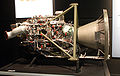
The Castor 1 was first used for a successful suborbital launch of a Scout X-1 rocket on September 2, 1960.[4]
It was 19.42 feet (5.92 m) long, 2.6 feet (0.79 m) in diameter, and had a burn time of 27 seconds. Castor 1 stages were also used as strap-on boosters for launch vehicles using Thor first stages, including the Delta D. (A Delta-D was used in 1964 to launch Syncom-3, the first satellite placed in a geostationary orbit.) Castor 1 stages were used in 141 launch attempts of Scout and Delta rockets, only 2 of which were failures. They were also used on some thrust-assisted Thor-Agena launchers. The last launch using a Castor 1 was in 1971.[5]
The Castor 2 was an upgraded version of the Castor 1. It was first used on a Scout in 1965, and continued to be used on Scouts until the last Scout launch, in 1994. Castor 2 stages were also used as the strap-on boosters for the Delta E, and for the Japanese-built N-I, N-II and H-I rockets. It retained the same diameter as the Castor 1, and was from 5.96 m to 6.27 m in length.
The Castor 4, along with its A and B variants, were expanded to 1.02 m in diameter. They were used as strap-ons on some Delta, Delta II, Atlas IIAS, and Athena RTV launch vehicles. They were also planned to serve as the first stage of the Spanish Capricornio booster, however, no such flights occurred before the project was cancelled.
Castor 4B is used in the European Maxus Programme, with launches from Esrange in Sweden.
Certain versions of the H-IIA rockets flown by JAXA used either two or four strap-on boosters developed and produced by Alliant Techsystems. These boosters use motors which are modified versions of the Castor 4A-XL motor design. These motors are 38 feet (11.6 m) long and roughly 40 inches (1.02 m) in diameter.[6]
Castor 30 rocket motor being ground-testedThe CASTOR 30 motor is based on the CASTOR 120 motor, which has flown on the Taurus I, Athena I and Athena II launch vehicles. The inaugural flight of the new motor occurred in April 2013 as the second stage on the Orbital SciencesAntares medium-lift rocket for International Space Station resupply missions.
The CASTOR 30 upper stage measures 138 inches (3.5 m) in length and 92 inches (2.3 m) in diameter, and it weighs 30,000 pounds (14,000 kg). The motor is nominally designed as an upper stage that can function as a second or third stage as well, depending on the vehicle configuration.
The CASTOR 30XL solid rocket motor measures 236 inches (6.0 m) in length and 92 inches (2.3 m) in diameter, and it weighs approximately 56,000 pounds (25,000 kg). The nozzle is eight feet long with a submerged design with a high performance expansion ratio (56:1) and a dual density exit cone.
A Castor 120 that was used as Stage 0 of a Taurus XL rocket for the OCO launch
An unrelated development to the earlier Castor 1, 2 and 4, the Castor 120 is a derivative of the first-stage motor of the MX ("Peacekeeper") missile. "120" refers to the planned weight, in thousands of pounds, of the booster at project inception. The actual product turned out lighter than this, however. It was first used as the first-stage motor of Lockheed Martin's Athena I, and later the first and second stages of Athena II.[7] After a test launch in August 1995, the first launch of a customer payload took place on August 22, 1997, when an Athena was used to launch the NASA Lewis satellite.[8] In 2006 Orbital Sciences Corporation agreed to pay $17.5 million for the Castor 120 motors used in the Taurus XL launch vehicles for the Orbiting Carbon Observatory and Glory satellites.[9] The main solid rocket boosters (SRB-A) of the Japanese H-IIA launch vehicle are based on the Castor 120, and were jointly designed by ATK and IHI Aerospace.[10]
Instead of using a D6AC steel case and PBAN binder like the Space Shuttle SRB, these will use the technology derived from the GEM motors which have carbon composite cases and HTPB binder.[11] The carbon composite design eliminates the factory joint common on all Space Shuttle SRBs.
The CASTOR 300 motor is a proposed booster based on the Space Shuttle Solid Rocket Booster and was intended to be used as the second stage of the OmegA. The inaugural flight of the new motor was suggested to occur as soon as 2021.[12]
Based on a 1-segment Space Shuttle SRB, the Castor 300 measures 499.6 inches (12.69 m) in length and 146.1 inches (3.71 m) in diameter, and it weighs approximately 300,000 pounds (140,000 kg).[13]
The CASTOR 600 motor is a proposed booster based on the Space Shuttle Solid Rocket Booster and was intended to be used as the first stage of the OmegA's small configurations. The inaugural flight of the new motor was suggested to occur as soon as 2021.
Based on a 2-segment Space Shuttle SRB, the Castor 600 measures 860 inches (22 m) in length and 146.1 inches (3.71 m) in diameter, and it weighs approximately 600,000 pounds (270,000 kg).
The CASTOR 1200 motor is a proposed booster based on the Space Shuttle Solid Rocket Booster and was intended to be used as the first stage of the OmegA's heavy configuration. The inaugural flight of the new motor was suggested to occur in the 2020s. It has also been proposed to replace the 5 segment RSRMVs on the Block 2 Space Launch System.
Based on a 4-segment Space Shuttle SRB, the Castor 1200 measures 1,476.3 inches (37.50 m) in length and 146.1 inches (3.71 m) in diameter, and it weighs approximately 1,200,000 pounds (540,000 kg).
The Castor is a family of solid-propellant rocket motors developed by Thiokol (now Northrop Grumman) for use as upper stages, boosters, and strap-ons in launch vehicles, sounding rockets, and missile systems.[1] First introduced in September 1960 as the second stage for NASA's Scout X-1 rocket, the series has evolved through multiple generations, leveraging high-performance hydroxyl-terminated polybutadiene (HTPB) propellants to achieve high reliability and cost efficiency.[2] With over 1,900 flights as of 2016 demonstrating a 99.95% success rate, Castor motors have supported a wide range of orbital and suborbital missions, including International Space Station resupply and small satellite launches.[1]Development of the Castor family began in the mid-1950s, initially for NASA's Scout and Little Joe programs, with early versions like Castor IV entering service in 1969 as strap-on boosters for the Athena H and later Delta II rockets.[1] Subsequent advancements focused on enhancing thrust vector control, burn time, and specific impulse; for instance, the Castor IVA, qualified in 1983, introduced HTPB propellant and flew on vehicles such as Atlas IIAS and Conestoga.[1] The Castor 120 series, initiated in 1989 with goals of over 0.999 reliability and 50% cost reduction, became a cornerstone for commercial launchers like Athena I/II, Taurus, and Minotaur-C, serving as first or second stages.[1]Key versions include the Castor 30XL, a high-thrust upper stage motor (119,900 lbf maximum thrust, 294.4 seconds specific impulse, 155-second burn time) with dimensions of 92 inches in diameter and 235.8 inches in length, which powers the Antares rocket for Cygnus cargo missions to the ISS since its first flight in October 2016 and is planned for the Antares 330 variant with a debut in 2025.[1][3] The Castor 120 provides robust first-stage performance (440,000 lbf maximum thrust, 280 seconds specific impulse, 79.4-second burn time) for vehicles like Minotaur-C, carrying payloads into low Earth orbit.[1] The Castor 120XL, a qualified but currently inactive variant (458,500 lbf maximum thrust, 279.1 seconds specific impulse, 83.5-second burn time), was developed for enhanced performance applications. Smaller variants, such as the Castor IVA-XL (172,060 lbf maximum thrust, used as strap-ons for Japan's H-IIA), highlight the family's versatility across international programs, including sounding rockets like MAXUS and missile defense targets for the U.S. Department of Defense.[1]
Development and History
Origins and Initial Development
The Castor rocket stage originated as a solid-propellant motor developed by Thiokol Chemical Corporation beginning in 1957, specifically designed as the second stage for NASA's Scout launch vehicle. This design was directly derived from the U.S. Army's MGM-29 Sergeant surface-to-surface ballistic missile, leveraging the proven Sergeant motor technology to enable rapid adaptation for orbital insertion capabilities in small satellite missions.[4] The project aligned with the post-Sputnik push for affordable, reliable U.S. space access, with Thiokol's Redstone Arsenal facility in Huntsville, Alabama, serving as the primary development site.[5]The initial Castor motor validated the basic performance of the Sergeant-derived design under controlled conditions. This was followed by the debut flight on the suborbital Scout X-1 mission launched from Wallops Island, Virginia, on July 1, 1960, marking the first complete four-stage Scout configuration and demonstrating the motor's integration in a space launch environment.[6] Although the X-1 mission itself encountered issues with upper stages, the Castor performed as expected, paving the way for subsequent Scout iterations.The primary design goals for the initial Castor emphasized simplicity in construction, long-term storability of the solid propellant, and exceptional reliability to support government-funded scientific and reconnaissance payloads, targeting small satellites up to several hundred kilograms into low Earth orbit. These attributes made it ideal for frequent, low-cost launches without the complexities of liquid propulsion systems.[4]By 1971, the initial Castor version had supported over 140 launches across Scout and related vehicles, achieving a success rate with only two failures linked to manufacturing defects in the propellantgraingeometry.
Evolution and Manufacturer Involvement
The evolution of the Castor family of solid rocket motors began in the late 1960s and accelerated in the 1970s with the introduction of stretched and higher-thrust variants designed to enhance performance on vehicles such as the Delta and Athena programs. In 1969, Thiokol developed the Castor IV motor specifically to serve as the first-stage propulsion for the Athena H re-entry test vehicle, which was later adapted as a strap-on booster for the Delta II launch vehicle to provide additional thrust.[1] These upgrades addressed the need for greater payload capacity and reliability in medium-lift applications, building on earlier Castor designs derived from the Sergeant missile motor. By 2020, the Castor I-IV family had achieved a demonstrated reliability of 99.95% over more than 1,900 flights, underscoring the maturity of the technology through iterative improvements in materials and manufacturing processes.[1][7]Key milestones in the 1990s and 2010s further expanded the Castor's role in commercial spaceflight. During the 1990s, Castor motors, including the Castor 120 variant, were adapted for commercial boosters such as the Taurus launch vehicle, which utilized the motor as its first stage to support small satellite deployments under DARPA and NASA contracts.[8] This adaptation marked a shift toward cost-effective, off-the-shelf solid propulsion for private-sector missions. In 2013, the Castor 30 motor debuted as the upper stage for the Antares rocket during its Commercial Orbital Transportation Services (COTS) demonstration mission to the International Space Station, providing a large-diameter, low-cost option with thrust vector control for orbital insertion.[9]Manufacturer involvement evolved through a series of corporate mergers and acquisitions that consolidated expertise in solid rocket propulsion. In 1982, Thiokol merged with Morton-Norwich Products to form Morton Thiokol Inc., integrating chemical and propulsion capabilities under a single entity focused on aerospace applications.[10] By 2001, Alcoa acquired Thiokol's polymer systems division, while the propulsion assets were restructured and eventually acquired by Alliant Techsystems (ATK), enabling continued development of Castor variants. In 2018, Northrop Grumman acquired Orbital ATK—itself a 2015 merger of Orbital Sciences and ATK—for $9.2 billion, fully integrating the Castor production line and introducing advanced digital design tools that streamlined modeling and testing for modern iterations.[11] These changes enhanced manufacturing efficiency and supported the transition to digital twins for rapid variant customization.Recent developments from 2023 to 2025 have emphasized upgrades for ongoing and future missions. Northrop Grumman continues production of the Castor 30XL motor for the Antares 330 rocket, an enhanced version of Antares developed in partnership with Firefly Aerospace to replace Russian-supplied engines and maintain International Space Station resupply capabilities, with a maiden flight targeted for at least 2026.[12] In December 2024, Northrop Grumman conducted a full-scale static test fire of the Castor IVB motor at its Promontory, Utah facility—the first such test in over 33 years—demonstrating rapid prototyping capabilities through modern simulation and instrumentation for potential target vehicle applications.[13]A pivotal event occurred in 2020 with the cancellation of the OmegA heavy-lift rocket program, which had relied on Castor-derived solid rocket boosters like the Castor 300 and 600 for its first and second stages. This decision, driven by U.S. Air Force shifts in national security launch priorities, halted SRB-derived proposals.
Design and Technical Specifications
Construction and Propellant Composition
The Castor family of solid rocket motors features a robust construction designed for reliability in various launch configurations, with motor cases evolving from high-strength D6AC steel in early variants to lightweight graphite-epoxy composites in later models like the Castor 30 series to reduce overall mass while maintaining structural integrity under high internal pressures.[7][1] Nozzles are typically fixed or gimbaled for thrust vector control, incorporating erosion-resistant throats made from graphite-phenolic materials or carbon-carbon composites, often with carbon-phenolic insulators to protect against thermal degradation during combustion.[7] These designs ensure effective exhaust flow management and integration with upper-stage or booster roles, including aft-attach skirts that facilitate secure mounting to launch vehicles.[1]Propellant formulations in the Castor series transitioned from polybutadiene acrylic acid acrylonitrile (PBAN)-based composites in initial versions, such as the TP-H1148 grain used in early Scout integrations, to hydroxyl-terminated polybutadiene (HTPB) binders in subsequent iterations for improved performance and processability.[14][7] Later propellants, exemplified by TP-H8299 in the Castor 4 series and QDL-1 in the Castor 30, incorporate approximately 19-20% aluminum loading as a metal fuel additive within an ammonium perchlorate oxidizer matrix, enhancing energy density while maintaining castability.[1][7]Grain geometries are predominantly internal-burning configurations, featuring cylindrical or star-shaped profiles to achieve controlled thrust progression, such as regressive profiles in models like the Castor IVB for optimized burn characteristics.[1] These designs typically result in an inert weight fraction ranging from approximately 6% in modern variants to 14% in early models, balancing propellant load with structural components.[7] Ignition is initiated via pyrotechnic charges, often through forward-mounted pyrogen systems, ensuring reliable startup even in vacuum environments.[7]The solid propellant nature of Castor motors contributes to their safety profile, classified as Class 1.3 under UN hazardous materials regulations, indicating a deflagration hazard but low mass explosion risk under standard handling protocols, and enables extended storage without the need for pressurization or frequent maintenance.[7] With proper environmental controls, these motors support extended shelf lives leveraging the inherent stability of composite formulations.[7]
Performance Parameters and Metrics
The Castor family of solid rocket motors demonstrates a broad spectrum of performance capabilities, with average thrust levels spanning from 53,700 lbf in smaller configurations like the Castor 30 to 381,701 lbf in larger ones such as the Castor 120. These thrust profiles are designed to support both booster and upper-stage roles, with vacuum specific impulse (Isp) ranging from 265.3 seconds to 300.6 seconds across the series, enabling efficient velocity increments for diverse orbital missions.[1]Specific impulse quantifies the motor's propulsion efficiency and is calculated using the formulaIsp=m˙g0F,where F is the average thrust, m˙ is the propellant mass flow rate, and g0=9.80665 m/s² is standard gravity. This parameter highlights advancements in the Castor lineup, where higher Isp values in later variants result from optimized propellantcombustion and nozzle expansion ratios. For instance, the Castor 120 achieves an Isp of 280 seconds in vacuum, balancing high thrust with reasonable efficiency.[1][15]Burn times vary significantly by application, typically 55 to 80 seconds for booster motors to provide rapid initial acceleration, and up to 155 seconds for upper-stage variants like the Castor 30XL to sustain longer-duration burns. Total impulse, representing the overall momentum imparted by the motor, is approximated for near-constant thrust profiles asItotal=Favg×tb,where tb is the burn time; the Castor 120, for example, delivers up to 31.9 million lbf-sec, underscoring its capacity for substantial payload delivery in launch vehicles.[1]The family's scalability is reflected in motor diameters progressing from 1.02 m (40.1 inches) in early models to 2.34 m (92.1 inches) in contemporary designs, allowing thrust scaling while maintaining structural integrity. Propellant densities have evolved from approximately 1.65 g/cm³ in initial polybutadiene-based formulations to 1.73–1.75 g/cm³ in modern HTPB composites, enhancing overall performance density and contributing to improved thrust-to-weight characteristics across generations.[1][16]Castor motors have exhibited exceptional reliability, with the Castor I–IV series achieving a 99.95% success rate over more than 1,900 flights, attributable to uniform propellant burning and rigorous quality control in grain design. This track record ensures predictable performance in operational environments.[1]
Applications and Operational Use
Early Applications in Scout and Sounding Rockets
The Castor rocket stage played a pivotal role as the second stage in NASA's Scout launch vehicle program, utilizing early variants such as Castor 1 and Castor 2 across all configurations from Scout X-1 through G-1. Developed by Thiokol as a solid-propellant motor derived from the Sergeant missile, it provided reliable boost following the Algol first stage, enabling the entirely solid-fueled Scout to achieve orbital insertion for small payloads. This integration supported 118 launches between 1960 and 1994, with a success rate exceeding 96 percent after initial development flights, facilitating the deployment of satellites like the OSCAR series for amateur radio experiments and the Explorer series for atmospheric and geophysical studies.[1][6][17]The program's first successful orbital mission occurred on February 16, 1961, when a Scout X-1 vehicle launched Explorer 9, a 7-kg satellite designed to measure upper atmospheric density using a balloon-like inflatable sphere. Subsequent missions expanded Scout's utility for scientific and military applications, including navigation satellites in the Transit series. Launches were conducted primarily from Wallops Island Flight Facility in Virginia and Vandenberg Air Force Base in California to support polar and equatorial orbits, with typical payload capacities up to 200 kg to low Earth orbit when stacked with Antares and Altair upper stages.[17][18]Beyond orbital missions, early Castor stages were adapted for suborbital sounding rocket applications to probe the upper atmosphere and ionosphere. Combinations such as the Aries-Castor configuration enabled high-altitude research flights in the 1960s, carrying instruments for plasma physics and auroral studies to altitudes exceeding 1,000 km. A notable example included the 1971 ABRES ROCS tests, where Athena-H vehicles incorporating Castor 4 stages simulated reentry conditions for advanced ballistic systems from Green River, Utah.[19][20][21]The phaseout of Castor in Scout operations aligned with the vehicle's retirement in 1994, marking the end of a cost-effective era for small satellite launches that influenced subsequent U.S. efforts in affordable access to space.[22]
Modern and Commercial Launch Vehicle Integrations
The Castor family of solid rocket motors has been integral to modern commercial launch vehicles, particularly as upper stages and boosters in medium-lift configurations for orbital missions. In the Antares rocket, developed by Orbital ATK (now Northrop Grumman), the Castor 30 served as the second stage for International Space Station (ISS) cargo resupply missions starting with the Orbital-1 (OA-1) demonstration flight on April 21, 2013.[23] An upgraded Castor 30XL variant, offering increased propellant capacity and performance, was introduced on the Antares 230+ configuration, with its first successful flight during the OA-5 mission on October 17, 2016.[24] This setup enables Antares to deliver up to 8,000 kg to low Earth orbit (LEO), supporting NASA's Commercial Resupply Services (CRS) program with Cygnus spacecraft payloads.[25]Beyond Antares, Castor motors have powered other U.S. commercial vehicles, including the Athena I and II rockets operated by Lockheed Martin from 1995 to 2001, where the Castor 120 served as the first stage for Athena I and both first and second stages for Athena II, enabling small satellite deployments to LEO.[1] The Castor 120 also underpinned the Taurus XL, a commercial air-launched variant later rebranded as Minotaur-C for dedicated missions, such as the 2017 deployment of ten Planet Labs SkySat Earth-observation satellites.[26] Additionally, Castor 4A and IVA motors functioned as strap-on boosters for the Delta series (including configurations like the 4925 in the 1990s) and the Atlas IIAS vehicle, enhancing payload capacity for commercial geosynchronous and LEO missions through the 2000s.[27][1]Internationally, modified Castor IVA-XL motors were integrated as solid strap-on boosters (SSBs) for Japan's H-IIA launch vehicle, with first use on Flight 4 on September 26, 2003, to provide additional thrust for GTO and LEO payloads in commercial satellite deployments.[28] The H-IIA program, which utilized Castor IVA-XL SSBs, concluded with its retirement on June 28, 2025. In Europe, the Castor IVB motor powered the first stage of the Maxus sounding rocket program for the European Space Agency, supporting microgravity research flights from 1995 to 2016, including missions like Maxus 8 in 2015 and Maxus 9 in 2016 that reached apogees exceeding 700 km.[1][29]Recent operations have seen continued reliance on the Castor 30XL for Antares, with its final 230+ configuration flight (NG-19) on August 1, 2023, delivering the S.S. Laurel Clark Cygnus to the ISS.[30] No further Antares 230+ launches occurred in 2024 or 2025 due to geopolitical supply issues with the first-stage engines. Northrop Grumman partnered with Firefly Aerospace in 2022 to develop the Antares 330 upgrade, retaining the Castor 30XL second stage while replacing the first stage with Firefly's Miranda engines, with a debut targeted for 2026 as of November 2025.[31] By 2025, Castor motors had supported over 50 commercial flights across these integrations, underscoring their role in providing reliable, cost-effective solidpropulsion for medium-lift applications.[7]
Versions and Variants
Castor 1 and 2
The Castor 1 was the initial production version of the solid-propellant rocket motor developed by Thiokol for the second stage of the Scout launch vehicle, entering service in 1960. It featured a length of 5.92 m and a diameter of 0.79 m, with a gross mass of 3,852 kg (propellant mass of 3,317 kg). The motor burned for 27 seconds, producing an average thrust of 64,300 lbf and a vacuum specific impulse of 250 s.[32]Castor 2 represented an upgrade introduced in 1963 for Scout B and C vehicles, with a stretched casing length up to 6.04 m that increased the propellantmass to ~3,729 kg. This variant extended the burn time to 37 seconds while delivering an average thrust of 58,200 lbf and a vacuum specific impulse of 262 s, enhancing velocity increment for orbital missions.[33]Between them, Castor 1 and 2 powered 141 launches of Scout and Delta rockets from 1960 to 1994, with Castor 1 used through 1971 and Castor 2 continuing thereafter; the only anomalies were two failures in 1962 attributed to nozzle erosion.[34] These motors utilized a fixed nozzle design lacking thrustvector control, depending instead on the spin stabilization imparted to the Scout stack during ascent for trajectory correction.[14]By the late 1960s, Castor 1 and 2 were phased out of Scout operations in favor of Algol-derived motors for improved performance in advanced configurations. The basic design principles later influenced the development of the larger Castor 4 series for booster roles.[1]
Castor 4 Series
The Castor 4 series represents a family of mid-sized solid-propellant rocket motors developed by Thiokol (now Northrop Grumman) in the late 1960s and early 1970s, primarily for use as strap-on boosters on launch vehicles.[1] These variants, including the Castor IVA, IVB, and IVA-XL, feature a nominal diameter of 1.02 meters and utilize high-performance hydroxyl-terminated polybutadiene (HTPB) propellant, enabling reliable air-start ignition in strap-on configurations to augment first-stage thrust.[1] Interstage adapters facilitate integration with core vehicles, allowing for synchronized ignition after liftoff.[7]The baseline Castor IVA motor, qualified in 1983, measures 9.24 meters in length with a total mass of 11,670 kg, including 10,100 kg of propellant.[1] It delivers an average vacuumthrust of 481 kN over a 55-second burn, achieving a specific impulse of 265 seconds.[1] This fixed-nozzle design provided strap-on propulsion for early Delta II vehicles and other systems like Atlas IIAS, contributing to an 11% performance gain from HTPB propellant relative to prior formulations.[1]A specialized variant, the Castor IVB, introduced thrust vector control (TVC) through a gimbaled nozzle with ±5° deflection, enhancing steering for sounding rocket applications.[1] Slightly shorter at 8.99 meters, it has a total mass of 11,540 kg with 9,970 kg of propellant, producing an average vacuum thrust of 411 kN during a 64-second burn and a specific impulse of 267 seconds.[1] Developed for the European Space Agency's Maxus program, the IVB served as the first-stage booster for all Maxus flights starting in 1991, enabling microgravity research with apogees up to 750 km.[1][29]The Castor IVA-XL extends the IVA design by 2.37 meters to 11.61 meters, increasing propellant load to 13,100 kg and total mass to 14,980 kg for greater energy.[1] With a fixed nozzle featuring a 6° cant, it generates an average vacuumthrust of 625 kN over 58 seconds, yielding a specific impulse of 282 seconds and offering approximately 30% higher payload capability compared to the standard IVA.[1] Optimized for Japan's H-IIAlaunch vehicle, the IVA-XL flew as two or four solid strap-on boosters beginning with H-IIA Flight 3 in 2002.[1]The series debuted in 1971 aboard the Athena-H reentry vehicle test launches from Green River, Utah, where the Castor IV served as the first stage.[1] It saw extensive operational use, with the IVA variant accumulating over 300 flights, including more than 200 as air-lit boosters on Delta II vehicles from 1989 to 2009 in configurations like the 6000-series.[1] The overall Castor 4 family demonstrates a 99.95% reliability across its applications.[1]
Variant
Length (m)
Diameter (m)
Propellant Mass (kg)
Total Mass (kg)
Burn Time (s)
Average Vacuum Thrust (kN)
Vacuum Isp (s)
Key Features
Castor IVA
9.24
1.02
10,100
11,670
55
481
265
Fixed nozzle, air-start
Castor IVB
8.99
1.02
9,970
11,540
64
411
267
Gimbaled nozzle (±5° TVC)
Castor IVA-XL
11.61
1.02
13,100
14,980
58
625
282
Extended length, canted nozzle
Castor 120
The Castor 120 is a large solid-propellant rocket motor developed as a commercial derivative of the first stage (SR-118) from Thiokol's LGM-118 Peacekeeperintercontinental ballistic missile, filling the gap between smaller Castor 4 motors and larger segmented boosters for medium-lift launch applications.[35][1] Development began in 1989 under Thiokol (now Northrop Grumman Innovation Systems), leveraging proven missile technology to achieve high reliability (>0.999) and a 50% cost reduction compared to contemporary boosters, with qualification testing completed in 1993 for integration into the Lockheed Martin Athena launch vehicle.[1][36] The motor features a graphite-epoxy composite case for lightweight strength and a thrust vector control (TVC) system using a flexible, gimbaled nozzle with hydraulic actuation or cold-gas blowdown, enabling precise steering for both ground and air-launched configurations.[35][1]Key specifications of the Castor 120 include the following:
Parameter
Value
Length
9.02 m
Diameter
2.34 m
Propellant mass
48,900 kg
Total mass
53,000 kg
Burn time
79 s
Average thrust
379,000 lbf (1,686 kN)
Maximum thrust
440,000 lbf (1,957 kN)
Vacuum specific impulse
280 s
Total impulse
30 million lbf-s
These parameters are based on sea-level conditions at 70°F (21°C), with the propellant consisting of QDL-1, an HTPB-based formulation with 19% aluminum loading for enhanced energy density and reduced sensitivity.[1][7] The motor's high-thrust profile supports rapid-response launches, including ground-based and air-mobile operations from platforms like modified aircraft, making it suitable for responsive space missions.[1]The Castor 120 achieved its first orbital flight on August 15, 1995, as the first stage of the Athena I vehicle, successfully deploying payloads despite early program challenges.[37] It powered seven launches on Athena I, Athena II, and Taurus vehicles through 2009, including missions such as Lunar Prospector (1998) and various commercial and scientific satellites, demonstrating consistent performance in low Earth orbit insertions.[1][35] Following the retirement of Athena and Taurus programs, the motor was integrated as the Stage 0 booster on the Northrop GrummanMinotaur-C launch vehicle, continuing to support U.S. government missions with its reliable, high-thrust output derived from missile heritage.[1]Production of the Castor 120 is currently inactive, though surplus units and manufacturing capabilities remain available for Department of Defense target vehicle applications and potential reactivation for national security launches.[1][7]
Castor 30 Series
The Castor 30 series represents the current production line of upper-stage solid rocket motors developed by Northrop Grumman, primarily integrated as the second stage for the Antares launch vehicle to support International Space Station resupply missions.[1] These motors utilize hydroxyl-terminated polybutadiene (HTPB) propellant designated TP-H1246, providing reliable performance for orbital insertion in low-Earth orbit trajectories.[38] The series includes the baseline Castor 30, the upgraded Castor 30B, and the extended-length Castor 30XL, each optimized for enhanced thrust and efficiency while maintaining compatibility with Antares configurations.[1]The Castor 30 serves as the foundational variant, featuring a length of 3.66 m, diameter of 2.34 m, propellant mass of 12,700 kg, and total mass of 13,900 kg.[1] It delivers a burn time of 150 s, average thrust of 74,359 lbf, and vacuum specific impulse (Isp) of 293 s, enabling precise payload delivery to orbit.[1] The Castor 30B introduces a minor upgrade with a graphitenozzle for improved erosion resistance, but features a slightly longer length of 4.32 m, diameter of 2.34 m, propellant mass of 12,880 kg, total mass of 13,970 kg, burn time of 127 s, average thrust of 89,090 lbf, and vacuum Isp of 301 s.[1][7] This variant enhances durability during burns.[1]For missions requiring higher energy, the Castor 30XL extends the motor length to 5.99 m, increasing the propellant mass to 24,900 kg and total mass to 26,400 kg.[1] It achieves a burn time of 155 s, average thrust of 119,900 lbf, vacuum Isp of 294 s, and total impulse of 16 million lbf-sec, significantly boosting payload capacity to over 8,000 kg in Antares 230+ configurations.[1]The Castor 30 series debuted in 2013 on the Antares OA-1 mission, marking the first orbital flight of the motor family.[39] As of November 2025, the series has powered over 15 successful International Space Station resupply flights, demonstrating high reliability with no failures attributed to the upper stage.[40] The Castor 30XL entered service in 2016 on Antares 230+ vehicles, supporting subsequent missions with its extended performance envelope.[24]A key distinguishing feature of the Castor 30 series is the availability of spin-table stabilization or thrust vector control (TVC) options, allowing for accurate attitude control and orbital insertion without additional propulsion systems.[38] These motors are actively produced, with ongoing integrations in commercial launch vehicles like Antares for sustained cargo delivery operations.[1]
Proposed and Canceled Concepts
SRB-Derived Proposals
In the mid-2010s, Northrop Grumman proposed a family of large solid rocket boosters derived from Space Shuttle Solid Rocket Booster (SRB) technology, branded as the Castor series, to serve as primary stages for the OmegA launch vehicle under the U.S. Air Force's Evolved Expendable Launch Vehicle (EELV) program. These concepts aimed to leverage heritage SRB designs for cost-effective heavy-lift capabilities, focusing on scalable segmentation to meet varying payload requirements for national security missions.[41]The Castor 300 was envisioned as a single-segment SRB derivative, measuring 12.69 meters in length and 3.71 meters in diameter, with a propellant mass of approximately 125,000 kg. It offered an estimated thrust of 785,000 pounds-force (lbf) and a specific impulse (Isp) of 265 seconds, positioning it as a second-stage option for the baseline OmegA configuration to enable medium-lift performance.[42][43]Building on this, the Castor 600 scaled up to a two-segment design, approximately 24 meters long, with a propellant mass of approximately 250,000 kg and thrust around 2.2 million lbf, intended for lighter variants of OmegA to boost payload capacity to geosynchronous transfer orbit (GTO) while maintaining compatibility with existing launch infrastructure.[44][41]For heavier payloads, the Castor 1200 proposed a four-segment configuration, extending to approximately 45 meters in length, a propellant mass of approximately 500,000 kg, and thrust of 3.1 million lbf; it was pitched in 2018 for OmegA's heavy-lift variant.[41][45]These designs would have incorporated filament-wound composite cases and polybutadiene acrylonitrile (PBAN) propellant, drawing directly from Shuttle SRB heritage to achieve targeted low Earth orbit (LEO) capacities of 20 to 50 metric tons across OmegA configurations, emphasizing reliability and reduced manufacturing costs over traditional steel casings.[7][46]Development of these SRB-derived Castors progressed as conceptual designs from 2016 to 2020 within the OmegA program, including static fire tests of subscale elements like the Castor 300 second-stage motor in February 2020. However, the proposals were canceled in September 2020 following Northrop Grumman's loss of the National Security Space Launch (NSSL) Phase 3 contract to competitors United Launch Alliance and SpaceX. Elements of the underlying SRB-derived technology, including advanced casing and propellant formulations, influenced subsequent developments such as the Booster Obsolescence and Life Extension (BOLE) program for NASA's Space Launch System (SLS) Block 2 boosters. A BOLE demonstration motor with composite cases was static-fired in June 2025, marking progress toward replacing heritage steel-case boosters after the initial SLS flights, including Artemis I in November 2022.[47][48][42][49]