Hubbry Logo
search
logo
1250925

Chess title

logo
Community Hub0 Subscribers
Read side by side
from Wikipedia
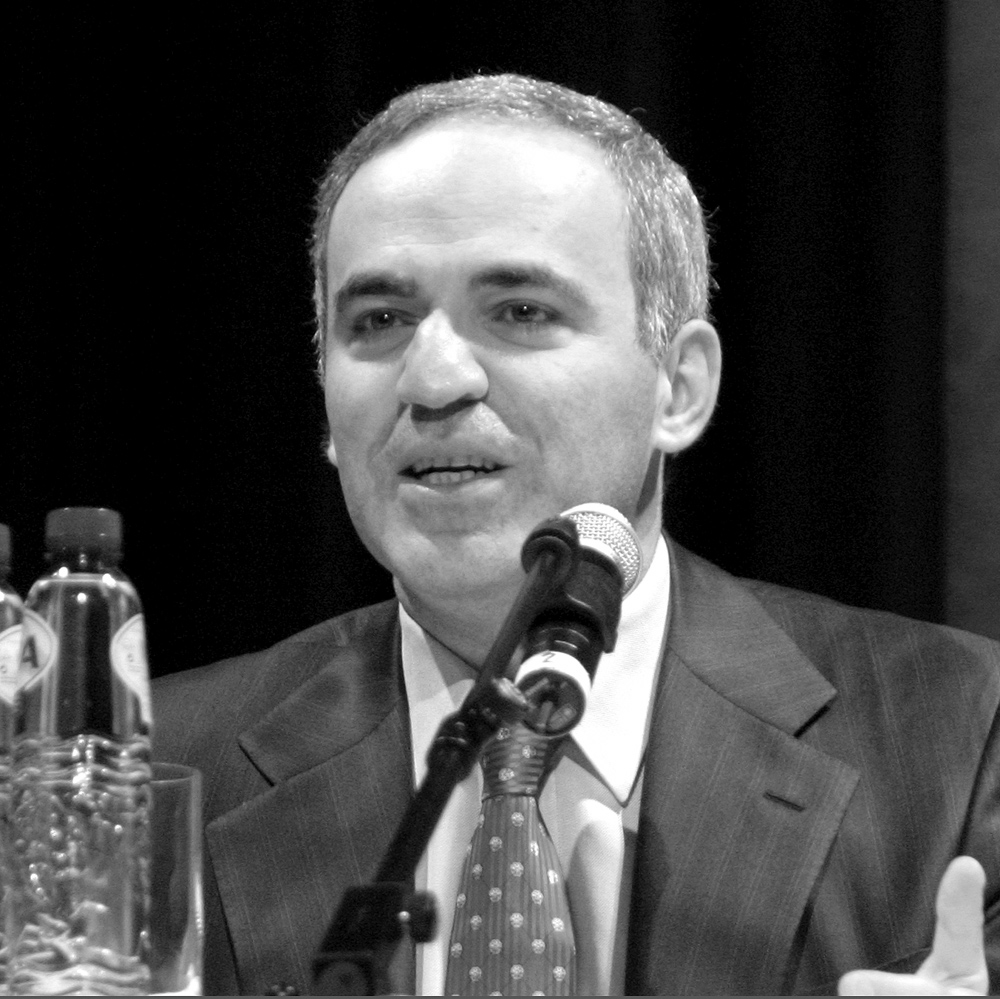
Grandmaster Garry Kasparov (2007)

A chess title is a title regulated by a chess governing body and bestowed upon players based on their performance and rank. Such titles are usually granted for life. The international chess governing body FIDE grants several titles, the most prestigious of which is Grandmaster; many national chess federations also grant titles such as "National Master".[1] More broadly, the term "master" can refer to any highly skilled chess player.

Over-the-board chess

[edit]

In general, a chess master is a player of such skill that they can usually beat most amateurs. Among chess players, the term is often abbreviated to master.

The establishment of the world chess body, Fédération Internationale des Échecs (FIDE), saw the creation of titles superior to the "national master" titles. In 1950, FIDE created the titles "Grandmaster" and "International Master", the requirements for which were increasingly formalized over the years. In 1978, FIDE created the lesser title of "FIDE Master".

Early use of the master title

[edit]

From the beginning of recorded chess, to the establishment of the first chess organizations, the term master was applied informally, being simply a matter of popular acclaim. Strong players demonstrated their strength in play, and gained the informal reputation of being chess masters.

As chess became more widespread in the latter half of the 19th century, the term began to be given out by organizations. One of the most prestigious events of the time was the DSB Congress, first organised by the Deutscher Schachbund (German Chess Federation) in 1876. The DSB's standard for the title of Master was the Meisterdrittel, i.e. to win at least one third of the games in the premiere tournament at a DSB Congress. The winner of the Hauptturnier or "reserve" event was entitled to compete in the premiere event in the next congress, with a chance to achieve the Meisterdrittel.[2]

FIDE titles

[edit]
  • Grandmaster (GM) is the highest title a chess player can attain. The usual way for a player to qualify for the Grandmaster title is by achieving a FIDE rating of 2500 at one time and three favorable results in tournaments (called norms) involving other Grandmasters, including some from countries other than the applicant's.
  • International Master (IM). Requires a minimum rating of 2400 and three norms, while the requirements of achieving a norm are lowered compared to the GM title.
  • FIDE Master (FM). Requires a minimum rating of 2300. No norms are required.
  • Candidate Master (CM). Requires a minimum rating of 2200. No norms are required.

The titles listed above are open to men and women. Separate women-only titles are available:

  • Woman Grand Master (WGM) Requires a minimum rating of 2300 and three norms.
  • Woman International Master (WIM) Requires a minimum rating of 2200 and three norms, while the requirements of achieving a norm are lowered compared to the WGM title.
  • Woman FIDE Master (WFM) Requires a minimum rating of 2100. No norms are required.
  • Woman Candidate Master (WCM) Requires a minimum rating of 2000. No norms are required.

Beginning with Nona Gaprindashvili in 1978, 42 women have also earned the GM title.[3]

For every above title, there are alternative ways of attaining it by performing at or near the top of certain high-level tournaments. For example, the GM title is awarded to the person winning the World Junior Championship.[4]

FIDE also awards titles for "lower-band" players, regardless of gender, through the FIDE Online Arena:[5]

  • Arena Grandmaster (AGM). Requires a minimum online FIDE rating of 2000.
  • Arena International Master (AIM). Requires a minimum online FIDE rating of 1700.
  • Arena FIDE Master (AFM). Requires a minimum online FIDE rating of 1400.
  • Arena Candidate Master (ACM). Requires a minimum online FIDE rating of 1100.

There are no norms required for any of the arena titles, however the player must maintain a FIDE online rating of at least the minimum required for at least 150 bullet games, 100 blitz games or 50 rapid games consecutively.

FIDE also awards titles for arbiters and trainers.

National titles

[edit]

Some national chess federations award titles such as "National Master" (NM). National chess federations are free to set whatever standards they want for such titles, which are not recognized by FIDE. Standards for "Master" titles in different countries vary, but are usually based on criteria such as achieving a certain rating (typically about 2200 Elo), achieving the required number of tournament performances ("norms") at a certain level, or featuring prominently in the country's national championship. In some cases, it may extend to honorary titles awarded to (for example) prominent chess administrators, business patrons or politicians. Since the introduction of the FIDE Master (FM) title in 1978, some federations such as those of Ireland and Germany have ceased awarding National Master titles, apparently regarding them as obsolete.

Soviet Union

[edit]

In the Soviet Union, the Master title was conferred by the federal government and was connected to the title of Master of Sport. The first chess player to receive the title was Peter Romanovsky in 1934. Only players who featured prominently in the Soviet Chess Championship were considered for the title, and fewer than 100 awards were made altogether. The majority of these players also qualified for the FIDE International Master or Grandmaster title.

United States

[edit]

The USCF currently gives a national title for achieving a 2200 rating (master):

Title Rating
Senior Master 2400
Life Master 2300
Master 2200
Candidate Master 2000
1st Category 1800
2nd Category 1600
3rd Category 1400
4th Category 1200
Expert
[edit]
USCF rating categories
Category Rating range
Senior Master Over 2400
National Master Over 2200[6]
Expert 2000–2199
Class A 1800–1999
Class B 1600–1799
Class C 1400–1599
Class D 1200–1399
Class E 1000–1199
Class F 800–999
Class G 600–799
Class H 450–599
Class I 200–449
Class J under 200[7]

Chess expert is a title given by the United States Chess Federation (USCF). It is awarded to chess players rated from 2000 to 2199. Players rated above that are masters, while players below that are class players. Approximately 50,000 chess players have USCF ratings, of which approximately 2,500 are rated 2000 or better. Thus, chess experts are in the top 5% of all USCF tournament chess players. Since 2008, USCF has also awarded Candidate Master titles to players that achieve five performance-based 'norms' in tournaments and also hold a rating above 2000. Like the title of Master, Candidate Master titles are awarded for life.[8]

The title of chess expert is not awarded for life. Every time a tournament chess player plays a game, their rating goes up or down depending on the game's outcome and on how strong their opponent is. If the rating of a chess expert falls below 2000, they are not a chess expert any more (though they retain the title of Candidate Master, if it was earned according to the criteria above). This is in contrast to international titles awarded by FIDE, which are awarded for life. In European countries the term "expert" is not used. Instead, players of that level are called "Candidate Masters", although the FIDE Candidate Master title generally requires a higher rating (2200 FIDE).[9]

It is possible (and common), however, for players in the United States to have a rating that places them in the 'expert' category while still retaining the title of 'Life Master' or 'National Master'. The title of 'master' is awarded to anyone meeting the criteria laid down by the USCF, including having once been rated over 2200. Like the FIDE titles of FIDE Master, International Master, and Grandmaster, the title of 'Master' is awarded for life. Players with a rating below 2200, but who have earned the title of 'National Master' or 'Life Master', are, according to the USCF, still referred to as 'masters'.

The first USCF rating list was published in December 1950. On that list, experts were players rated from 2100 to 2300 and masters were players rated from 2300 to 2500. However, within a few years, it was discovered that the ratings were rapidly deflating. As a result, the classifications were dropped by 100 points so that since then experts were rated between 2000 and 2200. In 1960, the USCF adopted the new Elo rating system replacing the original Harkness System. There have been continuous adjustments to that system ever since, with the primary purpose of stabilizing the rating system against the forces of inflation and deflation, so that a chess expert today will be approximately the same strength as a chess expert was twenty or forty years ago.

This information stated here also applies in Canada,[10] under the auspices of the Canadian Federation of Chess (CFC), with one difference being that Class E encompasses all players rated under 1200. Similar class distinctions may apply in other national chess federations as well.

Master
[edit]

The United States Chess Federation (USCF) awards the Title of National Master to anyone who achieves a USCF rating of 2200, and the title of Senior Master to anyone who achieves a USCF rating of 2400 along with certain performance-based 'norms' during tournament play.[11] The USCF also awards the Life Master title to anyone who holds a 2200 rating for a total of 300 or more games in his or her lifetime.

In the United States, the title of "National Master" is awarded for life, regardless of whether the rating of a National Master subsequently goes below 2200.[12] In August 2002, this position was codified (after being recognized as the existing status quo) by the USCF Policy Board with the passage of a motion stating "Any USCF member who has had a regular post tournament rating of 2200 or higher (published or not) has demonstrated a significant level of chess ability and is recognized by being automatically awarded the lifetime title of National Master."

Life Master
[edit]

Life Master is a chess title awarded by the United States Chess Federation (USCF). To be awarded this title, one must hold a master's rating of over 2200 for at least 300 USCF-rated tournament chess games.

During the 1990s, the USCF also awarded a "Life Master" title on the basis of a different and more complex system that was similar to the FIDE 'norm system' of awarding titles. This method of attaining Life Master became officially recognized by the USCF on January 1, 1996. The "class norm" system was later discontinued, and players who had or were subsequently granted the title on the 300-game basis were renamed "Original Life Masters." In practice, the distinction is rarely made. Original Life Masters had to play 300 games as a Master without going below 2200 in their rating or the count would start over again.

As the name of this title implies, this title is held for life, regardless of any subsequent decrease in rating. Thus, it is possible to have a player with a USCF rating of 2000 (or below) who is a Life Master, although this is uncommon for 'Original Life Masters' (since such a rating floor can only be dropped by the USCF itself), who have a floor rating of 2200. It is more common for players who obtained the Life Master title through the now-defunct norm system, which did not require a rating of over 2200 to earn the title.

Canada

[edit]

The Chess Federation of Canada awards the title of National Master to players who achieve a national rating of 2200, and three tournament performances ("norms") of 2300 or more. It also awards National Woman Master and National Candidate Master titles at 2000 rating, with three norms of 2100 or more.[13]

England

[edit]

The English Chess Federation awards the title of National Master to players who achieve an ECF rating of 2200, standardplay. The player must maintain an average listed rating at, or above, the minimum rating for a period of 12 months, with a total game count of 30 games or more in the 12-month qualifying period. It also awards a number of lesser titles.[14]

Ireland

[edit]

Up until 1991, the Irish Chess Federation awarded the title of Irish National Master to 15 players. The title has since fallen into disuse.[15]

Australia

[edit]

The title of Australian Master was introduced in 1959, and was awarded by the Australian Chess Federation using a points based system, in which players were required to score 100 points from performances in major tournaments such as the Australian Chess Championship and state championships.[16] According to Australian chess player and arbiter Shaun Press, the requirements were changed to a rating-based system some time during the 1980s, but the title was not held in high regard and is no longer awarded.[17]

New Zealand

[edit]

The New Zealand Chess Federation awards the title of National Master using a points-based system, based on performances in the New Zealand Chess Championship and a few other tournaments. 100 points are required for the title of National Master, and 40 points for the title of Candidate Master.[18] As of 31 January 2013, 22 players hold the National Master title, the majority of whom also have FIDE titles.[19]

Dominican Republic

[edit]

The Dominican Chess Federation awards the title of National Master, based on performances in the Dominican Chess Championship. As of 11 April 2023, 7 players hold the National Master title, the majority of whom also have FIDE titles.

Chess compositions

[edit]

Just as in over-the-board play, in problem chess the titles International Grandmaster, International Master and FIDE Master are awarded by FIDE via the PCCC (Permanent Commission for Chess Composition) for especially distinguished problem and study composers and solvers. (Unlike in over-the-board chess, however, there are no women-only equivalents to these titles in problem chess.)

Composers

[edit]

For composition, the title of Grandmaster for chess composition was established in 1959, with André Cheron, Arnoldo Ellerman, Alexander Gerbstmann, Jan Hartong, and Cyril Kipping being the first honorary recipients. In subsequent years, qualification for the IM title, as well as for the GM title (first awarded in 1972 to Genrikh Kasparyan, Lev Loshinsky, Comins Mansfield, and Eeltje Visserman) and the FM title (first awarded 1990) has been determined on the basis of the number of problems or studies a composer had selected for publication in the FIDE Albums. These albums are collections of the best problems and studies composed in a particular three-year period, as selected by FIDE-appointed judges. Each problem published in an album is worth 1 point; each study is worth 1+23; joint compositions are worth the same divided by the number of composers. For the FIDE Master title, a composer must accumulate 12 points; for the International Master title, 25 points are needed; and for the Grandmaster title, a composer must have 70 points.

Solvers

[edit]

For solvers, the GM (International Solving Grandmaster) and IM titles were both first awarded in 1982; the FM title followed in 1997. GM and IM titles can only be gained by participating in the official World Chess Solving Championship (WCSC):[20] to become a GM, a solver must score at least 90 percent of the winner's points and on each occasion finish in at least tenth place three times within ten successive WCSCs. For the IM title they must score at least 80 percent of the winner's points and each time finish in at least fifteenth place twice within five successive WCSCs; alternatively, winning a single WCSC or scoring as many points as the winner in a single WCSC will earn the IM title. For the FM title, the solver must score at least 75 percent of the winner's points and each time finish within the top 40 percent of participants in any two PCCC-approved solving competitions.

Judges

[edit]

The title International Judge of Chess Compositions[21] is given to individuals considered capable of judging composing tournaments at the highest level.

Correspondence chess

[edit]

The International Correspondence Chess Federation (ICCF) awards the titles International Master, Senior International Master and International Correspondence Chess Grandmaster—these are equivalent to similar titles awarded by FIDE for over-the-board chess. The ICCF also runs the World Correspondence Chess Championships. Because these events can last a long time, they may overlap: for instance, in February 2005 Joop van Oosterom was declared winner of the eighteenth Championship (which began in June 2003), though the winner of the seventeenth Championship (which began in March 2002) had not yet been determined.

See also

[edit]

References

[edit]
Revisions and contributorsEdit on WikipediaRead on Wikipedia
from Grokipedia
A chess title is an official accolade conferred by the Fédération Internationale des Échecs (FIDE), the international governing body for chess, to players who meet stringent criteria of performance in rated tournaments, including achieving specific Elo ratings and, for higher titles, securing "norms" that demonstrate superior play against strong opposition. These titles, applicable to over-the-board standard chess as defined in FIDE's Laws of Chess, are held for life and serve to classify players' skill levels while promoting excellence in the game.[1] The core open titles, available to all players regardless of gender, form a hierarchy: Candidate Master (CM) requires a FIDE rating of at least 2200; FIDE Master (FM) requires 2300 with no norms needed; International Master (IM) demands 2400 plus three norms showing a 2450 performance over at least 27 games; and Grandmaster (GM), the pinnacle, necessitates 2500 alongside three 2600-level norms. Parallel women's titles—Woman Candidate Master (WCM) at 2000, Woman FIDE Master (WFM) at 2100, Woman International Master (WIM) at 2200 with norms, and Woman Grandmaster (WGM) at 2300 with norms—were established to foster female participation, though women may also pursue open titles without restriction. Additional categories include titles for lower-rated players via FIDE Online Arena (e.g., Arena Grandmaster) and specialized honors for arbiters, trainers, and organizers, but player titles remain the most prominent.[2][3] FIDE's title system originated in 1950 at its congress in Dubrovnik, where the GM and IM titles were first formalized and awarded to 27 and 16 players, respectively, including luminaries like Mikhail Botvinnik and José Raúl Capablanca, to standardize recognition beyond national levels. The WIM title debuted concurrently in 1950, followed by WGM in 1976, FM and WFM in 1978, and CM/WCM in 2002, reflecting evolving standards and inclusivity as the global player base expanded. Norms, introduced in 1953, ensure titles reflect consistent high-level competition, typically requiring games against titled opponents in international events rated by FIDE. Today, with over 2,100 GMs worldwide as of November 2025, titles continue to motivate achievement amid growing professionalization.[4][5][6]

Historical Development

Early Use of Master Titles

The concept of recognizing exceptional chess players as "masters" emerged informally during the Renaissance in Europe, where skill in the game was celebrated among nobility and clergy without any standardized system. In the 1560s, Spanish priest Ruy López de Segura gained widespread acclaim as one of the strongest players of his era after defeating prominent Italian opponents in informal matches organized by King Philip II, earning him the informal designation of a chess master for his analytical contributions and victories.[7] This recognition was based on personal reputation and patronage rather than formal awards, marking the early ad hoc nature of such honors in 16th-century Spain and Italy.[8] By the 18th century, the term "master" had become more commonly applied to dominant players across Europe, reflecting growing interest in chess as a intellectual pursuit. François-André Philidor, a French composer and player active in the 1740s and 1750s, was hailed as the preeminent chess master of his time, undefeated in matches against top English and French opponents and authoring influential treatises that solidified his status.[9] His dominance in London's chess circles, where he played for stakes and taught, exemplified the shift toward viewing chess mastery as a professional vocation, though still without official titles.[10] The 19th century saw the rise of organized tournaments that began to confer "master" status on top finishers, fostering the emergence of professional chess players supported by prizes and patronage. The inaugural international tournament in London in 1851 awarded informal master recognition to its winner, Adolf Anderssen, a German schoolteacher who defeated a field of Europe's elite, including Howard Staunton, establishing him as the unofficial world champion and a leading master.[11] Chess clubs in major cities like Paris, Vienna, and London played a key role in these honors, hosting matches and events that elevated players' reputations through published analyses and societal acclaim.[12] In Russia, national associations formalized early title-like designations within the empire, as seen in the All-Russian Masters' Tournaments starting in 1899, which recognized winners as masters of the Russian Empire. The 1914 St. Petersburg tournament, incorporating the 8th All-Russian Masters' event, awarded such honors to joint winners Alexander Alekhine and Aron Nimzowitsch, highlighting the growing institutional role of associations in pre-war Europe.[13] These developments paved the way for professional careers, with masters earning livelihoods through exhibitions, lessons, and tournament winnings amid expanding global interest in the game.

Establishment of FIDE Titles

The Fédération Internationale des Échecs (FIDE) was founded on July 20, 1924, in Paris, but it did not initially establish any official international chess titles, leaving recognition of elite players to informal or national honors.[14] This changed in 1950 when FIDE introduced the titles of International Grandmaster (GM) and International Master (IM) to formally acknowledge top performers, awarding the inaugural GM title to 27 players based on their established reputations and results in major events, including world champion Mikhail Botvinnik and finalists from the 1948 World Championship tournament.[15] These initial awards were determined by FIDE's Qualification Committee without standardized norms, focusing instead on players who had competed at the highest levels, such as those seeded for world championship cycles.[16] In 1953, FIDE introduced the concept of title norms—specific performance standards in qualifying tournaments—to provide a more systematic path for future awards, requiring players to achieve strong results against a significant proportion of titled opponents in rated events.[17] By 1957, regulations were further refined, automatically granting the GM title to the world champion and Candidates Tournament qualifiers while expanding IM awards based on norm achievements, such as scoring at least 50% against strong opposition in international tournaments.[15] Early norms emphasized tournament performances rather than numerical ratings, as FIDE's Elo rating system was not implemented until 1970; for instance, GM aspirants needed consistent results demonstrating superiority over IM-level players.[18] The 1978 FIDE Congress marked a significant expansion with the addition of FIDE Master (FM) and Woman FIDE Master (WFM) titles, alongside the formalization of women's categories that built on the Woman International Master (WIM) introduced in 1950 and Woman Grandmaster (WGM) in 1976. These changes aimed to encourage broader participation, particularly for women, by lowering performance thresholds relative to open titles while maintaining norm-based criteria. During the Cold War era, the Soviet Union's state-sponsored chess programs led to a proliferation of titles within the Eastern Bloc, as their players dominated international events and accumulated norms more readily, reinforcing FIDE's system amid geopolitical rivalries in chess.[19] By the 2000s, Elo thresholds were integrated into requirements, such as 2500 for GM, to quantify the evolving standards.

International Over-the-Board Titles

Open and Lower Titles

The open over-the-board chess titles awarded by FIDE form a hierarchy accessible to all players without gender restrictions, recognizing achievement through a combination of FIDE Elo rating thresholds and performance norms in qualifying tournaments. The highest title is Grandmaster (GM), requiring a minimum published FIDE rating of 2500. Below it is International Master (IM) at 2400, FIDE Master (FM) at 2300, and Candidate Master (CM) at 2200. These ratings must be achieved and published on the official FIDE rating list for the title to be considered.[1] To earn the GM or IM titles, players must obtain performance norms in addition to meeting the rating requirement. A norm is earned by achieving a tournament performance rating of at least 2600 for GM (or 2450 for IM) over a minimum of nine games against a field where the average opponent rating is 2380 or higher for GM norms (2230 for IM). Each norm must include games against titled opponents, with at least one-third (minimum three) being GMs for a GM norm or IMs/GMs for an IM norm, and the event must be FIDE-rated with sufficient international participation. Three such norms are required for both GM and IM, obtained within a two-year validity period from the date of the first norm, though norms can be carried over under certain conditions if the player maintains progress toward the rating threshold. For FM and CM, no norms are required; the titles are awarded directly upon reaching and maintaining the rating for the specified period.[1][20] Title applications are submitted to FIDE's Qualification Commission, which verifies norms and ratings before recommending approval. The FIDE General Assembly or Executive Board grants titles twice annually, typically in conjunction with the FIDE Congress. Once awarded, titles are held for life, even if a player's rating later falls below the threshold, ensuring permanent recognition of peak achievement.[1] As of 2025, FIDE has awarded approximately 2,000 GM titles worldwide, reflecting significant growth from around 100 in the 1980s, driven by the expansion of international tournaments and increased global participation in rated events. Separate women's titles, such as Woman Grandmaster, follow analogous structures but with adjusted lower rating and performance thresholds to promote gender-specific recognition.[1]

Women's Titles

FIDE awards four women's over-the-board titles to recognize female players' achievements and promote greater participation in chess, where women have historically been underrepresented due to social and structural barriers. These titles—Woman Grandmaster (WGM), Woman International Master (WIM), Woman FIDE Master (WFM), and Woman Candidate Master (WCM)—parallel the open titles but with reduced Elo rating thresholds of 200 points to encourage entry and retention among women. The WGM requires an established rating of 2300 and three qualifying norms, the WIM requires 2200 and three norms, the WFM requires 2100 with no norms needed, and the WCM requires 2000 with no norms needed.[1][2] Norms for these titles follow a structure similar to open titles, adjusted downward by 200 Elo points for performance levels and average opponent ratings, with requirements for a minimum number of titled opponents (at least one-third being appropriate title-holders, such as WGMs, IMs, or GMs for a WGM norm). Women have always been eligible to qualify for open titles using the standard open norms and criteria. These titles were introduced in 1976 with the WGM, alongside the existing WIM, as part of broader efforts to advance gender equity and increase female involvement in international chess.[1][4] As of 2025, there are over 400 WGMs worldwide, underscoring the titles' role in fostering female talent. For instance, Judit Polgár earned the open Grandmaster title in 1991 at age 15, highlighting how women can excel in the unrestricted open system while women's titles provide an accessible pathway for many others.[4][21]

National Titles

Soviet Union and Eastern Bloc

In the Soviet Union, chess titles were integrated into the state-sponsored sports system, reflecting the government's emphasis on intellectual and competitive excellence as tools for national prestige. The title of Master of Sport was formally established in 1950, requiring players to achieve performance norms equivalent to an Elo rating of approximately 2400, typically through success in national championships or qualifying tournaments.[13] This title was awarded to thousands of players over the decades, with over 1,000 Masters by the 1980s, facilitated by widespread access to training and competitions organized by the All-Union Chess Section.[22] A higher honor, the Honored Master of Sport, was introduced in 1972 exclusively for elite players who demonstrated exceptional achievements, such as multiple national titles or international successes, often including world championship contention. These titles were conferred by the State Committee for Physical Culture and Sports, underscoring chess's role in Soviet ideology as a symbol of socialist superiority. Criteria for both titles emphasized consistent performance in domestic events, including the annual USSR Chess Championships and the quadrennial Spartakiads of the Peoples of the USSR, massive multi-sport festivals that included chess team competitions to promote mass participation and ideological unity. During the Cold War, the awarding of Soviet chess titles carried significant political weight, serving as propaganda to showcase the USSR's cultural and intellectual dominance over the West; top players like Mikhail Botvinnik were state-supported figures whose successes reinforced narratives of communist progress.[19] In parallel, Eastern Bloc countries developed analogous systems tied to their socialist frameworks. Poland maintained a pre-FIDE International Master title for strong players, awarded through national tournaments before 1950, while East Germany linked titles to sports academies and state clubs, with championships serving as primary qualification paths for honors like Master of Sport.[23] The dissolution of the Soviet Union in 1991 fragmented this centralized system, leading to independent national titles in successor states like Russia, which retained the Master of Sport designation but with adapted criteria. Nonetheless, the Soviet model's emphasis on norms and tournaments profoundly influenced FIDE's international title framework, promoting standardized qualification processes worldwide.[24]

United States and Western Countries

In the United States, the United States Chess Federation (USCF) administers national titles based primarily on player ratings achieved in over-the-board tournaments, with the National Master title awarded to any member reaching a published rating of 2200 or higher, a threshold established since the late 1950s.[25] The Senior Master title requires a rating of 2400 or above, reflecting elite national performance without direct state sponsorship, as chess governance relies on voluntary federation membership and tournament entry fees rather than government funding.[26] For international recognition, USCF-sanctioned events facilitate FIDE title norms, enabling American players to earn titles like International Grandmaster through strong performances in domestic tournaments that meet global standards.[27] These achievements underscore the accessibility of titles in a decentralized system that emphasizes individual merit over institutional mandates.[28] In Canada, the Chess Federation of Canada (CFC) awards a National Master title equivalent to FIDE standards, requiring a national rating of 2200 or higher alongside three qualifying tournament performances of at least 2300 to ensure consistent excellence.[29] This criterion aligns with Western traditions of merit-based progression through rated events, fostering growth without centralized oversight. Similarly, the English Chess Federation (ECF) awards the National Master title to players maintaining an average standard-play grade of at least 2200 for 12 consecutive months, with at least 30 games played during that period (approximately equivalent to a 2200 FIDE rating).[30] These titles highlight a tournament-driven approach prevalent in Western countries, where private clubs and federations organize events independently of national policy. A notable example of early title attainment in this context is Bobby Fischer, who secured the US Junior Championship in 1956 at age 12 and the US Championship in 1957-58 at age 14, becoming the youngest winner and exemplifying how prodigious talent could rapidly ascend through USCF-rated competitions without formal state intervention.[31] Unlike the high volume of titles in the Soviet system, Western programs produce comparable numbers of masters but through federation-led initiatives that prioritize open participation and rating stability. In response to the surge in online play during the COVID-19 pandemic, the USCF adjusted its rating formulas in October 2023 by lowering the bonus threshold from 14 to 12, allowing quicker incorporation of rapid and online results into official ratings for title eligibility while maintaining over-the-board integrity.[32]

Other Nations

In various countries outside the major historical chess powers, national chess federations have developed their own titles to recognize domestic excellence, often drawing brief influences from FIDE standards such as Elo rating thresholds or performance norms in local events. The Australian Chess Federation introduced the title of Australian Master in 1959, awarded through a points-based system evaluating performances in national tournaments, though the title has since become inactive as FIDE titles like International Master have taken precedence.[33] No current rating-specific national master title, such as a 1900 Elo threshold, is actively maintained by the federation, with emphasis instead placed on championship wins and FIDE affiliations.[34] In India, national recognition for chess achievements integrates with broader sporting honors, notably the Arjuna Award, presented by the Ministry of Youth Affairs and Sports to outstanding players demonstrating consistent international performance.[35] For instance, players like International Master Bhakti Kulkarni and Grandmaster R. Praggnanandhaa received the award in 2022 for their contributions to Indian chess, including tournament successes and rating milestones, highlighting how such honors complement FIDE titles for top performers.[35] This system underscores chess's rising status in India, where the number of grandmasters grew from two in the early 2000s to 90 by late 2025, driven by increased participation and infrastructure.[36] New Zealand's Chess Federation awards the National Master (NM) title based on accumulating 100 Master Points from results in domestic events, such as top finishes in the New Zealand Championship (1st to 9th place) or island championships, with titles held for life once earned.[37] Players reaching 40 Master Points receive the intermediate New Zealand Candidate Master title, providing a structured pathway aligned with local tournament play rather than solely Elo ratings.[37] In smaller nations like the Dominican Republic and Ireland, national titles emphasize championship performances within limited domestic leagues. The Dominican Chess Federation recognizes top finishers in its annual National Championship as national masters, with multiple-time winners like International Master José Lisandro Muñoz Santana (six titles between 2006 and 2017) exemplifying sustained excellence in a field of around 200 active rated players.[38] Similarly, Ireland's Chess Union formerly awarded the Irish National Master title to 15 players up to 1991 based on strong domestic results, but it has been deprecated in favor of FIDE titles, with norms for International Master now pursued through affiliated events.[39] Across these nations, common features include Elo-based entry thresholds of 2000–2200 for eligibility in title-contending events and awards granted via domestic tournaments, reflecting accessible recognition for regional talent.[29] Post-2000 growth in Asia, particularly in India and neighboring countries, has led to expanded national systems, with federations hosting more rated events to foster FIDE title pathways.[40]

Chess Composition Titles

For Composers

Chess composition titles recognize the creative efforts of individuals who craft chess problems and endgame studies, emphasizing originality, aesthetic merit, and technical soundness. These titles, primarily administered by FIDE through the World Federation for Chess Composition (WFCC), reward composers for works selected for publication in official FIDE Albums, which serve as the primary evaluation mechanism. The system evolved from informal 19th-century designations like "problemist" or "study composer," used by early pioneers such as Samuel Loyd and Otto Blathy to denote expertise in puzzle creation, to formalized international standards in the 20th century.[41] FIDE awards three main titles to composers: FIDE Master for Chess Compositions (FM), International Master for Chess Compositions (IM), and Grandmaster for Chess Compositions (GM). The criteria are based on points accumulated from problems and studies included in FIDE Albums, where each selected problem earns 1 point and each study earns 1.67 points, reflecting the greater complexity of endgame compositions. To earn the FIDE Master title, a composer must accumulate at least 12 points; the International Master title requires 25 points from awarded works published since the 1980s, with emphasis on originality and soundness as judged by international tournaments and journals. The Grandmaster title requires 70 or more points, highlighting exceptional contributions over a career. By 2025, over 200 individuals hold the IM title, demonstrating the global reach of chess composition.[42][41] The points system prioritizes quality over quantity, with selections from prestigious sources like the FIDE Albums ensuring rigorous scrutiny for merit, including strategic depth and artistic value. For example, Vasily Smyslov, the seventh World Chess Champion, composed notable endgame studies blending practical play with compositional elegance and held the International Judge title since 1957.[43][44][45] National titles complement FIDE recognitions, particularly in countries with strong composition traditions. In the Soviet Union, the title of Master of Sports of the USSR in chess composition was awarded to outstanding creators, such as Leonid Kubbel and Genrikh Kasparyan, based on tournament successes and published works. Annual honors like Composer of the Year were given by the Soviet Chess Federation to highlight exceptional problems or studies, fostering a vibrant community that produced many FIDE title holders. These national systems evolved alongside international ones, providing early validation before global standardization.[46]

For Solvers

Titles for excellence in solving chess problems are awarded by the World Federation for Chess Composition (WFCC), which took over administration from FIDE in the early 2000s. These titles recognize solvers' proficiency in rapidly analyzing and resolving complex chess compositions under timed conditions, distinguishing the discipline from problem composition by prioritizing analytical speed and accuracy over creative invention. Parallel women's titles (WISGM, WISM, WFSM) exist with slightly lower rating thresholds to encourage participation. The highest accolade, International Solving Grandmaster (ISGM), requires achieving three norms—at least one in the World Chess Solving Championship (WCSC) or European Chess Solving Championship (ECSC)—along with a minimum solving rating of 2550; the women's equivalent (WISGM) uses 2450. A norm is obtained by achieving a performance rating of at least the title level (e.g., 2550 for ISGM) in a qualifying tournament with at least 10 participants from three or more countries.[47] Intermediate and entry-level titles include International Solving Master (ISM), which demands two norms and a 2450 rating (WISM: 2350), and FIDE Solving Master (FSM), requiring two norms and a 2350 rating (WFSM: 2250), with norms based on performance ratings in similar events. These norms are calculated from performance in approved tournaments, where solvers tackle diverse problem types such as directmates, studies, and helpmates within strict time limits, often 30 to 120 minutes per session. Annual competitions like the International Solving Contest (ISC), held simultaneously across multiple global locations, provide opportunities for norm pursuits and rating gains, fostering international participation among hundreds of solvers each year.[48][49] The WCSC, the flagship tournament for solvers, originated in 1977 and occurs annually during the WFCC Congress, featuring six timed rounds for individuals and teams of three. Participants solve up to 90 problems over two days, with scoring based on correct solutions within allotted times; for example, shorter problems like mates in two allow about one minute per attempt, while endgame studies may permit up to 30 minutes. The event has grown in prestige, highlighting solvers' tactical acuity, as exemplified by British grandmaster John Nunn, who secured the individual title three times (2004, 2007, 2010) and earned ISGM status in 2004 through dominant performances, including a near-perfect 89/90 score in 2007. By 2025, over 50 solvers have attained the ISGM title, reflecting the discipline's expanding competitive field.[50][51][52]

For Judges

The International Judge for Chess Compositions is a prestigious FIDE title awarded to experts who evaluate the technical soundness and artistic quality of chess problems and studies submitted to tournaments. Introduced in 1957 under the auspices of FIDE's Permanent Commission for Chess Composition (now integrated into the World Federation for Chess Composition, or WFCC), the title ensures standardized judging practices across international events. Holders must demonstrate deep knowledge of chess composition principles, including variant analysis and aesthetic criteria, to maintain the integrity of awards in global competitions.[53] Qualification for the title requires candidates to have given a specified number of awards in official tournaments. For a first application in one section (e.g., twomovers, studies), at least 6 awards are needed, including 4 in that section and 2 published abroad; for multiple sections, at least 4 awards in one plus 3 in each additional; extensions to new sections require 3 awards. The process begins with mandatory training seminars offered by WFCC affiliates, followed by a probationary period during which prospective judges submit detailed reports on assigned compositions for review. Responsibilities encompass rigorous checks for legal accuracy in all lines of play, identification of flaws such as cooks (unintended solutions), and the allocation of points or placements based on originality, economy, and thematic depth. This evaluative role is crucial for selecting works that advance the field, with judges often collaborating on FIDE Albums that archive exemplary compositions.[54] Over 300 individuals have earned the title worldwide, reflecting its accessibility to dedicated evaluators from diverse backgrounds. Notable holders include Comins Mansfield, a pioneering British judge whose contributions in the mid-20th century helped shape modern standards for study evaluation. Many national chess composition organizations, affiliated with the WFCC, offer parallel judge titles that serve as stepping stones to the international level, adapting FIDE criteria to local contexts. The title's evolution since the post-1950s has emphasized quality control in problem tournaments, reducing subjective biases and elevating the overall rigor of chess composition adjudication. This framework ties into the composer and solver communities by validating works that enter circulation and influence competitive solving events.[53]

Correspondence Chess Titles

ICCF Titles

The International Correspondence Chess Federation (ICCF) maintains a hierarchical title system for correspondence chess, awarded based on performance in official tournaments conducted via postal, email, or web server formats. Titles are granted for achieving specific performance norms, calculated as a rating equivalent derived from tournament results against titled or high-rated opponents. This system, established in the 1950s, emphasizes sustained excellence over extended games, distinguishing it from faster-paced over-the-board formats by allowing days per move for deep strategic analysis.[55] The pinnacle title is International Grandmaster (GM), requiring a norm performance of 2600 or higher in qualifying events. Below it are Senior International Master (SIM) at 2500+, International Master (IM) at 2450+, Correspondence Chess Master (CCM), Lady Grandmaster (LGM) at 2300+, and International Lady Master (ILM) at 2150+. Norms are earned by scoring sufficient points—typically a section win or high placement—in multi-player tournaments where the average opposition strength meets category requirements, such as facing multiple titled players. For instance, a GM norm requires at least 24 games with a 2600 performance, including at least 5 against GMs or 2600+ rated opponents, in sufficiently strong events. Approximately 326 players have attained GM status (including LGMs) as of 2025.[56] Prestigious events like the annual World Correspondence Chess Championship drive title awards, with finalists competing in a multi-stage cycle culminating in a final where top finishers earn GM titles directly. Since the early 2000s, ICCF has transitioned to digital play via its web server, launched in 2004, which has largely supplanted postal methods and enabled broader participation while maintaining traditional email options.[57][58] In contrast to FIDE's over-the-board titles, ICCF requirements accommodate correspondence's unique dynamics, including time controls like the traditional 10 moves in 50 days (with 20-day duplication) or the triple block system introduced in 2017. ICCF historically banned computer assistance in the 1970s to preserve human play but now explicitly allows it under regulated guidelines since the early 2000s, while permitting books and databases.

Historical Context and Evolution

The origins of correspondence chess trace back to 1824, when the first recorded match was played via postal mail between the Edinburgh Chess Club and the London Chess Club, marking the beginning of organized long-distance chess competition.[59] This early experiment laid the groundwork for the format, which relied on slow communication methods to allow players ample time for deep analysis between moves. By the early 20th century, national associations emerged to formalize the activity, including the British Correspondence Chess Association in 1906 and the Correspondence Chess League of America in 1909, fostering international interest and tournaments.[60] These organizations culminated in the International Correspondence Chess Association (ICCA) in 1945, which reorganized into the International Correspondence Chess Federation (ICCF) in 1951 amid post-World War II challenges, establishing a centralized body for global governance.[61] Early titles in correspondence chess were largely informal, with national federations awarding designations like "correspondence master" during the 1930s to recognize top performers in postal events.[62] The formalization of international titles came in 1953, when FIDE introduced the Grandmaster of Correspondence Chess and International Master titles, though the first ICCF awards were granted in 1959 to pioneers such as C.J.S. Purdy, Olaf Barda, and Lothar Schmid.[60][63] This marked a shift toward standardized recognition, paralleling over-the-board chess titles but adapted to the deliberate pace of correspondence play. The evolution of titles reflected technological and societal changes, with the ICCF initially banning computer assistance in the 1970s as early chess programs emerged but allowing it explicitly from the early 2000s onward to reflect practical realities, while prohibiting machine aid earlier to preserve human strategic depth and always permitting books and databases. By the 2020s, the format fully transitioned to online servers, eliminating postal delays and enabling real-time move submission through the ICCF web platform, which now hosts all official events. Title inflation has mirrored trends in over-the-board chess, with expanded tournaments leading to more awards over decades, though norms remain rigorous.[60] Women's inclusion advanced in the 1960s with the first Ladies World Correspondence Championship in 1968, followed by dedicated titles like Lady Grandmaster (introduced in the 1970s) since the 1980s, resulting in approximately 50 equivalents awarded to date.[60][55]

References

User Avatar
No comments yet.