Hubbry Logo
Coin counterfeitingCoin counterfeitingMain
Open search
Coin counterfeiting
Community hub
Coin counterfeiting
logo
8 pages, 0 posts
0 subscribers
Be the first to start a discussion here.
Coin counterfeiting
Coin counterfeiting
from Wikipedia
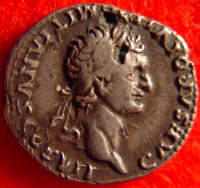
Plated counterfeit coin of the Roman emperor Domitian (81–96 AD). By using a copper core covered in a silver coating, the coin has a much lower intrinsic value, while face value remains the same.

Coin counterfeiting of valuable antique coins is common; modern high-value coins are also counterfeited and circulated.[1] Counterfeit antique coins are generally made to a very high standard so that they can deceive experts. This is not easy and many coins still stand out.

History

[edit]

Counterfeits of higher-value coins in circulation, designed for general circulation at face value, have been made by criminals for thousands of years.

Circulating coins

[edit]
A real British pound coin, of the old type, on top of a fake. This coin was often counterfeited.
Defective milling and letters on a counterfeit coin (top)

For modern coins in general circulation, the most common method of protection from forgeries is the use of bi-metallic coins made of two metals of different color, which are difficult to counterfeit at low cost. The most common way of forging these coins is to change the area that should be a different color by painting it; however, the paint is often easy to scratch off and the coins soon look very crude once worn. An increasing number of coins are cast from the same composition alloy as the real coin, but have poor reproduction of details such as the milling on the side of the coin and the stamped lettering.

When the euro was introduced into Europe, there were initially very few counterfeits; however, the number increased massively as time went by.[2] The high and increasing number of fake euro coins in circulation in 2004 led to the creation of a Technical and Scientific Center for the coordination of technical actions to protect euro coins against counterfeiting.[3] Between 2002 and 2006, approximately 400,000 counterfeit euro coins were removed from circulation; however, "the overall number is very small by historical standards and by comparison to the 69 billion circulating (genuine) euro coins."[4]

In 2014, it was estimated that 3.04% of all UK £1 coins in circulation are counterfeit.[5] These coins were replaced on 15 October 2017 with new, harder to counterfeit, 12-sided bi-metallic coins.[6]

Collectible counterfeit coins

[edit]

A well known and popular numismatic item is the 1944 nickel counterfeited by Francis LeRoy Henning. Unlike official specimens, this spurious item is missing a large mintmark for the Philadelphia Mint. Because of a different wartime composition, all nickels of this period had large mintmarks. Normally the Philadelphia mint would not have included one, but in 1944 all of its nickels had a "P" above the dome of Monticello. It is estimated that 100,000 of these coins were placed into circulation.[7] Today they remain readily available to collectors.

Athens tetradrachm with multiple test cuts
A tetradrachm from Ancient Athens, dated circa 449-413 BC. Contains multiple 'test cuts' which were commonly made by suspicious minds in antiquity to detect forgeries by assessing whether the base metal underneath was the same (silver) or a cheaper metal (e.g. bronze). This coin has silver beneath and is not an ancient forgery.

Both scarce 1923-D and 1930-D dimes were found in circulation, and they are of interest to collectors since no such date-mint combinations were issued for this particular denomination. It has been suggested that they may have been part of an attempt by the Soviet Union to sell its silver on the world market by counterfeiting (with full precious metal weight) U.S. coins. If so, the engravers blundered by producing "impossible" coins.[8]

Among the examples of counterfeits of high-value collectible coins are the "Omega" coins produced in the early 1970s by an unknown counterfeiter who signed his creations with a miniature Greek letter omega, and so came to be known as the Omega man.[9][10] He is believed to have made over 20,000 fake 1907 high-relief nominally US$20 gold Double Eagle coins with the signature omega in the claw of the eagle, worth hundreds of millions of dollars at today's prices. His counterfeits are of such high quality that collectors will pay upwards of $1,000 for one; although a genuine coin sells for about $50,000 to $100,000. The same counterfeiter also counterfeited other US gold coins, including a large quantity of $3 gold pieces, dated 1874, 1878 and 1882, with the 1882 being the most prevalent. Three of the counterfeit $10 gold pieces, the 1910-P, the 1913-P and the 1926-P, have the omega placed upside down within the upper loop of the "R" of "LIBERTY" in the Native American's headdress.[11][12]

An American counterfeiting coin mold. The coin mold would come with two halves that would be lined with clay to make an impression of a genuine coin, then molten lead would be poured into the mold and the fake coin later plated with a thin layer of silver. Legitimate U.S. coins were made by government mints and stamped from silver or gold coin discs as most counterfeit coins were molded.

See also

[edit]

References

[edit]
Revisions and contributorsEdit on WikipediaRead on Wikipedia
from Grokipedia
Coin counterfeiting refers to the illegal production and distribution of coins designed to mimic genuine or collectible pieces, thereby deceiving individuals or institutions for financial gain. This practice undermines by eroding public trust in monetary systems and causing direct financial losses to governments, businesses, and consumers. The history of coin counterfeiting dates back to the early period of coinage, with forgeries appearing in ancient Greece by 400 BCE through methods like plating base metals such as copper with a thin layer of gold or silver. In the 17th century, English counterfeiter William Chaloner produced sophisticated fakes worth the equivalent of approximately A$10 million today, prompting interventions by figures like Sir Isaac Newton as Master of the Royal Mint. By the 19th century in the United States, counterfeiting proliferated amid diverse state-issued banknotes and federal coins, with an estimated one-third of circulating paper currency being counterfeit by the 1860s, often involving gangs that extracted precious metals from genuine coins or cast replicas from molds. This era saw U.S. Marshals leading enforcement efforts until the Secret Service's formation in 1865 shifted focus to systematic detection. Common methods of coin counterfeiting include from molds, base metals to simulate precious ones, and clipping or edges to steal metal content. More advanced techniques include filling genuine coin exteriors with inferior alloys such as to reduce intrinsic value. In modern contexts, particularly for high-value collectibles, counterfeiters employ high-precision tooling to replicate details, though imperfections like incorrect weight, "mushy" strike details, or mismatched alloys often betray fakes. Detection relies on tools such as precision scales for verification (typically within 1% of genuine specifications), metal composition analyzers like , acoustic "ping" tests for resonance, and expert visual examination of edges and motifs. The economic and societal impacts of coin counterfeiting are significant, though less documented than for banknotes; for instance, the UK's £1 coins faced a 2-3% counterfeit rate in the early , prompting a redesign to a 12-sided shape in to enhance security features. For example, in the first half of 2024, German authorities detected 79,700 euro coins, a 19% increase from the previous period. In collectibles markets, sophisticated fakes from regions like have flooded auctions, leading to losses for numismatists and necessitating third-party certification by organizations like the Numismatic Guaranty Company. Governments counter these threats through anti-counterfeiting designs, such as increased coin diameters and concavity tested by the U.S. Mint in the 1860s and 1870s, alongside enforcement cooperation.

Overview

Definition and Scope

Coin counterfeiting refers to the unauthorized production, alteration, or imitation of metallic coins intended to deceive others into accepting them as genuine or collectibles, typically for financial gain or . This includes creating fake coins that mimic the appearance, weight, and composition of legitimate ones, or modifying existing coins, such as by edges or clipping metal to extract precious content while passing the altered coins as genuine. Such acts violate the legal of governments or monetary authorities to control the production of official coinage, asserting a state's monopoly on minting to maintain economic integrity. For example, in the United States, this is enshrined in the U.S. , which empowers to punish counterfeiting of current , and detailed in laws like 18 U.S.C. § 485, which prohibits making or possessing coins with intent to defraud. The scope of coin counterfeiting is primarily limited to physical metallic s, encompassing both circulating —such as everyday coins used in transactions—and numismatic items valued for their rarity, historical significance, or content. This distinguishes it from the counterfeiting of or banknotes, which involves different materials and techniques and is often addressed under separate legal and investigative protocols, like those handled by the U.S. Secret Service for obligations. While historical counterfeiting frequently exploited coins' reliance on intrinsic value derived from s like or silver, modern instances target coins whose value is decreed by government authority rather than material worth, though bullion coins blending both aspects remain vulnerable. Central to understanding coin counterfeiting is the state's monopoly on minting, which reserves the to produce and regulate official coins, making any private a criminal offense in most jurisdictions. Coins historically held intrinsic value based on their metal content, allowing counterfeiters to profit by substituting cheaper alloys, whereas contemporary systems emphasize nominal or backed by governmental decree, shifting counterfeiting motives toward deception in circulation or collector markets. A generic example of an early counterfeiting form is , where individuals illicitly reduced a coin's metal purity—such as alloying silver with base metals—to pass off inferior imitations as full-value , undermining trust in the .

Economic and Social Impacts

Coin counterfeiting undermines the value of genuine by introducing fake coins into circulation, which can dilute the money supply and contribute to inflationary pressures, particularly in historical contexts where coins held intrinsic value. This devaluation erodes the of legitimate coins and forces economic agents to adjust behaviors to mitigate the risk of accepting counterfeits. Governments face direct financial losses through reduced revenue, defined as the difference between the of coins and their production cost—typically calculated as Seigniorage=Face ValueProduction Cost\text{Seigniorage} = \text{Face Value} - \text{Production Cost}—since counterfeits displace demand for authentic coins and necessitate increased minting or security measures. Socially, widespread coin counterfeiting erodes public confidence in monetary systems, leading individuals and businesses to prefer alternative payment methods like electronic transactions to avoid the risk of loss, which in turn raises transaction costs and disrupts everyday . This loss of trust can foster toward official institutions, amplifying economic uncertainty and slowing transaction velocities in cash-dependent economies. Over the long term, pervasive counterfeiting has historically linked to severe economic instability, including episodes of where corrupted coinage expanded the money supply uncontrollably, devaluing savings and triggering broader societal disruptions such as reduced and heightened inequality. For example, in the early , the UK's £1 coins had a counterfeit rate of 2-3%, prompting a redesign to a 12-sided shape for improved security. By artificially inflating the money supply, counterfeits exacerbate these mechanics, where the accelerates amid distrust, further entrenching cycles of instability and hindering sustainable growth.

Historical Development

Ancient and Medieval Periods

The practice of coin counterfeiting originated in the around 600 BCE, coinciding with the of coinage in , where the first coins—natural alloys of gold and silver—were minted. These early counterfeits often involved simple techniques, such as mixing base metals like copper into the to reduce content while maintaining the coin's appearance, particularly affecting the Lydian , a prominent early denomination. Another common method was filing or clipping the edges of genuine coins to shave off small amounts of metal for resale, allowing counterfeiters to profit from the collected shavings without immediately alerting users. In the , counterfeiting proliferated during the economic and political crises of the CE, exacerbated by , military disruptions, and official of the . Widespread production of imitation coins, often using low-quality alloys or plated base metals, undermined the antoninianus and other denominations, with archaeological evidence from provinces like and revealing clusters of such fakes dated to this period. This era marked a shift toward more organized counterfeiting operations, sometimes blurring lines with state actions, as emperors altered the fineness of gold aurei to fund expenditures, effectively institutionalizing . During the medieval period in , potin —cast from low-grade billon alloys with minimal silver content—emerged as a frequent form of counterfeiting, often produced in clandestine workshops to mimic higher-value silver pennies and deniers. In the Islamic world, similar debasement affected dirhams, with counterfeiters in regions like alloying silver with or tin, leading to crackdowns on forgers during periods of monetary instability from the 7th to 15th centuries. Societal responses were severe: ancient imposed the death penalty for counterfeiting silver coins, as outlined in laws like the 375/4 BCE on standards, while medieval European mint guilds enforced quality controls through regulated production, apprenticeships, and inspections to prevent alloy adulteration.

Early Modern to Contemporary Eras

In the , coin clipping—shaving from edges for profit—became widespread across , particularly during periods of war and economic strain that heightened the demand for . In 16th-century England, under , clipping intensified amid ongoing conflicts like the Anglo-Spanish War, exacerbating the effects of prior debasement under , which had already reduced silver content in coins by over 80%. Clippers targeted hammered silver coins, melting shavings into ingots for sale, which eroded public trust and fueled as clipped coins circulated at . By the late 17th century, clipping had severely degraded England's silver coinage, prompting the under William III. This reform replaced worn and clipped hammered coins with new milled-edge silver pieces produced at multiple mints, including , , , , , and the Mint; the effort cost £2.7 million and was financed by the controversial . Despite harsh penalties like execution for clippers, the practice persisted until milled edges made tampering evident, stabilizing the economy by 1699. Across the Atlantic, colonial American coinage faced similar vulnerabilities, with contemporary counterfeits of the 1652 pine tree shillings emerging in the mid-17th century. These fakes, such as Noe-13 and Noe-14 varieties on large planchets, mimicked genuine issues by imitating clipped and circulated examples, exploiting the simple pine tree design and diverse dies; they were likely produced in the same workshop, as evidenced by consistent size, weight, and workmanship. Such counterfeits circulated alongside legitimate pieces, undermining early colonial trade. The 19th century's transformed coin production and counterfeiting alike, as steam-powered machinery enabled mass minting of higher-quality coins while empowering counterfeiters to replicate them more efficiently. In Britain, Matthew Boulton's Mint introduced steam-driven presses in the , producing durable copper coins that reduced incentives through precision edging, yet by mid-century, widespread counterfeiting of coppers persisted due to lingering economic pressures and technological proliferation. In the United States, the 1873-1885 Trade Dollar, designed for Asian commerce, saw rampant counterfeiting in , where fakes exploited high silver demand; issues like the 1878-CC were particularly targeted, with graders noting 2-3 fakes per genuine coin entering services annually. During the 20th century, geopolitical upheavals like the World Wars shifted counterfeiting toward state-sponsored operations, though primarily focused on paper currency rather than coins. Nazi Germany's , launched in 1942, produced nearly £134 million in counterfeit British pounds using forced labor in concentration camps, aiming to destabilize the Allied economy; while coin counterfeiting was less emphasized, wartime scarcity amplified illicit metal shaving and fake production in occupied territories. In the postwar era, the 1971 —ending U.S. dollar convertibility to —dismantled the , spurring inflation and elevating precious metal prices, which diminished incentives for counterfeiting low-value circulating coins but boosted fakes of high-denomination bullion like and Canadian Maple Leafs as investment demand surged. Into the , the transition to currencies has curtailed everyday coin counterfeiting by reducing content in circulation, yet digital technologies have facilitated sophisticated reproductions of coins. (CAD) software and allow counterfeiters to replicate intricate mint marks and microstructures, contributing to a rise in deceptive fakes that pass initial inspections; for instance, advanced replicas exploit heightened and silver values post-1971, with numismatic experts reporting increased prevalence in global markets. In recent years, counterfeit coin detections have continued to rise; for example, in the first half of 2024, German authorities seized 79,700 fake , marking a 19% increase from the prior period, while a major operation in dismantled a ring producing nearly 500,000 counterfeit €2 coins. Additionally, in 2024, a Canadian man was convicted for importing over 26,000 fake $2 toonies from .

Methods of Counterfeiting

Basic Imitation Techniques

Basic imitation techniques in coin counterfeiting involve rudimentary, low-tech methods that allow individuals to alter or replicate coins using accessible tools and materials, often exploiting the content of genuine currency. These approaches, prevalent from ancient times through the , focused on extracting or substituting value while minimally affecting the coin's appearance and usability in circulation. They were particularly effective under systems where coins derived value from their metal content rather than standardized minting. Clipping and sweating represent two closely related methods for extracting from legitimate coins without rendering them immediately unusable. Clipping entails shaving or filing small amounts of metal, typically silver or , from the edges of coins using shears, files, or knives, with the collected shavings melted down into for resale or recasting. This practice was widespread in and its colonies during the 17th and 18th centuries, where hand-struck coins lacked protective features like milled edges, allowing perpetrators—including shopkeepers, tavern owners, and even women working at home—to reduce coin weights by up to 50% over time. Sweating complements clipping by involving the agitation of coins in a bag or container to dislodge fine metal particles through , which are then sifted and collected for profit. Both techniques thrived under silver and standards, as they created a discrepancy between a coin's and its diminished intrinsic worth, with historical records indicating severe in by 1696, where coins often losing a significant portion of their weight, up to 50% in severe cases. To counter these methods, mints introduced edge milling in the late , such as 's 1662 redesigns. Debasing alloys constitutes another foundational technique, where counterfeiters or even authorities mixed base metals like into precious alloys to lower the coin's intrinsic value while preserving its nominal denomination and outward similarity. This involved reducing the —the proportion of pure or —by alloying, for instance, dropping silver content from 47.92% to 42.59% in Flemish double groot coins by 1428, or In the Late (around the 12th century BCE), counterfeiters in regions including and the alloyed with to mimic silver in used as proto-currency during metal shortages like the . Such practices were common in medieval and , where hammered coin technology made weight and composition hard to verify at a glance, and even official debasements by rulers like in 1303 reduced by 25% in coins like the gros tournois. Counterfeiters often adjusted the resulting weight to approximate genuine coins within a small tolerance, targeting masses close to official standards to evade basic checks. Altering genuine coins is a simple yet effective basic technique, where authentic coins are modified to increase their perceived numismatic value, often by changing dates, adding or removing mint marks, or enhancing details through engraving or tooling. This method exploits rare varieties or errors in genuine coinage, such as converting a common date to a scarce one, and is one of the cheapest ways to create fakes since it starts with a real coin. Common alterations include plating to change color or adding artificial toning, though these can often be detected by inconsistencies in wear patterns or metal composition. Casting from molds offers a straightforward replication method suitable for producing low-value or bulk fakes, where molten metal is poured into impressions created from genuine coins. The process begins with pressing an authentic coin into a mold material such as , clay, or to capture its , followed by pouring low-melting alloys—often debased mixtures—into the cavity, which is then cooled and separated. This technique dates back to and , yielding coins with characteristic shrinkage (making them slightly smaller), porous surfaces from gas bubbles, and visible seams from mold halves, though it was ideal for circulating counterfeits due to its simplicity and low cost compared to die-striking. Archaeological evidence, including ceramic molds from Roman sites, confirms its use for imitating coinage in workshops or hidden operations. Surface alterations, particularly , enable the transformation of inexpensive blanks into apparent precious coins through the application of thin outer layers. A common approach is fire or silvering, where a base like is coated with a mercury amalgam of or silver, heated to evaporate the mercury and leave a metallic film, a method employed over 2,000 years ago in Roman and medieval contexts for fraudulent coins. In medieval , silver on blanks using amalgam was prevalent in forgeries from Czech workshops around 1440, while tin plating via hot dipping provided a cheaper white-metal sheen to mimic silver. These techniques allowed counterfeiters to produce coins that passed superficial inspections, with the plating often adjusted to match the weight of genuine pieces by selecting core densities within standard tolerances, though wear over time exposed the base metal.

Advanced Reproduction Methods

Electroplating involves depositing a thin layer of metal, such as or silver, onto a core through to mimic the appearance of genuine coins. This technique uses an electrolyte solution containing metal ions, where an reduces the ions onto the (the base coin or blank), forming a conductive layer that adheres to the surface. For plating, commonly applied in counterfeiting to create a reddish finish on or cores, the reaction is: Cu2++2eCu\text{Cu}^{2+} + 2\text{e}^- \rightarrow \text{Cu} Electroforming extends this by building thicker shells from a mold, often starting with a wax impression of a genuine coin coated in conductive material before plating, resulting in lightweight replicas with a seam along the edge. These methods produce convincing fakes for circulation or collectibles but often fail under weight or density tests due to the thin plating. Struck counterfeits involve creating fake dies to strike designs onto metal blanks, mimicking the official minting process. This method requires more skill and equipment than casting, often using hand-engraved or machined dies to press the design into planchets under high pressure, producing coins with sharp details and realistic edges. Transfer die fakes are a specific subtype where a genuine coin is used as a template to create the counterfeit die, typically by pressing the authentic coin into a soft material like lead or using electroforming to transfer the design in reverse onto a die blank. This technique sacrifices a real coin but allows for highly accurate replication of details, though it often transfers imperfections like contact marks from the host coin to all struck fakes, creating identical anomalies detectable upon close inspection. Transfer dies have been used since the late 19th century and are common in modern counterfeits of high-value pieces. Spark erosion, or (EDM), employs controlled electrical sparks to erode a from a genuine onto a die blank, enabling the striking of multiple counterfeits. The process submerges the conductive model and die in an electrolytic bath, such as deionized water, and applies a cyclic across a small gap, generating sparks that vaporize metal particles and create microscopic craters, replicating fine details in reverse on the die. includes a for the DC pulses, a for the bath, and precision controls to maintain the , typically 0.01 to 0.05 mm for smooth surfaces. This technique, noted since the late 1970s for small coins like U.S. Flying Eagle cents, produces dies with pitted devices that transfer as raised irregularities on struck fakes. Modern digital methods leverage for precision replication, with CNC milling using scanned images of authentic coins to carve dies from or tool materials. Software converts high-resolution scans into tool paths for multi-axis mills, which remove material layer by layer to form the die's , allowing strikes that closely match original dimensions and edge . serves for prototyping collectible fakes, where resin or metal powder models are printed from digital files, then cast or used as molds for final production, enabling rapid iteration of intricate designs like commemorative patterns. These approaches have facilitated high-volume output since the early , particularly for replicas. Hybrid techniques combine etching with other processes to add micro-details unattainable by milling alone, such as security-like engravings on surfaces or dies. A focused beam vaporizes or ablates metal in precise patterns, often post-striking, to simulate mint marks or textures on base-metal blanks before . This integration enhances realism in fakes targeting collectors. Post-2000, Chinese factories have scaled advanced counterfeiting for coins, using over copper-nickel-zinc cores to imitate silver or Pandas and Eagles, with CNC-struck details for uniform weight and luster. Production involves scanned designs milled into dies, followed by hybrid refinement for edges, yielding thousands of near-identical fakes sold online, as reported in cases from 2003–2011. Improvements in machinery have made these counterfeits prevalent, often weighing within 1% of genuine but lacking proper .

Detection and Authentication

Physical and Visual Inspection

Physical and visual inspection represents one of the most accessible and initial methods for detecting counterfeit coins, relying on human senses and basic tools to identify discrepancies from genuine specimens. This approach is particularly useful for collectors, dealers, and casual handlers who may not have access to advanced equipment, allowing for quick preliminary assessments before more sophisticated analyses. By examining a coin's appearance, texture, weight, and other physical properties against known standards, inconsistencies often reveal counterfeiting attempts, such as those using inferior materials or imprecise manufacturing. Visual cues provide critical indicators of authenticity through close observation, often aided by magnification. Genuine coins exhibit sharp, well-defined edges on — the grooved patterns along the rim—while counterfeits may show uneven or absent reeding due to crude milling processes. Lettering and designs on legitimate coins display precise with consistent depth and alignment, whereas fakes frequently suffer from blurry or asymmetrical text, sometimes with spelling errors or mismatched fonts. Color mismatches are also common; for instance, counterfeit coins may appear overly brassy or lack the subtle toning of aged genuine pieces, and silver fakes can show unnatural tarnish or greenish hues from alloys. tools like loupes (10x-20x) enhance detection of these flaws, revealing die cracks, mint marks, or surface irregularities that deviate from official designs. Tactile tests involve handling the coin to assess its material properties, offering clues about composition without specialized instruments. Authentic coins made from precious metals or specific alloys feel distinctly hard and resonant when tapped lightly, producing a clear, high-pitched ring, whereas counterfeits using softer base metals like lead or feel mushy or dull under fingernail pressure. The surface texture of genuine coins is typically smooth yet with a subtle from minting, while fakes may exhibit a greasy or porous feel from or methods. These sensory differences stem from the superior durability of official alloys, such as the used in modern circulating coins. Weight and dimension checks require simple tools like precision scales and to verify against official specifications, as counterfeits rarely match the exact mass and size tolerances. For example, modern have weight tolerances typically around 1-3% depending on denomination, and deviations—such as a fake being lighter due to cheaper fillers—can indicate fraud. Similarly, to verify a 10-gram silver coin, a precise digital scale accurate to 0.01 g is used; genuine coins should weigh exactly 10.00 g, with a minor tolerance of ±0.05 g acceptable due to manufacturing variations. measure diameter and thickness precisely; genuine U.S. quarters, for instance, are 24.26 mm in diameter and 1.75 mm thick, while counterfeits often vary by fractions of a millimeter from imprecise dies. These measurements establish baseline authenticity, as mints adhere to international standards to prevent circulation issues. The test serves as a straightforward preliminary check for coins purportedly containing non-magnetic metals like silver or . Genuine silver coins (e.g., pre-1965 U.S. dimes) and pieces do not adhere to a , but many counterfeits, made with alloys for cost savings, will weakly attract one, revealing the substitution. This test is limited to specific denominations and eras, as some modern genuine coins incorporate magnetic steels (like certain euro cents), requiring knowledge of composition to avoid false positives. For purity verification, specific gravity can be calculated using the formula = mass/volume, where volume is determined by water displacement; authentic coins yield around 19.3 g/cm³, far higher than fakes.

Technological and Forensic Tools

Technological and forensic tools play a crucial role in authenticating coins by analyzing their composition, internal , and manufacturing traces, enabling experts to distinguish genuine pieces from counterfeits with high precision. These methods rely on advanced scientific instruments that provide objective data, often non-destructive, to reveal discrepancies in elemental makeup, microstructure, or that manual inspections cannot detect. Spectroscopy techniques, such as (XRF), are widely used to determine the elemental composition of coins without damaging them. XRF works by exciting atoms in the coin's surface with X-rays, causing them to emit fluorescent X-rays characteristic of their elements, allowing identification of alloys like silver-copper blends in ancient coins. For instance, XRF has been applied to analyze the composition of silver coins. Similarly, multivariate analysis combining XRF with X-ray diffraction has classified 277 coin samples by their distinct spectral signatures, achieving reliable differentiation based on metal purity and impurities. Raman spectroscopy complements XRF by probing surface alloys and corrosion layers through laser-induced molecular vibrations, providing insights into the coin's patina and material authenticity. This non-invasive method identifies compounds like copper oxides or sulfides on ancient bronze coins, which can indicate artificial aging in fakes. In analyses of copper-based ancient coins, Raman has characterized superficial corrosion to assess conservation. Imaging technologies further enhance detection by examining internal and microscopic features. Ultrasound imaging sends high-frequency sound waves through the coin to detect voids or variations, distinguishing cast counterfeits—which often have from imperfect molds—from struck genuine coins with uniform . Ultrasonic testing has proven effective for authenticating gold and silver bullion, including coins, by revealing internal flaws invisible to the eye, such as tungsten cores in plated fakes. Scanning electron microscopy (SEM) magnifies the coin's microstructure to analyze grain boundaries and striations, hallmarks of minting processes. SEM examinations of copper-alloy coins have identified fake microstructures, like irregular grains from , contrasting with the deformed twins in authentic struck pieces. Forensic tracing methods trace origins and replication patterns. Isotope analysis, particularly of lead or tin, maps metal sourcing by measuring ratios unique to ore deposits, helping verify if a coin's material matches historical mining regions. Lead isotope studies on 368 silver-alloy coins from and have disentangled bullion mixtures from different sources. Numismatic organizations use catalogs and expert analysis to identify replication patterns from illicit dies by comparing engravings and variants. Modern applications integrate these tools with computational advances, including AI-driven image recognition for automated pattern detection. Machine learning algorithms analyze high-resolution images to identify minute flaws, such as edge irregularities or mint marks, outperforming human experts in speed and consistency. A 2024 framework developed at uses image mining and fuzzy association rules to detect counterfeit coins by segmenting images and extracting visual features. Post-2010 developments in portable devices have enabled field use, with handheld XRF and Raman spectrometers providing on-site analysis. These battery-powered units, like those from Thermo Fisher, deliver real-time elemental data for coins at auctions or excavations, reducing reliance on lab transport while maintaining laboratory-grade accuracy. Additionally, non-destructive conductivity testing devices, such as those using technology, measure electrical conductivity to verify the content in coins.

National Laws and Penalties

In the , federal laws addressing counterfeiting are primarily codified under 18 U.S.C. §§ 471–513, which encompass a range of offenses related to the counterfeiting of obligations and securities of the , including coins. Specifically, 18 U.S.C. § 471 prohibits the false making, , counterfeiting, or altering of any obligation or security of the with intent to defraud, punishable by a fine or for up to 20 years, or both. For coins, 18 U.S.C. § 485 targets the false making, , or counterfeiting of coins resembling those of the (denominations higher than 5 cents) or foreign or silver coins, with penalties including a fine or for up to 15 years, or both. These statutes distinguish between acts such as counterfeits (e.g., § 471), passing or uttering them as genuine (e.g., § 472, up to 20 years), and mere possession with intent to defraud (e.g., § 484, up to 20 years), allowing for tailored prosecutions based on the offender's role in the scheme. In the , Directive 2014/62/ establishes a harmonized framework to protect the against , requiring member states to impose effective, proportionate, and dissuasive penalties. The directive mandates minimum maximum penalties of at least eight years' for basic offenses like producing or altering , and at least five years for distributing, importing, or possessing them with intent, escalating for aggravated cases involving , large-scale operations, or prior convictions. It also covers related acts such as distribution, importation for circulation, and possession with intent, ensuring these are criminalized uniformly across states to facilitate cross-border enforcement. In the , which implements similar standards through the and Act 1981, section 14 criminalizes making coins without lawful excuse, while sections 15 and 16 address passing counterfeits as genuine and possessing them with intent to pass or impair confidence, respectively, each carrying a maximum penalty of 10 years' or an unlimited fine, or both. China's anti-counterfeiting measures for , including coins, are outlined in Article 170 of the of the , amended post-2000 to strengthen deterrence amid rising counterfeiting concerns. This provision punishes counterfeiting with fixed-term of three to 10 years and a fine; serious circumstances, such as large quantities or severe economic disruption, result in 10 years to , confiscation of property, or the death penalty in extreme cases, though the latter is rarely applied. Additional penalties apply to transporting, selling, or using counterfeits, with punishments scaled by volume and impact—e.g., transporting over 50,000 yuan in fakes warrants at least three years' . The differentiates from distribution or possession, imposing heavier sentences on production rings that undermine . Enforcement of these national laws typically involves specialized agencies, such as the , which investigates and prosecutes counterfeiting under its original 1865 mandate to combat currency fakes as a threat to . In the EU, national police forces and mint authorities, like those under the coordination, handle detection and raids, while in , the Public Security Bureau leads investigations into organized counterfeiting networks, often collaborating with financial regulators for seizures. These bodies emphasize proactive measures, including and international intelligence sharing within domestic limits, to deter and economic harm.

International Cooperation and Regulations

International cooperation against coin counterfeiting has been formalized through multilateral treaties that establish obligations for , , and information sharing among signatory states. The 1929 International Convention for the Suppression of Counterfeiting Currency, signed in under the League of Nations, represents a in this domain. It requires parties to penalize the production, importation, exportation, and circulation of counterfeit coins and banknotes, treating such acts as extraditable offenses in accordance with domestic laws. The convention also mandates the designation of central authorities in each state to facilitate mutual assistance, including the exchange of information on counterfeiting operations and the suppression of illicit networks. As of its in 1931, over 80 countries have ratified it, providing a framework for cross-border enforcement despite evolving technologies in counterfeiting. Interpol plays a pivotal role in operationalizing these treaty commitments through its specialized units dedicated to counterfeit currency. Established partly to address the convention's goals, Interpol's International Central Office for the Suppression of Counterfeit Currency maintains databases on seized fakes, including coins, and disseminates alerts to member countries via secure channels like I-24/7. It supports forensic analysis of counterfeits, assigns unique identifiers to non-USD/EUR notes and coins, and coordinates training for on detection techniques. Additionally, collaborates with central banks and partners like the to track international production rings, emphasizing the links between counterfeiting and broader crimes such as organized trafficking. Complementary organizations enhance border-level interventions and policy coordination. The (WCO) sets standards for detecting and seizing counterfeit currency at ports, with member administrations reporting thousands of incidents annually; for instance, in 2022, outbound currency seizures outnumbered inbound ones, highlighting the role of customs in preventing export of fakes from production hubs. The has advanced anti-counterfeiting efforts through commitments to strengthen enforcement against transnational networks, including better coordination among agencies like the WCO and , and support for developing nations via training and legislative assistance, as outlined in their 2005 statement on reducing piracy and counterfeiting. Modern initiatives have expanded to address emerging threats, including the intersection of counterfeiting with illicit trade and security risks. The tracks global patterns of counterfeit flows in its reports on illicit trade, noting that such activities undermine economic stability and facilitate , though specific data on currency lags behind goods-focused analyses. Post-9/11, heightened scrutiny has linked counterfeiting to , prompting enhanced international monitoring. Despite these frameworks, challenges persist in harmonizing efforts, particularly in developing nations where resource constraints hinder enforcement. Issues include inconsistent legal standards, limited technical capacity for detection, and varying priorities that allow counterfeiting hubs to thrive. of perpetrators from international rings exemplifies these hurdles; the 1929 convention enables it but relies on bilateral agreements, as seen in cases where leaders of multi-country operations, such as a 2015 prosecution of an Israeli-based ring producing over $70 million in fake dollars, face delays due to jurisdictional conflicts.

Counterfeiting in Circulation

Prevalence and Notable Cases

Coin counterfeiting of circulating currency remains rare globally, with coin-specific incidents notably lower than for banknotes due to challenges in reproducing metallic compositions and edge designs. In the United States, the estimates the stock of counterfeits at most $30 million, or about 1 in 40,000 notes. Certain regions experience higher incidences relative to their circulation volumes. In , counterfeit have flooded the market, with police forensic labs identifying 4,451 fake 2-euro coins in the first half of 2022 alone, contributing to a broader issue where fakes are sometimes accepted in transactions due to their ubiquity. The European Technical and Scientific Centre (ETSC) assisted authorities in classifying counterfeits in 2023, highlighting ongoing challenges in the . Notable cases illustrate the persistence of counterfeiting in the and beyond. Recent trends show counterfeiters targeting higher-value denominations for greater returns, such as the 2-euro coin, which comprised 94% of counterfeits detected in 2023. groups, including those in the , have scaled production, with one Kosovo-linked suspect in 2024 accused of forging around 2 million 2-euro coins using state resources from . reports indicate annual seizures in the millions of face value; for , 488,190 counterfeits worth approximately €960,000 were removed from circulation in 2024, a 1.6% increase from 2023.

Mitigation by Minting Authorities

Minting authorities employ a range of features to deter counterfeiting in circulation. Micro-engraving involves tiny, intricate patterns or text etched onto surfaces that are visible only under , making replication difficult without specialized equipment. , which appear or change when tilted under light, add another layer of security; the British £1 features a that shifts between the £ symbol and the number 1 when viewed from different angles. Edge lettering and reeded edges further enhance protection: the U.S. quarter's reeded edges, introduced historically to prevent metal shaving but retained for modern anti-counterfeiting, allow quick visual and tactile checks for alterations, while edge inscriptions on like the U.S. Presidential dollars include mottos and denominations to ensure integrity. Material innovations focus on compositions that are challenging and costly to imitate accurately. Bimetallic coins, consisting of a center disc of one metal encased in an outer ring of another, complicate counterfeiting due to the precise bonding required; the Canadian 2-dollar "" uses a brass-nickel ring around an aluminum-bronze core, a design that resists easy duplication. Hybrid alloys, blending metals with unique properties like specific densities or electromagnetic responses, are also utilized; for example, the euro's 2-euro coin employs a bimetallic structure with and nickel-brass to enable machine-readable verification in vending systems. Monitoring programs enable mints to track and respond to counterfeits proactively. Public education campaigns raise awareness among users and dealers; the U.S. Mint issues alerts and guides on its website to educate the public on spotting circulating s like altered quarters. In cases of detected breaches, mints implement rapid response protocols, including design redesigns to obsolete counterfeit templates. The 2017 redesign of the British £1 coin, prompted by approximately 3% of circulated examples being fake, introduced a 12-sided bimetallic format with integrated features, effectively halting production of prior fakes.

Counterfeiting of Collectible Coins

Types of Numismatic Fakes

Numismatic fakes targeted at collectors and investors primarily fall into categories such as cast fakes, die-struck replicas, and altered genuine coins, each employing distinct methods to mimic valuable specimens. These deceptions exploit the high demand for rare pieces in the numismatic market, often replicating ancient or modern rarities to pass as authentic. Cast fakes are among the most rudimentary types, created by pouring molten metal into molds derived from genuine coins, resulting in low-quality imitations that are particularly prevalent for ancient coins like Roman denarii. These forgeries commonly display telltale signs including a visible seam around the edge from the mold parting line, pitted surfaces caused by air bubbles during cooling, and softened or blurred details due to the imprecise nature of the casting process. Plated cast fakes further enhance deception by applying a thin layer of gold or silver over base metals, simulating the appearance of higher-value compositions while maintaining the underlying casting flaws. Such methods have been widely documented in analyses of ancient coin forgeries, where weight inconsistencies—often lighter than originals—also aid in identification. Die-struck replicas represent a more sophisticated approach, involving the creation of forged dies to strike blanks in a manner mimicking official minting techniques, often aimed at modern rarities such as the 1804 U.S. dollar. These fakes can achieve greater detail and realism compared to casts, using hand-carved or machined dies to press designs into metal planchets, sometimes even replicating edge lettering or . However, discrepancies in metal composition, die wear patterns, or microscopic striations from counterfeit tooling frequently reveal them upon close examination. Examples include Chinese-produced die-struck copies of 19th-century U.S. silver dollars, which have flooded markets due to their convincing superficial appearance. Altered genuine coins involve modifying authentic pieces to artificially increase their perceived value or rarity, such as through metal to adjust weight or adding engraved details like mint marks. A common technique is whizzing, where genuine coins are aggressively polished with wire brushes or abrasives to remove wear and create an artificially high-grade luster, thereby upvaluing lower-grade specimens for sale to unsuspecting collectors. Other alterations include halves of two common coins to fabricate a rare variety or features to simulate errors, as seen in cases where a standard-issue is doctored to resemble a key date. These manipulations preserve the coin's original while introducing subtle irregularities detectable via surface analysis or metallurgical testing. Contemporary counterfeits differ from modern fantasy pieces in their historical context and intent: the former are illicit imitations produced during the era of the genuine coin's issuance to defraud at the time, such as ancient Roman denarii fakes made by period artisans using primitive dies. In contrast, fantasy pieces are entirely ahistorical creations struck in modern times without any basis in official minting, often as novelties or scams, exemplified by fabricated 1776 Continental dollars that never circulated. A notable modern example blurring lines with counterfeits includes Chinese-made replicas of U.S. Morgan dollars from the late , which are not contemporary but use die-struck methods to mimic originals for collector deception rather than fantasy novelty. This distinction is crucial for numismatists, as contemporary pieces may hold collectible value in their own right, unlike pure fantasies.

Implications for Collectors and Markets

Counterfeit coins pose significant financial risks to numismatic collectors, who may unknowingly purchase fakes at substantial premiums, resulting in direct monetary losses. For instance, a counterfeit 1795 U.S. silver dollar was sold on eBay for $6,500, far below the $14,500 value of an authentic example, yet the buyer still incurred a total loss. High-quality replicas, often produced in large volumes from overseas operations, can deceive even experienced buyers, leading to collections diminished in both value and integrity. These fakes undermine the integrity of personal collections by introducing inauthentic items that can devalue entire holdings and erode collector confidence, making it essential for numismatists to understand counterfeiting to safeguard their investments. The proliferation of counterfeits erodes trust within the numismatic market, particularly in online platforms and auctions where verification is challenging. As of late , Chinese-made counterfeits of collector coins are reported to be more rampant than ever. Dealers and collectors report widespread infiltration of fakes into certified holders from reputable grading services like PCGS and NGC, with counterfeit slabs featuring fake barcodes exacerbating buyer skepticism. This distrust has prompted platforms like to implement stricter rules on coin listings, though counterfeits persist and continue to undermine confidence in secondary markets. As a result, the market experiences reduced participation from novice collectors, who perceive the hobby as too risky, potentially stunting overall growth. Counterfeit coins distort market dynamics by artificially increasing perceived supply, which can depress prices for genuine rarities and complicate accurate valuations, thereby affecting investment strategies and market liquidity. Market dynamics are further disrupted by counterfeiting, as the influx of fakes artificially inflates supply perceptions and depresses prices for genuine rare coins. Historical surges in demand, such as post-World War II interest in U.S. gold coins, correlated with increased counterfeiting of popular types like Liberty Head quarter eagles, which saw values rise 20 to 30 times their while fakes diluted authenticity. In modern contexts, thousands of counterfeit key dates—such as 1932-D/S and 1916-D dimes—circulate, complicating valuations and requiring extensive efforts that raise transaction costs for all participants. To mitigate these implications, the industry has bolstered authentication through organizations like the Anti-Counterfeiting Educational Foundation (ACEF), which coordinates over 90 experts to educate collectors and monitor threats since its formation in 2017. In 2025, ACEF promoted marking counterfeit coins with "COPY" to comply with the Hobby Protection Act and facilitate legal ownership. Professional grading services, such as the Professional Coin Grading Service (PCGS) and Numismatic Guaranty Company (NGC), play a crucial role in identifying and avoiding fake coins by employing advanced authentication methods including visual inspections, precise weighing, metal composition analysis via X-ray fluorescence, and microscopic examination for anomalies. These third-party services guarantee the authenticity of certified coins, offering reimbursement for any grading errors, which helps restore market stability and builds trust among collectors and dealers. By encapsulating coins in tamper-evident holders with detailed certification labels, PCGS and NGC reduce the risk of counterfeits entering collections, thereby protecting the numismatic market's integrity. Notable cases, including a fake 1893-S Morgan dollar in a counterfeit PCGS holder and altered 1822 half eagles in major collections, underscore the persistent challenge and the need for informed purchasing practices. In early 2024, arrests highlighted a rise in fake ancient gold coins sold in markets.

References

Add your contribution
Related Hubs
User Avatar
No comments yet.