Hubbry Logo
Mint-made errorsMint-made errorsMain
Open search
Mint-made errors
Community hub
Mint-made errors
logo
8 pages, 0 posts
0 subscribers
Be the first to start a discussion here.
Mint-made errors
Mint-made errors
from Wikipedia

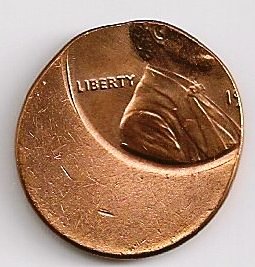
US Lincoln cent struck off-center

Mint-made errors occur when coins are made incorrectly at the mint, including anything that happens to the coin up until the completion of the minting process.[1] Mint error coins can be the result of deterioration of the minting equipment, accidents or malfunctions during the minting process, or interventions by mint personnel.[2] Coins are inspected during production and errors are typically caught. However, some are inadvertently released into circulation. Modern production methods eliminate many errors and automated counters are effective at removing error coins.[3] Damage occurring later (post-mint damage) may sometime resemble true mint errors. Error coins may be of value to collectors depending on the rarity and condition. Some coin collectors specialize in error coins.[4]

Errors can be the result of defective planchets, defective dies or the result of mistakes made during striking. The planchet, die, and striking (or PDS) classification system happens to correspond with the mintmarks of the three largest U.S. mints, Philadelphia, Denver, and San Francisco. Some errors have multiple causes and not all errors fall neatly within the categories. For example, design elements may be missing from coins because die crevices were filled with grease –a problem with the die but the error occurs when the coin is struck. Labels used to identify specific categories of errors may describe the cause of the error (die crack, rotated die, clipped planchet), the appearance of the coin (wavy steps, trails, missing element) or other factors (mule, cud, brockage). Some errors are known by multiple names, e.g. filled die errors are also known as missing design element errors and as strike throughs.

Some errors, such as an off-center strike, are unique. Other errors, such as those resulting from a specific die crack, form a variety, i.e., a group of coins with distinctive details or characteristics. Uniqueness does not necessarily make an error coin valuable. Although no other coin may be the same as a coin with a particular off-center strike, off-center strikes of varying degrees are not extremely rare. Accidental error coins are perhaps the most numerous, although in modern minting they are rare, making them potentially valuable to collectors. Intentional intervention by mint personnel does not typically involve a deliberate attempt to create an error, but usually involves an action intended to improve quality that miscarries.

Planchet preparation errors

[edit]

Mints purchase long strips of metal which are fed through blanking machines that punch out disks known as blank planchets (or simply as planchets or blanks)[5] on which coins are struck. This determines the size and shape of eventual coins.

Blank planchet

[edit]
U.S. dime Type 1 blank (left) and one cent Type 2 blank (right)

The punched disks are first known as "Type-1" blanks (or planchets). After an upending mill adds uniform rounded rims, the disks are called "Type-2" blanks (or planchets). Occasionally, Type-1 and Type-2 blanks aren't further processed, ‘escape’ the mint facility and enter circulation. Type-2 blanks may also be considered striking errors as they are prepared correctly, but are released without having been struck.

Clipped planchet

[edit]
Clipped planchet U.S. nickel showing the Blakesley Effect near the word LIBERTY

A misfeed can occur when the metal strip is fed through the blanking machine. The punches sometimes overlap the leading edge of the metal producing a straight clip. Sometimes, the punches strike an area of the strip which overlaps the hole left by the previous strike producing a curved clip.[3] On such curved-clip coins, often the rim opposite the clip shows a distinctive distortion and loss of detail called Blakesley Effect. Sometimes punches strike the irregular trailing edge of the metal strip producing irregular clips.

Improper planchet thickness

[edit]

Coins are sometimes struck on planchets that are either too thin or too thick producing underweight or overweight coins. This error can be due to incorrect equipment settings causing the metal strip to be rolled to the wrong thickness or due to the use of a metal strip intended for another coin denomination, such as a U.S. quarter planchet cut from a metal roll intended for dimes.

Lamination flaw

[edit]
Lamination crack on a U.S. Jefferson nickel

A lamination flaw is a planchet defect that results from metal impurities or internal stresses. Lamination flaws cause discoloration, uneven surfaces, peeling, and splitting.

Split planchet

[edit]
A 1963 U.S. Lincoln Cent with split before strike planchet error. Note the weakly struck obverse (left) and striations on the reverse (right).
A 1963-D U.S. Lincoln Cent with split after strike planchet error. Note the normal strike on the obverse (left) and lack of design on the reverse (right).

A split planchet coin error occurs when, during the preparation of the planchet strip, impurities such as gas, dirt, or grease become trapped under the surface of the metal blank, creating a weakness or lamination defect. This weak area of the metal may flake, peel, or split because the adhesion is poor.[6]

Split planchet errors are normally restricted to planchets composed of a solid alloy, such as U.S. cents and nickels,[7] and the Australian fifty-cent coin.[6] Split planchet errors should not be confused with "separation errors", which only affect clad and plated coins. Separation errors are bonding errors, not alloy errors.[7]

A split can occur either before or after the coin is struck. The descriptive terms split before strike and split after strike are used to distinguish the respective types. A "split before strike" will show design on both sides of the coin, have coarse to fine striations, and will usually be weakly struck. A "split after strike" will show a normal strike on one side, but will have a rough, design-free surface on the other side[8] and will always weigh less than a normal planchet.[9]

Cladding flaw

[edit]
Peeled cladding on a U.S. Roosevelt dime

Many modern coins are made of layers of different metals known as clads. These cladding layers sometimes peel, fold, or completely separate.

Hub and die errors

[edit]

Mints use hubs bearing raised images similar to the images that appear on a coin to imprint indented images onto the ends of steel rods. Those rods become the dies which strike planchets making them into coins. Hub and die errors can occur at the time the dies are made, when the dies are installed into presses, and from die deterioration during use. Modern coins can still be released with hub and die errors when the defects are too small to be seen with the naked eye. Sometimes, dies are used despite producing obvious flaws, such as the 1955 U.S. Lincoln cent.

Fundamental die-setting error

[edit]

A fundamental die-setting error occurs when the die is not set as the producers intended. For example, in April 2013 the Central Bank of Ireland issued a silver €10 commemorative coin in honor of James Joyce that misquoted a famous line from his masterwork Ulysses[10] despite being warned on at least two occasions by the Department of Finance over difficulties with copyright and design.[11]

Missing design elements

[edit]
Partial date on U.S. cent likely caused by filled die

Missing mintmarks, dates, and other design elements occur as the result of errors in the die or at the time of striking. A design element that is missing from the die when it is made is a fundamental error. Missing design elements that occur because dies are tilted and do not strike the planchet face-on are known as misaligned dies. A design element may be missing because foreign matter, such as grease, plugs the cavity into which the planchet's metal would normally flow under the striking pressure. This error is also known as a filled die or a strike through. Although this does involve a die, it is typically thought of as a striking error, but is included here for completeness. This type of error led to some specimens of the 1999 release of the US 50 State quarters design for Delaware to be missing the final E from the state's motto, thus accidentally declaring Delaware "THE FIRST STAT."

Doubled die

[edit]
Doubling on LIBERTY from the 1995 doubled die U.S. Lincoln cent

A doubled die occurs when a die receives an additional, misaligned impression from the hub. Overdate coins such as the 1942/1 U.S. Mercury dime and 1918/7 U.S. buffalo nickel are also doubled dies. They are both listed by CONECA as class III doubled dies.[4] Class III means the die was hubbed with different "designs" (or hubs that had different dates). They are not repunched dates, since the dates were punched onto the hub. Die deterioration may also appear as doubling.

Die defects: cracks, breaks, and chips

[edit]
A die crack is seen to the left of Lincoln's head
Broken die resulting in a "cud" atop Jefferson's head

Dies can crack during use producing jaggeds, raised lines on the surface of subsequently struck coins. In U.S. coinage, many Morgan dollar coins show slight die cracks. Dies with cracks, especially those with cracks near the edge, sometimes break. The broken piece may be retained in position or fall away. Die cracks and retained die breaks can be difficult to distinguish. Retained die breaks cross the coin's face from rim to rim with the area to one side of the break being slightly higher than the other. Coins struck after the break falls away have a raised, rounded, unstruck area along the edge. These coins are known to collectors as cuds. Sometimes, an area of a die will chip out of the center. These so-called die chips also appear as raised, rounded, unstruck areas on subsequently struck coins.

Die clash

[edit]
The marks seen above the word LIBERTY on this U.S. cent were caused by the obverse die clashing with elements on the reverse die intended to impress the space between the memorial columns in the design

A die clash occurs when the obverse and reverse dies are damaged upon striking each other without a planchet between them. Due to the tremendous pressure used, parts of the image of one die may be impressed on the other. Planchets subsequently struck by the clashed dies receive the distorted image. A well-known example is the "Bugs Bunny" Franklin half dollar of 1955, where part of the eagle's wing from the reverse gives Franklin the image of protruding teeth.[12]

MAD clash

[edit]
1993 MAD clash mark on a U.S. cent
The 1801 3 errors reverse large cent is an example of a die setting error.

A MAD clash (short for "misaligned dies") occurs when an obverse and reverse die strike each other while misaligned in relation to each other. Additional misalignment errors are discussed below.

Die setting errors

[edit]
Double punched mintmark

Historically, some design elements near the outer perimeter of a die were added by individual iron punches because technology made it difficult to press both the central and perimeter design elements at the same time. Also, some dies were made without mintmarks or dates to permit their use at different mints. A die technician added missing elements by positioning a puncheon, a small steel rod with the mirror image of a letter or number on it, and striking the puncheon with a hammer pressing the image into the die. If the image is not strong enough, the technician will punch it a second time. Puncheons placed in a different position between strikes will produce a doubled image which is called a repunch.[13] Dual punches occur when punching is repeated in a second location. Sometimes technicians use a puncheon with the wrong or incorrectly sized letter or number. A well known example of a small mint mark is 1945-S "Micro S" U.S. Mercury dime, when the mint used an old puncheon intended for Philippines coins.[14] A much rarer example is the 1892-O "Micro O" U.S. Barber half dollar, which may have come about from the brief use of a mintmark puncheon intended for the quarter.[15] The same error occurred with the 1905-O U.S. Barber dime. Numerous examples are known of this mistake. Modern techniques have eliminated the need to add design elements by punching as they are an integral part of the design and included in each step of the hub and die making processes.[16]

Overdates and overmintmarks

[edit]

In the past, mints used dies until they broke. At the beginning of the year, mints punched a new date over the old on dies that were in use. For 19th-century coins, it is difficult to call an overdate an "error", as it resulted from intentional recycling of the die. An overmintmark occurs when a second mintmark is punched over an earlier mintmark following the transfer of a die from one mint to another. A well-known example is the 1900 Morgan silver dollar, when reverse dies with "CC" below the eagle were sent from the Carson City Mint to the New Orleans Mint, where they were given an "O". A similar case occurred in 1938, when a reverse die for the buffalo nickel was made for the San Francisco Mint, because that year only, the Denver Mint made these coins with a "D" punched over the "S".

Trails

[edit]
1999 U.S. Lincoln cent depicting wavy steps.

Lines, called trails, transfer to coins from dies made using the modern high pressure "single pressing" process. When images are impressed into dies using the process, the displaced metal moves out into fields leaving visible lines on the dies. The dies themselves are called trail dies. Coins on which the lines appear are simply called trails. Trails were first noted on Lincoln Memorial steps found on the reverse of one cent coins minted from 1959 to 2008. The trails gave the steps the appearance of being wavy. The term wavy steps is still used to refer to trails found on the memorial steps, but the term trails is more commonly used to refer to lines found elsewhere.

Mule

[edit]
Great Britain dateless double obverse "mule" halfpenny Edward VII 1902 to 1910, well circulated obverse. What looks like a mint error is actually a cleverly made up double headed coin, just slightly under weight.
The reverse of that same coin was also minted with an obverse die, but on a different flan. The two obverse parts were cleverly put together from two different coins. This manipulated coin was found in Australia where it was legal tender. It could have been used in the very popular Australian Two-up game in a fraudulent way.

A coin struck using dies never intended for use together is called a "mule". An example is a coin struck with dies designed for different coin denominations, or a coin struck with two dies that both lack a minting year on them, resulting in a 'dateless' coin.

Misaligned dies

[edit]
Because of misalignment, the obverse of this coin is off-center but the reverse is centered

Dies must be properly aligned in presses for coins to be struck correctly. Errors occur when dies are offset, tilted, or rotated. Offset errors occur when the hammer die is not centered over the anvil die typically resulting in an off-centered obverse, but centered reverse. Tilting errors occur when die surfaces are not parallel producing coins that are thinner along one edge, and sometimes causing missing design elements along the opposite edge because of insufficient pressure being exerted on that edge. Rotation errors occur when the images on the obverse and reverse dies are turned from the normal positions such as when the reverse image is at a right angle to the obverse.

Strike errors

[edit]

Strike errors occur when the planchet is struck. It is a fault in the manufacturing process rather than in either the die or the planchet. Numismatists often prize strike-error coins over perfectly struck examples, which tend to be more common, but less highly than die-error coins, which are usually rarer, making them valuable.

Broadstrike

[edit]
This broad struck U.S. Lincoln cent is the size of a nickel

Broadstrike errors are produced when the collar die (the circular die surrounding the lower die) malfunctions. The collar prevents the metal of the blank from flowing outside the confines of the die. All denominations of U.S. coins with a broadstrike have plain edges.

Strike through

[edit]

A "strike-through" coin is made when another object comes between a blank and a die at the time of striking. That object's outline is pressed into the blank's surface. Common examples include hard objects such as staples, metal shavings, and other coins as well as soft objects such as cloth and grease. Hard objects leave sharp outlines and, on occasion, adhere to the blank producing a coin called a "retained strike-through". A planchet "struck-through" a coin is left with an impression of the coin called brockage (discussed below). When the "strike-through" object is a blank planchet the result is a uni-face coin with one struck side and one blank side (see below). When the "struck-through" object is another coin, and that coin adheres to a die (as opposed to the other coin), the adhered coin is called a "die cap" (discussed below). Two coins which adhere to one another are called "bonded pairs". Softer objects, such as grease, can fill crevices in a die, producing a weak strike with a smudged appearance. These errors are often called "missing element coins" (discussed above and as "filled dies"). (A great example of such an error occurred in 1922, when only the Denver mint struck Lincoln cents. As a result of the mint attempting to speed up production, such a large amount of excessive grease was applied to the dies that the mintmark was obscured and therefore either nonexistent or weakened on the 1922 cents. These are very popular with collectors.)[17]

Dropped Star on a Kennedy Half Dollar

A distinct but related type of error occurs when compacted die fill (“grease”) falls out of a recess in the die face and onto a planchet before the strike. This fallen plug of hardened material then acts as the intervening object in a strike-through, creating what is known as a "dropped element" error. The plug is struck into the planchet, leaving an incuse (sunken) impression of the die element (like a letter or number) it had formed around. Letters (“dropped letters”) and numbers (“dropped numbers”) are the most frequently seen dropped elements. The orientation of the resulting incuse impression depends on how the plug lands: if it doesn't flip and remains near its original die, the impression is normally oriented; if it flips over or lands against the opposite die, the impression is a mirror-image. Normally-oriented dropped elements are more common.

Uni-face coin (blank reverse)

Uni-face coin

[edit]

A uni-face coin results when two planchets are stacked one atop the other at the time of striking. This produces two coins: one with only an obverse image, and a second with only the reverse image. The planchets may be centered over the die producing one complete image on each coin or off-centered producing partial images on each side. In the accompanying image of the blank reverse, the shadow or outline of Lincoln's profile from the obverse side of the coin is visible.

Die cap

[edit]
Die cap

A struck coin remains on a die and leaves its slowly fading impression (called brockage) on subsequently struck coins.[18] Subsequent strikes cause the stuck coin to gradually change shape if it isn't dislodged, eventually resulting in it taking on a dome-like shape akin to a bottle cap.

Brockage

[edit]
The brockage image of the Lincoln memorial can be seen near the bottom of the coin

Brockage occurs when a mirror image of a coin is struck on a blank. After a struck coin fails to eject, a new blank is fed between the struck coin and the hammer die. The hammer die strikes the second blank leaving its image on one side while pressing the blank against the previously stuck coin, which sinks its image into the opposite side. Most brockages are off-center, but fully overlapping brockages are the most desirable.

Edge strike

[edit]

There are two types of edge strikes. A standing edge strike occurs when a blank "bounces" so that it is standing on edge as it is struck. Striking pressure produces edge indentations where the dies strike, and sometimes bends the blank. Repeated strikes can produce a coin that is folded flat. . Chain edge strikes occur when two blanks are fed into the space between dies at the same time. The blanks expand when struck and press together leaving each with single indented edge. Two chain edge struck coins together are known as a matched pair.

Multiple strike

[edit]
Lincoln cent with second off-center strike
Flip-over multi-struck coin

A multiple strike, also referred to as a double exposure, occurs when the coin has additional images from being struck again, off center. The result is sometimes mistaken for being a "doubled die". On occasion, a coin will flip over between strikes so that the second image is that of the opposite side of the coin.

Off-center strike

[edit]

An off-center coin is produced when the coin is struck once, albeit off center. Unlike a broadstrike, the punch is not in the center of the coin, but rather the edge. This results in a coin which is not circular. The coin gives a freakish appearance as a result, and various amounts of blank planchet space are visible. The coins can vary in value because of how far off center they are struck, although coins with full dates are more desirable than coins without a date or missing digits.[19]

Double denomination

[edit]

A double denomination coin is one that has been struck twice between different denomination dies such as once between nickel dies and again between quarter dies. The term is sometimes used to refer to a coin struck on the wrong planchet (see below).

Struck on wrong planchet

[edit]
Nickel struck on one cent planchet

Sometimes planchets for one coin denomination are fed into a coin-stamping press equipped with dies of another denomination. This results in a coin that has been stamped with a design intended for a differently sized coin. The resulting errors are prized by collectors, though they are usually caught during the manufacturing process and destroyed. Such errors are sometimes called "double denomination" coins, but that term is also used to refer to coins struck a second time with dies of a different denomination.

Some examples include cents struck on dime planchets, nickels on cent planchets, or quarters on dime planchets. This type of error should not be confused with the much rarer mule which is a coin struck between dies that were never intended to be used together such as a coin with nickel obverse and a dime reverse.

Wrong-planchet errors may also occur when the composition of the coin changes. Such situations generally arise when the mint has decided to change the alloy or plating of the coin in the new coinage year, but a few planchets from the previous year—and thus of the previous composition—have yet to be struck. Should the dies be changed for the new year while the old planchets are awaiting striking and not removed, coins using the old composition will be struck with the new year's date. Such coins are rare and often highly valued by collectors, as with the 1943 copper cents and 1944 steel cents.

A much rarer error is a denomination struck on a foreign planchet. This did occur occasionally with United States (and before that American colonial) coinage in the 17th, 18th, and 19th centuries. In the 20th century, fewer errors on foreign planchets are discovered but they still occur when the U.S. Mint is contracted by foreign governments to produce coinage for them, and can hold a high value. Recent encapsulations and sales at auctions reveal 1995 and 1996 examples of mintages on foreign planchet. A few 1996 Lincoln cents were struck on stock designated for Singapore. There are 1997-D, 1998 and 2000 dated Lincoln cents struck on foreign planchets, but not identified by PCGS or NGC as to the country the mintage was intended. A wrong planchet error that sold for $5462.50 on Heritage Auctions in August 2010 is an undated U.S. nickel struck on top of a 1960 Peruvian 5 centavos.[20]

Edge and rim errors

[edit]

Blanks are surrounded by collars when struck to prevent the blank from flattening and spreading. Edge and rim errors occur when collars are either out of position or are deteriorated. A wire rim occurs when excessive pressure squeezes out metal between the collar and the edge of the die producing an extremely high thin rim. A partial collar occurs when an out-of-position collar leaves a line around the coin which is visible when looking at its edge. A partial collar is sometimes called a railroad rim when a reeded edge coin is involved as the line resembles a rail and the reeds resemble railroad ties.

Mated pair or set

[edit]

A collection of two or more coins struck at the same time or during successive strikes on one or more dies, these coins with the resulting errors are related to one another, fitting together as a set.[21] All brockages, indents, chain edge strikes, and capped die strikes have a corresponding coin, but are rarely found together. A single coin of the set may be discovered by mint staff during quality control and removed, or the coins may be separated into different lots to be distributed separately into circulation.

Post-mint damage

[edit]
U.S. Lincoln cent (obverse) with impression of a Lincoln reverse due to post-mint compression damage from a train

Authentic error coins are often confused with coins that have post-mint damage. Such coins are damaged (gouged, scraped, etched, mutilated, flattened) after the final strike, either accidentally or deliberately. If damage occurs at the mint after the minting process, for example in subsequent automated handling, it is still considered post-mint damage. Corrosion, scratches, bending, and dings can all occur to coins in circulation and sometimes may mimic mint-errors.[1]

Numismatic value of error coins

[edit]

Like other coins, the value of errors is based in part on rarity and condition. In general, lower denomination errors are less expensive than higher denomination errors simply because more such coins are minted resulting in available errors. Due to improvements in production and inspection, modern errors are more rare and this impacts value.[3] Some types of errors, such as clipped planchets, edge strikes, and foreign object strike-throughs can be faked. Many errors are sold ungraded because of their relatively low value and the relative cost of grading. In addition, errors are often not noted by grading services. Overdates, mules, brockage, double denomination, and struck on the wrong planchet errors are often valuable. Errors on ancient, medieval, and higher-value coins, however, may be detrimental to the coin's numismatic value.

Notable Australian coin varieties and errors

[edit]
  • 1966 "Wavy 2" 20 cents
  • 1979 "Double Bar" 50 cents
  • 1980 "Double Bar" 50 cents
  • 1981 "3-1/2 claw" 20 cents
  • 1994 "Wide Date" 50 cents
  • 2000 "Incused Flag" Millennium 50 cents
  • 2000 $1/10cent Mule
  • 2001 rotated die Centenary of Federation $1
  • 2004 "Pointy A" Large Head 20 cents

Notable U.S. coin varieties and errors

[edit]

Notable British coin errors

[edit]

Notable Philippine coin errors

[edit]
  • 1983 "Pithecobhaga" fifty centavos
  • 1983 "Pygmea" ten centavos

See also

[edit]

References

[edit]
[edit]
Revisions and contributorsEdit on WikipediaRead on Wikipedia
from Grokipedia
Mint-made errors, also known as mint errors, are imperfections in coins that arise from mistakes during the production process at a government or private mint facility. These errors encompass any anomaly occurring from the preparation of the metal blank, known as the planchet, through to the final striking by the dies, and are only considered mint-made if they happen before the coin leaves the mint. Unlike post-mint damage such as scratches or bends incurred in circulation, true mint errors are genuine production flaws that are highly sought after by numismatists for their rarity and historical insight into minting technology. The most notable mint-made errors fall into three primary categories: , die errors, and striking errors, each reflecting a specific stage of the minting process. involve defects in the blank metal disc prior to striking, such as incorrect composition, wrong size or thickness, edge clips, or (where impurities cause surface peeling). These can result in coins struck on planchets intended for different denominations, like a dime on a blank, dramatically affecting weight and appearance. Die errors stem from issues with the engraved dies that imprint the , including die breaks or cuds (raised blobs from cracked dies), misaligned or rotated dies (shifting the design off-axis by at least 15 degrees), clashed dies (impressions from dies striking each other without a planchet), and mules (rare pairings of mismatched dies from different types). Striking errors occur during the actual coining press operation, such as off-center strikes (partial designs from mispositioned planchets), double or multiple strikes (repeated impressions due to ejection failures), struck-throughs (debris or another blocking the die), broadstrikes (coins expanded without collar confinement), and indents or uniface strikes (from planchet overlaps or misfeeds). Despite rigorous quality controls at modern mints, including automated inspection systems, a small percentage of error coins evade detection and enter circulation, making them valuable collectibles that can fetch premiums based on rarity, severity, and certification. For example, a 2000-P mule error, struck with a Washington quarter obverse die, has sold for over $190,000 as of 2024 due to its extreme scarcity. Professional grading services like the Professional Coin Grading Service (PCGS) and Numismatic Guaranty Company (NGC) authenticate these errors, distinguishing them from varieties (intentional design changes) or post-mint alterations to ensure collector confidence.

Overview

Definition and classification

Mint-made errors refer to unintentional defects introduced during the coin manufacturing process at the mint, encompassing anomalies in preparation, die and hub creation, or the striking phase, up until the final strike of the dies. These errors arise from mechanical malfunctions, human oversight, or material inconsistencies and result in coins that deviate from the intended , but they exclude deliberate varieties such as altered dates or motifs and any damage occurring after the is released from the mint. In 19th-century , collectors began systematically documenting and valuing such anomalies alongside date and mintmark varieties. In , mint-made errors are broadly classified into three primary categories: errors, which involve flaws in the blank metal discs before striking; die and hub errors, stemming from issues in the preparation or use of the engraving tools; and striking errors, occurring during the actual impression of the design onto the . This framework, rooted in analyses of the modern minting process, helps orient collectors and researchers by linking errors to specific production stages, though some overlap exists, such as off-metal strikes that could involve both and striking elements. For example, a —where design elements appear duplicated due to hubbing misalignment—falls under die errors. The scope of mint-made errors typically centers on machine-struck coins produced from the late onward, when innovations like steam-powered presses enabled consistent, high-volume minting and made true errors distinguishable from production norms. Earlier hammered coins, crafted by hand from the ancient era through the , are generally excluded due to their natural irregularities in shape, weight, and strike quality, which were inherent to the artisanal method rather than unintended defects. Within this modern focus, inclusions like broadstrikes—coins struck without the restraining collar, leading to irregular expansion—are recognized as mint errors, whereas post-mint issues such as environmental or abrasion are not.

Historical context

The production of coins prior to the 18th century relied on hand-struck methods, where artisans hammered designs into metal blanks using simple tools, resulting in few recognized errors as variations were inherent to the low-volume, craftsmanship-driven process. This artisanal approach limited output and error potential, with inconsistencies like off-center strikes often viewed as acceptable imperfections rather than defects. The transition to mechanized minting began in the late 18th century with the adoption of steam-powered presses, marking a pivotal shift that amplified production capacity and introduced greater opportunities for errors. In Britain, installed steam-driven coin presses at his Manufactory in 1788, enabling consistent striking at higher volumes. The U.S. Mint, established in , initially used horse- and man-powered screw presses producing about 24 coins per minute, but fully transitioned to steam power by 1836, boosting output to around 100 coins per minute and facilitating the expansion of branch mints. These advancements, while improving efficiency, heightened the risk of misalignment and incomplete strikes due to the faster, less manual oversight. In the 19th and early 20th centuries, further milestones included the refinement of hubbing techniques for , which began evolving in the and became more standardized by the , allowing for the transfer of designs from a master hub to working dies but occasionally causing effects from hubbing misalignment. Post-World War II, high-speed coining presses—reaching up to 750 coins per minute by the late —emerged with and , leading to increased incidences of striking errors such as weak impressions and off-centers amid surging demand. Globally, European mints like the Royal Mint adopted similar steam technologies earlier, contrasting with colonial mints in the and , where material shortages often forced improvised production and elevated error rates. The modern era, post-1950, saw automation dominate mint operations, alongside material innovations like the 1965 U.S. shift from silver to copper-nickel clad compositions for dimes and , which conserved resources but introduced novel error types including cladding and transitional strikes on outdated planchets. Wartime shortages, particularly during World Wars I and II, exacerbated global error potentials by disrupting supply chains and prompting alloy substitutions, as seen in reduced output from over 24 million sovereigns in 1913 to none by 1918. While contemporary quality controls have minimized many traditional errors, the scale of automated production continues to yield occasional anomalies in high-volume runs.

Causes of mint-made errors

Production process vulnerabilities

The coin minting process involves several sequential stages, beginning with the melting of metal alloys and rolling them into thin strips of precise thickness. These strips are then punched into circular blanks through a blanking , followed by annealing in a controlled furnace to soften the metal and relieve internal stresses. The blanks undergo washing and drying to remove residues, and an upsetting step forms the raised rim. Dies, prepared separately by hubbing—where a master hub with the positive is pressed into blanks under immense force to create working dies—are installed in high-speed coining presses. Finally, the prepared planchets are struck between the obverse and reverse dies to imprint the , typically under pressures ranging from 35 to 100 metric tons depending on the denomination, such as approximately 69 metric tons for U.S. . Each stage presents inherent vulnerabilities that can lead to mint-made errors if not meticulously controlled. During metal rolling and blank preparation, impurities or gas pockets in the alloy can cause lamination flaws, where layers of metal delaminate or peel, as the rolling process exacerbates separations in the material. Die preparation via hubbing is susceptible to misalignment if the hub and die steel are not perfectly aligned during pressing, potentially resulting in off-center or rotated designs on subsequent strikes. In the striking phase, variations in press speed—often exceeding 500 coins per minute in high-volume operations—can disrupt the timing of planchet feeding or die closure, leading to incomplete impressions, multiple strikes, or weak detailing. Mint-made errors occur at very low rates, with higher incidences in high-volume facilities like the U.S. Mint's plant due to the scale of output exceeding billions of coins annually. These challenges reflect the demands of maintaining precision across millions of strikes per day. To mitigate vulnerabilities, mints implement quality controls such as visual and automated inspections at multiple stages, along with sampling and of defective coins. Despite these measures, occasional failures allow errors to enter circulation, such as subtle die cracks from repeated hubbing stresses.

Technological and human factors

Technological factors in mint-made errors often stem from mechanical failures during the hubbing and striking processes. Worn or fatigued hubs, subjected to repeated high-pressure impressions to create dies, can develop micro-stresses that lead to trailed lettering or design elements on the resulting dies, as the hub surface stretches unevenly during production. Similarly, press misalignment occurs when the coining chamber fails to position the planchet correctly, resulting in off-center strikes where the design is shifted relative to the coin's edge; this is typically due to mechanical jams or improper feeding mechanisms in the automated press. Alloy impurities introduced from supplier materials during planchet preparation can also cause splits, as trapped contaminants like gas or foreign particles weaken the metal's bonding, leading to delamination under striking pressure. Human factors contribute significantly, particularly through errors in setup and oversight. Incorrect die installation, such as mounting a die upside-down or at an improper , produces rotated or inverted designs on struck coins, often because operators fail to verify alignment before production runs. During periods of high demand, like wartime, rushed setups exacerbate these issues; for instance, the transition to silver for U.S. Jefferson nickels in 1942 led to transitional errors where coins were struck on incorrect planchets due to hasty changes in and insufficient quality checks. The interplay between technological and human elements is evident in complex errors like the 1983 U.S. doubled die obverse, where excessive hubbing pressure caused a shift in the hub during die creation—producing doubled elements—but operator oversight in inspecting the die allowed the flawed version to enter production. Over time, mitigation efforts have evolved; the U.S. Mint's adoption of computer-controlled presses and automated inspection systems in the 1990s significantly reduced human-induced errors by enhancing precision in die alignment and feeding, leading to fewer overall mint errors reaching circulation. These improvements have continued into the 2020s with advanced automation, though errors remain rare but occasionally reported as of 2025.

Planchet preparation errors

Clipped and incomplete planchets

Clipped planchets occur during the initial blanking stage of coin production, where metal strips are fed into a blanking press to round discs, or planchets, for subsequent striking. If the strip advances too slowly, too quickly, or shifts sideways, the circular punch overlaps an existing hole from a prior blank, removing a segment of metal and resulting in a missing portion typically ranging from 5% to 50% of the planchet's edge. This misalignment or in the cutting mechanism produces irregular shapes, distinguishing these errors from intentional design features. Several types of clipped planchets arise based on the specific malfunction in the blanking . Curved clips, the most frequent variety, form when the punch partially overlaps a previous blank's edge, creating a smooth, arc-shaped notch due to the rotary nature of the cutting blades. Straight clips, often termed feeder clips, happen when the metal strip feeds improperly from the hopper or edge of the coil, resulting in a linear cut along one side. Incomplete or partial planchets represent more severe cases, where the punch fails to fully separate the blank, leaving a connected fragment or ragged edge that is then struck as an irregular disc. Multiple clips, though rarer, can occur with up to five or six notches if the strip repeatedly misfeeds, leading to complex patterns like elliptical or corner clips from intersecting cuts. Visual identification relies on examining the clip's edge and surrounding metal flow. Genuine mint-made clips exhibit smooth or cleanly sheared margins with flow lines—subtle ridges from the metal's deformation during punching—extending into the missing area, confirming the happened pre-striking. In contrast, post-mint damage typically shows jagged, crushed, or corroded edges without these flow characteristics. These errors are particularly evident on struck coins where the missing portion causes incomplete designs or the Blakesley effect, a weak or absent rim opposite the clip due to uneven metal flow during striking. They appear commonly in high-speed mint operations, such as those producing U.S. Roosevelt dimes, where production volumes exceeded millions annually. Clipped planchets were more noticeable during periods of alloy transitions, as changes in metal composition could exacerbate feeding inconsistencies in blanking presses. For instance, the 1942-1945 U.S. silver war s, produced with a 35% silver-copper-manganese to conserve , show documented examples of curved and straight clips amid the rushed wartime production. Single curved clips remain relatively common across denominations, while multiple or incomplete variants are scarcer and command higher collector premiums based on the extent of metal loss.

Lamination and splitting flaws

Lamination and splitting flaws are internal defects in planchets arising from impurities or contaminants trapped within the metal during the minting . These flaws typically originate during the alloy preparation or rolling stages, where foreign materials such as dirt, , or gas inclusions disrupt the uniform bonding of the metal layers. Inadequate annealing—a heating and controlled cooling intended to relieve internal stresses and homogenize the —can exacerbate these issues by failing to fully integrate the impurities, leading to weak points along horizontal planes in the metal flow. The primary manifestations include , where thin layers of metal peel away from the surface like onion skin, often revealing underlying material, and splitting, where the separates completely along a flaw line. appears as cracks, flakes, or peels on the struck , while splits result in partial or full cleavage of the , sometimes creating two incomplete pieces. These defects follow the directional flow lines of the metal, distinguishing them from post-mint damage, and are more prevalent in solid coins like cents and nickels, though they occur in clad compositions as well. Notable examples include clad U.S. minted from 1965 onward, where often exposes copper streaks from the core beneath the copper-nickel cladding, as seen in varieties like the 2002-P Indiana Statehood quarter. Split planchets are commonly reported on Lincoln cents and Jefferson nickels, where the striking force exploits pre-existing weaknesses to cleave the post-strike. Such flaws weaken the overall structure of the , increasing susceptibility to breakage during or after striking, though the defect itself forms prior to the coining press. These issues tie into broader inconsistencies, such as uneven mixing, which can compound internal vulnerabilities.

Thickness and alloy issues

Thickness errors in planchet preparation occur when the metal strip is rolled to an incorrect gauge during the annealing and rolling , resulting in blanks that are either too thick or too thin for the intended denomination. For instance, the nominal thickness for a modern U.S. is 1.52 mm, but errors can produce s deviating by 0.1 mm or more, often due to miscalibrated rollers or the accidental feeding of metal sheets intended for a different coin type into the blanking press. These deviations arise primarily from equipment malfunctions, such as caliper misalignment in the rolling mills, which fail to maintain precise pressure and spacing, or from human oversight in selecting the wrong strip thickness for . In clad coin production, where multiple metal layers are bonded, uneven rolling can exacerbate issues by causing inconsistent bonding between layers, leading to potential during later stages. Such errors are distinct from post-mint wear, as they manifest uniformly across the surface without irregular abrasion patterns. Alloy flaws, another critical category, stem from improper metal composition during melting and mixing, often due to contaminated melts or erroneous batch formulations that introduce excess or deficient elements. A notable example is the 1943 bronze U.S. cent, struck on leftover planchets from 1942 production amid the wartime switch to zinc-coated , resulting in a heavier, reddish coin weighing approximately 3.1 grams compared to the standard 2.7 grams for steel cents. In copper-plated zinc cents, zinc-heavy compositions or plating inconsistencies can cause bubbling or blistering post-strike, where trapped gases or poor adhesion lead to surface protrusions. For bi-metallic or clad coins, such as U.S. quarters, errors may involve cladding , where the outer copper-nickel layers separate from the core due to impurities or inadequate bonding during rolling. Identification of these errors typically involves precise measurements: thickness gauged with a caliper for dimensional variances, weight assessed on a scale (e.g., deviations of 0.5 grams or more from nominal), and alloy composition verified through specific gravity tests or for color and luster anomalies. These methods confirm mint-origin flaws, as opposed to environmental , by revealing consistent material inconsistencies across the .

Die and hub preparation errors

Doubled and trailed dies

Doubled dies occur when the hub shifts or misaligns during the process, resulting in an offset duplication of design elements on the working die. This error is introduced during hubbing, where a hub is pressed into a softer die blank under immense pressure to transfer the 's . If the hub moves slightly between multiple impressions—known as multiple-squeeze hubbing—the die captures a doubled image, which then appears on every struck from that die. A classic example is the 1955 U.S. doubled die obverse, where the date, lettering, and show pronounced doubling due to a significant hub shift, making it one of the most famous mint errors with an estimated 20,000 to 24,000 pieces released. The mechanism behind doubled dies involves the high-pressure hubbing press, which applies 300 to 1,000 tons of force to embed the hub's into the die blank. In the early , before the adoption of rigid fixtures and single-squeeze hubbing in the , multiple impressions were necessary to fully transfer intricate designs, increasing the risk of misalignment from even minor vibrations or operator adjustments. These errors were more common during that era due to the manual nature of the process, though modern single-squeeze methods can still produce them if the hub tilts or jolts during the single press. Doubled dies are classified into eight main types based on the nature of the hub movement, such as rotated (Class I, with clockwise or counterclockwise shifts creating rounded doubling), offset (Class IV, with even spreading in one direction), or tilted (Class VIII, with inward doubling from a tilted hub). Trailed dies represent a specific variant of hub-related errors, arising from partial hub movement during the impression process that produces comet-like tails or wavy trails on elements. This occurs when the hub slips incrementally under , dragging the design across the die surface and creating elongated, streaked duplications rather than clean offsets. Such trails are often seen in areas like steps or , resembling from incomplete hubbing, and are distinct from full doubled impressions. of trailed effects aligns with hub doubling types, particularly Classes IV through VIII, where shift direction and strength determine the trail's length and visibility, with stronger partial movements yielding more pronounced tails. These errors were prevalent in pre-1990s production due to the multi-stage hubbing's vulnerability to slippage. Distinguishing true doubled and trailed dies from machine doubling is essential, as the latter is a common striking error with no collectible value. True hub-induced doubling features clear separation between offset elements, often with on serifs or rounded edges, and appears uniformly on all coins from the affected die. In contrast, machine doubling results from die wobble or bounce during the coin striking phase, producing fine, shelf-like ridges that are flat, inconsistent, and typically oriented parallel to the rim without true duplication. Trailed dies show streaking from hub drag, further setting them apart from the compressive, non-separated appearance of machine effects.

Missing or altered elements

Missing or altered elements in mint-made errors arise primarily from issues during , where parts of the intended design fail to transfer properly to the due to obstructions, excessive , or subsequent modifications to the die. One common cause is die fill, where grease, dirt, or debris accumulates in the recesses of the die, preventing those design elements from being impressed onto the during striking. This results in weak, partial, or completely absent features such as letters, numerals, or motifs on the surface. For instance, filled die errors can cause missing digits or letters, as seen in various modern U.S. coins where materials or lubricants clog the die cavities. Excessive die polishing, intended to remove wear or defects, can also erase fine details by abrading the die's engraved elements, leading to uniformly weak strikes across affected areas. This is distinct from normal circulation wear, which progressively erodes high points of the design over time, whereas die polishing produces consistent flatness or absence in specific recesses from the outset. An example includes certain Washington quarters from the 1970s exhibiting weakened mottos like "" due to over-polished dies that smoothed out intricate lettering. Such errors are often subtle and require to detect, as the weakness appears intentional but originates from mint preparation flaws. Overdates and overmintmarks represent another category of altered elements, occurring when a previously used die is repurposed and repunched with new date or hubs, overlaying the old elements onto the new ones. The 1942/1 is a classic example, where a die originally hubbed for 1941 was punched with the 1942 date, causing the "2" to superimpose over the "1," creating a visible underdigit. This error stems from inefficiencies in die inventory management during wartime production rushes at the . Similarly, overmintmarks arise from punching a new onto a die that already bears one, resulting in doubled or shifted symbols. These varieties are prized for their historical context and diagnostic doubling visible under low magnification. Altered elements can further result from die abrasion or cracks that accumulate debris, filling and obscuring design features. Abrasion during preparation or use wears down die cavities, particularly in letters and numerals, producing "filled" appearances on struck coins where metal flows unevenly into the damaged areas. Die cracks, if not addressed, can trap particulate matter, leading to incomplete impressions that mimic missing elements but with irregular outlines. Diagnostics for these errors include the uniformity of weakness in a localized area—contrasting with the radial or progressive fading seen in die fatigue—allowing collectors to differentiate mint errors from post-mint damage. The 1969-S doubled die obverse, for example, exhibits not only doubling but also split serifs on certain letters, such as the 'E' in , due to hubbing inconsistencies that altered fine details during preparation. These errors are relatively rare, often tied to high-volume production where dies are reused without full inspection, emphasizing the precision required in hubbing and processes.

Die defects and clashes

Die defects refer to physical damage sustained by the coin dies during the minting , resulting in corresponding imperfections transferred to the struck coins. Cracks in the die, often caused by metal from repeated high-pressure strikes, appear as thin, raised linear marks on the coin's surface, following irregular paths that reflect the in the die face. These marks form when planchet metal flows into the narrow fissure under pressure, creating a subtle ridge rather than a depression. Chips occur when small portions of the die break away, typically not near the rim, leaving a void in the die that allows coin metal to extrude, producing a small raised blob or irregularity on the , often less than 1 mm in extent. Larger breaks, known as cuds, happen when significant sections of the die , especially at or near the border, yielding prominent raised blobs that can partially or fully obliterate design elements, such as letters or motifs. Die clashes arise when the obverse and reverse dies collide without a present in the striking chamber, often due to a feeding malfunction, imprinting portions of each die's design onto the opposing surface in incuse (sunken) form. This transfers ghost-like impressions, such as a faint head appearing on the reverse of certain U.S. coins, which then appear raised on subsequent strikes as the damaged die continues in use. A specific variant, the Modified Adjustment Die (MAD) clash, results from partial misalignment during die setup or adjustment, where one die is rotated or tilted relative to the other before clashing, producing distorted or asymmetrically placed design elements, as seen in Lincoln cents from 1992 to 2000 with at least 20% offset marks. These defects typically progress with die wear: initial clashes create incuse marks that weaken the die surface, potentially leading to cracks and eventual breaks or cuds in advanced stages, particularly in overused dies subjected to hundreds of thousands of strikes. For instance, U.S. Mint dies often endure 750,000 to over 1 million strikes before retirement, increasing the likelihood of such deterioration and error propagation across multiple coins. While die setting errors can contribute to misalignment facilitating clashes, the primary mechanism remains operational stress on the die itself.

Mules and misalignments

Mules are a type of mint in which a is struck using an obverse die and a reverse die that were not intended to be paired together, often from different denominations, years, or even countries. This mismatch typically results from during the assembly of presses, where dies are incorrectly mounted or left over from previous production runs. Such errors are exceedingly rare because mints use denomination-specific tooling and rigorous to prevent unintended pairings. A notable example is the 2000 Australian $1 , which features the obverse of a 10-cent paired with the reverse of a $1 , leading to a visible size and design incompatibility between the sides. Misalignments, another category of die-related errors, occur when the upper and lower dies or the retaining collar are improperly positioned during striking, resulting in rotational, tilted, or shifted orientations of the design elements. Rotational misalignments, often called rotated dies, happen when one die rotates relative to the other, commonly due to loose mounting or improper installation in the press; these are recognized as errors only if the rotation exceeds 15 degrees from the intended "upright" position. For instance, a 180-degree rotated die error positions the reverse design upside down relative to the obverse, creating a stark visual discrepancy. Tilted or shifted collars contribute to more complex misalignments by failing to properly constrain the planchet, though these differ from simple rotational errors caused by die slippage alone. Identification of mules relies on detecting design incompatibilities, such as mismatched lettering sizes, motifs, or edge alignments that do not match standard issues for the used. In contrast, misaligned dies are identified by measuring the angular offset between elements, distinguishing them from intentional varieties or post-mint alterations; rotational errors from collar failure, for example, may show irregular patterns alongside the tilt. Both types underscore vulnerabilities in press setup procedures, where even brief lapses can produce collectible anomalies despite modern safeguards.

Striking errors

Off-center and multiple strikes

Off-center strikes occur when a is improperly positioned between the upper and lower dies during the minting process, resulting in a partial impression of the on the . This error typically arises from a malfunction in the collar, which fails to properly restrict the planchet's movement, allowing part of it to extend beyond the striking area of the dies. As a result, one side of the shows a curved, smooth edge where it was unsupported by the collar, while the opposite side may exhibit a straight, clipped edge from partial collar contact. The degree of off-centering is measured as a of the missing, ranging from minor shifts of 5-10%—where only edges of the are cutoff—to extreme cases of 80-90% off-center, leaving just a small portion of the motif visible and creating a near-miss appearance. Partial off-center strikes retain most of the central but show incomplete borders, whereas extreme examples dramatically shift the entire image toward one margin, often increasing their numismatic appeal due to the visible extent of the . A well-known instance is the 1999-D state quarter struck approximately 50% off-center, which displays the horse and rider motif partially missing on the reverse while the obverse shows corresponding blank margins. Multiple strikes, also known as double, triple, or multi-struck errors, happen when a is not ejected from the striking chamber after the initial strike and is struck additional times, often 2 to 5 or more, before being released. This typically results from feeder system jams or delays in the automated ejection mechanism, causing the to remain in position or shift slightly between strikes. The subsequent impressions may overlay the first at various angles, producing superimposed designs that can appear rotated or displaced, with common rotations of 90°, 120°, or 180° in triple-struck examples. For instance, a 1978 Canadian cent triple-struck with all impressions off-center demonstrates how each strike adds layered, misaligned elements, enhancing the error's complexity. A key diagnostic feature of multiple strikes is upset orientation, where the relative alignment of designs deviates from the standard coin or turn due to planchet rotation between strikes, distinguishing it from single-strike misalignments. These errors differ from pre-strike die misalignments, which affect only the initial positioning without repeated impressions. Collectors value multiple strikes for their dynamic visual effects, with extreme cases like quadruple strikes commanding higher premiums based on the clarity and degree of overlay.

Strike-throughs and brockages

Strike-through errors occur when a foreign object, such as grease, lint, wire, or cloth , interferes with the striking process by positioning itself between the die and the , resulting in a blank or distorted area on the coin's surface. This obstruction prevents the die from fully impressing the intended design, often leaving a smooth, raised patch where details are absent. For instance, in U.S. cents from the mid-19th century, such as the , strike-throughs caused by have been documented, creating irregular voids on the obverse or reverse. Brockages represent a more complex variation of striking interference, where a previously struck fails to eject properly from the coining chamber and adheres to one of the dies, transferring an incuse (sunken) of its design onto the next incoming blank . This arises primarily from insufficient ejection pressure, allowing the stuck to remain in place during the subsequent strike. A classic example is the undated Indian Cent (1859-1909), where the obverse features a counterbrockage, showing the incuse reverse design of a prior . Related to brockages are uni-face errors, which produce a struck on only one side due to an adhered or obstruction that prevents contact with the opposite die. Die caps, a subtype, form when a bonds to the upper die, effectively turning it into a makeshift die face that imparts a worn or inverse impression on following . Partial brockages occur when the adhered shifts slightly, imprinting only a portion of its design incuse on the new , as seen in certain Jefferson Nickels where about 60% of the obverse shows the error. These errors, while distinct from multiple strikes, share the underlying issue of material retention in the press.

Wrong planchet and denomination errors

Wrong planchet errors occur when a blank intended for one denomination or metal type is accidentally fed into a coining press using dies for a different denomination, resulting in a that bears the obverse and reverse designs of one type but exhibits the physical characteristics—such as , thickness, weight, and composition—of another. These errors are distinct from positional striking issues, as they stem from material mismatches rather than alignment problems during the strike. The resulting pieces often appear dramatically off-standard, with designs that may not fully fit the planchet's dimensions, leading to incomplete or distorted features. Such errors typically arise in multi-denomination mint facilities where blanks for various coins are prepared in proximity, and failures in sorting, annealing, or automated feeding systems allow incorrect planchets to enter the wrong press. oversight or mechanical jams can exacerbate this, particularly during transitions between production runs or alloy changes. For instance, transitional wrong planchet errors happen when leftover blanks from an old composition are struck with new dies, as seen in wartime shifts. A classic example is the 1943 struck on a planchet; during , the U.S. Mint switched to zinc-coated steel for cents to conserve , but approximately 20 planchets from 1942 production were inadvertently used, creating highly valuable rarities that have auctioned for over $500,000 in top grades. Another notable case is the 1999-D struck on a cent planchet, one of only two known examples, where the silver dime design appears on a larger, thicker blank, fetching premiums due to its . Double denomination errors, a subset involving previously struck coins, occur when a finished coin from one denomination is mistakenly fed into a press for another, overstriking it and blending elements of both designs on the original planchet. These are rarer than single wrong planchet strikes because they require not only a feeding error but also the struck coin to survive initial quality control and re-enter production. An example is the 1998 Lincoln cent overstruck on a 1998-P Roosevelt dime planchet, where faint dime details remain visible beneath the cent design, certified by NGC and valued in the thousands. Triple denomination errors, involving multiple overstrikes with different dies, are exceptionally rare. Similarly, a Washington quarter overstruck on a Roosevelt dime planchet shows the quarter's eagle clashing with residual dime motifs, illustrating how these errors capture two denominations in one piece. Identification relies on measuring deviations from standard specifications: for instance, a cent design on a dime planchet weighs about 2.27 grams instead of 2.50 grams and has a silver color rather than copper, with the Lincoln portrait appearing undersized on the smaller blank. Weight, specific gravity tests for alloy, and edge examination confirm authenticity, distinguishing them from post-mint alterations. These errors command high numismatic value due to their low survival rates—often fewer than 50 examples per type—and the insight they provide into mint operations, with auction realizations frequently exceeding $10,000 for key dates. Broadstrikes, related size errors from collar failures, can occasionally compound wrong planchet issues by expanding the coin's diameter during striking.

Edge and rim anomalies

Edge and rim anomalies are mint-made errors that occur during the coin striking , specifically involving malfunctions of the retaining collar, which is responsible for forming the coin's edge features like or and the raised rim. These errors result in irregularities such as incomplete or absent edge designs and malformed rims, distinguishing them from central striking issues by their focus on the coin's periphery. The collar normally confines the planchet's metal flow under pressure from the dies, imparting to prevent clipping or counterfeiting and creating a protective raised rim; when it fails to function correctly, the metal spreads uncontrollably, leading to these anomalies. Common edge errors include missing on coins designed to be reeded, such as a smooth edge on a dime or quarter that should exhibit vertical grooves. This typically arises from a broadstrike, where the coin is struck without the collar fully engaging, causing the to expand beyond its intended and resulting in a blank, smooth devoid of . For instance, broadstruck dollars from 1979-1999, which are normally reeded, display a wide, flat edge with no ridges, often selling for over $145 due to their rarity. Another variant is partial collar use, where the collar engages incompletely, producing intermittent —such as grooves on only half the —creating a "railroad rim" appearance with thickened, uneven sections. An example is the 2015 , which shows partial alongside an obverse die break, confirming the mint-made origin through consistent metal flow lines into the irregular areas. Filled edges, where debris or excess metal partially obstructs the collar, can also occur, leading to blurred or incomplete patterns, though these are rarer and often overlap with strike-through errors if material lodges during striking. In coins with inscribed edge lettering, such as U.S. Presidential dollars, missing edge lettering represents a significant anomaly caused by the failing to advance to the edge-incusing machine after initial striking. The 2007 Presidential dollar, for example, was produced in tens of thousands without the edge inscriptions "" and the date, commanding premiums as collectors' items due to the mint's oversight in the multi-stage process. Clipped edges, resulting from improper preparation rather than striking, manifest as missing rim sections but are mint-made if the cut shows clean, curved boundaries without post-mint abrasion. Rim errors primarily stem from the same collar malfunctions, producing absent, doubled, or distorted raised s around the coin's faces. In a full broadstrike, the absence of the collar eliminates the raised rim entirely, leaving a flattened, irregular that contrasts with the normal coin's defined edge; diagnostic features include an enlarged diameter (e.g., up to 20% wider) and lack of metal displacement typical of post-mint damage. Doubled rims occur when the collar shifts during striking, creating a secondary raised , as seen in some Morgan dollars (1878-1921) with finned rims—excess metal extruded upward forming spiky protrusions worth hundreds of dollars. Partial collar errors can also double the rim thickness on one side, appearing as a broad, railroad-like ledge, exemplified by a that fetched over $800 at auction. Finned rims, caused by excessive die pressure forcing metal between the collar and , result in wavy or protruding edges, verifiable by smooth, flowing metal rather than jagged post-mint wear. To distinguish these from post-mint damage, collectors examine for uniform metal flow and lack of environmental wear; for example, a smooth edge on a reeded is genuine if accompanied by broadstrike expansion, whereas isolated smoothness without diameter change suggests circulation abrasion. These anomalies highlight vulnerabilities in automated minting presses, where timing or mechanical failures allow planchets to strike improperly, and their value often derives from the dramatic visual impact on the coin's integrity.

Distinguishing mint-made from post-mint damage

Key diagnostic features

Mint-made errors are characterized by sharp, consistent impressions in the affected design elements, resulting from the precise, high-pressure application of dies during the striking . These impressions maintain clarity and uniformity, distinguishing them from the irregular, blurred effects often seen in post-mint alterations. Additionally, production-related defects like die cracks typically align with the minting sequence, progressing in severity across coins struck from the same die over its production run, which can be verified by examining multiple examples from the same issue. Key diagnostic tests aid in confirming mint-made origins. Magnetism testing helps identify alloy discrepancies in errors such as wrong planchet strikes; for instance, a magnetic response on a coin intended to be copper-nickel can indicate a steel planchet intrusion. Microscopy reveals subtle differences, such as the rounded, elevated duplication in true hub doubling versus the flat, shelf-like appearance of strike doubling, allowing precise classification of die-related varieties. Common indicators include the lack of oxidation or environmental within features, as mint-made flaws occur in a controlled, inert atmosphere without subsequent exposure to corrosive elements. Off-center strikes exhibit symmetrical misalignment on both sides, with design elements shifted uniformly and edges often showing a clean, straight clip from the collar rather than jagged post-mint abrasion. Authentication employs established grading standards from services like PCGS and NGC, which scrutinize for hallmarks such as intact mint luster, radial metal flow lines, and absence of circulation wear in error zones before encapsulating verified specimens. NGC's dedicated Mint Error attribution process further ensures these criteria are met for labeling and preservation.

Common post-mint confusions

Post-mint damage encompasses a range of alterations that occur to coins after they have been struck and released from the mint, distinguishing it fundamentally from mint-made errors. These damages arise from circulation, handling, environmental exposure, or intentional modification, and they often lead to misidentifications among collectors. Common types of post-mint damage include environmental wear, such as pits resulting from exposure to moisture, chemicals, or pollutants, which create irregular pitting or spotting on the coin's surface. Mechanical damage manifests as bends, cuts, nicks, or scratches incurred during everyday use or accidental impacts. , often attempted to enhance appearance, produces fine hairlines, excessive luster, or microscopic abrasion marks from compounds or tools. Such damages are frequently mistaken for mint errors due to superficial similarities. For instance, post-mint scratches can resemble strike-through errors, where debris or foreign material is impressed into the during the striking process, but scratches typically show raised edges or displaced metal from surface abrasion rather than the smooth, incuse impression of a mint event. Bent or folded coins may be confused with broadstrikes, in which a is struck without the retaining collar, resulting in an expanded diameter and flattened profile; however, post-mint bends often exhibit creases, irregular warping, or secondary damage inconsistent with the uniform expansion of a mint broadstrike. These post-mint alterations are excluded from the category because they happen after the coin's final production stage, lacking the repeatable, process-related consistency of true mint defects. For example, post-mint clips—created by filing, grinding, or shearing after minting—feature jagged, uneven edges and disrupted elements, in contrast to mint clips, which display straight, curved, or straight-curved boundaries with aligned, unaffected portions of the design. Many coins submitted to grading services as potential errors are ultimately classified as post-mint damage, highlighting the prevalence of these confusions.

Numismatic significance

Rarity and valuation factors

The rarity of mint-made errors is primarily assessed through population reports maintained by major grading services such as PCGS and NGC, which track the number of certified examples. Top-tier errors, such as certain brockages or wrong-planchet strikes, often have populations under 10 known specimens, making them exceptionally scarce and driving significant premiums in the market. For die varieties like doubled dies, the Cherrypickers' Guide to Rare Die Varieties classifies them on a scale of 1 to 8 based on the type and strength of hubbing-induced doubling, with Class 8 representing the most pronounced tilted hub doubling and commanding the highest rarity premiums among varieties. Valuation of mint-made errors hinges on several interconnected factors, starting with the severity of the error itself. For instance, off-center strikes are valued higher when the misalignment exceeds 50%, as a 90% off-center example reveals only minimal design elements and is far rarer than a 10% shift, potentially multiplying the coin's worth by factors of 10 or more. Condition plays a critical role, with uncirculated examples graded MS-65 or better by PCGS or NGC fetching substantial premiums—often 2-5 times the value of lower-grade counterparts—due to preserved original luster and minimal contact marks. Documentation through third-party certification in a PCGS holder, for example, authenticates the error and boosts liquidity, adding 20-50% to the price compared to unattributed pieces. Market dynamics for these errors build on a base value derived from the coin's metal composition or , augmented by an error premium that reflects and appeal. The iconic 1955 Doubled Die Obverse Lincoln cent, for example, starts from a nominal copper melt value but commands $1,000 in average circulated condition to $20,000 or more in high-grade red uncirculated states due to its dramatic doubling and limited supply. External influences like the timing of discovery can further elevate value; recent attributions, such as the 2020-W doubled die varieties identified shortly after release, have seen initial auction realizations surge 5-10 times over standard issues as collector interest peaks before populations stabilize. Error coin collecting has grown into a specialized branch of , where enthusiasts assemble sets organized by error type, such as comprehensive collections of U.S. doubled dies or repunched mint marks. Organizations like the Combined Organizations of Numismatic Error Collectors of America (CONECA) support these practices through detailed variety listings and attribution services, enabling collectors to catalog and verify specimens systematically. CONECA's Master List, which documents over 6,800 error varieties, serves as a primary resource for identifying and organizing collections by denomination, date, and error category, fostering a structured approach to building themed sets. The market for mint-made errors has experienced significant expansion since the early , driven by the proliferation of online platforms that democratize access to auctions and sales. marketplaces have facilitated a broader distribution of error coins, with becoming standard practice to support high-volume transactions. In the , rising and elevated precious metal prices have further amplified interest, as the intrinsic value of error coins—often struck on planchets with higher metal content—aligns with broader economic pressures on numismatic investments. A major challenge in error coin collecting remains the prevalence of counterfeits and fabricated pieces, particularly simulated doubled dies created through techniques like chemical etching or die alteration to mimic genuine hubbing errors. These fakes exploit the complexity of diagnosing subtle die varieties, leading to widespread caution among collectors. In response, third-party authentication services such as the Professional Coin Grading Service (PCGS) and Numismatic Guaranty Company (NGC) have seen substantial growth, with certified error coins commanding 25-50% premiums due to verified authenticity and reduced risk. Looking ahead, advancements in minting technology, including and automated quality controls, are expected to diminish the incidence of traditional striking errors, potentially shifting collector emphasis toward rarer historical pieces. As modern U.S. production errors become scarcer, interest is increasingly turning to international examples from countries with less automated facilities, broadening the global scope of error collecting.

Notable examples

United States

One of the most iconic examples of a U.S. mint-made error is the 1955 Doubled Die Obverse Lincoln cent, produced at the Philadelphia Mint. This hubbing error occurred when the die was doubled during the preparation process, resulting in noticeable doubling on the obverse elements such as the date, motto, and designer's initials. Approximately 40,000 examples were struck before the error was discovered, with around 20,000 entering circulation, making it a landmark variety that popularized error collecting among numismatists. Another legendary wrong planchet error is the 1943 bronze , struck at the , , and Mints during when steel s were standard to conserve copper. A small number of leftover 1942 bronze s inadvertently entered the coining presses, resulting in only about 20 known specimens across all three mints, with the variety being the most numerous at around 13 to 16 pieces. These coins have fetched prices exceeding $1 million, underscoring their extreme rarity and historical significance in demonstrating mint operational oversights. In modern times, the 1969-S Obverse from the represents a debated but confirmed hub doubling error, with strong separation lines visible on the obverse lettering and date. Initially suspected as a when discovered, only an estimated 40 to 50 were produced, with around 30 survivors today after some were destroyed during verification, and essentially none remaining in circulation; it is classified as a hub error rather than machine doubling. Varieties of doubled dies, including this one, are systematically documented through die states by experts such as R.S. Wexler and Bill Crawford, who catalog progression from early to late die wear for precise attribution. A more recent and prolific error is the 2007 George Washington Presidential dollar missing edge lettering, struck at the and Mints. During the off-center edge-incusing process, tens of thousands of coins escaped without the required inscriptions "," the , "," and the year, due to mechanical failures in the production line. This error affected multiple denominations in the Presidential series but gained prominence for highlighting vulnerabilities in the new edge-lettering technology introduced that year. The high production volumes at the and facilities, which handle the bulk of U.S. circulating coinage, contribute to the occasional emergence of such errors in large quantities compared to smaller mints. A contemporary example is the 2023 with "IN WE TRUST" die , appearing on certain designs such as the quarter struck at the . This misspelling of "" as "" resulted from a die preparation flaw, with certified examples by PCGS and NGC valued at $100 to $500 or more as of 2025, depending on grade and preservation.

Australia and

In , the transition to decimal currency in led to several notable mint-made errors at facilities like the and Perth mints. The 1966 wavy baseline 20 cent coin exemplifies a hub error, where the die creation process for new decimal designs resulted in a distinctive wavy line beneath the "2" in the denomination on the reverse. This anomaly, affecting only a small number of pieces from the Mint, is considered one of Australia's rarest circulating decimal varieties and typically values in the thousands of Australian dollars for authenticated examples. Another iconic Australian error is the 2000 $1 mule, produced at the Royal Australian Mint through mismatched dies pairing a 10 cent obverse with a $1 reverse, leading to a wide double rim and off-center design elements. Several thousand such coins are estimated to have been released into circulation before the error was caught, making them highly sought after; fine examples often sell for around $300 to $5,000 AUD depending on grade. In the , the Royal Mint's Llantrisant facility, operational since 1968, has documented errors tied to the 1971 decimalization, including die clashes on early coins from the . These clashes occurred when dies collided without a blank in place, imprinting ghosted design elements across the surfaces of denominations like the 10 pence; such pieces from the transitional period remain collectible for their historical context in the shift from pounds, shillings, and pence. More recent examples include the 1p with a grease fill error, where debris in the die obscured the reverse motif, resulting in partial missing details on the and chain design. These grease-induced filled dies caused incomplete strikes, with affected coins valued modestly but prized for verification by the Royal Mint. Common to both nations' errors are ties to decimalization challenges post-1966 in and 1971 in the UK, where rapid production changes at shared minting operations amplified risks of die mismatches and fill anomalies.

Other countries

Mint-made errors occur in various countries beyond the and nations, often resulting from issues, striking mishaps, or anomalies during production at national mints. In , the Royal Canadian Mint produced the notable 1936 dot cent, a one-cent featuring a small dot beneath the date on the reverse, intended to distinguish trial dies prepared for 1937 after the death of King George V in late 1936; although planned as a variety rather than an , only three genuine examples are known to exist, with the rest likely melted, making it one of the rarest Canadian coins. Another Canadian example is the 1955 five-cent piece with a rolled rim, where excess metal from the striking process created an irregular, thickened edge, classified as a striking due to collar malfunction. In , mint errors have appeared in both historical and modern issues. The French Mint during the 1940s produced overdate varieties, such as the 1943/2 two-franc coin, where the date "1942" was partially overpunched with "1943" on the die, resulting from hasty amid wartime constraints; these overdates are recognized as legitimate mint varieties by grading services. provides examples from colonial and modern mints. The 1937 fifty-centavos coin from the , struck under U.S. administration at the Mint, includes obverse varieties where elements like the date and lettering show doubling from misalignment during die hubbing; the Allen catalog identifies specific types, such as R1a, with strong doubling on the scroll and "," enhancing their appeal to variety specialists. In contemporary , the Mint has produced clashed die errors on panda coins, such as one-ounce silver issues from the , where opposing dies collided without a , imprinting ghosted panda or temple designs across fields; these clashes, often on proof-like surfaces, are certified by NGC as major striking errors. Latin American mints have yielded striking and planchet errors tied to revolutionary or transitional periods. Mexico's 1910 one-peso Caballito, produced at the Mint, includes broadstrike examples where the coin was struck outside the collar, causing off-center designs and expanded, irregular rims; these errors from the era reflect early 20th-century minting inconsistencies and are valued for their dramatic appearance. In , the Casa da Moeda do Rio de Janeiro has documented alloy errors, notably the 1939 500-reis coin struck on a wrong of differing metal composition (aluminum-bronze instead of standard), resulting from planchet mix-ups; certified such pieces as significant wrong planchet errors, highlighting production challenges during the Vargas presidency. Post-1990s, emerging markets in and have seen higher incidences of mint errors due to rapid mint expansions and technology transitions, such as off-metal strikes in new facilities; for instance, Brazil's recalled over 100,000 flawed 50-centavo coins in 2012 for denomination errors, underscoring issues in high-volume production for developing economies.

References

Add your contribution
Related Hubs
User Avatar
No comments yet.