Hubbry Logo
DashboardDashboardMain
Open search
Dashboard
Community hub
Dashboard
logo
8 pages, 0 posts
0 subscribers
Be the first to start a discussion here.
Dashboard
Dashboard
from Wikipedia
The dashboard of a Bentley Continental GTC

A dashboard (also called dash, instrument panel or IP, or fascia) is a control panel set within the central console of a vehicle, boat, or cockpit of an aircraft or spacecraft. Usually located directly ahead of the driver (or pilot), it displays instrumentation and controls for the vehicle's operation.[1][2] An electronic equivalent may be called an electronic instrument cluster, digital instrument panel, digital dash, digital speedometer or digital instrument cluster. By analogy, a succinct display of various types of related visual data in one place is also called a dashboard.[3]

Etymology

[edit]
Horse-drawn carriage dashboard

Originally, the word dashboard applied to a barrier of wood or leather fixed at the front of a horse-drawn carriage or sleigh to protect the driver from mud or other debris "dashed up" (thrown up) by the horses' hooves.[1] The first known use of the term (hyphenated as dash-board, and applied to sleighs) dates from 1847.[2] Commonly these boards did not perform any additional function other than providing a convenient handhold for ascending into the driver's seat, or a small clip with which to secure the reins when not in use.

When the first "horseless carriages" were constructed in the late 19th century, with engines mounted beneath the driver such as the Daimler Stahlradwagen, the simple dashboard was retained to protect occupants from debris thrown up by the cars' front wheels. However, as car design evolved to position the motor in front of the driver, the dashboard became a panel that protected vehicle occupants from the heat and oil of the engine. With gradually increasing mechanical complexity, this panel formed a convenient location for the placement of gauges and minor controls, and from this evolved the modern instrument panel, although retaining its archaic common name.

The first mass-produced automobile, the Oldsmobile Curved Dash, got its name from its dashboard, which was curved like that of a sleigh.[4]

Dashboard features

[edit]
Dashboard instruments displaying various car and engine conditions

Where the dashboard originally included an array of simple controls (e.g., the steering wheel) and instrumentation to show speed, fuel level and oil pressure, the modern dashboard may accommodate a broad array of gauges, and controls as well as information, climate control and entertainment systems. Although a clock is typically embedded within the entertainment system, some cars have a separate dashboard clock.

Contemporary dashboards may include the speedometer, tachometer, odometer, engine coolant temperature gauge, and fuel gauge, turn indicators, gearshift position indicator, seat belt warning light, parking-brake warning light,[5] and engine-malfunction lights. Heavy vehicles that feature air brakes, such as trucks and buses will also have gauges to indicate the available air pressure in the braking system. Other features may include a gauge for alternator voltage, indicators for low fuel, low oil pressure, low tire pressure and faults in the airbag (SRS) systems, glove compartment, ashtray and a cigarette lighter or power outlet – as well as heating and ventilation systems, lighting controls, safety systems, entertainment equipment and information systems, e.g., navigation systems.

Padding and safety

[edit]

In 1937, Chrysler, Dodge, DeSoto, and Plymouth cars came with a safety dashboard that was flat, raised above knee height, and had all the controls mounted flush.[6]

Padded dashboards were advocated in the 1930s by car safety pioneer Claire L. Straith.[7] In 1948, the Tucker 48 became the first car with a padded dashboard.[8]

One of the safety enhancements of the 1970s was the widespread adoption of padded dashboards. The padding is commonly polyurethane foam, while the surface is commonly either polyvinyl chloride (PVC) or leather in the case of luxury models.

In the early and mid-1990s, airbags became a standard feature of steering wheels and dashboards.

Fashion in instrumentation

[edit]
Stylised dashboard from a 1980s Lancia Beta
The dashboard design of a Mercury Grand Marquis from 1992 to 2005

In the 1940s through the 1960s, American car manufacturers and their imitators designed aesthetically shaped instruments on a dashboard accented with chrome and transparent plastic, which could be less readable, but was often thought to be more stylish. Sunlight could cause a bright glare on the chrome, particularly for a convertible. On North American vehicles in particular, this trend lingered on until the late-1980s, which still featured dashboards with wood and fake chrome embellishment along with square instruments – long after European and Japanese manufacturers had long embraced a plainer, more functional and austere approach for dashboard and instrument panel design.

With the advent of the VFD, LED and LCD in consumer electronics, some manufacturers used instruments with digital readouts to make their cars appear more up to date. Some cars use a head-up display to project the speed of the car onto the windscreen in imitation of fighter aircraft, but in a far less complex display.

In recent years, spurred on by the growing aftermarket use of dash kits, many automakers have taken the initiative to add more stylistic elements to their dashboards. One prominent example of this is the Chevrolet Sonic which offers both exterior (e.g., a custom graphics package) and interior cosmetic upgrades.[9] In addition to OEM dashboard trim and upgrades a number of companies offer domed polyurethane or vinyl applique dash trim accent kits or "dash kits".

Manufacturers such as BMW, Honda, Toyota and Mercedes-Benz have included fuel-economy gauges in some instrument clusters, showing fuel mileage in real time, which was limited mainly to luxury vehicles and later, hybrids. Following a focus on increasing fuel economy in the late 2000s along with increased technology, most vehicles in the 2010s now come with either real-time or average mileage readouts on their dashboards. The ammeter was the gauge of choice for monitoring the state of the charging system until the 1970s. Later it was replaced by the voltmeter. Today most family vehicles have warning lights instead of voltmeters or oil pressure gauges in their dashboard instrument clusters, though sports cars often have proper gauges for performance purposes and driver appeasement along with larger trucks, mainly to monitor system function during heavy usage such as towing or off-road usage.

Electronic instrument cluster

[edit]
Multi Media Interface-Menu on Audi virtual cockpit, Audi TT Mk3
High resolution digital dashboard in Mercedes-Benz S-Class (W222) S63 AMG
Digital speedometer in Honda Civic, 8th generation
Digital speedometer (Ford Ranger)

In an automobile, an electronic instrument cluster, digital instrument panel or digital dash for short, is a set of instrumentation, including the speedometer, that is displayed with a digital readout rather than with the traditional analog gauges. Many refer to it either simply as a digital speedometer or a digital instrument cluster.

History

[edit]
Digital instrument cluster from a 1984 Dodge 600

The first application of an electronic instrument cluster, in a production automobile, was in the 1976 Aston Martin Lagonda. The first American manufacturer application was the 1978 Cadillac Seville with available Cadillac Trip Computer. In the United States they were an option in many motor vehicles manufactured in the 1980s and 1990s, and were standard on some luxury vehicles at times, including some models made by Cadillac, Chrysler and Lincoln. They included not only a speedometer with a digital readout, but also a trip computer that displayed factors like the outdoor temperature, travel direction, fuel economy and distance to empty (DTE). In 1983, the Renault 11 Electronic was the first European hatchback to have a digital dashboard.[10] Many vehicles made today have an analog speedometer paired with the latter in digital form. In the late 1980s into the early 1990s, General Motors had touch-screen CRTs with features such as date books and hands-free cell phone integration built into cars such as the Oldsmobile Toronado, Buick Riviera and Buick Reatta.

Advantages and drawbacks

[edit]

When accelerating, digital speedometers generally step through a freeze frame of whole numbers at a constant sample rate. It is as precise as the number displaced, whereas a gauged speedometer pointer could sweep through an infinite range between its major markings at 10 mph or 20 km/h intervals. The latter provides a sense of continuous acceleration albeit with less precision: a gauge reading could only be estimated to the pointer's nearest halfway point between the markings.[11][12][13]

The first digital instrument clusters were considered to be unpopular during the years when they were widely produced, and were heavily criticized by reviewers in automotive magazines. Some of the criticism they received was as follows:

  • They were hard to see in the strong sunlight or other bright light
  • They took away the sense of continuous acceleration that is provided by an analog speedometer.[14]
  • They were expensive to repair in the event of a malfunction

As a result of these issues, digital instrument panels were phased out of vehicles throughout the 1990s, and have been replaced with traditional analog gauges in most vehicles (with notable exceptions from French manufacturers Renault and Citroën), including those from luxury divisions. However, many vehicles are made today with a standard or optional trip computer located independently from the speedometer.

Digital units received information from a variety of sensors installed throughout the engine and transmission, while traditional analog units were attached to a cable that provided information from the transmission. Modern analog displays receive information in the same manner as the digital units, with very few manufacturers still using the speedometer cable method.

LCD Tachometer and digital speedometer on Lexus LFA.
LCD Tachometer Settings


In the 2000s, digital speedometers were produced in some hybrid vehicles, including the Toyota Prius and Honda Insight.[15]

Most digital speedometers have had green numbers displayed on a dark green or black background. The 8th and 9th generation Honda Civic have a "two-tier" instrument panel. The upper digital dashboard with white numbers against a blue screen (the latter of which changes to green according to driving habits), digital fuel and temperature gauges. The lower dashboard has an analog tachometer and digital odometer. The 10th and present generation saw the two-tier design replaced with a single instrument panel, which in higher tiers is a fully digital and partially customizable design.[16]

Since the mid-2010s and early 2020s, fully customizable digital instrument clusters have become popular. The modern implementation allows the driver to choose which information to project where and how in the instrument cluster, such as navigation aid, connected phone information and blind spot camera view.[17][18] The customization can also reduce distraction for the driver and allow the manufacturer to use the same hardware in different models while retaining differentiation between models.[19]

Automotive head-up displays have seen applications in several cars, augmenting analog gauges with a digital readout on the windshield glass.

LCDs

[edit]

Vehicle instruments have been augmented by software-powered display panels conveying information on display panels. Digital instruments present data in the form of numeric parameters, textual messages, or graphical gauges. Unlike the electro-mechanical instrument clusters of the past, these interactive displays are much more versatile and flexible.

Many modern motorcycles are now equipped with digital speedometers, most often these are sports bikes.

Toyota is using electronic instruments for showing the cars parameters for its Yaris/Vitz model, the car employs a vacuum fluorescent display to indicate the speed, RPM, fuel level, odometer, etc.

For the 2011 model year, Chrysler began using a common dashboard across their model line that has an integrated trip computer in addition to the analog gauges. This trip computer can also be used to show a digital speedometer, making these hybrid digital-analog dashboards. the speedometer needle to be too wide, they are relying on the digital speedometer more than the analog gauge.

The French manufacturer Citroën, is using digital indicators as speedometer for many models in its range, including the C2, C3, C4 and C6.

High resolution displays

The 2007 Lamborghini Reventon introduced one of the first high resolution LCD displays used on a production vehicle.[20] A trend setter that would be taken seriously by mainstream manufacturers on years to come and become a selling point of consideration during the next following decade.

The 2009 Lexus LFA was one of the first cars to use a modern LCD screen. Lexus claimed a digital speedometer was required since an analogue tachometer wouldn't be able to keep up with the rev changes of the car's engine.[21] This statement however was mainly marketing-driven; there is no technical reason why an analog needle would not keep up with the (far heavier) engine itself.[original research?]

The third generation Range Rover (L322) also introduced the first use and largest TFT LCD displays used on a production luxury SUV for the facelifted 2010, and end of the cycle model.[22][23] A trend setter that would follow further adaptation from other manufacturers.

In 2014, Audi launched[24] its 'virtual cockpit' on Audi TT, and has later introduced it to several other models. The technology has been developed[25] together with the Finnish company Rightware, using its Kanzi software suite.

Railway applications

[edit]

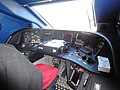
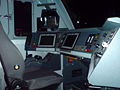
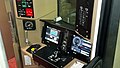
Electronic instrument clusters are being increasingly common features on railway vehicles, in which individual instruments are replaced by various forms of digital readouts. Early uses of instrument clusters often employed LEDs to display analog-type or numeric readings for pressure gauges, electrical gauges, and other displays. They have been increasingly integrated with various cab signalling systems and together with the installation of multi-function displays, have simplified the cab layout and improved user interaction with the engineer.[26]

See also

[edit]

References

[edit]
[edit]
Revisions and contributorsEdit on WikipediaRead on Wikipedia
from Grokipedia
A dashboard is a control panel or visual display that provides essential and operational controls to the user, originally designed as a protective barrier on horse-drawn carriages to shield occupants from mud and debris flung by the horses' hooves, and later evolving into the instrument panel in automobiles and a in for at-a-glance data visualization. The term first appeared in written records in the early , referring to these "dash-boards" on carriages traveling unpaved roads. In the automotive context, the dashboard emerged around 1904 with the advent of mass-produced cars like the , initially serving as a simple structural element before incorporating gauges for speed, fuel, and engine status as vehicles grew more complex. Modern automotive dashboards integrate advanced digital displays, systems, climate controls, safety features, and as of 2025, AI-driven interfaces and heads-up displays to enhance driver interaction while minimizing . They remain central to operation, housing critical instruments such as speedometers, tachometers, and warning lights to ensure safe and informed driving. In computing and , a dashboard is a visual interface that consolidates key performance indicators (KPIs), metrics, and data visualizations—such as charts, graphs, and gauges—into a single, interactive screen to facilitate quick . The concept is often illustrated through analogies to everyday interfaces that similarly deliver critical information at a glance without requiring technical expertise or detailed investigation:
  • Automobile instrument panel: Displays speed, fuel level, engine temperature, and warning lights, enabling drivers to monitor vehicle status in real time while focused on driving.
  • Airplane cockpit: Provides pilots with gauges and displays for altitude, airspeed, fuel, and system status to support immediate situational awareness and control.
  • Fitness tracker or smartwatch: Shows metrics such as steps taken, heart rate, calories burned, and activity summaries in simple visual formats for quick health monitoring.
  • Home thermostat: Indicates current temperature, setpoint, and often energy usage in an easy-to-read display for rapid adjustments.
  • Sports scoreboard: Presents live scores, time remaining, player statistics, and other game data for spectators to follow developments instantly.
These analogies highlight the fundamental role of dashboards across contexts: synthesizing complex data into clear, actionable visual overviews. Originating in the as tools for business analysts using extract-transform-load (ETL) processes to monitor data, these dashboards have evolved into dynamic, platforms with AI-enhanced , accessible to non-technical users and supporting real-time analysis in fields like , marketing, and operations as of 2025. Common types include operational dashboards for live monitoring, strategic ones for high-level overviews, and analytical dashboards for in-depth trend exploration, all prioritizing clarity and relevance to drive actionable insights.

Origins and Etymology

Etymology

The term "dashboard" originated in the context of horse-drawn carriages in the early , referring to a wooden or board fixed at the front to protect occupants from mud, water, or splashed upward by the horses' hooves. This protective function is captured in the word's components: "," derived from around 1300 meaning to strike or splash violently (from or imitative origins), and "board," from bord denoting a flat plank or protective panel. The traces "" in this splashing sense to the violent projection of liquids, aligning with the carriage's environmental hazards. The earliest recorded uses of "dashboard" appear in English literature from the 1810s, with a specific citation in an 1832 article in The Morning Post describing it as a mud-deflecting apron on vehicles. Dictionaries formalized the term around the 1840s: Merriam-Webster notes its first known use in 1842 for a screen on horse-drawn conveyances, while other sources date the entry to 1846 as a carriage component. By the late 19th century, references began appearing in discussions of emerging motor carriages, such as a 1897 U.S. newspaper article. With the advent of automobiles in the early , "dashboard" evolved to describe the instrument panel separating the engine compartment from the area, initially retaining its role in weather protection before incorporating controls and gauges by 1904. This linguistic shift mirrored the physical transition from horse-powered to motorized vehicles, where the panel became integral to driver interface without altering the core etymological meaning of protection against forward "dashing" elements.

Early Automotive Development

The earliest automobile dashboards emerged in the late as adaptations from horse-drawn carriage designs, serving primarily as protective barriers against road splash and debris. In vehicles like Karl Benz's 1886 Patent-Motorwagen and subsequent models around 1890-1900, these were rudimentary wooden or metal panels mounted in front of the driver, often without instrumentation beyond basic or ignition levers. By the , dashboards began incorporating essential gauges to meet growing demands for vehicle monitoring amid increasing road speeds and reliability. Speedometers, patented by Otto Schulze in 1902, became standard equipment around 1910, providing drivers with velocity readings via mechanical eddy-current mechanisms connected to the . Fuel gauges followed suit, with the first dashboard-mounted version appearing on the 1914 , replacing earlier manual methods and using float-based indicators for real-time tank level assessment. The 1920s marked further integration of controls and storage, enhancing dashboard functionality for everyday use. Ignition switches, evolving from simple magneto controls, were commonly key-operated by this decade, allowing secure activation of the electrical system as standardized in models from manufacturers like Ford and Buick. Glove compartments, first introduced as lidded bins around 1915 on the Pierce-Arrow, became widespread in the 1920s, providing enclosed space for maps, tools, and driving gloves while maintaining the panel's protective role. Early dashboards relied on durable materials like varnished for flexibility and weather resistance, or stamped metal for rigidity, both aimed at shielding occupants from , , and heat in open-top vehicles. These choices prioritized affordability and protection over aesthetics, with wood panels often treated to repel moisture. The advent of , exemplified by the 1908 , revolutionized dashboard design by standardizing layouts for efficient driver access to controls and gauges. The Model T's simple wooden dashboard, featuring centralized ignition and throttle levers, was engineered for quick assembly on the moving line, influencing global norms for ergonomic placement and reducing customization variability across millions of units. This approach not only lowered costs but also promoted safer, more intuitive operation as automobiles proliferated.

Core Components and Functions

Instrumentation Features

The core instruments of traditional vehicle dashboards, prevalent from the early through the , provided essential operational data using mechanical and analog mechanisms to ensure driver awareness without electronic dependencies. These instruments formed the foundation of dashboard functionality, evolving from basic speed indicators in the to comprehensive clusters by the mid-20th century, reflecting the initial placement principles established during early automotive development. The , one of the earliest dashboard fixtures, measured vehicle speed via a driven by gearing connected to the transmission or wheels. This cable rotated a within the gauge housing, creating eddy currents in a metal cup that deflected a needle proportional to speed, with based on size and gear ratios. Patented in 1902 by Otto Schulze and standardized in vehicles by 1910, it became ubiquitous as roads and speed limits developed. Adjacent to the , the monitored engine (RPM) using a similar cable-driven system, often linked to the or . The mechanism employed a rotating and drag cup to translate rotational speed into needle movement, aiding manual transmission drivers in optimal shifting. First adapted for automobiles around 1840 from industrial designs by Dietrich Uhlhorn, it appeared routinely in passenger cars by the , particularly in performance models. Fuel gauges operated mechanically through a float arm in the tank connected via wire or linkage to a dashboard rheostat or pointer, where fuel level altered resistance or direct mechanical position to indicate tank capacity. Introduced as dash-mounted units in the 1914 , these gauges provided a visual analog scale, though accuracy varied with tank shape and sloshing. Engine gauges utilized a capillary tube filled with expanding fluid, such as or alcohol, connected from the to a bourdon tube in the gauge that uncoiled with heat, driving the needle across a . This mechanical setup, common by the after earlier external motometers, allowed monitoring of levels to prevent overheating. Integrated with the , the tallied cumulative mileage using gear-driven mechanical counters, advanced by the same transmission cable. The design from 1923 set the standard, with resettable trip odometers added for trip tracking in later models. Auxiliary features supplemented these core instruments with warning lights for critical alerts: oil pressure indicators, activated by a pressure-sensitive switch illuminating a red lamp if levels dropped below safe thresholds (introduced by Ford in 1954); battery charge lights, signaling or generator failure via voltage drop (also from 1954 Ford models); and turn signal indicators, small flashing arrows on the dashboard mirroring external lights, standardized after the 1939 Buick's electric system. Clocks, initially external wind-up units in the 1910s, integrated as mechanical dashboard dials by the 1920s for timekeeping. Radio integration began in 1930 with Galvin Manufacturing's (later ) units, mounted centrally with analog tuning dials and speakers, becoming optional in higher-trim vehicles by the mid-1930s. Layout principles emphasized driver-centric placement, with instruments clustered directly behind the in a semi-circular or rectangular panel to minimize head and eye movement, ensuring quick glances during operation. This analog grouping, often on painted metal or wood panels, prioritized visibility through large, illuminated dials and white-on-black markings, adhering to ergonomic standards emerging in for reduced distraction. Variations existed by vehicle type in the pre-electronic era: sedans featured compact, aesthetically curved clusters with integrated clocks and radios for passenger comfort, as in 1950s Chevrolets; trucks, designed for utility, employed larger, straight-line panels with robust gauges for oil pressure and additional load-related indicators, such as in 1960s , to accommodate commercial demands and vibration resistance up to the 1980s.

Padding and Safety Elements

The introduction of padded dashboards in automobiles during the 1950s and early 1960s marked a significant advancement in occupant protection, aimed at mitigating the risk of head and facial injuries from impacts against hard interior surfaces during crashes. Early prototypes, such as the padded dashboard in the 1948 Tucker Sedan, demonstrated the potential for cushioning to reduce trauma, while subsequent adoption by major manufacturers like Chevrolet in 1956 offered it as an optional feature to address growing concerns from rudimentary crash tests using anthropomorphic dummies developed by Samuel Alderson in the early 1950s. These developments were driven by increasing public and regulatory awareness of interior-related injuries, as pre-1950s vehicles featured rigid steel dashboards that exacerbated blunt force trauma in frontal collisions. Dashboard materials evolved from basic vinyl coverings and foam padding in the mid-20th century to advanced energy-absorbing plastics by the late 1960s, designed to deform controllably upon impact and comply with emerging safety standards. , Federal Motor Vehicle Safety Standard (FMVSS) No. 201, effective for passenger cars on January 1, 1968, established requirements for interior impact protection, mandating that components like dashboards limit deceleration forces to prevent severe , with specific tests using free-motion headform impactors at velocities up to 24 km/h. This standard focused on reducing the risk of lacerations, fractures, and concussions from contact with upper interior surfaces, influencing the widespread use of compliant materials that absorb and distribute energy rather than transfer it directly to occupants. Key safety elements integrated into dashboard designs include collapsible steering columns and concealed airbag compartments, enhancing overall . Following the enactment of FMVSS No. 204 in 1968, collapsible steering columns—engineered to yield and absorb energy in frontal impacts—became standard, often mounting directly to the dashboard structure to prevent driver impalement while maintaining steering integrity under normal conditions. By the , passenger-side modules were routinely embedded within dashboard panels, deploying rapidly to cushion occupants; this integration became commonplace after initial implementations in models like the 1990 vehicles, with full mandates under FMVSS No. 208 by 1999. These features surround the core , providing a protective envelope during accidents. Regulatory evolution extended these protections globally, with European Economic Commission (ECE) Regulation No. 21 on interior fittings, originally established in the 1970s, requiring dashboards and adjacent components to minimize protrusions and ensure energy absorption to limit injury severity. By the , international harmonization under the ECE's 1998 Agreement—effective for the in 2000 and signed by the in 1998—facilitated unified global standards, emphasizing prevention of through consistent testing protocols for interior impacts across regions. This framework promoted the adoption of advanced materials and designs, reducing variability in safety performance worldwide while aligning with ongoing updates to FMVSS and ECE rules.

Design and Aesthetics

In the 1950s and 1960s, dashboard designs in luxury automobiles prominently featured chrome and accents to convey status and affluence amid . models exemplified this trend with extensive chrome trim on instrument panels and surrounding elements, creating a gleaming, opulent appearance that symbolized prestige and technological aspiration. Stained hardwoods like or were often incorporated for a handcrafted, elegant touch in high-end variants, enhancing the perception of exclusivity. The 1970s and 1980s saw a pivot toward minimalist aesthetics driven by the global fuel crisis, which emphasized and cost reduction in vehicle production. Angular designs constructed from injection-molded plastics replaced earlier ornate materials, resulting in integrated, flat dashboards that prioritized simplicity and space utilization over decoration. This shift reflected broader cultural moves toward practicality, with boxy, utilitarian layouts becoming standard in response to economic constraints and safety regulations. By the 1990s and 2000s, retro-futurism influenced dashboard styling, incorporating curved panels and backlit gauges to merge nostalgic curves with forward-looking appeal. Designers like at Ford championed this approach, as seen in the fifth-generation Mustang's soft-surfaced layouts and central chronograph-inspired clusters that evoked classic forms while suggesting innovation. Pop culture, particularly action films such as the Fast and Furious series starting in 2001, amplified these trends by popularizing customized, high-contrast aesthetics among enthusiasts, blending extravagance with futuristic motifs. Regional variations highlighted cultural priorities in dashboard layout, with American muscle cars favoring bold, expansive designs like the sweeping, chrome-laden panels of 1960s Chevrolets to complement their raw power and visual drama. In contrast, Japanese manufacturers emphasized compact, efficient configurations in models from and , featuring reserved, functional arrangements that optimized space for urban driving and reliability without excess ornamentation.

Ergonomic Considerations

Ergonomic considerations in dashboard design prioritize human-centered principles to enhance safety, comfort, and by minimizing physical and cognitive strain during operation. Key principles include line-of-sight alignment, which ensures displays and controls are positioned within approximately 30 degrees of the driver's normal to reduce time and effort, as recommended in ISO 15008 for in-vehicle visual ergonomics. Reach envelopes define accessible zones for controls, typically within 10 to 20 cm less than maximum arm extension to prevent overreaching and fatigue, according to SAE J287 guidelines referenced in Transportation Research Institute reports. Glare reduction techniques, such as anti-reflective coatings and sufficient luminance contrast ratios, are employed to maintain readability under varying lighting conditions, per NHTSA human factors design guidance. Historical adaptations in the focused on standardizing control placements to minimize driver distraction following the original issuance of Federal Motor Vehicle Safety Standard (FMVSS) No. 101 in 1967, which required familiar locations for essential controls like turn signals and wipers. This era also saw the integration of HVAC vents and early knobs into centralized dashboard zones, allowing drivers to adjust climate and audio without diverting attention from the road, as evidenced in reports from the period. To reduce driver workload, dashboards employ strategies that differentiate critical controls—such as the centrally located for constant monitoring—from secondary ones like adjustments placed peripherally to limit interactions during high-demand driving. This approach aligns with NHTSA guidelines for managing , where primary tasks receive prime visibility and accessibility to minimize cognitive demands. By the 2020s, dashboard designs increasingly incorporate adaptive layouts to accommodate diverse body types and aging drivers, with adjustable seating interfaces and modular panels that allow for personalized reach and sightline optimizations. As of November 2025, trends include minimalist digital interfaces with large central screens, heads-up displays (HUD) for navigation, AI-driven personalization, and sustainable materials like recycled composites, enhancing inclusivity and reducing environmental impact while prioritizing legibility and control access for older drivers. These adaptations build on elements like padded surfaces to prevent injury while prioritizing inclusive for broader user demographics.

Electronic Instrument Clusters

Historical Evolution

The development of electronic instrument clusters began in the late 1970s, initially confined to luxury automobiles as a novel alternative to analog gauges. The 1978 marked one of the earliest production implementations, featuring a digital dashboard with vacuum fluorescent displays that electronically rendered speed and other essential metrics on an elevating screen limited to two-digit MPH readouts. This innovation, paired with the vehicle's body and engine computer modules, represented a significant step toward integrating computational controls with driver interfaces in high-end models. Similarly, the , which entered series production in 1976 with first deliveries in 1979, introduced a fully functional digital cluster displaying gear selection, fuel levels, oil pressure, and speed across multiple dedicated screens, emphasizing futuristic aesthetics in luxury engineering. During the 1990s, electronic clusters expanded into broader applications, including experimental electric vehicles and partial digital hybrids in mass-market cars, reflecting growing semiconductor affordability and design experimentation. ' 1990 Impact concept car demonstrated an advanced digital dashboard as part of its aerodynamic electric , directly influencing the 1996 EV1 production model, which incorporated a centrally mounted all-digital LED cluster for range, speed, and energy monitoring to suit EV-specific needs. This period also saw incremental adoption in conventional vehicles, such as the 1999 S2000's Formula 1-inspired digital arcing to 9,000 RPM, blending electronic precision with performance-oriented layouts in sports cars. The and accelerated full digital integration, spurred by thinner displays and intuitive software, transitioning clusters from supplementary tools to primary information hubs. Audi's Virtual Cockpit, unveiled in the 2014 third-generation TT, pioneered a 12.3-inch high-resolution TFT screen behind the wheel, offering customizable views of , , and to mimic . Concurrently, the 2012 introduced a compact 4-inch digital instrument cluster forward of the driver, paired with a 17-inch central , which redefined EV interfaces by prioritizing and real-time data visualization over traditional dials. Into the 2020s, electronic clusters have evolved to support autonomous driving previews, particularly in EVs, filling gaps in post-2010 designs with enhanced connectivity for advanced driver-assistance systems. Tesla's Model S iterations from 2012 onward have iteratively refined this setup for autonomy integration, such as displaying lane markings and blind-spot alerts, while platforms like Nvidia's 2023 Drive Hyperion 8 enable high-resolution clusters tailored for self-driving s, projecting real-time environmental data to facilitate human oversight during transitions. These advancements have largely supplanted analog predecessors with versatile, software-updatable digital systems across vehicle segments.

Key Technologies

Electronic instrument clusters in vehicles rely on advanced display technologies to present critical information such as speed, fuel levels, and navigation data. Liquid crystal displays (LCDs) dominate due to their reliability and cost-effectiveness, with subtypes including twisted nematic (TN) for basic monochrome or low-color applications, in-plane switching (IPS) for wider viewing angles and better color accuracy suitable for dashboard viewing from multiple seats, and thin-film transistor (TFT) LCDs that enhance pixel control for higher resolution and faster response times in dynamic environments. Organic light-emitting diode () displays are increasingly adopted for their self-emissive pixels, offering superior contrast, deeper blacks, and flexibility for curved designs in premium clusters. LCD backlighting has transitioned from cold cathode fluorescent lamps (CCFL), which provided uniform illumination but required high voltage and generated heat, to light-emitting diode (LED) methods that deliver energy efficiency, longer lifespan, and instant-on capabilities essential for automotive safety and power management. LED backlights, often edge-lit or direct-lit, support dimming ratios up to 10,000:1, enabling adaptive brightness in varying lighting conditions inside vehicles. Data integration in electronic dashboards occurs via the Controller Area Network ( protocol, a robust, multi-master standard that allows electronic control units (ECUs) to share real-time information like engine status and vehicle speed with the cluster without a central host. Introduced in the and standardized by ISO 11898, CAN bus ensures fault-tolerant transmission at speeds up to 1 Mbps, critical for synchronizing dashboard readouts with vehicle systems. From the , touchscreens became integral to dashboard interfaces, often incorporating haptic feedback to simulate physical button presses through vibrations or textures, reducing distraction by providing tactile without visual . A 2011 study demonstrated that combining visual cues with haptic responses in automotive touchscreens lowered visual workload by up to 20% and improved task performance in simulated driving scenarios. Sensors enhance dashboard functionality through GPS modules for location tracking and forward-facing cameras that enable (AR) navigation overlays, projecting turn-by-turn directions directly onto live road views displayed on the cluster. These integrations process data from inertial measurement units and cameras to align virtual elements with real-world scenery, improving route adherence in complex urban settings. Software platforms like Android Auto and Apple CarPlay facilitate seamless smartphone mirroring to dashboards, allowing voice-activated access to maps, media, and calls via the vehicle's touchscreen or heads-up display projection. Android Auto, for instance, uses USB or wireless connections to render apps in a car-optimized interface, integrating with the CAN bus for vehicle-specific data like speed limits. By 2025, AI-driven reconfigurable displays represent a significant upcoming advancement, as announced for the 2026 Rivian R2 electric SUV, where machine learning algorithms dynamically adjust layouts, themes, and content based on driver preferences and context, incorporating AR elements for enhanced situational awareness. In 2025, advancements include wider integration of AR head-up displays with clusters for overlaying navigation and safety data, alongside microLED displays offering superior brightness and longevity compared to OLED. This system leverages cloud-connected AI to personalize interfaces in real-time, such as shifting from navigation-focused views during highway driving to entertainment modes in traffic.

Advantages and Disadvantages

Electronic instrument clusters offer several advantages over traditional analog systems, primarily through their flexibility and integration capabilities. One key benefit is the customizable layouts, which allow drivers to adjust display configurations, prioritize information such as navigation or fuel efficiency, and adapt interfaces to personal preferences or driving conditions. This customization is enabled by software-driven displays that can reconfigure gauges, colors, and layouts in real-time without hardware changes. Additionally, electronic clusters significantly reduce vehicle weight compared to analog counterparts by eliminating mechanical components like needles and linkages, contributing to improved fuel efficiency and overall performance. Another major advantage lies in the seamless integration with (OBD) systems, providing real-time alerts for issues such as low tire pressure, engine faults, or maintenance needs directly on the display. This connectivity allows for proactive monitoring and , enhancing vehicle reliability and driver safety by delivering instant notifications without requiring separate tools. Regarding energy efficiency, electronic clusters utilizing LED backlighting consume substantially less power—up to 75% less—than traditional incandescent bulbs used in analog setups, reducing and supporting longer battery life in electric vehicles. Despite these benefits, electronic instrument clusters present notable disadvantages, particularly in terms of and reliability. Repair costs are considerably higher than for analog clusters, with screen replacements or full module fixes often ranging from $500 to $2,000 due to specialized components and programming requirements. These systems are also more vulnerable to electrical failures, such as software glitches or power surges, which can render the entire display inoperable and strand drivers without critical information. Cybersecurity represents a growing concern for connected electronic clusters in the , as integrated networks expose them to hacking risks, including remote access to controls or via vulnerabilities in and systems. For instance, attackers can exploit OBD-II ports or wireless interfaces to manipulate dashboards or disrupt operations, underscoring the need for robust and over-the-air updates. Furthermore, complex menus and interactive features in digital clusters heighten risks, with NHTSA guidelines highlighting that visual-manual interactions can divert driver attention for extended periods, increasing crash potential. On the sustainability front, while electronic clusters promote recyclable e-waste through modular designs that facilitate component recovery—such as separating circuit boards and screens for —they contribute to broader automotive e-waste challenges if not properly managed at end-of-life. Efforts to enhance recyclability include using sustainable and adhering to regulations like the EU's WEEE directive, which aims to minimize environmental impact from discarded electronics. Key technologies like TFT-LCD displays and integration underpin these advantages but also amplify the associated vulnerabilities when not secured.

Specialized Applications

Railway Dashboards

Railway dashboards in locomotives and trains are designed to provide engineers with critical operational data and controls, prioritizing safety and efficiency in high-speed, long-haul environments. Core elements include speed indicators, which must display velocity with an accuracy of ±3 mph for speeds between 10 and 30 mph and ±5 mph for speeds above 30 mph, ensuring clear visibility from the engineer's position under all lighting conditions as required by Federal Railroad Administration (FRA) standards in 49 CFR § 229.117. Throttle controls regulate locomotive power output and are integrated with event recorders that log positions for at least 48 hours to support accident investigations, per FRA regulations in 49 CFR § 229.135. Brake pressure gauges monitor air brake systems, with accuracy limits of 5% or 3 psi—whichever is less—and must be conveniently readable from the engineer's seat, subjected to testing during periodic inspections every 92 days and annual inspections, as outlined in 49 CFR §§ 229.23 and 229.53. The layout of these elements adheres to FRA guidelines in 49 CFR Part 229, emphasizing ergonomic placement to minimize distraction while maintaining unobstructed views of the track, without prescribing rigid configurations beyond accessibility requirements. The evolution of railway dashboards began in the steam era with rudimentary mechanical levers for and operation, alongside basic pressure gauges and manual signaling devices that relied heavily on physical interaction and telegraphic coordination. By the mid-20th century, electronic components like integrated circuits began replacing purely mechanical systems, improving precision in . Post-2000s advancements accelerated with the mandated implementation of (PTC) systems, following the 2008 Rail Safety Improvement Act, which digitized dashboards to integrate GPS, wireless communication, and automated enforcement of speed limits and signal compliance across U.S. Class I railroads by 2020. Safety features in railway dashboards distinguish themselves through a strong focus on operator vigilance and track integration, incorporating deadman switches and vigilance control systems (VCS) that continuously monitor the engineer's alertness once the train exceeds 10 km/h. These devices, often implemented as foot pedals or handle-mounted buttons within the control panel, initiate escalating alerts—a blinking after an initial timeout, followed by an audible alarm, and emergency braking if no response is given—ensuring automatic intervention in cases of incapacitation. Unlike automotive dashboards, which prioritize vehicle-centric metrics like and engine temperature, railway panels emphasize track signaling, with VCS modules linking directly to wayside signal systems for real-time hazard detection and compliance with standards like EN 50126 for (SIL) 2. In modern implementations as of 2025, railway dashboards increasingly incorporate AI-powered predictive maintenance displays, leveraging real-time streams from components like wheels and air systems to forecast failures with over 98% F-measure accuracy using models such as Adaptive classifiers. These displays feature interactive visualizations, including charts and explanations of anomalies, integrated into the control panel for proactive alerts, as demonstrated in systems like those deployed on Metro do Porto. Such AI enhancements, supported by protocols, enable dashboards to process at rates exceeding 58 samples per second, transforming reactive maintenance into a predictive framework aligned with global railway efforts. The development of electronic instrument clusters in parallel sectors has influenced this railway by providing scalable display technologies for complex .

Aviation and Marine Variants

In aviation, the airplane cockpit functions as a dashboard, providing pilots with real-time monitoring of key flight parameters such as altitude, speed, fuel level, and system status, enabling quick assessments and decisions in dynamic flight conditions. Dashboard designs have evolved significantly with the adoption of glass cockpits featuring Electronic Flight Instrument Systems (EFIS) starting in the 1980s, replacing traditional analog gauges with digital displays for enhanced situational awareness and reduced pilot workload. The Boeing 777 exemplifies this shift, utilizing a fully integrated EFIS with large LCD screens that consolidate critical data into primary flight displays (PFDs) showing altimeters for altitude monitoring, attitude indicators for orientation relative to the horizon, and optional heads-up display (HUD) integrations that project essential flight information onto the windshield for pilots to view without looking down. These systems adapt core automotive-inspired instrumentation principles, such as centralized monitoring, to the high-altitude, three-dimensional navigation demands of flight, prioritizing precision in speed, heading, and vertical profiles. Marine dashboards, configured as bridge consoles, integrate for collision avoidance, GPS for precise positioning, and engine monitors for real-time propulsion diagnostics, forming an interconnected setup that supports navigation in dynamic oceanic environments. These consoles adhere to (IMO) standards for waterproofing, often meeting IP65 or higher ratings to withstand exposure to saltwater and humidity, while emphasizing vibration resistance through ruggedized components compliant with IEC 60945 environmental tests to endure constant ship motion and rough seas. Unlike aviation's compact cockpits, marine designs facilitate multi-crew operations across expansive bridges, with displays optimized for visibility under varying lighting conditions. Key differences between and marine variants stem from their operational contexts: dashboards incorporate redundant systems, such as duplicate EFIS channels and backup power supplies, to ensure operation and mitigate risks in unforgiving aerial environments where single failures could be catastrophic. In contrast, marine bridges employ modular panels that allow flexible reconfiguration for collaboration, enabling watch officers, navigators, and engineers to access shared interfaces simultaneously during maneuvers or emergencies. By 2025, emerging aviation trends in electric vertical takeoff and landing (eVTOL) vehicles for urban air mobility feature intelligent cockpit dashboards that blend EFIS with AI-driven predictive analytics and augmented reality overlays, streamlining pilot interfaces for short-hop, low-altitude flights amid dense cityscapes. Similarly, autonomous ship bridges incorporate remote monitoring capabilities, allowing shore-based operators to oversee vessel systems via high-fidelity video feeds and automated alerts, reducing onboard crew needs while maintaining IMO-compliant safety protocols. These advancements highlight a convergence toward digital redundancy and modularity tailored to each domain's unique hazards.

References

Add your contribution
Related Hubs
User Avatar
No comments yet.