Hubbry Logo
logo
Disaster
Community hub

Disaster

logo
0 subscribers
Read side by side
from Wikipedia

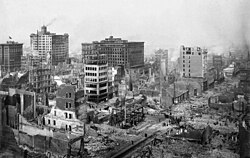
Ruins from the 1906 San Francisco earthquake, one of the worst disasters in the history of the United States

A disaster is an event that causes serious harm to people, buildings, economies, or the environment, and the affected community cannot handle it alone.[1][2][better source needed] Natural disasters like avalanches, floods, earthquakes, and wildfires are caused by natural hazards.[3] Human-made disasters like oil spills, terrorist attacks and power outages are caused by people. Nowadays, it is hard to separate natural and human-made disasters because human actions can make natural disasters worse.[4][5][6] Climate change also affects how often disasters due to extreme weather hazards happen.

Disasters usually hit people in developing countries harder than people in wealthy countries. Over 95% of deaths from disasters happen in low-income countries, and those countries lose a lot more money compared to richer countries. For example, the damage from natural disasters is 20 times greater in developing countries than in industrialized countries.[7][8] This is because low-income countries often do not have well-built buildings or good plans to handle emergencies.

To reduce the damage from disasters, it is important to be prepared and have fit for purpose infrastructure. Disaster risk reduction (DRR) aims to make communities stronger and better prepared to handle disasters. It focuses on actions to reduce risk before a disaster occurs, rather than on response and recovery after the event. DRR and climate change adaptation measures are similar in that they aim to reduce vulnerability of people and places to natural hazards.

When a disaster happens, the response includes actions like warning and evacuating people, rescuing those in danger, and quickly providing food, shelter, and medical care. The goal is to save lives and help people recover as quickly as possible. In some cases, national or international help may be needed to support recovery. This can happen, for example, through the work of humanitarian organizations.

Definitions

[edit]
Painting of the Cathedral and the Academy building after the Great Fire of Turku, by Gustaf Wilhelm Finnberg, 1827

The UN defines a disaster as "a serious disruption of the functioning of a community or a society at any scale".[9]: 13  It results from hazards in places where people live in exposed or vulnerable conditions. Some human failures make communities vulnerable to climate hazards. These are poor planning or development, or a lack of preparation.[10]

Disasters are events that have an effect on people. A hazard that overwhelms or injures a community is considered a disaster.[11] The international disaster database EM-DAT defines a disaster as “a situation or event that overwhelms local capacity, necessitating a request for external assistance at the national or international level; it is an unforeseen and often sudden event that causes great damage, destruction and human suffering.”[12] The effects of a disaster include all human, material, economic and environmental losses and impacts.[9]: 13 

UNDRO (1984) defined a disaster in a more qualitative fashion as:[13] "an event, concentrated in time and space, in which a community undergoes severe danger and incurs such losses to its members and physical appurtenances that the social structure is disrupted and the fulfilment of all or some of the essential functions of the society is prevented." Like other definitions this looks beyond the social aspects of the disaster impacts. It also focuses on losses. This raises the need for emergency response as an aspect of the disaster.[14] It does not set out quantitative thresholds or scales for damage, death, or injury.[citation needed]

A study in 1969 defined major disasters as conforming to the following criteria, based on the amount of deaths or damage:[14][15] At least 100 people dead, at least 100 people injured, or at least $1 million damage. This definition includes indirect losses of life caused after the initial onset of the disaster. These could be the effects of diseases such as cholera or dysentery arising from the disaster. This definition is still commonly used. However it is limited to the number of deaths, injuries, and damage in money terms.[14]

Types

[edit]

The scale of a disaster matters. Small-scale disasters only affect local communities but need help beyond the affected community. Large-scale disasters affect wider society and need national or international help.[9]

It is usual to divide disasters into natural or human-made. Recently the divide between natural, man-made and man-accelerated disasters has become harder to draw.[4][16][6] Some manufactured disasters such as smog and acid rain have been wrongly attributed to nature.[17]

[edit]

Disasters with links to natural hazards are commonly called natural disasters. However experts have questioned this term for a long time.[18]

Disasters with links to natural hazards
Example Profile
Avalanche The sudden, drastic flow of snow down a slope, occurring when either natural triggers, such as loading from new snow or rain, or artificial triggers, such as explosives or backcountry skiers.
Blizzard A severe snowstorm characterized by very strong winds and low temperatures
Earthquake The shaking of the Earth's crust, caused by underground volcanic forces of breaking and shifting rock beneath the Earth's surface
Fire (wild) Fires that originate in uninhabited areas and which pose the risk to spread to inhabited areas (see also Wildfire § Climate change effects)
Flood Flash flooding: Small creeks, gullies, dry streambeds, ravines, culverts or even low-lying areas flood quickly (see also Effects of climate change)
Freezing rain Rain occurring when outside surface temperature is below freezing
Heat wave A prolonged period of excessively hot weather relative to the usual weather pattern of an area and relative to normal temperatures for the season (see also Effects of climate change § Heat waves and temperature extremes).
Landslide Geological phenomenon which includes a range of ground movement, such as rock falls, deep failure of slopes and shallow debris flows
Lightning strike An electrical discharge caused by lightning, typically during thunderstorms
Limnic eruption The sudden eruption of carbon dioxide from deep lake water
Tornado A violently rotating column of air caused by the convergence of an updraft of warm air and a downdraft of cold air
Tropical cyclone Rapidly rotating storm system characterized by a low-pressure center, a closed low-level atmospheric circulation, strong winds, and a spiral arrangement of thunderstorms that produce heavy rain and squalls (see also Tropical cyclones and climate change)
Tsunami A series of waves hitting shores strongly, mainly caused by the displacement of a large volume of a body of water, typically an ocean or a large lake, usually caused by earthquakes, volcanic eruptions, underwater explosions, landslides, glacier calvings, meteorite impacts and other disturbances above or below water
Volcanic eruption The release of hot magma, volcanic ash and/or gases from a volcano
Economic loss risk for six natural disasters: tropical cyclones, droughts, earthquakes, floods, landslides, and volcanoes.

A natural disaster is the very harmful impact on a society or community brought by natural phenomenon or hazard. Some examples of natural hazards include avalanches, droughts, earthquakes, floods, heat waves, landslides - including submarine landslides, tropical cyclones, volcanic activity and wildfires.[19] Additional natural hazards include blizzards, dust storms, firestorms, hails, ice storms, sinkholes, thunderstorms, tornadoes and tsunamis.[19]

A natural disaster can cause loss of life or damage property. It typically causes economic damage. How bad the damage is depends on how well people are prepared for disasters and how strong the buildings, roads, and other structures are.[20]

Scholars have argued the term "natural disaster" is unsuitable and should be abandoned.[21] Instead, the simpler term disaster could be used. At the same time, the type of hazard would be specified.[22][23][24] A disaster happens when a natural or human-made hazard impacts a vulnerable community. It results from the combination of the hazard and the exposure of a vulnerable society.

Unrelated to natural hazards

[edit]
Airplane crashes and terrorist attacks are examples of man-made disasters: they kill and injure people, destroy and damage property, and cause pollution. The pictured example is the September 11 attacks in 2001 at the World Trade Center in New York City.

Human-made disasters are serious harmful events caused by human actions and social processes. Technological hazards also fall into this category. That is because they result in human-instigated disasters. Human-made hazards are sometimes called anthropogenic hazards.[9]: 18  Examples include criminality, social unrest, crowd crushes, fires, transport accidents, industrial accidents, power outages, oil spills, terrorist attacks, and nuclear explosions/nuclear radiation.[25] Catastrophic climate change, nuclear war, and bioterrorism also fall into this category.

Climate change and environmental degradation are sometimes called socio-natural hazards. These are hazards involving a combination of both natural and human factors.[9] : 18  All disasters can be regarded as human-made, because of failure to introduce the right emergency management measures.[26]

Famines may be caused locally by drought, flood, fire or pestilence. In modern times there is plenty of food globally. Long-lasting local shortages are generally due to government mismanagement, violent conflict, or an economic system that does not distribute food where needed.[27]

Disasters without links to natural hazards
Disaster Profile
Bioterrorism The intentional release or dissemination of biological agents as a means of coercion
Civil unrest A disturbance caused by a group of people that may include sit-ins and other forms of obstructions, riots, sabotage and other forms of crime, and which is intended to be a demonstration to the public and the government, but can escalate into general chaos
Fire (urban) Even with strict building fire codes, people still perish in fires
Hazardous material spills The escape of solids, liquids, or gases that can harm people, other living organisms, property or the environment, from their intended controlled environment such as a container.
Nuclear and radiation accidents An event involving the significant release of radioactivity to the environment or a reactor core meltdown and which leads to major undesirable consequences to people, the environment, or the facility
Power failure Caused by summer or winter storms, lightning or construction equipment digging in the wrong location

Others

[edit]

Complex disasters, where there is no single root cause, are more common in developing countries. A specific hazard may also spawn a secondary disaster that increases the impact. A classic example is an earthquake that causes a tsunami. This results in coastal flooding, damaging a nuclear power plant on the coast. The Fukushima nuclear disaster is a case in point. Experts examine these cascading events to see how risks and impacts can amplify and spread. This is particularly important given the increase in climate risks.[28]: 143–145 

Some researchers distinguish between recurring events like seasonal flooding and unpredictable one-off events.[29] Recurring events often carry an estimate of how often they occur. Experts call this the return period.

Impacts

[edit]

The effects of a disaster include all human, material, economic and environmental losses and impacts.[9]: 13 

The Emergency Events Database (EM-DAT) records statistics about disasters related to natural hazards. For 2023, EM-DAT recorded 399 disasters, which was higher than the 20-year average of 369.[12]

Economic losses

[edit]

Between 2016 and 2020 the total reported economic losses amounted to $293 billion. This figure is likely to be an underestimation. It is very challenging to measure the costs of disasters accurately, and many countries lack the resources and technical capacity to do so.[30]: 50  Over the 40-year period from 1980 to 2020 losses were estimated at $5.2 trillion.

Human impacts

[edit]

In 2023, natural hazard-related disasters resulted in 86,473 fatalities and affected 93.1 million people.[12] Whilst the number of deaths was much higher than the 20-year average of 64,148, the number affected was much lower than the 20-year average of 175.5 million.

According to a UN report, 91% of deaths from hazards from 1970 to 2019 occurred in developing countries.[31] These countries already have higher vulnerability and lower resilience to these events, which exacerbates the effects of the hazards.

Effects of climate change

[edit]

Hazards such as droughts, floods, and cyclones are naturally occurring phenomena.[32] However, climate change has caused these hazards to become more unreliable, frequent and severe. They thus contribute to disaster risks. Countries contributing most to climate change are often at the lowest risk of feeling the consequences.[33] As of 2019, countries with the highest vulnerability per capita release the lowest amount of emissions per capita, and yet still experience the most heightened droughts and extreme precipitation.[33]

Prevention and response

[edit]

Disaster risk reduction

[edit]
Disaster risk reduction progress score for some countries in 2011. The score of 5 is best. Assessments include four indicators that reflect the degree to which countries have prioritized disaster risk reduction and the strengthening of relevant institutions.[34]

Disaster risk reduction aims to make disasters less likely to happen. The approach, also called DRR or disaster risk management, also aims to make disasters less damaging when they do occur. DRR aims to make communities stronger and better prepared to handle disasters. In technical terms, it aims to make them more resilient or less vulnerable. When DRR is successful, it makes communities less the vulnerable because it mitigates the effects of disasters.[35] This means DRR can make risky events fewer and less severe. Climate change can increase climate hazards. So development efforts often consider DRR and climate change adaptation together.[36]

It is possible to include DRR in almost all areas of development and humanitarian work. People from local communities, agencies or federal governments can all propose DRR strategies. DRR policies aim to "define goals and objectives across different timescales and with concrete targets, indicators and time frames."[35]: 16 

Disaster response

[edit]
Relief camp at Bhuj after the 2001 Gujarat earthquake

Disaster response refers to the actions taken directly before, during, or immediately after a disaster. The objective is to save lives, ensure health and safety, and meet the subsistence needs of the people affected.[37]: 16  It includes warning and evacuation, search and rescue, providing immediate assistance, assessing damage, continuing assistance, and the immediate restoration or construction of infrastructure. An example of this would be building provisional storm drains or diversion dams. Emergency response aims to provide immediate help to keep people alive, improve their health and support their morale. It can involve specific but limited aid, such as helping refugees with transport, temporary shelter, and food. Or it can involve establishing semi-permanent settlements in camps and other locations. It may also involve initial repairs to damage to infrastructure, or diverting it.

The response phase focuses on keeping people safe, preventing the next disasters and meeting people's basic needs until more permanent and sustainable solutions are available. The governments where the disaster has happened have the main responsibility for addressing these needs. Humanitarian organisations are often present in this phase of the disaster management cycle. This is particularly so in countries where the government does not have the resources for a full response.

Etymology

[edit]

The word disaster is derived from Middle French désastre which comes from Old Italian disastro. This in turn comes from the Ancient Greek pejorative prefix δυσ- (dus-) "bad"[38] and ἀστήρ (aster), "star".[39] So the word disaster ("bad star" in Greek) comes from an astrological sense of a calamity blamed on the position of planets.[40]

See also

[edit]

References

[edit]
[edit]
Revisions and contributorsEdit on WikipediaRead on Wikipedia
from Grokipedia
A disaster is a serious disruption of the functioning of a community or a society at any scale due to hazardous events interacting with conditions of exposure, vulnerability, and capacity, leading to human, material, economic, and environmental losses and impacts that exceed the affected community's ability to cope using its own resources.[1] Disasters encompass both natural hazards—such as earthquakes, floods, storms, and droughts—and technological incidents arising from industrial failures, chemical spills, or infrastructure collapses, with classification systems distinguishing geophysical, meteorological, hydrological, biological, and climatological subgroups for natural events alongside human-induced categories.[2] Empirical records from the Emergency Events Database (EM-DAT) document over 27,000 mass disasters globally since 1900, with approximately 400 events annually in recent decades causing 40,000 to 50,000 deaths per year and economic damages totaling hundreds of billions of dollars, though normalized per capita losses have declined due to improved mitigation despite rising absolute figures from population growth and urbanization.[3][4] Causal analysis reveals that mere hazardous phenomena do not equate to disasters; outcomes depend critically on pre-existing societal factors like poor land-use planning, insufficient engineering standards, and limited early warning systems, which amplify impacts beyond what isolated events would produce.[5] While global disaster frequency has increased in reporting—partly from enhanced detection and inclusion criteria—death tolls have fallen sharply since the mid-20th century, attributable to advancements in forecasting, resilient infrastructure, and response coordination rather than any inherent reduction in geophysical forces.[4] Societal mismanagement, particularly in agriculture and resource allocation, has precipitated famines as human-induced disasters via policy-induced scarcity. The Great Chinese Famine of 1959–1961, driven by the Great Leap Forward's forced collectivization, exaggerated production reports, and diversion of food for exports and urban rations, caused 15 to 55 million deaths from starvation and related diseases, with mortality rates exceeding 20% in some provinces due to communal dining failures and suppression of local knowledge.[6] Likewise, the Soviet famine of 1932–1933, including the Holodomor in Ukraine, resulted from Stalin's collectivization policies, excessive grain procurements, and border closures preventing aid, leading to 3.5 to 7 million deaths primarily from engineered food shortages rather than drought alone.[7] These cases illustrate how ideological priorities and centralized control distort market signals and empirical feedback, converting manageable shortages into existential crises.

Compound and Cascading Disasters

Compound disasters occur when multiple hazards interact simultaneously or in close succession, such as concurrent heavy rainfall and storm surges, thereby amplifying overall impacts beyond the sum of individual events.[8] Cascading disasters, in contrast, involve sequential effects where an initial hazard triggers secondary events, like an earthquake inducing landslides that block rivers and cause downstream flooding, with impacts escalating through interconnected systems.[9] These phenomena highlight vulnerabilities in modern infrastructure, where dependencies—such as power grids reliant on transportation networks—propagate failures, rather than relying solely on the intensity of the primary hazard.[10] In 2024, Hurricanes Helene and Milton exemplified compound effects in the United States, where Helene's intense rainfall in September saturated soils across the Southeast, leading to exacerbated flooding from Milton's landfall in October; this interaction strained recovery efforts, resulting in over $200 billion in combined damages from the two storms alone as part of 27 billion-dollar weather disasters that year.[11] Similarly, the COVID-19 pandemic demonstrated cascading dynamics, initiating health crises that disrupted global supply chains and triggered economic contractions, with China's early 2020 lockdowns causing a 6-9% drop in its GDP that rippled to reduced U.S. exports and a global recession marking the largest economic downturn since the Great Depression.[12][13] Such sequences underscore how initial disruptions in one domain, like public health, overload adjacent systems, including finance and logistics, independent of the original event's scale. Trends indicate rising frequency of these interactions due to urbanization and infrastructure interlinkages, with Munich Re data showing weather-related catastrophes accounting for 88% of global losses in the first half of 2025, often involving compounded flooding and storms amid climate variability.[14] Analysis of events from 1900-2023 reveals that nearly 20% of disasters now qualify as multi-hazard, with cascading chains disproportionately increasing human and economic tolls through amplified systemic failures.[15] This complexity demands modeling that accounts for dependency networks, as isolated hazard assessments underestimate risks in densely connected societies.[16]

Risk Factors and Vulnerabilities

Exposure and Physical Vulnerabilities

Exposure to disasters is amplified by the concentration of populations and assets in hazard-prone locations, such as coastal zones and urban centers where density heightens potential impacts. Globally, between 750 million and 1.1 billion people resided in low-elevation coastal zones (≤10 m above sea level) in 2015, facing risks from floods, storms, and tsunamis due to proximity to water bodies. Approximately 1.81 billion individuals, or 23% of the world population, are exposed to fluvial flooding with depths exceeding 0.15 meters, with urban areas in the Global South exhibiting disproportionately higher exposures compared to the Global North. In the first half of 2025, natural disasters inflicted overall economic losses of $131 billion worldwide, predominantly from weather events affecting densely populated regions like the United States.[17] Physical vulnerabilities stem from infrastructure and landscape features that exacerbate hazard effects independent of human behavioral factors. Fragile building structures, such as those lacking reinforcement against seismic activity or high winds, collapse under forces that resilient designs withstand, as evidenced by fragility curves quantifying damage probabilities under varying intensities. Deforestation diminishes soil stability and vegetation cover, increasing surface runoff and landslide susceptibility by reducing water infiltration and root reinforcement, thereby elevating flood peaks in altered watersheds. Topographical features, including steep slopes and low-lying floodplains, inherently channel hazards toward settled areas, compounding risks where development occurs without regard for natural drainage patterns.[18] Geographic Information Systems (GIS) enable precise mapping of these exposures, revealing that a substantial portion of disaster losses—often over 80% in analyzed cases—originates from predefined high-risk zones identifiable through hazard modeling and asset inventories. Satellite-derived datasets and gridded risk assessments delineate global hotspots, facilitating quantification of population and economic elements at risk from multiple hazards. Such tools underscore how locational choices, like urban expansion into seismic or flood-prone terrains, drive disproportionate losses, with empirical analyses showing concentrated vulnerabilities in mapped deciles of multihazard risk.[19][20]

Socioeconomic and Human Factors

Poverty constitutes a primary socioeconomic driver of heightened disaster vulnerability, as low-income households often reside in substandard housing susceptible to hazards and possess limited financial buffers for recovery. Empirical analyses indicate that 89% of individuals exposed to floods globally inhabit low- and middle-income countries, where economic constraints limit investments in resilient infrastructure such as elevated foundations or reinforced structures.[21] In disaster-affected areas, low-income nations record an average mortality rate of 130 deaths per million inhabitants since 2000, attributable to deficiencies in building codes enforcement and access to protective technologies, contrasting sharply with lower rates in high-income settings.[22] These disparities arise not merely from hazard exposure but from modifiable conditions like insufficient savings and informal employment, which curtail personal agency in preempting losses through private mitigation efforts.[23] Governance shortcomings, including institutional corruption, further intensify human vulnerabilities by diverting resources from risk reduction initiatives. Weak regulatory frameworks fail to incentivize market-driven adaptations, such as private insurance uptake, resulting in uncompensated losses that perpetuate economic fragility.[24] Corruption manifests in delays to decision-making and fund allocation for early warning systems, as officials prioritize personal gain over public preparedness, evident in cases where mitigation budgets are embezzled, leaving populations without timely alerts.[25] [26] Such practices erode trust in authorities and discourage community-led resilience measures, favoring narratives of external dependency over internal accountability. Peer-reviewed assessments underscore that these human-induced lapses, rather than inevitable fate, explain disproportionate impacts in corrupt-prone regimes.[27] Cultural and behavioral patterns in vulnerable societies, including overpopulation of hazard-prone informal settlements due to rapid, unplanned urbanization, compound socioeconomic risks by overwhelming local capacities. High population densities in low-income urban areas amplify casualties, as seen in analyses linking density to elevated disaster likelihood independent of political variables.[28] Prolonged dependence on foreign aid exacerbates this by distorting local economies, suppressing incentives for self-reliant entrepreneurship and fiscal strategies that could build enduring buffers against shocks.[29] [30] This reliance fosters cycles of victimhood, undermining the causal role of individual and communal agency in fostering adaptive practices like diversified livelihoods or mutual aid networks, which empirical evidence shows mitigate vulnerability more effectively than aid inflows alone.[31]

Climatic and Environmental Contributors

Climatic factors contribute to disaster risk primarily through variations in temperature, precipitation, and atmospheric circulation patterns that influence the frequency and intensity of hydro-meteorological hazards such as floods, droughts, and storms. Natural climate oscillations, including El Niño-Southern Oscillation (ENSO) and Atlantic Multidecadal Oscillation (AMO), have driven extreme events throughout history, independent of anthropogenic influences. For instance, during the Medieval Warm Period (approximately 900–1300 AD), regions like North America and the Mediterranean experienced megadroughts lasting over 150 years, alongside megafloods upon their abrupt termination, demonstrating that warmer global conditions can amplify aridity and pluvial extremes without elevated atmospheric CO2 levels.[32][33] Similarly, proxy records from Europe indicate slightly more frequent extreme droughts during this warm interval compared to subsequent cooler periods, underscoring the role of internal variability in generating disaster-prone conditions.[34] In contemporary data, the United States recorded 27 billion-dollar weather and climate disasters in 2024, encompassing severe storms, droughts, and wildfires, followed by 14 such events in the first half of 2025 alone, totaling over $101 billion in preliminary damages.[35][36] However, empirical analyses of normalized loss trends—adjusted for economic growth, population increases, and improved reporting—reveal no statistically significant upward signal attributable solely to anthropogenic climate change, as societal exposure and development patterns explain much of the rise in raw event counts and costs.[37] Attribution studies attempting to quantify human-induced warming's role often highlight co-factors like inadequate urban planning and land-use decisions, which exacerbate impacts beyond climatic modulation; for example, increased coastal development amplifies hurricane damages irrespective of marginal intensity shifts from greenhouse gases.[38][39] Environmental contributors, such as gradual shifts in ecosystems and soil integrity, interact with climatic patterns to heighten vulnerabilities, though their effects are secondary to baseline variability. Deforestation and wetland loss reduce natural buffering against floods and erosion, yet these are predominantly human-driven alterations rather than direct climatic outcomes. Peer-reviewed assessments emphasize that while anthropogenic forcing may marginally alter event tails (e.g., slightly intensifying heatwaves), natural variability remains the dominant driver of disaster frequency, with over-attribution to climate change risking neglect of actionable factors like resilient infrastructure.[40][41] Causal analyses grounded in long-term paleoclimate records confirm that pre-industrial warm epochs produced comparable extremes, indicating current risks are modulated rather than fundamentally transformed by recent CO2 increases.[42][37]

Impacts

Human and Health Consequences

Natural and human-induced disasters directly cause significant mortality and morbidity, with an annual average of 40,000 to 50,000 deaths globally from events such as earthquakes, floods, and storms over recent decades.[4] In 2024, reported disasters resulted in 16,753 fatalities, below the long-term average due to fewer mass mortality events, though injuries numbered in the millions across tracked incidents.[43] These figures, drawn from the EM-DAT database, primarily reflect immediate impacts like structural collapses or drowning, but undercount indirect deaths from exposure or trauma in remote areas.[3] Displacement exacerbates human vulnerability, with disasters triggering 45.8 million internal displacements in 2024, the highest recorded annual figure, often leading to overcrowded conditions that amplify health risks.[44] Cumulatively, disasters accounted for 26.4 million new internal displacements in 2023 alone, representing over half of total global internal movements that year.[45] Such mass movements, as tracked by the Internal Displacement Monitoring Centre, disrupt access to shelter, food, and medical care, contributing to elevated rates of malnutrition and chronic illness among affected populations. Secondary health effects dominate long-term morbidity, with disruptions to water, sanitation, and hygiene systems post-disaster facilitating outbreaks of waterborne diseases like cholera and diarrheal illnesses.[46] For instance, earthquakes and floods increase risks of norovirus, salmonellosis, and vector-borne infections due to altered living conditions and service interruptions.[47] Psychological consequences are profound, with meta-analyses indicating post-traumatic stress disorder (PTSD) prevalence ranging from 10% to 50% among survivors, and odds of PTSD elevated 4.5 times within the first year compared to non-exposed groups.[48] These mental health burdens, often underreported in official tallies, stem from trauma exposure and persist for years, compounding physical health declines through mechanisms like immune suppression.[49]

Economic and Infrastructural Losses

Economic losses from disasters encompass direct damage to physical assets and indirect costs from disruptions, with infrastructure bearing a disproportionate share due to its role in economic activity. In 2024, global natural disaster events generated $368 billion in economic losses, surpassing historical averages and driven primarily by U.S. hurricanes Milton and Helene alongside severe convective storms.[50] Insured losses reached $145 billion that year, representing about 39% coverage and exposing a protection gap where uninsured damages—estimated at $223 billion—fall on governments, businesses, and households, often exacerbating fiscal strains through emergency spending and reconstruction debt.[50] [51] Infrastructure vulnerabilities amplify these losses through cascading failures, where initial damage to critical systems like power grids and transportation networks propagates broader economic downtime. For example, Hurricane Helene in September 2024 inflicted $75 billion in total damages, including extensive power outages affecting millions and disrupting supply chains across the southeastern U.S., with restoration costs compounded by interdependent failures in water and communication systems.[52] Similarly, the 2021 Texas winter storm caused $130 billion in damages, predominantly from grid collapses that halted industrial operations and transportation, illustrating how under-resilient energy infrastructure converts localized events into widespread economic paralysis.[53] Empirical data on insured versus total losses underscore market inefficiencies, such as low penetration in developing regions and rising premiums deterring coverage, leading to recurrent public bailouts. Swiss Re's analysis indicates that only 43% of global economic losses from natural catastrophes were insured in recent years, with uninsured portions disproportionately impacting infrastructure in high-exposure areas like coastal zones and urban centers.[54] Over the past 15 years, natural disasters have inflicted nearly $200 billion in average annual losses to global infrastructure alone, highlighting the need for enhanced resilience investments to mitigate escalating fiscal burdens.[55]

Environmental and Ecological Effects

Disasters induce direct and indirect disruptions to ecosystems, including immediate habitat destruction through physical forces such as fire, water inundation, or seismic activity, leading to elevated mortality rates among flora and fauna. For instance, the 2019–2020 Australian megafires consumed approximately 10.3 million hectares of vegetation, resulting in the displacement or death of an estimated one billion wild animals and severe impacts on over 300 threatened species.[56][57] Similarly, earthquakes can trigger landslides and rockfalls that fragment habitats; the 2008 Wenchuan earthquake in China destroyed 656 km² (5.9%) of giant panda habitat by converting forests to bare land.[58] Wildfires exemplify cascading ecological degradation, where combustion of vegetation exposes soil to erosion, often amplifying damage beyond the initial burn area. Empirical studies indicate post-fire soil erosion rates can surge by factors of up to 11.8 times compared to pre-fire conditions, with incomplete recovery observed even after five years due to persistent hydrophobicity and reduced ground cover.[59] This erosion transports sediments and nutrients into waterways, smothering aquatic habitats and altering microbial communities, thereby hindering riparian ecosystem regeneration. In fire-prone regions, repeated events exacerbate these effects, with areas experiencing three or more fires in preceding decades showing 87–93% negative biodiversity responses.[60] Hydrological disasters like tsunamis and floods cause submersion and sediment deposition that salinize soils and bury organic substrates, disrupting microbial and invertebrate assemblages critical to nutrient cycling. The 2004 Indian Ocean tsunami damaged 15–20% of regional coral reefs through physical breakage and sediment smothering, while inland flooding contaminated coastal dunes and wetlands with saltwater, stunting vegetation succession for years.[61] These alterations reduce primary productivity, as seen in post-flood shifts where buried seeds fail to germinate, leading to prolonged bare-ground phases that invite invasive species dominance. Seismic events further contribute to habitat loss via ground rupture and induced slope failures, which can drain wetlands and alter hydrological flows, causing die-offs in specialized aquatic communities. The 2021 Maduo earthquake (M7.4) in China resulted in the desiccation of alpine marshes and pools, correlating with regional declines in aquatic organism abundance and wetland degradation.[62] Such changes fragment populations of endemic species, elevating extinction risks; globally, natural hazards threaten high extinction probabilities for 834 reptile, 617 amphibian, 302 bird, and 248 mammal species, particularly on islands.[63] Long-term ecological consequences include diminished biodiversity that erodes natural buffering capacities, such as vegetation root systems that stabilize soils against future erosion or mangroves that attenuate wave energy. Post-disaster species declines disrupt trophic interactions, including pollination and seed dispersal, which delay forest regrowth and perpetuate degraded states; for example, alpine grasslands following strong earthquakes exhibit reduced productivity and community shifts toward less diverse assemblages.[64] These persistent alterations often surpass the scale of the initial hazard, as secondary processes like erosion and invasion compound habitat unsuitability, impeding full ecosystem restoration without extended timescales.[65]

Measurement and Assessment

Key Metrics and Indices

The Emergency Events Database (EM-DAT), maintained by the Centre for Research on the Epidemiology of Disasters (CRED), serves as a primary global repository for disaster data, recording events from 1900 onward that meet specific inclusion thresholds to ensure comparability.[66] Events qualify if they result in at least 10 deaths (including missing persons), affect at least 100 people (through injury, homelessness, or other impacts), prompt a call for international assistance, or lead to a declaration of a state of emergency.[67] This threshold-based approach standardizes measurement by focusing on human impacts and response scale, enabling cross-country analysis of disaster frequency, severity, and trends, though it excludes smaller localized incidents.[66] Economic scaling often employs normalized loss thresholds, such as the U.S. National Oceanic and Atmospheric Administration (NOAA) Billion-Dollar Weather and Climate Disasters dataset, which tracks events since 1980 where direct costs exceed $1 billion (adjusted for inflation via the Consumer Price Index and socioeconomic factors like population growth and wealth).[35] In 2024, NOAA confirmed 27 such U.S. events, including droughts, floods, severe storms, tropical cyclones, and wildfires, totaling over $182 billion in damages.[68] Through the first half of 2025 (January to June), 14 events surpassed this threshold, marking one of the costliest periods on record, driven primarily by severe thunderstorms, tornado outbreaks, and wildfires like those in Los Angeles.[36] These metrics prioritize insured and uninsured direct losses, providing a fiscal benchmark for policy and risk assessment. Other indices, such as the Potential Destruction Index (PDI) for tropical cyclones, quantify destructive potential by integrating wind speed cubed over storm duration, offering a physics-based measure of energy dissipation rather than observed impacts.[69] Limitations across these tools include potential undercounting in regions with sparse reporting infrastructure, where events below thresholds or in data-poor areas (e.g., parts of Africa or rural Asia) may evade documentation, skewing global aggregates toward better-monitored nations.[70]

Data Collection Challenges and Biases

Data collection for disasters faces significant challenges due to incompleteness and inconsistencies across global databases like EM-DAT, which rely on media reports, government notifications, and NGO inputs that vary in availability and quality, particularly underreporting small-scale or localized events in remote or low-capacity regions.[71] [72] Missing data can bias analyses toward overemphasizing large, high-visibility incidents while neglecting cumulative impacts from frequent minor ones, leading to distorted trends in disaster frequency and severity.[73] Reporting biases further skew datasets, with media coverage disproportionately favoring events in wealthy or Western nations due to proximity, cultural affinity, and resource allocation in news organizations, resulting in underrepresentation of disasters in developing countries despite their higher vulnerability.[74] [75] For instance, low-income countries require impacts affecting 100 times more people to generate comparable research or data attention compared to high-income ones in hazard studies.[76] Political incentives exacerbate this by encouraging attributions of disasters to climate change, often without rigorous event-specific analysis, to advance agendas like funding or regulation, diverting focus from socioeconomic drivers or adaptation failures.[77] Apparent increases in reported disaster numbers largely stem from enhanced global monitoring, communication technologies, and systematic data entry rather than rising geophysical frequency, as evidenced by normalized loss analyses showing no significant upward trends when adjusted for population, wealth, and exposure growth.[73] [78] EM-DAT explicitly notes pre-2000 data vulnerabilities to such reporting biases, inflating perceived historical escalations.[79] Additionally, gaps in capturing informal economies—prevalent in developing regions—underestimate local resilience, as traditional metrics overlook adaptive practices like community networks and subsistence coping that mitigate unquantified losses.[80] This omission can portray societies as more fragile than empirical recovery patterns suggest, hindering accurate risk modeling.[81]

Prevention, Mitigation, and Preparedness

Engineering and Technological Measures

Engineering measures, including dams, levees, and storm surge barriers, have proven effective in mitigating flood risks through physical containment and diversion of water flows. The Netherlands' Delta Works, initiated after the 1953 North Sea flood that caused 2,551 deaths, consist of a network of 13 major structures designed to withstand storm surges with a return period of 4,000 years, protecting over 60% of the population from sea-level flooding and establishing a standard for delta engineering that prioritizes infrastructure resilience over widespread relocation.[82] [83] These systems yield benefit-cost ratios typically exceeding 4:1 for structural flood defenses, reflecting empirical savings in avoided damages that outweigh construction costs by factors of several times over project lifespans.[84] Seismic engineering technologies, such as base isolation and damped bracing, absorb and dissipate ground motion energies, reducing building accelerations by 70-80% during quakes. Japan's adoption of these in high-rises and codes mandating retrofits has limited casualties in events like the 2011 Tohoku earthquake to under 20,000 deaths despite magnitude 9.0 intensity, contrasting with higher losses in regions lacking such implementations.[85] [86] Cost-benefit assessments confirm these interventions recover investments through minimized structural failures, with global analyses showing ratios above 2:1 when factoring in life-saving outcomes.[84] Early warning systems integrating radar, satellite telemetry, and hydrological sensors enable real-time flood forecasting, with empirical data indicating that 12 hours of lead time reduces economic damages by up to 60% via preemptive evacuations and asset protection.[87] In probabilistic models, these technologies have lowered mortality rates in alerted basins by integrating observed data assimilation, enhancing forecast precision beyond traditional hydrology alone.[88] Advancements in artificial intelligence and machine learning since 2020 have refined disaster prediction by processing vast datasets for pattern recognition, achieving up to 37% gains in early warning accuracy for floods and typhoons through deep learning algorithms.[89] Examples include AI-enhanced weather models that outperform conventional methods in forecasting extreme events, enabling targeted infrastructure hardening and resource allocation with verifiable reductions in exposure risks.[90] Such tools underscore causal linkages between predictive fidelity and mitigated impacts, prioritizing scalable hardware-software integrations over less quantifiable alternatives.

Policy, Planning, and Governance Strategies

Land-use zoning and stringent building codes represent core policy tools for mitigating disaster risks by restricting development in vulnerable areas and enforcing resilient construction standards. In the United States, lax enforcement of these measures has contributed to heightened vulnerabilities, as seen in the 2025 Los Angeles wildfires where pre-existing development in high-risk zones exacerbated losses despite available regulatory frameworks.[91] [92] Empirical analyses indicate that inconsistent local enforcement, often stemming from political pressures to accommodate growth over safety, undermines these strategies' effectiveness.[93] At the governance level, over-centralization in disaster planning has been linked to delays in mitigation efforts, with centralized agencies like the Federal Emergency Management Agency (FEMA) criticized for slow and disorganized responses due to bureaucratic layers that hinder rapid adaptation to local conditions.[94] In contrast, empirical evidence from countries like Japan demonstrates that decentralizing authority to local governments correlates with faster implementation of mitigation measures, such as improved evacuation protocols and reduced casualties following the 2011 Tohoku disaster through enhanced local capacity and tailored strategies.[95] [96] Studies on fiscal decentralization further suggest that empowering subnational entities fosters accountability and quicker resource allocation for risk reduction, though outcomes depend on intergovernmental coordination to avoid fragmentation.[97] Internationally, frameworks like the Sendai Framework for Disaster Risk Reduction (2015-2030) emphasize multi-level governance to prevent new risks and reduce existing ones through policy integration.[98] However, critiques highlight that UN-centric approaches can introduce bureaucratic delays, as extensive reporting requirements and global coordination mechanisms slow localized action in favor of standardized protocols that may not align with diverse national contexts.[99] Proponents of decentralized models argue that such top-down structures overlook causal factors like varying hazard exposures, advocating instead for subsidiarity where decisions are devolved to the lowest effective level to enhance causal realism in planning.[100] This approach has shown promise in empirical settings where local governance enabled proactive zoning reforms and code updates post-disaster, outpacing centralized reforms.[101]

Community and Individual Preparedness

Individual and community preparedness encompasses proactive measures such as stockpiling essentials, acquiring survival skills, and fostering mutual aid networks, which empirical studies link to reduced mortality and resource strain during disasters.[102] For instance, households maintaining at least three days of non-perishable food, water, and medical supplies demonstrate higher self-rescue rates and lower dependence on external aid, as evidenced by cross-sectional analyses of flood-prone regions where prepared families avoided 20-30% more risks through immediate action.[103] Training programs emphasizing first aid, evacuation drills, and hazard-specific responses further enhance outcomes; a scoping review of natural hazard events found that participants in behavioral training exhibited 15-25% greater efficacy in minimal preparedness actions, such as sheltering in place or improvised signaling, thereby alleviating overburdened response systems.[104] Cultural norms promoting self-reliance correlate with superior resilience, as observed in Japan, where widespread individual practices like annual earthquake drills and home fortification contributed to containing casualties in the 2011 Tohoku event to under 20,000 deaths despite a magnitude 9.0 quake and tsunami—far below projections for unprepared populations.[105] In contrast, empirical comparisons of rural self-reliant groups, such as those in Western Australia's climate-vulnerable areas, reveal faster initial coping through local resource pooling and skill-sharing, reducing short-term disruptions by leveraging pre-existing autonomy over institutional delays.[106] These bottom-up approaches prioritize causal factors like personal agency and interpersonal trust, enabling communities to bridge gaps in formal infrastructure without fostering aid dependency. Welfare-oriented systems, however, show evidence of eroding individual readiness, with recipience mediating lower preparedness levels among low-socioeconomic groups due to heightened expectations of state intervention.[107] Data from U.S. surveys indicate that individuals with social needs, often tied to welfare access, anticipate greater assistance requirements (odds ratio 1.5) and exhibit reduced proactive stockpiling or training, amplifying vulnerability as seen in Hurricane Katrina (2005), where unprepared urban households faced disproportionate fatalities and prolonged stranding compared to those with private provisions.[108][109] This pattern underscores how over-reliance on top-down support can diminish the empirical incentives for personal resilience, perpetuating cycles of strain in recurrent events.

Response and Recovery

Acute Response Operations

Acute response operations in disasters involve the immediate mobilization of resources to conduct search and rescue (SAR), deliver emergency medical care, and distribute essential aid such as water, food, and temporary shelter during the onset crisis phase, typically spanning the first 72 hours when survival prospects are highest.[110] This period, often termed the "golden 72 hours," prioritizes locating and extracting trapped individuals, particularly in events like earthquakes or building collapses where air supply and crush injuries limit viability.[111] Search and rescue constitutes the core of acute operations, employing specialized teams equipped for urban environments, including canine units, acoustic devices, and structural engineering assessments to navigate debris fields. Empirical data from disaster analyses indicate that the first 24 hours yield the highest survival rates, with exponential declines thereafter; a validated cut-point at approximately 51 hours marks when ongoing SAR missions may transition to recovery due to diminishing returns on live extractions.[112] For instance, in collapsed structures, timely deployment of heavy equipment and medical triage can prevent secondary deaths from untreated injuries or exposure, underscoring the causal link between response speed and mortality reduction in time-sensitive hazards.[113] Coordination among responders—encompassing local fire and police, national emergency agencies, nongovernmental organizations, and military units—relies on standardized systems like the Incident Command System to allocate resources efficiently amid chaos. Military involvement often excels in logistics for rapid heavy-lift capabilities, such as airlifting supplies or engineering debris removal, but efficacy debates highlight risks of friction when civilian humanitarian principles clash with hierarchical command structures, potentially delaying aid if protocols are not pre-established.[114] Inadequate civil-military integration has been linked to response failures in past events, emphasizing the need for predefined agreements to harness military strengths without compromising operational agility.[115] Aid distribution in the acute phase focuses on mass casualty triage protocols, prioritizing victims by survivability to maximize overall lives saved, followed by point-of-distribution sites for essentials to avert dehydration and starvation. Studies affirm that compressing these timelines through prepositioned assets and real-time communication reduces excess mortality, as delays compound initial impacts via untreated shock or entrapment.[116] Overall, empirical evidence from operational reviews stresses that acute operations' success hinges on surge capacity and interoperability, directly influencing whether disasters escalate from acute to protracted crises.[117]

Long-Term Recovery Processes

Long-term disaster recovery involves the phased reconstruction of infrastructure, economic systems, and communities, typically extending beyond initial stabilization to restore functionality and mitigate future vulnerabilities, with timelines varying from months to decades depending on disaster scale and governance capacity. Empirical analyses reveal that these processes often encounter inefficiencies, including delays in project execution and escalated expenses, stemming from fragmented decision-making and regulatory hurdles rather than inherent disaster complexity. For example, a review of post-disaster reconstruction in developing countries identified persistent issues like procurement bottlenecks and inadequate risk assessment, leading to average delays exceeding planned schedules by 20-50% in analyzed cases.[118] The "build back better" approach, advocated by international bodies to incorporate enhanced resilience measures, has yielded mixed outcomes, frequently resulting in cost overruns due to expanded scopes, corruption risks, and neoliberal privatization elements that prioritize profit over efficiency. Studies of projects post-2004 Indian Ocean tsunami and 2010 Haiti earthquake documented overruns averaging 30-100% of budgets, attributed to mismanagement in contracted rebuilding efforts rather than baseline material costs.[119] In contrast, evidence from economic modeling suggests that private market mechanisms, such as insurance payouts and entrepreneurial rebuilding, facilitate quicker rebounds; for instance, regional GDP in market-oriented recoveries post-natural disasters has shown 1-2% faster annual growth rates than in heavily state-directed ones, as private incentives align with rapid capital redeployment absent bureaucratic layers.[120] [121] By 2025, protracted recoveries remain evident in conflict-affected zones, where ongoing hostilities impede infrastructure repair and economic normalization, contrasting with shorter timelines in non-conflict natural disasters. In Ukraine, following the 2022 invasion escalation, reconstruction costs were estimated at over $500 billion by mid-2025, with only partial progress amid persistent shelling, leaving 73.5 million people globally internally displaced due to conflict by late 2024. Similarly, in Somalia, combined armed conflict and climate shocks have extended recovery cycles beyond a decade, with humanitarian needs projected to affect 6 million in 2025, underscoring how insecurity disrupts investment and supply chains more than isolated geophysical events.[122] [123] These patterns highlight causal factors like institutional fragility over mere event magnitude in prolonging vulnerability.[124]

Stakeholder Roles and Coordination

Governments serve as primary coordinators in disaster response, directing logistics, emergency declarations, and inter-agency operations to mobilize resources on a large scale. In the United States, the Federal Emergency Management Agency (FEMA) exemplifies this role, overseeing federal aid distribution following presidential disaster declarations, yet bureaucratic hurdles such as approval chains and procurement rules have repeatedly slowed deployment, as evidenced by delays in Hurricane Katrina where FEMA's initial response lagged due to fragmented command structures and regulatory constraints.[125][126] Non-governmental organizations (NGOs) contribute targeted relief, including food distribution, medical care, and shelter provision, often filling gaps in government capacity, but their decentralized operations frequently result in duplication and inefficiencies from inadequate coordination. For example, post-disaster assessments reveal NGOs replicating supply deliveries or services already underway, straining limited infrastructure and diverting resources, as documented in multiple case studies where lack of centralized data sharing among NGOs and authorities led to overlapping efforts in areas like water purification and temporary housing.[127] The private sector excels in rapid, scalable response through pre-existing supply chains and financial mechanisms, outperforming public entities in speed and volume during acute phases. During Hurricane Katrina in 2005, Walmart mobilized 1,500 truckloads of merchandise, provided food for 100,000 meals, and donated $20 million in cash within days, surpassing FEMA's initial outputs by leveraging corporate logistics unencumbered by government red tape.[128] Insurance firms similarly accelerate recovery by processing claims efficiently; post-Katrina, private payouts totaled over $40 billion, enabling quicker rebuilding compared to protracted public assistance programs.[129] Effective coordination demands structured partnerships to mitigate silos, with governments integrating private logistics and NGO expertise via frameworks like public-private alliances, though persistent challenges include misaligned incentives and information asymmetries. International aid coordination, often channeled through bodies like the United Nations, has been critiqued for weakening local institutions by sidelining national governments, as in Haiti's 2010 earthquake where donors pledged over $10 billion but bypassed Haitian entities, fostering dependency and prolonging inefficiencies despite substantial inflows.[130][131] Empirical reviews emphasize that localized, incentive-aligned collaborations yield higher efficacy than top-down international interventions prone to donor priorities over recipient needs.[127]

Controversies and Critical Perspectives

Debates on Climate Change Attribution

Attribution studies seek to quantify the influence of anthropogenic climate change on the likelihood or intensity of specific extreme weather events, often employing probabilistic event attribution (PEA) methods that compare model simulations of observed climates against counterfactual scenarios without human-induced warming.[132] Organizations like World Weather Attribution (WWA), formed in 2014, have conducted over 100 such analyses on events including heatwaves, floods, and wildfires, concluding that climate change has, for instance, contributed to at least 3,700 deaths and millions displaced across 26 events in 2024 alone.[133] [134] Proponents argue these studies demonstrate increased event probabilities—such as heatwaves becoming 1.2 to 9 times more likely in some cases—supporting claims of amplified disaster risks from greenhouse gas emissions.[135] Critics contend that PEA's reliance on climate models introduces uncertainties, as the approach estimates probabilistic changes rather than deterministic causation for any single event, potentially overstating anthropogenic roles while underemphasizing natural variability or non-climatic factors.[136] [137] Historical records reveal severe extremes predating significant CO2 rises post-Industrial Revolution, including the 1816 "Year Without a Summer" from Mount Tambora's eruption causing global crop failures and famine, and Little Ice Age events like European megadroughts and floods from the 14th to 19th centuries, indicating disasters' occurrence independent of modern warming.[138] [139] Urbanization exacerbates impacts by concentrating populations and assets in vulnerable areas, amplifying exposure and vulnerability—such as through impervious surfaces intensifying urban flooding—often more directly than climatic shifts, yet frequently overlooked in attribution narratives.[140] [141] Systemic biases in academia and media, which lean toward affirming climate-driven explanations, may inflate attribution claims, as evidenced by rapid event blaming without full accounting for model limitations or alternative drivers like land-use policies.[142] Such over-attribution risks diverting resources from empirically verifiable mitigations, like improved urban planning, toward policies targeting emissions with uncertain marginal benefits for specific disasters, given the probabilistic and non-causal nature of the science.[143] [135] Empirical data underscores that while warming may modulate some event tails, baseline variability and human development patterns remain primary amplifiers of disaster severity.[144]

Critiques of Institutional and Governmental Responses

Institutional responses to disasters have frequently been criticized for operational inefficiencies, including delays in deploying resources and inadequate pre-positioning of supplies. During Hurricane Katrina in 2005, the Federal Emergency Management Agency (FEMA) exhibited significant flaws in coordination, with federal, state, and local preparedness gaps leading to confusion, misdirection, and prolonged inactivity in the acute response phase.[145] Similarly, in the aftermath of Hurricane Maria in Puerto Rico in 2017, FEMA's warehouses were nearly depleted of essentials like cots and tarps at landfall, resulting in mismanaged distribution and delays in delivering food and water to affected populations.[146] [147] These shortcomings stemmed from logistical failures, such as insufficient satellite phones amid widespread cell tower outages, exacerbating the humanitarian crisis.[146] Corruption and aid diversion represent another systemic critique, particularly in international contexts where governmental and NGO oversight is weak. Following the 2010 Haiti earthquake, which killed over 200,000 people, an estimated $13 billion in international aid was pledged, yet much of it failed to reach intended recipients due to entrenched corruption among local elites and inefficiencies in aid channels, with only a fraction allocated to Haitian firms or direct rebuilding.[148] Government audits highlighted risks of fraud in reconstruction funds, including politicized distribution favoring connected parties over need-based allocation.[149] Empirical analyses link higher corruption indices in affected countries to elevated disaster death tolls and poorer recovery outcomes, as resources are siphoned through fraudulent procurement and graft in public works.[150][151] Critics contend that ideological priorities, such as equity frameworks emphasizing demographic factors over immediate merit-based need, can further hinder effective responses. For instance, FEMA's incorporation of equity considerations in recovery programs has drawn scrutiny for potentially diverting focus from urgency and damage severity to socioeconomic or racial metrics, though official policies maintain need as primary.[152] Proposals to sequence aid by equity—prioritizing low-income or minority communities—have been faulted for risking delays in life-saving interventions, as argued by analysts emphasizing causal prioritization of verifiable harm over distributive justice ideals.[153] In contrast, empirical observations indicate private sector and volunteer efforts often outperform institutional mechanisms in speed and adaptability. Businesses and nonprofits have demonstrated superior logistics in initial response phases, with private entities employing large workforces to deliver supplies faster than bureaucratic government channels in events like U.S. hurricanes.[154] Studies underscore that nongovernmental actors, including corporations, enhance overall resilience by bypassing red tape, though coordination gaps with public agencies persist.[127] This disparity highlights causal failures in centralized planning, where incentives for efficiency are diluted compared to market-driven responses.

Media, Perception, and Overstated Narratives

Media coverage of disasters frequently emphasizes novelty and severity, framing events as "unprecedented" without providing historical baselines for comparison, which distorts public understanding of long-term trends. For instance, during the 2024 Atlantic hurricane season, outlets described storms like Hurricanes Helene and Milton as exceptional due to rapid intensification and flooding, often linking them exclusively to anthropogenic climate change while omitting context from prior centuries of comparable events in the region.[155][156] This selective framing aligns with patterns identified in analyses of disaster reporting, where hurricanes receive disproportionate attention—up to thousands more articles than earthquakes despite similar or greater fatalities in the latter—amplifying perceptions of escalating risk.[157] Such narratives contribute to perception gaps, where public fear of disasters outpaces empirical evidence of declining vulnerability, influencing policy toward reactive measures over evidence-based adaptation. Global data from the Emergency Events Database (EM-DAT) and assessments by the United Nations Office for Disaster Risk Reduction (UNDRR) reveal a 49% drop in average disaster-related mortality rates, from 1.62 per 100,000 population in 2005-2014 to 0.82 in 2014-2023, driven by advances in early warning systems, infrastructure resilience, and socioeconomic development.[158] Similarly, the World Meteorological Organization reports a nearly threefold reduction in weather-related deaths from the 1970s to the 2010s, even as reported disaster frequency rose due to improved detection and population exposure.[159] These improvements, including a 6.5-fold decline in global mortality rates per event, are often underreported in mainstream coverage, which prioritizes immediate impacts over longitudinal gains in human and economic resilience.[160] Left-leaning media outlets, which dominate disaster narratives, exhibit a tendency to amplify climate attributions without equivalent scrutiny of non-climatic factors like land-use changes or forecasting accuracy, fostering a causal narrative that overlooks historical variability. Studies of English-language press coverage confirm biases in hazard reporting that elevate climate linkages, potentially skewing resource allocation toward mitigation at the expense of proven resilience-building strategies.[161] This disconnect between sensationalized accounts and data—such as stable or decreasing losses relative to global GDP—perpetuates overstated risk perceptions, as evidenced by public surveys showing heightened anxiety despite objective declines in per capita impacts.[162] Causal analysis grounded in disaster databases underscores that while event intensity may fluctuate, adaptive capacities have demonstrably mitigated human costs, a reality sidelined in favor of alarmist discourse.[163]

References

User Avatar
No comments yet.