Hubbry Logo
CanthaxanthinCanthaxanthinMain
Open search
Canthaxanthin
Community hub
Canthaxanthin
logo
8 pages, 0 posts
0 subscribers
Be the first to start a discussion here.
Canthaxanthin
Canthaxanthin
from Wikipedia
Canthaxanthin[1]
Skeletal formula of canthaxanthin
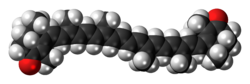
Space-filling model of the canthaxanthin molecule
Names
IUPAC name
β,β-Carotene-4,4′-dione
Systematic IUPAC name
3,3′-[(1E,3E,5E,7E,9E,11E,13E,15E,17E)-3,7,12,16-Tetramethyloctadeca-1,3,5,7,9,11,13,15,17-nonaene-1,18-diyl]bis(2,4,4-trimethylcyclohex-2-en-1-one)
Other names
  • Cantaxanthin
  • Cantaxanthine
  • Canthaxanthine
  • Lucantin red (BASF)
  • Lucantin Red CWD (BASF)
  • Carophyll Red (DSM)
  • Roxanthin Red 10 (Adisseo)
  • L-Orange 7g
  • C.I. Food Orange 8
  • E161g
Identifiers
3D model (JSmol)
ChEBI
ChEMBL
ChemSpider
ECHA InfoCard 100.007.444 Edit this at Wikidata
E number E161g (colours)
UNII
  • InChI=1S/C40H52O2/c1-29(17-13-19-31(3)21-23-35-33(5)37(41)25-27-39(35,7)8)15-11-12-16-30(2)18-14-20-32(4)22-24-36-34(6)38(42)26-28-40(36,9)10/h11-24H,25-28H2,1-10H3/b12-11+,17-13-,18-14+,23-21-,24-22+,29-15-,30-16+,31-19-,32-20+ checkY
    Key: FDSDTBUPSURDBL-OQWFGLAJSA-N checkY
  • InChI=1/C40H52O2/c1-29(17-13-19-31(3)21-23-35-33(5)37(41)25-27-39(35,7)8)15-11-12-16-30(2)18-14-20-32(4)22-24-36-34(6)38(42)26-28-40(36,9)10/h11-24H,25-28H2,1-10H3/b12-11+,17-13+,18-14+,23-21+,24-22+,29-15+,30-16+,31-19+,32-20+
    Key: FDSDTBUPSURDBL-OQWFGLAJBT
  • CC(CC1)(C)C(/C=C/C(C)=C/C=C/C(C)=C/C=C/C=C(C)/C=C/C=C(C)/C=C/C(C(C)(C)CC2)=C(C)C2=O)=C(C)C1=O
Properties
C40H52O2
Molar mass 564.82 g/mol
Appearance Violet crystals
Melting point 211 to 212 °C (412 to 414 °F; 484 to 485 K) (decomposition)[2]
Except where otherwise noted, data are given for materials in their standard state (at 25 °C [77 °F], 100 kPa).
☒N verify (what is checkY☒N ?)

Canthaxanthin /ˌkænθəˈzænθɪn/ is a keto-carotenoid[3] pigment widely distributed in nature. Carotenoids belong to a larger class of phytochemicals known as terpenoids. The chemical formula of canthaxanthin is C40H52O2.[4] It was first isolated in edible mushrooms. It has also been found in green algae, bacteria, crustaceans, and bioaccumulates in fish such as carp, golden grey mullet, seabream and trush wrasse.[4]

Canthaxanthin is associated with E number E161g and is approved for use as a food coloring agent in different countries, including the United States[5] and the EU;[6] however, it is not approved for use in Australia and New Zealand.[7] It is generally authorized for feed applications in at least the following countries: US,[8] Canada,[9] EU.[10] In the EU, canthaxanthin is allowed by law to be added to trout feed, salmon feed and poultry feed.[11] The European Union limit is 80 mg/kg of feedstuffs,[4] 8 mg/kg in feed for egg laying hens and 25 mg/kg in feed for other poultry and salmonids.

Canthaxanthin is a potent lipid-soluble antioxidant.[12][13] The biological functions of canthaxanthin are related, at least in part, to its ability to function as an antioxidant (free radical scavenging/vitamin E sparing) in animal tissues.[14]

Biosynthesis

[edit]

Due to the commercial value of carotenoids, their biosynthesis has been studied extensively in both natural producers, and non-natural (heterologous) systems such as the bacteria Escherichia coli and yeast Saccharomyces cerevisiae. Canthaxanthin biosynthesis proceeds from beta-carotene via the action of a single protein, known as a beta-carotene ketolase, that is able to add a carbonyl group to carbon 4 and 4' of the beta carotene molecule. Although functionally identical, several distinct beta-carotene ketolase proteins are known. That is to say they differ from an evolutionary perspective in their primary amino acid/protein sequence. They are different proteins that complete the same function. Thus, bacterial (CrtW) and micro-algal beta-carotene ketolase proteins such as BKT isolated from Haematococcus pluvialis[15] are known. Due to the nature of canthaxanthin, relative to astaxanthin (a carotenoid of significant commercial value) these beta-carotene ketolase proteins have been studied extensively.[16][17] An E. coli based production system has been developed, that achieved canthanaxanthin production at 170 mg/L in lab scale fermentation.[18]

Presence in fish

[edit]

Canthaxanthin is not found in wild Atlantic Salmon, but is a minor carotenoid in Pacific Salmon.[4] Canthaxanthin is used in farm-raised trout.[4] Canthaxanthin is used in combination with astaxanthin for some salmon feeds.[4]

Presence in birds

[edit]

The antioxidant characteristics of canthaxanthin have been studied by a number of authors and experiments have shown that the presence of canthaxanthin can potentially help to reduce oxidation in a number of tissues including broiler meat and the chick embryo. In the egg, canthaxanthin is transferred from yolk to the developing embryo where it might help to protect the developing bird against oxidative damage, particularly during the sensitive periods of hatching and early posthatch life.[12][13] Flamingos are known to produce crop milk containing canthaxanthin for this purpose.

Effects on human pigmentation and health

[edit]

When ingested for the purpose of simulating a tan, its deposition in the panniculus imparts a golden orange hue to the skin.[19]: 860 

In the late 1980s, the safety of canthaxanthin as a feed and a food additive was drawn into question as a result of a completely un-related use of the same carotenoid. A reversible deposition of canthaxanthin crystals was discovered in the retina of a limited number of people who had consumed very high amounts of canthaxanthin via sun-tanning pills – after stopping the pills, the deposits disappeared and the health of those people affected was fully recovered. However, the level of canthaxanthin intake in the affected individuals was many times greater than that which could ever be consumed via poultry products - to reach a similar intake, an individual would have to consume more than 50 eggs per day, produced by hens fed practical levels of canthaxanthin in their diets. Moreover, it was demonstrated by Hueber et all. that ingestions of canthaxanthin cause no long-term adverse effects, and that the phenomenon of crystal deposition on the retina is reversible and does not result in morphological changes.[20][21] Although this incidence was totally unrelated and very different from the feed or food use of canthaxanthin, as a link had been drawn between canthaxanthin and human health, it was important that the use of canthaxanthin as a feed and food additive should be reviewed in detail by the relevant authorities, both in the EU and at an international level. The first stage of this review process was completed in 1995 with the publication by Joint FAO/WHO Expert Committee on Food Additives (JECFA) of an Acceptable Daily Intake (ADI) for canthaxanthin of 0.03 mg/kg bodyweight. The work of JECFA was subsequently reviewed and accepted within the EU by the SCF (EU Scientific Committee for Food) in 1997. The conclusion of both these committees was that canthaxanthin is safe for humans. Recently (2010), the EFSA Panel on Food Additives and Nutrient sources added to food (ANS) published a revised version of the safety assessment of Canthaxanthin, reconfirming the already set ADI. The Food and Drug Administration (FDA) has no "tanning pills" approved for sale in the United States. In spite of this, there are companies that continue to market such products, some of which contain canthaxanthin. The FDA considers such items "adulterated cosmetics" and as a result sent warning letters to the firms citing such products as containing "a color additive that is unsafe within the meaning of section 721(a) of the FD&C Act (FD&C Act, sec. 601(e))."[22]

According to the FDA,[23]

Tanning pills have been associated with health problems, including an eye disorder called canthaxanthin retinopathy, which is the formation of yellow deposits on the eye's retina. Canthaxanthin has also been reported to cause liver injury and a severe itching condition called urticaria, according to the AAD.


References

[edit]
Revisions and contributorsEdit on WikipediaRead on Wikipedia
from Grokipedia
Canthaxanthin is a naturally occurring orange-red keto-carotenoid pigment with the molecular formula C₄₀H₅₂O₂ and systematic name 4,4'-diketo-β-carotene. It features a linear polyene chain with nine conjugated double bonds and two keto groups at the 4 and 4' positions, contributing to its vibrant color and antioxidant properties. Widely distributed in nature, canthaxanthin is biosynthesized by microorganisms such as bacteria (e.g., Bradyrhizobium species), fungi, and algae, as well as accumulating in animals like crustaceans, fish, and mushrooms. As a ketocarotenoid, canthaxanthin exhibits potent free radical scavenging and activities, surpassing those of many other due to its oxygenated structure, which enhances and cellular uptake in humans via incorporation into mixed micelles during . It plays roles in microbial pigmentation for photoprotection and in animal , such as enhancing immune responses and defenses in species. Commercially, it is produced synthetically or via microbial for industrial applications, with a global market driven by its stability and non-toxicity at low doses. Canthaxanthin is approved by regulatory bodies like the FDA and EFSA as a color additive (E161g). Under FDA regulations, it is limited to 30 mg per pound of solid or semisolid food or 30 mg per pint of liquid food in specific products, and in animal feeds to achieve desirable flesh and coloration in salmonids and , improving market value without altering nutritional profiles. EFSA authorizes its use with category-specific maximum levels, such as 5–200 mg/kg depending on the food type. In pharmaceuticals, it has been used to mitigate photosensitivity in patients with by increasing tolerance to sunlight, often in combination with . However, high-dose ingestion, such as in unapproved tanning supplements, can lead to adverse effects including canthaxanthin (crystal deposits in the ) and, rarely, , prompting strict regulatory warnings against non-food uses. Ongoing research explores its potential anticarcinogenic and anti-inflammatory benefits, supported by and demonstrating tumor suppression and reduced .

Chemical Properties

Molecular Structure

Canthaxanthin is a symmetric ketocarotenoid pigment with the molecular formula \ceC40H52O2\ce{C40H52O2} and a molecular weight of 564.82 g/mol. It is systematically named as 2,4,4-trimethyl-3-[(1E,3E,5E,7E,9E,11E,13E,15E,17E)-3,7,12,16-tetramethyl-18-(2,6,6-trimethyl-3-oxocyclohex-1-en-1-yl)octadeca-1,3,5,7,9,11,13,15,17-nonaenylidene]cyclohex-2-en-1-one, reflecting its all-E (trans) configuration across the polyene chain. Commonly referred to as β,β-carotene-4,4'-dione, it derives its name from the parent hydrocarbon β-carotene by the addition of two oxo groups. The core structure consists of a linear 40-carbon featuring two terminal β-ionone rings—cyclohexene moieties with methyl groups at position 1 and a methyl at position 5—linked by a central polyene chain. This chain contains 9 conjugated carbon-carbon double bonds, forming an extended π-system that absorbs in the , imparting the molecule's characteristic reddish-orange hue. Each β-ionone ring bears a (C=O) at the 4-position, which integrates into the conjugation, effectively extending the delocalized electron system to a total of 13 conjugated units (11 C=C bonds plus 2 C=O bonds). This structural modification enhances the molecule's stability and shifts its absorption maximum compared to non-ketocarotenoids. The all-trans geometry predominates in natural canthaxanthin, with potential for cis isomers at various positions, though these are less stable and rarer. The absence of hydroxyl groups distinguishes it from other xanthophylls like , emphasizing its role as a diketone in the family. This precise arrangement of rings, chain, and functional groups underpins canthaxanthin's photochemical properties and biological functions.

Physical and Chemical Characteristics

Canthaxanthin is a belonging to the class of xanthophylls, characterized by its as β,β-carotene-4,4'-dione, featuring a linear polyene chain with 9 conjugated double bonds and two groups at the 4 and 4' positions of the terminal β-ionone rings. Its molecular formula is C₄₀H₅₂O₂, and the molecular weight is 564.85 g/mol. This structure imparts strong lipophilic properties, with a calculated (logP) of approximately 9.5, indicating high hydrophobicity and affinity for environments. The compound is light-sensitive and prone to cis-trans under exposure to light or heat, which can affect its color stability. Physically, canthaxanthin appears as a dark to violet crystalline powder or solid. It has a of 217–218 °C, at which it decomposes without boiling. The predicted boiling point is around 717 °C at standard pressure, though practical measurements are limited due to thermal instability. is estimated at 1.003 g/cm³. Canthaxanthin is insoluble in but exhibits slight solubility in polar organic solvents such as , , , and acetone, and is more readily soluble in oils and non-polar solvents, consistent with its role as a lipid-soluble . Optically, canthaxanthin displays maximum absorption in the visible spectrum at λ_max = 465 nm, contributing to its characteristic red-orange hue in solutions and biological tissues. It is stable under normal storage conditions at -20 °C but degrades upon prolonged exposure to oxygen, light, or elevated temperatures, emphasizing the need for protected handling in applications.

Biosynthesis and Natural Occurrence

Biosynthesis Pathway

Canthaxanthin is synthesized through the carotenoid biosynthetic pathway, which begins with the formation of isopentenyl diphosphate (IPP) and dimethylallyl diphosphate (DMAPP) via either the mevalonate (MVA) or methylerythritol phosphate (MEP) pathway, depending on the organism. These C5 units are condensed by geranylgeranyl pyrophosphate synthase (CrtE) to form the C20 precursor geranylgeranyl pyrophosphate (GGPP). Two molecules of GGPP are then dimerized by phytoene synthase (CrtB) to produce phytoene, the first committed carotenoid intermediate. Phytoene undergoes sequential desaturation by phytoene desaturase (CrtI), typically in multiple steps involving ζ-carotene and neurosporene as intermediates, to yield , a linear C40 tetraterpene. is then cyclized by lycopene cyclase (CrtY or CrtL) to form , which features two β-ionone rings and serves as the immediate precursor to canthaxanthin. This cyclization introduces the characteristic ring structures essential for subsequent modifications. The final steps involve ketolation of by ketolase (CrtW in or BKT in and ), which introduces keto groups at the 4 and 4' positions of the β-ionone rings. This occurs in two sequential oxidations: first to echinenone (mono-ketolated at one ring), then to canthaxanthin (di-ketolated). In some organisms, such as the bacterium sp. strain ORS278, the genes encoding these enzymes (crtE, crtB, crtI, crtY, and crtW) are clustered in operons, facilitating coordinated expression for efficient production. This pathway is conserved across diverse taxa, including (e.g., Dietzia sp.), (e.g., zofingiensis), and fungi (e.g., Aspergillus carbonarius), though regulatory mechanisms and specificities vary; for instance, in plants like Adonis aestivalis, bifunctional keto enzymes perform the ketolation with additional desaturase activity. The process ensures the production of this red ketocarotenoid, which accumulates as a protective against in natural producers.

Occurrence in Organisms

Canthaxanthin, a red-orange keto-carotenoid, occurs naturally in a variety of microorganisms and animals, where it serves roles in pigmentation, photoprotection, and activity. It is produced de novo in certain , , and fungi, and bioaccumulates in higher trophic levels through dietary intake. While present in low concentrations in some as a biosynthetic intermediate, its primary natural distribution is in microbial and aquatic organisms. In microorganisms, canthaxanthin is synthesized via the mevalonate or methylerythritol phosphate pathways, often as a precursor to other carotenoids like astaxanthin. Bacteria such as Bradyrhizobium sp. (up to 86.6% of total carotenoids), Dietzia natronolimnaea (90–92% of total carotenoids), Micrococcus roseus (85% of total carotenoids), and Gordonia jacobaea are notable producers, with extremophilic strains like those in the Deinococcus–Thermus phylum contributing under harsh environmental conditions. Microalgae, including Chlorella zofingiensis (up to 25% of total sterol carotenoids), Haematococcus pluvialis (2.2–44.3% of total carotenoids), Scenedesmus obliquus, and Botryococcus braunii (46% of dry weight), accumulate it during stress-induced phases for cellular protection. Fungi such as the edible mushroom Cantharellus cinnabarinus (from which it was first isolated), Aspergillus carbonarius (20.6% of dry weight), and the yeast Xanthophyllomyces dendrorhous also produce it, contributing to their characteristic coloration. Among animals, canthaxanthin bioaccumulates in tissues via consumption of carotenoid-rich prey, enhancing pigmentation without endogenous synthesis. In aquatic species, it is prominent in s like and , whose shells and eggs impart the pigment to predators. such as (Salmo trutta), (Oncorhynchus mykiss), (Cyprinus carpio), golden mullet (Mugil auratus), and seabream exhibit flesh and skin coloration from dietary uptake, with levels varying by and . In birds, it is a dominant (>60% of feather pigments) in greater flamingos (Phoenicopterus roseus), responsible for their pink hue through accumulation from algal and crustacean diets; similar deposition occurs in koi skin and yolks.

Production Methods

Synthetic Production

Canthaxanthin is primarily produced synthetically through chemical methods, which dominate industrial-scale due to their efficiency and established for applications in and . The most common route involves the oxidation of , a structurally related , to introduce keto groups at the 4 and 4' positions. One seminal industrial , developed in the late , utilizes chlorates or bromates as oxidants in an aqueous-organic solvent system, catalyzed by iodine and metal iodides. For instance, is reacted with in and methylene chloride at 20–30°C for 90–110 minutes, yielding up to 76% canthaxanthin after purification. This method offers short reaction times and high scalability, making it suitable for commercial production. Earlier historical approaches, such as Karrer's method from the 1950s, relied on allylic bromination of followed by solvolysis to form 4,4'-diacetoxy-β-carotene, , and subsequent oxidation to canthaxanthin. While effective for initial synthesis, this multi-step generated significant halogenated byproducts and was largely superseded by more streamlined oxidations. routes, avoiding natural precursors, emerged in the 1970s and 1980s using Wittig olefination as a cornerstone for constructing the polyene chain. In this approach, a C15-Wittig salt derived from β-ionone is coupled with a symmetrical C10-dialdehyde (e.g., 2,7-dimethyl-3,5-octadiene-2,7-dial) under basic conditions to form the central double bonds, followed by and to isolate the all-E isomer. This method, though producing triphenylphosphine oxide waste, enabled precise control over and became a benchmark for synthesis. To address byproduct issues in Wittig-based syntheses, alternative strategies employing chemistry have been developed. One such process involves coupling a C10-bischloroallylic with a C15-allylic , followed by Ramberg–Bäcklund rearrangement using base and to generate the triene moiety, and final dehydrosulfonation at elevated temperatures. This route, patented in the early , starts from stable C40 intermediates like 4,4'-dioxo-β-carotene derivatives and achieves higher purity with easier byproduct removal via principles. Yields typically range from 60–80% over key steps, enhancing economic viability for large-scale operations. More recent innovations focus on optimizing for . A 2020 route begins with epoxidation of α-ionone, followed by Darzens condensation to form a glycidic ester, Horner–Wadsworth–Emmons olefination for chain extension, and to install keto groups, culminating in canthaxanthin with minimal cis-isomers (reduced to 3% via thermal isomerization in ). These advancements prioritize greener solvents and fewer hazardous reagents, though has historically dominated, accounting for approximately 65% of the global market as of 2024.

Biotechnological Production

Biotechnological production of canthaxanthin leverages microbial and to synthesize the as a sustainable alternative to chemical methods, addressing concerns and environmental impacts associated with synthetic routes. This approach typically involves engineering organisms to express key enzymes in the carotenoid biosynthesis pathway, starting from isoprenoid precursors like (GGPP) and proceeding through intermediates such as phytoene, , and . The critical step is the conversion of to canthaxanthin via β-carotene ketolase (BKT, also known as CrtW or CrtO), which introduces keto groups at the 4 and 4' positions. Bacteria, particularly Escherichia coli, have been widely engineered for high-yield production through metabolic pathway optimization, including overexpression of upstream genes like idi, dxs, and dxr for isoprenoid flux enhancement, alongside crtW from sources such as Anabaena variabilis. Engineered E. coli strains have achieved canthaxanthin titers up to 11.7 mg/g dry cell weight, with 91% of total carotenoids as the target product, and in some cases, 26.6 mg/L in fed-batch cultures. Naturally producing bacteria like Dietzia natronolimnaea HS-1 offer simpler fermentation processes using agro-industrial wastes, yielding approximately 1.01 mg/L. Paracoccus bogoriensis has shown potential through nutrient and pH adjustments, with recent optimizations achieving up to 0.84 mg/g dry weight as of 2024. Fungi and yeasts, such as Mucor circinelloides and red yeasts like Rhodotorula spp., provide robust platforms due to their GRAS (Generally Recognized as Safe) status and ability to utilize low-cost substrates. In M. circinelloides, heterologous expression of a codon-optimized bkt gene from Haematococcus pluvialis, combined with disruption of the negative regulator crgA, resulted in a maximum yield of 576 μg/g dry weight after 72 hours of fermentation. Red yeasts like Rhodotorula spp. naturally accumulate canthaxanthin but have been enhanced via synthetic biology for higher flux, though specific titers remain lower than bacterial systems at around 0.5–2 mg/g. Microalgae, including Chlorella zofingiensis, support production under stress conditions like high light or salinity, but scale-up challenges persist compared to bacterial hosts. These biotechnological strategies emphasize modularity, with tools enabling pathway refactoring for improved yields and purity, often exceeding 90% canthaxanthin selectivity. Advantages include eco-friendly processes using renewable feedstocks and reduced toxicity risks, positioning microbial production as a viable industrial option despite ongoing needs for cost optimization.

Uses and Applications

Food and Animal Feed

Canthaxanthin is primarily utilized as a colorant in to enhance the pigmentation of food products derived from and , thereby improving their visual appeal without direct addition to human foods in most cases. In production, it is added to chicken feed at levels not exceeding 4 grams per ton to intensify the yellow coloration of the skin, and to laying hen feed to deepen the orange hue of yolks. Similarly, in , canthaxanthin is incorporated into salmonid fish feed at concentrations up to 80 mg/kg to impart a desirable reddish-pink tint to the flesh, mimicking natural pigmentation. These applications indirectly transfer the pigment to edible animal products, contributing significantly to exposure. In the , canthaxanthin is authorized as a sensory feed additive (functional group: ) for various , including chickens for fattening (maximum 25 mg/kg complete feed), laying and ornamental breeder hens (maximum 8 mg/kg), and ornamental and birds (maximum 100 mg/kg), to enhance coloration in food of animal origin or for aesthetic purposes in pets. It is also permitted in feeds for minor species for fattening, dogs, cats, and other ornamental animals under similar safety-evaluated conditions. Regulatory bodies such as the (EFSA) have confirmed its safety for target species, consumers, and the environment when used within these limits, with no concerns for or residue accumulation beyond acceptable levels. For direct use as a , canthaxanthin is approved as a colorant exempt from certification, applicable to generally at levels not exceeding 30 mg per pound of solid or semisolid food or per of , and in ingested drugs under good manufacturing practices. In the , its direct application is more restricted, primarily authorized in saucisse de at a maximum level of 15 mg/kg under E 161g designation, with an (ADI) of 0.03 mg/kg body weight established to account for both direct and indirect exposures. Overall exposure from these uses remains below the ADI for adults and children, ensuring no adverse health effects.

Cosmetics and Pharmaceuticals

Canthaxanthin is utilized in primarily as an oral tanning agent, where high doses lead to deposition in the skin's subcutaneous fat, producing an orange-brown coloration that mimics a tan. This application leverages its lipophilic nature, allowing accumulation in epidermal layers without UV exposure. However, such use is not approved by the FDA for cosmetic purposes, as tanning pills containing canthaxanthin pose risks including and are considered unsafe for inducing skin pigmentation. In pharmaceuticals, canthaxanthin serves as a photoprotective agent for conditions involving , notably (EPP), a rare causing severe sunlight-induced skin reactions. Administered orally at doses of 50-200 mg daily, often in combination with beta-carotene, it reduces symptoms by quenching and mitigating oxidative damage from accumulation. Clinical studies have demonstrated its efficacy in allowing patients to tolerate longer sun exposure, though it requires high doses for effect and is not a cure. Beyond photoprotection, canthaxanthin's potent properties position it for use in dietary supplements targeting oxidative stress-related disorders. It scavenges , inhibits , and enhances endogenous defenses, showing potential in managing cutaneous , , and medication-induced . Preliminary research also indicates neuroprotective effects, such as preventing neuronal in models of adrenal damage, and immunomodulatory benefits by promoting proliferation. Regulatory oversight by the FDA lists canthaxanthin as permanently approved for ingested drugs under good manufacturing practices, exempt from certification, but prohibits its use in eye-area , injections, or sutures due to safety concerns like crystal formation in the . In Europe, it is authorized as a color additive (E161g) with strict intake limits to prevent adverse effects.

Health Effects

Beneficial Effects

Canthaxanthin exhibits potent properties, scavenging free radicals and quenching more effectively than many other due to its ketocarotenoid . It induces the expression of enzymes such as and , thereby enhancing cellular defense against . In addition, canthaxanthin enriches (LDL) particles, protecting from oxidation and potentially reducing the risk of . support these effects, showing reduced and improved status in rat liver following supplementation. In clinical applications, canthaxanthin has been used orally to mitigate photosensitivity in (EPP), a rare causing severe sun sensitivity. By depositing in the and providing photoprotective effects through its activity, it may extend safe sun exposure time, though systematic reviews indicate limited evidence from single, non-randomized studies, with efficacy remaining unproven. As of 2022, evidence-based consensus guidelines do not recommend canthaxanthin for preventing phototoxic symptoms in EPP due to lack of clear benefit. Similarly, it serves as a cosmetic agent for skin repigmentation in , inducing an orange-brown hue that camouflages depigmented areas; patient satisfaction rates in one study were 10% "very satisfactory," 35% "satisfactory," and 54% "unsatisfactory," particularly among lighter-skinned individuals. Canthaxanthin demonstrates immunomodulatory activity by enhancing the proliferation and function of immune-competent cells, such as increasing activity in mouse macrophages. It also promotes intercellular communication through induction of 43, a that facilitates . Emerging research suggests potential cardiovascular benefits, as studies on cardiomyoblasts and endothelial cells show that canthaxanthin (10 µM) alleviates induced by D-galactose by regulating , reducing , and downregulating markers like and p21. , supplementation (15 mg/kg for 6 weeks) in aged mice decreased cardiac , , and markers, indicating a role in mitigating age-related heart decline. Ongoing studies also explore anticarcinogenic effects, with and animal models showing tumor suppression and reduced via mechanisms. However, most evidence derives from and animal models, necessitating further human trials to confirm these effects.

Risks and Safety

Canthaxanthin is approved by the U.S. (FDA) as a color additive for use in foods, drugs, and s, with specific limits such as no more than 30 mg per pound in solid or semisolid foods and per in liquid foods, and exempt from certification requirements. The (EFSA) has also evaluated canthaxanthin as safe for use as a feed additive in and ornamental birds and at concentrations up to 25 mg/kg for chickens for fattening and 100 mg/kg for ornamental , concluding no concerns and that residues in eggs and tissues do not pose risks to consumers when used within these limits. In approved applications, such as and animal feed pigmentation, canthaxanthin is considered non-carcinogenic and non-mutagenic based on safety data sheets and regulatory assessments, with no evidence of serious toxicity at typical low dietary exposure levels. However, high-dose consumption, particularly from unapproved tanning pills containing canthaxanthin, poses significant risks. The FDA has not approved canthaxanthin for skin tinting purposes and issues alerts for such products, as doses up to 120 mg per day in tanning regimens far exceed safe limits and can lead to canthaxanthin , characterized by yellow crystal deposits in the that impair and may persist for years after discontinuation. Other adverse effects from elevated intake include gastrointestinal issues such as , cramping, and ; severe itching (urticaria); liver damage; and . Rare but severe cases have reported , a potentially fatal blood disorder, following prolonged high-dose ingestion for tanning, as documented in clinical reports. Regulatory bodies recommend avoiding canthaxanthin supplements for non-approved uses due to these risks, emphasizing that benefits in conditions like do not outweigh potential despite low overall toxicity in controlled medical settings. Occupational exposure should involve precautions like dust avoidance and protective equipment, as it may irritate skin, eyes, or , though human data on hazards are limited. Overall, while safe within regulated limits, exceeding these through misuse can result in irreversible ocular damage and systemic effects.

References

Add your contribution
Related Hubs
User Avatar
No comments yet.