Hubbry Logo
Emerald TriangleEmerald TriangleMain
Open search
Emerald Triangle
Community hub
Emerald Triangle
logo
8 pages, 0 posts
0 subscribers
Be the first to start a discussion here.
Contribute something
Emerald Triangle
Emerald Triangle
from Wikipedia

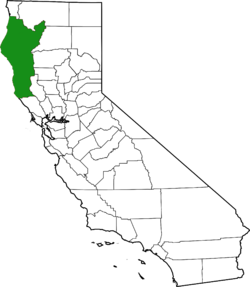
The Emerald Triangle is a region in Northern California that derives its name from being the largest cannabis-producing region in the United States. The region includes three counties in an upside-down triangular configuration:

Key Information

Growers have been cultivating Cannabis plants in this region since the 1960s, during San Francisco's Summer of Love. Growing cannabis in the Emerald Triangle is considered a way of life, and the locals believe that everyone living in this region is either directly or indirectly reliant on the cannabis industry.[3] The industry exploded in the region with the passage of California Proposition 215 (1996), which legalized the use of cannabis for medicinal purposes in California.[4] The passage of Proposition 64 in 2016 legalized the general sale and distribution of cannabis.

History

[edit]

When growing cannabis was illegal, this area was attractive due to its remoteness and limited law enforcement capabilities. The area has developed a reputation for cannabis with exceptionally good flavor and cannabinoid profiles.[5]

In 1984, Humboldt residents filed a federal lawsuit claiming they had been subject to illegal surveillance by U-2 high-altitude reconnaissance aircraft deployed by the California-based multiagency task force started the year prior, the Campaign Against Marijuana Planting.[6]

As of 2023, Humboldt County has the largest cannabis farming industry in the Emerald Triangle. While the largest legal pot farm in the county was 8 acres (3.2 ha), a 2021 survey found the median pot farm size to be 0.22 acres (0.09 ha).[7]

Population

[edit]

The total population in the Emerald Triangle is 236,250 according to the 2010 census.[8] The majority of the population is widely spread throughout the woody hills and mountains that make up the area. With an area of 11,138 square miles, the Emerald Triangle population density is 21/mi2.

In this sparsely populated region, the largest urban area is the city of Eureka in Humboldt County with a population approaching 27,000 people. The second and third largest cities, by far larger than any other cities in the region, are Arcata (also in Humboldt), with 17,231 people, and Ukiah (in Mendocino), with 16,075 people.[3][9]

Environmental concerns

[edit]

There is an environmental impact from outdoor cannabis production in the Emerald Triangle, which is largely unregulated. These effects include illegal damming, diversion and taking of water from streams (especially during summer), and also pesticide-laden runoff into streams, all of which may degrade critical salmon fisheries.[10][11] Clearcutting and roadbuilding for the cannabis plantations can also degrade the environment and endanger salmon.[12] The grows often occur illegally on public land.[13][14]

[edit]

The Lookouts, founded in 1985 by Larry Livermore, who also founded Lookout! Records, were Tré Cool's first band. The punk rock band was named for the fire lookout at Iron Peak in Mendocino County, which led local marijuana growers to threaten to burn down Livermore's house for bringing too much publicity to their hilly isolated region of the Emerald Triangle near Spyrock.[15] The band wrote many songs about the surrounding area on Mendocino Homeland and Spy Rock Road, an album named for the road lined with marijuana grows that leads to Iron Peak. Livermore also wrote Spy Rock Memories, a 2013 book about his time living off the grid in the heart of the Emerald Triangle.

Homegrown is a 1998 movie starring Billy Bob Thornton that follows marijuana growers in an unspecific area of the Emerald Triangle, most likely northern Mendocino County.

On the TV show Lost, during flashback scenes in the episode "Further Instructions", John Locke picks up a hitchhiker who happens to be an undercover police officer on State Route 36 and brings him back to a farm near Bridgeville, where they grow marijuana in a greenhouse.

Humboldt County is a 2008 comedy-drama about a medical school dropout who drives north to Humboldt County to live on a pot farm.[16]

In "Object Impermanence", an episode of Showtime's Weeds, Nancy Botwin drives to Heylia James' boobytrapped outdoor marijuana grow in Humboldt County.

Discovery Channel's Pot Cops, a 2013 docuseries, followed the Humboldt County Sheriff's Office's Marijuana Enforcement Team in 2013.[17]

The 2013 book Humboldt: Life on America's Marijuana Frontier by Emily Brady, is written about the marijuana industry in Humboldt County and the surrounding Emerald Triangle.[18]

Welcome to Willits is a 2016 horror movie which takes place in the Emerald Triangle.

Amazon Prime's Budding Prospects was a 2017 pilot episode for a series based on the 1984 novel of the same name by T. C. Boyle that was set in Mendocino County in the 1980s. Amazon released the pilot but did not greenlight the series.[19]

Two other nationally distributed paperback books written about marijuana cultivation in the Emerald Triangle include Steve Chapple's 1984 book Outlaws in Babylon: Shocking True Stories on the Marijuana Frontier and Ray Raphael's 1985 book Cash Crop: An American Dream.

Netflix's 2018 true crime television series Murder Mountain examines the high rate of missing people and murders in Humboldt County. The show covers the history of illegal marijuana farming including the relationship of local farmers and local authorities as the area attempts to transition into a legal cannabis industry.[20]

The 2020 film Freeland is about a longtime Humboldt County marijuana grower, played by Krisha Fairchild, growing illegally despite the availability of the legal market.[21]

The 2021 documentary Lady Buds, produced by Gravitas Ventures, about women who work in the marijuana industry in Northern California, is being developed into a scripted comedy feature film and a non-scripted series.[22]

Hulu's 2021 docuseries Sasquatch is based on the murder of pot growers in Mendocino County in the 1990s, purportedly perpetrated by Bigfoot.[23]

The 2021 crime podcast Dark Woods, produced by Dick Wolf and set in Humboldt County that includes a trespass marijuana grow on public land, is currently being developed by Universal Television for a TV adaptation.[24][25]

See also

[edit]

References

[edit]
Revisions and contributorsEdit on WikipediaRead on Wikipedia
from Grokipedia
The Emerald Triangle is a region in northwestern encompassing Humboldt, Mendocino, and counties, recognized as the longstanding hub of production in the United States due to its temperate climate, rugged terrain, and fertile soil ideal for outdoor cultivation. Originating in the amid the movement, when migrants from urban areas like sought remote lands for growing marijuana under , the area developed a black-market economy that supplied much of the nation's illicit supply, fostering renowned strains and techniques for sun-grown, organic . By the and , it had earned a global reputation for premium-quality product, often smuggled via hidden networks, though this era also saw environmental damage from unchecked water diversion and chemical use, as well as associations with and violence in illicit operations. Following California's 1996 legalization and 2016 recreational reforms, licensed cultivation expanded, yet the region grapples with market oversaturation, regulatory burdens, and competition from cheaper indoor grows elsewhere, leading to economic contraction, farm closures, and persistent illegal production that undermines compliance efforts.

Geography and Environment

Location and Physical Features

The Emerald Triangle consists of Humboldt, Mendocino, and Trinity counties in , forming an inverted triangular region in the state's northwestern interior. This area lies approximately 200 miles north of , encompassing diverse landscapes from coastal zones to inland highlands. Spanning roughly 10,000 square miles, the terrain features rugged mountains, dense coniferous forests including coastal redwoods, and deep river valleys. Key hydrological elements include the Eel River, which drains much of Humboldt and Mendocino counties over a 3,500-square-mile watershed, and the Trinity River, originating in Trinity County and flowing northward. The region's western edge borders the , with Humboldt County alone possessing about 110 miles of coastline, contributing to its isolated, heavily forested character. Settlement remains predominantly rural, with low population density averaging around 20 persons per across the three counties. Primary population centers include Eureka in Humboldt County, serving as the largest coastal hub, and Ukiah in Mendocino County, acting as a regional inland focal point; both towns are separated by mountainous barriers that enhance overall geographic seclusion. This sparsity and remoteness stem from the challenging , limiting urban development to scattered small communities amid vast areas.

Climate and Terrain Suitability

The Emerald Triangle, encompassing Humboldt, Mendocino, and counties, features a characterized by mild, wet winters and warm, dry summers, which supports extended growing periods for sun-dependent . Annual rainfall averages around 38 to 55 inches, predominantly falling between November and March, with coastal areas like receiving approximately 38 inches and inland zones up to 55 inches. Temperatures during the growing season typically range from 59°F to 77°F (15°C to 25°C), moderated by coastal influences that prevent extreme heat stress. Persistent coastal fog, particularly in summer mornings, reduces and provides supplemental moisture, creating microclimates ideal for crops requiring consistent without excessive . Higher elevations offer cooler zones that extend diurnal swings, promoting robust vegetative growth through cool nights following warm days. Soil diversity across the region, from nutrient-rich alluvial deposits in river valleys to ultramafic outcrops in upland areas, accommodates varied plant root systems and enhances resilience to environmental fluctuations. Alluvial soils in lowlands, such as those along the Eel River, are silty and well-drained, facilitating deep root penetration and water retention during dry periods. soils, prevalent in County's ultramafic belts, derive from weathered bedrock and support specialized flora adapted to low-nutrient, high-magnesium conditions, contributing to unique biochemical profiles in cultivated plants. Natural from perennial rivers and streams aids passive , though steep gradients increase potential on disturbed sites, necessitating terrain-specific management for sustained productivity. The rugged terrain, dominated by steep slopes, dense redwood forests, and varied elevations from sea level to over 8,000 feet, fosters biodiversity and microhabitats that buffer against uniform climatic extremes. Forest canopies and topography provide shaded understories suitable for shade-tolerant growth stages, while south-facing slopes maximize solar exposure for photoperiod-sensitive crops. This topographic heterogeneity, combined with coastal fog intrusion and elevational gradients, empirically correlates with high photosynthetic efficiency and yield quality in outdoor cultivation, as validated by regional agronomic observations.

Historical Development

Counterculture Origins (1960s-1970s)

In the late 1960s, the drew participants from urban centers like San Francisco's to the rural counties of Humboldt, Mendocino, and , initiating settlement in what later became the Emerald Triangle. Disillusioned by urban repression, rising crime, and failed activism amid the , these migrants sought self-sufficiency through communal living and reconnection with nature, establishing small homesteads and communes often on inexpensive land. Many arrivals, including draft resisters and war opponents, fled societal and governmental demands, with examples like the 1968 founding of Table Mountain Ranch commune on Mendocino's Albion Ridge exemplifying this exodus to isolated, forested terrain. Local residents initially met newcomers with hostility, though some tolerance emerged, as seen in Garberville's Charles Thomas aiding back-to-the-landers in 1971. Cannabis cultivation emerged as a subsidiary activity in the late 1960s, rooted in the 1967 rather than as the primary intent of settlement. Federal prohibition under the 1937 Marihuana Tax Act rendered it illegal, yet its ease of growth and alignment with practices led to small-scale plots for personal use, supplementing subsistence farming of vegetables and livestock. By the early , seeds smuggled via the "" from and introduced higher-potency landraces, adapted through to the region's foggy microclimates and rugged soils; techniques—unpollinated female plants for resin maximization—developed mid-decade, initially for communal sharing rather than sale. Incidents like the 1970 killing of Patrick John Berti near marijuana plants in Humboldt's Ferndale underscored early risks from . This era fostered a ethos prioritizing individual , , and decentralized over institutional regulation, evident in off-grid setups, organic methods, and gift-based exchanges within communes. Back-to-the-landers formed networks like the 1975 Beginnings School in Briceland and Star Root newspaper in southern Humboldt, reinforcing ideals of and rejection of industrial capitalism. Such principles, born from countercultural defiance, established precedents for informal, peer-enforced production without hierarchical control, though tensions arose as transitioned toward cash viability by the late 1970s.

Prohibition and Black Market Expansion (1970s-2016)

During the 1970s, cannabis cultivation in the Emerald Triangle transitioned from small-scale hippie gardens to larger commercial operations, driven by rising national demand for high-potency sinsemilla and black-market prices that reached up to $1,000 per pound by the early 1980s. This expansion was facilitated by the region's remote forested terrain, which allowed growers to establish hidden outdoor plots supplying a significant portion of the U.S. illicit market. By the late 1970s, the area had emerged as a primary hub for domestic production, partly as a counter to intensified federal eradication of imported cannabis from Mexico. Innovations in breeding and cultivation techniques proliferated to maximize yield and evade detection, including the development of potent strains like Trainwreck, which originated in Humboldt County during the late 1970s or early 1980s through selective crosses of , Thai, and Afghani landraces. Growers adapted first-principles approaches to risk mitigation, such as planting in steep, inaccessible ravines, using natural canopy cover for concealment, and timing harvests to avoid aerial , which capitalized on the local microclimates for superior quality and potency. These methods enabled micro-scale operations—often family-run with hundreds of per site—to dominate, with estimates suggesting tens of thousands of such producers by the , generating billions in untaxed revenue annually. Law enforcement responses, including the California Campaign Against Marijuana Planting (CAMP) launched in 1983, revealed the operation's scale through annual raids; for instance, a 1986 operation in Mendocino, Humboldt, and Trinity counties eradicated 827 plants across 30 sites, while national DEA efforts in 1993 seized over 4 million cultivated plants, with the Triangle contributing disproportionately as the epicenter of sinsemilla production. These interventions fostered community cohesion among growers through shared secrecy and mutual aid but also introduced risks of interpersonal violence over territory and rip-offs, as documented in local incident reports predating widespread cartel involvement. By the 2000s, eradication data from Humboldt and neighboring counties showed persistent large-scale grows, with Mendocino alone yielding over 100,000 seized plants in some years, underscoring the black market's resilience under federal prohibition.

Legalization Era and Recent Shifts (2016-2025)

On November 8, 2016, voters approved Proposition 64, the Adult Use of Marijuana Act, which legalized recreational possession, cultivation, and sales for adults aged 21 and older, while establishing a framework for state licensing and taxation.) Implementation proceeded with the Department of Cannabis Control issuing initial licenses, enabling the first legal recreational sales statewide on January 1, 2018. This transition integrated Emerald Triangle growers into the regulated market, initially spurring formal business formations and tax revenues exceeding $1 billion annually by 2019, though it exposed gaps in enforcement against unlicensed operations and burdensome permitting processes. By the early 2020s, regulatory challenges intensified, with high taxes (15% at wholesale plus cultivation taxes up to $9.25 per ) and strict environmental compliance driving many small Emerald Triangle cultivators out of the legal sector. tourism emerged as a diversification strategy, promoting farm tours and heritage strain branding tied to the region's microclimates and breeding history, such as efforts to secure intellectual property rights for unique genetics to attract visitors and differentiate products. Yet, data from 2024-2025 indicate illicit production—concentrated in Humboldt County—accounted for a substantial share of California's supply, eroding legal small-grower viability through undercutting prices and evading taxes, with state seizures totaling over $316 million in illegal product by mid-2025. Federal constraints persisted despite cannabis's rescheduling from Schedule I to Schedule III in May 2024, as the change did not authorize interstate trade or fully resolve banking restrictions under laws like the , limiting Emerald Triangle producers' access to capital and out-of-state markets. State initiatives for , including prioritized licensing and grants for those impacted by past enforcement, faced critiques for inefficiencies such as fund mismanagement, delays in approvals, and unintended advantages to non-equity applicants, resulting in lawsuits and unfulfilled promises by 2025.

Economic Role

Cannabis Industry Dominance

Prior to legalization, the cannabis black market in the Emerald Triangle generated an estimated $5 billion annually by 2017, positioning it as the dominant economic sector and primary employer in Humboldt, Mendocino, and Trinity counties. This illicit production, which accounted for a substantial portion of U.S. supply, sustained rural infrastructure through cash flows into local businesses, real estate, and services, while employing thousands seasonally in cultivation, processing, and transportation roles. After Proposition 64's passage on November 8, 2016, enabling licensed recreational sales from , 2018, the region maintained its centrality in licensed cultivation, particularly for outdoor methods leveraging the area's and . In 2022, regulated cultivation across the three counties produced $351 million in Humboldt, $314 million in Mendocino, and $35 million in Trinity, totaling over $700 million in revenue and supporting approximately 7,000 jobs in cultivation alone. These figures reflect the Emerald Triangle's outsized role in California's legal market, where outdoor flower from the region often captures premiums due to organic, sun-grown practices refined since the 1970s. The area's genetic lineages and cultivation expertise have propagated nationwide, with many commercial strains tracing roots to Emerald Triangle hybrids, enabling via clonal and banks that enhance market premiums for craft products. This supply chain influence persists, as evidenced by the region's continued leadership in high-terpene, outdoor phenotypes valued in wholesale channels.

Post-Legalization Challenges and Alternatives

Since California's 2016 legalization of recreational , the Emerald Triangle has grappled with market saturation driven by rapid expansion of licensed cultivation, among large-scale operators, and influx of lower-cost supply from other legalized states. This oversupply caused wholesale prices to plummet, with licensed production alone increasing 11.8% to 1.4 million pounds in , exacerbating revenue shortfalls for small farms. In Humboldt County, a key Emerald Triangle hub, small craft growers faced existential threats, including widespread closures and economic ripple effects on local businesses and services by early 2023. Compounding these pressures, the illicit market's dominance—estimated at 60% of total in as of 2024—continues to erode legal sector viability through tax-free pricing that undercuts compliant producers. State reports attribute this persistence to regulatory gaps and enforcement challenges, sustaining black-market flows that divert demand from taxed, tested products despite increased legal output. To adapt, Emerald Triangle operators have explored diversification into , value-added processing like solventless extracts and edibles, and ancillary production, aiming to leverage regional craft heritage for premium branding. Local economic analyses, including those from Humboldt , reveal mixed outcomes: while initiatives foster niche revenue, broader adoption remains hampered by market volatility and insufficient scale to fully mitigate cannabis-specific losses.

Demographics and Culture

Population Characteristics

The Emerald Triangle, comprising Humboldt, Mendocino, and Trinity counties in Northern California, had an estimated combined population of approximately 237,200 as of 2023-2024, reflecting minimal growth or slight declines in each county: Humboldt at 132,380, Mendocino at 89,175, and Trinity at 15,642. The region exhibits low population density, averaging under 25 people per square mile across roughly 10,256 square miles of predominantly rural terrain, with Trinity County's density as low as 5 people per square mile. Demographic trends show an aging population, evidenced by median ages of 39.6 years in Humboldt, 43.9 in Mendocino, and 54.8 in Trinity, coupled with annual population declines of 0.7-1.0% indicating net outmigration, particularly among younger residents seeking opportunities elsewhere. Ethnically, the population remains predominantly White, comprising 70-80% across the counties, with estimated at about 72% in Humboldt based on 2023 figures of 95,115 individuals. or Latino residents constitute a growing share, around 14% in Humboldt and similar in neighboring counties, often linked to seasonal agricultural labor. rates exceed state averages, at 16.2% in Humboldt, correlating with reliance on variable seasonal employment though not implying causation. An urban-rural divide characterizes education levels, with incorporated areas like Arcata—home to Cal Poly Humboldt—showing higher attainment rates, including greater proportions holding bachelor's degrees or higher compared to remote rural zones in and inland Mendocino that depend more on informal, non-degree networks for local economies.

Societal and Cultural Dynamics

The societal fabric of the Emerald Triangle embodies a persistent countercultural legacy from the and , which attracted urban migrants to Humboldt, Mendocino, and Trinity counties for off-grid , , and evasion of mainstream authority amid federal . This ethos blended libertarian —evident in autonomous rural settlements—with communal traditionalism through shared labor in early plots and living arrangements that prioritized ecological harmony over institutional dependence. Post-2016 legalization has diversified the social landscape, integrating legacy growers rooted in these traditions with newcomers pursuing scaled operations, fostering viewpoints ranging from protective communalism among heritage families wary of external to individualistic entrepreneurialism among recent entrants seeking market-driven . Ethnographic interviews reveal complex interpersonal dynamics, including occasional and unfriendliness between long-term rural families and countercultural descendants, contributing to pockets of social insularity that prioritize intra-community loyalty over broader integration. Cannabis heritage permeates cultural expressions, with festivals like the Emerald Cup—founded in 2003—serving as pivotal gatherings that celebrate artisanal strains through competitions, live music drawing from folk and psychedelic genres, and installations evoking hippie-era , thereby sustaining a distinct "weed culture" tied to regional identity. These events empirically link to broader music scenes, as evidenced by performer lineups featuring jam bands and acts that echo the 1970s soundscape, though critics note their role in reinforcing subcultural echo chambers detached from wider societal norms. Community resilience amid post-legalization economic pressures highlights adaptive mutual aid structures, including volunteer-led initiatives like Humboldt Mutual Aid's disaster response networks, which provide hot meals and resource sharing during wildfires, and the Humboldt Community Organizations Active in Disaster's coordination of partnerships for rural preparedness—traditions traceable to countercultural self-help models verified in local farmer ethnographies.

State Reforms versus Federal Constraints

California voters approved Proposition 215, the Compassionate Use Act, on November 5, 1996, exempting qualified patients and their primary caregivers from state criminal penalties for possessing or cultivating recommended by a physician for serious medical conditions such as cancer, anorexia, AIDS, , or . This marked the first statewide legalization of use, establishing a limited exemption framework that directly conflicted with the federal of 1970, under which remains classified as a Schedule I substance with no accepted medical use and high abuse potential. The federal prohibition persisted unchanged, creating immediate legal tensions as state-authorized activities risked federal enforcement, including and prosecution, despite California's intent to prioritize patient access over federal overrides. Building on this foundation, Proposition 64, the Adult Use of Marijuana Act, passed on November 8, 2016, with 57.13% voter approval, legalizing recreational cannabis possession, cultivation, and sale for adults aged 21 and older while authorizing a state-licensed regulatory system overseen by agencies like the Department of Cannabis Control. Effective , 2018, for commercial sales, this expanded framework further diverged from federal law by permitting licensed production and distribution, yet maintained the core clash with the Controlled Substances Act's blanket prohibition on intrastate commerce in Schedule I substances. Federal supremacy principles under the theoretically allow preemption, but de facto non-enforcement memos, such as the 2013 Cole Memo (rescinded in 2018), have variably shielded state programs without resolving the underlying statutory incompatibility. Into the 2020s, these tensions manifested in persistent barriers to financial services and taxation, exemplified by repeated but unpassed proposals like the SAFER Banking Act, which as of mid-2025 sought to shield depository institutions serving state-legal cannabis businesses from federal penalties but stalled in Congress despite bipartisan support and passage in committee stages. Complementing this, Internal Revenue Code Section 280E prohibits deductions for ordinary business expenses in Schedule I trafficking operations, imposing effective tax rates up to 70-80% on gross income for compliant entities and exacerbating cash-only operations vulnerable to theft and limiting capital access. President Biden's October 6, 2022, pardon for federal simple possession offenses addressed minor personal convictions but left commercial activities and interstate commerce prohibitions intact, barring state-legal exports from the Emerald Triangle to other markets as of October 2025 and confining trade within California amid ongoing federal barriers.

Regulatory Impacts on Growers

California's state-level regulations have introduced a multifaceted permitting system for growers in the Emerald Triangle, requiring compliance with local , track-and-trace protocols, and substantial application fees that often exceed $10,000 initially, escalating with annual renewals and inspections. This framework grants licensed operators legitimacy through access to regulated markets and reduced local enforcement risks, enabling some small growers to secure contracts with dispensaries and wholesalers. However, the process's complexity, including mandatory environmental impact assessments and water diversion permits under the State Water Resources Control Board's Cannabis Cultivation Program, imposes significant upfront costs and delays, frequently spanning 12-24 months for approval. Legacy farmers, many operating on inherited family lands, report these barriers as tantamount to exclusion, with compliance expenses deterring formalization despite prior cultivation experience. Scholars have characterized this dynamic as "soft ," wherein regulatory hurdles—such as layered fees for canopy size verification and potency testing—exert financial pressure that functionally recriminalizes unlicensed small-scale production without outright . A sociological analysis of Emerald Triangle communities highlights how entrenched permitting labyrinths favor capital-intensive operators capable of hiring consultants, sidelining modest growers who comprised the region's pre-legalization backbone. Grower associations, including those in Humboldt and Mendocino counties, argue that these state mandates overlook rural realities, such as limited access to technical expertise, leading to a 20% decline in active small cultivation licenses by early . State equity initiatives, enacted via Assembly Bill 1290 in 2018, offer fee reductions, expedited licensing, and grants prioritizing applicants from communities impacted by prior drug enforcement, including some legacy cultivators. Yet, participation among small Emerald Triangle growers remains low, with equity licenses accounting for under 10% of total issuances in key jurisdictions by 2024, as bureaucratic eligibility proofs and urban-focused criteria fail to accommodate dispersed rural operators. Critics, including industry economists, contend these programs inefficiently allocate resources to symbolic redress rather than practical relief, exacerbating disparities where qualified smallholders opt out due to persistent compliance burdens. The regulatory architecture's stringency has sustained illicit cultivation, as growers bypass rules to evade costs averaging 50,00050,000-100,000 annually for mid-sized operations, enabling black-market persistence amid legal market contraction. Economic assessments link this to overreach in taxation and permitting, which inflate legal production expenses by 30-50% over illicit alternatives, per analyses of post-legalization supply dynamics. Regulators maintain that such measures ensure public safety and revenue—generating over $1 billion in state taxes by 2024—while stakeholders like small grower coalitions decry them as counterproductive, driving underground persistence and undermining legalization's economic goals.

Environmental Aspects

Cannabis cultivation in the Emerald Triangle has diverted substantial volumes of water, with unregulated illegal operations responsible for the majority of unpermitted extractions from and watersheds. Assessments of North Coast hydrology reveal that such diversions, often occurring during the , can deplete streamflows critical for aquatic habitats, with illegal sites lacking oversight contributing disproportionately to total use estimated at up to several percent of available supply in localized areas. Illegal grows frequently involve the application of banned and highly toxic pesticides, leading to persistent residues in , , and biota. The California Department of Pesticide Regulation has identified widespread deployment of substances like and in trespass operations, which evade regulatory controls and pose contamination risks absent in permitted farms. Prior to intensified crackdowns in the 2020s, illegal trespass cultivation on public lands resulted in annual deforestation exceeding 1,000 acres, as operators cleared forested areas for grow sites, distinct from land preparation on licensed properties. Although post-legalization trends include some transition to indoor facilities—increasing electricity consumption for lighting, ventilation, and climate control, alongside solid waste from substrates—the region's outdoor-dominant cultivation model substantially curbs demands and associated emissions relative to indoor-heavy imports from other states. Outdoor operations in the Emerald Triangle typically require energy intensities around 78 MJ per square meter, far below indoor figures exceeding 10,000 MJ per square meter.

Empirical Assessment and Mitigation

Permitted in the Emerald Triangle exhibits lower environmental footprints compared to unpermitted illegal operations, which dominate production and amplify harms through non-compliance. A 2022 review found that illegal cultivation accounted for approximately 83% of California's industry's water use in 2020, driven by unregulated diversions and inefficient methods, while legal grows under state oversight restrict extraction during critical dry periods and mandate usage reporting to minimize ecological strain. Similarly, a California Department of Fish and Wildlife analysis of watersheds in Humboldt, Mendocino, and counties documented that illegal sites contribute disproportionately to runoff, contamination, and disruption, whereas compliance in legal operations correlates with reduced diversion volumes post-2018 permitting requirements. Causal evaluation reveals that regulatory enforcement, rather than inherent cultivation scale, drives impact differentials; for example, pre-legalization illegal grows in diverted up to 1.3 billion gallons annually from streams, impairing salmonid habitats, but post-permit data from 2020 onward shows licensed sites achieving 20-50% lower diversion rates via reliance and metering where surface use is allowed seasonally. This contrasts with unsubstantiated narratives equating all Emerald Triangle cultivation with uniform devastation, as empirical metrics—such as streamflow monitoring in affected basins—indicate that illegal persistence, not legalized activity, sustains outsized effects despite comprising the majority of output. Mitigation hinges on scalable, evidence-based practices integrated with permitting. Drip irrigation systems, required or incentivized in legal frameworks, deliver directly to roots, curbing and runoff; a 2025 field study on outdoor reported subsurface drip variants reducing total irrigation needs by 18.6% relative to surface methods, alongside 93% less weed biomass that otherwise exacerbates chemical inputs. Complementary measures, including erosion-control terracing and , have restored vegetative cover in rehabilitated legal sites, with 2020s monitoring in Humboldt County watersheds showing stabilized soil retention rates exceeding those of unmanaged illegal clearings. Prioritizing enforcement against unpermitted grows—via detection and inter-agency raids—yields net gains in managed forests, where under-canopy planting preserves canopy integrity over the typical of illicit operations, countering hype with targeted, metric-driven interventions.

Controversies and Debates

Crime, Cartels, and Illicit Operations

The Emerald Triangle has long been a hub for illicit marijuana cultivation, with organized criminal elements persisting despite state-level legalization efforts. Mexican cartels, particularly groups like the and New Generation, have increasingly trespassed on public and private lands in Humboldt, Mendocino, and counties since the early 2010s, establishing large-scale grows that evade licensing requirements. These operations often involve coerced labor, including of migrants from and , who face threats, squalid conditions, and restricted movement. HIDTA reports designate the region—known as the U.S. marijuana capital—as a high-intensity trafficking area, with HIDTA encompassing Humboldt and Mendocino counties due to extensive unlicensed production. Law enforcement eradications highlight the scale: in 2024, authorities dismantled illegal grows yielding $534 million in seized , eradicating nearly 2.8 million plants statewide, with over 700,000 plants removed by September 2025 alone, many in operations. Specific raids in the Emerald Triangle, such as Humboldt County Drug Task Force actions, targeted cartel-linked sites, resulting in 733 statewide arrests that year and seizures of firearms, processed product, and infrastructure. These efforts uncovered hundreds of sites annually, often on national forest lands, evolving from pre-legalization localized "mom-and-pop" conflicts to sophisticated networks supplying black markets. Illicit accounted for approximately 62% of consumption in in 2024, underscoring the persistence of underground operations. Violence tied to these grows includes homicides, armed confrontations, and property invasions, with empirical links to enforcement of territories and , as documented in multi-agency takedowns. However, some sociological analyses contend that narratives may be amplified by racialized fears and funding imperatives for enforcement agencies, potentially overstating foreign organized crime's dominance over domestic illicit actors. Despite such critiques, verifiable seizures and trafficking patterns affirm substantial footprints, including cross-border supply chains for equipment and workers.

Regulation Critiques and Economic Viability

Critiques of California's regulations in the Emerald Triangle emphasize how bureaucratic requirements, including licensing fees, environmental compliance mandates, and taxation, have disproportionately burdened small-scale legacy growers, accelerating their exit from the market. Compliance costs, such as track-and-trace systems and diversion permits, often exceed $100,000 annually for modest operations, rendering legal cultivation unprofitable compared to pre-legalization illicit farming. By the end of 2024, active cultivation licenses statewide had declined 43% from 8,493 in 2021 to 4,805, with over 10,800 licenses inactive or surrendered by February 2025, reflecting widespread small-farmer attrition in regions like Humboldt and Mendocino counties. This exodus has favored larger entities better equipped to absorb regulatory overhead, undermining the free-market transition promised by Proposition 64 in 2016. Economic viability for remaining Emerald Triangle operations remains precarious, as legal wholesale prices have plummeted to around $200 per pound by 2024—far below production costs inflated by regulations—while taxable sales dropped 30% from their 2021 peak to $1.09 billion in Q1 2025. Although regulations have imposed quality standards like pesticide testing and potency labeling, enhancing consumer trust in licensed products, they have failed to displace the black market, which supplies an estimated 60% of California's consumed cannabis due to the illicit sector's lower prices untethered from taxes and compliance. Industry reports advocate deregulation, such as streamlined permitting and tax relief, to bolster small growers' competitiveness, arguing that current barriers perpetuate illicit operations and stifle rural economies dependent on cultivation. Debates pit grower perspectives—viewing government as the primary barrier to viability—against calls for equity-focused reforms that prioritize licensing access for historically marginalized entrants, though these have yielded limited relief for legacy operators facing debts and permit revocations, as seen in Humboldt County's March 2025 enforcement actions. Right-leaning analyses highlight enabling corporate dominance, eroding the decentralized craft model, while left-leaning equity initiatives, often critiqued for overlooking causal cost structures, have not reversed the structural disadvantages imposed by fragmented local rules and federal banking restrictions. Environmental advocates, conversely, decry perceived lax enforcement against unlicensed grows' ecological harms but advocate tighter controls that further strain legal small farms' margins. Overall, these dynamics underscore how overregulation, absent market-driven adjustments, has compromised the Emerald Triangle's economic post-legalization.

References

Add your contribution
Related Hubs
Contribute something
User Avatar
No comments yet.