Hubbry Logo
search
logo
2065873

Gold prospecting

logo
Community Hub0 Subscribers
Read side by side
from Wikipedia
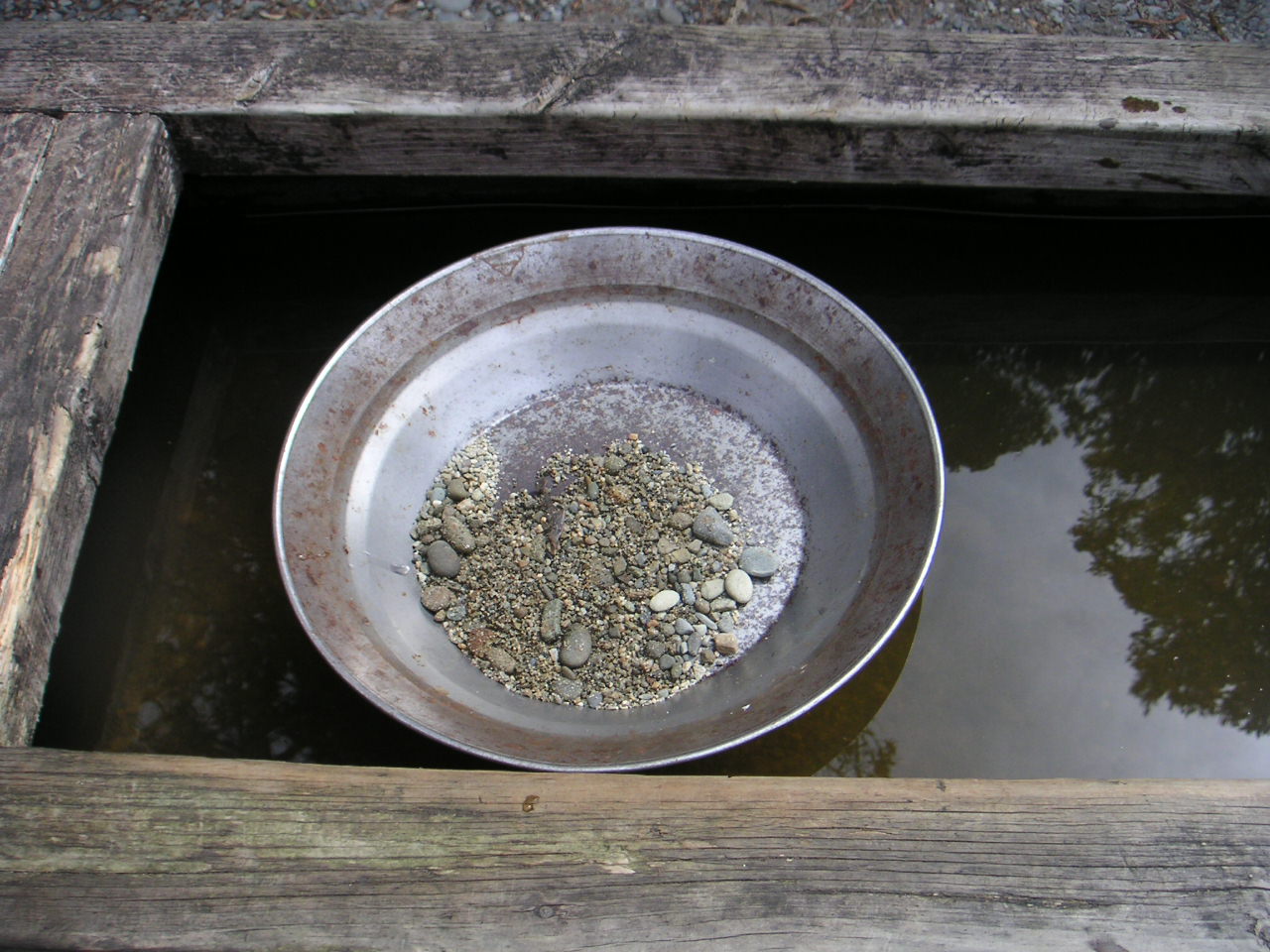
A gold pan

Gold prospecting is the act of searching for new gold deposits. Methods used vary with the type of deposit sought and the resources of the prospector. Although traditionally a commercial activity, in some developed countries placer gold prospecting has also become a popular outdoor recreation. Gold prospecting has been popular since antiquity. From the earliest textual and archaeological references, gold prospecting was a common thread for gaining wealth.

Prospecting for placer gold

[edit]
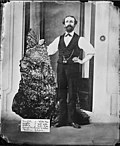
Gold prospecting at the Ivalo River in 1898
Gold rush traces at river in Alaska. Here, placer gold has been industrially extracted by sluices and mechanical devices. Great volumes of material have been washed along this river, the traces can still been seen on this aerial image,

Prospecting for placer gold is normally done with a gold pan or similar instrument to wash free gold particles from loose surface sediment.[1] The use of gold pans is centuries old, but is still common among prospectors and miners with little financial backing.

Deeper placer deposits may be sampled by trenching or drilling.[2] Geophysical methods such as seismic, gravity or magnetics may be used to locate buried river channels that are likely locations for placer gold.[3] Sampling and assaying a placer gold deposit to determine its economic viability is subject to many pitfalls.[4]

Once placer gold is discovered, the gold pan is usually replaced by sluices or mechanical devices to wash greater volumes of material. Discovery of placer gold has often resulted in discovery of hardrock gold deposits when the placers are traced to their sources.

Prospecting for hardrock gold deposits

[edit]

Prospectors for hardrock, or lode gold deposits, can use many tools. It is done at the simplest level by surface examination of rock outcrops, looking for exposures of mineral veins, hydrothermal alteration, or rock types known to host gold deposits. Field tools may be nothing more than a rock hammer and hand lens.

Hardrock gold deposits are more varied in mineralogy and geology than placer deposits, and prospecting methods can be very different for different types of deposits. As with placer gold, the sophistication of methods used to prospect for hardrock gold vary with the financial resources of the prospector. Drilling is often used to explore the subsurface. Surface geophysical methods may be used to locate geophysical anomalies associated with gold deposits. Samples of rocks or soil may be collected for geochemical laboratory assay, to determine metal content or detect geochemical anomalies.[5] Hardrock gold particles may be too small to see, even with a microscope.

Most gold today is produced in large open-pit and deep underground mines. However, small-scale gold mining is still common, especially in developing countries.

A 2012 study by Australian scientists found that termites have been found to excrete trace deposits of gold. According to the CSIRO, the termites burrow beneath eroded subterranean material which typically masks human attempts to find gold, and ingest and bring the new deposits to the surface. They believe that studying termite nests may lead to less invasive methods of finding gold deposits.[6][7][8] Herodotus reported about gold-digging ants.

Recreational prospecting

[edit]

Small-scale recreational prospecting for placer gold has been seen in many parts of the world including New Zealand (especially in Otago), Australia, South Africa, Wales (at Dolaucothi and in Gwynedd), in Canada and in the United States especially in western states but also elsewhere.

[edit]

See also

[edit]

References

[edit]
[edit]
Revisions and contributorsEdit on WikipediaRead on Wikipedia
from Grokipedia
Gold prospecting is the physical exploration and initial extraction of gold from its natural deposits, encompassing both placer deposits—loose sediments like river gravels where gold accumulates due to its high density—and lode deposits, which are gold-bearing veins within solid rock formations.[1] This activity typically involves manual or mechanized techniques to separate gold particles from surrounding materials, driven by the metal's economic value and historical allure.[2] While often romanticized, successful prospecting requires geological knowledge, physical endurance, and adherence to environmental regulations, as most viable surface deposits have long been claimed or exhausted.[2] The practice of gold prospecting dates back over 5,000 years, with evidence of ancient mining in Egypt and references to operations in Saudi Arabia around 961–922 B.C., where early civilizations extracted gold for jewelry, currency, and religious artifacts.[1] In the United States, the first documented gold discovery occurred in 1799 at Reed Gold Mine in North Carolina, sparking small-scale operations in the Appalachian region that spread westward in the early 19th century.[3] The activity exploded during the 1848 California Gold Rush, triggered by James W. Marshall's find at Sutter's Mill, which drew over 300,000 prospectors and transformed the American West, fueling migration, economic booms, and conflicts with indigenous populations.[4] Subsequent rushes, such as those in Alaska's Klondike region in the 1890s, further embedded prospecting in national lore, though by the 1930s Depression era, individual efforts largely yielded to corporate mining.[2] Key methods in gold prospecting vary by deposit type and scale, with placer techniques dominating recreational and small-scale operations. Panning, the simplest method, uses a shallow pan to swirl water and gravel, allowing heavier gold flakes to settle at the bottom—a practice refined since Roman times but popularized during 19th-century rushes.[4] Sluice boxes channel water over riffled troughs to trap gold, while more intensive approaches like hydraulicking employ high-pressure water jets to dislodge gravels, though this was banned in California by 1884 due to environmental damage.[4] For lode deposits, prospectors sample rocks and perform fire assays to detect gold content, often requiring drilling or trenching to expose veins, as seen in historic districts like Colorado's Cripple Creek.[2] Modern prospecting incorporates geophysical tools like metal detectors and geochemical analysis to identify low-grade ores, such as those at Nevada's Carlin mine opened in 1965.[2] Today, gold prospecting remains a blend of hobby and industry, regulated by agencies like the U.S. Bureau of Land Management to mitigate impacts on waterways and wildlife from mercury use or dredging.[2] Despite vast historical production—U.S. output peaked at approximately 11 million troy ounces annually in 1997, though it has since declined to about 5.5 million troy ounces in 2023—only a fraction of prospectors find payable gold, underscoring the role of luck and persistence in this enduring pursuit. As of 2023, global gold mine production was about 3,600 metric tons, with the United States ranking fourth behind China, Russia, and Australia.[5]

History and Background

Origins and Early Techniques

Gold prospecting originated in ancient civilizations around 3000 BCE, with early methods focused on extracting alluvial deposits through rudimentary washing and collection techniques. In ancient Egypt, gold mining began in the Nubian region, where prospectors panned river sediments to separate gold particles from gravel using shallow wooden bowls or simple sieves, a practice documented in hieroglyphic records and archaeological evidence from sites like Wadi Allaqi.[6] These operations supplied gold for bars used as a medium of exchange, marking one of the earliest instances of gold serving an economic function beyond adornment.[6] In Mesopotamia, during the third millennium BCE, gold was primarily obtained through trade from alluvial river deposits in regions like the Zagros Mountains.[7] Artifacts from Ur and other sites indicate that this gold was refined through hammering and alloying, highlighting its role in creating jewelry and religious objects that symbolized divine power and wealth in early urban societies.[7] Pre-Columbian cultures in Mesoamerica, including the Olmecs and Maya around 2000–1000 BCE, acquired gold through trade networks from southern regions, often integrating it into broader resource exchange.[8] Gold was hammered into sheets for ornaments, underscoring its cultural significance in rituals and elite status rather than widespread economic use.[8] The Romans advanced these practices in the first century BCE through large-scale operations in provinces like Hispania and Dacia, where fire-setting—heating rock faces with fires and quenching them to induce cracking—was combined with water channeled via aqueducts for ground sluicing to wash away debris and expose gold-bearing gravels.[9] This hydraulic approach, supported by extensive water management systems, enabled efficient extraction from both placer and shallow vein deposits. During the medieval period in Europe (circa 500–1500 CE), gold prospecting evolved with improved water management, including wooden water wheels and drainage adits to remove groundwater from deeper shafts in regions like Saxony and Hungary, allowing sustained operations in alluvial and hardrock settings.[10] Fire-setting remained a key technique for breaking ore, often followed by manual crushing and washing in wooden troughs resembling early sluices. Indigenous peoples in the Americas prospected for various minerals prior to European contact, though gold-specific activities in regions like the southeastern and western areas were not systematic.[11] In Australia, pre-colonial Aboriginal communities prospected for ochre and other minerals using pit mining and surface collection.[12] In ancient China, gold prospecting dates back to around 2000 BCE, with early placer mining along rivers using panning and sluicing techniques in regions like the Yellow River basin.[10] Throughout these eras, gold held profound cultural and economic importance: in Egypt and Mesopotamia, it functioned as a standardized currency and status symbol in artifacts like Tutankhamun's mask; in Mesoamerica, it embodied sacred power in ritual objects, reflecting cosmological beliefs rather than monetary value.[6][8] These early practices laid the groundwork for placer methods that intensified during later historical gold rushes.[13]

Major Gold Rushes and Their Impact

The California Gold Rush, spanning 1848 to 1855, began with the discovery of gold at Sutter's Mill by James W. Marshall on January 24, 1848, sparking one of the largest migrations in U.S. history.[14] This event drew approximately 300,000 people to California, transforming the region's non-Indian population from about 14,000 in 1848 to nearly 100,000 by the end of 1849, with many arriving via overland trails or around Cape Horn.[14] The influx fueled rapid economic growth but also led to a shift from individual panning to large-scale hydraulic mining by the early 1850s, which used high-pressure water jets to erode hillsides and extract gold more efficiently.[15] The Klondike Gold Rush of 1896–1899 originated with the discovery of rich placer deposits along the Klondike River, a tributary of the Yukon River in Canada's Yukon Territory, by Skookum Jim Mason, Tagish Charlie and George Carmack in August 1896.[16] News of the strike reached the United States in July 1897, triggering a frenzy that saw around 100,000 stampeders head north to Alaska and the Yukon, enduring severe hardships including treacherous mountain passes like the Chilkoot and White Pass trails, where avalanches, starvation, disease, and murders claimed thousands of lives.[16] Despite the challenges, the rush spurred an economic boom, with Dawson City emerging as a bustling hub and contributing to the development of infrastructure in Alaska and the Yukon, including ports like Skagway.[16] Australia's gold rushes in the 1850s, particularly in Victoria and New South Wales, commenced with significant discoveries in 1851 at Ophir (Bathurst) in New South Wales and soon after at Ballarat and Bendigo in Victoria, attracting over 500,000 immigrants and quadrupling the colonies' population from 430,000 in 1851 to 1.7 million by 1871.[17] These events accelerated colonial development and multiculturalism but also prompted social upheavals, such as the Eureka Stockade rebellion in 1854 at Ballarat over miners' rights.[18] In South Africa, the Witwatersrand Gold Rush began in 1886 with the discovery of vast lode deposits on the Witwatersrand ridge near Johannesburg, marking a pivotal shift to industrialized mining and dwarfing previous global gold outputs.[6] This led to innovations in deep-shaft mining techniques, including the adoption of the cyanide leaching process in the 1890s to extract gold from low-grade ores at depths exceeding 3,000 meters, revolutionizing the industry.[19] These gold rushes had profound long-term impacts, including accelerated urban development, such as the transformation of San Francisco from a small port into a major metropolis with a population exceeding 25,000 by 1852, serving as a gateway for migrants and commerce.[15] They drove massive labor migrations, reshaping demographics through the influx of diverse groups from Europe, Asia, Latin America, and beyond, which influenced cultural and economic landscapes in affected regions.[17] Environmentally, unchecked practices like hydraulic mining in California caused widespread degradation, including river siltation, deforestation, and erosion that persisted for decades, altering ecosystems and prompting later regulatory reforms.[15]

Types of Gold Deposits

Placer Deposits

Placer deposits consist of alluvial accumulations of gold particles that have been eroded from primary lode sources and concentrated through the action of water in rivers, streams, beaches, or other sedimentary environments. These deposits form when gold-bearing rocks undergo weathering, releasing dense gold grains that are transported by flowing water and settle in areas of reduced velocity due to their high specific gravity. The formation of placer gold begins with the chemical and physical weathering of primary gold-bearing lode deposits, such as quartz veins in bedrock, which liberates free gold particles ranging from fine flakes to nuggets. These particles are then entrained and transported by rivers or streams, where hydraulic forces sort them from lighter sediments; in low-velocity zones like stream bends, gravel bars, or floodplains, the heavier gold settles out through gravitational separation, often accumulating in layers of unconsolidated gravel, sand, or clay. This process can occur over geological timescales, with repeated cycles of erosion, transport, and deposition enriching the concentration of gold. Placer deposits are classified into several types based on their geological setting and age. Streambed placers form directly within active river channels or floodplains, where gold is actively concentrated in the present-day sediment load. Bench placers develop on elevated terraces or ancient river benches above current stream levels, representing remnants of former river courses that have been uplifted or incised. Paleoplacers, in contrast, are ancient deposits preserved in sedimentary rock sequences, often dating back millions of years and exposed through erosion. Key indicators of placer gold potential include the presence of black sands composed of magnetite and other heavy minerals like ilmenite or garnet, which concentrate alongside gold due to similar densities and provide visual or magnetic clues to underlying deposits. Globally, placer deposits have been significant in regions with active fluvial systems and historical gold production. In Alaska, rivers such as the Klondike and Yukon have yielded substantial placer gold from Tertiary and Quaternary sediments, contributing to major rushes in the late 19th century. California's Sierra Nevada foothills, particularly along the American and Yuba Rivers, host extensive streambed and bench placers formed from erosion of Mesozoic lode sources, which powered the 1849 Gold Rush. In New Zealand, the South Island's Otago region features paleoplacers and stream deposits in quartz-rich gravels, derived from schist-hosted lodes and exploited since the 1860s. These examples illustrate how placer deposits differ from hardrock sources by being secondary, surficial accumulations rather than in-situ veins.

Lode or Hardrock Deposits

Lode or hardrock deposits, also known as primary gold deposits, consist of gold embedded within quartz veins or disseminated through host rocks such as granite, schist, or other igneous and metamorphic formations.[1] These deposits form the original source of gold mineralization in the Earth's crust, contrasting with secondary placer accumulations derived from their erosion.[1] The formation of lode gold deposits primarily occurs through hydrothermal processes in tectonically active zones, where mineral-rich fluids, often heated by underlying magma or during metamorphism, circulate through fractures in the bedrock.[1] These fluids, typically of low salinity and rich in CO₂ and ¹⁸O, dissolve gold from surrounding rocks and precipitate it as temperatures drop from around 400°C to 340°C, often due to changes in pressure, oxygen fugacity, or sulfur content.[20][21] In metamorphic environments, gold precipitation is facilitated by water expulsion during mountain-building events, while in volcanic settings, solutions may emanate directly from cooling intrusions at depths of 2-5 miles.[1] Such processes are commonly associated with episodic tectonic events, including faulting and folding in Paleozoic to Mesozoic rocks.[22] Characteristics of lode deposits include their occurrence along structural controls like faults, shear zones, and fissures, which channel the mineralizing fluids and create vein systems or disseminated ore bodies.[21] Associated minerals frequently include pyrite, arsenopyrite, chalcopyrite, and quartz, with gold often finely disseminated or visible as native particles within these sulfides.[21] Alteration zones surrounding the deposits feature sericitization, silicification, and argillic changes, such as the formation of sericite, chlorite, or kaolinite halos, which indicate fluid-rock interactions.[21] In some cases, base metals like copper or antimony accompany the gold, and the deposits may exhibit banded structures from repeated fluid pulses.[22] Prominent examples include the Mother Lode belt in California's Sierra Nevada foothills, a 70-mile-long system of quartz veins in schistose and metavolcanic rocks formed during Jurassic folding and intrusion, yielding extensive gold through fissure-filling processes.[22] Another key type is the Carlin deposits in Nevada, which are low-sulfide, disseminated ores in Paleozoic carbonate rocks, precipitated by Tertiary hydrothermal fluids along faults at depths up to 800 meters, often with arsenian pyrite and jasperoid alteration.[23]

Prospecting Methods

Placer Gold Prospecting

Placer gold prospecting targets loose, unconsolidated deposits formed by the erosion and redeposition of gold-bearing materials in streams, rivers, and alluvial fans, where heavier gold particles settle due to gravity.[24] These methods rely on water flow or mechanical agitation to separate gold from lighter sediments, making them suitable for surface-level exploration in active or ancient waterways. Success depends on understanding sediment dynamics and using gravity-based separation techniques, often in regions with historical production like California's Sierra Nevada or Alaska's Yukon basin.[2] Site selection begins with reading river morphology to identify areas where water velocity decreases, allowing gold to drop out of suspension. Prospectors look for inner bends of meanders, behind large boulders, or at the heads and tails of gravel bars, where eddies create natural traps for heavy minerals.[25] Pay streaks—concentrated layers of gold-rich gravel—often form near bedrock or along impermeable clay layers that impede downward migration, typically 1-3 feet thick and running parallel to the stream channel.[25] Geomorphological clues, such as elevated terraces or buried paleochannels from ancient river systems, signal potential deposits; these fossil placers, like Tertiary channels in the Sierra Nevada, can contain coarser gold preserved above modern stream levels.[25] Visual indicators include black sands (magnetite and ilmenite) or garnets, which associate with gold due to similar densities.[24] Manual methods emphasize low-cost, labor-intensive gravity separation for small-scale operations. Panning involves filling a shallow, 12- to 14-inch diameter metal pan with gravel and water, then agitating it in a circular motion to settle heavier gold particles while lighter materials are washed away; this processes about 0.2-0.25 cubic feet of material per panful and requires skill to avoid losing fine gold.[26] Sluicing uses long wooden or metal boxes (typically 12 feet long and 16-18 inches wide) fitted with riffles—transverse barriers that create low-velocity zones for gold capture—allowing a single operator to process 3-7 cubic yards of gravel daily with a steady water flow at a 1:12 slope. In low-flow areas, prospectors construct small rock wing dams, often in a V-shape, upstream from the sluice inlet to channel and concentrate the stream's natural flow, increasing water volume and pressure for enhanced gold separation without fully damming the stream to comply with regulations.[26][27] Rocker boxes, portable cradles about 3 feet long with an apron of canvas or burlap over riffles, combine shaking and washing actions via a rocking motion; they handle 3-5 cubic yards per day for two workers and were particularly useful in water-scarce areas during early rushes.[26] These techniques effectively recover coarse gold but are less efficient for fines.[28] Mechanized approaches scale up processing for higher volumes in varied terrains. Highbankers, or power sluices, pump water through a sluice box elevated above the stream, enabling excavation from dry banks and classification of up to 5-10 cubic yards per hour while minimizing environmental disturbance compared to full dredging.[26] Dredges employ submerged suction hoses or bucket lines to vacuum or scoop gravel from streambeds, processing it through onboard sluices; modern portable versions handle 10-50 cubic yards daily in shallow waters, targeting pay streaks directly on bedrock.[28] In arid regions like the southwestern U.S. deserts, dry washing uses vibrating screens and air blowers to fluidize dry gravel, separating gold via air gravity akin to water methods; recovery rates reach 95% for values as low as 3-35 cents per cubic yard, though dust control is essential.[26] Sampling strategies assess deposit viability by estimating gold concentration, typically expressed in cents per cubic yard or milligrams per cubic meter. Test holes, dug manually or with augers to depths of 5-20 feet, provide vertical profiles of gravel layers; multiple holes (e.g., 10-20 per site) spaced 10-50 feet apart reveal pay streak locations and variability, with samples panned or assayed for accuracy.[29] Bulk sampling involves excavating larger volumes (1-10 cubic yards) from promising zones, processing them via sluice or mill to simulate full recovery and account for nugget effects or fine gold losses; this method corrects for swell factors (1.2-1.5 times bank volume) and is crucial for erratic deposits, often overvaluing if small samples miss rich pockets.[29] Results guide whether a site warrants mechanized extraction, as economic viability depends on gold price, operating costs, and local conditions.[29]

Hardrock Gold Prospecting

Hardrock gold prospecting focuses on identifying and evaluating lode deposits, where gold is embedded within solid rock formations such as quartz veins or disseminated in host minerals, requiring invasive geological techniques to assess potential ore bodies. Unlike surface placer methods, this approach involves systematic mapping and sampling of bedrock to detect mineralization indicators, often in rugged terrains where outcrops are limited. Prospectors target structurally controlled features like faults and shear zones that channel gold-bearing fluids, using a combination of visual, geochemical, and geophysical tools to delineate targets for further investigation.[30] Surface exploration begins with identifying gossans, which are oxidized iron caps formed above sulfide-rich deposits, appearing as rusty, porous, sponge-like rocks that indicate supergene enrichment and potential underlying gold mineralization. These features result from the weathering of primary sulfides, leaching base metals while concentrating precious metals like gold near the surface. Prospectors also seek vein outcrops, where quartz or sulfide veins intersect the surface, often marked by white or milky quartz bands in host rock; mapping these exposures helps trace the strike and dip of potential lode systems. Complementary soil and rock geochemistry sampling involves collecting shallow samples (typically 10-30 cm depth) from grids over suspected areas, analyzing for anomalous gold and pathfinder elements such as arsenic, antimony, and silver to define dispersion halos around hidden veins. Rock chips from outcrops or float are crushed and assayed to confirm mineralization, with grids spaced 25-100 meters apart depending on terrain cover.[31][32][30][33][34] Geophysical methods enhance subsurface detection by exploiting physical contrasts between mineralized veins and host rock. Magnetometry surveys measure variations in the Earth's magnetic field caused by magnetic minerals like magnetite or pyrrhotite associated with gold-bearing sulfides, identifying linear anomalies that align with vein trends; ground-based magnetometers achieve resolutions of 1-5 nanoteslas over grids of 50-200 meter spacing. Resistivity surveys, often using electrical resistivity tomography (ERT), detect quartz veins as high-resistivity zones (typically >1000 ohm-m) due to their low porosity and conductivity compared to surrounding altered rock, helping map vein widths and depths up to 50-100 meters. These non-invasive techniques are particularly useful in vegetated or soil-covered areas to prioritize drilling targets.[35][36] Drilling techniques provide direct access to subsurface ore for sampling and grade assessment. Core drilling, using diamond-tipped bits to extract continuous cylindrical samples (typically 1.5-5 cm diameter), allows detailed logging of lithology, vein structures, and mineralization; holes are oriented perpendicular to vein strikes, reaching depths of 100-500 meters to intersect potential shoots. Trenching, involving mechanical excavation of shallow cuts (1-5 meters deep) across outcrops or geophysical anomalies, exposes veins for mapping and channel sampling, revealing lateral continuity and structural controls. These methods generate samples for assaying, with core recovery rates ideally exceeding 90% to ensure representative ore grades.[37][38][30][39] Assay processes quantify gold content in collected samples, primarily through fire assay, a fusion method that dissolves the sample in a lead flux at 1000-1200°C, collecting gold in a prill for atomic absorption or gravimetric analysis, reporting results in parts per million (ppm), where 1 ppm equals 1 gram per tonne. This technique achieves detection limits below 0.01 ppm and is standard for hardrock ores due to its accuracy across matrices. In lode deposits, gold distribution varies between coarse nuggets (visible particles >1 mm, causing high-nugget effect variability) and fine disseminated grains (<0.1 mm), influencing assay precision; screen fire assays separate coarse gold to mitigate under-sampling, as nuggets can skew bulk grades by factors of 2-5 in vein systems. Representative sampling accounts for this heterogeneity to estimate economic viability, as development depends on grade, deposit size, and market conditions.[40][40]

Equipment and Tools

Traditional Tools

Traditional tools in gold prospecting consist of simple, handheld implements that have been essential for manual extraction and initial assessment of gold-bearing materials since the early days of mining. These tools, primarily used in placer and hardrock settings, rely on physical labor and basic principles of gravity separation and sample testing to identify and concentrate gold without mechanical power. The gold pan is a foundational tool for placer prospecting, serving as a shallow, circular dish for washing gravel to separate heavier gold particles from lighter sediments. Typically constructed from sheet iron or durable plastic, it measures about 35 cm in diameter at the top and 5-6 cm deep, with rims flared outward at approximately 50 degrees from vertical to facilitate swirling and retention of concentrates.[41] In operation, the pan is filled with gravel and submerged in shallow, still water (20-30 cm deep), where the material is kneaded to break down clays, shaken to settle heavy minerals like gold to the bottom, and swirled to wash away sands and gravels, ultimately concentrating gold along the pan's edges.[41] This method allows a prospector to process roughly 10 pans per hour, equivalent to 0.5-1 cubic meter of material per day, making it ideal for initial concentration in streambeds or bars.[41] Pickaxes and shovels enable the excavation and preparation of ground for sampling in both placer and hardrock environments. The pickaxe, with its pointed or chisel end, is used to break up compacted soil, rocky outcrops, or hard ground to access potential gold-bearing layers, often leaving characteristic scars on rock faces as evidence of prospecting activity.[42] Complementing this, the shovel—typically long-handled and round-pointed—excavates loose gravel or digs test pits to depths of several feet, allowing collection of samples from placer bars or shallow lode exposures for further processing.[41][42] Together, these tools support small-scale test excavations, such as hand-dug pits in desert regions, which were common during historical gold rushes and Depression-era operations to evaluate deposit viability before larger efforts.[42] Classifier screens, also known as sieves, assist in sorting gravel by particle size to streamline panning or other concentration steps, removing oversized rocks that could hinder gold recovery. These are typically wire-mesh frames, with common sizes ranging from coarse 1-2 mm openings (for separating cobbles in sluice feeds) to finer meshes like 200 mesh (0.074 mm) for processing material containing fine gold particles.[43] In practice, gravel is poured over the screen, allowing smaller fractions to pass through for subsequent washing while discarding larger debris, thereby improving efficiency in artisanal settings like Colombian placer operations where trommels with 1-2 mm screens classify mill discharge.[43] Crucibles and basic assay kits provide a means for on-site evaluation of ore samples through simple smelting or fire assay techniques, determining gold content without laboratory facilities. A crucible, often made of clay-graphite or porcelain, holds pulverized ore mixed with fluxes like borax or sodium carbonate, which is then heated in a portable furnace to fuse the material and separate gold into a button or bead for weighing.[44] This fire assay process, involving lead as a collector to amalgamate gold during fusion, has been a standard for traditional prospectors to test lode or concentrate samples rapidly in the field, confirming economic potential before extensive digging.[40] Basic kits include the crucible, fluxes, a small torch or fire source, and tools for parting the lead, enabling assays accurate to parts per million in small-scale operations.[44]

Modern and Technological Tools

Modern gold prospecting relies on advanced technologies that improve detection accuracy, efficiency, and safety over traditional methods, particularly in challenging terrains and mineralized soils. These tools integrate electronics, geospatial data, and remote sensing to identify gold deposits with minimal environmental disturbance. Metal detectors, especially Very Low Frequency (VLF) and Pulse Induction (PI) models, are essential for detecting gold nuggets in soil. VLF detectors operate by generating a continuous alternating magnetic field that induces currents in metallic targets, allowing sensitivity to small nuggets under 1 grain (0.064 g) at depths of about 2 inches, with larger nuggets up to 1 troy ounce detectable beyond 8 inches in moderate soils.[45] They excel in less mineralized ground but require ground balancing to counter iron oxide interference. PI detectors, in contrast, emit powerful pulses to penetrate highly mineralized or salty soils, making them ideal for deeper nugget detection in gold-bearing regions like California, though they are less sensitive to very small targets.[46] Examples include the Fisher Gold Bug-2 (VLF, 71 kHz) for small nuggets and the Garrett Axiom (PI) for tough environments.[46] GPS and GIS mapping systems enable precise plotting of mining claims and integration of satellite imagery for regional analysis. In Sudan, Landsat 7 ETM+ imagery processed via principal component analysis and band ratioing has delineated alteration zones and shear structures associated with gold mineralization, correlating artisanal sites with anomalies for targeted prospecting.[47] GIS overlays geological, geophysical, and satellite data to create favorability maps, identifying prospective areas for deposits by classifying altered rocks like clays and iron minerals, as demonstrated in Andean copper-gold belts where optimized Landsat data improved exploration targeting.[48] Portable X-ray fluorescence (XRF) analyzers provide handheld, real-time elemental analysis of rocks and soils, quantifying gold concentrations above 25 ppm in 60 seconds without destruction. Field studies using these devices on synthetic standards and hyperaccumulator plants have validated their accuracy for prospecting, though they require validation against lab methods like ICP-OES to address interferences such as zinc.[49] Models like the Bruker S1 TITAN offer rugged portability for on-site assessments in remote areas.[50] Drones equipped with geophysical sensors facilitate aerial surveys for detecting hardrock anomalies over large areas in gold prospecting. Multirotor drones with magnetometers map subsurface magnetic variations to identify mineralization patterns, as in Canadian and Yakutian studies where UAV surveys revealed structural controls on gold ores with high resolution.[51] These systems outperform traditional methods by reducing costs and risks, enabling rapid anomaly detection in inaccessible terrains.[51]

Recreational and Modern Prospecting

Recreational Activities and Regulations

Recreational gold prospecting encompasses a range of hobbyist pursuits that allow individuals to engage in small-scale mineral extraction for personal enjoyment, often in public lands or designated areas. Common activities include weekend gold panning in streams and rivers, where participants use pans to separate gold flakes from sediment through gravity separation, as well as metal detecting on beaches and riverbanks to locate nuggets or artifacts. Club-organized outings, such as those hosted by local prospecting associations, provide guided group experiences that foster community and education on techniques like sluicing with portable equipment. These activities emphasize low-impact methods and are popular in regions with historical gold deposits, offering both outdoor recreation and the thrill of potential discovery. In 2025, surging gold prices (up 45% year-to-date) have increased participation, with over 100,000 active miner's rights in Victoria, Australia.[52][2][53][54] In recreational and small-scale prospecting, particularly in placer-rich rivers, major floods or high-water events can reset streambeds by eroding loose sediments and redepositing heavier gold in concentrated pockets. Prospectors often wait for water levels to recede after such events to access freshly exposed bedrock cracks, potholes, and bars where gold accumulates, increasing chances of finding pickers or small nuggets compared to pre-flood conditions. In the United States, recreational prospecting is regulated primarily by the Bureau of Land Management (BLM) and the U.S. Forest Service to ensure minimal environmental disturbance. Under the General Mining Law of 1872, individuals can stake mining claims on federal lands administered by the BLM for locatable minerals like gold, provided a valuable deposit is discovered and boundaries are properly marked with monuments; claims must be recorded with the BLM within 90 days. For activities in national forests, casual panning and metal detecting are generally allowed without permits on unclaimed lands, but dredging or mechanized equipment requires a Notice of Intent or Plan of Operations if surface disturbance exceeds minor levels, such as more than one-half acre in some states, with equipment size limits like suction nozzles under four inches in diameter to prevent significant impacts.[55][56][57] Safety is paramount in recreational prospecting, particularly in remote or watery environments. Prospectors should monitor weather forecasts to avoid flash floods in canyons or streambeds, where sudden water rises can pose lethal risks, and always prospect with a partner for mutual assistance. When working in or near moving water, wearing U.S. Coast Guard-approved life vests is recommended to prevent drowning, alongside carrying throw ropes for rescues. Additionally, mercury-free practices are standard in recreational methods like panning and sluicing, relying on physical separation rather than chemical amalgamation to eliminate health and environmental hazards associated with mercury use.[58][59][60] Globally, regulations vary to balance access with conservation. In Australia, fossicking licenses are required for recreational prospecting on Crown lands, such as the 10-year Miner's Right in Victoria costing approximately $28.60, permitting activities in areas like the Golden Triangle with historical deposits suitable for hobbyists using hand tools and metal detectors, or around Kalgoorlie in Western Australia, but prohibiting mechanized digging without further approval.[61][62][63] In Canada, designated recreational panning zones exist without claims in areas like British Columbia's streams, where hand panning is allowed year-round using non-motorized tools, while Yukon offers free public areas near Dawson City for visitors, though larger operations require mineral titles. These frameworks ensure hobbyists contribute minimally to land degradation compared to commercial endeavors.[64][65]

Contemporary Commercial Practices

Contemporary commercial gold prospecting is predominantly conducted by large mining corporations through structured joint ventures that pool resources, expertise, and risk for extensive exploration programs. For instance, Nevada Gold Mines, a joint venture between Barrick Gold (61.5%) and Newmont Corporation (38.5%), operates across multiple sites in northern Nevada, integrating geophysical surveys and drilling to identify Carlin-type gold deposits.[66] These ventures often employ seismic surveys to map subsurface structures, with high-resolution 3D seismic technology delineating fault zones and lithological boundaries associated with gold mineralization. At New Found Gold's Queensway project in Newfoundland, a 47 km² 3D seismic survey conducted by HiSeis in 2023 imaged structures up to 8 km deep, enabling precise targeting of gold-bearing zones along fault systems beyond shallow drilling limits.[67] Similarly, Gold Fields utilized a 30 km² 3D seismic survey at its St Ives mine in Australia to identify deep intrusive bodies, resulting in a 1,200 m mineralized intersection that refined deposit models.[68] Resource estimation in commercial gold prospecting adheres to standardized reporting protocols to ensure transparency and economic viability, with Canada's NI 43-101 serving as a key framework for disclosing mineral resources and reserves. Under NI 43-101, which incorporates CIM Definition Standards, proven reserves represent economically mineable portions of measured resources, reported in metric tons of ore with associated gold grades in grams per tonne (g/t).[69] For example, IAMGOLD's year-end 2024 estimates (reported February 2025) for its assets reported proven and probable reserves totaling 10.7 million ounces of gold across 100% owned operations, derived from indicated resources using cut-off grades and modifying factors like recovery rates.[70] At Nevada Gold Mines, while aligning with U.S. SK-1300 standards, equivalent practices yield attributable (61.5% Barrick share) proven and probable reserves of 350 million tonnes grading 2.71 g/t gold, containing 30 million ounces (as of December 31, 2024, per Barrick's February 2025 report), based on 3D block models and kriging interpolation.[71] Automation trends are transforming commercial prospecting by integrating artificial intelligence (AI) for anomaly detection and robotic systems for drilling efficiency. AI algorithms analyze multi-modal data from geophysical and geochemical surveys to identify subtle mineralization anomalies, outperforming traditional methods in pattern recognition and reducing exploration costs.[72] In practice, deep learning models detect geochemical outliers in gold exploration datasets, enabling targeted drilling. Robotic drilling enhances safety and precision, with semi-autonomous rod handlers automating underground operations; Major Drilling's 2024 system, for instance, supports hands-free rod changes in gold mines, increasing productivity by minimizing human exposure to hazards.[73] Case studies illustrate these practices in action, adapting historical gold rush legacies to modern scales. In Nevada, Nevada Gold Mines' operations at the Carlin Trend, building on 19th-century discoveries, employ airborne magnetics, induced polarization surveys, and over 23 million meters of drilling to delineate reserves with proven and probable totals of approximately 46.5 million ounces (as of 2024), supporting production through a mix of open-pit and underground methods.[74] In Papua New Guinea, the Lihir Gold Mine, operated by Newmont (following its 2023 acquisition of Newcrest Mining) since 1997 on a site with ancient volcanic gold associations, integrates AI-optimized extraction and geothermal power for approximately 75% renewable energy, yielding 614,000 ounces of gold in 2024 while incorporating community programs from early rush-era engagements.[75][76] Similarly, the Porgera Joint Venture, reopening in 2023 after a hiatus, uses trackless underground mining to process 1.4 million tonnes of ore yearly from high-altitude deposits, evolving 1980s rush dynamics into sustainable, mechanized production.[77]

Ecological Impacts

Gold prospecting activities, particularly through placer and hardrock methods, have profound ecological consequences, primarily through physical habitat alteration and chemical contamination that disrupt aquatic and terrestrial ecosystems. Sediment disturbance from dredging and hydraulic techniques increases siltation in waterways, smothering fish eggs and reducing oxygen levels essential for aquatic life. For instance, in salmon-bearing rivers, excessive sedimentation has led to declines in fish populations by clogging spawning grounds and altering stream flow dynamics.[78][79] Chemical pollutants exacerbate these issues, with cyanide leaching in hardrock gold processing posing acute risks to wildlife. Cyanide solutions used to extract gold can spill or leach into water bodies, causing rapid mortality in fish and invertebrates due to its toxicity, which inhibits cellular respiration. In artisanal mining, mercury amalgamation for placer gold recovery introduces persistent neurotoxins into sediments and food chains, bioaccumulating in fish and birds, leading to reproductive failures and population declines. Globally, artisanal small-scale gold mining accounts for approximately 38% of anthropogenic mercury emissions, contaminating rivers and soils in tropical regions.[80][81][82][83] Biodiversity loss stems from deforestation associated with access roads and mining sites, fragmenting habitats and reducing species diversity in forested areas. Acid mine drainage from exposed sulfide ores generates acidic runoff laden with heavy metals, contaminating groundwater and surface waters, which inhibits plant growth and harms microbial communities essential for ecosystem health. These effects are particularly severe in biodiverse hotspots, where mining has cleared vast tracts of forest, displacing endemic species and altering ecological balances.[84][85][86] Historically, 19th-century hydraulic mining in regions like California caused widespread environmental degradation through massive sediment releases that buried farmlands and rivers, with legacy effects persisting in contaminated sediments today. In contrast, modern practices incorporate tailings management and chemical neutralization to mitigate pollution, though challenges remain in remote artisanal operations where unregulated activities continue to release untreated wastes.[87][88][89]

Regulations and Ethical Practices

Gold prospecting is subject to international frameworks aimed at reducing environmental and health risks associated with mercury use in artisanal and small-scale gold mining (ASGM). The Minamata Convention on Mercury, adopted in 2013 and entered into force in 2017, specifically targets ASGM as the largest source of mercury emissions globally, requiring signatory nations to develop national action plans to reduce and, where feasible, eliminate mercury use in gold extraction processes. As of November 2025, 153 countries are parties to the convention, promoting safer technologies like gravity concentration and cyanide-free methods to mitigate releases into air, soil, and water. At COP-6 in November 2025, parties strengthened actions on ASGM, emphasizing the provision of alternative livelihoods and advancing the implementation of national action plans.[90][91][92] Additionally, the International Labour Organization (ILO) establishes standards for safe and decent working conditions in ASGM through initiatives like the Safety and Health in Mines Convention (No. 176, 1995), which emphasizes risk prevention, worker protections, and formalization of informal mining operations to address child labor and hazardous exposures. At the national level, laws enforce environmental safeguards tailored to prospecting activities. In the United States, the Clean Water Act (CWA) regulates discharges from placer mining operations under the National Pollutant Discharge Elimination System (NPDES), prohibiting unpermitted releases of sediments and pollutants into waterways that could harm aquatic ecosystems.[93] For instance, effluent limitations apply to mines processing over 1,500 cubic yards of ore annually, requiring permits to control turbidity and heavy metals from sluice boxes and dredges. In Australia, environmental bonds ensure site rehabilitation, where mining companies post financial securities—often up to 100% of estimated restoration costs—to cover cleanup if operators default, as mandated by state regulations like those in Victoria and Western Australia.[94] These bonds fund activities such as revegetation and erosion control, with annual levies contributing to funds like the Mining Rehabilitation Fund for abandoned sites.[95] Ethical practices in gold prospecting emphasize sustainability and social responsibility. Reclamation plans are integral, requiring prospectors to outline post-mining restoration strategies, such as soil stabilization and habitat reconstruction, aligned with guidelines from bodies like the World Gold Council's Responsible Gold Mining Principles (RGMPs), which mandate verifiable environmental management systems.[96] On indigenous lands, community consultations are essential, involving free, prior, and informed consent (FPIC) processes to respect cultural rights and incorporate local knowledge, as outlined in supplemental guidance under the Minamata Convention. Conflict-free sourcing further promotes ethics by ensuring gold originates from operations free of armed conflict financing or human rights abuses, supported by standards like the Conflict-Free Gold Standard, which verifies supply chains for compliance with international norms.[97] Enforcement mechanisms deter violations through penalties and technology. Fines for illegal mining can reach significant amounts, such as up to $11 million under U.S. state laws for unpermitted operations causing environmental harm, with federal agencies like U.S. Customs and Border Protection imposing civil penalties on imported illegally sourced gold.[98] In remote areas, satellite monitoring enables detection of unauthorized activities by analyzing imagery for deforestation, land disturbance, and equipment presence, as utilized by organizations like EOS Data Analytics to support regulatory oversight and rapid response.[99] These measures collectively address ecological impacts like mercury contamination and sediment pollution by promoting compliance and accountability.

References

User Avatar
No comments yet.