Hubbry Logo
HanwooHanwooMain
Open search
Hanwoo
Community hub
Hanwoo
logo
8 pages, 0 posts
0 subscribers
Be the first to start a discussion here.
Hanwoo
Hanwoo
from Wikipedia
Hanwoo
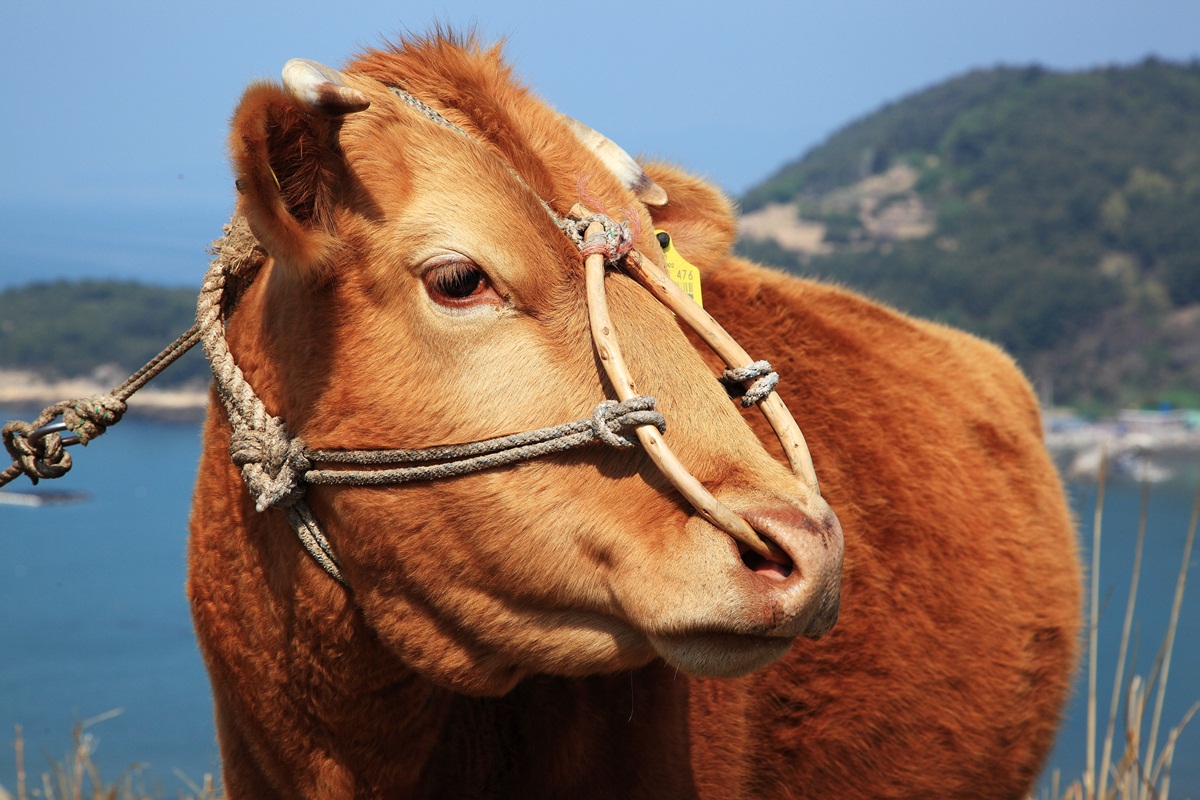
head of a pale-coloured cow
Conservation statusFAO (2007): not at risk
Other names
  • Hanu
  • Korean Brown
  • Korean Native
Country of originKorea
Usemeat
Traits
Weight
  • Male:
    466 kg[1]
  • Female:
    355 kg[1]
Height
  • Male:
    124 cm[1]
  • Female:
    117 cm[1]
Coatbrown[1]
Horn statushorned in both sexes
Notes
Bos taurus
Hanwoo
Hangul
한우
Hanja
韓牛
RRHanu
MRHanu

The Hanwoo (Korean한우), also Hanu or Korean Native, is a breed of small cattle native to Korea. It was formerly used as a working animal, but is now raised mainly for meat.[2]: 193  It is one of four indigenous Korean breeds, the others being the Chikso [ko], the Heugu [ko] and the Jeju Black.[3]

History

[edit]

The Hanwoo was traditionally a working animal breed. Until the expansion of the South Korean economy in the 1960s, it was little used for beef production.[2]: 193  A herd book was established in 1968.[1] Hanwoo beef has since become a premium product.

The Hanwoo was listed by the FAO as "not at risk" in 2007.[4]: 93  In 2003, the total population was reported to be about 1 240 000; in 2014, it was reported as 2 670 000.[1]

In 2001, the Hanwoo was suggested to be a hybrid between taurine and indicine cattle.[5] A mitochondrial DNA study in 2010 found it to be closely related to two taurine breeds, the Holstein and the Japanese Black, and distinctly different from the indicine Nelore and Zwergzebu [de].[6] In 2014, single-nucleotide polymorphism analysis found Korean cattle to form a distinct group with the Yanbian breed of China, separate from European taurine breeds and distant from the indicine group.[7]

Characteristics

[edit]

The Hanwoo is a small breed. The coat is brown; both sexes are horned. Cows have good maternal qualities, but milk production is low, with little more than 400 L produced in 170 days.[1] The cattle are fed rice straw as their principal source of roughage.[1] A rare white variant of the Hanwoo has been bred since 2009; in 2014 there were 14 head. It is reported to DAD-IS as a separate breed.[8]

Use

[edit]

Despite its high price, Hanwoo beef is preferred in Korean cuisine, as it is typically fresher and of better quality than cheaper imported substitutes. Kim et al. (2001) noted, "Hanwoo is regarded as a premium beef because of its high palatability and desired chewiness".[9] Since Koreans consider Hanwoo beef a cultural icon and one of the top-quality beefs of the world, it is used in traditional foods, popular holiday dishes, or as a special-day gift.[5] Hoengseong County is best known for its Hanwoo cattle, where the environment is well-suited for cattle farming. The county began a strategic marketing campaign to brand itself as the origin of the highest quality beef in Korea, selling meat as a "premium product".[10][11]

[edit]

References

[edit]
Revisions and contributorsEdit on WikipediaRead on Wikipedia
from Grokipedia
Hanwoo (한우), also known as Korean Native cattle, is an indigenous breed of small-sized native to the Korean Peninsula, raised primarily for its highly marbled and historically used as a draft animal in . This purebred variety, without foreign crossbreeding, encompasses four coat color types—brown (the most common), brindle, black, and —and is recognized for producing tender, juicy meat with excellent flavor and nutritional qualities, including higher omega-3 content and lower cholesterol than many other types. The history of Hanwoo dates back over 2,000 years, with evidence of its presence in Korea since the New Stone Age, likely originating from migrations of hybridized zebu-taurine cattle from northern and . Populations peaked at around 1.74 million in 1940 but plummeted to 393,000 by 1950 due to wartime losses; post-Korean War conservation efforts, including government-led breeding programs that began in the 1970s—such as the Hanwoo-Gaeryang-Danji initiated in 1979—and intensified in the 1980s, have restored the population to approximately 3.8 million as of 2024 while shifting focus from draft use to production since the 1960s. Physically, Hanwoo cattle are compact and adaptable, with mature cows averaging 309–400 kg and bulls up to 477 kg, featuring gentle temperaments, strong maternal instincts, and resilience to Korea's hot summers and cold winters, though they mature slowly and yield modest milk production. Their beef achieves optimal quality after 18–24 months of age, prized for marbling that enhances tenderness and , and is graded rigorously in , with over 74% reaching Grade 1 or higher by 2023. Culturally, Hanwoo symbolizes abundance and , designated as a "Top 100 National Cultural Symbol" by the Korean Ministry of Culture, Sports and Tourism, and supports a significant portion of the country's industry through specialized farming and promotion.

History

Origins and Domestication

Hanwoo cattle, a native breed of the Korean Peninsula, exhibit evidence of presence and utilization dating back over 2,000 years, supported by historical records and archaeological findings of bovine remains in prehistoric sites. Excavated bones from locations such as the Kimhae shell mound, dated to around 100 BCE, confirm the presence and utilization of early Korean cattle populations, indicating a long-established domestic lineage adapted to the local environment. These findings align with broader patterns in , where domesticated first appeared in northern around 5,000–4,000 years , gradually spreading southward. Migration theories posit that Hanwoo ancestors originated from taurine cattle (Bos taurus) in , likely introduced via pathways from through northern during the . Some researchers propose possible limited influences through historical introgression, though genetic evidence shows predominantly taurine mtDNA, with cattle migrating along trade and agricultural routes that connected to the Korean Peninsula around 4,000–5,000 years . This dispersal is evidenced by genetic haplotypes unique to East Asian taurine populations, distinguishing them from Western Eurasian lineages and supporting an independent regional adaptation process. Genetic analyses indicate Hanwoo form a distinct Northeast Asian taurine cluster closely related to Chinese Yanbian cattle, with domestic appearing in the region approximately 4,000–5,000 years ago. In prehistoric Korean societies, these early domesticated Hanwoo were primarily employed for basic , such as plowing fields and transporting , essential for in a rice- and millet-based economy. Their role extended to ritual sacrifices, underscoring their cultural significance beyond mere utility.

Historical Roles in Korea

Hanwoo cattle played a crucial role in the agricultural economies of ancient Korean kingdoms, particularly during the period (57 BCE–668 CE), where they were primarily utilized as draft animals for plowing rice paddies and transporting goods. This function was vital in supporting the intensive rice-based farming systems that formed the backbone of these societies, enabling efficient land cultivation and the transport of harvests across rugged terrains. Historical records indicate that Hanwoo were integral to farming operations as early as the period around 2000 years ago, emphasizing their long-standing importance in labor-intensive agriculture. During the Joseon Dynasty (1392–1910), Hanwoo were deeply integrated into the kingdom's agrarian framework, serving as indispensable draft animals for tilling fields and hauling produce, which underpinned the dynasty's emphasis on self-sufficient farming communities. To preserve cattle populations for , regulations prohibited the slaughter of for consumption, reflecting Confucian ideals that valued animals as productive resources rather than food sources. These policies included controls on and breeding to ensure a steady supply of working animals, with veterinary texts from the era documenting classifications and care practices for native breeds like Hanwoo. The Japanese occupation of Korea (1910–1945) severely impacted Hanwoo populations through resource extraction and wartime demands, contributing to a sharp decline by the end of . In 1940, approximately 1.74 million Hanwoo were present across the undivided Korean Peninsula, but the number in plummeted to 597,000 by 1945 due to losses from military requisitions, forced labor, and overall wartime devastation. Post-WWII recovery efforts focused on rebuilding herds, including the enforcement of protective laws to safeguard remaining and promote breeding, though numbers further dwindled during the before stabilizing. This period marked a gradual shift toward meat production in the mid-20th century.

Transition to Beef Production

Following the (1950–1953), the Hanwoo population in had plummeted to approximately 0.4 million head due to wartime devastation and resource shortages. In response, the South Korean government launched repopulation efforts through agricultural improvement plans starting in 1953, which by 1965 had restored the population to over 1.3 million head. These initiatives gained momentum in the amid rapid economic industrialization and the decline in draft animal use due to farm mechanization, prompting a deliberate reorientation of Hanwoo toward production to meet rising domestic protein demands. By the 1970s, full-scale meat-type breeding programs were underway, supported by the introduction of in 1962 and the development of specialized feeding and selection methods by the Research Development Administration. A pivotal step in this transition was the establishment of the purebred Hanwoo registry, which formalized standards for purity and enabled systematic recording of pedigrees to preserve genetic integrity while enhancing productivity traits like carcass weight and marbling. This registry laid the groundwork for government-backed breeding efforts. Building on this, subsidies for purebred Hanwoo breeding were introduced in the through programs like the Hanwoo Improvement Complex (launched in 1979), which provided financial incentives to farmers establishing specialized cow-calf operations, expanding from 8 stations in 1979 to 250 by 1995. These supports, administered by the Ministry of Agriculture and Forestry, emphasized performance testing and progeny evaluation to shift Hanwoo from a multipurpose animal to a high-value breed. The 1990s marked further milestones amid global trade pressures, particularly the Uruguay Round Agreement of 1994, which mandated gradual opening of South Korea's beef market to imports. To counter this, the government imposed strict export restrictions on Hanwoo, effectively banning overseas sales until 2015 to prioritize domestic supply and stabilize prices. Concurrent domestic market development initiatives, including quality grading systems and promotion campaigns, elevated Hanwoo beef to premium status, with prices commanding a 33% premium over imported alternatives by 2000. These policies not only protected the breed's economic viability but also reinforced its cultural value as a national asset. In the , breeding programs advanced with the adoption of genomic selection techniques to further improve traits like marbling and growth efficiency.

Physical and Genetic Characteristics

Morphology and Appearance

Hanwoo possess a compact, muscular frame that reflects their historical utility as draft animals in Korea's varied landscapes. As a small to medium indigenous breed that has increased in size through , modern adult males typically weigh 700–800 kg at maturity or slaughter (around 30 months), while breeding females average approximately 430 kg. This contributes to a sturdy yet agile build well-suited for traditional farming tasks. The breed's appearance is characterized by a predominant reddish-brown coat color, which accounts for over 90% of individuals, though variations including , black (known as black Hanwoo), and occur. Both sexes are horned, with horns curving outward in a shape, enhancing their distinctive profile. The overall physique features a deep chest, straight back, and well-developed hindquarters, emphasizing muscle distribution optimized for endurance rather than extreme bulk. These physical traits include adaptations to Korea's challenging environment, such as a metabolism supporting resilience in , rugged conditions with lower nutritional inputs compared to larger exotic breeds.

Genetic Traits and Relatedness

Hanwoo cattle belong to the taurine lineage of Bos taurus, with evidence of hybrid taurine-indicine ancestry originating from Northeast Asian migrations. This breed shares a common origin with Japanese , particularly the variety, as indicated by plots that cluster them closely together, distinguishing both from European breeds like and Angus. Despite this relatedness, Hanwoo exhibits distinct haplotypes contributing to superior marbling traits, including elevated deposition and a higher content in fat (approximately 50.62%), which surpasses levels in crossbred variants (40-44%). Key genetic markers in Hanwoo have been identified through Korean genomic studies, notably variants in the fatty acid synthase (FASN) gene that influence fatty acid composition and intramuscular fat deposition. For instance, specific FASN polymorphisms, such as those affecting oleic acid synthesis, result in higher monounsaturated fatty acid ratios in Hanwoo intramuscular fat compared to other breeds, enhancing meat quality attributes like tenderness and flavor. These markers were pinpointed in genome-wide association studies initiated around 2010, including analyses of SREBF1 and FASN interactions that explain variations in fat profiles. Hanwoo populations display low , primarily due to historical bottlenecks and intensive artificial selection, leading to reduced effective sizes over recent decades (from 215 in 2000-2005 to 77 in 2011-2012). As of the 2020s, efforts continue to manage diversity, with recent studies indicating ongoing challenges in maintaining heterozygosity amid selection pressures. In lines, average inbreeding coefficients range from 0.40% to 0.71% across regions, with an overall pedigree-based estimate around 1.39%, reflecting moderate but increasing homozygosity that underscores the need for diversity management.

Breeding and Management

Selection and Breeding Programs

The National Hanwoo Improvement Program, with genetic evaluation systems established in 1996 under the Korea Animal Improvement Association (KAIA), which has overseen Hanwoo improvement since 1969, focuses on enhancing key production traits through systematic genetic evaluation and selection. This government-led initiative employs estimated breeding values (EBV) derived from animal models to prioritize traits such as average daily weight gain, targeting 0.8–1.0 kg/day during the growing and finishing phases, and carcass yield, aiming for 70–75% retail cut percentage to optimize . Sire selection within the program relies on performance testing of young bulls followed by progeny testing, where superior sires are identified based on offspring outcomes for marbling scores on the Beef Marbling Score (BMS) scale (1–12, with higher values indicating greater ). (AI) has been a cornerstone since the program's inception, while (ET) techniques were widely adopted in the to accelerate dissemination of elite , enabling multiple pregnancies per donor cow and improving overall herd quality. Advancements in genomic selection tools, integrated into the national system in 2020, utilize single-step genomic best linear unbiased prediction (ssGBLUP) models with SNP chip data to predict breeding values for beef quality traits like marbling and tenderness more accurately than traditional methods. These tools have reduced generation intervals by enabling earlier selection of juveniles without waiting for progeny data, thereby accelerating genetic progress in Hanwoo populations. In December 2025, the Korea Agriculture Promotion Agency (KOAT) is set to launch a genomic service for Hanwoo cows to further strengthen the breeding program.

Rearing Practices and Health

Hanwoo cattle are typically reared in intensive systems from birth to slaughter, spanning approximately 28 to 32 months to optimize growth and carcass quality. During the early growth phase, calves receive or milk replacers until around 3 months, followed by a transition to solid feeds. These practices support breeding objectives aimed at enhancing marbling and overall meat yield. Feeding regimens emphasize high-forage diets in the growing and early-fattening stages to promote health and steady weight gain, primarily using rice straw provided alongside restricted concentrates (1.6–1.9% of body weight). , such as Italian ryegrass or , is often incorporated as a high-quality alternative to rice straw, comprising up to 4 kg daily in balanced total mixed rations (TMR). In the finishing phase, lasting the final 3–6 months, the diet shifts to high-concentrate feeds (up to 90% of , with 10% rice straw), featuring crude protein levels of 11–13% and total digestible nutrients of 72–73% to drive deposition and achieve marbling levels of 20–30% in premium grades. This approach enhances feed efficiency while targeting contents that range from 20% to over 29% in high-quality carcasses. Housing for Hanwoo focuses on controlled environments to reduce stress and support uniform growth, with steers typically managed in barns featuring sawdust bedding and ceiling fans for ventilation and cooling. Stocking densities are maintained at 9–10 per head in pens accommodating 4–12 animals, often within larger facilities housing 100–200 head overall, to minimize aggression and promote low levels that could otherwise compromise meat tenderness. Climate-controlled chambers and barns help mitigate heat stress, particularly during Korea's humid summers, by regulating and to sustain performance. Health management prioritizes disease prevention through routine vaccinations, given Hanwoo's vulnerability to outbreaks like (FMD). The 2010–2011 FMD epidemic in Korea severely impacted populations, including Hanwoo, prompting emergency and a nationwide campaign that rapidly reduced incidence rates. Standard protocols include FMD vaccinations for calves at 2 months (first dose) and 4 weeks later (booster), with adults and feeders receiving combined trivalent vaccines intramuscularly every 6 months. Additional vaccines target respiratory diseases (combined 5-way, biannually), bovine ephemeral fever (May– for those over 6 months), and Akabane disease ( annually), administered to minimize acute phase responses and maintain reproductive and growth efficiency. These measures ensure Hanwoo reach slaughter in 28–32 months with minimal health disruptions.

Uses and Economic Impact

Culinary Applications

Hanwoo is renowned for its exceptional marbling, which contributes to a melt-in-the-mouth texture and rich flavor that distinguishes it in . The , often reaching about 24% in premium cuts, enhances tenderness and juiciness during cooking, making it ideal for various preparations. In Korea, Hanwoo beef quality is graded on a system with five levels—1++, 1+, 1, 2, and 3—primarily based on marbling score, alongside meat color, fat color, texture, and maturity, with the overall grade determined by the lowest criterion score. The premium 1++ grade, often combined with yield grade A (denoted as 1++A), represents the highest quality, featuring the finest marbling and is sought after for its superior sensory attributes. Hanwoo plays a central role in iconic Korean dishes such as , featuring marinated short ribs grilled over charcoal, and , consisting of thinly sliced, soy-marinated beef also typically grilled to highlight its tenderness. These preparations emphasize the beef's natural flavors, often served with accompaniments like and fresh vegetables in a communal style. To further enhance tenderness and flavor, Hanwoo cuts undergo aging techniques, including wet aging in vacuum-sealed bags or dry aging in controlled environments, typically for 14 to 28 days, which promotes enzymatic breakdown and intensifies compounds. Nutritionally, Hanwoo beef features a high proportion of monounsaturated fats, comprising 50–60% , which supports heart health by potentially lowering levels compared to beefs higher in saturated fats from some imported sources. This profile, derived from its marbling, positions Hanwoo as a flavorful yet relatively healthier option when consumed in moderation.

Market Value and Industry

Hanwoo commands in the South Korean market, with wholesale prices for 2023 ranging from approximately ₩10,000 to ₩31,000 per kg (USD 7.30–23.89), depending on grade and cut, while retail prices for premium cuts like sirloin can exceed ₩50,000 per kg (USD 37). This positions Hanwoo as 3–5 times more expensive than imported alternatives, such as Australian or U.S. varieties, which typically retail for ₩10,000–15,000 per kg due to lower production costs and advantages. The high value reflects Hanwoo's superior marbling and consumer preference for domestic , driving an annual production of about 345,000 metric tons in 2023, increasing to approximately 369,000 metric tons in 2024, with a forecast of 358,000 metric tons for 2025. The Hanwoo industry supports roughly 84,000 farming households as of , primarily small-scale operations with an average of head per farm, contributing to broader rural in breeding, rearing, and . Exports have expanded since the mid-2010s following regulatory approvals, with key markets including and ; for instance, shipments to reached 42.6 tons in 2023, with similar volumes expected in 2024, supported by international certifications equivalent to standards like USDA grading for . Overall export volumes remain modest at under 100 tons annually, focused on high-value cuts to premium Asian buyers, as domestic demand absorbs the majority of output. The sector faces challenges from volatile feed costs, which rose significantly in 2023–2024 due to global grain prices, eroding farmer margins despite high beef values. Intense competition from cheaper Australian imports, which captured over 40% of the imported market share in recent years, further pressures and . interventions, including direct payments for enhancement and feed cost stabilization programs, help mitigate these issues, with annual support exceeding hundreds of billions of won through the Ministry of Agriculture, Food and Rural Affairs. In 2025, the government enacted a law promoting sustainable growth of the Hanwoo industry and introduced a genomic analysis service to enhance breeding efficiency.

Conservation and Cultural Significance

Population Status and Preservation

As of 2022, the registered population of in stood at approximately 3.7 million heads, representing the predominant breed in the country. This figure had grown from historical lows, driven by breeding initiatives and demand for Hanwoo . However, indicate the population peaked at 3.562 million heads in the second quarter of 2024 before declining to 3.348 million heads by the first quarter of 2025. No verifiable data on Hanwoo populations in is publicly available, likely due to limited reporting from the region. To preserve genetic integrity amid historical population bottlenecks, maintains conservation programs focused on Hanwoo. The for animal genetic resources, operational since the early , stores frozen semen and embryos from Hanwoo to mitigate risks and support . These efforts include systematic collection from diverse lineages, ensuring long-term viability of the breed's . Due to reduced from past events like wartime declines, such programs are essential for sustaining Hanwoo without compromising adaptive traits. A primary threat to Hanwoo preservation arises from crossbreeding with cattle, often pursued for dairy production advantages, which dilutes the native breed's purity. To counter this, South Korean regulations enforce strict laws, requiring certification of 100% Hanwoo ancestry through pedigree verification and methods like and SNP markers. These purity standards, implemented since 2008, ensure that only verified animals qualify for Hanwoo designation in registration and .

Role in Korean Culture

Hanwoo, Korea's indigenous cattle breed, holds profound symbolic value in Korean , representing resilience, prosperity, and agricultural heritage that transcends its utilitarian roles. Historically integral to farming life, Hanwoo embodies the endurance of rural communities, evoking a sense of tied to the land and labor of past generations. This cultural reverence stems from its long-standing presence as a cherished , designated as one of Korea's 100 Cultural Symbols for its historical significance as the premier farm asset in traditional households. In and , Hanwoo and more broadly appear as motifs symbolizing abundance and harmony with nature, particularly in Joseon-era (1392–1910) paintings that depict rural prosperity. Traditional folk paintings, such as those featuring oxen plowing fields or resting under trees, illustrate the breed's role in evoking wishes for wealth and longevity, as seen in works like Kim Hongdo's serene cattle scenes that capture peaceful agrarian ideals. These depictions, housed in institutions like the , highlight cattle as auspicious figures in (), reinforcing Hanwoo's place in narratives of cultural continuity and bountiful harvests. Hanwoo's cultural prominence is celebrated through annual festivals across Korea, such as the Hoengseong Hanwoo Festival, recognized as the nation's largest event dedicated to the breed, where communities showcase its heritage through exhibitions, tastings, and traditional performances. Similar gatherings, like the Mungyeong Yakdol Hanwoo Festival and the Namhae Garlic and Hanwoo Festival, foster communal pride by highlighting regional breeding traditions and the breed's contributions to local identity. These events, often held in autumn, draw visitors to experience Hanwoo's symbolic role in sustaining Korean rural vitality. Within rituals, Hanwoo beef features prominently in ancestral rites known as , where offerings of meat signify gratitude and abundance to honor deceased forebears. During ceremonies like those on death anniversaries or , beef preparations—alongside rice, fruits, and other dishes—are placed on the jesa table to symbolize prosperity and , a practice rooted in Confucian traditions that underscores the breed's sacred status in family commemorations. Today, Hanwoo stands as a of national pride, akin to iconic staples like , celebrated for its unique marbling and flavor that reflect Korea's agricultural ingenuity and post-war economic resurgence. Government initiatives, such as export promotions featuring the symbol, position Hanwoo as a cultural , with its status as a protected heritage reinforcing collective appreciation for indigenous excellence.

References

Add your contribution
Related Hubs
User Avatar
No comments yet.