Hubbry Logo
Hunter RegionHunter RegionMain
Open search
Hunter Region
Community hub
Hunter Region
logo
8 pages, 0 posts
0 subscribers
Be the first to start a discussion here.
Hunter Region
Hunter Region
from Wikipedia

The Hunter Region, also commonly known as the Hunter Valley, Newcastle Region, or simply Hunter, spans the region in northern New South Wales, Australia, extending from approximately 162 km (101 mi) to 310 km (193 mi) north of Sydney. It contains the Hunter River and its tributaries with highland areas to the north and south.[2] Situated at the northern end of the Sydney Basin bioregion, the Hunter Valley is one of the largest river valleys on the NSW coast, and is most commonly known for its wineries and coal industry.

Key Information

Most of the population of the Hunter Region lives within 25 km (16 mi) of the coast, with 55% of the entire population living in the cities of Newcastle and Lake Macquarie. There are numerous other towns and villages scattered across the region in the eleven local government areas (LGAs) that make up the region. At the 2021 census the combined population of the region was 682,465, and is expected to reach over 1,000,000 people by 2031.[3] Under Australia's wine appellation system, the Hunter Valley wine zone Australian Geographical Indication (GI) covers the entire catchment of the Hunter River and its tributaries. Within that, the Hunter region is almost as large, and includes most of the wine-producing areas, excluding the metropolitan area of Newcastle and nearby coastal areas, some national parks, and any land that was in the Mudgee Shire (at the western heights of the catchment).

The Hunter Valley wine region is one of Australia's best known wine regions, playing a pivotal role in the history of Australian wine as one of the first wine regions planted in the early 19th century. The success of the Hunter Valley wine industry has been dominated by its proximity to Sydney with its settlement and plantings in the 19th century fuelled by the trade network that linked the Hunter Valley to Sydney. The steady demand of consumers from Sydney continues to drive much of the Hunter Valley wine industry, including a factor in the economy by the tourism industry.[4] While the Hunter Valley has been supplanted by the massive Riverina wine region as the largest producer of New South Wales wine, it still accounts for around 3% of Australia's total wine production and is one of the country's most recognisable regions.[5]

History

[edit]

For over 30,000 years Aboriginal Australians inhabited the land that is now known as the Hunter Valley wine region. Along with the Worimi to the north and the Awabakal to the south, the Wonnarua people developed a trading route connecting the Coquun (Hunter) Valley to the harbour now known as Sydney harbour.[6]

Lieutenant John Shortland was the first European to survey the Hunter River in 1797.

The wine-making history of Hunter Valley begins with the European settlement of the Sydney and the New South Wales region of Australia in the late 18th century as a penal colony of the British Empire. The Hunter River itself was discovered, by accident, in 1797 by British Lieutenant John Shortland as he searched for escaped convicts. The region soon became a valuable source for timber and coal that fuelled the steamship trade coming out of Sydney.[6]

Land prospector John Howe cut a path through the Australian wilderness from Sydney up to the overland area in what is now known as the (Lower) Hunter Valley proper in 1820. Today, the modern Putty Road between the cities of Windsor and Singleton follows Howe's exact path and is a major thoroughfare for wine tourists coming into the Hunter Valley from Sydney.[6] As previous plantings in the coastal areas around Sydney succumbed to the humidity and wetness, and plantings to the west were limited by spring frost damage, northern reaches leading to the Hunter became, almost by default, the wine region of the new colony.[7]

The expansive growth of the Hunter Valley wine industry in the mid to late 19th century arose from its monopoly position in the lucrative Sydney market. The provincial government of New South Wales had enacted regulations that placed prohibitive duties on wines from other areas such as Victoria and South Australia. Following World War I, many returning Australian veterans were given land grants in the Hunter Valley. This temporarily produced an up-tick in plantings but the global Great Depression as well as a series of devastating hail storms between 1929 and 1930 caused many growers to abandon their vineyards.[8]

Geography

[edit]

Geology

[edit]
The Sydney Basin showing the Great Dividing Range, the Hunter Valley and the Barrington Tops to the north of the Hunter

The Hunter Region is considered a transitional area between the Paleozoic rock foundation of the New England Fold Belt located to the south and the Early Permian and Middle Triassic period rock formations of the Sydney Basin to the south. Between these two geological areas is the Hunter-Mooki Thrust fault.[9] At one time this fault was very geologically active and gave rise to the Brokenback range that feature prominently in the Hunter region. Strips of basalt found throughout the region also bear witness to the volcanic activity that has occurred in the history of this fault.[4]

The Permian rocks in the central and southeastern expanse of the Lower Hunter Valley were formed when the area was underneath a shallow marine estuary. The remnants of this period has left an extensive network of coal seams that fuelled the early population boom of the Hunter Valley in the 19th century as well a high degree of salinity in the water table of much of the area. The further north and west, towards the Brokenback Range and the Upper Hunter, the more Triassic sandstone that can be found leading eventually to the carboniferous rocks that form the northern boundary of the Hunter with the New England Fold Belt and the foothills of the Barrington Tops.[9]

Overall, the Hunter Valley has more soils (mostly hard, acidic patches of poorly draining heavy clay) that are unsuitable for viticulture than they have areas that are ideal for growing grapes. The soils of the Lower Hunter vary widely from sandy alluvial flats (often planted to Semillon), to deep friable loam (often planted with Shiraz) and friable red duplex soils. In the Upper Hunter, the rivers and creeks of the region contribute to the areas black, silty loam soils that are often overlaid on top of alkaline clay loam. Among the hills of the Brokenback range are strips of volcanic basalt that are prized by growers for their tendencies to restrict vigor and concentrate mineral flavours in the grapes.[4] The Warkworth Sands Woodland of the Hunter Valley are situated on these soils.[10]

Rivers

[edit]

The main river in the region is the Hunter River, after which the region is named. Other rivers in the region include the Allyn, Avon, Barrington, Bow, Bowman, Chichester, Gloucester, Goulburn, Isis, Karuah, Krui, Mammy Johnsons, Merriwa, Munmurra, Pages, Paterson, Wangat and Williams rivers.

Despite being the area's namesake, the Hunter River itself is not the dominant feature of the region—falling behind the Brokenback Range for that distinction. The greater river system of the Hunter, which includes the Goulburn and important tributaries such as Giants Creek, do provide needed irrigation for areas such as the Upper Hunter than can be prone to drought condition. The origins of the river begin the Liverpool Range of the volcanic Barrington Tops and flows south and then east down to the Pacific Ocean at the seaport city of Newcastle.[9]

Water supply

[edit]

Fresh water supply for the region is provided from a number of sources, which are managed by the Hunter Water and State Water Corporations.[11] State Water Corporation's dams supply water for irrigation, industrial use at coal mines and the region's coal-fired power stations, and town water to upper Hunter Region towns. Hunter Water Corporation's dams supply the large urban population of more than 500,000 living near the coast and centred on the cities of Newcastle and Lake Macquarie.

State Water Corporation's Glenbawn, the largest dam in the region, Chichester and Lostock are dams on the Hunter, Chichester and Paterson rivers respectively. Hunter Water Corporation's Grahamstown Dam, the largest dam supplying the urban areas of the lower Hunter Region, is supplied with water diverted from the Williams River just north of the Seaham Weir, through a large pump station at Balickera. The dam itself has only a small natural catchment and relies mainly on the pumped water from the Williams River.[11] A proposal to build Tillegra Dam on the Williams River existed since the 1950s, but was scrapped in 2010.[11][12] In addition to the dams, fresh water for the lower Hunter Region is supplied from the Tomago Sandbeds, via a series of bores.

Towns and cities

[edit]

The Hunter Region includes four cities. In order of population these are Lake Macquarie, Newcastle, Maitland and Cessnock. Other major centres of the Hunter Region are Dungog, Gloucester, Kurri Kurri, Muswellbrook, Raymond Terrace, Scone and Singleton.

Climate

[edit]
Parts of the Upper Hunter Valley can be very dry and experience drought conditions during the growing season.

The climate of Hunter Valley is humid subtropical, similar to the Greater Western Sydney region, with distinctive maritime influences from the Pacific Ocean.[13] With its northerly latitude and close oceanic influences, the Hunter Valley is one of Australia's hottest and wettest wine regions. Flanked by mountains to the west and north the Hunter Valley acts as a funnel, pulling cool ocean breezes into the area.[4] With those cooling breezes also comes heavy rainfall and periodic cyclonic storms in the summer and autumn months.

In the summer, the average daily temperature regularly exceeds 21.1 °C (70.0 °F) while during the winter the temperature averages around 14 °C (57.2 °F).[14] Temperatures during January average between 22.7–23.3 °C (72.9–73.9 °F), with the temperature becoming progressively hotter the further inland you move away from the cooling influence of the sea. During the spring the Hunter Valley receives an average of 7.3–7.5 hours of sunshine a day.[7]

Mid-latitude westerly winds bring high pressure weather front that alternate with cold fronts on the winter. This leads to generally drier conditions in the winter months of July and August. In the summer, southeasterly winds bring weather fronts harbouring extensive amounts of moisture.[9] Between October and April more than two thirds of the region's annual rainfall will fall with January and February being the wettest months.[7] Between the months of October–April, the 3pm average for relative humidity in the Lower Hunter is 49%, while it is 43% in the Upper Hunter.[6]

Climate data for Newcastle (coast)
Month Jan Feb Mar Apr May Jun Jul Aug Sep Oct Nov Dec Year
Record high °C (°F) 42.5
(108.5)
40.9
(105.6)
39.0
(102.2)
36.8
(98.2)
28.5
(83.3)
26.1
(79.0)
26.3
(79.3)
29.9
(85.8)
34.4
(93.9)
36.7
(98.1)
41.0
(105.8)
42.0
(107.6)
42.5
(108.5)
Mean daily maximum °C (°F) 25.6
(78.1)
25.4
(77.7)
24.7
(76.5)
22.8
(73.0)
20.0
(68.0)
17.5
(63.5)
16.7
(62.1)
18.1
(64.6)
20.2
(68.4)
22.2
(72.0)
23.6
(74.5)
24.9
(76.8)
21.8
(71.2)
Mean daily minimum °C (°F) 19.2
(66.6)
19.4
(66.9)
18.3
(64.9)
15.3
(59.5)
12.0
(53.6)
9.7
(49.5)
8.5
(47.3)
9.3
(48.7)
11.5
(52.7)
14.1
(57.4)
16.2
(61.2)
18.0
(64.4)
14.3
(57.7)
Record low °C (°F) 12.0
(53.6)
10.3
(50.5)
11.1
(52.0)
7.4
(45.3)
4.7
(40.5)
3.0
(37.4)
1.8
(35.2)
3.3
(37.9)
5.0
(41.0)
6.5
(43.7)
7.2
(45.0)
11.0
(51.8)
1.8
(35.2)
Average precipitation mm (inches) 90.0
(3.54)
107.4
(4.23)
119.6
(4.71)
116.9
(4.60)
115.6
(4.55)
117.5
(4.63)
93.2
(3.67)
73.2
(2.88)
72.1
(2.84)
72.5
(2.85)
71.0
(2.80)
80.9
(3.19)
1,129.9
(44.48)
Average precipitation days 11.1 11.2 12.4 12.3 12.6 12.3 11.2 10.5 10.0 10.9 10.8 10.6 135.9
Average afternoon relative humidity (%) 72 74 72 66 64 63 59 56 59 64 68 71 66
Source: Bureau of Meteorology[15]
Climate data for Scone Airport (Upper Hunter Valley region)
Month Jan Feb Mar Apr May Jun Jul Aug Sep Oct Nov Dec Year
Record high °C (°F) 43.5
(110.3)
43.5
(110.3)
41.0
(105.8)
36.0
(96.8)
28.7
(83.7)
24.4
(75.9)
24.5
(76.1)
29.8
(85.6)
34.1
(93.4)
39.0
(102.2)
43.4
(110.1)
42.4
(108.3)
43.5
(110.3)
Mean daily maximum °C (°F) 31.1
(88.0)
29.8
(85.6)
27.9
(82.2)
24.5
(76.1)
20.1
(68.2)
17.0
(62.6)
16.3
(61.3)
18.3
(64.9)
21.5
(70.7)
24.9
(76.8)
27.7
(81.9)
30.2
(86.4)
24.1
(75.4)
Mean daily minimum °C (°F) 16.9
(62.4)
16.9
(62.4)
14.6
(58.3)
11.3
(52.3)
8.1
(46.6)
6.0
(42.8)
4.7
(40.5)
5.5
(41.9)
7.9
(46.2)
10.8
(51.4)
13.3
(55.9)
15.7
(60.3)
11.0
(51.8)
Record low °C (°F) 8.2
(46.8)
8.6
(47.5)
4.7
(40.5)
1.3
(34.3)
−1.0
(30.2)
−2.0
(28.4)
−2.7
(27.1)
−3.0
(26.6)
−1.3
(29.7)
0.5
(32.9)
5.0
(41.0)
6.4
(43.5)
−3.0
(26.6)
Average precipitation mm (inches) 82.3
(3.24)
77.3
(3.04)
52.2
(2.06)
38.9
(1.53)
46.5
(1.83)
45.5
(1.79)
36.5
(1.44)
38.1
(1.50)
38.5
(1.52)
57.8
(2.28)
62.0
(2.44)
67.9
(2.67)
643.1
(25.32)
Average precipitation days 8.3 7.8 7.1 6.7 7.4 9.4 8.1 7.6 7.0 8.8 8.6 8.6 95.4
Source: [16]

Industries

[edit]

The main industries in the Hunter Region are coal mining, manufacturing, agriculture, viticulture and wine making, tourism, horse breeding, electricity production, dairy farming and beef cattle farming, and associated service industries. The Hunter Region is one of Australia's most famous wine-growing regions, known for both its red and white wine varieties.

Coal mining

[edit]
Ravensworth open-cut coal mining operations run by Glencore
Aerial view of Hunter Valley coal operations, including several mines and power plants

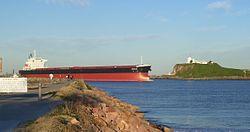
The most important economic activity in the valley is coal mining (through businesses such as Glencore and BHP), mostly for export. The Port of Newcastle is the world's largest export facility for coal, most of which is brought to the port by rail. Coal ships are often seen off the coast of Newcastle.

Electricity generation

[edit]

Electricity generation at the Eraring, Bayswater, Liddell, Munmorah, Redbank and Vales Point coal-fired power stations is a major industry of the region.

Horse breeding

[edit]

The Hunter Valley is Australia's main region for the breeding and rearing of Thoroughbred horses and most of the country's best racehorses.[17][18] The Upper Hunter area around Scone is one of the largest horse breeding areas in the world.

Tourism

[edit]

Commonly known as "Wine Country",[19] the Hunter Valley is a major tourist destination in New South Wales and is the 6th most visited place in Australia attracting more than 2.5 million people annually. There are regular events held in the Hunter for visitors, including the Hunter Valley Steam Trains running the first three Sundays of each month and regular scenic cruises on the Hunter River and Lake Macquarie.[20][21]

Wine production

[edit]
A Hunter Valley vineyard

The Hunter Valley Wine Zone Australian Geographical Indication was registered on 1 May 1996 and is approximately the entire Hunter River catchment. It contains only one named wine region, Hunter.[22] The Hunter Wine Region Australian Geographical Indication was declared on 18 March 1997. It is not as large as the Hunter Valley zone, but includes most of the significant vineyards. It does not extend east of the Pacific Highway.

Some of the oldest vines in the Hunter Valley were planted in 1924 around the village of Fordwich. Pokolbin, located in the "Lower Hunter Valley", is the centre of the Hunter Valley wine region, which claims to be Australia's oldest wine region.[23] It is located between the towns of Cessnock and Branxton, about 50 km (31 mi) west of Newcastle. The wine country is primarily located within the Cessnock and Singleton LGAs. Its proximity to Sydney has been an influence on the area's investments in wine production and its emergence as a tourist destination. The Broke Fordwich area is located along the Hunter River tributary of the Wollombi Brook near the suburb of Pokolbin and was founded in 1830 by Major Thomas Mitchell who named the region after his fellow Napoleonic War veteran Sir Charles Broke-Vere.

Much of the rolling countryside around Pokolbin is under vine and has a large number of vineyards, restaurants, shops, golf courses and country guesthouses. Other parts of the valley including the Wollombi Valley and Broke Fordwich subregion are also well known for wine, along with the Upper Hunter Valley. The main town in the Upper Hunter Valley subregion is Muswellbrook.

Administration

[edit]

Political representation

[edit]

For the purposes of Australian federal elections for the House of Representatives, the Hunter Region is contained within the divisions of Hunter,[24] Lyne,[25] Newcastle,[26] Paterson,[27] and Shortland.[28]

For the purposes of New South Wales elections for the Legislative Assembly, the Hunter Region is contained within the electoral districts of Cessnock,[29] Charlestown,[30] Lake Macquarie,[31] Maitland,[32] Myall Lakes,[33] Newcastle,[34] Port Stephens,[35] Swansea,[36] Upper Hunter,[37] Wallsend,[38] and Wyong.[39]

Demography and area

[edit]

The following local government areas are contained within the region:

Population by local government area
Hunter rank Local government area Estimate resident population 30 June 2020[1] 1 year growth rate Population density (people/km2)
1 City of Lake Macquarie 207,775 0.9 320.3
2 City of Newcastle 167,363 1.1 896.2
3 City of Maitland 87,395 2.6 223.2
4 Port Stephens Council 74,506 1.4 86.8
5 City of Cessnock 61,256 2.1 31.2
6 Singleton Council 23,380 −0.3 4.8
7 Muswellbrook Shire 16,355 −0.1 4.8
8 Upper Hunter Shire 14,167 −0.1 1.7
9 Dungog Shire 9,664 2.6 4.3
Hunter 661,861 1.3 29.2

Environmental protection

[edit]

The Hunter Region contains the Goulburn River National Park, Myall Lakes National Park, Barrington Tops National Park, Werakata National Park, Watagans National Park, Mount Royal National Park, Polkolbin State Forest, Putty State Forest, Chichester State Forest, Running Creek Nature Reserve, The Glen Nature Reserve, Black Bulga State Conservation Area, Myall River State Forest, and Karuah Nature Reserve.

Within the Hunter, many endangered ecological communities (EECs) have been declared under the TSC Act. These communities are found on both public and private land, and prior to development of land, the landowner is required to undertake an environmental assessment to ascertain whether it will impact endangered species or endangered communities. Examples of endangered ecological communities found within the Hunter Region are:

  1. Grey Box–Grey Gum Wet Sclerophyll Forest[40]
  2. Hunter Floodplain Red Gum Woodland[41]
  3. Hunter Lowland Redgum Forest[42]
  4. Hunter Valley Vine Thicket[43]
  5. Hunter Valley Weeping Myall Woodland[44]
  6. Lower Hunter Valley Dry Rainforest[45]
  7. Warkworth Sands Woodland. This EEC occurs on aeolian sands, south east of Singleton (but may occur elsewhere in the Bioregion.)[46]

Statehood movement

[edit]

There is an active movement campaigning for the Hunter Region to secede from New South Wales to form its own state. The sale of the Port of Newcastle and the refusal of the NSW state government to build a container terminal in Newcastle has been cited as the motivation behind the campaign.[47] The movement's demands include a Royal commission into the feasibility of Hunter Valley Statehood as soon as possible, and a referendum on Hunter Valley statehood by 2030.[48]

Chapter VI of the Constitution of Australia allows new states to be formed, but only with the consent of the Parliament of the state in question.

See also

[edit]

Notes

[edit]

References

[edit]
[edit]
Revisions and contributorsEdit on WikipediaRead on Wikipedia
from Grokipedia
The Hunter Region is a geographic area in northeastern , , comprising ten local government areas including Newcastle, Maitland, and Cessnock, centered on the Hunter River catchment within the bioregion. With a of approximately 810,000, it represents Australia's largest regional outside the capital cities, generating over $180 billion in annual output primarily from , , and advanced . The region's economy is anchored by coal production and exports, with the serving as Australia's principal east coast bulk export facility, shipping 144.5 million tonnes of in 2023 to support global energy demands. Complementing this, the Hunter Valley hosts Australia's oldest established wine-producing area, spanning 2,605 hectares of vineyards focused on , Semillon, and varieties, contributing to national heritage since the early . European settlement began with a at Newcastle in 1804, exploiting early discoveries of reserves that laid the foundation for industrial development amid the fertile river valley's agricultural potential. While operations have sustained employment and revenue—employing around 20,000 directly—their expansion has sparked debates over environmental impacts like dust and land use, underscoring tensions between resource extraction and adjacent .

History

Indigenous Occupation

The traditional custodians of the Hunter Region encompassed the people along the lower Hunter River and Lake Macquarie, the to the north along coastal areas, and the in the upper valley, with additional groups such as the Geawegal and Gringai occupying central and inland portions. Archaeological investigations reveal continuous Aboriginal occupation exceeding 20,000 years, supported by radiocarbon dates greater than 20,200 years at Glennies Creek in the upper Hunter, alongside over 1,650 recorded sites by 1984 including stone artefacts, 58 shell middens, rock paintings, engravings, and cremated burials dated to approximately 2,000 years ago at . These artifacts, concentrated along creeks, estuaries, and overhangs, indicate persistent use of lowland and riparian environments without evidence of permanent large-scale settlements. Indigenous land use centered on a hunter-gatherer economy adapted to the region's rivers, coasts, and forests, with seasonal employing oyster-shell hooks, spears, woven nets, and stone-lined weirs to harvest mullet, jewfish, and from the Hunter River and nearby estuaries, as evidenced by deposits rich in cockles, oysters, and remains. Terrestrial resources were supplemented through managed landscapes via , involving controlled burns to clear undergrowth, promote grassland regrowth, attract kangaroos for hunting, and mitigate wildfire risks, practices observed ethnographically in the lower Hunter and Karuah areas. Population densities remained low and mobile, comprising small bands rather than sedentary villages, with no archaeological traces of intensive agriculture; early post-contact records from 1824–1826 document groups of 200–500 individuals across upper and coastal Hunter territories before devastating epidemics reduced numbers significantly.

European Settlement and Early Development

The entrance to the Hunter River was first charted by Europeans in 1797 when Lieutenant John Shortland of HMS Reliance, pursuing escaped convicts, entered the on 9 September and named it after Governor John Hunter. Shortland noted deposits and described the river as suitable for vessels up to 250 tons, though no immediate settlement followed. Further exploration occurred in 1801 with expeditions aboard HMS Lady Nelson and led by Colonel William Paterson, who ventured into the upper Hunter River reaches, identifying fertile lands but delaying colonization due to Sydney's priorities. Newcastle, initially termed Coal River, was established as a penal settlement in 1804 by Governor Philip King to house recidivist and curb escapes, marking the region's first permanent European outpost with around 30 and military overseers. Operations focused on lime burning from shell middens and cedar logging, with the site evolving into a by the as labor supported resource extraction; penal status ended in 1822, transitioning to free settlement. Pastoral expansion accelerated in the 1820s with government land grants to free settlers, including early allocations near Morpeth and Paterson for sheep grazing, as squatters claimed vast tracts beyond official boundaries. By the 1830s, agriculture diversified into wheat cultivation and vineyards, with pioneers like establishing plantings at Kirkton. European arrival introduced diseases like , causing significant Indigenous population declines, alongside displacement from traditional lands through pastoral encroachment and sporadic violence, fundamentally altering , , and societies.

Industrial Boom and Coal Era

Coal seams in the Hunter Region were first noted by Europeans in 1797, when Lieutenant John Shortland identified deposits at the mouth of the Hunter River during an exploratory voyage. laborers began extracting near Newcastle, originally termed Coal River, from around 1801, with the first export shipment departing for in 1799. Systematic private emerged in the following the Australian Agricultural Company's acquisition of a monopoly in 1828, which operated key collieries and supplied growing colonial demand. By the 1850s, additional private ventures, including J. & A. Brown's operations at Burwood and Four Mile Creek, expanded underground extraction, laying the foundation for regional economic reliance on . Infrastructure developments accelerated the boom, with the Hunter River Railway Company constructing the line from Newcastle to Maitland between 1857 and 1862 to facilitate haulage from inland mines to the port. Newcastle's harbor facilities were enhanced with coal-loading staiths and shoots, enabling efficient bulk exports; by 1900, the port had solidified as Australia's foremost shipping hub, handling shipments primarily to domestic markets and . These rail and port advancements reduced transport costs and spurred mine proliferation in the Maitland and Greta coalfields, where commercial operations intensified from the 1860s. The era saw robust output growth amid federation-era unionism, with miners forming associations that culminated in major disputes, such as the 1907 coal strike involving northern district collieries, which halted production for months over wages and conditions. and II demands for coal fueled wartime expansions, with employment surging as pre-war unemployment of over 1,000 miners in 1940 gave way to fuller utilization of the workforce amid national production drives. By the , the sector supported thousands in direct roles, cementing the Hunter's identity as a coal-dependent industrial powerhouse through mid-century.

Modern Developments and Transitions

Following , the Hunter Region experienced substantial growth fueled by immigration from and within , expanding from approximately 225,000 residents in the late 1940s to over 500,000 by the 1980s, supported by industrial employment opportunities. This influx contributed to around Newcastle and the development of supporting , though it strained local resources amid rapid economic shifts. The closure of the Newcastle steelworks on September 30, 1999, marked a pivotal transition, ending operations that had employed up to 11,000 workers at their peak, driven by global competition, high production costs, and 's strategic refocus on more profitable assets elsewhere. The decision, announced in , prompted economic diversification efforts, reducing reliance on heavy and spurring growth in services, , and , while initial fears were mitigated by retraining programs and new sectors. In the 2000s, coal exports from the Hunter Valley resurged amid rising Asian demand, with port throughput increasing from 68 million tonnes in 2000 to over 150 million tonnes by 2013, primarily thermal and shipped to markets like , , and . Annual exports through facilities such as Port Waratah exceeded 100 million tonnes by the mid-2010s, bolstering regional revenues despite environmental concerns. The NSW Hunter Regional Plan 2041, released in 2022, outlines managed growth to accommodate a projected population of 949,850 by 2041, emphasizing , housing for an additional 101,800 dwellings, and integration of economic hubs like Newcastle. Recent infrastructure enhancements include upgrades to the M1 Pacific Motorway and A1 Pacific Highway, such as the 2025 extension to and Hexham improvements, aimed at easing congestion on high-traffic corridors handling over 100,000 vehicles daily. Defense sector expansion has accelerated, with Defence Australia's $569 million contract in March 2025 for Wedgetail enhancements securing jobs in the Hunter, building on the region's aerospace maintenance capabilities. The region's gross regional product stands at approximately AUD 73 billion annually, accounting for about 9% of ' population of over 8 million while contributing significantly to state exports through and related industries.

Geography

Location and Boundaries

The Hunter Region occupies northern , , extending approximately 160 kilometres north of and centred on the Hunter River catchment, which drains into the near Newcastle. This positioning places it within the Sydney-Newcastle corridor, with coastal plains transitioning to inland valleys and escarpments. Administratively, the region encompasses ten local government areas—Cessnock City, Dungog Shire, Lake Macquarie City, Maitland City, MidCoast Council, Muswellbrook Shire, Newcastle City, , Singleton Council, and Upper Hunter Shire—spanning more than 22,000 square kilometres primarily defined by the Hunter River catchment from upper reaches near Singleton to Port Stephens on the coast. Natural boundaries include the to the west, Barrington Tops plateau to the north, and Watagan Mountains to the south, delineating a diverse terrain of urban, rural, and protected lands. The region's boundaries have been formalized through government planning under the Environmental Planning and Assessment Act 1979, with modern definitions refined via strategic documents such as the Lower Hunter Regional Strategy 2006–2031 and subsequent Hunter Regional Plans in 2036 and 2041, adapting to growth pressures and environmental considerations.

Geological Formation

The Hunter Region lies within the southern extension of the Sydney-Gunnedah Basin system, a Permo-Triassic formed during the breakup of , with deposition spanning approximately 299 to 201 million years ago. Sedimentation began in the Early Permian with marine shales and sandstones transitioning to non-marine fluvial and deltaic environments dominated by coal measures by the Late Permian. These coal measures, including the Greta, Wittingham, and Singleton formations in the Hunter Coalfield, accumulated in subsiding foreland basins adjacent to the emerging Orogen, reaching thicknesses exceeding 1,000 meters in places. The Singleton and Maitland Groups host the primary economic coal seams, with the Maitland Group forming the basal sequence up to 1,200 meters thick and overlain by the Singleton Supergroup, where individual seams can exceed 10 meters and aggregate coal thicknesses reach up to 107 meters in the Hunter Valley. These strata consist of interbedded sandstones, siltstones, and coals deposited in alluvial plains and peat mires, reflecting episodic and sediment supply from eastern highlands. sandstones and conglomerates cap the Permian sequences, completing the basin fill before regional uplift and erosion shaped the modern Hunter Valley . Folding and minor faulting resulted from compressional stresses linked to the Late Mesozoic-Cenozoic uplift of the , deforming the basin margins without significant metamorphism. Cenozoic volcanism modified the northeastern uplands, particularly the Barrington Plateau, where to basaltic shield volcanism produced extensive lava flows, pyroclastics, and minor intrusions up to 700 meters thick, sourced from hotspot activity rather than tectonic rifting. These overlie the older sedimentary and contributed to the plateau's elevation above 1,500 meters. Intraplate seismicity remains low, with the region experiencing infrequent moderate events; the most significant was the (moment magnitude 5.6) on December 28, epicentered 15 km west-southwest of Newcastle, which ruptured shallow faults in the Permian measures, causing 13 fatalities, injuring over 160, and inflicting approximately A$4 billion in damage to 50,000 buildings. Beyond , the region's supports extraction of aggregates, including Hawkesbury for dimension stone and crushed rock, as well as alluvial gravels and sands from Hunter floodplains, vital for regional . These resources derive from weathered sandstones and fluvial deposits, with quarrying focused on durable, high-silica materials.

Hydrology and Water Resources

The Hunter River serves as the region's principal waterway, spanning approximately 468 kilometres from its headwaters in the Liverpool Range to its estuary near Newcastle, with a catchment encompassing roughly 22,000 square kilometres that includes diverse sub-catchments prone to variable flows. Major tributaries, including the Williams River and Paterson River, augment the , contributing to its load and potential; these systems have historically experienced severe inundation, as evidenced by the February 1955 floods that peaked at over 12 metres in Maitland, submerging thousands of acres and displacing approximately 7,000 people across the lower valley. Engineered structures mitigate hydrological extremes and support extraction: Glenbawn Dam, impounding the upper Hunter since its completion in 1958, provides flood storage capacity of 750,000 megalitres alongside and town water supplies, while Lostock Dam on the Paterson River, operational from 1971, secures agricultural demands post the 1964-1966 drought through 30,000 megalitres of usable storage primarily for dairying and cropping. aquifers in alluvial valleys underpin and domestic use, yet induces drawdown affecting up to 25% of the subregion, with predictive models estimating potential additional impacts over 2,400 square kilometres from expanded operations. Water quality challenges persist from acid mine drainage in coal-impacted headwaters, where exposed sulfides generate acidic runoff that elevates metal concentrations and lowers pH in receiving streams, compounded by episodic sediment pulses during high flows. The Hunter Water Corporation manages potable supply for over 600,000 residents in the lower catchment via diversified sources including the Hunter and Williams Rivers, with the under-construction Belmont desalination plant—targeting 30 million litres daily—addressing drought vulnerabilities through rainfall-independent augmentation amid debates over cost and environmental brine discharge.

Settlements and Urbanization

The Hunter Region's settlements reflect a historical transition from early penal outposts to contemporary urban centers, with European occupation beginning at Newcastle in as a penal station that evolved into a major city by the following removal and free settlement incentives. Inland expansion along river valleys and highways followed, shifting from isolated farming hamlets to interconnected suburbs by the mid-20th century, driven by rail and road links that facilitated commuter growth toward coastal hubs. Newcastle serves as the region's primary urban hub, with its metropolitan area encompassing approximately 515,000 residents as of 2024, including adjacent Lake Macquarie and Maitland suburbs that have sprawled along the Pacific Highway and Hunter Expressway corridors. The city's port infrastructure underpins settlement density, handling 144 million tonnes of cargo annually as of 2023, which has anchored suburban development around industrial and residential zones since the 19th-century era. Inland centers like Maitland and Cessnock function as secondary urban nodes, with Maitland's population reaching about 95,000 by 2025 through greenfield expansions east of the Hunter River, and Cessnock accommodating 69,352 residents in 2024 amid planned residential zoning for over 4,700 hectares. These areas exhibit patterns tied to the , where post-2000 infrastructure upgrades have accelerated low-density housing outward from historic cores. Coastal settlements in Port Stephens contrast with inland patterns, featuring tourism-driven villages such as Nelson Bay, Shoal Bay, and Fingal Bay clustered around bayside inlets rather than expansive sprawl, with urban footprints limited by national parks and dunes that preserve separation from valley . In the upper reaches, Muswellbrook represents a compact mining-oriented with around 16,800 residents, its settlement morphology shaped by proximity to open-cut operations rather than broad . Overall, regional has intensified along highway axes since 2000, with built-up land in the lower Hunter rising from roughly 3.8% of the landscape in 2000 to higher proportions by 2005, reflecting corridor-led growth over dispersed rural .

Climate

Regional Climate Patterns

The Hunter Region exhibits a under the Köppen (Cfa), characterized by hot, humid summers and mild winters without a pronounced dry season. Average annual temperatures range from minimums of 10.5–12.5°C inland to coastal areas, with maximums typically 18–25°C, moderated by oceanic influences near Newcastle where sea breezes temper summer highs. Annual precipitation averages 800–1,600 mm along the coast, decreasing to 400–800 mm in the upper Hunter Valley due to orographic effects and distance from moisture sources. Seasonal patterns feature convective summer thunderstorms driven by easterly trades and monsoonal influences, contributing to peak rainfall from to , while winters () see lighter, more frontal with occasional frosts inland where minima drop below 0°C on 10–20 nights annually. stations, such as those at Williamtown and , record 20–30 rain days per year on average, with higher frequencies during the . Microclimates arise from topographic diversity, including persistent morning fogs in the sheltered Hunter Valley floors that delay diurnal warming and support , contrasted by stronger southerly winds along the and coastal plains, which enhance ventilation and reduce humidity. Long-term records from stations dating to the late , including Jerry's Plains near Newcastle, indicate a baseline of stable annual around 900–1,100 mm for much of the region since 1900, with temperatures showing a gradual rise of approximately 1°C over the same period, primarily in minimums. The 1955 Hunter Valley floods, resulting from persistent heavy rainfall exceeding 250 mm in upstream areas, caused widespread inundation across the region, with the Hunter River peaking at record levels and leading to 24 deaths and damage to approximately 1,000 homes. In Maitland, floodwaters reached depths of up to 3 meters in some streets, displacing thousands and prompting long-term mitigation efforts. The February 1971 event, the sixth-highest recorded at Maitland's Belmore Bridge gauge since 1867, further highlighted the region's vulnerability to rapid river rises, though levees and preparedness reduced some losses compared to prior floods. Prolonged droughts have also marked the region's history, with the Millennium Drought (approximately 1997–2009) severely curtailing Hunter River flows and exacerbating water stress for agriculture and ecosystems, consistent with broader southeastern Australian patterns of 80–90% reductions in streamflows during peak dry periods. The 2019–2020 Black Summer bushfires, fueled by antecedent drought and heatwaves, scorched significant vegetation in the Hunter's coastal and valley areas, destroying over 100 structures in localized blazes and causing smoke taint that rendered entire vineyard harvests unsellable. These fires burned millions of hectares statewide, with Hunter impacts including operational disruptions to mining sites from ashfall and reduced visibility. Bureau of Meteorology records indicate relatively stable annual rainfall in the Hunter (around 920 mm from 1989–2018, down 3% from prior decades), but with heightened variability, including more frequent extreme hot days—such as 11 days above 35°C annually at Williamtown compared to 10 previously—and increased consecutive heat events. While heavy rainfall events have shown some intensification in frequency, trends reflect a mix of natural oscillations like El Niño-Southern Oscillation and potential longer-term shifts, with empirical data underscoring the dominance of decadal variability over singular causal drivers in event intensity. Post-2000, insurance claims for weather-related damages have risen nationally amid more frequent extremes, though regional attribution requires parsing variability from systematic change.

Demographics

Population Statistics and Growth

At the , the Hunter Region had a population of 682,465 residents, representing approximately 8.4% of ' total population of 8.1 million. This marked a 9.6% increase from 622,522 in the 2016 Census, equivalent to an average annual growth rate of about 1.8% over the five-year period. Population density varies markedly across the region, with urban coastal areas such as Newcastle and Lake Macquarie exhibiting higher concentrations—often exceeding 400 persons per square kilometer in built-up zones—while inland rural districts average around 10 persons per square kilometer due to expansive agricultural and mining lands. The median age stood at 40 years, slightly above the national median of 38, reflecting a relatively aging . Projections from the New South Wales Department of Planning indicate the region's population, estimated at around 860,000 as of the plan's baseline, will reach nearly 950,000 by 2041, driven primarily by net interstate and overseas migration rather than natural increase. Historical trends show steady expansion, with post-World War II industrialization contributing to booms that elevated the population from modest levels in the early 20th century to over 600,000 by the late 20th century, though precise 1901 figures for the defined region are not distinctly enumerated in census aggregates. Net internal migration has been a key factor, with annual inflows supporting growth rates of 1.2% to 1.8% in recent years.

Ethnic and Socioeconomic Composition

The Hunter Region's population is predominantly of European descent, with top ancestries reported as Australian (around 40-45% in sub-regions), English (30-40%), Irish (10-15%), and Scottish (8-12%) based on 2021 Census data from areas like Upper Hunter and Newcastle. Approximately 82-86% of residents were born in Australia, higher than the national average of 67%, reflecting limited recent immigration; overseas-born minorities primarily hail from the United Kingdom, New Zealand, and Asian countries such as India and China, comprising about 14-18% overall. Aboriginal and Torres Strait Islander peoples constitute 4-7% of the population, varying by locality (e.g., 4.6% in Newcastle, 6.7% in Upper Hunter Shire), exceeding the New South Wales average of 3.4%. Socioeconomically, the region exhibits a weekly of approximately AUD 1,550-1,600, above many rural benchmarks but below state urban averages, driven by and related sectors; personal incomes align closely at around AUD 1,000-1,200 for many households. stands at about 4.5-5%, with youth rates occasionally lower post-2021 recovery, though higher in transitioning communities. Around 20-25% of adults hold tertiary qualifications ( or higher), with vocational more common (8-9% currently attending), reflecting a skilled skewed toward trades over degrees compared to national figures. The Socio-Economic Indexes for Areas (SEIFA) score for relative averages 986—marginally below the national mean of 1,000—ranging from inland locales (e.g., low scores in Muswellbrook) to advantaged coastal suburbs. Health metrics indicate an overall of approximately 82 years (males ~79-80, females ~83-84), slightly below averages due to regional factors including higher Indigenous representation and industrial exposures, though comparable to other resource-dependent areas. While raises concerns for respiratory conditions from dust and particulates, epidemiological studies in the Hunter Valley found no statistically significant elevation in morbidity or mortality rates compared to non-mining regions, attributing diverging respiratory trends to broader socioeconomic confounders rather than direct causal impacts.

Economy

Mining and Resource Extraction

The Hunter Region hosts over 40 operating coal mines, primarily in the Upper Hunter Valley, making it Australia's largest coal-producing area and a key contributor to New South Wales' resource sector. In 2023-24, New South Wales coal production reached 173.5 million tonnes, with the Hunter Valley accounting for the majority through large-scale operations extracting both thermal and metallurgical coal. Approximately 40% of this output is exported, mainly to Asian markets, supporting global steelmaking and energy demands. Major operators include and , which jointly manage the Hunter Valley Operations (HVO), a complex producing up to 22 million tonnes of run-of-mine annually from open-cut and underground methods north of the Hunter River. reported 10.3 million tonnes of saleable in the second quarter of 2024 alone from its Hunter assets. The sector employs around 16,600 people directly in the Hunter, injecting $8.8 billion into the regional economy and contributing approximately 25% to gross regional product. royalties generated over $3 billion for the government in 2024-25, with the Hunter's output forming a substantial portion. Extraction techniques in the region predominantly involve longwall underground mining, where mechanical shearers cut seams while hydraulic supports maintain roof stability, and large-scale open-cut operations using draglines and truck-shovel fleets to access shallower deposits. These methods have enabled efficient recovery from the Sydney Basin's measures, with open-cut dominating due to favorable in the Upper Hunter. Historically, coal production in the Hunter grew from about 1 million tonnes around to over 6.5 million tonnes by 1908 in the northern district centered on Newcastle. Output expanded dramatically post-World War II with mechanization, reaching peaks in recent decades amid rising export demand. In 2024, proposals like the HVO Continuation Project seek to extend operations to 2050, including deeper seams and expanded areas, despite policy pressures toward net-zero emissions by that date. The Environmental Protection Authority recommended restricting beyond 2040 due to projected emissions, though applications persist to sustain output.

Energy Generation and Infrastructure

The Hunter Region is home to major coal-fired power stations that generate a substantial portion of New South Wales' baseload electricity, including Eraring Power Station with a capacity of 2,880 megawatts, Australia's largest such facility, and Bayswater Power Station with 2,665 megawatts. These plants, operational since the 1980s, utilize locally sourced black coal to produce steam-driven electricity, historically supporting integrated industrial loads such as the former BHP Newcastle Steelworks through reliable, dispatchable output. Together with smaller stations like Vales Point, they contribute around 40% of Australia's total electricity supply from black coal generation in the region. High-voltage transmission infrastructure links these facilities to demand centers, including 500 kilovolt lines forming part of the ; the Hunter Transmission Project, under development as of , adds a 110-kilometer from to Olney near Eraring to bolster grid capacity and reliability for Sydney and surrounding areas. This setup enables the export of firm baseload power, with coal plants demonstrating capacity factors typically exceeding 70% when operational, providing consistent output that offsets the of renewables requiring or storage for equivalent reliability. Debates over have focused on plant closures for emissions reduction, with Eraring originally slated to shut in August 2025 but extended by two years to 2027 via a state agreement with operator to avert supply shortfalls amid variable renewable integration. The region's coal fleet emits significant —Eraring alone around 7-10 million tonnes annually at full load—prompting pilots in alternative infrastructure, such as the Hunter Valley Hydrogen Hub on Kooragang Island, which received $432 million in 2025 funding for a 50-megawatt electrolyser to produce renewable as a potential industrial fuel substitute. These developments underscore tensions between maintaining grid stability through proven thermal capacity and pursuing lower-emission technologies, with empirical data indicating coal's role in achieving over 99% system-wide reliability in peak periods prior to accelerated ageing-related outages.

Agriculture, Viticulture, and Equine Industries

The Hunter Region's agriculture encompasses beef cattle grazing, dairy farming, nut orchards, and grain production, primarily in irrigation-dependent valleys such as the Hunter and Upper Hunter. These activities rely on alluvial soils and river systems for water, supporting diverse primary production outside mining. Beef and dairy operations predominate in pasture-based systems, while nuts like almonds and walnuts are grown in specialized orchards. Grain crops, including wheat and barley, contribute to regional output, though specific annual tonnage figures for the entire Hunter vary with climatic conditions. Viticulture centers on the Hunter Valley, Australia's oldest wine region, with the spanning 19,578 km² and encompassing 2,605 hectares of bearing vineyards as of recent surveys. Key varieties include , Semillon, and , with over 150 wineries operating across subregions like Pokolbin. The Pokolbin area hosts concentrated vineyard plantings and cellar doors, contributing to wine grape production, which rose 18% in 2023-24 but remained 19% below the decade average due to prior low yields. The equine industry thrives in the Upper Hunter, particularly around , dubbed the "Horse Capital of ," where more than 200 stud businesses operate. These facilities breed and agist , supporting 's sector with an estimated direct value exceeding AUD 435 million nationally, and Hunter Valley breeders contributing AUD 2.6 billion to the economy through breeding, employment of over 5,000 regionally, and ancillary services. sales from Upper Hunter studs generate substantial revenue, exemplified by high-value auctions where individual operations achieve multimillion-dollar aggregates. Droughts pose significant challenges, reducing agricultural yields through and heat stress; for instance, wine production in the Lower Hunter has declined in dry periods like 2009, with broader crop impacts including 20-30% yield drops in affected years across similar Australian regions. mitigates some effects, but prolonged dry spells, as in the Upper Hunter, strain resources and elevate production costs.

Tourism, Manufacturing, and Emerging Sectors

The Hunter Region's sector draws visitors to its diverse attractions, including the Hunter Valley's vineyards, Newcastle's coastal beaches, and national parks such as Barrington Tops. The Hunter Valley alone attracts over 1.6 million overnight domestic and international visitors annually, supporting a local visitor economy valued in the billions through wine , tastings, and related experiences. Broader regional emphasizes in national parks and coastal activities like and beach visits, contributing to ' overall wine influx of 238,700 international visitors spending $1.3 billion statewide in 2024. Manufacturing in the region centers on defense and aerospace around RAAF Base Williamtown, where expansions since the 2020 Williamtown Strategic Aerodrome Plan have fostered growth in related industries. The base, established in 1941 to protect nearby ports and steel facilities, now anchors a defence precinct including Astra Aerolab and new factories for major manufacturers, expected to generate hundreds of jobs in aerospace and advanced manufacturing. Food processing supports ancillary activities, with plans for relocating plants from Sydney to leverage regional logistics, though output remains secondary to defence-driven innovation. The sector produces $26 billion in annual output, emphasizing clean energy integration and national supply chains, but has seen employment declines amid broader economic shifts. Emerging sectors include renewables, with potential for up to $10 billion in new revenue by 2050 from , solar, and related projects, though actual capacity additions like proposed wind farms have not yet reached 1 GW regionally and face scrutiny over unsubstantiated job offsets for sector losses. Coal-dependent communities exhibit skepticism toward transition promises, as renewable job projections often overlook empirical mismatches in skill transfer and scale compared to mining's 5,000+ at-risk positions without verified replacements. Services dominate employment at around 60%, with post-COVID recovery evident in sectors like retail and adding jobs, though manufacturing's share has contracted. Innovation hubs tied to institutions like the University of Newcastle support tech parks in defence and renewables, fostering diversification beyond traditional industries.

Environment

Natural Ecosystems and Biodiversity

The Hunter Region encompasses diverse ecosystems ranging from dry eucalypt woodlands and open forests in the lowlands to subtropical and cool temperate rainforests at higher altitudes. Dominant vegetation includes sclerophyllous communities such as Central Hunter Valley eucalypt forest and woodland, featuring species like narrow-leaved ironbark (Eucalyptus crebra) and rough-barked apple (Angophora floribunda), which form critically endangered ecological communities under national listings. In the upper regions, particularly along escarpments, warm temperate rainforests transition to cool variants dominated by Antarctic beech (Nothofagus cunninghamii) and cedar (Toona ciliata). Coastal and estuarine areas support mangrove forests, saltmarsh, and seagrass beds within the Hunter Estuary Wetlands, a Ramsar-listed site spanning approximately 3,000 hectares and recognized for its mosaic of intertidal habitats. Flora inventories reveal high diversity, with over 50 endemic trees and large shrubs documented, including restricted in sandstone-derived soils such as Grevillea montana and Persoonia acicularis. The NSW BioNet database records numerous types across the region, encompassing quantitative surveys of eucalypt associations, heathlands, and riparian zones, with concentrated in and plateau habitats. These communities contribute to ecological baselines, though many endemic taxa face risks from , as evidenced by distributional studies highlighting isolation in remnant patches. Fauna assemblages include arboreal marsupials like the koala (Phascolarctos cinereus), reliant on preferred eucalypt feed trees in lowland forests, and avian species such as the vulnerable gang-gang cockatoo (Callocephalon fimbriatum), which inhabits mature eucalypt canopies extending to the Hunter's northern extents. The Hunter Estuary supports migratory shorebirds and supports breeding populations of green and golden bell frogs (Litoria aurea), while upland areas host threatened invertebrates and reptiles. Regional surveys indicate declines in some woodland-dependent species since the 1990s, linked to fragmentation reducing connectivity. Protected areas preserve significant portions of these ecosystems, including , covering 76,512 hectares and incorporating Gondwana Rainforest elements within the World Heritage-listed area, home to 14 threatened animal species and diverse altitudinal vegetation zones. Watagans National Park, spanning about 7,500 hectares of country, safeguards pockets, Aboriginal cultural sites, and scenic waterfalls amid eucalypt stands. These reserves, alongside state forests, represent key refugia for endemic documented through systematic mapping.

Industrial Impacts and Pollution

Coal mining in the Hunter Region, particularly in the Upper Hunter Valley, contributes significantly to elevated particulate matter levels, with PM2.5 concentrations averaging around 8.64 µg/m³ daily in rural areas, exceeding metropolitan Sydney's 7.23 µg/m³ and national urban averages of approximately 5-6 µg/m³. Major sources include open-cut operations, coal handling, and transport, accounting for up to 99.9% of PM emissions from mining activities in monitored periods from 2019-2020. These localized elevations, often two to three times higher than non-mining regional baselines during peak activity, correlate with increased respiratory conditions; studies from the 2010s link fine particle exposure to a 15% rise in asthma and chronic obstructive pulmonary disease cases in affected communities, though causality is confounded by factors like smoking prevalence and socioeconomic variables. Water quality in the region's streams and Hunter River suffers from (AMD) generated by sulfide oxidation in exposed seams and , leaching , iron, and into waterways, particularly from legacy and active sites in the Lower Hunter. AMD affects an estimated 20% of streams near areas, lowering levels below 5 in impacted reaches and precipitating metal flocs that smother benthic habitats, leading to documented declines in populations—up to 50% in severely polluted segments due to and reduced dissolved oxygen. Open-cut mine voids, reaching depths of several hundred meters, exacerbate interception and saline inflows, altering subsurface and contributing to episodic spills during heavy rainfall, though effects remain confined to proximal alluvial systems rather than basin-wide catastrophe. Soil contamination arises primarily from dust deposition and seepage, with coal fines and trace metals accumulating in topsoils adjacent to operations, reducing fertility and elevating risks to and lands; however, empirical monitoring indicates impacts are site-specific, not regionally pervasive. externalities from pollution, including PM2.5-related morbidity, impose annual medical costs estimated at AUD 47 million in areas like Singleton, yet these must be weighed against mining's economic anchors—direct for over workers and regional spending nearing AUD 8.8 billion in recent years, which mitigate and sustain local services absent viable alternatives. Proposals like Glencore's 2024 Hunter Valley Operations extension, which projected up to 30 million tonnes of CO2-equivalent emissions through extended production to 2050 before partial withdrawal amid scrutiny, represent less than 0.1% of annual global totals, underscoring that while local air and water burdens are real, atmospheric contributions from the region do not drive planetary-scale climate shifts. Data refute narratives of existential regional collapse, revealing harms as concentrated around facilities with measurable but not irreversible ecosystem degradation.

Conservation Efforts and Policy Debates

Efforts to expand protected areas in the Hunter Region have included the establishment of stewardship agreements on private land, covering approximately 8,900 hectares across 38 sites as of 2024. The proportion of land under protection has risen to 22% by recent assessments, up from 20% in 2016, through initiatives like the 2022 conservation agreement safeguarding nearly 4,000 hectares of habitat forest. Post-mining rehabilitation is mandated under regulations, with mining operators required to progressively restore disturbed land; by 2022, rehabilitated areas reached nearly 15,000 hectares, a near doubling from 2012 levels, though the 2024 rehabilitation-to-disturbance ratio stood at 0.42, indicating slower progress relative to ongoing extraction. Independent studies affirm that ecological restoration is achievable but often demands extended timelines beyond initial claims of high success rates, with regrowth outcomes varying due to soil stability and re-establishment challenges. Policy debates center on balancing ambitions with energy reliability, as the Hunter's coal-fired plants provide dispatchable baseload power amid the National Electricity Market's growing renewable penetration, which introduces risks evidenced by system instability warnings and historical blackouts in high-renewable scenarios like South Australia's 2016-2017 events. Critics of accelerated transitions argue that premature coal retirements overlook empirical reliability gaps, with accounting for the majority of controllable generation needed to avert supply shortfalls during low-wind/solar periods, as highlighted in regional forums and economic analyses. Community activism has featured anti-mining protests and lockouts in the , contrasted by pro-industry groups emphasizing local economic dependence, where polls indicate 65% support for dedicated rehabilitation funds from revenues and 70% backing for economic diversification without abrupt mine closures. Tensions persist between ' net-zero emissions target by 2050 and federal/state approvals for coal mine extensions, as seen in the 2025 court rejection of the Mount Pleasant expansion due to excessive downstream emissions projections exceeding 1 billion tonnes over its life, and ongoing scrutiny of Hunter Valley Operations proposals that could emit nearly 30 million tonnes of CO2 annually if extended to 2050. Such approvals challenge state climate goals, with environmental assessments revealing scope 3 emissions from exported coal often underrepresented in initial project evaluations, prompting calls for stricter accounting aligned with international obligations. Proponents of extensions cite energy export demands and job preservation, underscoring a causal disconnect between domestic net-zero and global supply realities.

Governance

Administrative Divisions

The Hunter Region encompasses ten local government areas (LGAs), which form the member councils of the Hunter Organisation: Cessnock Council, , Dungog Council, Lake Macquarie Council, Maitland Council, MidCoast Council, Muswellbrook Council, , Singleton Council, and Upper Hunter Council. These LGAs manage core functions such as waste services, community facilities, and local , operating under the Local Government Act 1993 (NSW) with boundaries defined by state gazettal. Council boundaries underwent rationalization through forced and voluntary mergers primarily between 2016 and 2017, aimed at achieving and addressing financial sustainability; notable examples include the amalgamation of Shire, , and part of Myall to form MidCoast Council in 2016, and Shire with Upper Hunter Shire to create Upper Hunter Shire Council in 2016. Local councils possess limited revenue-raising powers, primarily through rates and fees, and depend substantially on untied grants from the and Australian governments, which constituted over 30% of total revenue in NSW as of 2022-23. The Hunter Joint Organisation, established in 2017 as a statutory entity under the Local Government Act, facilitates collaboration among the ten councils on cross-boundary issues like and advocacy to . Complementing this, Australia Hunter, formed in 2009 via amalgamation of prior economic bodies, coordinates industry-government partnerships for regional growth without direct administrative authority. Aboriginal land management falls under multiple Local Aboriginal Land Councils (LALCs) operating in the region, governed by the Aboriginal Land Rights Act 1983 (NSW); the Hunter area hosts around 15 such councils, including Awabakal LALC, Wanaruah LALC, and Mindaribba LALC, which negotiate native title claims, manage vested lands, and pursue economic development for Traditional Owners. These LALCs interface with LGAs on but hold independent statutory roles distinct from municipal governance.

Political Representation

The Hunter Region is primarily represented in the federal parliament by the Division of Hunter, currently held by Labor MP , who was elected in 2022 and re-elected in 2025. Portions of the region, particularly in the north and east, fall within the Division of Paterson, represented by Labor MP Meryl Swanson since 2016. These two Labor-held seats encompass key urban centers like Newcastle and Cessnock alongside mining communities, reflecting the region's economic blend of services, , and resource extraction. At the state level, the region spans at least seven electorates, including Labor strongholds such as Newcastle, Charlestown, , Cessnock, Maitland, and Lake Macquarie, contrasted by the rural Upper Hunter, a longstanding Nationals bastion held by Dave Layzell since his victory in the 2021 . Voting patterns exhibit a pronounced urban-rural divide, with progressive urban electorates favoring Labor and the Greens on environmental and social issues, while resource-dependent rural areas deliver consistent majorities to the Nationals and Liberal-National , driven by mining's role in local employment and GDP contribution. In the 2022 federal election, Hunter recorded a two-party preferred (TPP) result of 53.0% for Labor over the , narrower than statewide trends due to mining-area swings towards conservatives opposing phase-outs. State-level data reinforces this: Upper Hunter has yielded TPP majorities exceeding 52% for the Nationals in multiple elections since 2011, with primary votes often surpassing 40% amid advocacy for mining approvals. The 2021 Upper Hunter by-election exemplified anti-transition sentiment, triggered by state government coal policy reversals; Nationals candidate Layzell secured 31.5% primary support, bolstered by cross-preferences from the emphasizing resource jobs, resulting in a 16.5% TPP swing against Labor. Regional MPs, including Repacholi, frequently align with industry bodies like the Minerals Council of to prioritize mining extensions and infrastructure, countering federal emissions targets amid local unemployment risks from mine closures. This representation underscores causal tensions between short-term economic imperatives in coal-reliant electorates and broader net-zero policies, with rural polls consistently showing 55-60% TPP conservative preference tied to from the sector.

Regional Planning and Development Strategies

The Hunter Regional Plan 2041, published in December 2022 by the , outlines a framework for sustainable growth through 2041, projecting population expansion to nearly one million residents and necessitating approximately 101,800 additional dwellings to support choice and urban development. The strategy prioritizes infrastructure enhancements, including sequenced for corridors and utilities, to facilitate economic diversification away from heavy reliance on toward sectors like advanced , renewables, and , while preserving existing energy generation lands for transitional uses. Complementary initiatives, such as the Hunter Strategic Regional Integrated Plan released in 2025, emphasize upgrades to roads, rail freight corridors, and links, with commitments to reimagine networks for better inter-community connectivity and . State investments underpin these strategies, exemplified by projects like the Hunter Expressway, described as the largest single road investment in New South Wales history, aimed at bolstering regional connectivity and freight movement. Efforts to establish net-zero industrial hubs coexist with ongoing coal operations, including repurposing retired power station sites for hydrogen production and renewable integration, though empirical assessments highlight challenges in job transitions, as renewable energy employment projections have historically fallen short of replacing coal sector losses in similar contexts, fostering community skepticism toward rapid diversification timelines. Economic outcomes from prior planning phases include a compound annual gross regional product growth rate of 4.1% from 2008 to 2024, attributed to infrastructure-enabled expansion in exports and services, yet critiques from industry advocates point to regulatory hurdles—such as delays and environmental approvals—as impediments to private investment, potentially constraining growth below potential by prioritizing compliance over enterprise agility. This tension underscores debates on balancing state-led directives with market-driven development to sustain the Hunter's position as Australia's largest regional economy.

Regional Movements

Statehood Advocacy

The , originating in the 1920s as the Northern Separation Movement, sought to establish a separate state from northeastern , with some proposals incorporating the Hunter Region alongside inland tablelands areas. Advocates argued that Sydney's centralized governance neglected regional needs, directing infrastructure and fiscal resources disproportionately to the capital while the Hunter's and agricultural economies generated substantial state revenue without commensurate local reinvestment. Economic analyses highlighted per capita grant disparities, where outer regions like the Hunter received lower funding relative to their contributions from mining royalties and exports. The campaign peaked with the April 29, 1967, under the New State Referendum Act 1966, covering a prescribed area including the Hunter; while inland electorates recorded up to 60% support for separation, Hunter localities overwhelmingly opposed, contributing to the overall defeat and collapse of organized efforts. Proponents cited causal factors such as delayed rail upgrades and port developments in Newcastle, attributing these to metropolitan bias over regional viability. The movement's formal structure dissolved amid post-referendum bitterness, with no subsequent statewide push succeeding. By the mid-1970s, advocacy waned following the shelving of proposals amid shifting political priorities and lack of federal backing required for state creation under Section 123 of the Australian Constitution. Sporadic revivals emerged in the , driven by disputes over royalties from Hunter Valley operations, where local groups contended that Sydney's control funneled funds away from mine-affected communities despite the region's economic dependence on open-cut mining. These calls emphasized retaining a larger share of royalties—estimated at under 2% of NSW from —for regional remediation and diversification, though they failed to advance legislative bills. No active parliamentary bills for Hunter statehood have progressed since, reflecting constitutional hurdles and diluted support; however, regional polls reveal persistent sentiment favoring greater , with residents in coal-dependent areas expressing frustration over perceived Sydney-centric policy that prioritizes urban over peripheral development.

Community and Cultural Identity

The Hunter Region's cultural identity is deeply anchored in its working-class mining heritage and colonial past, with communities preserving traditions through events like the Upper Hunter Show and commemorations of industry , including the role of pit ponies in early operations. Equine culture thrives via local racing connections and annual festivities, where venues host luncheons and sweeps reflecting communal enthusiasm for traditions tied to regional breeders and trainers. Historical sites such as the Lumberyard in Newcastle, an early penal industry remnant, highlight the area's convict-era foundations and contribute to a shared of labor and . Innovation and education bolster social cohesion, exemplified by the University of Newcastle's role as a hub enrolling 37,195 students across domestic and international cohorts as of August 2025, driving research in engineering and health that aligns with industrial legacies. The Hunter Innovation Festival, held annually in Newcastle, promotes collaborative problem-solving through hackathons and showcases, fostering a forward-looking ethos amid economic shifts. Indigenous traditions of the Wonnarua people, traditional custodians of the Hunter Valley, infuse cultural practices with connections to Country, including ancient migration routes and environmental stewardship narratives. Resilience defines communal bonds, as demonstrated by the post-1989 Newcastle earthquake recovery, where the 5.6-magnitude event caused 13 deaths, injured 160, and displaced thousands, yet prompted rapid rebuilding and community-led psychosocial initiatives that enhanced local . Community consultations reveal a preference for economic pragmatism over ideological divides, with priorities centered on job diversification in mining-dependent areas to sustain livelihoods. Wine trails in the Hunter Valley perpetuate a pioneer from 19th-century viticultural beginnings, where settlers like established enduring practices that now symbolize regional ingenuity and hospitality in tourism.

References

Add your contribution
Related Hubs
User Avatar
No comments yet.