


Community hub
Recent from talks
Contribute something
Nothing was collected or created yet.
VMware
View on Wikipedia
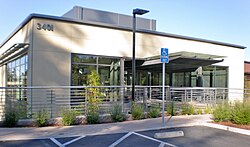
VMware LLC is an American cloud computing and virtualization technology company headquartered in Palo Alto, California, USA.[2] On November 22, 2023, Broadcom acquired VMware in a cash-and-stock transaction valued at $69 billion,[3] with the End-User Computing division of VMware then sold to KKR and rebranded to Omnissa. VMware was the first commercially successful company to virtualize the x86 architecture.[4]
Key Information


VMware's desktop software runs on Microsoft Windows, Linux, and macOS. VMware ESXi, its enterprise software hypervisor, is an operating system[5] that runs on server hardware.[6]
History
[edit]
Early history
[edit]In 1998,[7] VMware was founded by Diane Greene, Mendel Rosenblum, Scott Devine, Ellen Wang, and Edouard Bugnion.[8] Greene and Rosenblum were graduate students at the University of California, Berkeley.[9] Edouard Bugnion remained the chief architect and CTO of VMware until 2005[10] and went on to found Nuova Systems (now part of Cisco). VMware operated in stealth mode for the first year, with roughly 20 employees by the end of 1998. The company was launched officially early in the second year, in February 1999, at the DEMO conference organized by Chris Shipley.[11] The first product, VMware Workstation, was delivered in May 1999, and the company entered the server market in 2001 with VMware GSX Server (hosted) and VMware ESX Server (host-less).[11][12]
In 2003, VMware launched VMware Virtual Center, vMotion, and Virtual Symmetric Multi-Processing (SMP) technology. 64-bit support was introduced in 2004.
Acquisition by EMC
[edit]On January 9, 2004, under the terms of the definitive agreement announced on December 15, 2003, EMC (now Dell EMC) acquired the company with US$625 million in cash.[13][14] On August 14, 2007, EMC sold 15% of VMware to the public via an initial public offering. Shares were priced at US$29 per share and closed the day at US$51.[15][16]
On July 8, 2008, after disappointing financial performance, the board of directors fired VMware co-founder, president and CEO Diane Greene, who was replaced by Paul Maritz, a 14-year Microsoft veteran who was heading EMC's cloud computing business unit.[17] Greene had been CEO since the company's founding, ten years earlier.[18] On September 10, 2008, Mendel Rosenblum, the company's co-founder, chief scientist, and the husband of Diane Greene, resigned.[19]
On September 16, 2008, VMware announced a collaboration with Cisco Systems.[20] One result was the Cisco Nexus 1000V, a distributed virtual software switch, an integrated option in the VMware infrastructure.[21]
In April 2011, EMC transferred control of the Mozy backup service to VMware.[22]
On April 12, 2011, VMware released an open-source platform-as-a-service system called Cloud Foundry, as well as a hosted version of the service. This supported application deployment for Java, Ruby on Rails, Sinatra, Node.js, and Scala, as well as database support for MySQL, MongoDB, Redis, PostgreSQL, and RabbitMQ.[23][24]
In August 2012, Pat Gelsinger was appointed as the new CEO of VMware, coming over from EMC. Paul Maritz went over to EMC as Head of Strategy before moving on to lead the Pivotal spin-off.[25]
In March 2013, VMware announced the corporate spin-off of Pivotal Software, with General Electric investing in the company. Most of VMware's application- and developer-oriented products, including Spring, tc Server, Cloud Foundry, RabbitMQ, GemFire, and SQLFire were transferred to this organization.[26]
In May 2013, VMware launched its own IaaS service, vCloud Hybrid Service, at its new Palo Alto headquarters (vCloud Hybrid Service was rebranded vCloud Air and later sold to cloud provider OVH), announcing an early access program in a Las Vegas data center. The service is designed to function as an extension of its customer's existing vSphere installations, with full compatibility with existing virtual machines virtualized with VMware software and tightly integrated networking. The service is based on vCloud Director 5.1/vSphere 5.1.[27]
In September 2013, at VMworld San Francisco, VMware announced the general availability of vCloud Hybrid Service and expansion to Sterling, Virginia, Santa Clara, California, Dallas, Texas, and a service beta in the UK. It announced the acquisition of Desktone in October 2013.[28]
Acquisition by Dell
[edit]In January 2016, in anticipation of Dell's acquisition of EMC, VMware announced a restructuring to reduce about 800 positions, and some executives resigned.[29][30][31][32][33] The entire development team behind VMware Workstation and Fusion was disbanded and all US developers were immediately fired.[29][30][31][33] On April 24, 2016, maintenance release 12.1.1 was released. On September 8, 2016, VMware announced the release of Workstation 12.5 and Fusion 8.5 as a free upgrade supporting Windows 10 and Windows Server 2016.[34]
In April 2016, VMware president and COO Carl Eschenbach left VMware to join Sequoia Capital, and Martin Casado, VMware's general manager for its Networking and Security business, left to join Andreessen Horowitz. Analysts commented that the cultures at Dell and EMC, and at EMC and VMware, are different, and said that they had heard that impending corporate cultural collisions and potentially radical product overlap pruning, would cause many EMC and VMware personnel to leave;[35] VMware CEO Pat Gelsinger, following rumors, categorically denied that he would leave.[36][32]
In August 2016 VMware introduced the VMware Cloud Provider website.[37]
Mozy was transferred to Dell in 2016 after the merger of Dell and EMC.[38]
In April 2017, according to Glassdoor, VMware was ranked 3rd on the list of highest paying companies in the United States.[39]
In Q2 2017, VMware sold vCloud Air to French cloud service provider OVH.[40]
On January 13, 2021, VMware announced that CEO Pat Gelsinger would be leaving to step in at Intel.[41] Intel is where Gelsinger spent 30 years of his career and was Intel's first chief technology officer. CFO Zane Rowe became interim CEO while the board searched for a replacement.
Spinoff from Dell
[edit]On April 15, 2021, it was reported that Dell would spin off its remaining stake in VMware to shareholders and that the two companies would continue to operate without major changes for at least five years.[42] The spinoff was completed on November 1, 2021.[43] On May 12, 2021, VMware announced that Raghu Raghuram would take over as CEO.[44] In May 2022, VMware announced that the company had partnered with Formula One motor racing team, McLaren Racing.[45]
Acquisition by Broadcom
[edit]On May 26, 2022, Broadcom announced its intention to acquire VMware for approximately $61 billion in cash and stock in addition to assuming $8 billion of VMware's net debt, and that Broadcom Software Group would rebrand and operate as VMware.[46][47]
In November 2022, the UK's Competition and Markets Authority regulator announced it would investigate whether the acquisition would "result in a substantial lessening of competition within any market or markets in the United Kingdom for goods or services".[48][49]
The transaction closed on November 22, 2023,[50] after a prolonged delay in getting approval from the Chinese regulator on an additional condition that VMware's server software should maintain compatibility with third-party hardware and not require the use of Broadcom's hardware products.[51][52] On completion, Broadcom reorganized the company into four divisions: VMware Cloud Foundation, Tanzu, Software-Defined Edge, and Application Networking and Security,[53] and subsequently laid off over 2,800 employees.[54] Broadcom also relocated its headquarters from North San Jose to VMware's headquarters campus in Palo Alto.[55]
On December 13, 2023, VMware ended availability for perpetually licensed products such as vSphere and Cloud Foundation, moving exclusively to subscription-based offerings. The company stated that this had been planned as an eventuality prior to the Broadcom acquisition.[56]
In February 2024 private equity firm KKR and Broadcom agreed for KKR to acquire Broadcom's End-User Computing (EUC) Division, formerly a division of VMware, for about $4 billion. [57] The EUC division, renamed to Omnissa, includes the desktop and app virtualization product Horizon and the device management suite Workspace ONE UEM (formerly AirWatch).
On May 14, 2024, it was announced that VMware Workstation Pro and VMware Fusion Pro would be made free for personal use, with commercial use still requiring payment. [58] In November 2024, VMware announced that commercial use would be free too. [59]
Acquisitions
[edit]| Announcement date | Company | Description | Ref(s). |
|---|---|---|---|
| October 2005 | Asset Optimization Group | Specialized in capacity planning. | [60] |
| June 2006 | Akimbi Systems | Specialized in lab management. | [61] |
| April 2007 | Propero | London-based VDI provider. | [62] |
| September 2007 | Dunes Technologies | VMware acquired the Switzerland-based company for an undisclosed sum. | [63][64] |
| October 2007 | Sciant | VMware acquired the Bulgaria-based outsourcing company for an undisclosed sum. | |
| January 2, 2008 | Foedus | VMware acquired the New Hampshire (U.S.) based professional services company for an undisclosed sum. | |
| July 2008 | B-hive Networks | VMware acquired the Israel-based start-up for an undisclosed sum. Following the acquisition VMware opened an R&D center in Israel, based initially on B-Hive's facilities and team in Israel. | [65] |
| October 2008 | Trango Virtual Processors | Was a Grenoble-based ARM hypervisor developer. | [66][67] |
| October 2008 | Blue Lane Technologies | Virtual firewall. Was integrated into vCloud networking but ultimately replaced by the much broader NSX virtual networking capabilities. | [68] |
| November 26, 2008 | Tungsten Graphics | Core expertise in 3D graphics driver development. | [69] |
| August 10, 2009 | SpringSource | Inventors of Spring Java open source, the most popular enterprise Java app framework for building web apps and microservices. The acquisition expanded VMware's education services to include SpringSource University and its authorized training partners such as Spring People in India. Spring became part of the Pivotal Software spin-out, spin-in. | [70][71] |
| January 12, 2010 | Zimbra (software) | Open source email system looking to challenge Exchange et al. Acquired from Yahoo and (later sold in July 2013 to Telligent Systems). | [72] |
| May 6, 2010 | GemStone Systems | A highly scalable, distributed in-memory database. The Java product was included in the Pivotal spin-out and ultimately open sourced as Apache Geode. The Smalltalk product was bought by GemTalk Systems. | [73] |
| Jan 2011 | NeoAccel Inc | Incorporated into NSX. | [74] |
| April 26, 2011 | SlideRocket | A startup which developed a SaaS application for building business presentations that are stored online. Through a Web-based interface, users can handle all parts of the process, from designing slides and compiling content, to reviewing documents and publishing and delivering them. VMware subsequently sold SlideRocket to ClearSlide on March 5, 2013. | [75][76] |
| May 31, 2011 | Socialcast | "Like Facebook, but private and for your own employees". Enterprise Social Networking and Collaboration. | [77][78] |
| August 2011 | PacketMotion | User Activity Monitoring startup. Its PacketSentry product was planned to be incorporated into VMware vCloud Networking and Security but then it was discontinued by the end of 2012. | [79][80] |
| May 22, 2012 | Wanova | [81] | |
| July 2, 2012 | DynamicOps | A cloud management system originally spun out of Credit Suisse. VMware rebranded products as vRealize Automation and vRealize Orchestrator, and ultimately incorporated into the vRealize Suite—now branded as VMware Aria Automation. | [82][83] |
| July 23, 2012 | Nicira | Software for network virtualization, rebranded as VMware NSX. Acquired for $1.2 billion. Nicira was founded in 2007 by Martin Casado, Nick McKeown and Scott Shenker. | [84][85][86][87] |
| February 11, 2013 | Virsto | [88][89][90] | |
| October 15, 2013 | Desktone | Desktop-as-a-service provider | [91][92] |
| January 22, 2014 | AirWatch and Wandering WiFi | System for managing the security, audit and configuration of mobile devices in enterprises. Acquired for US$1.54 billion. | [93][94][95] |
| March 6, 2014 | ThirdSky | ITIL/ITSM Consulting. | [96] |
| August 20, 2014 | CloudVolumes (formerly SnapVolumes) | Real-time application delivery and virtualization to virtual desktop infrastructure | [97][98] |
| October 29, 2014 | Continuent | Database clustering and replication software | [99] |
| October 2014 | MomentumSI | Austin, Texas–based professional services firm specializing in cloud migration and DevOps expertise | [100][101] |
| June 13, 2016 | Arkin Net | vRealize Network Insight - Discover, Optimize and Troubleshoot App Security and Network Connectivity | [102][103][104] |
| April 12, 2017 | Wavefront | Cloud-based metrics and monitoring (now VMware Tanzu Wavefront Observability) | [105][106][107] |
| May 15, 2017 | Apteligent | Mobile application performance. | [108] |
| December 12, 2017 | VeloCloud Networks | Software-defined wide area network (SD-WAN). | [109] |
| February 18, 2018 | CloudCoreo | Cloud configuration-management | [110] |
| February 22, 2018 | CloudVelox | Hybrid cloud automation and orchestration software | [111] |
| March 28, 2018 | E8 Security | Software for protecting employee devices from online threats. | [112] |
| May 14, 2018 | Bracket Computing | Security virtualization technology. | [113] |
| August 27, 2018 | CloudHealth Technologies | Cloud cost, usage, security, and governance management platform. | [114] |
| Nov 6, 2018 | Heptio | Kubernetes Software and Services. | [115] |
| February 2019 | Aetherpal | Remote support capabilities for the Workspace ONE platform. | [116] |
| May 15, 2019 | BitRock | Cross platform installer creation tool. | [117][118] |
| July 2019 | Avi Networks | Cloud application services, including Load Balancer, WAF, and Service Mesh. | [119] |
| July 18, 2019 | Bitfusion | computing, artificial intelligence and machine learning. | [120] |
| August 20, 2019 | Intrinsic | application and serverless security. | [121] |
| October 8, 2019 | Carbon Black | Cloud-native endpoint security software that is designed to detect malicious behavior and to help prevent malicious files from attacking an organization. | [122] |
| December 30, 2019 | Pivotal Software | Cloud-native platform provider of digital transformation technology and services. | [123] |
| July 31, 2020 | Lastline | Cyber security and breach detection platform provider. | [124] |
| September 29, 2020 | SaltStack | Automation and configuration management software. | [125][126] |
Litigation
[edit]In March 2015, the Software Freedom Conservancy announced it was funding litigation by Christoph Hellwig in Hamburg, Germany against VMware for alleged violation of his copyrights in its ESXi product.[127] Hellwig's core claim is that ESXi is a derivative work of the GPLv2-licensed Linux kernel 2.4, and therefore VMware is not in compliance with GPLv2 because it does not publish the source code to ESXi.[128] VMware publicly stated that ESXi is not a derivative of the Linux kernel,[129] denying Hellwig's core claim. VMware said it offered a way to use Linux device drivers with ESXi, and that code does use some Linux GPLv2-licensed code and so it had published the source, meeting GPLv2 requirements.[130]
The lawsuit was dismissed by the court in July 2016[131] and Hellwig announced he would file an appeal.[132] The appeal was decided February 2019 and again dismissed by German court, on the basis of not meeting "procedural requirements for the burden of proof of the plaintiff."[133][134]
In May 2023, VMware was ordered to pay $84.5 million for patent infringement on two patents belonging to Densify, a Canadian software company.[135]
Current products
[edit]VMware's most notable products are its hypervisors. VMware became well known for its first type 2 hypervisor known as VMware Workstation. This product has since evolved into two additional hypervisor product lines: VMware's type 1 hypervisors running directly on hardware (ESX/ESXi) and their discontinued hosted type 2 hypervisors (GSX).
VMware software provides a completely virtualized set of hardware to the guest operating system.[136] VMware software virtualizes the hardware for a video adapter, a network adapter, and hard disk adapters. The host provides pass-through drivers for guest USB, serial, and parallel devices. In this way, VMware virtual machines become highly portable between computers, because every host looks nearly identical to the guest. In practice, a System administrator can pause operations on a virtual machine guest, move or copy that guest to another physical computer, and there resume execution exactly at the point of suspension. Alternatively, for enterprise servers, a feature called vMotion allows the migration of operational guest virtual machines between similar but separate hardware hosts sharing the same storage[137] (or, with vMotion Storage, separate storage can be used, too). Each of these transitions is completely transparent to any users on the virtual machine at the time it is being migrated.
VMware's products predate the virtualization extensions to the x86 instruction set, and do not require virtualization-enabled processors. On newer processors, the hypervisor is now designed to take advantage of the extensions. However, unlike many other hypervisors, VMware still supports older processors. In such cases, it uses the CPU to run code directly whenever possible (as, for example, when running user-mode and virtual 8086 mode code on x86). When direct execution cannot operate, such as with kernel-level and real-mode code, VMware products use binary translation (BT) to re-write the code dynamically. The translated code gets stored in spare memory, typically at the end of the address space, which segmentation mechanisms can protect and make invisible. For these reasons, VMware operates dramatically faster than emulators, running at more than 80% of the speed that the virtual guest operating system would run directly on the same hardware. In one study VMware claims a slowdown over native ranging from 0–6 percent for the VMware ESX Server.[138]
Desktop software
[edit]- VMware Workstation, introduced in 1999, was the first product launched by VMware. This software suite allows users to run multiple instances of x86 or x86-64-compatible operating systems on a single physical personal computer. Version 17.0 was released on November 17, 2022. Originally a commercial app, VMware Workstation has become freeware in December 2024.
- VMware Fusion provides similar functionality for users of the Intel Mac platform, the Apple Silicon platform built on ARM, along with full compatibility with virtual machines created by other VMware products. Originally a commercial app, VMware Fusion has become freeware in December 2024.
Server software
[edit]- VMware ESXi,[139] an enterprise software product, can deliver greater performance than the freeware VMware Server, due to lower system computational overhead. VMware ESXi, as a "bare-metal" product, runs directly on the server hardware, allowing virtual servers to also use hardware more or less directly. In addition, VMware ESXi integrates into VMware vCenter, which offers extra services.
Cloud management software
[edit]- VMware vRealize Suite – a cloud management platform purpose-built for a hybrid cloud. VMware vRealize Hyperic was acquired from SpringSource[140] and subsequently discontinued in 2020.[141]
- VMware Go is a web-based service to guide users of any expertise level through the installation and configuration of VMware vSphere Hypervisor.[142]
- VMware Cloud Foundation – Cloud Foundation provides an easy way to deploy and operate a private cloud on an integrated SDDC system.
- vSphere+ and vSAN+ – activates add-on hybrid cloud services for business-critical applications running on-premises, including IT disaster recovery and ransomware protection[143]
Application management
[edit]- VMware Workspace Portal was a self-service app store for workspace management.[144]
- Provisioning
- PlateSpin (does Provisioning)
Storage and availability
[edit]VMware's storage and availability products are composed of two primary offerings:
- VMware vSAN (previously called VMware Virtual SAN) is software-defined storage that is embedded in VMware's ESXi hypervisor.[145][146] The vSphere and vSAN software runs on industry-standard x86 servers to form a hyper-converged infrastructure (or HCI). However, network operators need to have servers from HCL (Hardware Compatibility List) to put one into production.[147] The first release, version 5.5, was released in March 2014.[148][149] The 6th generation, version 6.6, was released in April 2017.[150][151] New features available in VMware vSAN 6.6 include native data at rest encryption, local protection for stretched clusters, analytics, and optimized solid-state drive performance.[152] The VMWare 6.7 version was released in April 2018.
- VMware Site Recovery Manager (SRM) automates the failover and failback of virtual machines to and from a secondary site using policy-based management.[153][154]
Networking and security products
[edit]- VMware NSX is VMware's network virtualization product marketed using the term software-defined data center (SDDC).[155][156] The technology included some acquired from the 2012 purchase of Nicira.[85][86] Software Defined Networking (SDN) allows the same policies that govern Identity and Access Management (IAM) to dictate levels of access to applications and data through a totally converged infrastructure not possible with legacy network and system access methods.
Other products
[edit]- The VIX (Virtual Infrastructure eXtension)[157] API allows automated or scripted management of a computer virtualized using either VMware's vSphere, Workstation, Player, or Fusion products. VIX provides bindings for the programming languages C, Perl, Visual Basic, VBScript and C#.[158][159]
- Herald is a communications protocol from VMware for more reliable Bluetooth communication and range finding for mobile devices.[160] Herald code is available under an open-source license and was implemented in the Australian Government's COVIDSafe app for contact tracing on 19 December 2020.[161]
Former Products
[edit]Desktop software
[edit]- VMware Workstation Player (discontinued)[162] was freeware for non-commercial use, without requiring a license, and available for commercial use with permission. It is similar to VMware Workstation, with some features not available, including support for UEFI Secure Boot, snapshots, encrypted virtual machines, and some advanced features.[163]
Cloud management software
[edit]- VMware Horizon View was a virtual desktop infrastructure (VDI) product, but was part of the UEC division that was sold to KKR and renamed Omnissa.
Other products
[edit]- Workspace ONE UEM allows mobile users to access apps and data,[164] but was part of the UEC division that was sold to KKR and renamed Omnissa.
Incidents
[edit]Beginning in January 2022, hackers infiltrated servers using the Log4Shell vulnerability at organizations who failed to implement available patches released by VMware according to PCMag.[165] ZDNET reported in March 2022 that hackers utilized Log4Shell on some customers' VMware servers to install backdoors and for cryptocurrency mining.[166] In May 2022, Bleeping Computer reported that the Lazarus Group cybercrime group, which is possibly linked to North Korea, was actively using Log4Shell "to inject backdoors that fetch information-stealing payloads on VMware Horizon servers", including VMware Horizon.[167]
CVE-2025-22230 is a vulnerability in VMWare Tools versions for Microsoft Windows. CVE-2025-22230 is an authentication-bypass vulnerability which, alongside other vulnerabilities, can permit a compromised virtual machine to perform virtual machine escape. CVE-2025-22230 has a CVSSv3 score of 7.8. Broadcom disclosed the vulnerability on March 25, 2025.[168][169] The vulnerability was first disclosed by Positive Technologies.[168][169]
See also
[edit]References
[edit]- ^ "VMWare, Inc. Annual Report (Form 10-K)". U.S. Securities and Exchange Commission. March 28, 2023. Retrieved March 28, 2023.
- ^ "Gartner Says Worldwide Server Virtualization Market Is Reaching Its Peak". Gartner. May 12, 2016. Archived from the original on May 16, 2016.
- ^ Oi, Mariko (November 22, 2023). "Chipmaker Broadcom completes $69bn deal to buy VMware". BBC News. Archived from the original on November 30, 2023.
- ^ Bugnion, Edouard; Devine, Scott; Rosenblum, Mendel; Sugerman, Jeremy; Wang, Edward Y. (November 1, 2012). "Bringing Virtualization to the x86 Architecture with the Original VMware Workstation". ACM Transactions on Computer Systems. 30 (4): 12:1–12:51. doi:10.1145/2382553.2382554. Retrieved February 13, 2024.
- ^ Awati, Rahul. "What is VMkernel and how does it work?". TechTarget. SearchVMware. Archived from the original on September 24, 2022. Retrieved September 24, 2022.
- ^ "vSphere Hypervisor". VMware. Archived from the original on December 3, 2018. Retrieved December 8, 2018.
- ^ "VMware, Inc. - Company Profile". California Explore. Archived from the original on November 2, 2023. Retrieved November 2, 2023.
- ^ "Inaugural ACM Chuck Thacker Breakthrough Award Recognizes Fundamental Contributions that Enabled Cloud Computing: Stanford's Mendel Rosenblum Transformed Datacenters by Reinventing Virtual Machines". Association for Computing Machinery. Archived from the original on April 11, 2019. Retrieved April 10, 2019.
- ^ Lashinksky, Adam (October 2, 2007). "50 Most Powerful Women in Business — Full speed ahead". CNN. Archived from the original on August 10, 2020. Retrieved August 3, 2020.
In 1988 she picked up a second master's, in computer science, at the University of California at Berkeley, where she met Rosenblum
- ^ "Edouard Bugnion lives in the virtual world". Archived from the original on January 8, 2009. Retrieved September 16, 2008.
- ^ a b "VMware Media Resources". VMware. Archived from the original on November 24, 2018. Retrieved December 8, 2018.
- ^ Shankland, Stephen (January 2, 2002). "VMware ready to capitalize on hot server market". CNET. Archived from the original on May 2, 2018. Retrieved June 14, 2017.
- ^ "EMC Press Release : EMC Completes Acquisition of VMware". www.emc.com. Archived from the original on December 9, 2018. Retrieved December 8, 2018.
- ^ "EMC Completes Acquisition of VMware" (Press release). VMware. January 9, 2004. Archived from the original on June 26, 2018. Retrieved December 8, 2018.
- ^ Mullins, Robert (August 14, 2007). "VMware the bright spot on a gray Wall Street day". International Data Group. Archived from the original on April 26, 2024. Retrieved June 14, 2017.
- ^ "VMware Shares Soar after IPO Prices at $29 a Share". CNBC. Reuters. August 14, 2007. Archived from the original on May 2, 2018. Retrieved September 17, 2017.
- ^ Ricadela, Aaron (July 8, 2008). "VMware Ousts CEO Diane Greene". Bloomberg News. Archived from the original on January 2, 2018. Retrieved June 14, 2017.
- ^ Simonite, Tom (November 16, 2018). "What Diane Greene's Departure Means for Google Cloud". Wired. Archived from the original on November 17, 2018. Retrieved November 17, 2018.
- ^ VANCE, ASHLEE (September 10, 2008). "The End of an Era at VMware". The New York Times. Archived from the original on January 2, 2018. Retrieved June 14, 2017.
- ^ "Cisco and VMware Accelerate Innovation in Data Center Virtualization" (Press release). VMware. September 16, 2008. Archived from the original on June 26, 2018. Retrieved December 8, 2018.
- ^ "Cisco Nexus 1000V Series Switches and VMware vSphere 4: Accelerate Data Center Virtualization". Cisco Systems. Archived from the original on May 3, 2018. Retrieved June 14, 2017.
- ^ Mellor, Chris (April 5, 2011). "VMware 'buys' Mozy for its cloudy goodness". The Register. Archived from the original on July 7, 2017. Retrieved August 10, 2017.
- ^ "VMware Delivers Cloud Foundry, The Industry's First Open PaaS" (Press release). VMware. April 12, 2011. Archived from the original on October 20, 2017. Retrieved June 14, 2017.
- ^ Fogarty, Kevin (April 12, 2011). "VMware launches open-source cloud platform". International Data Group. Archived from the original on April 2, 2017. Retrieved June 14, 2017.
- ^ Foyer, David (August 27, 2012). "Gelsinger Maritz Management Swap". Wikibon. Archived from the original on September 20, 2020. Retrieved June 2, 2020.
- ^ Jackson, Joab (April 24, 2013). "Pivotal launched from VMware, EMC technologies". International Data Group. Archived from the original on June 7, 2017. Retrieved June 14, 2017.
- ^ Parrish, Kevin (May 23, 2013). "VMware Introduces vCloud Hybrid Service (vCHS)". Tom's IT Pro. Archived from the original on July 22, 2017. Retrieved June 14, 2017.
- ^ Rath, John (October 17, 2013). "VMware Adds vCloud Data Centers, Acquires Desktone". Data Center Knowledge. Archived from the original on May 2, 2018. Retrieved June 14, 2017.
- ^ a b "VMware Reports Fourth Quarter and Full Year 2015 Results" (Press release). GlobeNewswire. January 26, 2016. Archived from the original on October 13, 2019. Retrieved October 13, 2019.
- ^ a b Sharwood, Simon (January 27, 2016). "VMware axes Fusion and Workstation US devs". The Register. Archived from the original on August 6, 2017. Retrieved August 10, 2017.
- ^ a b Sharwood, Simon (January 27, 2016). "VMware says vSphere in decline, new multi-cloud plan will ensure growth: Virtzilla beats the street, fires 800, crimps vCloud Air, doubles down on new products". The Register. Archived from the original on August 10, 2017. Retrieved August 10, 2017.
- ^ a b Miller, Ron (January 26, 2016). "VMware Confirms Layoffs In Earnings Statement As It Prepares For Dell Acquisition". TechCrunch. Archived from the original on June 29, 2017. Retrieved June 14, 2017.
- ^ a b Hammond, Christian (January 26, 2016). "A Tribute to VMware Workstation, Fusion, and Hosted UI". ChipLog. Archived from the original on June 25, 2017. Retrieved June 14, 2017.
- ^ Brodkin, Jon (August 30, 2016). "VMware says "we're not dead," updates Fusion and Workstation for free". Ars Technica. Archived from the original on August 10, 2017. Retrieved June 15, 2017.
- ^ Mellor, Chris (April 11, 2016). "Cracks show in VMware exec ranks". The Register. Archived from the original on August 10, 2017. Retrieved August 10, 2017.
- ^ Sharwood, Simon (May 13, 2016). "VMware CEO Pat Gelsinger quashes departure rumours". The Register. Archived from the original on May 11, 2017. Retrieved June 14, 2017.
- ^ "VMware Cloud Provider website homepage". VMware. August 12, 2016. Archived from the original on April 12, 2019. Retrieved April 12, 2019.
- ^ Burt, Jeff (October 19, 2016). "Dell Unveils Portfolio of Endpoint Security Products". EWeek. Archived from the original on January 23, 2023. Retrieved June 14, 2017.
- ^ Verhage, Julie (April 12, 2017). "These Are the Highest-Paying Companies in America". Bloomberg News. Archived from the original on April 19, 2017. Retrieved April 18, 2017.
- ^ "OVH News - OVH Completes Acquisition of VMware's vCloud Air Business". September 23, 2019. Archived from the original on September 23, 2019. Retrieved September 23, 2019.
- ^ "Intel CEO Bob Swan to step down, VMware CEO Pat Gelsinger to replace him" (Press release). <MSNBC>. January 13, 2021. Archived from the original on January 13, 2021. Retrieved January 14, 2021.
- ^ Sharwood, Simon. "Dell to spin out remaining VMware stake, cements Friends With Benefits status for at least five years". The Register. Archived from the original on April 15, 2021. Retrieved April 15, 2021.
- ^ Waters, Richard (October 31, 2021). "Dell spins off $64bn VMware as it battles debt hangover". Financial Times. Archived from the original on December 10, 2022. Retrieved November 1, 2021.
- ^ Jonathan Vanian (May 12, 2021). "VMware just named a new CEO". Fortune. Archived from the original on December 2, 2021. Retrieved December 2, 2021.
- ^ "VMware Becomes an Official Partner of McLaren Racing". Business Wire. May 11, 2022. Archived from the original on May 30, 2022. Retrieved May 12, 2022.
- ^ "Broadcom to acquire VMware" (PDF) (Press release). VMware. May 25, 2022. Archived (PDF) from the original on May 27, 2022. Retrieved May 27, 2022.
- ^ Mehta, Chavi; Hu, Krystal (May 26, 2022). "Chipmaker Broadcom to buy VMware in $61 bln deal". Reuters. Archived from the original on May 26, 2022. Retrieved May 26, 2022.
- ^ "Broadcom / VMware merger inquiry". GOV.UK. Archived from the original on November 21, 2022. Retrieved November 21, 2022.
- ^ "Broadcom's $61 bln deal for VMware on UK regulator's radar". Reuters. November 21, 2022. Archived from the original on November 21, 2022. Retrieved November 21, 2022.
- ^ Oi, Mariko (November 22, 2023). "Chipmaker Broadcom completes $69bn deal to buy VMware". BBC News. Archived from the original on November 30, 2023.
- ^ "Broadcom plans to close $69 billion VMWare deal on Wednesday". Reuters. November 21, 2023.
- ^ Robinson, Dan (November 21, 2023). "China relents: Broadcom-VMware merger approved at last". The Register.
- ^ Sharwood, Simon (November 23, 2023). "Broadcom re-orgs VMware into four divisions – none of which mention end-user compute products". The Register.
- ^ Cunningham, Andrew (December 2, 2023). "Broadcom cuts at least 2,800 VMware jobs following $69 billion acquisition". Ars Technica.
- ^ Nguyen, Kevin V. (November 29, 2023). "Broadcom to relocate headquarters to former VMware campus in Palo Alto". Silicon Valley Business Journal.
- ^ Rama, Gladys. "Post-VMware Buy, Broadcom Kills Perpetual Licenses in Favor of Subscriptions". Redmondmag. Retrieved February 12, 2024.
- ^ "KKR to Acquire Broadcom's End-User Computing Division". media.kkr.com (Press release). February 26, 2024.
- ^ Roy, Michael (May 14, 2024). "VMware Desktop Hypervisor Pro Apps Now Available for Personal Use". VMware Cloud Foundation (VCF) Blog. Retrieved May 14, 2024.
- ^ Chuang, Mark (November 11, 2024). "VMware Fusion and Workstation are Now Free for All Users". VMware Cloud Foundation (VCF) Blog. Retrieved November 14, 2024.
- ^ "A look at VMware's past acquisitions". February 2010. Archived from the original on April 23, 2016. Retrieved April 29, 2013.
- ^ Connor, Deni (June 26, 2006). "VMware acquires virtualization company Akimbi". International Data Group. Archived from the original on April 26, 2024. Retrieved January 12, 2015.
- ^ "VMware acquires Propero". April 26, 2007. Archived from the original on April 2, 2019. Retrieved December 20, 2016.
- ^ "VMware Acquires Dunes Technologies" (Press release). VMware. September 11, 2007. Archived from the original on October 20, 2017. Retrieved June 8, 2017.
- ^ Dubie, Denise (September 11, 2007). "VMware Acquires Dunes Technologies". International Data Group. Archived from the original on May 4, 2018. Retrieved June 8, 2017.
- ^ Vidra, Eze (May 28, 2008). "VMware Snatches B-Hive, Opens R&D Center in Israel". VCcafe. Archived from the original on October 27, 2011. Retrieved December 12, 2011.
- ^ Finkle, Jim (November 10, 2008). "VMware buys Trango mobile virtualization company". Reuters. Archived from the original on May 2, 2018. Retrieved July 3, 2017.
- ^ "VMware acquires Trango". EE Times. November 10, 2008. Archived from the original on May 3, 2018. Retrieved June 8, 2017.
- ^ "VMware and Blue Lane Technologies" (Press release). VMware. Archived from the original on January 13, 2018. Retrieved January 12, 2018.
- ^ Marshall, David (December 16, 2008). "VMware's year end acquisition of Tungsten Graphics". InfoWorld. Archived from the original on February 15, 2016. Retrieved June 8, 2017.
- ^ "VMware to Acquire SpringSource" (Press release). VMware. August 10, 2009. Archived from the original on May 3, 2018. Retrieved June 8, 2017.
- ^ Christoffers, Cameron (August 10, 2009). "VMware Acquires SpringSource". TechCrunch. Archived from the original on July 19, 2012. Retrieved June 8, 2017.
- ^ Rao, Leena (January 12, 2010). "Yahoo Sheds Zimbra, VMware Gains A Foundation For Web Apps". TechCrunch. Archived from the original on June 3, 2017. Retrieved June 15, 2017.
- ^ Jackson, Joab (May 6, 2010). "VMware's SpringSource to Buy In-memory Vendor GemStone". International Data Group. Archived from the original on September 27, 2016. Retrieved June 14, 2017.
- ^ "VMware and NeoAccel Corporation, Hybrid Cloud Environments". VMware. Archived from the original on February 7, 2021. Retrieved February 2, 2021.
- ^ Rao, Leena (April 26, 2011). "VMware Acquires Online Presentation Application SlideRocket". TechCrunch. Archived from the original on July 4, 2017. Retrieved June 14, 2017.
- ^ Williams, Alex (March 5, 2013). "VMware Exits Collaboration Market With Sale of SlideRocket To Clearslide, A Sales Engagement Platform". TechCrunch. Archived from the original on May 2, 2018. Retrieved June 15, 2017.
- ^ "VMware Acquires Enterprise Social Collaboration Provider Socialcast". ir.vmware.com. Archived from the original on October 22, 2018. Retrieved October 21, 2018.
- ^ "VMware Acquires Enterprise Microblogging Platform Socialcast". TechCrunch. Archived from the original on October 22, 2018. Retrieved October 21, 2018.
- ^ "VMware and PacketMotion: Data Access Monitoring, Network Security & Compliance". VMware. Archived from the original on June 17, 2017. Retrieved June 14, 2017.
- ^ MacDonald, Neil (August 27, 2011). "Building Context-Aware Security: VMware Acquires PacketMotion". Gartner. Archived from the original on October 14, 2011.
- ^ "VMware To Acquire Wanova, Intelligent Desktop Solutions Provider" (Press release). GlobeNewswire. May 22, 2012. Archived from the original on October 13, 2019. Retrieved October 13, 2019.
- ^ "VMware to Acquire DynamicOps, Inc" (Press release). GlobeNewswire. July 2, 2012. Archived from the original on June 26, 2018. Retrieved October 13, 2019.
- ^ Osborne, Charlie (July 3, 2012). "VMware acquires hybrid cloud solution company DynamicOps". ZDNet. Archived from the original on March 8, 2021. Retrieved June 15, 2017.
- ^ "VMware to Acquire Nicira" (Press release). GlobeNewswire. July 23, 2012. Archived from the original on October 13, 2019. Retrieved October 13, 2019.
- ^ a b Williams, Alex (July 23, 2012). "VMware Buys Nicira For $1.26 Billion And Gives More Clues About Cloud Strategy". TechCrunch. Archived from the original on September 25, 2016. Retrieved June 25, 2017.
- ^ a b Bort, Julie (October 26, 2014). "The Inside Story Of A $1 Billion Acquisition That Caused Cisco To Divorce Its Closest Partner, EMC". Business Insider. Archived from the original on August 25, 2016. Retrieved August 25, 2016.
- ^ Palmer, Matthew (July 13, 2012). "vSwitch the New Battleground for Network Virtualization". Sdncentral.com. Archived from the original on March 26, 2014. Retrieved August 25, 2016.
- ^ "VMware to Acquire Virsto" (Press release). VMware. February 11, 2013. Archived from the original on July 12, 2016. Retrieved May 20, 2013.
- ^ FARR, CHRISTINA (February 11, 2013). "VMware acquires Virsto Software to boost its virtual storage capabilities". Venture Beat. Archived from the original on September 20, 2017. Retrieved June 15, 2017.
- ^ Mellor, Chris (February 11, 2013). "Hands off my disk! VMware gobbles Virsto for software-ruled arrays". The Register. Archived from the original on June 20, 2017. Retrieved June 15, 2017.
- ^ "VMware Acquires Desktone, Pioneer of Desktop-as-a-Service" (Press release). VMware. October 15, 2013. Archived from the original on December 16, 2018. Retrieved May 2, 2018.
- ^ Kusnetzky, Dan (November 11, 2013). "VMware acquires Desktone: Is your next desktop going to live in the cloud?". ZDNet. Archived from the original on July 14, 2017. Retrieved June 8, 2017.
- ^ "VMware Completes Acquisition of AirWatch" (Press release). GlobeNewswire. February 24, 2014. Archived from the original on October 13, 2019. Retrieved October 13, 2019.
- ^ HICKINS, MICHAEL (February 7, 2014). "iPhone APIs Ultimately Led to VMware's AirWatch Acquisition". The Wall Street Journal. Archived from the original on August 6, 2016. Retrieved June 15, 2017.
- ^ "VMware's AirWatch Acquisition To Enhance Mobility In End-User Computing". Forbes. February 20, 2014. Archived from the original on July 29, 2017. Retrieved June 15, 2017.
- ^ Bajtos, Scott (March 6, 2014). "Investing in Services – Announcing Acquisition of Third Sky, Inc". VMware. Archived from the original on October 20, 2017. Retrieved June 15, 2017.
- ^ Gagliordi, Natalie (August 20, 2014). "VMware buys CloudVolumes for real-time desktop app delivery". ZDNet. Archived from the original on July 1, 2016. Retrieved June 15, 2017.
- ^ Jackson, Joab (August 20, 2014). "VMware acquires CloudVolumes for faster virtual app delivery". International Data Group. Archived from the original on May 23, 2018. Retrieved June 15, 2017.
- ^ "VMware Acquires Continuent". VMware. October 29, 2014. Archived from the original on July 7, 2017. Retrieved June 15, 2017.
- ^ "VMware Acquires Professional Services Firm To Boost Cloud Migration, DevOps Expertise". CRN. November 18, 2014. Archived from the original on July 3, 2020. Retrieved July 1, 2020.
- ^ "MomentumSI Brings New DevOps and Cloud Professional Services to VMware". VMware. February 2, 2015. Archived from the original on July 2, 2020. Retrieved July 1, 2020.
- ^ "VMware and Arkin". VMware. Archived from the original on June 26, 2020. Retrieved June 23, 2020.
- ^ "VMware to acquire Arkin Net". The Economic Times. June 13, 2016. Archived from the original on September 5, 2020. Retrieved June 23, 2020.
- ^ "VMware Acquires Virtual Network Manager Arkin Net". InformationWeek. June 14, 2016. Archived from the original on June 26, 2020. Retrieved June 23, 2020.
- ^ "VMware to Acquire Wavefront to Accelerate Delivery of its Cross-Cloud Management Services" (Press release). GlobeNewswire. April 12, 2017. Archived from the original on October 13, 2019. Retrieved October 13, 2019.
- ^ Singh, Ajay (May 19, 2017). "VMware Completes Wavefront Acquisition". VMware. Archived from the original on October 20, 2017. Retrieved June 15, 2017.
- ^ Gagliordi, Natalie (April 12, 2017). "VMware acquires Wavefront to boost cloud management portfolio". ZDNet. Archived from the original on June 14, 2017. Retrieved June 15, 2017.
- ^ "VMware and Apteligent" (Press release). VMware. May 15, 2017. Archived from the original on September 15, 2017. Retrieved September 15, 2017.
- ^ "VMware Closes Acquisition of VeloCloud Networks" (Press release). VMware. December 12, 2017. Archived from the original on January 23, 2018. Retrieved January 22, 2018.
- ^ "VMware acquires Seattle's CloudCoreo for its cloud security expertise". GeekWire. February 14, 2018. Archived from the original on March 30, 2018. Retrieved March 30, 2018.
- ^ "VMware and CloudVelox". VMware. February 22, 2018. Archived from the original on October 31, 2020. Retrieved August 9, 2020.
- ^ "VMware acquires startup E8 Security to bolster its device management capabilities - SiliconANGLE". SiliconANGLE. March 28, 2018. Archived from the original on March 30, 2018. Retrieved March 30, 2018.
- ^ "VMware Welcomes Tom Gillis as SVP & General Manager, Networking and Security Business Unit". VMware. May 1, 2018. Archived from the original on May 6, 2019. Retrieved May 6, 2019.
- ^ "VMware Announces Intent to Acquire CloudHealth Technologies". VMware. August 27, 2018. Archived from the original on October 21, 2018. Retrieved August 27, 2018.
- ^ "VMware acquires Heptio, the startup founded by 2 co-founders of Kubernetes". TechCrunch. November 6, 2018. Archived from the original on November 30, 2018. Retrieved November 30, 2018.
- ^ "VMware acquires partner AetherPal to sharpen its IoT focus". SiliconANGLE. February 5, 2019. Archived from the original on July 24, 2019. Retrieved July 24, 2019.
- ^ "VMware InstallBuilder". BitRock. Archived from the original on August 11, 2020. Retrieved September 14, 2020.
- ^ "VMware acquires Bitnami to deliver packaged applications anywhere". TechCrunch. May 15, 2019. Archived from the original on January 23, 2023. Retrieved October 1, 2020.
- ^ "VMware announces intent to buy Avi Networks, startup that raised $115M". TechCrunch. June 13, 2019. Archived from the original on January 23, 2023. Retrieved July 24, 2019.
- ^ "VMware acquires ML acceleration startup Bitfusion". TechCrunch. July 18, 2019. Archived from the original on January 23, 2023. Retrieved July 24, 2019.
- ^ "VMware acquires security start-up Intrinsic in ongoing cloud push". CNBC. Archived from the original on August 21, 2019. Retrieved August 20, 2019.
- ^ "VMware Completes Acquisition of Carbon Black". VMware. Archived from the original on October 14, 2019. Retrieved October 14, 2019.
- ^ "VMware Completes Acquisition of Pivotal". VMware. Archived from the original on January 3, 2020. Retrieved January 3, 2020.
- ^ "VMware acquires network security firm Lastline, said to lay off 40% of staff – TechCrunch". TechCrunch. Archived from the original on September 25, 2020. Retrieved September 17, 2020.
- ^ "Intent to Acquire SaltStack". Archived from the original on September 29, 2020. Retrieved September 29, 2020.
- ^ Gagliordi, Natalie. "VMware to acquire automation software provider SaltStack". ZDNet. Archived from the original on September 30, 2020. Retrieved October 1, 2020.
- ^ "Conservancy Announces Funding for GPL Compliance Lawsuit". Software Freedom Conservancy. Archived from the original on March 5, 2015. Retrieved March 6, 2015.
- ^ Phipps, Simon (March 5, 2015). "VMware heads to court over GPL violations". InfoWorld. Archived from the original on March 8, 2015. Retrieved March 11, 2015.
- ^ "VMware confident that ESXi is not a derivative work of Linux code". VMware. Archived from the original on January 10, 2022. Retrieved January 10, 2022.
- ^ "VMware Update to Mr. Hellwig's Legal Proceedings". VMware. Archived from the original on March 11, 2015. Retrieved March 11, 2015.
- ^ "German court ruling" (PDF). July 8, 2016. Archived from the original (PDF) on December 20, 2016. Retrieved April 9, 2019.
- ^ "Hellwig To Appeal VMware Ruling After Evidentiary Set Back in Lower Court". August 9, 2016. Archived from the original on January 14, 2020. Retrieved April 9, 2019.
- ^ "VMware Suit Concludes in Germany [LWN.net]". lwn.net. Archived from the original on September 4, 2019. Retrieved August 24, 2020.
- ^ "Klage von Hellwig gegen VMware erneut abgewiesen". March 1, 2019. Archived from the original on March 29, 2019. Retrieved April 9, 2019.
- ^ Brittain, Blake (May 2, 2023). "VMware hit with $84.5 million verdict in US retrial over software patents". Reuters. Retrieved February 21, 2024.
- ^ Lynch, Jim (July 15, 2004). "VMware Workstation 4.5.2". Extremetech.com. Archived from the original on October 30, 2016. Retrieved June 14, 2017.
- ^ "How VMotion Works". The Geek Pub. April 3, 2017. Archived from the original on April 5, 2017. Retrieved April 5, 2017.
- ^ "A Performance Comparison of Hypervisors" (PDF). VMware. February 1, 2007. Archived (PDF) from the original on October 9, 2009. Retrieved February 1, 2010.
- ^ "What is Data Center Consolidation?". VMWare. Archived from the original on April 2, 2019. Retrieved February 10, 2019.
- ^ "VMware to Acquire SpringSource". VMware News and Stories. August 10, 2009. Retrieved November 2, 2023.
- ^ "End of Availability of VMware vRealize Hyperic". VMware. June 1, 2020. Retrieved November 2, 2023.
- ^ "VMware Go Blog - VMware Go simplifies and automates your routine IT tasks". VMware Go Blog. Archived from the original on May 3, 2018. Retrieved June 15, 2017.
- ^ Duncan MacRae (June 28, 2022). "VMware unveils vSphere+ and vSAN+ to simplify operations with Centralised Infrastructure Management". Cloud Tech. Archived from the original on July 15, 2022. Retrieved July 15, 2022.
- ^ "Notice of VMware Workspace Portal Standalone SKU - End of Availability". VMware. Archived from the original on May 27, 2017. Retrieved June 14, 2017.
- ^ Rajendran, Cedric (May 30, 2015). Getting Started with VMware Virtual SAN. Packt Publishing. p. 10. ISBN 9781784393694.
- ^ Rouse, Margaret. "Definition: VMware VSAN (VMware Virtual SAN)". TechTarget. Archived from the original on May 14, 2017. Retrieved April 27, 2017.
- ^ Sanchez, Ariel. "Differences between the normal HCL and the VSAN HCL". VMGotchas. Archived from the original on April 19, 2017. Retrieved May 3, 2016.
- ^ Epping, Duncan (March 12, 2014). "Virtual SAN GA aka vSphere 5.5 Update 1". Yellow-Bricks. Archived from the original on April 29, 2017. Retrieved April 28, 2017.
- ^ "VMware Virtual SAN General Availability Announced". Virten.net. March 6, 2014. Archived from the original on April 29, 2017. Retrieved April 28, 2017.
- ^ Mellor, Chris (April 11, 2017). "VMware VSAN has six dot six appeal". The Register. Archived from the original on April 28, 2017. Retrieved April 28, 2017.
- ^ Braren, Paul (April 18, 2017). "vSAN 6.6 arrives, baked right into those vSphere 6.5.0d bits that went GA today!". TinkerTryIT@Home. Archived from the original on April 29, 2017. Retrieved April 28, 2017.
- ^ Raffo, Dave (April 10, 2017). "VMware vSAN 6.6 adds encryption, analytics, 'nothing shocking'". TechTarget. Archived from the original on April 29, 2017. Retrieved April 28, 2017.
- ^ Rouse, Margaret. "VMware vSphere Site Recovery Manager (SRM)". TechTarget. Archived from the original on April 29, 2017. Retrieved April 27, 2017.
- ^ Raffic, Mohammed (March 2, 2017). "VMware Site Recovery Manager (SRM 6.0) Part 1 - Overview". VMwareArena. Archived from the original on April 28, 2017. Retrieved April 27, 2017.
- ^ Morreale, Patricia A.; Anderson, James M. (2014). Software Defined Networking: Design and Deployment. CRC Press. p. 75. ISBN 9781482238631.
- ^ Morgan, Timothy Prickett (March 14, 2013). "VMware NSX mashes up Nicira and homegrown network virt: Virtualizing entire data centers, including admins for systems and networks". The Register. Archived from the original on August 10, 2017. Retrieved August 10, 2017.
- ^ "Virtual Infrastructure eXtension (VIX) SDK for vSphere 6.0 - VMware {code}". VMware.
- ^ "VIX API Documentation". VMware. Archived from the original on January 13, 2017. Retrieved January 11, 2017.
- ^ "VIX API Reference Documentation". VMware. Archived from the original on January 13, 2017. Retrieved January 11, 2017.
- ^ "Reliable mobile Bluetooth". Archived from the original on December 22, 2020. Retrieved January 5, 2021.
- ^ "COVIDSafe uses the Herald Protocol to improve app performance". December 19, 2020. Archived from the original on January 3, 2021. Retrieved January 5, 2021.
- ^ "Desktop Hypervisor". vmware.com. Broadcom. Retrieved January 18, 2025.
As of April 30th, 2024 Workstation Player and Fusion Player are considered EOS (End of Sale) and are unavailable for purchase going forward. Customers with active contracts will continue to be supported for the duration of their contract. This means products will receive regular updates, and support tickets can be filed.
- ^ "Compare Workstation Player and Workstation Pro". Archived from the original on May 31, 2022.
- ^ Hernandez, Pedro (June 13, 2016). "VMware Workspace ONE Anchors Mobile Management on Identity". Datamation. QuinStreet. Archived from the original on June 15, 2016. Retrieved June 23, 2016.
- ^ "Hackers Exploit Log4Shell to Infect VMware Horizon Servers". PCMag. January 17, 2022. Archived from the original on May 20, 2022. Retrieved May 20, 2022.
- ^ Osborne, Charlie. "Log4Shell exploited to infect VMware Horizon servers with backdoors, crypto miners". ZDNet. Archived from the original on May 20, 2022. Retrieved May 20, 2022.
- ^ "Lazarus hackers target customers' VMware servers with Log4Shell exploits". BleepingComputer. Archived from the original on May 19, 2022. Retrieved May 20, 2022.
- ^ a b Gatlan, Sergiu (March 25, 2025). "Broadcom warns of authentication bypass in VMware Windows Tools". BleepingComputer.
- ^ a b SecurityWeek News (March 25, 2025). "VMware Patches Authentication Bypass Flaw in Windows Tools Suite". SecurityWeek.
External links
[edit]
Acquired by Dell Inc. in 2016; now Dell Technologies | |||
| Founders |  | ||
| Directors | |||
| Divisions |
| ||
| Products |
| ||
| International | |
|---|---|
| National | |
