Hubbry Logo
search
logo
2100066

Jaffa orange

logo
Community Hub0 Subscribers
Read side by side
from Wikipedia
Jaffa orange
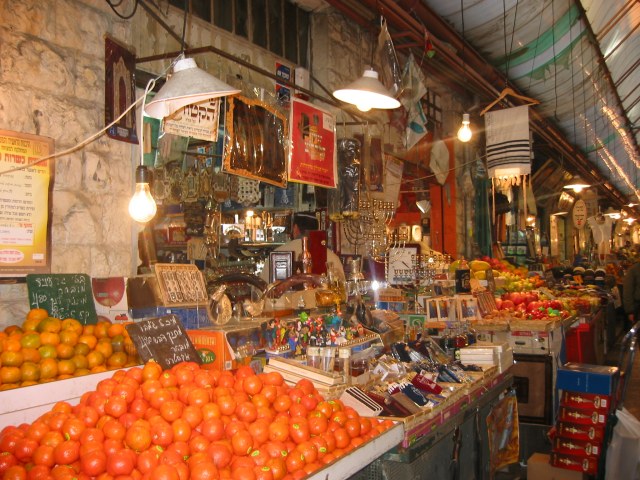
Jaffa oranges on sale at Mahane Yehuda Market in Jerusalem
SpeciesCitrus × sinensis
Hybrid parentage'Baladi' orange × unknown
Cultivar'Jaffa'
OriginOttoman Palestine (region) in mid-19th century (c. 1840s)

The Jaffa orange (Arabic: برتقال يافا; Hebrew: תפוז יפו) is an orange variety with few seeds and a tough skin that make it highly exportable. It was developed by Arab farmers in mid-19th century Ottoman Palestine, and takes its name from the city of Jaffa where it was first produced for export.[1][2] Jaffa oranges are known for their sweet taste.

During the initial Zionist Jewish immigration to Palestine in the late 19th century, the business of maintaining orchards and exporting oranges was an integrated venture of Jews and Arabs based out of the Port of Jaffa. Today, the Jaffa orange is one of three main varieties of the fruit grown in the Mediterranean, alongside the navel and bitter orange. It is cultivated in Palestine, Israel, Cyprus, Iraq, Lebanon, Syria, Jordan and Turkey.[2]

Characteristics

[edit]
Illustration of a Jaffa orange by J. Marion Shull

Jaffa oranges, also known as shamouti, are practically seedless, with a flavour that has been described as "excellent" and "sweet and fine".[2][3][4] The two other main orange varieties cultivated in the region are the navel orange and the bitter orange; the latter is grown in Iran for its peel.[2] The Jaffa orange is distinguished by its oval shape and thick peel, which is deep orange in colour and normally very easy to remove from the fruit. Its tough skin makes it "especially suitable for export".[3][4] As it produces very little juice and has a tendency towards delayed bitterness, it is unsuitable for juice production, although it does store well.[4]

Jaffa oranges are very cold-tolerant, allowing them to grow outside of the subtropical regions normally associated with growing oranges. Jaffa oranges are susceptible to Alternaria, a type of fungus, and are prone to alternate bearing.[citation needed]

History

[edit]
1841 map of Jaffa showing orange plantations

Located at the crossroads between Africa, western Asia, and Europe, the Levant produced a number of commodities for export via imperial and global distribution networks throughout the late Ottoman period (1200–1900 CE). Among these were Nabulsi soap, sugar, barley, oranges, and cotton. Though cotton left was influential throughout the region, the only commodity that remains a symbol of production in Palestine is the Jaffa orange.[citation needed]

The Jaffa orange was a new variety developed by Arab farmers after emerging in the mid-19th century as a mutation on a tree of the 'Baladi' variety near the city of Jaffa.[1][2] While the sour orange (C. aurantium) was brought westward from China and India by local traders, who may have introduced it to Sicily and Spain, the Jaffa orange was developed from the sweet orange (C. sinensis) which was brought from China to the Mediterranean region by Portuguese explorer Vasco da Gama in 1498.[2]

After the Crimean War (1853–56), the most important innovation in local agriculture was the rapid expansion of citrus cultivation.[3] Foremost among the varieties cultivated was the Jaffa (Shamouti) orange, and mention of it being exported to Europe first appears in British consular reports in the 1850s.[1][3] One factor cited in the growth of the export market was the development of steamships in the first half of the 19th century, which enabled the export of oranges to the European markets in days rather than weeks.[5] Another reason cited for the growth of the industry was the relative lack of European control over the cultivation of oranges compared to cotton, formerly a primary commodity crop of Palestine, but outpaced by the Jaffa orange.[6]

Jaffa Orange brand from Sarona

Exports grew from 200,000 oranges in 1845 to 38 million oranges by 1870.[5] The citrus plantations of this time were primarily owned by wealthy Palestinian merchants and notables, rather than small farmers, as the fruits required large capital investments with no yield for several years.[3][7] Fruits carrying the "Jaffa" label were first marketed in 1870 by a German Templer colony.[8] An 1872 account of Jaffa by a European traveller notes that "Surrounding Jaffa are the orange gardens for which it is justly extolled, and which are a considerable source of wealth to the owners. The annual value of fruits grown in Jaffa was said to be 10,000 pounds."[7] In the 1880s, American grower H. S. Sanford tried to cultivate the Jaffa orange in Florida.[9]

The prosperity of the orange industry brought increased European interest and involvement in the development of Jaffa oranges. In 1902, a study of the growth of the orange industry by officials outlined the different owners and their primary export markets as England, Turkey, Egypt and Austria-Hungary. While the traditional Arabic cultivation methods were considered "primitive," an in-depth study of the financial expenditure involved reveals that they were ultimately more cost-efficient than the Zionist-European enterprises that followed them some two decades later.[7]

Orange packing, 1921

According to the 1930 Hope Simpson Enquiry, "The cultivation of the orange, introduced by the Arabs before the commencement of Jewish settlement, has developed to a very great extent in consequence of that settlement. There is no doubt that the pitch of perfection to which the technique of plantation and cultivation of the orange and grapefruit have been brought in Palestine is due to the scientific methods of the Jewish agriculturist."[10]

Partnerships in growing and exporting these oranges were an example of Arab–Jewish cooperation despite rising political tensions.[11]

Orange groves at Bir Salim prior to the 1948 war

By the end of 1928, Jews had acquired 3,000 hectares (30,000 dunams) of the region's 6,000 hectares (60,000 dunams) of orange orchards. Whereas before World War I, the price of a dunam of land in a fruitful orange grove was 50–75 pounds sterling, by 1929, the same groves were selling for 150–200 pounds sterling.[12] In 1933, Jewish-owned orange production overtook Arab-owned orange production.[13] By 1939, Jewish-owned and Arab-owned orange orchards in Palestine covered 30,000 hectares (75,000 acres), employed over 100,000 workers, and their produce was a primary export. During World War II (1939–1945) citrus-growing declined, and Arab-owned orange production overtook Jewish-owned production.[13]

After the 1948 war, the orange-growing industry was presented as a "pioneering Labor-movement project" which was "void of any Arab presence".[14] Significant ethnic cleansing of Palestinian Arabs by Jewish Zionists occurred following the Nakba between 1947–1948, and the establishment of the Israeli state in 1948. Many Palestinian Arab–owned farms were subsequently stolen from their owners as part of dispossession of their lands.[15][16][17]

Legacy

[edit]
1984 Land Day poster depicting an orange behind barbed wire
Sculpture in Jaffa: Suspended Orange Tree by Israeli artist Ran Morin

Jaffa oranges are harvested in the Israel and the Palestinian territories between November and March, with the marketing season beginning in September and extending through April. More than half the annual crop is exported, and Israel is the main provider of other citrus fruits to the European Union.[18] In the 1950s and 1960s, Jaffa oranges became emblems and symbols of the Israeli state.[19] A general decline in the importance of agriculture to the Israeli economy, extreme limits on available water resources, and the reliance on migrant laborers have reduced productivity.[20] Overshadowed by manufacturing industries, such as diamonds and precision instruments, Israel nonetheless continues to export a large number of citrus fruits to Europe.[21]

The Jaffa orange is also known for lending the city of Tel Aviv-Yafo the nickname "Big Orange".[22]

The orange is also a symbol for Palestinians;[23] The Land of Sad Oranges (Arabic: أرض البرتقال الحزين) is the title of a famous story by Palestinian journalist and writer Ghassan Kanafani, that explores the Nakba through the eyes of a young child who lived and grew up in an orange grove in Palestine. The orange is utilized as a strong symbol for the Palestinians' connection with their lands and the immense losses they suffered.[24]

See also

[edit]

References

[edit]

Bibliography

[edit]
[edit]
Revisions and contributorsEdit on WikipediaRead on Wikipedia
from Grokipedia
The Jaffa orange (Citrus sinensis 'Shamouti') is a cultivar of sweet orange distinguished by its medium-large, oval to spherical shape, thick and pebbled rind that adheres loosely for easy peeling and protects against shipping damage, and nearly seedless, juicy pulp with a sweet flavor profile.[1][2][3] It originated prior to 1844 as a limb sport—a spontaneous bud mutation—in a local orange orchard near Jaffa in Ottoman Palestine, where the variety was propagated by Arab farmers for its resilience and quality.[1][3] Cultivation expanded significantly in the 19th century due to the region's favorable Mediterranean climate, fertile coastal plains, and improving trade infrastructure, transforming the Jaffa orange into a staple export crop that symbolized agricultural innovation and economic vitality in Palestine.[4][5] Under British Mandate rule in the early 20th century, coordinated efforts by Arab growers, Jewish settlers, and European marketers elevated exports, with Jaffa oranges accounting for over 80% of Palestine's citrus shipments by the 1930s, primarily to Europe, owing to their thick skin's suitability for sea transport without refrigeration.[5][6] The 1948 Arab-Israeli War disrupted traditional production patterns, as many Arab-owned groves were abandoned or repurposed, leading to Israeli dominance in branding and export under the "Jaffa" label, though the variety proved vulnerable to diseases like mal secco and less competitive against newer, seedless hybrids.[5][7] Despite its decline in commercial prominence by the late 20th century—phased out in Israeli exports amid sabotage incidents and shifting global preferences—the Shamouti remains a cultural icon of Levantine horticulture, with limited cultivation persisting for niche markets valuing its historical and sensory attributes.[5][7]

Botanical Characteristics

Variety Classification and Physical Traits

The Jaffa orange, scientifically classified as a cultivar of Citrus sinensis within the Rutaceae family, is commonly known as the Shamouti orange. This variety emerged prior to 1844 as a limb sport from a local "baladi" orange tree in an orchard near Jaffa, Palestine (present-day Israel).[3][1] It belongs to the sweet orange group, distinguished from bitter oranges or mandarins by its non-hybridized sweet fruit profile and midseason maturity.[1] Physically, the Jaffa orange exhibits a medium to large size with an oblong to oval shape, typically weighing 190-200 grams. Its rind is thick, tough, and leathery, colored deep orange upon ripening, with a finely pitted but relatively smooth surface and inconspicuous oil glands that facilitate easy peeling and enhance shipping durability.[1][8][3] The fruit is nearly seedless, containing at most 2-3 seeds per fruit, a trait that sets it apart from many seeded sweet orange varieties.[1][8] The internal segments are light orange, firm yet tender, contributing to its structural integrity during handling.[3]

Flavor Profile and Seedlessness

The Jaffa orange, scientifically classified as a variety of Citrus sinensis and commonly known as Shamouti, exhibits a nearly seedless condition, with fruits typically containing zero to a few seeds depending on pollination exposure. This low seed count results from the cultivar's inherent botanical traits, including a tendency toward parthenocarpy where fruit develops without fertilization, reducing seed formation and enhancing ease of consumption and processing.[1][3][2] Its flavor profile features a pleasantly sweet taste with low acidity, distinguishing it from more tart citrus varieties; the pulp is juicy, firm yet tender, and light orange in color, accompanied by a subtle fragrance that contributes to an overall "fine" sensory experience. Descriptions from agricultural evaluations emphasize its refreshing sweetness and balanced juiciness, making it suitable for fresh eating, juicing, or export without significant bitterness from seeds.[3][9][2] This sweetness surpasses that of Valencia oranges, with empirical taste assessments noting higher soluble solids content relative to acids, typically yielding a Brix-acid ratio above 15:1 in mature fruit.[2][9] The combination of seedlessness and flavor attributes has historically supported its market preference, as evidenced by export records from the early 20th century where these qualities enabled long-distance shipping with minimal quality degradation. However, seed development can occur if grown near pollinating varieties like Valencia, prompting selective propagation to maintain the trait.[1][3]

Historical Origins and Development

Development in 19th-Century Ottoman Palestine

The Shamouti orange, commonly known as the Jaffa orange, originated prior to 1844 as a bud mutation, or limb sport, on a tree in an orchard near Jaffa in Ottoman Palestine.[1] Local Arab farmers recognized the mutation's desirable traits—such as its thick, easy-to-peel rind, sweet flavor, and near-seedlessness—and propagated it through grafting techniques, rapidly establishing it as the dominant citrus variety in the region.[1] [10] During the mid-19th century, under the Ottoman Tanzimat reforms that improved land tenure and agricultural security, Jaffa's orange groves expanded significantly, with cultivated area quadrupling between 1850 and 1880.[10] By the late 1800s, these groves had become the area's most profitable agricultural asset, driven by the Shamouti's suitability for long-distance transport due to its protective peel.[10] Farmers invested in irrigation systems and soil management to support this growth, transforming Jaffa into a key citrus production center.[11] Export of Jaffa oranges began in earnest in 1875, with shipments reaching European markets including France, Germany, Austria, and England, marking the variety's commercial breakthrough.[11] This trade capitalized on the fruit's durability during sea voyages, fostering economic development in Ottoman Palestine while establishing the Jaffa orange's international reputation.[11]

Growth During British Mandate Period

During the British Mandate for Palestine (1920–1948), Jaffa orange cultivation expanded rapidly, driven by increased planting and improved export infrastructure. Citrus acreage grew from 7,170 acres in 1922 to 74,000 acres by 1937, with much of the expansion occurring between 1927 and 1936, including 44,000 acres added from 1932 to 1936.[12] This growth built on the Shamouti variety's established suitability for the region's coastal plains, where Jaffa oranges—known for their thick skin and seedlessness—thrived under Mediterranean conditions.[6] Export volumes of citrus, predominantly Jaffa oranges, surged correspondingly, reflecting heightened international demand and British-facilitated shipping via ports like Jaffa and Haifa. Annual exports rose from 831,000 boxes in 1920–21 to 11.44 million boxes in 1937–38, of which 9.57 million were oranges; by 1938–39, the figure peaked at 15.26 million cases.[12][13] Yields averaged 340–475 boxes per acre in mature groves, positioning Palestine as a leading exporter, though World War II disruptions reduced outputs to as low as 4,694 cases in 1942–43.[12][13] The industry gained economic prominence, with citrus comprising 74–79% of Palestine's total export value in the late 1930s, valued at $21.94 million in 1937 alone and generating substantial employment in groves, packing, and transport.[12][13] Branding efforts solidified the "Jaffa orange" reputation, as 102 trademarks—two-thirds incorporating "Jaffa"—were registered by both Arab and Jewish growers and traders during the Mandate, enhancing market differentiation amid competition from regions like California and Spain.[6] This period marked the peak of the Jaffa orange's global trade before wartime and political upheavals curtailed further expansion.[12]

Impacts of 1948 Arab-Israeli War and Aftermath

The 1948 Arab-Israeli War severely disrupted Jaffa orange production in the coastal plain, where intense fighting and sieges, including the March-May bombardment of Jaffa itself, prevented timely harvesting and damaged infrastructure for export.[14] With the collapse of Arab defenses in Jaffa by late May 1948, approximately 70,000 residents fled or were expelled, abandoning extensive citrus groves that had formed the backbone of the local economy.[15] These untended orchards quickly suffered from neglect, overripening fruit, pest infestations, and lack of irrigation, contributing to an immediate postwar decline in output across former Arab-held areas.[5] In the war's aftermath, Israel gained control over roughly 80% of Mandatory Palestine's citrus lands, including over 30,000 acres of Arab-owned Jaffa orange groves that were either damaged during combat or left vacant due to the displacement of owners.[16] The 1950 Absentee Property Law facilitated the expropriation and transfer of these abandoned properties to state custodianship, enabling their allocation to Jewish immigrants and agricultural cooperatives for rehabilitation.[17] While Jewish entities had owned about 49% of citrus orchards prior to the war, the influx of some 700,000 Jewish refugees provided labor to revive operations, though initial shortages of equipment and expertise led to uneven recovery in the late 1940s.[18] By the early 1950s, coordinated efforts through organizations like the Citrus Marketing Board restored exports, with Israel's citrus shipments surpassing prewar levels by 1951, albeit with a shift toward Shamouti varieties over the seedless Jaffa type due to replanting priorities.[19] Longer-term, the war's demographic shifts ended the binational character of the industry, as Palestinian Arab cultivators— who had dominated Jaffa orange production—were largely barred from returning, resulting in the transfer of most groves to Israeli management.[20] This realignment boosted overall efficiency through mechanization and cooperative packing houses, but it also sparked enduring disputes over property rights and cultural symbolism, with the "Jaffa" brand repurposed for Israeli exports despite the variety's declining prominence by the 1960s due to market demands and agricultural challenges.[21][15]

Cultivation Practices and Production

Traditional Farming Techniques

The Shamouti variety, basis of the Jaffa orange, was propagated through meticulous grafting techniques developed by Palestinian farmers in the 19th century, involving the insertion of buds from selected superior trees onto rootstocks such as sweet lime to maintain desirable traits like thick rind and low seed content.[22][23] New saplings required approximately six years to bear fruit and ten years to reach full maturity, emphasizing the long-term investment in orchard establishment.[24] Orchards, known locally as bayyara, were planted on fertile coastal plain soils near water sources, with the cultivated area quadrupling between 1850 and 1880, reaching 420 documented groves by 1873.[24] Traditional soil management relied on the natural fertility of the region's loamy sands, without synthetic inputs, supporting sustained productivity through crop rotation or fallowing practices inherent to pre-industrial agriculture. Irrigation depended on extracting subterranean water using animal-powered pumps operated by mules or camels from wells 8 to 12 meters deep, necessitating watering for seven months annually to sustain the shallow-rooted citrus trees during dry periods.[24] These methods contrasted with later mechanical innovations but enabled the expansion of groves in the Jaffa plain, where surface water from sources like the Auja River supplemented underground supplies. Harvesting occurred manually from October to November, employing up to 5,000 laborers in peak seasons like 1870 to hand-pick fruit, minimizing damage to the thick-skinned oranges destined for export.[24] Workers twisted or clipped fruits directly from trees, followed by on-site packing where oranges were individually wrapped in paper and crated in wooden chests for transport to Jaffa port, preserving quality without refrigeration.[24] Labor was predominantly local, involving Arab farmers and Bedouin tribesmen, reflecting the labor-intensive nature of traditional citrus cultivation before mechanization.[24]

Modern Agricultural Challenges and Decline

The cultivation of the Jaffa orange, or Shamouti variety, has faced significant decline since the late 20th century, with acreage and production sharply reduced in Israel and adjacent Palestinian areas. By the 2010s, Shamouti oranges had nearly vanished from Israel's commercial landscape, as growers shifted to alternative citrus varieties offering superior shipping durability, seedlessness, and consumer appeal, such as navel and Valencia oranges.[25][26] This transition was driven by European market preferences for easier-to-peel, seedless fruits amid faster-paced consumer lifestyles, rendering the thick-peeled, seedy Shamouti less competitive despite its flavor.[26] Water scarcity emerged as a primary modern constraint, exacerbated by Israel's limited freshwater resources and competing urban and industrial demands. Citrus irrigation, reliant on drip systems, has been curtailed by recurrent droughts and policy shifts prioritizing desalination for non-agricultural uses, contributing to a forecasted drop in overall Israeli orange production for 2023–24 compared to prior seasons.[27] Low profitability further accelerated the decline, with high input costs for labor, fertilizers, and pest management outpacing export revenues amid global competition from low-cost producers like Brazil and Spain.[27] Pests and diseases posed ongoing threats, with the Mediterranean fruit fly remaining a key infestation risk despite integrated pest management (IPM) protocols achieving near-universal adoption in Israeli groves by the 2010s. The stubborn disease, caused by Spiroplasma citri, particularly afflicted Shamouti trees, reducing yields and fruit quality without the variety's full replacement by resistant rootstocks.[28][29] In Palestinian territories, including Gaza and the West Bank, additional barriers included disrupted supply chains, border delays causing fruit spoilage, and restricted access to markets and inputs due to security measures. These factors compounded environmental pressures, leading to abandoned groves and minimal Shamouti output by the 2020s.[16] Climate change amplified vulnerabilities, with rising temperatures and erratic weather patterns—such as intensified heatwaves—threatening citrus viability across the region, potentially jeopardizing remaining orchards.[30]

Economic Role and Export Trade

Pre-1948 Export Economy

The Jaffa orange, primarily the Shamouti variety, emerged as a key export commodity from Ottoman Palestine in the late 19th century, with shipments initially targeting regional markets before expanding to Europe. By 1900, citrus had become the principal export, laying the foundation for an industry that drove economic growth through specialized cultivation and branding techniques developed by local Arab farmers around Jaffa.[22][31] Under the British Mandate, the export economy expanded dramatically due to improved infrastructure, including railways and port facilities at Jaffa and Haifa, enabling larger volumes to reach European markets such as the United Kingdom and France. Citrus exports rose in value from £200,000 in 1921 to £2,700,000 in 1934, positioning Palestine as the world's second-largest citrus exporter by volume during this period.[32] The cultivated citrus area in the Jaffa vicinity grew from 30,000 dunams in 1926 to 300,000 dunams by 1939, reflecting intensive planting on both Arab and Jewish-owned lands.[10] By the late 1930s, citrus dominated Palestine's trade, comprising 77% of total export value at its peak and reaching 84% specifically for oranges in 1938, with the "Jaffa Oranges" brand prominently featured on shipping crates to signify quality and origin.[31][33][6] This sector employed tens of thousands, including up to 110,000 Jewish workers out of Palestine's Jewish population of approximately 500,000, alongside substantial Arab labor in groves, packing houses, and transport, fostering intercommunal economic ties amid rising tensions.[33][5] However, vulnerability to market fluctuations, such as European tariffs and weather-related crop failures, periodically strained growers, underscoring the industry's reliance on stable demand and global trade access.[5]

Post-Independence Israeli Citrus Industry

Following Israel's declaration of independence in 1948, the citrus industry underwent rapid recovery and expansion despite damages from the preceding war, with the Shamouti orange—branded as Jaffa orange—serving as the dominant variety for export.[5] Plantations proliferated, reaching over 100,000 acres by the early 1970s, supported by government initiatives to rehabilitate groves and integrate new immigrant labor into agriculture.[5] The establishment of the Citrus Control and Marketing Board centralized oversight of production, packing standards, and global distribution, leveraging pre-existing export infrastructure to revive trade.[5] Citrus exports became a vital economic pillar, comprising 47.7% of Israel's total exports and 98.6% of agricultural exports in 1950, generating essential foreign currency for national reconstruction and absorbing imports.[34] By the 1960s, annual shipments to Europe and beyond solidified the Jaffa brand as a symbol of Israeli agricultural prowess, with peak volumes approaching 1 million tons in the early 1970s.[5] This era marked citrus as synonymous with early statehood economy, contributing to overall agricultural exports that rose from $20 million in 1950 to substantial growth amid cultivated land expansion by 160% since independence.[19] However, from the 1970s onward, the sector faced mounting pressures including protectionist policies in key markets like the European Economic Community, intensified competition from producers in Spain and Brazil offering lower prices, and rising domestic land values favoring urban development over orchards.[5] Citrus's share of total exports dwindled to 21.5% by 1960 and further to 4.2% by 1980, reflecting broader economic diversification into industry and technology.[34] Production adapted through varietal shifts toward easy-peel mandarins and grapefruits, while Jaffa orange cultivation declined sharply, dropping to mere thousands of tons exported by the 2010s.[5] Despite reduced dominance, the industry persists with technological advancements in irrigation and pest management, maintaining citrus—now secondary—as a component of Israel's agricultural output.[19]

Cultural and Political Significance

Symbolism in Palestinian Heritage

In Palestinian cultural narratives, the Jaffa orange symbolizes a pre-1948 era of agricultural prosperity and economic self-sufficiency, representing the fruit's role as a major export crop cultivated by Arab farmers in the Jaffa region since the mid-19th century.[35] This association underscores a perceived deep-rooted connection to the land, evoking themes of fertility and communal labor in oral histories and folklore.[36] Post-1948, the orange transformed into an emblem of displacement and the Nakba, reflecting the abandonment of orchards and the disruption of farming communities during the Arab-Israeli War, which led to the exodus of approximately 700,000 Palestinians and the repurposing of lands.[17] In this context, it signifies loss of heritage and resilience amid exile, often invoked in diaspora expressions to highlight interrupted agricultural traditions.[37] The fruit appears in Palestinian literature, art, and resistance motifs as a marker of national identity, sometimes proposed for inclusion in flag designs to denote the region's orange-hued landscapes and historical bounty.[35][37] These representations, while culturally potent, draw from subjective interpretations that emphasize continuity with Ottoman-era cultivation practices developed by local Arab agronomists, though production involved multi-ethnic labor under British Mandate export systems.[36]

Role in Israeli National Narrative

In the Zionist narrative, the Jaffa orange symbolized the redemption and productive transformation of the land, embodying the pioneering spirit of Jewish settlers who expanded citrus cultivation from the late 19th century onward, turning marginal areas into thriving groves that contributed to economic viability under the British Mandate.[38] This portrayal aligned with broader themes of agricultural innovation and self-reliance, as groves planted by early immigrants represented reestablishing roots in the ancestral homeland after centuries of diaspora.[7] Following Israel's independence in 1948, the Jaffa orange was registered as a national trademark and emerged as a cornerstone of the nascent state's export economy, accounting for a significant portion of foreign currency earnings in the 1950s and 1960s.[5] It became an emblem of state-building success, featured prominently in international branding that underscored Israel's ability to leverage Mandate-era agricultural foundations for rapid development amid post-war challenges, including the absorption of immigrants and infrastructure rebuilding.[16] The fruit's role persisted in cultural motifs, such as in literature and propaganda depicting collective labor in kibbutzim and moshavim, where citrus farming illustrated egalitarian ideals and technological adaptation, like irrigation advancements that boosted yields.[5] Despite later economic shifts away from agriculture, the Jaffa orange retained symbolic resonance as a marker of Israel's foundational achievements in wresting productivity from contested terrain.[38]

Debates on Origins and Cultural Appropriation

The Jaffa orange, or Shamouti variety, originated from a spontaneous mutation of the local Baladi orange discovered in the Jaffa region of Ottoman Palestine around the 1840s–1850s by Arab cultivators, who refined it through selective grafting to achieve its characteristic thick peel, sweet flavor, and seedless qualities suitable for export.[7][16] British consular reports from the 1850s confirm the presence of these oranges in Jaffa's surrounding orchards, predating significant Jewish immigration waves that began in the 1880s.[7] Citrus grove expansion in Jaffa quadrupled between 1850 and 1880, driven primarily by Arab farmers responding to European demand, with production reaching commercial viability through local techniques rather than imported innovations.[16] Debates over origins intensified amid the Israeli-Palestinian conflict, with Palestinian historians and advocates emphasizing the variety's indigenous Arab development as evidence of pre-Zionist agricultural sophistication, attributing its success to Palestinian ingenuity in mutation selection and market adaptation without crediting early European or Jewish settlers for the core cultivar.[22][39] In contrast, some Israeli accounts highlight collaborative elements, noting that Jewish immigrants from the 1880s onward contributed to irrigation improvements, cooperative marketing, and export scaling, such as the 1870 branding efforts by the German Templer colony in Sarona, which popularized the "Jaffa" label internationally despite the fruit's prior local cultivation.[5][40] These perspectives often reflect broader national narratives: Palestinian sources, including those from advocacy organizations like Canadians for Justice and Peace in the Middle East (CJPME), portray the orange as a symbol of erased Arab economic primacy, while Israeli histories, such as those in Tablet Magazine, frame post-1880 advancements as transformative for an underdeveloped sector, though empirical records show Arab farmers dominated production and exports until the 1930s.[15] Claims of cultural appropriation center on the post-1948 period, when the newly established State of Israel incorporated the Jaffa orange into its national branding—featuring it on early export labels and agricultural propaganda—despite the 1948 Arab-Israeli War resulting in the seizure of approximately 90% of Mandate Palestine's citrus groves from Arab owners, many of whom fled or were displaced during the conflict.[5][15] Palestinian activists, drawing from outlets like the Institute for Palestine Studies, argue this constituted a deliberate rebranding that obscured the fruit's Arab origins, transforming a symbol of Jaffa's mixed Arab-Jewish workforce—evidenced by pre-1948 photographs of joint harvesting—into an emblem of Israeli ingenuity and state legitimacy.[22][41] Such assertions appear predominantly in advocacy literature with potential ideological biases favoring Palestinian narratives, including sites like Islam21c, which use the orange to challenge Zionist land claims by underscoring Ottoman-era Arab commerce; counterarguments from Israeli perspectives maintain that wartime property transfers were lawful outcomes of conflict and that sustained production required Israeli state investment amid Arab exodus.[42][5] Empirical data on grove ownership shifts supports the displacement scale but attributes industry continuity to both inherited infrastructure and post-war mechanization, rather than wholesale invention.[16]

References

User Avatar
No comments yet.