Hubbry Logo
Australian limeAustralian limeMain
Open search
Australian lime
Community hub
Australian lime
logo
8 pages, 0 posts
0 subscribers
Be the first to start a discussion here.
Australian lime
Australian lime
from Wikipedia
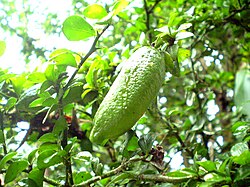
The Australian Outback Lime, a cultivar of the desert lime (C. glauca)

Australian limes are species of the plant genus Citrus that are native to Australia and Papua New Guinea.

These species were formerly included in the genera Microcitrus and Eremocitrus.[1][2][3] They have been used as a food source by indigenous Australians and Indigenous New Guineans as well as early settlers and are used in modern Australian cuisine, including marmalade and sauces.[4][5]

Species include:

Australian limes

[6]

Species from Australia

[edit]

Natural species

[edit]

Cultivars

[edit]
Blood Lime (biggest, red), Sunrise Lime (orange, pear-shaped) and the Outback Lime, a small, green cultivar of the desert lime

A number of cultivars have been developed in recent years. These can be grafted on to standard citrus rootstocks. They may be grown as ornamental trees in the garden or in containers.[10] Grafted standards are available for some varieties.[1] The cultivars include:

  • 'Australian Outback' (or 'Australian Desert'), developed from several desert lime varieties
  • 'Australian Red Centre' (or 'Australian Blood' or Blood Lime[citation needed]), a cross of finger lime[11] and a mandarin-lemon or mandarin-sweet orange hybrid
  • 'Australian Sunrise', a hybrid cross of finger lime and a calomondin which is pear shaped and orange inside
  • 'Rainforest Pearl', a pink-fruited form of finger lime from Bangalow, New South Wales
  • 'Sunrise Lime ', parentage unknown[11]
  • 'Outback Lime', a desert lime cultivar[11]

Species from Papua New Guinea

[edit]

Citrus species in Papua New Guinea have not been extensively studied, so the true number of species is unknown.

Identification

[edit]

An identification key Archived 2009-10-02 at the Wayback Machine (p. 6 or 338) exists for the known Australian limes (not including species from Papua New Guinea). The leaves of some species broaden dramatically with age.[19]

References

[edit]
Revisions and contributorsEdit on WikipediaRead on Wikipedia
from Grokipedia
The Australian lime, scientifically known as and commonly referred to as finger lime, is a thorny shrub or small tree native to , prized for its distinctive finger-shaped fruits that contain vibrant, caviar-like pulp vesicles bursting with tart, flavor. These fruits, typically 3 to 4 inches long and resembling elongated jalapeños, feature thin, colorful skins ranging from green to purple, red, or yellow, with the pulp forming spherical, juicy pearls in hues of pink, green, or white that are intensely acidic and reminiscent of traditional limes. Unlike conventional , the finger lime's unique structure—lacking the typical segmented flesh—makes it a standout in both culinary and ornamental applications, often described as "citrus caviar" for its popping texture. Endemic to the subtropical rainforests of southeastern Queensland and northern New South Wales, C. australasica grows as a dense, spiny plant reaching up to 20 feet in height in the wild, though cultivated specimens are often smaller, around 5 to 10 feet, with small, glossy leaves, purple-tinged new growth, and fragrant white-to-pink flowers blooming in spring. It belongs to the Rutaceae family and is one of six citrus species unique to Australia, exhibiting significant genetic diversity with over 65 wild types varying in fruit color, size, seediness, and flavor profiles. The species has shown notable resilience, including tolerance to diseases like Huanglongbing (citrus greening), which has spurred interest in its genome for breeding programs. In cultivation, Australian finger limes thrive in well-drained, acidic soils in USDA zones 9–11, with production peaking from to but yielding fruit year-round in suitable climates; they are a niche in , comprising just 0.23% of national lime acreage, primarily along the eastern coast. Commercially, the fruits command premium prices—often $40–50 per pound—due to their appeal, used fresh in salads, dishes, , cocktails, and desserts, or processed into sauces, jams, and beverages for their high , , and content. Varieties like Australian Blood (red rind), Sunrise (yellow), and Outback (green) have been developed by institutions such as to enhance market diversity, while the plant's ornamental value and pest resistance further boost its global popularity among chefs and home growers.

Taxonomy and classification

Historical classification

In the early 20th century, American botanist Walter T. Swingle established separate genera for native Australian citrus species based on distinct morphological traits. He created the genus Microcitrus in 1915 for rainforest-adapted species, such as the finger lime (Microcitrus australasica), characterized by small juvenile leaves, minute flowers, and elongated fruits with caviar-like pulp. Swingle further introduced the genus Eremocitrus in 1914 for arid-adapted species like the desert lime (Eremocitrus glauca), distinguished by , silvery leaves and small, round, dry fruits suited to xerophytic conditions. These classifications emphasized differences in leaf structure, flower size, and fruit morphology to differentiate the Australian natives from the broader genus. From the 1930s through the 1980s, taxonomic studies refined the understanding of Australian limes, with researchers recognizing six endemic across Microcitrus and Eremocitrus. Swingle and Reece's comprehensive 1967 detailed five Microcitrus in Australian rainforests and one Eremocitrus in desert regions, highlighting their primitive traits potentially ancestral to modern . Debates arose regarding hybrid origins, particularly for forms initially described as distinct ; for instance, Microcitrus virgata was later identified as a hybrid between M. australis and M. australasica, originating from plantings at the in the early . Key publications in the , including works from Australian institutions, provided identification keys for Microcitrus and Eremocitrus , aiding field recognition and breeding efforts amid ongoing discussions on their evolutionary relationships. These efforts laid the groundwork for later reclassifications integrating Australian limes into the Citrus genus.

Current taxonomic status

The current taxonomic status of Australian limes reflects a post-2000 reclassification that integrates them fully into the genus (Rutaceae), based on molecular phylogenetic evidence demonstrating their close genetic affinity to other citrus . This unification, supported by whole-genome sequencing and analyses, overturned earlier separations into distinct genera such as Microcitrus Swingle (for rain-forest adapted ) and Eremocitrus Swingle (for arid-adapted ones), as DNA data revealed these groups as nested clades within Citrus rather than independent lineages. For instance, the finger lime, now standardized as F. Muell., exemplifies this shift, with genomic studies confirming minimal heterozygosity (<1%) and shared ancestry with Southeast Asian citrus progenitors dating to approximately 4 million years ago. Approximately seven to eight native species are recognized across and under this framework, including C. australasica, C. australis, C. garrawayi, C. glauca, C. gracilis, C. inodora in , and C. warburgiana and C. wakonai in , all assigned to the core Citrus subgenus without further subdivision. This recognition stems from integrative taxonomic revisions emphasizing morphological convergence (e.g., dimorphic leaves and free stamens) alongside genetic , as validated by the Citrus Variety Collection at the (UCR), which maintains living accessions for comparative studies. These species exhibit low interspecific divergence, supporting their treatment as a cohesive Australian-Pacific radiation within . Genetic research from the 2010s, particularly at UCR's Citrus Variety Collection, has further affirmed this status by demonstrating the viability of hybrids between Australian limes and non-native citruses, such as mandarin × C. australasica crosses that retain and exhibit traits like Huanglongbing resistance. These studies, involving and field trials, highlight the evolutionary compatibility of Australian species with the broader gene pool, enabling their use in breeding programs without taxonomic barriers. Such evidence underscores the practical implications of the reclassification for conservation and .

Description

Plant morphology

The Australian lime (), belonging to the genus section Microcitrus, exhibits a thorny growth habit as an understorey or small , reaching heights of 2 to 7 meters in its natural . These plants feature dense, foliage that provides year-round cover, with branches often angled upright in mature specimens. The overall form is compact and vigorous, adapted to subtropical rainforest understories, though cultivated varieties may vary from upright trees to more weeping . The leaves are simple, , and arranged oppositely, with shapes ranging from elliptical to lanceolate or obovate, measuring approximately 2 to 4 cm in length and 1 to 1.5 cm in width. They are often glossy and leathery, with margins that may be slightly toothed or entire. Stems are slender with smooth, pale bark on older branches, while younger twigs bear sharp, solitary spines up to 25 mm long, which serve as a defense mechanism and can persist into maturity, though they may shorten with age. Flowering occurs in spring to summer, with small, fragrant blooms arising singly or in small axillary clusters. These flowers measure 5 to 14 mm in diameter, featuring 4 to 5 oblong petals that are white to pale pink, surrounding numerous stamens (typically 20 to 25) with prominent anthers. The buds are subglobose or obovate, and the overall structure supports efficient in humid environments.

Fruit and identification features

The fruits of the Australian lime are small berries, typically finger-like or cylindrical in shape and ranging from 5 to 12 in length. These berries feature a thin, aromatic rind in various colors, including green, yellow, red, and purple, enclosing an acidic, juicy pulp composed of distinct, caviar-like vesicles. The pulp often contains few or no seeds, with locule counts varying from 3 to 9. Sensory characteristics include a strong aroma dominated by compounds like d-limonene, paired with a bitter to flavor profile that intensifies when unripe. The rind's oil content can impart a resinous note if mixed with the pulp during processing. These traits distinguish the Australian lime from introduced , contributing to its unique culinary identity. Identification relies on diagnostic features such as fruit cross-sections revealing spherical, caviar-like vesicles attached to the locule walls, alongside vegetative traits like parallel leaf venation and the presence or absence of winged petioles. Leaves may broaden slightly with age, aiding differentiation from related . These elements form the basis of taxonomic keys for the species.

Native species and distribution

Australian species

Australia is home to six endemic species of Citrus, all adapted to diverse environments ranging from arid interiors to tropical rainforests. These species, previously classified under the genera Microcitrus and Eremocitrus but now integrated into Citrus based on phylogenetic evidence, exhibit unique morphological traits that distinguish them from Asian citrus progenitors. They play a significant role in the continent's , with distributions largely confined to eastern . Citrus glauca, commonly known as the desert lime, is a thorny, dense or small growing to 3-5 meters in . It features , pale green leaves and produces small, round fruits about 1-2 cm in diameter with a , lime-like flavor. This is highly drought-tolerant, thriving in semi-arid conditions on heavy clay soils. Its natural range spans inland eastern , from to Winton in , southward to in , and into western and , where it often forms dense thickets through suckering. , the finger lime, is a thorny or small reaching up to 7 meters, with small, oval leaves and elongated, finger-shaped fruits 5-10 cm long filled with caviar-like vesicles that burst to release acidic, citrus-flavored pulp. The fruits vary in color from green to pink or red depending on the variety. It inhabits subtropical rainforests and open woodlands, preferring well-drained, acidic soils in humid environments. The species is endemic to the coastal border region of southeastern and northeastern , particularly the lowland rainforests of the . , known as the round lime or dooja, grows as a large or small up to 12 meters tall, with zigzag branchlets armed with stiff thorns and broadly elliptical leaves. It bears round to slightly pear-shaped fruits 3-4 cm in diameter, with thick green-to-yellow skin and pale green, acidic pulp similar to a Tahitian lime. This species favors dry rainforest margins and coastal scrubs on fertile soils. Its distribution is limited to coastal from the Beenleigh area northward, extending into northern . Citrus inodora, the Russell River lime, is a or small up to 4 meters high, notable for its large, odourless leaves measuring 7-17 cm long and 2.5-8.5 cm wide, which lack the aromatic oils typical of other species. The flowers are also scentless, and the fruits are small, pear- or egg-shaped, yellowish-green, and about 3.5-4 cm long with a sour . It occurs in tropical lowland s on well-drained sites. The range is restricted to northeastern , specifically the rainforests between Cairns and Innisfail along the Russell River. Citrus garrawayi, or Mount White lime, is a rare, slender or small seldom exceeding 10 meters, with elliptical leaves and paired spines. It produces small, ovoid, acidic fruits up to 3 cm long with thin, pale green skin and minimal pulp. Due to its limited habitat in upland rainforests on granitic soils, it was previously classified as rare and is protected under legislation, though recently reassessed as least concern. The species is confined to the tropical far north of , particularly the Mount White and regions. Citrus gracilis, known as the Humpty Doo lime or Kakadu lime, is a straggly or small up to 4 meters tall, often and forming multi-stemmed . It has slender branches with small, elliptical leaves and produces small, thin-skinned, yellow-green fruits resembling limes, which are juicy, pleasantly acidic, and often seedless. This species is adapted to eucalypt savannah woodlands and occurs sporadically in the , particularly around the margins of Darwin and near .

Papua New Guinea species

hosts a limited number of native species within the Microcitrus subgenus, distinct from their Australian counterparts despite the proximity of less than 1,000 miles across the . These insular endemics are characterized by their adaptation to understories and sparse documentation due to the region's remoteness. , known locally as kakamadu or the New Guinea wild lime, is the only Microcitrus species occurring outside . It grows as a or small along the south coast of the Papuan Peninsula near Alotau in . The plant features elongate-elliptical leaves that are rhomboid-lanceolate, measuring 1.5–2.5 inches long with crenulate margins and short, narrowly winged petioles. Its fruits are small and globose, approximately 0.75 inches in diameter, with a thin rind containing crowded, concave oil glands, and they develop axillary on stout peduncles. Citrus wakonai is another endemic, restricted to Goodenough Island in the Milne Bay Archipelago. This understudied species forms a small understorey reaching up to 6 meters in height, with continuous flowering throughout the year and a notably short juvenile period among species. It produces small, edible, round s that mature quickly and contain high seed numbers, often exceeding 40 monoembryonic seeds per fruit, in a tropical wet habitat. Research on these species remains limited, with few specimens available owing to the challenging access to remote islands and coastal areas, hindering comprehensive taxonomic and ecological studies.

Habitat and ecology

Environmental adaptations

Australian limes exhibit remarkable environmental adaptations that enable them to thrive in diverse and often harsh Australian habitats, from arid inland regions to humid subtropical rainforests. Species such as (desert lime) demonstrate exceptional and salt tolerance, making them well-suited to semi-arid environments with low and erratic rainfall. These plants employ physiological mechanisms including an extensive deep to access subsurface , a thick waxy on leaves to minimize , sunken stomata to reduce water loss, and the ability to shed leaves during prolonged dry periods while surviving on green twigs. flourishes in heavy clay soils of inland and , where annual rainfall typically ranges from 580 to 860 mm, and it shows tolerance to and accumulation in seeds, allowing persistence in occasionally saline conditions. In contrast, rainforest-adapted species like (finger lime) are specialized for high-humidity, shaded understories in subtropical environments. These plants tolerate consistently moist, acidic soils derived from red volcanic substrates in complex notophyll vine forests, with annual rainfall exceeding 1,000 mm and often reaching 1,500–2,000 mm. Their smaller, elliptical leaves (approximately 2.2–2.5 cm long) and moderate root depth facilitate efficient nutrient uptake in low-fertility, organic-rich soils under canopy cover, while their overall structure supports growth in humid conditions that promote fungal associations but require good drainage to prevent waterlogging. Across Australian lime species, temperature tolerance varies by habitat but underscores their resilience. Desert limes like C. glauca are hardy to -10°C and can endure extremes up to 45°C without significant damage, even flowering at near-freezing temperatures around 0°C, which aids survival in fluctuating inland climates. Tropical and subtropical species, including C. australasica, are more frost-sensitive, experiencing up to 51% dieback at -4°C due to limited cold acclimation mechanisms like accumulation, though they perform optimally in warmer ranges of 15–30°C and tolerate brief heat spikes to 40°C.

Interactions with wildlife

Australian limes play significant ecological roles within their native habitats, particularly through interactions with pollinators and seed dispersers that support their reproduction and distribution. The flowers of species such as the finger lime () attract native , including spp. (formerly classified under ), and birds such as honeyeaters. Although C. australasica is self-pollinating, these and birds can improve fruit set and enhance through cross-pollination. In cultivation and wild settings, this reliance on biotic interactions underscores the importance of diverse insect and bird communities for optimal yields. Poor pollination can lead to deformed fruits or reduced yields. Seed dispersal for Australian limes occurs primarily through animal-mediated processes, adapted to their respective habitats. In eastern rainforest ecosystems, fruits of C. australasica and similar species are consumed by flying foxes (Pteropus spp.), which swallow seeds and excrete them intact over long distances, facilitating spread across fragmented landscapes. Native birds, such as lorikeets, and possums also eat the fruits, dropping seeds beneath perches or in scats, which promotes regeneration in shaded understories. These megafaunal dispersers are crucial for maintaining genetic connectivity in subtropical environments. In contrast, arid-adapted species like C. glauca primarily regenerate through vegetative propagation via root suckers, which supports population persistence in nutrient-poor, drought-prone soils. Australian limes host several native insect herbivores, including aphids and scale insects, which form part of their natural biotic interactions. Native aphid species, such as those in the genus Toxoptera, feed on sap from leaves and stems, potentially weakening young plants but also serving as prey for predatory insects. Scale insects, predominantly native soft scales in Australia, colonize bark and fruit, extracting nutrients and occasionally causing sooty mold from their honeydew. These pests are kept in check by natural enemies like ladybirds and parasitic wasps in wild populations. Symbiotic relationships with arbuscular mycorrhizal fungi (AMF) are prevalent among citrus species and can enhance nutrient acquisition in low-fertility soils.

Cultivation

Growing requirements

Australian limes, including the finger lime (Citrus australasica) and other native species, thrive in subtropical to tropical climates with full sun exposure of at least 6-8 hours daily, though they tolerate partial shade in hotter regions. Most varieties prefer USDA hardiness zones 9-11, where minimum winter temperatures stay above -7°C (20°F), but they can endure light frosts down to -2°C (28°F) with protection; the desert lime (Citrus glauca) is more cold-tolerant, suitable for zone 8 with minima to -12°C (10°F). Ideal sites are frost-free and shielded from prevailing hot or cold winds to prevent fruit damage and promote even growth. Well-drained soils are essential to avoid , with a slightly acidic of 5.5-6.5 optimal for nutrient uptake; finger limes perform well in loamy or sandy mixes amended with like , while desert limes adapt to a broader range including heavy clays, red earths, and saline-tolerant desert loams. In heavy or poorly drained soils, mounding the planting area by 20-30 cm improves and reduces waterlogging risks. cultivation is viable for compact like finger lime using chunky, well-draining potting mixes to ensure drainage. As of 2025, commercial cultivation has expanded with over 70 growers across managing more than 30 varieties, supported by the Australian Native Fingerlime Alliance (ANFA) formed in 2024 to promote industry growth; production is projected to increase by 8% from 2023 levels, focusing on subtropical regions along the eastern coast. Established plants require moderate watering, with delivering 3-5 megalitres per annually in commercial settings, allowing the to dry slightly between sessions to mimic natural conditions while preventing stress. Mulching with 5-10 cm of organic material around the base retains , suppresses weeds, and moderates temperature fluctuations. Fertilization should be conservative, using low-nitrogen, low-phosphorus formulations (e.g., 15:4:11 NPK) applied 2-3 times per season at 25-30% of standard rates to promote fruiting over excessive vegetative growth; avoid applications during flowering until fruits reach 1 cm in size.

Propagation and care

Australian limes, particularly the finger lime (Citrus australasica), are primarily propagated vegetatively to ensure true-to-type plants and faster fruiting, as seed propagation results in variable offspring and extended juvenile periods. Seed propagation is possible using fresh seeds sown in a well-draining mix, though germination can be erratic and plants may take up to 15 years to bear fruit. Semi-hardwood cuttings, treated with rooting hormone, offer another option but have low success rates and slow rooting, typically requiring high humidity and taking several weeks to establish roots. Grafting, the preferred commercial method, involves budding scions onto rootstocks such as trifoliate orange (Citrus trifoliata) or Troyer citrange for improved disease resistance, soil adaptability, and earlier fruiting within 3 years. Once established, Australian lime plants require light annual in autumn after to promote new fruiting wood, maintain shape, and remove dead or damaged branches, avoiding heavy cuts that could stress the tree. Pest management focuses on common issues like , scale insects, and caterpillars using integrated approaches such as horticultural oils or insecticidal soaps, with no sprays applied during flowering to protect pollinators. Fruits are harvested by hand every 10–14 days over a 6–8 week period from to May, once they reach full color and yield to gentle pressure, typically 6–12 months after flowering. Common cultivation challenges include in poorly drained or heavy soils, mitigated by using resistant rootstocks like and planting in raised or mounded beds. Other issues such as melanose , fruit splitting from wet weather, or physical damage from wind and sun can be addressed through prompt removal of infected material, careful handling during harvest, and with wind protection.

Uses

Culinary and commercial applications

Australian finger limes (Citrus australasica) are prized in gourmet cuisine for their unique caviar-like pulp vesicles, which burst with tangy, flavor and are used as a garnish in dishes such as platters, salads, , and . The pearls add visual appeal and textural contrast to desserts like cheesecakes and ice creams, as well as cocktails including mojitos and martinis. Their peel can be dried and ground into a spice for seasoning meats or baked goods. Desert limes (Citrus glauca) feature in bush tucker recipes, where their small, round fruits are incorporated whole into marmalades, chutneys, sauces, and preserves due to their thin, edible rind and sharp acidity. They are also used in dressings, marinades, pickles, and candied products, providing a concentrated lime flavor in both savory and sweet applications. Round limes (Citrus australis) are valued for juicing, yielding a tart liquid suitable for beverages and as a base for citrus drinks, while their thick-skinned fruits are processed into marmalades, sauces, and cordials. Commercially, Australian finger limes have been exported as a premium ingredient to , , and since the mid-1990s, with over 50% of the annual harvest—approximately 100 tonnes from around 70 growers—shipped internationally to high-end markets. While Australian production remains niche at ~100 tonnes annually, global cultivation has expanded significantly, with as the largest producer (over 20,000 trees) as of 2025, and emerging operations in the (up to 30,000 trees in ) and . The industry generated about AUD 3.1 million in value in , with farm-gate prices reaching up to AUD 80 per kilogram for whole fruits. Processing includes drying fruits into powders for use as seasonings in gourmet products, while hybrids like the blood lime (a cross between finger lime and mandarin) appear in beverages, sauces, and preserves for their ruby-red juice and balanced acidity.

Traditional and medicinal uses

Australian Aboriginal groups, including the Bundjalung Nation who refer to finger limes as Gulalung, have long utilized these fruits for flavoring traditional bush foods such as and wild meats, enhancing their taste with the unique pearls. The juice and pulp were also applied topically as an to treat ailments, including cuts, wounds, and infected sores, leveraging the citric acid's properties. Similarly, desert limes served culinary roles in Indigenous diets, often eaten whole for their intense zesty flavor, while providing medicinal benefits such as preventing through their nutrient profile. Medicinally, Australian limes are valued for their high content, with finger lime pulp offering 23 to 54 mg per 100 g fresh weight, which supports formation, immunity, and in traditional remedies. The fruits have been used to alleviate digestive issues like and stomach discomfort, with juice applied internally for its soothing effects. Additionally, the rind is rich in antioxidants, including and , which contribute to properties and have been employed in poultices for skin conditions. Desert limes, noted for even higher levels relative to common , further bolstered their role in combating nutritional deficiencies like among Indigenous communities. These limes hold deep cultural significance in Aboriginal heritage, embodying ancestral knowledge and sustainable land connections passed through generations. Following , early and outback residents adopted Australian limes for practical uses, incorporating them into preserves like marmalades, cordials, and pickles to combat food scarcity and add acidity to rations.

Hybrids and cultivars

Notable hybrids

The blood lime (Citrus australasica × Citrus reticulata var. acid mandarin), also known as Australian Red Centre, is a hybrid citrus developed by the Commonwealth Scientific and Industrial Research Organisation (CSIRO) in the 1990s as part of efforts to breed salt-tolerant varieties for arid Australian conditions. This seedless fruit features distinctive red flesh and skin, offering a tart, mandarin-like flavor suitable for culinary uses such as marmalades and beverages, and it demonstrates enhanced tolerance to saline soils compared to traditional citrus. The variety is valued for its compact growth form, adapting well to container cultivation in limited spaces, with reliable fruiting that provides a bold citrus intensity, distinguishing it for urban and potted gardening applications. Australian Sunrise, a hybrid of the () and calamondin (Citrus × microcarpa, itself a mandarin-kumquat cross), was also bred by from a selection in the to combine ornamental appeal with edible qualities. The resulting pear-shaped, orange fruits are aromatic and versatile for fresh eating or processing into preserves, with the tree exhibiting a compact, upright growth habit ideal for home gardens. The eremolemon (Citrus glauca × Citrus × meyeri) represents an early 20th-century natural hybrid between the Australian desert lime and , first observed spontaneously at the U.S. Date and Citrus Station in California's around the 1920s. This cross yields fruits with improved size, smoother yellow rind, and a balanced tart-sweet acidity that blends the desert lime's resilience with lemon-like qualities, supporting early commercial trials for drought-tolerant citrus production.

Selected cultivars

The Outback Lime is a selected cultivar of Citrus glauca, developed in the 1980s at the CSIRO's Merbein site in Victoria for enhanced drought resistance compared to wild populations. This selection produces larger fruits and higher yields, making it suitable for arid Australian conditions while maintaining the species' natural resilience to heat, cold, and salinity. Rainforest Pearl represents a cultivated selection of Citrus australasica var. sanguinea, sourced from wild populations in northern and bred to emphasize vibrant pink fruits with intensified flavor profiles. Its small, upright growth habit and colorful, pearl-like vesicles highlight its appeal for both ornamental and culinary purposes, with the selection focusing on consistent production of visually striking, tangy limes.

Conservation

Conservation status

The conservation status of Australian lime species, encompassing native and related taxa primarily in and , varies across global and national assessments, with most rated as Least Concern but some facing regional vulnerabilities due to habitat loss. (finger lime) is classified as Least Concern on the , reflecting its relatively widespread distribution in subtropical rainforests, though it was previously listed as 'rare' under Queensland's Nature Conservation Act 1992 before being downlisted. Citrus garrawayi (Mount White lime) is currently assessed as Least Concern under Queensland's Nature Conservation Act, with no global IUCN evaluation available, indicating stable populations in its limited rainforest range. Other Australian species show greater concern regionally. Citrus inodora (large-leaf Australian lime) is classified as Endangered under state assessments as of September 2024, primarily due to the loss of lowland populations from historical land clearing for agriculture. Citrus glauca (desert lime) is rated Vulnerable near Port Augusta in South Australia and threatened in certain arid regions owing to ongoing agricultural expansion and habitat fragmentation. Most species, including C. australis (round lime) and C. gracilis, lack formal IUCN evaluations but are monitored locally as Least Concern where assessed. In , where several wild limes occur, statuses are more precarious; Citrus wintersii (Brown River finger lime) is listed as Vulnerable on the due to restricted range and habitat threats, while other taxa like C. garrawayi variants remain pending further surveys. Australian protections under the Environment Protection and Biodiversity Conservation (EPBC) Act 1999 do not list these lime species directly as threatened, but rainforest-dependent taxa such as C. australasica benefit from protections afforded to their subtropical habitats, which are classified as matters of national environmental significance. Wild populations of finger limes are generally stable, though commercial interest has prompted monitoring for potential overcollection impacts in accessible areas.

Threats and protection efforts

Australian limes, including species such as (finger lime) and (desert lime), face significant threats from habitat loss primarily driven by and activities. In Queensland's subtropical rainforests, where C. australasica is endemic, clearing for has fragmented and reduced suitable habitats, leading to declines and increased vulnerability to . Similarly, arid regions inhabited by C. glauca are impacted by land conversion for farming and , exacerbating genetic isolation. Overcollection for the growing commercial trade poses an additional risk, as unregulated harvesting from wild populations can deplete seed sources and disrupt natural regeneration, particularly for high-demand fruits like finger limes. further compounds these issues, with rising temperatures and altered rainfall patterns threatening arid-adapted species like C. glauca by shifting suitable habitats and increasing stress. Protection efforts for Australian limes involve a combination of ex situ and strategies coordinated by national programs. Seed banking initiatives, led by the Australian Seed Bank Partnership (ASBP), secure genetic material from native species to safeguard diversity against habitat threats; for instance, collections target C. australasica and C. glauca to support future restoration and breeding. Community-based programs, such as Indigenous Protected Areas (IPAs), play a crucial role by incorporating into habitat management, protecting rainforest and arid zones where limes occur through voluntary agreements with Traditional Owners. Since the 2010s, collaborative expeditions to have conducted surveys of related native taxa, documenting distributions and collecting to inform cross-border conservation amid shared ecological threats. Ongoing initiatives focus on building resilience and regulating exploitation. The has developed breeding programs since the 1980s to create resilient strains of Australian limes, incorporating traits like from C. glauca for commercial cultivation that reduces pressure on wild stocks. Export regulations under the Environment Protection and Biodiversity Conservation Act 1999 (EPBC Act) limit wild harvest by requiring permits for trade in native specimens, ensuring sustainable sourcing and preventing for international markets. These measures collectively aim to maintain overall rankings, with many native limes listed as vulnerable or near-threatened under national assessments.

References

Add your contribution
Related Hubs
User Avatar
No comments yet.