Hubbry Logo
JiggingJiggingMain
Open search
Jigging
Community hub
Jigging
logo
8 pages, 0 posts
0 subscribers
Be the first to start a discussion here.
Contribute something
Jigging
Jigging
from Wikipedia
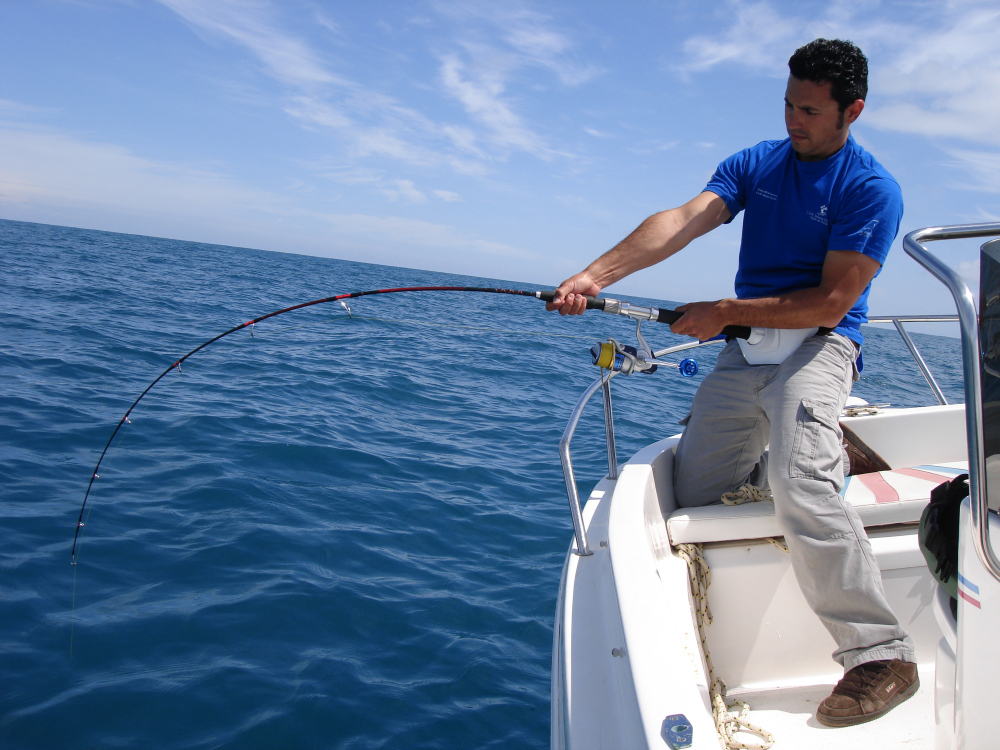
Fisherman jigging with a big fish from his boat
Jigs

Jigging is the practice of fishing with a jig, a type of weighted fishing lure. A jig consists of a heavy metal (typically lead) sinker with an attached fish hook that is usually obscured inside a soft lure or feather-like decorations. Jigs are intended to create a jerky, vertical "jumping" motion to attract fish, as opposed to other common lures like swimbaits, spoons and spinnerbaits, which move through the water more or less horizontally. The jig is very versatile and can be used in both salt and fresh water. Many deeper water fish species are attracted to the lure, which has made it popular among anglers for years.

The jigging technique mainly involves rapid lifting motions of a fishing rod, which jerk the line exert a temporarily upward pull upon the sinking lure. When the target fish is enticed to swallow the lure, the angler then sets the hook to pierce and tether the fish in the mouth. Because the jigs are weighted, a harder-than-usual hookset is often needed to overcome the added weight and provide sufficient momentum to pierce the hook point into the fish mouth. Jigging gears are often involved with the luring of slow moving fish, most commonly during spawning periods. For successful jigging, the jigger needs to use a sensitive rod that is good for feeling a strike, and needs to stay in contact with the lure and get it to where the fish are. Most fish caught by jigs are on or near the bottom.

Advantages and disadvantages

[edit]

Jigging is a low-cost, low-energy technique that does not necessarily require a bait and its catch can be captured live and hauled into the fishing vessel. This method of fishing can be applied locally as well as at commercial levels.

However, this technique of fishing is labour intensive and time consuming. Jigging also requires technical knowledge of an area so as to determine when and where it can be used, and some jigging machines are relatively expensive for the average person to purchase.[1]

Jighead

[edit]
A fish-jighead hook

The weighted "head" of a jig, or jighead, can consist of many different shapes and colors along with different features.[2] The simplest and most common is a round head, but others include fish head-shaped, coned-shaped, cylinder-shaped and hybrid varieties that resemble spoons or spinnerbaits. Most jigheads are integral to a large fish hook, and are most commonly used with soft plastic baits.

The three most popular jighead shapes in bass fishing are the flipping jighead, the football jighead, and the grass jighead. These come in many different weights usually ranging from 180 oz (0.35 g) for small freshwater panfishes (e.g. aji) to nearly 1 pound (0.45 kg) for large saltwater groundfishes, and can also be found in a wide array of colors and patterns. The jig hooks also vary, with variances on the hook type, color, angle or build material. Some jigheads even offer a spring latch known as a weed guard to prevent unwanted snagging on aquatic plants/weeds and underwater structures by the hook point.

Jig body

[edit]
Jig hook with soft plastic lure

There is a wide array of bodies for jigs. The most common is made out of rubber or silicone. These come in many shapes and can resemble a grub, frog, fish, paddle tail, lizard, or different insects. The colors of these can range from bright yellow to a transparent brown with silver and red flakes. Also, during summer months look at colors for the heat such as browns, or blue with black hair. Many others catch fish like smallmouth bass and largemouth bass. Bait such as minnows, leeches or night crawlers can also be used as jig bodies.

Other, more traditional types use dyed or natural whitetail deer tail hair on the outside. Called a bucktail jig, they are widely used in the northern and midwestern United States, where many are still hand tied by anglers.

Other types of materials are also used in constructing jig bodies, such as a chenille wrap on the hook shaft, various feather hackle, hairs or other fur, marabou, flashabou, and other materials. Construction is often similar to the process of fly tying. Some jigs are constructed identically to their artificial fly counterparts, one example a "Wooly Bugger" fly but tied on a jig head.

Bodies can be either brightly colored or subdued. They are often designed to mimic local prey fish or large local insects.

See also

[edit]

Notes

[edit]

References

[edit]
[edit]
Revisions and contributorsEdit on WikipediaRead on Wikipedia
from Grokipedia
Jigging is a versatile technique that employs a weighted lure, called a , which is rhythmically raised and lowered in the to imitate the movements of injured or fleeing baitfish, thereby enticing to strike. This method typically involves the and allowing it to sink before imparting sharp upward jerks with the rod tip, followed by a controlled drop, often while reeling in slack line to maintain contact with the bottom or mid-water structure. Jigs consist of a dense metal head—commonly lead or —molded around a , often adorned with soft plastic bodies, hair, feathers, or skirts in various colors to enhance visual and vibrational appeal. Originating from ancient practices where early anglers used simple weighted hooks to mimic prey, jigging has evolved over centuries into a sophisticated approach suitable for both recreational and commercial fishing. In traditional handline jigging, a single angler deploys one or more lines with lures that are manually pulsed to provoke strikes, a method documented in historical accounts from regions like the North Atlantic where it targeted species such as cod and mackerel. Modern advancements include electronic jigging machines, which automate the up-and-down motion across multiple lines—up to 30 lures per machine—improving efficiency for species like squid and pollock in commercial operations. Common jig types include bucktail jigs, featuring a lead head wrapped in natural or synthetic hair for a lifelike flutter; vertical speed jigs, slender metal lures designed for rapid retrieves in deeper waters; and soft plastic paddle-tail jigs, which generate subtle vibrations ideal for finesse presentations. Jigging excels in targeting a wide array of species, from freshwater staples like , bass, and to saltwater favorites including , , and , particularly in vertical applications over reefs, drop-offs, or schools detected by . Its effectiveness stems from the lure's ability to probe specific depths and structures, with jig weight selected to match water depth, current, and wind—ranging from 1/8 ounce for shallow work to over 14 ounces for deep-sea vertical jigging. Environmentally, jigging is among the most sustainable methods, producing minimal that is often returned alive, negligible disturbance, and low fuel consumption compared to net-based fisheries. In regions like the , it supports small-scale fleets targeting and pollack with vessels under 10 meters, yielding high-quality catches prized for their freshness.

Overview

Definition and Principles

Jigging is a fishing technique that employs a , a weighted artificial lure consisting of a dense metal head—typically lead or —with an embedded , often adorned with soft bodies, hair, or feathers to resemble prey such as baitfish or . The jig's design allows it to sink rapidly to desired depths, where the angler imparts motion to simulate vulnerable prey and provoke strikes from . The core principles of jigging revolve around creating erratic, vertical movements through rhythmic rod lifts and drops, which mimic the struggling or fleeing actions of injured baitfish or bottom-dwelling organisms. This jerky action triggers instinctual predatory responses, particularly from that are inactive, suspended, or oriented near the bottom, as the jig's descent and ascent imitate easy targets in the . Unlike horizontal retrieve methods such as lures, jigging emphasizes vertical presentation to cover specific depths efficiently and exploit behaviors in structured environments. Mechanically, an upward rod pull applies tension to the line, causing the jig to dart or flutter briefly against the water's resistance before the free-fall phase, where gravity pulls it downward in a natural, enticing sink. The jig's weight facilitates quick sinking to reach target zones, while the pause during descent often elicits reaction bites from opportunistic predators sensing vulnerability. This interplay of tension and release leverages basic physics to produce unpredictable motion patterns that stand out in currents or still water, enhancing the lure's appeal without relying on steady retrieves.

Historical Development

The origins of jigging trace back to the early , with the diamond jig emerging as a pivotal innovation around the mid-1920s in . Local fishermen, including John Schmuke of the Eastern Toy and Novelty Company, hand-forged these heavy metal lures specifically for bottom fishing in , targeting species such as and . The diamond shape provided a distinctive fluttering action on the retrieve, quickly gaining popularity among Northeast anglers for its versatility in saltwater environments. Advancements accelerated in the mid-20th century with the integration of soft into jig designs, transforming jigging from rigid metal lures to more lifelike presentations. In 1956, and Gayle Marcus of the Mar Lynn Lure Company introduced the Skworm-N-Jig, pairing a flexible plastic worm—such as Nick Creme's 1949 —with a weighted jighead to imitate natural prey for , marking a shift toward techniques in freshwater . This was followed in the mid-to-late by the development of the jig-and-pig combination, which added trailers to skirted jigs for enhanced buoyancy and scent appeal, further popularizing the rig among bass anglers across the . The jigworm's evolution reflects a broader timeline, spanning approximately 56 years from the Skworm-N-Jig's introduction, with rubber and plastic worm prototypes dating to the 19th century but only fully integrated into jigheads after . Japanese contributions in the 1970s and 1980s elevated jigging to a more mechanical and efficient practice. Angler Yoichi Mogi, recognized as a pioneer of modern Japanese jigging, advocated for braided lines over traditional monofilament to enable quicker retrieves and better sensitivity, particularly when targeting pelagic species like hiramasa in offshore waters. This shift influenced global techniques by emphasizing rod-driven actions to impart erratic motion to metal jigs. In the United States, the 1980s brought regional evolutions, including the snap-jigging technique among Northeast coastal anglers, which relied on sharp, upward rod snaps to mimic fleeing baitfish and provoke strikes from and other predators. Concurrently, sportfishing saw expanded use of custom jigs tailored for bottom-dwelling species like and , contributing to the state's vibrant custom tackle scene.

Equipment

Jigheads

A jighead serves as the foundational component of a jig lure, typically consisting of a molded weight made from dense metals such as lead or , with a embedded directly into the head during the . This design enables the jighead to achieve a controlled sink rate, allowing it to reach targeted depths efficiently while providing a secure attachment point for various dressings. The weight's and influence the lure's fall and presentation, making the jighead essential for mimicking prey in the . Jigheads come in diverse shapes tailored to specific fishing scenarios, each affecting the lure's movement and snag resistance. Round heads offer a versatile, broad profile that minimizes snagging in open water and provides a natural, subtle action. or fish-shaped heads promote a streamlined, nose-down descent, ideal for vertical presentations in currents. and hybrid designs, often resembling spoons, introduce a wobbling motion during retrieval, while football-shaped heads excel at rolling and bouncing along the bottom without embedding in substrate. Weights and sizes of jigheads vary widely to accommodate different environments, from 1/80 oz (0.35 g) for finesse applications targeting in shallow waters to up to 1 lb (0.45 kg) for deep-sea pursuits of groundfish. Selection depends on factors like water depth, current strength, and target species, with lighter heads (e.g., 1/16 to 1/8 oz) suiting calm, shallow conditions and heavier ones (e.g., 1/2 oz or more) ensuring quick descent in deeper or faster-moving waters. Key features of jigheads include specialized hook types such as round bend for better penetration, wide gap for larger baits, and for delicate presentations. Weed guards, constructed from or materials, protect the hook point from in vegetated or structured areas. Eye placement varies, with top-mounted eyes facilitating vertical jigging and side-mounted ones optimizing and retrieval angles. These elements enhance functionality and adaptability when paired with jig bodies to form complete lures. Tungsten jigheads, denser than their lead counterparts at approximately 1.7 times the , allow for smaller profiles at equivalent weights, which reduces risks and improves sensitivity to bottom structure. This material also offers environmental benefits by being non-toxic, though it commands a higher cost due to production challenges.

Jig Bodies

Jig bodies, also known as trailers or dressings, are attachable components designed to enhance the visual and movement appeal of jigheads in fishing lures. These elements, typically soft or fibrous, provide additional action and profile to mimic prey, increasing the jig's effectiveness in attracting . Soft plastic jig bodies represent a primary category, offering versatile and durable options for various fishing scenarios. Common types include grubs with curly tails, which flutter to imitate or worms; twister tails that deliver a spiraling action resembling fleeing prawns; paddle tails that kick vigorously to mimic baitfish like mullet or ; straight or ribbon worms that require angler-induced twitches to simulate injured prey; and creature baits featuring appendages to replicate crustaceans such as or yabbies. These bodies are crafted from flexible , often infused with scents to enhance attraction. Natural material jig bodies provide an alternative with lifelike pulsation and texture, drawing from traditional practices. Bucktail , sourced from deer tails, creates a flowing that undulates in water currents; splayed feathers offer subtle fluttering to suggest or small ; and marabou plumes deliver a soft, quivering motion ideal for imitating minnows. Additional natural options include pork rind strips or eel skin, which release oils and scents to appeal to predatory instincts through olfactory cues rather than solely visual ones. The function of jig bodies is central to their , as they impart dynamic action—such as twisting, fluttering, or kicking—particularly during the fall or retrieve, to replicate the erratic movements of baitfish, , or crustaceans. Colors are selected to match local ; for instance, in winter bottom fishing for bass with soft worms on lead head jigs, subdued natural shades such as motor oil, black/green, green pumpkin, and coffee are recommended to mimic bottom-dwelling prey in low-visibility conditions. In contrast, for mid-layer fishing targeting perch in sunny conditions, colors like white pearl, transparent with flash, and green pumpkin offer effective concealment while maintaining visibility. Bright chartreuse enhances visibility in murky waters and subdued natural shades like white or pearl provide stealth in clear conditions. This adaptability allows jig bodies to target a broad spectrum of prey profiles, boosting strike rates across freshwater and saltwater environments. Attachment methods for jig bodies are straightforward and secure, typically involving skewering the body onto the jighead's point or securing it with trailer hooks for added stability and weedless presentation. For soft plastic curly tail grubs, especially in bass fishing applications, the optimal method begins by threading the hook at the center of the grub's head, passing it through the middle of the body, and exiting the point at a position that covers the entire hook shank. The grub's head should be positioned snugly against the back of the jig head, with the body lying flat and straight along the shank without bunching or twisting. The tail should be oriented so its upward curl aligns with the upward bend of the jig hook (tail up) to ensure optimal swimming action and to prevent line twist or fouling. Sizes vary widely to suit different applications, ranging from 1-2 inches for finesse in shallow or pressured waters to over 6 inches for pursuing larger game species in deeper offshore settings. Specific variations in jig bodies address environmental demands and customization needs. Rubber or formulations ensure durability against abrasion in saltwater, resisting tears from toothy or rocky bottoms. In freshwater, fly-tying materials like marabou or feathers enable hand-crafted bodies tailored to local hatches. Traditional scent-based attractions, such as or skin, persist in applications where natural oils provoke aggressive feeding responses. Bucktail jigs, a seminal design using white deer hair for a lifelike pulsing action in currents, have been hand-tied since the early 20th century, evolving from indigenous techniques into a staple of modern lure fishing.

Rods, Reels, and Lines

Rods used in jigging are typically constructed from sensitive, fast-action graphite or composite blanks to provide the necessary feel for detecting subtle bites and controlling lure movement. These materials, often enhanced with nano carbon fiber or graphene, ensure lightweight construction while maintaining strength for handling heavy loads, such as those encountered with large pelagic species. For boat-based jigging, lengths commonly range from 6 to 7 feet, allowing for precise vertical presentations, while longer rods exceeding 7 feet are preferred for shore jigging to extend casting distance and leverage. Power ratings span from ultralight for targeting panfish to heavy for tuna and other big game, with a parabolic bend that facilitates shock absorption during fights and rhythmic loading for effective jig action. Rods are often rated by compatible jig weights to match specific applications, ensuring optimal performance. In slow pitch jigging, including its lighter variant super light jigging (SLJ), rods feature an overall soft parabolic bend to impart a natural flutter, drift, and roll to the jig during descent via rod rebound, a design refinement developed in Japan after 2000 for enhanced effectiveness in deep-water scenarios. Blade jigging rods, characterized by a soft tip and strong backbone suited for fast jerks and quick retrieves to produce flashy actions, do not perform well for SLJ techniques due to this mismatch, resulting in stiff, unnatural lure behavior, reduced effectiveness in inducing strikes, and increased operator fatigue. Reels for jigging prioritize durability and control, with conventional models favored for deep-water applications due to their precise drop control and ability to handle heavy jigs without slippage. Spinning reels offer versatility in shallower waters, providing ease of use for lighter setups and quick line management. High gear ratios of 6:1 or greater are essential for speed jigging, enabling rapid retrieves to mimic fleeing baitfish and trigger reaction strikes from aggressive predators. Braided lines in the 20- to 80-pound test range are the preferred mainline for jigging, valued for their low stretch, which transmits every jig movement and bite directly to the angler for superior sensitivity. leaders of 20- to 50-pound test are commonly added for their abrasion resistance against rough structures and near-invisibility underwater, reducing spooking of wary . Monofilament lines are generally avoided in jigging due to their high stretch, which diminishes the feel of the jig's action and subtle takes.

Techniques

Vertical Jigging

Vertical jigging is a foundational technique in boat-based where the angler drops the directly below the vessel to the bottom, employing short rod lifts of 1 to 3 feet followed by pauses to impart a hop-and-fall action that mimics injured baitfish. After each lift, the angler reels in any slack line to maintain tension and prepare for the next cycle, ensuring the lure stays in constant motion within the . This method relies on a sensitive rod to detect subtle vibrations, allowing anglers to feel the jig's interaction with the bottom and respond to bites. The technique is particularly effective in depths ranging from 20 to over structured environments such as reefs or , where it targets bottom-feeding by keeping the lure near or in contact with the . By working the jig vertically, anglers can thoroughly probe the lower , provoking strikes from like or snapper that ambush prey from cover. Most bites occur during the free-fall phase after a lift, requiring anglers to watch the line for sudden stops or twitches indicative of a hookup. A common variation, known as yo-yo jigging, involves longer rod lifts to target mid-water pelagic species such as or yellowtail, repeatedly raising and lowering the through the to simulate fleeing . This adaptation extends the technique's reach beyond the bottom, emphasizing rapid cycles to cover suspended schools. Traditional bucktail s, weighing 1 to 4 ounces, perform exceptionally well in vertical jigging for saltwater bottom feeders like and , providing the necessary weight to reach depth while offering a lifelike and hair flutter on the fall. These jigs are often tipped with soft plastics or to enhance attraction in currents typical of edges.

Slow Pitch Jigging

Slow Pitch Jigging emerged in during the as a refined vertical method developed by angler Norihiro Sato to target deep-water with a more subtle presentation than traditional techniques. This approach quickly spread globally, becoming a favored strategy for like and snapper, particularly in offshore environments where fish exhibit less aggressive feeding behavior. Unlike more vigorous jigging styles, it emphasizes reduced angler effort, allowing sustained over extended periods without excessive fatigue. The core technique relies on rhythmic, low-energy rod actions: short, smooth sweeps that lift the rod tip approximately 45 to 90 degrees, elevating the jig 3 to 6 feet from its position, followed immediately by a controlled free-fall. For Slow Pitch Jigging and its lighter variant, Super Light Jigging (SLJ), rods featuring an overall soft parabolic bend are essential. This design allows the rod to store energy during the lift and release it during the fall, auto-generating long, slow falls, drifts, and rolls in the jig via rod rebound, which is crucial for natural lure action. In contrast, Blade Jigging rods, characterized by a soft tip combined with a strong backbone suited for fast jerks and quick line management to produce flashy actions, do not perform well for SLJ techniques. The mismatch in rod action results in stiff, unnatural lure behavior, poorer inducement of strikes from fish, and increased operator fatigue. During the descent, anglers apply slight tension to the line—often by thumbing the spool on a conventional —to guide the jig's motion without imparting slack, creating a natural, fluttering "" sideways and downward. This motion mimics a dying or injured baitfish, with the jig's specialized shape and weight distribution enhancing the erratic, enticing fall that provokes strikes primarily on the drop. Precise timing is essential to sustain this subtle action, especially in currents that could otherwise disrupt the presentation. This method excels in depths ranging from 100 to 500 feet or more, where it effectively engages lethargic or bottom-oriented fish by keeping the jig in the strike zone longer during each cycle. Jigs selected for Slow Pitch Jigging are typically narrow and arrow-like in profile, weighing 80 to 300 grams to achieve a stable yet fluttering descent in deeper water; these designs promote lateral kicks and a slower sink rate compared to heavier, more streamlined lures. Conventional reels are preferred for their ability to facilitate thumb-controlled drops, enabling fine adjustments to the free-fall speed and immediate detection of bites. Braided lines enhance the setup by providing low stretch for heightened sensitivity throughout the technique.

Speed and Snap Jigging

Speed jigging is a dynamic vertical technique designed to cover large volumes of water quickly and elicit aggressive reaction strikes from fast-moving pelagic species. It involves continuous, rapid retrieves executed through short rod pumps, typically lifting the rod 2 to 4 feet in a sweeping motion while reeling to maintain tension, with each cycle lasting 1 to 2 seconds. This imparts a darting, upward trajectory to the followed by a controlled fall, mimicking fleeing baitfish and stimulating predatory responses. Heavy metal jigs, ranging from 150 to 500 grams, are employed to rapidly to depths of 200 to 600 feet, making the method ideal for targeting species in mid-water columns where currents are present. Snap jigging, in contrast, emphasizes intermittent, explosive actions to create erratic jig movements that imitate distressed prey. Anglers deliver sharp, whip-like rod snaps—spaced every 5 to 10 seconds—causing the jig to dart sideways or upward before fluttering down, which triggers the of nearby predators. This technique was developed in the late 1990s in the U.S. Northeast, specifically on , New York, by angler Lyne Marie Torrento, who adapted ultra-light freshwater methods to target and in coastal waters. It relies on moderate-action rods paired with braided lines for sensitivity and leaders to enhance realism through bow waves that mimic baitfish distress signals. Both techniques are predominantly boat-based, applied in open-water environments to pursue such as s, tunas, and kingfish, where non-stop rod work demands high gear ratio reels (often 6:1 or higher) to sustain the intense pace without fatigue. The Japanese hi-speed variant of speed jigging, which incorporates braided lines for superior sensitivity and control in strong currents, was pioneered by anglers like Yoichi Mogi in the early and proves particularly effective for species including and kingfish. These methods require robust setups, including heavy-power to handle the repetitive loads, ensuring efficient vertical presentation over expansive depths.

Applications

Target Species

Jigging is employed to target a diverse array of species across freshwater, saltwater, and contexts, capitalizing on their predatory instincts toward lures that imitate injured or fleeing prey. The technique proves especially effective for bottom-oriented or structure-hugging , as the vertical or erratic motion of the jig provokes strikes from species that are often lethargic, spawning, or ambushing nearby. In freshwater systems, largemouth and rank among the most common targets for jigging, particularly with the jig-and-pig rig—a weighted head paired with a or soft trailer—that mimics crawfish along bottom structures like rocks, ledges, or submerged timber. In winter bottom fishing for bass, recommended colors for lead head jigs with soft worms include motor oil, black green, pumpkin, and coffee for natural bottom mimicry. These bass are highly susceptible during spawning or post-spawn periods when they guard nests or hold near cover, often striking aggressively at flipped or pitched jigs that hop or crawl into thick vegetation, wood piles, or docks. species, including and , respond well to micro jigs (typically 1/64 to 1/32 ounce) tipped with tiny soft plastics, insects, or minnows, as these finesse presentations entice schooling fish suspended in shallow to mid-depth water columns. , especially in riverine environments, are effectively caught via jigging tactics like dragging or vertical lifts with minnow-tipped jigs, exploiting their tendency to hug current-swept bottoms or drop-offs during low-light or transitional periods. Saltwater jigging yields success with both demersal and pelagic , broadening its appeal for offshore and inshore anglers. Bottom dwellers such as , , and various (including and ) are prime candidates for vertical jigging, where heavy jigs (2-8 ounces) are bounced or yo-yoed along reefs, wrecks, or sandy bottoms to imitate scuttling or wounded baitfish, prompting opportunistic strikes from these ambush-oriented fish. Pelagic predators like , , and fall prey to speed or snap jigging with streamlined, fast-sinking metal jigs (4-16 ounces) that dart erratically through the water column, replicating the flight of schooling baitfish in open water or near floating debris. Groupers, renowned for their territorial ambush behavior around ledges and caves, are particularly vulnerable to slow-pitch jigging, as the jig's fluttering descent and lateral kicks simulate a dying baitfish, drawing explosive reactions from these powerful bottom hunters. Additionally, squid are a common target species for jigging, especially at night in inshore waters under lights, using specialized squid jigs that mimic prey through movement and glow features. For squid fishing at night, lures with glow-in-the-dark features are most suitable, as squid are attracted to light and movement in low-light conditions. Recommended colors include glowing orange, which mimics shrimp and stands out well; glowing pink, excellent in low visibility and slightly murky water; yellow-gold, recommended for moonless nights as it reflects existing light and shines; and glowing red, good for nights with some ambient light like moon or shore lights. Anglers are advised to start with orange or yellow-gold, try pink or red if ineffective, and carry multiple colors as squid can be selective based on conditions. Under ice, jigging through drilled holes targets cold-water species like and with ultralight setups, including tiny jigs (1/64 to 1/16 ounce) adorned with waxworms, small minnows, or soft plastics to mimic emerging insects or injured minnows in the limited open water beneath the . Perch often school in 10-30 feet of water and strike aggressively at jigged presentations that hover or quiver in mid-layers, while pike may investigate larger, flashier jigs dropped into deeper holes, ambushing them during their slow, teasing lifts. For mid-layer perch fishing in sunny conditions, recommended colors include white pearl, transparent flash, and green pumpkin for concealment. The roster of jigging targets is extensive and adaptable, but diamond jigs—dense, tetrahedral metal lures—have a storied legacy dating to the 1920s in the Northeast U.S., where they were pioneered in , for casting or jigging and along coastal structures and surf lines.

Fishing Locations and Conditions

Jigging is particularly effective from boats positioned directly over reefs, , and drop-offs for vertical presentations, allowing anglers to target structure-oriented fish in precise locations. Open ocean areas, such as those influenced by currents like the , suit speed jigging for pelagic , while shorelines, piers, and mouths enable jigs for inshore pursuits. In winter, -covered lakes and reservoirs provide opportunities for vertical jigging through holes drilled in the , focusing on saddles, weed beds, and transition zones. Depths range from shallow freshwater areas as low as 5 feet to deep-sea environments exceeding 1,000 feet, with jig weights adjusted accordingly to maintain control. Optimal conditions include low-light periods at dawn and dusk, when are more active, as well as during spawning seasons in spring and fall when temperatures moderate and baitfish congregate. Currents of 1 to 3 knots enhance jig action by imparting natural movement, particularly over reefs and rips, though stronger flows may require heavier jigs to counter drift. Globally, the U.S. Northeast, including rips off and , excels for jigging over sandy shoals and reefs during peak migrations. In and , slow-pitch jigging thrives in offshore waters for , leveraging moderate currents and depths of 100 to 400 feet. New Zealand's coastal shorelines and estuaries support jigging for kahawai around rocks and river mouths, especially on incoming tides. European freshwater systems, such as canals and rivers, favor jigging for in shallow to mid-depths with soft plastics over varied bottoms. Adaptations to challenging conditions include favoring vertical jigging from anchored or drifting boats on windy days to minimize casting difficulties and maintain lure control. In murky , brighter or more vibrant jigs increase and attract strikes by standing out against reduced clarity. Jigging has evolved over centuries and remains integral to commercial worldwide, particularly for using automated jigs under lights and for groundfish in targeted operations across the Atlantic and Pacific.

Modern Developments

Innovations in Design

In the early , a significant shift occurred in jig materials with the widespread adoption of over traditional lead, driven by its superior —nearly twice that of lead—allowing for smaller, more compact profiles that sink faster while maintaining sensitivity and natural movement. This innovation enables anglers to use finesse-sized jigs in deeper waters without sacrificing action, as tungsten's hardness also improves durability and reflectivity for better detection. By 2025, eco-friendly pure designs, such as the Dirty Jigs Pure , further refined these benefits, reducing environmental impact while preserving high performance; it is 30% smaller than equivalent lead models for enhanced precision in forward-facing applications. Hydrodynamic advancements have transformed jig shapes post-2000, incorporating sleek contours, subtle fins, and fish-like profiles optimized through and water tunnel simulations to achieve realistic flutter and lateral movement without added weight. These designs, evident in slow pitch jigs, promote erratic, baitfish-mimicking actions during descent, improving hookups in current-heavy environments like offshore reefs. At the 2025 ICAST show, prototypes showcased advanced hydrodynamic elements to amplify side-to-side darting, building on earlier principles for species-specific targeting. Smart features emerged as a 21st-century breakthrough, with integrated electronics such as LED lights and embedded sensors for bite detection, often synced via Bluetooth to smartphone apps for real-time adjustments in light patterns or vibration. Modular jigheads complement this by allowing interchangeable hooks, weights, and accessories through clip-lock or magnetic systems, enabling on-the-water customization for varying conditions—though adoption remains niche due to higher costs. Soft plastic innovations have focused on hyper-realistic injected molds that replicate or baitfish anatomies, using scent-infused for prolonged attraction in stained waters. Examples include the Z-Man Shadtron LT, with lifelike gill plates, scales, and fins in 4.5- and 6-inch sizes, paired with ElaZtech material for durability and scent retention. For in 2025, new color options like Hot Chartreuse in Z-Man Micro WormZ enhance visibility in low-light scenarios, aligning with trends in jigging. The rise of 3D-printed custom jigs since the allows anglers to tailor head shapes, weights, and placements to local , using durable resins like PETG for cost-effective, high-performance prototypes that outperform mass-produced alternatives in targeted jigging. Complementing this, the "big minnow" style has surged in popularity for fluke fishing by 2025, featuring larger 6- to 8-inch profiles on lightweight jigheads (e.g., 1/8 oz Core Tackle Strut Heads) with loop knots for amplified tail action, proven effective in tournaments for bigger catches. In commercial jigging, electronic machines have advanced by with improved and , supporting up to 30 lines while reducing labor and enhancing precision for species like .

Sustainable Practices

Sustainable practices in jigging have evolved to minimize environmental impacts, particularly through the adoption of eco-friendly materials in lure construction. Manufacturers are increasingly producing biodegradable soft plastics for jig trailers and bodies, which break down more rapidly in marine environments compared to traditional petroleum-based options, thereby reducing from lost gear. Lead-free alternatives, such as tin and weights, along with jigheads—often sourced from recycled materials—have gained prominence to prevent heavy metal contamination in waterways, as these substitutes pose minimal risks to aquatic life. Anglers practicing jigging contribute to ecosystem health by employing catch-and-release techniques with barbless hooks, which facilitate quicker and less injurious fish handling, improving post-release survival rates. Additionally, jigging targets in affected waters, helping to control populations without introducing bait-related contaminants that could exacerbate ecological imbalances. Regulatory measures further support these shifts; several U.S. states have implemented or expanded bans on lead sinkers and jigs, including (since 2000), Washington, and (since the 2010s), to protect from . Globally, initiatives promote sustainable commercial squid jigging by addressing illegal, unreported, and unregulated (IUU) activities through standards and effort limits, ensuring long-term stock viability. As of 2025, trends emphasize "" jigs incorporating plant-based trailers derived from , renewable sources, aligning with broader demands for sustainable gear that decomposes without harming habitats. Slow-pitch jigging, in particular, demonstrates reduced compared to net-based methods, as its targeted, line-based approach limits incidental captures of non-target , supporting more precise fishery management. Within communities, education programs stress habitat protection during reef jigging, teaching techniques to avoid damaging sensitive structures like corals and promoting the use of non-toxic tackle to preserve .

Advantages and Disadvantages

Advantages

Jigging offers significant cost-effectiveness for anglers, as it relies on inexpensive artificial lures that eliminate the need for live bait, thereby reducing expenses associated with bait acquisition and storage. These lures are also highly durable, capable of withstanding repeated use across multiple fishing trips without degradation. The technique's versatility makes it adaptable to a wide range of environments, including both freshwater and saltwater settings, and it performs effectively across all seasons by targeting in various behavioral states, from actively feeding to more passive schools. Jigging allows for precise depth control, enabling anglers to position lures exactly where are holding, which enhances its utility in diverse water columns. In terms of , vertical jigging variants require relatively low physical , as they involve stationary positioning over or schools rather than extensive boat maneuvering. This approach often yields high catch rates, particularly around structures, due to the direct presentation of lures that mimic injured prey. Jigging also promotes skill development by honing an angler's sensitivity to subtle bites and timing of rod movements, fostering improved technique over time. It is accessible to beginners through simple setups while challenging experts with nuanced variations, making it a scalable method for progression. In commercial applications, such as squid jigging, the use of minimal gear results in substantially lower fuel consumption compared to , with studies indicating significant reductions in vessel operating costs. Techniques like slow pitch jigging further contribute to efficiency by minimizing angler fatigue during extended sessions.

Disadvantages

Jigging imposes significant physical demands on anglers, particularly through repetitive rod lifts that can lead to fatigue, especially during speed jigging where rapid, forceful movements are required over extended periods. Deep-water applications exacerbate this, as managing heavy jigs and combating strong currents or powerful demands considerable stamina and can result in prolonged muscle strain, often pinning anglers to the boat rail during fights. The technique features a steep , necessitating precise control of rod action and line feel to imitate natural prey motions effectively; novices often struggle with timing the lifts and drops, rendering the method unproductive without dedicated practice. Among its limitations, jigging is particularly prone to snags in heavy cover or rocky structures, where the weighted lures readily onto submerged obstacles despite efforts to maintain vertical . It proves less effective in strong winds, which bow the line and hinder the tight control essential for accurate jig movement, and for pursuing schooling surface fish, as the vertical approach fails to cover horizontal spreads where lures excel. Advanced jigging gear, including specialized rods and reels designed for sensitivity and power, carries a high cost, with quality models frequently exceeding $250, while braided lines common to the technique require ongoing maintenance to mitigate abrasion and fuzzing from repeated use. Preparing custom jigs adds further challenge, as assembling tailored weights, hooks, and skirts to suit varying depths and species is a time-intensive process. In ultra-clear water, jigging's success diminishes without natural bait additions, since wary fish in high-visibility conditions often ignore isolated artificial lures lacking the scent and realism of live offerings. Lead-based jigheads pose environmental risks, as lost tackle can be ingested by birds and , leading to ; alternatives like are increasingly recommended to mitigate .

References

Add your contribution
Related Hubs
Contribute something
User Avatar
No comments yet.