Hubbry Logo
Fish trapFish trapMain
Open search
Fish trap
Community hub
Fish trap
logo
8 pages, 0 posts
0 subscribers
Be the first to start a discussion here.
Fish trap
Fish trap
from Wikipedia
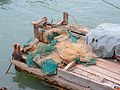
Traditional fish traps, Hà Tây, Vietnam
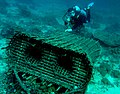
Cage trap at Lembeh Strait, Indonesia

A fish trap is a trap used for catching fish and other aquatic animals of value. Fish traps include fishing weirs, cage traps, fish wheels and some fishing net rigs such as fyke nets.[1]

The use of traps is culturally almost universal around the world and seems to have been independently invented many times. There are two main types of trap, a permanent or semi-permanent structure placed in a river or tidal area and bottle or pot trap that are usually, but not always baited to attract prey, and are periodically lifted out of the water.

A typical contemporary trap consists of a frame of thick steel wire in the shape of a heart, with chicken wire stretched around it. The mesh wraps around the frame and then tapers into the inside of the trap. Fishes that swim inside through this opening cannot get out, as the chicken wire opening bends back into its original narrowness. In earlier times, traps were constructed of wood and fibre. Fish traps contribute to the problems of marine debris and bycatch.

History

[edit]
Eel traps in England, 1899, by Myles Birket Foster
The Mediterranean sea has been described as the world's largest fish trap.

Traps are culturally almost universal and seem to have been independently invented many times. There are essentially two types of trap, a permanent or semi-permanent structure placed in a river or tidal area and bottle or pot trap that are usually, but not always baited to attract prey, and are periodically lifted out of the water.

The Mediterranean Sea, with an area of about of 2.5 million km2 (970,000 sq mi), is shaped according to the principle of a bottle trap. It is easy for fish from the Atlantic Ocean to swim into the Mediterranean through the narrow neck at Gibraltar, and difficult for them to find their way out. It has been described as "the largest fish trap in the world".[2]

The prehistoric Yaghan people who inhabited the Tierra Del Fuego area constructed stonework in shallow inlets that would effectively confine fish at low tide levels. Some of this extant stonework survives at Bahia Wulaia at the Bahia Wulaia Dome Middens archaeological site.[3]

In southern Italy, during the 17th century, a new fishing technique began to be used. The trabucco is an old fishing machine typical of the coast of Gargano protected as historical monuments by the homonym National Park. This giant trap, built in structural wood, is spread along the coast of southern Adriatic especially in the province of Foggia, in some areas of the Abruzzese coastlines and also in some parts of the coast of southern Tyrrhenian Sea.

The Stilbaai Tidal Fish Traps are ancient intertidal stonewall fish traps that occur in various spots on the Western Cape coast of South Africa from Gansbaai to Mosselbaai. The existing fish traps that can still be seen have been built during the past 300 years, some as recently as the latter part of the 20th century, whilst others could date as far back as 3,000 years.[4][5]

Fish trap, Roman period; found in Valkenburg, the Netherlands

Indigenous Australians were, prior to European colonization, most populous in Australia's better-watered areas such as the Murray-Darling river system of the south-east. Here, where water levels fluctuate seasonally, they constructed ingenious stone fish traps.[6] Most have been completely or partially destroyed. The largest and best-known are those on the Barwon River at Brewarrina, New South Wales, which are at least partly preserved.[7] The Brewarrina fish traps caught huge numbers of migratory native fish as the Barwon River rose in flood and then fell. In southern Victoria, such as at Budj Bim (now a UNESCO world heritage site[8]) indigenous people created an elaborate system of canals, some more than 2 km long. The purpose of these canals was to attract and catch eels, a fish of short coastal rivers (as opposed to rivers of the Murray-Darling system). The eels were caught by a variety of traps including stone walls constructed across canals with a net placed across an opening in the wall. Traps at different levels in the marsh came into operation as the water level rose and fell. The traps at Budj Bim are seen as a form of Indigenous aquaculture dating back at least 6,600 years (older than the Pyramids of Giza[9]), with the Muldoon traps system seen as the world's oldest stone walled fish trap, and longest used fish trap in the world.[10]

Somewhat similar stone-wall traps were constructed by Native American Pit River people in north-eastern California.[11] In South Australia, the Barngarla people of Eyre Peninsula combined the use of fish traps with singing "to call sharks and dolphins to chase the fish into the fish traps, where the Barngarla people would appear to spear and stone the fish."[12]: 26 

A technique called dam fishing is used by the Baka pygmies. This involves the construction of a temporary dam resulting in a drop in the water levels downstream— allowing fish to be easily collected.[13]

Also used in Chile, mainly in Chiloé, which were unusually abundant (fish were and basket fish trap).

Types and methods

[edit]

The manner in which fish traps are used depends on local conditions and the behaviour of the local fish. For example, a fish trap might be placed in shallow water near rocks where pikes like to lie. If placed correctly, traps can be very effective. It is usually not necessary to check the trap daily, since the fish remain alive inside the trap, relatively unhurt. Because of this, the trap also allows for the release of undersized fish as per fishing regulations.

Fish traps contribute to the problem of marine debris, unless they are made of biodegradable material, says a United Nations report. For example, fishers lost 31,600 crab traps in the Bristol Bay (Alaska) in a period of two years.[14] Each year, fisheries in Chesapeake Bay (Northeastern United States) lose or abandon 12 to 20 percent of their crab traps, according to a government report. These traps continue to trap animals.[15] Fish traps can also trap protected species such as platypus in Australia.[16]

Portable traps

[edit]

These are usually in the shape of a pot or bottle.

Name Image Description
Atlantic cod pot In 2017 research was reported on the suitability of using baited fishing pots for catching Atlantic cod. Stocks of this once popular commercial fish appear to be recovering after a major fishery collapse. The use of appropriately designed pots can have less environmental impact than other fishing strategies, but to be practical they need to catch their targets both efficiently and selectively.[17]
Basic bottle trap Bottle traps are also known as pot traps. This type of trap is portable, and is used to catch small fish and other small aquatic animals. It consists of a container shaped somewhat like a bottle, usually with an inverted funnel at the entrance. It can be constructed from a plastic bottle, or a glass jar or earthenware pot, or woven with wire or flax. The trap is lowered into the water on a line, where it is left either at the bottom, or suspended at some depth beneath the surface. Bait is usually, but not always used to lure the prey inside. Variants of this basic trap have been used from early times in countries around the world.
Bubu trap Bubu (also spelled "bubo" or "bobo") are traditional fish traps in Southeast Asian countries such as Brunei, Malaysia, and the Philippines, specialized for catching fish in the uneven terrain of coral reefs. They are usually box-shaped or dome-shaped and are made from bamboo or rattan strips woven into hexagonal shapes. They vary in size and shape depending on the topography and current conditions of the locales they are used in. They have a wide opening at one end that narrows into an inverted funnel. They are used with or without baits and have weights or stones placed inside. They are placed on site then retrieved later. They are traditionally not marked with buoys, to avoid theft by other fishermen. Their locations are remembered via shoreline landmarks.[18][19]
Crab trap Different types of crab traps are used depending on regional preferences, the type of crab targeted and the underwater topography. Typically, they are constructed as wire cages, as shown in the image.
Eel trap The New Zealand Māori wove intricate eel pots they called hīnaki from the stems of climbing plants. At their best, these were works of art.[20]
Fyke net A fyke net is made from a bag-shaped net held open by hoops. These can be linked together in long chains, and are used to catch eels in rivers. Fyke nets equipped with wings and leaders are used in sheltered places in lakes where there is plenty of plant life. Hundreds of these nets can be connected into systems where it is not practical to build large fixed structures.
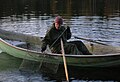
Katiska trap A katiska is a portable fish trap used in Finland. It is a lightweight and made from chicken wire. The trap can either be collapsible or rigid, and is easily placed at any depth since it needs no anchoring. Katiska are commonly used in hobby fishing, since they catch only a small number of fish. The photo shows a fisherman checking a katiska.
Lobster pot A lobster pot is a portable trap used to trap lobsters or crayfish. An opening permits the lobster to enter a tunnel of netting. Lobster pots are usually constructed in two parts from wire and wood. The lobster enters the first part, called the "chamber" or "kitchen", where there is bait. It then moves into the "parlour", where it is trapped. Lobster pots can hold several lobsters. They are usually dropped to the sea floor about a dozen at a time, and are marked by a buoy so they can be picked up later.
Octopus trap In Japan, the Mediterranean, and other regions, an ancient variant is used to catch octopuses. They are usually heavy earthenware pots, and do not have an inverted funnel. These traps are left on the sea floor for days at a time. Octopuses enter and remain inside, using the pot as shelter and protection. No bait is used. When the pot is raised, the octopus will not normally try to escape. See also ja:蛸壺 and piège à poulpe in Tunisia.
Soda bottle
or glass jar
trap
In Haikou, China, local people make bottle traps with small, glass jars. Local craftspeople produce a variant made from a two-litre soda bottle. This type has an inverted funnel made by cutting off the top of the bottle a few centimetres down the neck, and making vertical cuts downward. This produces tabs which are then pushed inward, producing the inverted funnel shape. A stone is attached to the side of the bottle, and several meters of line are provided. Numerous holes are drilled through the bottle to allow water to enter and escape. These are sold by the seaside for 6 yuan, along with a small bag of flour for bait.
Salambáw Salambaw are traditional raft-operated lift nets widely used in the Philippines. It consists of a raft with a tower structure with a crane mechanism attached to two crossing spars with a large square-shaped net stretched in between. They are lowered and raised every few minutes to catch fish. They may use lights to attract fish at night. There are numerous variations of salambaw in the Philippines: a small hand-carried variant used to catch crabs is known as bintol; deep-water variants used to catch chambered nautilus is known as panak; stationary shore-based variants are known as tangkal; and variants operated from large outrigger boats are known as basnig.[21][22]
Stickleback trap The stickleback trap is a variant of the soda bottle trap.

Fixed and semi-fixed structures

[edit]
Name Image Description
Almadraba Almadraba is an ancient Andalusian way of catching tuna. It is an elaborate way of setting nets in a maze that leads to a central killing pool. In Sicily the mazes of nets, and also the places where the nets are set are called Tonnara, and the overall method of capturing the fishes is called Mattanza. This takes place during spring and the beginning of summer when tuna tend to go into the Mediterranean.
Barrier net Barrier nets, locally known as sagpang or sirada, is a type of traditional fish trap originating from the Philippines. It is adapted to catch fish during tidal cycles in mangrove environments with large water level fluctuations. It consists simply of a series of poles built into the substrate surrounding a mangrove area. Nets are strung to the poles by two rope systems. The bottom part is attached and carefully kept in contact with the substrate. The top part of the net is lowered when the tide is coming in, allowing fish and crustaceans to pass through. When the tide begins to recede, the nets are raised and tied to the top part of the poles, trapping the fish and crustaceans. These are collected by simply picking them up at low tide.[23]
Charfia A Tunisian passive fixed fishery system consisting of palm fronds embedded in the seabed to create triangular barriers, blocking the path of the fish, octopuses, and squid pulled in by the ebb tide and channelling them into capture chambers and finally into a net or trap. The charfias are rebuilt every year, and operated only between the autumn equinox and June to ensure that marine wildlife has a biological rest period.

Charfia fishing is prevalent in the Kerkennah Islands (listed as UNESCO Intangible Cultural Heritage of Humanity),[24] but also used in Chebba and to a lesser extend near Zarzis and on the island of Djerba.

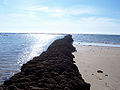
Tidal stone fish weir

Tidal stone fish weirs are one of the ancestral fishing technologies of the seafaring Austronesian peoples. They are found on tidal estuaries and shallow coastal waters throughout regions settled by Austronesians during the Austronesian expansion (c. 3000 to 1500 BCE). They are usually semicircular in shape, with an opening towards the direction of the ebb tide. They are passive traps that depend on the tides to bring in and trap fish. They are found in the highest concentrations in Penghu Island in Taiwan, the Philippines, and all throughout Micronesia.[25][26][27][28] They are also prevalent in eastern Indonesia, Melanesia, and Polynesia. Around 500 stone weirs survive in Taiwan (a notable example being the Double-Heart of Stacked Stones), and millions of stone weirs used to exist through all of the islands of Micronesia.[28] The technology of tidal stone fish weirs has also spread to neighboring regions when Taiwan came under the jurisdiction of China and Imperial Japan in recent centuries.[27]

Fish corral A fish corral (natively known as baklad or bungsod) is a traditional stationary trap placed in reef flats. They originate from the Philippines where they remain in widespread use. They are a variant of the Austronesian tidal stone weir, but differs in that its made with perishable materials like bamboo or wood. They are passive traps that rely on the tides to bring in fish. Fish corrals have a distinctive arrow-like shape. The seaward side consists of a long barrier (the "leader") that guides fish directly into a narrow slit entrance. The entrance opens up into a semi-circular or heart-shaped enclosure called the "playground". On the protruding edges of the playground are smaller heart-shaped enclosures called the "bunt", where the fish are forced into once the tides recede and are caught. Fish corrals are traditionally made from bamboo posts and slats with fine-meshed nets connecting the poles. They range in size from 30 to 100 m (98 to 328 ft) wide. Variants of fish corrals called taba have openings that face shore-ward. They catch fish as the tides recede. They can have V-shaped leading barriers and differ in the placement and orientation of the enclosures and the bunt. A highly simplified version of fish corrals is the tagbacoe, which do not have playgrounds. Instead it consists of V-shaped "wings" that lead directly into the bunt. Tagbacoe are generally lit at night to attract fish and crustaceans and do not rely on tides.[19][29][30][23]
Fish nest Fish nests (sometimes called "miracle holes"; natively known by various names like amatong, balirong, gango, tambon, etc.) is a traditional fish trap originating from the Philippines. It is a fish aggregating device, essentially an artificial reef, consisting of a conical pile of mangrove wood, waterlogged bamboo, rocks, and/or other materials that sink (like old car tires and PVC pipes). They vary in size from 2 to 3 m (6.6 to 9.8 ft) in diameter and 0.5 to 1.5 m (1.6 to 4.9 ft) in height. They may also sometimes be placed inside excavated holes around 1 m (3.3 ft) deep and around 1 to 3 metres (3.3 to 9.8 ft) wide and long. They are constructed in shallow tidal waters and left alone for 2 to 3 months for epibiota to grow on the materials and attract fish. Afterwards, it is harvested once every 2 to 3 weeks. Harvesting is accomplished by encircling the fish nest with a net. The fisherman then wades inside and tosses the fish nest materials one by one outside the net, leaving the fish and other crustaceans inside exposed. These are then chased into a tapered pocket in the middle of the net and caught.[31][23]
Fish weir A fishing weir is an obstruction placed in tidal waters or wholly or partially across a river, which is designed to hinder the passage of fish. Traditionally they were built from wood or stones. Fish such as salmon can be trapped when they attempt to swim upstream, other fish such as eels can be trapped when they attempt to migrate downstream. As fish traps, fishing weirs date back to the Bronze Age in Sweden and to Roman times in the UK. They were used by native North Americans and early settlers to catch fish for trade and to feed their communities.
Fish wheel A fish wheel is a device for catching fish which operates much as a water-powered mill wheel. A wheel complete with baskets and paddles is attached to a floating dock. The wheel rotates due to the current of the stream it is placed into. The baskets on the wheel capture fish traveling upstream. The fish caught in the baskets fall into a holding tank. When the holding tank is full, the fish are removed.
Putcher Putcher traps are ancient traps used for catching salmon. They are peculiar to the River Severn in Great Britain. A putcher is a conical-shaped basket about five feet long. A number of putchers are tied together in rows standing four or five feet high to form a "rank". The rank is set against the incoming or outgoing tide. Traditionally putchers were made of hazel rods with willow plait. More modern baskets can use steel or aluminium wire.[32]
Trabucco A trabucco is a shore-operated lift net, a platform anchored to rocks by large logs of Aleppo pine. Two or more long wooden arms jut out into the sea, where they suspend a narrow-meshed net some feet above the water. They are found along the coast of Gargano, where they are protected as historical monuments. Another variant is found along the coasts of Abruzzo and Molise, where they are installed in shallower waters, and use a platform which runs parallel to the coast instead of jutting out into the water.
Wagenya trap The Wagenya people, in the Congo, build a huge system of wooden tripods across the river. These tripods are anchored on the holes naturally carved in the rock by the water current. To these tripods are anchored large baskets, which are lowered in the rapids to "sieve" the waters for fish. The baskets are designed and sized to trap only large fish. The Wagenya lift the baskets twice daily to check for fish, which are retrieved by swimmers.

More images

[edit]

See also

[edit]

Notes

[edit]

References

[edit]
[edit]
Revisions and contributorsEdit on WikipediaRead on Wikipedia
from Grokipedia
A fish trap is a passive fishing device that captures fish and other aquatic organisms by allowing them to enter an enclosure while making escape difficult or impossible, often through funnel-shaped entrances or one-way valves. These traps vary widely in construction, including submerged wire or wooden pots, woven basket designs, and fixed weirs built from stones, reeds, or wood that leverage currents, tides, or migrations to guide fish inward. Originating in prehistoric times, fish traps represent one of humanity's earliest and most sustainable harvesting methods, with archaeological evidence of stone weirs and related structures dating back thousands of years across continents, from Europe to the Americas and Pacific islands.

Definition and Principles

Mechanisms of Operation

Fish traps primarily operate through passive , wherein enter the voluntarily—drawn by environmental currents, shelter-seeking, or attractants—and are subsequently confined by features that hinder escape. The core mechanism relies on funnel-shaped entrances that taper inward, guiding along a narrowing passage into an internal chamber; this configuration exploits the forward-swimming momentum of entering , making reversal through the constricted outlet physically arduous due to reduced space and altered orientation. Once inside, retention occurs via the chamber's apertures, sized to retain target while allowing juveniles or non-targets to exit, combined with the absence of clear egress paths that align with typical escape behaviors. Mechanisms differ in luring approaches: passive variants leverage hydrodynamic forces, such as tidal or riverine flows, to propel fish toward and into the funnel, capitalizing on natural water velocity gradients that concentrate prey in the trap's path without requiring fisher intervention. In contrast, active luring employs bait within the chamber to stimulate chemosensory or visual attraction, prompting fish to investigate and penetrate the funnel independently of external currents. Both methods underscore the trap's immobility relative to fish, contrasting active gears that pursue targets, with capture efficiency tied to the alignment of trap geometry and prevailing flow physics—wherein Bernoulli principles amplify entry currents while damping backflow. Fish behavioral responses further enable operation; upon entry, disorientation in the enclosed space often leads to futile circling or wall-following rather than relocating the narrow , compounded by thigmotactic tendencies in confined flows that prioritize substrate contact over directed exit-seeking. This interplay of and innate swimming patterns—such as rheotaxis, where orient upstream—ensures unidirectional progression into the trap during inflow phases, with minimal egress during slack or ebb . Empirical observations confirm that funnel angles and chamber volumes must match species-specific burst speeds and turning radii to optimize retention rates, typically exceeding 70% for targeted sizes in controlled deployments.

Advantages and Limitations Compared to Other Fishing Methods

Fish traps offer superior selectivity compared to active methods like and certain netting techniques, minimizing of non-target . Empirical data from Mediterranean fisheries indicate discard rates for fish traps as low as 0.11%, far below the 18.5% observed for drift gillnets and typically higher rates in operations where non-selective encirclement or dragging captures juveniles, sharks, and other unintended organisms. This advantage stems from traps' passive design, which permits escape of undersized or incompatible through or funnels, unlike the mechanical retention in mobile gears. Relative to hook-and-line methods, traps provide broader size selectivity via adjustable , though hooks excel in targeting specific sizes with lower overall capture volume but higher post-capture mortality from gut-hooking. Operationally, fish traps demand substantially less and labor than active gears, facilitating sustainable use in resource-limited small-scale fisheries. As passive devices, traps incur minimal propulsion costs during deployment and soaking, with studies classifying pot and trap systems as low-energy alternatives to trawling's high fuel intensity, often exceeding several liters per kilogram of catch in demersal operations. Labor efficiency arises from intermittent hauling rather than continuous vessel maneuvering, reducing crew exposure and enabling one-person management in some designs, though hooks require ongoing baiting and monitoring. Despite these benefits, fish traps exhibit limitations tied to environmental dependencies and site specificity. Catches rely heavily on predictable fish migrations and schooling behaviors, yielding variable efficiency in areas lacking consistent passage, unlike the proactive pursuit possible with hooks or mobile nets. Fixed or semi-fixed traps prove vulnerable to storms and tidal shifts, which can displace structures or prevent access, exacerbating risks for small-scale operators amid intensifying weather variability. Deployment and retrieval also disturb benthic habitats through dragging, though less severely than , and lost traps contribute to ongoing ghost fishing. Compared to versatile hooks, traps demand precise locational knowledge, limiting adaptability in dynamic conditions.

Historical Development

Prehistoric and Ancient Origins

The earliest confirmed physical evidence of a fish trap is a submerged stone discovered in Shakan Bay, , radiocarbon dated to approximately 11,100 years . This structure, composed of low arc-shaped walls of boulders placed across tidal gullies, facilitated the capture of fish by exploiting receding tides, demonstrating early human adaptation to coastal environments for reliable protein procurement. Prior to this find, the oldest dated weirs in were wooden structures around 6,000–8,000 years old, underscoring the Alaskan example's significance in extending the timeline of such technologies. Artistic depictions provide even earlier indications of trap concepts, with engravings on slabs from the Gönnersdorf site in , dated to about 15,800 years ago, portraying net- or trap-based arrangements during the Late Upper Paleolithic. These Magdalenian-era illustrations, among the oldest evidence of gear in European , suggest cognitive for passive capture methods predating preserved physical remains. In intertidal settings worldwide, prehistoric traps typically employed natural materials such as stacked stones or woven reeds to form V- or heart-shaped enclosures that directed fish into holding areas as tides fell, optimizing energy expenditure over active pursuit. Such devices played a critical role in subsistence by enabling scalable harvests from migratory fish populations, with site longevity—evident in repeated use over centuries at locations like British coastal weirs dated to 7,000 years ago—implying effective that sustained yields without evident depletion. This passive approach, rooted in observation of tidal and fluvial dynamics, contrasts with contemporaneous or methods by reducing risk and labor, thereby supporting population stability in resource-variable ecosystems.

Indigenous and Traditional Applications

of the constructed wooden stake weirs to harvest , leveraging tidal and riverine flows to guide into traps while allowing escapement of juveniles and non-target . These structures, often comprising stakes driven into substrates with lattice fencing or portable baskets, date back at least 3,000 years based on archaeological evidence from sites in and . Groups such as the Coquille Indian Tribe and Lake Babine Nation employed these weirs seasonally during runs, positioning them to exploit specific hydrological conditions for efficient capture without permanent barriers. In northeastern California, the Ahjumawi (Pit River Indians) built stone fish traps along lake shores, such as those preserved at Ahjumawi Lava Springs State Park, to selectively harvest sucker fish like the Sacramento sucker (Catostomus occidentalis). These V- or heart-shaped enclosures of stacked lava rocks impounded fish in shallow bays during low water levels, enabling hand capture while minimizing bycatch and habitat alteration. Constructed over generations, the traps demonstrate empirical understanding of fish behavior and seasonal hydrology, with over a dozen documented structures facilitating communal harvests that supported tribal populations for centuries. Such applications reflect sophisticated engineering attuned to local ecologies, sustaining through practices like timed deployments, size-selective openings, and rotational use that avoided . Archaeological records indicate continuous use without evidence of population collapse, contrasting narratives of inherent primitiveness by highlighting adaptive designs that integrated causal factors like migration patterns and water dynamics. Indigenous governance enforced rules on harvest timing and sharing, fostering resilience observed in stable returns predating industrial fishing.

Modern and Industrial Evolution

In the 20th century, commercial fish traps increasingly incorporated metal wire frames and synthetic netting to enhance durability against biofouling and mechanical wear, replacing traditional wooden and natural fiber constructions that degraded rapidly in marine environments. This shift, evident in pot fisheries for species like lobster and crab, allowed for scalable deployment in industrial operations, with galvanized steel meshes and vinyl-coated wire extending trap lifespan from months to years. Such adaptations supported commercialization by reducing replacement costs and enabling larger fleets to target depleted stocks more efficiently than less selective methods like trawling. Regulatory measures, however, occasionally impeded these scalable designs; for instance, Washington State banned fixed gear traps including pound nets on the in 1935 amid overharvest concerns, attributing declines to inadequate quotas rather than inherent flaws in trap selectivity. Despite this, from trap-based fisheries demonstrates their role in stabilizing depleted populations through low and targeted removal, as traps capture primarily desired sizes and while allowing undersized or non-target to escape. In overexploited systems, this selectivity has helped avert total collapse by preserving breeding stocks, contrasting with high-discard practices in dragnet fisheries that exacerbate depletion. Into the , experimental and revived trap applications underscore their utility in managing hatchery-wild interactions; a 2019 study on a commercial-scale trap in the lower reported 98% survival for released wild , enabling selective harvest of hatchery-origin fish to mitigate genetic dilution of native runs. By 2025, this approach expanded into the first permitted commercial fish trap there in nearly a century, prioritizing hatchery removals to bolster wild stock recovery amid ongoing regulatory scrutiny. These efforts highlight traps' potential to counter declines when integrated with precise , though historical bans illustrate how overly restrictive policies can delay adoption of proven, low-impact tools.

Types and Designs

Portable Traps

Portable traps encompass mobile designs such as basket traps and fyke nets, optimized for deployment in rivers and lakes where transportability is essential. Basket traps typically feature a funnel-shaped entrance leading into a confined chamber, allowing fish to enter via attraction to bait but hindering escape through inverted cones or narrow openings. These are suited for targeting smaller freshwater species in flowing waters, where they can be anchored temporarily in eddies or shallows to exploit natural currents for ingress. Fyke nets, another prevalent portable variant, consist of a cylindrical netting bag supported by hoops, often with collapsible wings or leaders that funnel toward one or more internal cones. Designed for freshwater environments, they are deployed by stretching wings across currents to guide migratory or schooling into the trap, with models featuring multiple rings for sequential entrapment. Field studies in northern lakes demonstrated fyke net catch rates positively correlated with density, yielding higher captures in littoral zones compared to . In Polish lakes, type II fyke nets averaged 1.75 kg daily catch across extensive sampling efforts. Such traps excel in remote or inaccessible areas, where their lightweight construction and disassembly facilitate manual transport to sites unsuitable for fixed installations, minimizing logistical demands. Their passive operation reduces fisher effort post-deployment, enabling sustained monitoring with lower mortality than active gears, though catch variability remains high due to environmental factors like flow and efficacy. Selectivity is enhanced by sizing, permitting targeted species retention while allowing undersized to exit.

Fixed and Tidal Structures

Fixed and tidal fish traps consist of stationary structures, often constructed from stone or wood, positioned in intertidal zones to exploit tidal fluctuations for passive fish capture. These traps typically feature V-shaped or curved weirs that funnel fish toward impoundment areas as water levels drop during ebb tides, preventing escape until harvest. In Australia, Indigenous stone-walled intertidal fishtraps, numbering over 179 documented sites in Queensland alone, demonstrate this design with alignments that direct migratory species into holding ponds exposed at low tide. Similarly, in Western Australia's Albany region, ancient tidal weirs formed by stacked stones create barriers that trap fish retreating with the ebbing tide, a method observed by early European explorers in the 19th century. In , comparable fixed structures include stone tidal weirs along the foreshore of the Mol`ene Archipelago in , , where low walls harness daily tidal ranges exceeding 5 meters to enclose fish as seawater recedes. These weirs, built perpendicular or at angles to the shore, rely on natural currents to guide fish inward, with historical evidence indicating use since prehistoric times in regions with pronounced . Semi-permanent variants incorporate wooden posts driven into the substrate, interwoven with wattle or reeds to form barriers extending from high to low water marks, as identified in Scottish coastal sites like the and Forth estuaries. Such structures offer advantages in coastal and estuarine settings by passively aggregating over large areas during tidal cycles, particularly effective for capturing schools during seasonal migrations when compared to portable traps limited by manual handling and smaller scale. Empirical observations from intertidal sites show these fixed weirs can yield concentrated harvests from ebbing tides, minimizing labor while maximizing exploitation of predictable behaviors tied to tidal flows.

Specialized Variants

Lobster pots represent a specialized variant tailored to the of clawed , featuring multiple entrances leading to a central chamber and incorporating escape vents to enhance size selectivity. These vents, often rectangular openings measuring 38-57 in height depending on regional regulations, allow sublegal lobsters—typically those below a length of 83 —to exit while retaining harvestable sizes, thereby reducing mortality of juveniles and immature individuals. Field trials have shown that such vents significantly lower the retention of undersized americanus, with selectivity curves indicating near-optimal performance for legal minimums when vent dimensions align with species morphology. Eel bucks, employed historically in tidal rivers for capturing European eels (Anguilla anguilla), utilize conical willow-woven baskets with upstream-oriented mouths to exploit the ' migratory and positive rheotactic tendencies during autumn spawning runs. Strung along weirs or stages, these traps passively intercept eels navigating currents without active pursuit, minimizing entanglement risks compared to netting methods. Their , refined over centuries in regions like the River Thames until early 20th-century restrictions, demonstrates causal adaptation to eel elver and adult upstream migration patterns, achieving targeted catches with low due to narrow funnel apertures suited to elongated body shapes. Hybrid trap variants, integrating entrances with extended wings or bags, address challenges in capturing migratory or schooling species in deeper freshwater or coastal environments, such as salmonids or . These fyke- hybrids expand effective capture volume beyond rigid pots, funneling through sequential cones into a cod-end while permitting escape of non-target sizes via integrated vents, thus adapting to variable water depths and flows. Comparative studies reveal that vented trap systems, including hybrids, yield reductions of up to 70% for non-target species like undersized in mixed fisheries, underscoring their empirical superiority in selectivity over unvented or drag-based gears by aligning retention with behavioral and morphological criteria.

Construction and Materials

Traditional Construction Techniques

Traditional portable fish traps, such as types, were constructed by flexible natural materials like reeds, vines, or split wood splints into funnel-shaped enclosures featuring a one-way entrance to retain captured . In the Appalachian region, indigenous groups formed these s using white oak splints woven around stakes to create a tapered structure that directed inward while impeding escape. Ethnographic accounts from regions like document similar bamboo-woven traps arranged to allow entry through narrow openings but restrict exit via constricted funnels. Fixed stone weirs relied on dry-stacking locally sourced rocks, boulders, or heads without mortar to form low walls or V- and U-shaped barriers that channeled fish during tidal or current flows. Chamorro gigao traps in involved piling irregularly shaped blocks and directly onto coral outcrops, resulting in porous walls up to 1 meter high and 3 meters wide that withstood tidal forces through interlocking and gravitational stability. Archaeological evidence from reveals semi-circular arcs of stacked boulders, dating to approximately 11,100 years ago, built across gullies to exploit tidal movements without adhesive bindings. Construction sites were selected in shallow tidal zones, estuaries, or stream confluences where and currents naturally funneled , as confirmed by remnants of these structures in sedimentary contexts. Stone weirs exhibited greater permanence in dynamic tidal environments due to their mass and low allowing water passage while maintaining form, whereas woven organic traps biodegraded rapidly, necessitating annual reconstruction to counter rot and mechanical wear from water flow and marine organisms.

Contemporary Materials and Engineering

Modern fish traps have transitioned to synthetic polymers such as and , alongside galvanized or PVC-coated wire meshes, to achieve superior resistance in saline environments and reduced overall weight for easier handling and deployment. These materials withstand and mechanical stress better than untreated metals or organics, with PVC coatings providing a barrier against electrolytic degradation and plastics offering inherent flexibility to prevent cracking under tidal forces. Engineering innovations emphasize modularity through interlocking panels or collapsible frames, facilitating rapid assembly, stacking for storage, and customization of chamber volumes to target specific species depths. Integrated escape mechanisms, such as rectangular vents or circular gaps typically 5-7 cm in diameter, enable sub-legal fish to egress while retaining adults, with empirical tests showing up to 99% escapement efficiency for undersized sablefish via square panels. Performance data from comparative trials reveal no significant catch efficiency disparity between plastic traps and traditional rush variants, yet plastics exhibit extended operational lifespans—often exceeding 5-10 years in controlled use—due to resistance to rot and abrasion, thereby reducing replacement cycles. Life-cycle cost analyses for galvanized wire traps confirm lower total ownership expenses versus uncoated , as zinc barriers extend usability by mitigating , even at discount rates up to 10%.

Operation and Deployment

Siting and Baiting Strategies

Fish traps are strategically sited in natural chokepoints to capitalize on predictable behaviors, such as concentrations at river confluences or tidal gullies where currents funnel prey and migrants. In environments, traps are often positioned in excavated channels across bars to intercept upstream or downstream movements, enhancing capture by mimicking barriers that concentrate . Observational data from coastal fisheries indicate optimal placement in areas of moderate current adjacent to structure like grass beds, where traps can be anchored to sandy substrates to avoid displacement while allowing ingress. Baiting employs targeted attractants placed centrally within the trap to draw species via olfactory cues without excessive dispersion, thereby reducing waste and maintaining potency. Common baits include fish offal or scraps for carnivorous targets, dead crabs for bottom-dwellers like spot fish, and carbohydrate-rich options such as bread or crushed crackers for schooling baitfish, selected based on regional prey preferences. Placement techniques minimize escape by securing bait in perforated compartments, ensuring scent release while preventing rapid depletion, as evidenced by higher retention rates in soaked traps. Seasonal adjustments derive from empirical catch logs tracking migration timings, with traps redeployed during peak influxes—for instance, spring downstream movements of juveniles or autumn spawning runs—to align with species-specific patterns. Analysis of monthly catch-per-unit-effort data reveals variations, such as elevated yields for traps during high-migration months, informing shifts in trap density or relocation to upstream confluences. Such data-driven tactics, corroborated across fisheries, optimize efficacy by synchronizing operations with observed annual cycles rather than fixed calendars.

Harvesting and Maintenance Practices

Harvesting from traps typically involves timed retrieval to coincide with environmental conditions that facilitate access and minimize disturbance to the catch. For intertidal and fixed tidal traps, extraction occurs during low when receding waters expose the enclosures, allowing to be collected from shallow pools or dry basins without prolonged submersion. In portable pot or basket traps, retrieval is scheduled during calm weather or slack to avoid gear loss or entanglement, often every 1-3 days depending on target and bait efficacy, ensuring remain viable upon removal. This timing reduces risks of storm damage and optimizes efficiency by leveraging natural currents that concentrate prey. Upon access, traps are opened via removable funnels, lids, or barriers, with catch extracted using dip nets, spears, or scoops to preserve liveliness and prevent from overcrowding-induced stress or oxygen depletion. In specialized cases like Ahjumawi lava rock traps, evening harvests during spawning runs (late to early ) involve closing weirs with boards or stones, then illuminating and spearing , yielding over 100 individuals per session with minimal handling trauma. Passive trap designs, such as pound nets, enable sorting in live wells, achieving post-release rates of 94-99.6% for salmonids due to voluntary entry and limited air exposure, contrasting with active methods where pursuit and haul stress elevate mortality by 20-50% or more through exhaustion and . Maintenance protocols emphasize prompt cleaning post-harvest to avert by , , or debris, which clogs entrances and diminishes trap volume by up to 30-50% over weeks of deployment. Nets and frames are scrubbed or pressure-washed to remove organic buildup, with traditional traps cleared of via manual raking to expose substrates and sustain flow. Repairs address wear from currents or marine growth, using on-site materials like reweaving reeds, restacking stones, or patching meshes to restore structural integrity without specialized tools, ensuring reusability across seasons. Pound nets exemplify low-upkeep variants, requiring minimal intervention beyond periodic piling checks, which supports their efficiency in reducing operational downtime compared to high-maintenance active gears.

Cultural and Geographical Contexts

Indigenous Knowledge Systems

Indigenous knowledge systems for fish traps reflect empirical engineering honed through direct observation of fish migration patterns, tidal influences, and hydrological variability, prioritizing functional causality over symbolic narratives. Among the Ngemba people at Brewarrina, Australia, stone-walled structures spanning 400 meters along the Barwon River were iteratively refined over generations to accommodate flood-prone dynamics, with low walls and channels directing upstream-swimming fish into retention ponds during seasonal flows. This adaptation leveraged local ecology, allowing selective harvesting without disrupting breeding populations, as stone configurations minimized escape while permitting smaller fish to pass. Archaeological surveys and oral histories document sustained yields supporting multi-clan populations, with evidence of cooperative protocols—such as assigned pond custodianship—preventing and maintaining balance over millennia, in contrast to unsubstantiated claims of inherent pre-colonial depletion. On the system, similar wooden, earthen, and stone weirs, corroborated by 19th-century ethnographic accounts and indigenous testimonies, enabled regulated access to and other species, yielding protein surpluses for and storage without recorded collapses attributable to . Pre-colonial transmission of these techniques relied on intergenerational oral instruction, embedding causal principles like bait placement aligned with lunar-tidal fish aggregations and material durability against erosion, unaltered by ideological impositions and validated by enduring archaeological integrity. Comparable systems among Kaiadilt communities featured intertidal traps up to 900 meters long, engineered for tidal retention and cooling to preserve catch viability, demonstrating scalable application of behavioral insights across coastal gradients. Such knowledge underscores adaptive realism, where trap efficacy stemmed from testable environmental interactions rather than abstracted ideals.

Regional Adaptations and Distributions

In , bamboo-based conical traps, such as the bubo in the and similar variants in the Basin of , predominate in and coastal fisheries due to the abundance of fast-growing and the need for lightweight, portable structures suited to tropical marine and estuarine environments. These traps, often 1-2 meters in length with funnel entrances, exploit tidal movements and reef topography to capture reef fish like moray eels and groupers, with prevalence documented in artisanal fisheries across the region and islands. In , fixed tidal weirs constructed from wooden stakes and brushwood hurdles are adapted to intertidal zones along estuaries and coastal flats, as evidenced by medieval structures in the and , where they channel during ebb in shallow, sediment-rich waters. These adaptations, spanning from sites to post-medieval periods, reflect geographic constraints like strong tidal ranges and temperate systems, with hurdles often deployed in linear formations up to 100 meters long to intercept migratory salmonids. Across the Pacific Islands, stone-built tidal weirs, such as those in Yap State, Micronesia, utilize coral rubble and basalt walls forming V- or arrow-shaped enclosures on reef flats, capitalizing on predictable tidal ebbs in atoll lagoons to trap schools of reef fish; over 800 such structures have been mapped, clustered near reef passes for optimal current flow. In contrast, freshwater adaptations in African rift lakes, like woven basket traps in Lake Kainji, Nigeria, and Volta Basin, Ghana, employ portable rattan or reed cylinders for lentic environments, targeting tilapiine cichlids in shallow, vegetated bays where fixed weirs would be impractical due to seasonal water level fluctuations. In Alaskan estuaries, historical wooden pile-driven traps adapted to glacial fjords and salmon runs have largely been supplanted by regulatory prohibitions since , yet intertidal stone weirs persist in limited subsistence contexts in , illustrating geographic persistence in high-flow, anadromous fisheries despite broader bans in commercial salmon management. Large-scale stone weirs in the , visible via satellite and spanning kilometers, further highlight arid coastal adaptations to shallow, hypersaline bays, where fixed barriers exploit extreme tides for mullet and harvests.

Environmental and Ecological Impacts

Sustainability and Selectivity Benefits

Fish traps, as passive fishing gears, demonstrate high selectivity by allowing targeted to enter while enabling the release of non-target or undersized individuals with minimal harm, as evidenced by empirical studies on fisheries. In the lower , modified commercial fish traps achieved 100% post-release survival for Chinook and , confirmed through peer-reviewed analysis of capture and release from 2019-2021 operations. This selectivity stems from the traps' design, which permits live release without handling stress typical of active gears, reducing mortality rates to near zero for adult salmonids compared to gillnets, where survival often falls below 50%. Such outcomes challenge assumptions of inherent high in trap fisheries, as indicate traps can eliminate detectable mortality when paired with visual identification protocols. Indigenous management systems incorporating fish traps have sustained fish populations over millennia, providing evidence of long-term ecological stability absent in regions reliant on unregulated active fishing methods. For instance, traditional salmon weirs and traps used by Pacific Northwest tribes maintained harvestable stocks through seasonal, low-pressure extraction, avoiding the boom-bust dynamics observed in overexploited active-gear fisheries where rapid depletion occurs due to constant pursuit and habitat disruption. Analysis of First Nations practices, including stone and wood traps, reveals consistent yields without evidence of collapse, attributable to the gears' passive nature that aligns harvest with natural fish behaviors and migration patterns rather than forcing encounters. This stability contrasts with active gears like trawls, which in unregulated contexts have led to serial depletions, as passive traps impose no selective pressure on escapees and allow population recovery between sets. The energy efficiency of fish traps further enhances their by minimizing fuel consumption and associated carbon emissions relative to motorized active gears. Trap deployment relies on tidal or currents for operation, requiring negligible ongoing —often limited to initial placement and periodic checks—yielding fuel use intensities far below those of , which demands 2-3 liters of fuel per of catch due to dragging heavy nets across seabeds. Contemporary trap systems, such as pound nets, are described as low-carbon strategies, with emissions primarily from transport rather than continuous engine operation, potentially reducing fleet-wide fishery carbon footprints by substituting for high-fuel gears. This efficiency holds particularly for subsistence and small-scale applications, where human-powered or current-driven traps eliminate inputs entirely, supporting sustained yields without contributing to the elevated outputs of industrial .

Habitat and Bycatch Concerns

Deployment and retrieval of fish traps, particularly those placed on soft s, can cause localized benthic disturbance through dragging, leading to temporary sediment resuspension. Experimental deployments in shallow waters (<7 ) have shown traps displacing up to 150 due to currents and wave action, potentially disrupting infaunal communities and releasing nutrients from pore waters. Such movements are more pronounced in high-energy environments, where multi-trap lines may scuff the over distances proportional to line length and bottom type. Bycatch in fish traps primarily consists of non-target fish, crustaceans, and occasionally mobile that enter via funnels or remain due to inadequate escape vents. Rates vary by design and location, but studies indicate capture of undersized or protected in up to 20-30% of trap contents in some reef fisheries, with higher incidences in unvented or oversized traps. Entanglement risks are elevated during faulty deployments, such as tangled lines snagging on epifaunal structures like corals or sponges, potentially damaging features while incidentally harming non-target organisms. Compared to bottom trawls, which generate widespread plumes and chronic alteration, fish trap disturbances are confined to deployment footprints, typically recovering within days to weeks in cohesive sediments. Nonetheless, repeated use in sensitive areas like beds or biogenic reefs amplifies cumulative effects on epibenthic assemblages.

Debates and Empirical Evidence

Advocates for fish traps argue that they facilitate targeted removal of -origin or invasive fish, thereby supporting wild stock recovery without broadly depleting native populations. In the Basin, experimental deployments since 2017 have demonstrated the ability to visually distinguish and release wild and with near-zero mortality, while harvesting hatchery-marked individuals that compete with wild fish for resources. A 2022 study on spring- and summer-run confirmed 100% post-release survival for wild fish captured in passive traps, attributing this to minimal physical injury compared to active gears like gillnets. Such selectivity addresses hatchery strays, which genetic analyses show reduce wild fitness through competition and , with traps enabling precise management absent in mixed-stock fisheries. Critics contend that even brief capture and handling in traps induces physiological stress, potentially elevating delayed mortality in wild stocks, particularly for sensitive species like . Commercial fishing interests, such as Alaska trollers, have challenged trap proponents like the Wild Fish Conservancy, asserting that sorting processes—despite rapid release—disrupt migration and spawning success, based on observed handling effects in analogous catch-and-release scenarios. These concerns echo broader fisheries literature on capture stress, where elevated levels correlate with reduced post-release feeding and survival in some perches and salmonids, though trap-specific data often show lower impacts than nets. Lawsuits by conservation groups, including Wild Fish Conservancy actions against operations, indirectly fuel debates by highlighting cumulative stressors, but direct empirical challenges to trap selectivity remain limited to anecdotal reports rather than controlled trials. Empirical evidence counters precautionary restrictions by revealing millennia of stable trap use in indigenous systems without , contrasting with 20th-century commercial bans driven by overharvest rather than inherent flaws. Australian Aboriginal traps at , dated to over 7,500 years, sustained communities through regulated weirs that exploited tidal and riverine flows without depleting stocks, as evidenced by continuous archaeological occupation. In the Columbia, the 1934 ban followed intensive fixed-gear exploitation exceeding sustainable yields, yet recent trials indicate traps' high selectivity—releasing 90-100% of wild fish alive—undermines blanket prohibitions that overlook gear-specific data. Peer-reviewed assessments affirm traps' lower mortality versus trawls or seines, with historical precedents suggesting regulatory inertia favors active gears despite evidence of traps' causal role in maintaining balance through passive, size- and behavior-selective capture.

Regulatory and Economic Dimensions

In the United States, the Magnuson-Stevens Fishery Conservation and Management Act (MSA) of 1976, as amended, establishes national standards for fishery management that prioritize reducing and promoting selective gears to prevent . Traps and pots, including fish traps, are recognized under MSA-implemented plans as potentially low- methods when designed with escape vents and biodegradable panels to release undersized or non-target species, though regional councils may impose restrictions based on stock assessments showing incidental mortality risks. Despite empirical evidence from NOAA studies indicating traps' selectivity advantages over active gears like trawls, some state-level implementations under MSA have led to outright bans, such as Florida's prohibition on fish traps citing concerns, even as federal allowances persist for experimental or conservation-oriented use. Historical bans in U.S. rivers exemplify regulatory caution overriding sustainability data; for instance, Washington State outlawed commercial fish traps in 1935 following overharvest of salmon stocks under lax management, a policy that endured until 2025 when experimental authorizations revived them on the Columbia River to selectively harvest hatchery fish and support wild salmon recovery, demonstrating traps' utility when monitored. Such restrictions often stem from precautionary bycatch fears, yet post-ban evaluations, including passive trap designs minimizing salmonid mortality, suggest inefficiencies where bans preclude evidence-based alternatives to gillnets or hooks. Indigenous treaty rights introduce conflicts with modern enforcement; Pacific Northwest tribes, under 1850s treaties reserving "usual and accustomed" fishing places, maintain priority access to anadromous resources, including trap methods, superseding state bans unless conservation necessity is proven. Federal courts, as in the Boldt Decision of 1974, affirmed these rights against state regulations, yet enforcement tensions persist, with tribes advocating trap use for selective harvest amid disputes over habitat degradation impacts on reserved stocks. Internationally, frameworks like FAO guidelines endorse traps as sustainable for small-scale fisheries when equipped with size-selective features, but regional bodies such as ICCAT regulate trap fisheries for species like with quotas and seasonal closures to curb . The Marine Stewardship Council notes traps' low impact potential but highlights risks from lost gear, prompting standards for marking and retrieval, though enforcement varies, revealing gaps where empirical selectivity data challenges blanket restrictions in high-bycatch jurisdictions.

Subsistence, Commercial, and Conservation Uses

Fish traps fulfill a primary role in subsistence fishing across developing regions in the Pacific, , and , where they support by capturing reef-associated with minimal equipment investment. Coastal communities in Thailand's employ traditional reef traps to harvest locally consumed , sustaining household nutrition amid limited alternatives. In African lagoons, basket traps target reef , providing a reliable protein source for small-scale fishers dependent on nearshore resources. Pacific Island communities derive approximately 47% of their subsistence fishing income from reef often caught via traps, underscoring their centrality to daily caloric needs in food-vulnerable areas. In commercial fisheries, traps scale effectively for high-value crustaceans like and , driving export-oriented production reflective of market demand rather than subsidies. The industry, reliant on bottom-set traps, underpins Canada's 40% global share in 2020, with landings processed into products sustaining steady international trade. lobster exports form a key component of the $5.5 billion annual value from 2.5 billion pounds, demonstrating traps' in delivering premium catches to global markets. pot fisheries similarly yield economic returns, as evidenced by Alaska's commercial operations contributing to broader industry outputs exceeding in value. Conservation efforts leverage fish traps for selective harvesting that minimizes and counters pressures on non-target stocks. Incorporation of escape gaps in traps reduces by up to 80% while maintaining target yields, enabling sustainable reef fisheries. Experimental modifications to commercial traps achieve 100% post-release survival for salmonids, facilitating live release of wild fish and targeted harvest of hatchery-origin individuals to preserve genetic integrity. These applications promote ecosystem resilience by allowing precise removals that alleviate without broad-area closures.

Innovations and Future Prospects

Technological Advancements

Recent developments in technology emphasize passive selectivity mechanisms to target specific sizes and while minimizing mortality, particularly in fisheries. Trials conducted in the Lower during 2019-2020 evaluated modified passive commercial traps, achieving nearly 100% rates for released adult and through optimized escape vents and handling protocols that allow non-target to exit without stress. Similar 2022 studies on passively operated traps confirmed selectivity exceeding 90% for target stocks, with rates approaching 100% via size-selective apertures that permit undersized or protected salmonids to escape voluntarily, reducing overall handling time and injury. These empirical upgrades, tested under commercial conditions, enhance precision by leveraging behavior rather than active sorting, outperforming traditional active-haul methods in post-release viability. Material innovations post-2010 have introduced biodegradable alternatives for trap components, addressing lost gear persistence without compromising structural integrity or catch efficiency. Norwegian research since 2020 has prototyped bio-based polymers for static gears like pots and traps, which degrade within 1-2 years in marine environments, mitigating "ghost fishing" from derelict equipment while maintaining tensile strength comparable to synthetics during deployment. Initiatives such as B4Plastics have developed fully biodegradable trap nets and frames from plant-derived composites, field-tested to retain over 95% functionality for operational lifespans of 6-12 months before controlled breakdown, as verified in trials. These materials prioritize causal durability—resisting premature failure from or currents—while enabling enzymatic degradation, supported by lifecycle assessments showing reduced microplastic release versus conventional . Emerging integrations, though less widespread in traps than in mobile gears, enable real-time catch monitoring to further refine selectivity. Electronic monitoring systems deployed in trap fisheries since 2019 incorporate low-cost cameras and activity sensors (e.g., motion detectors at escape vents) to log entry/exit events and size distributions autonomously, facilitating data-driven adjustments like vent sizing based on observed lengths. Autonomous underwater cameras, such as the FishCam developed around 2020, have been adapted for trap interiors to provide video feeds of catch composition, achieving detection accuracies above 85% for identification in low-light conditions without disturbing trap operation. These post-2010 tools, powered by solar-rechargeable batteries, transmit data via acoustic modems, allowing remote optimization of trap arrays for precision harvesting in dynamic environments like riverine runs.

Integration with Aquaculture and Management

Fish traps facilitate integration with closed-loop systems by enabling selective capture and sorting of juveniles and adults, minimizing stress and mortality compared to active netting methods. In trap-and-haul operations for Pacific salmonids, sorting mechanisms within traps allow separation of hatchery-origin fish from wild stocks, supporting collection while preserving genetic integrity. This approach aligns with recirculating aquaculture models where traps serve as passive holding devices for size-based grading, enhancing efficiency in species-specific farming without soil-based substrates. In frameworks, fish traps play a key role in mitigating hatchery-wild interbreeding, as demonstrated by 2025 initiatives in the lower . Commercial trap fisheries there target hatchery for removal, directly reducing genetic dilution in wild populations by preventing straying adults from spawning. This marks a revival of trap use after nearly a century of , emphasizing real-time monitoring and adjustment to balance harvest with recovery. Such applications prioritize empirical feedback loops over rigid stocking protocols, fostering resilience in mixed-stock environments. Prospects for fish trap integration favor property rights-based models over individual transferable quotas (ITQs), as economic analyses indicate superior incentives for and stock conservation. Assigning durable, exclusive rights to fixed trap locations encourages long-term investment in site maintenance and reduction, circumventing the race-to-fish dynamics inherent in quota systems. Unlike mobile quota fisheries, trap-centric regimes align harvester interests with sustained yields, as evidenced by historical and simulated outcomes where property rights enhance and reduce overcapitalization. This shift supports balanced ecosystems by decentralizing control, allowing localized adaptations to environmental variability.

References

Add your contribution
Related Hubs
User Avatar
No comments yet.