


Community hub
Recent from talks
Contribute something
Nothing was collected or created yet.
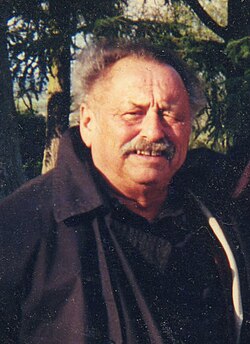
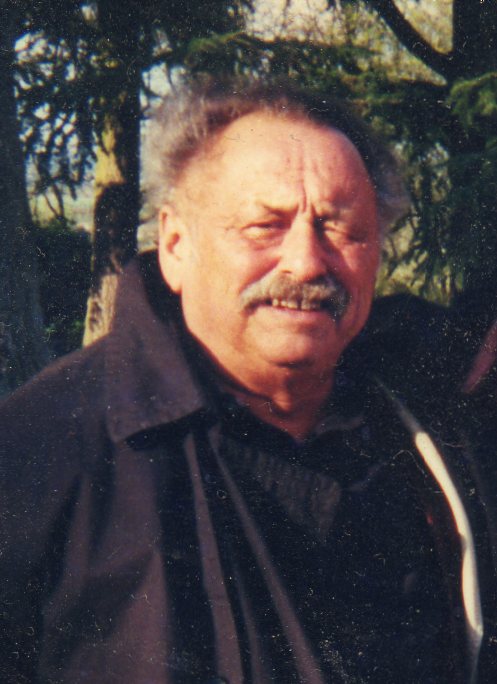
Jim Harrison
View on Wikipedia

Key Information


James Harrison (December 11, 1937 – March 26, 2016) was an American poet, novelist, and essayist. He was a prolific and versatile writer publishing over three dozen books in several genres including poetry, fiction, nonfiction, children's literature, and memoir. He wrote screenplays, book reviews, literary criticism, and published essays on food, travel, and sport. Harrison indicated that, of all his writing, his poetry meant the most to him.[1]: 1
Harrison published 24 novellas during his lifetime and is considered "America's foremost master"[2] of that form. His first commercial success[1]: 5 came with the 1979 publication of the trilogy of novellas Legends of the Fall, two of which were made into movies.
Harrison's work has been translated into multiple languages including Spanish, French, Greek, Chinese, and Russian.[3] He was the recipient of multiple awards and honors including a Guggenheim Fellowship (1969), the Mark Twain Award for distinguished contributions to Midwestern literature (1990), and induction into the American Academy of Arts & Letters (2007).[4] Harrison wrote that "The dream that I could write a good poem, a good novel, or even a good movie for that matter, has devoured my life."[5]: 2
Biography
[edit]Harrison was born in Grayling, Michigan, to Winfield Sprague Harrison, a county agricultural agent, and Norma Olivia (Wahlgren) Harrison, both avid readers.[6] Harrison was born 18 months after oldest child John, with whom he was close. His younger siblings are Judith, Mary, and David.
Harrison became blind in one eye after a childhood accident.[7] He wrote about this in an early poem:
My left eye is blind and jogs like
a milky sparrow in its socket...
— Jim Harrison, "Sketch for A Job Application Blank" (excerpt), Plain Song
Harrison graduated from Haslett High School (Haslett, Michigan) in 1956. When he was 24, on November 21, 1962, his father and sister Judy died in an automobile accident.
In 1959, he married Linda King, with whom he had two daughters. He was educated at Michigan State University, where he received a B.A. (1960) and M.A. (1964) in comparative literature. After a short stint as assistant professor of English at Stony Brook University (1965–66), Harrison started working full-time as a writer. His awards include National Academy of Arts grants (1967, 1968, and 1969), a Guggenheim Fellowship (1969–70), the Spirit of the West Award from the Mountain & Plains Booksellers Association,[8] and election to the American Academy of Arts and Letters (2007).[9]
His work has appeared in many leading publications, including The New Yorker, Esquire, Sports Illustrated, Rolling Stone, Outside, Playboy, Men's Journal, and The New York Times Book Review. He published several collections of novellas, two of which were eventually turned into films: Revenge (1990) and Legends of the Fall (1994).
Much of Harrison's writing is set in sparsely populated regions of North America and its West. Many stories are set in places such as Nebraska's Sand Hills, Michigan's Upper Peninsula, Montana's mountains, and along the Arizona–Mexico border.
Harrison lived in Patagonia, Arizona, Livingston, Montana,[10] and Grand Marais, Michigan. On August 31, 2009, he was featured in an episode of Anthony Bourdain's television show No Reservations, which took place in and around Livingston.[11][12] He also appeared in season 7 of Bourdain's CNN series, Anthony Bourdain: Parts Unknown, in an episode which first aired on May 15, 2016.
Harrison died of heart failure at his writing desk at home in Patagonia, Arizona on the morning of 26 March 2016 (Easter Saturday), while drafting a poem; the last (unpunctuated) line he wrote was "Man shits his pants and trashed God's body".[13][14]
Prose works
[edit]Early career
[edit]Harrison said he became a novelist after he fell off a cliff while bird hunting. During his convalescence, his friend Thomas McGuane suggested he write a novel, and Wolf: A False Memoir (1971) was the result. It is the story of a man who tells his life story while searching for signs of a wolf in the northern Michigan wilderness. This was followed by A Good Day to Die (1973), an ecotage novel and statement about the decline of American ecological systems, and Farmer (1976), a Lolita-like account of a country school teacher and farmer coming to grips with middle age, his mother's dying, and complications of human sexuality.
Harrison's first novellas were published in 1979 under the title Legends of the Fall. The actor Jack Nicholson, a close friend of Harrison's whom he had met through Thomas McGuane, played a peripheral role in the creation of that book. When Nicholson heard that Harrison was broke, he sent $30,000, which allowed Harrison to write Legends of the Fall.[15] The title novella is an epic story that spans 50 years and tells the tale of a father and three sons in the vast spaces of the northern Rocky Mountains around the time of World War I. Referring to the title novella, Harrison said:
"I wrote Legends of the Fall in nine days and when I re-read it, I only had to change one word. There was no revision process. None. I had thought so much about the character that writing the book was like taking dictation. I felt overwhelmed when I finished, I needed to take a vacation, but the book was done."[16]
The novella format would become an important part of both Harrison's future reputation and his output. Following Legends of the Fall, seven more collections of novellas appeared over the course of Harrison's lifetime: The Woman Lit by Fireflies (1990), Julip (1994), The Beast God Forgot to Invent (2000), The Summer He Didn't Die (2005), The Farmer's Daughter (2009), The River Swimmer (2013), and finally The Ancient Minstrel (2016), the latter appearing just before Harrison's death in March of that year.
After publishing Warlock (1981) and Sundog (1984), Harrison published Dalva (1988), one of his best-known novels. It is a complex tale, set in rural Nebraska, of a woman's search for the son she had given up for adoption and for the boy's father, who also happened to be her half-brother. Throughout the narrative, Dalva invokes the memory of her pioneer great-grandfather John Wesley Northridge, an Andersonville survivor during the Civil War and naturalist, whose diaries vividly tell of the destruction of the Plains Indian way of life. Many of these characters are featured also in The Road Home (1998), a complex work using five narrators, including Dalva, her 30-year-old son Nelse, and her grandfather John Wesley Northridge II. Harrison has been described as trying to get at "the soul history of where you live" in this sequel to Dalva, in this case rural Nebraska in the latter half of the 20th century.[17]
By the time Harrison turned 60 in 1998, he had published both a dozen works of fiction and another dozen volumes of poetry.
Later life and writings
[edit]In terms of his publishing career, Harrison's final 18 years, after he turned 60, would be nearly as productive as the preceding 30 years. After age 60, he published another dozen works of fiction, at least six more volumes of poetry, a memoir Off to the Side, and The Raw and the Cooked: Adventures of a Roving Gourmand, a collection of his food essays which had first appeared in magazines, mostly in Esquire and Men's Journal.
Although he continued writing in the novella format, during these final years (1999–2016), Harrison refocused his efforts on the longer novel form. In the 2000s, Harrison published two of the most ambitious novels, setting them in Michigan's Upper Peninsula: True North (2004) and its sequel Returning to Earth (2007). True North examines the costs to a timber and mining family torn apart by alcoholism and the moral recklessness of a war-damaged father. The novel contains two stories: that of the monstrous father and that of the son's trying to atone for his father's evil, and ultimately, reconciling with his family's history.
Returning to Earth (2007) revisits the characters and setting of True North (2004) 30 years later. The story has four narrators: Donald, a mixed-blood Indian, now middle-aged and dying of Lou Gehrig's disease; Donald's wife Cynthia, whom he rescued as a teen from the ruins of her family; Cynthia's brother David (the central character of True North); and K, Cynthia's nephew and Donald's soul mate. Ultimately, the extended family helps Donald end his life at the place of his choosing, and then draw on the powers of love and commitment to reconcile loss and heal wounds borne for generations.
Harrison's The English Major (2008) is a road novel about a 60-year-old former high school English teacher and farmer from Michigan, who after a divorce and the sale of his farm, heads westward on a mind-clearing road trip. Along the way, he falls into an affair with a former student, reconnects with his big-shot son in San Francisco, confers on questions of life and lust with an old doctor friend, and undertakes a project to rename all the states and their state birds.[18]
Harrison wrote two darkly comic detective novels, The Great Leader: A Faux Mystery (Grove Press, 2012) and The Big Seven (Grove Press, 2015), both focused on protagonist Detective Sunderson. The Great Leader: A Faux Mystery was positively reviewed in The New York Times, with critic Pete Dexter calling Harrison's writing "very close to magic."[19]
Poetry
[edit]Publication history
[edit]Inspired by his study of Pablo Neruda, Harrison completed what he called his first acceptable poems in the early 1960s.[20] In 1965 he had several poems published in The Nation and Poetry and then, with the assistance of the poet Denise Levertov, he published his first poetry collection, Plain Song (1965).[5]: 198ff
Over the course of his life Harrison published his poetry in many periodicals including Virginia Quarterly Review, Triquarterly, The American Poetry Review, and The New York Times Book Review. He published 17 collections of poetry (the number includes chapbooks, limited editions, and coauthored works). The Shape of the Journey: New and Collected Poems (1998) collects over 120 of his poems. The posthumous Jim Harrison: The Essential Poems (2019) was selected from nearly 1000 poems that Harrison wrote.
Harrison was aware that his poetry did not have mass appeal. He wrote that to draw attention to poetry "you would have to immolate a volunteer poet in an 751 BMW".[21] He hoped that by choosing a small press like Copper Canyon Press, his poetry collections would stay in print.[5]: 245 [22]
Dead Man's Float (2016), his final book of poetry, was published the year of his death.
Influences
[edit]Harrison began his study of poetry as a teenager and, as a young man, thought of himself as "a poet and nothing else".[5]: 176 His earliest influences included Arthur Rimbaud, Richard Wright, and Walt Whitman.
Harrison studied a multitude of English speaking poets including W.B. Yeats, Dylan Thomas, Robert Bly, and Robert Duncan. Harrison also cited a diverse set of influences from world poetry including: French Symbolist poetry; the Russian poets Georgy Ivanov and Vladimir Mayakovsky; the German poet Rainier Maria Rilke; and Chinese Tang dynasty poetry.[note 1] He felt a particular affinity for the French poet Rene Char and the Russian poet Sergei Yesenin as they both came "from humble beginnings out in the country".[5]: 179 Harrison's sequence of prose poems Letters to Yesenin (1973) was inspired by Yesenin.
Harrison's practice of Zen Buddhism was important to his poetry, in part because it kept his "head from flying off".[23] He became aware of Zen inspired poetry "by way of poets like Clayton Eshleman and Cid Corman, and most powerfully of all through Gary Snyder"[24]. He wrote that his long poem The Theory and Practice of Rivers (1986) was "basically Zennist".[5]: 269 His sequence of 57 poems After Ikkyū (1996) is entitled after the Zen monk Ikkyū and was occasioned by his study of the Zen sages Tung-shan and Yunmen.[25]
Nature poetry
[edit]Harrison's poetry often concerns itself with the natural world. Nonhuman creatures, especially birds and dogs, populate his poetry and wild, uncivilized places are frequent settings. Harrison's poetry "returns us to some level of understanding about our relationship to other life on the planet".[26] Harrison wrote that his "intimacy with the natural world has been a substitute for religion, or a religion of another sort."[21] The River, one of Harrison's later poems, is illustrative:
...Then again maybe we'll be cast
at the speed of light through the universe
to God's throne. His hair is bounteous.
All the 5,000 birds on earth were created there.
The firstborn cranes, herons, hawks, at the back
so as not to frighten the little ones.
Even now they remember this divine habitat.
Shall we gather at the river, this beautiful river?
We'll sing with the warblers perched on his eyelashes.
— Jim Harrison, "The River" (excerpt), Dead Man's Float (2016)
Harrison bibliographies and interviews
[edit]In 2009, University of Nebraska Press published Jim Harrison: A Comprehensive Bibliography, 1964–2008, an illustrated guide to Harrison's published works, edited by Gregg Orr and Beef Torrey, with an introduction by Robert DeMott, which contains more than 1600 citations of writing by and about Harrison.[27] Many of Harrison's papers are housed at Grand Valley State University in Allendale, Michigan.[28]
Harrison was interviewed in 2004 in Paris by François Busnel, and was asked how he explained the success of his novel, True North, in the United States where his previous books were not successful. Harrison replied, "The age, undoubtedly! Or a proof that America loves France, since it is said often over there that I am the most French of the American writers."[29]
Many of Harrison's interviews between 1976 and 1999 are collected in the book, Conversations with Jim Harrison, edited by Robert DeMott, published by the University Press of Mississippi, 2002.[30] Harrison discusses his poetry in an extensive interview in Five Points Magazine.[31]
Film work
[edit]Harrison's work on films and in the screenplay format began with his book Legends of the Fall, when he sold the film rights for all three stories in the book and became involved in writing the screenplay for the film with the same title. It was directed by Edward Zwick and starred Brad Pitt, Anthony Hopkins, and Aidan Quinn; it won the 1995 Academy Award for cinematography.[32] Harrison had a writing credit for the film.
Other films he scripted or co-wrote include Cold Feet (1989), with Keith Carradine, Tom Waits, and Rip Torn, and Revenge (1990), starring Kevin Costner. For his work on the screenplay for Wolf (1994, starring Jack Nicholson) Harrison, along with co-writer Wesley Strick, shared the Saturn Award for Best Writing.
Bibliography
[edit]Novels
[edit]- Wolf: A False Memoir (1971)
- A Good Day to Die (1973)
- Farmer (1976)
- Warlock (1981)
- Sundog: The Story of an American Foreman, Robert Corvus Strang (1984)
- Dalva (1988)
- The Road Home (1998) ISBN 9780871137296, OCLC 39235548
- True North (2004)
- Returning To Earth (2007) ISBN 9781597225229, OCLC 71369560
- The English Major (2008) ISBN 9780802118639, OCLC 243473921
- The Great Leader (2011) ISBN 9780802119704, OCLC 707255777
- The Big Seven (2015) ISBN 9780802123923, OCLC 891155364
Novellas
[edit]- Legends of the Fall (1979). Three novellas: "Revenge", "The Man Who Gave Up His Name", and "Legends of the Fall".
- The Woman Lit By Fireflies (1990). Three novellas: "Brown Dog", "Sunset Limited", and "The Woman Lit by Fireflies".
- Julip (1994). Three novellas: "Julip", "The Seven-Ounce Man", and "The Beige Dolorosa".
- The Beast God Forgot to Invent (2000). Three novellas: "The Beast God Forgot to Invent", "Westward Ho", and "I Forgot to Go to Spain".
- The Summer He Didn't Die (2005). Three novellas: "The Summer He Didn't Die", "Republican Wives", and "Tracking".
- The Farmer's Daughter (2009). Three novellas: "The Farmer's Daughter", "Brown Dog Redux", and "The Games of Night".
- The River Swimmer (2013). Two novellas: "The Land of Unlikeness" and "The River Swimmer".
- Brown Dog (2013). Five previously published 'Brown Dog' novellas[note 2] and a new one: "He Dog".
- The Ancient Minstrel (2016). Three novellas: "The Ancient Minstrel", "Eggs", and "The Case of the Howling Buddhas".
Nonfiction
[edit]- Just Before Dark: Collected Nonfiction (1991)
- The Raw and the Cooked (1992) Dim Gray Bar Press ltd ed
- The Raw and the Cooked: Adventures of a Roving Gourmand (2001)
- Off to the Side: A Memoir (2002)
- A Really Big Lunch: Meditations on Food and Life from the Roving Gourmand (2017)
- Search for the Genuine, The: Nonfiction, 1970–2015 (2022)
Children's literature
[edit]- The Boy Who Ran to the Woods (Illustrated by Tom Pohrt) (2000)
Poetry
[edit]- Plain Song (W.W. Norton, 1965)
- Walking (Pym-Randall Press, 1967)
- Locations (W.W. Norton, 1968)
- Outlyer and Ghazals (Simon and Schuster, 1971)
- Letters to Yesenin (Sumac, 1973)
- Returning to Earth (Court Street Chapbook Series) (Ithaca Street, 1977)
- Selected and New Poems, 1961–1981 (Houghton Mifflin, 1981)
- Natural World: A Bestiary (Open Book, 1982)
- The Theory & Practice of Rivers (Winn, 1986). Republished 1989 by Clark City Press.
- After Ikkyu and Other Poems (Shambhala, 1996)
- The Shape of the Journey: New and Collected Poems (Copper Canyon Press, 1998)
- A Conversation (Aralia Press, 2002). Chapbook coauthored with Ted Kooser.
- Braided Creek: A Conversation in Poetry (Copper Canyon Press, 2003). Coauthored with Ted Kooser.
- Livingston Suite (Limberlost Press, 2005). Illustrated by Greg Keeler.
- Saving Daylight (Copper Canyon Press, 2006)
- In Search of Small Gods (Copper Canyon Press, 2009)
- Songs of Unreason (Copper Canyon Press, 2011)
- Dead Man's Float (Copper Canyon Press, 2016)
- Jim Harrison: The Essential Poems (Copper Canyon Press, 2019). Edited by Joseph Bednarik.
- Jim Harrison: Complete Poems (Copper Canyon Press, 2021). Edited by Joseph Bednarik.
Filmography
[edit]Writer
[edit]- Dalva (1996)
- Carried Away (1996)
- Legends of the Fall (1994)
- Wolf (1994)
- Revenge (1990)
- Cold Feet (1989)
Producer
[edit]- Wolf (1994)
Self
[edit]- Here is Something Beautiful (announced)
- La grande librairie (2009–2015)
- Café littéraire (2010)
- The Practice of the Wild (2010)
- Amérique, notre histoire (2006)
- Le cercle de minuit (1995)
Notes
[edit]- ^ Harrison discusses his poetic influences in his memoir Off to the Side, A Memoir (2002); e.g., see pages 38, 55, 66, 125, 174, 177, 180, 187, 232, and 245. He also discusses his influences in the introduction to his collection of poetry The Shape of the Journey (1998).
- ^ "Brown Dog", "The Seven-Ounce Man", "Westward Ho", "The Summer He Didn't Die", "Brown Dog Redux"
References
[edit]- ^ a b Harrison, Jim (1998). The Shape of the Journey : New and Collected poems (1st ed.). Port Townsend, Wash.: Copper Canyon Press. ISBN 1556590954. OCLC 39615442.
- ^ Shreve, Porter (December 2, 2013). "Book World: 'Brown Dog' by Jim Harrison". The Washington Post. Retrieved February 27, 2019.
- ^ "WorldCat.org listing for Jim Harrison works in all languages". www.worldcat.org. Retrieved March 1, 2019.
- ^ "Jim Harrison papers. Grand Valley State University Special Collections and University Archives". gvsu.lyrasistechnology.org. Retrieved March 12, 2019.
- ^ a b c d e f Harrison, Jim (2002). Off to the Side : A Memoir (1st ed.). New York: Atlantic Monthly Press. ISBN 0871138603. OCLC 50065061.
- ^ Harrison, Jim; DeMott, Robert J. (2002). Conversations with Jim Harrison. Jackson: Univ. Press of Mississippi. ISBN 978-1-57806-456-4. page xxi.
- ^ Harrison, Jim. "Searchers by Jim Harrison | The Writer's Almanac with Garrison Keillor". Writersalmanac.publicradio.org. Retrieved January 21, 2012.
- ^ "Mountains & Plains AKA Reading the West". Between the Covers Bookstore.
- ^ "Jim Harrison, author of 'Legends of the Fall' and other books, dies at 78" washingtonpost.com
- ^ Alter, Alexandra (July 10, 2009). "Indoors With a Poet of the Outdoors". Wall Street Journal. Retrieved August 13, 2011.
- ^ "Episodes : Anthony Bourdain: No Reservations". Travel Channel. February 28, 2011. Retrieved January 21, 2012.
- ^ "Big Sky … Thick Jungle … Zero Tolerance (and Diane Saves The Day) « Anthony Bourdain". Anthony-bourdain-blog.travelchannel.com. Archived from the original on August 13, 2010. Retrieved January 21, 2012.
- ^ Jim Harrison, Poet, Novelist and Essayist, Is Dead at 78 nytimes.com
- ^ Harrison, Jim (2021). Bednarik, Joseph (ed.). Complete poems. Copper Canyon Press. pp. 20, 829. ISBN 9781619322479.
- ^ "'Legends of the Fall' a massive hit". The Clarion Ledger. Retrieved February 12, 2019.
- ^ Fassler, Joe (January 7, 2014). "'It Has to Come to You': Why Jim Harrison Writes Patiently". The Atlantic. Retrieved February 12, 2019.
- ^ Phipps, T.W. "Image matters to Jim Harrison", Book, Oct/Nov 1998
- ^ McGrath, Charles (January 25, 2007). "Pleasures of the Hard-Worn Life". The New York Times.
- ^ Dexter, Pete (September 30, 2011). "Jim Harrison Stalks a Cult Leader". The New York Times. Retrieved March 27, 2016.
- ^ Harrison, Jim (1991). "A Natural History of Some Poems". Just Before Dark : Collected Nonfiction (1st ed.). Livingston, MT: Clark City Press. p. 198. ISBN 0944439306. OCLC 23951693.
- ^ a b Harrison, Jim (1991). "Poetry as Survival". Just Before Dark : Collected Nonfiction (1st ed.). Livingston, MT: Clark City Press. pp. 294, 297. ISBN 0944439306. OCLC 23951693.
- ^ "An Interview with Joseph Bednarik". Five Points. Retrieved June 11, 2019.
Poetry doesn't belong—as far as I'm concerned—in these major houses, because there's no attentiveness to production, design, there's no attentiveness to editing.
- ^ Harrison, Jim. "Sitting Around". Tricycle: The Buddhist Review. Retrieved May 27, 2019.
- ^ Harrison, Jim (1991). "Afterimages: Zen Poems by Shinkichi Takahashi". Just Before Dark : Collected Nonfiction (1st ed.). Livingston, MT: Clark City Press. p. 239. ISBN 0944439306. OCLC 23951693.
- ^ Harrison, Jim (1996). After Ikkyū and Other Poems (1st ed.). Boston: Shambhala. pp. viii. ISBN 1570622183. OCLC 34281988.
- ^ Davis, Tod (Autumn 2000). "A spiritual topography: Northern Michigan in the poetry of Jim Harrison". The Midwest Quarterly. 42 (1). Pittsburg: 94–104.
- ^ "Jim Harrison". University of Nebraska Press. Retrieved January 21, 2012.
- ^ "Jim Harrison papers, RHC-16. Grand Valley State University Special Collections and University Archives". Retrieved July 18, 2023.
- ^ ""Entretien avec Jim Harrison" – Interview with Jim Harrison". L'Express, article in French previously published in its literary brand "Lire Magazine". October 1, 2004.
- ^ Demott, Robert, ed. (May 6, 2002). Conversations with Jim Harrison. University Press of Mississippi. ISBN 1578064562.
- ^ "Five Points". Webdelsol.com. Retrieved January 21, 2012.
- ^ "67th Academy Awards Winners | Oscar Legacy | Academy of Motion Picture Arts and Sciences". Oscars.org. March 27, 1995. Retrieved January 21, 2012.
External links
[edit]- "Jim Harrison, Poet, Novelist and Essayist, Is Dead at 78," by Margalit Fox, The New York Times, March 27, 2016
- Biographical note, poems, and prose by Jim Harrison at the Poetry Foundation
- Jim Harrison Papers at Grand Valley State University features a chronology of his life
- "Pleasures of the Hard-Worn Life" New York Times article by Charles McGrath (includes video)
- "The Last Lion" Outside Magazine, October 2011
- Review of The Summer He Didn't Die in Narrative Magazine, (Fall 2005)
- Jim Harrison at IMDb

Jim Harrison
View on GrokipediaEarly Life and Education
Family and Childhood
James Thomas Harrison was born on December 11, 1937, in Grayling, a small town in northern Michigan. He was the second of five children born to Winfield Sprague Harrison, a county agricultural agent who promoted farming practices and outdoor life, and Norma Olivia Wahlgren Harrison.[10][1][11] His parents, both avid readers with a deep appreciation for literature, fostered an environment rich in storytelling and intellectual curiosity among their children.[10] Harrison's older brother, John, a librarian who shared his passion for books, became a particularly close companion during his early years.[12] His younger siblings included sisters Judith and Mary, and brother David.[10] At the age of seven, Harrison experienced a traumatic accident that profoundly affected his childhood. During a dispute with a neighbor girl in Grayling, she shoved a broken bottle into his face, causing glass to shatter into his left eye and resulting in permanent blindness.[13][14][15] This injury set him apart from his peers, leading to bullying at school, but it also turned him inward, sparking an early and intense devotion to reading as a means of escape and solace.[13][14] The Harrison family relocated several times during his early years, first to Reed City near the Manistee National Forest, and then in September 1949 to Haslett, a suburb outside Lansing.[16][14] These moves immersed Harrison in Michigan's rural landscapes—dense forests, rivers, and open fields—that ignited his lifelong fascination with the natural world.[16] The family placed a strong emphasis on artistic pursuits through shared reading and creative discussions, while Winfield Harrison introduced his children to outdoor activities like hunting and fishing, which became integral to their bonding and Harrison's sense of place.[16][1] These experiences in pre-adolescent life laid the groundwork for his enduring themes of nature and human resilience.Academic Background
Harrison attended Haslett High School in Haslett, Michigan, graduating in 1956.[14] He then enrolled at Michigan State University (MSU), where he earned a Bachelor of Arts degree in comparative literature in 1960.[10] Harrison continued his studies at MSU, completing a Master of Arts degree in comparative literature in 1964; his thesis, titled A Natural History of Some Poems, examined the origins of poems from his forthcoming collection Plain Song.[17] Following graduation, Harrison briefly taught as an assistant professor of English at the State University of New York at Stony Brook from 1965 to 1966.[18] During his graduate years at MSU, he began publishing poems in small literary magazines, marking his initial forays into professional writing.[2]Writing Career
Early Publications
Harrison's entry into publishing began with poetry in the mid-1960s, marking his emergence as a voice attuned to rural American life and the natural world. His debut collection, Plain Song, published by W.W. Norton & Company in 1965, featured free-verse poems that explored themes of nature, mortality, solitude, and primal human drives set against unforgiving rural landscapes. The book received positive but modest critical attention for its imagistic style and earthy authenticity, establishing Harrison as a promising poet on the fringes of mainstream literary recognition.[2][19][16] Building on this foundation, Harrison released Locations in 1968, also with W.W. Norton, a volume that deepened his focus on humanity's tense coexistence with the physical and natural environment. The poems depicted rural settings not as idyllic backdrops but as arenas of violent interplay between man and wilderness, reflecting Harrison's growing preoccupation with existential tensions in everyday American existence. By 1971, he published Outlyer and Ghazals through Simon & Schuster, experimenting with the ghazal form—short, loosely connected couplets inspired by Persian traditions—to capture spontaneous bursts of emotion on themes of sensuality, depression, disillusionment, and working-class struggles amid natural and urban alienation. Critics hailed it as the work of one of the finest young poets, praising its blend of buffoonery, precision, and raw vitality, though its subjective intensity provoked debate as both exasperating and beautiful.[20][21][22] That same year, Harrison ventured into prose with his first novel, Wolf: A False Memoir, issued by Simon & Schuster, which drew heavily on semi-autobiographical elements from his own aimless wanderings in his twenties across the American landscape. Narrated by a reclusive protagonist reflecting on urban ennui and wilderness escape in northern Michigan, the book blended raunchy humor, anger, and poignant self-exploration, earning comparisons to works by Frederick Exley and Frank Conroy for its cocksure vitality, though it achieved only modest commercial success initially. Supporting this transitional phase, Harrison received a Guggenheim Fellowship in 1969 specifically for poetry, which provided crucial financial stability and freed him to prioritize writing over teaching. In the late 1960s, he and his wife relocated from urban settings back to Michigan, renting a farmhouse in Grand Traverse County before settling on a property in Leelanau County by the early 1970s; this rural immersion profoundly shaped his routine, fostering a deep attunement to the land that infused his work with authentic observations of nature and human solitude.[23][24][25]Major Works and Recognition
Harrison's breakthrough as a prose writer came in 1979 with the publication of Legends of the Fall, a collection of three novellas issued by Delacorte Press.[26] The title work, along with "Revenge" and "The Man Who Gave Silver Mustang to Sun," showcased his mastery of expansive narratives blending adventure, loss, and the American West, earning critical acclaim and later serving as the basis for a 1994 film adaptation.[26] This collection marked a pivotal shift from his earlier poetry toward longer fiction, solidifying his reputation for vivid, character-driven storytelling rooted in rugged landscapes.[27] In 1988, Harrison published the novel Dalva through Dutton, a sweeping family saga centered on a part-Sioux woman's quest amid Nebraska's Sand Hills, intertwining themes of heritage, sexuality, and Native American history.[28] The narrative's bold portrayal of its protagonist's resilience and the novel's lyrical evocation of the Great Plains received widespread praise for its emotional depth and cultural insight.[28] Dalva further established Harrison as a chronicler of complex familial legacies and the interplay between humans and their environments. Harrison's 2004 novel True North, published by Grove Press, drew on semi-autobiographical elements from his Michigan upbringing to explore a young man's confrontation with his family's exploitative logging empire in the Upper Peninsula.[29] Praised for its unflinching examination of environmental degradation and personal atonement, the book was hailed as an epic indictment of industrial excess, blending introspection with a vivid sense of place.[30] Throughout the 1970s and 1980s, Harrison garnered significant recognition for his contributions to American literature, including the Mark Twain Award for distinguished Midwestern writing in 1990 from the Society for the Study of Midwestern Literature.[31] In 2007, he was inducted into the American Academy of Arts and Letters, honoring his enduring influence across poetry and prose.[32] Harrison also achieved notable international acclaim, particularly in France, where his works were widely translated and celebrated; he spent time there in the 1980s, contributing food essays to Esquire that reflected his growing transatlantic reputation.[33]Later Productivity
In the 2000s, Harrison relocated from Leelanau County, Michigan, to Montana, with winters spent in southern Arizona, a move that introduced southwestern landscapes and themes into his writing while allowing proximity to family.[34][35] This period marked a sustained phase of productivity, with Harrison producing several novels that blended humor with philosophical reflections on aging, identity, and human folly. His 2008 novel The English Major, published by Grove Press, follows a divorced retiree on a cross-country road trip, mixing comedic misadventures with introspective musings on literature and personal reinvention.[36] Similarly, The Great Leader (2011, Grove Atlantic) features a retired detective pursuing a charismatic cult figure, employing satirical elements to explore themes of obsession and moral ambiguity in a blackly comic narrative.[37] Harrison's affinity for the novella form persisted vigorously, culminating in a career total of 24 novellas across multiple collections.[38] In the 2010s, he released The River Swimmer (2013, Grove Atlantic), a duo of novellas contrasting a young man's aquatic escapades with an older artist's return to his rural roots, showcasing Harrison's evolving interest in life's transitional phases.[39] These works built on his earlier volumes, maintaining the compact intensity that defined his prose. Despite facing health challenges in his later years, such as spinal issues that required surgery, Harrison continued writing relentlessly until his death in 2016.[40] His final publications included the poetry collection Dead Man's Float (2016, Copper Canyon Press), a meditative volume reflecting on mortality, nature, and resilience through vivid imagery of the physical world.[41] That same year, The Ancient Minstrel (Grove Atlantic) appeared as a collection of three novellas, tracing an aging writer's eccentricities alongside tales of a beekeeper and a wayward academic, encapsulating Harrison's lifelong blend of wit, sensuality, and existential depth.[42]Literary Themes and Influences
Nature and the Human Condition
Throughout Jim Harrison's oeuvre, nature emerges as a restorative force that heals the wounds of human experience, offering solace and renewal amid personal and existential turmoil. In Dalva (1988), the protagonist's journey through the vast prairie landscapes of Nebraska symbolizes a reconnection with primal vitality, where the open plains and seasonal rhythms provide emotional catharsis for her grief over lost love and family legacy.[43] Similarly, in True North (2004), the Michigan rivers and Upper Peninsula wilderness serve as sanctuaries for the narrator David Burkett, whose immersion in these environments counters the spiritual desolation wrought by his family's logging empire, underscoring nature's role in fostering self-forgiveness and authenticity.[44] Harrison frequently explores human frailty in confrontation with the unforgiving wilderness, employing hunting and fishing as metaphors for the precarious struggle for survival and meaning. In Legends of the Fall (1979), these activities represent not mere recreation but profound allegories for life's brutal contingencies, as the Ludlow brothers' pursuits in the Montana backcountry highlight vulnerability to loss, war's scars, and the inexorable pull of mortality against nature's indifferent grandeur.[45] This motif extends to broader reflections on endurance, where the wild's raw demands strip away illusions, revealing the tenuous balance between human ambition and ecological limits.[46] His environmental advocacy permeates his nonfiction essays, critiquing overcivilization's erosion of sacred lands and advocating for indigenous perspectives on stewardship. In essays such as those collected in The Raw and the Cooked (2001), Harrison laments the commodification of wilderness, drawing on Native American wisdom to argue that true belonging to the earth requires restraint rather than domination, a view informed by his observations of despoiled American landscapes.[47] He posits that modern society's detachment from natural cycles exacerbates alienation, contrasting urban disconnection with the grounded authenticity of rural life, where direct engagement with the land restores a sense of humility and interconnectedness.[48] Infusing these themes are Zen Buddhist undertones, evident in Harrison's depiction of impermanence through seasonal cycles and the flux of existence. Influenced by Soto Zen practices learned from teachers like Kobun Chino Otogawa, he portrays nature's rhythms—spring thaws, autumn decays—as mirrors of human transience, urging a meditative surrender to the present that dissolves ego and cultural pretensions.[49] In his essay "Everyday Life, the Question of Zen" (from The Raw and the Cooked), Harrison describes writing as an embrace of life's natural ebbs and flows, including death, fostering a spiritual equanimity that binds the human condition to the eternal wilderness.[50]Key Literary Influences
Jim Harrison's poetry and prose were profoundly shaped by the sensual and politically charged imagery of Pablo Neruda, whose work he encountered in the early 1960s and later championed through his introduction to a 2004 English translation of Residence on Earth. Neruda's vivid depictions of the natural world and human passion resonated with Harrison, influencing his own lush, earthy descriptions and homages in poems like those in Saving Daylight, where critics noted parallels in the use of colorful physical particulars to evoke sensory experience.[51][52] Walt Whitman's expansive vision of America, the body, and the natural landscape served as a foundational influence on Harrison's nature poetry, echoing in his celebrations of the American Midwest and the physicality of existence. Harrison cited Leaves of Grass as his ultimate favorite poem, crediting Whitman's democratic inclusivity and rhythmic vitality for informing his broad, unapologetic embrace of life's raw elements in works like The Theory and Practice of Rivers. This affinity underscored Harrison's poetic style, blending personal introspection with a panoramic view of the land and its inhabitants.[53][54] Harrison drew inspiration from French poets such as René Char, whose resistance-era writings emphasized immediacy and presence, as seen in Harrison's frequent invocation of Char's maxim: "You have to be there when the bread comes fresh from the oven." This philosophy impacted Harrison's approach to writing as a daily, vital act, infusing his prose with a sense of urgency and authenticity amid his growing popularity in French literary circles.[3][27] Harrison's prose was also notably influenced by Ernest Hemingway, whose concise style and themes of nature and masculinity shaped his narrative approach.[2] Harrison's engagement with Zen Buddhism, mediated through his friendship with poet Gary Snyder, emphasized mindfulness and ecological awareness in his creative process. Their conversations, documented in The Etiquette of Freedom (2010), explored Zen's integration with wilderness ethics, influencing Harrison's daily Soto Zen sitting practice—begun under Kobun Chino Otogawa in the 1970s—to cultivate stillness and shed ego, which permeated his reflections on impermanence in poetry and novels. This practice reinforced a contemplative restraint in his writing, counterbalancing his exuberant style.[49][55] In his prose, Harrison incorporated elements of Native American oral traditions and William Faulkner's Southern Gothic intensity, drawing from his Michigan upbringing near Anishinaabe communities to portray indigenous perspectives with nuance and respect. He learned from Native Americans the ethic of careful stewardship of the land, weaving this into narratives like Dalva that humanize tribal histories and critique colonial legacies, while Faulkner's dense, mythic storytelling—introduced by his father—shaped Harrison's layered depictions of family, decay, and redemption in rural settings. These influences lent his fiction a rhythmic, folklore-infused depth, prioritizing cultural memory over linear plot.[47][56][57]Poetry
Publication History
Harrison's debut poetry collection, Plain Song, was published in 1965 by W.W. Norton & Company, introducing his early style rooted in formal structures and vivid depictions of Midwestern landscapes.[2] This was followed by Locations in 1968, also from Norton, which further explored themes of geography and introspection through measured verse forms. In 1971, Simon & Schuster issued Outlyer and Ghazals, a volume that featured Harrison's innovative experiments with the ghazal, adapting the couplet-based Persian tradition to capture fragmented personal narratives and natural observations.[58] Entering mid-career, Harrison released Letters to Yesenin in 1973 through Sumac Press, comprising 30 prose-poems addressed to the suicidal Russian poet Sergei Yesenin and signaling an initial shift toward extended, epistolary forms over rigid stanzaic constraints.[59] By 1982, Delacorte Press published Selected & New Poems, 1961–1981, a comprehensive retrospective that highlighted his growing command of longer sequences and received acclaim for its raw engagement with human and environmental vitality, as noted in reviews praising its Hemingway-esque precision.[2] This era marked a broader evolution in Harrison's work, moving from formal experiments like ghazals to more expansive free verse that accommodated his nomadic lifestyle and philosophical inquiries. In his later years, Harrison continued this trajectory with After Ikkyū and Other Poems in 1996 from Shambhala Publications, a collection influenced by Zen monk Ikkyū that emphasized meditative brevity and spiritual detachment through unrhymed lines.[60] Copper Canyon Press released In Search of Small Gods in 2009, delving into subtle divine encounters amid wilderness, exemplifying his mature free-verse approach that prioritized rhythmic flow over metrical patterns.[61] Across his career, Harrison produced 14 volumes of poetry, beginning with early publishers like W.W. Norton and Simon & Schuster before aligning with Copper Canyon Press for many subsequent works, which garnered critical recognition for bridging traditional forms and modern lyricism.[62] This progression from structured verse to predominant free verse paralleled personal transformations, including his embrace of Zen practice and immersion in remote natural settings.[63]Poetic Style and Themes
Jim Harrison's poetry is characterized by free-verse forms that employ long lines and a conversational tone, creating an intimate, direct engagement with the reader.[2] This style blends eroticism, humor, and mysticism, often drawing on imagistic descriptions to evoke rural landscapes and personal experiences.[2] Harrison's voice prioritizes a personal, unadorned authenticity over abstraction, frequently critiquing the pretensions of academia and the alienations of modernity in favor of raw, lived sensation.[2] Central to his themes is the interplay between mortality and appetite, encompassing the primal drives for food, sex, and immersion in nature.[64] In Dead Man's Float (2016), Harrison meditates on aging and death with lines such as "At my age you don’t think about the future / because you don’t have one," juxtaposed against vivid accounts of gastronomic indulgence, like a detailed "week’s eating log" featuring lamb leg and menudo, underscoring life's fleeting pleasures.[64] These motifs extend to nature as a spiritual guide, where animal totems and seasonal meditations serve as totems for human endurance and epiphany, reflecting a Hemingwayesque reverence for the unforgiving wilderness.[2][64] Harrison also incorporated shorter forms like haiku and ghazals to introduce brevity and rhythmic variation within his otherwise expansive narratives.[2] In Outlyer and Ghazals (1971), these structures highlight concise, mystical reflections on desire and transience, contrasting with the sprawling lines elsewhere to emphasize emotional intensity amid life's appetites.[2] This formal experimentation reinforces his overarching concern with human and animal drives against inevitable decay, blending humor and eroticism to affirm vitality in the face of mortality.[64]Prose Works
Novels
Harrison's novels span a range of themes centered on the American Midwest, the West, and personal introspection, often drawing from his experiences in Michigan and beyond. He published his first novel in 1971 and continued producing them until 2016, with many issued by major trade publishers.- Wolf (1971, Simon & Schuster).[58]
- A Good Day to Die (1973, Viking Press).[58]
- Farmer (1976, Viking Press).[58]
- Warlock (1981, Viking Press).[58]
- Sundog (1984, Dutton).[58]
- Dalva (1988, E. P. Dutton).
- The Road Home (1998, Simon & Schuster).[58]
- True North (2004, Grove Press).[58]
- Returning to Earth (2007, Grove Press).
- The English Major (2008, Grove Press).[65]
- The Great Leader (2011, Grove Press).[65]
- The Big Seven (2012, Grove Press).[58]
Novellas and Collections
Harrison's output in the novella form spans much of his career, with 24 individual novellas published across multiple collections, establishing him as one of America's foremost practitioners of the genre. He favored the novella's structure, typically under 150 pages, for its ability to sustain intense, episodic narratives without the sprawl of full-length novels, allowing him to focus on vivid character arcs and thematic depth in a "perfect length" suited to his vigorous style.[66] These works often interconnect across collections, particularly through recurring characters like the Ojibwe trickster Brown Dog, and recurrently examine masculinity, fate, and the tensions between human desires and natural forces. His debut collection, Legends of the Fall (1979), comprises three novellas—"Legends of the Fall," "Revenge," and "The Man Who Gave Up His Name"—that interlink through themes of adventure, betrayal, and profound loss, set against the backdrop of the American West and World War I-era turmoil.[10] The title novella, chronicling the Ludlow family's epic struggles, became a bestseller and was adapted into a 1994 film starring Brad Pitt.[67] Critics hailed the collection for its mythic resonance and raw emotional power, marking Harrison's breakthrough in prose fiction. Subsequent collections expanded this approach, with The Woman Lit by Fireflies (1990) featuring three novellas—"Brown Dog," "Sunset Limited," and the title story—that probe desire, cultural displacement, and personal reinvention through diverse American protagonists, from a wayward Native American to a jaded academic.[68] Later volumes like Julip (1994), The Beast God Forgot to Invent (2000), and The Summer He Didn't Die (2005) sustained these explorations, blending humor, violence, and introspection. By the 2000s, collections such as The Farmer's Daughter (2009)—with its tales of trauma and rural resilience—and The Ancient Minstrel (2016), Harrison's final book, refined his focus on aging, legacy, and the redemptive pull of nature, often through flawed male figures confronting inexorable fate.[69] Reviewers consistently viewed Harrison's novellas as his strongest literary contribution, surpassing his novels in concision and impact, with their muscular prose and unflinching gaze at human frailty earning comparisons to Hemingway while carving a unique voice for the modern frontier.[70][71]Nonfiction and Other Writings
Essays and Memoirs
Jim Harrison's nonfiction output, encompassing essays and memoirs, spanned several volumes that intertwined personal introspection, culinary passion, and cultural observation, often blending gastronomy with environmental concerns to critique modern American excess.[72] His essays frequently drew from his lifelong engagement with nature, using food and travel as lenses to explore human appetites and ecological limits, though these themes echoed broader motifs in his work without dominating the prose.[73] Over his career, Harrison produced several distinct nonfiction titles, including essay collections and memoirs, many originating as columns in outlets like Esquire and Sports Illustrated. One of his earliest major nonfiction compilations, Just Before Dark: Collected Nonfiction (1991), gathered essays and articles from twenty-five years of writing, covering literature, daily life, hunting, and the rhythms of rural existence.[74] Published initially by Clark City Press, the volume showcased Harrison's muscular prose in pieces that ranged from reflections on writers like Pablo Neruda to meditations on ice fishing and nouvelle cuisine, emphasizing authenticity amid cultural superficiality.[75] These essays critiqued aspects of American culture, such as consumerism and disconnection from the land, while celebrating visceral experiences like barroom conversations and solitary walks.[76] Harrison's food-centric works further exemplified his philosophical approach to appetite, with The Raw and the Cooked: Adventures of a Roving Gourmand (2001) presenting a series of essays that wove recipes into broader existential musings.[77] Drawn from his columns in Smart and Esquire, the book described extravagant meals—such as a multi-course feast in New York featuring oxtails and wild boar—while intertwining culinary delight with critiques of gluttony and environmental strain on food sources.[78] This volume, published by Grove Press, positioned food not merely as sustenance but as a metaphor for life's raw intensity, reflecting Harrison's belief in savoring the tangible world.[79] In memoirs like Off to the Side (2002), Harrison offered a candid portrait of his writing life, friendships, and personal demons, structured as a nonlinear reflection rather than a chronological biography.[80] Published by Grove Press, the book detailed his bonds with figures like poet Ted Kooser and chef Mario Batali, alongside travels that informed his worldview, including stints in France where he immersed himself in its cuisine and Mexico where he observed border violence in Juárez.[73] These travel pieces, scattered across his essays, provided sharp critiques of American cultural insularity, contrasting it with the sensory richness of European and Latin American locales.[81] Harrison's nonfiction culminated in later collections like A Really Big Lunch: New and Selected Essays (2013), which revisited these themes, reinforcing his legacy as a writer who fused epicurean joy with ecological urgency.[82]Children's Literature
Jim Harrison's contributions to children's literature were limited but distinctive, marked by his sole venture into the genre with the 2000 picture book The Boy Who Ran to the Woods, published by Atlantic Monthly Press.[83] This 32-page work, aimed at readers aged 9-12, represents a departure from Harrison's renowned adult fiction and poetry, adapting his lyrical style to a simpler narrative accessible to young audiences.[84] Illustrated by Tom Pohrt, the book draws directly from Harrison's own childhood experiences in northern Michigan during World War II, transforming personal adversity into a tale of resilience.[85] The story centers on seven-year-old Jimmy, a restless boy who, after losing a game of marbles, runs through his small town and encounters a girl named Mary Jo. In a moment of chaos, Jimmy is blinded in one eye by a broken bottle, leading to behavioral turmoil and isolation. Sent to spend a summer in a remote log cabin, Jimmy gradually reconnects with the natural world—observing animals, birds, and the rhythms of the woods—which fosters his emotional healing and sense of wonder. The narrative concludes with an elderly Jimmy reflecting on this formative period, emphasizing growth through hardship.[84] Harrison's prose captures the boy's raw emotions and the restorative power of the outdoors without overt moralizing, making it a poignant, semi-autobiographical reflection on childhood.[86] Central themes in The Boy Who Ran to the Woods revolve around the healing aspects of nature and the cultivation of wonder in young minds, aligning with Harrison's broader literary preoccupation with the human connection to the environment. Jimmy's journey illustrates how immersion in the woods—far from urban distractions—helps overcome personal suffering, portraying nature not as a mere backdrop but as an active force for redemption and self-discovery.[83] These elements suit young readers by blending adventure with subtle lessons on resilience, encouraging an appreciation for the outdoors that echoes Harrison's intent to instill an "outdoor ethos" in his work, though adapted here for juvenile accessibility.[87] The book's visual appeal stems from its collaboration with illustrator Tom Pohrt, whose pen-and-ink and watercolor drawings emphasize serene landscapes, trees, and buildings, with sparse depictions of the protagonist to maintain focus on the setting. Pohrt's minimalist style complements Harrison's vivid descriptions of the natural world, creating a harmonious blend that enhances the story's atmospheric depth without overwhelming the text.[84] This partnership underscores Harrison's deliberate shift to a format that prioritizes evocative imagery for children, drawing on Pohrt's expertise in illustrating Native American-inspired and natural themes to evoke a sense of timeless wonder.[83] Upon release, The Boy Who Ran to the Woods received praise for its emotional authenticity and Harrison's masterful evocation of nature, though some critics noted its dramatic elements felt underdeveloped for the format. The San Francisco Sunday Examiner & Chronicle lauded Harrison as "a master at describing the natural world," with Pohrt's illustrations deemed a "perfect match."[83] Similarly, the Dallas Morning News described it as "a touching, sad and, in the end, warming story" that avoids sentimentality, serving as "a good introduction to his writing" for younger readers.[83] Publishers Weekly acknowledged the "vivid nature scenes" but critiqued the superficial treatment of trauma, ultimately viewing it as a modest but sincere effort in children's literature.[84] Overall, the book has been appreciated for its accessibility and gentle exploration of loss, though it remains less critically dissected than Harrison's adult oeuvre.[88]Film Contributions
Screenwriting
Jim Harrison entered screenwriting in the mid-1970s, beginning with an unproduced script commissioned in 1975 by filmmaker Frederick Weisman, and continued as a contract writer for studios until 1997, amassing around four to five produced credits that blended his literary sensibility with cinematic demands.[89] His first produced screenplay was for Cold Feet (1989), a quirky crime comedy directed by Robert Dornhelm and co-written with novelist Thomas McGuane, featuring Keith Carradine and Sally Kirkland as jewel smugglers navigating betrayal and chaos along the U.S.-Mexico border.[90] Harrison adapted his own 1979 novella into the screenplay for Revenge (1990), co-writing it with Jeffrey Fiskin under director Tony Scott's vision; the thriller starred Kevin Costner as a pilot entangled in a violent affair with a Mexican mobster's wife, Madeleine Stowe, and took over a decade to reach production after Harrison penned multiple endings to refine its dark, vengeful tone.[91] The 1994 epic Legends of the Fall, directed by Edward Zwick and starring Brad Pitt as the rebellious Tristan Ludlow, drew from Harrison's 1979 novella of the same name and earned Academy Award nominations for cinematography and original score; while the screenplay was primarily by Susan Shilliday and William D. Wittliff, Harrison contributed revisions to preserve the story's themes of family, war, and wildness. Harrison co-wrote the screenplay for Wolf (1994) with Wesley Strick, serving also as associate producer on Mike Nichols's supernatural drama starring Jack Nicholson as a book editor who gains primal instincts after a wolf bite; the film explored transformation and power, earning a Saturn Award for Best Writing.[92] Among his unproduced works were scripts like The Last Posse, a Western developed for producer Doug Wick and actor Harrison Ford, reflecting his interest in frontier narratives.[93] During his Hollywood tenure, Harrison split time between Los Angeles suites like those at the Westwood Marquis and his Michigan farm, collaborating with figures such as Nicholson and Nichols but viewing the industry as an "extraordinarily unforgiving town" that constrained the introspective depth of prose writing, often prioritizing commercial action over literary nuance—a compromise he navigated with ambivalence in interviews.[92]Film Appearances
Jim Harrison, renowned for his literary works on nature, indulgence, and the American West, made several on-screen appearances in documentaries that highlighted his persona as a rugged intellectual, avid outdoorsman, and storyteller. These roles often portrayed him in candid, reflective settings, aligning with his themes of fly-fishing, friendship, and the wild landscapes that inspired his writing.[94] One of his earliest film appearances was in the 1973 documentary Tarpon, directed by Guy de la Valdène and Christian Odasso, which captured the vibrant fly-fishing culture of 1970s Key West. Harrison appeared alongside fellow authors Richard Brautigan and Thomas McGuane, as well as musician Jimmy Buffett, discussing the thrill of tarpon fishing amid the group's bohemian camaraderie. The film, considered a pioneering work in fly-fishing cinema, featured Harrison's wry observations on the pursuit of the elusive fish, reflecting his lifelong passion for angling as detailed in his essays.[95][94] In 2010, Harrison featured prominently in The Practice of the Wild, a documentary directed by John J. Healey that profiled Beat poet Gary Snyder. Harrison served as interviewer and companion, hiking through California's wild terrains with Snyder to explore themes of ecology, spirituality, and Zen Buddhism. Their conversations, drawn from decades of friendship, emphasized Harrison's philosophical musings on nature's raw power, mirroring the environmental ethos in his poetry and prose. The film, produced in part by Harrison himself, underscored his role as a bridge between literary and naturalist worlds.[96][97] The 2019 short documentary episode Legends of Arizona with Jim Harrison, part of the ARTE series Destinations, explores the vast desert landscapes near the Mexican border in southern Arizona that influenced his later works.[98] Harrison's final notable appearance came posthumously in the 2023 short documentary All That Is Sacred, directed by Scott Ballew and presented by YETI. The film revisited his enduring friendship with McGuane and Buffett, using archival footage from Tarpon and beyond to depict their shared adventures in fishing and writing during Key West's legendary era. Harrison's presence in the archival clips highlighted his charismatic, larger-than-life demeanor, cementing his legacy as a cultural icon of outdoor literary life.[99][100]Personal Life and Legacy
Family and Personal Relationships
Jim Harrison married Linda King on October 10, 1959, beginning a partnership that lasted more than 50 years until her death in 2015. The couple shared a deep commitment to rural life, raising their family amid the natural landscapes that inspired much of Harrison's work, including periods of homesteading and farming that emphasized self-sufficiency and connection to the land. Harrison and King had two daughters: Jamie Harrison, an accomplished novelist in her own right, and Anna Harrison Hjortsberg. The family navigated life's challenges together, with the daughters growing up in environments that fostered creativity and independence. Harrison maintained close friendships with fellow writers such as Thomas McGuane, whom he knew from Michigan State University and considered his oldest friend, and Richard Ford, with whom he bonded over shared literary pursuits and outdoor interests like fly fishing. These relationships formed a tight-knit circle of Midwestern expatriates in Montana, where they exchanged ideas, supported each other's careers, and pursued passions for angling and the American West. In his younger years, Harrison was known for heavy drinking and smoking, habits that fueled his bohemian lifestyle but also led to health struggles. Later in life, he made attempts at moderation while indulging his renowned love for fine dining and travel, often embarking on gourmet expeditions that celebrated regional cuisines and wines around the world. The family resided on a farm in Leelanau County, Michigan, from the early 1970s through the early 2000s, before relocating to a ranch in Montana and, subsequently, spending winters at a ranch house in Patagonia, Arizona, after 2000.Death and Posthumous Impact
Jim Harrison died on March 26, 2016, at his home in Patagonia, Arizona, from a heart attack while working at his desk on a poem; he was 78 years old.[101][10] A private funeral service was held for Harrison, followed by widespread tributes from the literary community; notable obituaries appeared in The New York Times, which highlighted his prolific career and free-spirited persona, and The Guardian, which praised his unique voice shaped by the American landscape.[10][1] Several posthumous publications have extended Harrison's reach, including the essay collection A Really Big Lunch: The Roving Gourmand on Food and Life in 2017, which gathered his food writing for the first time.[102] This was followed by Jim Harrison: The Essential Poems in 2019, a distillation of selections from his fourteen poetry volumes edited by Joseph Bednarik.[103] In 2021, Jim Harrison: Complete Poems appeared, compiling every poem from his fifty-year career with an introduction by Terry Tempest Williams.[6] The decade concluded with The Search for the Genuine: Nonfiction, 1970–2015 in 2022, a curated volume of essays and journalism including previously unpublished pieces,[104] followed by an expanded anniversary edition of Braided Creek: A Conversation in Poetry with Ted Kooser in 2023.[105] In November 2025, the biography Devouring Time: Jim Harrison, A Writer's Life by Todd Goddard was published.[8] Harrison's legacy endures through his archives, housed at Grand Valley State University's Special Collections and University Archives since 2005, which document his life and work from 1938 onward and continue to attract researchers.[93] Scholarly interest in his writing, particularly examining themes of nature and human impact, has grown since 2016. His cultural impact persists among contemporary nature writers, who cite his vivid portrayals of the American wilderness as influential, as seen in ongoing tributes and discussions. In the 2020s, this has manifested in reprints of his major works, such as expanded editions of his poetry and fiction, alongside podcasts exploring his life and themes, including episodes on platforms like KPFA's Bookwaves archive and YouTube readings tied to recent biographies.[106][107]Bibliography
Novels
Harrison's novels span a range of themes centered on the American Midwest, the West, and personal introspection, often drawing from his experiences in Michigan and beyond. He published his first novel in 1971 and continued producing them until 2016, with many issued by major trade publishers.- Wolf (1971, Simon & Schuster).[58]
- A Good Day to Die (1973, Viking Press).[58]
- Farmer (1976, Viking Press).[58]
- Warlock (1981, Delacorte Press).[108]
- Sundog (1984, Dutton).[58]
- Dalva (1988, E. P. Dutton).
- The Road Home (1998, Grove Press).[108]
- True North (2004, Grove Press).[58]
- Returning to Earth (2007, Grove Press).
- The English Major (2008, Grove Press).[65]
- The Great Leader (2011, Grove Press).[65]
- The Big Seven (2012, Grove Press).[58]
- The Ancient Minstrel (2016, Grove Press).[65]