Hubbry Logo
Joe PullenJoe PullenMain
Open search
Joe Pullen
Community hub
Joe Pullen
logo
8 pages, 0 posts
0 subscribers
Be the first to start a discussion here.
Joe Pullen
Joe Pullen
from Wikipedia

Key Information

Joe Pullum (c. 1883 – December 15, 1923) was an African-American sharecropper who was lynched by a posse of local white citizens near Drew, Mississippi on December 15, 1923.

While the circumstances that precipitated the violence were typical for that place and time, Pullum's case was unusual in that he managed to kill at least two members of the posse and wound several others before ultimately perishing himself. As such, Pullum became a folk hero to the local black population and was championed by the Universal Negro Improvement Association.

Background

[edit]

Reports of lynchings in the American South had been on the rise since the end of World War I, which may have reflected an increase in the number of incidents.[1] Over the course of the previous decade, eighty-six people had been lynched within the state of Mississippi alone (eighty-three black men, two white men, and one black woman).[2] The rate varied by season, with fewer lynchings during the October and November harvest season when labor was at a premium, and a greater number once the harvest had been brought in and the process of "settling up" between plantation owner and sharecropper began.[3] Up to this point there had been a handful of lynchings nationwide that had met with resistance, but the efforts to fight back were spontaneous, unorganized and solitary.[4] While the lynching of Joe Pullum is considered one of the "most dynamic"[4] cases of resistance, the event was typical in many respects: a dispute between a tenant and landlord in December resulting in ad hoc defense by the victim alone.

Incident

[edit]

The details of the lynching are disputed,[a] but both contemporary records and recent scholarly research are consistent as to the broad outlines. Joe Pullum, a tenant farmer, disputed a debt owed to his landlord W. T. Saunders.[b] Pullen shot and killed Saunders and then, after collecting an additional firearm and ammunition, fled into the countryside. A mob formed and pursued Pullum, intending to capture him. Pullum managed to kill and wound several members of the mob before he was himself killed. The details surrounding the nature of the disagreement, who fired first, the size of the mob, the particulars of the manhunt, and the numbers of casualties, vary significantly.

Contemporary newspaper accounts

[edit]

The story made Associated Press newswire and was republished in many newspapers. The newswire story mentions the initial confrontation occurring just after noon on December 14. W.T. Saunders died with a bullet through his heart. Pullen then grabbed a shotgun along with his .38-caliber revolver and fled to swamps 3 miles away. Throughout the day, he was spotted by the posse formed, but was able to shoot at them and get away. He shot eleven members of the posse. A twelfth member was injured during setting up a machine gun. Pullum entrenched himself in a drainage ditch. The event ended at 1 a.m. on December 15 after the posse started a fire in the drainage ditch with members capturing him. The story suggested he was barely alive but died soon.[7][6][5]

The story lists wounded and killed members of the posse:

  • R. L. Methevin and William J. Hess died.
  • J. L. (Bud) Doggett, a prominent lumber man and sportsman from Clarksdale, Mississippi was shot near the heart, seriously wounded but expected to live.
  • A. L. Manning and Kenneth Blackwood were shot in the face and neck. Both weren't expected to survive. A. L. Manning died on December 16.
  • Luther Hughes, C. A. Hammond, Bob Stringfellow, J. B. Ratlieff, B. A. Williams, Robert Kirsch were listed as wounded.

Recent scholarship

[edit]

Nick Salvatore's account from interviewing people who previously lived in Drew says Pullum was a sharecropper who had a dispute with Sanders over the amount owed on settlement day and refused to give permission for Pullum to leave. Some say Sanders shot Pullen first, but Pullum got a .38-caliber revolver and shot and killed Sanders. He then ran to the swamps east of the plantation with 75 rounds of ammunition. A posse of 1000 men formed to capture him, including the sheriff of Clarksdale and the department machine gun. Pullum's knowledge of the terrain and sharpshooting skills helped him.[9]

Terrance Finnegan's account pointed out such incidents were common in the area, especially in December at settlement time, when money was paid for crops. Such events most commonly happened with tenant-landlord relationships. In his account, Sanders was mad because Pullum used money to fix his house and purchase necessities. Pullum believed the money was his to pay for work previously done but wasn't paid for. Sanders went to Pullum's house with J. D. Manning. When Sanders demanded the money of $50, Pullum pulled out a .38 revolver and shot and killed Sanders. He then ran to the bayou as Manning got a sheriff posse. When the posse arrived, Pullum started shooting, hitting three of them. The posse then started shooting at him, and when that didn't work, got some gasoline and set the ditch he was in on fire. In the meantime, some others from the posse got a machine gun and automatic rifles from Clarksdale. When they came back, they set up and started shooting again. The gunfight lasted for an hour. When Pullum fled from the ditch, the machine gun shot him several times, seriously wounding him. The posse members then tied him to a car and dragged him to Drew. His ear was cut off, put into alcohol, and showed in a store display after that. Newspapers claimed he killed 5 people and wounded 9, but local Black residents claim he killed 13 and wounded 26.[3]

Elizabeth Woodruff's account mentions Pullum ambushing the posse members, shooting one in the face, killing him, one in the head, and another on the side. The posse members used 8 to 10 boxes of shells, with none of them hitting him. They used three gallons of gas to pour into the ditch before they got him out. They used a Browning machine gun and two automatic rifles, shooting Pullum when he ran out.[1]

Akinyele Omowale Umoja's account says the dispute was over $50. Sanders went to confront Pullum, and feeling insulted Pullum kept his hands in his pockets, an act of disrespect. Sanders ordered Pullum to remove his hands, and when Pullum did, he pulled out a revolver and shot Sanders. Pullen obtained the shotgun and more ammunition from his mother's house. The mob numbered 100. This account said Pullum killed 9 and wounded 9 in a battle that lasted 7 hours. The mob members dragged the body as a lesson to the local Black population. They showed off Pullum's shotgun, treating it as a battle trophy.[4]

Recollections of Fannie Lou Hamer

[edit]

Civil rights pioneer Fannie Lou Hamer was 8 years old at the time. In her retelling of the events, "Pulliam" (her words) did a lot of work for Saunders but was never paid for it. Saunders gave him $150 to get people to work on his plantation, but Pullum kept the money to make up for unpaid work. After a while, Saunders noticed Pullum didn't bring anybody to work for him. Saunders went to confront Pullum, carrying a rifle with him, with J. D. Manning staying in the buggy. Saunders shot Pullum in the arm once, then Pullum shot Saunders with a Winchester rifle. Manning went to town to get the posse. Pullen then hid in Powers Bayou (the swamp) in a hollow tree. He would shoot at the posse when he had the chance. In her version (likely the version circulated around African-Americans in the area), he killed 13 and wounded 26. After the posse poured gasoline then set fire to the swamp and burned the tree he was in, he crawled out, but was found unconscious. The posse members dragged him to town to display him to the Negroes. They cut his ear off and it was displayed in a storefront window in Drew for a long time. In her words, though, "... it was awhile in Mississippi before the whites tried something like that again."[8][10]

Aftermath

[edit]

Afterwards, Drew and nearby towns began enforcing curfews against blacks more strictly. In 1924, a Drew sheriff killed 7 or 8 black citizens in one incident for being on the streets past curfew.[4] Many blacks responded by leaving the area, due to Jim Crow laws, institutionalized racism, and higher wages available in the north.[1][9] However, violence between planters and tenants went down.[3]

For blacks who learned of the shootings and Pullum's lynching, especially those who were attracted to the militant Marcus Garvey organization (the Universal Negro Improvement Association or UNIA), Pullum was a hero who, as the newspaper of the UNIA proclaimed, "should have a monument."[11] The UNIA felt the only way to end lynching was with force, by mobilizing blacks in the south.[4]

See also

[edit]

Notes

[edit]

References

[edit]

Further reading

[edit]
Revisions and contributorsEdit on WikipediaRead on Wikipedia
from Grokipedia
Joe Pullen (c. 1883 – December 15, 1923) was an African-American and in , known for his fatal armed resistance against a white posse following a dispute over settlement debts in the system. On December 14, 1923, Pullen, approximately forty years old, argued with white planter W. T. Sanders over an alleged debt of around fifty dollars, leading Pullen to shoot and kill Sanders during the confrontation. A posse of local white citizens pursued Pullen into the surrounding swamps, where he reportedly killed at least three to four posse members and wounded several others in defense before being overwhelmed and lynched, with his body machine-gunned and possibly dismembered. Accounts vary on the exact toll, with some contemporary reports exaggerating Pullen's kills to as many as seventeen to nineteen, reflecting the intensity of the standoff. As a veteran, Pullen's actions exemplified individual defiance against the exploitative debt peonage inherent in postbellum , marking one of the deadliest instances of such resistance in the . His story has been invoked in discussions of racial violence and economic coercion in the American South, often recast in local lore as a hunt rather than a response to systemic oppression.

Early Life and Background

Sharecropping Context in the Mississippi Delta

Sharecropping in the Mississippi Delta involved tenants farming land owned by planters, providing labor in exchange for a portion of the harvest, usually around 50 percent of the cotton crop, while planters supplied seed, tools, fertilizer, and living necessities on credit. This arrangement, prevalent after Reconstruction, often trapped tenants in cycles of debt because fixed costs for advances were deducted from their share, and interest or inflated commissary prices eroded profits, leaving many owing balances year after year. Planters maintained control over settlement accounts, determining crop values and deductions, which incentivized minimizing tenant payouts to cover plantation overheads and risks from weather or market fluctuations. The Delta region's alluvial soils supported intensive , yielding higher outputs than upland areas, with producing over one million bales annually by the early , though prices crashed post-World War I, dropping to 12 cents per pound by 1920 before partial recovery. This dependency amplified economic vulnerabilities, as tenants bore production risks without ownership stakes, while , facing their own credit demands from banks, enforced strict contractual terms to ensure liquidity. Disputes over harvest divisions and debt calculations arose frequently from these imbalances, reflecting incentives for both parties to contest ambiguous agreements rather than inherent malice. In Sunflower County and broader Delta areas, dominated among African-American farmers, who comprised the majority of the agricultural workforce due to limited capital access post-emancipation. The 1920 U.S. Census reported that over 36 percent of operators in the were croppers, a figure elevated in plantation-heavy where tenancy rates exceeded 50 percent regionally, with tenants operating most Delta under planter oversight. This structure persisted into the 1920s, sustaining output but perpetuating economic dependency through debt enforcement mechanisms common in tenant systems.

Personal Circumstances Leading to 1923

Joe Pullen, an African-American man approximately 40 years old in 1923, resided and worked as a sharecropper near Drew in Sunflower County, Mississippi. His livelihood involved tenant farming on white-owned land, a prevalent system in the Mississippi Delta where laborers cultivated crops in exchange for a share of the harvest amid often burdensome debt arrangements. Historical records provide scant details on Pullen's family origins or employment beyond sharecropping, reflecting the limited documentation of individual Black tenant farmers in the rural South during this era. No verifiable accounts indicate prior occupations outside agriculture or specific familial ties. Pullen maintained possession of firearms, including a pistol and rifle, which aligned with common practices among rural residents for safeguarding against livestock theft, wildlife threats, and personal security in remote areas lacking formal law enforcement presence. This armament was not indicative of exceptional belligerence but rather practical readiness in a high-risk environment. Contemporary newspaper coverage and subsequent historical examinations of the 1923 events make no reference to any prior arrests or criminal convictions involving Pullen, underscoring the unremarkable trajectory of his existence as a sharecropper up to the debt reckoning on December 14, 1923.

The Initial Dispute

Argument with W.T. Saunders

On December 14, 1923, W. T. Saunders, a white owner in , visited the cabin of Joe Pullen, his , to conduct a year-end settlement of accounts related to Pullen's obligations. Saunders asserted that Pullen owed him $150 after deductions for advances on supplies, tools, and living expenses against the crop yield. Pullen contested this figure, maintaining that the true debt amounted to $50 or less, citing discrepancies in credited labor contributions and crop share valuations typical in Delta arrangements where tenants often disputed opaque accounting practices. The verbal exchange intensified as both men postured aggressively, with Saunders reportedly arriving armed with a rifle to enforce collection. Contemporary newspaper accounts framed the dispute as originating from Saunders' demand for repayment of a debt he deemed outstanding, without specifying exact figures but emphasizing Pullen's resistance to the claimed sum. Later narratives, including those from local oral histories, portrayed Pullen's position as rooted in a belief that he had been shortchanged on earnings due for his season's labor, leading to mutual accusations of dishonesty in the transaction. Differing perspectives emerged on the escalation's nature: some reports suggested Pullen perceived immediate threat from Saunders' armed presence and verbal demands, prompting defensive readiness, while posse-affiliated accounts later described Pullen's actions as indicative of premeditated defiance against a legitimate . No primary evidence records explicit racial during the exchange itself, with the core contention remaining transactional over the debt's validity and quantum.

Shooting and Immediate Consequences

On December 14, 1923, in , Joe Pullen fatally shot W. T. Saunders, his 45-year-old white landlord and plantation manager, during a heated dispute over settlement payments that Pullen believed undervalued his labor. Eyewitness Archie L. Manning, who accompanied Saunders to confront Pullen, reported that the argument escalated when Saunders demanded approximately $50 owed, prompting Pullen to draw a .38-caliber and fire a shot through Saunders' heart, resulting in immediate death. Some accounts indicate Saunders carried a during the approach and may have fired first, wounding Pullen in the arm, though prevailing reports emphasize Pullen's lethal response as exceeding any initial threat under Mississippi's statutes of the era, which required proportionality in force. Pullen fled the scene promptly after the shooting, returning briefly to his residence to arm himself with additional weapons, including possibly a second firearm, signaling awareness of the murder charge under state law carrying potential capital punishment. Manning retreated to Drew to alert local authorities and residents, raising immediate alarm within the white community over the killing of a prominent planter amid longstanding racial tensions in the Delta sharecropping system. No formal autopsy details beyond the fatal chest wound are documented in contemporary records, but Saunders' body was recovered at the site, confirming the homicide. This incident, occurring without prior organized law enforcement intervention, set the stage for Pullen's evasion into nearby waterways while locals mobilized informally that evening.

Manhunt and Armed Resistance

Formation of the Posse

Following the shooting death of plantation manager W. T. Saunders by sharecropper Joe Pullen on December 14, 1923, in Drew, Mississippi, local white citizens rapidly organized a posse on December 15 to pursue and apprehend the fugitive. The group, comprising armed men from Drew and nearby areas in Sunflower County, was summoned under the sheriff's authority, reflecting the common practice in rural Southern jurisdictions where formal law enforcement was under-resourced. Estimates of the posse's size varied, with contemporary reports describing it as consisting of several hundred participants motivated by immediate retribution for Saunders' killing and apprehension of broader unrest in the Mississippi Delta's plantation economy. This mobilization drew on the longstanding posse comitatus tradition, empowering sheriffs to enlist civilian assistance for captures and peacekeeping, a mechanism rooted in English common law and adapted in the American South for handling homicides and escapes in sparsely policed regions. In practice, such posses in 1920s Mississippi often integrated informal community elements, prioritizing swift action over procedural delays amid heightened racial tensions following the slaying of a white authority figure by a Black tenant farmer.

Details of the Shootout

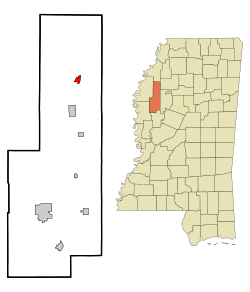
![Map of Sunflower County, Mississippi, highlighting Drew][float-right] The shootout occurred on December 14, 1923, near Drew in , during the posse's pursuit of Joe Pullen following his earlier shooting of W.T. Saunders. Pullen, sought for Saunders' death, took cover in a drainage ditch and fields at the town's edge, using the to approaching posse members. Contemporaneous newspaper reports describe Pullen changing positions multiple times, refusing calls to surrender, and initiating fire when the posse closed in, escalating the encounter from an attempted to prolonged combat. The exchange lasted over seven hours, with Pullen holding off a posse numbering in the hundreds through accurate fire, likely honed from rural and life. Accounts confirm Pullen inflicted heavy losses, killing at least three posse members—identified in reports as including and others—and wounding eight to as many as twenty-six, depending on the source, through targeted shots to the face, head, and body. These casualties arose in mutual gunfire, as the posse returned fire with rifles and a while advancing, demonstrating the defensive yet lethal nature of Pullen's resistance rather than a one-sided . Variations in casualty figures across newspapers reflect the chaos of the standoff and limited immediate verification, but the minimum reported deaths and injuries underscore Pullen's effectiveness in using cover and marksmanship to prolong the fight. The engagement ended only after intensified posse firepower overwhelmed Pullen's position, though details of the final moments belong to subsequent events.

Capture, Lynching, and Aftermath

Final Confrontation and Death

Following an intense manhunt that extended into the swamp near , Joe Pullen was encircled by a posse equipped with rifles, automatic weapons, and a on December 15, 1923. Unable to sustain prolonged resistance after earlier shootouts in which he had killed at least four posse members and wounded several others, Pullen emerged from cover—reportedly driven out by fires set in the underbrush—and was struck by multiple bullets. Pullen's death resulted directly from these wounds, with no documented evidence of extended prior to his fatal injuries. The posse's overwhelming ended the confrontation decisively, though accounts vary slightly on whether he was killed instantly or succumbed shortly after being hit. Post-mortem, the mob displayed excess by mutilating the body, including severing an ear as a , as noted in subsequent historical analyses reflecting the retaliatory context after Pullen's homicides.

Treatment of the Body

Following the in which Joe Pullen killed or wounded numerous members of the posse pursuing him for the December 14, 1923, shooting of manager W. T. Saunders, Pullen's body was dragged from the roadside ditch where he was fatally shot to the town of . In a ritualistic act of , his was severed, preserved in a of alcohol, and publicly displayed in a storefront window in Drew for an extended period as a deterrent to the local Black population. This display of the severed ear, alongside Pullen's exhibited as a trophy by the posse, underscored the punitive symbolism directed at Black resistance in the system, where Pullen's armed defense had resulted in at least three posse deaths and multiple injuries. Some accounts report that portions of Pullen's body were cut off and retained as souvenirs by participants or onlookers in Drew. No records indicate a formal , , or ceremonial handling of his remains, which were eventually disposed of without documented rites, reflecting the devaluation of victims in such extrajudicial killings amid the era's racial .

Casualty Counts and Disputes

The initial shooting by Pullen resulted in the death of W.T. Saunders on December 3, 1923, with no other immediate casualties reported. During the subsequent manhunt and armed resistance in the swamps near , contemporary accounts documented at least three additional deaths among the posse members, bringing the total white fatalities to four, alongside eight wounded. These figures align with reports from the period emphasizing Pullen's use of a in defensive exchanges, though exact details remain sparse in primary records, potentially limited by local underreporting to contain public agitation. Higher casualty estimates emerged in later retellings, with some claiming Pullen inflicted 13 deaths and 26 wounds on the posse, figures absent from documentation but amplified in oral traditions. These discrepancies likely stem from folk embellishment to underscore individual resistance against collective , contrasting with empirical constraints such as the posse's numerical superiority ( strong) and access to heavier weaponry, which or records—if preserved—would prioritize over inflation. No verified evidence supports casualties beyond the lower confirmed totals, and modern analyses caution against uncritical acceptance of escalated numbers for symbolic purposes. Pullen's death marked the only confirmed black fatality in the incident, with no reported injuries or deaths among the broader black community in Drew or Sunflower County despite the posse's operations. This asymmetry highlights the unilateral nature of the violence's resolution, as posse reinforcements overwhelmed Pullen's position without reciprocal losses on his side beyond himself. Disputes persist over wound severities—some contemporaries noted probable fatalities among the injured—but aggregate data from state vital records, where available, corroborates the minimal death toll rather than maximal claims.

Local and State Inquiries

A coroner's into Joe Pullen's was held on December 18, 1923, at Hart's Undertaking rooms in Drew, Sunflower County. The proceedings examined the circumstances of the final confrontation, where Pullen, having already killed W. T. Saunders and at least three other white men while wounding several more during the initial dispute and ensuing , was shot by pursuing posse members. Given the documented mutual violence—Pullen's actions precipitating the posse's response—the inquest aligned with local views framing the posse's conduct as justifiable rather than , precluding grand jury indictments against any participants for . Pullen himself faced charges in absentia for the multiple murders attributed to him, though his rendered further local proceedings moot. State-level scrutiny remained negligible under Lee M. Russell's administration (1920–1924), with no recorded interventions or formal reviews beyond routine archival notations of the incident. This reflected jurisdictional constraints and the era's deference to county-level resolutions in rural disputes involving armed resistance, absent broader threats to state order. Federal involvement was absent, as pre-Civil Rights Act authorities lacked authority or inclination without an interstate commerce nexus or equivalent hook to override local findings.

Absence of Prosecutions

No members of the posse were prosecuted for the killing of Joe Pullen on December 15, 1923, despite his death occurring during an armed confrontation that resulted in multiple fatalities among the pursuers. The posse's actions were framed locally as a necessary response to Pullen's resistance, in which he fatally shot at least three white men—including J. D. Manning and others—and wounded several more using rifle fire from concealed positions in a swamp near . Under principles of applicable at the time, the collective armed pursuit could be rationalized as initiated by Pullen's flight and counterattacks following his initial shooting of plantation manager W. T. Saunders over a disputed . Pullen's evasion of capture after killing Saunders precluded any judicial for that , shifting focus away from potential charges against him and reinforcing the narrative of the posse as defenders rather than aggressors. Although Pullen's family appealed to President citing his World War I veteran status, prompting a limited federal inquiry, no indictments followed, consistent with the era's pattern where such violence against sharecroppers resisting claims rarely advanced to courtroom scrutiny. In Sunflower County's white community, a tacit consensus prevailed against pursuing legal action, as the manhunt involved dozens to hundreds of participants whose testimony could implicate themselves in . This dynamic mirrored broader precedents in the , where intra-community violence over debts—often escalating to fatalities—was infrequently prosecuted when white actors invoked defense against perceived threats from laborers, extending here due to the scale of Pullen's defensive toll on the group. Local reporting, such as in the Indianola Enterprise on December 20, 1923, minimized the event without referencing accountability measures, underscoring institutional reluctance to challenge the of planter authority.

Legacy and Interpretations

Recollections by

(October 6, 1917–March 14, 1977), a sharecropper's daughter raised in —about 12 miles from Drew—was six years old during the December 1923 confrontation involving Joe Pullen. In speeches and interviews tied to her efforts and leadership in the , she drew on this childhood memory to illustrate early examples of Black against white economic exploitation and mob violence. Hamer recounted Pullen, named "Joe Pulliam" in her telling, as a sharecropper who recognized his landlord's scheme to seize $150 in owed wages under pretext, prompting him to arm himself rather than comply. She described the ensuing posse attack on his home, where Pullen reportedly killed 13 whites and wounded 26 before succumbing, framing the episode as a bold stand that "was awhile in before the whites tried something like that again." As a primary source, Hamer's version—echoed in her and activist testimonies—highlighted Pullen's resistance as motivational for organized pushback against lynching-era terror, influencing her own advocacy for economic justice and armed readiness if needed. Yet, relayed after nearly 40 years and shaped by communal storytelling, the casualty figures likely amplified through , diverging from immediate press dispatches that minimized posse losses to preserve white narratives of control.

Historical Scholarship and Varying Accounts

Contemporary newspaper accounts from December 1923, such as those in local publications, primarily documented the incident through the lens of white casualties and the pursuit of Pullen following the fatal shooting of manager W. T. Saunders during a dispute on December 14. These reports detailed Pullen's resistance against a posse, stating he killed three white men and wounded at least six others before being fatally shot near Drew. Such coverage emphasized the immediate threat posed by Pullen's armed defiance, framing the events as a response to rather than broader social unrest. In civil rights historiography emerging mid-century, particularly works drawing on Delta oral traditions, Pullen's actions were recast as an early exemplar of Black resistance against sharecropping exploitation and racial terror, portraying the dispute as emblematic of systemic economic coercion. Scholars in this vein, often aligned with activist perspectives, elevated Pullen to proto-activist status, highlighting his prolonged stand against the posse as defiance of . However, these narratives frequently relied on unverified recollections that amplified casualty figures among to 13 killed and 26 wounded, diverging from contemporaneous press tallies and potentially serving symbolic purposes in underscoring oppression's brutality. Post-2000 analyses, including economic histories of postbellum violence, apply greater scrutiny to causal sequences, attributing the escalation to a specific disagreement—Pullen contesting a $50 —rather than premeditated revolt, with Saunders' triggering the posse's formation. These studies casualty inflation in later accounts, favoring empirical proximity of 1923 reports over amplified oral histories, and note how left-leaning scholarship may overemphasize structural terror while underplaying individual agency in the initial . Conversely, skeptical interpretations, informed by primary sources, view the posse's response as proportionate force against a murderer who initiated lethal violence, critiquing romanticization of such figures in academia amid institutional biases toward resistance narratives over criminal accountability.

Broader Context in Sharecropping and Violence

The system in the , dominant from the post-Reconstruction era through the , entrenched tenants—predominantly Black but also including poor whites—in cycles of debt via advances for necessities, with landlords unilaterally managing crop settlements that often left workers with minimal or negative returns after deductions. These opaque accountings fostered distrust and confrontations, as tenants lacked independent verification, leading to periodic when demands for payment met resistance; firearms, ubiquitous in rural Southern households for protection and , transformed disputes over owed sums into lethal encounters. From 1900 to 1930, dozens of documented incidents across the South involved sharecroppers or tenants killing creditors, overseers, or landlords during enforcements, reflecting a pattern where economic desperation intersected with self-armed enforcement of contracts amid weak state intervention. While inter-racial cases, such as those escalating from tenant resistance, drew outsized scrutiny, intra-racial parallels existed, including tenant violence against elites; in , bands of aggrieved farmers terrorized planters and merchants over exploitative credit practices between 1902 and 1906, whipping or murdering targets in at least 20 reported attacks to protest perceived and land monopolies. This agrarian underscored how sharecropping's contractual failures—marked by asymmetric information and coercive leverage—ignited conflicts irrespective of race, though racial hierarchies amplified inter-group escalations when tenants defied landlords. ![Map of Sunflower County, Mississippi, highlighting Drew][float-right] In the Delta specifically, the Pullen confrontation exemplified localized volatility without catalyzing systemic revolt, as fragmented tenant leverage and planter alliances suppressed organized pushback; post-incident tensions eased within months, with no recorded chain of reprisals beyond the immediate posse action. Broader cumulative pressures from such episodic , alongside chronic indebtedness, propelled out-migration, contributing to the first phase of the Great Migration; lost over 150,000 Black residents net between 1910 and 1930, many from Delta counties fleeing peonage and the threat of deadly settlements for Northern factories offering wage labor unbound by crop liens. The episode thus illustrates rural America's reliance on personal armament for , where economic realism—unfulfilled obligations amid scarcity—overrode institutional mediation, yielding fatalities as a microcosm of pre-mechanized agriculture's perils rather than an aberration of racial animus alone.

References

Add your contribution
Related Hubs
User Avatar
No comments yet.