


Community hub
Recent from talks
Contribute something
Nothing was collected or created yet.
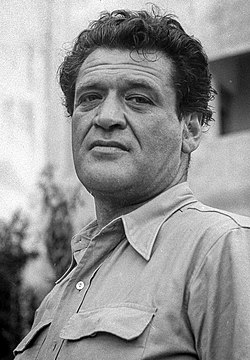
Joseph Kessel
View on WikipediaJoseph Kessel (10 February 1898 – 23 July 1979), also known as "Jef", was a French journalist and novelist. He was a member of the Académie française and Grand Officer of the Legion of Honour.
Key Information


Biography
[edit]Kessel was born to a Jewish family in Villa Clara, Entre Ríos, Argentina, because of the constant journeys of his father, a Litvak physician. From 1905 to 1908, Joseph Kessel lived the first years of his childhood in Orenburg, Russia, before the family moved to France in 1908. He studied in lycée Masséna, Nice and lycée Louis-le-Grand, Paris and took part in the First World War as an aviator. He was also an aviator during the Second World War, in the Free French Groupe de Bombardement n° 1/20 "Lorraine" (342 Squadron RAF) with RAF Bomber Command,[citation needed] with Romain Gary, who was also a talented French novelist.
Kessel wrote several novels and books that were later adapted into films, notably Belle de Jour (by Luis Buñuel in 1967) and L'armée des ombres (Army of Shadows) (by Jean-Pierre Melville in 1969). In 1943 he and his nephew Maurice Druon translated Anna Marly's song Chant des Partisans into French from its original Russian. The song became one of the anthems of Free French Forces during the Second World War.
Kessel also occasionally worked as a reporter, covering Sinn Féin, the rise of the Nazis in Germany, and the Pétain trial.[1]
Kessel was elected to the Académie française in 1962 and died on 23 July 1979[2] in Avernes, Val-d'Oise of a ruptured aneurysm. He is buried in Paris in the Cimetière du Montparnasse. The Joseph-Kessel Prize (Prix Joseph Kessel) is a prestigious prize in French language literature, given to "a book of a high literary value written in French". The jury counts or has counted among its members Tahar Ben Jelloun, Jean-Marie Drot, Michèle Kahn, Pierre Haski, Gilles Lapouge, Michel Le Bris, Érik Orsenna, Patrick Rambaud, Jean-Christophe Rufin, André Velter and Olivier Weber.
Bibliography
[edit]- La steppe rouge (1922)
- The Crew (1923)
- Au camp des vaincus ou la critique du 11 mai (1924)
- Mary de Cork (1925)
- Les captifs (1926; Grand Prix du roman de l'Académie française)
- Nuits de princes (1927)
- Belle de Jour (1928; it inspired Luis Buñuel's 1967 movie of the same name)
- Vent de sable (1929)
- Fortune carrée (1932)
- Le coup de grâce (1931; made into the movie Sirocco in 1951 with Humphrey Bogart)
- Wagon-lit (1932)
- La Passante du Sans-Souci (1936; turned into a movie by Jacques Rouffio in 1982)
- Hollywood, Ville mirage (Gallimard, NRF, 1936)
- Mermoz (1938)
- L'Armée des ombres (1943; adapted for a movie by Jean-Pierre Melville in 1969); Army of Shadows (Contra Mundum Press: 2017), featuring an intro by Stuart Kendall
- Le Bataillon du ciel (Sky Battalion), (1946; turned into a movie by Alexander Esway in 1947): Free French SAS paratroopers in Brittany in Summer 1944
- Le tour du malheur (1950)
- Les Amants du Tage (1954)
- La Vallée des Rubis (1955)
- Le lion (English translation: The Lion; 1958)
- Les mains du miracle (Gallimard, 1960). (English translation: The Man with the Miraculous Hands. Translated by Weaver, Helen. Farrar, Straus and Cudahy. 1961. OCLC 630284.)
- Les cavaliers (1967) (English translation: The Horsemen. Translated by Patrick O'Brian. New York: Farrar, Straus & Giroux, 1968) (filmed as The Horsemen in 1971.)
- Kisling 1891-1953 (1971) avec Henri Troyat
- Partout un ami (1972)
- Des hommes (1972)
- Les temps sauvages (1975)
- The escape
Filmography
[edit]- The Crew, directed by Maurice Tourneur (France, 1928, based on the novel The Crew)
- Nuits de princes, directed by Marcel L'Herbier (France, 1930, based on the novel Nuits de princes)
- The Crew, directed by Anatole Litvak (France, 1935, based on the novel The Crew)
- The Woman I Love, directed by Anatole Litvak (1937, based on the novel The Crew)
- Nuits de princes, directed by Vladimir Strizhevsky (France, 1938, based on the novel Nuits de princes)
- Le Bataillon du ciel, directed by Alexander Esway (France, 1947, based on the novel Le Bataillon du ciel)
- Sirocco, directed by Curtis Bernhardt (1951, based on the novel Le coup de grâce)
- The Lovers of Lisbon, directed by Henri Verneuil (France, 1955, based on the novel Les Amants du Tage)
- Fortune carrée, directed by Bernard Borderie (France, 1955, based on the novel Fortune carrée)
- The Lion, directed by Jack Cardiff (1962, based on the novel The Lion)
- Belle de Jour, directed by Luis Buñuel (France, 1967, based on the novel Belle de Jour)
- Army of Shadows, directed by Jean-Pierre Melville (France, 1969, based on the novel L'Armée des ombres)
- The Horsemen, directed by John Frankenheimer (1971, based on the novel Les Cavaliers)
- The Passerby, directed by Jacques Rouffio (France, 1982, based on the novel La Passante du Sans-Souci)
Screenwriter
[edit]- Cease Firing (dir. Jacques de Baroncelli, France, 1934)
- Mayerling (dir. Anatole Litvak, France, 1936)
- Les Bateliers de la Volga (dir. Vladimir Strizhevsky, France, 1936)
- La Peur (dir. Victor Tourjansky, France, 1936)
- The Secrets of the Red Sea (dir. Richard Pottier, France, 1937)
- The Man from Niger (dir. Jacques de Baroncelli, France, 1940)
- At the Grand Balcony (dir. Henri Decoin, France, 1949)
- Le Grand Cirque (dir. Georges Péclet, France, 1950)
- Act of Love (dir. Anatole Litvak, 1953)
- Oasis (dir. Yves Allégret, France, 1955)
- La Passe du diable (dir. Pierre Schoendoerffer and Jacques Dupont, France, 1958)
- The Night of the Generals (dir. Anatole Litvak, 1967)
References
[edit]- ^ Jackson, Julian (2023) France on Trial: The Case of Marshal Pétain. Belknap Press
- ^ "Obituaries". Cross & Cockade Journal. 20. the Society: 380. 1979.
External links
[edit]- Joseph Kessel at IMDb
- Biography at the Académie française (in French)
- Plaisir Litteraire: an interesting contribution about the youth of Joseph Kessel's father (in French)
- http://www.rts.ch/archives/tv/culture/preface/3467832-joseph-kessel.html
| International | |
|---|---|
| National | |
| Academics | |
| Artists | |
| People | |
| Other | |

Joseph Kessel
View on GrokipediaEarly Life and Background
Family Origins and Childhood in Argentina and Russia
Joseph Kessel was born on 10 February 1898 in Villa Clara, a Jewish agricultural settlement in Entre Ríos Province, Argentina.[1][7] His father, Samuel Kessel, was a Litvak physician of Lithuanian Jewish origin who had obtained his medical degree in Montpellier, France, and traveled to Argentina to practice medicine for approximately three years.[7][2] The family's presence in Argentina stemmed from these professional opportunities amid the broader migrations of Jewish physicians from the Russian Empire's Pale of Settlement, where pogroms and restrictions prompted such relocations.[1] Kessel's parents were Russian-born Jews, reflecting Ashkenazi heritage tied to the empire's Lithuanian and broader Slavic regions.[4] The family returned to Russia when Kessel was in his second year, around 1900, resettling in the empire where his early childhood unfolded amid the cultural and linguistic milieu of Russian Jewish communities.[4] From 1905 to 1908, he lived specifically in Orenburg, a city in the southern Ural region, experiencing the nomadic patterns influenced by his father's itinerant medical career before the family's emigration westward.[8] These formative years in Russia exposed Kessel to the tensions of pre-revolutionary imperial life, though specific personal anecdotes from this period remain sparsely documented in primary accounts.[1]Bolshevik Revolution Experiences
In 1919, during the Russian Civil War, Joseph Kessel undertook a confidential mission for French forces in Siberia, leveraging his fluency in Russian acquired during his early childhood in Orenburg. Arriving in Vladivostok in February via a 35-day voyage from San Francisco aboard the SS Sherman, he was tasked with procuring a train, drivers, and engineers to transport food and munitions over 4,800 kilometers to Omsk for General Maurice Janin's Czecho-Slovak Legion and White forces. Vladivostok presented a scene of profound disorder, described as a "vast, filthy inn" teeming with soldiers, merchants, refugees, and Cossacks, where thousands of homeless individuals perished from hunger, disease, and cold near the railway station; order was tenuously maintained by Czech and Japanese troops amid the broader conflict between Bolshevik Reds and anti-Bolshevik Whites.[9] Kessel's mission exposed him to the brutal dynamics of the Bolshevik consolidation of power, including the logistical challenges of supporting White resistance against the advancing Red Army, which by 1919 had begun reclaiming Siberian territories. Volunteering in October 1918 for a French unit bound for Russia, he navigated a landscape marked by famine, refugee crises, and opportunistic banditry, reflecting the causal fallout of the 1917 Bolshevik seizure of power and subsequent economic collapse. These experiences informed his later depictions of revolutionary upheaval, underscoring the human cost of ideological fervor without romanticization.[10][9] In the early 1920s, Kessel extended his engagement with Bolshevik Russia through journalistic reporting from the periphery, including stays in Riga where he filed articles for Le Figaro on the Cheka secret police and the widespread famine ravaging Soviet territories. These dispatches captured the repressive mechanisms of the Bolshevik regime, such as the Cheka's extrajudicial executions and surveillance, amid grain requisitions that exacerbated starvation affecting millions. His observations culminated in La Steppe rouge (1922), a collection of short stories portraying private lives under Bolshevik rule—e.g., a mild-mannered mathematics professor transformed into a ruthless commissar—highlighting the regime's ideological coercion and social disintegration without endorsing its premises.[11][12]Immigration to France and Education
In 1908, at the age of ten, Kessel's family fled anti-Semitic pogroms in Russia and immigrated to France, initially establishing residence in Nice before moving to Paris.[2][13] Kessel completed his secondary education at lycées in Nice and Paris, earning his baccalauréat in 1915.[7] At age sixteen, he briefly pursued studies in literature and theater at a conservatory, including a minor stage appearance at the Odéon Theatre in Paris.[2] These formative years in France equipped him with fluency in the language and cultural immersion, though he did not proceed to higher academic pursuits, instead entering journalism shortly thereafter.[7]World War I Military Service
Enlistment as Aviator
In late 1916, amid the ongoing attrition of World War I, 18-year-old Joseph Kessel volunteered for service in the French military, specifically requesting assignment to aviation despite his limited prior experience.[14] [15] Having earlier contributed as a volunteer aide in a Nice hospital treating wounded soldiers since the war's outbreak, Kessel sought direct combat involvement, drawn by the emerging role of aircraft in reconnaissance and the allure of aerial operations.[16] Following initial processing as an engagé volontaire, Kessel trained for aviation duties and was integrated into Escadrille S.39 (also designated SAL 39 or SOP 39), a specialized reconnaissance unit equipped with two-seat aircraft such as Salmson or Sopwith models for observation missions.[17] [18] He served primarily as an aerial observer, responsible for navigation, photography, and defensive machine-gun fire during flights over enemy territory, often paired with a pilot in exposed, tandem cockpits vulnerable to anti-aircraft fire and interceptors.[14] This squadron, based initially at sites like Jonchery near Reims, conducted hazardous patrols to map German positions, artillery, and troop movements, contributing to French intelligence efforts on the Western Front.[17] Kessel's enlistment reflected the rapid expansion of French air forces, which by 1917 fielded over 2,000 aircraft and emphasized volunteer specialists for such roles.[19] Kessel's time in Escadrille S.39, under commanders including Captain Thélis, exposed him to the camaraderie and perils of early military aviation, where crews faced high casualty rates from mechanical failures, weather, and combat—French aviation losses exceeded 5,000 personnel by war's end.[20] For his demonstrated courage in these missions, he received the Croix de Guerre, recognizing acts of valor amid the squadron's operations in sectors like Champagne-Ardenne.[9] This period marked Kessel's transition from civilian pursuits to frontline service, shaping his later depictions of aviators in works like L'Équipage (1923), drawn directly from observed crew dynamics and risks.[4]Combat Experiences and Injuries
Kessel enlisted as a volunteer in the French military in late 1916 at the age of 18, initially serving in the artillery before transferring to aviation as an observer.[21] He was assigned to Escadrille S.39, a reconnaissance squadron based near Reims, where he conducted missions over enemy lines during the final years of the war.[21] [17] In aerial operations, Kessel participated in reconnaissance flights that often involved direct confrontations with German aircraft. Cited in an army order as a "courageous and tenacious observer," he successfully repelled multiple German planes by firing his machine gun, preventing interference with his missions despite the squadron's focus on observation rather than pursuit.[17] These experiences, marked by the intense camaraderie and risks of early aerial warfare, profoundly influenced his later writing, including the 1923 novel L'Équipage, which drew directly from his time in the escadrille under Captain Thélis Vachon.[21] For his service, he received the Croix de guerre 1914–1918 and the Médaille militaire.[21] No records indicate Kessel sustained significant combat injuries during these missions, though the hazardous nature of reconnaissance—exposing crews to anti-aircraft fire and enemy fighters—resulted in frequent close calls for Escadrille S.39, as evidenced by unit citations for planes riddled with bullets yet completing objectives.[18] His survival and reflections underscore the formative impact of aviation's brutal introduction to industrialized warfare on his worldview.[21]Interwar Journalism and Adventures
Reporting on Global Conflicts and Travels
In the interwar period, Joseph Kessel established himself as a prolific journalist, embarking on expeditions to conflict zones and remote regions to document geopolitical tensions, social undercurrents, and human dramas for French newspapers such as Le Matin and Paris-Soir. His reports emphasized direct observation and immersion, often venturing into dangerous territories where formal diplomacy faltered. These assignments, spanning the late 1920s to the late 1930s, yielded vivid dispatches that later influenced his literary output, prioritizing empirical encounters over ideological framing.[1][7] A notable 1930 investigation took Kessel to Abyssinia (present-day Ethiopia) and Djibouti, tracing active slave trade routes despite nominal abolitions in adjacent areas like Afghanistan, Iraq, and Morocco during the early 1920s. Commissioned by Le Matin, he infiltrated caravan paths from the Ethiopian interior to coastal markets, exposing networks transporting thousands of individuals annually amid Italian colonial pressures and local tribal dynamics. His accounts detailed the economic incentives sustaining the practice, including demand from Arabian Peninsula buyers, and critiqued international inaction.[22][23] In 1932, Kessel reported from Berlin amid Germany's presidential election in March—where Paul von Hindenburg narrowly defeated Adolf Hitler—and subsequent parliamentary polls in July and November, marked by street clashes between Nazi SA units, communists, and police. Embedded in the city's Unterwelt (underworld), he chronicled organized crime's symbiosis with rising extremism, from gambling dens to political rallies, portraying a society fracturing under economic despair and propaganda. These pieces, serialized in Le Matin, highlighted Nazism's mobilization of hatred as a quasi-religious force, based on his attendance at over 50 meetings and interactions across social strata.[24][25][26] Kessel also covered the Spanish Civil War from 1936 onward, filing reports from Republican-held areas including Barcelona, where he witnessed aerial bombings, militia disorganization, and ideological infighting among anarchists, socialists, and communists against Franco's Nationalists. His dispatches for Paris-Soir and Match emphasized the war's brutality—over 500,000 deaths by 1939—and the foreign interventions, such as Soviet arms shipments versus German-Italian air support, drawing from frontline observations rather than partisan allegiance.[27][28] Additional travels encompassed the Near and Far East, where he probed regional instabilities, such as Yemen's slave markets and Indo-Chinese unrest, alongside repeated U.S. visits yielding five article series from 1933 to 1939 on urban vice, racial divides, and economic recovery post-Depression. These efforts, totaling dozens of publications, reflected Kessel's pattern of self-funded risks to access unfiltered realities, often at personal peril from local authorities or bandits.[1][5]Involvement in Aviation
Kessel drew upon his World War I piloting experiences to author L'Équipage in 1923, the first French novel to center on aviation, depicting the psychological bonds and tensions between reconnaissance pilots and observers in two-man crews.[1][7] The work highlighted the perilous routine of aerial observation missions, earning acclaim for its realistic portrayal of aviators' esprit de corps amid high casualty rates, with French aviation losses exceeding 5,000 pilots by war's end.[7] Throughout the 1920s and 1930s, Kessel sustained engagement with aviation through journalistic travels and friendships in pilot circles, including those connected to the Aéropostale postal service pioneers.[29] In 1933, he described aerial exploits as a modern extension of chivalric chansons de geste, emphasizing their heroic continuity from wartime to peacetime exploration.[30] His 1939 biography Mermoz eulogized Jean Mermoz, the trailblazing aviator who established South American airmail routes and vanished on a December 1936 transatlantic survey flight in the Croix-du-Sud seaplane, capturing the era's fusion of adventure and technological peril.[31] These writings helped romanticize interwar aviation's expansion, from experimental long-haul flights to commercial viability, amid France's aviation industry growth to over 10,000 aircraft by 1939.[32]Co-founding Le Gringoire and Early Political Associations
In 1928, Joseph Kessel collaborated with Horace de Carbuccia and Georges Suarez to launch Le Gringoire, a weekly political and literary newspaper that quickly gained prominence in interwar France.[33] The publication positioned itself as a competitor to established weeklies like Candide, emphasizing sharp commentary on current affairs, literature, and cultural critique.[34] Kessel contributed as literary editor, leveraging his journalistic experience to shape its content, which blended adventurous reporting with polemical essays.[34] Le Gringoire adopted a right-wing editorial stance, characterized by nationalism, skepticism toward parliamentary democracy, and opposition to perceived leftist threats, including communism.[33] Under de Carbuccia's influence—whose father-in-law was the authoritarian Paris police prefect Jean Chiappe—the paper cultivated a populist tone, attracting contributors like the polemicist Henri Béraud, whose writings often featured conspiratorial rhetoric against elites and internationalism.[34] Circulation peaked at over 600,000 copies by the mid-1930s, reflecting its appeal amid economic instability and political polarization.[34] Kessel's involvement aligned him with conservative journalistic circles, though his personal motivations drew from experiential reporting rather than rigid ideology; his early exposure to the Bolshevik Revolution in Russia had instilled a deep-seated wariness of revolutionary extremism.[35] This period marked his associations with figures advocating strong national sovereignty and cultural traditionalism, yet Kessel maintained independence, continuing global assignments that prioritized firsthand observation over partisan alignment. By the early 1930s, as Le Gringoire's tone intensified, Kessel distanced himself, focusing on literary pursuits amid rising European tensions.[34]Literary Career
Debut Works and Style Development
Kessel's literary debut came with La Steppe rouge, a collection of short stories published in 1922 by Éditions Gallimard, drawing directly from his firsthand observations of the Bolshevik Revolution in Russia five years prior.[21] The work vividly depicted the chaos and human cost of the upheaval, blending reportage with narrative elements to portray revolutionary fervor and its brutal realities.[1] His follow-up, L'Équipage, released in 1923 by the same publisher, marked his transition to the novel form and achieved immediate commercial success as a bestseller in France.[4] Set amid World War I aerial reconnaissance missions, the novel centered on the intense camaraderie and psychological strains within a two-man French aviator crew, informed by Kessel's own service as a pilot.[1] This aviation-themed story introduced themes of duty, mortality, and masculine bonds under duress, establishing Kessel as an authority on modern warfare's human dimensions.[21] Kessel's early style emerged as a fusion of journalistic precision and adventurous storytelling, prioritizing empirical detail from lived experiences over abstraction, with a focus on heroic individualism amid exotic or perilous settings.[36] In these debut publications, he developed a concise, immersive prose that intertwined physical locales with character psyches, often granting protagonists an archetypal heroism rooted in real-world immersion rather than romantic idealization.[37] This approach evolved from his reporter's eye for authentic human behavior, evident in the rhythmic pacing and sensory vividness that propelled readers through tales of extremity, setting the foundation for his later oeuvre.[38]Major Novels and Themes
Kessel's major novels often drew from his personal experiences as an aviator, journalist, and adventurer, blending reportage with fiction to explore human resilience amid extreme conditions. His narrative style emphasized vivid, immersive depictions of camaraderie, passion, and moral ambiguity, frequently set against backdrops of war, exotic cultures, or psychological turmoil. Recurring themes included the bonds forged in danger, the clash between instinctual drives and societal norms, and the unyielding pursuit of authenticity in a mechanized or hypocritical world.[39] L'Équipage (1923), inspired by Kessel's World War I service, centers on a squadron of French aviators, portraying the intense fraternity and rivalries among pilots facing death in aerial combat, while complicating their loyalty with romantic entanglements. The novel underscores themes of masculine solidarity tested by jealousy and the dehumanizing precision of early aviation warfare, reflecting Kessel's firsthand observation of pilots' psychological strains.[40][41] Belle de Jour (1928) follows Séverine, a bourgeois wife who secretly works as a prostitute in the afternoons to satisfy unmet carnal desires, leading to a destructive affair with a gangster that threatens her marriage. It delves into the dichotomy between refined love and raw sensuality, critiquing the repression of female sexuality within conventional unions and highlighting the allure of transgression.[42] L'Armée des ombres (1943), written during his resistance activities, fictionalizes clandestine operations against Nazi occupation, emphasizing the ethical dilemmas of sabotage, betrayal, and sacrifice among underground fighters. Themes of quiet heroism and the erosion of personal identity under totalitarian pressure dominate, portraying resistance not as glorified battle but as a grinding test of human endurance.[43] Later works like Le Lion (1958), set in post-colonial Africa, narrate the profound connection between a young European girl and a captive lion, symbolizing untamed freedom versus imposed civilization, with motifs of cross-species empathy and the redemptive power of instinct over rational control. Les Cavaliers (1967), based on Afghan traditions, tracks a buzkashi rider's quest for vengeance and honor, evoking the brutality of tribal rituals, hierarchical disdain for the weak, and the inexorable pull of ancestral codes in a modernizing world.[44][45][46] Across these novels, Kessel privileged experiential truth over ideological abstraction, often prioritizing individual agency and visceral emotion—hallmarks of his journalistic ethos—while eschewing didacticism in favor of raw human complexity.[39]Non-Fiction and Journalism-Derived Books
Kessel's non-fiction output frequently originated from his fieldwork as a journalist and adventurer, transforming raw dispatches into cohesive narratives that emphasized eyewitness testimony and unvarnished observations of human extremes. These works, often compiled from articles in outlets like Excelsior and Paris-Soir, prioritized experiential detail over speculation, reflecting his commitment to on-the-ground reporting across continents. Unlike his novels, which incorporated fictional elements, these books maintained a documentary fidelity, drawing on direct encounters with conflicts, trades, and personalities to expose societal undercurrents.[47] One early exemplar is Slave Markets (1930), derived from Kessel's 1930 expedition to Abyssinia (modern Ethiopia) and Djibouti, where he infiltrated Arab slave-trading networks to document the persistence of human trafficking despite international bans. Accompanying traders, he witnessed raids on villages and auctions in hidden markets, estimating thousands of captives funneled annually toward Arabian Peninsula buyers; his accounts highlighted the inadequacy of anti-slavery edicts under Regent Ras Tafari (later Emperor Haile Selassie), who imposed death penalties but lacked enforcement. Serialized in French press and echoed in English via New York Times contributions, the book underscored the trade's economic drivers—ivory, arms, and labor demands—without romanticizing the brutality.[48][23] In the 1930s, Kessel turned to American reporting, culminating in works like Au pays du mensonge éblouissant (1931), a critique of Hollywood's illusion factory based on embedded observations from 1929–1930 studio visits and interviews with figures like Charlie Chaplin. He dissected the industry's commodification of dreams amid economic disparity, noting how Depression-era unemployment contrasted with lavish sets, and warned of cultural homogenization exported globally. Similarly, his U.S. series, republished as Reportages aux États-Unis, covered Broadway excesses, Prohibition-era speakeasies, and racial tensions in the South, framing America as a paradox of innovation and moral decay through 1933–1960 dispatches.[49][5] Postwar efforts included Le Paradis du Kilimandjaro et autres reportages (originally from 1953 travels, compiled editions post-1950s), chronicling a Kenyan safari amid the Mau Mau uprising. Kessel detailed guerrilla tactics—oaths, forest ambushes—and British counterinsurgency, estimating 11,000 African deaths by 1953, while evoking the untamed landscapes from Lake Victoria to Kilimanjaro as backdrops to colonial unraveling. His aviation ties informed biographical non-fiction like Mermoz (1930s, expanded later), a profile of pilot Jean Mermoz grounded in shared flights and logs, portraying aerial pioneering as a conquest of isolation.[50][51] Later volumes, such as Les Mains du miracle (1960), stemmed from 1950s interviews with Greek surgeon Vasilios Arkadios, who claimed supernatural healing via faith; Kessel verified cases through medical records and patient testimonies, presenting 20+ documented recoveries from paralysis and tumors as empirical anomalies rather than endorsing mysticism outright. These journalism-derived texts, including the Témoin parmi les hommes series aggregating 1919–1964 pieces on revolutions and migrations, prioritized verifiable data—dates, casualty figures, informant quotes—over narrative embellishment, establishing Kessel as a reporter who bridged adventure with analytical restraint.[52]World War II and Resistance
Exile and Free French Alignment
Following the rapid German conquest of France and the armistice signed on June 22, 1940, Joseph Kessel rejected the Vichy regime's collaboration with Nazi Germany and departed the country to continue resistance from abroad.[1][4] As a Jewish writer and aviator with experience from World War I, Kessel's decision was influenced by his opposition to occupation and antisemitic policies, leading him to align with General Charles de Gaulle's Free French movement in London.[2][1] Upon arriving in England, Kessel served as an aide to de Gaulle, contributing to the political and propaganda efforts of the Free French Forces, which aimed to rally exiled French personnel and maintain sovereignty against Vichy capitulation.[4] His prior journalistic coverage of the 1940 Dunkirk evacuation and exodus from northern France underscored the scale of defeat, reinforcing his commitment to de Gaulle's call for continued warfare from British bases.[2] This alignment positioned Kessel within the Groupe de Bombardement n° 1/20 "Lorraine," a Free French RAF squadron, where he later flew operational missions over occupied Europe.[1][53] Kessel's exile facilitated key contributions to Free French morale, including co-authoring the Resistance anthem Le Chant des Partisans in 1943 with his nephew Maurice Druon, which was broadcast by the BBC and adopted as an official hymn of the movement.[7] His writings from this period, drawing on firsthand exile experiences, emphasized unyielding opposition to Axis powers and Vichy complicity, earning him decorations from French, British, and American authorities for wartime service.[1]Combat and Intelligence Roles
Following the fall of France in 1940, Kessel joined the French Resistance through the Carte network alongside his nephew Maurice Druon before escaping to London via the Pyrenees to align with the Free French Forces under General Charles de Gaulle.[54] There, he served as an aviation captain in the Free French Groupe de Bombardement n° 1/20 "Lorraine" (No. 342 Squadron RAF), a unit integrated into RAF Bomber Command that conducted strategic night bombing raids on German targets, including V-weapon sites and industrial facilities in occupied Europe and Germany.[55] Kessel participated in numerous such missions, leveraging his prior experience as a World War I aviator to contribute to Allied air operations aimed at weakening Axis infrastructure.[19] In addition to his combat flying duties, Kessel's squadron engagements included flights over France to facilitate communication links with Resistance groups, delivering operational orders and supporting clandestine networks through aerial drops when feasible, though the primary focus remained offensive bombing.[54] His resistance activities extended to intelligence-gathering elements inherent in Free French operations, drawing from personal networks and observations that informed broader Allied efforts, as reflected in his wartime writings based on direct involvement.[54] These roles underscored Kessel's dual commitment to direct combat and subversive actions against the occupation, aligning with the Free French emphasis on both military and covert warfare.[2]Key Resistance-Inspired Writings
Joseph Kessel's seminal contribution to literature on the French Resistance is the novel L'Armée des ombres, composed in London in 1943 and first published that year in Algiers by Éditions de Minuit, the underground press of the Free French forces.[56][57] Drawing directly from testimonies of resistants Kessel encountered during his intelligence work with the Free French Bureau Central de Renseignements et d'Action (BCRA), the book portrays the clandestine operations, moral dilemmas, and personal sacrifices of ordinary individuals combating Nazi occupation and Vichy collaboration.[58][59] Kessel dedicated the work to these "shadowy soldiers," emphasizing their anonymity and resolve, with the epigraph underscoring France's enduring human spirit amid material deprivation: a nation without bread, wine, fire, or light, yet still possessing men of unyielding courage.[57] The narrative structure interweaves fictionalized accounts of real Resistance networks, including sabotage missions, escapes, and executions, to highlight the psychological toll of secrecy and betrayal without romanticizing the violence or downplaying internal fractures, such as the execution of suspected traitors within the group.[58][60] Commissioned in part to boost morale among exiles and resistants, as reportedly urged by General Charles de Gaulle, the novel served as one of the earliest public testaments to the underground fight, predating widespread postwar mythologizing and grounded in Kessel's firsthand exposure to operatives like those in the Combat network.[61] Its publication timing—amid Allied advances and intensified Gestapo crackdowns—positioned it as a morale-sustaining artifact, circulated covertly in occupied zones despite censorship risks.[56] Beyond L'Armée des ombres, Kessel's Resistance experiences informed postwar reflections, though fewer direct literary outputs emerged immediately; his 1946 novel Le Bataillon du ciel extends themes of clandestine combat by depicting Free French paratrooper drops into occupied France, blending aviation exploits with sabotage akin to Resistance actions, based on missions he coordinated or observed.[62] These works collectively eschew heroic glorification for a realist depiction of attrition, isolation, and ethical compromises, reflecting Kessel's aversion to propaganda in favor of raw testimonial authenticity derived from declassified BCRA reports and survivor accounts.[63]Post-War Life and Recognition
Académie Française Election
Joseph Kessel announced his candidacy for the Académie française in January 1962, seeking the fauteuil 27 vacated by the death of the duc de La Force.[64] On November 22, 1962, at the age of 65, he was elected on the first ballot with 14 votes against 10 for the writer Marcel Brion and 3 other votes.[21][65][66] This victory marked a significant recognition of his literary contributions, including his wartime journalism and novels drawn from personal experiences in aviation, exploration, and resistance activities. The election reflected Kessel's broad appeal within the Académie, bolstered by his reputation as a war correspondent and Free French supporter, though it faced competition from established literary figures like Brion.[21] Kessel expressed modest surprise at the outcome, stating in a contemporary interview that he valued the honor for its connection to French language and human stories rather than personal acclaim.[67] No major public controversies surrounded the vote, despite Kessel's unconventional background as the son of Russian Jewish émigrés and his adventurous life, which contrasted with the Académie's traditional profile.[21] Kessel was formally received into the Académie on February 6, 1964, delivering a reception speech that highlighted his commitment to storytelling rooted in lived truth.[68][69] His tenure there, lasting until his death in 1979, underscored the institution's occasional openness to modern, experiential writers amid its conservative leanings.[70]Later Publications and Public Role
In the years following his election to the Académie Française, Kessel continued to produce significant literary works drawing on his journalistic travels and personal investigations. His 1958 novel Le Lion, depicting the bond between a young Algerian boy and a captured lion amid colonial tensions, achieved commercial success and was later adapted into a film.[1] In 1960, he published Les Mains du miracle, a non-fiction account of Finnish masseur Felix Kersten's efforts to extract concessions from Heinrich Himmler during World War II, highlighting Kersten's role in sparing thousands of lives through therapeutic interventions.[71] That same year, Kessel released Avec les Alcooliques Anonymes (translated as The Road Back), stemming from a series of investigative articles in France-Soir on Alcoholics Anonymous; the work detailed AA's methods based on his observations in the United States and France, promoting its adoption domestically as a pragmatic approach to treating alcoholism as a chronic condition rather than mere moral failing.[72] Kessel's 1967 novel Les Cavaliers marked a culmination of his ethnographic reporting from Afghanistan, where he immersed himself in the nomadic horsemen culture and the perilous sport of buzkashi; the book, informed by extensive fieldwork including a 1960s expedition commissioned in part by international organizations, explored themes of tradition, fate, and human endurance in Central Asia.[73] These later publications maintained Kessel's hallmark blend of adventure narrative and factual reportage, often critiquing modern encroachments on ancient ways of life, though some reviewers noted a perceived romanticization of exotic subjects.[1] Publicly, Kessel sustained his influence through journalism, contributing columns to Le Figaro and France-Soir on global affairs and social issues into the 1970s.[4] His 1960 AA series elevated awareness of recovery programs in France, influencing policy discussions on public health by framing alcoholism as amenable to mutual-aid structures over institutionalization alone.[74] Additionally, he penned screenplays for aviation-themed films, extending his pre-war fascination with flight into post-war cinema, and undertook commissions such as a mid-1960s report on Afghan societal conditions for the World Health Organization, underscoring his role as a bridge between literature and international observation.[4]Personal Life
Marriages and Relationships
Kessel's first marriage was to Nadia-Alexandra Polizu-Michsunesti, a Romanian noblewoman known as Sandi, whom he met aboard a ship en route to China in 1920; they wed on May 3, 1921.[75][76] She died of tuberculosis on June 2, 1928, at age 30, in a sanatorium in Davos, Switzerland, leaving Kessel widowed at 30.[75][77] His second marriage, in 1939, was to Catherine Gangardt, a Latvian-origin woman nicknamed Katia, from whom he later divorced.[78] Kessel married for a third time in 1949 to Michèle O'Brien, an Irishwoman he met at a London party hosted by fellow Free French member Hervé de Boislambert; she outlived him, as he died several months before her own death.[79][78] The couple resided in Avernes, where Kessel spent his final years.[9] Beyond these unions, Kessel maintained a notable romantic relationship with French singer Germaine Sablon around 1936, marked by intense companionship amid his journalistic travels, though it did not lead to marriage.[80][81] None of his marriages produced children, and his personal life reflected the peripatetic nature of his career, with relationships often intersecting his global adventures.[75]Friendships with Aviators and Intellectuals
Kessel developed enduring friendships with pioneering aviators through shared experiences in early commercial aviation and military service. A close associate of Jean Mermoz, the daring Aéropostale pilot who vanished during a transatlantic flight on December 7, 1936, Kessel authored a biography of his friend in 1938, drawing on personal recollections of Mermoz's exploits from Libyan deserts to South American routes.[82][83] Their bond reflected Kessel's admiration for Mermoz's unyielding commitment to aerial mail delivery, which Kessel chronicled as emblematic of human endurance against mechanical and environmental odds.[31] In 1931, while reporting in Morocco, Kessel encountered Antoine de Saint-Exupéry, then posted to night transport on the Casablanca line, initiating a connection rooted in mutual aviation passion and literary ambition.[84] This rapport deepened during World War II, as both flew for the Free French Air Force from bases in North Africa and beyond, where Saint-Exupéry's poetic reflections on flight echoed themes Kessel explored in works like L'Équipage (1923), inspired by pilots he met during his own World War I service.[23][2] Kessel's wartime aviation duties in London also fostered a friendship with Romain Gary, a fellow pilot, novelist, and Russian-Jewish émigré who shared Kessel's resistance activities and post-war literary output.[2][62] Gary's admiration for Kessel's blend of journalism and fiction mirrored their parallel paths as aviators-turned-writers, with Gary later crediting Kessel's influence in serializing resistance narratives like L'Armée des ombres.[85] These aviator ties often overlapped with intellectual circles, as Kessel engaged with writer-pilots who intellectualized flight's existential demands. His associations extended to figures like Maurice Druon, influenced by Kessel's adventurous ethos during Druon's formative years, and literary exchanges with Jean-Paul Sartre in mid-century debates on narrative and ethics.[86][87] Such relationships underscored Kessel's role as a bridge between action-oriented aviators and reflective intellectuals, prioritizing raw experience over abstract theory in their discussions of human limits.[88]Reception, Legacy, and Controversies
Critical Praise and Influence
Kessel's works garnered praise for their immersive storytelling rooted in firsthand adventures, blending journalistic precision with literary humanism influenced by Tolstoy and Dostoevsky. Critics highlighted his ability to capture fraternity among aviators in L'Équipage (1923) and the raw vitality of distant cultures in novels like Les Cavaliers (1967), earning comparisons to Joseph Conrad and Mark Twain for narrative scope. Antoine de Saint-Exupéry expressed profound admiration, stating, "Joseph Kessel, le seul homme dont j'ai été réellement et profondément jaloux : il a tout fait, tout connu," underscoring Kessel's unparalleled life experiences as fuel for authentic prose.[89][88] His critical reception emphasized a stylistic fusion of reportage and fiction, often termed "stylisation and fictionalisation," which elevated themes of human endurance and moral complexity. François Mauriac reacted with amusement to Kessel's 1958 Académie Française induction, likening it to "the entry of the lion into the sheepfold," acknowledging his disruptive vitality against establishment norms. The 1959 Prix Littéraire Prince Pierre de Monaco honored his oeuvre for its expressive French renown, affirming his status among peers like Julien Green and Marguerite Yourcenar.[88][90][91] Kessel's influence extended to literary journalism, inspiring a mode of "literature of urgency" that demands reader engagement with real-time human crises, akin to Ernest Hemingway's ethos. His experiential method impacted cinema, as seen in Jean Renoir's adaptation of L'Équipage into La Grande Illusion (1937), amplifying motifs of camaraderie under duress. The posthumous Prix Joseph Kessel, awarded annually since 2000 for French works of high literary merit, perpetuates his legacy in valuing narrative depth over abstraction. Inclusion in Gallimard's Bibliothèque de la Pléiade in 2020 marked a rediscovery, affirming his role in bridging 20th-century adventure traditions with modern scrutiny of human extremes.[92][88][2]Criticisms of Sensationalism and Moral Themes
Kessel's early adventure novels, such as Makhno et sa juive (1926), drew accusations of sensationalism for exaggerating violence and portraying historical figures like the Ukrainian anarchist Nestor Makhno as bloodthirsty tyrants redeemed through melodramatic encounters with idealized Jewish women, a depiction biographer Alexandre Skirda labeled as "far-fetched" and driven by unscrupulous narrative excess rather than factual fidelity. This approach, blending journalistic reportage with fictional embellishment, was critiqued for prioritizing shock value over nuanced historical analysis, particularly in romanticizing brutality amid the Russian Civil War's chaos. In works exploring erotic and psychological taboos, like Belle de jour (1928), critics highlighted the novel's sensational handling of masochism and prostitution, which provoked scandal upon release for delving into a bourgeois woman's secret double life without unequivocal condemnation of her desires.[93] Reviewers noted that while the protagonist ultimately suffers consequences, preserving a nominal moral framework, Kessel's vivid depictions of sensual degradation appealed to prurient interests, subordinating ethical scrutiny to atmospheric intrigue and potentially normalizing deviance as an inescapable human impulse.[93] Such portrayals fueled debates over whether his moral themes undermined traditional values by presenting vice as tragically alluring rather than inherently reprehensible, contrasting with contemporaries who enforced stricter didacticism.[94] Broader literary assessments faulted Kessel's oeuvre for a pattern of moral ambiguity in sensational contexts, where exoticism, wartime exploits, and personal excesses—drawn from his aviator and reporter experiences—often eclipsed rigorous ethical interrogation, rendering his narratives more commercially thrilling than philosophically probing.[88] This stylistic choice, while captivating readers with unvarnished urgency, led some observers to argue it diluted deeper causal explorations of human frailty, favoring visceral impact over sustained moral realism.[95]Political Associations and Debates
Joseph Kessel's political engagements were prominently tied to the Gaullist cause during and after World War II. In 1940, following the fall of France, he fled to London and aligned with General Charles de Gaulle's Free French Forces, serving as a war correspondent and aide.[4] There, alongside his nephew Maurice Druon, he co-wrote Le Chant des Partisans in 1943, which became the anthem of the French Resistance and was broadcast by the BBC to inspire occupied France. This collaboration underscored his commitment to anti-Nazi resistance and French sovereignty independent of Vichy collaboration.[96] Post-war, Kessel maintained Gaullist affiliations, associating with the Union Démocratique et Socialiste de la Résistance (UDSR), a party blending gaullist nationalism with social reformist elements. His political stance reflected a rejection of communism, as evidenced by debates in journalistic circles on the threats posed by Soviet influence and the challenges of decolonization.[97] [98] While Kessel engaged intellectually with these issues, no major partisan debates or controversies dominated his public profile, which prioritized adventurous journalism and literature over sustained political activism.[21]Adaptations and Filmography
Screenwriting Contributions
Joseph Kessel's screenwriting work primarily involved collaborations and adaptations of literary material, often drawing from his experiences as an aviator, journalist, and novelist. In 1935, he co-wrote the screenplay for L'Équipage, directed by Anatole Litvak, adapting his own 1923 novel about rivalry and tragedy among French airmen during World War I; the film starred Jean Gabin and Charles Vanel, emphasizing themes of camaraderie and fatalism central to Kessel's original text.[99] Kessel continued contributing to scripts in the post-war era, including dialogue and scenario work for La Peur (1936), a psychological drama, and Mayerling (1936), which dramatized the historical tragedy of Archduke Rudolf and Baroness Mary Vetsera.[100] By 1958, he served as screenwriter for La Passe du diable, directed by Pierre Schoendoerffer, a war film set in Indochina that reflected his firsthand knowledge of colonial conflicts.[100] In 1967, Kessel co-authored the screenplay for The Night of the Generals, directed by Anatole Litvak, sharing credit with Paul Dehn on a script loosely derived from Hans Hellmut Kirst's 1962 novel; the film, starring Peter O'Toole and Omar Sharif, explored a murder investigation amid Nazi-occupied Warsaw, incorporating Kessel's insights into wartime moral ambiguities.[101] These contributions highlight Kessel's ability to translate narrative depth into cinematic structure, though his screenplays often prioritized atmospheric tension over strict plot fidelity to source material.[100]Notable Book-to-Film Adaptations
Kessel's novel Belle de Jour (1928), which explores the double life of a bourgeois housewife engaging in prostitution, was adapted into a critically acclaimed 1967 film of the same name directed by Luis Buñuel, starring Catherine Deneuve in the lead role.[13] The adaptation, co-written by Buñuel and Jean-Claude Carrière, retained the novel's psychological depth and erotic undertones while incorporating surrealist elements, earning widespread praise for its direction and Deneuve's performance, and receiving two Academy Award nominations for Best Foreign Language Film and Best Original Screenplay.[102] His 1943 novel Army of Shadows (L'Armée des ombres), one of the earliest accounts of the French Resistance during World War II, was adapted into a 1969 film directed by Jean-Pierre Melville, featuring Lino Ventura, Paul Meurisse, and Simone Signoret.[103] The film, released amid political tensions over France's wartime collaboration, portrays the moral ambiguities and sacrifices of underground fighters with stark realism, drawing directly from Kessel's firsthand experiences as a resistant; it was initially underappreciated in France but later recognized as a masterpiece of the genre. The Night of the Generals (1962), a thriller investigating murders linked to Nazi officers, was adapted into a 1967 Anglo-American film directed by Anatole Litvak, starring Peter O'Toole, Omar Sharif, Tom Courtenay, and Charles Gray. The adaptation emphasized the novel's whodunit structure set against the backdrop of occupied Warsaw and post-war Europe, though it received mixed reviews for diluting some of Kessel's psychological nuance in favor of spectacle.[104] Other significant adaptations include The Crew (L'Équipage, 1923), a tale of rivalry and romance among World War I aviators, which was first filmed in 1928 by Maurice Tourneur and remade in 1935 and 1980, highlighting Kessel's aviation themes drawn from personal experience.[105] Additionally, The Horsemen (Les Cavaliers, 1960), depicting Afghan tribal life and buzkashi horsemen, became a 1971 film directed by John Frankenheimer, with Omar Sharif as the protagonist Uraz, capturing the novel's ethnographic intensity amid cultural clashes.[106] Overall, these adaptations underscore Kessel's versatility in genres from espionage to adventure, contributing to his works' enduring cinematic appeal, with at least fourteen films derived from his bibliography.[107]Bibliography
Novels
Kessel's novels, frequently inspired by his adventures as an aviator, war correspondent, and explorer, emphasize themes of heroism, camaraderie, and moral complexity, with many achieving commercial success and literary recognition.[35] His early works, such as La Steppe rouge (1922, Gallimard), portray nomadic life in Central Asia, while later ones like Les Cavaliers (1967, Gallimard) draw on Afghan buzkashi traditions.[35] Les Captifs (1926, Gallimard) earned the Grand Prix du roman de l'Académie française for its depiction of captivity and resilience.[21] The following table enumerates select novels chronologically, with publication details:| Year | Title | Publisher |
|---|---|---|
| 1922 | La Steppe rouge | Gallimard[35] |
| 1923 | L’Équipage | Gallimard[21] |
| 1925 | Mary de Cork | Gallimard[21] |
| 1926 | Les Captifs | Gallimard[21] |
| 1927 | Nuits de princes | Gallimard[21] |
| 1927 | Les cœurs purs | Gallimard[21] |
| 1928 | Belle de jour | Gallimard[21] |
| 1930 | Fortune carrée | Éditions de France[21] |
| 1931 | Le Coup de grâce | Éditions de France[21] |
| 1934 | Les Enfants de la chance | Gallimard[21] |
| 1936 | La Passante du Sans-Souci | Gallimard[21] |
| 1944 | L’Armée des ombres | Julliard[21] |
| 1950 | Le Tour du malheur (4 volumes) | Gallimard[21] |
| 1954 | Les Amants du Tage | Le Milieu du monde[21] |
| 1955 | La Vallée des rubis | Gallimard[21] |
| 1958 | Le Lion | Gallimard[21] |
| 1967 | Les Cavaliers | Gallimard[21] |