
Recent from talks
R/K selection theory
Knowledge base stats:
Talk channels stats:
Members stats:
R/K selection theory
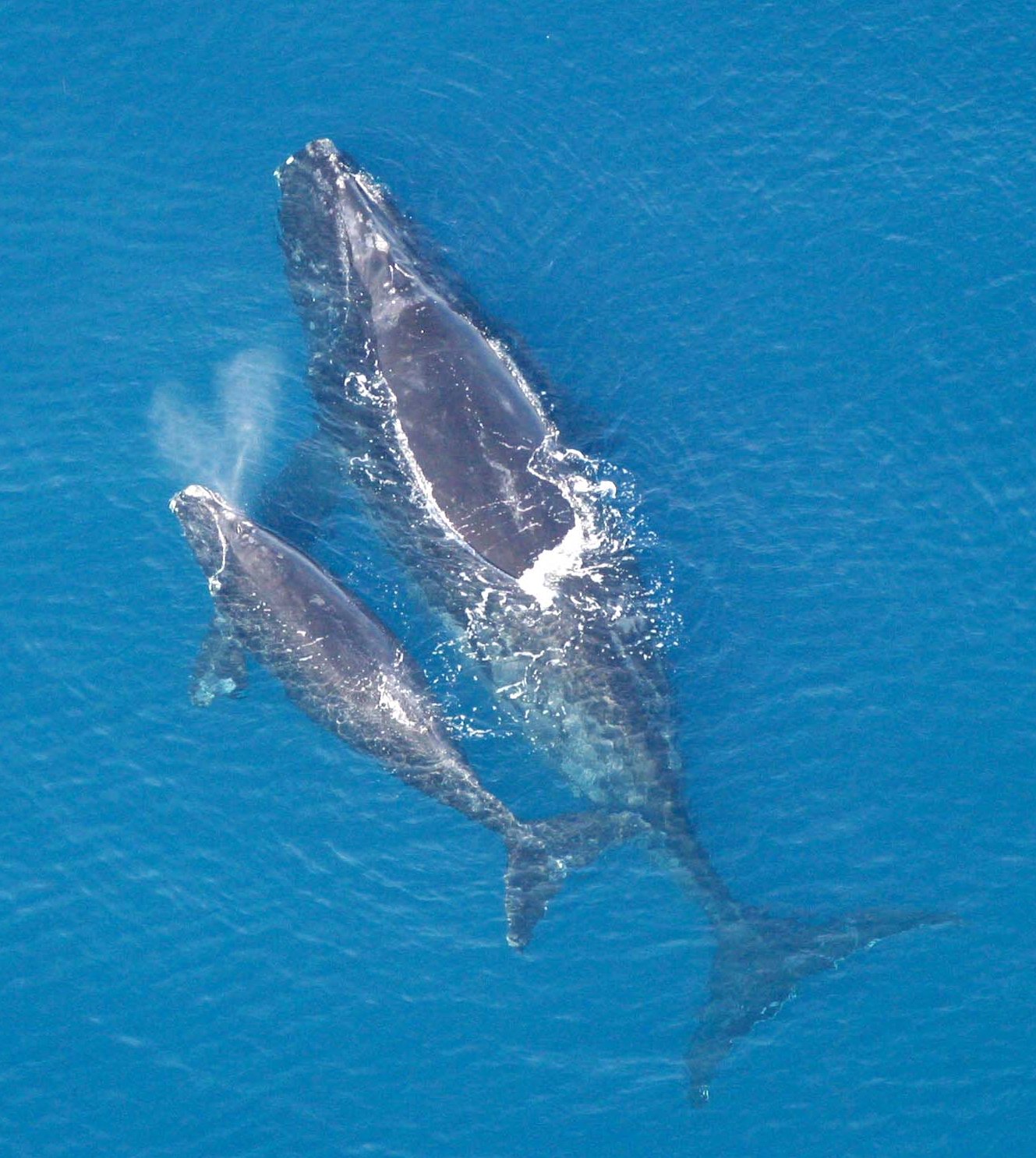
The r/K selection theory is an evolutionary hypothesis examining the selection of traits in an organism that trade off between quantity and quality of offspring. Species which produce more offspring at the expense of reduced individual parental investment are termed r-strategists, while those which make greater parental investment at the expense of a reduced quantity of offspring are termed K-strategists. The occurrence of the two varies widely, seemingly to promote success in particular environments.
The concepts of quantity or quality offspring are sometimes referred to in ecology as "cheap" or "expensive", a comment on the expendable nature of the offspring and parental commitment made. The stability of the environment can predict if many expendable offspring are made or if fewer offspring of higher quality would lead to higher reproductive success. An unstable environment would encourage the parent to make many offspring, because the likelihood of all (or the majority) of them surviving to adulthood is slim. In contrast, more stable environments allow parents to confidently invest in one offspring because they are more likely to survive to adulthood.
The terminology of r/K-selection was coined by the ecologists Robert MacArthur and E. O. Wilson in 1967 based on their work on island biogeography; although the concept of the evolution of life history strategies has a longer history (see e.g. plant strategies).
The theory was popular in the 1970s and 1980s, when it was used as a heuristic device, but lost importance in the early 1990s, when it was criticized by several empirical studies. A life history paradigm has replaced the r/K selection paradigm, but continues to incorporate its important themes as a subset of life history theory. Some scientists now prefer to use the terms fast versus slow life history as a replacement for, respectively, r versus K reproductive strategy.
In r/K selection theory, selective pressures are hypothesised to drive evolution in one of two generalized directions: r- or K-selection. These terms, r and K, are drawn from standard ecological formula as illustrated in the simplified Verhulst model of population dynamics:
where N is the population, r is the maximum growth rate, K is the carrying capacity of the local environment, and dN / dt (the derivative of population size N with respect to time t) is the rate of change in population with time. Thus, the equation relates the growth rate of the population N to the current population size, incorporating the effect of the two constant parameters r and K. (Note that when the population size is greater than the carrying capacity then 1 - N/K is negative, which indicates a population decline or negative growth.) The choice of the letter K came from the German Kapazitätsgrenze (capacity limit), while r came from rate.
r-selected species are those that emphasize high growth rates, typically exploit less-crowded ecological niches, and produce many offspring, each of which has a relatively low probability of surviving to adulthood (i.e., high r, low K). A typical r species is the dandelion (genus Taraxacum).
In unstable or unpredictable environments, r-selection predominates due to the ability to reproduce rapidly. There is little advantage in adaptations that permit successful competition with other organisms, because the environment is likely to change again. Among the traits that are thought to characterize r-selection are high fecundity, small body size, early maturity onset, short generation time, and the ability to disperse offspring widely.
Hub AI
R/K selection theory AI simulator
(@R/K selection theory_simulator)
R/K selection theory
The r/K selection theory is an evolutionary hypothesis examining the selection of traits in an organism that trade off between quantity and quality of offspring. Species which produce more offspring at the expense of reduced individual parental investment are termed r-strategists, while those which make greater parental investment at the expense of a reduced quantity of offspring are termed K-strategists. The occurrence of the two varies widely, seemingly to promote success in particular environments.
The concepts of quantity or quality offspring are sometimes referred to in ecology as "cheap" or "expensive", a comment on the expendable nature of the offspring and parental commitment made. The stability of the environment can predict if many expendable offspring are made or if fewer offspring of higher quality would lead to higher reproductive success. An unstable environment would encourage the parent to make many offspring, because the likelihood of all (or the majority) of them surviving to adulthood is slim. In contrast, more stable environments allow parents to confidently invest in one offspring because they are more likely to survive to adulthood.
The terminology of r/K-selection was coined by the ecologists Robert MacArthur and E. O. Wilson in 1967 based on their work on island biogeography; although the concept of the evolution of life history strategies has a longer history (see e.g. plant strategies).
The theory was popular in the 1970s and 1980s, when it was used as a heuristic device, but lost importance in the early 1990s, when it was criticized by several empirical studies. A life history paradigm has replaced the r/K selection paradigm, but continues to incorporate its important themes as a subset of life history theory. Some scientists now prefer to use the terms fast versus slow life history as a replacement for, respectively, r versus K reproductive strategy.
In r/K selection theory, selective pressures are hypothesised to drive evolution in one of two generalized directions: r- or K-selection. These terms, r and K, are drawn from standard ecological formula as illustrated in the simplified Verhulst model of population dynamics:
where N is the population, r is the maximum growth rate, K is the carrying capacity of the local environment, and dN / dt (the derivative of population size N with respect to time t) is the rate of change in population with time. Thus, the equation relates the growth rate of the population N to the current population size, incorporating the effect of the two constant parameters r and K. (Note that when the population size is greater than the carrying capacity then 1 - N/K is negative, which indicates a population decline or negative growth.) The choice of the letter K came from the German Kapazitätsgrenze (capacity limit), while r came from rate.
r-selected species are those that emphasize high growth rates, typically exploit less-crowded ecological niches, and produce many offspring, each of which has a relatively low probability of surviving to adulthood (i.e., high r, low K). A typical r species is the dandelion (genus Taraxacum).
In unstable or unpredictable environments, r-selection predominates due to the ability to reproduce rapidly. There is little advantage in adaptations that permit successful competition with other organisms, because the environment is likely to change again. Among the traits that are thought to characterize r-selection are high fecundity, small body size, early maturity onset, short generation time, and the ability to disperse offspring widely.
Recent media