Hubbry Logo
Microbial loopMicrobial loopMain
Open search
Microbial loop
Community hub
Microbial loop
logo
8 pages, 0 posts
0 subscribers
Be the first to start a discussion here.
Contribute something
Microbial loop
Microbial loop
from Wikipedia
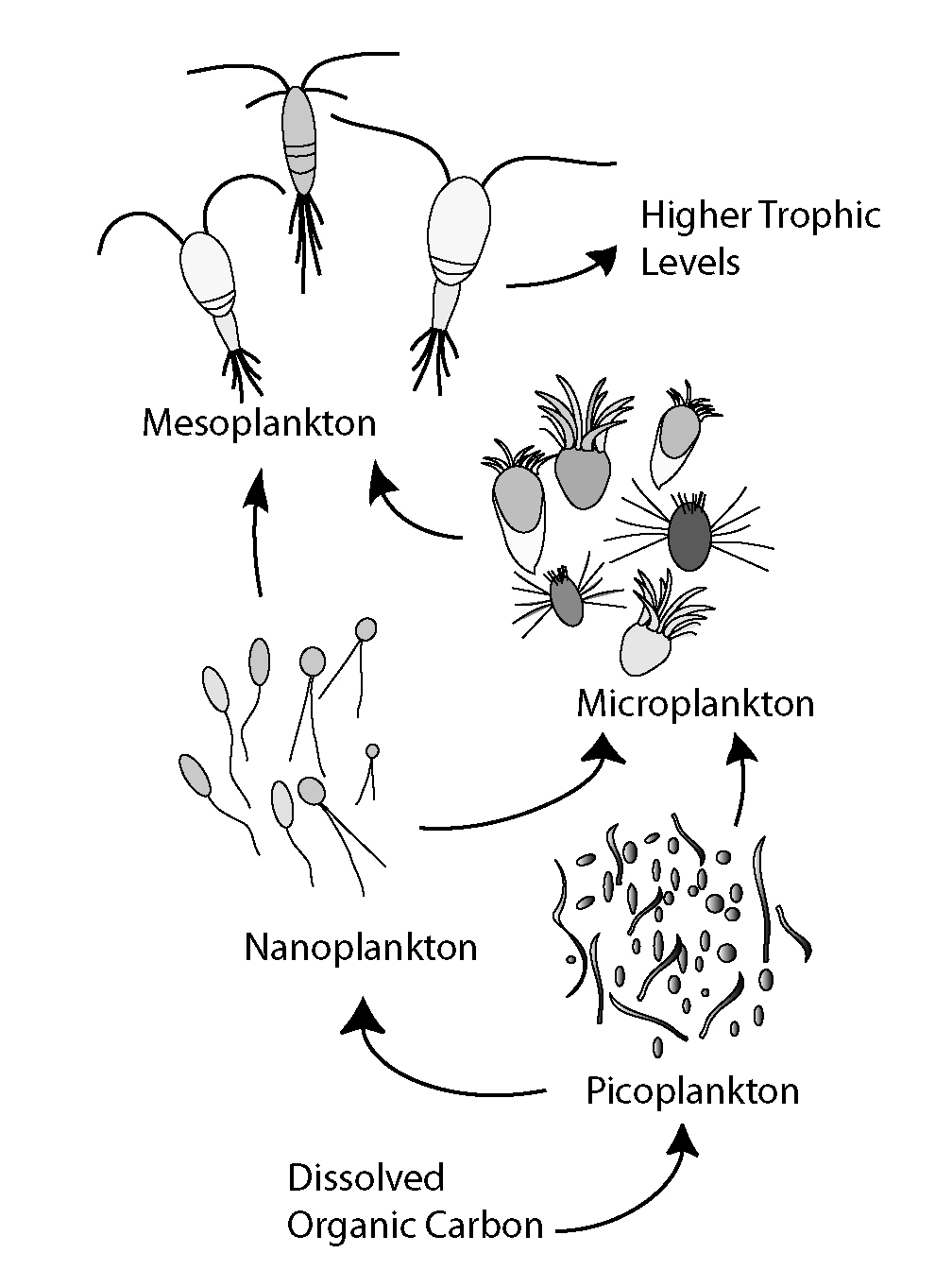
The aquatic microbial loop is a marine trophic pathway which incorporates dissolved organic carbon into the food chain.

The microbial loop describes a trophic pathway where, in aquatic systems, dissolved organic carbon (DOC) is returned to higher trophic levels via its incorporation into bacterial biomass, and then coupled with the classic food chain formed by phytoplankton-zooplankton-nekton. In soil systems, the microbial loop refers to soil carbon. The term microbial loop was coined by Farooq Azam, Tom Fenchel et al.[1] in 1983 to include the role played by bacteria in the carbon and nutrient cycles of the marine environment.

In general, dissolved organic carbon (DOC) is introduced into the ocean environment from bacterial lysis, the leakage or exudation of fixed carbon from phytoplankton (e.g., mucilaginous exopolymer from diatoms), sudden cell senescence, sloppy feeding by zooplankton, the excretion of waste products by aquatic animals, or the breakdown or dissolution of organic particles from terrestrial plants and soils.[2] Bacteria in the microbial loop decompose this particulate detritus to utilize this energy-rich matter for growth. Since more than 95% of organic matter in marine ecosystems consists of polymeric, high-molecular- weight (HMW) compounds (e.g., proteins, polysaccharides, lipids), only a small portion of total dissolved organic matter (DOM) is readily utilizable to most marine organisms at higher trophic levels. This means that dissolved organic carbon is not available directly to most marine organisms; marine bacteria introduce this organic carbon into the food web, resulting in additional energy becoming available to higher trophic levels. Recently the term "microbial food web" has been substituted for the term "microbial loop".

History

[edit]

Prior to the discovery of the microbial loop, the classic view of marine food webs was one of a linear chain from phytoplankton to nekton. Generally, marine bacteria were not thought to be significant consumers of organic matter (including carbon), although they were known to exist. However, the view of a marine pelagic food web was challenged during the 1970s and 1980s by Pomeroy and Azam, who suggested the alternative pathway of carbon flow from bacteria to protozoans to metazoans.[3][1]

Early work in marine ecology that investigated the role of bacteria in oceanic environments concluded their role to be very minimal. Traditional methods of counting bacteria (e.g., culturing on agar plates) only yielded small numbers of bacteria that were much smaller than their true ambient abundance in seawater. Developments in technology for counting bacteria have led to an understanding of the significant importance of marine bacteria in oceanic environments.

In the 1970s, the alternative technique of direct microscopic counting was developed by Francisco et al. (1973) and Hobbie et al. (1977). Bacterial cells were counted with an epifluorescence microscope, producing what is called an "acridine orange direct count" (AODC). This led to a reassessment of the large concentration of bacteria in seawater, which was found to be more than was expected (typically on the order of 1 million per milliliter). Also, development of the "bacterial productivity assay" showed that a large fraction (i.e. 50%) of net primary production (NPP) was processed by marine bacteria.

In 1974, Larry Pomeroy published a paper in BioScience entitled "The Ocean's Food Web: A Changing Paradigm", where the key role of microbes in ocean productivity was highlighted.[3] In the early 1980s, Azam and a panel of top ocean scientists published the synthesis of their discussion in the journal Marine Ecology Progress Series entitled "The Ecological Role of Water Column Microbes in the Sea". The term 'microbial loop' was introduced in this paper, which noted that the bacteria-consuming protists were in the same size class as phytoplankton and likely an important component of the diet of planktonic crustaceans.[1]

Evidence accumulated since this time has indicated that some of these bacterivorous protists (such as ciliates) are actually selectively preyed upon by these copepods. In 1986, Prochlorococcus, which is found in high abundance in oligotrophic areas of the ocean, was discovered by Sallie W. Chisholm, Robert J. Olson, and other collaborators (although there had been several earlier records of very small cyanobacteria containing chlorophyll b in the ocean[4][5] Prochlorococcus was discovered in 1986[6]).[7] Stemming from this discovery, researchers observed the changing role of marine bacteria along a nutrient gradient from eutrophic to oligotrophic areas in the ocean.

Factors controlling the microbial loop

[edit]

The efficiency of the microbial loop is determined by the density of marine bacteria within it.[8] It has become clear that bacterial density is mainly controlled by the grazing activity of small protozoans such as various taxonomic groups of flagellates. Also, viral infection causes bacterial lysis, which release cell contents back into the dissolved organic matter (DOM) pool, lowering the overall efficiency of the microbial loop. Mortality from viral infection has almost the same magnitude as that from protozoan grazing. However, compared to protozoan grazing, the effect of viral lysis can be very different because lysis is highly host-specific to each marine bacteria. Both protozoan grazing and viral infection balance the major fraction of bacterial growth. In addition, the microbial loop dominates in oligotrophic waters, rather than in eutrophic areas - there the classical plankton food chain predominates, due to the frequent fresh supply of mineral nutrients (e.g. spring bloom in temperate waters, upwelling areas). The magnitude of the efficiency of the microbial loop can be determined by measuring bacterial incorporation of radiolabeled substrates (such as tritiated thymidine or leucine).

In marine ecosystems

[edit]

The microbial loop is of particular importance in increasing the efficiency of the marine food web via the utilization of dissolved organic matter (DOM), which is typically unavailable to most marine organisms. In this sense, the process aids in recycling of organic matter and nutrients and mediates the transfer of energy above the thermocline. More than 30% of dissolved organic carbon (DOC) incorporated into bacteria is respired and released as carbon dioxide. The other main effect of the microbial loop in the water column is that it accelerates mineralization through regenerating production in nutrient-limited environments (e.g. oligotrophic waters). In general, the entire microbial loop is to some extent typically five to ten times the mass of all multicellular marine organisms in the marine ecosystem. Marine bacteria are the base of the food web in most oceanic environments, and they improve the trophic efficiency of both marine food webs and important aquatic processes (such as the productivity of fisheries and the amount of carbon exported to the ocean floor). Therefore, the microbial loop, together with primary production, controls the productivity of marine systems in the ocean.

Many planktonic bacteria are motile, using a flagellum to propagate, and chemotax to locate, move toward, and attach to a point source of dissolved organic matter (DOM) where fast growing cells digest all or part of the particle. Accumulation within just a few minutes at such patches is directly observable. Therefore, the water column can be considered to some extent as a spatially organized place on a small scale rather than a completely mixed system. This patch formation affects the biologically-mediated transfer of matter and energy in the microbial loop.

More currently, the microbial loop is considered to be more extended.[9] Chemical compounds in typical bacteria (such as DNA, lipids, sugars, etc.) and similar values of C:N ratios per particle are found in the microparticles formed abiotically. Microparticles are a potentially attractive food source to bacterivorous plankton. If this is the case, the microbial loop can be extended by the pathway of direct transfer of dissolved organic matter (DOM) via abiotic microparticle formation to higher trophic levels. This has ecological importance in two ways. First, it occurs without carbon loss, and makes organic matter more efficiently available to phagotrophic organisms, rather than only heterotrophic bacteria. Furthermore, abiotic transformation in the extended microbial loop depends only on temperature and the capacity of DOM to aggregate, while biotic transformation is dependent on its biological availability.[9]

In land ecosystems

[edit]
Soil carbon cycle through the microbial loop[10]

Soil ecosystems are highly complex and subject to different landscape-scale perturbations that govern whether soil carbon is retained or released to the atmosphere.[11] The ultimate fate of soil organic carbon is a function of the combined activities of plants and below ground organisms, including soil microbes. Although soil microorganisms are known to support a plethora of biogeochemical functions related to carbon cycling,[12] the vast majority of the soil microbiome remains uncultivated and has largely cryptic functions.[13] Only a mere fraction of soil microbial life has been catalogued to date, although new soil microbes [13] and viruses are increasingly being discovered.[14] This lack of knowledge results in uncertainty of the contribution of soil microorganisms to soil organic carbon cycling and hinders construction of accurate predictive models for global carbon flux under climate change.[15][10]

The lack of information concerning the soil microbiome metabolic potential makes it particularly challenging to accurately account for the shifts in microbial activities that occur in response to environmental change. For example, plant-derived carbon inputs can prime microbial activity to decompose existing soil organic carbon at rates higher than model expectations, resulting in error within predictive models of carbon fluxes.[16][10]

To account for this, a conceptual model known as the microbial carbon pump, illustrated in the diagram on the right, has been developed to define how soil microorganisms transform and stabilise soil organic matter.[17] As shown in the diagram, carbon dioxide in the atmosphere is fixed by plants (or autotrophic microorganisms) and added to soil through processes such as (1) root exudation of low-molecular weight simple carbon compounds, or deposition of leaf and root litter leading to accumulation of complex plant polysaccharides. (2) Through these processes, carbon is made bioavailable to the microbial metabolic "factory" and subsequently is either (3) respired to the atmosphere or (4) enters the stable carbon pool as microbial necromass. The exact balance of carbon efflux versus persistence is a function of several factors, including aboveground plant community composition and root exudate profiles, environmental variables, and collective microbial phenotypes (i.e., the metaphenome).[18][10]

In this model, microbial metabolic activities for carbon turnover are segregated into two categories: ex vivo modification, referring to transformation of plant-derived carbon by extracellular enzymes, and in vivo turnover, for intracellular carbon used in microbial biomass turnover or deposited as dead microbial biomass, referred to as necromass. The contrasting impacts of catabolic activities that release soil organic carbon as carbon dioxide (CO2), versus anabolic pathways that produce stable carbon compounds, control net carbon retention rates. In particular, microbial carbon sequestration represents an underrepresented aspect of soil carbon flux that the microbial carbon pump model attempts to address.[17] A related area of uncertainty is how the type of plant-derived carbon enhances microbial soil organic carbon storage or alternatively accelerates soil organic carbon decomposition.[19] For example, leaf litter and needle litter serve as sources of carbon for microbial growth in forest soils, but litter chemistry and pH varies by vegetation type [e.g., between root and foliar litter [20] or between deciduous and coniferous forest litter (14)]. In turn, these biochemical differences influence soil organic carbon levels through changing decomposition dynamics.[21] Also, increased diversity of plant communities increases rates of rhizodeposition, stimulating microbial activity and soil organic carbon storage,[22] although soils eventually reach a saturation point beyond which they cannot store additional carbon.[23][10]

See also

[edit]

References

[edit]

Bibliography

[edit]
Revisions and contributorsEdit on WikipediaRead on Wikipedia
from Grokipedia
The microbial loop is a key trophic pathway in aquatic ecosystems, especially marine environments, where dissolved organic matter (DOM) exuded by and other primary producers is assimilated by heterotrophic bacteria into bacterial biomass, which is subsequently grazed by protozoans such as heterotrophic nanoflagellates and , thereby recycling carbon and nutrients to higher trophic levels and integrating microbial processes with the classical . This loop highlights the dominant role of microbes in processing a substantial fraction of , often 10–50% of photosynthetically fixed carbon, before it reaches larger grazers like . The concept of the microbial loop was formally articulated in 1983 by Azam et al., who emphasized the ecological significance of water-column microbes in nutrient cycling and energy flow, building on earlier 20th-century observations of bacterial roles in decomposition dating back to in Russian and Danish marine . Prior paradigms had largely overlooked microbes, focusing on direct grazing of by metazoans, but the microbial loop revealed how and their predators mediate rapid turnover of DOM, preventing its loss and sustaining productivity in nutrient-limited waters. Over the decades, the framework has evolved to incorporate viral lysis and other microbial interactions, yet the core loop remains central to understanding marine . Key components include heterotrophic bacteria (typically 0.3–1 µm in size, with abundances up to 5–10 × 10⁶ cells ml⁻¹), which efficiently uptake low-molecular-weight DOM at concentrations as low as nanomolar levels; heterotrophic flagellates (3–10 µm, up to 3 × 10³ cells ml⁻¹), acting as primary bacterivores; and microzooplankton (10–80 µm), which consume these protists and link the loop to metazoan grazers. The process involves bacterial production of biomass from DOM, protozoan grazing that remineralizes nutrients like and , and efficient transfer efficiencies often exceeding 30% at each step, contrasting with lower efficiencies in the classical chain. In various marine systems, the loop can recycle up to 85% of net —for example, in the —thereby retaining nutrients in the euphotic zone and fueling secondary production. In oligotrophic oceans, such recycling can reach ~86%, as observed in regions like the . Ecologically, the microbial loop is pivotal for global carbon cycling, as marine microbes fix approximately 50 gigatons of carbon annually—comparable to terrestrial net —and the loop ensures much of this carbon is cycled internally rather than exported, influencing atmospheric CO₂ levels and oxygen production, which accounts for about 50% of the planet's total. It supports fisheries by channeling energy to harvestable and modulates feedbacks through interactions with the microbial carbon pump, which sequesters DOM for millennia. Disruptions, such as from ocean warming or acidification, could alter loop dynamics, potentially reducing carbon retention and .

Overview

Definition and Components

The microbial loop refers to a trophic pathway in aquatic ecosystems, particularly marine environments, where dissolved organic matter (DOM) released primarily by is assimilated by heterotrophic , which in turn are grazed upon by protozoan consumers such as heterotrophic nanoflagellates and , thereby recycling organic carbon and nutrients while largely bypassing the classical herbivore-dominated . This pathway highlights the central role of microbes in processing a significant portion of that would otherwise remain inaccessible to higher trophic levels. The primary components of the microbial loop include DOM as the initial substrate, heterotrophic as decomposers, protozoan grazers, and viruses as lytic agents. DOM, comprising 5-50% of photosynthetically fixed carbon, serves as the entry point, originating from exudates, sloppy feeding, and cell lysis. Heterotrophic rapidly uptake and mineralize this low-molecular-weight DOM, converting it into bacterial that can constitute a substantial of total planktonic . Heterotrophic nanoflagellates (typically 3-10 µm) and act as key grazers, efficiently filtering and controlling their populations through predation, with flagellates alone capable of processing a large volume of daily. Viruses, predominantly bacteriophages, integrate into the loop by infecting and lysing bacterial cells, releasing intracellular contents—including DOM and nutrients—back into the water column, which sustains further bacterial growth and influences overall carbon flux. Conceptually, the loop can be outlined as a cycle: DOM → bacterial uptake and growth → protozoan (releasing DOM and nutrients via and sloppy feeding) and viral (releasing DOM) → renewed DOM availability for . This contrasts with the classic , where energy flows directly from primary producers to herbivores and then to carnivores; instead, the microbial loop mediates much of the carbon and nutrient turnover through rapid microbial interactions, often retaining 10-50% of fixed carbon within the microbial compartment before transfer to larger grazers. The microbial loop thus plays a pivotal role in global biogeochemical cycles by enhancing nutrient regeneration and recycling in the .

Ecological Role

The microbial loop plays a pivotal role in oceanic carbon cycling by channeling a substantial fraction of through heterotrophic , which assimilate (DOC) derived from exudates and mortality. In oligotrophic systems, where scarcity limits direct grazing on , bacterial production can account for 10–50% of net , effectively recycling DOC and preventing its loss while regenerating bioavailable carbon for higher trophic levels. This process enhances overall carbon retention in the surface , with estimates indicating that process approximately half of globally, thereby influencing the efficiency of carbon transfer within planktonic food webs. Through bacterial uptake of and subsequent grazing by protists, the microbial loop drives efficient recycling, particularly for and , which are remineralized into inorganic forms readily usable by . Bacteria rapidly incorporate dissolved organic and , converting them into , while protistan grazers release and via sloppy feeding and excretion, closing the loop and sustaining primary productivity in -limited environments. This remineralization pathway ensures that up to 25% of respired carbon is accompanied by release, amplifying availability without relying on external inputs. The microbial loop supports microbial by fostering dynamic interactions among , viruses, and protists, where pressure prevents any single group from dominating and promotes diverse community structures that underpin aquatic webs. This diversity at the base of the trophic facilitates and transfer to higher levels, such as and , enhancing overall resilience. On a global scale, the loop contributes to by partitioning some processed carbon into recalcitrant DOC that evades rapid respiration, potentially accounting for 10–30% of total oceanic heterotrophic respiration and modulating atmospheric CO₂ drawdown through the .

Historical Development

Early Discoveries

In the , foundational observations on microbial roles in aquatic environments emerged from studies on processes. Louis Pasteur's experiments demonstrated that were responsible for in water-based media, challenging prevailing notions of and highlighting microbes as active agents in breaking down . These findings, detailed in Pasteur's memoir on organized corpuscles in the atmosphere and their relation to and , established that airborne microbes could initiate in sterile liquids, laying early groundwork for understanding bacterial contributions to nutrient cycling in water. The early 20th century saw further advancements, particularly from onward, when Russian marine bacteriologists such as Yurii Sorokin pioneered studies on bacterial of dissolved (DOM) in , using direct microscopic counts to quantify microbial activity and demonstrate bacteria's role as intermediaries in cycling. Western researchers, including and Claude ZoBell, employed culture-based methods like colony counts to assess bacterial abundances and their processing of organic substrates. By the , Mikhail Vinogradov's group in developed the first numerical models incorporating microbial components into dynamics, emphasizing bacteria's integration into food webs. These efforts, building on Danish and other European observations of , highlighted the significance of microbes in oceanic carbon and flows, setting the stage for later conceptual frameworks. During the 1970s, research in plankton ecology began to quantify bacterial uptake of dissolved (DOM) in , revealing as primary consumers of this material. Azam and colleagues conducted studies showing that heterotrophic efficiently incorporated labile DOM, such as dissolved ATP, into their , with uptake rates indicating that could process a significant portion of oceanic DOM pools. These investigations, based on samples, demonstrated that bacterial linked phytoplankton-derived DOM to higher trophic levels, underscoring microbes' central role in marine carbon and nutrient dynamics. A pivotal 1977 study by Azam and R.E. Hodson, focusing on the , further illuminated interactions between and as key microheterotrophs. Analyzing size distributions and activities, the research found that dominated DOM consumption, while bacterivorous grazed on them, facilitating regeneration and hinting at a coupled microbial pathway in oligotrophic waters. This work provided empirical evidence from samples that protozoan predation on could recycle back to , prefiguring integrated microbial concepts. In parallel, limnological studies in the introduced precursor ideas to the "bacterial loop" in freshwater systems. Johannes Overbeck's research on lake ecosystems demonstrated that were crucial for the uptake and transformation of DOM, acting as intermediaries between algal exudates and higher trophic levels in planktonic communities. Overbeck showed that bacterial activity sustained a significant fraction of secondary production, emphasizing microbes' role in closing cycles in inland waters.

Key Milestones and Researchers

The concept of the microbial loop began to take shape in the 1970s with Lawrence R. Pomeroy's proposal of a "microbial garden," which emphasized the role of heterotrophic microorganisms in processing dissolved (DOM) and recycling s in marine ecosystems, challenging the traditional view of a linear dominated by phytoplankton-zooplankton interactions. This idea evolved into a more formalized framework in the 1980s, when Farooq Azam, Tom Fenchel, and colleagues introduced the term "microbial loop" in a seminal 1983 paper, describing how assimilate DOM from , are grazed by protists, and thereby channel energy back into higher trophic levels while also facilitating nutrient regeneration. Key researchers advanced this concept through focused studies on its components. Farooq Azam pioneered measurements of bacterial production and its linkage to DOM uptake, establishing as central processors in the loop. David L. Kirchman contributed extensively to understanding grazing on , quantifying how flagellates and control bacterial populations and influence carbon transfer efficiency within the loop. Curtis A. Suttle, starting in the , highlighted the role of viruses in microbial dynamics, demonstrating their impact on bacterial mortality and cycling. Major milestones in the 1990s included the integration of viral processes via the "viral shunt," proposed by Steven W. Wilhelm and Curtis A. Suttle, which showed that viral lysis of bacteria releases DOM and nutrients, bypassing grazing and promoting rapid recycling but reducing transfer to metazoans. Jed A. Fuhrman contributed foundational work on marine viral ecology in the 1990s, supporting these developments. In the 2000s, genomic approaches provided deeper insights into microbial diversity, as exemplified by J. and colleagues' 2004 metagenomic survey of the , which uncovered over 1,800 microbial species and revealed the genetic basis for diverse metabolic functions supporting loop processes in oligotrophic waters. Early adoption of the microbial loop faced regarding its , particularly debates over whether it primarily links carbon to higher trophic levels or acts as a sink via respiration, with evidence suggesting greater importance in oligotrophic systems compared to eutrophic ones where classical food chains prevail.

Core Processes

Bacterial Production and

Heterotrophic form the foundational step in the microbial loop by assimilating dissolved (DOM) into new through the process of bacterial production (BP). This uptake converts low-molecular-weight DOM, primarily released from primary producers or other sources, into bacterial cellular material, thereby repackaging it for higher trophic levels. The of this conversion, known as bacterial growth (BGE), typically ranges from 20% to 50% in natural aquatic systems, reflecting the proportion of assimilated DOM incorporated into versus that respired as CO₂. BGE = BP / (BP + BR), where BR denotes bacterial respiration, and BP itself can be expressed as BP = DOM uptake × growth yield, highlighting the direct linkage between substrate assimilation and accrual. To quantify bacterial production rates, researchers commonly employ isotopic incorporation techniques. The thymidine incorporation method, introduced by Fuhrman and Azam, measures the rate of by tracking the uptake of tritiated (³H-) into bacterial cells, providing an estimate of and thus production. Complementarily, the leucine incorporation method assesses protein synthesis via the uptake of tritiated or ¹⁴C-labeled , offering a robust alternative particularly suited for diverse bacterial communities. These methods have become staples for estimating in , with conversion factors calibrated to yield carbon production values. Bacterial production is tightly regulated by protistan , primarily from heterotrophic nanoflagellates (2–5 μm) and (10–50 μm), which serve as the dominant bacterivores in the microbial loop. These predators exhibit size-selective , favoring under 5 μm in while largely avoiding larger cells or filaments that exceed this threshold, thereby shaping bacterial community structure and promoting morphological defenses in prey populations. Clearance rates—the volume of water cleared of per predator per hour—typically fall between 0.1 and 1 nl cell⁻¹ h⁻¹ for nanoflagellates, enabling them to consume substantial fractions of standing bacterial stocks daily. contribute similarly but often at lower individual rates due to their larger size. Grazing facilitates trophic transfer within the microbial loop, with approximately 30–50% of bacterial production incorporated into biomass and passed to higher trophic levels, such as , while the remainder is respired or excreted back into the DOM pool. This transfer efficiency underscores the loop's role in channeling energy from DOM to metazoans, though respiration and sloppy feeding can recycle up to 50% of grazed carbon as DOM, sustaining further . Such dynamics ensure that bacterivory not only controls bacterial abundances but also amplifies nutrient cycling efficiency in aquatic ecosystems.

Viral and Dissolution Pathways

In the microbial loop, the viral shunt represents a key non-predatory pathway for recycling , where bacteriophages infect and bacterial cells, releasing cellular contents as dissolved (DOM) and colloidal particles that become available for uptake by other microbes. This process bypasses direct trophic transfer to grazers, instead channeling nutrients and carbon back into the lower levels of the , thereby influencing biogeochemical cycles in aquatic ecosystems. typically results in 25-50% of the lysed cell's carbon being released as labile DOM, with the remainder forming particulate or colloidal fractions that can aggregate or dissolve further. Viruses exert substantial control over bacterial populations, infecting 20-40% of marine bacteria daily and contributing to mortality rates that can reach up to 50% of daily bacterial production in some systems. Viral production, driven primarily by lytic cycles, accounts for approximately 10-25% of total bacterial production, with rates varying by environmental conditions such as availability and . The impact of on bacterial communities can be estimated using for viral mortality: Viral mortality=VLP×burst size×infection rate\text{Viral mortality} = \text{VLP} \times \text{burst size} \times \text{infection rate} where VLP denotes the abundance of virus-like particles, burst size is the average number of virions released per infected cell (typically 10-50), and infection rate reflects the fraction of susceptible hosts encountered per unit time. This dynamic ensures efficient while preventing excessive accumulation of bacterial . Complementing viral lysis, dissolution pathways involve the chemical and enzymatic breakdown of dead or moribund microbial cells, contributing to the DOM pool through passive leakage and autolysis. These processes release low-molecular-weight compounds that are rapidly assimilated by surviving , sustaining the microbial loop without the need for active . In oligotrophic environments, such dissolution enhances the of refractory DOM, supporting basal production. From an evolutionary perspective, ongoing between phages and promotes microbial diversity by selectively targeting dominant strains, as encapsulated in the "killing-the-winner" , which prevents any single bacterial genotype from monopolizing resources. This arms-race dynamic fosters genetic variation in bacterial defenses, such as CRISPR systems, and phage counter-adaptations, maintaining community stability and resilience within the microbial loop. Phage-mediated selection thus acts as a counterbalance to bacterial proliferation, ensuring diverse assemblages that underpin function.

Influencing Factors

Environmental Controls

Temperature exerts a significant control on the microbial loop through its influence on bacterial production rates, with Q10 values typically ranging from 2 to 3 in marine systems, indicating that production approximately doubles or triples for every 10°C rise within suitable ranges. This temperature sensitivity arises from enzymatic processes in heterotrophic , where lower temperatures slow while extremes inhibit growth. In temperate marine environments, bacterial production peaks at 15–25°C, reflecting an optimal range for most marine bacterioplankton before heat stress reduces efficiency above 25°C. Nutrient availability modulates the microbial loop by constraining bacterial uptake of dissolved organic matter (DOM), with phosphorus (P) and nitrogen (N) often acting as key limiters in oligotrophic waters. When ambient concentrations fall below cellular demands, bacteria exhibit reduced growth and altered DOM assimilation, shifting the loop's carbon flux. Stoichiometric imbalances, particularly deviations from the (C:N:P ≈ 106:16:1), further impact efficiency; for instance, P limitation can suppress bacterial production even with excess carbon, promoting co-limitation scenarios that bottleneck energy transfer to higher trophic levels. Light availability in surface waters drives of DOM, breaking down complex s into more labile forms that enhance for bacterial consumption and thereby accelerate the microbial loop. In contrast, low oxygen conditions, such as those in hypoxic zones, compel to shift from aerobic respiration to , yielding less ATP per glucose and reducing overall loop efficiency while favoring acid production. influences grazing, a critical step in the loop, with optimal activity at 7–8, where (projected drop to ~7.8 by 2100) diminishes nanoflagellate growth and predation rates on . optima for marine grazing and bacterial processes align with oceanic norms of 30–35 practical salinity units (PSU), beyond which osmotic stress disrupts community dynamics and grazing efficiency.

Biological Regulations

The microbial loop is subject to various biotic regulations that influence its and stability through interspecies interactions. Beyond protistan grazing on , compete with heterotrophic for labile dissolved (DOM), particularly low-molecular-weight compounds released during blooms, which can limit bacterial access to this resource and alter carbon partitioning in the loop. Additionally, metazoan grazers, such as copepods and cladocerans, exert predation pressure on heterotrophic protists, reducing protist populations and thereby indirectly alleviating grazing on , which can enhance bacterial biomass accumulation within the loop. These interactions highlight how higher trophic levels modulate the flow of by targeting key grazers in the microbial compartment. Symbiotic relationships between and also play a , where associated facilitate enhanced access to recalcitrant DOM fractions through extracellular production, allowing to recycle nutrients more effectively and supporting overall loop dynamics in nutrient-limited environments. These symbioses exemplify mutualistic feedbacks that stabilize carbon transfer from primary producers to decomposers. Top-down control from higher trophic levels, such as , indirectly regulates the microbial loop by suppressing abundances through selective grazing on bacterivorous flagellates and , which in turn reduces predation pressure on and promotes microbial carbon cycling efficiency. This is evident in studies where increased shifts community structure, favoring smaller and altering the balance of bacterial production versus consumption in the loop. Higher microbial diversity contributes to the stability of the microbial loop by invoking the redundancy hypothesis, wherein functionally equivalent taxa compensate for losses in key populations, maintaining consistent rates of DOM processing and regeneration despite perturbations. This functional ensures resilient processes, as diverse bacterial assemblages sustain efficiency even when dominant species are impacted by or .

Ecosystem Applications

Marine Systems

In marine systems, the microbial loop plays a dominant role in carbon cycling, particularly in oligotrophic oceans where limits larger trophic pathways. In open ocean gyres such as the , and associated nanozooplankton account for approximately 70% of total heterotrophic carbon in the , channeling a substantial portion of —often up to 70-80%—through microbial processes rather than direct grazing by larger . This dominance arises from the high efficiency of in assimilating dissolved (DOM) released by , which constitutes the primary energy source in these low-productivity environments, thereby retaining carbon within the surface layer and minimizing export to deeper waters. Vertically, the microbial loop exhibits distinct patterns across ocean depths, reflecting variations in availability. In surface waters, exudates and cell provide abundant labile DOM, fueling elevated bacterial production and protozoan that enhance loop activity and recycle nutrients efficiently. In contrast, deep-sea communities rely more heavily on DOM and organic carbon from sinking particles, such as , which support slower but persistent microbial degradation and remineralization, contributing to the vertical of carbon. This stratification underscores the loop's role in modulating the biological carbon pump, with surface enhancement promoting retention and deep-sea processes facilitating gradual sequestration. Case studies illustrate the microbial loop's integration with broader marine . In the , a high-latitude , the loop links blooms to bacterial and viral dynamics, where bacterial production is equivalent to about 25–30% of , sustaining secondary production and influencing seasonal carbon export during productive summer periods. In coral ecosystems, microbial communities mediate cycling by processing DOM from algal symbionts and , recycling and to support reef and prevent limitation in oligotrophic tropical waters. Climate change poses significant threats to the microbial loop in marine systems, primarily through warming-induced shifts in respiration. Elevated temperatures accelerate bacterial respiration rates, increasing carbon mineralization and potentially reducing export efficiency by 10-20% in surface oceans, as more is respired as CO₂ rather than sinking as particles. This enhanced loop activity could diminish the ocean's capacity as a , exacerbating atmospheric CO₂ accumulation.

Terrestrial Systems

In terrestrial ecosystems, the microbial loop functions within the heterogeneous matrix of , where and fungi decompose and other organic inputs into dissolved and particulate forms. These microbes incorporate carbon and into their , which is then grazed by microfaunal predators such as nematodes and amoebae, accelerating mineralization—particularly —and channeling resources back to . This process enhances overall cycling and supports in nutrient-limited environments. A key hotspot for the microbial loop is the , the zone influenced by plant roots, where root exudates provide a rich source of dissolved (DOM), comprising up to 40% of a plant's photosynthetically fixed carbon. This DOM influx stimulates , resulting in rhizosphere bacterial biomass that can be 30-fold higher than in bulk , while fungi assimilate 10–20% of net fixed carbon to fuel and symbiotic interactions. Protozoan in this zone further amplifies nutrient release, such as , promoting plant growth through increased root proliferation and nutrient uptake efficiency. The dynamics of the microbial loop adapt to varying terrestrial conditions, with higher activity in moist forest soils due to consistent water availability and abundant , fostering robust bacterial-fungal and faunal . In arid and soils, loop processes are constrained by , leading to microbial and protozoan during dry periods; reactivation occurs with episodic wetting, as amoebae exploit thin water films for , though overall turnover rates remain lower than in forests. Moisture thus serves as a primary environmental control on loop efficiency. Agricultural practices can impair the microbial loop, particularly through applications that reduce its efficiency and compromise . Fungicides and herbicides diminish key microbial populations, including ammonia-oxidizing and , while suppressing enzyme activities like and essential for mineralization; this disrupts nitrogen cycling and , ultimately lowering bioavailability for crops.

Freshwater Systems

In freshwater lakes, the microbial loop processes a substantial of bacterioplankton production, often exceeding 50% of during key periods such as spring blooms, with allochthonous dissolved (DOM) from surrounding watersheds serving as the dominant carbon source for . This external DOM input, primarily from terrestrial runoff, can account for approximately 60% of bacterioplankton production in humic-influenced systems, decoupling bacterial activity from local phytoplankton-derived carbon and sustaining heterotrophic dominance in oligotrophic to mesotrophic lakes. Such dynamics highlight the loop's role in carbon cycling, where bacteria mineralize allochthonous DOM, releasing nutrients that fuel subsequent while supporting protistan grazers. In riverine environments, the microbial loop operates under conditions of high flow and , which enhance encounter rates between bacterivores and , thereby increasing efficiency by up to 19-fold compared to low- scenarios. This physical forcing promotes rapid turnover of bacterial , integrating the loop into lotic food webs where from upstream sources is efficiently recycled. Seasonal cyanobacterial blooms in eutrophic rivers further amplify loop activity, as excess nutrients drive pulses that supply labile carbon to , boosting heterotrophic production and grazer responses during summer low-flow periods. Case studies illustrate these processes in large freshwater systems. In the Laurentian , the microbial loop facilitates efficient carbon transfer from primary producers to higher trophic levels, with heterotrophic components comprising up to 75% of the organic carbon pool in and supporting fisheries through nutrient regeneration and energy flow in Lakes Superior, Huron, and Erie. Similarly, in the of rivers, the microbial loop drives the reintroduction of processed back to surface waters, enhancing nutrient recycling via oxygen-dependent bacterial degradation and protistan grazing in this subsurface interface. Eutrophication from intensifies microbial loop activity in freshwater systems by increasing availability, leading to higher bacterial production and nutrient recycling rates—such as bacteria remineralizing up to 95% of for reuse—but often shifts pathways toward anaerobic metabolism in oxygen-depleted sediments due to bloom-induced hypoxia. This transition favors denitrifying and methanogenic microbes, altering carbon and nitrogen fluxes while potentially reducing overall loop efficiency in severe cases.

References

Add your contribution
Related Hubs
Contribute something
User Avatar
No comments yet.