Respect all members: no insults, harassment, or hate speech.
Be tolerant of different viewpoints, cultures, and beliefs. If you do not agree with others, just create separate note, article or collection.
Clearly distinguish between personal opinion and fact.
Verify facts before posting, especially when writing about history, science, or statistics.
Promotional content must be published on the “Related Services and Products” page—no more than one paragraph per service. You can also create subpages under the “Related Services and Products” page and publish longer promotional text there.
Do not post materials that infringe on copyright without permission.
Always credit sources when sharing information, quotes, or media.
Be respectful of the work of others when making changes.
Discuss major edits instead of removing others' contributions without reason.
If you notice rule-breaking, notify community about it in talks.
Do not share personal data of others without their consent.
The PDP-11 is a series of 16-bitminicomputers originally sold by Digital Equipment Corporation (DEC) from 1970 into the late 1990s, one of a set of products in the Programmed Data Processor (PDP) series. In total, around 600,000 PDP-11s of all models were sold, making it one of DEC's most successful product lines. The PDP-11 is considered by some experts to be the most popular minicomputer.[1][2]
The PDP-11 included a number of innovative features in its instruction set and additional general-purpose registers that made it easier to program than earlier models in the PDP series. Further, the innovative Unibus system allowed external devices to be more easily interfaced to the system using direct memory access, opening the system to a wide variety of peripherals. The PDP-11 replaced the PDP-8 in many real-time computing applications, although both product lines lived in parallel for more than 10 years. The ease of programming of the PDP-11 made it popular for general-purpose computing.
The design of the PDP-11 inspired the design of late-1970s microprocessors including the Intelx86[1] and the Motorola 68000. The design features of PDP-11 operating systems, and other operating systems from Digital Equipment, influenced the design of operating systems such as CP/M and hence also MS-DOS. The first officially named version of Unix ran on the PDP-11/20 in 1970. It is commonly stated that the C programming language took advantage of several low-level PDP-11–dependent programming features,[3] albeit not originally by design.[4]
An effort to expand the PDP-11 from 16- to 32-bit addressing led to the VAX-11 design, which took part of its name from the PDP-11.
In 1963, DEC introduced what is considered to be the first commercial minicomputer in the form of the PDP-5. This was a 12-bit design adapted from the 1962 LINC machine that was intended to be used in a lab setting. DEC slightly simplified the LINC system and instruction set, aiming the PDP-5 at smaller settings that did not need the power of their larger 18-bit PDP-4. The PDP-5 was a success, ultimately selling about 1,000 machines. This led to the PDP-8, a further cost-reduced 12-bit model that sold about 50,000 units.
During this period, the computer market was moving from computer word lengths based on units of 6 bits to units of 8 bits, following the introduction of the 7-bit ASCII standard. In 1967–1968, DEC engineers designed a 16-bit machine, the PDP-X,[5] but management ultimately canceled the project as it did not appear to offer a significant advantage over their existing 12- and 18-bit platforms.
This prompted several of the engineers from the PDP-X program to leave DEC and form Data General. The next year they introduced the 16-bit Data General Nova.[6] The Nova sold tens of thousands of units and launched what would become one of DEC's major competitors through the 1970s and 1980s.
Ken Olsen, president and founder of DEC, was more interested in a small 8-bit machine than the larger 16-bit system. This became the "Desk Calculator" project. Not long after, Datamation published a note about a desk calculator being developed at DEC, which caused concern at Wang Laboratories, who were heavily invested in that market. Before long, it became clear that the entire market was moving to 16-bit, and the Desk Calculator began a 16-bit design as well.[7]
The team decided that the best approach to a new architecture would be to minimize the memory bandwidth needed to execute the instructions. Larry McGowan coded a series of assembly language programs using the instruction sets of various existing platforms and examined how much memory would be exchanged to execute them. Harold McFarland joined the effort and had already written a very complex instruction set that the team rejected, but a second one was simpler and would ultimately form the basis for the PDP-11.[7]
When they first presented the new architecture, the managers were dismayed. It lacked single instruction-word immediate data and short addresses, both of which were considered essential to improving memory performance. McGowan and McFarland were eventually able to convince them that the system would work as expected, and suddenly "the Desk Calculator project got hot".[7] Much of the system was developed using a PDP-10 where the SIM-11 simulated what would become the PDP-11/20 and Bob Bowers wrote an assembler for it.[7]
At a late stage, the marketing team wanted to ship the system with 2K of memory[a] as the minimal configuration. When McGowan stated this would mean an assembler could not run on the system, the minimum was expanded to 4K. The marketing team also wanted to use the forward slash character for comments in the assembler code, as was the case in the PDP-8 assembler. McGowan stated that he would then have to use semicolon to indicate division, and the idea was dropped.[7]
The PDP-11 family was announced in January 1970 and shipments began early that year. DEC sold over 170,000 PDP-11s in the 1970s.[8] The architecture provided the majority of DEC's sales, sales growth, and profit from the early 1970s to early 1980s.[9]
Initially manufactured of small-scale transistor–transistor logic, a single-board large-scale integration version of the processor was developed in 1975. A two- or three-chip processor, the J-11 was developed in 1979.
The last models of the PDP-11 line were the single board PDP-11/94 and PDP-11/93 introduced in 1990.[10]
The PDP-11 processor architecture has a mostly orthogonal instruction set. For example, instead of instructions such as load and store, the PDP-11 has a move instruction for which either operand (source and destination) can be memory or register. There are no specific input or output instructions; the PDP-11 uses memory-mapped I/O and so the same move instruction is used; orthogonality even enables moving data directly from an input device to an output device. More complex instructions such as add likewise can have memory, register, input, or output as source or destination.
Most operands can apply any of eight addressing modes to eight registers. The addressing modes provide register, immediate, absolute, relative, deferred (indirect), and indexed addressing, and can specify autoincrementation and autodecrementation of a register by one (byte instructions) or two (word instructions). Use of relative addressing lets a machine-language program be position-independent.
Early models of the PDP-11 had no dedicated bus for input/output, but only a system bus called the Unibus, as input and output devices were mapped to memory addresses.
An input/output device determined the memory addresses to which it would respond, and specified its own interrupt vector and interrupt priority. This flexible framework provided by the processor architecture made it unusually easy to invent new bus devices, including devices to control hardware that had not been contemplated when the processor was originally designed. DEC openly published the basic Unibus specifications, even offering prototyping bus interface circuit boards, and encouraging customers to develop their own Unibus-compatible hardware.
A PDP-11/70 system that included two nine-track tape drives, two disk drives, a high speed line printer, a DECwriter dot-matrix keyboard printing terminal and a cathode ray tube terminal, all installed in a climate-controlled machine room
The Unibus made the PDP-11 suitable for custom peripherals. One of the predecessors of Alcatel-Lucent, the Bell Telephone Manufacturing Company, developed the BTMC DPS-1500 packet-switching (X.25) network and used PDP-11s in the regional and national network management system, with the Unibus directly connected to the DPS-1500 hardware.
Higher-performance members of the PDP-11 family departed from the single-bus approach. The PDP-11/45 had a dedicated data path within the CPU, connecting semiconductor memory to the processor, with core memory and I/O devices connected via the Unibus.[11] In the PDP-11/70, this was taken a step further, with the addition of a dedicated interface between disks and tapes and memory, via the Massbus. Although input/output devices continued to be mapped into memory addresses, some additional programming was necessary to set up the added bus interfaces.
The PDP-11 supports hardware interrupts at four priority levels. Interrupts are serviced by software service routines, which could specify whether they themselves could be interrupted (achieving interrupt nesting). The event that causes the interrupt is indicated by the device itself, as it informs the processor of the address of its own interrupt vector.
Interrupt vectors are blocks of two 16-bit words in low kernel address space (which normally corresponded to low physical memory) between 0 and 776. The first word of the interrupt vector contains the address of the interrupt service routine and the second word the value to be loaded into the PSW (priority level) on entry to the service routine.
The PDP-11 was designed for ease of manufacture by semiskilled labor. The dimensions of its pieces were relatively non-critical. It used a wire-wrappedbackplane.
The LSI-11 (PDP-11/03), introduced in February 1975[10] is the first PDP-11 model produced using large-scale integrationMOSFETintegrated circuits; the entire CPU is contained on four LSI chips made by Western Digital (the MCP-1600 chip set; a fifth chip can be added to extend the instruction set). It uses a bus which is a close variant of the Unibus called the LSI Bus or Q-Bus; it differs from the Unibus primarily in that addresses and data are multiplexed onto a shared set of wires rather than having separate sets of wires. It also differs slightly in how it addresses I/O devices and it eventually allowed a 22-bit physical address (whereas the Unibus only allows an 18-bit physical address) and block-mode operations for significantly improved bandwidth (which the Unibus does not support).
The CPU microcode includes a debugger: firmware with a direct serial interface (RS-232 or current loop) to a terminal. This lets the operator do debugging by typing commands and reading octal numbers, rather than operating switches and reading lights, the typical debugging method at the time. The operator can thus examine and modify the computer's registers, memory, and input/output devices, diagnosing and perhaps correcting failures in software and peripherals (unless a failure disables the microcode itself). The operator can also specify which disk to boot from. Both innovations increased the reliability and decreased the cost of the LSI-11.
A Writable Control Store (WCS) option (KUV11-AA) could be added to the LSI-11. This option allowed programming of the internal 8-bit micromachine to create application-specific extensions to the PDP-11 instruction set. The WCS is a quad Q-Bus board with a ribbon cable connecting to the third microcode ROM socket. The source code for EIS/FIS microcode was included so these instructions, normally located in the third MICROM, could be loaded in the WCS, if desired.[12]
Later Q-Bus based systems such as the LSI-11/23, /73, and /83 are based upon chip sets designed in house by Digital Equipment Corporation. Later PDP-11 Unibus systems were designed to use similar Q-Bus processor cards, using a Unibus adapter to support existing Unibus peripherals, sometimes with a special memory bus for improved speed.
There were other significant innovations in the Q-Bus lineup. For example, a system variant of the PDP-11/03 introduced full system power-on self-test (POST).
The basic design of the PDP-11 was flexible, and was continually updated to use newer technologies. However, the limited throughput of the Unibus and Q-Bus started to become a system-performance bottleneck, and the 16-bit logical address limitation hampered the development of larger software applications. The article on PDP-11 architecture describes the hardware and software techniques used to work around address-space limitations.
DEC's 32-bit successor to the PDP-11, the VAX-11 (for "Virtual Address eXtension") overcame the 16-bit limitation, but was initially a superminicomputer aimed at the high-end time-sharing market. The early VAX CPUs provided a PDP-11 compatibility mode under which much existing software could be immediately used, in parallel with newer 32-bit software, but this capability was dropped with the first MicroVAX.
For a decade, the PDP-11 was the smallest system that could run Unix,[13] but in the 1980s, the IBM PC and its clones largely took over the small computer market; BYTE in 1984 reported that the PC's Intel 8088 microprocessor could outperform the PDP-11/23 when running Unix.[14] Newer microprocessors such as the Motorola 68000 (1979) and Intel 80386 (1985) also included 32-bit logical addressing. The 68000 in particular facilitated the emergence of a market of increasingly powerful scientific and technical workstations that would often run Unix variants. These included the HP 9000 series 200 (starting with the HP 9826A in 1981) and 300/400, with the HP-UX system being ported to the 68000 in 1984; Sun Microsystems workstations running SunOS, starting with the Sun-1 in 1982; Apollo/Domain workstations starting with the DN100 in 1981 running Domain/OS, which was proprietary but offered a degree of Unix compatibility; and the Silicon GraphicsIRIS range, which developed into Unix-based workstations by 1985 (IRIS 2000).
Personal computers based on the 68000 such as the Apple Lisa and Macintosh, the Atari ST, and the Commodore Amiga arguably constituted less of a threat to DEC's business, although technically these systems could also run Unix derivatives. In the early years, in particular, Microsoft's Xenix was ported to systems like the TRS-80 Model 16 (with up to 1 MB of memory) in 1983, and to the Apple Lisa, with up to 2 MB of installed RAM, in 1984. The mass-production of those chips eliminated any cost advantage for the 16-bit PDP-11. A line of personal computers based on the PDP-11, the DEC Professional series, failed commercially, along with other non-PDP-11 PC offerings from DEC.
In 1994, DEC[15] sold the PDP-11 system-software rights to Mentec Inc., an Irish producer of LSI-11 based boards for Q-Bus and ISA architecture personal computers, and in 1997 discontinued PDP-11 production. For several years, Mentec produced new PDP-11 processors. Other companies found a niche market for replacements for legacy PDP-11 processors, disk subsystems, etc. At the same time, free implementations of Unix for the PC based on BSD or Linux became available.
By the late 1990s, not only DEC but most of the New England computer industry which had been built around minicomputers similar to the PDP-11 collapsed in the face of microcomputer-based workstations and servers.
The PDP-11 processors tend to fall into several natural groups depending on the original design upon which they are based and which I/O bus they use. Within each group, most models were offered in two versions, one intended for OEMs and one intended for end-users. Although all models share the same instruction set, later models added new instructions and interpreted certain instructions slightly differently. As the architecture evolved, there were also variations in handling of some processor status and control registers.
Original PDP-11/20 front panelOriginal PDP-11/70 front panelLater PDP-11/70 with disks and tape
The following models use the Unibus as their principal bus:
PDP-11/20 and PDP-11/15 – 1970.[16] The 11/20 sold for $11,800.[17] The original, non-microprogrammed processor was designed by Jim O'Loughlin. Floating point is supported by peripheral options using various data formats. The 11/20 lacks any kind of memory protection hardware unless retrofitted with a KS-11 memory mapping add-on.[18] There was also a very stripped-down 11/20 at first called the 11/10,[citation needed] but this number was later re-used for a different model.
PDP-11/45 (1972),[16] PDP-11/50 (1973),[19] and PDP-11/55 (1976)[16] – A much faster microprogrammed processor that can use up to 256 KB of semiconductor memory instead of or in addition to core memory and support memory mapping and protection.[18] It was the first model to support an optional FP11 floating-point coprocessor, which established the format used in later models.
PDP-11/35 and PDP-11/40 – 1973.[16]Microprogrammed successors to the PDP-11/20; the design team was led by Jim O'Loughlin.
PDP-11/05 and PDP-11/10 – 1972.[16] A cost-reduced successor to the PDP-11/20. DEC Datasystem 350 models from 1975 include the PDP-11/10.[20]
PDP-11/70 – 1975.[16] The 11/45 architecture expanded to allow 4 MB of physical memory segregated onto a private memory bus, 2 KB of cache memory, and much faster I/O devices connected via the Massbus.
PDP-11/34 (1976[16]) and PDP-11/04 (1975[16]) – Cost-reduced follow-on products to the 11/35 and 11/05; the PDP-11/34 concept was created by Bob Armstrong. The 11/34 supports up to 256 kB of Unibus memory. The PDP-11/34a (1978)[16] supports a fast floating-point option, and the 11/34c (same year) supported a cache memory option.
PDP-11/60 – 1977.[16] A PDP-11 with user-writable microcontrol store; this was designed by another team led by Jim O'Loughlin.
PDP-11/44 – 1979.[16] A replacement for the 11/45 and 11/70, introduced in 1980, that supported optional (though apparently always included) cache memory, optional FP–11 floating-point processor (one circuit board, using sixteen AMDAm2901 bit slice processors), and optional commercial instruction set (CIS, two boards). It included a sophisticated serial console interface and support for 4 MB of physical memory. The design team was managed by John Sofio. This was the last PDP-11 processor to be constructed using discrete logic gates; later models were all microprocessor-based. It was also the last PDP-11 system architecture created by Digital Equipment Corporation, later models were VLSI chip realizations of the existing system architectures.
PDP-11/24 – 1979.[16] First VLSI PDP-11 for Unibus, using the "Fonz-11" (F11) chip set with a Unibus adapter.
PDP-11/84 – 1985–1986.[16] Using the VLSI "Jaws-11" (J11) chip set with a Unibus adapter.
PDP-11/94 – 1990.[16] J11-based, faster than 11/84.
A PDP-11/03 with cover removed to show the CPU board, with memory board beneath (Two of the CPU chipset's four 40-pin packages have been removed, and the optional FPU is also missing.)
The following models use the Q-Bus as their principal bus:
PDP-11/03 (also known as the LSI-11/03) – The first PDP-11 implemented with large-scale integration ICs, this system uses a four-package MCP-1600 chipset from Western Digital and supports 60 KB of memory.
PDP-11/23 – Second generation of LSI (F-11). Early units supported only 248 KB of memory.
PDP-11/23+/MicroPDP-11/23 – Improved 11/23 with more functions on the (larger) processor card. By mid-1982, the 11/23+ supported 4 MB of memory.[21]
MicroPDP-11/73 – The third generation LSI-11, this system uses the faster "Jaws-11" (J-11) chip set and supports up to 4 MB of memory.
MicroPDP-11/53 – Slower 11/73 with on-board memory.
MicroPDP-11/83 – Faster 11/73 with PMI (private memory interconnect).
MicroPDP-11/93 – Faster 11/83; final DEC Q-Bus PDP-11 model.
KXJ11 – Q-Bus card (M7616) with PDP-11 based peripheral processor and DMA controller. Based on a J11 CPU equipped with 512 KB of RAM, 64 KB of ROM, and parallel and serial interfaces.
Mentec M100 – Mentec redesign of the 11/93, with J-11 chipset at 19.66 MHz, four on-board serial ports, 1–4 MB of on-board memory, and optional FPU.
Mentec M11 – Processor upgrade board; microcode implementation of PDP-11 instruction set by Mentec, using the TI 8832 ALU and TI 8818 microsequencer from Texas Instruments.
Mentec M1 – Processor upgrade board; microcode implementation of PDP-11 instruction set by Mentec, using Atmel 0.35 μmASIC.[22]
Quickware QED-993 – High performance PDP-11/93 processor upgrade board.
DECserver 500 and 550 LAT terminal servers DSRVS-BA using the KDJ11-SB chipset
The PDT-11/150 smart terminal system had two 8-inch floppy disc drives.
The PDT series were desktop systems marketed as "smart terminals". The /110 and /130 were housed in a VT100 terminal enclosure. The /150 was housed in a table-top unit which included two 8-inch floppy drives, three asynchronous serial ports, one printer port, one modem port and one synchronous serial port and required an external terminal. All three employed the same chipset as used on the LSI-11/03 and LSI-11/2 in four "microm"s. There is an option which combines two of the microms into one dual carrier, freeing one socket for an EIS/FIS chip. The /150 in combination with a VT105 terminal was also sold as MiniMINC, a budget version of the MINC-11.
VT100 terminal
PRO-325
PRO-350
PRO-380
The DEC Professional series are desktop PCs intended to compete with IBM's earlier 8088 and 80286 based personal computers. The models are equipped with 51⁄4 inch floppy disk drives and hard disks, except the 325 which has no hard disk. The original operating system was P/OS, which was essentially RSX-11M+ with a menu system on top. As the design was intended to avoid software exchange with existing PDP-11 models, the poor market response was unsurprising. The RT-11 operating system was eventually ported to the PRO series. A port of the RSTS/E operating system to the PRO series was also done internal to DEC, but it was not released. The PRO-325 and -350 units are based on the DCF-11 ("Fonz") chipset, the same as found in the 11/23, 11/23+ and 11/24. The PRO-380 is based on the DCJ-11 ("Jaws") chipset, the same as found in the 11/53,73,83 and others, though running only at 10 MHz because of limitations in the support chipset.
PDP-11/74 – A PDP-11/70 that was extended to contain multiprocessing features. Up to four processors could be interconnected, although the physical cable management became unwieldy. Another variation on the 11/74 contained both the multiprocessing features and the Commercial Instruction Set. A substantial number of prototype 11/74s (of various types) were built and at least two multiprocessor systems were sent to customers for beta testing, but no systems were ever officially sold. A four processor system was maintained by the RSX-11 operating system development team for testing and a uniprocessor system served PDP-11 engineering for general purpose timesharing. The 11/74 was due to be introduced around the same time as the announcement of the new 32-bit product line and the first model: the VAX 11/780. The 11/74 was cancelled because of concern for its field maintainability,[23] though employees believed the real reason was that it outperformed the 11/780[24] and would inhibit its sales. In any case, DEC never entirely migrated its PDP-11 customer base to the VAX. The primary reason was not performance, but the PDP-11's superior real-time responsiveness.[citation needed]
PDP-11/27 – A Jaws-11 implementation that would have used the VAXBI Bus as its principal I/O bus.
PDP-11/68 – A follow-on to the PDP-11/60 that would have supported 4 MB of physical memory.
VT20 – Terminal with PDP-11/05 with direct mapped character display for text editing and typesetting (predecessor of the VT71).
PDP-11/34 front panel which was a replacement for toggle switches in earlier PDP-11 computersVT71 – Terminal with LSI-11/03 and Q-Bus backplane with direct mapped character display for text editing and typesetting.
VT173 – A high-end editing terminal containing an 11/03, which loaded its editing software over a serial connection to a host minicomputer. Used in various publishing environments, it was also offered with DECset, Digital's VAX/VMS 3.x native mode OEM version of the Datalogics Pager automated batch composition engine. When VT173 inventory was exhausted in 1985, Digital discontinued DECset and transferred its customer agreements to Datalogics. (HP now uses the name HP DECset for a software development toolset product.)MINC-23 laboratory computer
MINC-11 – Laboratory system based on 11/03 or 11/23;[26] when based on the 11/23, it was sold as a 'MINC-23', but many MINC-11 machines were field-upgraded with the 11/23 processor. Early versions of the MINC-specific software package would not run on the 11/23 processor because of subtle changes in the instruction set; MINC 1.2 is documented as compatible with the later processor.
This Unimation robot arm controller used DEC LSI-11 series hardware.
The Unimation robot arm controllers used Q-Bus LSI-11/73 systems with a DEC M8192 / KDJ11-A processor board and two DEC DLV11-J (M8043) async serial interface boards.
SBC 11/21 (boardname KXT11) Falcon and Falcon Plus – single board computer on a Q-Bus card implementing the basic PDP-11 instruction set, based on T11 chipset containing 32 KB static RAM, two ROM sockets, three serial lines, 20 bit parallel I/O, three interval timers and a two-channel DMA controller. Up to 14 Falcons could be placed into one Q-Bus system.
KXJ11 Q-Bus card (M7616) with PDP-11 based peripheral processor and DMA controller. Based on a J11 CPU equipped with 512 KB RAM, 64 KB ROM and parallel and serial interfaces.
HSC high end CI disk controllers used backplane mounted J11 and F11 processor cards to run the CHRONIC operating system.[27]
VAX Console – The DEC Professional Series PC-38N with a real-time interface (RTI) was used as the console for the VAX 8500 and 8550. The RTI has two serial line units: one connects to the VAX environmental monitoring module (EMM) and the other is a spare that could be used for data transfer. The RTI also has a programmable peripheral interface (PPI) consisting of three 8-bit ports for transferring data, address, and control signals between console and the VAX console interface.[28]
T-11 is a microprocessor that implements the PDP-11 instruction set architecture. It was developed for embedded systems and was the first single-chip microprocessor developed by DEC. It was sold on the open market.[29]
The PDP-11 was sufficiently popular that many unlicensed PDP-11-compatible minicomputers and microcomputers were produced in Eastern Bloc countries. Some were pin-compatible with the PDP-11 and could use its peripherals and system software. These include:
CalData – Made in US, ran all DEC OSes.[33] The CalData hardware was sufficiently DEC-compatible that CalData memory boards could be used in DEC PDP-11 systems.
CORAL series (made at ICE Felix in Bucharest) and the INDEPENDENT series (made at ITC Timișoara)[34] running the RSX-11M operating system (in Romania). The CORAL series had several models: the CORAL 4001 was roughly equivalent to the PDP-11/04, the CORAL 4011 was a PDP 11/34 clone, while the CORAL 4030 was a PDP-11/44 clone.[35] These were used in state-owned companies and in public universities, originally operated with punched cards, later through video terminals like the Romanian DAF-2020, to teach FORTRAN and Pascal, until replaced by IBM PC compatibles, starting in 1991.
Systime Computers models 1000, 3000, 5000 – OEM agreement for sales in the UK and Western Europe, but disputes originated over both intellectual property infringement and indirect sales to the Eastern Bloc.[36][37]
Several operating systems were available for the PDP-11. Gordon Bell and W. D. Strecker wrote "depending on how one counts, there were about 4 operating system families with about 10 named variants". The company viewed the large number of incompatible systems as undesirable.[9]
OS/45 was a proposed operating system for the PDP-11/45 capable of batch processing, real time and timesharing.[41] It was cancelled during development as its requirements led to a system which was too large for the intended hardware.[42]
The DECSA communications server was a communications platform developed by DEC based on a PDP-11/24, with the provision for user installable I/O cards including asynchronous and synchronous modules.[45] This product was used as one of the earliest commercial platforms upon which networking products could be built, including X.25 gateways, SNA gateways, routers, and terminal servers.
Ethernet adaptors, such as the DEQNA Q-Bus card, were also available.
Many of the earliest systems on the ARPANET were PDP-11's.
The DEC TU10 9-track tape drive was also offered on other DEC computer series.
A wide range of peripherals were available; some of them were also used in other DEC systems like the PDP-8 or PDP-10. The following are some of the more common PDP-11 peripherals.
The PDP-11 family of computers was used for many purposes. It was used as a standard minicomputer for general-purpose computing, such as timesharing, scientific, educational, medical, government or business computing. Another common application was real-timeprocess control and factory automation.
Some OEM models were also frequently used as embedded systems to control complex systems like traffic-light systems, medical systems, numerical controlledmachining, or for network management. An example of such use of PDP-11s was the management of the packet switched network Datanet 1. In the 1980s, the UK's air traffic control radar processing was conducted on a PDP 11/34 system known as PRDS – Processed Radar Display System at RAF West Drayton.[citation needed] The software for the Therac-25 medical linear particle accelerator also ran on a 32K PDP-11/23.[46]
Another use was for storage of test programs for TeradyneATE equipment, in a system known as the TSD (Test System Director). As such, they were in use until their software was rendered inoperable by the Year 2000 problem. The US Navy used a PDP-11/34 to control its Multi-station Spatial Disorientation Device, a simulator used in pilot training, until 2007, when it was replaced by a PC-based emulator that could run the original PDP-11 software and interface with custom Unibus controller cards.[47]
Ersatz-11, a product of D Bit,[51] emulates the PDP-11 instruction set running under DOS, OS/2, Windows, Linux or bare metal (no OS). It can be used to run RSTS (Resource Sharing Timesharing System) or other PDP-11 operating systems.
SIMH is an emulator that compiles and runs on a number of platforms (including Linux) and supports hardware emulation for the DEC PDP-1, PDP-8, PDP-10, PDP-11, VAX, AltairZ80, several machines from IBM, and other minicomputers.
^Bakyo, John. "Section Three: The Great Dark Cloud Falls: IBM's Choice". Great Microprocessors of the Past and Present (V 13.4.0). Part I: DEC PDP-11, benchmark for the first 16/32 bit generation. (1970). Archived from the original on 2023-04-30. Retrieved 2023-04-30.
^Ritchie, Dennis M. (April 1993). "The Development of the C Language". In Thomas J. Bergin, Jr.; Richard G. Gibson, Jr. (eds.). History of Programming Languages-II. Second History of Programming Languages conference. Cambridge, MA: ACM Press (New York) and Addison-Wesley (Reading, Mass). ISBN0-201-89502-1. Archived from the original on 2015-06-11. Retrieved 2023-04-30.
^LSI-11 WCS user's guide(PDF) (1st ed.). Digital Equipment Corporation. June 1978. Archived(PDF) from the original on 23 February 2023. Retrieved 7 January 2023.
^ abHSC Controller Installation Manual(PDF). Digital Equipment Corporation. July 1991. p. 4-28. EK-HSCMN-IN-002. Archived(PDF) from the original on 2019-09-03. Retrieved 2017-05-29.
^VAX 8500/8550 System Hardware User's Guide. Digital Equipment Corporation. 1986. pp. 1–8.
^Peter van Roekens (1971-10-20). "OS/45 Proposal Meeting"(PDF). Digital. Archived(PDF) from the original on 2024-07-01. Retrieved 2023-09-22.
^Cutler, Dave (February 25, 2016). "Dave Cutler Oral History". YouTube (Interview). Interviewed by Grant Saviers. Computer History Museum. Archived from the original on December 11, 2021. Retrieved 2023-09-22.
Bell, Gordon; Strecker, William D. (1976-01-17). "Computer structures: What have we learned from the PDP-11?". ACM SIGARCH Computer Architecture News. 4 (4): 1–14. doi:10.1145/633617.803541. ISSN0163-5964.
The PDP-11 is a series of 16-bit minicomputers developed and manufactured by Digital Equipment Corporation (DEC), first introduced in 1970 and produced until the late 1990s, during which time approximately 600,000 units were sold worldwide.[1][2] It represented a major advancement in affordable computing power, bridging the gap between large mainframes and emerging personal systems, and became the most commercially successful minicomputer family in history.[1] The initial model, the PDP-11/20, was announced in January 1970 but entered production and delivery later that year, marking DEC's shift toward a unified 16-bit architecture that emphasized modularity, expandability, and compatibility across generations.[3]At its core, the PDP-11 architecture is a complex instruction set computing (CISC) design with a 16-bit word size, eight 16-bit general-purpose registers (R0–R7) that serve multiple roles including data storage, indexing, base addressing, arithmetic operations, and stack management, and a program counter (PC) integrated as R7.[4] It supports 8 addressing modes per operand, including direct register, immediate, autoincrement/decrement, indexed, and indirect variants, enabling efficient memory access within an initial 64 KB address space that later models extended to 22 bits (4 MB) via memory management units.[5] The design prioritized orthogonality—allowing nearly any instruction to operate on any register or addressing mode—along with memory-mapped I/O and interrupt handling, which facilitated real-time applications and multiprogramming while maintaining backward compatibility throughout four generations of hardware evolution from discrete logic to large-scale integration (LSI) chips.[6]The PDP-11 family encompassed over 20 models, ranging from low-cost uniprocessor systems to high-end multiprocessor configurations, with key early entries including the PDP-11/05 (1972, a compact low-end model) and PDP-11/40 (1972, introducing cache and faster cycle times).[7][8] Mid-1970s advancements featured the PDP-11/70 (1975, the performance leader with virtual memory support) and the LSI-11 (PDP-11/03, 1975, the first model using LSI chips for reduced size and cost).[9][10] Later iterations, such as the Micro/PDP-11/23 (1981) and PDP-11/93 (1990), incorporated VLSI technology and enhanced I/O capabilities while preserving the core instruction set.[5] These systems were deployed in diverse applications, from laboratory research and industrial control to telecommunications and early networking.[1]The PDP-11's software ecosystem was equally transformative, supporting multiple operating systems such as RT-11 (a single-user real-time OS), RSX-11 (multitasking for embedded and scientific use), RSTS/E (time-sharing for up to 96 users), and notably, Unix, which first ran on the platform in 1970 and was rewritten in the C programming language in 1973.[11][5] This portability enabled Unix's widespread adoption in academic and research environments, fostering innovations in software engineering and open-source practices.[12] The architecture's influence extended to DEC's VAX line (introduced 1977), which expanded on PDP-11 concepts with 32-bit addressing, and it shaped modern computing paradigms in operating systems, languages, and processor design.[1][13]
History
Predecessors
The PDP-8, introduced by Digital Equipment Corporation (DEC) in 1965, served as the primary predecessor to the PDP-11 and marked the first commercially successful minicomputer.[14] This 12-bit system featured a compact design with 4,096 words of directly addressable core memory and a minimalist instruction set comprising just eight basic operations, emphasizing simplicity for laboratory and control applications.[15] By 1970, sales exceeded 7,000 units, solidifying DEC's position in the emerging minicomputer sector and demonstrating viability for affordable computing in scientific and industrial settings.[16] However, its architecture imposed significant limitations, including non-orthogonal instructions where addressing modes were restricted to specific operations—such as page-zero and current-page addressing without support for immediate modes—and a constrained 12-bit address space that limited scalability for larger programs.[17][18]Complementing the PDP-8, DEC's PDP-7, released in late 1964, was an 18-bit minicomputer targeted at high-speed data handling in scientific environments and real-time process control.[19] With a 1.75-microsecond cycle time and support for 1's complement arithmetic, it enabled applications like laboratory automation and multiprogrammed operations, allowing real-time control tasks to run alongside time-shared programs in separate memory banks.[20] The follow-on PDP-9, launched in 1966, enhanced these capabilities with roughly double the performance of the PDP-7, including a 1.0-microsecond memory cycle and 2.0-microsecond add time, while facilitating early timesharing experiments through software such as conversational monitors and real-time FORTRAN IV.[21][22] Systems like the PDP-9 Mini Time-Sharing System (MTSS) at Dartmouth College demonstrated its potential for multi-user environments on modest hardware configurations, such as 8K words of memory.[23]The broader 1960s minicomputer landscape featured competitors that highlighted market opportunities and gaps. Scientific Data Systems' SDS 930, a 24-bit machine introduced in 1965, excelled in high-performance scientific computing but required more expensive core memory and peripherals, limiting accessibility for smaller labs.[24] Similarly, Hewlett-Packard's HP 2115, a 16-bit system released in 1966, focused on instrumentation and process control with reliable hardware for business users, yet its higher cost—around $30,000—and specialized focus left room for more versatile, lower-priced programmable alternatives suitable for general laboratory research and emerging data processing in businesses.[25] These systems underscored a growing demand for cost-effective machines under $20,000 that balanced programmability, expandability, and ease of integration without the overhead of mainframes.[26]Key engineering challenges in these predecessors stemmed from manufacturing techniques like wire-wrapped backplanes, first implemented in the PDP-7 and refined in the PDP-8 to automate interconnections and cut production costs.[27] This method used 24-gauge wire on modular cards for the Unibus precursor, enabling rapid assembly but introducing potential points of intermittent failure from wire fatigue or poor wrapping if quality control lapsed, which complicated field maintenance in early deployments.[28] Such construction prioritized volume over robustness, setting the stage for subsequent designs to seek greater reliability through improved interconnects.
Development and Release
The development of the PDP-11 was initiated in late 1968 under the direction of Gordon Bell, DEC's vice president of engineering, as a response to the limitations of the 12-bit PDP-8, aiming to create a more capable 16-bit minicomputer that could support advanced software environments and larger address spaces.[29] Harold McFarland, who joined DEC in September 1968, was appointed chief architect of the project, leading a team focused on designing a modular system using transistor-transistor logic (TTL) integrated circuits to enable cost-effective mass production and easy expansion.[30] By March 1969, DEC finalized the shift to a new 16-bit architecture, emphasizing simplicity and orthogonality to improve programming efficiency over predecessors.[3]A working prototype was completed and tested in 1969, validating the design's performance and reliability ahead of production.[30] The focus on modularity allowed for interchangeable components via the Unibus backplane, facilitating rapid assembly and customization for diverse applications, which was a key factor in transitioning from prototype to commercial viability using readily available TTL ICs. This approach contrasted with earlier DEC systems by prioritizing production scalability to meet anticipated demand in scientific, industrial, and research markets.The PDP-11/20, the inaugural model, was released in June 1970 at a base price of approximately $11,000, marking DEC's entry into the 16-bit computing era.[31] Early adopters included Bell Labs, where researchers Ken Thompson and Dennis Ritchie ported and advanced the Unix operating system on the PDP-11/20 starting in 1970, leveraging its architecture for innovative software development.[32] Initial market reception was strong, driven by the system's versatility and competitive pricing against rivals like the IBM System/3, which targeted similar small-business and data-processing segments but lacked the PDP-11's expandability. Over its lifetime, the PDP-11 family exceeded 600,000 units sold, underscoring its enduring impact from the outset.
Evolution and Decline
Following its initial release, the PDP-11 product line expanded through iterative improvements aimed at broader applications, including the introduction of the LSI-11 in 1975, which marked DEC's first cost-reduced implementation using large-scale integration for OEM and embedded systems, significantly shrinking size and lowering costs compared to earlier discrete-component models.[33] This model, such as the PDP-11/03 variant, enabled minicomputer performance in compact packages suitable for industrial control and small-scale computing, while introducing the Q-Bus backplane for modular expansion.[34]The PDP-11 achieved peak market dominance in the 1970s, capturing approximately 40% of the minicomputer sector by 1977 and selling over 20,000 units across ten models in its first seven years, driven by its versatility in scientific, engineering, and business environments.[35] To address growing memory demands, later models in the 1980s incorporated extensions like 22-bit physical addressing via memory management units, supporting up to 4 MB of RAM in systems based on the J-11 microprocessor, which extended the architecture's viability for larger configurations without full redesign.[36]The PDP-11's decline began in the mid-1980s amid the rise of DEC's own 32-bit VAX systems, which offered superior addressing and performance for enterprise computing, alongside competition from affordable microprocessor-based personal computers such as those using the Intel 8086.[26] DEC shifted focus toward VAX-based workstations and later the Alpha architecture, reducing investment in PDP-11 development; production of the final models, including the MicroPDP-11/93 and /94, ceased in 1990 after over 600,000 units shipped overall.[2] Despite this, PDP-11 systems persisted in niche legacy applications, such as air traffic control and nuclear facilities, with third-party maintenance extending usability into the 21st century.[37][38]
Design and Architecture
Core Innovations
The PDP-11 architecture emphasized mass production and cost efficiency through the extensive use of standard off-the-shelf integrated circuits (ICs) and a modular design philosophy, marking a departure from the custom logic modules prevalent in earlier systems like the PDP-8. This approach allowed Digital Equipment Corporation (DEC) to assemble the initial PDP-11/20 using commercial TTL logic components, enabling scalable manufacturing and reducing unit costs to under $20,000 for a basic system upon its 1970 release. By leveraging readily available ICs rather than bespoke circuitry, the design facilitated easier maintenance and upgrades via interchangeable modules, contributing to the PDP-11's widespread adoption in research, industrial control, and time-sharing applications.[39][40]A core tenet of the PDP-11's design was the orthogonality principle, which ensured that instructions, addressing modes, and data types operated independently without restrictive interdependencies or special modes, promoting flexible and efficient programming. This orthogonality extended across the architecture, allowing developers to combine operations in straightforward ways and minimizing the need for workarounds common in less orthogonal contemporaries. For instance, the register set and addressing mechanisms were fully interchangeable, enabling compact code and simplifying compiler design for languages like C, which was first implemented on the PDP-11. The principle's adherence helped establish the PDP-11 as a benchmark for clean, programmer-friendly architectures in the 1970sminicomputer era.[40][41]The PDP-11 introduced a unified memory model that treated input/output (I/O) devices as part of the addressable memory space through memory-mapped I/O, eliminating the need for separate I/O instructions and streamlining software interfaces. In this scheme, peripherals were assigned addresses within the 16-bit virtual address space, allowing standard load and store operations to handle device communication, which reduced complexity in operating systems and drivers. This innovation fostered a cohesive programming environment where memory and I/O operations shared the same addressing paradigm, influencing subsequent systems and enabling efficient multitasking in environments like UNIX.[40][42]Reliability was prioritized from the outset with features like optional parity checking on memory modules and integrated diagnostic capabilities embedded in the hardware. Parity generation and error detection were supported via modules such as the M7850 Parity Controller, which added a parity bit per byte to core or semiconductor memory, enabling early detection of data corruption in demanding applications. Additionally, built-in ROM-based diagnostics on models like the PDP-11/34 provided self-test routines for verifying processor, memory, and basic I/O functionality at power-on, minimizing downtime and supporting field serviceability without external tools. These elements enhanced system robustness, particularly in multi-user and real-time settings.[43][44]
Instruction Set
The PDP-11 instruction set architecture (ISA) consists of 46 basic instructions, designed for efficiency in a 16-bit environment. These instructions follow two primary formats: single-operand and double-operand. Single-operand instructions, such as INC (increment a value by 1) or DEC (decrement by 1), modify a single effective address directly. Double-operand instructions, exemplified by ADD src,dest (add source to destination) or MOV src,dest (move source to destination), specify both a source and a destination operand, enabling flexible data manipulation between registers, memory, or immediate values. This structure supports a range of operations including arithmetic, logical, data transfer, and control flow, all encoded in variable-length instructions typically 2 to 6 bytes long depending on addressing complexity.[45][46]Central to the ISA are eight 16-bit general-purpose registers, denoted R0 through R7. These registers can hold data, addresses, or indices interchangeably. By convention in most software, R6 functions as the stack pointer for push and pop operations, while R7 serves as the program counter to track instruction execution. However, the program counter (R7) is treated specially during instruction fetch, and a separate 16-bit processor status word (PSW) maintains condition codes (negative, zero, overflow, carry), interrupt enable bits, and processor mode (user/supervisor). This register set provides a balance of speed and flexibility without dedicated accumulators or index registers.[45][47]The PDP-11 supports eight addressing modes, encoded in 3 bits within the instruction word, which combine with the 8 registers to generate 64 possible effective addresses, with special behaviors when using the program counter (R7) in certain modes. These modes enable direct access to registers, memory, immediates, and computed addresses, facilitating stack operations, indexing, and position-independent code. The modes are summarized in the following table:
Address from register, then increment register by 2 (word) or 1 (byte).
(Rn)+
(R5)+ (fetch from R5, then R5 += 2 for word)
3
011
Autoincrement Deferred
Address of address from register, then increment register by 2.
@(Rn)+
@(R5)+ (fetch address from R5, then R5 += 2)
4
100
Autodecrement
Decrement register by 2 (word) or 1 (byte), then use as address.
-(Rn)
-(R6) (R6 -= 2, then fetch/store at R6)
5
101
Autodecrement Deferred
Decrement register by 2, then use as address of address.
@-(Rn)
@-(R6) (R6 -= 2, then fetch address at R6)
6
110
Index
Add signed 16-bit displacement (next word) to register for address.
X(Rn)
10(R2) (address = R2 + 10)
7
111
Index Deferred
Add signed 16-bit displacement to register, then indirect.
@X(Rn)
@20(R3) (address = contents at (R3 + 20))
These modes support byte or word operands uniformly, with autoincrement/decrement adjusting for size. For instance, the autodecrement mode -(Rn) is essential for stack-based subroutine calls and parameter passing. When using the program counter (R7) in these modes, special cases apply: mode 2 provides immediate addressing (#value, next word is operand); mode 3 provides absolute deferred (@#address, next word is address of operand); mode 6 provides PC-relative (displacement + PC for position-independent code); mode 7 provides PC-relative deferred (@(displacement + PC)).[45][47][48]Orthogonality is a hallmark of the PDP-11 ISA, permitting nearly any instruction to pair with any addressing mode on any register (except minor restrictions like no write to PC in register mode), and applying equally to byte or word operations without mode-specific limitations. This uniformity reduces the need for specialized instructions, simplifies assembler design, and enhances code portability across PDP-11 models. For example, the MOV instruction can transfer data via register direct (MOV R1,R2) or autodecrement for stack push (MOV R1,-(SP)). Such flexibility proved advantageous in systems programming, including I/O device handling.[45][49]
Memory Management
The PDP-11's base architecture employs a 16-bit addressing scheme for virtual addresses, providing a 64 KB address space that is byte-addressable, with the upper 8 KB reserved for I/O devices, thereby limiting physical memory in early models without a memory management unit (MMU) to 56 KB (28 K words).[50] This constraint stemmed from the initial CPU designs, such as the KA11 in the PDP-11/20, which generated only 16-bit physical addresses despite the Unibus supporting 18 bits. Later models incorporated an MMU to enable relocation and protection, expanding the physical addressing to 18 bits (256 KB) in systems like the PDP-11/40 and further to 22 bits (4 MB) in high-end variants such as the PDP-11/70, which used additional address extension registers to map the 16-bit virtual space onto larger physical memory.[51] These extensions maintained backward compatibility while allowing scalability for demanding applications, though the base hardware lacked native support for virtual memory beyond basic relocation; operating systems like UNIX implemented virtual addressing through software management of the MMU's page tables.[50]The Unibus, introduced as the standard interconnect for early PDP-11 systems, is a 56-wire asynchronous parallel bus with 16 data lines and 18 address lines, operating at a maximum transfer rate of approximately 1.25 MB/s due to its 800 ns cycle time for memory accesses.[52] It supports up to 250 KB of physical RAM in typical configurations, constrained by the bus's electrical loading and the need for terminators, and facilitates expansion through daisy-chaining of bus grant and interrupt request lines, where devices are prioritized based on their position in the chain relative to the processor.[53] This design enabled modular growth by allowing multiple memory and peripheral modules to connect in a linear fashion across backplanes up to 20 slots long, with grants propagating sequentially to ensure orderly DMA and interrupt handling without centralized arbitration.[52]Introduced in 1976 with the LSI-11, the Q-Bus served as a later, more compact alternative to the Unibus, featuring a 40-wire synchronous multiplexed bus optimized for large-scale integration (LSI) components and higher-density packaging.[54] Clocked at up to 4 MHz in later implementations, it achieves a peak bandwidth of 4 MB/s by combining address and data on shared lines during cycles, supporting initial 16-bit addressing with extensions to 22 bits for up to 4 MB of physical memory in models like the PDP-11/73. Unlike the Unibus's daisy-chain approach, the Q-Bus uses a centralized arbitration scheme with programmable interrupt priorities, enabling tighter integration of CPU, memory, and I/O on fewer wires while maintaining compatibility with PDP-11 software.[54]Early PDP-11 systems relied on magnetic core memory, with modules like the MM11-E offering up to 64 KB per unit and expandable to 256 KB via multiple boards connected to the Unibus, providing non-volatile storage with a 1.2 μs cycle time.[55] By 1974, DEC transitioned to semiconductor RAM, starting with bipolar memory in systems like the PDP-11/45, which featured a dedicated high-speed path for up to 256 KB of MOS RAM to improve performance over core's slower access times. This shift reduced costs and power consumption while increasing density, though core remained available for reliability-critical applications until the late 1970s; neither memory type included hardware virtual memory, which was emulated at the OS level using the optional MMU for paging.[56]
I/O and Interrupts
The PDP-11 architecture utilizes memory-mapped I/O, treating device registers as locations within the main memory address space and accessing them via standard instructions such as MOV or other load/store operations, without requiring dedicated I/O-specific instructions. In Unibus-based systems, the I/O page occupies the upper 4K words of the 16-bit virtual address space, corresponding to addresses 160000 through 177777 (octal), where peripheral controllers map their control and status registers. This design simplifies programming by allowing uniform memory reference instructions for both data and device interactions, while reserving this fixed page ensures consistent device addressing across compatible hardware.[53]The interrupt system employs vectored interrupts to enable efficient handling of asynchronous events from peripherals, with a fixed 256-entry vector table located in low physical memory starting at address 000000 (octal) and extending to 0777 (octal); each entry comprises two 16-bit words—the program counter (PC) for the service routine and the processor status word (PSW)—spanning a total of 512 bytes. The first several locations in this table are reserved for processor-initiated traps and exceptions, such as power-fail interrupts at 000024 (octal), while general device vectors begin at 000100 (octal) and are assigned uniquely to each interrupting device by its designer. Supporting 8 priority levels (0 through 7) encoded in PSW bits 5–8, the system allows higher-priority interrupts to preempt lower ones, with the current priority determining which interrupts are masked; Unibus devices facilitate autovectoring by supplying a 9-bit vector offset on the bus during acknowledgment cycles, enabling the CPU to fetch the appropriate vector directly without software polling.[51][8]Direct memory access (DMA) is supported through Unibus controllers, which request bus mastery via the Non-Processor Request (NPR) signal, permitting devices to transfer data to or from memory independently of the CPU and without incurring additional processor cycles for each transfer. This mechanism enhances I/O throughput for high-bandwidth peripherals by arbitrating bus control asynchronously, with the CPU yielding the bus only when its priority allows.[53]Traps and exceptions handle both software-invoked and hardware-detected faults, with the TRAP instruction (opcode 1044nn, where nn specifies a 6-bit parameter) generating a synchronous exception to vector 000034 (octal), commonly used for implementing system calls by transferring control to a kernel handler while preserving the PSW and PC on the stack. Hardware exceptions include the odd-address fault, triggered when a word-mode instruction attempts access to an odd-byte boundary, which aborts the operation and vectors to 000004 (octal) as a bus error trap, enforcing the architecture's even-address alignment requirement for 16-bit words. Other exceptions, such as illegal instructions or parity errors, similarly vector to reserved low-memory locations like 000010 (octal) for illegal opcodes, ensuring reliable error recovery through dedicated handlers.[57][51]
Hardware Models
Unibus Models
The Unibus models of the PDP-11 series, introduced starting in 1970, represented Digital Equipment Corporation's initial implementations of the 16-bit minicomputer architecture using the parallel Unibus backplane for interconnecting the processor, memory, and peripherals. These systems were constructed primarily with discrete logic components, enabling modular expansion through backplane slots that supported up to 18 Unibus connectors in typical configurations, allowing for the addition of memory modules, I/O devices, and other peripherals via a common multiplexed bus operating at speeds up to 1.25 MB/s.[53][58] This design emphasized compatibility and scalability for general-purpose computing applications in research, education, and early commercial environments during the 1970s.Entry-level Unibus models targeted cost-sensitive users with basic processing capabilities. The PDP-11/20, the inaugural model released in 1970, featured a simple KA11 CPU implemented in discrete logic with an 800 ns cycle time and supported 8 to 64 KB of core memory, making it suitable for introductory programming and small-scale data processing.[31][59] The PDP-11/05, introduced in 1972 as a more affordable OEM-oriented variant, shared the KA11 CPU and Unibus architecture with the /20 but reduced costs through simplified packaging and optional features, supporting up to 64 KB of core memory while maintaining full software compatibility.[60][61]Mid-range Unibus models offered enhanced performance for demanding workloads. The PDP-11/45, announced in 1971 and shipped from 1972, incorporated a KB11-A CPU with an integrated cache for improved instruction execution speeds, achieving cycle times around 1.2 µs and supporting up to 248 KB of memory, which accelerated scientific computations and real-time control tasks.[56] The PDP-11/40, released in 1973, built on this with the KD11-A CPU, including an optional floating-point unit for numerical processing and expandability to 256 KB of memory, providing a balanced option for mid-sized installations at a lower cost than high-end systems.[62][63]High-end Unibus models addressed multi-user and large-scale applications. The PDP-11/70, introduced in 1975, featured a KC11-C CPU with 22-bit physical addressing to access up to 1 MB of memory (expandable to 4 MB in later configurations), a 2 KB cache, and an 800 ns cycle time, enabling support for dozens of simultaneous users in time-sharing environments.[64][44] Its discrete logic design and extensive Unibus expandability allowed integration with high-capacity peripherals, marking a peak in the original Unibus architecture before transitions to more integrated buses in subsequent PDP-11 generations. The PDP-11/60, introduced in 1977, used a modified Unibus with a dedicated cache bus for high-speed I/O operations, supporting up to 256 KB of memory and targeted at medium-scale systems requiring enhanced I/O efficiency, such as process control or transaction processing.[65][66]
Q-Bus Models
The Q-Bus models of the PDP-11, introduced from the mid-1970s onward, emphasized compact designs leveraging large-scale integration (LSI) for reduced cost and size, while utilizing the synchronous Q-Bus to enable tighter integration between CPU, memory, and I/O compared to the asynchronous Unibus predecessor. These systems targeted original equipment manufacturers (OEMs), embedded applications, and professional workstations, shifting PDP-11 usage toward smaller-scale deployments rather than large multiuser environments.[67]The foundational Q-Bus model was the LSI-11 (also known as PDP-11/03), shipped starting in fall 1975 as DEC's first cost-reduced PDP-11 implementation using an LSI chipset on a single board for easy embedding in custom systems. It supported 4 to 64 KB of RAM, with addressing limited to 56 KB after reserving space for I/O, and was optimized for industrial control and OEM integration rather than standalone computing. An enhanced variant, the LSI-11/23 introduced in 1979, added optional cache memory and floating-point (FP-11) support to improve performance for scientific and engineering tasks, while maintaining compatibility with the original LSI-11 bus.[34][68][69]For desktop and workstation use, the PDP-11/24 arrived in 1981, featuring up to 4 MB of memory and an integrated console for single-user technical applications, though it employed a Q-Bus processor adapted to a Unibus backplane for peripheral compatibility. Later models like the PDP-11/73 and PDP-11/83, both released around 1986, extended the architecture with 22-bit addressing for up to 4 MB of memory, targeting professional and technical users in engineering and data processing. The /73 incorporated PDP-11/70-style memory management and an 8 KB cache on the Q-Bus, while the /83 offered the highest performance in the Q-Bus lineup with a 300 ns cycle time and support for up to 22 expansion slots in its chassis.[67][70]These Q-Bus systems prioritized embedded control, real-time processing, and professional workstations over large-scale multiuser setups, with faster cycle times and LSI integration enabling broader adoption in cost-sensitive environments like laboratory instruments and small offices.[71]
Non-Standard Bus Models
The PDP-11 family featured several models with non-standard bus designs tailored for niche applications, prioritizing compactness, reduced power usage, and specialized performance over the expandability of the conventional Unibus or Q-Bus. These designs often eliminated or modified expansion buses to lower costs and simplify integration in embedded or dedicated environments, though at the expense of flexibility for general-purpose computing.[72]The Micro/PDP-11 chipset, announced in 1977, exemplified non-standard approaches by enabling bus-less or minimally bus-equipped designs for microcomputer applications. This chipset allowed developers to build compact PDP-11-compatible systems without a full expansion bus, focusing on low-power, single-purpose implementations for embedded use.[73]A prominent example of bus-less PDP-11 variants is the DEC Professional series, introduced in 1982, which included the PRO-325, PRO-350, and later PRO-380 (1984). These desktop workstations used proprietary internal architectures without standard expansion buses, supporting up to 512 KB of memory and integrated peripherals for professional and technical users, such as CAD and office applications, while maintaining PDP-11 software compatibility. Overall, these models saw limited production volumes, primarily serving industrial OEMs who valued their trade-offs in exchange for tailored reliability in specialized roles. The subsequent Q-Bus served as DEC's standardization effort to balance such custom needs with broader compatibility.
Special and Planned Variants
The PDP-11 family encompassed several special-purpose variants tailored for niche applications, including graphics processing, military operations, and embedded systems, often featuring customized hardware for reliability in demanding environments.One prominent example is the GT40 graphics terminal, introduced by Digital Equipment Corporation (DEC) in 1972, which integrated a PDP-11/10 central processing unit with the VT11 vector display processor and a VR14 monitor for interactive vector graphics. This system supported light pen input and was designed for engineering, scientific, and CAD applications, offering up to 1024 x 1024 resolution with hardware acceleration for line drawing and character generation. The GT42 variant extended this design with enhanced memory and I/O capabilities for more complex displays.[74]Military adaptations emphasized ruggedization and radiation tolerance. The PDP-11/34M, produced by the Norden Division of United Technologies starting in the late 1970s, was a mid-range minicomputer variant of the standard PDP-11/34, incorporating radiation-hardened NMOS semiconductor memory to operate in high-radiation environments such as nuclear or tactical defense systems. It maintained compatibility with PDP-11 software while adding environmental protections like extended temperature range and shock resistance. Similarly, the LSI-11M provided a compact, high-speed microcomputer for embedded military roles, and the PDP-11/70M targeted high-end computing needs in defense, both leveraging hardened components for reliability in aerospace and radar applications.[75]OEM and embedded derivatives of the LSI-11 series were widely customized for industrial and communications uses. These low-cost, single-board implementations enabled integration into specialized equipment, such as process control systems in refineries during the 1970s, where real-time monitoring and automation required robust I/O handling. In telephony, LSI-11 modules supported custom interfaces for switching and signaling in early digital PBX systems. For aerospace domains, PDP-11 configurations like the PDP-11/44 incorporated tailored I/O for avionics standards, including ARINC 429 data buses, to process flight test telemetry in real-time ground stations.[76]Regarding planned variants, DEC explored extensions to the PDP-11 architecture in the late 1970s and early 1980s to address its 16-bit limitations, including concepts for 32-bit addressing and enhanced performance. However, these efforts were redirected toward the VAX family, which realized a virtual address extension to 32 bits while evolving beyond strict PDP-11 compatibility, leading to the cancellation of pure PDP-11 upgrades. Post-1985, amid the VAX's dominance, no further high-performance PDP-11 variants were commercialized, marking the architecture's transition to legacy status.[29]
Clones
The PDP-11 architecture was extensively cloned in the Soviet Union and other Comecon countries during the 1970s and 1980s, resulting in unauthorized replicas that supported domestic computing needs amid restricted access to Western technology. The SM 1600 series, introduced in the 1970s, served as exact copies of Unibus-based PDP-11 models like the PDP-11/40, featuring identical bus architecture and instruction set compatibility for integration within the Comecon economic bloc.[77]These efforts expanded into the broader SM EVM (Sistemnye Minikomputery Elektronnaya Vychislitel'naya Mashina) series, a family of minicomputers produced from 1975 through the 1980s, with most models directly cloning the PDP-11 design to enable binary compatibility with original DEC software and peripherals.[78] While achieving high technical fidelity—often exceeding 90% compatibility in core functionality—these systems typically incorporated locally manufactured peripherals to address supply constraints and adapt to regional standards.[77]Over 60,000 SM EVM units and derived control systems were produced across Soviet and allied facilities, establishing them as a cornerstone of computing in the Eastern Bloc and significantly influencing local markets by enabling technology transfer in geopolitically isolated environments.[79] DEC's intellectual property protections had limited enforceability in these regions due to Cold War-era trade barriers, allowing the clones to proliferate without direct legal challenges but confining their impact primarily to non-Western spheres.[78]International examples beyond the Comecon bloc were rare, with partial instruction set clones like the Japanese F-11 emerging in limited quantities during the late 1970s, though production details remain scarce. Similarly, China developed PDP-11 equivalents in the 1980s to bolster domestic technology, focusing on adapted architectures for internal use rather than full replication.
Software Ecosystem
DEC Operating Systems
Digital Equipment Corporation (DEC) developed a range of operating systems tailored for the PDP-11 family, evolving from simple single-user monitors to sophisticated multi-user and real-time environments that leveraged the architecture's capabilities for both Unibus and Q-Bus based systems. These systems emphasized reliability, modularity, and integration with PDP-11 hardware, supporting file systems such as ODS-1 (On-Disk Structure level 1), a hierarchical structure designed for efficient storage and access on disk devices.[80] Early offerings focused on basic disk operations and time-sharing, while later versions addressed real-time processing and professional workstation needs, enabling widespread adoption in scientific, industrial, and embedded applications.The earliest DEC operating system for the PDP-11 was DOS-11, introduced in 1970 as a single-user disk operating system, providing batch processing and support for up to 64 KB of memory on initial models.[81] By 1971, RSTS (Resource Sharing Time-Sharing System) extended this to multi-user environments, initially supporting up to 16 terminals on smaller PDP-11 configurations and scaling to 32 or more on higher-end systems like the PDP-11/40; by 1978, the enhanced RSTS/E version could handle up to 63 simultaneous users for interactive data entry and BASIC programming.[82][83] These early systems prioritized resource sharing and terminal access, forming the foundation for DEC's time-sharing ecosystem.In 1973, DEC introduced RSX-11, a family of real-time multiprogramming operating systems designed for demanding applications requiring concurrent task execution and prioritized interrupts. RSX-11 supported hierarchical file organization via the ODS-1 structure, enabling structured directories and access controls suitable for complex software development.[84] Variants included RSX-11D for smaller systems and RSX-11M, optimized for larger configurations like the PDP-11/70 with expanded memory management up to 256 KB, offering features like dynamic task loading and device independence across Unibus peripherals.[61] The RSX-11 series became a cornerstone for real-time control in process automation and laboratoryinstrumentation, with widespread deployment throughout the 1970s and 1980s.Released in June 1973, RT-11 provided a lightweight, single-tasking real-time operating system ideal for embedded and development environments on PDP-11 systems. It featured foreground/background modes, allowing a primary interactive task alongside a secondary background process for utilities like file copying, while supporting up to 64 KB of memory in single-job configuration and scalable to larger Q-Bus models. RT-11's modular design facilitated quick booting from disk or tape and integrated with ODS-1 for file handling, making it suitable for standalone controllers and prototyping.In the 1980s, DEC introduced P/OS for the Professional 300 series workstations, PDP-11 compatible systems launched in 1982 that combined desktop form factors with enhanced graphics and networking. P/OS, a single-user extension of RT-11 principles, supported bit-mapped displays and professional applications like word processing, running on Q-Bus hardware with up to 512 KB of memory for office automation tasks.[85] These later systems reflected DEC's shift toward user-friendly interfaces while maintaining compatibility with core PDP-11 features, including Unibus adapter support for legacy peripherals.
Third-Party Operating Systems
The porting of Unix to the PDP-11 began with Version 6 in 1975, initially running on the PDP-11/45 at Bell Labs, where it played a pivotal role in the system's further development and distribution to universities and research institutions.[86] This version marked the first widely distributed Unix implementation on PDP-11 hardware, enabling multi-user time-sharing and fostering early software ecosystems.[87] Later, Bell Labs released 32/V in 1979, introducing demand-paged virtual memory to the PDP-11 platform through adaptations of the KT11 memory management unit on models like the PDP-11/70, though these relied on hardware-specific addressing hacks to overcome the 16-bit architecture's limitations.[87]Derivatives and ports of Unix expanded the PDP-11's software landscape in the 1980s. The Berkeley Software Distribution (BSD) began with 1BSD in 1977, enhancing Unix V6 and V7 for PDP-11 systems with improved file systems and utilities, evolving through 2BSD (1979) to 2.11BSD (1992), which supported up to 22-bit addressing and remained in use on legacy hardware into the 1990s.[88] Commercial variants included Venix, a Unix-like system developed by VenturCom in the early 1980s for PDP-11 and compatible low-end machines, targeting personal computing and small business applications with features like multi-user support and compatibility with early PC peripherals.[89]Other third-party systems adapted the PDP-11 for specialized uses. CP/M-80, a disk operating system from Digital Research popular in the 1970s for business applications, ran on PDP-11 configurations equipped with Z80 processor boards, allowing binary-compatible execution of 8-bit software on the 16-bit platform.[90]These third-party operating systems significantly broadened the PDP-11's reach, contributing to over 600 Unix installations by the mid-1970s—nearly all on PDP-11 systems—and expanding to tens of thousands of sites by the 1980s as Unix variants proliferated.[91] This widespread adoption on PDP-11 hardware drove the evolution and standardization of the C programming language, as the 1973 rewrite of the Unix kernel in C for the PDP-11 demonstrated its portability and influenced syntax features like pointers to align with the machine's register architecture.[92]
Key Applications
The PDP-11 supported several key programming languages that facilitated scientific, systems, and general-purpose development. FORTRAN IV, a compiler optimized for numerical and scientific computing, was available for PDP-11 systems starting in the early 1970s, enabling efficient execution of complex mathematical algorithms on the platform.[93] MACRO-11 served as the standard assembler, providing macro facilities for low-level programming and allowing developers to create relocatable object modules with directives for conditional assembly and symbol management. Additionally, the early C compiler, developed by Dennis Ritchie at Bell Labs, targeted the PDP-11 in 1973 as part of the Unix porting effort, marking a pivotal advancement in portable systems programming that influenced subsequent high-level language implementations.[94]Among utilities, the EDIT-11 text editor provided a line-oriented interface for creating and modifying source files, supporting commands for search, replace, and file I/O essential for program development on resource-constrained PDP-11 environments.[95] DIBOL, a business-oriented language with built-in support for data division and report generation, was widely used for commercial applications, compiling to efficient code for transaction processing and database operations.[96][97]Domain-specific applications highlighted the PDP-11's versatility in specialized environments. LAB11, a software package for laboratory automation, enabled real-time data acquisition and instrument control, supporting tasks such as experiment monitoring and signal processing in research settings.[39] In industrial contexts, process control software tailored for PDP-11 systems managed operations in refineries, including monitoring flow rates, temperature regulation, and alarm handling through real-time multitasking under RSX-11M.[98]The PDP-11 played a foundational role in networking advancements, serving as a host platform for ARPANET nodes starting in the mid-1970s, where systems like the NTIA/ITS PDP-11 facilitated early packet-switched communications and protocol testing.[99] It also hosted initial TCP/IP stack implementations, such as those in early Unix variants and BCPL-based ports, contributing to the protocol's refinement and adoption for internetworking by the late 1970s.[100]
Peripherals and Interfaces
Storage and I/O Devices
The PDP-11 systems supported a range of storage devices for persistent data management, beginning with removable disk packs via the RK11 controller introduced in 1971. The RK11 interfaced with the Unibus and controlled up to eight RK05 disk packs, each offering approximately 2.5 MB of removable storage in a 14-inch cartridge format, suitable for data transport and backup in early configurations.[101][102]Later advancements included fixed Winchester disk drives controlled by the RL11 interface, with the RL01 providing 5 MB of non-removable storage and the RL02 doubling that to 10 MB, both introduced around 1975 to enhance reliability and access speeds for operational environments.[103] These drives used sealed heads to minimize contamination, marking a shift from pack-based systems to more robust fixed media. For archival purposes, the TU10 magnetic tape drive handled 9-track tapes at 800 bits per inch (BPI), supporting densities up to 20 MB per 2400-foot reel for bulk data storage and system backups.[104]Input/output peripherals expanded the PDP-11's utility for data entry and output. The CR11 card reader processed punched cards at speeds of up to 300 cards per minute, facilitating batch input of programs and data in environments reliant on legacy media. For printing, line printers such as the LP11 achieved 300 lines per minute (LPM) with 64- or 96-character sets across 80 or 132 columns, enabling efficient hard-copy generation of reports and listings.[105] The LA30 DECwriter served as a compact dot-matrix terminal, combining a keyboard with impact printing at 30 characters per second for interactive console operations and hard-copy output using a 64-character ASCII set.[106]Interfaces for general I/O connectivity included serial and parallel options tied to the Unibus. The DZ11 asynchronous multiplexer supported up to 8 serial lines for terminal connections, operating at speeds up to 9600 baud via RS-232 or current loop, allowing multi-user access in shared systems.[107] For parallel data transfer, the DR11 provided programmed I/O or DMA capabilities for 16-bit bidirectional communication with external devices, such as custom instrumentation or high-speed peripherals.[108]Storage evolution on the PDP-11 progressed from core memory dumps and tape-based archiving in the 1970s to more accessible floppy disk systems in the late 1970s, exemplified by the RX01 drive (introduced 1976) with its 8-inch single-sided disks offering around 256 KB formatted capacity per diskette for software distribution and small-file handling.[109] These devices connected via dedicated controllers like the RX11, bridging the gap to more portable media while maintaining compatibility with Unibus architectures.
Networking and Communications
The PDP-11 featured a variety of peripherals and protocols that facilitated data communication and networking, evolving from basic serial connections to support for local area networks and wide-area packet switching in the 1970s and 1980s.Early serial interfaces included the DL11 asynchronous line interface, which enabled program-controlled transfer of serial data over RS-232 links between the PDP-11 and communications devices, such as terminals or modems, using character buffering to handle asynchronous transmission.[110] For multi-user environments, the DH11 asynchronous 16-line multiplexer expanded this to support up to 16 independent serial lines, allowing programmable control for applications like remote terminal access and line concentration in time-sharing systems.[111]Networking capabilities began with the DUP11 synchronous line interface, a double-buffered controller for point-to-point connections operating at speeds up to 9600 bps, which was integral to DECnet Phase I introduced in 1975 for interconnecting PDP-11 systems using the DDCMP protocol in early distributed computing setups.[112] By 1980, the DEUNA (Digital Ethernet UNIBUS Adapter) brought 10 Mbps Ethernet support to Unibus-based PDP-11 models, enabling integration into local area networks via DECnet Phase III and higher, with transceiver options for coaxial or twisted-pair cabling.[113]Protocol support extended to wide-area networking, with the DNP11 Unibus module providing X.25 packet and frame-level implementation for connection to public data networks like Telenet, certified for interoperability and allowing PDP-11 systems to participate in international packet-switched services.[112] For early internetworking, the IMP11-A interface offered an 1822 protocol link to ARPANET Interface Message Processors (IMPs), connecting PDP-11 hosts to the pioneering packet-switched research network starting in the mid-1970s.[114]Advanced features included the DRCS11 module for remote console operations, supporting dial-up access and control over serial lines for system management in distributed environments. In the NSFNET's initial phase, PDP-11 systems were used at early sites, often using PDP-11/73 processors with Fuzzball routing software to form the 56 kbps backbone connecting supercomputer centers.[115]
Applications and Legacy
Early Computing Uses
In the realm of scientific computing during the 1970s, the PDP-11 found significant application in astronomy for telescope control and data acquisition. At Kitt Peak National Observatory, a PDP-11/44 served as the primary computer for managing the 12-meter telescope, handling real-time control tasks and data processing through a FORTH-based system that remained operational into the late 1980s. Similarly, an LSI-11/23 variant was integrated into the CCD camera system on other telescopes, interfacing with dewar-mounted hardware to enable precise imaging and readout operations. These deployments highlighted the PDP-11's reliability in harsh observatory environments, where low-latency response was essential for aligning instruments and capturing astronomical data.[116][117]High-energy physics laboratories also leveraged the PDP-11 for experimental control and data handling. At CERN, the European Organization for Nuclear Research, PDP-11 systems were central to projects like OMEGA, where interconnected PDP-11/70 computers managed online data acquisition, event filtering, and monitoring for particle physics experiments. The PL-11 programming language, developed specifically for PDP-11 at CERN, facilitated real-time processing in these setups, supporting simulations of particle interactions and detector responses to validate experimental setups. Such uses underscored the PDP-11's role in enabling complex, multi-processor environments for physics research.[118][119]Industrially, the PDP-11 powered early process automation and design tools, particularly in manufacturing. Precursors to modern CAD emerged on PDP-11 platforms, such as Applicon's early electronics design systems, which utilized PDP-11/05 processors to automate schematic capture and layout for circuit boards, streamlining manufacturing workflows in the late 1970s. These applications demonstrated the PDP-11's versatility in industrial settings requiring precise control and graphical output.[120]Educationally, the PDP-11 became a staple in U.S. universities by the mid-1970s, with thousands of units deployed for teaching computer science and engineering. Institutions like Columbia University installed PDP-11/50 systems in 1975 to pilot timesharing for student access, supporting courses in programming and systems analysis under RSTS/E. At MIT and other campuses, PDP-11s supplemented larger mainframes for hands-on labs in operating systems and architecture, fostering skills in assembly and real-time programming. By 1976, over 20,000 PDP-11s had been sold worldwide, with a substantial portion—estimated in the thousands—equipping college computing facilities across the U.S. Unix variants on PDP-11 further enhanced academic use for collaborative research.[121]In military contexts, non-classified PDP-11 applications included simulation trainers for aviation and rotorcraft. The U.S. Army's AH-1 Cobra helicopter simulator, prototyped in the early 1980s, relied on PDP-11 processors for real-time flight dynamics modeling and pilot training scenarios. NASA's Ames Research Center employed a PDP-11/73 in the late 1970s for in-flight rotorcraftsimulationresearch, integrating FORTRAN-based models to test control laws and stability. These systems exemplified the PDP-11's capability in high-fidelity, embedded simulations critical for training and system validation.[122][123]
Influence on Modern Systems
The PDP-11 served as the primary platform for the development of the Unix operating system and the C programming language during the early 1970s at Bell Labs, where researchers ported an initial version of Unix from the PDP-7 to the PDP-11/20 in 1971, enabling its widespread adoption and evolution into a portable system.[124] This foundation directly influenced modern operating systems, as Unix's design principles underpin Linux and macOS, with C becoming the dominant language for system programming due to its initial optimization for the PDP-11's architecture.[125] The PDP-11's orthogonal instruction set, which allowed most instructions to operate uniformly on registers, addresses, and immediate values without restrictions, provided a model of simplicity and regularity.On the hardware side, the PDP-11's 16-bit architecture and memory management features, including support for separate instruction and data spaces in models like the PDP-11/45, influenced the segmented addressing scheme in the Intel 8086 microprocessor, enabling larger effective address spaces through base-offset calculations akin to the PDP-11's virtual addressing extensions.[86] Similarly, the Unibus design, which integrated I/O devices into the main memory address space for direct memory access without separate I/O instructions, shaped concepts in subsequent bus standards, including the memory-mapped I/O approach seen in PCI, where peripherals are addressed as memory locations to simplify system integration.The PDP-11 played a pivotal role in shaping early hacker culture through its accessibility in academic and research environments, where it facilitated the development of bulletin board systems (BBS) precursors in university settings during the 1970s.[126] Economically, the PDP-11 drove the minicomputer revolution by making computing affordable for smaller organizations and departments, with over 600,000 units sold by the late 1980s, which democratized access to processing power and laid the groundwork for the personal computer era by proving the viability of modular, scalable systems.[86] Its architectural concepts also trace a direct lineage to modern embedded designs, where load-store architectures and vectored interrupts echo the PDP-11's efficient handling of real-time tasks in resource-constrained environments. The PDP-11's influence extended to operating systems education, appearing in numerous 1980s textbooks as a case study for Unix implementation and system design.
Preservation Efforts
Preservation efforts for the PDP-11 focus on maintaining physical hardware, documentation, and associated artifacts to ensure historical accessibility and study. Key institutions have played pivotal roles in acquiring, restoring, and exhibiting these machines. The Computer History Museum in Mountain View, California, houses several PDP-11 systems in its collections, including a PDP-11/20 that demonstrates the early minicomputer's architecture and software compatibility across the family.[127] Similarly, the Living Computers: Museum + Labs in Seattle featured a restored PDP-11/70 equipped with operational operating systems like RSX-11, allowing interactive demonstrations until the museum's closure in June 2024; its collection, including the PDP-11, was subsequently acquired by the Computer Museum of America in Roswell, Georgia, for continued public display and preservation.[128][129]Enthusiast communities have sustained interest and practical support for PDP-11 hardware since the 1970s, evolving from formal user groups like DECUS to modern online resources. The PDP-11.org website serves as a central hub for preservation, offering technical guides, parts information, and discussions on maintaining original systems.[130] Active forums such as the Vintage Computer Federation (VCFED) enable knowledge sharing on repairs and sourcing, fostering collaborative efforts among collectors and historians. Parts procurement remains feasible through online marketplaces like eBay, where vintage PDP-11 components—including CPU boards, memory modules, and peripherals—are regularly available from specialized retro computing vendors.[131]Documentation preservation has advanced through digitization initiatives, making DEC's original PDP-11 technical manuals widely accessible. In the 2010s, projects like Bitsavers.org scanned and archived thousands of DEC documents, including maintenance guides, schematics, and programming references for models like the PDP-11/20 and /70, ensuring restorers can reference authentic materials without relying on fragile paper copies. These resources have supported numerous hands-on restoration projects in the 2020s, such as the National Physical Laboratory's (NPL) multi-year effort to revive a PDP-11/70, culminating in a fully functional system by 2022 with original peripherals and diagnostics. Other notable rebuilds include Dave Plummer's PDP-11/73 assembly from eBay-sourced parts in 2025 and the Rhode Island Computer Museum's PDP-11/40 reconstruction using warehouse spares.[132][133]Despite these successes, preservation faces significant challenges from component obsolescence, particularly the scarcity of TTL (transistor-transistor logic) chips that form the core of PDP-11 logic boards. Global semiconductor shortages following 2020 have exacerbated supply issues for these 1970s-era integrated circuits, driving up costs and complicating repairs for systems like the PDP-11/20, where exact replacements are often unavailable.[134] In legacy applications, such as historical air traffic control installations that once relied on PDP-11 variants, ongoing maintenance has required creative workarounds amid these shortages; for instance, U.S. Federal Aviation Administration efforts in 2023 highlighted the need for upgrades to replace aging minicomputer-based radar processing, marking a successful transition while preserving operational continuity.[135] Emulation software serves as a complementary tool, enabling testing of PDP-11 peripherals and code on modern hardware without endangering irreplaceable originals.
Emulation
Software Emulators
Software emulators for the PDP-11 allow modern computers to simulate the original hardware, enabling the execution of legacy operating systems and applications without physical PDP-11 systems. These tools are essential for preserving and studying historical software, particularly early versions of Unix and real-time operating systems developed for the PDP-11 architecture.[136]The most prominent software emulator is SIMH, developed by Bob Supnik starting in the early 2000s and actively maintained as of 2025. SIMH provides functional emulation of various PDP-11 models, including Unibus-based systems like the PDP-11/70 and Q-Bus systems like the PDP-11/23, with support for up to 4 MB of memory and a range of peripherals such as disks, tapes, and Ethernet controllers. It accurately reproduces the PDP-11 instruction set and system behaviors sufficient to run operating systems including RSX-11M/M+, RT-11, RSTS/E, and Unix Version 7, making it a standard tool for historical computing research. SIMH is open-source and cross-platform, compiling and running on Windows, Linux, macOS, and other Unix-like systems.[137][103][138]Another notable emulator is Ersatz-11, originally released in the 1990s and last updated in 2024, which emulates a complete PDP-11 system in software on low-cost PC hardware. It excels in high-performance emulation, outperforming some hardware replacements, and focuses on compatibility with RT-11 and diagnostic software, while supporting a wide array of peripherals including magtape drives, serial devices, and network interfaces. Ersatz-11 runs under MS-DOS, Windows, Linux, and OS/2, and includes options for bus adapters to interface with physical PDP-11 hardware.[139][140][141]Early DOS-based emulators from the 1990s, such as precursors to modern tools like Ersatz-11, provided initial software simulation of PDP-11 hardware on x86 PCs, targeting RT-11 and basic diagnostics for hobbyists and preservationists. More recent efforts include ports and integrations in broader emulation frameworks.These emulators have enabled significant research into Unix history, such as running and analyzing Version 6 Unix in emulated environments to study early kernel behaviors and source code evolution as of 2025. SIMH, in particular, sees widespread adoption in academic and enthusiast communities for such purposes due to its reliability and extensive documentation.[136][142]
Hardware Recreation
Hardware recreation of the PDP-11 involves using contemporary components such as FPGAs, microcontrollers, and adapters to replicate or extend the original system's functionality, enabling the use of legacy peripherals and software on modern platforms.FPGA implementations provide a cycle-accurate recreation of the PDP-11 architecture. The PDP2011 project, developed in VHDL, recreates various PDP-11 models (e.g., 11/03, 11/40, 11/70) and has been ported to the MiSTer FPGA platform on the Terasic DE10-Nano board. This core achieves 100% compatibility with the PDP-11 instruction set architecture (ISA), supporting original operating systems like UNIX V7 and RSX-11M at clock speeds up to 50 MHz.[143][144]Modern single-board computers and clones extend PDP-11 capabilities with updated interfaces. The avr11 project implements a PDP-11 simulator on AVR microcontrollers like the ATmega2560, serving as an LSI-11 clone in a compact SBC form factor with USB connectivity for serial I/O and programming. This approach allows running PDP-11 software on low-cost hardware while maintaining compatibility with the original ISA. Gotek floppy emulators replace mechanical RX02 or RX33 drives in PDP-11 systems, using USB flash drives to load disk images via firmware like FlashFloppy, ensuring reliable access to legacy media without physical disks.[145][146][147]Extensions integrate PDP-11 peripherals with contemporary systems. Recent projects include the PiDP-11, an open-source PDP-11/70 replica using a Raspberry Pi to run emulated PDP-11 software via SIMH, providing a functional recreation with modern interfaces as of 2024.[148]

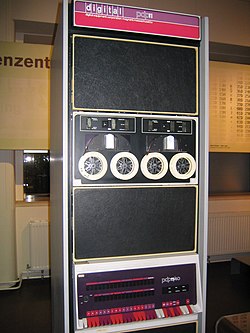


.jpg)
 Q-Bus board with LSI-11/2 CPU
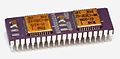 DEC "Fonz-11" (F11) Chipset
 DEC "Jaws-11" (J11) Chipset


