Hubbry Logo
Maaveerar NaalMaaveerar NaalMain
Open search
Maaveerar Naal
Community hub
Maaveerar Naal
logo
8 pages, 0 posts
0 subscribers
Be the first to start a discussion here.
Contribute something
Maaveerar Naal
Maaveerar Naal
from Wikipedia

Maaveerar Naal
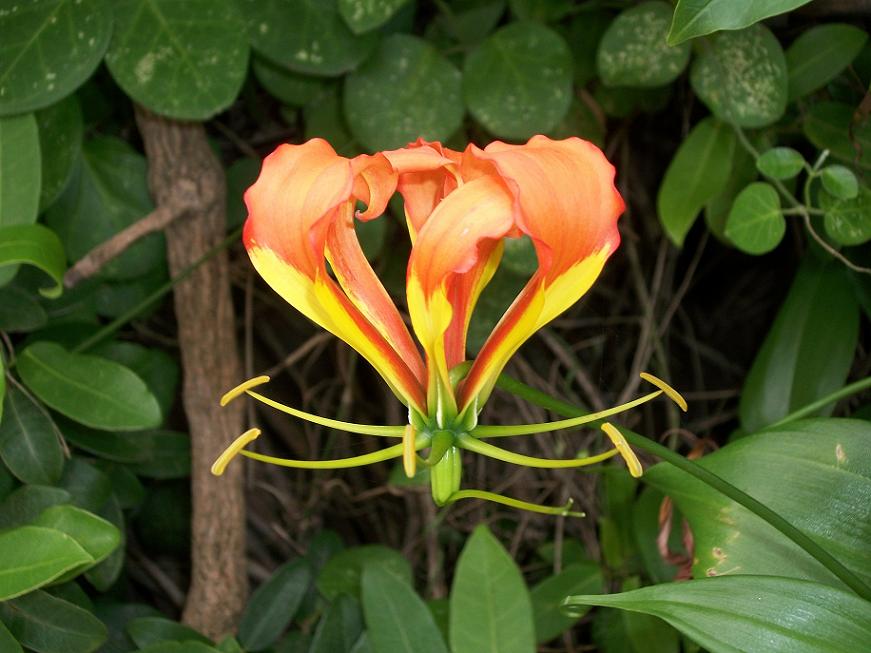
Gloriosa superba is the symbol of Maaveerar Naal
Official nameமாவீரர் நாள்
Observed bySri Lankan Tamils, Tamils
Date27 November
Next time27 November 2026 (2026-11-27)
Frequencyannual

Maaveerar Naal (Great Heroes' Day; Tamil: மாவீரர் நாள் Māvīrar Nāḷ) is a remembrance day observed by Sri Lankan Tamils to remember the deaths of militants who fought with the Liberation Tigers of Tamil Eelam (LTTE) to achieve an independent Tamil homeland.[1] It is held each year on 27 November, the date on which the first LTTE cadre, Lt. Shankar (Sathiyanathan alias Suresh), died in combat in 1982.[2] Traditionally oil lamps are lit for the three days ending on 27 November and the Tamil Eelam flag is raised at ceremonies.[3] The symbol for Maaveerar Naal is the Gloriosa superba which blooms during November.[4]

History

[edit]
A mother of a martyred LTTE cadre raises the Tamil Eelam flag on Maaveerar Naal 2002 in Germany

The first Maaveerar Naal was held on 27 November 1989.[5] The date was chosen as it was the anniversary of the first LTTE cadre to die in combat, Lt. Shankar (Sathiyanathan alias Suresh), who died on 27 November 1982.[6][7] On 27 November 1989 around 600 LTTE cadres gathered secretly in the jungles near Nithikaikulam in Manal Aru, Mullaitivu District, to remember their fallen comrades who at that time numbered around 1,300.[5][8] In his speech LTTE leader V. Prabhakaran told the gathering that if he ever betrayed Tamil Eelam they must kill him.[5]

Following the withdrawal of the Indian Peace Keeping Force in 1990 the LTTE gained controlled of large areas of territory in the north and east of Sri Lanka.[5] The LTTE started developing ways to commemorate its dead heroes. They built thuyilum illam (resting place) for their maaveerar (great heroes) in territory they controlled.[9] In 1991 the week leading up to Maaveerar Naal was declared Great Heroes' Week.[5] This resulted in Prabhakaran's birthday, which falls on 26 November, being included in the commemorations.[5] The celebration of Prabhakaran's birthday began to overshadow the Maaveerar Naal commemorations to an extent that some even believed that Maaveerar Naal was a celebration of Prabhakaran's birthday.[5] This resulted in Prabhakaran banning any celebration of his birthday.[5] Commemorations eventually started amongst the growing Sri Lankan Tamil diaspora.[5]

Over the years the commemorations became more elaborate, involving meetings, religious rituals, processions and exhibitions with cut-outs, posters and handbills of the dead cadres being distributed widely.[5] Every village and every school were expected commemorate their dead cadres.[5] Families of the dead cadres would gather at thuyilum illam to mourn their dead relatives.[5] The culmination of the commemorations was a great function at a special location at which the reclusive Prabhakaran gave a speech which started at 6.05pm, the precise time Lt. Shankar died.[5][10][11] The highly anticipated speeches began to take on the form of an annual policy statement by the LTTE and were broadcast on LTTE affiliated radio and TV stations in LTTE controlled areas and abroad.[5][12][13][14]

After the Sri Lankan military recaptured the Jaffna peninsula in 1995 they destroyed LTTE cemeteries, thuyilum illam, in the area including those at Chaadi, Ellangkulam, Kodikamam and Kopay.[2] Following the start of the Norwegian mediated peace process in 2002 the LTTE started rebuilding their war cemeteries.[15] Maaveerar Naal commemorations were allowed in government territory.[16][17][18] In 2004 Tamil National Alliance (TNA) MPs were allowed to light oil lamps in front of the Parliament to commemorate Maaveerar Naal.[19][20] However, after the peace process stalled the Sri Lankan military started imposing restrictions on Maaveerar Naal commemorations and destroying LTTE cemeteries.[21][22]

Restrictions of celebrations

[edit]

Following the end of the civil war in May 2009 the Sri Lankan government and its security forces have clamped down on any attempt at commemorating Maaveerar Naal and destroyed the remaining LTTE cemeteries.[14][23] All Maaveerar Naal commemorations have been banned.[24] Critics of the ban argue that the Sri Lankan government is denying the Tamil people the basic human right to mourn their dead.[25] The ban on commemorations has been criticised by the TNA, the main political party representing Sri Lankan Tamils, who point out that the commemoration of the LTTE dead is banned but that of the Janatha Vimukthi Peramuna dead is allowed.[26][27] The JVP waged two violent insurrections against the Sri Lankan government - in 1971 and 1987-89 - which resulted in the death of up to 70,000 people.[28]

On 27 November 2012 an attempt by some University of Jaffna students to commemorate Maaveerar Naal by lighting oil lamps was broken by the Sri Lankan security forces who broke the lamps, threatened the students and pointing weapons at them.[29][30][31] The following day students staged a peaceful protest against the actions of the security forces but they were met by riot police who attacked and beat the protesters, resulting in at least 20 students being injured and four arrested.[29][31][32][33]

In 2016 the Government Minister Mano Ganesan claimed that Maaveerar Naal can be celebrated as it is a human right for people to celebrate their late loved ones but it was wrong to do it with a political motive. He cited that the marxist Janatha Vimukthi Peramuna (JVP) also celebrate il Maha Viru Samaruwa in the South to commemorate their dead. However due to the fact that the LTTE is still proscribed but JVP is no longer considered a terrorist organization the LTTE cannot be mentioned.[34]

In 2020 according to Defence Secretary and retired Major General Kamal Gunaratne celebration would be allowed as long as they do not disrupt peace and avoid statements that instigate hatred among communities.[35]

Remembrance day

[edit]
Maaveerar Naal 2006 in Germany

Despite the security restrictions Tamils in Sri Lanka hold small events to commemorate Maaveerar Naal.[36][37][38] Tamil politicians have started a tradition of planting trees on Maaveerar Naal.[39][40]

In the Indian state of Tamil Nadu, a number of political parties, youth organisations, social movement groups etc. engage themselves in organising a number of events commemorating Maaveerar Naal across the state.[41][42]

Amongst the Sri Lankan Tamil diaspora, where there are no restrictions on commemorating Maaveerar Naal, large public gatherings continue to be held.[43][44][45] In cities such as Toronto, London, Paris, Oslo, New Jersey, and Sydney, thousands of supporters come to honour those who lost their lives fighting for Tamil Eelam.[46] In November 2014 Canadian New Democratic Party MP Rathika Sitsabaiesan was criticised for comparing Maaveerar Naal with Remembrance Day, a holiday which commemorates soldiers from Commonwealth countries who died since the First World War during a speech in the House of Commons.[47] However, in 2021, Brampton mayor Patrick Brown commemorated Maaveerar Naal on behalf of the city.[48]

See also

[edit]

References

[edit]
[edit]
Revisions and contributorsEdit on WikipediaRead on Wikipedia
from Grokipedia
Maaveerar Naal (Tamil: மாவீரர் நாள், lit. 'Great Heroes' Day') is an annual commemoration observed on 27 by Sri Lankan Tamil communities and groups to honor the fallen cadres of the (LTTE), a militant separatist organization that conducted an armed campaign for an independent Tamil homeland in northern and eastern from 1983 until its military defeat in 2009. The event originated in 1989 as the LTTE's inaugural "Great Heroes Day," marking the sixth anniversary of the death in combat of its first cadre, Lt. Shankar, on 27 1983, and has since expanded to remember thousands of LTTE fighters killed in the insurgency. The observance typically involves ceremonies at LTTE cemeteries and memorials, light displays symbolizing sacrifice, and vows of continued commitment to the Tamil cause, though it has faced suppression in where public gatherings are often banned or restricted due to the LTTE's designation as a terrorist entity by , , the , the , and others. In the , events persist amid debates over glorifying a group notorious for suicide bombings, assassinations including that of Indian Prime Minister in 1991, and recruitment of child soldiers, reflecting ongoing divisions within Tamil society between those viewing LTTE members as martyrs for and critics who highlight the organization's authoritarian tactics and role in prolonging civilian suffering during the . Despite the LTTE's elimination, Maaveerar Naal underscores persistent Tamil grievances over accountability and cultural remembrance, with annual events worldwide serving as platforms for both mourning and political assertion.

Origins and Historical Development

Establishment and Early Observances

Maaveerar Naal, meaning "Great Heroes' Day," was instituted by the (LTTE) as an annual commemoration for its deceased fighters, with the inaugural observance held on November 27, 1989. The date was deliberately chosen to mark the anniversary of the combat death of the LTTE's first cadre, Lieutenant Colonel Shankar (Sathiyanathan), killed on November 27, 1982, during an early clash with Sri Lankan forces near . By 1989, the LTTE reported that 1,307 of its members had died in the ongoing conflict for independence. The initial ceremony took place covertly in the jungles near Nithikaikulam in the Manal Aru area of , attended by approximately 600 LTTE cadres amid heightened military pressures from the Sri Lankan government. LTTE leader delivered the inaugural address, framing the event as a to honor the sacrifices of "maaveerar" (great heroes) and to sustain the group's ideological commitment to armed struggle. This secretive gathering emphasized the LTTE's emphasis on martyrdom as a core tenet, drawing from Tamil cultural traditions of venerating fallen warriors while adapting them to modern narratives. In its early years, observances remained low-profile and localized within LTTE-controlled territories to evade detection, focusing on recitations of martyrs' names, candlelight vigils, and pledges of continued resistance. By , the event expanded into "Maaveerar Vazhipadu" or Heroes' Week, encompassing the preceding seven days with intensified , cultural performances, and drives to amplify the commemorative impact across Tamil communities. These developments reflected the LTTE's strategic use of the day to bolster morale and legitimize its campaign amid escalating hostilities in the Sri Lankan Civil War.

Role During the Sri Lankan Civil War

Maaveerar Naal was established by the Liberation Tigers of Tamil Eelam (LTTE) on November 27, 1989, in Nithikaikulam, Mullaitivu district, to honor its fallen cadres, marking the anniversary of the first LTTE combat death: Sathiyanathan alias Shankar, killed on November 27, 1982. Approximately 600 cadres attended the inaugural event, where LTTE leader Velupillai Prabhakaran delivered an emotional address emphasizing sacrifice for Tamil Eelam. The observance formed part of an annual Great Heroes Week from November 21 to 27, aligning with Prabhakaran's birthday, and focused exclusively on LTTE fighters amid the civil war's escalating casualties—632 by 1987 and an additional 711 by the 1990 ceasefire with Indian forces. In LTTE-held territories, the event featured structured ceremonies including processions, speeches, and rituals at martyrs' cemeteries (Maaveerar Thuyilum Illangal), where tombstones detailed the deceased's contributions. A central element was the lighting of the Flame of Sacrifice, symbolizing eternal commitment, broadcast via LTTE outlets like Voice of Tigers radio and Nitharsanam television to reach controlled areas and networks. These practices glorified LTTE dead through red-and-yellow decorations, flag-hoisting, and garlanding, excluding non-LTTE Tamil victims and framing losses as heroic necessities in the armed struggle. Strategically, Maaveerar Naal cultivated a of martyrdom, drawing on Tamil warrior-veneration traditions to bond living cadres with the fallen, assure posthumous recognition, and motivate emulation amid over 1,300 losses by 1989. It sustained fighter morale by reinforcing ideological resolve for , with Prabhakaran's speech setting annual policy directions and aiding youth recruitment. Families of the dead (Maaveerar Kudumbangal) received privileges, embedding the event in LTTE and to maintain cohesion during prolonged combat.

Transformations After LTTE's Defeat

Following the military defeat of the (LTTE) on May 18, 2009, Maaveerar Naal observances within underwent significant restrictions imposed by the , which proscribed the LTTE as a terrorist organization and banned its symbols, emblems, and public commemorations. Courts in Tamil-majority northern and eastern districts, including and , issued prohibition orders on events scheduled for November 27, 2020, following petitions from the Attorney General's Department, arguing that such gatherings could revive separatist sentiments or incite communal disharmony; enforcement involved heavy deployments of police and military personnel. Prior to 2015, under the Rajapaksa administration, public displays were largely suppressed, compelling participants to conduct private poojas or small-scale family rituals at home, with even simple acts like lighting oil lamps facing repression or arrest risks. After the 2015 regime change to the Sirisena-Wickremesinghe government, a partial easing occurred, allowing limited public gatherings at sites of demolished LTTE cemeteries, such as those in Mulankavil and Muthur, where rituals including lamp-lighting and offerings resumed, though under surveillance. These post-defeat practices marked a shift from the grandiose, LTTE-orchestrated spectacles of the era—featuring torchlight processions and centralized venues—to decentralized, low-profile events emphasizing personal mourning by families of the fallen cadre. and online platforms emerged as alternative spaces for sharing memories, LTTE imagery, and connections with the , sustaining the tradition amid physical site destructions like those in Vanni and . In the Tamil diaspora, particularly in Western countries and Tamil Nadu, Maaveerar Naal retained much of its pre-2009 form, with larger-scale events incorporating candlelight vigils, emotional tributes, and occasional fundraising by LTTE sympathizers, largely free from the domestic curbs in Sri Lanka. However, some host nations imposed sporadic legal challenges; for instance, diaspora events glorifying LTTE cadre faced scrutiny or bans in places like Canada, reflecting designations of the group as terrorist. This divergence highlighted a broader transformation: while Sri Lankan observances adapted to survival under authoritarian oversight, diaspora practices preserved a more overt ideological continuity, often framing the day as a partisan affirmation of LTTE legacy rather than neutral mourning.

Observance Practices

Ceremonies in

In northern and eastern , Maaveerar Naal observances occur annually on among Tamil communities, focusing on private or semi-clandestine gatherings at sites of demolished LTTE cemeteries known as Thuyilum Illams (Heroes' Homes) or in homes to evade government enforcement of anti-LTTE laws. Participants light oil lamps (nilavilakku), offer flowers, fruits, coconuts, and , and recite prayers or verses to commemorate over 20,000 LTTE fighters killed since 1983, emphasizing familial and communal mourning rituals rooted in Tamil Hindu and cultural traditions. Post-2009 military defeat of the LTTE, public displays incorporating banned symbols like the Tigers' or flags are curtailed by the Prevention of Terrorism Act, leading to subdued events under military , though crowds of hundreds to thousands assemble in districts like , , and , as documented in 2023 across all Tamil-majority areas despite arrests of organizers. In 2024, Cyclone Fengal disrupted outdoor assemblies, prompting indoor family-led remembrances with tamil songs and tributes at home shrines, while small groups visited war sites like Nandikadal lagoon for silent vigils. Ceremonies often feature speeches by local Tamil politicians or civil society figures highlighting LTTE sacrifices for Tamil self-determination, followed by ritual feasts (annadanam) distributing rice and sweets to attendees, though scale varies yearly based on political climate—larger under Sirisena (2015–2019) than Rajapaksa administrations. Attendance draws war widows, orphans, and ex-LTTE affiliates, with women prominent in organizing, reflecting the LTTE's historical female cadre integration, but events avoid overt militancy to minimize crackdowns.

Commemorations in the Tamil Diaspora

Tamil diaspora communities observe Maaveerar Naal annually on November 27, marking the day with public gatherings, memorial events, and tributes to (LTTE) fighters who died during the Sri Lankan civil war. These commemorations occur in major population centers including the , , , and parts of and , often drawing thousands of participants who view the occasion as a remembrance of sacrifices for Tamil . In the , events have included widespread observances across multiple cities, featuring speeches, cultural performances, and displays honoring fallen cadres, as seen in 2021 gatherings that echoed the Tamil nation's collective mourning. Australian Tamil communities similarly host events in states such as Victoria and , with 2024 planning documented for venues like Burwood East Reserve in , involving youth participation and veneration of LTTE figures despite the group's terrorist designation. In , large-scale assemblies have been reported in past years, contributing to the tens of thousands attending diaspora-wide events as early as 2005. Practices in the emphasize family honors and symbolic remembrances, such as providing financial support to relatives of the deceased and organizing week-long observances (Maaveerar Vaaram) leading to the main day, which differ from restricted homeland events by allowing open use of LTTE imagery and emblems where not legally prohibited. These activities persist amid varying degrees of official tolerance, with host governments monitoring for potential glorification of , as noted in assessments of LTTE-related protests.

Symbolic and Ideological Significance

Perspective from

In Tamil nationalist ideology, Maaveerar Naal serves as a central of remembrance that elevates fallen (LTTE) cadres to the status of maaveerar (great heroes), whose sacrifices underpin the quest for an independent homeland. Established by LTTE leader on November 27, 1989—the anniversary of the 1982 death of Shankar, the first LTTE cadre —the observance transforms individual losses into a affirmation of Tamil resilience against what nationalists describe as systemic Sinhalese Buddhist majoritarianism and military occupation of the Tamil northern and eastern provinces. This framing positions the day not merely as mourning but as an ideological renewal, where martyrs' blood is invoked to legitimize armed struggle as a necessary response to discriminatory policies, including the 1956 and subsequent pogroms like in 1983. Tamil nationalists, particularly in LTTE-aligned circles, interpret Maaveerar Naal through a lens of sacrificial devotion (tiyagam), drawing on secularized Tamil martial traditions to portray and combat deaths as transcendent acts that forge and deter assimilation. The annual speeches by Prabhakaran, delivered until 2008, emphasized that these heroes' unyielding commitment—exemplified by capsules worn by cadres to avoid capture—embodied the Tamil will to , rejecting compromise with the Sri Lankan state as betrayal of the vision. This perspective sustains a of existential resistance, where over 20,000 documented LTTE fatalities since 1983 are recast as foundational to a Tamil polity, inspiring diaspora continuity despite the military defeat. Critics within broader Tamil discourse, including some moderates, contend this risks entrenching a monolithic hero that sidelines non-LTTE contributions to Tamil , yet nationalists counter that diluting the martyrs' primacy undermines the causal link between LTTE militancy and any Tamil gains, such as international sympathy post-Mullivaikkal in 2009. From this viewpoint, Maaveerar Naal perpetuates as a living project, with rituals like flame-lit processions and flag-hoisting symbolizing unbroken lineage from ancient Tamil kings to modern guerrillas, thereby countering state narratives of with a of justified liberation.

LTTE's Framing of Martyrdom

The (LTTE) framed maaveerar (great heroes) as selfless exemplars of tiyakam (total abandonment of life), portraying their deaths not as tragic losses but as voluntary, purifying that sowed the seeds for the birth of . This ideology emphasized a secular , where martyrs derived no personal glory, heavenly rewards, or joy in an , but instead contributed to collective liberation (cutantiram) through their unwavering commitment to the cause. LTTE leader articulated this in speeches and , describing liberation heroes as idealists determined "even to his life" for the "lofty aim" of , without fear of death or desire to rule personally. Cadres were conditioned to view such as a gift to the nation, reinforced by symbols like cyanide capsules (kuppi)—worn to ensure death over capture—and elite Black Tiger units, whose missions weaponized life itself (uyirayutam) in meticulously planned assaults. In LTTE doctrine, martyrdom transcended religious paradigms, drawing selectively from Tamil Saivite traditions of devotion () and martial heritage while rejecting submission or redemption narratives; heroes were venerated for self-abnegation rather than enemy-killing prowess. Sepulchers in tuyilam illam (heroes' resting places) served as sacred cornerstones for the envisioned , with fallen cadres "planted" metaphorically to ensure the nation's rebirth and immortality in . This framing inculcated and among living fighters, fostering a where bound the group in perpetual inspiration, as articulated by analyst D.B.S. Jeyaraj: the observances provided cadres "the feeling that by sacrificing their lives they have contributed to the liberation struggle." Maaveerar Naal itself embodied this ideology, established on to commemorate the 1982 death of the first LTTE fighter, Shankar, with rituals including flame-lighting at 6:06 p.m., oaths of to Prabhakaran, and displays of heroes' galleries worldwide. Prabhakaran's annual addresses on the day reinforced the narrative, urging to honor martyrs by emulating their resolve, thus perpetuating the struggle's momentum even amid military setbacks. By 2009, over 240 Black Tiger operations underscored the pinnacle of this martyrdom, with women comprising a significant portion (63 by 2001), framed as egalitarian contributions to national survival.

Controversies and Criticisms

Views as Glorification of Terrorism

Critics, including the Sri Lankan government, characterize Maaveerar Naal as glorification of due to its veneration of (LTTE) fighters, whom authorities hold responsible for over 27,000 deaths in suicide bombings, assassinations, and other attacks during the from 1983 to 2009. The LTTE remains proscribed as a terrorist organization by , , the , and several other nations, with commemorations seen as endorsing an ideology that justified civilian-targeted violence, including the 1991 assassination of Indian Prime Minister and the 1996 Central Bank bombing in that killed 91 people. Sri Lankan officials argue that event rituals—such as lighting lamps for fallen cadres, displaying LTTE flags and portraits, and reciting martyrdom narratives—perpetuate separatist extremism and risk inciting violence, violating laws against promoting proscribed groups. In 2020, Foreign Minister explicitly raised diaspora events with British and Canadian envoys, stating that countries should not tolerate "glorification of ." Courts have repeatedly banned observances, as in 2020 when orders prohibited all forms of commemoration to prevent endorsement of LTTE's terrorist legacy. Enforcement reflects this perspective: under the Prevention of Terrorism Act, at least 10 civilians were arrested in late November 2023 for private home events involving LTTE imagery, with authorities deeming such acts as implicit support for banned entities. Public Security Minister Ananda Wijepala reiterated in November 2024 that Maaveerar Naal cannot feature LTTE logos, uniforms, or cadre photos, framing these as unacceptable tributes to terrorists. Internationally, similar concerns prompt scrutiny of activities; for instance, Sri Lankan-Australian groups in 2024 condemned events as extensions of the LTTE's "33-year long blood terrorist war," urging hosts to deny platforms that honor perpetrators of atrocities like forced child recruitment. regimes in the UK and continue to target LTTE-linked commemorations as potential vehicles for fundraising or ideological propagation, aligning with views that equate elevation with apologism for .

Divisions Within Tamil Communities

Within Sri Lankan Tamil communities, Maaveerar Naal has sparked internal divisions over its focus exclusively on (LTTE) fighters, excluding casualties from rival Tamil militant groups such as the (TELO) and (EPRLF), as well as civilian deaths not directly tied to LTTE ranks. Tamil commentator D.B.S. Jeyaraj, himself of Sri Lankan Tamil origin, has argued that the observance, originating in 1989 under LTTE leader , functions as a partisan ritual "of the tigers, for the tigers, and by the tigers," rather than a collective Tamil mourning day, thereby marginalizing non-LTTE Tamil sacrifices during the from 1983 to 2009. Critics within the community, including those personally affected by LTTE actions, contend that the event perpetuates a restrictive "hero-traitor" binary established in Prabhakaran's commemorative speeches, which stigmatized dissenters and limited broader grieving for all war victims. Sharika Thiranagama, a Sri Lankan Tamil whose mother was assassinated by the LTTE in 1989, has criticized Maaveerar Naal for privileging LTTE martyrs while sidelining the group's of child soldiers—estimated at over 5,000 recruits by reports—and its elimination of political rivals within Tamil factions after 1987. Similarly, former LTTE member Karunagaran Sivarasa has highlighted the organization's authoritarian practices, including intra-Tamil violence that claimed hundreds of lives among competing groups. In the , fissures have deepened between moderate organizations advocating reconciliation and hardline factions prioritizing LTTE veneration, particularly evident during the 2023 Joint Himalayan Declaration, signed by the Global Tamil Forum (GTF) with Sinhalese Buddhist leaders amid observances. Six major diaspora groups, including the Tamil Youth Organisation , condemned the GTF for excluding broader Tamil input and allegedly enabling Sri Lankan government suppression of commemorations, which included arrests of 10 individuals under the Prevention of Act for LTTE-related events; over 70 entities echoed this, viewing the initiative as undermining unified Tamil demands for accountability. These debates reflect ongoing tensions between sustaining LTTE martyrdom as a symbol of resistance and pursuing post-2009 paths toward political normalization, with younger in increasingly questioning the legacy's relevance amid economic hardships.

Government Responses and Restrictions

The (LTTE) has been proscribed as a terrorist organization in since 1998 under the Prevention of Terrorism Act (PTA) of 1979 and subsequent regulations, rendering any activities promoting or glorifying the group illegal. Commemorations of Maaveerar Naal, observed on to honor LTTE fighters, are frequently interpreted by authorities as violations of these prohibitions, particularly when involving LTTE symbols, flags, or imagery. The PTA empowers to detain suspects without immediate charges for up to 18 months on suspicions of supporting , a provision routinely applied to Tamil civilians linked to such events. Enforcement involves preemptive orders banning specific gatherings, police surveillance, and raids on suspected sites, especially in the Northern and Eastern Provinces. For instance, on November 17, 2021, a in prohibited Maaveerar Naal observances, citing public order concerns tied to LTTE glorification. Symbols such as the Gloriosa lily (Karthigai poo), yellow and red flags, or LTTE portraits are explicitly restricted during the period, with violations leading to arrests under PTA sections prohibiting the promotion of prohibited organizations. In November 2023, at least seven to ten were detained under the PTA for alleged commemorative activities, including lighting candles or displaying banned emblems, amid heightened security around the date. Despite these measures, Public Security Minister Ananda Wijepala stated on November 26, 2024, that individuals may privately remember war dead without LTTE-associated elements like logos or uniforms, though enforcement remains stringent against public displays. Official admissions indicate over 244 commemoration events occurred in the north and east in 2024, prompting post-event arrests, including three under the PTA by December 1 for related activities. Courts have occasionally dismissed police petitions for blanket bans, as in Mallakam in 2023, but disruptions via PTA detentions persist, reflecting ongoing tensions between state security imperatives and Tamil remembrance practices.

Recent Developments and Arrests

In 2023, Sri Lankan authorities arrested at least 10 Tamil civilians under the Prevention of Terrorism Act (PTA) in the lead-up to and during Maaveerar Naal on , targeting individuals involved in commemorative activities such as carrying red and yellow LTTE-associated flags or transporting speakers for events. By early December, the number reached 11, including a schoolboy from detained for participation in remembrance efforts. These arrests were part of a broader , with police issuing restraining orders from courts in Mannar and Vanni to prevent ceremonies. Surveillance around Maaveerar Naal intensified in subsequent years, with disruptions and detentions reported annually. In 2024, three suspects aged 28, 35, and 45—residents of Maradana, Vunnakam, and Baddegama—were arrested on November 30 under the PTA for sharing images, video clips of LTTE leader , and old Maaveerar Naal footage misrepresented as current events on platforms like . Separately, Manoharan Kajendroopan, a young father from Inuvil West in , faced PTA detention on November 30 for a post linked to the commemoration, highlighting continued of online expressions. By December 2024, Colombo Additional Magistrate Thilak Asanka Bandara directed the Criminal Investigations Department (CID) to apprehend organizers of Maaveerar Naal events, following the arrest of a suspect for disseminating related social media content from Kotikawatta. These enforcement actions persisted into 2025, underscoring the Sri Lankan government's classification of such commemorations as promotion of the proscribed LTTE, despite international concerns over the PTA's application to non-violent expressions.

International Dimensions

Global Commemorations and Backlash

Maaveerar Naal is observed annually on November 27 by communities worldwide, featuring memorial ceremonies, vigils, light displays, and cultural events honoring those killed in the Sri Lankan civil war, particularly LTTE fighters. In , large gatherings occur in and surrounding areas, such as the 2024 event at the International Centre in , which included live streams and raffles organized by Tamil youth groups. In the , hold commemorations across multiple cities, with families assembling around makeshift gravestones to pay respects, as seen in 2024 events reported by community organizations. Similar observances take place in , where tens of thousands gathered in 2018 for public tributes, and in and , often adapting to local restrictions through private or virtual formats during periods of heightened scrutiny, such as in 2020 amid limitations. These global events elicit significant backlash, primarily from governments and critics who classify them as endorsements of terrorism, given the LTTE's designation as a terrorist by , the , the , the , , and others since the 1990s or early 2000s. In , a 2014 controversy arose when MP Rathika Sitsabaiesan compared Maaveerar Naal to national , drawing widespread condemnation for equating LTTE militants with Allied soldiers and prompting calls for her resignation from political opponents. Western governments have responded by proscribing LTTE-linked diaspora entities, such as the , and enhancing security measures to curb fundraising or propaganda under anti-terrorism laws, viewing such commemorations as potential vectors for transnational post-2009 LTTE defeat. Backlash also manifests in public protests and community divisions, with some members and Sri Lankan expatriates arguing that the events perpetuate ethnic polarization rather than foster , amid fears of violence during observances, as reported in in 2019 where participants expressed concerns over potential escalations tied to Sri Lankan . Despite these pressures, events persist, often navigating legal boundaries by emphasizing mourning over explicit LTTE symbolism, though monitoring by authorities continues to constrain scale and visibility in host countries.

Comparisons to Other Remembrance Days

Maaveerar Naal shares formal similarities with established national remembrance days, such as observed in countries on , which commemorates killed in wars, particularly the World Wars. Both involve solemn rituals including moments of silence, speeches by leaders, marches or processions, and wreath-laying at memorials dedicated to the fallen. Proponents of the observance, including some activists, contend that Maaveerar Naal functions analogously as an act of neutral remembrance focused on sacrifice rather than endorsement of conflict tactics, likening it to how avoids contemporary debates on foreign policy or the morality of wars like the Boer War (1899–1902), whose casualties were added to Canada's National War Memorial in 2014 despite historical controversies. These parallels emphasize communal grief and honoring loss over political advocacy, with preparations such as cleaning memorials mirroring practices before in the United States, where obelisks and gravesites are maintained in advance of observances. A critical distinction lies in the actors commemorated: and similar state-endorsed events, like in the on the last Monday of May honoring over 1.1 million American war dead since the Revolutionary War, recognize personnel from recognized national militaries in sanctioned conflicts. In contrast, Maaveerar Naal specifically memorializes approximately 24,000 LTTE fighters killed between 1983 and 2009, members of a group designated as terrorist by 33 countries including the , , and the for tactics including suicide bombings and civilian targeting. This non-state status renders Maaveerar Naal unofficial and often restricted, unlike government-backed events with public holidays and national broadcasts. Comparisons to remembrance practices among other insurgent or separatist movements highlight further insurgent-specific parallels, such as the LTTE's cult of martyrs evoking Irish republican commemorations in , where ongoing construction of memorials for IRA dead sustains of asymmetric struggles against state forces. Both emphasize themes of divine potency regenerated through and public homage via naming ceremonies and artworks, though LTTE events uniquely integrate a centralized "Office of the Great Heroes" established in 1995 to propagate martyrdom narratives. Unlike state remembrance days, which prioritize or national unity, these insurgent observances often reinforce separatist ideologies, as seen in Maaveerar Naal's evolution into a de facto for the unrealized state, with parallel global diaspora events. Critics, including Sri Lankan authorities, argue such parallels overlook LTTE's internal purges and elimination of rival Tamil groups, framing the day as rather than neutral tribute.

References

Add your contribution
Related Hubs
Contribute something
User Avatar
No comments yet.