


Community hub
Recent from talks
Contribute something
Nothing was collected or created yet.
Maner, Bihar
View on Wikipedia
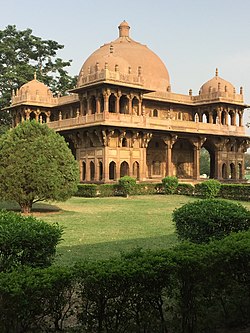
Maner, also known as Maner Sharif, is a historic town and a block in Patna district of Bihar, India. Situated approximately 24 km west of Patna on NH-922, it is renowned for its Mughal-era dargahs and as an important Sufi pilgrimage center.
Key Information


Etymology
[edit]The ancient name of Maner was Maniyar Mathan, meaning "musical city" in local tradition. The suffix "Sharif" (meaning noble) was added due to its association with Sufi saints.
History
[edit]A now-lost copper plate grant found at Maner, dated to 11 May 1124, indicates that Maner was the seat of a paṭṭalā (district) at that time. The grant records that the Gāhaḍavāla king Govindachandra donated two villages called Guṇāve and Paḍalī, both in the paṭṭalā of Maṇiari (i.e. Maner), to a brāhmaṇa named Gaṇeśvaraśarman. The villages of Guṇāve and Paḍalī were presumably located somewhere near Maner, but their exact locations are unknown.[1]
Later, Maner gained prominence during the medieval period as a center of Sufism:
- 13th century: Became associated with Sufi saint Makhdoom Yahya Maneri
- 1608: Death of Makhdoom Shah Daulat, another prominent Sufi saint
- 1616: Construction of Bari Dargah (Great Shrine) by Ibrahim Khan Kakar, the Mughal governor of Bihar
- 1619: Construction of a mosque by Ibrahim Khan
The town flourished as a center of Islamic learning during the Mughal period.
Geography
[edit]Maner is located at 25°39′N 84°53′E / 25.65°N 84.88°E on the southern bank of the Ganges river. The Son River meets the Ganges at Haldi Chhapra near Maner.
Climate
[edit]Maner has a Humid subtropical climate (Köppen Cwa) with:
- Hot summers (April–June)
- Monsoon rains (July–September)
- Mild winters (November–February)
Demographics
[edit]As of the 2011 census:
Administration
[edit]Maner is a community development block consisting of 38 villages. It is part of the Maner Assembly constituency and Pataliputra Lok Sabha constituency.
Landmarks
[edit]Religious sites
[edit]- Bari Dargah: Tomb of Shah Daulat (1616), fine example of Mughal architecture
- Chhoti Dargah: Tomb of Makhdoom Yahya Maneri
- Haldi Chhapra: Confluence of Son and Ganges rivers
- Maner Jain Temple: Ancient Jain pilgrimage site
Other attractions
[edit]- Maner Fort: Ruins of an ancient fort
- British-era bridge over Son River
Culture
[edit]Festivals
[edit]- Urs: Annual festival at the dargahs attracting thousands
- Chhath Puja: Celebrated at Haldi Chhapra ghat
Cuisine
[edit]- Maner ka Laddu: Famous sweet made with ghee and chhana
- Traditional Bihari dishes: Litti chokha, Khaja, Thekua
Economy
[edit]Maner's economy is primarily based on:
- Agriculture (rice, wheat, maize)
- Small-scale industries
- Religious tourism
The town is famous for its sweet shops, particularly Maner Sweets established in 1935.
Transport
[edit]- Road: Connected via NH-922 to Patna and Arrah
- Rail: Nearest station is Danapur (20 km)
- Air: Jay Prakash Narayan International Airport (30 km)
Education
[edit]Notable educational institutions:
- Ram Nagina Singh Inter College (established 1948)
- Government Girls High School
- Maner high school (affiliated to Bihar board)
- Topper classes maner (for class 10th and 12th)
Notable people
[edit]- Kunal Singh - Bhojpuri actor
- Ramayan Tiwari - Bollywood actor
References
[edit]- ^ Majumdar, N. G. (1922). "Maner Copperplate of Govindacandra, V. E. 1183". Journal of the Asiatic Society of Bengal. XVIII: 81–4. Retrieved 10 June 2025.
External links
[edit]| Ancient | |
|---|---|
| Colonial | |
| Ganga River banks | |
| Religious complex | |
| Maidans/parks |
|
| Infotainment complex | |
| Buildings and structures | |
| Museums | |
| Excursions | |
| Places near Patna | |
Maner, Bihar
View on GrokipediaHistory
Etymology
The name of Maner originates from the ancient designation "Maniyar Mathan," which in the local Magahi dialect translates to "musical city," alluding to the region's early associations with musical traditions or settlements that may have flourished there in antiquity.[9] This etymological root underscores Maner's cultural heritage tied to performative arts, possibly linked to scholarly or communal gatherings in pre-Islamic times. The modern appellation "Maner Sharif" incorporates the Arabic-Persian suffix "Sharif," meaning "noble" or "exalted," added during the Mughal period to honor the town's emergence as a prominent Sufi pilgrimage site following the construction of the mausoleum for the saint Makhdoom Shah Daulat in 1616 CE.[10] This linguistic evolution reflects the blending of indigenous Magahi elements with Persian influences brought by Sufi mystics, elevating Maner's identity as a spiritual hub without altering its core phonetic structure.[9]Ancient and Medieval Periods
Archaeological excavations at Maner have revealed evidence of continuous human settlement dating back to the Neolithic period, establishing it as one of the early farming communities in the Ganga plain of Bihar. The site, explored by the Department of Ancient Indian History and Archaeology at Patna University in 1989-90, yielded a sequence of cultural layers beginning with Period I (pre-Chalcolithic/Neolithic), characterized by a 32 cm deposit containing Neolithic pottery, microlithic tools, stone pestles, and spindle whorls. This was followed by Period II (Chalcolithic), with a 1.15 m deposit featuring black-and-red ware, black and red pottery, microliths, and a terracotta model of a copper hoard double-edged axe, indicating the transition to metal use around the 2nd millennium BCE. These findings underscore Maner's role as an early agricultural hub in ancient Bihar, contributing to the broader Neolithic-Chalcolithic tradition in the region.[11] During the ancient period, Maner emerged as a significant administrative center within the Magadha region, as evidenced by artifacts from Period III (Northern Black Polished Ware phase), spanning a 3 m deposit linked to the Mauryan era (circa 4th-2nd century BCE). Excavations uncovered a 9-course brick wall (using 40 x 28 x 5 cm bricks), terracotta figurines, iron objects, bone points, a copper antimony rod, and ivory dice, suggesting structured urban activity and integration into larger kingdoms like the Mauryan Empire, with Patna (ancient Pataliputra) nearby. This phase highlights Maner's function as a district-level settlement in ancient Bihar's administrative network, supporting trade and governance in the fertile Ganga valley.[11] In the medieval period, Maner's importance is affirmed by the copper plate grant of Gahadavala king Govindachandra, dated to the 11th day of the dark half of Jyestha in Vikrama Samvat 1183 (1126 CE). The inscription, engraved in 26 lines on a single copper plate, records the donation of villages Padali and Gunave in the Maniyara (Maner) pattala division to the Brahmana Ganesvarasarman of the Kashyapa gotra, for the religious merit of the king's parents, issued after a ritual bath in the Ganges at Varanasi. It portrays Maner as a key administrative seat (pattala, a sub-provincial district) under Gahadavala control, extending into southern Bihar following the decline of Pala influence after Ramapala's death, with mentions of local taxes like the "Turk's duty" hinting at emerging external pressures. This grant links Maner to the Gahadavala dynasty's territorial expansion and Hindu-Buddhist patronage before widespread Islamic incursions.[12]Mughal Era and Sufi Influence
During the Mughal era, Maner emerged as a prominent center of Sufi mysticism in Bihar, largely due to the enduring legacy of the Maneri family, who were key proponents of the Suhrawardi and Firdausiya orders. The settlement of Makhdoom Yahya Maneri's family in Maner during the 13th century marked the beginning of this transformation, with Yahya Maneri himself (d. 1323 CE), a revered Sufi saint, establishing spiritual practices that emphasized ethical living, devotion, and interfaith harmony. His influence extended through his son and successor, Sharfuddin Ahmad Yahya Maneri (1263–1381 CE), whose Persian treatises on spiritual devotion and social harmony solidified Maner's reputation as a site for Sufi initiation and learning, bridging pre-Mughal traditions with later imperial patronage. By the 14th century, the Maneri teachings had fostered a khanqah (Sufi hospice) that served as a hub for Islamic scholarship and meditation, drawing scholars and seekers from across the region.[13][14] In the 17th century, Makhdoom Shah Daulat Maneri, a spiritual heir in the Suhrawardi lineage and contemporary of Mughal Emperor Jahangir, further elevated Maner's status through his pious life and role as a spiritual guide. Shah Daulat, who passed away in 1608, promoted Sufi values of peace and unity, attracting pilgrims who sought blessings at his teachings and the local khanqah. His arrival and influence reinforced Maner's position as an Islamic learning center, where disciples studied Persian literature, theology, and mysticism from the 13th to 17th centuries, evolving from earlier scholarly traditions into a dedicated Sufi enclave that hosted annual urs (death anniversary) gatherings. This period saw Maner drawing devotees from Bengal to Punjab, underscoring its role in disseminating Sufi thought amid the Mughal cultural flourishing.[15][13] Mughal imperial support culminated in significant architectural patronage, particularly for the dargahs honoring these saints. The Chhoti Dargah, enclosing Shah Daulat's tomb, was constructed in 1616 CE by Ibrahim Khan, the Mughal governor of Bihar under Emperor Jahangir, featuring elegant domes, intricate latticework, and Quranic inscriptions that exemplify early 17th-century Indo-Islamic design. Similarly, the Bari Dargah, housing Makhdoom Yahya Maneri's tomb adjacent to a historic mosque, benefited from Mughal-era enhancements, including a 400-foot tunnel leading to the Sone River for ritual ablutions. These structures not only preserved the saints' legacies but also symbolized the empire's endorsement of Sufism, transforming Maner into a enduring pilgrimage destination that continues to attract visitors for its spiritual aura.[13][15]Colonial and Post-Independence Developments
During the British colonial era, Maner witnessed significant infrastructural advancements that enhanced regional connectivity. The most prominent was the construction of the Koilwar Bridge over the Son River in 1862, a 1.44 km rail-cum-road structure that linked Patna to western Bihar, including Maner, and was recognized as one of the world's longest bridges at the time, exemplifying British engineering in colonial India.[16][17] This bridge, located a short distance from Maner, facilitated trade and military movement, transforming the area's accessibility.[18] The ruins of the ancient Maner Fort, originating from pre-colonial Hindu periods, persisted as a historical landmark during British rule, with remnants of fortifications and associated buildings visible north of the local dargahs.[18] Following India's independence in 1947, Maner was incorporated into the state of Bihar, benefiting from national efforts to modernize rural areas. The 1950s marked the launch of the Community Development Programme under the First Five-Year Plan, which targeted agricultural improvements, irrigation, and sanitation in Bihar's villages, including those around Patna district where Maner is located.[19] Subsequent decades saw initiatives like the Integrated Rural Development Programme in the 1980s, aimed at poverty alleviation through self-employment opportunities in rural Bihar.[20] From the 2000s onward, Bihar's rural development accelerated with programs such as the Mahatma Gandhi National Rural Employment Guarantee Scheme (MGNREGS), providing wage employment for infrastructure works, and JEEViKA (Bihar Rural Livelihoods Promotion Society), which has formed over 1 million (10 lakh) women's self-help groups, involving more than 13 million women, by 2025 to foster savings, skills training, and micro-enterprises in rural pockets like Maner.[21][22][23] These efforts addressed persistent challenges like uneven land reforms, which had been delayed in Bihar compared to other states until the late 20th century.[24] In recent years, infrastructure focus shifted to road expansions under Bihar's highway programs. Launched in April 2025, a key project involves constructing an 11 km double-lane road from Koilwar to Maner at a cost of ₹71.3 crore, enhancing links to Patna and supporting local mobility.[25] This initiative forms part of broader state efforts to upgrade over 1,000 km of rural roads by 2025.[26]Geography
Location and Topography
Maner is situated in Patna district, Bihar, India, at geographical coordinates 25°39′N 84°53′E.[27] The town lies approximately 24 km west of Patna, the state capital, along National Highway 30 (NH 30), which connects it to major regional routes.[1] Covering a total area of 12 km², Maner is positioned at an average elevation of 54 meters above sea level, characteristic of the surrounding Gangetic plain.[28] The town occupies the southern bank of the Ganges River, near the confluence with the Son River at Haldi Chhapra village near Maner. This strategic location along the rivers has shaped its accessibility and historical development, with the Ganges serving as a vital waterway and the Son contributing to the regional hydrology. The boundaries of Maner are defined by the Ganges to the north, adjacent blocks within Patna district to the east and west, and agricultural lands to the south. Topographically, Maner features flat, fertile alluvial plains formed by sediment deposits from the Ganges and Son rivers, part of the broader Indo-Gangetic alluvial tract.[29] These plains, with their rich loamy soils, support intensive agriculture and have influenced settlement patterns by providing reliable water sources and arable land, encouraging human habitation along the riverbanks since ancient times.[30] The gentle terrain, lacking significant hills or elevations, facilitates transportation and irrigation but also exposes the area to seasonal river dynamics.Climate
Maner experiences a humid subtropical climate classified under the Köppen system as Cwa, characterized by distinct seasonal variations influenced by the monsoon dynamics of the Indo-Gangetic Plain.[4] Summers are intensely hot from April to June, with average high temperatures reaching around 38–40°C and occasional peaks exceeding 45°C, as recorded in nearby Patna where 45.8°C was observed in 2019 and 44.6°C in Gaya in 2025. Winters, spanning December to February, are mild and dry, with average lows around 8–10°C and rare drops to 1–2°C, such as the 1.1°C minimum in Patna in 2013.[31][32] The region receives an average annual rainfall of approximately 1,100 mm, with over 80% occurring during the monsoon season from June to September, peaking in July when monthly totals can exceed 250 mm.[33] This pattern supports agricultural cycles but contributes to high humidity levels year-round, often above 70% in summer months. Post-monsoon and pre-monsoon showers provide additional precipitation, while winter months see negligible rain, typically under 20 mm combined.[34] Historical weather trends in Maner and surrounding Patna district indicate a gradual warming, with a +0.8°C rise in average temperatures from 2010 to 2025, alongside increased frequency of extremes driven by climate change.[35] Notable events include severe heatwaves, such as the 2025 India-Pakistan heat wave affecting Bihar with temperatures over 42°C in multiple districts, and extreme monsoon rainfall covering 45% of India in 2025, leading to intensified wet spells.[36] Long-term precipitation data from 1901–2021 shows high variability, with Bihar's southwest monsoon contributing 85% of annual totals but exhibiting no consistent trend in overall volume, though episodic floods and droughts have become more pronounced.[37][38]Environmental Features
Maner, located in the fertile floodplains formed by the confluence of the Ganges and Son rivers, supports a rich biodiversity characteristic of the Indo-Gangetic alluvial ecosystem. The Son River joins the Ganges at Haldi Chhapra village near Maner, creating a dynamic habitat that sustains diverse aquatic and riparian species. This region, part of the broader Ganges-Son floodplain, hosts 66 species of waterbirds, including endangered species like the Indian skimmer (Rynchops albicollis) and near-threatened ones such as the great thick-knee (Esacus recurvirostris) and oriental darter (Anhinga melanogaster), with approximately 40% being winter migrants.[39] The Son Gharial Sanctuary, encompassing a 140 km stretch of the Son River up to its confluence with the Ganges, serves as a critical protected area for biodiversity conservation, harboring populations of gharials (Gavialis gangeticus)—with 29 individuals recorded—and mugger crocodiles (Crocodylus palustris), numbering 31, alongside four turtle species including the three-striped roofed turtle (Batagur dhongoka).[39] These floodplains also feature floodplain vegetation that stabilizes soils and provides essential foraging and nesting grounds for migratory birds and other wildlife.[40] Environmental challenges in Maner are predominantly linked to its riverine location, exacerbating ecological vulnerabilities. Annual flooding, driven by monsoon rainfall in the Ganges and Son basins, leads to inundation of low-lying areas, disrupting habitats and agricultural lands in the floodplains.[30] Soil erosion is a significant issue, particularly in the lower Son River stretches near the Ganges confluence, where unregulated sand mining has accelerated bank degradation and habitat loss.[39] Water pollution from agricultural runoff, carrying pesticides and fertilizers from surrounding farmlands, combined with untreated sewage from local drains like Ghattan Nalla, degrades water quality and threatens aquatic biodiversity in the Ganges-Son system.[39] These pressures contribute to broader ecological degradation in Bihar's Gangetic plains, including reduced fish diversity and contamination of floodplain wetlands.[41] Conservation efforts in the region have intensified through national initiatives targeting Ganges rejuvenation. The Namami Gange Programme, launched in 2014 and ongoing into the 2020s, includes forestry interventions and wetland restoration in Bihar's Ganges basin to enhance biodiversity and mitigate pollution.[42] Specific to the Patna-Maner area, a 6.5 million liters per day sewage treatment plant and interceptor-drainage network, completed under the programme at a cost of ₹70 crore, addresses sewage discharge into the Ganges, improving local water quality since its operationalization in 2024.[43] Additionally, monitoring and protection activities in the Son Gharial Sanctuary aim to safeguard reptile populations and bird habitats amid ongoing threats like erosion.[39] These measures represent a coordinated approach to balancing ecological preservation with the floodplains' natural dynamics.[42]Demographics
Population and Growth
According to the 2011 Census of India, the Maner Nagar Panchayat had a total population of 40,068, comprising 21,046 males and 19,022 females.[44] The area of the nagar panchayat spans 12 square kilometers, resulting in a population density of 3,339 persons per square kilometer.[44] The broader Maner Community Development Block, which encompasses the nagar panchayat and surrounding rural areas across 38 villages, recorded a total population of 268,998 in 2011, with an urban component of 40,068 (14.9%) and a rural population of 228,930 (85.1%).[44] The block covers approximately 173 square kilometers, yielding an overall density of about 1,553 persons per square kilometer.[44] Between the 2001 and 2011 censuses, the nagar panchayat's population grew from 30,082 to 40,068, reflecting a decadal increase of 33.2%.[45][44] Similarly, the block's total population rose from 201,345 to 268,998, a growth rate of 33.6% over the decade.[45][44]Languages and Religion
The linguistic landscape of Maner is dominated by Magahi, the primary mother tongue spoken by the vast majority of residents in this part of Patna district, reflecting the broader Magadhi linguistic tradition of south-central Bihar. Hindi serves as a secondary language for communication, administration, and education, while Urdu maintains a minor presence, particularly influenced by the area's historical Sufi connections that introduced Persianate elements into local dialects.[46] According to the 2011 Census of India, the religious composition of Maner town shows Hindus comprising 89.56% of the population, Muslims 9.23%, with Christians, Sikhs, Buddhists, Jains, and others accounting for the remaining 1.21%.[6] For the broader Maner block, Hindus comprise approximately 96.17% (258,705 individuals), Muslims 3.45% (9,276 individuals), with others 0.38% (1,017 individuals).[47] This profile underscores a predominantly Hindu community with a notable Muslim minority in the town, consistent with broader trends in Patna district where Hindus form over 91% of the populace.[48] Maner's religious fabric exhibits notable syncretism, particularly through its Sufi heritage centered on the shrine of Hazrat Shah Muhammad Yahya Maneri at Maner Sharif, a 14th-century site that blends Islamic mysticism with local Hindu devotional practices. This fusion is evident in shared rituals and pilgrimage traditions that draw interfaith visitors, fostering communal harmony amid the area's Mughal-era Islamic influences.[49][50]Literacy and Socioeconomic Indicators
According to the 2011 Census, the literacy rate in Maner town stood at 68.11%, surpassing the state average of 61.80% for Bihar. Male literacy was recorded at 75.56%, while female literacy was 59.88%, reflecting a gender disparity but improvement over state figures of 71.20% for males and 51.50% for females.[6] The gender ratio in Maner town was 904 females per 1,000 males, slightly below the Bihar state average of 918. This indicator highlights ongoing challenges in gender balance, influenced by socioeconomic factors such as migration patterns in rural Patna district.[6] Socioeconomic conditions in Maner are predominantly agrarian, with household incomes heavily reliant on agriculture and remittances from migrant labor. Average annual household income from farming remains low, often below ₹50,000, supplemented by remittances averaging ₹48,662 per migrant household as observed in broader Bihar studies from 2017, which constitute up to 28% of village-level income. These inflows support essential expenditures but underscore vulnerability to seasonal agricultural yields and urban job markets.[51] In the 2020s, Bihar government initiatives like the Mukhyamantri Balika Cycle Yojana have driven literacy gains, particularly among females, by improving school access and retention in areas like Patna district. The 2023 Bihar caste-based survey reported statewide literacy at 79.70%, with male rates at 84.91% and female at 73.91%, marking an 18% overall increase since 2011 and benefiting regions including Maner through enhanced enrollment.[52][53]Governance and Administration
Local Governance
Maner, a town in Patna district, Bihar, is administered at the local level by the Nagar Parishad Maner, which serves as the municipal council responsible for urban governance.[54] This body oversees essential services for the town's population of approximately 40,068 residents across 25 wards, including property taxation to fund local infrastructure, issuance of trade licenses for commercial activities, and building permissions to regulate urban development and planning.[54] Additionally, the Nagar Parishad manages sanitation initiatives, such as waste management and public health measures, alongside vital records like birth and death registrations, and operates under schemes like the Deendayal Antyodaya Yojana-National Urban Livelihoods Mission (DAY-NULM) to support urban poor livelihoods.[54] The surrounding rural areas fall under the Maner Community Development Block, which encompasses 48 villages governed through 19 gram panchayats as part of Bihar's Panchayati Raj system.[55] This block-level administration, led by the Block Development Officer, focuses on rural development functions such as local infrastructure maintenance, sanitation programs under the Swachh Bharat Mission, and collection of minor taxes or fees to support community projects.[56] The panchayats handle grassroots decision-making via Gram Sabhas and Ward Sabhas, promoting participatory governance in village affairs like water supply and basic road connectivity.[56] In the 2020s, local governance in Maner has benefited from Bihar's ongoing decentralization efforts under the Panchayati Raj framework, which have enhanced devolution of powers to local bodies, increasing their fiscal autonomy and functional responsibilities from 39.9% in 2013-14 to 43.9% by 2021-22 as per national assessments.[56] These reforms, including greater allocation of funds for urban and rural planning, have enabled the Nagar Parishad and block panchayats to address local needs more effectively, such as improved sanitation coverage and taxation efficiency.[57]Political Representation
Maner forms part of the Maner Vidhan Sabha constituency (No. 187) in Patna district, Bihar, which is categorized as a general seat and encompasses several blocks including Maner, Phulwari Sharif, and parts of Danapur. This assembly segment is integrated into the larger Pataliputra Lok Sabha constituency, enabling coordinated political strategies between state and national levels.[58][59] In the 2020 Bihar Legislative Assembly elections, Bhai Virendra of the Rashtriya Janata Dal (RJD) emerged victorious in Maner, polling 94,223 votes and defeating Bharatiya Janata Party (BJP) candidate Nikhil Anand, who received 61,306 votes, by a margin of 32,917 votes. The election recorded a voter turnout of 63.24% among 3,14,069 electors, reflecting steady participation in this RJD stronghold characterized by a significant Yadav and Muslim demographic.[60][61] For the 2024 Lok Sabha elections, the Pataliputra constituency was won by RJD's Misa Bharti, who secured 5,08,928 votes against BJP's Ram Kripal Yadav's 4,94,788 votes, underscoring the party's continued dominance in the area amid national alliances.[62][63] The 2025 Bihar Assembly elections in Maner, conducted on November 6 as part of the first phase, featured 13 candidates, including incumbent Bhai Virendra (RJD), Jitendra Yadav (Lok Janshakti Party-Ram Vilas), and others from emerging parties like Jan Suraaj. With 331,461 registered voters—including 13.48% Scheduled Castes and about 5.1% Muslims—Bhai Virendra (RJD) won with 110,798 votes, defeating Jitendra Yadav (LJP-RV) who polled 90,764 votes, by a margin of 20,034 votes. The voter turnout was 67.76%. The contest highlighted RJD's bid for a fourth consecutive win against NDA's push for change. Voting patterns in Maner have historically been swayed by local issues, particularly unemployment exacerbated by sand mining bans along the Ganga and Sone rivers, alongside demands for accelerated infrastructure like roads and irrigation projects, with the Yadav community (comprising around 26% of the electorate) often tipping the balance toward development-focused promises.[64][65][66][67][68][66]Economy
Agriculture and Primary Sectors
Maner, located in Patna district on the fertile alluvial plains of the Ganges, relies heavily on agriculture as the backbone of its rural economy, with farming practices shaped by the region's rich soil and riverine influences.[69] The primary crops cultivated include rice and maize during the kharif season (sown May-July and harvested October-November), and wheat, lentils, chickpeas, and potatoes in the rabi season (sown October-November and harvested March-April), alongside sugarcane and vegetables year-round.[70] In Maner block specifically, paddy covers approximately 3,000 hectares and wheat another 3,000 hectares, reflecting the district's focus on cereal production that supports food security and local livelihoods.[69] Irrigation plays a crucial role in sustaining these crops, drawing from canals fed by the Ganges and Sone rivers, covering about 27-28% of the irrigated area in Patna district, as well as extensive networks of tubewells and borewells covering about 60-70%, enabling multiple cropping cycles on the same land and boosting productivity despite the area's dependence on monsoon rains averaging approximately 1,100 mm annually.[70][71][72] Smallholder farmers, who constitute the majority in Maner with marginal landholdings under 2 hectares, dominate operations, employing traditional methods like bullock-drawn plows alongside emerging mechanization for transplanting and harvesting.[69] In the 2020s, farmers in Maner and broader Patna district have increasingly adopted sustainable practices to counter climate challenges such as erratic rainfall, floods, and droughts, including direct seeded rice (DSR), zero tillage for wheat and maize, and alternate wetting and drying (AWD) techniques that save up to 33% of water while increasing yields by 12-16% and net income by 23-31%.[73] These shifts, promoted through Bihar's Climate Resilient Agriculture Programme launched in 2019 and expanded statewide by 2020, also emphasize crop diversification—such as introducing short-duration pulses like moong in triple-cropping systems—and integrated nutrient management with vermicompost and crop residue incorporation to enhance soil health amid rising temperatures.[73] In Patna, over 2,100 farmers have implemented zero tillage, raising cropping intensity from 205% to 278%, demonstrating a transition toward resilient, low-emission farming suited to smallholders.[73]Industry and Commerce
Maner's non-agricultural economy centers on small-scale industries, which form a vital part of Patna district's industrial landscape with 12,231 registered units generating employment for thousands. These enterprises primarily focus on agro-based activities, including food processing, where surplus local produce is transformed into value-added products like sweets and snacks, supporting household incomes and regional trade.[74] A notable example in food processing is Maner Sweets & Food Products Pvt. Ltd., established in 1952, which produces traditional confections such as boondi ladoo using local ingredients and has sustained operations across three generations, contributing to the area's culinary heritage and small business ecosystem.[75] Handicrafts also play a role, with activities like artificial jewellery making and zari embroidery present in nearby clusters, employing local artisans and adding to the district's 35-unit jewellery sector.[74] Local commerce thrives through weekly markets and daily bazaars in Maner, which trade essentials, processed foods, and minor handicraft items, while strong transport links via National Highway 922 facilitate commerce with Patna, the nearest major urban center just 30 kilometers away, enabling access to broader markets for goods like sweets and agro-products.[74] From 2023 to 2025, growth in Maner's small industries has been bolstered by Bihar's state-level incentives, including the Industrial Investment Promotion Package 2025, which offers subsidies up to 30% on capital investment and interest subventions for MSMEs, alongside a surge in food processing investments totaling ₹2,181 crore statewide, creating over 4,175 jobs and enhancing setups in districts like Patna. This has elevated the industrial sector's contribution to Bihar's gross state domestic product to 21.5% in 2023-24, with emphasis on agro-linked processing units and small industries playing a key role.[76][77][78][79]Tourism and Services
Maner serves as a key destination for religious tourism, particularly centered on its historic Sufi dargahs, which draw pilgrims seeking spiritual solace and cultural immersion. As part of Bihar's official Sufi Circuit, Maner Sharif is renowned for its shrines dedicated to Sufi saints, including the tombs of Hazrat Makhdoom Yahya Maneri and Shah Daulat, attracting devotees from across India and beyond during annual events like the Urs celebrations.[80][81] These sites integrate into broader Bihar tourism circuits, enhancing the region's appeal as a hub for Sufi heritage and interfaith harmony.[1] The influx of visitors to Maner's dargahs contributes to Bihar's robust tourism sector, which recorded 82.1 million tourists in 2023 and over 65 million in 2024, with domestic arrivals dominating at more than 6.5 crore.[82][83] Recent state initiatives, including the revised Bihar Tourism Policy of 2025, have boosted infrastructure development around sites like Maner Sharif, with allocations such as ₹99.98 lakh for enhancements by the Bihar State Tourism Development Corporation.[84] These efforts, coupled with events like the 756th Urs in 2025 attended by state leaders, have amplified local economic activity through increased pilgrim footfall.[9] The service sector in Maner has experienced growth driven by tourism-related hospitality and transport services, including guesthouses, eateries, and local conveyance options catering to visitors.[85] Remittances from migrant workers, a vital economic pillar for Bihar, further support household-level investments in these services, enabling expansions in small-scale accommodations and retail amid rising tourist demand.[86] This synergy has positioned Maner's services as an integral component of the district's economy, fostering employment in non-agricultural roles.Culture
Festivals and Celebrations
Maner, Bihar, is renowned for its vibrant festivals that reflect the town's syncretic cultural heritage, blending Sufi Islamic traditions with Hindu rituals observed along the Ganges. The most prominent celebrations are the annual Urs observances at the Maner Sharif Dargah complex, commemorating the death anniversaries of revered Sufi saints including Hazrat Makhdoom Shah Kamaluddin Ahmed Yahya Maneri and his descendants.[1][87] One key Urs, held for Hazrat Makhdoom Shah Kamaluddin Ahmed Yahya Maneri, spans several days and features qawwali performances, recitations from Sufi poetry, and communal feasts that emphasize themes of unity and devotion. In 2025, the 756th Urs attracted participation from diverse communities, including Bihar Chief Minister Nitish Kumar, highlighting its role in fostering interfaith harmony and cultural exchange. Local variations include processions from nearby villages and the integration of folk music, with the event organized in cooperation with the Bihar Tourism Department to preserve its historical significance.[9][88][1] Complementing the Urs is Chhath Puja, a major Hindu festival dedicated to the Sun God Surya and Chhathi Maiya, celebrated with fervor at Haldi Chhapra Ghat, the confluence of the Ganges and Son rivers. This four-day observance in late October or early November involves rituals such as Nahay Khay (bathing and first meal), Kharna (fasting and offerings), and Arghya (dawn and dusk offerings to the sun), where devotees stand in the river to offer prayers for prosperity and health. Community involvement is profound, with families from Maner and surrounding areas collectively preparing thekua (wheat sweets) and maintaining vigil at the ghat, underscoring the festival's emphasis on environmental purity and familial bonds.[89][90] These celebrations not only reinforce Maner's religious demographics but also promote communal participation, with locals organizing melas (fairs) that include artisan stalls and cultural programs, ensuring the events remain integral to the town's social fabric.[87]Cuisine and Local Traditions
Maner's cuisine reflects the broader Magahi culinary traditions of southern Bihar, emphasizing simple, hearty staples prepared with locally sourced grains, vegetables, and dairy, often influenced by the fertile Gangetic plains that provide seasonal produce like eggplant, tomatoes, and lentils. A hallmark dish is litti-chokha, roasted wheat balls stuffed with sattu (roasted gram flour) and served with mashed vegetables and chutney, which embodies the rustic, agrarian lifestyle of the region and is commonly enjoyed during daily meals or communal gatherings.[91][92] The area's sweets are particularly renowned, with Maner ke laddoo standing out as a signature confection made from gram flour, sugar, and ghee, prized for its melt-in-the-mouth texture and often distributed during social occasions. These laddoos, along with other treats like pedas, draw from Bihar's dairy-rich heritage, where buffalo milk and jaggery enhance flavors tied to the Ganges region's abundant resources. Seasonal ingredients, such as fresh river fish or winter greens, further shape everyday dishes, blending Magahi simplicity with subtle Persian influences from historical trade routes.[93][94] Local traditions in Maner center on spiritual and communal practices, notably Sufi qawwali sessions at the historic Maner Sharif shrine, where devotional music featuring rhythmic poetry and harmonium accompaniment fosters unity among diverse communities during evening gatherings. Village fairs, particularly the annual Urs Mela, bring residents together for storytelling, folk dances, and shared meals, reinforcing social bonds through rituals that highlight Bihar's syncretic cultural fabric. These customs, rooted in the area's Sufi legacy, emphasize hospitality and oral traditions passed down across generations.[95][49][96]Arts and Folklore
Maner's artistic heritage is deeply intertwined with its historical etymology as Maniyar Mathan, a name signifying "musical city" in local traditions, which underscores the prominence of folk music and dance forms in the community's cultural life.[97] This musical legacy manifests in traditional expressions such as qawwali, a devotional Sufi music style characterized by rhythmic poetry and harmonium accompaniment, performed by local artists to evoke spiritual themes.[95] Accompanying these musical traditions are folk dance forms like Jhumari, a lively group dance with synchronized movements and claps, and Bidesiya, a narrative dance-drama depicting rural life and emotions, both of which reflect the region's agrarian and migratory influences.[95] Central to Maner's folklore are the stories and Sufi poetry associated with revered saints such as Makhdum Yahya Maneri (d. 1381), a 14th-century Sufi mystic whose teachings on spiritual discipline form the basis of oral narratives passed down through generations.[98] His descendant, Shah Daulat Maneri (d. 1608), a prominent 16th-century Sufi saint, poet, and scholar, further enriched this tradition with poetic works exploring themes of divine love and ethical living, often recited in local gatherings to inspire moral reflection.[95] Folklore surrounding these saints includes legends of their miraculous interventions, such as Shah Daulat's purported ability to calm storms through prayer, symbolizing harmony between humanity and the divine, and these tales continue to shape communal identity and storytelling practices.[95] In contemporary times, tourism has spurred the evolution of local arts, particularly handicrafts that incorporate motifs drawn from Sufi iconography and historical narratives of Maner.[99] Artisans create items like embroidered textiles and wooden carvings featuring geometric patterns and saintly figures, blending traditional techniques with modern designs to appeal to visitors, thereby sustaining economic and cultural vitality in the area.[99] These works, often showcased in community settings, highlight Maner's role as a bridge between ancient folklore and present-day creative expression.Landmarks
Religious Sites
Maner Sharif serves as a prominent center for Sufi spirituality in Bihar, housing two significant dargahs that attract pilgrims seeking blessings and solace. The Bari Dargah, dedicated to the 14th-century Sufi saint Hazrat Makhdoom Yahya Maneri (1263–1381), stands as a revered shrine reflecting the early spread of Sufism in the region.[87][1] Built over his tomb, it embodies the saint's legacy as a scholar and spiritual guide whose teachings emphasized devotion and ethical living, drawing devotees from across India.[100] Adjacent to it lies the Chhoti Dargah, the mausoleum of Makhdoom Shah Daulat (d. 1608), a disciple of Yahya Maneri, constructed between 1608 and 1616 under the patronage of Bihar's Mughal governor, Ibrahim Khan Kakar.[1] This structure exemplifies Mughal architectural prowess, featuring a grand central dome adorned with intricate sandstone carvings of floral motifs and Quranic inscriptions, supported by towering minarets and high-arched gateways in the Indo-Saracenic style.[87][100] The Bari Dargah complements this with simpler yet elegant designs, including arched facades and enclosed courtyards that facilitate communal prayer and reflection. Beyond the Islamic sites, Maner hosts an ancient Jain temple, underscoring the town's diverse religious heritage as a historical center of learning.[101] Dating back to early medieval times, this pilgrimage site honors Jain traditions and attracts followers for its serene ambiance and idols dedicated to Tirthankaras, though specific architectural details remain sparsely documented in historical records.[102] Pilgrimage rituals at these sites center on the annual Urs observance, commemorating the saints' union with the divine, particularly at the Chhoti Dargah during Shah Daulat's death anniversary in the Islamic month of Rajab.[87] Devotees participate in qawwali performances, floral offerings at the tombs, and the Maner Mela fair, which fosters interfaith harmony through cultural events like music and processions.[49] At the Jain temple, rituals involve quiet meditation and aarti ceremonies, aligning with broader Jain practices of non-violence and introspection during pilgrimage seasons.[101] These observances highlight Maner's role as a syncretic spiritual hub, blending Mughal-era Sufi influences with ancient Indic traditions.Historical Structures
The ruins of Maner Fort, located in Maner, Bihar, represent a significant example of pre-Mughal defensive architecture in the region, originally constructed as a stone fort by local Rajput chiefs under Gahadavala rule. The ruins, situated north of the Chhoti Dargah, include scattered remnants of what may have been a Hindu palace or fortification, such as what locals refer to as "male and female Riwaq" (verandahs) and a wooden platform or chauki. The fort was destroyed around 1180 CE by the invading Muslim commander Taj Faqih during the conquest of Maner, leaving behind evidence of transitional building techniques from Hindu to early Islamic periods in Bihar.[103] Maner Tank, an ancient reservoir measuring approximately 600 by 450 meters located south of the Chhoti Dargah, holds historical and cultural significance as a medieval water body associated with local rituals and festivals; it is protected by the Archaeological Survey of India.[7] A prominent British-era engineering feat near Maner is the Koilwar Bridge, also known as Abdul Bari Bridge, spanning the Son River to connect Patna and Arrah. Constructed between 1856 and 1862 by the East Indian Railway Company under the supervision of engineers James Meadows Rendel and Matthew Digby Wyatt, following a survey in 1851 by George Turnbull, the bridge measures 1,440 meters (4,720 feet) in length and was designed as a rail-cum-road structure using iron and concrete. At its completion in November 1862, inaugurated by Viceroy James Bruce, it held the record as the longest river bridge in India until 1900 and remains the oldest operational railway bridge in the country, exemplifying colonial advancements in infrastructure that facilitated trade and military movement across the flood-prone Son River.[16] These historical structures hold considerable archaeological significance, as documented in early 20th-century surveys by the Archaeological Survey of India, which highlight Maner Fort's ruins as evidence of medieval defensive systems and transitional building techniques from Hindu to early Islamic periods in Bihar. The Koilwar Bridge, meanwhile, underscores British engineering prowess in adapting to challenging riverine environments, with its enduring design influencing subsequent bridge constructions in India. Preservation efforts have been limited, with the fort ruins largely unrestored and vulnerable to erosion, though both sites contribute to understanding Maner's role in regional history from medieval fortifications to colonial connectivity; no formal protected status under the Ancient Monuments and Archaeological Sites and Remains Act is explicitly noted for these non-religious features, emphasizing the need for further conservation to prevent further deterioration.[103][16]Natural and Recreational Sites
Maner, situated on the fertile Gangetic plains, features notable natural sites centered around its riverine landscapes. The Haldi Chhapra area marks the confluence of the Son River and the Ganges, a significant geographical feature approximately 30 kilometers west of Patna. This meeting point, located in the Maner block of Patna district, creates expansive riverbanks that attract locals for leisurely outings. The Haldi Chhapra ghat at the confluence serves as a scenic spot for boating excursions, allowing visitors to navigate the waters where the clearer Son merges with the broader Ganges. Picnics are common along the sandy stretches, providing a serene environment for relaxation amid the flowing rivers. These activities highlight the site's appeal as a natural recreational hub, distinct from urban Patna's more developed riverfronts.[104][105] Along the Ganges in Maner, several ghats offer additional recreational opportunities, including short boat rides and riverside walks, fostering community gatherings and casual leisure. The calm waters and surrounding greenery make these spots ideal for non-religious pursuits like angling and photography. In the 2020s, Bihar's state government has emphasized eco-tourism development, positioning riverine areas like Maner's confluences as emerging destinations for sustainable nature-based tourism under broader initiatives to enhance environmental conservation and local economies.[106][107]Infrastructure
Transportation Networks
Maner is primarily connected to the regional transportation network through National Highway 922 (NH-922), a key corridor linking it to Patna, approximately 24 km to the east, and extending westward to Arrah and Buxar.[108] This highway facilitates the majority of road traffic, serving as a vital artery for commuters, goods movement, and access to the state capital. Ongoing infrastructure upgrades on NH-922 include four-laning initiatives across the Patna-Buxar stretch, with specific enhancements in the Patna-Maner segment forming part of broader projects valued at over ₹1,000 crore initiated between 2023 and 2025 to improve traffic flow and safety.[108] Complementary developments, such as the 11-km double-lane Koilwar-Maner road built along the Son security embankment at a cost of ₹71.3 crore and launched in April 2025, provide alternative routes to the Bihta-Maner section, reducing congestion on the main highway.[25] Additionally, the Digha-Maner segment forms part of the 35.65-km elevated extension of the JP Ganga Path from Digha to Koilwar via Danapur, under construction since foundation laying in September 2025 at an estimated cost of ₹6,495.79 crore, aims to further streamline connectivity by bypassing existing bottlenecks.[109] There is no railway station in Maner; the nearest is Danapur railway station (20 km east), integrated into the Patna-Danapur-Ara rail corridor under the East Central Railway zone. This line connects to Patna Junction and onward to major destinations like Ara and beyond, with multiple daily passenger and express trains facilitating travel for residents and visitors.[110] Capacity expansions in the broader Patna division have been prioritized in recent years to handle increasing demand.[111] River transport along the Ganges, on whose southern bank Maner is situated, offers supplementary connectivity, particularly for seasonal cargo and passenger movement between Patna and upstream locations.[112] The river's navigability supports small-scale boating and occasional larger vessels, enhanced by national efforts to develop inland waterways under National Waterway 1, though utilization remains limited compared to road and rail options.[113] Local bus services, operated by the Bihar State Road Transport Corporation (BSRTC), provide frequent and affordable links from Maner to Patna and surrounding towns, with routes departing from key stops and integrating with the highway network for broader regional access.[114] These roadways underpin the area's economic activities, enabling efficient transport of agricultural produce and industrial goods to markets in Patna.[115]Education Facilities
Maner, Bihar, hosts several key educational institutions that serve the local community, primarily affiliated with the Bihar School Examination Board (BSEB) and Bihar Intermediate Education Council (BIEC). Among the prominent secondary schools is Ram Nagina Singh Inter College, a co-educational institution offering intermediate education in arts, science, and commerce streams.[116] Another significant establishment is Maner High School, also known as 10+2 School Maner, which provides education from grades 9 to 12 in a co-educational setting and is managed under the state education system.[117] For girls' education, the Government Girls High School in Maner caters to students in grades 9 to 10, focusing on secondary-level curriculum in a dedicated girls-only environment.[118] In the 2020s, the Bihar Education Department has expanded primary education infrastructure in Maner block through initiatives like the establishment of new government primary schools to enhance access in rural and urban areas.[119] These additions align with statewide efforts to increase enrollment at the elementary level, with Patna district reporting a rise in primary school enrollment from approximately 250,000 students in 2021-2022 to over 260,000 by 2023-2024, reflecting broader trends in the region.[120] Infrastructure improvements in Maner's schools have been supported by the Bihar State Educational Infrastructure Development Corporation (BSEIDC), which has undertaken projects to upgrade facilities such as classrooms and sanitation in Patna district schools, including those in Maner block, as part of ongoing statewide development since 2020.[121] These enhancements aim to address gaps in basic amenities, contributing to gradual improvements in school attendance and learning outcomes.[122]Healthcare Services
Maner block's healthcare infrastructure centers on the Primary Health Centre (PHC) Maner, a 24-hour functional facility that delivers essential services including outpatient care, immunization, maternal and child health programs, and minor surgical interventions to the local population of approximately 300,000.[123] Complementing the PHC are multiple sub-health centers scattered across rural villages, such as those in Chhitnawan and other locales, which focus on preventive healthcare, family planning, and basic diagnostics to extend coverage to remote areas.[124] These centers operate under the oversight of the Patna district health department, with the PHC Maner reachable at 9470003592 for emergencies.[125] For advanced medical needs beyond primary care, such as specialized surgeries or intensive treatment, patients from Maner are routinely referred to tertiary facilities in Patna city, including AIIMS Patna and the Indira Gandhi Institute of Medical Sciences (IGIMS), supported by the state's referral transport system under the National Health Mission, which provides ambulances and coordination for timely transfers.[126] In the 2020s, initiatives under the Ayushman Bharat program have bolstered services at PHC Maner, with the facility empanelled under Pradhan Mantri Jan Arogya Yojana (PM-JAY) to offer cashless coverage up to ₹5 lakh annually for secondary and tertiary care to eligible beneficiaries.[127] Vaccination drives have also intensified, including statewide COVID-19 immunization efforts that integrated routine programs and achieved higher coverage in rural Patna district, alongside the 2024 launch of free HPV vaccinations for girls aged 9-14 to prevent cervical cancer.[128][129] Despite these advancements, rural villages in Maner continue to grapple with access barriers, including doctor shortages, medicine unavailability, prolonged waiting times, and transportation difficulties, which disproportionately affect vulnerable populations.[130] Post-2020 improvements, driven by enhanced vaccination integration and scheme expansions, have contributed to better immunization rates and reduced disease burdens in the block, though systemic gaps persist.[131]Notable People
Historical Figures
Makhdoom Sharfuddin Ahmad Yahya Maneri (1263–1381 CE), also known as Makhdoom-e-Jahan, was a pivotal 14th-century Sufi saint of the Firdausiyya branch of the Suhrawardi order, whose teachings profoundly shaped Islamic mysticism in Bihar.[132] Born in Maner near Patna, he mastered Persian, Arabic, logic, and philosophy before dedicating his life to Sufism, emphasizing spiritual purification, divine love, and ethical conduct through his renowned collection of letters, Maktubat-i-Sadi, which guided disciples on inner devotion and moral reform.[133] His establishment of a spiritual center in Bihar Sharif, with influence extending to Maner, fostered interfaith harmony and the integration of Sufi practices into local culture, making him a foundational figure in the region's religious landscape.[134] Shah Daulat Maneri (d. 1608 CE), a 17th-century Sufi saint of the Suhrawardi order and spiritual successor in the lineage of Yahya Maneri, furthered the saintly tradition in Maner through his emphasis on piety, unity, and devotion.[1] As a revered mystic, he propagated Sufi values of peace and communal welfare, drawing followers from diverse backgrounds and solidifying Maner's role as a Sufi hub in Bihar.[15] His tomb, the Chhoti Dargah, built by Mughal governor Ibrahim Khan in 1616 CE, symbolizes the blend of spiritual authority and regional patronage that supported Sufism's growth.[10] During the rule of the Gahadavala dynasty, Govindachandra (r. c. 1114–1155 CE) played a key administrative role by extending control over Maner around 1124 CE, incorporating it into the kingdom's domain through land grants and territorial consolidation in eastern India.[135] As a prominent ruler of Kannauj, his governance stabilized the region, promoting Brahmanical endowments and local chieftain oversight that laid the groundwork for Maner's enduring cultural significance.[136] These figures collectively bridged religious devotion and political administration, influencing Maner's identity as a center of spiritual and societal order.Modern Personalities
Bhai Virendra Yadav, born on 3 May 1961 in Maner, Patna district, Bihar, is a prominent politician and four-time Member of the Legislative Assembly (MLA) representing the Maner constituency.[137] A graduate from Magadh University, he joined the Rashtriya Janata Dal (RJD) and first won the Maner seat in the 2010 Bihar Legislative Assembly elections, defeating the incumbent by a margin of over 20,000 votes.[138] He retained the seat in 2015, 2020—securing 94,223 votes (47.7% vote share) in the latter—and 2025, where he won with 110,798 votes and a margin of 20,034 votes, focusing his campaigns on local development, farmers' welfare, and infrastructure improvements in the region.[139][61][140] As of November 2025, Virendra serves as the sitting MLA, maintaining his influence in Patna district politics through advocacy for rural constituencies like Maner.[65] Dr. Nikhil Anand, born on 20 July 1975 in Jiwarakhan Tola village within the Maner block of Patna district, Bihar, is a journalist-turned-politician affiliated with the Bharatiya Janata Party (BJP).[141] Educated at Loyola High School in Patna and later pursuing higher studies including an MPhil and PhD from institutions like Delhi University, Jawaharlal Nehru University, and the Indian Institute of Mass Communication, Anand began his career in journalism in 1999, working with outlets such as Rashtriya Sahara, ETV, and Zee News before entering politics in 2015.[142] He joined BJP that year, becoming a state spokesperson in 2016 and national general secretary of the BJP OBC Morcha, while contesting the 2020 Maner assembly election where he garnered 61,306 votes as the NDA candidate.[64] Known for his role as a political analyst on platforms like Rajya Sabha TV and his efforts to bolster BJP's presence in rural Bihar, Anand remains active in national party leadership, overseeing operations in states like Delhi and Rajasthan as of 2025.[141]References
- https://commons.wikimedia.org/wiki/File:Tomb_of_Makhdoom_Shah_Daulat_inside_premises_of_Chhoti_Dargah_at_Maner,_a_satellite_town_in_Patna_Metropolitan_Region,_Bihar,_India_11.jpg