Hubbry Logo
March Against FearMarch Against FearMain
Open search
March Against Fear
Community hub
March Against Fear
logo
8 pages, 0 posts
0 subscribers
Be the first to start a discussion here.
March Against Fear
March Against Fear
from Wikipedia

March Against Fear
Part of the Civil Rights Movement
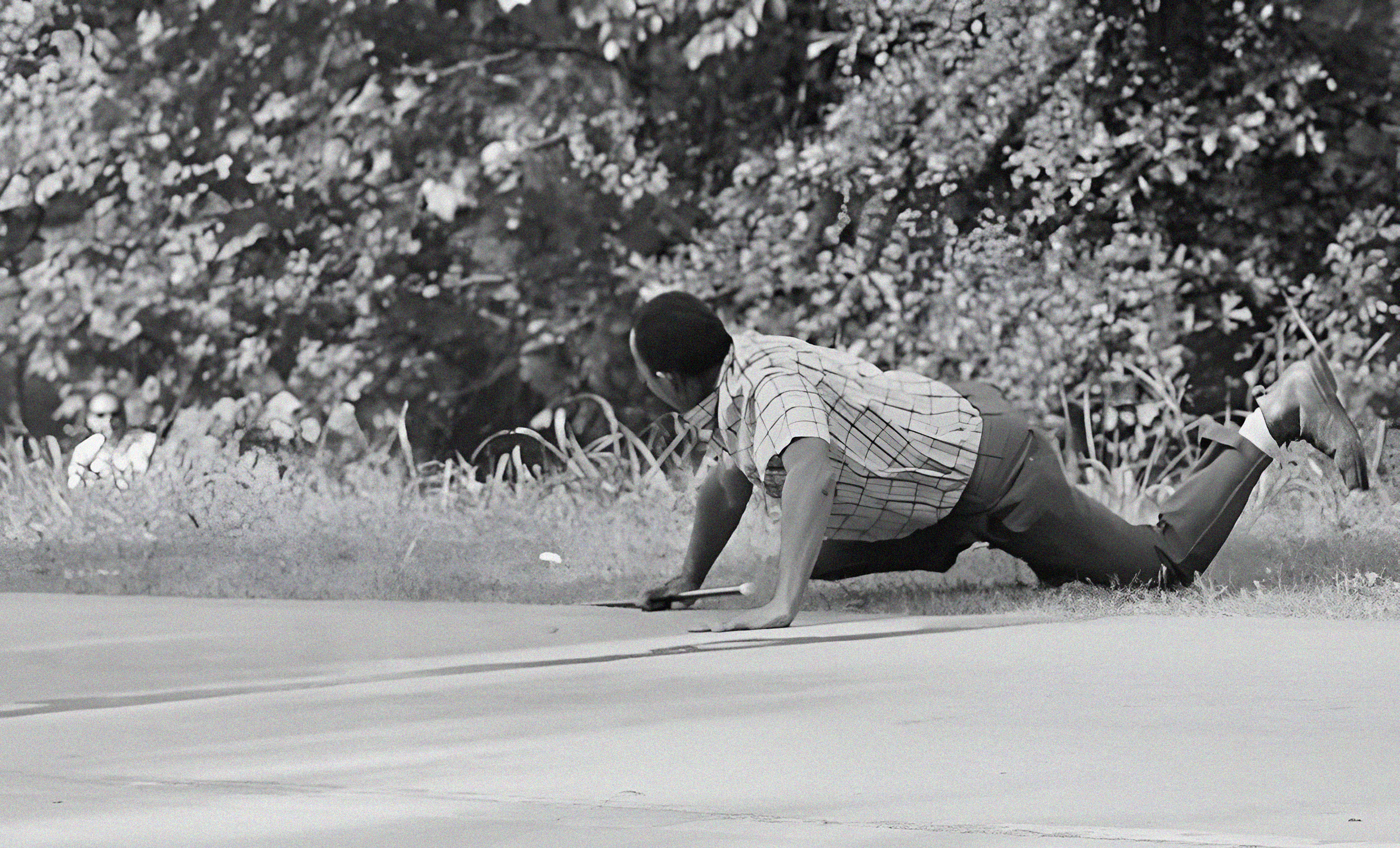
Civil rights activist James Meredith lies on the ground after being shot while walking on June 6, 1966 in Hernando, Mississippi. The gunman, Aubrey James Norvell, is seen in the bushes on the left. This photograph won the 1967 Pulitzer Prize for Photography.
DateJune 5 – June 26, 1966
Location
Resulted in
  • "Black Power" speech delivered by Stokely Carmichael
  • 4,000 African Americans registered to vote
Parties
  • Lone sniper
Lead figures

Solo marcher

SCLC member

SNCC members

CORE member

DDJ member

  • Earnest Thomas

Sniper

  • Aubrey James Norvell

The March Against Fear was a major 1966 demonstration in the Civil Rights Movement in the South. Activist James Meredith launched the event on June 5, 1966,[1] intending to make a solitary walk from Memphis, Tennessee, to Jackson, Mississippi via the Mississippi Delta, starting at Memphis's Peabody Hotel and proceeding to the Mississippi state line, then continuing through, respectively, the Mississippi cities of Hernando, Grenada, Greenwood, Indianola, Belzoni, Yazoo City, and Canton before arriving at Jackson's City Hall.[2] The total distance marched was approximately 270 miles over a period of 21 days. The goal was to counter the continuing racism in the Mississippi Delta after passage of federal civil rights legislation in the previous two years and to encourage African Americans in the state to register to vote.[3] He invited only individual black men to join him and did not want it to be a large media event dominated by major civil rights organizations.

On the second day of his walk, June 6, 1966,[4] Meredith was shot and wounded by Aubrey James Norvell, a white sniper, and was hospitalized for treatment.[5] Thornton Davi Johnson suggests that Meredith was a target for such rituals of attack because he had made highly publicized challenges to Mississippi's racial order, and had framed his walk as a confident repudiation of custom.[6]

Major civil rights organizations rallied to the cause, vowing to carry on the march in Meredith's name through the Mississippi Delta and to the state capital. The state committed to protecting the marchers. The Student Nonviolent Coordinating Committee (SNCC), the Southern Christian Leadership Conference (SCLC), the Mississippi Freedom Democratic Party (MFDP), the Congress of Racial Equality (CORE) and the Medical Committee for Human Rights (MCHR) took part, with Deacons for Defense and Justice from Louisiana providing armed protection. The different groups and leaders struggled over tactics and goals, but also cooperated in community organizing and voter registration. They registered more than 4,000 African Americans for voting in counties along the way.[7] Some people marched for a short time, others stayed through all the events; some national leaders took part in intermittent fashion, as they already had commitments in other cities. In addition, labor leader Walter Reuther, along with his wife May, had traveled from Chicago to march and brought 10 buses full of union supporters.[8]

During the latter days of the march, Stokely Carmichael, the new chairman of SNCC, introduced the idea of Black Power to a broad audience. Rev. Martin Luther King Jr. participated and continued to attract admiring crowds; his leadership and reputation brought numerous people out to see him, inspiring some to join the march. As the march headed south, the number of participants grew. Finally, an estimated 15,000 marchers, mostly black, entered the capital of Jackson on June 26, making it the largest civil rights march in the history of the state. The march served as a catalyst for continued community organizing and political growth over the following years among African Americans in the state. They have maintained a high rate of voting and participation in politics since then.

History

[edit]

Disappointed by the slow pace of change following passage of civil rights legislation in 1964 and 1965, James Meredith, noted for being the first African American to enroll at the University of Mississippi, decided to make a solo 'March Against Fear' from Memphis, Tennessee to Jackson, Mississippi, the state capital. He wanted to highlight continuing racial oppression in the Mississippi Delta, the heart of the black population in the state, during the 220-mile journey. Meredith wanted only black men on the march, and did not want a major media event featuring white participants.

On the second day of the march, a white sniper, later identified as Aubrey James Norvell, stepped out of a wooded area next to the road, shouted, "I only want Meredith", and shot Meredith three times with a 16-gauge shotgun loaded with birdshot shells. Meredith was wounded and fell to the road. People rushed to get an ambulance and took him to the hospital. Although he was not severely injured, Meredith was unable to continue the march as planned as he was hospitalized in Memphis to recover from his injuries. Norvell was later apprehended in Desoto County; he confessed to shooting Meredith and was sentenced the same day to five years in prison.[9]

When they learned of the shooting, other civil rights leaders, including SCLC's Martin Luther King Jr., Allen Johnson, SNCC's Stokely Carmichael, Cleveland Sellers and Floyd McKissick, and Mississippi Freedom Democratic Party (MFDP), as well as the Medical Committee for Human Rights (MCHR) and other civil rights organizations, decided to continue the march in Meredith's name. The NAACP were originally involved but Roy Wilkins pulled out on learning that the armed Deacons for Defense and Justice were going to be protecting the march.[10] Ordinary people, both black and white, came from across the South and all parts of the country to participate. The marchers slept on the ground outside or in large tents, and were fed mainly by local black communities. A press truck preceded them and the march was covered by national media. Along the way, members of the different civil rights groups argued and collaborated, struggling to achieve their sometimes overlapping and differing goals.

SNCC and MFDP worked to expand community organizing and achieve voter registration by reaching out to the black communities in the Delta. In most places, few blacks had registered to vote since passage of the Voting Rights Act in 1965, as they were still oppressed by fear and social and economic intimidation in the Jim Crow society. Along the way, the different civil rights groups struggled to reconcile their goals and to enhance the meaning of the march to promote black freedoms. It grew slowly and was embraced by black communities along the way, and by some sympathetic whites. Other whites expressed hostility, jeering and threatening, driving close to marchers. Although overt violence was generally limited, marchers from out of state were shocked and horrified by the virulence of hate expressed in some communities, particularly Philadelphia, where three civil rights workers had been murdered in 1964 and Canton.

Governor Paul Johnson, Jr. of Mississippi vowed to protect the marchers if they obeyed the law, but relations between the Highway State Police and marchers were sometimes tense. In some localities, mayors and local officials worked to keep relations peaceful. Local black communities and their churches provided food, housing and places of rest to marchers. They generally camped along the way, after returning to Memphis at the end of the first days.

On the early evening of Thursday, June 16, 1966, when the marchers arrived in Greenwood, Mississippi, and tried to set up camp at Stone Street Negro Elementary School, Carmichael was arrested for trespassing on public property. He was held for several hours by police before rejoining the marchers at a local park, where they had set up camp and were beginning a night-time rally. According to civil rights historian David Garrow, an angry Carmichael took the speaker's platform, delivering his famous "Black Power" speech, arguing that blacks had to build their own political and economic power to attain independence.[11] He used this opportunity to gain a national audience through the media to hear his speech.

King, who had flown to Chicago on Wednesday to help organize the Open Housing Movement marches in the city, returned to Mississippi on Friday. He found that some of the Civil Rights Movements' internal divisions between the old guard and new guard had gone public. Marchers called out SNCC's "Black Power" slogan, as well as SCLC's "Freedom Now!"

In Canton, Mississippi, on June 23, after marchers tried to erect tents on the grounds of McNeal Elementary School, they were pressed and tear-gassed by the Mississippi Highway Patrol, which was joined by other police agencies. This contradicted the governor's commitment to protect them. Leaders felt the violence took place because President Lyndon B. Johnson had not offered federal forces to protect them following the violence in Philadelphia. Before that, while relations were often tense, the police had mostly respected the marchers. Several marchers were wounded in the Canton attack, one severely. Human Rights Medical Committee members conducted a house-to-house search that night looking for wounded marchers. The marchers sought refuge at Holy Child Jesus Catholic mission. There the Franciscan sisters extended their help and hospitality to the marchers, especially to the wounded.[12] The following night the marchers returned to stay on the grounds of McNeal School without incident, as they did not attempt to erect tents.

After a short hospital treatment, Meredith was released. He planned to rejoin the march, then withdrew for a time, as he had not intended it to be such a large media event. He rejoined the March on June 25, the day before it arrived in Jackson and walked in the front line next to Martin Luther King Jr. and other leaders.

The march stopped at Tougaloo College, a historically black college, before entering Jackson. Marchers could rest and get food and showers. Many more people joined the march at that point; national leaders returned to it from commitments in other parts of the country. The growing crowd was entertained by James Brown, Dick Gregory, Sammy Davis Jr., Burt Lancaster and Marlon Brando.

The next day, June 26, marchers entered the city of Jackson from several different streams and were estimated to number 15,000 strong, the largest civil rights march in Mississippi history. They were warmly welcomed in the black neighborhoods and by some whites. However, many whites jeered and threatened the marchers; others simply stayed indoors. The Highway Police and other forces were out in number, as the city and state had vowed to protect the marchers after the attacks in Philadelphia and Canton. As a result of negotiations with authorities, the marchers gathered at the back of the state capitol to hear speeches, sing protest and celebration songs, and celebrate their achievements.

In total, the march expressed "both the depths of black grievances and the height of black possibilities," and it had to do with "oppressed people controlling their own destiny."[13]

Legacy and honors

[edit]
  • The march "defied Jim Crow's culture of intimidation" by the very act of blacks asserting themselves through the different communities, celebrating their identities, and organizing.[13]
  • In the counties along the route, 4,077 African Americans registered to vote, many for the first time. Federal examiners registered 1,422 and county clerks did the rest.[13]
  • Later black veterans of the Mississippi Movement noted that the march had longstanding political and cultural effects, serving to galvanize community organizing among blacks in the state.[13]
  • In 1967 Jack R. Thornell won the annual Pulitzer Prize for Photography for his photograph of James Meredith struggling on the road in Mississippi after being shot.[14]

References

[edit]

Bibliography

[edit]
[edit]
Revisions and contributorsEdit on WikipediaRead on Wikipedia
from Grokipedia
The March Against Fear was a civil rights demonstration initiated by on June 5, 1966, consisting of a planned 220-mile walk from , to , aimed at countering racial intimidation and spurring African American across . Meredith, who had previously integrated the in 1962 amid violent opposition, embarked on the solitary march equipped only with a helmet and walking stick to symbolize defiance against fear-driven suppression of black political participation in the state. On the second day, June 6, near , he was ambushed and shot multiple times— in the head, neck, back, and legs—by Aubrey James Norvell, a white supremacist and fertilizer salesman who fired from hiding in the woods; Meredith survived after hospitalization but was unable to continue immediately. The march persisted under the leadership of figures including Martin Luther King Jr., Stokely Carmichael of the Student Nonviolent Coordinating Committee (SNCC), and representatives from the Southern Christian Leadership Conference (SCLC) and Congress of Racial Equality (CORE), swelling to thousands of participants by its conclusion in Jackson on June 26, where an estimated 15,000 to 25,000 assembled despite state resistance and arrests. Voter registration efforts during the march yielded approximately 2,000 to 4,000 new African American registrants, though logistical challenges and local hostility limited broader immediate impact. A defining moment occurred when Carmichael, responding to ongoing harassment, popularized the slogan "Black Power" in a speech near Greenwood, signaling a shift from strict nonviolence toward militant self-reliance and foreshadowing fractures within the civil rights coalition. Meredith rejoined the marchers toward its end, underscoring its role as a pivotal transition point between integrationist and black nationalist strategies in the movement.

Background

James Meredith's Personal History and Motivation

James Howard Meredith was born on June 25, 1933, in , the son of a farmer in a family of nine siblings, where he witnessed entrenched firsthand. After graduating from Gibbs Junior College High School in , in 1951, he enlisted in the U.S. , serving nine years until 1960 as a clerk-typist, including a three-year assignment in that exposed him to integrated environments absent in the Jim Crow South. This military experience instilled a sense of discipline and personal agency, motivating his later confrontations with systemic racism through individual resolve rather than reliance on group mobilization. Meredith's defining act of solitary defiance came in 1961 when he applied to the all-white University of Mississippi, prompting a federal court battle that culminated in a U.S. Supreme Court order on September 10, 1962, mandating his admission as the first black student. On September 30, 1962, riots erupted on campus in Oxford, drawing thousands of white protesters who clashed with 500 federalized Mississippi National Guardsmen and U.S. marshals, resulting in two deaths, over 300 injuries, and widespread arson before President Kennedy deployed 30,000 troops to quell the violence. Meredith enrolled on October 1, 1962, under constant armed protection, graduating in 1963; this episode underscored his strategy of personal legal and physical confrontation against institutional barriers, eschewing broader organizational backing. In June 1966, Meredith announced a one-man march of approximately 220 miles along U.S. Highway 51 from , to the in Jackson, explicitly designed as a solo endeavor to "prick the conscience of the white man" and demonstrate that black individuals could surmount the "all-pervasive fear" inhibiting and everyday assertions of amid persistent racial . He rejected collective participation, viewing the march as a personal exorcism of fear rooted in his own history of isolated stands, intended to inspire self-reliant action over dependency on civil rights groups. This motivation arose against a backdrop where black in hovered below 7% in 1964—despite the eliminating poll taxes and literacy tests—primarily due to extralegal threats like economic reprisals and violence rather than statutory hurdles.

Context of Fear and Voter Suppression in Mississippi

In Mississippi during the early 1960s, constituted approximately 42 percent of the state's population according to the 1960 U.S. Census, yet only 6.7 percent of eligible black adults were registered to vote as of 1964. This stark disparity persisted despite formal barriers like poll taxes and literacy tests, which the would later address by suspending such devices in jurisdictions with low registration rates; however, surveys and reports from the period indicated that of retaliation far outweighed legal hurdles as the primary deterrent to registration. Systemic intimidation manifested through widespread violence and economic reprisals targeting those attempting to register or vote. Local white supremacist groups, including the and , employed tactics such as beatings, arson, and murder against civil rights workers and potential black voters, with over 1,000 documented incidents of harassment during drives in the early 1960s. Economic pressures were equally pervasive: black sharecroppers and laborers faced eviction, credit denial from white-owned stores, and job termination for political activity, reinforcing dependency on white employers who controlled livelihoods in the agrarian Delta region. These reprisals were not isolated but part of a coordinated pattern, as evidenced by state-sanctioned resistance documented in federal investigations. Generations of Jim Crow enforcement had instilled a profound cultural fear, fostering what psychologists later termed —a conditioned avoidance of action due to repeated exposure to uncontrollable punishment. In , this dynamic was exacerbated by the near-total exclusion from political power since Reconstruction, where even minimal assertions of rights invited lethal response, leading many black residents to internalize passivity as survival strategy rather than pursue enfranchisement en masse. identified this pervasive fear as the core obstacle, arguing that individual acts of defiance were essential to disrupt the psychological inertia perpetuated by decades of unchecked suppression.

Planning the Solitary March

, having previously integrated the in 1962, conceived the March Against Fear as a solitary endeavor to confront and overcome the pervasive fear inhibiting Black and political participation in , particularly in the Delta region. He deliberately opted for an individual, unarmed walk rather than a , viewing it as a direct test of personal resolve against intimidation, in contrast to the group-based strategies of earlier civil rights demonstrations that relied on organizational support and numbers for protection. This approach stemmed from Meredith's belief that fear could only be eradicated through demonstrated individual courage, without the dilution of collective dynamics. In planning, Meredith rejected overt alliances or protective involvement from established civil rights groups such as the (SNCC) or the (SCLC), insisting on to exemplify unaided defiance of racial terror. He permitted only minimal external presence, such as a small contingent of reporters to document the effort, but explicitly forwent armed guards or marshals, emphasizing that true progress required blacks to walk exposed and vulnerable, thereby modeling resilience unbuttressed by institutional safeguards. This stance underscored his critique of dependency on group orchestration, positioning the march as a purifying exercise in solitary agency amid a landscape of systemic suppression. Logistically, Meredith mapped a 220-mile route southward along U.S. Highway 51, from , to , calibrated for a 21-day duration at a sustainable daily pace. Preparations included basic endurance supplies like a for head protection, an African walking stick for support, and provisions for self-sustained travel, with no elaborate support vehicles or teams anticipated. He notified local and state authorities in advance to secure necessary transit permissions, framing the march as a non-disruptive personal pilgrimage despite its provocative intent against entrenched racial fears.

Initiation and Early Events

Departure from Memphis on June 6, 1966

James Meredith departed from the in , on June 6, 1966, initiating his solitary March Against Fear aimed at traversing approximately 220 miles to , accompanied only by a small group of journalists. The endeavor lacked significant public fanfare or organized support, underscoring Meredith's intention for a personal demonstration of courage against racial , equipped simply with a helmet and walking stick. In public statements prior to and upon departure, Meredith reiterated the march's objectives: to spur to register to vote and to directly challenge the pervasive fear enforced by , which he identified as the primary mechanism sustaining racial oppression in the state. He emphasized that the walk would demonstrate that such fear could be overcome through individual resolve, without reliance on or established civil rights groups. The initial segment of the march proceeded without incident, as Meredith covered the early miles southward along U.S. Highway 51 toward the state line, highlighting the isolated nature of the protest amid 's entrenched history of violence against civil rights efforts. Early media accounts portrayed the undertaking as quixotic and perilous, given Meredith's lone status and the state's record of hostility, including his own prior integration of the in 1962 amid riots.

Shooting of Meredith on June 7, 1966

On June 6, 1966, during the second day of his solitary March Against Fear from , to , was ambushed and shot by Aubrey James Norvell, a 40-year-old white unemployed hardware clerk and Klansman from Memphis, approximately three miles south of . Norvell emerged from dense vegetation along U.S. Highway 51, armed with a 16-gauge , and fired three blasts at Meredith from a distance of about 30 yards, striking him in the head, neck, back, and legs. Meredith collapsed on the highway but remained conscious, crawling to safety as companions rushed to his aid. Meredith sustained multiple buckshot wounds but survived the attack, which required immediate medical attention; he was airlifted to a in Memphis for surgery to remove fragments and treat his injuries. Norvell was apprehended at the scene shortly after by local authorities, who found him still armed, and he confessed to the shooting without resistance. Initially charged with assault with intent to murder under state law, Norvell was released on $25,000 bond the following day, prompting criticism over the perceived leniency given the severity of the attack on a prominent civil rights figure. The launched a parallel probe into potential civil rights violations, underscoring the incident's national implications. The shooting exemplified the tangible dangers Meredith aimed to confront through his , providing stark empirical validation of the pervasive and violent resistance to black self-assertion in , where such ambushes reflected entrenched patterns of racial intimidation rather than isolated acts. Norvell's quick identification and admission highlighted local law enforcement's responsiveness in this case, yet the event exposed the fragility of nonviolent protest against armed opposition, fueling immediate questions about the sustainability of unarmed marches in hostile territories.

Continuation Under Collective Leadership

Recruitment of Civil Rights Organizations

Following James Meredith's shooting on June 6, 1966, near , his associates promptly contacted civil rights leaders to sustain momentum for the planned solitary walk. Representatives from the (SCLC), (SNCC), and (CORE) converged at his bedside in a Memphis hospital that day, expressing intent to resume the effort despite his injuries. Additional support came from the Mississippi Freedom Democratic Party (MFDP), Delta Ministry, and National Association for the Advancement of Colored People (NAACP), forming an impromptu coalition to protect marchers and advance goals. On June 8, 1966, key figures—including Martin Luther King Jr. of the SCLC, Stokely Carmichael and Cleveland Sellers of SNCC, and Floyd McKissick of CORE—convened in Memphis for negotiations on logistics and leadership. They agreed to proceed under the "Meredith March Against Fear" banner, incorporating armed escorts from the Deacons for Defense and Justice to counter threats, while adapting the route to engage Delta communities for broader organizing. This arrangement diverged sharply from Meredith's conception of an individual challenge to Mississippi's racial fears, yielding control to the multi-organizational group and enabling a resumption with a core contingent of activists from the involved entities. Meredith, hospitalized and partially recovered, transitioned to an advisory capacity, influencing decisions remotely but no longer directing the endeavor solo.

Route, Logistics, and Daily Advancements

Following James Meredith's shooting on June 6, 1966, near , civil rights leaders including Martin Luther King Jr., , and resumed the march the next day from that point southward along U.S. Highway 51, with initial groups numbering in the dozens. The route soon diverted westward into the region to engage more communities, covering an approximate total of 220 miles over three weeks to reach Jackson. Marchers typically advanced 10 to 15 miles per day, departing early mornings and halting by afternoon, supported by a network of supply lines organized by groups such as the and Delta Ministry, which provided food, water, and medical aid from local Black churches and homes. By , the group passed through Batesville, where logistical coordination allowed for brief rests amid the intensifying June heat, which exacerbated fatigue during extended walking on rural highways lacking shade or facilities. Camping occurred nightly at makeshift sites near Black-owned schools or fields, with tents erected for hundreds as participation swelled to several hundred by mid-week; supply trucks trailed the column to distribute essentials, though shortages occasionally arose from disrupted local donations. Further progress took them to by June 11, then Greenwood around June 16, where endurance was tested by cumulative physical strain and sporadic road harassment, including verbal taunts and minor obstructions that delayed advances but did not halt the momentum. The march continued through by June 21 and reached Canton on June 24, where logistical efforts included attempts to camp at a local elementary school, though police interventions complicated setup and forced relocations, compounding marcher exhaustion in the humid conditions. Final legs covered the remaining distance to Jackson's outskirts, with daily paces maintained despite swelling numbers straining resources; Meredith himself rejoined briefly near the end. The column culminated at the on June 26, 1966, with an estimated 15,000 participants converging after the 21-day trek, marking the operational completion of the route under collective management.

Encounters with Violence and Opposition

Throughout the continuation of the march following James Meredith's shooting on June 6, 1966, participants faced persistent hostility from white supremacist groups and variable responses from local authorities, often characterized by delayed intervention or direct aggression that exacerbated risks to nonviolent demonstrators. In , on June 21, a crowd of approximately 200 marchers, including , encountered a mob of 300 hostile whites who threw firecrackers and cherry bombs while engaging in fist fights with Black participants; Deputy Sheriff , previously implicated in civil rights murders, failed to intervene promptly despite the escalating violence. Objects continued to be hurled at marchers as they retraced steps from the Neshoba County courthouse, where they sought to commemorate the 1964 killings of civil rights workers, and a policeman later clubbed an African American demonstrator. Such incidents underscored the causal role of entrenched white supremacist networks in , where local mobs drew strength from systemic tolerance, prompting limited federal oversight like warnings from U.S. Civil Rights Division official to avert broader unrest but rarely resulting in marshals' direct protection beyond the initial shooting response. In , on June 23, state patrolmen and city police assaulted approximately 2,500 assembled marchers with riot guns, , and clubs while attempting to disperse them from camping at McNeal Elementary School, injuring at least 21 individuals, including a struck by a shotgun butt. These encounters, including sporadic sniper threats and rock-throwing reported along the route, led to dozens of injuries overall and highlighted the marchers' restraint amid quantifiable perils—such as the direct use of chemical agents and blunt force by state forces—that reflected law enforcement's alignment with segregationist opposition rather than neutral enforcement. Local officials frequently denied permits for assemblies or overnight stays, forcing reliance on ad hoc sites and exposing groups to ambushes, while federal intervention remained constrained, prioritizing de-escalation over robust safeguarding.

Ideological Developments and Internal Dynamics

Emergence of the Black Power Slogan

On June 16, 1966, during a rally in , , the chairman of the (SNCC), spontaneously popularized the slogan "" shortly after his release from jail, where he had been held alongside other marchers for erecting tents in defiance of local ordinances prohibiting overnight camping. The arrests stemmed from logistical necessities amid the march's exposure to threats, including the shooting of nine days prior, underscoring the immediate context of vulnerability and resistance to external controls. Addressing a crowd estimated at 600 to 1,500 people, Carmichael shifted from customary chants like "Freedom Now" to leading three repetitions of "We want !", which the audience echoed with growing fervor, transforming the gathering into a moment of collective assertion rather than supplication. This rhetorical turn emphasized black self-reliance and the right to self-defense, rejecting dependence on white approval or moral persuasion amid repeated failures to secure safety through nonviolent appeals alone. The slogan's rapid adoption reflected causal frustrations with the limits of integrationist strategies, which had yielded gains but not protection from physical ; instead, it signaled a pragmatic recognition that black communities required internal cohesion and autonomous power to counter systemic violence, prioritizing ethnic pride over interracial appeals. Contemporary media reports, including national broadcasts, amplified the chant's resonance, embedding "" as a defining phrase within civil rights discourse by the rally's conclusion.

Clashes Between Nonviolent and Militant Approaches

Following the emergence of the "Black Power" slogan on June 16, 1966, in Greenwood, Mississippi, tactical debates intensified between advocates of strict nonviolence, led by Martin Luther King Jr., and proponents of armed self-defense and black self-reliance. King maintained that nonviolence remained essential for moral suasion and interracial coalition-building, viewing the Black Power emphasis on separatism as a rejection of pacifism and brotherhood that risked alienating potential white allies. In contrast, militant voices argued that persistent white violence, exemplified by James Meredith's shooting on June 6 and subsequent attacks on marchers, demonstrated the limits of unarmed restraint, advocating instead for armed protection to deter aggression and foster black autonomy without dependence on external intervention. These clashes manifested in practical suggestions to arm participants and rhetoric prioritizing black over inclusive protection. The , an armed black self-defense group, joined the march to provide escorts and nighttime guards, a move that underscored militants' belief in reciprocal force against armed opponents, as nonviolence alone had failed to prevent over 1,000 arrests, deployments, and sniper fire during the event. Escalating calls for self-reliance included assertions that black communities must reject white liberal involvement in leadership or strategy, shifting focus from interracial appeals to internal empowerment, though specific incidents of denying protection to white participants were not documented amid the chaos. King's discomfort with arming persisted, yet he tolerated the Deacons' presence pragmatically, highlighting the causal tension: unchecked violence eroded faith in 's universality when facing systemic armed resistance. Empirically, the militant turn correlated with surges in local black participation, swelling march numbers from hundreds to over 15,000 by the conclusion in Jackson, as the rhetoric of defiance resonated amid drives yielding approximately 3,000 new registrants. However, it also amplified risks, with heightened confrontations drawing more intense white supremacist backlash, including chants of "White Power" in response and broader fragmentation that questioned nonviolence's scalability against entrenched hostility. This debate revealed nonviolence's efficacy in generating sympathy but its vulnerability without defensive countermeasures in high-threat environments.

Organizational Tensions: SNCC, SCLC, and CORE

The involvement of the (SNCC), (SCLC), and (CORE) in continuing the March Against Fear after James Meredith's shooting on June 6, 1966, exposed structural conflicts over organizational control, leadership autonomy, and strategic vision. SNCC, which had elected as chairman on May 14, 1966, at its Kingston Springs conference, embodied a pre-existing toward black-exclusive leadership and militancy, having recently expelled white members and prioritized self-reliance amid frustrations with interracial coalitions. This stance clashed with the SCLC's adherence to interracial under Martin Luther King Jr., who sought unified messaging and broad alliances, while CORE under positioned itself as a bridge, though its leadership increasingly tolerated armed protection and assertive rhetoric, diverging from pure . These tensions escalated into disputes over march governance, with SNCC demanding black-led decision-making that marginalized SCLC's influence, leading to fragmented authority as the navigated daily operations. Route modifications exemplified this friction: initial plans along U.S. Highway 51 were altered by SNCC and CORE advocates to traverse the for targeted organizing, overriding Meredith's solitary blueprint and SCLC preferences for safer, more symbolic paths, thereby amplifying logistical strains under external pressures. Further strains arose from failed vetoes on ideological expressions, particularly SNCC's promotion of the "" slogan on June 16 in Greenwood, which McKissick endorsed but and SCLC leaders publicly critiqued as divisive, unable to suppress its momentum amid the march's chaotic dynamics. Pre-march rifts within SNCC, including debates over white participation just weeks prior, were causally intensified by the event's improvisational demands, underscoring irreconcilable visions where SNCC's autonomy assertions undermined SCLC's integrative goals and CORE's mediating role proved insufficient to harmonize the coalition.

Community and Voter Registration Efforts

On-the-Ground Organizing and Registration Drives

Organizers from SNCC and allied groups conducted intensive drives at march stops, employing canvassing in rural areas and mass rallies in town squares to target unregistered black residents, particularly in counties where black voter turnout remained below 10% prior to 1966. These efforts prioritized localities with entrenched suppression, such as those along Highway 51, where economic dependency on white landowners amplified fears of retaliation. Estimates of new registrations vary, with reports indicating approximately 3,000 black Mississippians added to rolls during the 20-day march, though some accounts cite figures up to 4,000 across stops in counties like Panola and Holmes. SNCC field workers credited nightly meetings for overcoming barriers and providing on-site assistance with forms, yielding tangible if modest gains amid the march's mobile format. Intimidation severely constrained outcomes, as white vigilantes and local sheriffs harassed canvassers, leading to low turnout at drives; for instance, in Batesville, threats deterred crowds despite rally announcements, registering only dozens per session before dispersals. Post-registration reprisals, including firings and beatings, often nullified short-term successes, with many new voters facing renewals or outright purgation by registrars. Despite these obstacles, the drives demonstrated feasibility of rapid mobilization in high-risk zones, registering hundreds in single days under protective marching presence.

Local Black Community Responses

In towns like , local black residents demonstrated notable enthusiasm, turning out in significant numbers for rallies that marked the march's strongest community reception along the route. This involvement included providing food and other support, reflecting underlying sympathy for the against racial despite the risks. However, responses varied, with apathy and wariness prevalent in other areas, particularly after James Meredith's shooting on June 6, 1966, which organizers attributed to intensified fears of retaliation among black residents. Low turnout in subsequent days underscored persistent caution, as many locals hesitated to join openly due to the immediate threat posed by recent . Youth participation injected morale-boosting energy, with young black marchers channeling emerging anger into militant expressions that contrasted with older generations' restraint. While the march fostered defiance, it did not dispel entrenched economic dependencies on white landowners and employers, leaving many community members reluctant to risk livelihoods through visible alignment.

White Resistance and Law Enforcement Interactions

White opposition to the Meredith March Against Fear manifested through heckling, displays of Confederate flags, and direct mob violence. On June 22, 1966, a group of local whites assaulted marchers in , a town notorious for the 1964 murders of civil rights workers Chaney, Goodman, and Schwerner. Such tactics created persistent intimidation, with supremacist groups including the engaging in confrontations along the route. Law enforcement responses exhibited , prioritizing restrictions on marchers over curbing white aggression. Aubrey James Norvell, the white gunman who shot on June 6, 1966, faced delayed apprehension despite the public nature of the attack, while authorities swiftly targeted demonstrators. For example, SNCC chairman was arrested on June 16 in Greenwood for erecting tents on school grounds without authorization. Mississippi Highway Patrol actions further highlighted disparities, as on June 24 in Canton, troopers deployed and rifle butts against marchers ordered from a schoolyard, injuring dozens in what participants described as punitive beatings rather than arrests. This approach enabled white violence by diverting resources to suppress the instead of neutralizing threats from opponents. Governor Paul B. Johnson Jr. acceded to limited state trooper escorts in areas like Philadelphia under federal pressure from the Justice Department, yet local sheriffs and judges often imposed judicial hurdles such as permit denials. Federal U.S. marshals supplemented protection following Meredith's shooting, underscoring tensions between national enforcement of civil rights and defiant local authorities that undermined security.

Controversies and Criticisms

Divisions and Fragmentation Within the Movement

The introduction of the "" slogan by during the March Against Fear on June 16, 1966, near , immediately highlighted and deepened preexisting ideological fissures within the civil rights coalition, alienating integrationist leaders who viewed it as a departure from nonviolent interracial cooperation. , executive secretary of the , publicly denounced the slogan as tantamount to "a reverse , a reverse Hitler, a reverse ," arguing it promoted voluntary segregation and anti-white sentiment rather than unity against oppression. This criticism reflected broader moderate concerns that Black Power's emphasis on racial pride and risked inverting the movement's goals into , prompting organizations like the and Urban League to distance themselves from SNCC-led initiatives. Post-march organizational shifts further fragmented alliances, particularly within SNCC, where the Black Power ethos accelerated a pivot toward . In May 1967, SNCC's coordinating committee voted to request the resignation of all non-black staff members, formalizing the expulsion of whites who had been integral to earlier interracial projects, a decision rooted in frustrations aired during the march over white liberals' reliability in southern organizing. This policy change signaled a causal breakdown in interracial coalitions, as SNCC prioritized black-led autonomy, leading to the departure of key white activists and a dramatic decline in the organization's annual income, which dropped sharply in July 1967 due to lost support from white donors alienated by the separatist turn. These internal rifts extended beyond SNCC, eroding unified action across the movement by reducing collaborative funding and participation from moderate black leaders and white allies who had sustained earlier campaigns through interracial networks. Empirical indicators include the post-1966 funding contractions for militant-leaning groups, correlating directly with the slogan's emergence during the march, as foundations and philanthropists withdrew resources from entities perceived as endorsing racial exclusivity over integration. The resulting fragmentation weakened the movement's capacity for coordinated national pressure, as evidenced by diminished joint mobilizations between SNCC, CORE, and more conservative bodies like the in subsequent years.

Tactical Debates and Alleged Failures in Nonviolence

The shooting of on June 6, 1966, exemplified the vulnerabilities inherent in strict nonviolent tactics during the early stages of the march, as he proceeded unarmed along U.S. Highway 51 south of , only to be ambushed by Norvell, who fired three shots from a bush, wounding Meredith in the back and leg. Norvell confessed and received a five-year sentence (with three years suspended), but the attack proceeded unchecked due to the absence of defensive measures, highlighting how nonresistance offered no deterrence to assailants confident in the marchers' passivity. Subsequent incidents further exposed these limits, such as the June 20 confrontation in , where troopers and deputies deployed and billy clubs against over 2,000 nonresisting campers, including women and children, resulting in dozens of injuries from beatings and kicks without any retaliatory action from the victims. Critics, including proponents of from conservative perspectives, argued that such restraint not only failed to prevent escalating violence but potentially invited it by signaling to aggressors, contrasting sharply with historical cases where armed protection had shielded civil rights efforts from similar threats. proponents countered that absorbing brutality without response maintained , compelling broader societal condemnation and support, though empirical outcomes like repeated unprovoked assaults questioned this calculus. The march's tactical record amplified these debates, with hundreds of participant arrests for permit violations and camping infractions yielding minimal accountability for perpetrators—such as Norvell's light effective sentence—suggesting secured publicity but scant immediate deterrence or judicial recourse against violence. Following his recovery, Meredith rejoined the march on June 25 yet later articulated support for armed principles, reflecting a personal reassessment of 's adequacy against entrenched hostility, even as the event's continuation incorporated armed escorts like the Deacons for Defense to mitigate risks. This underscored right-leaning critiques emphasizing reciprocal force for protection over unilateral forbearance, prioritizing causal deterrence rooted in human incentives over aspirational moral appeals.

Broader Critiques of Shifting to Separatism

Critics of the Black Power movement's pivot toward separatism contended that it eroded the broad coalition of white sympathy cultivated during the integrationist phase of the civil rights struggle, particularly after legislative milestones like the and , which passed with significant bipartisan support amid public outrage over southern violence. Conservative intellectual highlighted this dynamic, arguing in post-1965 commentary that militant rhetoric shifted emphasis from achievable legal reforms to provocative racial confrontation, undermining the moral consensus that had propelled earlier gains and risking a backlash that halted momentum for further integration-oriented policies. Empirical indicators included a sharp decline in white financial contributions to organizations like SNCC following the 1966 adoption of , dropping noticeably by 1967 as donors recoiled from perceived extremism. The separatist ethos was further critiqued for causal contributions to escalating urban violence, exemplified by the 1967 "" riots across 159 American cities, which caused 85 deaths, over 1,000 injuries, and billions in property damage. FBI Director Hoover's analyses linked much of this unrest to agitation by black nationalist groups promoting , viewing their rhetoric as inflaming grievances into widespread disorder rather than channeling them constructively; this perspective informed the launch of COINTELPRO-Black Hate operations targeting such organizations amid the riots. While mainstream commissions like Kerner attributed riots primarily to systemic white racism— a view shaped by institutional biases favoring structural explanations over individual agency—conservative assessments emphasized how separatist calls for and excused or encouraged permissiveness toward , eroding public tolerance for civil rights advocacy. Defenders of Black Power, including leaders like , portrayed separatism as essential for black self-empowerment and cultural reclamation, rejecting integration as a diluted path to true . However, evidence from movement outcomes suggested tendencies toward cultural insularity, such as the proliferation of black-only institutions and curricula that prioritized racial solidarity over cross-racial engagement, potentially reinforcing residential and social segregation in urban enclaves where economic isolation persisted despite rhetorical emphasis on . Critics, drawing on causal realism, argued this inward focus diverted resources from skill-building and market integration—hallmarks of pre-1960s black progress under more assimilationist strategies—yielding fragmented communities vulnerable to internal dysfunction rather than scalable advancement.

Legacy and Long-Term Impact

Voter Registration Achievements and Immediate Outcomes

During the March Against Fear from to 26, 1966, civil rights organizations including SNCC, CORE, and SCLC conducted voter registration drives along the route through , targeting areas with histories of violent intimidation against black voters. These efforts yielded approximately 4,000 new black s, focusing on previously terrorized rural counties where participation had been minimal due to fear of reprisals. The drives provided a short-term surge in defiance, as marchers directly assisted locals in overcoming literacy tests and poll taxes still in effect despite the , fostering immediate heightened awareness of voting as a tool against disenfranchisement. However, these gains faced immediate offsets from white resistance, including economic reprisals such as job firings, evictions, and credit denials for newly registered voters, alongside ongoing threats and documented during the march. Such countermeasures limited the sustainability of the registrations in the short term, as many black Mississippians weighed participation against personal risks in a context where federal enforcement of the Voting Rights Act was uneven outside major urban centers. The march contributed momentum to broader trends, with Mississippi's black voter registration rising from about 6.7 percent in 1965 to more than 60 percent by 1967, though this increase was primarily driven by federal examiners and lawsuits under the Voting Rights Act rather than the march alone. The event's registration successes thus represented a tactical win in catalyzing local action but were tempered by multifactor causal dynamics, including prior efforts and legal pressures, underscoring the challenges of translating protest into enduring electoral participation amid persistent local opposition.

Shift Toward Black Power and Its Consequences

The slogan "," first publicly chanted by and Willie Ricks during a June 16, 1966, rally near , as part of the March Against Fear, emphasized black , community control, and rejection of dependence on white allies for civil rights progress. This introduction, broadcast nationally, signaled SNCC's departure from interracial coalition-building toward separatist militancy, with Carmichael arguing that nonviolent appeals to white conscience had failed to dismantle systemic oppression. The shift propelled SNCC's radicalization, culminating in the organization's expulsion of white members at a May 1967 conference and adoption of black nationalist platforms that prioritized armed self-defense over voter registration. This trajectory influenced the Black Panther Party's founding in October 1966 in Oakland, California, where Huey Newton and Bobby Seale drew on the slogan to organize community patrols against police brutality, escalating rhetoric toward revolutionary confrontation. Martin Luther King Jr. publicly rebuked the phrase on June 26, 1966, warning it evoked "black death" by alienating potential white supporters and undermining nonviolent integration, a view echoed by NAACP leader Roy Wilkins who deemed it a call for "black supremacy." Among the consequences, the ethos intensified FBI scrutiny under , which from 1967 targeted SNCC and Panther chapters with infiltration, disinformation, and provocations to foster internal paranoia and violence, contributing to the neutralization of over 20 Panther leaders by 1971 through arrests or killings. The slogan's association with militancy correlated with heightened urban disorders, including the 1967 Newark and riots that claimed 43 and 43 lives respectively, as federal reports linked radical rhetoric to unrest amid unmet economic demands. Critics contend the pivot eroded mainstream alliances, with white liberal funding to civil rights groups dropping sharply post-1966 amid perceptions of , fragmenting the movement into competing factions and diluting focus on legislative gains. While fostering black cultural pride and self-empowerment—evident in rising demands for programs and economic autonomy—the ideological realignment hastened the broader civil rights coalition's unraveling, as integrationists like prioritized unity against segregation while nationalists pursued parallel paths, per analyses of declining protest cohesion after 1966.

Historical Assessments and Modern Perspectives

Historians such as Aram Goudsouzian have assessed the March Against Fear as a critical crossroads in the , where traditional nonviolent strategies intersected with the rising ideology of , leading to ideological divisions among organizations like SNCC and SCLC. Goudsouzian's analysis, drawing on extensive archival materials including Mississippi Sovereignty Commission files and FBI reports, emphasizes the march's focus on overcoming voter fear through registration drives, yet notes its limited legislative impact following the 1965 Voting Rights Act, as activist priorities shifted toward power assertion over incremental reform. Similarly, Ann Bausum characterizes the event as the final major nonviolent march of the era, highlighting its 22-day endurance amid violence and internal tensions that precipitated 's emergence, as evidenced by leaders like questioning unacknowledged "white power" dynamics. Critiques of the march's outcomes often center on the "" slogan coined during the event, with contemporaries like and SCLC leaders decrying it as fostering separatism and alienating potential white allies, thus contributing to movement fragmentation. These assessments argue that the rhetorical shift, while empowering for some, provoked backlash and polarization, as seen in media portrayals of groups as militant threats rather than political actors, potentially undermining broader coalitions needed for sustained progress. Empirical observations from the period link this divisiveness to heightened white resistance and urban unrest, contrasting the march's demonstrated courage—over 15,000 participants confronting armed opposition—with warnings that separatist emphases eroded the interracial goodwill cultivated in earlier campaigns. In modern perspectives from the , scholars reflect on the march's legacy amid persistent voter in , where black turnout remains suppressed by tactics echoing 1966 fears, including targeted harassment documented in post-2020 election analyses. While acknowledging achievements in exposing systemic barriers—such as registering around 1,600 voters during the march despite shootings and arrests—contemporary critiques caution against overemphasizing Black Power's positives, noting its role in modeling identity-based polarization that complicates unified responses to ongoing disenfranchisement in a divided society. Data-driven views prioritize causal factors like sustained over narrative glorification, urging realism about how ideological fractures from events like the march hinder empirical progress in voter empowerment. Academic sources, often inclined toward empowerment interpretations due to institutional biases, are balanced by evidence of backlash effects, reinforcing the march's dual legacy of bold defiance and cautionary divisiveness.

References

Add your contribution
Related Hubs
User Avatar
No comments yet.